

Tech
‘Creepy’ Listening Tool for Targeted Ads Didn’t Actually Work, FTC Says


The Federal Trade Commission announced on Thursday that Cox Media Group and two other marketing companies, MindSift LLC and 1010 Digital Works, have agreed to collectively pay nearly $1 million to settle allegations that they deceived their customers—other businesses—by claiming that they could help target ads based on audio recordings collected from consumers’ smart devices via a marketing service called Active Listening.
In a statement to WIRED, a spokesperson for CMG says, “We are pleased to have this matter resolved. Our local marketing team relied on marketing materials provided to us by a third-party vendor about their product. We withdrew the materials expeditiously and stopped further use of the product.”
MindSift and 1010 Digital Works did not immediately respond to a request for comment. (Disclosure: The author of this article previously worked for the FTC.)
Over the years, conspiracy theories about companies listening to people through their phones in order to serve them ads have been repeatedly debunked. The marketing about Active Listening, which was first reported by 404 Media, stoked those fears. According to the FTC, at one point a website advertising the service included the slogan, “Creepy? Sure. Great for marketing? Definitely.”
In three separate complaints, the FTC says that CMG made several claims about its ability to collect consumers’ conversations from “smartphones, smart TVs, smart speakers and other devices” and then use AI to target ads to potential customers based on where they live and what they said. CMG and the other companies also said that consumers had consented to the collection and use of their voice data, according to the complaints.
The FTC alleges that none of those things were true.
Instead, the FTC contends that what CMG was offering was “nothing more than consumer email list buying” and that the lists it resold were “a significant markup over the cost of the data.”
As part of their agreements with the FTC, CMG and the two other companies promised not to make misrepresentations about their marketing services or their collection and use of audio recordings or transcripts of consumer conversations.
CMG agreed to pay $880,000, while MindSift and 1010 Digital Works each agreed to pay $25,000. The combined $930,000 will go to businesses that were “impacted” by the three companies’ practices, according to the FTC—in other words, businesses that purchased the Active Listening marketing service because they were under the impression that the service worked as advertised, including that people consented to having their voice data used.
The FTC’s complaints don’t make allegations about whether it’s illegal to use audio recordings collected from people’s smart devices to target them with ads, but the FTC clearly has a problem when a company says it does that but actually doesn’t. In a statement, Christopher Mufarrige, the FTC’s director of the bureau of consumer protection, says, “It is a basic rule of business that you need to be honest with your customers, and these companies failed to do that.”



Security
‘Budgets are moral documents,’ Rep. Delia Ramirez said
Democratic lawmakers on Thursday blasted President Trump’s spending priorities – specifically a proposed $1 billion White House security and ballroom project and a nearly $1.8 billion “slush fund” for Trump allies tied to the January 6 Capitol riot – as his administration pushes deep cuts to cybersecurity funding.
US Representative Delia Ramirez (D-IL) decried the president’s priorities as Congress weighs reauthorization of the State and Local Cybersecurity Grant Program (SLCGP), a funding effort that began in 2022 and earmarked $1 billion to state and local governments over the next four years to help mitigate cyber risks.
“Budgets are moral documents, and spending a billion dollars on a ballroom, which is what the president wants, or $1.7 billion to incentivize insurrectionists while we still are waiting for the reauthorization of this critical grant program, says a lot about where priorities are right now with this administration,” she said during a House Homeland Security subcommittee hearing on state and local cybersecurity.
Another Democrat on the committee, Rep. James Walkinshaw (D-VA), noted the US Cybersecurity and Infrastructure Security Agency (CISA) also eliminated federal support for the Multi-State Information Sharing and Analysis Center (MS-ISAC), which used to provide free and low-cost threat detection and response services to state and local governments.
The MS-ISAC has since shifted to a fee-based model to support the state threat sharing program.
This means, as expert witness Samir Jain, VP of policy for the Center for Democracy and Technology, testified, “jurisdictions that most need the help are least likely to be able to afford it. Smaller jurisdictions, because if they don’t have the resources and the money to join the ISAC, they probably also don’t have the resources and the money to buy equipment, to buy network monitoring tools, to have cybersecurity staff. It’s the ones who need it the most are the least likely to be able to get it as a result.”
Walkinshaw also pointed out that CISA’s 2025 budget was about $3 billion. President Trump proposed slashing the cyber-defense agency’s spending by $707 million in 2027, to just over $2 billion.
This is on top of the $135 million in cuts to CISA, along with about a third of its workforce (close to 1,000 people) since Trump returned to office.
“So we are looking at a one-third cut in federal funding for cybersecurity,” Walkinshaw said. “If President Trump gets his way, we’d be spending a billion dollars for the ballroom and $1.8 billion for the January 6 slush fund – $2.8 billion just on those two items, $800 million more than his total commitment to cybersecurity.”
Cybersecurity is the silent partner of democracy.
Meanwhile, other expert witnesses who testified before the committee, all IT and security chiefs from Tennessee, New York, and Florida, implored the lawmakers to spend more – not less – on state and local infosec.
“State and local governments operate critical systems that citizens rely on every day, including emergency services, schools, utilities, courts, and public infrastructure,” Tennessee CIO Kristin Darby told lawmakers.
“Those systems are increasingly targeted by criminal organizations and nation-state actors,” she said, adding that “demand for cybersecurity support far exceeds the current funding levels.”
As AI-enabled attacks, ransomware infections, and cloud-based system intrusions accelerate across Tennessee, “many local governments across our state have little or no dedicated cybersecurity staff,” Darby continued. “This creates a dangerous imbalance between highly sophisticated attackers and severely resource-constrained defenders.”
New York state director of security and intelligence Colin Ahern urged lawmakers to “reauthorize and fully fund the state and local cybersecurity grant program, which is the single most consequential investment in the cyber protection of state and local governments in this country.”
He also advocated for frontier-model AI access for state and local governments, which are tasked with protecting the power grid, drinking water supply, public health systems, and other critical operations.
“We cannot do that while frontier defensive AI capabilities are restricted to federal partners and a handful of large enterprises,” Ahern said.
“Cybersecurity is the silent partner of democracy,” he continued. “When the utilities, school districts, and state and local governments that constitute the operational fabric of American life are hollowed out by cyber attacks, the institutions that support our democratic life are hollowed out with them.” ®

Xiaomi CEO Lei Jun had a straightforward reason for why the YU7 wasn’t outselling the Tesla Model Y in China: the base model wasn’t cheap enough.
At just 10,000 yuan ($1,450) less than Tesla’s Model Y, the price gap simply wasn’t compelling enough. On the evening of May 21, at Xiaomi’s “Human x Car x Home” launch event, Lei did something about it (via CarNewsChina).

Introducing the Xiaomi YU7 Standard Edition
The new True Standard Edition is priced at 233,500 yuan, about $34,300, which makes it 30,000 yuan ($4,350) cheaper than the standard rear-wheel-drive Model Y.
While that price gap should be enough, the more interesting number is the range figure. The YU7 lasts up to 399 miles on a single charge, compared to 368 miles for the equivalent Model Y variant.
To put it simply, Xiaomi is offering more range for substantially less money, which, in China’s super-competitive EV market, is as direct a challenge as a company can issue.
What changed under the hood?
The YU7 True Standard Edition sports a rear-wheel-drive single-motor setup that produces 235kW, with a CATL-supplied lithium iron phosphate battery.
Dimensionally it maintains the YU7’s mid-to-large SUV proportions at five meters long. However, it comes in 253 pounds lighter than the previous standard version at 4,850 pounds.
As for why Xiaomi is doing this right now, the company wants to regain lost sales momentum. The YU7 arrived on June 18, 2025 at prices below $48,500 and secured over 200,000 orders within three minutes, creating a waitlist that stretched nearly a year.
That backlog has since cleared, and with it, the sales momentum. The company sold fewer than 10,000 units last month, a significant drop from the launch frenzy, and, as a result, the company has launched the new Standard Edition.
Most users can start generating slides with AI today.
OpenAI is now letting you give your presentations the AI treatment. The company announced that ChatGPT is available in Microsoft PowerPoint. The chatbot can create new presentation slides, as well as editing and updating existing ones. As with many of ChatGPT’s capabilities, it takes action based on natural language prompts or by pulling material from connected services like Gmail, Outlook or Sharepoint. The PowerPoint feature is in beta, but most OpenAI users can get to work with it now, including those on the free access tier and subscribers through the corporate-focused ChatGPT Business.
This is a feature rival Anthropic has offered with its Claude chatbot since September. (Google’s Gemini, of course, integrates nicely with the company’s Slides platform.) With OpenAI potentially gearing up for what’s sure to be an obscenely valued IPO, it makes sense that the company is mirroring as many of its competitors’ capabilities as possible. PowerPoint was a bit of an outlier, since ChatGPT is already up and rolling in several other enterprise tools such as Microsoft Excel and Google Sheets.
Tech
Alibaba’s proprietary Qwen3.7-Max can run for 35 hours autonomously and supports external harnesses like Anthropic’s Claude Code
The AI industry has fully entered the “agent era,” a paradigm where AI models do far more than generate text — they now actively plan, execute, and course-correct complex tasks over days rather than seconds.
Thus, it’s perhaps unsurprising to see Chinese e-commerce giant Alibaba’s famed Qwen Team of AI researchers release a model capable of performing autonomous agentic AI work over multiple days: that model has arrived in the form of Qwen3.7-Max which the company reports in a blog post achieved “~35 hours of continuous autonomous execution” — albeit, in a proprietary, not open source format, as prior Qwen Team releases were.
This is also to be expected — it’s what many analysts and industry experts feared in the wake of the departure of several key Qwen Team leaders earlier this year. But it makes sense for Alibaba financially, at least in the short term: training AI models, especially ones as powerful as Qwen3.7-Max, is expensive, and giving them away essentially for free, as open source models are, does not immediately help recoup any costs.
In that sense, Alibaba is simply aligning its efforts with American AI giants like OpenAI and Google by offering the latest and greatest models only through paid APIs and subscription or paid web plan bundles, and slightly less performant ones through open source.
Still, the arrival of Qwen3.7-Max offers further optionality to enterprises and individual users, and more competition for American AI labs — rarely a bad thing for consumers at all budget levels. Yet, the fact that the model is only accessible from Chinese-based endpoints means it may be limited in its appeal to American and European enterprises seeking to maximize compliance and security posturing when fulfilling government contracts, or even just attempting to comply with all relevant state, local, and national data sovereignty regulations.
The marathon AI era
To understand why Qwen3.7-Max is a departure from previous models, one must look at how it was trained and how it operates in practice.
Language models typically degrade when forced to maintain a single train of thought over thousands of conversational turns; they forget instructions, hallucinate variables, or simply get stuck in logical loops. Qwen3.7-Max was specifically designed as a “versatile agent foundation” capable of “long-horizon reasoning” to overcome this exact bottleneck.
The starkest demonstration of this capability is an autonomous engineering task detailed by the Qwen team. The model was given access to an isolated server equipped with a T-Head ZW-M890 PPU—a hardware architecture the model had never encountered during its training. Its task was to optimize an attention kernel.
Over the course of 35 straight hours, Qwen3.7-Max operated entirely autonomously. It executed 1,158 distinct tool calls, performed 432 kernel evaluations, diagnosed compilation failures, and iteratively improved the code to achieve a 10.0x geometric mean speedup.
By comparison, Chinese competitor models like z.ai’s GLM-5.1 and Moonshot’s Kimi K2.6 capped out at 7.3x and 5.0x speedups respectively, often voluntarily terminating their sessions when they failed to make progress. However, both are available open source.
This endurance is achieved through what Alibaba calls “environment scaling”. Just as early LLMs grew smarter by ingesting more diverse text, Qwen3.7-Max was trained across a vast, scaled array of dynamic agentic environments.
It is capable of simulating a one-year lifecycle of a startup in the “YC-Bench” evaluation, navigating hundreds of decision-making rounds encompassing personnel management and contract screening. In this simulation, the model managed to generate $2.08 million in virtual revenue, nearly doubling the performance of the prior generation, Qwen3.6-Plus.
Furthermore, the model has built-in reward-hacking self-monitoring, autonomously detecting when it attempts to cheat a training environment and adding heuristic rules to correct its own behavior.
A brain for any scaffold
From a product perspective, Qwen3.7-Max is designed to be the cognitive engine for modern software development and enterprise automation.
The model offers a massive 1-million-token context window and a 64K maximum output limit, providing immense overhead for processing sprawling codebases or lengthy technical documents.
One of its most compelling features is “cross-harness generalization”. Rather than being hardcoded to work best within a specific proprietary interface, Qwen3.7-Max is built to act as a drop-in intelligence layer for diverse agent frameworks. It supports the Anthropic API protocol natively, allowing developers to plug it directly into existing tools like Claude Code or OpenClaw.
The benchmark data provided by Alibaba indicates that this generalized approach has paid massive dividends.
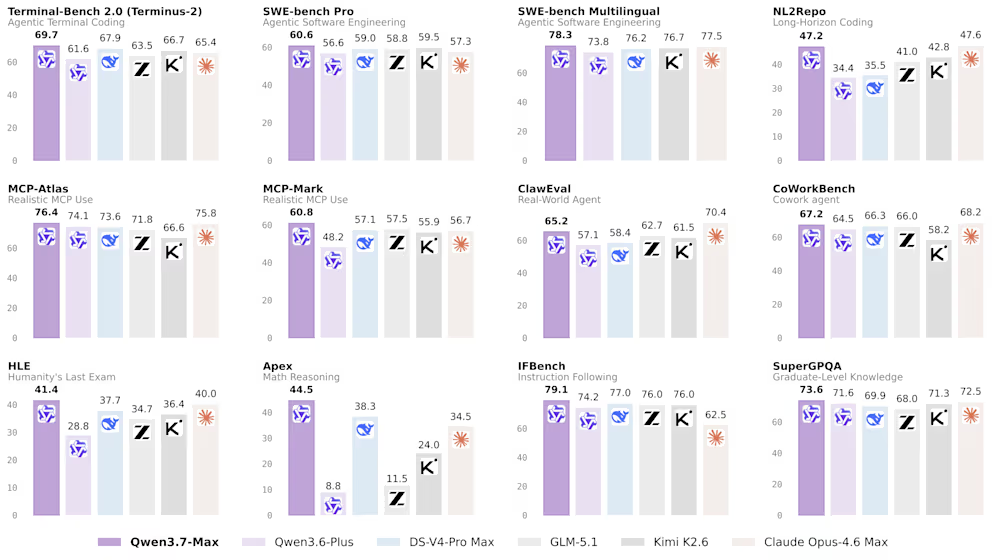
On the Apex Math Reasoning benchmark, Qwen3.7-Max scored 44.5, eclipsing Claude Opus-4.6 Max’s score of 34.5 and DeepSeek V4-Pro Max’s 38.3. It also posted dominant scores on Humanity’s Last Exam (41.4) and the realistic coding agent benchmark MCP-Atlas (76.4).

This translates into tangible utility for end-users. Through open source Model Context Protocol (MCP) integrations, the model can operate as an autonomous office assistant, capable of reading university formatting specs and automatically reformatting a messy Word document via command-line tools without human intervention.
Running this level of intelligence comes at a distinct cost. Developers accessing the API via Alibaba Cloud Model Studio will pay $2.50 per 1 million input tokens and $7.50 per 1 million output tokens. The platform also features explicit cache creation and read pricing, as well as a $10 fee per 1,000 calls for integrated web searches, though code interpreter tools remain free for a limited time.
Qwen3.7-Max occupies a strategic middle ground in the current API economy. While it demands a notable premium over aggressively priced domestic rivals—costing nearly double DeepSeek V4 Pro ($5.22) and Z.ai’s GLM-5.1 ($5.80)—it drastically undercuts the Western frontier giants it routinely matches on benchmarks.
For context, running heavy agentic workflows through OpenAI’s GPT-5.4 or Anthropic’s Claude Opus 4.7 will run developers $17.50 and $30.00 per million tokens, respectively. See VentureBeat’s pricing chart below:
|
Model |
Input |
Output |
Total Cost |
Source |
|
MiMo-V2.5 Flash |
$0.10 |
$0.30 |
$0.40 |
|
|
MiniMax M2.7 |
$0.30 |
$1.20 |
$1.50 |
|
|
Gemini 3.1 Flash-Lite |
$0.25 |
$1.50 |
$1.75 |
|
|
MiMo-V2.5 |
$0.40 |
$2.00 |
$2.40 |
|
|
Kimi-K2.6 |
$0.95 |
$4.00 |
$4.95 |
|
|
GLM-5 |
$1.00 |
$3.20 |
$4.20 |
|
|
Grok 4.3 (low context) |
$1.25 |
$2.50 |
$3.75 |
|
|
DeepSeek V4 Pro |
$1.74 |
$3.48 |
$5.22 |
|
|
GLM-5.1 |
$1.40 |
$4.40 |
$5.80 |
|
|
Claude Haiku 4.5 |
$1.00 |
$5.00 |
$6.00 |
|
|
Grok 4.3 (high context) |
$2.50 |
$5.00 |
$7.50 |
|
|
Qwen3.7-Max |
$2.50 |
$7.50 |
$10.00 |
|
|
Gemini 3.5 Flash |
$1.50 |
$9.00 |
$10.50 |
|
|
Gemini 3.1 Pro Preview (≤200K) |
$2.00 |
$12.00 |
$14.00 |
|
|
GPT-5.4 |
$2.50 |
$15.00 |
$17.50 |
|
|
Gemini 3.1 Pro Preview (>200K) |
$4.00 |
$18.00 |
$22.00 |
|
|
Claude Opus 4.7 |
$5.00 |
$25.00 |
$30.00 |
|
|
GPT-5.5 |
$5.00 |
$30.00 |
$35.00 |
By positioning Qwen3.7-Max just below Google’s Gemini 3.5 Flash ($10.50) but well above budget-tier models, Alibaba is signaling that this isn’t a commodity release; it’s a flagship reasoning engine priced to lure enterprise workloads away from Silicon Valley’s most expensive offerings.
Licensing remains proprietary for now
For all its technical brilliance, the most controversial aspect of Qwen3.7-Max is how it is distributed. Qwen is billing the release as a “proprietary model”. It is strictly API-only.
Historically, Alibaba’s Qwen has been a hero to the open-source and local LLM communities. Previous iterations, like Qwen 2.5 and Qwen 3.6, released their weights publicly. Open weights allow developers, researchers, and enterprises to download the model, run it on their own hardware, and fine-tune it for highly specific or data-sensitive use cases without sending proprietary information to a third-party server.
By locking Qwen3.7-Max behind an API, Alibaba is pivoting to the standard commercial playbook utilized by OpenAI (with GPT-4) and Anthropic (with Claude). For enterprise users, this means utilizing Qwen3.7-Max requires trusting Alibaba Cloud with their data streams and relying entirely on internet connectivity to run their agentic workflows. For the open-source community, it means losing access to what is currently one of the most capable models on the planet.
Community reactions split between awe and disappointment
The reaction from the developer community has been swift, characterized by a mix of profound respect for the engineering achievement and frustration over the licensing model.
Prominent AI commentator Sudo su (@sudoingX) captured the prevailing sentiment on X (formerly Twitter). “qwen is unreal,” they wrote. “they just dropped 3.7 max and it is beating opus 4.6 max on most of the benchmarks they ran”.
The technical metrics, particularly the model’s endurance, have left many in the field stunned. “the apex math number, 44.5 against opus 34.5, that is not a small gap,” Sudo su noted. “the 35 hours straight on a kernel optimization task with 1000+ tool calls is the part i keep rereading. that is the agent era thing actually happening, not a slide”.
The speed of Alibaba’s iteration is also drawing notice. With Qwen 3.6 released just last month, the leap to 3.7-Max highlights a relentless development cadence. As Sudo su observed, “nobody else is moving like this”.
Yet, the praise is heavily caveated by the shift to a closed ecosystem. The loss of the model weights is seen as a blow to the localized AI movement, which relies on state-of-the-art open models to push the boundaries of what can be done on consumer hardware or private enterprise clusters.
“one thing though, please open source this one too,” Sudo su pleaded in their post. “3.6 dense made the entire local llm ecosystem better. the max tier going api only would close a door we have been keeping open. give us the weights eventually”.
Qwen3.7-Max proves that the autonomous agent era is no longer a theoretical projection; it is a present reality capable of executing complex engineering feats while humans sleep. The only question now is whether this new frontier of AI will be a democratized resource you can download to your laptop, or an intelligence utility rented strictly from the cloud. For now, with Qwen3.7-Max, it is undeniably the latter.

from the ctrl-alt-speech dept
Ctrl-Alt-Speech is a weekly podcast about the latest news in online speech, from Mike Masnick and Everything in Moderation‘s Ben Whitelaw.
Subscribe now on Apple Podcasts, Overcast, Spotify, Pocket Casts, YouTube, or your podcast app of choice — or go straight to the RSS feed.
In this week’s roundup of the latest news in online speech, content moderation and internet regulation, In this week’s roundup of the latest news in online speech, content moderation and internet regulation, Mike is joined by civil liberties lawyer Jennifer Granick. Together they discuss:
Support the podcast by joining our Patreon, with special founder membership available until May 28th.
Filed Under: africa, ai, artificial intelligence, content moderation, deepfakes, trust and safety
Companies: apple, kickstarter, twitter


Kyle Busch has died today at the age of 41 after a short, unspecified illness, NASCAR confirms. Busch, driving the Number 8 car for Richard Childress Racing, was supposed to race this weekend in the Coca-Cola 600, but dropped out the last minute.
NASCAR, in a joint statement with Richard Childress Racing and the Busch family said: “Our entire NASCAR family is heartbroken by the loss of Kyle Busch. A future Hall of Famer, Kyle was a rare talent, one who comes along once in a generation. He was fierce, he was passionate, he was immensely skilled and he cared deeply about the sport and fans.”
Kyle Busch was known for his controversial aggressive racing style and his entry into the sport in the proverbial shadow of his older brother, another NASCAR legend, Kurt Busch. This earned him the nickname “Shrub.” Eventually, NASCAR says, he went by the nickname “Rowdy.”
A giant in the sport

Kurt Busch’s career broke records over his 22 seasons racing, as he won a total of 234 races across NASCAR’s three series, the Cup Series, the O’Reilly Auto Parts Series, and the Craftsman Truck Series. He also has won two NASCAR Cup titles in 2015 and 2019.
His 63 wins in the NASCAR Cup Series puts him in the same leagues as titans of the sport like Dale Earnhardt Sr., who won 76 races. This current season, he was in 24th place, with 217 points.
NASCAR says that Kyle Busch is survived by his brother, Kurt, his wife, Samantha, and his two children, Brexton and Lennix.
The racing world has lost one of its best and it is still unknown how the current season will continue in his absence or how he will be commemorated during the upcoming Coca-Cola 600 which will be raced at Charlotte Motor Speedway in North Carolina on Sunday, May 24th.

The Supreme Court could now weigh in on the Apple versus Epic case where Apple was found in contempt of an injunction and forced to allow all developers to link externally without commission.
The Apple versus Epic saga is nowhere near an end even if Epic is celebrating a victory prematurely. Even as the case returns to Circuit Courts, Apple is requesting the Supreme Court to review two specific issues it has with the proceedings so far.
In the Supreme Court filing viewed by AppleInsider, Apple shares that the scope of the anti-steering injunction exceeds the District Court’s limits set by CASA. It also argues that the injunction violation was issued in error due to suggesting it was violating the “spirit” of the law rather than the letter.
Its arguments in the 34-page filing suggest that the Supreme Court should take up these matters because Apple’s is a perfect vehicle to address these issues. Apple asserts that providing a decision would settle matters for future cases, and if left untouched, could cause the CASA verdict to be a dead letter.
Basically, Apple hopes that there are enough discrepancies to ensure the Supreme Court at least picks up the case. In the meantime, Apple will continue its proceedings with Epic in the lower courts.
The story so far
Epic sued Apple in 2020 on antitrust grounds, but Epic lost on every count except one. That count pertained to Apple’s anti-steering practices.

Epic’s ‘1984’ parody ad
Apple removed the anti-steering provisions and provided a new, if complex, way for developers to link to external purchases. It meant developers still owed Apple a commission, 12% or 27%, even if it directed customers to the web.
Even though Epic filed the case and it wasn’t a class action, the injunction was applied to all developers based in the United States. Apple clearly planned to appeal that point even then, but then things were made more complicated.
Epic filed a complaint, which resulted in Apple being found in contempt. However, the original injunction didn’t mention anything about Apple’s commission, and the violation was argued in spirit.
Various appeals and arguments later, and Apple has been told it is owed a commission, even on external links. The problem is, Apple would have to come back to court and decide on the commission rate with Epic.
That’s how the case has arrived at the Supreme Court. And even though Apple tried to get the proceedings halted in the lower courts, twice, it must now face both at once.
Apple’s arguments
The foundations of Apple’s arguments appear to be sound. The courts do appear to be ignoring the precedent set by CASA.

Epic’s iPod-like ad
The Supreme Court ruled that lower courts were exceeding their jurisdiction by applying injunctions outside the scope of a case. However, the 9th Circuit has argued that there is an antitrust exception to CASA that would allow the decision in Apple’s case to stand.
Apple believes very strongly that this effectively bypasses the Supreme Court’s ruling and authority. That’s why it said it would render the CASA case a dead letter.
The other argument also has to do with how the 9th Circuit does business. Apple argues that in the other Circuit Courts, civil contempt is applied only if the letter of the law is violated, not the spirit.
Even if you don’t care about any of this legal back and forth, it is still incredible that the Epic Games lawsuit has reached this point. It started with a “1984” parody ad starring an apple wearing sunglasses and could finish with setting incredibly important precedent via the Supreme Court.
If Apple wins the “in spirit” portion of its arguments, Apple gets to carry on with its previous 12% and 27% commission rates for external linking. It would also mean proceedings in the lower courts would return to appeals stages.
If the universal nature of the injunction is thrown out, then only Epic will be affected by Apple’s move away from anti-steering practices. It would mean a total and abject failure of a case that cost Epic over a billion dollars already.
Apple has requested that its petition be considered during the Supreme Court’s June 25 conference. Perhaps Epic’s CEO should hold off on celebrations until after that date.


You know your Google API key has leaked so you rush to disable it before bad actors can start running up charges on your account. Bad news: According to security researchers at Aikido, people can use the API keys for up to 23 minutes after a user deletes them, creating a window of opportunity that, when combined with Google’s automatic billing tier upgrades, can devastate victims.
“We’ve identified a substantial window where an attacker with access to a leaked Google API key can continue to misuse that credential, after the user believes the key is revoked,” Joseph Leon, a security researcher with Aikido, told The Register. “In that window, an attacker could run up charges, pull sensitive files uploaded to Gemini, and exfiltrate cached context.”
Aikido tested the gap during 10 trials over two days. In each trial, researchers created an API key, deleted it, and then sent three to five authenticated requests per second until no valid response came back for several minutes.
From the time a user deletes the Google API key to when it can no longer be used propagates gradually across Google’s infrastructure, he said. Some servers reject the key within seconds while others keep accepting it for 23 minutes.
What this means is that an attacker holding a deleted key can repeatedly send requests until one reaches a server that has not caught up, Leon said. If Gemini is enabled on the project, they can dump files that were uploaded and exfiltrate cached conversations.
The paper cited a similar problem researchers disclosed in December involving AWS keys. In that case, after deletion, attackers had a four-second window to exploit, and researchers showed how they could create new credentials in that time.
“Four seconds was enough to matter on AWS,” Leon wrote in the paper. “Given recent attention to Google API keys used to access Gemini, we set out to measure how long Google’s API key revocation window remains open.”
Flaws can hit devs with huge surprise bills
The Register has reported numerous cases of Google API key abuse in which developers are suddenly hit with five figure bills after their credentials are compromised.
The problem was compounded in April after Google reworked its billing policy to include spending tiers for users. While developers initially thought of it as a way to limit costs, Google automatically upgrades that spending tier to the next highest level without their knowledge.
For users who have been working with Google for more than 30 days and have spent more than $1,000 over the lifetime of the account, their cap can be increased from $250 to $100,000 if their usage spikes – a windfall for crooks if the credentials fall into the wrong hands.
Developers whose Google API keys were stolen told The Register that their bills rocketed up to five figures minutes after their credentials were stolen, as bad actors loaded up on Google’s Gemini models such as Nano Banana and its video production model Veo 3.
Google issued refunds in the three instances that The Register brought to its attention, returning $154,000 to those developers.
The victims told The Register that, during the attack, they were frantically trying to shut down the spending and turn off access to their projects even as costs climbed by thousands of dollars. Leon said in cases where a Google developer tries to shut off access to their account, deleting the API key will still give crooks time to inflict damage.
“It’s hard to put a dollar figure on it,” Leon told us. “The window averaged 16 minutes in our testing and stretched to nearly 23 at the worst. During that window, the success rate is wildly unpredictable. We saw minutes where over 90% of requests still authenticated, and others where fewer than 1% did. An attacker who knows this can send requests at high volume to maximize their odds of hitting a server that hasn’t caught up. For Google API keys with Gemini access, the damage isn’t just a compute bill. It’s the files and cached context an attacker can exfiltrate before the key actually dies.”
Using VMs, Aikido tested its findings across three Google Cloud regions – east coast US, western Europe, and southeast Asia – then they spot checked those results on different dates. For each trial, Aikido deleted a single API key and sent requests from each of the three VMs in parallel, Leon wrote in the paper.
“VMs further from the US picked up the deletion faster, which is the opposite of what you’d expect. We can’t say exactly why from the outside. Google’s request routing is more complex than ‘VM region equals server region,’ and a VM in Singapore isn’t necessarily talking to servers in Singapore,” the paper states. “But the pattern was consistent across trials, which points to something about regional infrastructure, caching, or routing affinity driving the difference.”
The trial used keys with access to Gemini, but he observed the same behavior with keys scoped to other GCP APIs, such as BigQuery and Maps. Google has built faster revocation for other credential types, Leon said.
He said Google’s service account API credential revocations propagate in about 5 seconds. Gemini’s newer API key format – the one that starts with AQ – propagates in about a minute.
“Both run at Google scale. Both suggest this is technically solvable for Google API keys, too,” Leon wrote.
But Google told Aikido it has no plans to address the 23-minute gap researchers found with its other API keys.
“After reviewing our report, they closed it as ‘Won’t Fix (Infeasible)’ with the comment ‘the delay due to propagation of the deletion of these keys is working as intended,’ “ Leon told us.
The Register has reached out to Google about this research, but has not yet received a response. ®


Samsung released its Odyssey G8 monitor this week, and the 32-inch display brings a full 6K resolution to gaming for the first time. Gamers who chase the sharpest possible picture now have a genuine new choice that delivers 6144 pixels across and 3456 pixels down on an IPS panel. That pixel count produces a density around 224 pixels per inch, which makes fine details in environments and character models stand out in ways lower resolutions simply cannot match.
Resolution alone doesn’t tell the entire story, as Samsung has sneaked something quite clever into the Odyssey G8, in the shape of a dual mode feature. Users can switch to a roughly 3K resolution and receive a refresh rate of 330 Hz instead of the standard 165 Hz at full 6K. Anyone who prioritizes ultra fluid motion over pixel-perfect clarity should switch between the two settings depending on the game or what your system is capable of at the time. Thanks to AMD FreeSync Premium and NVIDIA G-Sync compatibility, both modes will keep screen tearing at bay regardless of resolution.
Sale

Samsung 34′ Odyssey G5 Ultra-Wide Gaming Monitor with 1000R Curved Screen, 165Hz, 1ms, FreeSync Premium…
- OPTIMAL CURVE, TRUE IMMERSION: The all-encompassing 1000R display fills every part of your peripheral vision and draws you right into the character’s…
- WQHD RESOLUTION: The ultrawide WQHD monitor provides a seamless dual-monitor experience with a 1000R curvature that matches the human field of view…
- SMOOTH TRANSITIONS: This gaming monitor features a 165Hz refresh rate and 1ms (MPRT) response time, eliminating motion blur for a smooth, competitive…
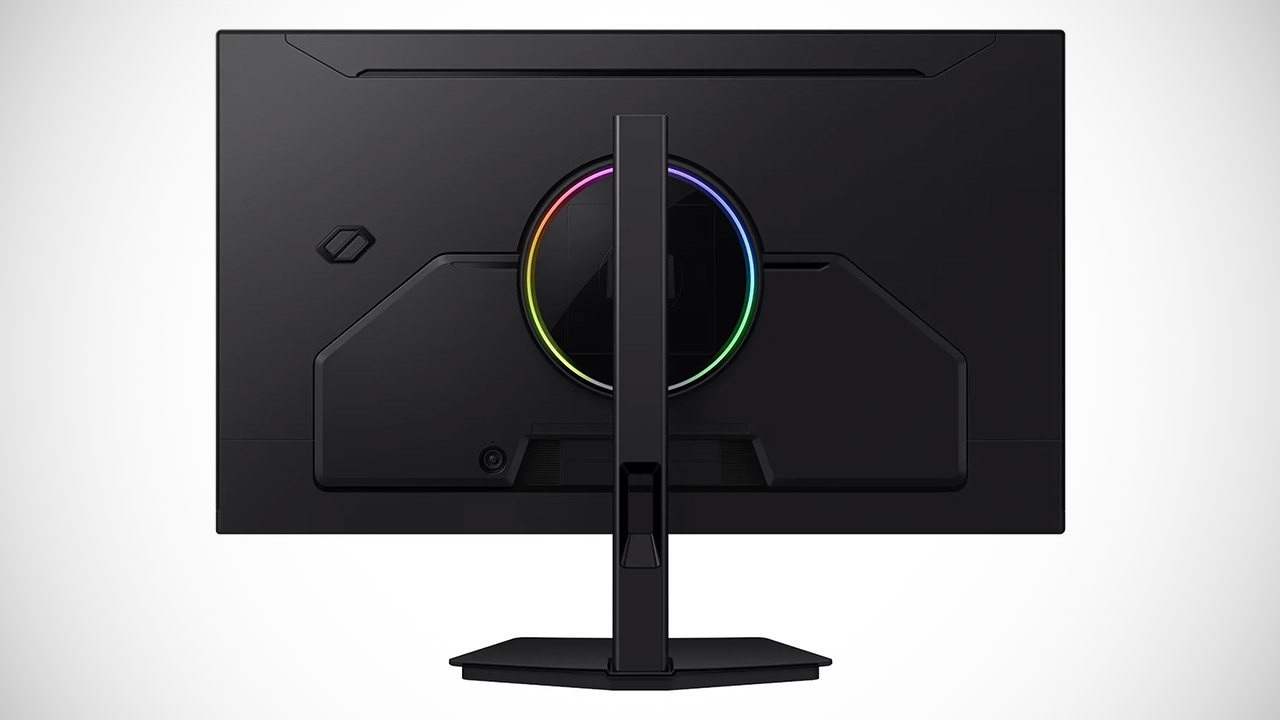
Connectivity-wise, the Odyssey G8 is designed to meet the high needs of that screen, with one top-tier DisplayPort 2.1 connection that can manage the full bandwidth without sacrificing clarity. Two HDMI 2.1 connections are available for console owners and those who want to connect numerous devices at once. The accompanying stand adjusts in almost every direction you might want, including height, tilt, swivel, and pivot, ensuring that your monitor sits perfectly for long gaming sessions. A tiny RGB light on the back provides additional lighting options without taking the eye away from the screen.
The Odyssey G8’s color performance is refreshingly realistic rather than simply trying to put up some impressive numbers, as it covers 99 percent of the sRGB region and has a 1000-to-1 contrast ratio, which is typical for an IPS screen. HDR10+ Gaming compatibility is also included, which means that brightness and contrast levels can be adjusted scene by scene in compatible titles, which is especially useful when you’re in the thick of some fast-paced action. Brightness levels are normally enough for most rooms, but do not expect to set any records.
Driving a 6K display at a playable speed necessitates some serious hardware, as recent high-end graphics cards paired with tools like DLSS are just about up to the task in modern games, but for many users, the greatest benefit will come from playing slower-paced games or combining gaming with other tasks such as streaming or content creation. We got our first look at the Odyssey G8 in action with Cyberpunk 2077, and the increased resolution made a significant difference, even if the system struggled to keep up. City streets and distant textures appeared much richer and more detailed.
The Odyssey G8 costs roughly $1600, which places it firmly in the premium bracket. We’re talking about a monitor designed specifically for enthusiasts who already have some serious hardware in their setups and want a display that will evolve with them as their gear improves. The IPS panel sacrifices perfect blacks for OLED, but the trade-off results in improved brightness constancy and crisper text, which is a benefit for everyone who isn’t simply a hardcore gamer.
[Source]

Three months ago, OpenAI cofounder Greg Brockman told me his concerns about a mounting public relations crisis facing artificial intelligence companies: Despite the popularity of tools like ChatGPT, an increasingly large share of the population said they viewed AI negatively. Since then, the backlash has only intensified.
College commencement speakers are now getting booed for talking about AI in optimistic terms. Last month, someone threw a Molotov cocktail at OpenAI CEO Sam Altman’s San Francisco home and wrote a manifesto advocating for crimes against AI executives. No one has more to lose from this reputation crisis than OpenAI.
The person tasked with trying to fix it is Chris Lehane, OpenAI’s chief of global affairs and a veteran political operative. I sat down with him this week to discuss what I’d argue are his two biggest challenges yet: convincing the world to embrace OpenAI’s technology, while at the same time persuading lawmakers to adopt regulations that won’t hamper the company’s growth. Lehane views these goals as one in the same.
“When I was in the White House, we always used to talk about how good policy equals good politics,” says Lehane. “You have to think about both of these things moving in concert.”
After working on crisis communications in Bill Clinton’s White House, Lehane gave himself the nickname “master of disaster.” He later helped Airbnb fend off regulators in cities that viewed short-term home rentals as existing in a legal gray area, or as he puts it, “ahead of the law.” Lehane also played an instrumental role in the formation of Fairshake, a powerful crypto industry super PAC that worked to legitimize digital currencies in Washington. Since joining OpenAI in 2024, he’s quickly become one of the company’s most influential executives and now oversees its communications and policy teams.
Lehane tells me public narratives about how AI will change society are often “artificially binary.” On one side is the “Bob Ross view of the world” that predicts a future where nobody has to work anymore and everyone lives in “beachside homes painting in watercolors all day.” On the other is a dystopian future in which AI has become so powerful that only a small group of elites have the ability to control it. Neither scenario, in Lehane’s opinion, is very realistic.
OpenAI is guilty of promoting this kind of polarizing speech in the past. CEO Sam Altman warned last year that “whole classes of jobs” will go away when the singularity arrives. More recently he has softened his tone, declaring that “jobs doomerism is likely long-term wrong.”
Lehane wants OpenAI to start conveying a more “calibrated” message about the promises of AI that avoids either of these extremes. He says the company needs to put forward real solutions to the problems people are worried about, such as potential widespread job loss and the negative impacts of chatbots on children. As an example of this work, Lehane pointed to a list of policy proposals that OpenAI recently published, which include creating a four-day work week, expanding access to health care, and passing a tax on AI-powered labor.
“If you’re going to go out and say that there are challenges here, you also then have an obligation—particularly if you’re building this stuff—to actually come up with the ideas to solve those things,” Lehane says.
Some former OpenAI employees, however, have accused the company of downplaying the potential downsides of AI adoption. WIRED previously reported that members of OpenAI’s economic research unit quit after they became concerned that it was morphing into an advocacy arm for the company. The former employees argued that their warnings about AI’s economic impacts may have been inconvenient for OpenAI, but they honestly reflected what the company’s research found.
Packing Punches
With public skepticism toward AI growing, politicians are under pressure to prove to voters they can rein in tech companies. To combat this, the AI industry has stood up a new group of super PACs that are boosting pro-AI political candidates and trying to influence public opinion about the technology. Critics say the move backfired, and some candidates have started campaigning on the fact that AI super PACS are opposing them.
Lehane helped set up one of the biggest pro-AI super PACs, Leading the Future, which launched last summer with more than $100 million in funding commitments from tech industry figures, including Brockman. The group has opposed Alex Bores, the author of New York’s strongest AI safety law who is running for Congress in the state’s 12th district.

William records birthday message during Duchy housing development visit

North Carolina sues Vietnam’s VinFast over delayed EV project

US Congressman’s ARMA Bill Would Codify 20-Year Strategic Bitcoin Reserve


-

 Crypto World6 days ago
BloFin War of Whales 2026 Grand Prix opens registration for $5M trading championship
-

 Fashion6 days ago
Weekend Open Thread: Theory – Corporette.com
-

 Crypto World6 days ago
E-Estate Announces 1 Year Live: Washington DC Summit as Real Estate Tokenization Enters Its Next Phase
-

 Tech7 days ago
Tech Moves: Microsoft AI leader jumps to OpenAI; former AI2 exec joins Meta; and more
-

 Tech6 days ago
Google reimburses Register sources who were victims of API fraud
-

 Business6 days ago
H&R Real Estate Investment Trust (HR.UN:CA) Q1 2026 Earnings Call Transcript
-

 Entertainment7 days ago
David Letterman Returns to Late Show, Blasts Cancellation
-

 Sports6 days ago
Napoleonic enters 2026 Doomben 10,000 field via Abounding withdrawal
-
 Crypto World6 days ago
BeInCrypto 100 Institutional Awards Nomination: KAST for Best Digital Assets Neobank and Best Digital Assets Fintech
-
 Crypto World6 days ago
Bitcoin Battles US Bond Nerves With BTC Price Dip Toward New May Lows
-

 Crypto World6 days ago
ICE and CME urge US regulators to curb Hyperliquid energy trading
-
 Crypto World6 days ago
Wall Street’s Boldest Gold Prediction Has Russians Rushing to Buy
-

 Fashion5 days ago
On the Scene at Gucci’s Cruise Show in New York City: Mariah Carey, Kim Kardashian, Lindsay Lohan, Iman, and More!
-
 Crypto World6 days ago
IREN closes $3 billion convertible notes deal amid AI infrastructure expansion
-

 Fashion6 days ago
Trending Western Style Vests Perfect for Summer
-

 Politics6 days ago
Watch: far-right flag-fanatics run over victim, attack locals – Setup By the Left wing for your entertainment
-
 Fashion7 days ago
Creative Ideas for Custom T-Shirts
-

 Fashion5 days ago
Amazon Sundays: Memorial Day Hosting
-
 Fashion7 days ago
Philip Jones Wedding Jewellery For Women
-

 Crypto World9 hours ago
Blockchain.com files with SEC for U.S. IPO
You must be logged in to post a comment Login