

Politics
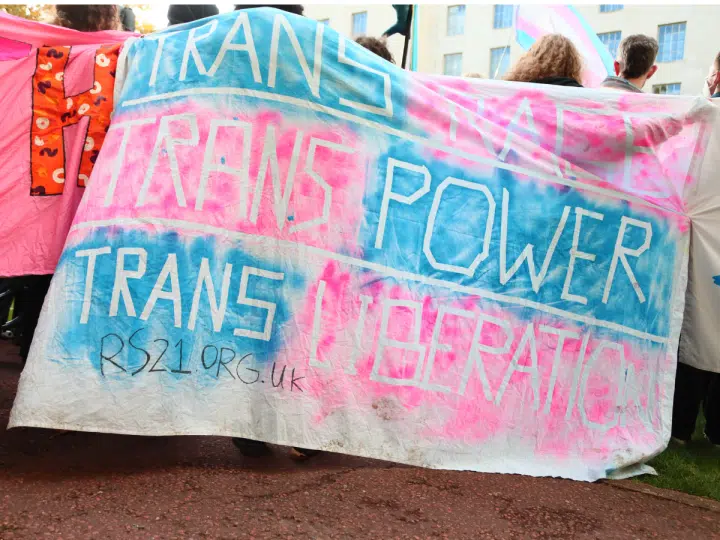
New EHRC guidance both clarifies and complicates the legal rights of trans people



There is a familiar refrain that follows my partner and I as we navigated the UK’s public bathrooms. As a gender-nonconforming couple, we’re painfully aware of the transphobic discourse that overshadows our daily lives. Approaching a set of bathrooms whilst out and about, and not wanting to draw more attention to ourselves, one or both of us will groan, before announcing with resignation:
Time to do ‘gender’…
It will be a situation familiar to many trans people. The so-called ‘bathroom ban’, fought for by anti-trans activists, has become notorious for making the lives of cis and trans people alike more complicated. Not only is it an infringement on the human rights of trans people themselves, but it inevitably leads to the policing of people of all gender expressions. Cis people too find themselves viewed with suspicion and even harassed for not looking a ‘certain’ way.
It is a situation unlikely to change in the near future. A new ‘code of practice’ document released by the Equality and Human Rights Commission (EHRC) has set out new (but no less convoluted) guidance on how public institutions and services are to cater to those with ‘protected characteristics’ and avoid discrimination.
Despite its claims to provide clarity with regards to various “everyday situations”, it’s a total mess of legalese that fails in simplifying the lived experiences of cis and trans people in Britain today.
Responses to the update
In an explainer video posted on their website, EHRC chair Mary Ann Stephenson says:
The code outlines how the Equality Act 2010 works in relation to the provision of services, public functions, and associations and explains the steps that should be taken to ensure people are not discriminated against.
The document itself claims to be:
based on the principle that people with the protected characteristics set out in the [Equality] Act should not be discriminated against, harassed or victimised when using any service provided publicly or privately.
TERF groups have already claimed a tentative victory in response to the new guidance.
Lobby group Sex Matters argues:
Nothing in the code of practice changes the Equality Act 2010. What it does is provide detailed, practical guidance on how to interpret the act.
In particular, the group claims that previous guidance on Equality Act:
was ambiguous about the relationship between the protected characteristics of sex and gender.
For example, the old guidance suggested that:
a service provider … should treat transsexual people according to the gender role in which they present.
This notion of “presentation” was underpinned by the principle of “self-identification”. Regardless of how a service provider visually perceives a person’s gender, they should defer to how that person identifies themselves.
Sex Matters argue that the “new code of practice has removed that error”, leading trans advocacy group TransActual to conclude:
The newly published EHRC Code of Practice leaves trans people in the UK today with less rights than they had prior to last year’s Supreme Court ruling.
But does it really? The new guidance certainly gives TERFs more ammunition in their never-ending lawfare campaigning against people who are just trying to live their lives, but claims that it removes previous errors of interpretation around certain social interactions appear to be overstated.
Summarising analysis from the Good Law Project, which argues that the “updated code of practice rows back on some of the most harmful elements in the previous draft”, trans rights lead Jess O’Thomson explains:
It’s good to see clear guidance that associations can be for multiple protected characteristics – so you can have an organisation for both cis and trans women. And the suggestion of checking people’s birth certificates before they can use the toilet has been axed.
But it still treats trans people as a third sex, suggesting they should be made to use separate spaces – entirely ignoring the harm this causes, and human rights law. We will keep fighting this discriminatory approach.
‘Biology’ as a euphemism
The problems that persist with the new guidance all come down to different interpretations of sex and gender. In short, the guidance seeks to clarify the legal definition of these terms, and how public service providers can navigate the EHRC’s legal framework in a variety of hypothetical scenarios. What the document provides, then, is legal cover for individuals and organisations. But it remains the case that the law does not neatly cohere with (nor determine) the lived experiences of those concerned.
For example, what does it mean when the guidance says it uses “the expression ‘biological sex’ to describe the sex of a person at birth”? To cut through the vague euphemism, it means the bathroom you use should be determined by what genitals you have. As a foundation that is supposed to alleviate the complications of ‘perceived’ gender expression, it doesn’t hold up under scrutiny.
Many intersex people, for example, have testified to invasive and discriminatory medical treatment on the basis that their “sex at birth” is no less determined on a medical professional’s perceptions. It has long been the norm that people born with ambiguous genitalia are subjected to decisions made about their bodies by doctors, who even encourage parents to consent to surgeries that can ‘correct’ their child’s genitals and make them look more ‘normal’.
Outside of medical professionals and intimate partners, however, who else is going to be interacting with our genitals during the day-to-day? Certainly not a random Starbucks employee! It is for this reason that so many of the hypothetical situations lists in the new guidance unavoidably fall back on other people’s perceptions of an individual’s gender expression.
The absence of trans testimonies
Contradictions continue to hamper this most irrational of debates because many of the things that determine our gender cannot be seen.
Speaking personally, as a trans woman, my hormone profile is not that of a biological man. A combination of testosterone blockers and a hormone replacement therapy has fundamentally changed my inner emotional landscape. As far as outward appearances go, I continue to be misgendered often. But many of the women in my family present as more ‘masculine’ than most anyway. In fact, compared side by side, I’m the spitting image of the woman that gave birth to me.
Too much information? Yeah, probably! The EHRC’s new guidance goes to great lengths to try and ‘clarify’ how businesses and public bodies can avoid falling foul of the UK’s discrimination laws, but the fact remains that people’s lived experiences are more diverse than the law could ever truly account for. This is a problem that the EHRC – whenever it does decide to listen to trans people – cannot avoid. As a result, ‘clarification’ paradoxically means even more ‘complication’.
Prioritising the legal definitions of sex and gender over and above the reality of trans lives will always be reductive, further entrenching a ‘hostile environment‘ for trans people. But that is precisely what lawfare-waging TERFs want. The more convoluted the law, the colder the chilling effect on LGBTQ people’s freedoms of movement and expression.
At the end of the day, it’s not the law that needs to be changed, but the general attitudes towards trans people in this country. The law may influence this, but the problems have taken root far deeper than statutes.
Featured image via Getty/Ian Forsyth
By Em Colquhoun

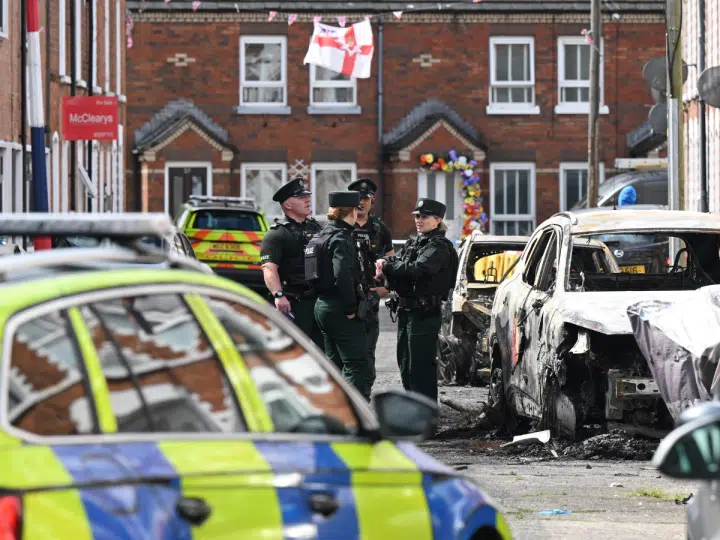
Politicians and social commentators from across the UK have taken to social media to condemn the racist riots that have swept Belfast – and the shameless far-right agitators who helped fan the flames.
As the Canary previously reported, rioters carried out a wave of pogroms in Belfast and nearby towns over the last two days, carrying out arson attacks on homes belonging to people of colour. The racists also attacked businesses they perceived as the property of ‘foreigners’, blocked roads, and set fire to vehicles.
The hate crimes followed a knife attack, reportedly perpetrated by a Sudanese man, on the evening of 8 June in North Belfast. Police charged the suspect, Hadi Alodid, with attempted murder. The victim suffered injuries to his neck, back and both eyes, losing use of the left eye.
In response, Democratic Unionist Party (DUP) and Traditional Unionist Voice (TUV) politicians, along with English race-baiters like Nigel Farage and Rupert Lowe carried out varying degrees of the familiar song and dance: condemning the violence whilst also using dogwhistles and whipping up further racial hatred.
Belfast: shameless exploitation
However, Green leader Zack Polanski condemned the ministers stoking the riots for political gain:
Politicians who fanned these flames should hang their heads in shame.
Time and again we've seen this story play out. Single incidents used to fuel a far right narrative – and communities across the nation paying the price. https://t.co/kyDQWoE9EB
— Zack Polanski (@ZackPolanski) June 10, 2026
North Herefordshire Green MP Ellie Chowns also echoed similar sentiments:
Horrified by the attempts of bad-faith actors to use Monday's brutal attack as justification to enact violence, disorder, and the targeting of immigrants and people of colour across Belfast.
Hatred has no place in the UK – nor should politicians who seek to incite it. — Dr Ellie Chowns MP (@EllieChowns) June 10, 2026
The Lib Dems’ Ed Davey voiced his shock, whilst also pointing out the far-right’s shameless weaponisation of fear:
I am horrified by the disorder and racist violence in Belfast last night.
Far too often now, we see extremists exploiting people’s anger and grief to spread hatred and violence – with the help of divisive algorithms on social media.
This has to stop.
— Ed Davey (@EdwardJDavey) June 10, 2026
A ‘chilling display of racist violence’
Labour’s Nadia Whittome, meanwhile, didn’t mince words:
The attempted murder in Belfast was an appalling act of brutality by one individual. It has been universally condemned and the perpetrator has been arrested and charged.
Torching the homes of innocent people because they’re not white is a truly chilling display of racist…
— Nadia Whittome MP (@NadiaWhittomeMP) June 10, 2026
A “chilling display of racist violence by organised fascists” – if only half our MPs were so willing to call these riots what they are.
Your Party co-leader Jeremy Corbyn posted a statement on the “utterly sickening” violence on display. He also called out Nigel Farage’s dogwhistle for bringing us to this point:
When politicians demonise migrants and call for "pure, cold rage", people listen.
My statement on the sickening far-right violence in Belfast. pic.twitter.com/KLAuXR7XN1
— Jeremy Corbyn (@jeremycorbyn) June 10, 2026
Likewise, the Alliance Party’s Sorcha Eastwood turned her rage against Farage’s counterparts in Northern Ireland:
A child being rushed from a burning building by a riot police officer into a police landrover as everything goes up in flames.
I hope those who fanned the flames are content with themselves. Because they knew this violence was coming. You can't light the touch paper and expect… pic.twitter.com/kCOEQ5rnEH
— Sorcha Eastwood MP (@SorchaEastwood) June 10, 2026
Divided we fall
Meanwhile, outside the halls of Parliament, campaigning researcher Zoe Gardner set up a stark dichotomy:
Dress it up however you like – this racist violence has been deliberately whipped up by far right politicians & their cowardly wannabes in the supposed mainstream.
You are either fighting against the anti-migrant narrative or you are with these thugs. https://t.co/OOMmuvDU2W
— Zoe Gardner (@ZoeJardiniere) June 9, 2026
Turn Left Media editor Ben Mclaine pointed out the actual “two tier policing” at play:
Strange to think that the far right probably did more criminal damage in a single night than Palestine Solidarity movements have done in the past three years.
Two tier policing, indeed. — Ben Mclaine (@BenMclaine) June 10, 2026
It seems that several commentators had it in for Farage’s talking points, at that. He threatened more riots, and now we’re seeing arson attacks on the streets of Belfast.
Journalist Owen Jones also pointed out the hypocrisy of the far-right’s reaction. However, his thread (and it is a thread) focused on the lack of riots following similar crimes by white extremists:
In 2024, a white neo-Nazi tried to behead a Kurdish barber.
Did Patrick Christys say:
"I preferred our country before white men started trying to behead people in the street"?
No. He said zilch. Both the perpetrator and the victim had the wrong skin colour for condemnation https://t.co/ljKO6vwXxI pic.twitter.com/R1EFts9TFW
— Owen Jones (@owenjonesjourno) June 9, 2026
Last but not least, the Good Law Project hit several of the same notes we’ve seen so far:
An isolated tragedy in Belfast is being used as an excuse for racist thuggery, all in the name of patriotism.
Musk, Farage and their cronies are spreading hate, and trying to divide our communities.
But we won't let them. We know the truth: there's many, many more of us than… pic.twitter.com/Gw3pgJ3xGw
— Good Law Project (@GoodLawProject) June 10, 2026
The UK is currently speeding along head-first in its descent into fascism. The far-right is using any and every excuse they can to stir up white-supremacist violence and racial hatred.
We cannot fight this tide by offering watered-down versions of Reform’s talking points, packaged up as the ‘moderate alternative.’ Those of us who oppose these racist riots must stand with immigrants and people of colour in the UK.
Divided, none of us can hope to win out.
Featured image via Getty/Charles McQuillan
By The Canary
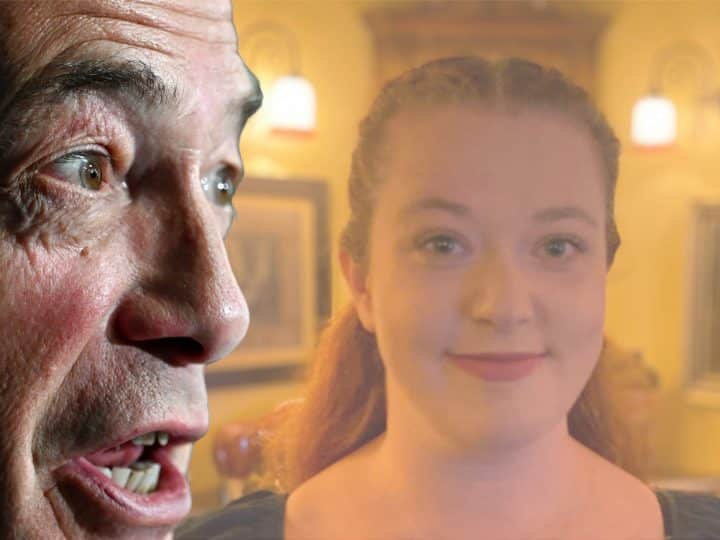
On 9 June, we reported that ex-Reform councillor Charlotte Kelly had defected to the Tories. Kelly blamed the move on sexism and bullying from her former colleagues. And since then, she’s come forwards to provide more information on what went down:
Ex-Reform UK councillor Charlotte Kelly admits she’s embarrassed to have ever joined the party.
She defected to the Conservatives yesterday – claiming she was bullied and faced sexism.
Reform UK says she was the source of ‘disharmony’ within the Staffordshire group. pic.twitter.com/kAtcvcVHfR — Lewis Warner (@LewisJWarner) June 9, 2026
Former Reform councillor feels ’embarrassed’
In the video above, Kelly says:
I feel really sad and I feel embarrassed that I believed everything that they said because I fully bought in. I did. Now I just feel very let down.
It should be pointed out that the things Reform promises publicly are also very bad. And given the party’s hostility towards various minority groups – and women – Kelly shouldn’t be all that surprised to have discovered they were hostile towards her.
At the same time, this obviously doesn’t excuse the alleged bullying she had to put up with. We just hope Kelly’s experience helps others to avoid what she describes having experienced.
When asked how the last few days have been, Kelly said:
Stressful.
ITV’s Lewis Warner then explained:
Charlotte Kelly joined Reform UK hoping to make Leek a better place. But she says her time in the party has only made her own life worse. She alleges bullying, sexism and a culture that left her feeling isolated and ignored.
It would be interesting to know which Reform policies Kelly thought would improve her area, but the interview doesn’t get into that. Kelly responded:
It just seems to always be targeted at me. It’s not the men, it’s always me.
Kelly claims a female colleague told her the male Reform councillors couldn’t help themselves because of their age. We’re not sure how old they all are, but if this statement is true, they’re too old to be in the workplace.
Freeing
Kelly claims Reform does not tolerate any dissent whatsoever, and when asked how the party treats councillors, she answered:
I would say that as long as you do as you’re told, they’re fine, and as long as you don’t expect anything from head office, you just pretty much get left.
Kelly added that she had no freedom to express opinions, and that:
They want you to vote and say and just do as you’re told and whether or not you think it’s right, which isn’t… And I started to ask questions and speak out. And when I did, I was, especially from one particular person, reacted with swearing, abuse and… are really awful behaviour.
Kelly isn’t the first Reform councillor to make such claims, as we reported in this piece:
Defector Rob Parsonage said of the party:
He added: “We were being sent orders from above – they wanted us to vote down everything net zero and fight DEI [diversity, equity and inclusion] – but in the end it turned into a conflict between the national agenda and the role of a councillor.”
Councillor Nick Brown, meanwhile, said:
When we took control [of Durham Council], I believed the messages from Nigel Farage that we would make big changes for people living locally.
But really, whenever we had a local issue, we were told to follow the party line. Not to rock the boat, bring press attention on the council. We all turned into Nigel’s yes-men – ordered to be on best behaviour to help him get to power.
Vetting issues?
Seemingly talking about the systemic issue of sexism, Kelly said:
they are not vetting correctly to see whether or not people have these views. When you present these issues and say that they’re there, that they’re not doing anything about it.
Reform definitely has an issue with sexism, much like it has an issue with every other form of bigotry. We don’t think the issue is that the party’s vetting is ‘failing’, however; we think Reform simply doesn’t care if its politicians hate women or people from minority groups.
Featured image via Leon Neal (Getty Images)
By Willem Moore


4 min read
We were promised a statutory register of lobbyists.
“We were promised a statutory register of lobbyists. Instead, we have a skeleton register of only consultant lobbyists, exempting 80 per cent of the industry. The word ‘transparency’ in the title is a misnomer. It misses most lobbyists.”
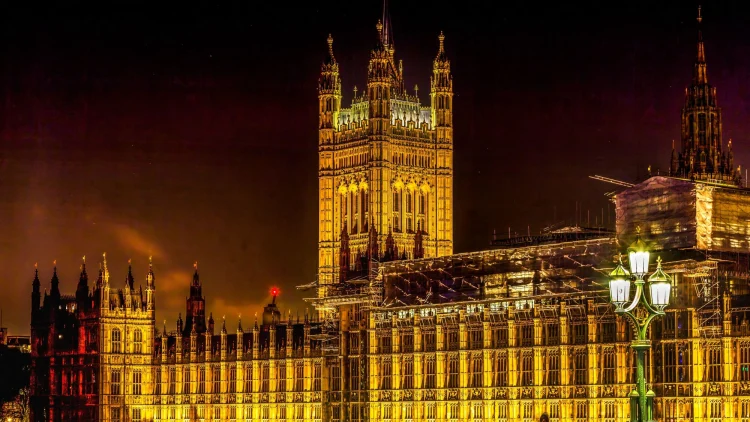
Those were my words in 2013, as the shadow cabinet office minister, in the Second Reading of the Transparency of Lobbying, Non-Party Campaigning and Trade Union Administration Bill (now the 2014 Lobbying Act) because, by failing to include in-house lobbyists on the register, the legislation was doomed to fail. The law would fail to provide a sufficient level of transparency for a healthy democracy, and also fail to prevent lobbying scandals, thus fuelling public suspicions about the cosy relationship between business and government.
In the 13 years that followed, I have regrettably been proved right. Lobbying scandals continue to make the front pages while public trust in our political institutions further declines.
The Chartered Institute of Public Relations (CIPR) – the professional body for lobbyists – said something similar in 2013, that “the lack of engagement with the industry is reflected in a poorly drafted and narrow definition which does not accurately reflect the work undertaken by lobbyists”. It has therefore campaigned to strengthen Westminster’s lobbying laws and for greater transparency, its own polling finding that over two-thirds of lobbyists would welcome greater scrutiny of their work. When an industry body and its members are calling for greater regulation, you know things need to change.
Working closely with the CIPR over the last few months, I’ve seen how scandals like the Greensill affair damage the public’s view of politicians but importantly also undermines organisations which need to engage with government, as well as individuals who work for them. We all benefit from our politics being informed by real-world experience but done in a way that is transparent and accountable. As a parliamentarian and a former lobbyist, I understand that better than most. My own scrutiny of legislation has been greatly enhanced by hearing directly from those it impacts. Such dialogue, however, should be in the open and not under the radar.
This is why I was delighted to introduce my Private Members’ Bill in the Lords to expand the register of lobbyists to include in-house lobbyists. It is extraordinary that the present legislation only captures four per cent of lobbying of government, according to Transparency International, since only consultant lobbyists have to register, ignoring those employed in-house whose work is completely opaque. Adding this more significant (in size and scope) activity will give the public, journalists, academics and other interested parties, a truer picture of who is seeking to inform and influence government.
It’s embarrassing – and wrong – that anyone can find out more information about who is lobbying in Ireland, Scotland, Germany, Canada, the EU, the USA, Australia and France than about who is lobbying in Westminster, the so-called Mother of Parliaments. We should demand better. Those democracies have more records on their lobbying registers than ours. The UK register has 291 records, the Scottish one 1,754.
In opposition, Labour pressed amendments to the-then bill to ensure in-house lobbyists were included on the register, and before the election Labour promised a different kind of politics, with the-then deputy leader, Angela Rayner, promising movement on lobbying. However, we’ve yet to see tangible action on this. Successive high-profile scandals led the Prime Minister to ask the Ethics and Integrity Commission to review lobbying, disclosure and access to government. We should hear its recommendations next month.
What is clear to Parliament, the public and lobbying professionals is that the status quo is unsustainable, and can’t be solved by tinkering or better enforcement. It needs legislation that is fit for purpose to help ensure we have no more scandals to undermine trust in politics. My bill, which will have its Second Reading on 3 July, is the first, but important step, in this arena.
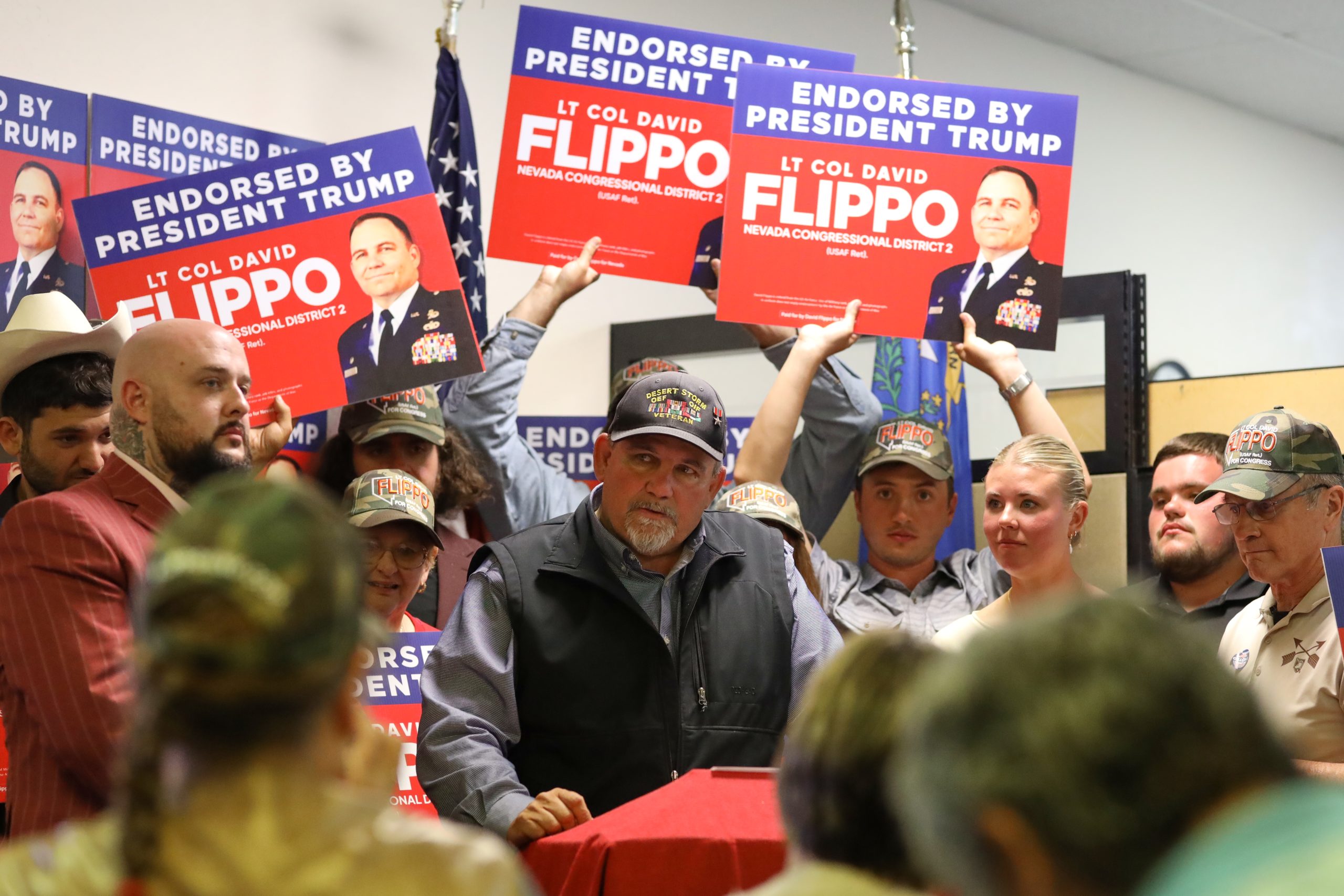

David Flippo, a retired Air Force lieutenant colonel who earned President Donald Trump’s support, won the GOP primary to replace retiring Nevada Rep. Mark Amodei.
The race in Nevada’s 2nd District was a proxy war between Trump and prominent state Republicans, many of whom backed former state Sen. James Settelmeyer, including Amodei and GOP Gov. Joe Lombardo. Flippo ended up emerging victorious on Wednesday from a crowded, 13-person Republican field.
The victory continues Trump’s 2026 hot streak in GOP primary endorsements, marred only by a hiccup in last week’s Iowa gubernatorial primary. Trump backed Flippo in a Truth Social post in late May, less than two weeks before Election Day.
Flippo campaigned as a hardliner on immigration and transgender issues, and he slammed Settelmeyer as a “woke liberal” in ads. But Settelmeyer’s opponents took issue with Flippo, a longtime Las Vegas resident who only recently purchased property in Reno, attempting to run the state’s lone safely Republican district.
Amodei went as far as saying Trump “made a mistake” in a post on X.
But Flippo prevailed, riding support from Trump and Turning Point Action. He will enter November’s election as the heavy favorite in a district Trump won by 14 points in 2024.
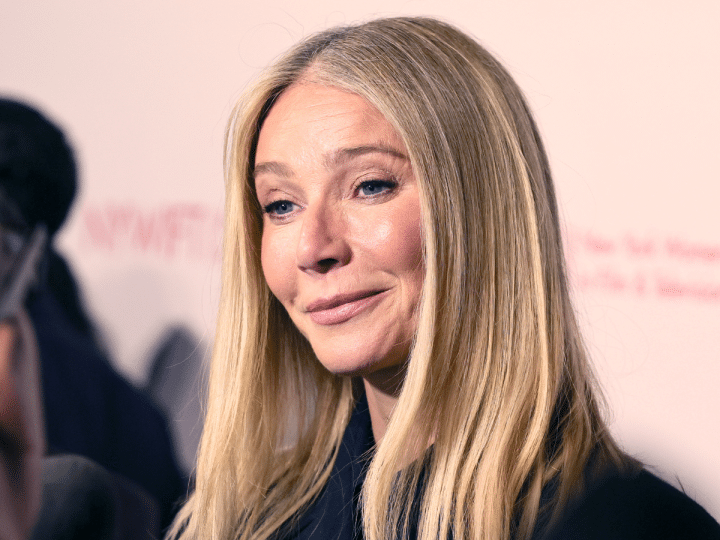
Gwyneth Paltrow has joined fellow wealthy opportunists eager to support Israel in its settler-colonialist ambitions to exploit and profit off of stolen land taken from Palestinians.
Becoming the face of the 51 Park Herzliya luxury apartment settler-project in Israel, Zionist Paltrow has sought to upsell the new-built apartments with the creative direction of Israeli agency aptly named ‘Why Worry’.
However, Israel’s existence itself has demanded the displacement, death and destruction of the Palestinians who have been indigenous to the land for centuries. They are also currently waging a genocide against the indigenous population, with a clear stated aim to settle – steal – further territory.
Gwyneth Paltrow props up Zionist genocide
Paltrow’s move to make these illegal development projects more attractive to foreigners signals the scary fact that wealthy and powerful people simply do not care about the horrific human cost of Zionist occupation.
Moreover, this comes ahead of a planned event on Sunday 14th June called the ‘Great Israeli Real Estate Event’ which MP Richard Burgon has rightfully labelled “disgraceful”.
American actress gwyneth paltrow faces huge backlash after she promoted for $10M penthouses in Israel while Israel is committing genocide in Palestine pic.twitter.com/Pjcw4NsSTu
— LPC (@landpalestine) June 9, 2026
From one colonialist project to another
Paltrow filmed the advert in New York, showing the privilege of super-wealthy individuals in the US whilst grossly acting as if they are ‘normal’ – when the reality is most would never possibly be able to relate to her lifestyle. She then had a cheesy, and implausible, line when getting into a NY cab asking the driver to take her to Herzliya in Zionist ‘Israel.’
However, from its very inception, Israel has seen fit to murder, terrorise, displace and disavow Palestinians in order to establish its own ethnonationalist state. Dating back to the Nakba, hundreds of thousands of Palestinians have been forced out of their homes, one brutal way or another, for Zionists to build luxury properties on stolen land.
Moving into Lebanon, that bloodstained expansionist project to build “Greater Israel” is ongoing with little getting in its way.
Coincidentally, the US’ rise as a ‘global superpower’ is inseparable from a history of violent expansion, indigenous displacement, and mass destruction across the territory. This lends a pretty sinister and gross irony in Paltrow doing videos in one colonialist state to upsell properties in yet another settler, occupying state.
This latest development is built by Aviv Melisron and the name of its chosen creative agency speaks volumes – ‘Why Worry’. After all, it is increasingly clear that these elitists genuinely have no worries or concerns about the murderous projects they champion, empower and embolden.
Thus, ‘Why Worry’ about the deaths of hundreds of thousands if there’s a tidy profit to be made by Western capitalists like Paltrow.
UK hosting settler-colonialist real estate event in London
This sickening advertisement from Gwyneth Paltrow comes ahead of an event in London on Sunday which is seeking to sell homes in these illegal developments to pro-Zionist investors and potential homeowners. This, in turn, will increase British people’s involvement, and complicity, in the genocide continuing in Gaza and the settler-terrorism in the occupied territories.
Thankfully, Richard Burgon has taken the government to task over allowing such a bloodstained real estate event to go ahead in our capital city:
The ‘Great Israeli Real Estate Event’ is to be held in London this Sunday.
This disgraceful event will involve the sale of land stolen from Palestinians in illegal Israeli settlements.
Today, I called for the Government to ban this event. pic.twitter.com/QoFSFNIxCn
— Richard Burgon MP (@RichardBurgon) June 9, 2026
Burgon: “Ban this event selling off land illegally in Palestine”
Richard Burgon has consistently opposed Israel’s genocide in Gaza and consistently backed Palestinian claims to their stolen land, as settlement building in the West Bank continues to expand with absolute impunity.
Calling for stronger action by the government, he stated in the House of Commons:
Let’s just imagine, if this weekend in our capital city there was a great Russian real estate event, selling off Ukrainian land – Quite rightly, without hesitation, the Government would move to ban such an illegal event.
This weekend, in London, there is the great Israeli real estate event. Openly advertising the illegal sale of land in illegally occupied Palestinian territories. The government has rightly recognised the state of Palestine, surely given that, we should now move to ban this event selling off land illegally in Palestine in our capital city this weekend.
Foreign secretary Yvette Cooper responded by agreeing that these are illegal settlements, however refrains from any real action to block the event:
Well, we are pursuing this particular event and also if there are any cases where we find that there are breaches of UK law we will also pursue those issues as well.
But look, there is a wider issue here which is that nobody should be advertising, in the UK, illegal settlements. Nobody should be pursuing those illegal settlements. No businesses, no organisations should be getting involved in them and we have shown our willingness and determination to impose sanctions on organisations that do, just as we have set out today.
We will continue to do further sanctions, where we have the opportunity to do so, because support for illegal settlements is wrong.
Happy enough to ban left-wingers from UK, but never against Zionists
It is worth noting, though, that the government had no issue blocking entry of pro-Palestine Cenk Ugur and Hasan Piker so they couldn’t physically attend an Oxford Union lecture. Thankfully, the union welcomed them remotely, but the state had no trouble using its ‘might’ against advocates for Palestine.
Therefore, it stands to reason that Cooper could indeed do far more to actually stop this real estate event in London – it just requires a motivated political will to actually stand up to murderous Zionist Israel.
However, that political – or frankly, moral – will seems completely out of reach for this Israeli-captured and billionaire-corrupted former party of the working class.
Featured image via Getty/Theo Wargo
Politics
West Ham co-owner, nicknamed ‘Sultan of Sleaze’, banned from being alone with women and girls
Content warning: This article contains descriptions of sexual abuse and harrassment
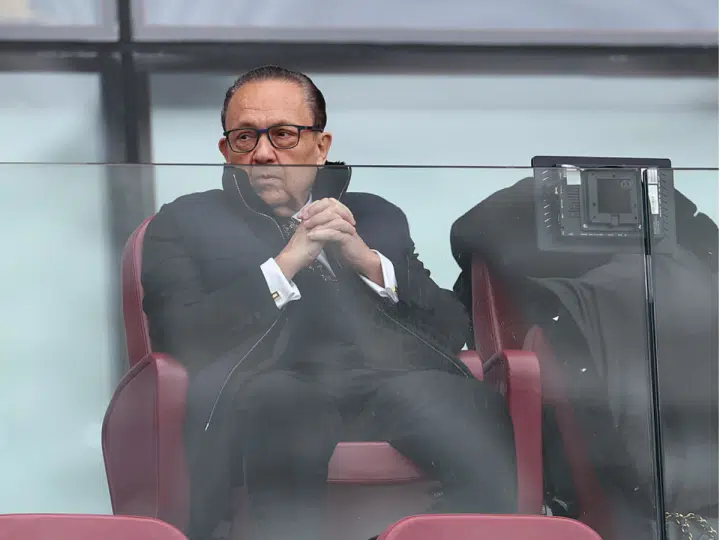
The billionaire co-owner of West Ham Football Club, David Sullivan, resigned on Saturday ahead of a joint BBC and Times investigation alleging he’s a sexual predator.
The Panorama documentary broadcasts allegations made by several women that Sullivan abused his position of power and influence to prey on women for sex.
Since 2023, officials have banned Sullivan from being alone with members of the women’s and youth teams. An investigation uncovered concerns serious enough to prompt safeguarding restrictions around female players.
The porn tycoon has insisted this was not a “disciplinary ban”, but it’s increasingly evident that it was a preventative ban to protect women and girls from harm.
However, like most sexually abusive men, Sullivan refutes the allegations as having “never happened”.
His resignation letter from West Ham read:
After a lifetime spent building businesses in the adult industry, in which I have met thousands of women, it is sadly inevitable that a small number of improper conduct claims are being made against me.
As a result, we find ourselves wondering how many women may have endured such abuse in their youth but stayed silent over fears they’d be disbelieved due to Sullivan’s status.
David Sullivan was branded the ‘Sultan of Sleaze’ after building an empire of 150 sex shops and cornering the adult entertainment market before taking joint control of West Ham United in January 2010.
“I am not embarrassed by what I have done,” Sullivan told The Times in 2007.… pic.twitter.com/scPpQDGd4K
— The Athletic | Football (@TheAthleticFC) June 9, 2026
West Ham co-owner always been a sexual predator
The BBC and Times investigation into Sullivan’s alleged abuses unearthed allegations made by eight women. Each had spoken to the police about Sullivan’s inappropriate behaviour, but no charges have been levelled against the billionaire.
However, it isn’t hard to see merit in the victims’ claims. Sullivan’s resignation before the documentary aired arguably signals a guilty conscience and once again, an attempt by an abusive man to slink into the background to evade consequences for his lurid behaviour.
Once branded the ‘Sultan of Sleaze’, Sullivan grew his wealth through sex shops and pornography before becoming co-owner of West Ham in 2010.
The sexual misconduct allegations span decades, coming from women who were in their late teens and early 20s. They were aspiring young models seeking opportunities in the adult entertainment industry.
People, especially men, will undoubtedly try to blame the women for seeking work in an industry many view as exploitative and harmful. I disagree. Women cannot be blamed for pursuing opportunities to earn money.
It’s also incredibly hypocritical of men when they built, shaped and continue to profit from these industries.
West Ham and FA have some explaining to do
The former minister for victims and violence against women and girls, Alex Davies-Jones, expressed her horror at the allegations, while saying she wasn’t surprised by them.
The Labour MP also called for a review of how police handled disclosures made by potential victims of sexual abuse, raising fresh questions about whether authorities took those claims seriously enough.
Culture secretary, Lisa Nandy, joined this call.
She said:
If it is the case that an investigation concluded that there were sufficiently serious allegations to warrant a ban on contact with the youth and women’s teams, then the FA must explain this decision and why no further action was taken.
I expect a full and urgent explanation from the FA and West Ham as to how these incredibly serious allegations have been handled.
Apparently David Sullivan was known as “blowjob or no job”.
Wayne Couzens was known as “The Rapist”.
Peter Mandelson was known as “The Prince of Darkness”.
Maybe when someone tells you who they are via a ‘nickname’ you believe them.
— Alex Davies-Jones MP (@AlexDaviesJones) June 9, 2026
Survivor recalls frightening ‘audition’
An ex-model described the terror she felt during an ‘audition’ when she realised she was locked in the room with Sullivan.
He lured her with promises of securing national press, but said she would need to be “one of his special friends”.
She told the BBC:
[To Sullivan] If you think I’m going to sleep with you to get in the paper, you’ve got another thing coming. He looked very shocked as I said that. And then said, “What, not even a blowjob?”.
***
I go to the door and realise it’s locked. At that point, I was like, “Open the fucking door, open the fucking door now”.
This horrifying story will undoubtedly trigger traumatic experiences for many women and girls. It also reiterates the importance of a serious conversation about why society places the burden of safety on women and girls and ‘preventative measures’, rather than holding abusive men accountable.
The failing of the football industry
The FA and West Ham believed introducing preventative measures were sufficient — but can they honestly say they went far enough?
After all, Sullivan said:
I saw it as a meaningless restriction, as it didn’t impact on my work in any way, therefore I accepted it for a quiet life.
Some men are now attempting to make out that Sullivan, the alleged perpetrator, is a victim of defamation.
The @BBC would face serious legal action if they repeat disgraceful lies about David Sullivan. He is a brilliant self-made entrepreneur who has done a wonderful job for West Ham & does huge unsung work in the community. You have to question the motivation of any defamatory smears pic.twitter.com/sWfQhHtXVC
— William Storey (@richenergyceo) June 6, 2026
It’s time rich, powerful men face accountability
Back in 2008, this wannabe-Playboy billionaire lauded his behaviour.
I have given an awful lot of people a lot of pleasure and I have never hurt anyone.
Needless to say, plenty of the people named in the Epstein files would no doubt offer the same defence of their behaviour. But that’s part of the problem: powerful men always seem to have a ready-made excuse.
What accountability have these men actually faced? A few bad headlines? Some uncomfortable interviews? Maybe an angry opinion piece or two. Beyond that, very little. No serious consequences. No meaningful punishment.
The men responsible carry on with little disruption to their lives while women bear the consequences. Too often, those responsible evade accountability while survivors bear the consequences for years to come. When that pattern repeats itself time and again, talk of justice begins to ring hollow for many female victims.
Therefore, we hope to see greater pressure placed on the police. Authorities must start to intently listen to victims of sexual abuse and take their allegations seriously. For too long, there has been a reluctance to confront perpetrators head-on, often out of fear of causing offence or attracting controversy.
Victims deserve better than that. They deserve to be heard and they deserve a genuine effort to deliver justice.
Featured image via Justin Setterfield/ Getty Images

The US has bombed two reservoirs in Sirik, Iran, leaving over 20,000 people without access to fresh drinking water.
The strikes heavily damaged both reservoirs, which supply the Bemani and Kouhestak areas of Sirik town.
20,000 people in Iran’s Hormozgan province are now without drinking water after strikes reportedly destroyed water infrastructure in Sirik.
Two concrete storage tanks, 500 and 2,000 cubic meters, plus all mechanical installations supplying Kohstak city and 10 surrounding… pic.twitter.com/lpFSHT24ra
— Mario Nawfal (@MarioNawfal) June 10, 2026

Trump’s army illegally bombed around 20 sites, including the southern cities of Jask, Sirik, Goruk, Bandar Abbas and on Qeshm Island in the Strait of Hormuz.
This was supposedly ‘retaliation’ for Iran downing a US Apache Helicopter, which was patrolling the Strait of Hormuz. A US official said an Iranian drone collided with the Apache, causing it to crash.
Several US airstrikes were reported on the coastal cities of Sirik, Qeshm, Minab & Bandar Abbas.
In my opinion, this looks like a disproportionate attack, considering the Apache was violating Iranian airspace and the ceasefire. Iran will defo respond. https://t.co/aQOteTnPNr pic.twitter.com/vYe2Wpforw
— MenchOsint (@MenchOsint) June 9, 2026
But of course, the US was already striking targets near the Strait of Hormuz, and Israel never stopped bombing Lebanon, meaning Iran’s shooting down of the helicopter was merely self-defence.
Trump also said that Iran had:
taken too long to negotiate a deal that would have been great for them, now they will have to pay the price!!!
In response, Iran hit US targets across Gulf countries, including Jordan, Bahrain and Kuwait.
IRGC launched a retaliation attack around 2h30, targeting:
U.S. Fifth Fleet Base, Bahrain
U.S. Muwaffaq Salti Air Base, Jordan, F-35 Hangars and the command control center.
They also shot down an MQ-9 Reaper.
Drones & Ballistic Missiles were launched. https://t.co/t2n3cZJOxT pic.twitter.com/J04M3tQqo6
— MenchOsint (@MenchOsint) June 10, 2026
Iran face more war crimes from unaccountable US
Obviously, targeting civilian infrastructure such as reservoirs and water distribution centres is a war crime.
More war crimes against humanity and civilians by Israel & the United States https://t.co/3f0Iaw8rel
— Name (@NNAAM3E) June 10, 2026
The Geneva Conventions [1949] state that:
2. It is prohibited to attack, destroy, remove or render useless objects indispensable to the survival of the civilian population, such as foodstuffs, agricultural areas for the production of foodstuffs, crops, livestock, drinking water installations and supplies and irrigation works, for the specific purpose of denying them for their sustenance value to the civilian population or to the adverse Party, whatever the motive, whether in order to starve out civilians, to cause them to move away, or for any other motive.
But when has international law ever stopped the US?
Why the hell you target civilians and civilian infrastructure? This
is a war crime any you Bas*dards know ithttps://t.co/TlakrVRtyL
— Majef F. (@RezaFroehlich) June 10, 2026
A local water company told Iranian state television that the destruction of the reservoirs had created a “major problem” for the region’s water supply network, as it had insufficient groundwater to replace the damaged reservoirs. It added:
Unfortunately, following this attack, 20,000 residents of the region have lost access to safe drinking water, and with temperatures ranging between 45 (113 degrees Fahrenheit) and 50 degrees Celsius, conditions have become extremely difficult and critical for local inhabitants.
Make no mistake – the US knows exactly what it’s doing, hitting vital water supplies during the hottest part of the year.
This is very bad. Water equals life in that part of the world. https://t.co/wU9T85GncG
— Clare K (@AucklandIsland) June 10, 2026
Of course, Iran would now be completely justified in hitting water plants that US troops or Israel rely on – seen as though Trump is fighting Netanyahu’s illegal battles for him.
Congratulations. Trump just justified Iran hitting all water desalination plants in the region to include ISRAEL’s.
— Mr. Gerald Wayne (@geraldwayne) June 10, 2026
Once again, this is US and Israeli colonialism on full display. What is even the point in international law anymore? Trump and Netanyahu get away with bombing schools, hospitals, and apartment blocks without a single consequence. So why would they think twice before bombing freshwater facilities?
The bottom line is, they don’t care about the lives of Iranians. And taking away access to fresh drinking water in 45-degree heat is just another tool to try to force Iran into submission.
Featured image via Tasnim News /X
By HG
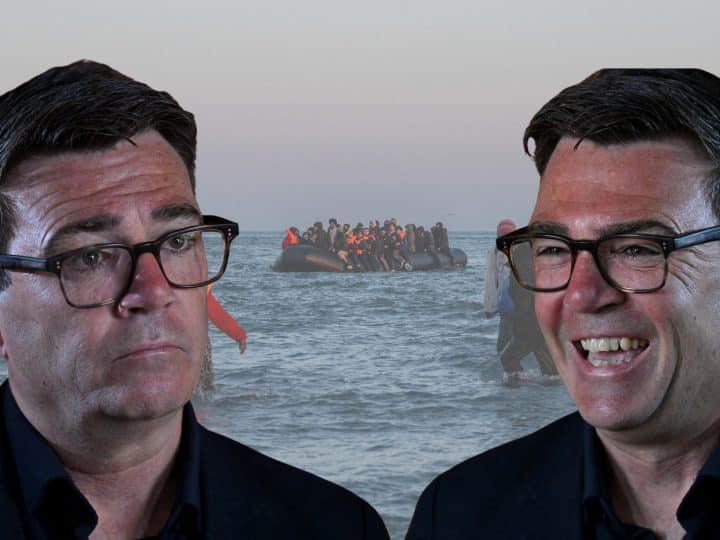
In an interview with BBC Radio Manchester, Andy Burnham has made his thoughts clear on the topic of irregular migration. And by ‘clear’, we once again mean ‘less clear’.
The degree to which he was unclear is obvious in the fact that people are saying he agrees with Nigel Farage despite the fact that he also called for the creation of “safe routes”:
"We need to make greater use of detention … I do agree with what Farage is saying", said Burnham, adding Britain needs to "get back to a sense of order” (Via @NovaraMedia) pic.twitter.com/WzYbaV3FZp
— Stats for Lefties
 BREAKING | Burnham says he "agrees" with Farage on migration, pledging to detain + deport refugees

 (@LeftieStats) June 10, 2026
The UK desperately needs to introduce safe routes, as we’ve argued for some time. In now-trademark fashion, however, Burnham has given us just as much to worry about as to hope for.
Burnham bluster
Firstly, we should cover what safe routes are. As Amnesty explained:
A ‘safe and legal route’ to the UK means a journey that is formally approved by the UK Government. That generally means that Home Office immigration rules permit the journey without a visa; or the journey is made with a visa granted for the purpose of making it.
Amnesty additionally lays out the following four ‘truths’:
- TRUTH 1: The Government allows nobody to make a claim for asylum in the UK unless they are physically present in the UK
- TRUTH 2: It is impossible to come to the UK for the purpose of seeking asylum in any way permitted by the Government’s immigration rules
- TRUTH 3: The Government makes almost no safe and legal route available to any refugee other than someone from Ukraine
- TRUTH 4: Seeking asylum from persecution is lawful – refugees don’t need anyone’s permission to do so
Refugees can’t claim asylum until they get here, but they also can’t come here to claim asylum (not unless they’re Ukrainian, anyway). In other words, the UK is using its geographical nature as an island get out of our international responsibilities to protect displaced and persecuted people.
Will Burnham fix this?
As usual, we have no idea what he has planned. And as we’ve covered elsewhere:
- Burnham is silent on wealth taxes – not a promising sign from potential PM.
- Andy Burnham’s role with Iain Duncan Smith’s think tank just shows he’s more of the same.
- Burnham WON’T back proportional representation this parliament.
- Shapeshifting Burnham ditches trans rights to panic-grab Reform votes.
- Burnham slammed for saying he won’t renationalise Thames Water.
‘I do agree with Nigel Farage’
Getting to the interview itself, the following section is what people are reacting to (emphasis added):
What I am calling for is the reform of these Home Office contracts. I do agree with what [Nigel] Farage is saying. What we’ve got to do is get back to a sense of order.
There should be safe routes for people. What people don’t want to see is the chaos of the small boat crossings. I think the government is getting some order back into the system but there is definitely more to be done.
It’s not wrong to state that the introduction of safe routes would help end “the chaos of small boat crossings”. As the Green Party wrote in a policy paper on the matter:
If safe routes existed, people would take them. Instead, we have taken away their ability to arrive within permissible routes and thus force them to take more and more dangerous routes. Not only are we causing these risks and ensuring the growth of smuggling networks
The problem with what Burnham said is that the collection of sentences he wrangled together don’t make sense in proximity to one another.
He says ‘I agree with Farage’, and then he says ‘we’ve got get a sense of order’, and then he says ‘there should be safe routes’. This is confusing, because Farage definitely isn’t calling for the creation of safe routes. And if we’re being real, Farage loves the status quo of small boats, because he’s able to capitalise on it politically.
Really, then, who is Burnham trying to appeal to?
Left-wing voters will rightfully recoil at ‘I agree with Nigel Farage’. Some right-wing voters might nod along, but they won’t be nodding when the right-wing commentators start explaining what ‘safe routes’ are. At this point, these voters don’t want anyone coming here – safely or not.
A politician can present a moral and rational case for migration and asylum, or they can fearmonger. Burnham seems to be doing both.
‘Increased detention’
This is the other bit that people are taking Burnham to task over:
It’s this thing about control, isn’t it? It feels like the country isn’t functioning properly, running things properly and the small boats issue completely speaks to that. People want it to be dealt with. We do need to go further.
We need to make greater use of detention so that people who have got no basis for a claim are not actually admitted into the country.
Burnham apparently wants to create safe routes, which would mean asylum seekers are able to enter the country legally. He also wants to detain more asylum seekers – specifically the ones who continue to enter the country irregularly.
So how is he doing the maths on this?
Is he predicting that after we create safe routes, this will immediately be followed by an even greater influx of asylum seekers, and that said asylum seekers will opt to cross by boat despite the existence of safe routes?
Or is he planning to introduce so few safe routes that small boat crossings happen regardless?
Here we go again
As ever with Burnham, it seems like he’s trying to give everyone what they want. In other words, he’s doing radical centrism.
It’s similar to when he hints at nationalisation, but then you read his actual words, and you notice he’s promising “stronger public control” of private utilities – not public ownership.
We do hope he expands the UK’s available safe routes, anyway. We just don’t know which Burnham will show up if he becomes prime minister.
Maybe we need a safe route for the left-leaning version of Burnham to enter Downing Street?
Featured image via Anthony Devlin (Getty Images) / Anthony Devlin (Getty Images) / Carl Court (Getty Images)
By Willem Moore

When FIFA decided to expand the World Cup to 48 teams for the first time in history, it seemed like a new victory for the idea of inclusivity that the world’s most popular sport has long championed.
More countries will get the chance to appear on football’s biggest stage. Continents that previously suffered from a lack of places will find themselves more widely represented and new fans will live the long-awaited World Cup dream.
But ahead of the 2026 edition, a striking paradox has emerged that is making itself felt with increasing force. whilst the tournament’s doors have opened wider to national teams, they seem narrower than ever for many fans.
World Cup of the People to World Cup of the Market
For many decades, the World Cup has been more than just a football tournament; it has been a global event where cultures and peoples come together in the stands before the pitch. Fans from all over the world have been an integral part of the tournament’s identity, creating the colours, chants and stories that remain in the memory longer than some of the matches themselves.
But the upcoming edition reflects a different reality. With the growing reliance on luxury hospitality packages, variable ticket pricing and rising travel and accommodation costs, many are wondering whether the tournament is gradually shifting from a global festival for the masses to a sporting and commercial product aimed more at those who can afford its exorbitant costs.
The tournament has expanded in sporting terms, but it has become more selective economically.
More teams but less fans able to attend
From a sporting perspective, the 48-team format represents an unprecedented historic step. The tournament will see a greater number of nations, players and fans from different continents taking part, thereby boosting the game’s global reach.
However, the picture looks different off the pitch.
A fan dreaming of following their national team in North America faces not only the cost of the ticket, but a whole range of expenses, starting with flights and extending to hotels, transport, food, insurance and other travel requirements.
And herein lies the greatest paradox in the history of the modern tournament: whilst qualifying for the World Cup has become easier for national teams, it has become more difficult for many fans.
Let’s compare Qatar 2022 and Russia 2018
At World Cup Russia 2018, fans benefited from relatively lower accommodation and travel costs compared to major Western markets.
In Qatar, in 2022, despite the widespread controversy that preceded the tournament, the country’s compact geography allowed fans to attend more than one match a day and significantly reduced the cost of domestic travel.
As for the 2026 World Cup, the picture is completely different.
The tournament will be held across 16 cities in the US, Canada and Mexico, with huge distances between some stadiums. Fans may find themselves having to fly more than once just to follow a single team during the group stage.
Thus, the problem is not just the ticket price but the cost of the entire World Cup experience.
Tickets and costs…’A dream that turns into a budget’
At the 2026 World Cup, tickets are no longer the only obstacle facing fans; they have become part of a complex pricing system that makes getting into the stands a real financial challenge.
Reports suggest that ticket prices in some categories have risen significantly compared to previous tournaments, with a variable pricing system in place that makes major matches more expensive as demand increases.
However, the biggest burden lies not in the ticket price alone but in the ‘full experience’ of the World Cup. Fans will face a series of mounting costs: hotels in cities that are among the most expensive in the world during peak season, domestic flights between geographically distant cities, and high daily expenses due to differences in the cost of living.
When these factors are combined, a trip to watch the tournament could turn into a financial undertaking beyond the means of many of the traditional fans who have shaped the history of the World Cup.
Most expensive and resource-intensive tournament
The 2026 World Cup is likely to be the largest in terms of expenditure, logistics and environmental emissions.
With the number of matches increased to 104 and the number of host cities rising to 16 across three different countries, the tournament will see unprecedented travel by teams, fans, media and sponsors.
This massive expansion has prompted a number of environmental studies to warn that the 2026 tournament could have the highest carbon footprint in World Cup history, at a time when global sporting bodies are championing sustainability and environmental conservation.
Thus, the expansion of sport is shifting from an organisational achievement to a source of both economic and environmental controversy.
Are World Cup stands losing their spirit?
This is perhaps the most sensitive question of all. The value of the World Cup has never lain solely in the number of matches or the scale of revenue, but in the fans who have given the tournament its unique spirit. Fans who have saved for years to make the journey, who have waved their national flags in the stands, and who have created unforgettable moments that have become part of the game’s history.
However, many fear that the stands will gradually become spaces that are less representative of the average fan and more dominated by companies, major sponsors and holders of exclusive rights.
At that point, the question will no longer be about the number of participating teams or the number of matches, but about the very identity of the tournament itself.
The paradox of the new era
The 2026 World Cup will go down in history as the biggest, most expansive and richest edition in the tournament’s history, which dates back to 1930. But it also faces questions that have never before been raised with such intensity.
Whilst FIFA has succeeded in expanding the global reach of football, it is still required to prove that this expansion does not necessarily mean excluding the fans who have built the game’s popularity across generations.
The World Cup is accessible to more countries than ever before, but the road to the stands is longer and more expensive than ever too.
And therein lies the paradox that perhaps sums up the whole story of the 2026 World Cup: a tournament that is more global on paper, but less accessible to everyone in reality.
Featured image via Luke Hales/ Getty Images
By Alaa Shamali
Labour MP Nadia Whittome has announced a motion to reject the Equalities and Human Rights Commission’s (EHRC) transphobic Code of Practice. Rachel Taylor MP, likewise of Labour, also gave a moving account of why she signed the motion.
Whittome and Taylor have also urged other MPs to sign the motion. To this end, trans rights campaign groups TransActual, Trans+ Solidarity Alliance, and Scottish Trans have created an email template for constituents to write to their MPs to urge them to sign.
Scottish Trans stated that, in just one week, over 1,200 people have already written to their representatives.
Transphobic code rejected
The EHRC’s draft guidance, as it currently stands, calls for service providers to exclude trans people from single-sex spaces reflecting their gender, and also often those of their sex assigned at birth. The government’s own impact assessment has acknowledged that it will likely harm trans and gender non-conforming individuals.
Whittome explained that her Early Day Motion (EDM), tabled 1 June, is:
This motion is currently the only available mechanism by which MPs can reject the EHRC’s Code of Practice; if debated and passed within the 40-day scrutiny window, it would prevent the EHRC from issuing the Code and bringing it into force. This is unfortunately unlikely, but it is important that as many MPs as possible sign the motion.
MPs already highlighted the obvious harms of the EHRC’s draft code in a parliamentary debate at the beginning of Pride month. Nevertheless, as Whittome highlighted, the government still looks highly likely to accept the guidance.
Early Day Motions have no set day for debate in Parliament. As such, most are never debated. However, EDMs do act as a mechanism to track MPs’ support for a particular cause.
The only current alternative is to allow the segregation of trans people in the UK to be enacted with apparent total support. As such, it’s crucial that trans-positive MPs (or even the transphobes who recognise that the code is unworkable) make their voices heard.
EHRC’s ‘hollow words of concern’
Regarding her decision to sign Whittome’s EDM, Rachel Taylor MP explained that:
I went into today’s Women and Equalities Committee to listen carefully to what the Chair of the Equality and Human Rights Commission (EHRC) had to say about the recently tabled Code of Practice. After that session, I am deeply concerned that our national human rights body is worryingly complacent about a document that the government’s own impact assessment says puts transgender people at increased risk of harassment, violence and sexual abuse.
In particular, Taylor highlighted the EHRC chair’s “hollow words of concern” in answer to a question on trans people fleeing domestic violence. She continued:
During the session, the chair repeatedly struggled to answer questions about the glaring contradictions throughout the guidance. It is not good enough to simply defer to notions of ‘common sense’ at points where the guidance simply isn’t fit for purpose. It is blatantly obvious that the code is simply unworkable. And it is not credible to deny to enacting the Code will entrench a policing of harmful gender norms that many of us have fought so hard to overturn for many decades.
This gender policing hasn’t waited for the code to pass. Support groups have already reported that, following the Supreme Court’s ruling, gender non-conforming women have faced increased harassment in single-sex spaces.
‘The return of poisonous division’
Taylor also called out the ludicrous fact that the government’s impact assessment recognises the harm perpetrated by the code. She highlighted that the assessment:
repeatedly states that it is likely to increase community tension and conflict across our society, in an age that already feels defined by the return of poisonous division and open bigotry. The EHRC was created to be the champion of equality and tolerance, not a passive bystander to the marginalisation of vulnerable people.
Despite a change of leadership, it remains my view that the EHRC does not seem interested in advocating for and standing up for the rights of LGBT – and particularly transgender – people. As a lifelong campaigner for equality, that is not something I can accept.
The Women and Equalities Committee and the Joint Committee on Human Rights refused to endorse the current EHRC chair, Mary-Ann Stephenson. Both groups warned that she lacked experience in advocacy work beyond a narrow, and distinctly transphobic, focus on women’s rights.
Taylor also reiterated Whittome’s pessimism regarding the EDM itself, deeming it a “symbolic act”. Stating that she couldn’t sit by and allow the harmful code to pass without making her voice heard, she expressed frustration that:
signing this one is the only avenue available for making my views clear in what is clearly a deeply flawed process.
‘Stand in solidarity’
However, above and beyond that frustration, Taylor recognised her duty to stand up for a marginalised community:
I believe it is incumbent on me to stand in solidarity with transgender people across the country, and particularly my transgender constituents who have told me the real fear and distress they are feeling.
Posting on social media, Scottish Trans told its followers that:
We must keep pressure up on the issue, and make sure MPs understand how this horrific guidance will impact so many people’s lives. Every person who emails is vital, and every MP who formally objects makes a difference. We only have a few weeks left to reject this Code of Practice, so make sure your voice is heard.
If you would like to write to your MP and urge them to sign the EDM to reject the transphobic Code of Practice, you can find an email template at the link here.
Featured image via Getty/Alishia Abodunde

AI Deepfake Election Ad Raises Transparency Concerns

The Greatest Black Comedy Of All Time Is Finally Back On Streaming

Russell T Davies quitting Doctor Who is the best decision he could have made

HarrisX Poll Found 52% of Registered Voters Support the CLARITY Act

BloFin War of Whales 2026 Grand Prix opens registration for $5M trading championship

Blockchain.com files with SEC for U.S. IPO

Trade with Rs. 100 @deltaexchange || #trader #trading #bitcoin #cryptocurrency #deltaexchange

Important full form of Finance and Banking #fullform #shortfeed #shorts #youtubeshorts

Financial Accounting one shot || full syllabus of financial accounting ||Bcoc 131 IGNOU || #bcom#bba
-

 Fashion5 days ago
Weekend Open Thread: Evereve – Corporette.com
-
 Crypto World5 days ago
Jensen Huang Approves Samsung, SK Hynix, and Micron for NVIDIA (NVDA) HBM4 Memory Supply
-

 Crypto World2 days ago
Anatomy of the June crypto crash: Fed, Iran, Saylor
-
 Entertainment4 days ago
The Best Mystery Series of All Time Is Surging on Streaming 30 Years After It Ended
-

 NewsBeat3 days ago
Alexander Zverev wins the French Open to finally earn a 1st Grand Slam title
-

 Tech5 days ago
Suspicious Polyfill login prompts pop up on Toshiba, Muji websites
-
 Crypto World4 days ago
Senator Cynthia Lummis Calls CLARITY Act the Most Consequential Financial Legislation of This Generation
-

 Tech3 days ago
Microsoft unveils seven homegrown AI models in new bid for ‘long term self-sufficiency’
-

 Tech5 days ago
Microsoft launches MXC, an OS-level sandbox for AI agents, with OpenAI and Nvidia already on board
-

 Business5 days ago
(VIDEO) Justin Bieber Delivers Surprise Happy Birthday Serenade to Diners at Los Angeles Mexican Restaurant
-
 Business4 days ago
The Pain Points Taking a Fragile Tech Rally Down a Notch
-
Crypto World5 days ago
LBank Surpasses 25 Million Users Worldwide as AFA Partnership Continues to Drive Global Growth
-

 Crypto World3 days ago
Trump’s AI Ownership Plan Could Benefit Anthropic at OpenAI’s Expense
-

 Tech5 days ago
Meta steals a tactic from Tesla and builds data centers in tents
-

 Tech5 days ago
Von der Leyen’s AI envoy pick draws conflict-of-interest fire
-
 Crypto World2 days ago
Eli Lilly (LLY) Stock Surges 4% Following Breakthrough Sleep Apnea Trial Results
-
 Sports23 hours ago
Bangladesh beat Australia after 20 years in ODIs, register only their second win over six-time world champions | Cricket News
-

 Business2 days ago
High Stakes for Wembanyama as New York Pushes for 3-0 Lead
-

 Tech4 days ago
Hackers now exploit SolarWinds Serv-U flaw to crash servers
-

 Tech3 days ago
Notion restores access to Anthropic after service disruption
You must be logged in to post a comment Login