

Crypto World
Space X IPO Is ‘Bad News’ for Tech Stocks: But What About Bitcoin?

Elon Musk’s rocket and satellite company SpaceX is planning a $75 billion IPO in June, which could make it the largest near-term public listing with a major Bitcoin treasury.
Key takeaways:
- A Nasdaq 100 fast entry could expand Bitcoin exposure among the top mega-cap stocks, including Tesla.
- The IPO may pressure tech stocks as passive funds sell existing Nasdaq names to buy SpaceX, which may prove bearish for Bitcoin.
SpaceX IPO set to increase Nasdaq’s exposure to Bitcoin
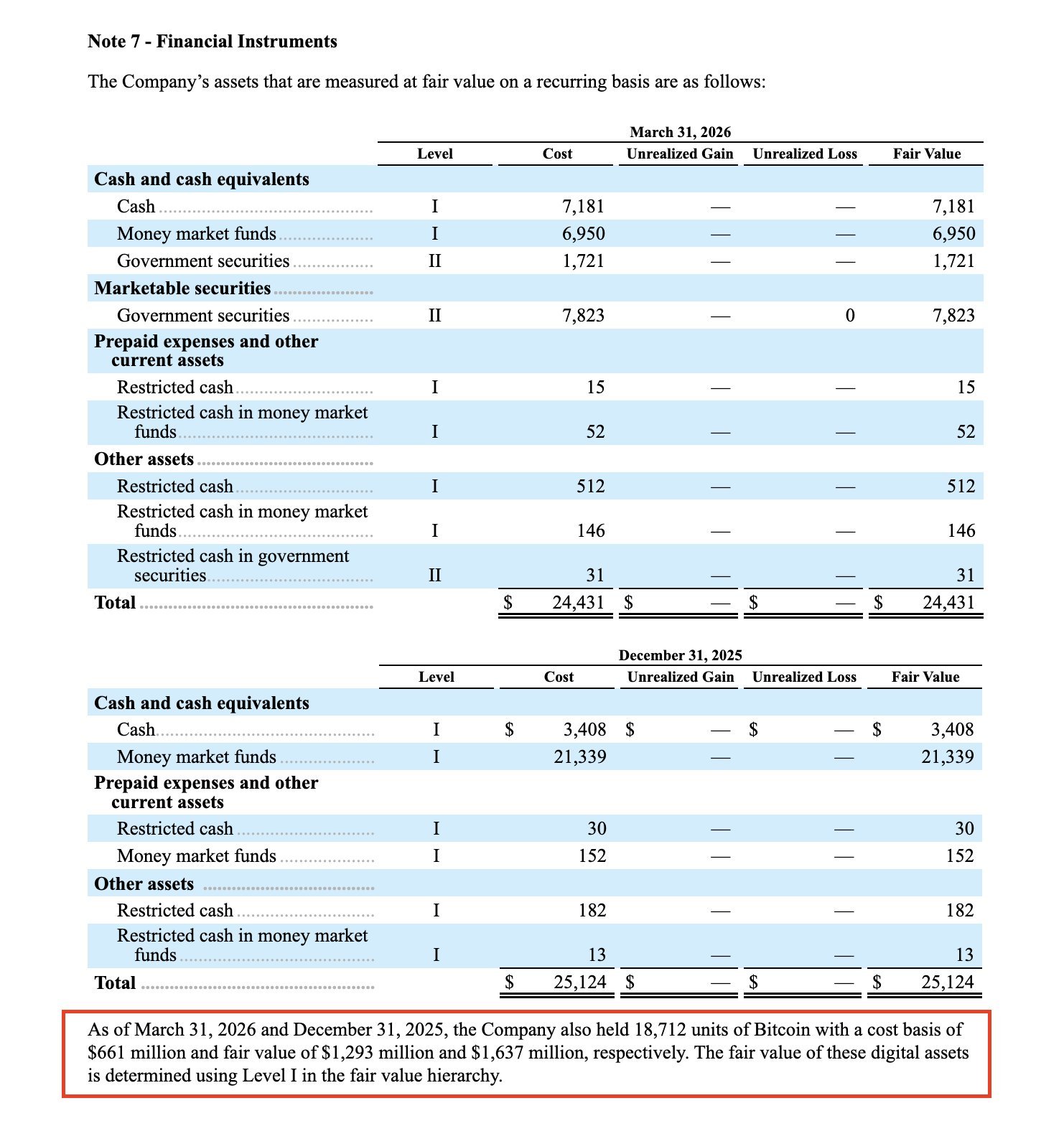
SpaceX disclosed 18,712 BTC in its recent S-1 filing, worth roughly $1.45 billion, making it the largest known Bitcoin holder among companies preparing for, or recently filing for, a public listing.
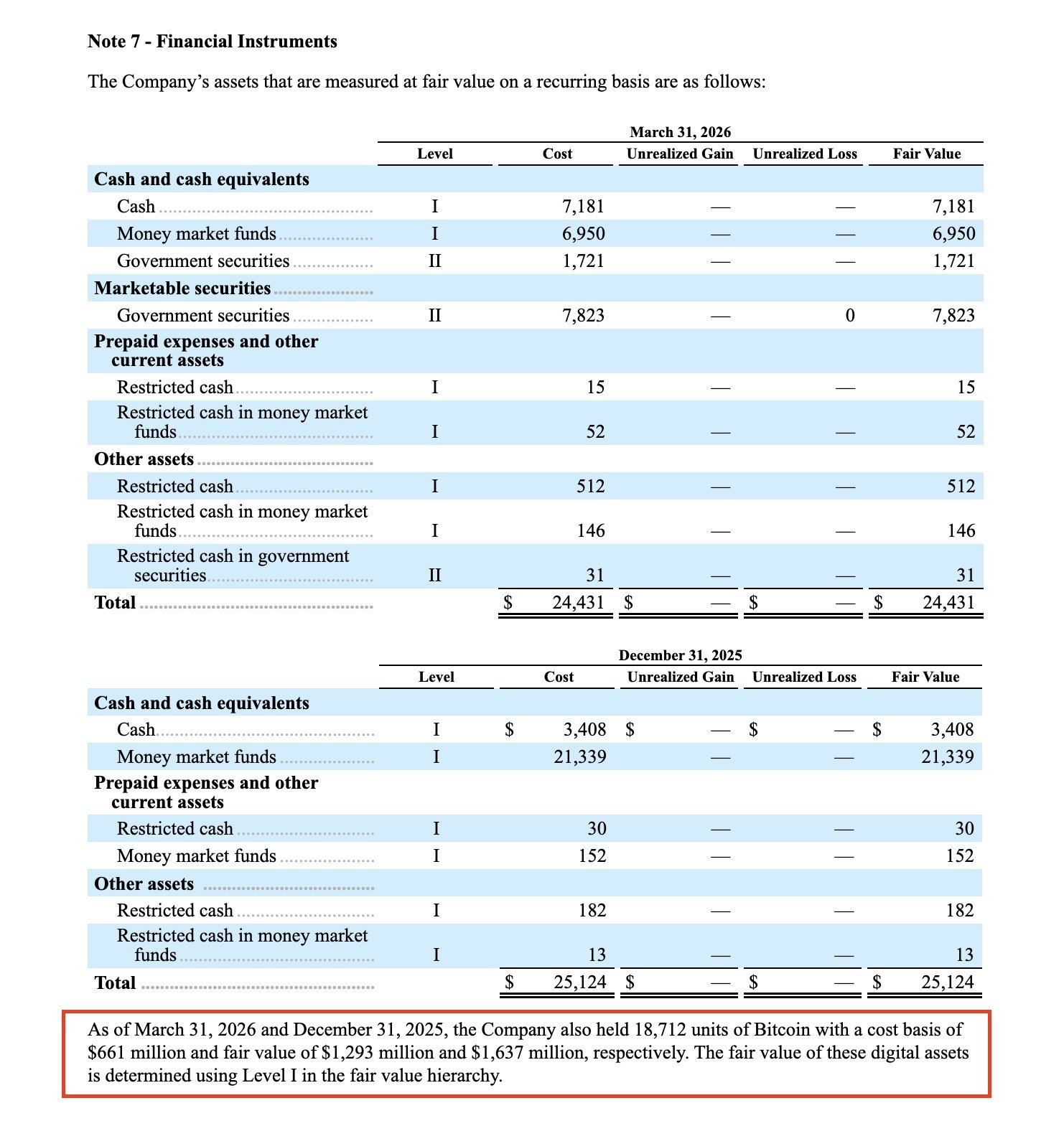
Source: SpaceX’s S1 Filing
Under Nasdaq’s newer “fast entry” rules, mega-cap IPOs can enter the Nasdaq 100 within 15 trading days, meaning SpaceX could quickly become one of the index’s largest constituents if its valuation lands near the $1.75 trillion–$2 trillion range after the $75 billion IPO.
As a result, Bitcoin exposure inside the Nasdaq 100 may expand beyond Tesla.
The electric carmaker already holds 11,509 BTC on its balance sheet. SpaceX, with 18,712 BTC, would give the Nasdaq 100 a second Elon Musk-linked mega-cap company with direct Bitcoin exposure.
“With the SpaceX IPO, the Mag 7 will become the Mag 8,” said Phong Le, CEO of Strategy, while referring to the elite group of mega-cap tech stocks, namely Apple, Microsoft, Nvidia, Amazon, Alphabet, Meta and Tesla.
He added:
“25% of the Mag 8 will have Bitcoin on their balance sheet.”
Bitcoin still faces downside risks
SpaceX IPO may be “bad news for tech stocks,” according to analyst Nic Puckrin.
“If it’s added to the Nasdaq 100 in a ‘fast entry’, passive funds have to buy it & sell other stock,” Puckrin said in a Friday post, adding:
“The higher SpaceX goes, the more they buy of it and sell of others. It’s going to act like a massive capital vacuum.”
Puckrin based his outlook on JPMorgan estimates showing that Nvidia could face more than $20 billion in passive outflows if SpaceX enters the Nasdaq 100.
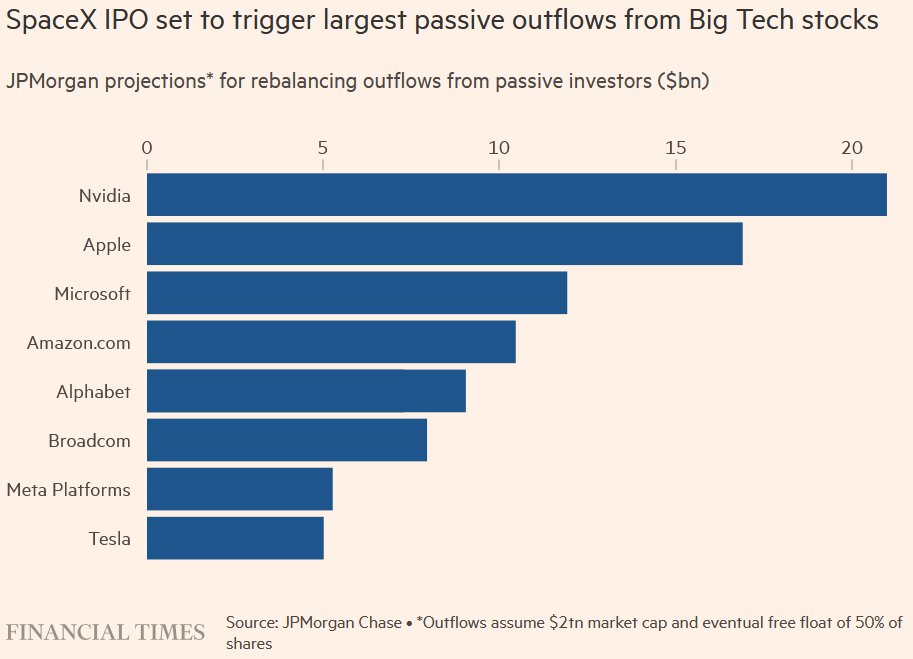
JPMorgan projections for rebalancing outflows from passive investors. Source: Financial Times/Nic Puckrin
Apple could face roughly $16 billion in estimated passive outflows, with Microsoft, Amazon, Alphabet, Broadcom, Meta and Tesla also likely to serve as funding sources for the SpaceX rebalance.
Bitcoin has traded closely with mega-cap tech for most of 2026.
As of Friday, BTC’s 30-day rolling correlation with the Roundhill Magnificent Seven ETF (MAGS), which tracks the Mag 7 stocks, stood near +0.81.
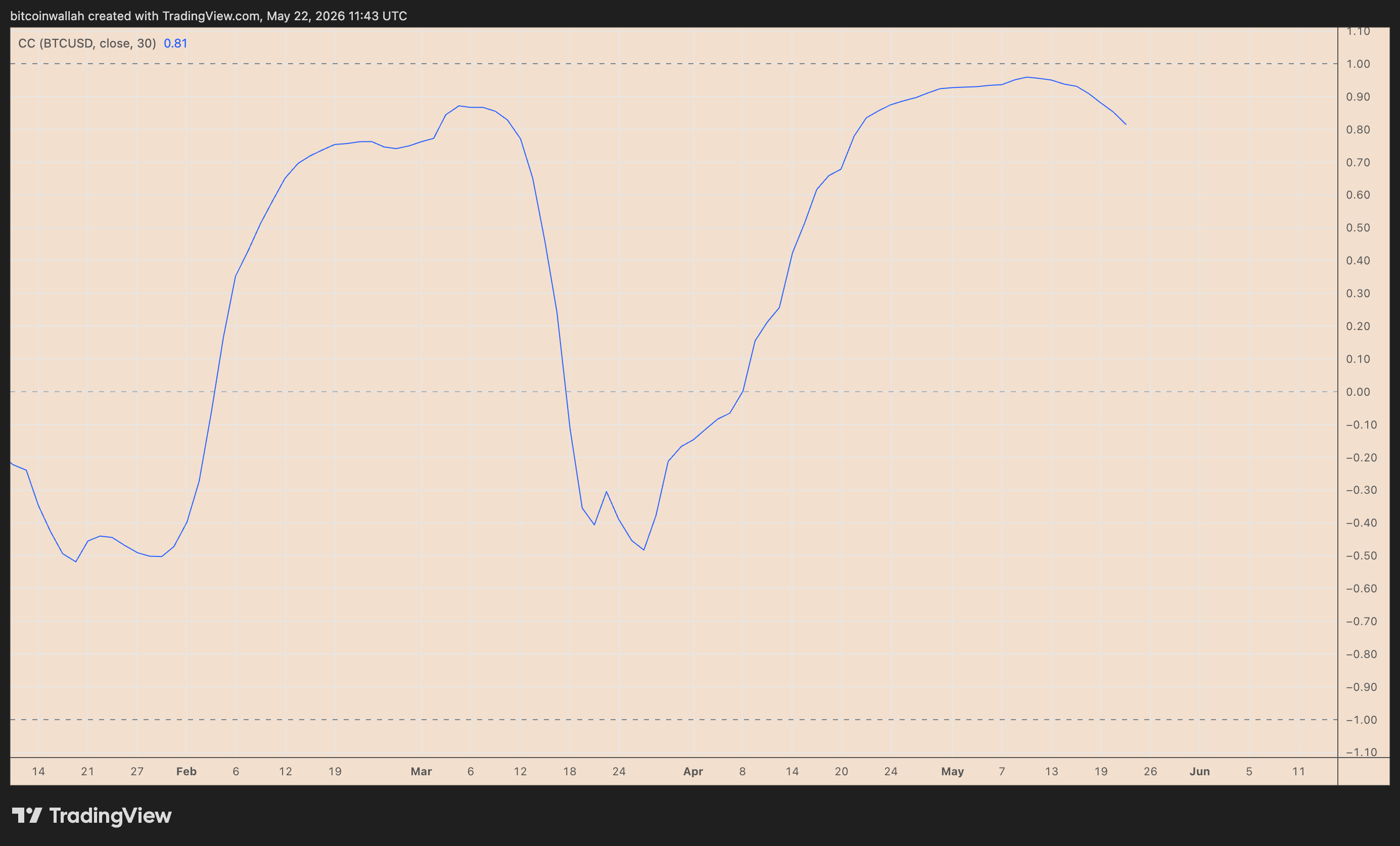
BTC/USD vs. MAGS correlation coefficient. Source: TradingView
For traders, that means BTC has recently moved in the same direction as major tech stocks more often than not.
So, if the SpaceX rebalance pressures Nvidia, Apple, Tesla and other large tech names, Bitcoin may also face short-term downside risk as investors reduce exposure to the broader risk-on trade.
How low can BTC price go?
On-chain metrics show Bitcoin’s apparent demand has dropped to its lowest in four months, which may lead to months of consolidation.
That weak demand backdrop also lines up with BTC’s current technical structure. Since February, Bitcoin has been moving inside an upward-sloping bear flag, a pattern that often forms during a pause in a broader downtrend.
For now, BTC’s immediate downside target sits around the $73,000–$74,000 range, near the flag’s lower trendline. A rebound from that area could send the price back toward the flag’s upper boundary near $85,000.
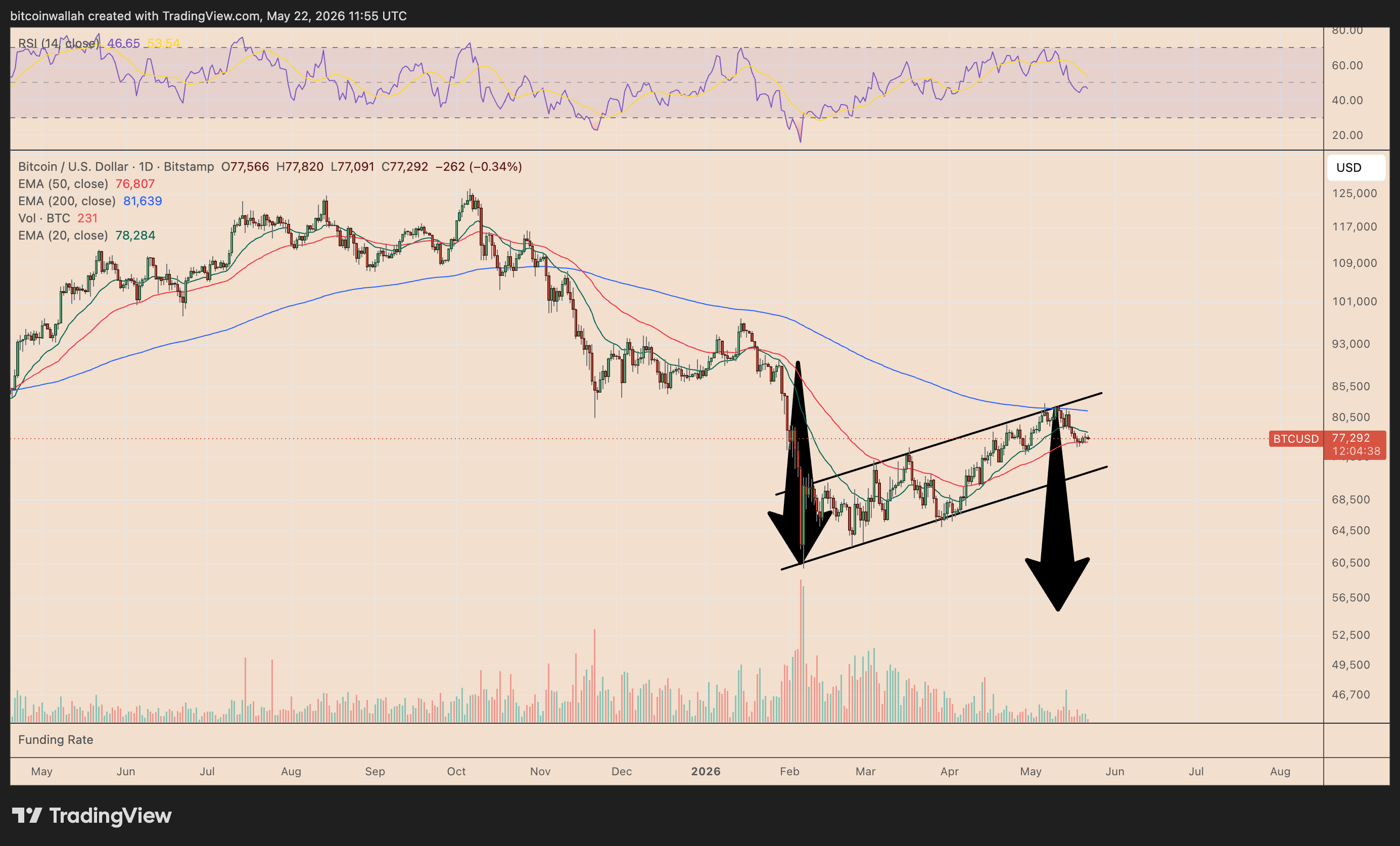
BTC/USD daily chart. Source: TradingView
Related: Bitcoin liquidity balance hints at developing rally toward $80K
The flag setup could open the door to a deeper decline toward $56,000, based on the pattern’s measured move, if BTC closes decisively under the lower trend line.



Cardano governance is in crisis as an 81% stake majority opposes a 32.9 million ADA research funding proposal.
Summary
- An 81% active stake majority is opposing a 32.9 million ADA proposal to fund Input Output Global’s research lab for another year through Cardano’s treasury.
- Founder Charles Hoskinson called the vote existential for Cardano’s identity as a science-based blockchain, warning scientists could leave if the proposal fails.
- The vote runs through June 8, with several dReps demanding competitive open RFP bids rather than an automatic IOG budget renewal.
A Cardano governance crisis has emerged on-chain as an 81% active stake majority is currently opposing a 32.9 million ADA proposal to fund Input Output Global’s core research team for another year. The opposition is led primarily by Japanese delegated representatives who argue the proposal lacks tight, auditable milestones.
“This doesn’t have anything to do with me. This has to do with destroying the entire core of our ecosystem. Cardano is the science coin. That’s our brand,” Charles Hoskinson said in response to the vote.
Why the IOG vote matters for Cardano’s long-term roadmap
The IOG research lab is responsible for Cardano’s peer-reviewed development approach, including the Ouroboros consensus protocol. A failure to renew its funding would leave the protocol without its primary academic development engine.
Several dReps want competing teams to bid against IOG through open RFPs rather than automatic renewal. ADA was trading near $0.25, down approximately 60% over the past 200 days.
Crypto.news has reported on Hoskinson’s earlier warning that crypto markets would get “redder,” made during a February 2026 livestream where he positioned Cardano as entering a commercialisation phase.
What the milestone controversy reveals about decentralised governance
Critics of the IOG proposal argue it lacks specific, time-bound deliverables that a decentralised treasury process should require. The sentiment reflects a broader tension in Cardano’s Voltaire governance era between institutional efficiency and community accountability.
Crypto.news has tracked Hoskinson’s January 2026 warning that White House crypto czar David Sacks should resign if the Clarity Act failed to pass. Both episodes reflect the same impatience with institutional processes that fail to deliver tangible outcomes on a predictable timeline.
The voting period runs through June 8. If the proposal fails, scientists could leave, ending the peer-reviewed research model that defines Cardano’s identity. Crypto.news has covered analysis examining the gap between Hoskinson’s ambitions and Cardano’s on-chain adoption metrics, a tension the governance dispute now makes impossible to ignore.
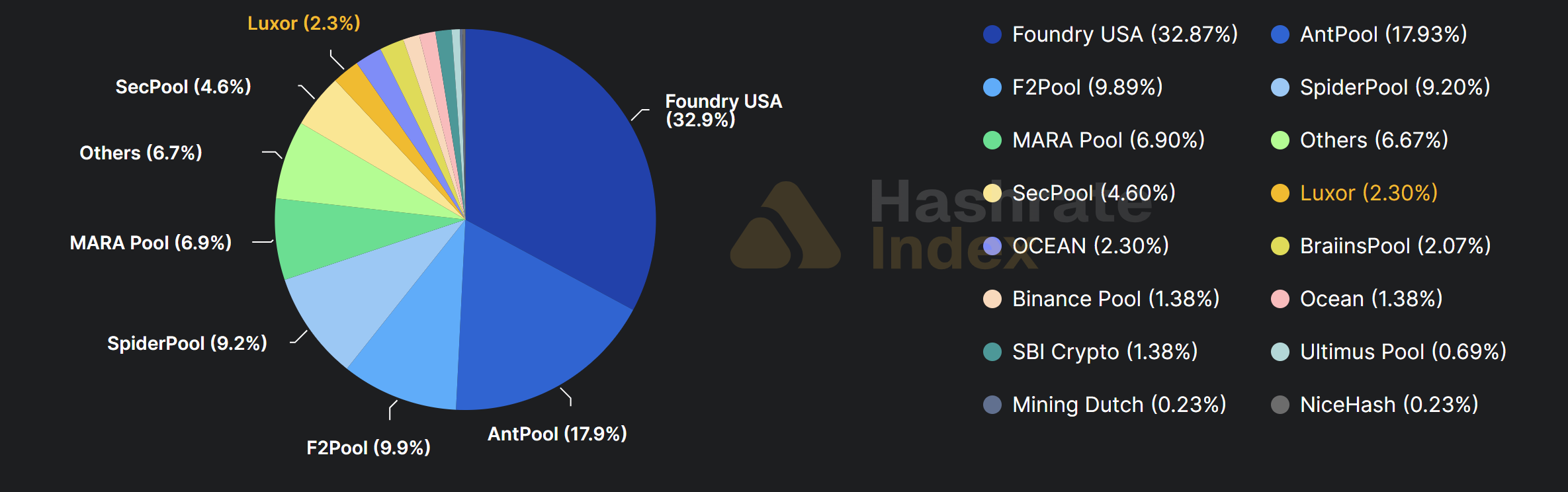
SpaceX named crypto billionaire Chun Wang to lead its first crewed Mars flyby. The F2Pool co-founder will pilot a roughly two-year mission beyond the Earth-Moon system, the first of its kind.
The reveal aired during SpaceX’s live broadcast of Starship V3’s first launch attempt, which was scrubbed on Thursday. The company has not disclosed a target launch window for Mars or for an earlier lunar precursor flight.
Chun Wang’s Bitcoin Fortune Funds SpaceX Mars Flyby
Wang co-founded F2Pool in 2013, and it remains one of Bitcoin’s top crypto mining pools. Hashrate Index places its current share at roughly 10% of network hashrate.

That share feeds scrutiny of Bitcoin mining pool concentration, where four operators dominate block production after the halving. Wang has remained tied to F2Pool while pursuing other ventures.
His wealth, built through early Bitcoin mining and pool operations, has already financed private spaceflight. Wang funded and commanded Fram2 in 2025, the first crewed polar orbit, by selling part of his bitcoin holdings.
That mission carried an all-civilian crew over both poles and made Wang the first Maltese citizen in space.
The same playbook now powers his interplanetary push, after earlier SpaceX Bitcoin transfers tied crypto treasuries to space.
Speaking from Bouvet Island in a pre-recorded video, Wang said the flyby should make Mars feel reachable. He framed the trip as a step toward future landings, not a substitute.
“So it’s going to be a flyby mission of Mars,” Wang said in a recorded announcement.
Subscribe to our YouTube channel to watch leaders and journalists provide expert insights
The schedule now depends on Starship V3, whose maiden flight slipped after Thursday’s scrub.
A second launch attempt is set for Friday evening. If Starship V3 reaches orbit, the Mars timeline moves with it. Until then, both the lunar precursor and Mars flyby remain open.
Musk’s Mars ambitions continue drawing crypto wealth into deep space.
Follow us on X to get the latest news as it happens
The post SpaceX’s First Mars Crew Includes a Crypto Billionaire and It’s Not Elon Musk appeared first on BeInCrypto.
The Micron Technology offices in San Jose, California, Dec. 16, 2025.
David Paul Morris | Bloomberg | Getty Images
Quantum stocks jumped this week on news that the U.S. government was taking equity stakes in nine companies, including IBM, as President Donald Trump’s administration continues to acquire shares of private sector companies.
So where might the government take its shopping cart next? Traders on prediction market platform Kalshi are putting money on the question.
Traders place 32% odds that IonQ will get a government stake in 2026. IonQ was one of the quantum computing companies that wasn’t part of the Thursday announcement, but its stock still jumped more than 12% on the news. Shares then rose more than 7% on Friday.
Also on the list is Anduril Industries, which traders give a 31% chance of getting a U.S. government stake this year.
Anduril is a privately-owned defense technology company based in California. Last week, the company unveiled a new funding round that doubled its valuation to $61 billion. The Palmer Luckey company has worked with the Trump administration closely, including on the proposed “Golden Dome” missile defense system.
Lastly, traders place 28% odds that Micron Technology gets a U.S. government stake. Shares of Micron have surged more than 160% in 2026 thanks to a memory shortage due to the artificial intelligence buildout.
The contracts only are resolved to “yes” if an official announcement is made or verified by the company or a government agency.”
In August, around the same time when the U.S. stake in Intel was first revealed, there were reports that the government was considering taking a stake in Micron. However, that proposal didn’t come to fruition, and the White House said it wouldn’t seek stakes in chip companies increasing investment in the U.S.
Representatives for Micron, Anduril and IonQ couldn’t be immediately reached for comment.
Disclosure: CNBC and Kalshi have a commercial relationship that includes customer acquisition and a minority investment.
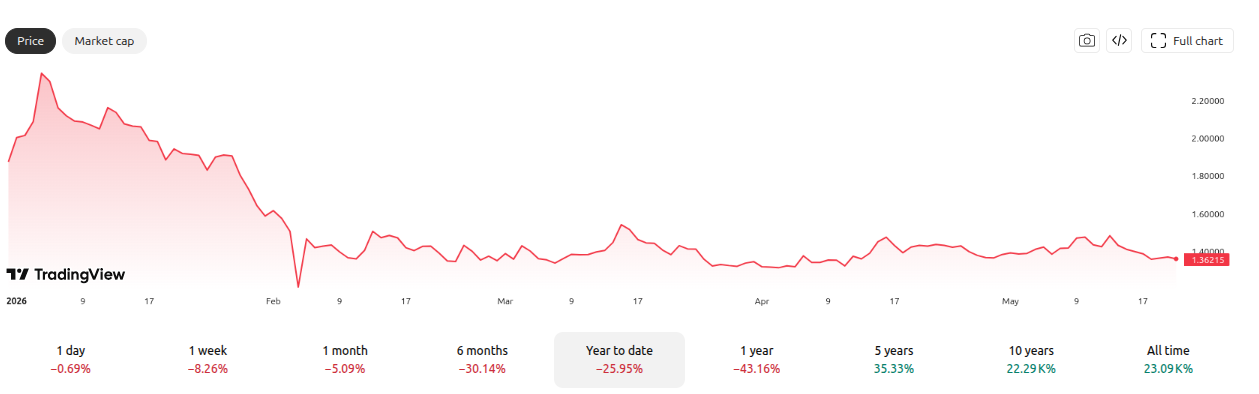
The XRP price decline has intensified debate across crypto markets as Ripple’s token continues to lag behind major digital assets in 2026.
Growing frustration among traders and holders reveals a widening gap between expectations and actual market performance.
XRP Price Dropped 26% in 2026, So Far
The XRP price decline reflects sustained momentum loss despite several positive developments in Ripple’s broader ecosystem. The token remains close to 26% lower year-to-date and continues trading near $1.36-$1.37.

Current market data also places XRP around 62% below its all-time high of $3.65 reached in July 2025, according to CoinGecko. Daily trading activity remains active, with volumes fluctuating between approximately $1,65 billion and $1,77 billion.
These numbers stand out because XRP experienced several major developments recently. Ripple secured important regulatory progress through its legal resolution involving the SEC.
Spot XRP exchange-traded funds also entered the market, while institutional products like Ripple Prime expanded the company’s ecosystem.
Despite these advances, price action has remained weak. XRP traded within a narrow range between $1.35-$1.38 dollars during recent sessions. Technical analysts continue describing the structure as fragile, with selling pressure dominating sentiment.
Several market observers believe the area between $1.30 and $1.35 dollars could become a critical support zone. A breakdown below that range could increase downside risk toward lower price levels.
“We have now spent 5 days beneath ascending support. $1.30 is a current guardrail. If lost, a deeper drop to the lower $1 territory is likely in the coming weeks,” analyst ChartNerdTA said.

Traders Question XRP After Prolonged Market Weakness
The discussion has become increasingly emotional across social media platforms. Many traders openly question whether Ripple’s long-term messaging aligns with actual market results.
Other users adopted much stronger language, calling the token a “scam” and accusing Ripple of relying on “cheap propaganda” rather than delivering stronger price performance.
“I’m so tired of XRP, I feel cheated, all I see about XRP is cheap propaganda”, a user on X commented.
The criticism reflects frustrations accumulated over several years. Ripple repeatedly positioned XRP as a solution for cross-border payments, emphasizing its bank partnerships, interoperability, and its role in global financial transformation.
Some retail investors expected these developments to create stronger market appreciation. Instead, XRP was among the weakest performers among leading cryptocurrencies in 2026.
“Just ask yourself, half-way into the term of a pro-crypto President, SEC etc, court case gone and clarity act on the move, ETF’s live and so on….yet xrp lost over half it’s value and is doing nothing but penny pump and dumps …how can this be anything but a scam!! Wake up!!!,” another enthusiast noted.
Critics argue that optimistic announcements often generate temporary enthusiasm but fail to create lasting price impact. This perception has gradually weakened confidence among traders seeking stronger returns.
However, supporters view the situation differently. They believe XRP is evolving into a more mature asset focused on institutional use rather than speculative momentum.
Developments surrounding the XRP Ledger, custody services, liquidity solutions, and broader regulatory clarity could support longer-term growth. Still, that institutional direction increasingly conflicts with retail expectations focused on rapid gains.
The debate now extends beyond price movement. It increasingly reflects a broader question surrounding whether adoption and infrastructure development can eventually translate into sustainable market value.
Subscribe to our YouTube channel to watch leaders and journalists provide expert insights
The post XRP Faces Growing Backlash After Dropping 26% Year-to-Date appeared first on BeInCrypto.

Key Highlights
-
Intercontinental Exchange and OKX introduce perpetual futures contracts for Brent and WTI crude oil with 24/7 availability.
-
These contracts enable digital asset traders to gain oil market exposure without dealing with expiration dates.
-
ICE supplies regulated pricing benchmarks while OKX handles crypto-based margin and platform distribution.
-
Initial rollout targets markets outside the United States to comply with current regulatory frameworks.
-
This collaboration represents a significant merger of conventional commodity markets with digital asset trading infrastructure.
Digital asset platform OKX has forged an alliance with Intercontinental Exchange to introduce perpetual futures contracts anchored to international oil pricing standards. These instruments will reference ICE Brent Crude and WTI Crude benchmarks, facilitating uninterrupted trading access for cryptocurrency market participants. Unlike traditional futures, perpetual contracts enable traders to hold positions without expiration constraints, while funding mechanisms maintain price correlation with underlying assets.
This strategic alliance merges ICE’s established regulated futures pricing infrastructure with OKX‘s cryptocurrency margin trading capabilities and global distribution network. The oil perpetual products will initially be available in jurisdictions where the exchange currently maintains regulatory authorization. This framework deliberately separates US-regulated pricing benchmarks from international crypto trading activities to satisfy compliance obligations.
Industry analysts highlight that this agreement reinforces ICE’s strategic relationship with OKX. Intercontinental Exchange maintains an equity position in OKX and obtained board representation through their comprehensive partnership arrangement. This development enables ICE to generate revenue from benchmark licensing while simultaneously extending its reach into crypto-native trading frameworks.
Contract Mechanics and Trading Access
These instruments function as non-expiring swap agreements that derive their value from ICE’s Brent and WTI benchmark prices. Funding rate mechanisms are incorporated to maintain pricing alignment between crypto markets and conventional futures exchanges. The product launch will initially exclude US markets to ensure adherence to applicable jurisdictional regulations.
Both retail and institutional market participants obtain perpetual exposure to globally recognized oil pricing standards. The perpetual contract structure facilitates around-the-clock market access, capitalizing on cryptocurrency market liquidity and existing user infrastructure. Through ICE pricing integration, OKX guarantees that contracts maintain fidelity to recognized market benchmarks.
The cryptocurrency exchange will oversee margin calculations, settlement processes, and user accessibility for these perpetual instruments. This arrangement grants traders commodity benchmark exposure without requiring physical asset custody or delivery. The approach corresponds with emerging patterns where digital asset venues provide derivatives linked to traditional commodities.
Market Impact and Future Development
Intercontinental Exchange and OKX are establishing a framework for incorporating tangible commodities into cryptocurrency markets. These perpetual instruments extend regulated benchmark utilization into digital asset trading environments. The continuous trading capability accommodates crypto leverage frameworks that users already understand and utilize.
This partnership creates pathways for accessing tokenized equity products and futures contracts pending regulatory clearance. ICE intends to introduce US-regulated cryptocurrency futures referenced to OKX spot market pricing. OKX platform users will gain access to ICE’s benchmark-linked instruments across international markets, significantly broadening market participation opportunities.
The perpetual futures offering has potential to capture high-frequency traders pursuing commodity market exposure. This initiative demonstrates the growing convergence between established commodity trading venues and cryptocurrency platforms. It establishes foundational infrastructure for deeper integration of regulated financial instruments within digital asset marketplaces.

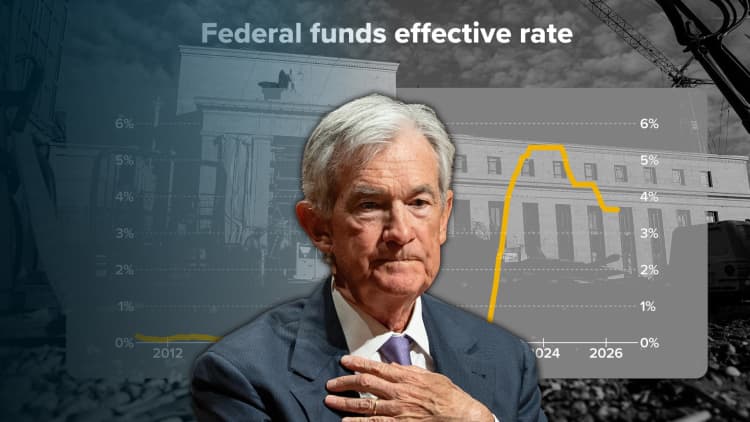
Kevin Warsh, then U.S. President Donald Trump’s nominee for Chair of the Federal Reserve, delivers an opening statement during his Senate Committee on Banking, Housing, and Urban Affairs confirmation hearing in the Dirksen Senate Office Building on April 21, 2026 in Washington, DC.
Andrew Harnik | Getty Images
Incoming Federal Reserve Chair Kevin Warsh‘s talk about “regime change” at the central bank has generated speculation about everything from interest rates to major personnel changes to fundamental alterations in the way it operates and communicates.
But what that eventually might look like is subtler though perhaps more consequential – a rethink of how the Fed manages the financial plumbing in the U.S. economy and the mammoth balance sheet it has built through some 18 years of crisis fighting.
Interviews with former Fed officials and economists, along with a growing library of research, suggest Warsh could guide the Fed to a smaller role in day-to-day financial markets, while also setting clearer rules for how and when it should intervene.
Simply stated, the debate centers on whether the Fed should continue using its balance sheet as a regular tool for influencing financial conditions and supporting markets — as it has through much of the post-financial crisis era — or reserve it for periods of market dysfunction and more pernicious economic stress.
Rewriting the Fed playbook
The debate over the $6.8 trillion balance sheet is technical in nature and tucked away from the more common discussions about Fed policy. But the stakes are substantial.
Since the financial crisis that exploded in 2008, the Fed has aggressively used its holdings of Treasurys and mortgage-backed securities to stabilize markets and influence broader financial conditions.
Prior to the crisis, the Fed had a minuscule balance sheet relatively speaking – about $800 billion – but expanded it at one point to about $9 trillion. The Fed’s asset holdings now equate to about 23% of the U.S. economy, or some seven times where they were pre-financial crisis.
Any effort to change the system could have wide ramifications, potentially impacting Treasury yields, mortgage rates and other interest-sensitive areas of the economy, while influencing the way policymakers respond to future crises.
“It’s a debate we’re going to be seeing later this year. But one thing that’s encouraging about all of this is that nobody, including Kevin Warsh, is arguing that any of this could be done rapidly,” said Lou Crandall, chief economist at Wrightson ICAP and a longtime Fed watcher.
“It’s got to be done carefully, and some of the changes … would probably take time to implement,” he added. “Everyone’s looking at this as a medium-term project rather than part of the day-one agenda.”
Warsh called the balance sheet, in a Wall Steet Journal op-ed piece last year, “bloated” and said it could be reduced while at the same time allowing the Fed to lower interest rates.
What ‘regime change’ might entail
While Warsh has spoken in broad strokes about shrinking the Fed’s footprint, Wall Street already is gaming out what a new operating framework could look like.
Among the more provocative ideas comes from TS Lombard’s chief U.S. economist, Steve Blitz, who argues that a Warsh Fed could place greater weight on the overnight repo market — the short-term funding system that underpins the Treasury’s market function — rather than relying solely on the federal funds rate — which banks charge each other for overnight lending — as the key transmission mechanism for policy.
“The repo rate becomes the policy rate,” Blitz said in a client note.
In practice, that could create an unusual dynamic: Warsh might be able to satisfy Trump’s push for lower interest rates while still maintaining tighter underlying financing conditions as policymakers grapple with persistent inflation pressures.

However, he’s likely to run into quick opposition from his fellow policymakers, some of whom are skeptical of both the Fed’s ability to significantly reduce its holdings and the benefits this might provide.
“I think shrinking the balance sheet is the wrong objective, and many of the proposals to meet this objective would undermine bank resilience, impede money market functioning, and, ultimately, threaten financial stability,” Fed Governor Michael Barr said in a speech last week. “Some would actually increase the Fed’s footprint in financial markets.”
Barr’s thesis essentially is that looking merely at the size of the balance sheet is too narrow – that other issues, such as how it is comprised with respect to duration and composition also matter. Neglecting those issues, he asserts, could have “perverse” consequences such as increased volatility and even the possibility of more interventions from the Fed. At the same time, he said, lowering reserve requirements for banks could destabilize the system.
Understanding how it works
The balance sheet mechanics regarding reserves are straightforward.
When building the balance sheet, the Fed credits itself with digital cash and uses it to buy assets from banks, creating reserves. That provides the banks liquidity that then theoretically flows through the financial system. Conversely, when the Fed is reducing the balance sheet, it is no longer buying assets while also allowing the proceeds of the bonds it has purchased to roll off, rather than reinvesting them.

On the other side of the operation, the Fed is using its trading desk to achieve the interest rate it targets. The central bank also has a slew of other tools, such as the interest it pays on reserves, its discount window rate and, critically, overnight reverse repurchase operations that keep the financial flows moving.
The Fed has been operating under a system of “ample” reserves, a nebulous term that essentially means more than typical but not excessive — that would be “abundant.” Warsh has implied that the Fed can go back to its precrisis policy of “scarce” reserves, with the option to add when needed.
“Reasonable people can disagree on this,” said Bill English, the Fed’s former head of monetary affairs and now a professor at Yale. “The Fed could certainly go back to a system with scarce reserves, it would work perfectly well. Might be a little complicated to get there. You’d want to do it slowly, but I think they could do it.”
After spending much of the past 18 years depending on the Fed’s balance sheet to keep operations running smoothly — and, critics would argue, support the bull run in stocks — markets will be watching closely.
“I would very much expect the Fed to have an open discussion about establishing a framework for future operations, so the market doesn’t just assume that they’ll do unlimited amounts,” Wrightson economist Crandall said. Doing so “would allow the market to form more sensible expectations about what would happen.”
As things stand, the Fed has never communicated clear rules about when and how the balance sheet will be used.
Markets have adopted terms for the balance sheet operations – quantitative easing, or QE, for expansion and quantitative tightening, or QT, for reduction – but the Fed has never set out clear guidance about when either will be used. That’s particularly true when distinguishing between addressing financial market functioning and supporting its dual inflation and employment goals.
“They’ve never really set up a framework for when to use quantitative easing,” said former Cleveland Fed President Loretta Mester. “The Fed hasn’t done a very good job, I think, over time of distinguishing and explaining when it’s using asset purchases for a monetary policy reason.”
Changing the message
This is where Warsh especially can come in.
Setting the tone for policy guidance is right within the chair’s wheelhouse, and Warsh could try to diminish market expectations that the Fed is going to crank up asset purchases when Wall Street starts to get the jitters.
In addition, he has spoken in favor of efforts that Michelle Bowman, the Fed’s vice chair for bank supervision, has undertaken to ease some banking regulations. Part of that would alter what kinds of assets banks could claim as reserves and use in times of crisis, an effort that Dallas Fed President Lorie Logan cited in a recent speech, saying she looks forward “to seeing how that work progresses.”
Logan has firsthand experience with the dynamics that go into balance sheet management. Prior to her current position, she ran the trading desk at the New York Fed, which is charged with executing the central bank’s open market strategy.
Logan also noted, in the speech delivered April 2, that the Fed has other tools at its disposal to help the flow of liquidity — essentially using components from both the Warsh and Barr sides of the argument.
Like others, she spoke in favor of moving slowly to address the issue.
“I’d emphasize that any changes in the balance sheet should be gradual and planned carefully,” Logan said.
The work has begun
Internally, Fed officials are girding for debate.
Central bank researchers have released several papers on the issue, including one titled “A User’s Guide to Reducing the Federal Reserve’s Balance Sheet.”
The paper concluded, without an endorsement in either direction, that up to $2.1 trillion in reductions could be achieved through the current policy framework, with further cuts possible should the Fed change direction into a scarce reserves approach to banking. The paper also contends it would take “at least a year and quite possibly several” before the process could even begin.
All of these proposals are likely to be on the table after Warsh takes over Friday.
He inherits a Fed facing not only economic challenges but also high political expectations from a president who regularly attacked outgoing Chair Jerome Powell, nicknaming him “Too Late” as he repeatedly threatened to fire him for not carrying out Trump’s desire for lower rates.
For all the discussion about “regime change,” former officials caution against expecting a dramatic overnight overhaul, with Warsh’s lofty goals about to meet central bank reality.
Warsh will inherit a Federal Open Market Committee built on consensus, where even major policy shifts typically move deliberately and only after lengthy internal debate. Political considerations, these officials say, are left outside the central bank’s walls.
“I was going to FOMC meetings when [Alan] Greenspan was chair, so that’s a long time. Politics never enters that room,” said Mester, the former Cleveland Fed president. “Political considerations never enter the discussion.”

Hyperliquid's spot exchange-traded funds have accumulated over $69 million in total net inflows, with $16 million entering the funds yesterday alone. The two ETFs—$THYP and $BHYP—continue to attract significant capital from institutional and retail investors seeking exposure to the Hyperliquid… Read the full story at The Defiant

Institutional adoption continues to reshape the digital asset landscape, even as geopolitical tensions underscore crypto’s sensitivity to broader macro conditions. This week saw digital asset investment products suffer more than $1 billion in outflows as traders pared risk amid fading hopes for a durable U.S.-Iran ceasefire. At the same time, Tether tightened its grip on Twenty One Capital by purchasing SoftBank’s stake, Bernstein highlighted a shift in Bitcoin mining toward AI infrastructure, and Polymarket teamed up with Nasdaq to launch prediction markets tied to private companies. The week’s developments illustrate how institutions still sit at the heart of the evolving crypto ecosystem, even as macro shocks drive short‑term sentiment swings.
Key takeaways
- Digital asset funds posted over $1 billion in outflows last week as geopolitical tensions fueled a risk-off environment, led by Bitcoin and Ether products tracked by CoinShares.
- Despite the weekly pullback, crypto exchange-traded products (ETPs) have recorded nearly $4.9 billion in year-to-date inflows, signaling ongoing institutional interest on a longer horizon.
- Tether extended its influence in the Bitcoin market by acquiring SoftBank’s roughly 26% stake in Twenty One Capital for an undisclosed amount, consolidating a major corporate vehicle for Bitcoin treasury exposure.
- Twenty One Capital has amassed a substantial Bitcoin position, reportedly over 42,000 BTC, bolstering Tether’s strategic footprint in the space. BitcoinTreasuries.NET pegs the position at about $3.34 billion.
- Bernstein argues that Bitcoin miners are increasingly becoming strategic AI infrastructure partners, leveraging large-scale power access and data-center capacity to host AI workloads as block-reward economics evolve.
- Polymarket partnered with Nasdaq to launch prediction markets focused on private, pre-IPO companies, expanding event-based forecasting into the venture-capital arena and underscoring growing institutional openness to non-traditional price-discovery tools.
Geopolitics weigh on crypto funds while institutions stay engaged
Recent data from CoinShares shows digital asset investment products experiencing more than $1 billion in outflows during a week shaped by renewed tensions in the Middle East. The sell-off was broad, with Bitcoin- and Ether-linked products accounting for the bulk of redemptions, as investors reassessed risk allocations in a volatile macro environment. While this marks a sharp contrast to the earlier resilience seen in some markets, it also reaffirms a fundamental dynamic: macro shocks and geopolitical headlines can rapidly pivot sentiment around crypto, even for assets with perceived hedging properties.
Nevertheless, the longer-term trend remains nuanced. CoinShares noted that year-to-date inflows into.crypto ETPs remain constructive, totaling close to $4.9 billion, suggesting that institutional allocators continue to differentiate between short-term volatility and longer-term strategic exposure to digital assets.
Tether strengthens Bitcoin treasury exposure via Twenty One Capital
In a move that tightens the convergence between stablecoins and Bitcoin treasuries, Tether acquired SoftBank’s roughly 26% stake in Twenty One Capital for an undisclosed amount. Twenty One, led by Strike founder Jack Mallers, launched with support from Tether, Bitfinex, Cantor Fitzgerald and SoftBank, and has built a balance sheet of more than 42,000 BTC.
The transaction reinforces Tether’s influence over one of the industry’s largest corporate Bitcoin holding vehicles. Twenty One’s expanded scope signals a continued appetite among institutions to hold and deploy Bitcoin through centralized, treasury-focused vehicles rather than through dispersed, purely retail channels.
Public data tracked by BitcoinTreasuries.NET places Twenty One’s Bitcoin pile at roughly $3.34 billion, highlighting the scale of the networked holdings that backstop institutional strategies in the space.
Miners as AI infrastructure partners, according to Bernstein
Industry researchers at Bernstein have framed Bitcoin miners as more than just energy users — they’re becoming strategic infrastructure players in the AI race. The analysis points to two scarce resources miners typically enjoy in abundance: large-scale power access and data-center capacity. As AI developers demand ever-larger compute grids, mining outfitters are repurposing portions of their energy-intensive operations to host high-performance computing workloads for AI customers.
Bernstein suggests this shift could unlock new revenue streams and lift valuations for miners, particularly as the economics of block rewards wane after future halving cycles. The convergence of crypto mining and AI infrastructure is painting a picture of a broader, multi-use asset class that can weather cyclical crypto dynamics by anchoring itself to two capital-intensive, growth-oriented sectors.
Industry data indicate that a growing share of publicly traded miners has expanded their power portfolios to accommodate future demand, underscoring a tangible trend toward diversification beyond pure mining profitability.
Polymarket teams with Nasdaq to introduce private-company bets
In a move that expands the reach of event-based forecasting, Polymarket has partnered with Nasdaq to launch a new category of prediction markets focused on private companies. The markets will allow participants to bet on milestones such as private company valuations, IPO timing and secondary-market activity, extending Polymarket’s reach beyond elections and macro events into venture-backed ventures.
The collaboration reflects growing institutional interest in forecasting tools as a potential complement to traditional price discovery. By aligning with Nasdaq’s infrastructure, Polymarket aims to lend greater legitimacy and liquidity to prediction markets, particularly in segments tied to venture capital and startup activity.
What comes next
As institutions continue to shape the crypto landscape, investors will watch how geopolitical risk, macro developments, and the evolving economics of mining intersect with the growing role of Bitcoin treasuries and AI-focused data-center use cases. The emergence of private-company prediction markets also raises questions about regulatory contours, risk controls, and the long-term viability of alternative forecasting mechanisms in mainstream financial ecosystems.
The coming weeks could reveal whether these structural shifts translate into sustained demand for Bitcoin treasury exposure, diversified mining revenue streams, and broader adoption of event-based markets by institutional players. In the meantime, readers should monitor policy signals, energy-market dynamics, and the pace of AI compute demand as key drivers of the sector’s trajectory.


Anatoly Yakovenko told an applauding Consensus Miami 2026 conference earlier this month that Solana would be upgrading to Alpenglow, heralding a live testnet within a week as evidence that it’s “basically due sometime this year, I think next quarter.”
According to developers implementing that upgrade, Alpenglow actually broke while going live.
Anza, the Solana development outfit leading the rollout, left that error out of the mainstream press cycle.
Alpenglow is supposed to be the largest consensus change in Solana’s history, and is supposed to replace proof-of-history which has cryptographically ordered Solana’s network since launch.
Validators approved it in September 2025 with 98% voting in support. Anza, the dev shop, marketed the upgrade as a “100x” improvement to transaction finality, allegedly cutting transaction finalization from 12.8 seconds to about 150 milliseconds.
Yakovenko spoke at Consensus Miami on May 5, praising the potential of Alpenglow. Days later, as promised, it went live on a cluster — and promptly broke.
That day, Anza spokesperson Max Resnick broke the news about the testnet launch to Decrypt, claiming it was “a really exciting milestone” while omitting that it had actually failed and restarted.
On the Solana Foundation’s May 14 weekly validator call, Anza engineer Ashwin Sekar admitted to the real story. Over 40 nodes joined the May 11 cluster running Alpenglow.
Then the migration broke.
‘The next go-around, we were able to successfully perform’
“As usual, the first try did not work,” Sekar admitted on a May 14 call to a niche audience.
He went on to describe the incident, “There was a bug in, you know, the most recent master commit of TowerBFT and proof-of-history.”
TowerBFT is Solana’s proof-of-history-compliant consensus algorithm.
Anza pushed a hotfix and tried relaunching. Sekar added that engineers were hard at work, “We patched it.
The next go-around, we were able to successfully perform the migration.” He also disclosed a second bug, a validator that accidentally banned peer connections, which Anza patched as well.
None of those errors made it into mainstream press cycles.
Read more: Solana validator logs 32 delinquencies, foundation still claims ‘100% uptime’
Solana could upgrade beyond Proof-of-History by September
Outlets covering the May 11 activation, including TheStreet, Decrypt, CoinMarketCap, and many others reported it as a clean success. Anza’s initial framing of a well-executed migration carried through the news cycle unchallenged.
Coverage of the bug existed mostly within a small audience on YouTube who bothered to watch a recording of a validator meeting.
Yakovenko’s next-quarter claim, which he made in early May, implies a Solana mainnet activation of the Alpenglow upgrade by September 30, 2026.
Solana’s mainnet has halted multiple times in its six-year history, including at least four outages within one 12-month period.
Got a tip? Send us an email securely via Protos Leaks. For more informed news and investigations, follow us on X, Bluesky, and Google News, or subscribe to our YouTube channel.


Latest developments: Emmer joined CoinDesk’s The Policy Protocol and said the Senate’s bipartisan movement on the Clarity Act shows crypto legislation still has momentum despite growing uncertainty in Washington.
- Emmer pointed to the Senate Banking Committee’s 15-9 vote advancing the bill, arguing support extended beyond Republicans.
- He said the House has spent years refining crypto market structure legislation and described CLARITY as the fifth or sixth iteration of the effort.
- Emmer said lawmakers are trying to create clear distinctions between digital assets regulated as securities, commodities or cash equivalents.
- He predicted Congress would ultimately send the legislation to President Trump’s desk.
The debate: Emmer forcefully defended the Blockchain Regulatory Certainty Act (BRCA), which would shield some noncustodial software developers from money transmitter rules.
- Law enforcement groups have raised concerns that the provision could weaken oversight or hamper investigations involving decentralized finance tools.
- Emmer called those objections a “red herring” aimed at slowing the broader Clarity Act.
- He argued developers who do not custody customer funds should not be treated as money transmitters.
- Emmer said inconsistent state-by-state treatment of blockchain software developers is creating legal uncertainty for innovators.
What this means: Emmer argued the U.S. needs clearer crypto rules to remain competitive globally.
- He said companies want to innovate in the U.S. but need to understand “the rules of the road.”
- Emmer criticized former SEC Chair Gary Gensler’s enforcement approach under the Biden administration.
- He said the Clarity Act is designed to establish clearer distinctions between assets regulated by the SEC and the CFTC.
- Emmer argued the legislation would encourage more companies to operate inside the U.S. regulatory framework.
Reading between the lines: Emmer sought to frame crypto policy as a bipartisan issue rather than a partisan fight.
- He said “Republicans and Democrats agree on this stuff” despite ongoing Senate negotiations.
- Emmer argued some senators are using negotiations around the bill to gain leverage on unrelated issues.
- He said the crypto industry supports candidates based on policy positions rather than party affiliation.
- Emmer described crypto and digital assets as part of the future of “21st century finance.”
Worth watching: Emmer said Congress is still debating how much authority regulators like the SEC and CFTC should have over crypto markets.
- Renato Mariotti raised questions about whether the CFTC would need additional funding or staffing under a new regulatory framework.
- Emmer said he favors “light touch regulation” and less authority for federal agencies.
- He said Congress should focus on consumer protections and preventing fraud.
- Emmer argued digital assets can provide more transparency than cash-based transactions.

Ziff Davis: Sell The Accenture Pop Before The Core Erodes Further

Cardano governance dispute puts IOG lab at risk

India Royale Shows Up At Lil Durk’s Son Angelo Banks’ Graduation


-

 Crypto World7 days ago
BloFin War of Whales 2026 Grand Prix opens registration for $5M trading championship
-

 Fashion7 days ago
Weekend Open Thread: Theory – Corporette.com
-

 Crypto World7 days ago
E-Estate Announces 1 Year Live: Washington DC Summit as Real Estate Tokenization Enters Its Next Phase
-

 Tech7 days ago
Google reimburses Register sources who were victims of API fraud
-

 Sports7 days ago
Napoleonic enters 2026 Doomben 10,000 field via Abounding withdrawal
-

 Crypto World7 days ago
BeInCrypto 100 Institutional Awards Nomination: KAST for Best Digital Assets Neobank and Best Digital Assets Fintech
-
 Crypto World7 days ago
Bitcoin Battles US Bond Nerves With BTC Price Dip Toward New May Lows
-

 Crypto World7 days ago
ICE and CME urge US regulators to curb Hyperliquid energy trading
-

 Fashion6 days ago
On the Scene at Gucci’s Cruise Show in New York City: Mariah Carey, Kim Kardashian, Lindsay Lohan, Iman, and More!
-
 Crypto World7 days ago
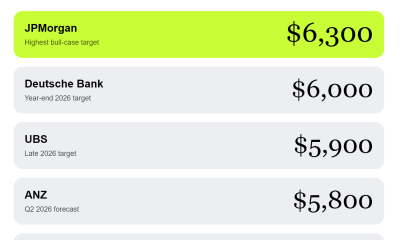
Wall Street’s Boldest Gold Prediction Has Russians Rushing to Buy
-

 Crypto World7 days ago
IREN closes $3 billion convertible notes deal amid AI infrastructure expansion
-

 Fashion6 days ago
Trending Western Style Vests Perfect for Summer
-

 Politics6 days ago
Watch: far-right flag-fanatics run over victim, attack locals – Setup By the Left wing for your entertainment
-

 Crypto World24 hours ago
Blockchain.com files with SEC for U.S. IPO
-

 Fashion6 days ago
Amazon Sundays: Memorial Day Hosting
-

 Crypto World7 days ago
Crypto Market Structure Bill Clears Committee; Senate Vote in Focus
-

 Entertainment5 days ago
Off Campus Easter Eggs Explained: Characters, Stories, More
-

 Crypto World7 days ago
BeInCrypto 100 Institutional Awards Nomination: KuCoin for Leader in Digital Asset Adoption and Best Trading Infrastructure
-

 Politics7 days ago
UK’s top intelligence body warns Mandelson files being withheld by government
-
 Crypto World7 days ago
Enphase Energy (ENPH) Stock Rockets 32% This Week: What’s Fueling the Rally?
You must be logged in to post a comment Login