The driver of the car was taken to hospital for an injury to his arm which is not believed to be life threatening
A man has been shot by an armed police officer after ‘failing to stop and driving directly at police’, Greater Manchester Police have said
Advertisement
Police attempted to stop a vehicle on Bury New Road in Whitefield, Bury, at 3pm on Friday, May 22. The car failed to stop and ‘drove directly’ at officers in an attempt to get away, the force said.
In response, a shot was fired by a GMP firearms officer, a spokesperson for GMP has said.
Click here to get the biggest stories straight to your inbox in our Daily Newsletter
The driver of the car was taken to hospital for an injury to his arm, which has been described as neither life-threatening nor life changing. No police officers were injured in the incident.
Advertisement
Investigations are ongoing and a scene remains in place on Bury New Road.
The force said that a 20-year-old white British man has since been arrested on suspicion of being concerned in the supply of Class A drugs.
The incident is not being treated as terror related and has ‘no relevance’ to the Manchester Arena bombing anniversary. It is understood the reason for initial attempts to stop the vehicle were ‘unrelated to the local area’. GMP has referred itself to the Independent Office for Police Conduct (IOPC) as per standard procedure.
Advertisement
Detective Superintendent Joe Harrop from GMP’s Serious Crime Division said: “We know people in the area will be concerned by what has happened and the visible increase in police officers in the local area as our investigations continue.
“Thankfully no members of the wider public, or officers were harmed in the incident this afternoon and we thank people for their patience while we remain at the scene.
“Should anyone have any concerns, please speak with our officers who are out in the local area, they are there to listen and assist where possible.”
Parkinson’s UK is organising the walk on Sunday, June 21, at Drumpellier Country Park.
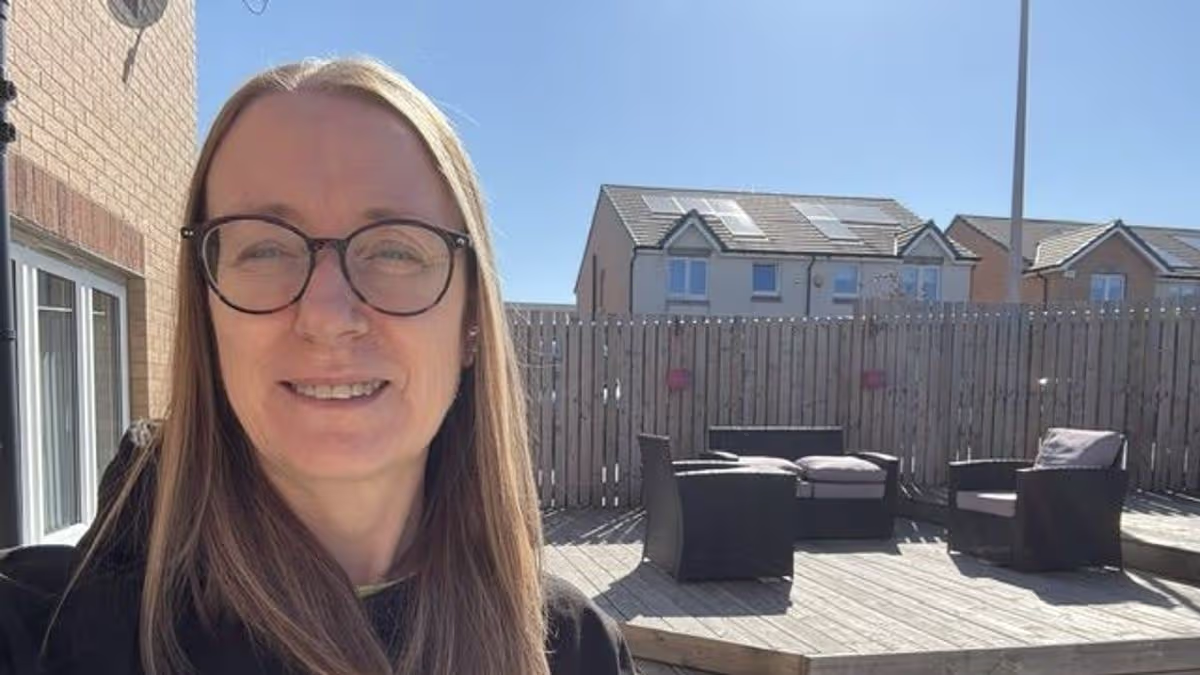
East Kilbride runner Alexandra Wilson will be among hundreds walking for Parkinson’s at Drumpellier Country Park next weekend.
Advertisement
The charity Parkinson’s UK is organising the walk on Sunday, June 21, to raise funds for better care for people living with the condition.
Alexandra, who works for the NHS, is a regular at Parkrun every Saturday.
It was her passion for running that led to Alexandra’s diagnosis with Parkinson’s in December last year.
“The first sign was a numbness in my foot,” explained Alexandra.
Advertisement
“I felt it mostly while running. I decided to get checked out when it didn’t get any better.”
It took many months and several tests and consultations before Alexandra got a diagnosis. Initially, doctors suspected she may have experienced a mini-stroke. However, after undergoing a specialist scan, Alexandra was told she had Parkinson’s just weeks before Christmas.
She said: “My sister was with me and she gasped. We both thought that Parkinson’s was something that only affected older people.”
Alexandra started taking Parkinson’s medication and within weeks she was back running again.
Advertisement
She added: “I might not have found out about my Parkinson’s if it wasn’t for my running. I could have ended up being diagnosed much later.
“I do have a small tremor on my right hand side, ever so slightly now and again, but the medication helps. I have no other symptoms though and can do my day quite normally.
“I’ve found and really want to make people aware that even though Parkinson’s is a chronic condition, what some might call a life sentence, you can still live your life. You can still keep going.”
That positive outlook has led Alexandra to Walk for Parkinson’s at Drumpellier Country Park.
The event will bring hundreds of people together on Sunday, June 21, to raise money to support specialist workers, like Parkinson’s nurses. But it’s also a chance for people living with the condition to get together and raise awareness.
Alexandra added: “I’m going along with some friends from Parkrun along with my nephew and sister, who’s going to be helping out at Walk for Parkinson’s.
“I’m eager to have a focus. Parkinson’s is not curable, but it is manageable. I’m determined to keep working and to carry on running. I think it’s important to show people that it’s possible to keep living your life.”
Julie Ionta, community fundraiser for Parkinson’s UK in Scotland, said: “Parkinson’s is different for everyone and, in order to live well with the condition, people need specialist care.
“We’re delighted that Alexandra, along with her family and friends, will be walking with us and helping out.
“We want to be there for every Parkinson’s journey and we can go a long way by helping to provide the expert support that’s urgently needed. Taking part in one of our walks is a fantastic way to raise funds to support that effort.
Advertisement
“We can’t wait to welcome everyone to Drumpellier Country Park on Sunday, June 21.”
Walk for Parkinson’s is the national community fundraising series of the charity Parkinson’s UK. Funds raised will support the charity’s Nurse Appeal, which aims to raise £9 million in three years to increase the Parkinson’s specialist workforce.
Parkinson’s is a complex brain condition which affects around 14,000 people in Scotland. There are more than 40 symptoms, from tremor and pain to anxiety, and there is currently no cure.
* Don’t miss the latest headlines from around Lanarkshire. Sign up to our newsletters here.
Advertisement
And did you know Lanarkshire Live is on Facebook? Head on over and give us a like and share!
A medical examiner has ruled the death of a Haitian asylum seeker after being released from federal custody a homicide. An attorney representing her family said he expects her relatives to sue Immigration and Customs Enforcement in connection with her death.
Daphy Michel, 31, died March 2. She was found at a bus shelter in Pittsburgh. The Allegheny County Medical Examiner’s Office found her cause of death to be hypothermia and ruled the manner a homicide, “indicating the death was caused by the actions of another individual” and should not be interpreted as a declaration of criminal guilt, the office said in a statement. The office released its findings Friday.
Michel was a native of Haiti who was seeking asylum in the U.S. after arriving at the southern border in 2022, said Joseph Patrick Murphy, her family’s attorney. She was granted humanitarian parole based on urgent humanitarian need, but she did not live to see a hearing scheduled for two weeks after she died, he said.
The medical examiner’s office said Michel was a vulnerable adult “suffering from untreated severe mental health issues and a significant language barrier” at the time of her release on Feb. 27, the office said.
Advertisement
She was arrested last summer for yelling at imaginary people due to her psychiatric challenges, Murphy said. She spent six months in Washington County Jail, where she underwent multiple psychiatric examinations as she awaited her first hearing, he said.
A magistrate said he could not hold her for trial for threatening imaginary people, Murphy said. Afterward, ICE arrested her in her cell, put an ankle monitor on her and took her 25 miles (40 kilometers) away to Pittsburgh, where she sat at a bus shelter for days in winter, he said.
“She was in September clothes and it was February, and the weather overwhelmed her and she went into hypothermia,” Murphy said.
The medical examiner’s finding of homicide is different from a criminal charge, meaning “somebody did or failed to do something that brought about her demise,” Murphy said. He said he expects Michel’s family to file a lawsuit against ICE in connection with her death.
Advertisement
Sign up for Morning Wire:
Our flagship newsletter breaks down the biggest headlines of the day.
Advertisement
In an email, Department of Homeland Security spokesperson Lauren Bis said, “ICE had NOTHING to do with this woman’s death. She passed away THREE days after ICE encountered her.”
She called Michel “an illegal alien from Haiti” who was placed in removal proceedings after her arrest.
Advertisement
Michel had all her belongings and a fully charged phone when she was released, with public transportation available, Bis said. ICE learned the day after Michel died that her ankle monitor “had been tampered with,” but county medical examiner staff “refused to cooperate or even talk with” ICE officials, she said.
ICE called the U.S. Marshals Service, who retrieved the ankle monitor but were refused information about Michel’s condition, Bis said. ICE learned of her death via news media, she said.
In a statement, Allegheny County Executive Sara Innamorato called Michel’s death “a tragedy and appears that with a little humanity, it could have been completely avoidable.”
U.S. Rep. Summer Lee, a Democrat from Pennsylvania, said her death was preventable and that “she deserved care, shelter, language access, and medical support.”
Advertisement
ICE is no longer reporting the deaths of detainees within 30 days of their release from custody, ending a 2021 Biden-era policy. Health experts say the change will reflect fewer deaths than actually occur without addressing issues in medical care.
Russian oil tanker Smyrtos, which has been sanctioned following Russia’s invasion of Ukraine, was boarded by British forces.
British armed forces intercepted a Russian shadow fleet vessel in the Channel in the early hours of Sunday, the Prime Minister said. The Ministry of Defence (MoD) said Royal Marine commandos and specially trained law enforcement officers from the National Crime Agency boarded a sanctioned oil tanker during a six-hour operation – the first UK-led operation of its kind.
Advertisement
The vessel Smyrtos will be provisionally moved to an anchorage off the south coast of England and be monitored for any environmental or safety concerns. According to the MoD, the operation was supported by aircraft from the Maritime Air Group (Chinooks, Merlin Mk4 and Wildcat), an RAF P-8 aircraft, and HMS Sutherland and HMS Ledbury.
Sir Keir Starmer said in a statement: “This operation delivers yet another blow to Russia and reminds those fuelling (President Vladimir) Putin’s war in Ukraine that they cannot hide. I want to pay tribute to all those involved, including our armed forces and law enforcement officers who keep this country safe 24 hours a day, 365 days a year.”
Defence Secretary Dan Jarvis said: “Operations like this require skill, professionalism and courage. I pay tribute to our armed forces personnel and all those involved. Russia relies on its shadow fleet to fund their conflict in Ukraine and our interdiction delivers a blow to Putin’s illegal war.”
Get Daily Record Premium for just £1 per month in exclusive offer to celebrate the world cup. Click HERE.
Advertisement
Get more Daily Record exclusives by signing up for free to Google’s preferred sources. Click HERE.
The US military launched strikes against Iran on June 9 in response to the downing of a US Army helicopter near the Strait of Hormuz a day earlier. These strikes, which the US military called “a proportional response to unjustified Iranian aggression”, came after Donald Trump claimed he was in the “final throes of what will be a very, very good deal” to end the war.
Iran swiftly carried out retaliatory attacks of its own. The powerful Islamic Revolutionary Guard Corps branch of Iran’s armed forces says it has struck US bases in Bahrain and Jordan. And it has warned of “even more severe attacks” if the US repeats its strikes.
This episode took place days after Israel and Iran had briefly returned to direct conflict. Triggered by Israeli operations against Hezbollah in Lebanon, where a ceasefire was supposedly in effect, both sides launched various rounds of tit-for-tat strikes before announcing they would halt hostilities.
At first glance, these incidents appear contradictory. Diplomacy is supposed to be the alternative to war and ceasefires are supposed to reduce violence. Yet with the US, Israel and Iran once again exchanging attacks, and as military operations continue in Lebanon despite ceasefire arrangements, diplomacy and conflict increasingly seem to be unfolding simultaneously.
Advertisement
Smoke rises following an Israeli strike in southern Lebanon on June 7. Atef Safadi / EPA
For decades, policymakers assumed that war and diplomacy were distinct phases of international politics. States negotiated until talks broke down, and fighting followed. Eventually, battlefield realities or international pressure pushed adversaries back to the negotiating table. Diplomacy then functioned as an exit ramp from conflict.
The aftermath of the 1973 Arab-Israeli war exemplified this model. Sustained diplomatic efforts following the conflict culminated in the 1978 Camp David accords, which laid the groundwork for a definitive peace treaty between Egypt and Israel. This treaty was signed the following year and remains in effect to this day.
However, this model is becoming difficult to recognise, with the Middle East nowadays characterised by a different dynamic. Negotiations between warring parties continue during military confrontations, ceasefires coexist with airstrikes and mediators shuttle between capitals even as threats escalate.
The problem is not that diplomacy is failing. Instead, it is that diplomacy is no longer serving its traditional purpose. Rather than ending conflicts, diplomacy is helping to manage them – a distinction that matters because a conflict that is managed is not necessarily a conflict that is resolved.
Advertisement
Managing conflict
The latest escalations between Israel and Iran, and now Iran and the US, illustrate this dilemma. None of these parties appear to want a full-scale regional war, as the costs would be enormous and the consequences unpredictable. Yet each of them is unwilling to abandon what they see as vital security interests.
Israel views Hezbollah’s military capabilities as a major threat and therefore has a strong incentive to weaken the group. Iran, on the other hand, sees defending Hezbollah as critical to its security because the group serves as a key deterrent against Israel and extends Tehran’s regional influence. And the US struck Iran in an attempt to uphold deterrence and signal that attacks on US personnel and assets would carry consequences.
The result of this is a cycle of calibrated escalation. Military force is used not to secure decisive victory but to signal resolve to adversaries, reassure allies and domestic audiences, and persuade opposing leaders that the costs of further escalation outweigh the potential benefits. Diplomacy, meanwhile, works not to eliminate the underlying dispute but to prevent escalation from spiralling beyond control.
This creates a dangerous equilibrium. When diplomacy functions primarily as a mechanism for crisis management, leaders face less pressure to make the difficult compromises that lasting peace requires. Negotiations can continue indefinitely while violence persists, ceasefires become pauses rather than settlements and conflict becomes chronic.
Advertisement
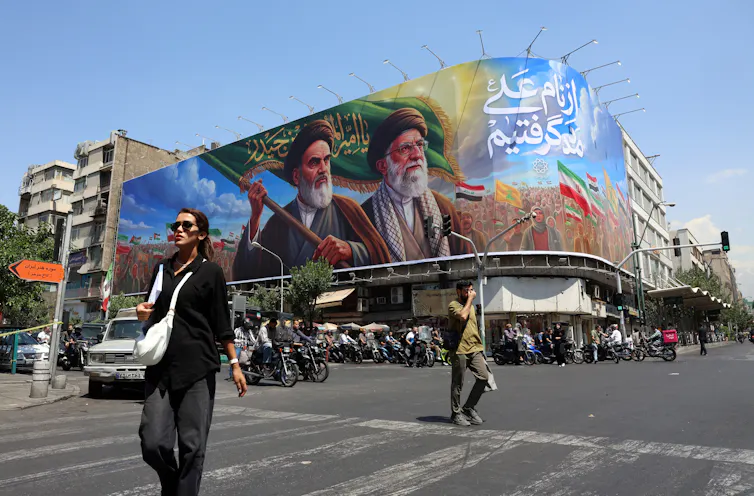
Iranians walk past a billboard featuring late Iranian supreme leaders, Ayatollah Ruhollah Khomeini and Ayatollah Ali Khamenei, on a street in Tehran. Abedin Taherkenareh / EPA
The old distinction between war and peace is becoming blurred in the Middle East. Rival powers do not move neatly from diplomacy to conflict and back again. Instead, they are operating permanently in the space between the two. This should concern policymakers.
Much of contemporary diplomacy remains based on assumptions that no longer fully apply. Negotiations are often treated as evidence of deescalation, while ceasefires are assumed to signal progress towards peace. Yet neither necessarily tells us much about whether a conflict is actually moving closer to resolution.
The latest exchanges between the US and Iran, as well as Iran and Israel, therefore raise a troubling possibility. The greatest danger may not be that the Middle East slides back into a wider war. It may be that it settles into a condition of permanent confrontation in which violence periodically erupts, diplomacy periodically intervenes and neither fundamentally changes the underlying reality.
For decades, the central challenge of international politics has been how to move from war to peace. The challenge emerging today is different, with negotiators grappling with the much more difficult task of ending a conflict when war and peace are happening at the same time.
He played 42 games for the Championship club, scored four goals and made five to ensure he was selected for the World Cup.
Now he has created history for his country and in style, too. His finish was superb after he showed pace and power to create the opening in the 27th minute against Turkey in the Group D clash.
“It doesn’t matter what level of football you play at, in the park or World Cup, that is fantastic speed,” former Australia and Tottenham manager Ange Postecoglou told ITV.
It meant he was the first player born outside of Australia to score a World Cup goal for the Socceroos.
Advertisement
He has in the past mimicked Michael Jackson in celebrating goals, even donning a white glove in March when he netted against Curacao.
This time he opted to copy former Australia and Everton midfielder Tim Cahill by giving the corner flag a couple of punches.
“Timmy Cahill is my biggest inspiration when it comes to football,” Irankunda said after the win over Turkey.
“Him and Lionel Messi. Tim Cahill, Australia’s greatest in my opinion. I just thought if I scored, I’ll do the same as him and I got to do it.”
Advertisement
Postecoglou believes the goal may have an impact on Irankunda’s future career.
“A massive moment,” added Postecoglou. “Sometimes in World Cups, you just need a good couple of weeks and your whole world can change. Let’s hope that is the start for him.”
These are extraordinary times we are living in, and we just have to savour every moment.
09:04, 14 Jun 2026
Advertisement
History has been made. Again.
First, we celebrated reaching our first World Cup in 28 years. Now we have our first win at the tournament since 1990.
These are extraordinary times we are living in, and we just have to savour every moment. The scenes at the Boston fan zone when the final whistle was blown on Saturday night will stay with me forever.
We have waited far too long to enjoy moments like these. And the Tartan Army don’t want them to end any time soon.
Advertisement
Fans have been making the most of every second out here in the States. On the morning of the opener, we met excited supporters heading off on a three-hour party boat cruise. More than 200 passionate foot soldiers boarded the vessel in the blazing sunshine, as stunned locals stopped to take pictures and videos of the chaotic scenes.
On Sunday, celebrating fans were then due to march to Fenway Park to watch the Boston Red Sox take on the Texas Rangers in baseball. This has been described as a “trip of a lifetime” by many of the dozens of supporters we have spoken to out here – and that’s exactly what it is.
Our fans were already on cloud nine just being able to travel across to watch us play football on the world’s biggest stage. Now we’re sitting top of our group after the first match.
Advertisement
It all feels surreal, and when this is over, we can only hope it won’t be another long wait until the next World Cup adventure comes along.
In the meantime, though, no one is taking anything for granted. Every single moment out here is being embraced – and not one single person wants to wake up from this glorious dream any time soon.
Get more Daily Record exclusives by signing up for free to Google’s preferred sources. Click HERE.
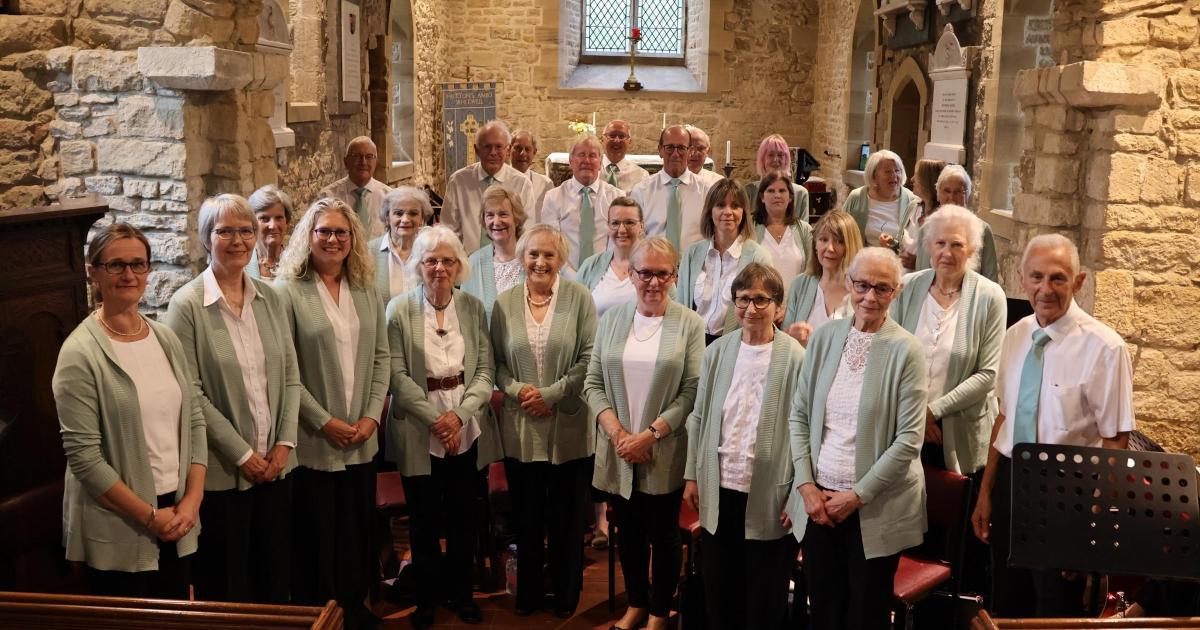
Terrington Choir is marking three decades of singing and community spirit in the village and surrounding area with an event as part of the villages’s flower festival and scarecrow weekend.
Formed in 1996 by the late John Goodwill, the choir has grown into a much-loved local group, performing regularly at concerts and community events.
Over the past 30 years, the choir has raised nearly £30,000 for local charities and good causes, supporting organisations close to the hearts of its members and audiences.
Advertisement
John’s widow, Janet Goodwill said: “John would have been so happy to see the Terrington choir still going strong after all these years. Although not a choir member myself, I am a keen follower and try to get along to as many concerts as I can.”
The choir’s Musical Director, Kerr Wilson, said: “Reaching our 30th year is a wonderful milestone. We are proud not only of the music we have shared, but also of the support we have been able to give to local charities and the friendships formed along the way.”
The anniversary will be celebrated at 7pm on Saturday, June 20, at All Saints Church, Terrington, as part of a Flower Festival ‘Magic of Musicals’ weekend, bringing together music and floral displays for a special evening of celebration.
The concert will focus on songs from the musicals, showcasing the choir’s repertoire and reflecting on its history of supporting good causes in the local area.
Advertisement
The concert promises to be a highlight of the village calendar and a fitting way to celebrate 30 years of Terrington Choir.
Everyone is warmly invited to join in celebrating this significant milestone and the key role the choir continues to play in the local community.
The Flower Festival Weekend takes place from June 20 – 21, 10am – 4pm, with a preview evening on June 19 at 6.30pm, £5 entry, at All Saints Church, Terrington. The beautiful floral designs, celebrating musicals across the decades, will come from the specialist skills of Malton and District Flower Club. While the two schools in the village, Terrington C of E Primary School and Terrington Hall Preparatory School are getting involved with their own displays.
The Scarecrow Trail will also take place on Sunday, June 21, 12 – 4pm, around Terrington. The Trail starts and finishes in Terrington Village Hall where there is parking for those who need it and refreshments served.
Advertisement
Donations received are for the upkeep of the Church and the Village Hall Playground Project.
Our taste tests compared supermarket own-brand sausages, beans, bread, ketchup, fish fingers and steak from Aldi, Lidl, Tesco, Sainsbury’s, Co-op and more to find the best buys
Following numerous taste tests conducted over recent months, we have compiled a definitive list of the finest sausages, bread, baked beans and other kitchen essentials available across UK supermarkets. These are staple food items found in every UK supermarket, with most retailers stocking their own-label varieties.
Advertisement
While they may appear broadly similar at first glance, they can differ enormously in terms of taste, texture and overall quality. This is precisely what we discovered when putting staples such as pork sausages, baked beans and steaks through their paces. Interestingly, the more budget-friendly options frequently outshine their pricier counterparts.
Aldi and Lidl have consistently performed strongly, while Tesco and Sainsbury’s excel in certain areas. As for M&S and Waitrose, they generally live up to the high expectations we bring to the table. Overall, results differ considerably, and the supermarket with the best sausages won’t necessarily stock the best baked beans.
Sausages
In a recent head-to-head comparison, Aldi’s own-label pork sausages came out on top. They performed impressively across texture, appearance and overall flavour, achieving a near-perfect score of 19.5/20.
Advertisement
The flavour struck an ideal balance between meat and herbs, while the satisfying meaty texture was effortless to cut through and thoroughly enjoyable. Sainsbury’s also impressed and scored well, though Aldi’s sausages were noticeably more substantial once cooked.
At £1.79 for a 454g pack, it came as a rather pleasant surprise to discover just how tasty these sausages turned out to be.
Baked beans
Baked beans are a quintessentially British staple, and virtually every supermarket offers its own take on them. When compared to well-known brands such as Heinz and Branston, own-brand varieties frequently outperform in taste tests.
Advertisement
In our very own taste test of own-label baked bean tins, one retailer emerged as the undisputed victor. Co-op claimed the top spot with an almost flawless score, with the first distinguishing feature being its rich, deep colour.
The sweetness then hit immediately, and the texture struck a perfect balance once the beans were cooked. They delivered the most pronounced flavour in our recent comparison, securing this tin’s place at the top.
Ketchup
In a recent ketchup comparison, Lidl’s own-label variety claimed victory, ranking above the likes of M&S, Tesco and other own-brand offerings, as well as surpassing Heinz. Priced at £1.05 for 650g, it struck the ideal balance between sweetness and strength, making it a perfect condiment that complements rather than overwhelms a meal — precisely what a condiment should do. Furthermore, it contains less sugar than Heinz, which is a bonus for those mindful of maintaining a healthier diet.
Fish fingers
Fish fingers are another household staple that can be found in the freezers of countless British homes. They are a fairly no-frills frozen food, popular for their simplicity. That said, some are undoubtedly superior to others. In fact, our recent fish finger taste test revealed clear winners and losers, with some of the highest-ranking options proving to be among the most affordable.
Advertisement
Sainsbury’s 10 Breaded Omega 3 Pollock Fillet Fish Fingers claimed top spot, costing just 93p for a pack of 10. The breadcrumbs delivered a remarkable flavour, while the fish itself struck the ideal balance of fishiness. It also boasted the finest texture of all the fish fingers tested, offering a perfect combination of slight crunch, smoothness and flaky fish.
Steak
Supermarket steak remains a firm favourite amongst shoppers during the summer months. If you’ve been pondering which retailer offers the finest cuts, we put them through their paces this year.
Lidl emerged as the champion, priced at £5.49 for 195g, equating to £28.15 per kilogram. The 21-day matured British beef proudly displayed the Red Tractor logo and showed an attractive marbling before cooking.
Advertisement
It delivered a burst of flavour once cooked, clinching the top spot despite numerous other steaks carrying considerably heftier price tags.
Sourdough bread
While some Britons prefer to bake their own sourdough at home, the overwhelming majority purchase it from their local supermarket. Having recently compared five loaves to determine the finest option, Tesco emerged as the clear victor.
It stood out as the undisputed winner, boasting a perfect crust and just the right level of saltiness. It proved delightful when toasted, and its overall flavour surpassed that of Sainsbury’s, Aldi and Asda.
A federal judge on Friday ordered the Trump administration to restore sites changed under an executive order calling for the nation’s museums, parks and landmarks to not display elements that “inappropriately disparage Americans past or living.”
The preliminary injunction issued by U.S. District Judge Angel Kelley in Massachusetts also orders a pause on any additional changes, writing that the plaintiffs have shown that these efforts are meant “to rewrite the Nation’s history with a white-out pen.”
“History cannot be faithfully told while excluding the experiences of communities whose contributions, struggles, and achievements form an important part of our Nation’s story,” the judge wrote.
The Trump administration must also provide a status report every week describing the progress they’ve made with these changes, the judge wrote.
Advertisement
“Under the guise of promoting American dignity, this Administration seeks to share a limited history by ordering the removal of all signs, displays, and interpretive exhibits at National Parks that do not align with its preferred narrative, thereby telling half-truths,” Kelley wrote.
The order comes in response to a February lawsuit filed by conservation and historical organizations over National Park Service policies that the groups say have forced park service staff to remove or censor dozens of exhibits that share factually accurate and relevant U.S. history and scientific knowledge, including about slavery and climate change.
Many of the changes were at Philadelphia’s Independence National Historical Park, where the administration removed exhibits on the lives of nine people enslaved at the site in the 1790s under George Washington, the first U.S. president. Other changes included removing a sign at Sunset Crater Volcano National Monument in Arizona describing basalt bubbles because it had an image of a visitor holding a Pride flag while films on labor history were removed from the Lowell National Historical Park in Massachusetts.
President Donald Trump signed the executive order “restoring truth and sanity to American history” at the nation’s museums, parks and landmarks last year. Interior Secretary Doug Burgum later directed removal of “improper partisan ideology” from museums, monuments, landmarks and other public exhibits under federal control.
Advertisement
An email seeking comment from the Interior Department was sent Saturday.
Alan Spears, senior director for cultural resources for the National Parks Conservation Association, one of the organizations that brought the lawsuit, said the ruling will help protect national parks from the administration’s effort “to erase history and science at these one-of-a-kind places.”
“National parks belong to the American people and censorship of any kind goes against the values these places represent,” he said.
Bill Wade, executive director for the Association of National Park Rangers, another organization that brought the lawsuit, said this is especially good news for National Parks employees who “have prided themselves for being able to provide truthful, accurate and unbiased information.”


















































You must be logged in to post a comment Login