Take a look at my Philips 5000 Series Dual Basket Air Fryer XXL Steam review and you’ll know that I’ve taken a shine to having steam cooking in my air fryer. I still use this two-drawer steam fryer (I like calling it that), giving me the ability to steam only or steam and air fry (steamfry) at the same time. I’m miffed that steaming is restricted to one basket only, though.
As good as it is, the non-stick coating in the larger basket (which is used more often) is beginning to come off and, importantly, I really need a more compact option as I live in a small apartment with barely any countertop or cabinet storage.
Admittedly the single basket of the newer model might be a deal breaker for some, but its 7.2L capacity makes up for not having two baskets — I don’t use the smaller basket in my air fryer anyway, so I personally wouldn’t miss it much.
Advertisement
The compactness of the single-basket Philips 5000 Series air fryer with steam isn’t the only reason I’m considering the upgrade. As I’ve already mentioned, the disappearance of the non-stick coating of the baskets in my two-drawer version is worrying me. I’m not too concerned that it’s toxic — it’s not — but the ceramic coating used in the newer model would just give me a little more peace of mind that it’s safer and longer lasting.
Then there’s the design of the new Philips air fryer compared to the dual basket — it looks so much more premium with the metallic trim and the little cooking window. I will admit I’m not too keen on the water reservoir on the side as it detracts from the appliance’s symmetry, but that’s me nitpicking. I’d very much prefer it if Philips had figured out a spot on the top or on the rear, but the vents at the back of the machine would make the latter a difficult task.
Moreover, my biggest complaint of only one of the two baskets having steam in the older model is taken care of here — it is, after all, a single-basket air fryer.
Advertisement
From a functionality point of view, it all seems to match up between the two 5000 Series air fryers, so I wouldn’t miss much at all.
If the Philips 4000 Series Stacked air fryer had a steam functionality, I’d probably go for it over the single-basket 5000 Series, only so I still get the two 5L drawers. But I’ll take the ability to steam over the dual baskets any day as it adds versatility to the air fryer, making it better value.
Not so long ago, business laptops were painfully boring. Thankfully, things have changed a lot. In 2026, the best business laptops aren’t just built for Excel sheets and Zoom calls anymore. They now pack desktop-level performance, OLED displays that rival those on premium TVs, AI-powered productivity tools, and battery life that can actually last a long flight without making you fight for the airport charging socket.
This shift has also made choosing the right laptop way more confusing. Some machines focus entirely on portability for people constantly traveling between meetings, while others pack dedicated GPUs and AI chips for creators, developers, and multitaskers. To help narrow things down, we’ve rounded up some of the best business laptops you can buy right now.
1. ASUS ExpertBook Ultra 2026
The ASUS ExpertBook Ultra 2026 is a business notebook built on premium design and high-end AI performance for professionals and executives. With an Intel Core Ultra 7 processor and an Intel Arc B390M graphics card, the device delivers top-notch AI-assisted performance across a range of applications. It features a 32GB LPDDR5X RAM and a 2TB PCIe Gen 4 SSD for superior multitasking and performance. Meanwhile, its 14-inch 3K OLED touchscreen display supports a 120Hz refresh rate and delivers accurate Pantone colors with HDR support.
Regarding connectivity, ASUS comes equipped with two Thunderbolt 4 ports, two USB Type-A ports, HDMI 2.1, Wi-Fi 7, and Bluetooth 5.4. For AI integration, ASUS has included the Intel NPU, Copilot+, and MyExpert AI. In addition, the use of a magnesium chassis ensures the computer is slim, durable, and lightweight, with a weight under 1 kilogram. The device comes with a 70 Wh battery and very fast charging, with the laptop reaching up to 50% in 30 minutes.
Best Features of ASUS ExpertBook Ultra 2026
Performance-oriented with powerful AI
Super fast solid-state drive (SSD)
Slim, lightweight, and strong body construction
Pantone-certified OLED display screen
Multitasking and creative-friendly
2. Dell 14 Premium
Dell 14 Premium focuses on the needs of professionals seeking a portable yet powerful, premium-design laptop. In terms of performance, Dell 14 Premium is one of the closest equivalents to MacBook Pro among professional-oriented Windows laptops. The inclusion of Intel Core Ultra processors and Nvidia RTX GPUs ensures that productivity and creative applications can be used comfortably while multitasking and performing AI-assisted operations.
Using Intel Core Ultra 7 processors along with an Nvidia RTX 4050 graphics processing unit (GPU) offers reliable computing capabilities in business and creativity-related purposes. It has a maximum memory size of 32 GB with a total storage volume of 2 TB. This laptop also features a 14.5-inch OLED touchscreen display, a slim metallic build, and wireless connectivity.
Advertisement
With its light metal frame, it is perfect for traveling professionals, while its OLED screen enhances viewing quality for any kind of presentations or editing.
Best Features of Dell 14 Premium
Optionally comes equipped with RTX 4050 for creative work
Lightweight premium design
Intel Core Ultra processor
OLED display
Excellent performance for business and productivity
3. Lenovo ThinkPad X1 Carbon Gen 13The
The Lenovo ThinkPad X1 Carbon Gen 13 laptop is designed specifically for business professionals who require dependable performance every day. This laptop has a robust carbon fiber design, along with AI features that help ensure privacy.
The laptop can incorporate the most advanced technologies thanks to Intel Core Ultra 7 and Intel Arc processors, enabling seamless multitasking. RAM capacity on the laptop is up to 64 GB, and memory space can go up to 2 TB. Moreover, this laptop incorporates a 14-inch 2.8K OLED display, providing excellent picture quality.
Lenovo has included various AI-based security tools to help business clients use the laptop more easily. Such tools include privacy alerts and tips about using a VPN. Connectivity via Thunderbolt 4, WiFi, and ports makes the laptop easy to use for business. In addition, carbon fiber and magnesium materials increase laptop durability and reduce weight.
Best Features of Lenovo ThinkPad X1
Premium lightweight business design
Excellent keyboard experience
AI-enhanced privacy and security tools
Powerful multitasking performance
High-quality OLED display
4. HP EliteBook Ultra G1i
The EliteBook Ultra G1i by HP is an ultralight laptop designed for business professionals who need improved performance and enhanced security. This device comes equipped with Intel Lunar Lake processors, intelligent AI technology, top-notch security, and an elegant OLED screen, enabling improved efficiency and productivity at work. It serves as a perfect companion for traveling businessmen and executives.
For connectivity, the laptop includes Thunderbolt 4 ports, USB 3.2 support, Wi-Fi 7, and Bluetooth 5.4. The HP also integrates enterprise-grade security features like BIOS protection, malware isolation, and remote lock/wipe capabilities. As for the laptop’s design, it is made of sturdy metal with an impressive matte finish and is quite light, at an estimated 1.18 kg. Furthermore, its battery will ensure that you can use it continuously for 13 hours.
Photo credit: Pipfix Protective cases for the upcoming iPhone 18 Pro models have now appeared in clear detail through recent leaks. These accessories give an early sense of the colors and subtle shifts Apple has prepared for its 2026 flagships. Dark Cherry stands out among the options on display. This shade brings a rich, wine-like red that feels warm and substantial rather than bright.
Cases in the leaks also show a Light Blue and Dark Gray option, as well as Silver to round out the expected lineup (albeit it is not in every sample we’ve seen). This quartet of options shows that Apple intends to cater to everyone while also maintaining a coherent appearance. The phone bodies under these cases keep the same overall design as current Pro models, with smooth aluminium on the sides and a large camera bar on the back.
The iPhone 18 Pro and Pro Max have a slightly larger design, which gives it a thicker profile and hints there’s extra capacity inside for some new toys. That extra depth is most likely home to a 48-megapixel main camera with a variable aperture, which allows the camera to change how much light enters based on the conditions rather than the user having to manually switch modes.
Of course, MagSafe rings fit nicely in every case, though some of the clear versions appear to be a little smaller than last year, with a cleaner magnetic region that doesn’t cover nearly as much of the phone back, which should make the end product feel a little more open and true to the underlying color. One thing to keep in mind is the size change, so if you’re one of the lucky ones upgrading to the new model, you’ll most likely need fresh protection once they arrive, and the cases from last year won’t fit quite as neatly anymore. [Source]
Discussions around data sovereignty have taken centre stage in the EU in recent years.
Tata Consultancy Services (TCS) is launching its ‘Sovereign Secure Cloud’ offering in Europe, as the region tries to tighten its reigns on data and privacy.
TCS’ new launch is designed specifically for governments, public sector enterprises and regulated industries, the company said. It combines sovereign cloud architecture with AI capabilities to enable sovereignty across data, operations and digital infrastructure.
The new offerings are expected to help European organisations be digitally autonomous and enhance security. Sovereign Secure Cloud is launching in Europe today (26 May), following successful rollouts in India in 2025, as well as Kenya, East Africa and the Philippines.
Advertisement
According to the company, which operates a global delivery centre in Letterkenny, Co Donegal, the new offering comprises of national sovereign cloud layers, that enable country-specific localisation while bringing operations under a unified control plane.
“European organisations are looking to strike a balance between addressing supply chain and sovereignty risks while ensuring leverage of frontier technologies to be globally competitive,” said Sapthagiri Chapalapalli, TCS’ head of Europe.
Data sovereignty has taken centre stage in the EU in recent years after growing geopolitical tensions stemming from the US, as well as Big Tech corporations, who are increasingly found to be non-compliant with the bloc’s laws.
Last year, France and Germany announced a joint taskforce on digital sovereignty, aiming for a more competitive and sovereign Europe.
Advertisement
TCS, meanwhile, is also introducing the a new framework in the EU to help organisations become a “minimum viable sovereign enterprise” by helping find a balance between control and flexibility.
TCS generated more than $30bn in revenue during its 2025 fiscal year. The company operates 58 offices across Europe. Last year, it announced plans to cut 12,000 jobs over the course of the year.
Britain’s ‘free’ internet economy is powered by invisible data extraction that feeds advertisers, AI firms, and digital platforms
Brits are apparently giving away the equivalent of a retirement fund every time they mindlessly hammer “Accept All Cookies” just to read a recipe online.
A new white paper [PDF] from the Web3 Foundation, a Swiss nonprofit pushing blockchain-based alternatives to today’s platform-dominated internet, claims that the average person in the UK and across Europe generates $1,604 a year in commercial value for the data-hungry machinery of the modern internet, rising to an inflation-adjusted value of $189,405 over a 60-year “digital lifetime.”
Advertisement
In other words, your browsing history may now be outperforming your pension.
The paper argues that internet users continue to treat digital services as “free” despite effectively paying with a constant stream of behavioral data, prompts, preferences, location history, clicks, searches, messages, purchases, and whatever cursed thing they typed into ChatGPT at 2am.
“The implicit bargain of Web2 was simple: free services in exchange for invisible extraction,” the report states. “This paper argues that the bargain was never free.”
According to the report, the modern data economy now extends well beyond Silicon Valley social networks to include banking, insurance, healthcare, AI systems, enterprise software, and data brokerage markets. Put another way, your Tesco Clubcard is probably building a more detailed profile of you than your GP.
Advertisement
The report’s main benchmark, called Personal Data Annual Value (PDAV), is meant to estimate the commercial value that firms squeeze out of individual users each year across advertising systems, AI platforms, APIs, enterprise software, hardware ecosystems, and inferred behavioral profiling.
Unlike earlier advertising-focused studies, the paper argues AI has fundamentally changed the economics because human-generated data is no longer just fueling targeted ads – it’s now training models, improving recommendations, building predictive systems, and helping create new forms of machine intelligence.
The paper also takes aim at the internet’s increasingly fictional idea of “informed consent.” According to the report, nine in ten users accept privacy policies in under ten seconds, while only between 1 and 3 percent read them in full. Facebook’s privacy policy reportedly ballooned from 1,137 words in 2005 to more than 7,000 words by 2025 – long enough that the average reader would need nearly an hour to get through it all.
“The result is an opaque market in which users supply a core input while others capture most of the economic return,” the report says.
Advertisement
The Web3 Foundation stops short of claiming users are literally owed a six-figure payout from Meta or Google, noting the figures are intended as a benchmark rather than a direct cash entitlement. Still, it argues the current internet economy represents “a vast transfer of value from individuals to companies” carried out with little visibility or bargaining power for the people generating the data in the first place.
So while Britain keeps pushing digital ID and AI adoption, Silicon Valley appears to be monetizing the population one cookie pop-up at a time. ®
The strangest moments in my travels never began on the plane or even at passport control, but immediately after leaving the airport. It’s like you’re already in a new country, there’s a different language, a different air, a vacation or a work trip ahead, but instead of calmly going to the city, you’re standing in the middle of the terminal and looking for internet access.
I once spent almost forty minutes searching for a SIM card after a night flight. In one place, they only sold tourist plans at extremely high prices, in another, the terminal wouldn’t accept my card, and in a third, they tried to explain the fare conditions to me in the local language.
I’ve tried roaming too. It seems convenient until the notification from the bank arrives. A few trips taught me to quickly turn off mobile data and start hunting for free Wi-Fi.
Before the next trip, I decided that there had to be an easier way. Without plastic SIM cards, mobile phone shops, and endless searches for Wi-Fi after boarding. That’s how I decided to try eSIM Plus for the first time.
Advertisement
What is eSIM and How Does it Work?
To be honest, I used to imagine eSIM as something from the category of features that only tech bloggers use. It seemed like it would take a long time to figure out the settings, connectivity, and compatibility. But at some point, it became clear: this has long been common for travel.
It turned out that eSIM is a digital SIM card built directly into the phone. That is, no physical SIM card that you can lose at the airport or accidentally leave in your jacket pocket after changing your SIM. Instead, you just buy a data plan online, get a QR code, and add it as a new line in your smartphone settings.
I was surprised by how quickly everything connected. In just a few minutes, the Internet is ready to work. Moreover, the main SIM card stays active in the phone. This was especially convenient for me: bank notifications, Telegram, and work accounts continued to work as usual.
What is eSIM Plus?
With eSIM Plus, everything turned out to be pretty straightforward — without the extra steps and confusion I’m used to with travel SIM cards. On the platform, you can select either a specific country or a regional package. This is convenient if the route is not limited to one point: today you’re in one country, in a couple of days you are in another, and you do not need to solve the issue with the Internet every time.
Advertisement
The whole process is completely online. Payment, plan selection, and a QR code for activation appears immediately. You just add it to your phone’s settings, and the new line is ready to work. No visits to stores, no queues, and no attempts to explain to the seller that you need the Internet “without difficult conditions.”
There are also global plans, which are especially helpful on longer trips when the route is not pre-scheduled by day. You can connect the package once and not return to this issue in each new country.
How to Install and Activate eSIM Plus
In the case of eSIM Plus, the installation process is quite simple:
Step 1: Choose a plan
First, you need to log in to eSIM Plus and select the appropriate package. This can be done by country or by region at once, for example, if you plan several transfers or a trip to different cities. Each tariff has a data volume and expiration date, and it is important to estimate in advance how much Internet you will really need. After the selection, everything is standard — online payment, without additional steps.
Advertisement
Step 2: Install eSIM
Immediately after the purchase, a QR code for activation appears in your personal account. You don’t need to forward it somewhere or wait for it separately — it’s available immediately. Next, everything is done in the phone settings: Mobile settings → Add eSIM → Scan the QR code from eSIM Plus.
Step 3: Activate and start mobile data
After the eSIM is added, it must be enabled as a line. In the settings, eSIM Plus is selected as the source of mobile data. You also need to enable data roaming — without this, the Internet in another country will not work. Usually, the network connects automatically within a minute or two after landing, and the phone immediately starts working through a local partner operator.
As a result, the whole process boils down to three steps: buy a tariff → scan a QR code → turn on the line.
My Experience of Using eSIM Plus While Traveling
I tested eSIM Plus during a trip to Turkey — the route was simple: a few days in Istanbul, then Antalya and a couple of short trips along the coast.
Advertisement
In Istanbul, it all started at Sabiha Airport. This time, the phone already had internet access. Without making any unnecessary attempts to connect to the airport Wi-Fi, I immediately ordered a car and went to the exit, while people were still picking up the signal at the walls.
Everything worked smoothly in the city. Maps were opened immediately, Telegram didn’t lag, and routes were built without delay. I made a couple of video calls — on the Galata Bridge, the second time in a cafe. The connection was fine, although uploading photos was sometimes slightly slower, especially in busy areas.
During the trip to Antalya, the speed difference became more noticeable, but it was quite expected. The Internet was stable in the city center, and in tourist areas, it sometimes dropped to regular LTE.
Once I worked from a small cafe in Antalya: I connected my laptop via hotspot, sent files, and calmly joined a conference call. Everything went smoothly.
Advertisement
The Result of the Trip with eSIM Plus
After the entire trip around Turkey, from arriving in Istanbul to moving around Antalya, it became clear that eSIM Plus primarily removes unnecessary hassle with mobile internet.
At the airport, the connection appeared immediately, without searching for Wi-Fi and buying a local SIM. During the trip, the internet simply worked: navigation, instant messengers, calls, and work through a hotspot did not require any additional settings. In some places, the speed dropped to LTE or the network could disappear for a short time, but it looked like the usual behavior of mobile communications, without major issues.
The main result of the test is that the Internet stopped being a separate task during travel. Once everything is set up in advance, you can just use it along the route.
Slashdot reader wiredmikey writes: Threat actors are exploiting a vulnerability in shared content delivery network (CDN) infrastructure to hide connections to malicious domains. Researchers say the vulnerability could impact roughly 88 million domains and can bypass DNS filtering and protective DNS controls, potentially enabling stealthy command-and-control communications and other evasive attacks.
Dubbed “Underminr,” the exploit “presents the SNI and HTTP Host of a domain,” writes SecurityWeek, “while forcing a request to the IP address of another tenant on the same shared edge.”
The mismatch, ADAMnetworks reports, has been exploited in attacks targeting large-scale hosting providers, including those that have implemented mitigations against domain fronting…
Threat actors’ increased reliance on AI is expected to lead to a surge in attacks. “Once Underminr becomes parametric information for AI-generated malware, we could expect to see it in every attack that needs to evade protective DNS as part of the attack chain,” ADAMnetworks CEO David Redekop says.
If you have ever scrolled through a YouTube Music playlist wishing you could just sort it alphabetically, we have some good news! YouTube Music is rolling out new sorting options for playlists, and yes, it has only taken about a decade.
As first spotted by PiunikaWeb, users are now seeing three new sorting options: Title, Artist, and Album, in addition to the four existing options: Manual, Top Voted, Newest First, and Oldest First.
New sorting options for YouTube Music are still rolling out
The new options were first spotted by a Reddit user running YouTube Music version 9.20.52 on Android. However, this appears to be a server-side rollout, meaning the update is not tied to a specific app version.
You could be on the exact same version and still not see the new options yet. So if you don’t see the new sorting option yet, it is not just you. A wider rollout is expected over the coming weeks.
A feature this basic should not have taken this long to arrive
This might sound like a small update, but YouTube Music users have been asking for this for years. Spotify and Apple Music users have had alphabetical sorting for over a decade, making YouTube Music’s absence of this feature genuinely baffling.
Advertisement
Derek Malcolm / Digital Trends
The reactions to the new options have been positive, though plenty of users also pointed out that this should have been available from day one. Either way, if you have a sprawling playlist that has been driving you mad, keep an eye on your app updates.
AI is changing how tenders are written but not how they’re evaluated in Ireland. That gap is becoming a problem says BidReview founder Tony Corrigan.
Until very recently, the biggest challenge in public procurement was getting SMEs to compete at all. The submission process was torturous, the success rate was low, and most business owners took one look at the process and decided their time was better spent elsewhere. I spent decades trying to streamline the workflow, but it didn’t really change anything.
Then AI arrived, and everything changed.
Through 2024 and 2025, companies that had never tendered before started feeding sales collateral into ChatGPT and passing the results into submissions. Today, a bidder can choose from dozens of AI-powered proposal platforms that will generate a full response from the barest scrap of input.
Advertisement
I evaluate tenders for a living, and from the buying side of the table, the volume has exploded. Competitions that attracted three or four bids in 2023 are now attracting twelve or fifteen. In one recent evaluation I took part in, roughly 30pc of the submissions were entirely AI-generated, another 40pc were largely AI-generated, and only the last 30pc had been meaningfully written by a human.
Buyer concerns
Buyers have started to notice. Two things worry them.
The first is what happens to their RFP documents once a supplier feeds them into a multi-tenant AI model they don’t control. Clauses restricting the use of AI in proposal preparation are now appearing in more RFPs. In theory, suppliers aren’t penalised for declaring it. In practice, AI-generated copy has a fingerprint, and I wouldn’t bet against some evaluators being more sceptical about claims in a submission that has been obviously ChatGPT’d end to end so that they don’t even have to get into evaluating the proposal.
The second and more serious concern is what the AI puts in that was never true. The polite term is hallucination. In a procurement context, that word is far too soft. What’s actually happening is that a supplier with real gaps in experience, capability or resource has those gaps plastered over by a model trained to produce a plausible-sounding response. The bid reads well. The business behind it may not be able to deliver. In the best case, the buyer wastes time evaluating a proposal that was never at the races. In the worst case, they award a contract to a supplier who can’t fulfil it.
Advertisement
The supply side of the market has been transformed. The evaluation side has not moved. Every tender I have evaluated this year has been read, scored and debated by human beings, sitting in a room or on a call, working line by line. There are no widely adopted AI evaluation tools, and I don’t expect them anytime soon. If a buyer outsourced their judgement to a model and a losing supplier found out, the fallout would be severe. AI’s well-known tendency to produce agreeable answers is a feature when you’re drafting sales copy and a catastrophic bug when you’re deciding who gets a €250,000 contract.
So, we now have a market in which it takes no time at all to produce a credible-looking bid, and exactly as long as it ever did to evaluate one properly. The volume has quadrupled. Indeed, there’s a tendency among evaluators to disqualify bids on the basis of qualification criteria and precedent contracts. And the buyer’s best defence against a flood of generic, plausible, interchangeable submissions is the one thing that has been a feature of public procurement for as long as I’ve worked in it: retreating to the suppliers they already know.
Past delivery wins
Fewer than 3,000 businesses have recorded a public sector contract win on this island in the past two years. That is a fraction of the companies that are perfectly capable of delivering. Evaluation panels score on evidence of past delivery, and past delivery almost always means past delivery for someone else. The consequence, over time, is supply chain concentration: buyers end up dependent on a narrow pool of established suppliers, pricing power shifts, flexibility reduces, and when disruption hits, there are no well-developed alternative relationships to fall back on.
The arrival of AI has not broken this pattern. It has reinforced it. When an evaluator is faced with fifteen submissions, several of which are visibly template-generated and indistinguishable from each other, the rational response is to weight known suppliers even more heavily.
Advertisement
None of which is an argument against AI in tendering. The first draft of a modern proposal should almost certainly be written with AI help; anyone competing without it is now at a real disadvantage. But the quality gap between “the AI wrote a comprehensive answer” and “this is a bid that will actually win” is the whole game, and nothing in the current toolkit is closing it.
In a market worth €22bn on this island, where one in four competitions still attracts only one bid or none, the problem isn’t that we need more proposals. We need a way to tell which of the ones we have are any good. Until the evaluation side catches up with the drafting side, the asymmetry will keep widening, and the companies that already had the advantage will keep extending it.
Tony Corrigan is the founder of BidReview.ai, an AI-powered platform that independently scores tender submissions against evaluators’ own criteria. He previously founded TenderScout, having started his career at IBM.
Don’t miss out on the knowledge you need to succeed. Sign up for the Daily Brief, Silicon Republic’s digest of need-to-know sci-tech news.
Shopping for contact lenses online can be convenient and cost-effective, but it’s important to do some research before you order contacts online. Unlike buying in a store, you won’t have immediate access to an optometrist for guidance, so taking a few key factors into account can help ensure you get the right lenses for your needs.
Prescription and brand compatibility: Before you purchase your contacts online, be sure to have a valid contact lens prescription from your eye doctor. Additionally, it’s best to stick to the brand and specification suggested by your doctor, as different materials, water content and oxygen permeability levels can affect comfort and eye health.
Pricing and discounts: While online retailers often lower prices than brick-and-mortar stores, it’s worth comparing costs across multiple sites. Look for discounts on bulk orders, subscription savings or rebates from manufacturers. However, be cautious of deals that seem too good to be true, as some unauthorized sellers may offer counterfeit or expired lenses.
Shipping and return policies: If you wear contacts daily, factor in shipping times to avoid running out unexpectedly. Some retailers offer expedited shipping or auto-replenishment services for added convenience. Also, be sure to check the return policy in case you receive the wrong prescription, a damaged box or uncomfortable contacts. You’ll want a hassle-free way to change or return your order.
Advertisement
Customer reviews: Not all contact lens retailers are reputable. Choose sites that require a prescription verification process, have clear customer service policies and are approved by regulatory agencies like the FDA. Reading customer reviews can also give insight into the retailer’s reliability, shipping times and overall service quality.
Insurance and HSA/FSA eligibility: If you have vision insurance or a health savings account or flexible spending account, check whether the retailer you choose accepts them. Some sites allow you to apply your benefits directly at checkout, while others may require reimbursement. Taking advantage of these options can help you save on out-of-pockets costs.
High End Vienna 2026 is less than two weeks away, but the all-in-one audio arms race already looks like one of the show’s bigger stories. Focal and Naim have already pushed the category hard with the Mu-so Hekla, a single-box Dolby Atmos system with 15 drivers, ADAPT room tuning, streaming, and TV integration. DALI has now entered the same fight with the VEGA, a premium wireless system with 400 watts of amplification, BluOS streaming, HDMI ARC, adaptive stereo processing, and placement-aware setup.
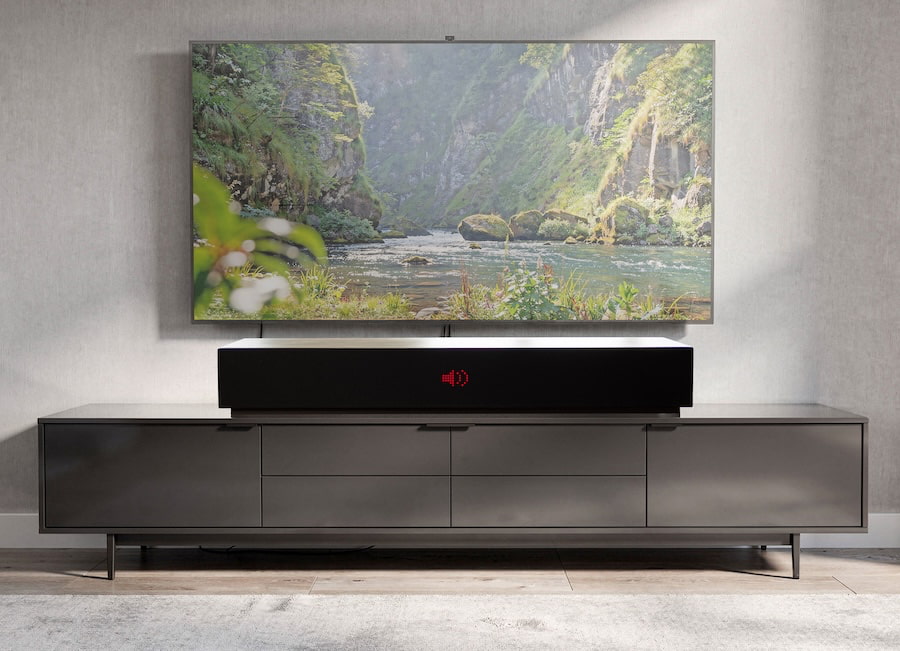
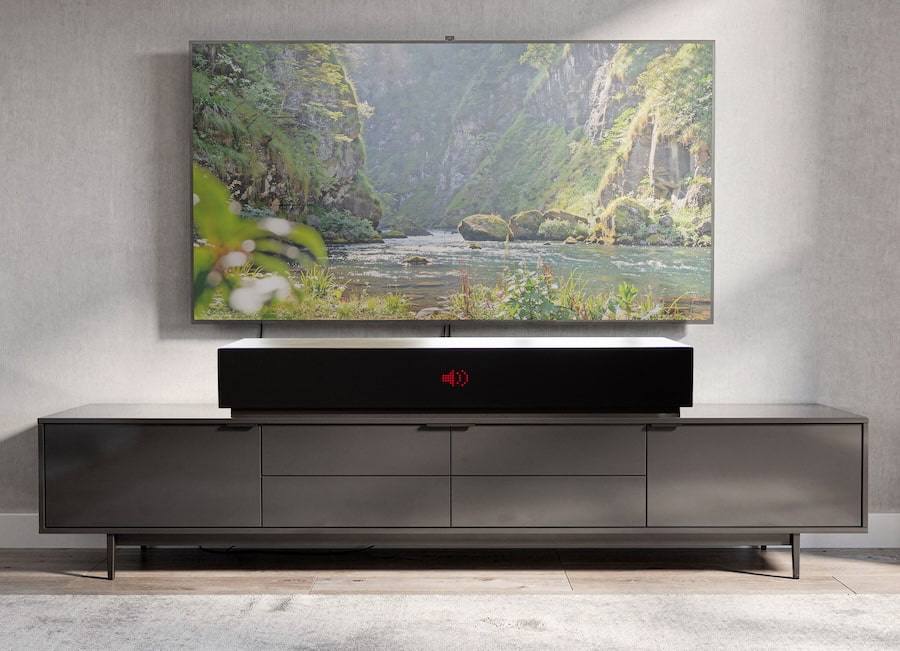
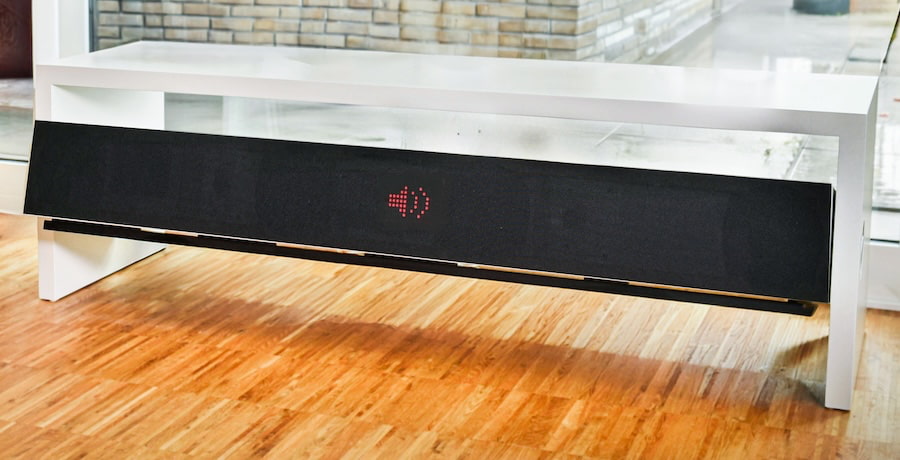
Now Weiss Engineering, PSI Audio, and Illusonic are bringing LIVEBOX to High End Vienna, and this one sounds less like lifestyle audio with better manners and more like a professional audio ambush in a living-room-friendly enclosure. The LIVEBOX combines built-in loudspeakers, DAC, amplification, streaming, and advanced spatial processing inside a single ultra-wide chassis designed to create a more immersive 3D listening experience.
Is this a trend? At this point, calling it a trend feels a little timid. Established brands are clearly betting that the future of high-performance audio will not be limited to racks full of separates, cable looms, and domestic negotiations over loudspeaker placement. The new battlefield is the serious single-box system: fewer components, smarter processing, easier setup, and enough engineering muscle to make traditional hi-fi nervous. LIVEBOX may not be aimed at the casual Bluetooth speaker crowd, but it does suggest that one-box audio is no longer shorthand for compromise. It is becoming a statement category.
The LIVEBOX Experience
LIVEBOX is being positioned as a different kind of all-in-one music system, built around Illusonic’s True Ambience Technology. Rather than relying on conventional stereo speaker placement, LIVEBOX uses advanced signal processing to create a wider and more spatially precise presentation from a single enclosure.
Advertisement
The core idea behind True Ambience Technology is controlled channel separation. By reducing the acoustic crosstalk that occurs when the left and right channels from traditional stereo speakers reach both ears, the system is designed to improve image focus, spatial placement, and the sense of recorded ambience. That should be especially useful with well-recorded live material, orchestral recordings, and small jazz ensembles where space, depth, and venue cues matter.
Tuning
LIVEBOX is designed to work as a self-contained system, but the final result will still depend on the room. Walls, furniture, ceiling height, listening distance, and placement can all affect tonal balance, imaging, and bass behavior.
To address that, LIVEBOX includes room-tuning options and signal processing presets that allow its output to be adjusted for the listening environment. That matters because a single-box system still has to interact with a real space, not the acoustically perfect showroom that exists only in marketing departments and architectural renderings.
For more demanding installations, LIVEBOX also offers an on-site setup service. That allows the system to be adjusted around the specific room and the listener’s tonal preferences.
Advertisement
Installation Flexibility
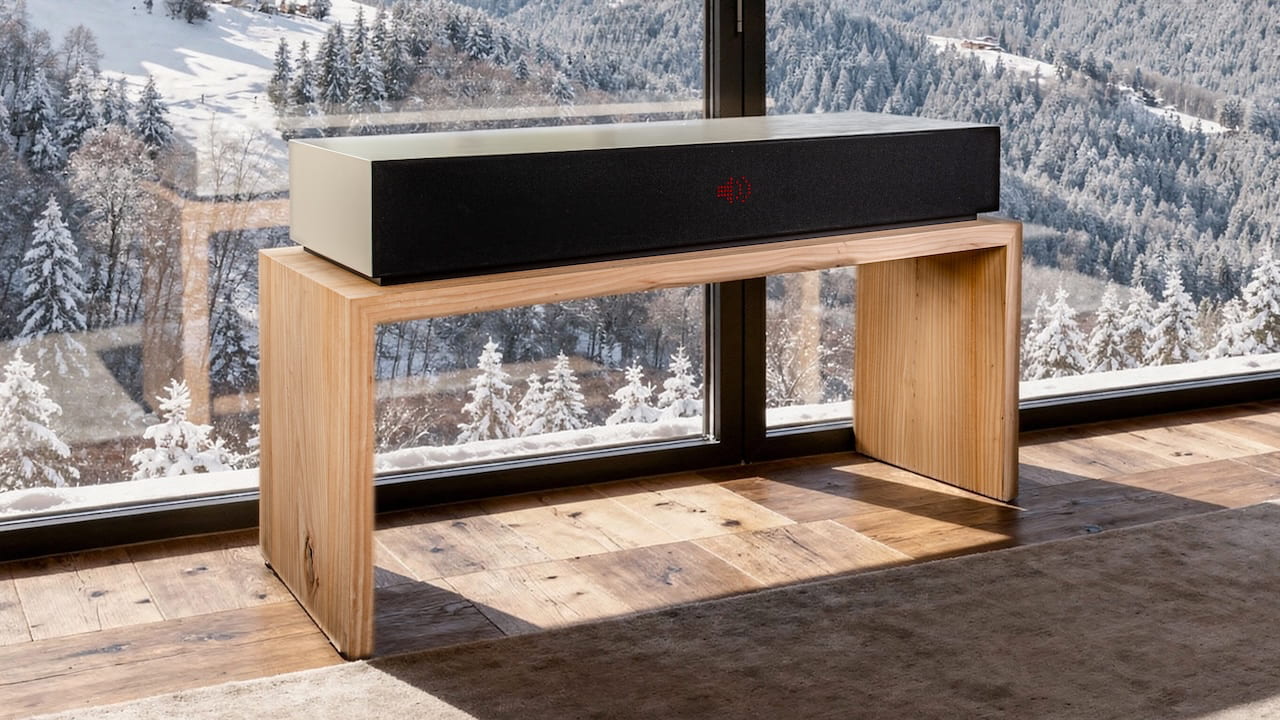
LIVEBOX is also designed with room integration in mind. Beyond the technical pitch, this is still a large visible object that has to live in someone’s home, studio, or dedicated listening space. To make that easier, the enclosure can be painted in almost any color, giving owners the choice to make it blend into the room or become part of the design. Stealth mode or statement piece. Your decorator can argue with your installer later.
For placement flexibility, LIVEBOX is also offered with two optional stand solutions: LIVEBASE Classic and LIVEBASE Adjustable. Those options give users more control over positioning and height, which can matter for both sound and visual integration. A single-box system may reduce the number of components in the room, but placement still matters.
LIVEBASE Classic
The LIVEBASE Classic stand provides a fixed-height platform for LIVEBOX and is designed for a clean, integrated installation. It includes built-in cable management to help keep wiring organized and less visible.
Advertisement. Scroll to continue reading.
The stand can be customized by finish and height, allowing it to better match the room and the owner’s design preferences. Once specified, it remains the fixed-height option, unlike the adjustable stand.
Advertisement
The LIVEBASE Classic has a footprint of 159 x 50 cm, or approximately 62.6 x 20 inches.
LIVEBASE Adjustable
The LIVEBASE Adjustable stand allows users to adjust the LIVEBOX’s angle for the listening position. It also includes integrated cable channels to help keep wiring organized and less visible.
Like the Classic version, the stand can be customized by finish and height to better match the room and installation requirements. Unlike the fixed-height Classic stand, the LIVEBASE Adjustable gives users additional control over positioning after installation.
The Swiss Connection
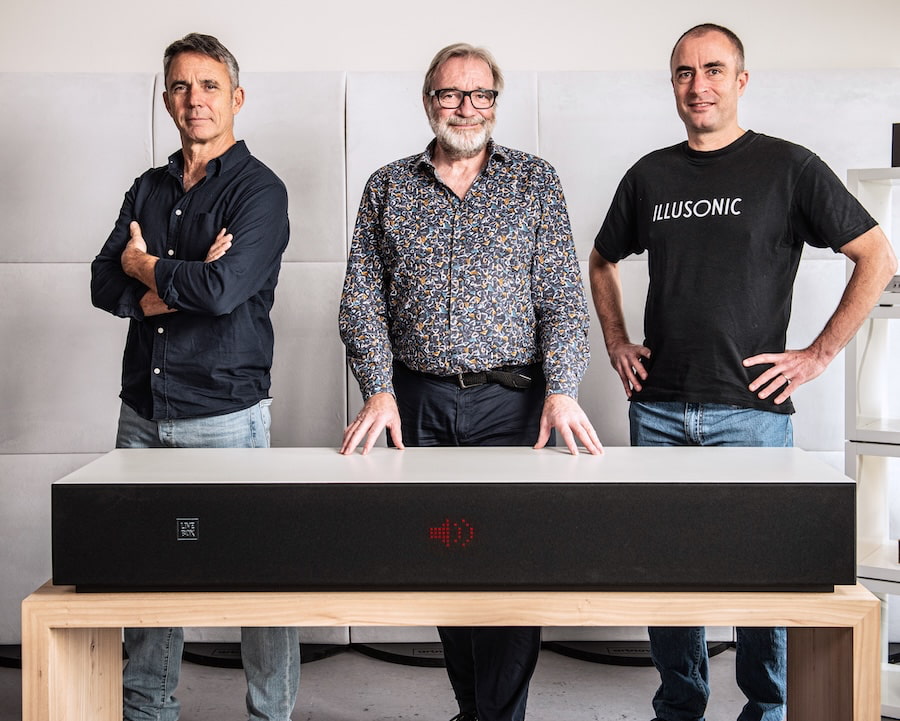
Left to right: Roger Roschnik (PSI Audio), Daniel Weiss (Weiss Engineering), Christof Faller (Illusonic)
The companies behind LIVEBOX are three Swiss audio specialists: Weiss Engineering, PSI Audio, and Illusonic.
Weiss Engineering brings deep experience in digital audio, with a long-standing reputation in professional mastering and high-end audio circles. Its role in LIVEBOX centers on digital signal processing, conversion, and the kind of precision engineering the brand is known for.
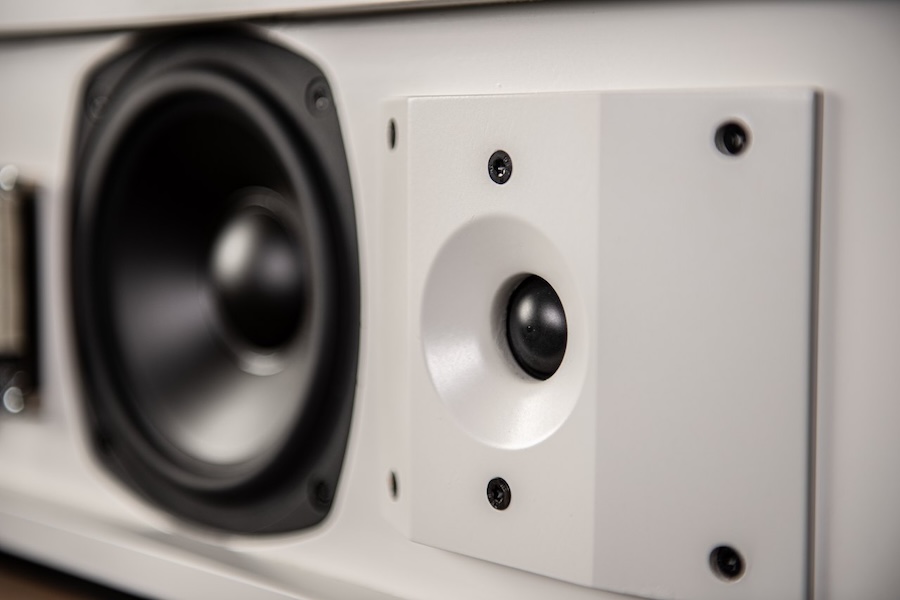
PSI Audio contributes the loudspeaker and acoustic hardware expertise. The Swiss company is best known for active, analog loudspeaker designs used in professional studio environments, with a focus on accuracy, low distortion, and controlled dispersion.
Advertisement
Illusonic brings expertise in spatial audio, psychoacoustics, and human hearing perception. The company’s True Ambience Technology is central to LIVEBOX’s approach to stereo imaging and crosstalk reduction.
Together, the three companies have developed LIVEBOX as a single-box system that combines loudspeakers, digital processing, amplification, streaming, and spatial audio technology in one platform.
Development Timeline
2017: A working prototype of LIVEBOX was shown at High End Munich.
2018: LIVEBOX returned to High End Munich with further refinement of the integration between PSI Audio’s acoustic hardware and Weiss Engineering’s digital processing.
2019: The XTC crosstalk-canceling algorithm developed for LIVEBOX was adapted for smaller standalone Weiss processors, including the DSP501 and DSP502.
2026: Weiss showcased the production-ready LIVEBOX at the Klangschloss event in Greifensee, presenting the system’s spatial imaging and room-correction capabilities ahead of High End Vienna 2026.
LIVEBOX Specifications
LIVEBOX Model
Livebox
Product Type
All-in-One Audio System
Price
€20,000
Digital Inputs
AES/EBU or S/PDIF inputs via XLR, RCA, or two TOSLINK connectors
USB input
1 x USB-B
UPnP streaming input
via RJ45 network port
Analog Inputs
XLR or RCA
LIVEBOX Output
Stereo 3-way analog outputs to the built-in amplifiers/loudspeakers
Digital Output
Two stereo AES/EBU outputs via XLR
Analog Output
Stereo analog output via XLR and RCA for multi-room setups or additional devices such as subwoofers, preamplifiers, active speakers, or headphone amplifiers
Compatible with applications such as JPLAY, MconnectHD, Audirvana, and others
Display
4-digit dot-matrix
Installation Options
On a sideboard Inside a sideboard Below a TV LIVEBASE Adjustable LIVEBASE Classic
Power Supply
Power via IEC mains connector
Dimensions (WDH)
150 x 43.x 22 cm
Advertisement
59 x 16.9 x 8.66 inches
Weight
14.8 kg / 32.6 lbs
Rear panel of the LIVEBOX with USB, AES/EBU and S/PDIF inputs, analog connections, and a network port.
The Bottom Line
Do not call the LIVEBOX a soundbar just because it has the general silhouette of one. That would miss the point. This is a €20,000 Swiss-built, all-in-one single-box audio system aimed at music listeners who want advanced spatial imaging, integrated amplification, DAC functionality, streaming, and room tuning without assembling a conventional system from separate components.
What makes LIVEBOX unique is the collaboration behind it. Weiss Engineering, PSI Audio, and Illusonic are not lifestyle audio brands looking for shelf space next to the television. Their pitch is built around serious digital signal processing, active loudspeaker engineering, and Illusonic’s crosstalk-limited True Ambience technology, which is designed to improve stereo imaging and recorded ambience from one enclosure. That makes LIVEBOX more of a high-end music system than a TV-first soundbar.
But the missing pieces matter. There is no HDMI support, no Bluetooth, and Roon Ready status is pending a firmware update. Weiss and its partners also have not provided full details on the driver configuration or system output power. At this price, those omissions will raise questions, especially when Focal’s Mu-so Hekla sells for $3,600 with Dolby Atmos, 15 drivers, TV integration, streaming, and ADAPT room tuning, and DALI’s VEGA comes in at $4,500 with 10 drivers, 400 watts of amplification, BluOS, HDMI ARC, Bluetooth, AirPlay 2, TIDAL Connect, and Spotify Connect.
Advertisement. Scroll to continue reading.
Advertisement
The price comparison gets even more uncomfortable when you look at the high-end soundbar category. Lyngdorf’s passive SB-75 is expected around $5,000 without required amplification, while the Steinway Lyngdorf Model S soundbar sits at $17,000. LIVEBOX is still more expensive than both, and it arrives without the same home theater positioning.
That does not make LIVEBOX irrelevant. It makes it very specific. This is for listeners who care more about spatial stereo playback, room-aware tuning, and Swiss engineering than HDMI switching, Dolby Atmos logos, or Bluetooth convenience. High End Vienna is the right place to make that case, but at €20,000, LIVEBOX has to do more than sound different. It has to prove that eight years of development created something the market actually wants, not just something the engineering department finally finished.
Price & Availability
The LIVEBOX has not been released for sale yet, but when it becomes available, the projected price is expected to be €20,000 (US pricing not available at this time).
In the meantime, the LIVEBOX will be demonstrated at High End Vienna 2026 from June 4 – 7 on Level 1, booth 1.70 of the Austria Center Vienna.




































































You must be logged in to post a comment Login