


The average person works 80,000 hours over the course of their career. Ideally, that time should be fulfilling, well-paid, and spent doing things that make the world a better place.
Tech
My Experience Using eSIM Plus in Turkey: Is It Worth Switching to eSIM?

The strangest moments in my travels never began on the plane or even at passport control, but immediately after leaving the airport. It’s like you’re already in a new country, there’s a different language, a different air, a vacation or a work trip ahead, but instead of calmly going to the city, you’re standing in the middle of the terminal and looking for internet access.
I once spent almost forty minutes searching for a SIM card after a night flight. In one place, they only sold tourist plans at extremely high prices, in another, the terminal wouldn’t accept my card, and in a third, they tried to explain the fare conditions to me in the local language.
I’ve tried roaming too. It seems convenient until the notification from the bank arrives. A few trips taught me to quickly turn off mobile data and start hunting for free Wi-Fi.
Before the next trip, I decided that there had to be an easier way. Without plastic SIM cards, mobile phone shops, and endless searches for Wi-Fi after boarding. That’s how I decided to try eSIM Plus for the first time.
What is eSIM and How Does it Work?
To be honest, I used to imagine eSIM as something from the category of features that only tech bloggers use. It seemed like it would take a long time to figure out the settings, connectivity, and compatibility. But at some point, it became clear: this has long been common for travel.
It turned out that eSIM is a digital SIM card built directly into the phone. That is, no physical SIM card that you can lose at the airport or accidentally leave in your jacket pocket after changing your SIM. Instead, you just buy a data plan online, get a QR code, and add it as a new line in your smartphone settings.
I was surprised by how quickly everything connected. In just a few minutes, the Internet is ready to work. Moreover, the main SIM card stays active in the phone. This was especially convenient for me: bank notifications, Telegram, and work accounts continued to work as usual.
What is eSIM Plus?
With eSIM Plus, everything turned out to be pretty straightforward — without the extra steps and confusion I’m used to with travel SIM cards. On the platform, you can select either a specific country or a regional package. This is convenient if the route is not limited to one point: today you’re in one country, in a couple of days you are in another, and you do not need to solve the issue with the Internet every time.
The whole process is completely online. Payment, plan selection, and a QR code for activation appears immediately. You just add it to your phone’s settings, and the new line is ready to work. No visits to stores, no queues, and no attempts to explain to the seller that you need the Internet “without difficult conditions.”
There are also global plans, which are especially helpful on longer trips when the route is not pre-scheduled by day. You can connect the package once and not return to this issue in each new country.
How to Install and Activate eSIM Plus
In the case of eSIM Plus, the installation process is quite simple:
Step 1: Choose a plan
First, you need to log in to eSIM Plus and select the appropriate package. This can be done by country or by region at once, for example, if you plan several transfers or a trip to different cities. Each tariff has a data volume and expiration date, and it is important to estimate in advance how much Internet you will really need. After the selection, everything is standard — online payment, without additional steps.
Step 2: Install eSIM
Immediately after the purchase, a QR code for activation appears in your personal account. You don’t need to forward it somewhere or wait for it separately — it’s available immediately. Next, everything is done in the phone settings: Mobile settings → Add eSIM → Scan the QR code from eSIM Plus.
Step 3: Activate and start mobile data
After the eSIM is added, it must be enabled as a line. In the settings, eSIM Plus is selected as the source of mobile data. You also need to enable data roaming — without this, the Internet in another country will not work. Usually, the network connects automatically within a minute or two after landing, and the phone immediately starts working through a local partner operator.
As a result, the whole process boils down to three steps: buy a tariff → scan a QR code → turn on the line.
My Experience of Using eSIM Plus While Traveling
I tested eSIM Plus during a trip to Turkey — the route was simple: a few days in Istanbul, then Antalya and a couple of short trips along the coast.
In Istanbul, it all started at Sabiha Airport. This time, the phone already had internet access. Without making any unnecessary attempts to connect to the airport Wi-Fi, I immediately ordered a car and went to the exit, while people were still picking up the signal at the walls.
Everything worked smoothly in the city. Maps were opened immediately, Telegram didn’t lag, and routes were built without delay. I made a couple of video calls — on the Galata Bridge, the second time in a cafe. The connection was fine, although uploading photos was sometimes slightly slower, especially in busy areas.
During the trip to Antalya, the speed difference became more noticeable, but it was quite expected. The Internet was stable in the city center, and in tourist areas, it sometimes dropped to regular LTE.
Once I worked from a small cafe in Antalya: I connected my laptop via hotspot, sent files, and calmly joined a conference call. Everything went smoothly.
The Result of the Trip with eSIM Plus
After the entire trip around Turkey, from arriving in Istanbul to moving around Antalya, it became clear that eSIM Plus primarily removes unnecessary hassle with mobile internet.
At the airport, the connection appeared immediately, without searching for Wi-Fi and buying a local SIM. During the trip, the internet simply worked: navigation, instant messengers, calls, and work through a hotspot did not require any additional settings. In some places, the speed dropped to LTE or the network could disappear for a short time, but it looked like the usual behavior of mobile communications, without major issues.
The main result of the test is that the Internet stopped being a separate task during travel. Once everything is set up in advance, you can just use it along the route.
Continue Reading

Of course that’s much, much easier said than done. In an increasingly fragile job market made still more fraught by AI, there’s no longer such a thing as a safe bet.
According to Benjamin Todd, most people lack a systematic approach to thinking about their career choice. Todd is the co-founder and president of 80,000 Hours, a nonprofit dedicated to helping people move into careers focused on tackling the “world’s most pressing problems” — issues that include AI safety, biosecurity, global health, and animal welfare. 80,000 Hours uses the effective altruism framework of importance, neglectedness (how many resources are devoted to the problem), and tractability (or solvability) to decide which causes to prioritize.
In his new book 80,000 Hours: How to Have a Fulfilling Career That Does Good, which was released this week, Todd pulls together more than a decade of research and advising into a guide for making career decisions. It’s aimed at people just starting out as well as more experienced workers looking to make a switch, providing a framework to make career choices.
I spoke with Todd about careers and skill sets that are more resistant or adaptable to AI job disruptions, why “going with your gut” (usually) isn’t good advice, tips for landing a high-impact job offer, and other topics.
Our conversation below has been lightly edited for length and clarity.
There’s a lot of anxiety around advances in AI and job displacement, how that affects people’s job prospects and how they should think about career choices.
Yeah, I feel like when I talk to people about their careers these days, that’s the main thing that’s on their mind. … I think a lot of the simple answers about which jobs will be best [in the age of AI] are too simple.
How have the last few years — thinking about AI but also other disruptions and changes to the job market — changed your core assumptions about how people should choose their careers?
The main thing that comes to mind is we seem to be getting more and more evidence that far more capable AI will be here soon.
Then I think that just has a lot of implications for which problems are most pressing, and then potentially also which skills are most valuable. If there’s going to be a lot of change and things will be more unpredictable 10 years from now, then it makes sense to focus on shorter-term plans than to spend 10 years training to do something. Starting medical school now seems a lot more risky than it would have been 10 or 20 years ago.
When you say AI is coming and going to change things, are you talking about artificial general intelligence (AGI) specifically?
I mean there’s multiple levels. I think [where the technology is now], if it just froze here, would be kind of similar to the internet and how important it was. But the big-picture thing that seems most important is the idea that you could get to some kind of AI that can do a lot of remote work jobs at roughly a human level. That seems like it could bring the economy and science into a significantly different regime.
I’m probably a bit more skeptical than most technologists of mass near-term unemployment from AI, though I also think that most economists are still underrating how big a deal it could eventually be.
You mention in the book that managing AI agents is a skill less likely to be replaced by AI. Why is that?
I talk about four things that could make skills become more valuable in the future given technology and automation. And the second one is complementarity to AI. So it’s not that AI won’t be able to do that, it’s that it’s a skill where as AI gets better, that skill becomes more valuable. Because if AI is more useful and being used to do more things, and you can make it like 1 percent or 10 percent more efficient, then the value of that additional efficiency increases as AI becomes more useful.
Right now, AI is pretty bad at these messy, nebulous, long-horizon things where you need to coordinate between lots of people and decision-makers. I think in an intermediate future there will be a lot of the more routine work tasks that are being done by AI agents, but then there’s human managers who are needed to stitch them together.
That seems to me like that might be a very lucrative job, but that might not add up to a lot of jobs.
That comes down to how much more stuff can get done in total. And those people would be way more productive than people have been in the past, because everyone is running a team of 10 AIs. So we would want many more people doing that type of thing.
One way to think about it is that a lot of things that in the past would have been too expensive to do would become economically feasible because now you don’t need a team of 30 people to start this new nonprofit. You can do it with a team of three people and a bunch of AI. So then a lot of people could start new projects and you just get a lot more total things being done with [the aid of] AI rather than, “Oh, we have to do the same stuff as before, but with only 10 percent as many people employed.”
I think that’s maybe good for people at a mid- or senior level in their career, but it could make things harder for more entry-level people.
I think that’s a little bit too early to say. So there is some research that finds that skilled human managers are also better at managing AI agents, and there’s a kind of correlation in that skill set. There is research about the most junior software engineers, [that finds] their jobs are down 20 percent. But in some ways young people are just much more adaptable to new technology, and I find a lot of college students seem to be significantly more sophisticated at using AI.
So in some ways, and because it’s changing so fast as well, young people might be better placed to learn how to use these tools faster and adapt as they keep changing. I’m a bit less confident it’s going to be bad for the younger workers.
That’s interesting because I’ve seen quite a lot of headlines and quite a lot of anxiety from younger people around their job prospects.
I think it’s very understandable to be anxious because they’re facing far more change to the job market than any recent generation has had to face. No one really knows exactly how it’s going to shake out. I would say one point for optimism is in theory it will mean that many projects are possible that weren’t possible before. That does also open up a lot of extra opportunities for young people who I think in some ways are better placed to take on these more risky and novel things because they’re less set in their ways.
“I would say one point for optimism is in theory it will mean that many projects are possible that weren’t possible before.”
Because better or worse, AI is a force multiplier.
Totally. We were talking about this skill [at managing AI agents] being lucrative. It would also be applicable to a lot of social problems as well.
What does effective altruism get right about career choice — and wrong?
I think most people just aren’t thinking enough about the impact of their career at all, and they actually have this amazing opportunity to at a minimum save people’s lives and maybe do a lot more by helping prevent the next pandemic or being one of the only people working on AI risks.
When people are thinking about choosing a career, that should really be one of the first things they say: “The world’s facing massive problems. You could do something about them. Wouldn’t that be fulfilling and interesting? Why not do it?”
But people within effective altruism can think too much about their impact. I think people naturally compare themselves to others, but then people who get into effective altruism will tend to compare themselves based on impact. That’s better than comparing it based on how many yachts you have, but there’s still always someone who has more impact than you, and it’s easy for people to have this sense they’re not doing enough. They can potentially go into careers where they think there’s an intellectual case for being really impactful, but it’s not actually a good day-to-day lifestyle for them and they can end up getting pretty demoralized several years down the line. Those are some of the more common pitfalls.
I think you make a very compelling case that when people go with their gut, when they try to make career choices based on intuition, they aren’t always very good at that. You recommend a more systematic approach to thinking this through. Do you think people usually benefit from an outside observer acting as a sounding board?
I do encourage people to work through a systematic approach, especially when it comes to assessing personal fit. A lot of the advice is really about getting out of your head. I think oftentimes the most useful thing people can do is just apply to lots of positions and see what they get.
Often the best way to assess your fit is to speak to someone who has experience hiring in [that] area, they’re the people who’ve done the most assessing of who is going to succeed in a path.
In general, getting an outside perspective is super useful. That’s part of one of the big benefits of the one-on-one advice we offer on the 80,000 Hours website. … You can not consider enough options or factors, so getting an outside perspective is one of the best ways to help broaden your frame and make sure you haven’t missed something.
The key is to have a mixture of a more systematic approach and not do something your gut is actively worried about without understanding the reasons. There’s lots of research that shows that guts are bad at stock picking or predicting which person is going to succeed in some 10-year career path. But your gut is really good at things like, “Do I trust this person?” because that’s what we’ve evolved to be really good at guessing, and it’s something you have had a decent amount of practice about over your life. So if your gut is worried about a path, that might be picking up on something that actually you’re not excited about. The advice I give is don’t go with your gut, but do check with it. So I also wouldn’t say to totally ignore your gut either.
I think some people will chafe at the idea that some career paths are far more impactful than others. What would you say to more skeptical readers? People who would be reluctant or unable to retrain?
In the introduction, I mention this study where people were surveyed on how much they thought different charities more effectively save lives than others. They thought the best charity would be about 50 percent more effective than an average one at saving lives. Our intuitions are very bad at grasping big differences in scale. … When you ask experts in global health, they say there’s a hundred times difference between the most effective charity and the average for saving lives. It seems like no one knows about these differences even though it’s a huge deal. It means you could work for 10 years on a path and then retire and do whatever you most enjoy for the remaining 30 years and still achieve what would have taken hundreds of years working in one of the less effective charities.
I would actually advocate that people keep working rather than retire, but because there’s these huge differences in impact, it actually means it should be possible to find something that is both better for you personally and more impactful for the world.
There is a chapter in the book about what you can do that’s the most impactful thing without changing jobs if you’re already in a career. I talk about donating 10 percent of your income [to effective charities], political advocacy, and even just “slacktivism.” When most people do that they just tweet into their echo chamber … but if you’re talking about something that actually is a huge deal that no one knows about, [it can be effective.]
Another example I use is if you can help someone else find a really impactful job, then that has just as much impact as doing the job yourself. … I talk about being a multiplier.
How can people realistically transition into higher-impact careers, especially if those paths come with greater uncertainty in the age of AI?
It depends a lot where someone is starting from. … There’s more and more fellowships that are designed to help people transition [into higher-impact careers] quickly. You did the Horizon Institute for Public Service fellowship, which I would say is in this genre.
For more experienced people, if you’re an accountant or something like that, lots of organizations need people doing operations and accounting so they might sometimes hire people from outside the field pretty quickly. If that doesn’t work, it’s more of a case of thinking over one or two years, asking, “How can I best position myself to get one of these jobs?”
For that, you could look at the list of skill sets in the guide and think about whether you could learn any of these skills. There’s also a chapter on types of jobs that are really good for gaining skills quickly. One example is working at smaller, rapidly growing organizations, because you can advance faster and those roles tend to be more generalist. That type of generalist skill set is really useful in a lot of social impact organizations, and it means you can do things with AI earlier and get stuff done using those tools. Whereas if you go to a larger organization instead where the work tends to be more routine, that’s closer to something that AI is going to be able to do sooner.
What advice do you have for people with financial constraints that require them to secure a role right away, even if it may not be the highest impact or greatest fit?
I see impact as one important factor, but your own well-being matters too. You might also have dependents as well. Ultimately, you have to make your list of options and then choose the one that’s best given your goals. If money is a priority for you right now, then I think you should focus on that. There’s no shame in it.
I also talk about the idea of having a plan Z, [if your plan A and B don’t work out] that on some level you’re okay with. If you can’t do that, then you should focus on getting yourself into a stronger position first. Maybe you need to focus more on things like building skills or saving money which will mean you can take bigger risks later.
There’s this axiom that the best time to get a job is when you have a job, so you have more leverage or experience. How true do you think that is?
What most helps in getting a job is doing something as close as possible to the actual work. Obviously being in a job already is a very good way to demonstrate that you can do the work. But people who don’t have jobs already can often find ways to do that, like a portfolio project.
I talk about the “pre-interview” project, where you come to the interview with a specific proposal [to the company you’re applying] for how you would help them with some challenge the organization is facing … most jobseekers don’t have that level of understanding of a position. So you’re already standing out just by having thought about it.
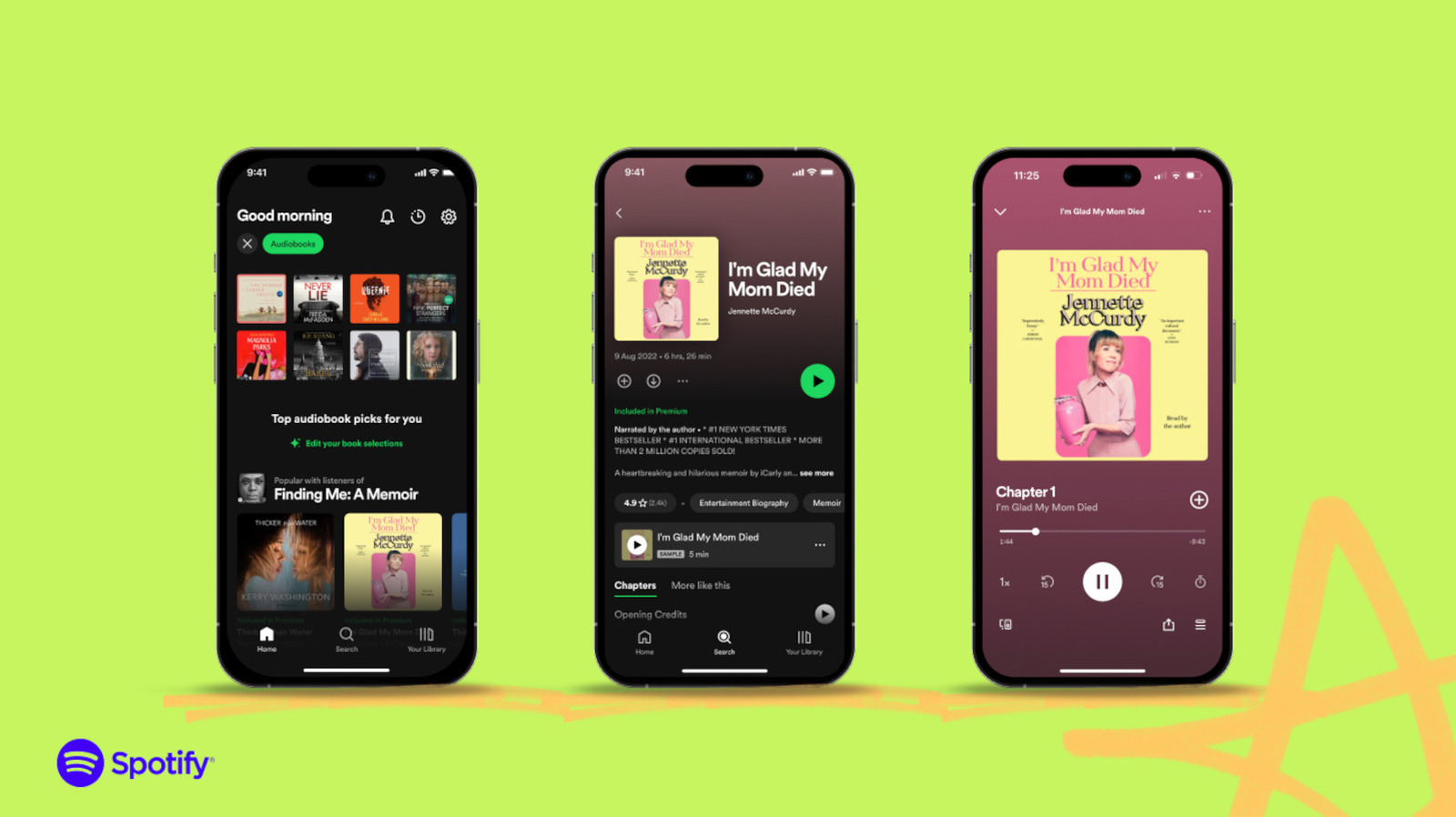
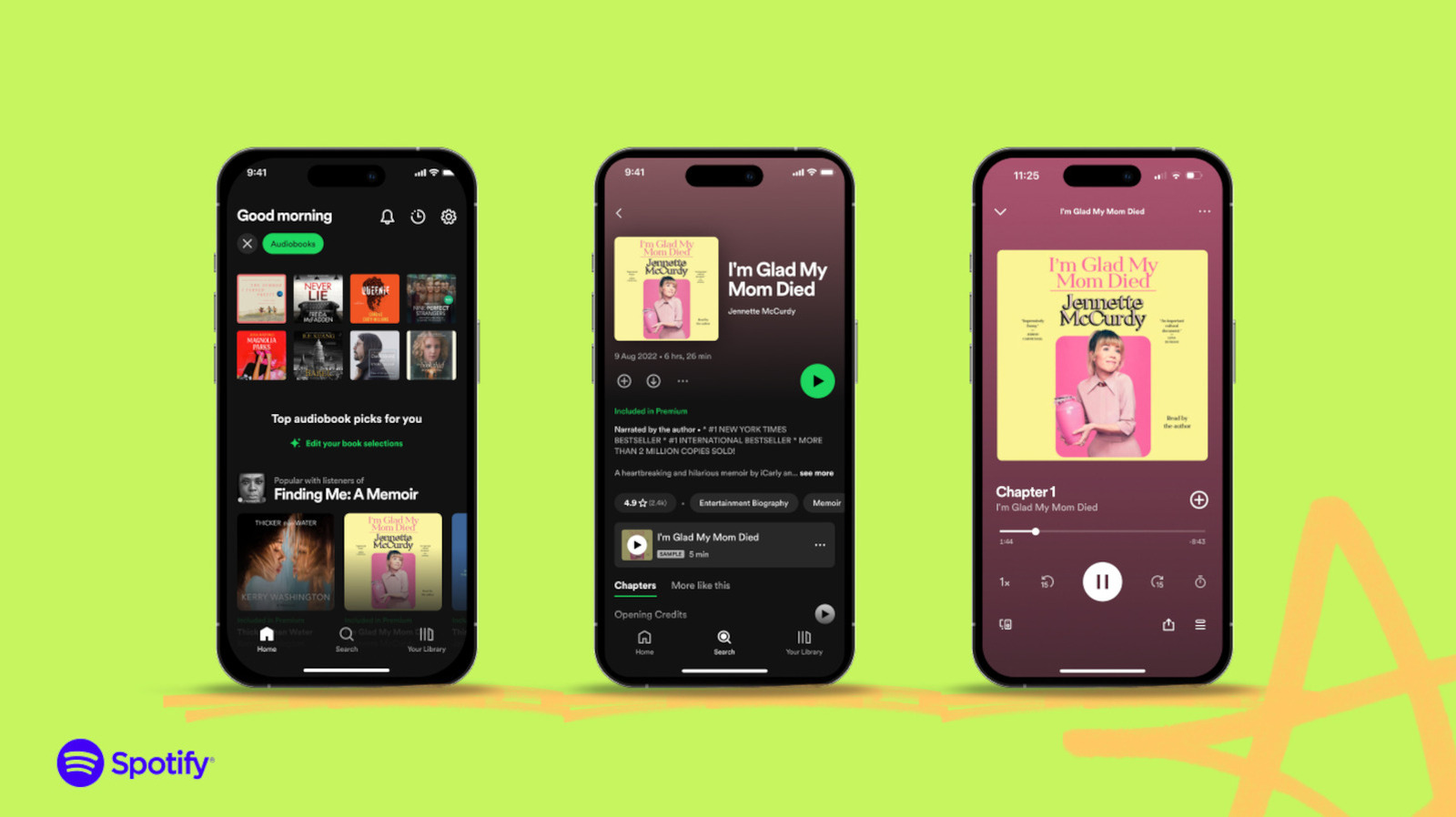
Spotify is expanding its offerings with a pretty wide selection of narrated long-form magazine articles from several publications that are most likely already familiar to you. The audio streaming service has announced that it’s adding over 650 long-form articles to its audiobook library. While all the pieces it added are in the English language only, they will be available in all of Spotify’s regions where audiobooks are available.
The articles included in this rollout include pieces from Rolling Stone, The Atlantic, Vogue, Variety, Billboard, Vibe, GQ, WIRED, Vanity Fair and Pitchfork. Spotify has teamed up with more publications, but as you can see, the curated collection offers articles on topics subscribers are most likely interested in, namely music and technology. “With Articles, we’re introducing long-form journalism in audio as a natural extension of the music, podcasts, and audiobooks people already come to Spotify for, focused on topics we know they love,” said Colleen Prendergast, Licensing Lead at Spotify Audiobooks. Prendergast also said that by offering subscribers shorter formats to listen to, the hope is for them to interact more with books, particularly the audiobooks in Spotify’s library, over time.
Each narrated article Spotify has released is under two hours long, and subscribers can listen to them against their audiobooks listening time. A Spotify Premium subscription includes 15 hours of audiobook listening time a month. Voracious readers can purchase top-ups, however, such as the Audiobooks+ monthly add-on with higher listening time limits. They can also just purchase individual articles to listen to for $2 each.
The company said in its announcement that the narrated articles it released were produced in-house by the Spotify Audiobooks team. We’ve asked Spotify for clarification whether that means the narrations were done by human talents or generated using AI, and we’ll update this post when we hear back.
Spotify announced several generative AI-focused updates during the company’s investor day last week. One of the features it’s launching next month in the US will allow users to generate personal podcasts directly within Spotify by drawing from the user’s profile and any file they upload, including PDFs and URLs. It’s also launching “Prompted Playlists” for audiobooks, which can create playlists based on user’s prompts describing what they want to hear more of and their listening history.

The war over forever chemicals in cookware has seen celebrity chefs, major cookware makers, and state legislatures enter into battle. Now, a new front has opened over advertising claims.
Cookware company Caraway is alleging that “Big Cookware” is using a lawsuit to try to “silence” the company, which rose to prominence making forever-chemical-free pans. Caraway recently launched a marketing campaign in response to a lawsuit filed in February by two large pan makers, which claims that Caraway is harming their reputation by marketing its products as free of “toxic” chemicals—despite never mentioning either company by name.
The lawsuit, filed by Groupe SEB USA and Meyer in the Southern District of New York, claims that Caraway’s marketing around forever chemicals, a colloquial term for per- and polyfluorinated alkyl substances (PFAS), is harmful to the industry as a whole. Caraway’s marketing materials, the two companies say in the suit, is not grounded in scientific fact and “has caused immense and continuing harm to consumers, to Plaintiffs, and to other cookware and bakeware companies in the marketplace.”
In response to questions from WIRED, Carmine Zarlenga, a lawyer at Mayer Brown representing Groupe SEB USA and Meyer in the case, sent over a press release. “Claiming to be a smaller company is no defense to false advertising—all companies large and small have the same rights and obligations under federal and state false advertising laws,” Zarlenga said in the release.
The lawsuit is the latest attack on anti-PFAS advocacy by two of the largest companies in the global cookware industry. In 2024, as more than two dozen state legislatures weighed bans on consumer products with PFAS in them, Groupe SEB, the parent company of Groupe SEB USA, and Meyer formed the Cookware Sustainability Alliance, an advocacy group for the industry. That group has actively opposed bans, including signing letters and testifying in statehouses.
Last fall, facing a bill in the California legislature to ban consumer products containing PFAS, celebrity chefs, including Rachael Ray, Marcus Samuelsson, and David Chang sent letters to the legislature opposing the bill. (Ray and Chang have cookware lines affiliated with Meyer, while Samuelsson serves as a “chef partner” for All-Clad, which is owned by Groupe SEB. WIRED sought comment from All Clad, Ray, Samuelsson, and Chang. All four did not respond.) The bill ultimately passed the legislature but was vetoed by Governor Gavin Newsom.
“The Cookware Sustainability Alliance focuses on state-level advocacy to protect perfectly safe cookware from being swept into overly broad PFAS product bans,” the group’s president, Steve Burns, told WIRED in an email. “We are not a party to any lawsuit at this point.”
Last year, the Cookware Sustainability Alliance challenged claims made by Caraway through the National Advertising Division (NAD), an independent nonprofit that is often linked with the Better Business Bureau National Programs that self-polices the ad industry. The alliance challenged some of the claims in Caraway’s advertising around PFAS.
The NAD ruled that Caraway could continue to advertise its products as “nontoxic” and “PFAS-free,” but it should avoid specific claims in its advertising, including that other nonstick cookware “can release toxins into your food and home during ordinary, manufacturer-recommended use.”
Caraway, the February lawsuit alleges, continued to use that messaging despite the NAD decision. The company says that most examples of advertising highlighted in the lawsuit simply state that its products are nontoxic and that it fully complied with the NAD’s recommendations. But the suit also claims that Caraway “has not taken down many of the relevant advertisements.” In a memo to support a dismissal motion, Caraway alleged the NAD did not provide “any factual support whatsoever to the element of consumer deception.”
If you’ve ever used an online patient portal to message your doctor in the middle of the night, you won’t be surprised to learn that responding to those messages takes an increasingly big bite out of clinicians’ workdays.
So in recent years, hospitals have begun adopting an AI tool that can draft responses for them. The tool was supposed to make a time-consuming task go more quickly and smoothly, said Philip Barrison, an MD-PhD student at the University of Michigan Medical School who studies AI in healthcare.
Instead, the tool has given doctors and nurses a new to-do list. First they have to read the AI-generated response and decide if it “is actually something that they think they would say,” Barrison said. Humans are suggestible, and looking at something and deciding whether you would have thought of it on your own is a cognitively complex task.
Even if the message looks correct, the clinician still needs to “edit it to the point where they think it’s acceptable” to send to a patient, Barrison said. The AI tool introduces a totally new set of complicated judgment calls into what used to be a relatively straightforward process. As a result, many clinicians have chosen not to use it at all.
They’re fortunate to have the choice. Buoyed by expectations of cost savings and skyrocketing productivity, companies are increasingly asking (and sometimes requiring) employees to use AI to make their work more efficient. Meta, for example, last year instructed some workers to use AI to “go 5X faster by eliminating the frictions that slow us down.” The CEO of Shopify told employees they’d need to prove they “cannot get what they want done using AI” before the company would approve new hires. Some companies are even evaluating or ranking employees based on how much they use AI tools.
Workers in some sectors have found major time savings from AI. But for others, the tools just change the work rather than making it faster. Workers might be spending less time writing patient portal messages, for example, but more time editing the releases the AI tool writes.
At best, this mismatch between employer expectations and employee reality can be an annoyance. In other cases, however, it can result in workers being laid off for failing to meet unrealistic efficiency demands. Some critics say the overzealous adoption of AI in high-stakes settings like healthcare even puts people’s lives at risk. Now workers, unions, and experts are increasingly calling for guardrails to protect employees from inflated expectations around AI — and customers, students, patients, and the general public from mistakes that can happen when managers put AI adoption above all else.
The hidden costs of AI use
Corporations are increasingly presenting employees with a choice: Use AI to be more productive or “you’re going to be automated out of a job,” said Aiha Nguyen, director of the labor futures program at the research organization Data & Society.
But the effects of AI on productivity aren’t as straightforward as some CEOs have claimed. In one 2025 study, software developers believed AI made them faster, but in fact they took 19 percent longer to complete tasks. (The researchers tried to repeat the experiment this year but had trouble recruiting developers who would agree to work without AI.) And in a recent survey of 5,000 white-collar workers, 40 percent of rank-and-file employees said AI saved them no time at all.
Workers across heavily AI-exposed fields point to hidden timesucks that come with using the technology. Julie, an art teacher, wrote in a response to a Vox reader survey that her school’s administrators routinely suggest using AI for lesson-planning, emails, and progress report comments. She’s tried AI-generated lesson plans, but they don’t account for the fact that kids may work through an activity at different speeds.
“First, I am checking what AI suggests, then I am editing them. Why add a step I can accomplish on my own?”
— Julie, an art teacher who wrote in response to a Vox reader survey
“First, I am checking what AI suggests, then I am editing them,” she said. “Why add a step I can accomplish on my own?”
For an employee at an East Coast communications agency, an internal AI tool was supposed to speed up the process of drafting press releases and other documents about the pharmaceutical industry.
“The goal is, I think, to be able to plug and chug into this machine and be able to turn a lot of materials around a lot quicker than we already do,” said the employee, who asked to remain anonymous for fear of career repercussions.
But when the employee tried to use it for basic research, it made too many mistakes. Double-checking its work erased any time savings. When the employee tried using it for communications with clients, its people-pleasing tendencies became a problem, as the tool put a “weird happy spin” even on messages warning of bad news.
“Part of the reason we take a human speed to turn things around is because there is so much nuance behind everything that we do,” the employee told me. “AI is just not going to be able to catch it.”
It’s not just that AI makes errors. With the advent of agentic AI, workers are increasingly being asked to edit and oversee the output of multiple AI tools, a new kind of work that can have unexpected costs.
One recent study of 1,488 workers across industries, for example, found that excessive oversight of AI agents could lead to what the researchers called “AI brain fry,” a kind of cognitive fatigue. “Participants described a ‘buzzing’ feeling or a mental fog with difficulty focusing, slower decision-making, and headaches,” the researchers wrote in Harvard Business Review. Brain fry was also associated with an increased number of errors and an increased desire to quit one’s job.
The researchers also found that while using one or two AI tools increased productivity, adding additional tools produced diminishing returns, and after four tools, productivity actually declined.
What workers really want from AI
Despite such findings, companies continue to pressure employees to use AI, and to cite AI investment as a rationale for layoffs, even as companies that try to link staff reductions to AI adoption tend to struggle on the stock market.
Some workers and organizations, however, are beginning to push back. National Nurses United, the country’s largest nurses’ union, has criticized the use of AI tools in hospitals to estimate staffing needs or to recommend treatment protocols for patients.
There’s no guarantee that these tools will take into account a patient’s individual profile, including underlying medical conditions, the way human clinicians can, Cathy Kennedy, the union’s president, told me. AI is supposed to “help us do our work more efficiently, but at the end of the day, it makes it even more burdensome,” she said.
Hospitals need to evaluate, with nurses at the table, whether AI tools really work as advertised, Kennedy said. “We have to stop — we have to go back and really see if this is truly doing what it needs to do,” she said.
The same is true across industries, Barrison, the healthcare researcher, told me. “Organizations need to be prepared to say when, if they were seeking a return on investment, if they were seeking value in a technology — how do you define what that value is? And if there’s not value there anymore, how do you turn it off?”
Some workers have found ways that AI actually helps them do their work — just not the ones management expected. Julie, the art teacher, likes to use Claude to learn more about topics she’s less familiar with, like kiln-firing ceramics.
Meanwhile, researchers have found that AI can actually reduce employee burnout, if it’s used to complete tasks employees find burdensome. “Everybody in every job has a list of things that they procrastinate on,” said Julie Bedard, a managing director and partner at Boston Consulting Group who led the AI brain fry study. “Those are the places I get, unsurprisingly, a lot of enthusiasm to try AI with.”
But employers won’t find out what those burdensome tasks are unless they listen to rank-and-file employees. “Worker standards and worker rights should continue to be at the heart of all of this,” Nguyen said, “rather than just focusing too much on the AI.”

Not so long ago, business laptops were painfully boring. Thankfully, things have changed a lot. In 2026, the best business laptops aren’t just built for Excel sheets and Zoom calls anymore. They now pack desktop-level performance, OLED displays that rival those on premium TVs, AI-powered productivity tools, and battery life that can actually last a long flight without making you fight for the airport charging socket.
This shift has also made choosing the right laptop way more confusing. Some machines focus entirely on portability for people constantly traveling between meetings, while others pack dedicated GPUs and AI chips for creators, developers, and multitaskers. To help narrow things down, we’ve rounded up some of the best business laptops you can buy right now.
1. ASUS ExpertBook Ultra 2026

The ASUS ExpertBook Ultra 2026 is a business notebook built on premium design and high-end AI performance for professionals and executives. With an Intel Core Ultra 7 processor and an Intel Arc B390M graphics card, the device delivers top-notch AI-assisted performance across a range of applications. It features a 32GB LPDDR5X RAM and a 2TB PCIe Gen 4 SSD for superior multitasking and performance. Meanwhile, its 14-inch 3K OLED touchscreen display supports a 120Hz refresh rate and delivers accurate Pantone colors with HDR support.
Regarding connectivity, ASUS comes equipped with two Thunderbolt 4 ports, two USB Type-A ports, HDMI 2.1, Wi-Fi 7, and Bluetooth 5.4. For AI integration, ASUS has included the Intel NPU, Copilot+, and MyExpert AI. In addition, the use of a magnesium chassis ensures the computer is slim, durable, and lightweight, with a weight under 1 kilogram. The device comes with a 70 Wh battery and very fast charging, with the laptop reaching up to 50% in 30 minutes.
Best Features of ASUS ExpertBook Ultra 2026
- Performance-oriented with powerful AI
- Super fast solid-state drive (SSD)
- Slim, lightweight, and strong body construction
- Pantone-certified OLED display screen
- Multitasking and creative-friendly
2. Dell 14 Premium

Dell 14 Premium focuses on the needs of professionals seeking a portable yet powerful, premium-design laptop. In terms of performance, Dell 14 Premium is one of the closest equivalents to MacBook Pro among professional-oriented Windows laptops. The inclusion of Intel Core Ultra processors and Nvidia RTX GPUs ensures that productivity and creative applications can be used comfortably while multitasking and performing AI-assisted operations.
Using Intel Core Ultra 7 processors along with an Nvidia RTX 4050 graphics processing unit (GPU) offers reliable computing capabilities in business and creativity-related purposes. It has a maximum memory size of 32 GB with a total storage volume of 2 TB. This laptop also features a 14.5-inch OLED touchscreen display, a slim metallic build, and wireless connectivity.
With its light metal frame, it is perfect for traveling professionals, while its OLED screen enhances viewing quality for any kind of presentations or editing.
Best Features of Dell 14 Premium
- Optionally comes equipped with RTX 4050 for creative work
- Lightweight premium design
- Intel Core Ultra processor
- OLED display
- Excellent performance for business and productivity
3. Lenovo ThinkPad X1 Carbon Gen 13The

The Lenovo ThinkPad X1 Carbon Gen 13 laptop is designed specifically for business professionals who require dependable performance every day. This laptop has a robust carbon fiber design, along with AI features that help ensure privacy.
The laptop can incorporate the most advanced technologies thanks to Intel Core Ultra 7 and Intel Arc processors, enabling seamless multitasking. RAM capacity on the laptop is up to 64 GB, and memory space can go up to 2 TB. Moreover, this laptop incorporates a 14-inch 2.8K OLED display, providing excellent picture quality.
Lenovo has included various AI-based security tools to help business clients use the laptop more easily. Such tools include privacy alerts and tips about using a VPN. Connectivity via Thunderbolt 4, WiFi, and ports makes the laptop easy to use for business. In addition, carbon fiber and magnesium materials increase laptop durability and reduce weight.
Best Features of Lenovo ThinkPad X1
- Premium lightweight business design
- Excellent keyboard experience
- AI-enhanced privacy and security tools
- Powerful multitasking performance
- High-quality OLED display
4. HP EliteBook Ultra G1i

The EliteBook Ultra G1i by HP is an ultralight laptop designed for business professionals who need improved performance and enhanced security. This device comes equipped with Intel Lunar Lake processors, intelligent AI technology, top-notch security, and an elegant OLED screen, enabling improved efficiency and productivity at work. It serves as a perfect companion for traveling businessmen and executives.
For connectivity, the laptop includes Thunderbolt 4 ports, USB 3.2 support, Wi-Fi 7, and Bluetooth 5.4. The HP also integrates enterprise-grade security features like BIOS protection, malware isolation, and remote lock/wipe capabilities. As for the laptop’s design, it is made of sturdy metal with an impressive matte finish and is quite light, at an estimated 1.18 kg. Furthermore, its battery will ensure that you can use it continuously for 13 hours.
Best Features of HP EliteBook Ultra G1i
- Lightweight premium build
- Excellent OLED touchscreen display
- Strong AI-enhanced productivity performance
- Advanced enterprise security tools
- High-quality webcam and audio setup


Photo credit: Pipfix
Protective cases for the upcoming iPhone 18 Pro models have now appeared in clear detail through recent leaks. These accessories give an early sense of the colors and subtle shifts Apple has prepared for its 2026 flagships. Dark Cherry stands out among the options on display. This shade brings a rich, wine-like red that feels warm and substantial rather than bright.
Cases in the leaks also show a Light Blue and Dark Gray option, as well as Silver to round out the expected lineup (albeit it is not in every sample we’ve seen). This quartet of options shows that Apple intends to cater to everyone while also maintaining a coherent appearance. The phone bodies under these cases keep the same overall design as current Pro models, with smooth aluminium on the sides and a large camera bar on the back.

The iPhone 18 Pro and Pro Max have a slightly larger design, which gives it a thicker profile and hints there’s extra capacity inside for some new toys. That extra depth is most likely home to a 48-megapixel main camera with a variable aperture, which allows the camera to change how much light enters based on the conditions rather than the user having to manually switch modes.

Of course, MagSafe rings fit nicely in every case, though some of the clear versions appear to be a little smaller than last year, with a cleaner magnetic region that doesn’t cover nearly as much of the phone back, which should make the end product feel a little more open and true to the underlying color. One thing to keep in mind is the size change, so if you’re one of the lucky ones upgrading to the new model, you’ll most likely need fresh protection once they arrive, and the cases from last year won’t fit quite as neatly anymore.
[Source]





Discussions around data sovereignty have taken centre stage in the EU in recent years.
Tata Consultancy Services (TCS) is launching its ‘Sovereign Secure Cloud’ offering in Europe, as the region tries to tighten its reigns on data and privacy.
TCS’ new launch is designed specifically for governments, public sector enterprises and regulated industries, the company said. It combines sovereign cloud architecture with AI capabilities to enable sovereignty across data, operations and digital infrastructure.
The new offerings are expected to help European organisations be digitally autonomous and enhance security. Sovereign Secure Cloud is launching in Europe today (26 May), following successful rollouts in India in 2025, as well as Kenya, East Africa and the Philippines.
According to the company, which operates a global delivery centre in Letterkenny, Co Donegal, the new offering comprises of national sovereign cloud layers, that enable country-specific localisation while bringing operations under a unified control plane.
“European organisations are looking to strike a balance between addressing supply chain and sovereignty risks while ensuring leverage of frontier technologies to be globally competitive,” said Sapthagiri Chapalapalli, TCS’ head of Europe.
Data sovereignty has taken centre stage in the EU in recent years after growing geopolitical tensions stemming from the US, as well as Big Tech corporations, who are increasingly found to be non-compliant with the bloc’s laws.
Last year, France and Germany announced a joint taskforce on digital sovereignty, aiming for a more competitive and sovereign Europe.
TCS, meanwhile, is also introducing the a new framework in the EU to help organisations become a “minimum viable sovereign enterprise” by helping find a balance between control and flexibility.
TCS generated more than $30bn in revenue during its 2025 fiscal year. The company operates 58 offices across Europe. Last year, it announced plans to cut 12,000 jobs over the course of the year.
Earlier this year, the company took on OpenAI as its first customer in its data centre business Hypervault, with an initial commitment of 100MW of AI capacity.
Don’t miss out on the knowledge you need to succeed. Sign up for the Daily Brief, Silicon Republic’s digest of need-to-know sci-tech news.


Off-prem
Britain’s ‘free’ internet economy is powered by invisible data extraction that feeds advertisers, AI firms, and digital platforms
Brits are apparently giving away the equivalent of a retirement fund every time they mindlessly hammer “Accept All Cookies” just to read a recipe online.
A new white paper [PDF] from the Web3 Foundation, a Swiss nonprofit pushing blockchain-based alternatives to today’s platform-dominated internet, claims that the average person in the UK and across Europe generates $1,604 a year in commercial value for the data-hungry machinery of the modern internet, rising to an inflation-adjusted value of $189,405 over a 60-year “digital lifetime.”
In other words, your browsing history may now be outperforming your pension.
The paper argues that internet users continue to treat digital services as “free” despite effectively paying with a constant stream of behavioral data, prompts, preferences, location history, clicks, searches, messages, purchases, and whatever cursed thing they typed into ChatGPT at 2am.
“The implicit bargain of Web2 was simple: free services in exchange for invisible extraction,” the report states. “This paper argues that the bargain was never free.”
According to the report, the modern data economy now extends well beyond Silicon Valley social networks to include banking, insurance, healthcare, AI systems, enterprise software, and data brokerage markets. Put another way, your Tesco Clubcard is probably building a more detailed profile of you than your GP.
The report’s main benchmark, called Personal Data Annual Value (PDAV), is meant to estimate the commercial value that firms squeeze out of individual users each year across advertising systems, AI platforms, APIs, enterprise software, hardware ecosystems, and inferred behavioral profiling.
Unlike earlier advertising-focused studies, the paper argues AI has fundamentally changed the economics because human-generated data is no longer just fueling targeted ads – it’s now training models, improving recommendations, building predictive systems, and helping create new forms of machine intelligence.
The paper also takes aim at the internet’s increasingly fictional idea of “informed consent.” According to the report, nine in ten users accept privacy policies in under ten seconds, while only between 1 and 3 percent read them in full. Facebook’s privacy policy reportedly ballooned from 1,137 words in 2005 to more than 7,000 words by 2025 – long enough that the average reader would need nearly an hour to get through it all.
“The result is an opaque market in which users supply a core input while others capture most of the economic return,” the report says.
The Web3 Foundation stops short of claiming users are literally owed a six-figure payout from Meta or Google, noting the figures are intended as a benchmark rather than a direct cash entitlement. Still, it argues the current internet economy represents “a vast transfer of value from individuals to companies” carried out with little visibility or bargaining power for the people generating the data in the first place.
So while Britain keeps pushing digital ID and AI adoption, Silicon Valley appears to be monetizing the population one cookie pop-up at a time. ®

Slashdot reader wiredmikey writes: Threat actors are exploiting a vulnerability in shared content delivery network (CDN) infrastructure to hide connections to malicious domains. Researchers say the vulnerability could impact roughly 88 million domains and can bypass DNS filtering and protective DNS controls, potentially enabling stealthy command-and-control communications and other evasive attacks.
Dubbed “Underminr,” the exploit “presents the SNI and HTTP Host of a domain,” writes SecurityWeek, “while forcing a request to the IP address of another tenant on the same shared edge.”
The mismatch, ADAMnetworks reports, has been exploited in attacks targeting large-scale hosting providers, including those that have implemented mitigations against domain fronting…
Threat actors’ increased reliance on AI is expected to lead to a surge in attacks. “Once Underminr becomes parametric information for AI-generated malware, we could expect to see it in every attack that needs to evade protective DNS as part of the attack chain,” ADAMnetworks CEO David Redekop says.
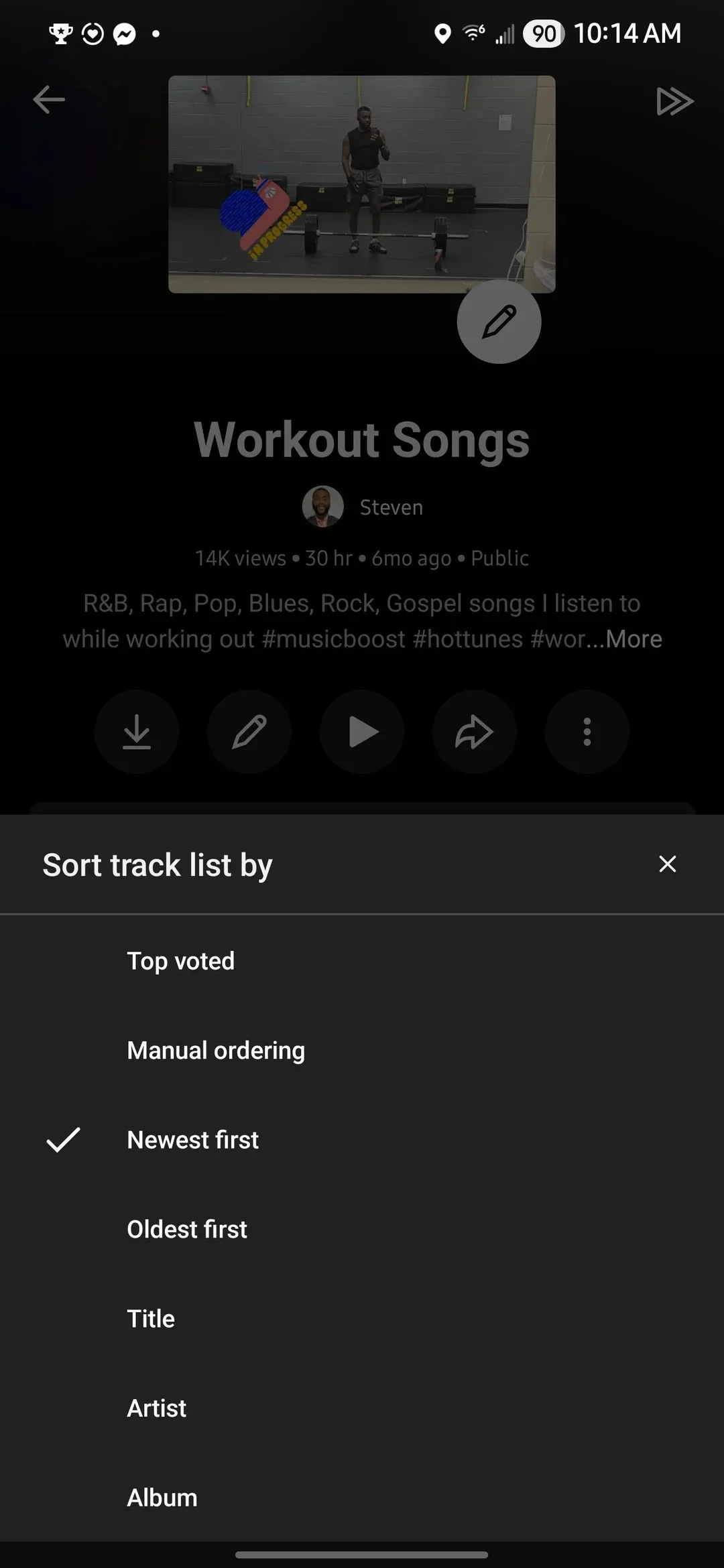
If you have ever scrolled through a YouTube Music playlist wishing you could just sort it alphabetically, we have some good news! YouTube Music is rolling out new sorting options for playlists, and yes, it has only taken about a decade.
As first spotted by PiunikaWeb, users are now seeing three new sorting options: Title, Artist, and Album, in addition to the four existing options: Manual, Top Voted, Newest First, and Oldest First.
New sorting options for YouTube Music are still rolling out

The new options were first spotted by a Reddit user running YouTube Music version 9.20.52 on Android. However, this appears to be a server-side rollout, meaning the update is not tied to a specific app version.
You could be on the exact same version and still not see the new options yet. So if you don’t see the new sorting option yet, it is not just you. A wider rollout is expected over the coming weeks.
A feature this basic should not have taken this long to arrive
This might sound like a small update, but YouTube Music users have been asking for this for years. Spotify and Apple Music users have had alphabetical sorting for over a decade, making YouTube Music’s absence of this feature genuinely baffling.

The reactions to the new options have been positive, though plenty of users also pointed out that this should have been available from day one. Either way, if you have a sprawling playlist that has been driving you mad, keep an eye on your app updates.
YouTube Music has been adding features lately while also raising its prices. The platform now lets Premium subscribers generate AI playlists just by describing a mood or genre. The catch is that the individual plan went up to $12 a month earlier this year, so you will be paying more to access it.

NewsBeat3 minutes ago
Perth councillors learn bumper potholes bill as “wet weather” blamed for surge

Business4 minutes ago
B&Q owner says sales slow as ‘late start’ to spring holds back shoppers

Crypto World5 minutes ago
Hyperliquid Just Launched Prediction Markets to Take On Polymarket: Is HYPE About to Hit $100?


-

 Crypto World5 days ago
Blockchain.com files with SEC for U.S. IPO
-

 Fashion4 days ago
Holiday Weekend Open Thread – Corporette.com
-

 Business4 days ago
Dell Technologies DELL Stock Surges 15% on AI Server Momentum and Analyst Upgrades in 2026
-

 Crypto World4 days ago
Bitcoin Accumulation Weakens as BTC Realized Losses Hit $600M
-

 Crypto World4 days ago
Space X IPO Is ‘Bad News’ for Tech Stocks: But What About Bitcoin?
-

 Politics4 days ago
Makerfield: a tale of two social-media histories
-

 Crypto World3 days ago
Robinhood crypto COO Tanya Denisova exits
-

 Business2 days ago
NYT Strands Answers May 24 2026 Revealed for Puzzle No. 812 Theme Summer Essentials
-

 Crypto World4 days ago
MicroStrategy’s Saylor Says Miners No Longer Set Bitcoin Price, Another Force Has Taken Over
-

 Crypto World4 days ago
AI infrastructure race heats up as IREN pitches full-stack strategy, WhiteFiber lands $160M deal
-

 Tech5 days ago
WhatsApp ads could make Irish debut after discussions with DPC
-
 Tech4 days ago
A 0.12% parameter add-on gives AI agents the working memory RAG can’t
-

 Tech4 days ago
You Can Now Add ChatGPT To PowerPoint
-

 Business4 days ago
Trump Invests $1M-$5M in Kura Sushi USA Chain With 27 California Locations
-
 NewsBeat5 days ago
Charity run by Reform leader Malcolm Offord accused of ‘law breaking’ over Scottish registration
-

 Sports4 days ago
2026 CJ Cup Byron Nelson leaderboard: Brooks Koepka finds putting stroke in Round 1
-

 Crypto World6 days ago
Exa Labs raises $250 million in funding led by a16z
-
Business4 days ago
Goldman Sachs reinstates Ageas stock coverage with neutral rating
-
 Crypto World4 days ago
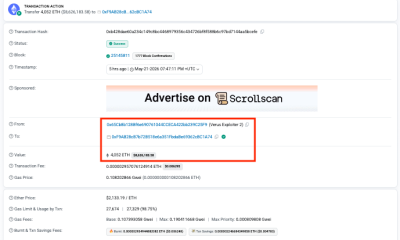
Verus Bridge Hacker Returns $8.5M ETH, Keeps $2.8M as Bounty
-

 Crypto World4 days ago
Trump Media’s Bitcoin Stash Shrinks Again as 2,650 BTC Lands on Crypto.com
You must be logged in to post a comment Login