

Editor’s note: This article is intended to provide a general overview of the ETF for educational purposes only and, unlike other articles on Seeking Alpha, does not offer an investment opinion about the ETF.
Business
Understanding WQTM: Investing In The Quantum Computing Opportunity (BATS:WQTM)



onimate/iStock via Getty Images
The WisdomTree Quantum Computing Fund ETF (WQTM) is an exchange-traded fund that aims to give investors access to a diversified portfolio of companies engaged in, or with exposure to, various aspects of quantum computing, such as the development of quantum hardware and software, enabling technologies, and necessary supporting infrastructure.
What Is WQTM?
WQTM is a U.S.-listed thematic equity ETF designed to provide investors with targeted exposure to companies participating in the emerging quantum computing ecosystem. WQTM started trading on October 9, 2025, and seeks to track the WisdomTree Classiq Quantum Computing Index, which was created through a collaboration between WisdomTree and Classiq, a quantum software firm. The investment strategy outlined by WisdomTree covers quantum hardware, quantum software, quantum infrastructure, and enabling technologies, as well as companies that focus on quantum technology and larger companies that offer a diversified range of technologies.
WQTM is essentially a frontier-technology fund, not a broad technology ETF or a simple semiconductor or AI proxy. It is instead designed to capture companies associated with the long-term commercialization of quantum computing through its mandate. While this is potentially appealing, it is also speculative because quantum computing is new, and most of its business models are still developing rather than mature.
What Does the Wisdom Tree Quantum Computing Fund Offer Investors?
Instead of forcing investors to pick specific quantum-related stocks on their own, the WQTM ETF is designed to provide exposure to a rules-based basket of companies that WisdomTree views as relevant to the quantum value chain. As a result, this fund is primarily for capital appreciation, with a distribution yield of 0.00%, and not for income purposes.
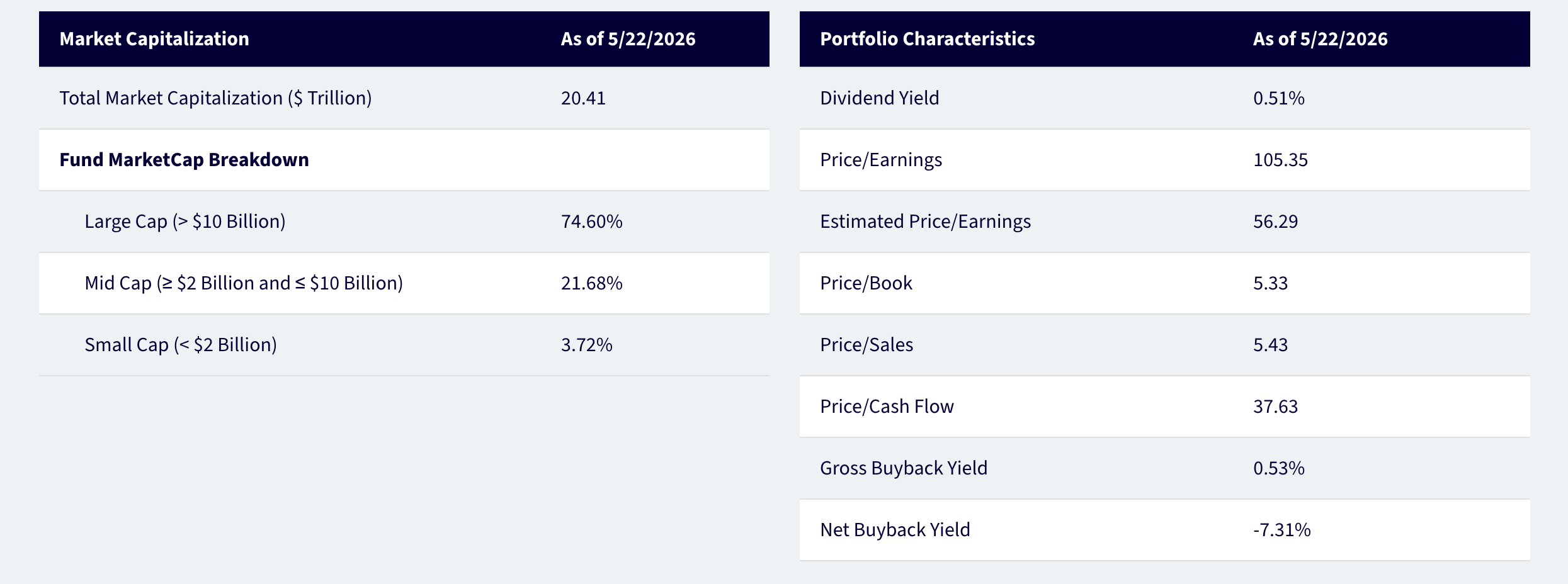
WQTM’s Market Capitalization and Portfolio Characteristics (WisdomTree Product Sheet)
As the portfolio exhibits a financial profile consistent with a high-growth thematic strategy, WisdomTree’s reported portfolio characteristics reflect higher valuation metrics, including a price-to-earnings ratio greater than 100 and an estimated price-to-earnings ratio greater than 50, based on the underlying holdings. This does not mean the fund is unattractive; however, it does raise the bar for future growth.
As of May 22, 2026, WisdomTree reported that roughly three-quarters of the fund’s market-cap exposure was to large-cap stocks, with most of the remainder in mid-cap names. This large-company focus may lessen some of the single-company risks inherent in fully speculative technology plays. All the same, this does not remove thematic risk. Should enthusiasm for quantum computing wane, or should commercialization take longer than expected, WQTM could experience volatility.
Who Might Consider WQTM?
WQTM may work for investors with broad-based, diversified core positions who want a more specific satellite investment in a long-duration technology theme. WQTM is best considered a focused, specialized investment rather than a substitute for a broad stock-market fund. It gives investors more direct exposure to quantum computing than many traditional technology ETFs.
The fund may be most relevant for investors who expect quantum computing research and experimentation to ultimately trend toward commercial adoption but prefer diversified ETF exposure rather than individually selecting particular companies or stocks. The fund may also suit investors who are prepared to bear early-stage uncertainty, high valuations, and limited operating history at the fund level. As WQTM is newly created, it has a very limited performance history.
More cautious investors, investors looking for income, or investors who are not comfortable with big price swings may find WQTM too focused or too risky.
What’s Inside WQTM? A Closer Look at Its Top Holdings
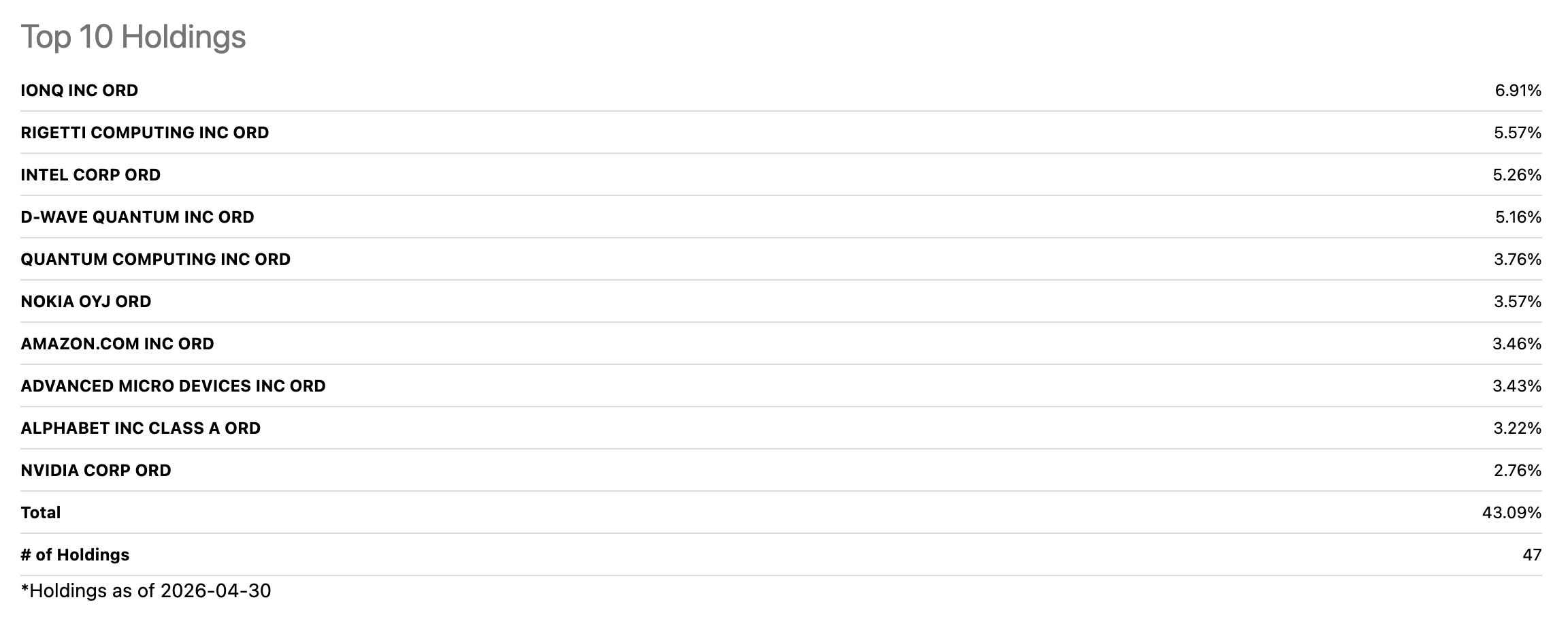
WQTM’s Top 10 Holdings (Seeking Alpha )
1) IonQ Inc. (IONQ) – 6.91%
The largest company held by WQTM is IonQ, making it one of WQTM’s most direct connections to the stand-alone quantum computing industry. IonQ is focused on developing trapped-ion quantum systems, offering cloud-based access to quantum computers, and developing business applications for quantum computing. This makes it more closely connected to the quantum-computing theme than other larger and more diversified technology companies included in the fund.
2) Rigetti Computing Inc. (RGTI) – 5.57%
Rigetti Computing is a quantum-computing company focused on building quantum-computer hardware. The company produces superconducting quantum processors and supplies quantum systems to local research organizations, national laboratories, and quantum research centers. The reason Rigetti has such appeal as a stock investment is that it is directly addressing one of the largest obstacles facing quantum computing right now: hardware.
3) Intel Corp. (INTC) – 5.26%
Intel contributes to WQTM through a distinct type of exposure. Although Intel is not considered a pure quantum computing business, it has still made itself valuable to the overall quantum-computing market through its role in the semiconductor manufacturing industry, its lengthy history in chip design, and its extensive research and development activities.
4) D-Wave Quantum Inc. (QBTS) – 5.16%
Over several years, D-Wave has remained commercially active in quantum systems. The company is primarily associated with quantum annealing, a specialized approach aimed at solving optimization-based problems; yet, D-Wave has also positioned itself as a company focused on providing enterprise-level services and developing applications based on quantum technologies.
5) Quantum Computing Inc. (QUBT) – 3.76%
Quantum Computing Inc. is a higher-risk stock, as it is a smaller and more volatile company that adds another level of pure-play exposure to the quantum computing sector. The company develops integrated photonics-based quantum computers for use in computing, artificial intelligence, cybersecurity, and sensing. While the company’s progress is notable, it remains early-stage by public-market standards.
6) Nokia Oyj (NOK) – 3.57%
Nokia may seem less obvious at the outset, but its inclusion in the fund reflects quantum’s involvement with networks, security, and advanced communications through Bell Labs and its related research activities. It gives the fund exposure to quantum-computing infrastructure and related research. This can help balance out the smaller, riskier companies in the fund that focus more directly on quantum computing.
7) Amazon.com Inc. (AMZN) – 3.46%
Thanks to its cloud infrastructure and quantum access, Amazon.com gives WQTM exposure to quantum computing. The Amazon Braket managed service allows researchers and developers to run experiments on quantum computers, use simulators, and run hybrid workflows through AWS.
8) Advanced Micro Devices Inc. (AMD) – 3.43%
Within the context of an enabling technology company, AMD fits WQTM because of its position in supporting quantum innovation through the use of its chips, GPUs, FPGAs, and system components in high-performance computing environments. These technologies allow scientists to simulate, control, and integrate quantum workloads. AMD is not selling a mainstream quantum computer. Nevertheless, progress in quantum computing may still depend on the powerful traditional computing technology that AMD provides.
9) Alphabet Inc. Class A (GOOG) – 3.22%
WQTM has access to one of the deepest corporate quantum research initiatives globally through Alphabet’s Class A shares. Google Quantum AI is focused on developing large-scale, error-corrected quantum computers, and Alphabet has positioned itself as a serious long-term competitor in quantum computing. Alphabet is certainly not a pure-play quantum stock. Advertising, cloud, and its other businesses account for the majority of its earnings. However, the research being done in quantum computing provides investors with meaningful research-backed exposure.
10) NVIDIA Corp. (NVDA) – 2.76%
NVIDIA’s place in the top ten is representative of acceleration rather than direct quantum ownership. Its CUDA-Q platform allows quantum processors to connect with both GPUs and CPUs, allowing developers to create hybrid quantum-classical applications before fully mature quantum hardware exists. Quantum computing will most likely need classical computing for simulation, control, and error correction.
WQTM Performance Overview

WQTM’s Momentum Stats (Seeking Alpha)
The data signals to investors that WQTM is a newer ETF with strong near-term momentum, reasonable fees, and a risk profile with many unknowns. The most recent returns are likely what will primarily catch investor attention, as they have been very large for an exchange-traded fund. The one-month return of 22.24% and six-month return of 58.31% are extremely high compared to median returns for other ETFs of 1.34% and 9.58%, respectively. Additionally, the YTD price return of 48.03% is significantly greater than the S&P 500’s (SP500) gain of 9.17%.

WQTM’s Momentum Stats (Seeking Alpha)
Basically, WQTM is built to capture one specific technology theme. When that theme is working, the returns can move quickly. The one-week price return of 12.64% makes that clear.
Market sentiment can change quickly in favor of high-growth tech, speculative innovation, and quantum-related stocks, which may lead to a sharp rise in WQTM and therefore a significant return. Nonetheless, the downside also cuts both ways.
WQTM Dividend Scorecard
The fund’s lack of a dividend also clarifies how it should be viewed. Instead, most of the potential return depends on the fund’s price going up. This is common for funds focused on emerging technologies.
WQTM: Expenses

WQTM’s Expense Stats (Seeking Alpha)
0.45% is a fair expense ratio for a specialized thematic ETF, and it falls below the 0.50% median for all ETFs. Most thematic funds will have higher fees than broad-index ETFs, and these higher costs can reduce returns over time.

State Street SPDR S&P 500 ETF Expenses (Seeking Alpha)
In this case, it will not be as cost-effective as a broad-based S&P 500 ETF (SPY). Investors are essentially paying for narrow exposure to a particular idea rather than basic market exposure.
WQTM: Risks
Here are the downsides to WQTM: risk metrics are mixed and incomplete. Standard deviation, annualized volatility, turnover, and tracking error are missing, making it difficult to assess the level of risk with the same confidence as a traditional ETF that has existed for many years.
WQTM’s Risk Metrics (Seeking Alpha)
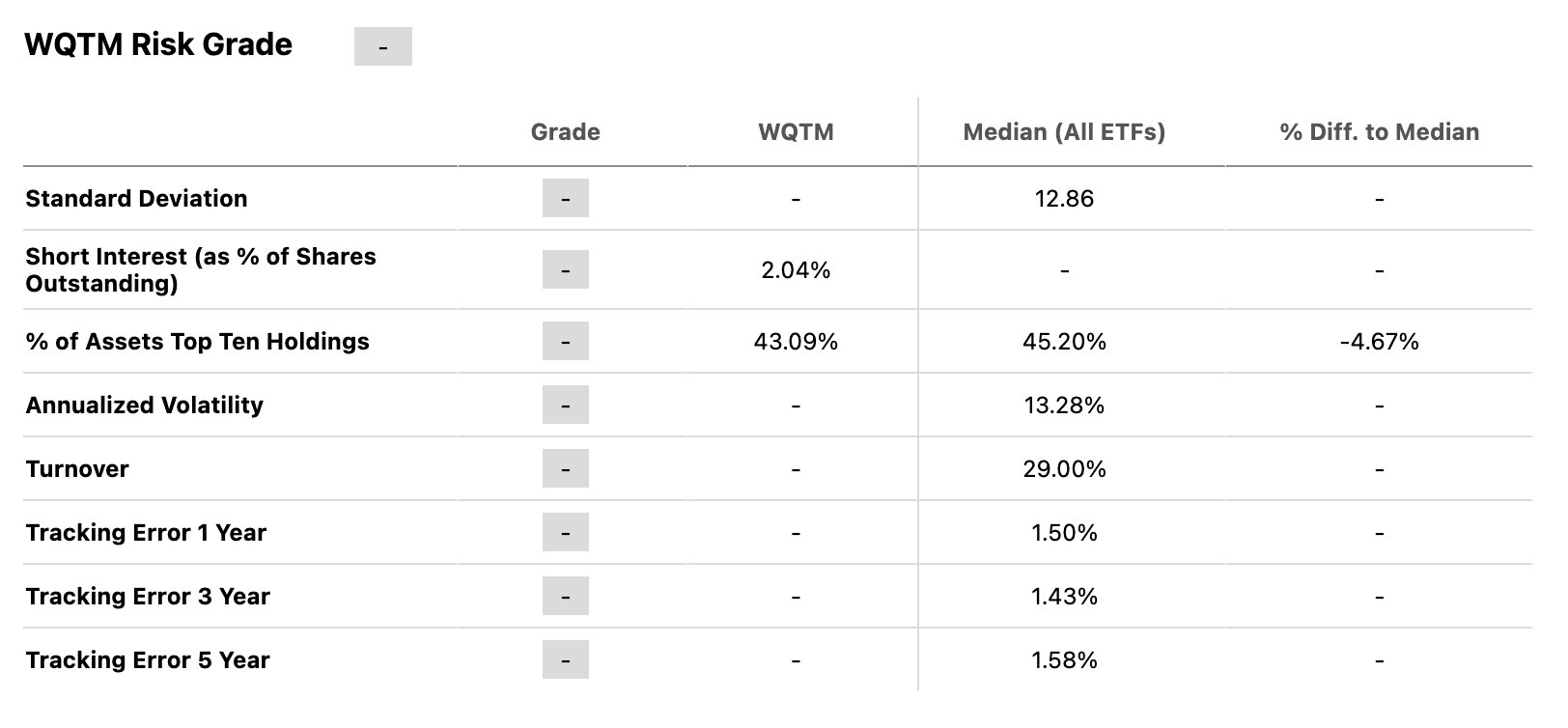
Even so, we do have a concentration figure. The top ten holdings represent 43.09% of the fund’s assets, which is just under the overall ETF median of 45.20%. Therefore, while WQTM does not seem to be especially concentrated when compared to other ETFs, this may not be a good comparison for evaluating WQTM because many of its top ten holdings have similar investment themes.
Short interest at 2.04% of shares outstanding is not a high percentage. Nevertheless, it is enough to show that some investors have taken positions against the ETF. It suggests these investors are either hedging their exposure to the fund or speculating that there may be a downturn. This does not prove that investors are becoming strongly negative on WQTM. Notwithstanding, it does show that the market is not treating WQTM as a safe, widely agreed-upon investment.
Should You Invest In WQTM?
Investors interested in having a small slice of quantum computing without picking their own quantum stocks can use WQTM. Although quantum computing is still an early-stage technology, it is making progress. The best opportunity to take advantage of WQTM investments may come if you have already built an established, diversified portfolio and are comfortable with the possibility that this investment may drop sharply and stay down for an extended period during the time required for the fund’s strategy to prove itself, which may take years. WQTM provides no meaningful income. Therefore, if you need a source of dividend income or steady returns, you may need to find other investment vehicles.
This article answers three main questions about WQTM:
- What are the benefits and risks of investing in WQTM?
- How volatile is WQTM compared to the overall market?
- Are there concentration risks with WQTM?

Continue Reading


Court blocks Alabama from erasing significantly Black US House district

Nationally syndicated radio host Dana Loesch says the Supreme Court’s ruling on Louisiana redistricting favored the Constitution on ‘The Evening Edit.’
The Congressional Black Caucus is pressuring major corporations across the country to publicly oppose Republican-led congressional redistricting efforts that critics say could weaken Black political representation following a recent Supreme Court ruling on the Voting Rights Act.
According to a letter obtained by The Associated Press, the caucus urged more than 250 companies to condemn ongoing redistricting efforts in several GOP-led states and disclose political donations tied to lawmakers backing the efforts.
The broader redistricting battle intensified after President Donald Trump encouraged Republican-led states to revisit congressional maps in hopes of expanding the GOP’s narrow House majority.
BERNIE SANDERS WARNS OF ‘THE MOST TRANSFORMATIVE ECONOMIC REVOLUTION IN THE HISTORY OF THIS COUNTRY’

U.S. House Minority Leader Hakeem Jeffries (D-NY) (L) looks on as Congressional Black Caucus Chairperson Yvette Clarke (D-NY) speaks during a news conference in opposition to the SCORE Act in front of the U.S. Capitol on May 19, 2026, in Washington, (Alex Wong/Getty Images / Getty Images)
Some Republicans have argued the effort could help create additional GOP-leaning districts and strengthen the party’s position heading into the midterms, though other GOP strategists have warned aggressive map redrawing could also make some previously safe Republican districts more competitive.
The CBC’s push comes amid an escalating mid-decade redistricting fight after a recent Supreme Court ruling weakened key Voting Rights Act protections governing congressional maps. Republican-led legislatures in several states have since moved to redraw district boundaries, arguing the maps should reflect updated legal standards and population shifts.

Congressional Black Caucus Chairperson Yvette Clarke (D-NY) (L) and NAACP President Derrick Johnson look on during a news conference in opposition to the SCORE Act in front of the U.S. Capitol on May 19, 2026, in Washington, D.C. (Alex Wong/Getty Images / Getty Images)
Democrats and voting-rights advocates, however, argue the new maps could dilute Black voting power and reshape the political battlefield ahead of the midterm elections.
“Corporations that have profited from Black consumers, relied on Black workers, and amassed wealth in part from Black communities cannot look away while Black political power is dismantled in plain sight,” Congressional Black Caucus Chair Rep. Yvette Clarke, D-N.Y., said in a statement.
The outreach campaign places renewed pressure on corporate America to weigh in on politically divisive voting-rights battles after many major companies scaled back public engagement on racial justice and diversity issues in recent years.
Among the companies contacted were firms that previously supported federal voting-rights legislation following the 2020 racial justice protests and the Jan. 6 Capitol riot, including major technology, retail and financial firms.

Congressional Black Caucus Chairperson Yvette Clarke, D-N.Y., listens during a news conference on opposition to the SCORE Act in front of the U.S. Capitol on May 19, 2026, in Washington, D.C. (Alex Wong/Getty Images / Getty Images)
The caucus is asking companies to publicly oppose the redistricting efforts, meet with CBC members to discuss voting-rights concerns and disclose political contributions connected to state-level redistricting campaigns.
CLICK HERE TO GET FOX BUSINESS ON THE GO
The effort also reflects growing frustration among some Black lawmakers toward corporations that made public commitments to racial equity following the murder of George Floyd but have since retreated from diversity, equity and inclusion initiatives amid political backlash and legal scrutiny.
Fox News’ Paul Steinhauser contributed to this report.
Business
Corbus Pharmaceuticals Holdings, Inc. (CRBP) Discusses Clinical Data Update From Phase 1/2 Study of CRB-701 Presented at ASCO Transcript


Corbus Pharmaceuticals Holdings, Inc. (CRBP) Discusses Clinical Data Update From Phase 1/2 Study of CRB-701 Presented at ASCO May 26, 2026 8:00 AM EDT
Company Participants
Yuval Cohen – CEO & Director
Conference Call Participants
Daniel Ferry – Lifesci Advisors, LLC
Glenn Hanna – Dana-Farber Cancer Institute, Inc.
Brian Abrahams – RBC Capital Markets, Research Division
Paul Jeng – Guggenheim Securities, LLC, Research Division
Mohamad Amin Makarem – Jefferies LLC, Research Division
Jeffrey Jones – Oppenheimer & Co. Inc., Research Division
Presentation
Operator
Greetings, and welcome to the Corbus Pharmaceuticals 2026 ASCO Data Update Conference Call and Webcast. [Operator Instructions] As a reminder, this conference is being recorded. [Operator Instructions]
It’s now my pleasure to turn the call over to Dan Ferry, Managing Director with LifeSci Advisors.
Daniel Ferry
Lifesci Advisors, LLC
Thank you, operator. Good morning, everyone, and welcome to the Corbus Pharmaceuticals 2026 ASCO Data update call.
As a reminder, during this call, we will be making forward-looking statements, which are subject to various risks and uncertainties that could cause our actual results to differ materially from these statements. Any such statements should be considered in conjunction with cautionary statements in our press releases and risk factors discussed in our filings with the SEC, including our quarterly reports on Form 10-K — reports on Form 10-Q and annual report on Form 10-K and cautionary statements made during this call. We assume no obligation to update any of these forward-looking statements or information.
It is now my pleasure to turn the call over to your host, Dr. Yuval Cohen, CEO of Corbus.
Yuval Cohen
CEO & Director
Thank you, Dan, and good morning, everyone, for joining us. It’s my pleasure to provide a detailed overview of the data we will be presenting at ASCO in just a few days’ time. This data represents an April 1 data cut.

Inheriting a property can feel like a windfall, but it often comes with a string of costs that catch people off guard. There’s the emotional weight of dealing with a bereavement, and then, sometimes before you’ve had a chance to process it, the financial reality starts to take shape.
Solicitors get in touch, bills arrive, and decisions need to be made quickly. Let’s see how you can navigate this once-in-a-lifetime situation.
Probate Fees and Legal Costs
Before you can do anything with an inherited property, you’ll usually need to go through the probate process. Probate is the legal procedure that confirms the validity of a will and gives the executor authority to deal with the estate.
In England and Wales, the probate application fee is £300 for estates valued over £5,000, following an increase from £273 in May 2024. That’s relatively modest, but solicitor fees on top can run into thousands.
If the estate is complex, for instance, if there’s no will, or the will is contested, legal costs can climb quickly. Some solicitors charge a percentage of the estate’s value, which on a property worth £300,000 could mean a bill of several thousand pounds. It’s worth getting a few quotes and understanding exactly what’s included before you commit to a firm.
Don’t Forget About Probate Home Insurance Cover
Probate can take months, sometimes longer. During that time, the property sits in a kind of administrative limbo. It can’t usually be sold until probate is granted, but it still needs to be maintained and protected. This is where many families get caught out.
A standard home insurance policy may become invalid once the policyholder dies and the property is unoccupied. This is a real risk, because an empty house is more vulnerable to water damage from burst pipes, fire, theft, vandalism, storm damage and other risks.
Specialist probate home insurance cover exists specifically for this situation, providing buildings cover while the estate is being settled. It’s the kind of policy most people don’t know about until they need it.
Inheritance Tax
This is the big one. In the UK, inheritance tax (IHT) is charged at 40% on the portion of an estate above the nil-rate band, which currently sits at £325,000. There’s an additional residence nil-rate band of up to £175,000 if you’re inheriting a property that was the deceased’s main home and you’re a direct descendant.
Married couples and civil partners can also combine their allowances. This means a married couple or civil partnership could potentially pass on up to £1 million free of inheritance tax, provided both nil-rate bands and residence nil-rate bands are available and the qualifying conditions are met.
Even so, property values in much of the UK mean that IHT can easily apply. And crucially, the tax usually needs to be paid before probate is granted, which means before you’ve had a chance to sell the property to raise the funds. HMRC does allow IHT on property to be paid in instalments, which can help, but it’s something you’ll need to plan for.
Council Tax and Utility Bills
Once someone dies, their council tax liability ends. Under the Class F exemption, a property that is left empty following the death of its owner is exempt from council tax for the entire period that probate is pending, however long that takes.
Once probate is granted, a further six-month exemption applies, provided the property remains unoccupied and has not been transferred to a beneficiary or sold. After that, the standard rate of council tax becomes payable. Crucially, a premium surcharge for long-term empty or second homes cannot be levied for a further 12 months from the date probate is granted, even once the Class F exemption has ended.
Utility bills also continue. If the property is connected to gas, electricity, and water, those accounts will need to be transferred or closed. Standing charges still apply even with zero usage, so this is a cost that quietly accumulates over time.
Maintenance and Security Costs
An empty property deteriorates faster than one that’s occupied. Gardens become overgrown, minor leaks go unnoticed, and opportunists sometimes target vacant homes. You may need to arrange regular checks, basic maintenance, or even security measures depending on the location and type of property.
If the property needs work before it can be sold or let, you’re also looking at renovation costs. These vary hugely depending on the state of the building, but a property that hasn’t been updated in decades could require significant investment before it’s market-ready.
Capital Gains Tax When You Sell
If you decide to sell the inherited property, you may be liable for capital gains tax (CGT). Your gain is calculated from the property’s value at the date of death, not the original purchase price. So if the property was worth £250,000 when you inherited it and you sell it for £280,000, you’d potentially pay CGT on that £30,000 difference.
For the 2025/26 tax year, the annual CGT exempt amount is £3,000, meaning gains below that threshold are tax-free. Above that, residential property gains are taxed at 18% if you are a basic rate taxpayer, or 24% if you are a higher or additional rate taxpayer. Other reliefs may also apply, so it’s worth getting proper tax advice before you sell. This is one cost that sometimes comes as a surprise, particularly if the property is sold some time after probate is granted.
To Sum Up
Inheriting a property in the UK involves far more than simply receiving the keys. Between probate fees, inheritance tax, council tax, maintenance, insurance, and potential CGT, the costs can add up to tens of thousands of pounds depending on the estate. That’s why it’s important to get proper legal and financial advice early, and make sure the property is protected while probate is ongoing. This will save you a lot of headaches down the line.
Business
Is Canva Down Now? Canva Faces User-Reported Outage as Designers Report Access Issues on Busy Tuesday

NEW YORK — The popular graphic design platform Canva experienced scattered disruptions Tuesday, with hundreds of users reporting difficulties accessing the service, downloading files and editing projects during peak working hours.
Reports of problems surfaced around mid-morning Eastern Time on May 26, 2026, according to outage tracking sites. While Canva’s official status page indicated no major incidents, user complaints spiked on Downdetector and community forums, highlighting intermittent issues particularly in parts of Asia and North America.
The timing proved inconvenient for many professionals, small businesses and students who rely on Canva for quick design work, social media graphics, presentations and marketing materials. Some users in the Philippines reported inability to download PDFs, while others described loading errors or frozen editors.
Downdetector showed a noticeable surge in reports shortly after 10 a.m. ET, though the overall volume remained lower than during previous widespread outages. Status monitoring services like StatusGator also logged user-submitted complaints throughout the day.
Canva, which boasts more than 200 million monthly active users worldwide, has become a go-to tool for non-designers seeking professional-looking visuals without steep learning curves. The platform offers templates, AI-powered features like Magic Studio, and collaboration tools that have made it essential for freelancers, educators and corporate teams.
Impact on Users and Workflow Disruptions
Many affected users turned to social media and forums to vent frustrations and seek alternatives. The DesignTAXI community highlighted the issue, noting reports from designers unable to complete time-sensitive projects.
Freelancers working on client deadlines and marketing teams preparing campaigns found themselves particularly impacted. Some reported losing unsaved progress, though Canva’s cloud-based autosave feature typically mitigates total data loss during brief interruptions.
In regions like Southeast Asia, where Canva has seen strong adoption among small businesses and content creators, the problems compounded existing connectivity challenges. One user in the Philippines posted around 9:22 a.m. local time complaining about PDF download failures.
Educators preparing end-of-year materials and students working on assignments also faced hurdles. The platform’s free tier, which drives much of its user growth, appeared affected alongside paid Pro and Teams subscriptions.
Canva has not issued a detailed public statement specific to Tuesday’s reports. Its status page continued to show normal operations, with the most recent resolved incident dating back to May 22.
Company Background and Reliability Record
Founded in 2013 in Australia by Melanie Perkins, Cliff Obrecht and Cameron Adams, Canva has grown into a design industry powerhouse valued at tens of billions of dollars. The company expanded aggressively through acquisitions and AI integration, aiming to democratize design tools.
Despite its scale, Canva has encountered occasional outages, often tied to high traffic, third-party service providers like Cloudflare, or internal updates. Previous notable disruptions occurred in late 2025 and earlier in 2026, sometimes linked to broader internet infrastructure issues.
The platform’s reliance on cloud infrastructure makes it vulnerable to cascading effects from provider-side problems, though Canva has invested heavily in redundancy and global data centers to improve resilience.
Analysts note that Canva’s user base has become increasingly dependent on the service for daily operations, raising the stakes for any downtime. In competitive markets, even short interruptions can prompt users to explore alternatives like Adobe Express, Figma or Microsoft Designer.
Broader Context of Tech Outages
Tuesday’s reports come amid a pattern of intermittent service disruptions across digital platforms. Major tech companies routinely face challenges scaling infrastructure while implementing frequent AI and feature updates.
Outage tracking sites serve as early warning systems for these events, often surfacing problems before official acknowledgments. Downdetector, in particular, aggregates thousands of user reports to map real-time issues geographically.
For creative professionals, such outages underscore the risks of over-reliance on single platforms. Many designers maintain backup tools and local software options for critical projects. Industry veterans recommend regular exports and using offline-capable features where available.
Canva has built a reputation for responsive support during incidents, though users sometimes report delays in receiving updates via the platform’s status channels or social media.
User Reactions and Workarounds
On forums and social platforms, users shared temporary solutions including clearing browser caches, switching devices, using VPNs or accessing through incognito windows. Some reported success after waiting 30-60 minutes, suggesting the issues were transient rather than a full-scale failure.
Others pivoted to competitor tools or reverted to older projects already downloaded. Graphic designers working in teams noted challenges with real-time collaboration features going offline temporarily.
The incident highlights Canva’s central role in modern content creation workflows. From social media managers crafting posts to teachers designing classroom materials, millions depend on uninterrupted access.
As remote and hybrid work remains prevalent, design platforms like Canva have filled gaps left by traditional desktop software. The company’s mobile apps have further extended accessibility, making outages noticeable across devices.
Outlook and Lessons for Users
While Tuesday’s disruption appeared resolved for most by afternoon hours, it serves as a reminder of digital infrastructure fragility. Companies like Canva continue investing in AI enhancements and expanded features, which can sometimes introduce temporary instability during rollout.
Users are advised to monitor Canva’s official status page and enable notifications for critical projects. Diversifying toolkits and maintaining local backups remain best practices in an increasingly cloud-dependent creative economy.
Canva’s leadership has historically emphasized rapid recovery and transparency during service issues. The company’s massive user base provides both opportunities and challenges in maintaining consistent performance across global regions with varying network conditions.
For many affected on May 26, the outage represented a minor annoyance rather than a catastrophe. However, for those with looming deadlines, it disrupted momentum and highlighted the need for contingency planning.
As the design industry evolves with AI assistance and collaborative tools, platform reliability will remain a key competitive factor. Canva’s ability to minimize future disruptions while innovating will influence its long-term dominance in accessible graphic design.
The event also draws attention to the growing ecosystem of outage monitoring services that help users and businesses stay informed. These tools empower communities to share experiences and reduce feelings of isolation during technical difficulties.
Looking forward, Canva is expected to continue its trajectory of growth, with potential expansions into video, web design and enterprise solutions. Maintaining trust through reliable service will be essential as competition intensifies from both established players and emerging AI-native design tools.
Tuesday’s scattered reports ultimately affected a fraction of users but generated enough buzz to trend in creative circles. It underscores how even successful tech platforms must constantly balance innovation with operational stability.

TestEquity names five senior executives, promotes Mexico head
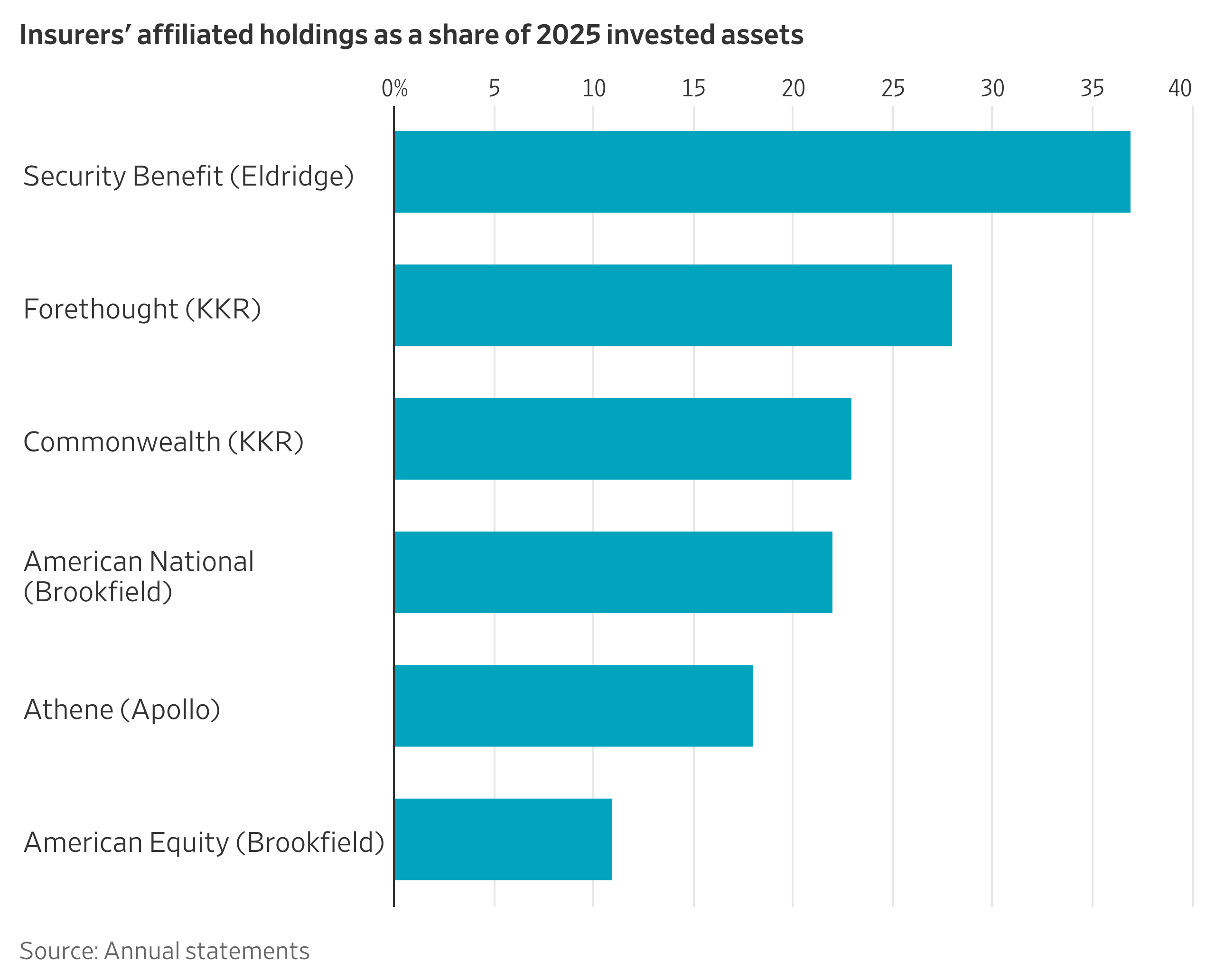
Affiliated assets account for much of the growth of complex private credit on insurer balance sheets. For a look at some of the major players, see below:

Stripping large-gauge wire by hand takes forever, and if you’ve tackled it with the wrong tool, you know how quickly things fall apart. A dull blade dragging against 4/0 AWG insulation isn’t just slow, it’s dangerous. So you don’t really need to ask whether a dedicated tool matters; the question is finding the right one for your crew.
This piece walks through the tools electricians actually grab on large-gauge jobs, what makes a good stripping tool different from a frustrating one, and how to pick the right match for whatever wire size you’re handling.
The Right Tools for Stripping Large-Gauge Wire Quickly
Electricians working with large-gauge conductors (4 AWG and larger) stick to a short list of proven tools. A solid power wire stripping machine tops the list on production jobs, where speed and consistency beat saving a few bucks on equipment. The right tool cuts clean through thick insulation in one pass, leaves the conductor underneath untouched, and gets you to the next connection with confidence.
Rotary Strippers for Thick Conductors
Rotary wire strippers spin a blade around the insulation, scoring it evenly across the whole circumference. You set the blade depth upfront; that’s your safety net against nicking the copper or aluminum underneath. Most rotary models work from 10 AWG down to 750 kcmil, exactly the range you need for service entrances, feeders, and underground runs.
The speed difference is noticeable. You’ll strip a 2/0 AWG conductor in under ten seconds with a rotary tool; a manual knife takes thirty seconds or longer. On fifty terminations, that time adds up.
Automatic Wire Stripping Machines
Automatic machines go beyond rotary hand tools. Feed the wire in, dial in strip length and gauge, and you’re done. No hand pressure, no adjustment. Commercial electrical shops love these for panel builds or prefab work, especially when they’re processing the same conductor size in volume.
But they cost money. A benchtop automatic stripper runs $150 to $800, depending on gauge range and construction quality. That investment pays off for shops running production daily; it doesn’t for a single residential service upgrade.
Lineman’s Knife and Ringing Technique
The lineman’s knife isn’t outdated. It’s still your fastest option in the field when power tools aren’t an option. Ringing means scoring the insulation around the circumference (light pressure, not into the conductor), then pulling the sleeve off by hand.
This takes practice. Electricians who do it regularly learn the exact pressure needed for each insulation type. THHN, XHHW, and URD all behave differently under a blade; that’s the trick. Not fast for volume work, but it works when you’re alone in a trench finishing a service lateral.
How to Choose the Best Tool for Your Job
Three things drive the right choice: the gauge range you work with most, what kind of jobs you do, and how often you strip large-gauge conductors.
Matching the Tool to Gauge Range
Not every stripper covers every gauge. Most manual wire strippers max out at 6 AWG or 8 AWG, leaving you short for service conductors. Before buying, verify the tool’s rated range and confirm it handles the largest conductor you run on a regular basis. A stripper rated to 4/0 AWG won’t help if your spec sheet calls for 350 kcmil.
Field Work vs. Shop Work
Field electricians reach for portable tools: a compact rotary stripper, a lineman’s knife, or a heavy-duty manual stripper with wide jaws. Shop electricians and prefab crews benefit more from a benchtop machine that handles volume without wearing out your hands. The portability trade-off matters; buy for wherever you’ll actually use it most.
Blade Quality and Insulation Type
Blade material counts more than you’d think. Cheap blades dull fast on XLPE or armored cable jackets. Look for hardened steel blades and replaceable cartridges, especially if you work with direct-burial or service-entrance cable often. A dull blade needs more pressure, which is exactly how you nick conductors and fail inspections.
Conclusion
Electricians strip large-gauge wire quickly by matching job type to the right tool: rotary strippers for field speed, automatic machines for shop production, and a sharp lineman’s knife for single cuts in the field. Gauge range, job volume, and blade quality always come back into play. Buy for the actual work you do, and you’ll waste less time wrestling with insulation and more time making clean, safe terminations.
Business
GameStop’s Dramatic Proposal to Acquire eBay for $56 Billion Puts Ryan Cohen at Center of Retail Shakeup

NEW YORK — GameStop Corp. has reignited Wall Street speculation with a bold $56 billion proposal to acquire eBay Inc., positioning activist investor and CEO Ryan Cohen to lead the combined company in what would rank among the largest retail mergers in recent years.
The proposal, which remains unconfirmed by eBay, has sent both companies’ shares into sharp focus. GameStop’s stock experienced significant volatility Monday following cryptic social media activity and corporate filings that fueled merger rumors. The video game retailer also filed with regulators to increase its authorized Class A shares from 1 billion to 2.5 billion, a move that could facilitate an acquisition, capital raising or other strategic initiatives.
Cohen, who previously transformed Chewy into a major e-commerce success, has intensified criticism of eBay’s performance since the proposal surfaced. He has highlighted the online marketplace’s declining profits and rising costs, arguing that a merger could unlock $2 billion in annual cost savings within the first year under his leadership.
The social media buzz intensified after Cohen removed GameStop from his personal profile while eBay appeared on GameStop’s investor relations page. Although the link directs users to GameStop’s acquisition proposals and regulatory filings rather than signaling an agreement, it sparked widespread speculation that a deal may be advancing behind the scenes.
Neither company has issued a formal statement confirming active merger negotiations. However, the developments have drawn renewed attention to GameStop’s transformation efforts under Cohen, who took the helm with a vision to evolve the company beyond traditional brick-and-mortar retail.
The proposed transaction would combine GameStop’s physical retail footprint and gaming expertise with eBay’s vast online marketplace platform. Proponents argue the merger could create a powerful omnichannel retail entity capable of competing more effectively in the digital economy. Critics, including prominent investor Michael Burry, have expressed skepticism, citing concerns over increased debt levels and execution risks.
GameStop’s filing to expand its share authorization provides flexibility for potential deal structuring. The company stated the increase would support acquisitions, financing activities and other corporate purposes. Such moves are common in strategic transactions but often signal heightened corporate activity to market participants.
Retail investor sentiment on platforms like Stocktwits showed bullish territory for eBay while GameStop shifted toward neutral. One user noted, “To me, it feels like something has already happened, and now it’s just a matter of time. Something’s definitely cooking on the stove, and it feels about ready to boil over.” Another remarked that a half-cash, half-stock deal could give legacy eBay shareholders 50% ownership in a company led by a CEO with aggressive growth plans.
Both stocks have posted solid gains this year, with eBay up more than 24% and GameStop rising over 15%. The latest rumors have added fresh volatility to names already known for meme-driven trading activity.
The proposal reflects Cohen’s ambitious vision for GameStop. Since taking a significant stake and eventually assuming leadership, he has pushed for strategic evolution, including digital expansion and operational efficiency. A merger with eBay would represent a dramatic acceleration of that strategy, leveraging eBay’s established marketplace infrastructure.

eBay has faced its own challenges, including slowing growth and margin pressures in a competitive e-commerce landscape. Cohen’s public critiques have focused on these issues, suggesting that new leadership and integration with GameStop’s assets could unlock value.
The potential deal has also caught the attention of other market observers. Anthony Pompliano, CEO of Professional Capital Management, announced plans to interview Cohen, adding to the buzz surrounding the situation.
For GameStop, the move comes amid a broader transformation. Once primarily known as a brick-and-mortar video game retailer, the company has explored new revenue streams and digital initiatives under Cohen’s influence. The eBay proposal represents the most significant step yet in redefining its future.
Market reaction has been mixed but spirited. GameStop shares jumped on the rumor wave before pulling back, while eBay traded with elevated volume as investors assessed potential implications. The developments highlight the power of social media and activist investors in driving modern market narratives.
Analysts caution that any actual transaction would face significant regulatory scrutiny, given the size and potential competitive impact. Antitrust authorities would likely examine effects on e-commerce competition and consumer choice.
From a financial perspective, the deal would require substantial capital and could involve complex structuring around stock and cash components. GameStop’s share increase filing provides some runway, but execution would demand careful management of debt levels and shareholder value.
The situation also underscores the evolving retail landscape. Traditional boundaries between physical and digital commerce continue blurring as companies seek scale and technological advantage. A GameStop-eBay combination would create a unique hybrid model blending gaming culture with general marketplace operations.
For eBay shareholders, the proposal raises questions about strategic direction and valuation. While some may welcome a premium offer and new leadership, others might prefer independence and existing strategies. The company’s board would need to evaluate any formal approach against fiduciary duties and long-term prospects.
Cohen’s track record with Chewy demonstrates his ability to build successful e-commerce platforms. His involvement has often energized retail investors, contributing to GameStop’s meme-stock status in previous years. The current speculation taps into that enthusiasm while introducing new strategic dimensions.
As the story develops, attention will focus on any formal responses from eBay and potential regulatory filings. Market participants will also watch for further social media activity or investor relations updates that could signal next steps.
The broader market context includes a technology and consumer sector navigating economic uncertainties and shifting consumer behaviors. Companies that successfully integrate online and offline capabilities may gain competitive edges in coming years.
For now, the GameStop-eBay rumors have injected fresh excitement into two well-known retail names. Whether they lead to actual negotiations or remain speculative, they highlight the dynamic nature of modern corporate strategy and investor sentiment.
The coming days and weeks will likely bring more clarity as both companies navigate this high-profile situation. Investors, analysts and retail enthusiasts will continue monitoring developments closely for signs of progress or strategic shifts.

White House National Economic Council Director Kevin Hassett joins ‘Mornings with Maria’ to discuss falling oil prices, AI-driven growth, inflation concerns and why he expects the US economy to keep accelerating.
White House National Economic Council Director Kevin Hassett is expecting inflation to fall further by the end of the year as energy prices ease and economic growth continues to accelerate.
Hassett joined FOX Business’ Maria Bartiromo on “Mornings with Maria” to discuss inflation, energy prices, artificial intelligence investment and the broader outlook for the U.S. economy.

National Economic Council Director Kevin Hassett speaks during an executive order signing in the Oval Office of the White House. (Andrew Harnik / Getty Images)
Hassett pointed to falling Treasury yields and what he described as strong underlying economic momentum as signs that inflation pressures could continue easing in the months ahead. He argued that lower oil prices would likely have an immediate impact on consumers and businesses if disruptions tied to the Strait of Hormuz ease.
US TARGETS IRAN’S $7.7 BILLION CRYPTO NETWORK TIED TO REGIME OPERATIONS
Former Energy Secretary under President Donald Trump Dan Brouillette gives his outlook for the Iran war, shipping through the Strait of Hormuz and national gas prices on ‘Varney & Co.’
“Core inflation is already just a smidge above target… top line inflation is going to go down as soon as we get the straits open,” Hassett said.
“And it’s going to go down a lot.”
HIGH ENERGY PRICES RISK KEEPING INFLATION ABOVE 2% TARGET, CONCERNING FED POLICYMAKERS
His comments come as investors continue watching energy markets and Federal Reserve policy closely following volatility tied to tensions in the Middle East. Oil prices and inflation concerns have remained central issues for consumers ahead of the 2026 midterm election cycle, particularly as Americans continue to face elevated costs for groceries, housing and insurance.
‘Word on Wall Street’ panel analyzes mounting inflation concerns, rising interest rates, the market impact of NVIDIA earnings and a coming wave of AI-driven mega IPOs.
Hassett reiterated that the administration remains focused on affordability and argued that investments tied to artificial intelligence, manufacturing and domestic energy production are helping strengthen the broader economy.
Sports1 second ago
A’s promote top prospect, LHP Gage Jump, with Aaron Civale hurt

Tech58 seconds ago
Gothenburg’s self-driving bus trammed on day one

NewsBeat3 minutes ago
Group stuck in lift at St Nicholas Cliff, Scarborough


-

 Crypto World5 days ago
Blockchain.com files with SEC for U.S. IPO
-

 Fashion4 days ago
Holiday Weekend Open Thread – Corporette.com
-

 Business4 days ago
Dell Technologies DELL Stock Surges 15% on AI Server Momentum and Analyst Upgrades in 2026
-

 Crypto World4 days ago
Bitcoin Accumulation Weakens as BTC Realized Losses Hit $600M
-

 Crypto World4 days ago
Space X IPO Is ‘Bad News’ for Tech Stocks: But What About Bitcoin?
-

 Politics4 days ago
Makerfield: a tale of two social-media histories
-

 Crypto World3 days ago
Robinhood crypto COO Tanya Denisova exits
-

 Business2 days ago
NYT Strands Answers May 24 2026 Revealed for Puzzle No. 812 Theme Summer Essentials
-

 Crypto World5 days ago
MicroStrategy’s Saylor Says Miners No Longer Set Bitcoin Price, Another Force Has Taken Over
-

 Tech5 days ago
WhatsApp ads could make Irish debut after discussions with DPC
-

 Crypto World4 days ago
AI infrastructure race heats up as IREN pitches full-stack strategy, WhiteFiber lands $160M deal
-
 Tech4 days ago
A 0.12% parameter add-on gives AI agents the working memory RAG can’t
-

 Tech5 days ago
You Can Now Add ChatGPT To PowerPoint
-
 NewsBeat5 days ago
Charity run by Reform leader Malcolm Offord accused of ‘law breaking’ over Scottish registration
-

 Business4 days ago
Trump Invests $1M-$5M in Kura Sushi USA Chain With 27 California Locations
-

 Tech1 day ago
Microsoft’s quiet Claude Code retreat and the real cost of enterprise AI
-

 Sports5 days ago
2026 CJ Cup Byron Nelson leaderboard: Brooks Koepka finds putting stroke in Round 1
-

 Crypto World6 days ago
Exa Labs raises $250 million in funding led by a16z
-
Business4 days ago
Goldman Sachs reinstates Ageas stock coverage with neutral rating
-
 Crypto World4 days ago
Verus Bridge Hacker Returns $8.5M ETH, Keeps $2.8M as Bounty
You must be logged in to post a comment Login