

Business
(VIDEO) San Antonio Spurs vs Oklahoma City Thunder Full Game 5 Highlights – May 26, 2026


NEW YORK — Shai Gilgeous-Alexander scored 32 points, Alex Caruso led another strong bench effort with 22 and the Oklahoma City Thunder moved one win away from a return trip to the NBA Finals by beating the San Antonio Spurs 127-114 on Tuesday night.
Jared McCain, starting in place of injured teammates Jalen Williams and Ajay Mitchell, added 20 points in his first playoff start for the defending NBA champion Thunder, who lead the Western Conference finals 3-2. Chet Holmgren contributed 16 points and 11 rebounds, while Isaiah Hartenstein posted 12 points and 15 rebounds.
The Thunder, limited to 82 points in a Game 4 loss two days earlier, reached 82 points by early in the third quarter on Tuesday. Oklahoma City erupted for 40 points in the second quarter to seize control and maintained the advantage throughout.
“We obviously played a lot better, in terms of our process and then also the outcome,” Thunder coach Mark Daigneault said. “It’s a playoff series. If you look at any playoff series that goes to six games, at least, there’s going to be some tough games. We had a tough game the other night. This team does a great job of just coming back in the next day in a very neutral way, taking whatever the lessons are, applying them forward and getting into the next opportunity.”
Stephon Castle led the Spurs with 24 points. Julian Champagnie added 22, and Victor Wembanyama scored 20 but struggled with 4-of-15 shooting. Keldon Johnson contributed 15 off the bench. San Antonio missed 29 of 41 three-point attempts.
“It just felt like it was a little bit of everything in terms of we did not put ourselves in position enough to be successful on each possession,” Spurs coach Mitch Johnson said. “And so, to beat a team of this caliber, in their building, with the stakes, we’ll need to be a lot better to give yourself a chance.”
Game 6 is scheduled for Thursday in San Antonio. A potential Game 7 would return to Oklahoma City on Saturday. The winner will face the New York Knicks in the NBA Finals, with Game 1 set for June 3.
The victory marked a sharp turnaround for the Thunder after their Game 4 defeat in San Antonio. Oklahoma City showcased the balanced attack that carried them through the regular season and earlier playoff rounds. Gilgeous-Alexander, efficient from the line and assertive in the paint, anchored the offense while the supporting cast delivered.
“We just played to who we were tonight,” Gilgeous-Alexander said. “We definitely got better from the last game.”
Fast Start and Second-Quarter Surge
Oklahoma City set a strong tone early. The Thunder built momentum through interior scoring and transition opportunities. By the end of the first quarter, they had established a lead that expanded dramatically in the second.
The period featured an unusual parade to the free-throw line. It took nearly 10 minutes for the first fouls to be called, but once whistles sounded, both teams converted frequently. The teams combined for 29 free throws in the second quarter alone, the most in any second quarter of an NBA game since the bubble playoffs nearly six years ago. Oklahoma City went 14 for 14 from the line in the quarter, while San Antonio was 15 for 17.
This offensive efficiency allowed the Thunder to pull away. Their 40-point second quarter created breathing room that proved decisive. Holmgren and Hartenstein controlled the glass, limiting second-chance opportunities for the Spurs.
San Antonio showed resilience in the third quarter, closing the gap to eight points at one stage. However, late-quarter officiating controversies frustrated the visitors. A potential goaltending violation on a tip-in attempt by Luke Kornet with 56 seconds remaining was not called after Cason Wallace deflected the ball. On the next possession, an out-of-bounds ruling favored Oklahoma City despite replays suggesting the ball went off Holmgren. Spurs coach Mitch Johnson’s attempt to challenge was denied, leading to a technical foul.
“They just said they didn’t see me,” Johnson said.
Oklahoma City carried a 101-91 lead into the fourth. The Thunder maintained a double-digit advantage for nearly the entire final period, a stark contrast to their 21-point loss in Game 4.
Player Performances and Adjustments
Gilgeous-Alexander’s 32 points came on efficient shooting, supported by nine assists. His ability to draw fouls and finish at the rim proved crucial against San Antonio’s length. Caruso’s bench scoring provided vital energy, while McCain capitalized on his starting opportunity with confident playmaking and scoring.
For the Spurs, Wembanyama’s limited output highlighted Oklahoma City’s defensive focus on the young star. Castle’s 24 points offered a bright spot, but the team’s poor three-point shooting undermined their comeback efforts.
The Thunder’s defensive rotations and rebounding edge proved superior. Holmgren’s presence altered shots, and the team’s collective effort reflected the lessons learned from Sunday’s setback.
Series Context and Path Forward
The Western Conference finals have been competitive, with each team claiming home wins and trading momentum. Oklahoma City’s depth and home-court advantage have been evident in their victories. San Antonio has shown fight, particularly through Wembanyama’s versatility, but faces an uphill battle heading into Game 6.
The Spurs will need improved perimeter shooting and better execution in half-court sets to extend the series. For the Thunder, sustaining defensive intensity and balanced scoring will be keys to closing out the matchup.
This series represents a clash between established championship pedigree and emerging youth. Oklahoma City, as defending champions, seek a return to the Finals. San Antonio, led by Wembanyama, aims to continue its rapid ascent.
Broader NBA Playoff Picture
With the Western Conference finals nearing a conclusion, attention turns to the Eastern Conference champion New York Knicks. The Finals matchup promises high-level basketball regardless of which Western team advances.
Oklahoma City’s roster construction, blending star talent with role players, has been a model of modern NBA success. Their ability to bounce back from poor performances underscores championship resilience.
Fans in Oklahoma City celebrated the Game 5 result, sensing a potential series-clinching opportunity on the road. San Antonio supporters remain hopeful for a home resurgence in Game 6.
As the series shifts back to Texas, both teams will review film and make tactical adjustments. The Thunder hold the momentum, but playoff basketball often rewards the team that responds best to adversity.
The physicality and strategic depth on display highlight why these contests captivate audiences. Free-throw disparities, rebounding battles and star performances continue to shape outcomes in this high-stakes environment.
Oklahoma City now stands one victory from advancing, but recognizes the challenge of closing out a motivated Spurs squad. San Antonio must elevate its performance to force a Game 7 and keep its season alive.

Western Australian universities have continued to overly rely on international students for their financial performance, the state’s auditor general finds.
A report in The Indian Express said the payments were allegedly made to the Maharashtra State Road Development Corporation (MSRDC), a state government agency, just days before former chairman Atanu Chakraborty resigned on March 18.
This order came after an internal audit of the bank’s marketing department, covering the FY25 period, flagged these payments and rated the department’s performance as “unsatisfactory,” the report said.
The Indian Express investigation, based on internal records, found that the payments were intended for Maharashtra State Road Development Corporation as “differential interest”, or interest paid above the specified rate on its deposits. However, instead of being directly credited to MSRDC’s account as interest income, the funds were allegedly routed through the bank’s marketing department and shown as contributions towards a road safety awareness campaign via four local vendors.
Records reviewed during the probe also indicated that the payout was approved during senior-level discussions attended by Sashidhar Jagdishan. According to testimonies by several officials in the internal investigation, Jagdishan participated in calls convened to examine ways for the bank to compensate MSRDC and was part of the decision to route the differential interest through the marketing budget as a one-time arrangement.

HDFC Bank Chief Marketing Officer Ravi Santhanam acknowledged in his testimony during the vigilance probe that the marketing department acted as a “facilitator to camouflage differential interest reimbursement as marketing spend”.
Significantly, the vigilance probe report was sent to the Audit Committee of the Board (ACB) on April 10 and to the Nomination and Remuneration Committee of the Board a week later, the media report said.Vigilance probe details
According to The Indian Express, in 2021, HDFC Bank approached MSRDC, a Maharashtra government infrastructure agency, seeking its savings deposits. The bank was then offering 3.5% interest on savings accounts. MSRDC, sources say, verbally indicated that competing financial institutions were offering 6% or higher and said it would route deposits from a major land acquisition project — anticipated to be worth around Rs 25,000 crore — through HDFC Bank if it received a rate of at least 6.01%.
MSRDC also allegedly sought an upfront fee of Rs 5 crore. The bank declined this demand. However, internal email correspondence reviewed by the vigilance team showed that the bank instead structured a 6.01% return, folding in additional interest above 6% to effectively account for MSRDC’s expectations.
To accommodate this, the bank’s Asset Liability Committee approved a special savings bank interest rate of 4.5%, applicable to certain large deposits, in anticipation that MSRDC would bring in over Rs 10,000 crore. However, when only around Rs 200 crore was received in the initial months, the 4.5% rate window was shut after two months, in April 2022.
According to The Indian Express, the bank had committed to a return of 6.01% but could no longer offer even 4.5% through normal channels. The gap between what regular customers were receiving (3.5%) and what MSRDC had been promised (6.01%) — a differential of 2.51 percentage points — had to be paid out somehow.
The solution allegedly devised by senior management was to route the differential through the marketing department, disguised as sponsorship payments for a road safety awareness campaign run by MSRDC.
Letters formalising the arrangement were signed not by senior executives but by a junior staff member, acting on the instruction of a cluster head and, according to the vigilance report, with verbal approval from a zonal head.
The letters did not specify the tenure of the arrangement or any minimum balance threshold. They were, the report notes, “not vetted by legal or compliance teams” and made no mention of the internally agreed 6.01% return. These “incomplete and poorly drafted” letters subsequently became the basis for MSRDC’s insistence on receiving differential interest payments.
Violations
The vigilance report identifies several serious regulatory and governance breaches.
It flags a violation of the RBI’s Master Directions on interest rates on deposits, which explicitly prohibit banks from offering negotiated returns to individual depositors, according to the media report. By routing the differential interest to MSRDC through vendor payments and effectively compensating a customer at a rate unavailable to others, the bank is alleged to have done what the regulation forbids.
The report also flags a violation of the bank’s own anti-bribery and anti-corruption policy. The policy prohibits payments that could constitute “improper inducement”. Routing interest payments through vendors in the form of marketing expenses, the report said, falls squarely within that prohibition.
HDFC Bank controversy
On March 18, part-time Chairman and independent director Atanu Chakraborty tendered his resignation. In his letter, Chakraborty pointed to certain developments and practices within the bank over the past two years that did not align with his personal values and ethics. “This is the basis of my aforementioned decision,” he wrote.
Since the development, HDFC Bank shares are down nearly 8%. The stock has slipped 23% in 2026.
(Disclaimer: Recommendations, suggestions, views and opinions given by the experts are their own. These do not represent the views of The Economic Times)

China has initiated a major crackdown on cross-border stock trading practices in an effort to tighten regulatory oversight and curb financial risks. The government aims to address illegal activity, such as unauthorized capital outflows and arbitrage schemes that undermine market stability. Authorities have emphasized enhancing supervision of foreign investment channels and increasing penalties for violations.
This crackdown comes amid concerns over the rapid growth of cross-border trading volumes, which have fueled fears of capital flight and market manipulation. Regulators are deploying advanced monitoring tools and stricter licensing procedures to prevent illicit activities.
The move aligns with China’s broader efforts to maintain financial stability and protect investor interests amid expanding international financial integration.
Market participants are closely watching how these measures will impact foreign investment flows and stock market performance. Experts believe that while the crackdown may temporarily slow cross-border trading, it could foster a more transparent and resilient financial environment in the long term.
Other People are Reading
Speaking to ET Now, Sanger said both the United States and Iran appear increasingly inclined toward a negotiated settlement, lowering the chances of a severe disruption in oil supply.
“The probability of a spike is much lower now because it is very clear that President Trump wants a deal and Iran wants a deal too and it knows it is getting a deal on much more favourable terms,” Sanger said.
While fears of crude touching $150 a barrel have faded, he cautioned that oil is unlikely to revisit the $60-$70 range anytime soon. Instead, markets may need to adjust to a prolonged phase of elevated energy prices.
Oil May Stay Elevated for Months
Sanger believes the unwinding of supply disruptions will not happen overnight. Even if geopolitical tensions cool, logistical bottlenecks and depleted global inventories are likely to keep crude prices firm for an extended period.“It is going to take months not weeks for things to normalise,” he said.
According to him, once oil flows from the Persian Gulf stabilise, consuming nations will begin rebuilding inventories that were heavily depleted during the conflict period. That process itself could create additional demand pressure.
“So, both of those mean that oil is probably going to sustain $80 to $90,” he noted, adding that Brent crude could still briefly move back toward $110 if the supply normalisation process takes longer than expected.
However, he stressed that the likelihood of another runaway rally similar to earlier fears of $150 crude remains low unless the region witnesses a major escalation again.
Inflation Risks Still Remain
While $85-$90 oil may not severely damage global growth, Sanger warned that the broader inflation picture remains concerning. Energy inflation is no longer limited to crude oil alone, with natural gas, fertilisers, and other commodities also contributing to price pressures worldwide.
“The risk from that inflationary spiral or persistent high inflation is that central bankers may be forced to be a little more hawkish,” he said.
Higher-for-longer inflation could force several central banks to maintain tight monetary policies or even raise rates again, potentially slowing economic growth in the short term.
Still, Sanger argued that structurally stronger drivers such as artificial intelligence-led investments are unlikely to be derailed by moderately elevated oil prices.
“I think that AI theme is going to remain to be a powerful theme,” he said, suggesting that the global technology and infrastructure cycle remains robust despite energy market volatility.
Trump-Iran Negotiations Enter a Delicate Phase
Sanger also offered a sharp assessment of the ongoing negotiations between the US and Iran, suggesting that Washington is under mounting pressure to secure a deal that does not appear politically damaging domestically.
“It is pretty clear that Iran has come out on top. US has come out looking very ineffective in this war,” he remarked.
According to Sanger, former US President Donald Trump now faces competing pressures from different factions within his political base. Anti-war supporters within the MAGA movement are opposed to deeper military involvement, while hawkish groups are resistant to offering concessions to Iran.
He pointed out that Iran is demanding sanctions relief and upfront financial commitments, making negotiations politically sensitive for Trump, who had earlier criticised previous administrations for being too lenient toward Tehran.
Sanger believes the biggest challenge now lies in crafting a deal that allows both sides to claim victory domestically.
“The biggest risk is that Iran is asking for so much that Trump is going to have a hard time pretending that the US won,” he said.
He warned that if negotiations drag on for weeks or months, oil markets could again become vulnerable due to low inventories and continued uncertainty around shipping routes in the region.
What It Means for India
For emerging markets like India, easing crude volatility would provide significant relief, especially given the country’s dependence on imported energy and fertilisers.
Sanger said India would benefit if oil price upside risks fade and fertiliser supply concerns ease. However, he also cautioned that the dominant global investment narrative has shifted heavily toward artificial intelligence, an area where India is not currently viewed as a primary beneficiary.
“If the theme of the moment is AI, then India is on the outside looking in,” he said.
According to him, India will need to demonstrate stronger domestic growth drivers beyond the global AI boom, particularly at a time when inflationary pressures could remain elevated.
As global markets navigate a fragile geopolitical environment, Sanger’s outlook suggests that while fears of an extreme oil shock may have moderated, the era of cheap crude may already be behind us.


I’m a retired economist. Over the decades I focused on the auto industry and on the Japanese economy. I also taught a course on the Chinese economy for 30+ years. Prior to that I was an international banker and worked in factories. I began visiting automotive suppliers in Japan in 1983 for my PhD, while based at Hitotsubashi University and the University of Tokyo. Since 1994 I’ve served as a judge for the Automotive News PACE awards, visiting suppliers (under an NDA) for business case and engineering presentations on innovations. Over the years I’ve visited over 100 suppliers, in Korea, Japan, China and the Philippines, the US/Canada/Mexico, many countries in Europe, and Israel. I’m also on the steering committee of the GERPISA consortium of auto industry researchers, and helped plan their June 2022 global conference in Detroit. I’m the co-author of Smitka and Warrian (2017), A Profile of the Global Auto Industry: Innovation and Dynamics, available on Amazon as an eBook.I first lived in Tokyo in 1975, after graduating from Harvard with a degree in East Asian Studies. My econ PhD is from Yale; the Nobel Laureate Oliver Williamson was my dissertation chair. I’ve spent 7+ years in Japan, and 2 months or more in China, Korea, Germany and the Philippines. I read, write and speak Japanese, and read German and (a covid project) now read Chinese.My current research interests are technology in the automotive supply chain, and the Chinese industry. I am active in my community, the Treasurer for 2 non-profits and on the Board of a 3rd.My investing is mostly passive, via my university’s TIAA retirement plan, supplemented by direct holdings of 20 or so equities.
Analyst’s Disclosure: I/we have a beneficial long position in the shares of GELHY either through stock ownership, options, or other derivatives. I wrote this article myself, and it expresses my own opinions. I am not receiving compensation for it (other than from Seeking Alpha). I have no business relationship with any company whose stock is mentioned in this article.
My position is small (50 shares), which is also the case for my other direct investments. Most of my wealth remains locked in tax-advantaged TIAA retirement funds that do not allow choosing individual stocks.
Seeking Alpha’s Disclosure: Past performance is no guarantee of future results. No recommendation or advice is being given as to whether any investment is suitable for a particular investor. Any views or opinions expressed above may not reflect those of Seeking Alpha as a whole. Seeking Alpha is not a licensed securities dealer, broker or US investment adviser or investment bank. Our analysts are third party authors that include both professional investors and individual investors who may not be licensed or certified by any institute or regulatory body.
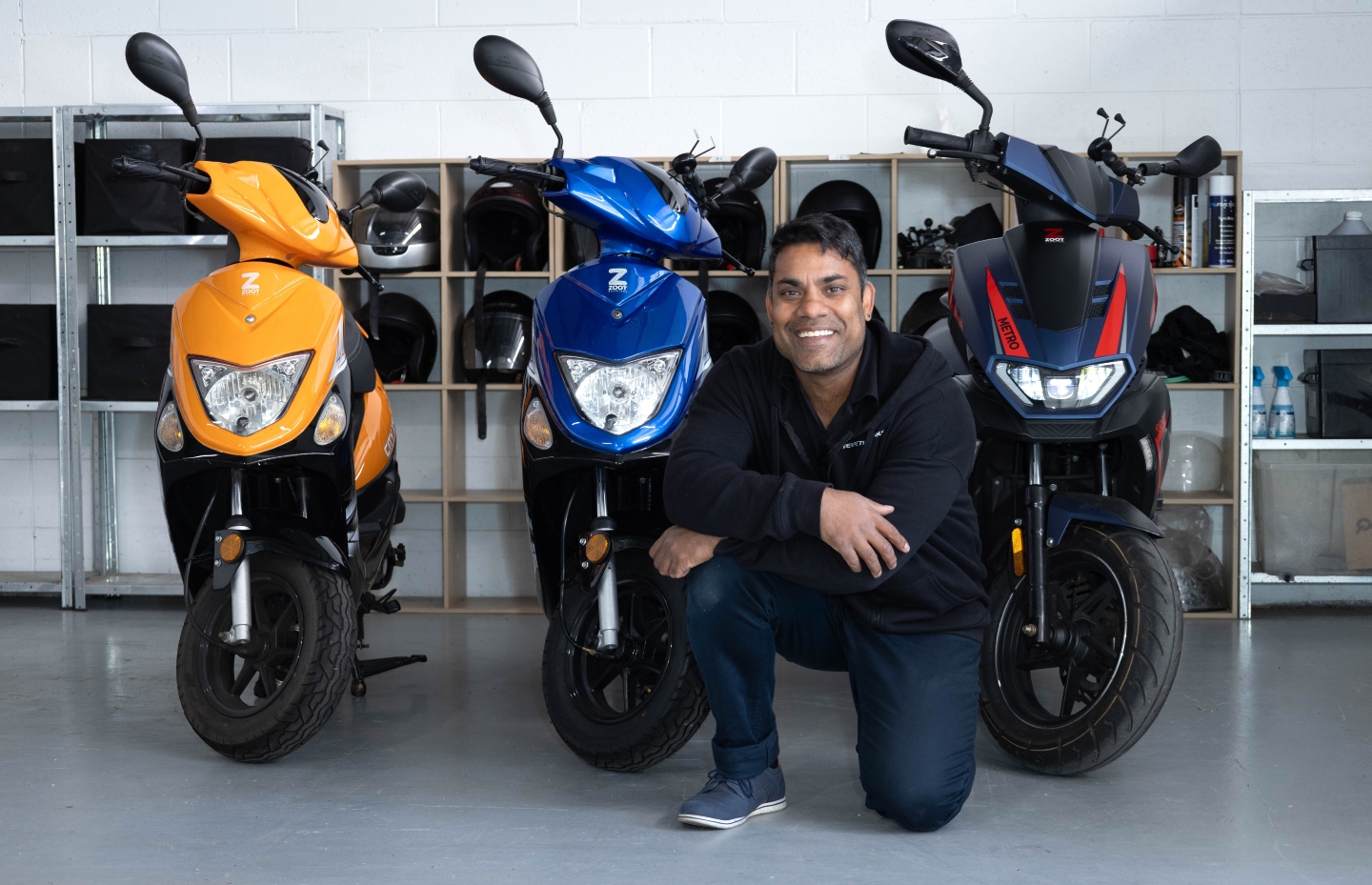
A Perth startup has created the Uber for scooters and mopeds.
Business
FirstCry shares fall 3% despite Q4 net loss narrowing to Rs 30 crore. What is Morgan Stanley saying?

The company released its results on Tuesday after market hours. While losses contracted sharply, revenue grew 12% YoY to Rs 2,163 crore in Q4 FY26, up from Rs 1,930 crore in the same quarter last year.
Although the net loss contracted sharply year-on-year, it increased sequentially from the Rs 28.43 crore net loss reported in the October-December quarter of the same financial year. The firm’s topline also declined 11% quarter-on-quarter from the Rs 2,424 crore revenue reported in the previous quarter of FY26.
The company’s adjusted Earnings Before Interest, Taxes, Depreciation and Amortisation (EBITDA) stood at Rs 119 crore versus Rs 101 crore in the year-ago period, while the adjusted EBITDA margin in Q4 FY26 was 5.5% compared to 5.2% in Q4 FY25.
Overall for the financial year ending March 31, 2026, FirstCry reported a 23% YoY drop in net loss while revenue grew 12% YoY and EBITDA rose 24% YoY. “With our current initiatives, we believe that structurally the growth rate for both online & offline channels will be much superior in FY27,” the company said in an exchange filing.
It added that it witnessed sequential improvement in YoY growth rate for revenue, despite heightened competitive intensity during the quarter. With its initiatives in offline channels, GMV grew in the mid-teens in Q4FY26, the filing said.
Morgan Stanley has maintained its “Equal-weight” rating on Brainbees Solutions Limited with a target price of Rs 300 (10% upside). The brokerage noted that margins were impacted by intense competition in the diapers segment and higher manufacturing costs. Management expects the India business growth rate in FY27 to improve over FY26, while manufacturing-related margin pressures are likely to reverse from Q2 onward. The brokerage added that competitive intensity in diapers could continue for another four to six quarters, even as the company targets adding more than 100 stores in FY27.
(Disclaimer: Recommendations, suggestions, views and opinions given by the experts are their own. These do not represent the views of The Economic Times)

Coal India announced on Tuesday that it aims to sell 6.16 crore equity shares, representing 1% of Coal India’s total paid-up equity capital, as the base offer size. The government also retains an oversubscription option to sell an additional 6.16 crore shares, taking the total potential offer size to 12.32 crore shares or 2% equity. At the floor price, this would be worth more than Rs 5,000 crore.
The offer for sale will open for non-retail investors on May 27, while retail investors, eligible employees and non-retail investors carrying forward unallotted bids can participate on May 29. It is important to note that the Indian stock market will remain closed on May 28 on account of Bakrid.
The government owned more than 63% stake in the PSU company, as on March 31, 2026. Coal India in its exchange filing further said that the share sale by its promoter will be conducted through a separate window mechanism on BSE and the National Stock Exchange in accordance with the Securities and Exchange Board of India’s OFS guidelines.
Additionally, 16 lakh Coal India shares changed hands in the block deal on Wednesday morning, according to ET Now.
Also read: Govt to offload up to 2% stake in Coal India via OFS on May 27-29
Coal India share price
Coal India shares sharply declined more than 6% to trade at Rs 428.40 apiece on NSE in the early trading hours of Wednesday. The stock has declined around 5% in one week and more than 3% in one month. Overall, the share price of the miner have gained more than 9% so far in 2026.
In the longer term, Coal India shares gained over 9% in one year, 81% in three years and 202% in five years. The company has a market capitalisation of nearly Rs 2.7 lakh crore.Coal India reported a steady March quarter performance, with consolidated profit after tax rising 12% YoY to Rs 10,908 crore, while revenue from operations increased 6% to Rs 46,490 crore, supported by improved realizations and higher other income.
Further, Coal India’s board also declared a final dividend for FY26 at Rs 5.25 per share. Payment of the final dividend for FY26 will be made subject to approval of shareholders in the upcoming AGM.
Also read: Coal India dismisses shortage fears; says 168 MT buffer available to meet rising demand
(Disclaimer: Recommendations, suggestions, views and opinions given by the experts are their own. These do not represent the views of The Economic Times)

The cost of children’s meals in restaurants is set to come down as VAT on some items is cut to 5%.

The stock came under pressure even as the company posted robust revenue growth, with investors appearing concerned over rising operational costs and continued losses in the consumer electronics business.
Aequs reported a consolidated net loss of Rs 54.1 crore in Q4FY26, compared to a net profit of Rs 9 crore in the corresponding quarter last year.
However, revenue from operations surged 47% year-on-year to Rs 367.1 crore, up from Rs 249.3 crore in Q4FY25, supported by strong momentum in its aerospace business and rapid scaling of the consumer segment.
EBITDA came in at Rs 32.1 crore, while the EBITDA margin stood at 9%. Margins contracted mainly due to the commencement of commercial operations in the consumer electronics segment during Q3FY26, which led to full operating costs being booked even as utilisation levels remained low.
The consumer business contributed 17% to total quarterly revenues, highlighting the company’s ongoing expansion in the segment.
FY26 Performance: Revenue and EBITDA Rise, But Losses Widen
For the financial year FY26, Aequs Limited reported a net loss of Rs 113.3 crore, with losses widening compared to the previous financial year. Despite pressure on profitability, the company delivered strong operational performance driven by growth across its core businesses.
Revenue for the year rose 33% year-on-year to Rs 1,230.4 crore, reflecting healthy demand momentum and continued business expansion. EBITDA also registered robust growth, increasing 43% YoY to Rs 154.5 crore. The improvement in margins was supported by operating leverage benefits and enhanced cost efficiencies across operations.
The aerospace division continued to be the company’s primary growth engine during FY26, contributing significantly to overall business momentum and revenue expansion.
Key highlights include:
The aerospace segment continued to witness strong momentum during FY26, with revenue rising 27% year-on-year to Rs 1,046.4 crore. The company also strengthened its long-term business visibility, with the aerospace order book expanding to USD 889 million.
During the fourth quarter alone, Aequs added 433 new aerospace parts, taking its total aerospace portfolio to 5,654 SKUs. Overall, the aerospace SKU portfolio recorded a healthy 26% year-on-year expansion, reflecting growing scale and deeper engagement with global aerospace programs.
Meanwhile, the consumer business continued its rapid scale-up, delivering 84% revenue growth during the year.
Capacity utilisation improved across key business segments during FY26, with the consumer segment operating at 23% utilisation, while the aerospace segment reached 62% overall utilisation, including 70% utilisation in India operations.
To further strengthen its manufacturing presence, Aequs Limited announced major expansion plans through strategic investment commitments. The company signed a Rs 1,900 crore MoU with Tamil Nadu to develop an integrated aerospace ecosystem and a Rs 2,856 crore MoU with Karnataka for capacity expansion across multiple business segments.
Management Commentary
Aravind Melligeri, Executive Chairman and Chief Executive Officer, described FY26 as a “landmark year” for the company, driven by strong execution, business expansion, and its IPO.
He highlighted that the aerospace business continued to gain traction with a strong order book, while the consumer segment entered full-scale production and revenue recognition phase.
According to management, Aequs is now focused on expanding manufacturing capabilities, deepening OEM partnerships, and moving toward higher-margin aerospace programs.
Stock Performance & Technical View
Despite Wednesday’s correction, Aequs shares have rallied nearly 49% over the last three months, reflecting strong investor interest in the company’s aerospace growth story.
The company currently commands a market capitalisation of around Rs 14,500 crore, while its 52-week high stands at Rs 223.85.
On the technical front, the stock’s 14-day Relative Strength Index (RSI) is at 61.8, indicating positive momentum. An RSI below 30 is generally considered oversold, while a reading above 70 signals overbought conditions.
(Disclaimer: Recommendations, suggestions, views and opinions given by the experts are their own. These do not represent the views of The Economic Times)

Auditor General finds WA universities’ reliance on foreign students risky

Bitcoin Four-Year Cycle Not Dead, Benjamin Cowen Says BTC Bottom Likely in October 2026

Every Karate Kid Movie Is Dropping on a New Streamer in 6 Days


-

 Crypto World6 days ago
Blockchain.com files with SEC for U.S. IPO
-

 Fashion5 days ago
Holiday Weekend Open Thread – Corporette.com
-

 Business5 days ago
Dell Technologies DELL Stock Surges 15% on AI Server Momentum and Analyst Upgrades in 2026
-

 Crypto World5 days ago
Bitcoin Accumulation Weakens as BTC Realized Losses Hit $600M
-

 Crypto World4 days ago
Robinhood crypto COO Tanya Denisova exits
-

 Crypto World5 days ago
Space X IPO Is ‘Bad News’ for Tech Stocks: But What About Bitcoin?
-

 Politics5 days ago
Makerfield: a tale of two social-media histories
-

 Tech2 days ago
Microsoft’s quiet Claude Code retreat and the real cost of enterprise AI
-

 Business3 days ago
NYT Strands Answers May 24 2026 Revealed for Puzzle No. 812 Theme Summer Essentials
-

 Crypto World5 days ago
MicroStrategy’s Saylor Says Miners No Longer Set Bitcoin Price, Another Force Has Taken Over
-

 Tech5 days ago
WhatsApp ads could make Irish debut after discussions with DPC
-
 Tech5 days ago
A 0.12% parameter add-on gives AI agents the working memory RAG can’t
-

 Crypto World5 days ago
AI infrastructure race heats up as IREN pitches full-stack strategy, WhiteFiber lands $160M deal
-

 Tech5 days ago
You Can Now Add ChatGPT To PowerPoint
-
 Crypto World2 days ago
Nvidia (NVDA) CEO Calls on Super Micro to Strengthen Export Controls Amid Smuggling Probe
-
 NewsBeat6 days ago
Charity run by Reform leader Malcolm Offord accused of ‘law breaking’ over Scottish registration
-

 Tech2 days ago
Westone Audio and Etymotic Acquired by Fidelity Collective in Major IEM Market Move
-

 Business5 days ago
Trump Invests $1M-$5M in Kura Sushi USA Chain With 27 California Locations
-

 Sports5 days ago
2026 CJ Cup Byron Nelson leaderboard: Brooks Koepka finds putting stroke in Round 1
-

 Crypto World6 days ago
Exa Labs raises $250 million in funding led by a16z
You must be logged in to post a comment Login