Connect with us
DAPA Banner
DAPA Coin
DAPA
COIN PAYMENT ASSET
PRIVACY · BLOCKDAG · HOMOMORPHIC ENCRYPTION · RUST
ElGamal Encrypted MINE DAPA
🚫 GENESIS SOLD OUT
DAPAPAY COMING

Tech

Worth the Wait? Sony BRAVIA 7 II, BRAVIA 9 II True RGB TVs Are Here and We Have Thoughts

Published

on

While Sony was technically first to market with an RGB backlit LCD TV in 2005, they’re just about last to the party in the new generation of RGB-lit LCD TVs. With models available from TCL, Hisense, LG and Samsung, Sony has taken its time in developing and perfecting its own offerings. They say, “good things come to those who wait” and the wait is over today with the release of not one but two models in Sony’s new True RGB line-up, the BRAVIA 7, Mark II and the BRAVIA 9, Mark II.

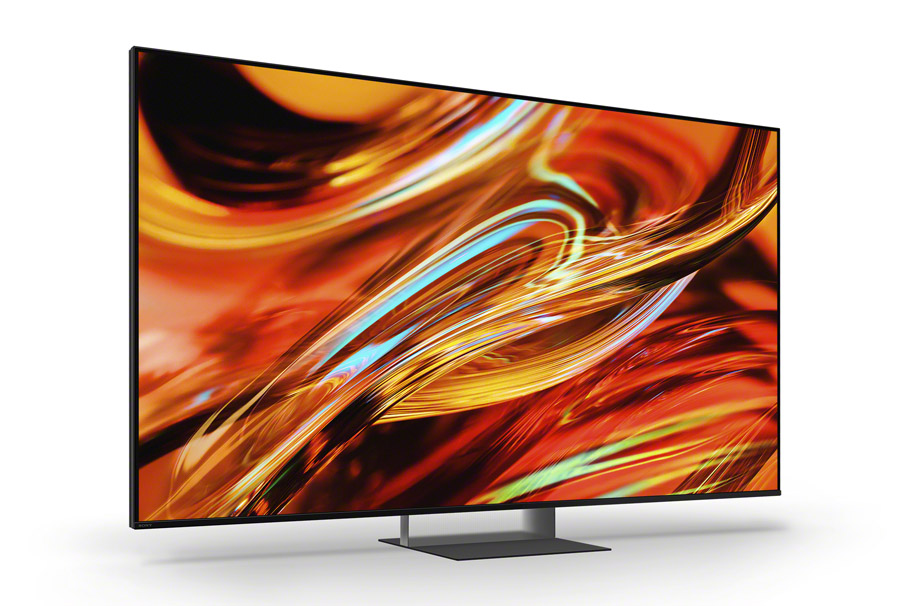
85_XR90M2_blk_Mirror_Center_wm-900px
85-inch Sony BRAVIA 9 II.

Replacing their Mini-LED predecessors, the BRAVIA 7 and BRAVIA 9, the new Mark II models feature an entirely new backlighting system which uses individual lighting elements for each of the primary colors: red, green and blue. With RGB backlights, Sony is able to reach higher peak brightness levels, improve both color accuracy and saturation and extend the color gamut so that more of the colors available in the real world can be captured by the TV.

We’ve been able to check out the new TVs up close against their predecessors and against competitive models, both in final production form but also with their backlighting system exposed so we could get a look at their inner workings. Unlike some competitive models, the BRAVIA 7 II and BRAVIA 9 II maintain their full RGB backlighting system even when multiple colors are on-screen at the same time, preserving their extended color gamut while avoiding the color crosstalk artifacts we’ve seen on some competitors’ sets.

micro-rgb-crosstalk-NOT-A-Sony-TV-900px
This shows color crosstalk on an RGB backlit TV (not a Sony). The dots should all be white, but they are showing a color tinge which bleeds over from surrounding areas of the screen due to RGB color crosstalk.

Compared directly to the BRAVIA 9 Mini LED TV, the BRAVIA 9, II TRUE RGB TV exceeded the performance of that set in just about every measurable (and subjective) way, with wider color gamut reproduction, impressive peak brightness — over 4,000 nits peak brightness on a 5% window — freedom from artifacts like aliasing and color banding and black levels and contrast that will give an OLED TVs a run for their money.

The BRAVIA 9 II also offered excellent off-axis viewing with minimal dimming and color shift when viewing it from well off to the sides. And it did all this while actually using less power than its predecessor, thanks to highly efficient power management and precise control over its RGB backlighting system.

ins_9ii_115-Motif-900px
BRAVIA 9 II comes in screen sizes from 65 inches to 115 inches (pictured here).

Mini LED TVs like the earlier BRAVIA 9 had and easier job when it came to color reproduction. The backlighting unit generated a single color, which means each pixel on the LCD panel itself created colors by adjusting the opaqueness of each LCD pixel’s red, green and blue subpixel. Because the backlight is uniform in color, the color filter process is entirely predictable and uniform from LCD pixel to LCD pixel. But with that simplicity came a narrower color gamut – that meant they simply couldn’t reproduce certain colors, at least not with useful brightness.

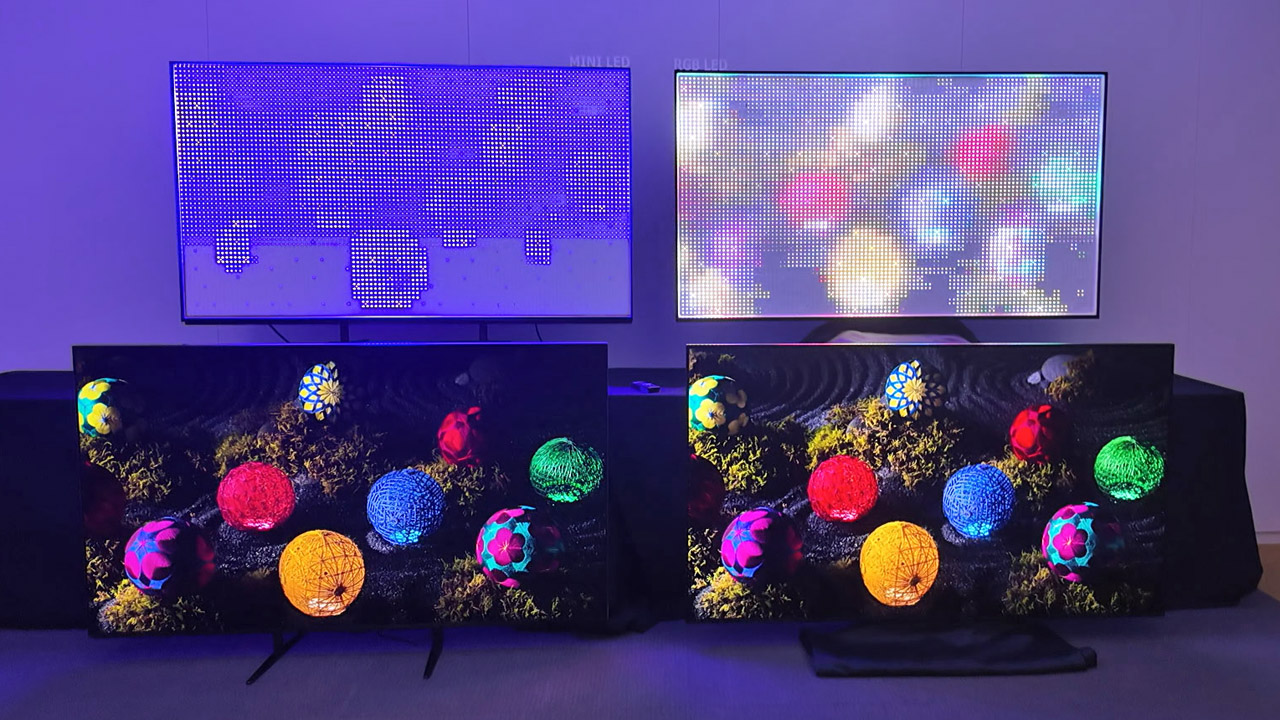
Sony True RGB TV compared to BRAVIA 9 Mini LED TV.
Sony BRAVIA 9 Mini LED (left) and backlight unit compared to BRAVIA 9 II True RGB TV and backlight unit (right).

With an RGB backlit TV like the BRAVIA 9, II, the image processor has to decide how to adjust both the intensity of each individual red, green and blue diode in the backlight unit and do further adjustment at the pixel level adjusting each of the red, green and blue LCD subpixels. This two-step process can lead to better color accuracy, wider color gamut reproduction and higher overall brightness, but at the expense of more processing power and complexity. It is just this complexity that has led to Sony taking its time in releasing its first RGB-lit TVs of the new era.

BRAVIA 9 II, Optimized for Any Room Lighting

Brand new on the BRAVIA 9 II flagship TV is Sony’s Immersive Black Screen Pro – an integrated screen treatment which absorbs and disperses ambient room light such as open window shades, overhead lighting and lamps. Unlike some competitors’ matte screen coatings which can sacrifice black tonality, Immersive Black Screen Pro provides exceptional reduction of reflections without any color shift in the black levels. In Japan, we got to observe a BRAVIA 9 II which had half of its screen coating removed. This allowed us to see exactly what impact the screen coating had on the incoming video signal when faced with high ambient room lighting like an open window or even a bright spotlight.

Advertisement
Sony-BRAVIA9-II-Immersive-Black-Screen-Pro-Comparison-900px
This BRAVIA 9 II had its Immersive Black Screen Pro coating removed from the left half so we could see a comparison of how a bright spotlight was reflected with and without the screen coating applied.

Off-axis viewing and glare reduction were both exceptionally good on the True RGB TV, with the new TV able to maintain rich black levels when in a brightly lit room. While there was occasionally some mild blooming on brightly colored images set against a black background, the use of RGB lighting elements made these faint artifacts nearly imperceptible. On traditional LCD TVs, the bloom or halo around a bright object is typically white, while on a True RGB TV, the light bloom matches the color of the on-screen object, making it much less noticeable. While the BRAVIA 9 II couldn’t quite match an OLED in this regard, it wasn’t far off.

BRAVIA-9-II-BVM-skin-tones-comparison-900px
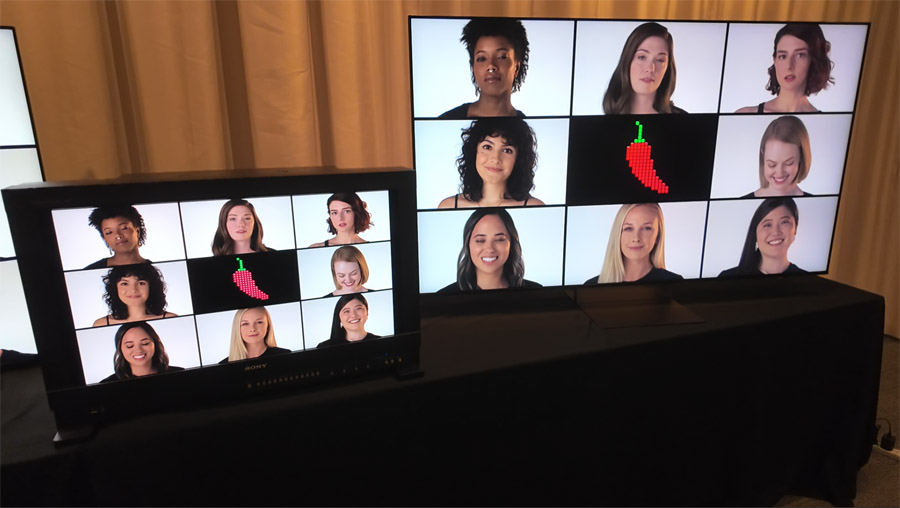
The BRAVIA 9 II (right) proved to be a close match to the professional broadcast monitor on challenging color reproduction tests like this skin tones test clip from the Spears and Munsil UHD Benchmark disc.

Color reproduction on the BRAVIA 9 II was outstanding. We did comparisons among the original BRAVIA 9, the BRAVIA 9 II and a Sony BVM-HX3110 professional broadcast monitor which sells for $30,000. The BRAVIA 9 II proved to be a very close color match to the BVM on most content and definitely edged out the Mini LED BRAVIA 9 for color saturation and wide color gamut coverage.

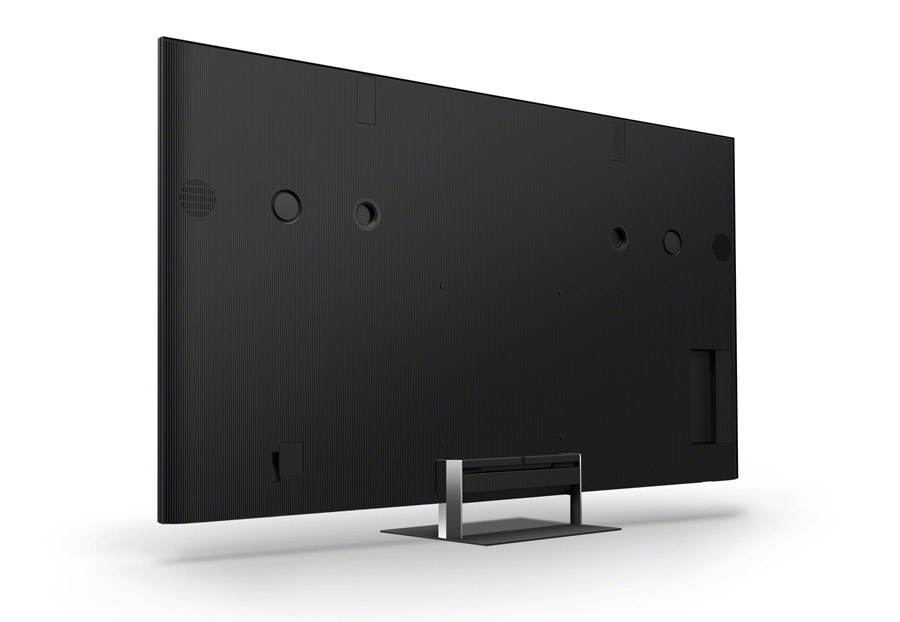
85_XR90M2_blk_Mirror_Center_back-rear-view-900px
Sony BRAVIA 9 II rear view (85-inch).

We also viewed several challenging 4K/HDR clips highlighting HDR tone mapping and found that the new True RGB set outperformed the BRAVIA 9 MiniLED TV in both specular highlights and shadow detail. And the BRAVIA 9 is already a strong performer for tone mapping, so this was a pretty impressive feat. The 65-inch BRAVIA 9 II measured over 4,000 nits of peak white brightness at a 5% window which makes it a strong performer with HDR content, even in a bright room.

Advertisement. Scroll to continue reading.

A Unique Floating Look – the Mirage Stand

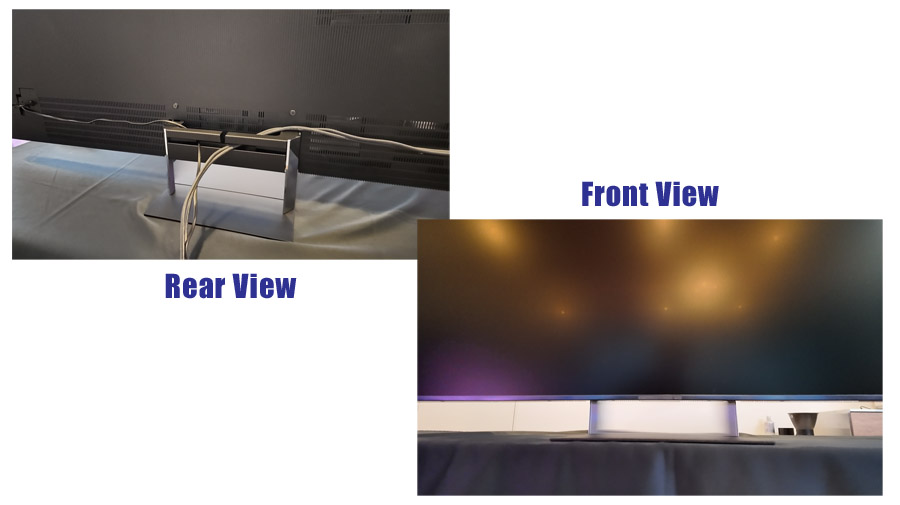
Both the BRAVIA 7 II and BRAVIA 9 II offer a new “Mirage” stand at sizes up to 85 inches. This base uses a lenticular translucent panel that allows light to pass through while power and HDMI cables that dangle behind the TV effectively disappear.

BRAVIA-9-ii-disappearing-cable-trick-900px
Thanks to a lenticular panel in the stand that lets light pass through but makes thin cables disappear, the BRAVIA 7 II and BRAVIA 9 II offer a “floating” look.

What’s The Difference? BRAVIA 7 II vs. BRAVIA 9 II

The BRAVIA 7 II and BRAVIA 9 II are more similar than they are different. They both include Sony’s TRUE RGB backlighting with RGB Backlight Master Drive Pro technology, the floating “Mirage” stand, four HDMI 2.1 inputs and similar ergonomic designs. However the BRAVIA 9 II features three times as many dimming zones compared to the BRAVIA 7 II for higher peak brightness, enhanced picture precision, reduced blooming and better image uniformity. The BRAVIA 9 II also includes the more powerful “Pro” version of Sony’s Luminance Booster processing (Luminance Booster Pro) for enhanced peak color and white brightness.

65_BRAVIA-7-II-XR70M2_blk_Matte_Center_ccw-900px
BRAVIA 7 II in 65-inch size with included mirage stand.

The Immersive Black Screen Pro screen coating is exclusive to the BRAVIA 9 II. The audio on the BRAVIA 9 II is also upgraded from the BRAVIA 7 II with Acoustic Multi -Audio+ technology which uses a Beam Tweeter at the top of the screen to make sure the sound perfectly matches the on-screen action.

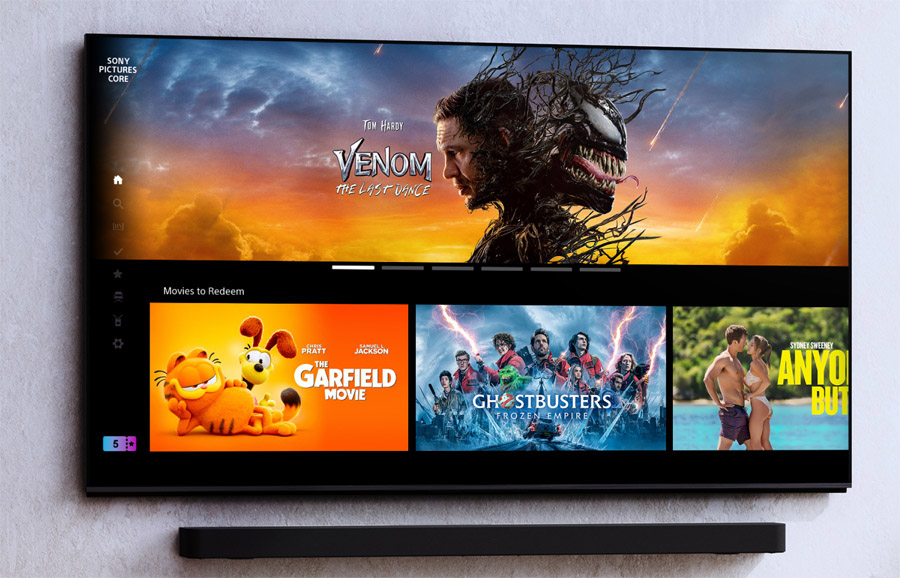
Sony-Pictures-Core-900px
Sony’s BRAVIA 7 II and BRAVIA 9 II both include access to Sony Pictures Core.

Both sets are built on the Google TV operating system, with access to thousands of audio and video streaming apps, including Sony’s exclusive Sony Pictures Core streaming app which can compete with physical media like Blu-ray Disc in both video and audio quality. Both models feature Google’s Gemini AI on board for enhanced content recommendations and natural language interaction with viewers.

The BRAVIA 7 II is available in screen sizes from 50 inches for $1,599 to 98 inches for $8,999. The BRAVIA 9 II is available in sizes from 65 inches at $3,599 to 115 inches at $30,999. Complete size and pricing details are included below.

“Reports of My Death Have Been Greatly Exaggerated” – OLED TV

While some manufacturers are positioning their RGB-backlit TVs as “OLED Killers,” Sony has not announced any intentions to phase out their current OLED TVs, namely the BRAVIA 8 and BRAVIA 8, II. There are still some areas of picture performance, like black level reproduction, blooming and contrast, where OLED TVs are difficult to match. Instead, Sony is positioning their True RGB TVs as being ideal for bright room viewing and for those who want screen sizes beyond what OLED can currently deliver.

Advertisement
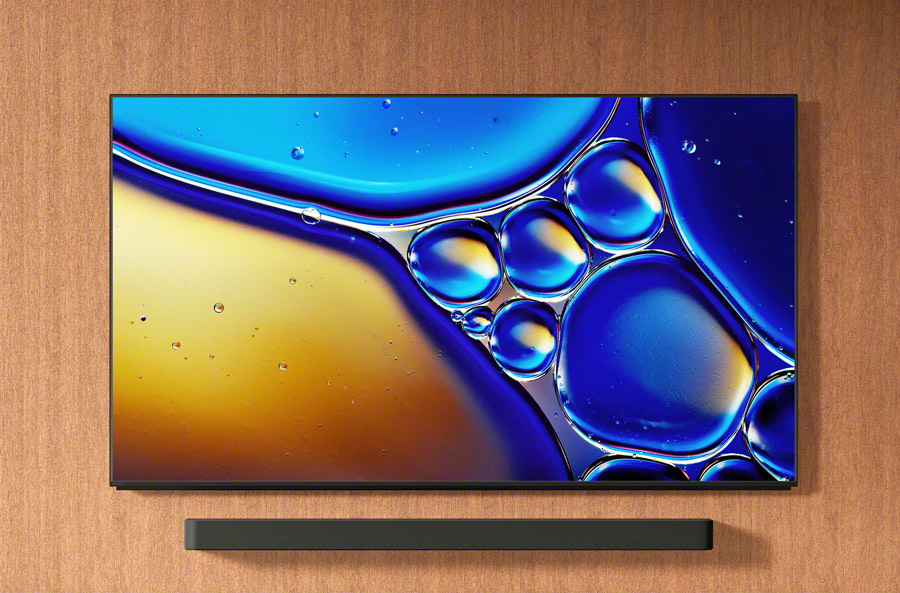
Bravia-8-ii-with-soundbar-900px
Sony will continue to offer the BRAVIA 8 and BRAVIA 8 II OLED TVs for the foreseeable future.

Based on Sony’s own research, 87% or more of TV viewing is done in non-ideal lighting conditions, e.g., rooms with open drapes with sunlight streaming in or moderate to bright room lighting. And, in these conditions, True RGB’s higher peak brightness and wider color gamut, as well as the Immersive Screen Pro light rejection tech on the BRAVIA 9 II, provide a superior overall viewing experience.

The Bottom Line

Sony has been working on its RGB backlighting system for several years and we’ve witnessed its path from prototype to production. They may be late to the RGB party, but from what we’ve seen so far, the wait has been worthwhile. By offering two lines of True RGB TVs at launch, starting at just under $1,600, Sony is hoping to appeal to TV buyers who are looking for the picture quality benefits of RGB backlighting without necessarily having to take out a home equity loan to pay for the privilege (unless you opt for the massive 115-inch model).

Having spent a fair amount of time with both the BRAVIA 7 II and the BRAVIA 9 II at events in New York City and Tokyo, my initial impression is that Sony’s TRUE RGB TVs will be among the top performers of 2026, of any TV technology. We’re looking forward to spending more quality time with both TVs over the coming weeks.

Pricing/Sizes of Sony’s 2026 True RGB TVs

Most models are available for pre-order now with expecting shipping dates as noted.

BRAVIA 9 II TRUE RGB TV (XR90M2):

  • 65-inch: $3,599.99 USD MSRP / $4,999.99 CAD MSRP (June 3, 2026)
  • 75-inch: $4,599.99 USD MSRP / $6,499.99 CAD MSRP (June 3, 2026)
  • 85-inch: $6,499.99 USD MSRP / $8,999.99 CAD MSRP (June 12, 2026)
  • 115-inch: $30,999.99 USD MSRP / $41,999.99 CAD MSRP (TBD)

BRAVIA 7 II TRUE RGB TV (XR70M2):

  • 50-inch: $1,599.99 USD MSRP / $2,249.99 CAD MSRP (TBD)
  • 55-inch: $2,099.99 USD MSRP / $2,999.99 CAD MSRP (May 27, 2026)
  • 65-inch: $2,599.99 USD MSRP / $3,699.99 CAD MSRP (May 27, 2026)
  • 75-inch: $3,099.99 USD MSRP / $4,399.99 CAD MSRP (June 1, 2026)
  • 85-inch: $3,999.99 USD MSRP / $5,599.99 CAD MSRP (June 1, 2026)
  • 98-inch: $8,999.99 USD MSRP / $12,999.99 CAD MSRP (TBD)

Source link

Advertisement
Continue Reading
Click to comment

You must be logged in to post a comment Login

Leave a Reply

Tech

France’s startup funding fell 5% in 2025 as AI concentration grew

Published

on

TL;DR

French startups raised €6.7 billion in 2025, down 5% year on year, even as the US grew 38% and Europe 12%. Mistral accounted for 25% of all capital raised. AI drove 43% of funding, defence tech surged 148%, and exits hit a five-year low at €5.3 billion.

new report on the French tech ecosystem by Alexandre Dewez, a partner at venture firm 20VC, paints a picture of a startup scene that is growing more dependent on a handful of AI companies while the rest of the market stalls. French startups raised €6.7 billion across 411 funding rounds in 2025, a 5% decline in capital and a 21% drop in deal volume compared with the previous year. The numbers stand in sharp contrast to the US, where startup funding grew 38% year on year, and Europe as a whole, which saw a 12% increase.

Advertisement

The report, based on roughly 100 slides of data covering funding, exits, unicorns, and sector trends, argues that France minted its first decacorn but is struggling to build the breadth of winners that would signal a maturing ecosystem. Mistral’s Series C at an €11.7 billion valuation was the headline achievement of 2025, but the AI lab accounted for 25% of all capital raised by French startups that year. Strip out Mistral and the picture looks considerably weaker.

AI dominates, but France lacks category leaders

AI was the main growth engine of the French ecosystem in 2025, accounting for 23% of funding rounds, up from 13% in 2024, and 43% of all capital raised, up from 27% the year before. France also produced several mega seed rounds for foundation model companies, including H at €212 million, Genesis at €97 million, Gradium at €64 million, and Bioptimus at €32 million.

But the report makes a pointed observation: unlike other European countries, France lacks clear category leaders in AI’s most commercially valuable segments. The UK has ElevenLabs in voice. Sweden has Lovable in vibe-coding. Germany has Parloa in customer success and n8n in AI automations. Even Mistral, France’s flagship AI company, is not dominating its category against OpenAI, Anthropic, Google, and Meta.

Mistral’s European nationality, which enables companies seeking a sovereign AI option, has become its main differentiation point rather than technical superiority. The company has lost its early open-source edge and is competing in a multi-modal AI market where the largest US and Chinese players have significantly more capital and compute.

Pennylane was the standout performer

The report names fintech Pennylane as the French startup of the year for 2025. The accounting software company crossed €100 million in annual recurring revenue, growing 130% year on year, and raised two rounds in a single year at valuations of €2 billion and €3.9 billion respectively.

Advertisement

Pennylane has expanded from pure accounting software into an ERP and neobank for French small and medium-sized businesses, and opened operations in Germany. It is a rare example of a French startup executing at growth scale with the kind of metrics that attract top-tier international investors.

Defence is the second hottest sector after AI

European defence tech startups raised $1.6 billion in venture funding in 2025, a 148% increase year on year, making defence the second-largest growth category after AI. Within France, 18 defence startups raised €228 million, a 25% increase on the previous year.

The biggest signal came in January 2026, when Harmattan became France’s first defence unicorn after raising a $200 million Series B led by Dassault Aviation, the maker of the Rafale fighter jet. Harmattan builds autonomy and mission-system software for defence aircraft, and French president Emmanuel Macron publicly praised the deal as a win for the country’s strategic autonomy.

The broader European defence tech boom is being driven by geopolitical pressure, with governments across the continent increasing spending in response to the war in Ukraine and shifting transatlantic security dynamics. Germany has captured the largest share of European defence tech capital, but France is carving out a position in AI-enabled military systems.

Advertisement

US funds are taking over French venture capital

One of the report’s most striking findings is the degree to which US capital now dominates French startup funding. American funds were involved in rounds accounting for 55% of the total amount raised in 2025, and their capital has been concentrated in AI companies, particularly foundation model builders like Mistral, Genesis, and Gradium.

At the Series A level, only 30% of the 20 best rounds in 2025 were led by French funds. Pan-European funds led 60% and US funds led 10%. The report notes that where Index Ventures, Accel, and Balderton were historically the only pan-European firms consistently leading one or two French Series A rounds per year, at least 15 pan-European funds now do the same.

French VC funds are caught in what the report calls the “messy middle,” losing top Series A deals to international funds and top pre-seed and seed deals to a growing crop of French micro-funds with €5 million to €35 million under management. Several French funds are struggling to raise their next vintage, and when they do, they are raising smaller funds than before. Top talent is leaving.

San Francisco is pulling French founders westward

The AI boom has reasserted San Francisco’s dominance as the centre of the global tech industry, and French founders are responding. Multiple early-stage founders are actively building between the Bay Area and Paris, including the teams behind Poolside, Genesis, Zero Entropy, and Anyshift. French venture firms Founders Future, Frst, and Hexa have opened offices in San Francisco.

Advertisement

Entrepreneur First, the British accelerator, closed its Paris office in October 2025 to focus on its US programme. Since launching in Paris in 2018, roughly 700 entrepreneurs had passed through the programme and helped build more than 100 startups. Its departure is a signal that even institutions designed to nurture European founders see the gravitational pull of the US as too strong to resist.

Exits hit a five-year low

The exit picture is bleak. French startup exits totalled €5.3 billion in 2025, a 65% decline year on year and the lowest figure in five years. The IPO market remains largely closed to European tech companies, and trade sales have not filled the gap.

Secondaries have become the dominant source of liquidity, with both VC-led transactions, such as Descartes with Battery Ventures, and PE-led deals, such as Brevo with General Atlantic, providing the main exit routes. This is not a sign of a healthy ecosystem. Secondary sales provide partial liquidity for early investors but do not generate the kind of large-scale returns that attract new capital into the venture system.

France has produced 47 unicorns to date, defined as startups that have been worth at least $1 billion at some point. The report estimates that 36, roughly 77%, are still likely worth $1 billion or more based on recent fundraising, revenue, or headcount growth. The remaining 11 have likely fallen below the threshold, a reminder that unicorn status is not permanent and that the French ecosystem still has a maturity problem when it comes to building durable, large-scale companies.

Advertisement

Source link

Continue Reading

Tech

Websites have a new way to spy on visitors: analyzing their SSD activity

Published

on

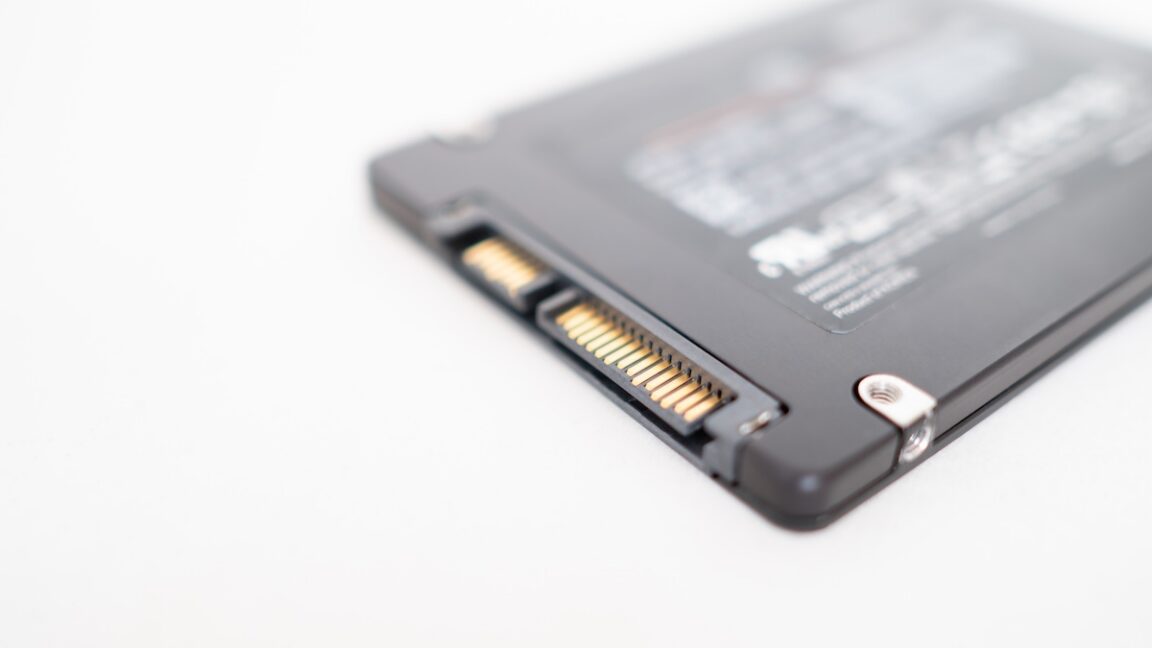
While each file system is sandboxed, meaning it’s isolated from other websites and from the device system itself, the JavaScript can measure the I/O interactions. Then, by running those interactions through a pretrained convolutional neural network—a system that uses deep learning to analyze text, audio, and images—the attacker can deduce various apps and websites open on the device.

“The attacker continuously measures SSD contention by performing random reads from a large OPFS file,” the researchers explained. “SSD contention caused by user activity causes measurable latency differences for these read operations. By training a convolutional neural network (CNN) on these traces, the attacker can fingerprint user activity on the host system by classifying new traces using the trained model.”

The technique has its limitations. First, the OPFS file must be extremely large—likely a gigabyte or more. That requirement means that attacks at scale would inevitably be detected by many users. Additionally, the OPFS file must be stored on the same SSD the visitor is using. This isn’t usually a problem for tracking open websites, since the OPFS file is stored in the browser’s default location. In the event apps are using a separate SSD drive for apps, those apps couldn’t be detected by FROST.

One of the best ways to prevent FROST attacks is to close tabs as soon as they’re no longer needed. More savvy users can monitor the creation and size of OPFS files allocated by unknown websites. The researchers proposed ways for browser makers to shut down the side channel. One such method is to limit the maximum size such files that are allowed. There are no indications FROST attacks have been performed in the wild.

Advertisement

The researchers performed the full Frost attack on an M2 Mac. On Linux, they showed that the underlying primitive (measuring SSD access latency traces from JavaScript) works, but didn’t run the full attack.

“However, since the performance of the primitive is similar between macOS and Linux, we expect similar performance for the full classification,” Hannes Weissteiner, one of the co-authors, wrote in an email. “In principle, it would be possible to train a model on any system activity that reliably generates SSD accesses.”

The researchers did not test Windows.

The paper linked above provides many more technical details. The research is scheduled to be presented at the DIMVA conference in July.

Advertisement

Source link

Continue Reading

Tech

Bootids Meteor Shower May Explode With Meteors or Fizzle Out: How to Watch

Published

on

There are still tons of mysteries in the universe, and the Bootids meteor shower is one of them. The upcoming meteor shower occurs during the last week of June and the first few days of July, and it has the potential to be one of the weakest or strongest meteor showers of the year. How’s that for noncommital?

The Bootids meteor shower officially runs from June 22 to July 2, with a peak on the evening of June 26 and the morning of June 27. Its 10-day run is among the shortest of any named meteor showers.

Bootids is also the single most unpredictable meteor shower of the year in terms of how many visible meteors it can produce. It’s not terribly active during most years and produces approximately one or two meteors per hour during its peak. However, Bootids is known for having random outbursts, during which it produces as many meteors as the bigger meteor showers. 

Advertisement

The most recent such occurrence was in 2004, and other big years include 1998, 1927, 1921 and 1916. The 1998 Bootids meteor shower is legendary, with reports of 100 meteors per hour. That’s as many as Perseids, which is arguably the most famous meteor shower of the year, and right up there with other active showers like Geminids and Quadrantids. 

Since science hasn’t yet figured out how to reliably predict these outbursts, any year could be the next big one. 

A screenshot of the Boötes constellation from Stellarium's website

The Boötes constellation will be high in the southern sky right after sunset June 26.

Advertisement

Stellarium

How to see Bootids

All meteor showers take their name from the constellation where they appear to originate, a point known as the radiant. For Bootids, that’s the Boötes constellation. 

Boötes sits high in the southern sky and will be immediately visible after sunset on June 26. It’s visible all night, dipping into the western sky overnight before nestling against the western horizon before sunrise. If you’re having trouble finding it, a night sky map like Stellarium or Time and Date can help you find it. 

Follow standard tips for seeing any meteor shower. You want to get away from the city and suburbs to reduce noise pollution. (June’s moon will be about 90% full on June 26, which means you can’t escape all of the light pollution.)

Advertisement

Everything is easy from there. Settle into a comfortable spot, don’t use bright lights, and avoid magnification aids like binoculars and telescopes, as they obstruct your view and may cause you to miss a meteor. 

How many meteors will Bootids produce?

Your guess is as good as anyone’s. The Bootids meteor shower typically produces a scant one or two meteors per hour. 

However, these meteors are known for being slow, bright and long-lasting, so what few are likely to show up should be pretty easy to spot, even with June’s nearly full moon. 

But prior outbursts of up to 100 meteors an hour took astronomers completely by surprise. Anything could happen. 

Advertisement

Why is Bootids so difficult to predict?

Every meteor shower has a parent body, such as a comet or asteroid, that leaves behind a trail of dust and debris. Earth moves through those trails of dust and debris, which then enter the atmosphere and produce meteor showers. 

Most comets and asteroids leave a pretty consistent trail, which leads to fairly consistent meteor showers. You can count on Perseids to put on a decent show just about every year. 

The Bootids meteor shower is just like the rest. Its parent comet is called 7P/Pons-Winnecke, which orbits the sun every 6.3 years and is highly affected by Jupiter’s gravity. 

The difference is that 7P/Pons-Winnecke leaves an erratic, uneven trail of debris. When the Earth moves through this trail, it might pass through a weaker segment, producing only a handful of meteors, or through a stronger segment, producing dozens or more per hour. There’s no way to know for sure, you’ll just have to stay up and see for yourself.

Advertisement

Source link

Continue Reading

Tech

Triomics nabs $22M to bring oncology-specific AI to cancer centers

Published

on

Triomics, a startup building an AI-powered platform to help oncologists and administrative staff automate data-heavy tasks like clinical trial matching and appointment prep, has raised $22 million in Series B funding.

The round was led by Battery Ventures, with participation from returning backers Nexus Venture Partners, Lightspeed, Y Combinator, and others.

The good news is that oncology breakthroughs are keeping patients alive longer.  That welcome trend, however, is creating dense, multi-year medical records that take healthcare staff a long time to review and decipher.

A typical medical chart includes physician progress notes, imaging and pathology reports, and even scans of faxes. “We have seen medical records [with] thousands of pages of information,” Triomics co-founder Sarim Khan (pictured left) told TechCrunch.

Advertisement

Founded in 2021, the startup raised a $15 million in Series A in mid-2024. Initially focused on helping doctors identify the most suitable clinical trials for their patients, Triomics expanded its platform as LLM capabilities grew. Over the last couple of years, Triomics added verifiable patient summaries to its platform, surfacing key information directly inside the tools clinicians already use, without requiring them to switch applications.

By reducing appointment prep time, these summaries give oncologists more time with their patients. The efficiency gain matters beyond individual appointments: in oncology, where patient histories are unusually complex and staff burnout is a persistent problem, tools that reduce administrative load have an outsized impact.

Triomics is also used to automate the tedious task of submitting tumor reports to government registries, a legal mandate for cancer centers.

While generic AI agents excel at basic summaries, prominent institutions like Memorial Sloan Kettering (MSK) and Yale Cancer Center use Triomics because its models are trained specifically on oncology data, Khan explained.

Advertisement

Triomics most direct competition comes from AI medical scribes like Abridge and Microsoft’s Nuance — tools that use AI to listen to and document patient-doctor conversations — when it comes to summarizing patient charts.

Despite the fierce competition, Triomics is growing fast. According to Khan, the startup expanded its enterprise customer base fourfold over the past year, driving a 10-fold increase in annualized recurring revenue.

When you purchase through links in our articles, we may earn a small commission. This doesn’t affect our editorial independence.

Source link

Advertisement
Continue Reading

Tech

How Sony’s DualSense Keeps Proving Itself as the Wireless Controller Worth Buying in 2026

Published

on

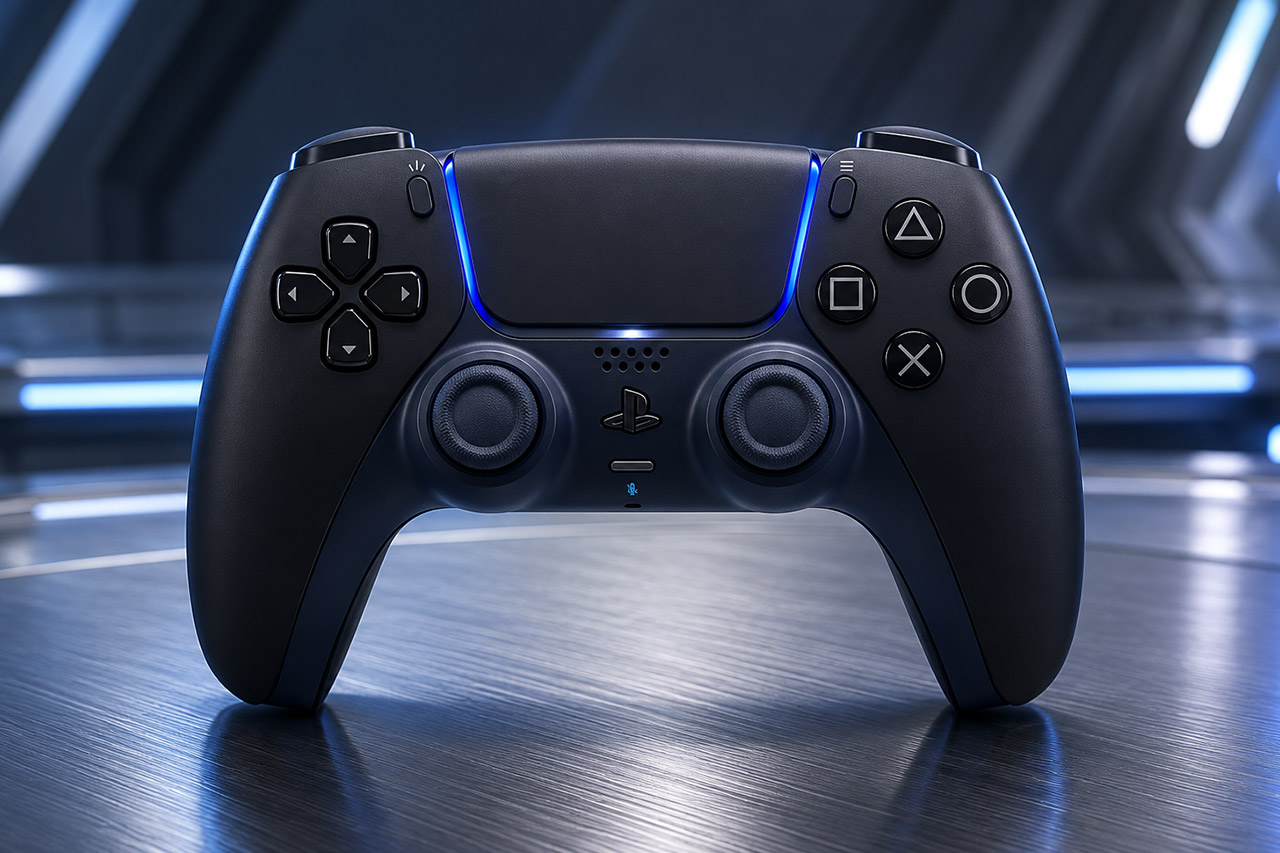
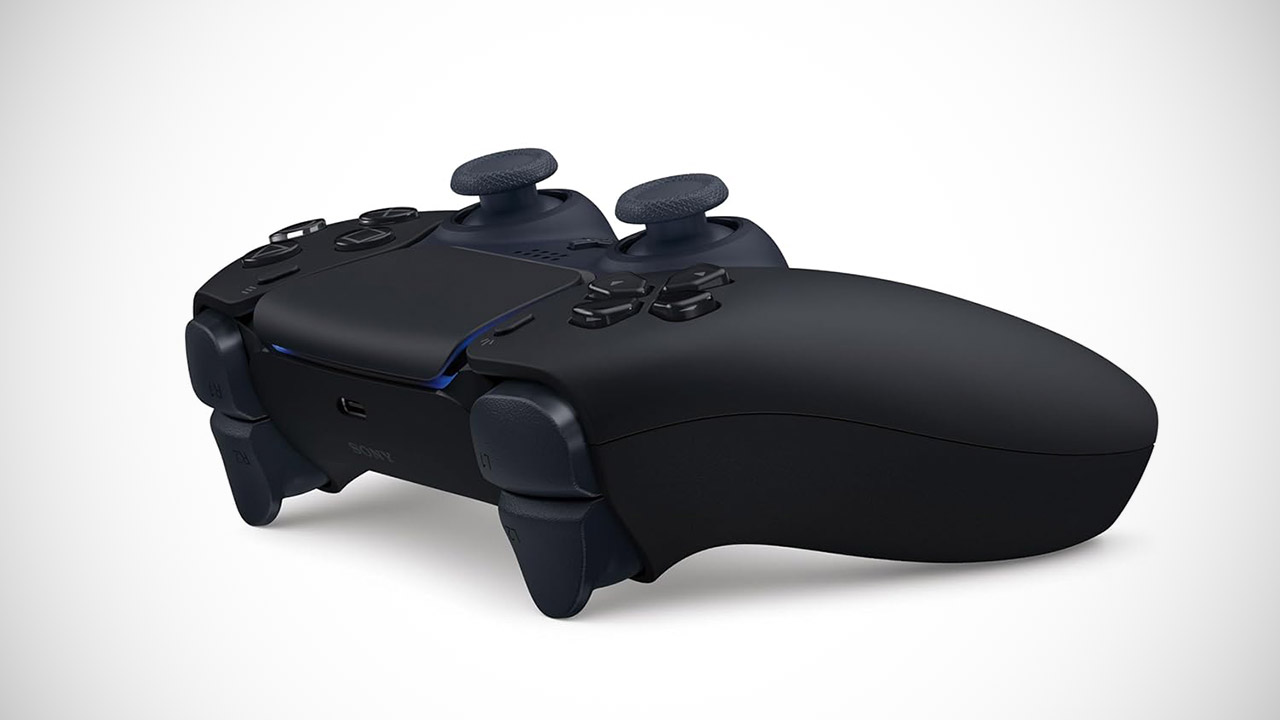
Sony DualSense Wireless Controller Midnight Black
Many gamers searching for one controller that handles multiple systems without compromise continue to land on the same option. The DualSense in Midnight Black, priced at $54 (was $75), delivers that balance through everyday use on PlayStation 5 consoles, Windows computers, Macs, and compatible phones. Triggers stand out through real changes in resistance.


In supported games, you push the left or right trigger to tighten or loosen it, and the action corresponds to what’s happening on screen. As you’re drawing a bowstring and the tension begins to develop, it takes a little more work to pull back. When you press down on a vehicle’s accelerator, you get a steady pushback as you drive, which feels quite similar to pushing on the gas. You end up with a basic press that appears to correspond to what the game is showing you.


Haptic feedback is comparable in that it produces vibrations with a high level of detail rather than a simple vibrating impression. When you walk on different surfaces, each one registers as a unique pattern. If there is bad weather in the game or you absorb an impact, the strength of the vibration adjusts to the scenario. Many PlayStation 5 games create moments that play off of these experiences. Thanks to platforms such as Steam, an increasing number of computer games are now doing the same thing.

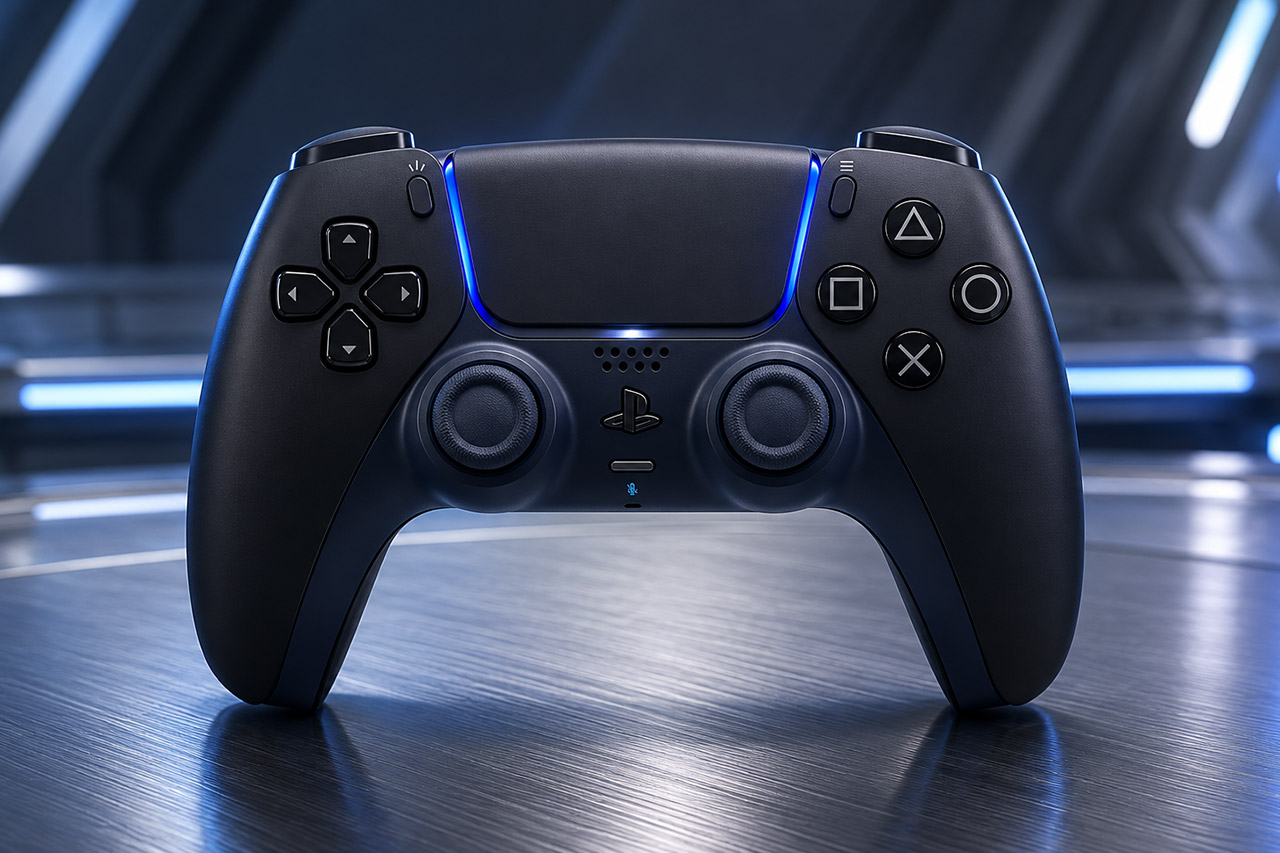
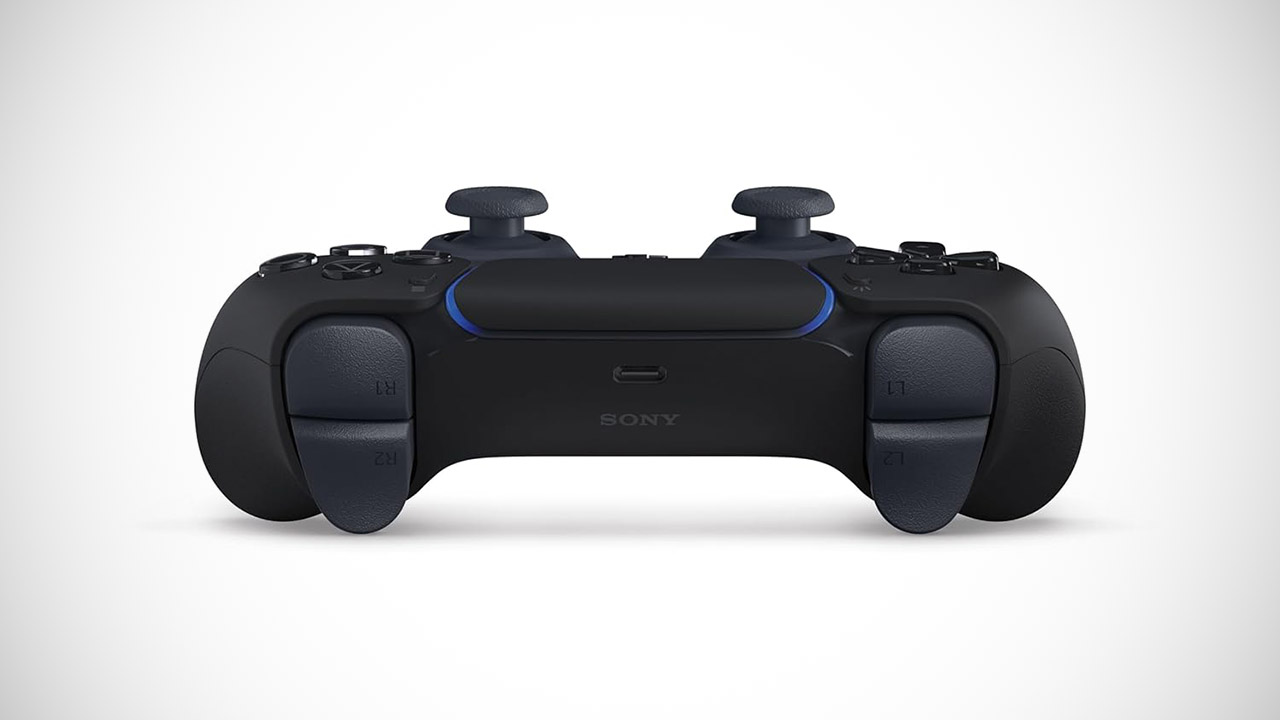
Sony DualSense Wireless Controller Midnight Black
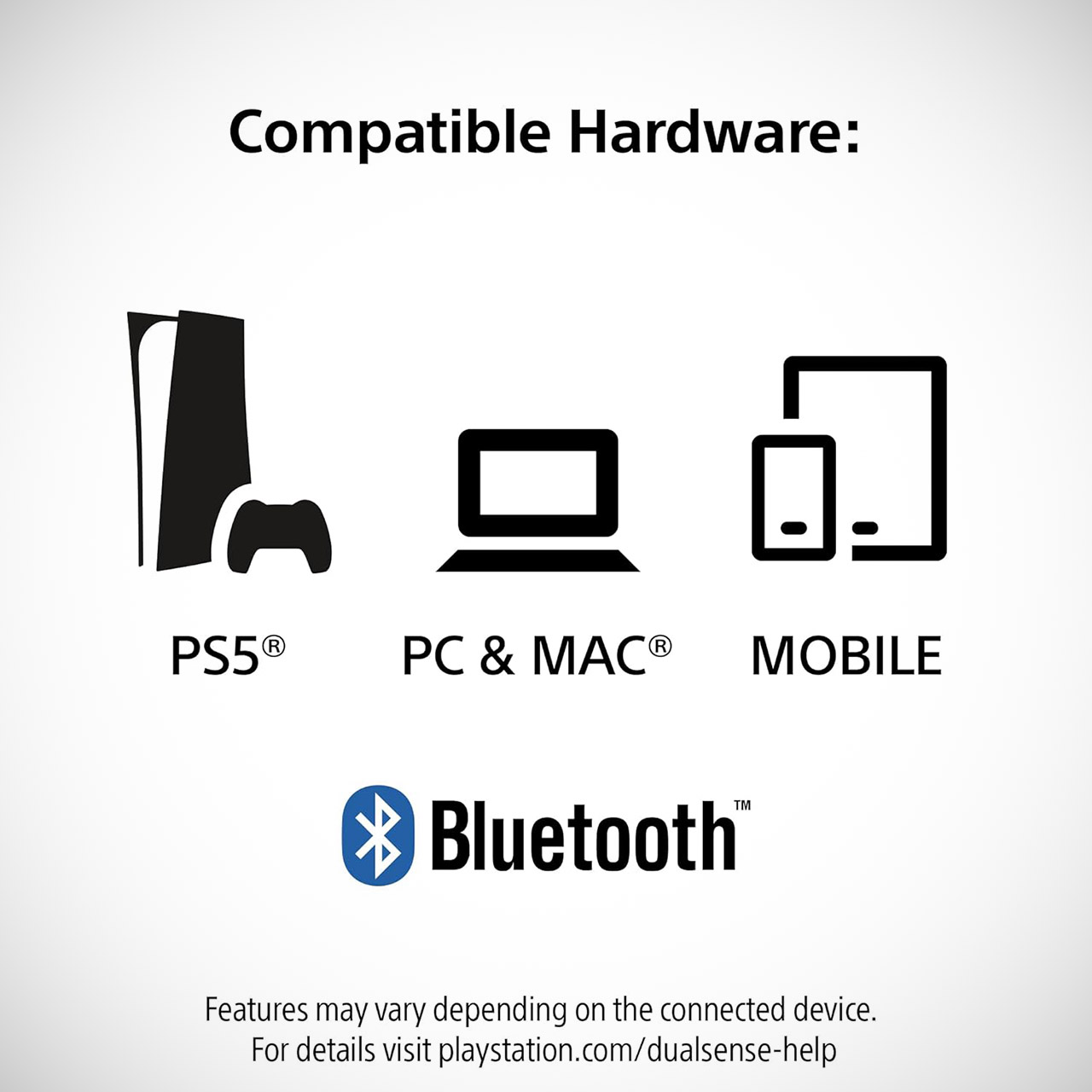
Getting connected is simple; simply pair the controller with a PS5 or Windows / Mac computer via Bluetooth, and you’re done. If you prefer a direct connection, use a USB-C cable instead. The same controller will connect to a variety of Android or iOS phones as long as the game supports gamepads. If wireless isn’t your style, the companion software on your PC allows you to send out firmware updates for free, keeping everything up to date.

Sony DualSense Wireless Controller Midnight Black
The voice tools are built right in, and the microphone can handle chat in supported titles without issue. A dedicated mute button is conveniently located near your thumb, allowing you to swiftly turn it off if necessary. The standard headphone connection allows you to just plug in a pair of headphones and be ready to go, eliminating the need for a separate headset in many circumstances.

Sony DualSense Wireless Controller Midnight Black
Battery life is generally good, with a few hours of mixed use on a single charge, and recharging via USB-C is speedy, allowing you to easily top up between sessions. Results will vary depending on how frequently you use the controller and how long your sessions go, but most gamers should be able to complete their tasks without needing to recharge.

Source link

Advertisement
Continue Reading

Tech

Marathon’s First Open Play Week Starts On June 2

Published

on

When Marathon’s second season kicks off on June 2, Bungie will give new players a chance to try the game for free for a full week. In blog post published today, the studio said the preview, which is slated to run through June 9, will be available on Steam, PlayStation 5 and Xbox Series X/S, with any progress players make carrying over to the full game if they decide to purchase it afterward. 

As previously announced, existing players will see their item vault and armory reset at the end of the current season, making this a great time to try the game since everyone will be on equal footing when it comes to weapons and upgrades. In Wednesday’s blog post, Bungie also shared new information about season two’s biggest additions: the new Sentinel class, nighttime Dire Marsh map and Cradle customization system. The reimagined zone will see Marathon lean into more of its cosmic horror inspirations. 

“This new zone introduces new mechanics, new combatants, and locations to explore on Dire Marsh,” Bungie explains. “It’s built to be slower-paced than Day Marsh and plays more like a survival horror experience, with slightly fewer players and extra environmental challenges with navigating the darkness and threats within.”

Advertisement

As for the Sentinel shell, Bungie describes it as defensive specialist, with a kit built around controlling space. Its prime ability, Defender System, allows it to deploy a point-defense drone that can briefly protect you and your crew against grenades and missiles. If I had to guess, the new shell will be popular at high levels of play where grenades of all types fly thick and fast. In a call back to the Halo series, one of the Sentinel’s other abilities allows it to activate a short-range, motion-tracking system. “Use this to gather a bit of extra intel on who or what’s moving around you, and set up your defenses accordingly,” Bungie suggests.     

Lastly, there’s the Cradle, which will allow players to convert extra weapons and other equipment into experience they can put towards stat upgrades and perks. Bungie says this system is designed to give players a way to progress their character separate from the game’s faction system, which can get tedious when you need to find (and exfil) specific high-level salvage to buy a single upgrade. The studio also notes players can tweak their Cradle builds at any time to encourage experimentation. 

Earlier this month, Bungie outlined its plan for Marathon’s future, saying it would make the game’s onboarding experience better for new players, and that new PvE modes would arrive during season two. Less than a week later, the studio announced it was ending development on Destiny 2. Then a day later Bloomberg’s Jason Schreier published a report claiming Sony was planning “significant” layoffs at the developer. It’s probably fair to say a successful preview week would do a lot to boost morale at Bungie.

Advertisement

Source link

Continue Reading

Tech

Sony BRAVIA Theater Trio Speaker System Solves Every Soundbar’s Biggest Problem

Published

on

Soundbars are popular because they’re easy to set up and provide a sonic upgrade over TV speakers, sometimes a huge upgrade. But as TVs have gotten larger – and wider – every year, soundbars have basically stayed the same size. This means the little bar may not be able to match the audio to the on-screen action in terms of its soundstage width and immersion.

Most soundbars measure in at anywhere from 2 feet wide for the compact ones to around 4.5 feet wide for the larger ones. Sony’s flagship BRAVIA Theater Bar 9 is around 52 inches wide and SONOS’ flagship ARC Ultra is around 46 inches wide. Even the average 65-inch TV is wider than both at 57 inches. And if you’re opting for a 100-inch TV, those are around 88 inches wide – that’s over seven feet wide. This means the edges of your TV may each be up to two feet or more beyond the soundbar’s outermost speakers. And this can lead to the sound seeming much smaller than the picture.

Big-TV-Tiny-Soundbar
Soundbars can’t always keep up with the on-screen action when they are dwarfed by a giant flat panel TV or projection screen.

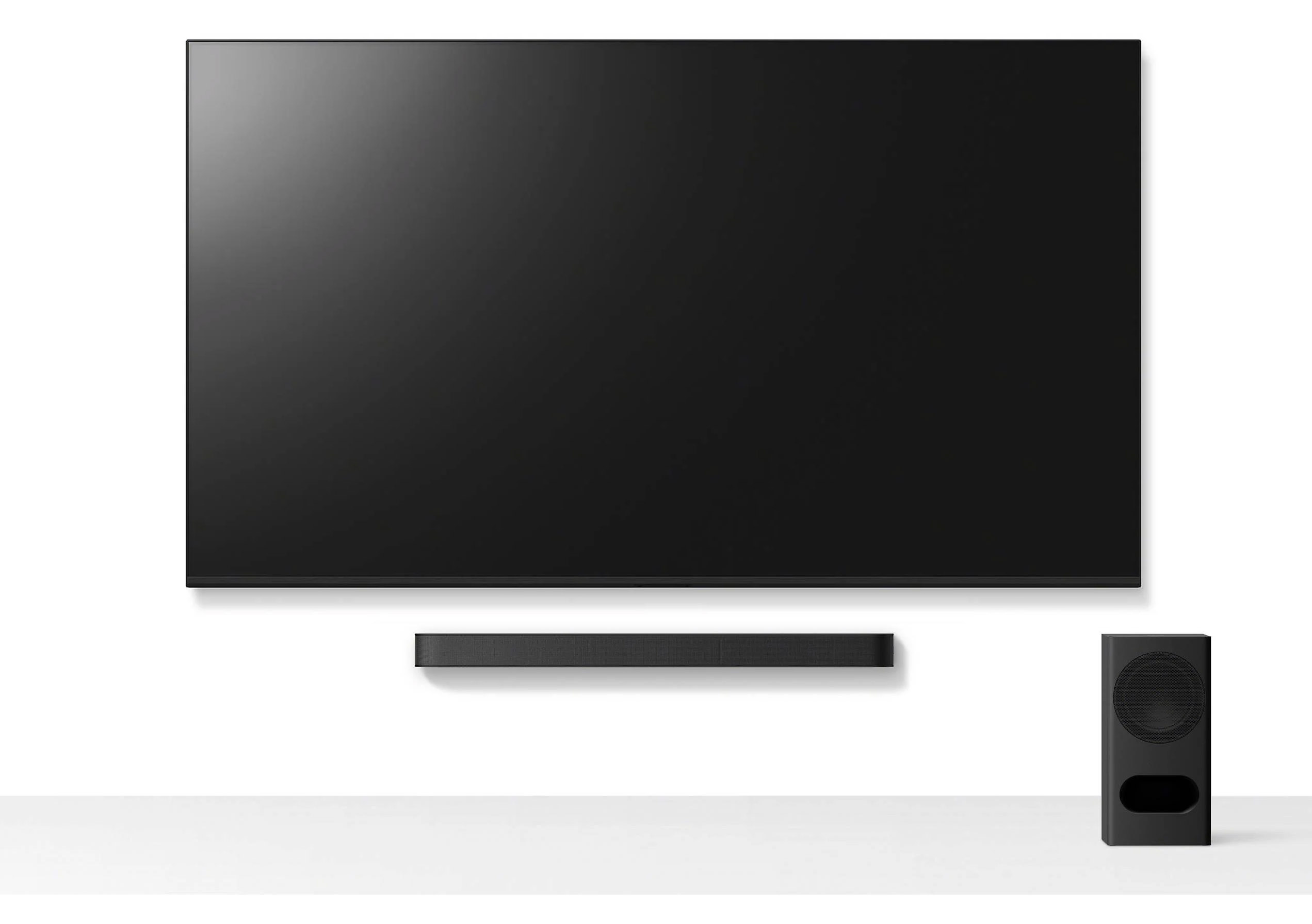
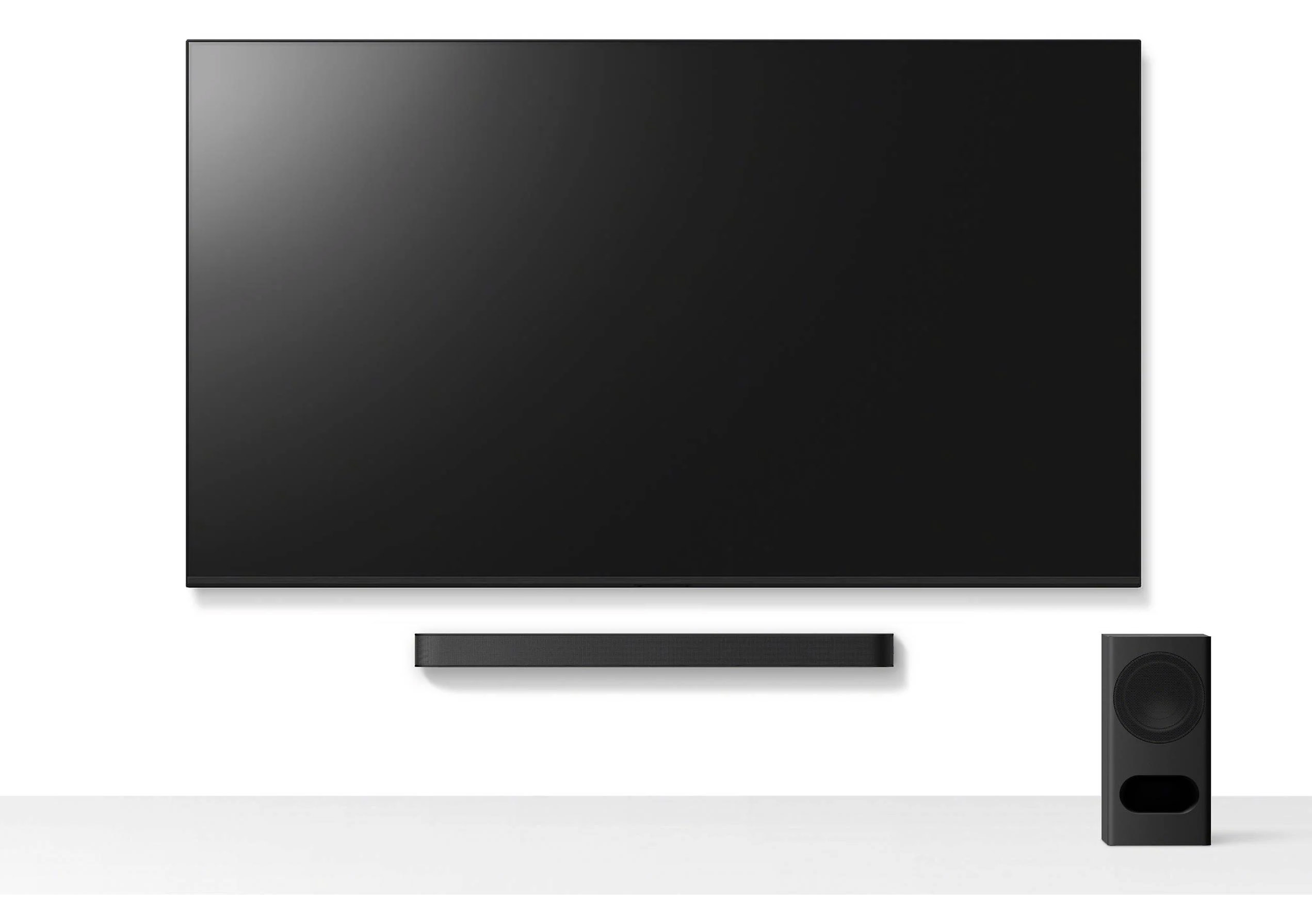
Sony just addressed this problem with their new BRAVIA Theater Trio. Also known by model number HT-A8, the Trio is a powered three-speaker system with dedicated left, center and right speakers that allows you to place your main speakers on either side of your TV or projection screen for a wider, more immersive soundstage even with the largest TV or projection screens.

Trio_set_front_900px
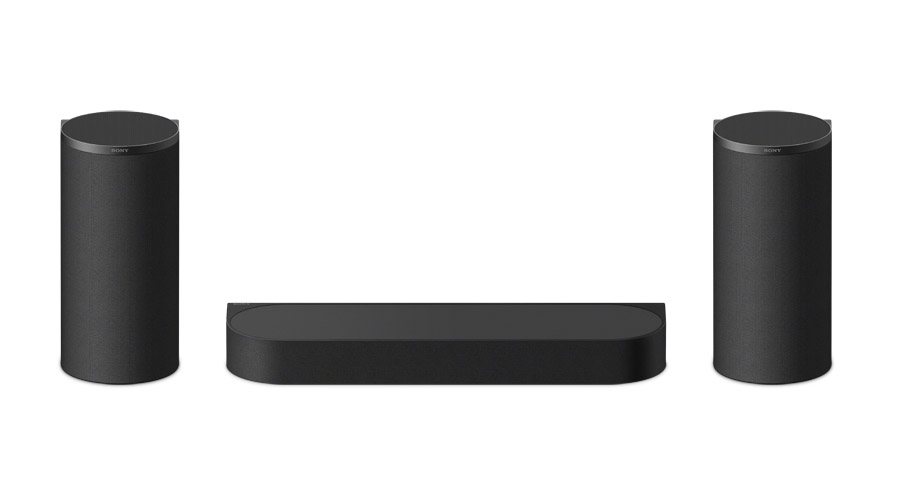
The Sony BRAVIA Theater Trio comes with a dedicated center channel speaker and a pair of front speakers with front-firing and up-firing drivers.

You may say, “But wait! Doesn’t Sony already offer the BRAVIA Theater Quad for just this reason?” And the answer is “YES!” But the new Trio has something the Quad doesn’t have: a dedicated center channel speaker. And this heps to improve dialog intelligibility compared to the phantom center created by the Quad system. The Trio also supports up to two powered subwoofers, while the Quad currently only supports one.

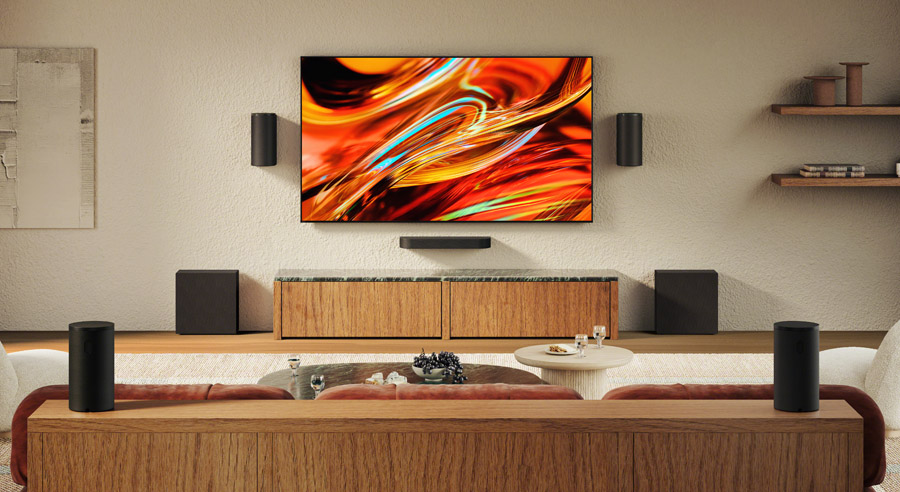
Based on our listening tests in events in Japan and New York, we’d say the BRAVIA Theater Trio works well on its own to improve the dynamics and immersiveness of TV sound, thanks to its high quality front and up-firing drivers. But it can also be upgraded with rear speakers and one or two powered subwoofers for much more immersive surround sound with deep extended bass.

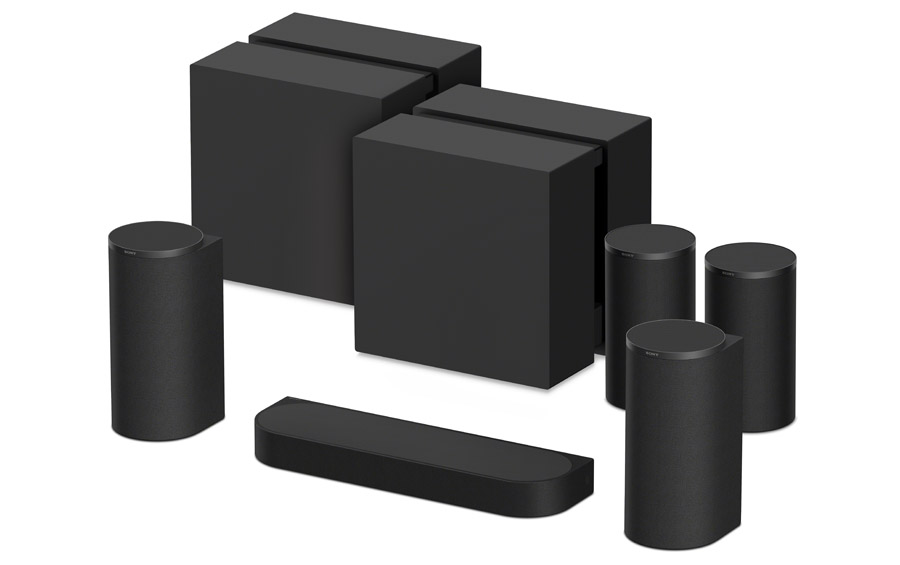
The BRAVIA Theater Trio is compatible with all of Sony’s current rear speakers and subwoofers including the Bravia Theater Rear 8 and Rear 9 surround speakers and the BRAVIA Theater Sub 7, Sub 8 and Sub 9 powered subwoofers. For best effect, we recommend adding the Rear 9 speakers as they include both front firing and top-firing drivers as well as an integrated swivel stand that allows you to point the front drivers toward your listening position.

Advertisement
exp_sys_Trio_2xSub8_Rear9-motif-xropped-900px
The sound of the Trio system can approach cinematic levels when upgraded with a pair of rear speakers and powered subwoofers.

Which subwoofer you pick will depend on room size and how much you love that low bass. The entry-level Sub 7 would be fine in a small apartment or listening space to fill in that bottom end without shaking the walls. But in a larger room, you may want to consider the larger Sub 8, with one 8” driver or the flagship Sub 9 which features two force-balanced 8-inch bass drivers in a larger cabinet for deeper bass extension. To even out the bass response in all parts of your room, and provide the most substantial bottom end, the BRAVIA Theater Trio supports the addition of a second subwoofer.

Trio_bar_center-skeleton_2way-900px
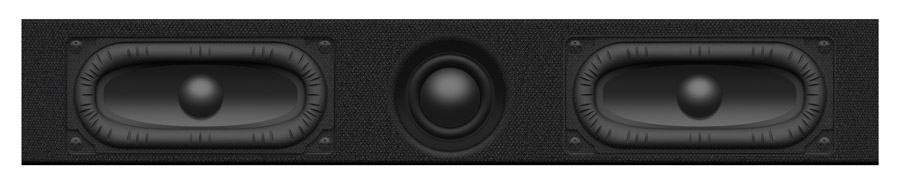
The BRAVIA Theater Trio center channel features a two-way design with a center tweeter, flanked by dual bass/midrange drivers for clear dialog reproduction.

Like a soundbar, the Trio needs no separate amplifier or receiver as it’s got the power built in. Just connect one HDMI cable from the TV or projector’s HDMI ARC/eARC port to the center channel speaker and plug it into wall power and that center speaker unit communicates wirelessly with the rest of the speakers in the system. The front speakers, and any optional rear speakers and subwoofers do need their own power connections, however, as they need electricity for both the built-in amplifiers and wireless connectivity.

All Hype? Or Is There Some Merit Here?

We got to hear a demo of the full BRAVIA Theater Trio system at Sony’s headquarters in Tokyo earlier this year. It was matched with two of the company’s flagship BRAVIA Theater Sub 9 subwoofers and a pair of the BRAVIA Theater Rear 9s in the rear. The system provided excellent, dynamic sound overall, which was more than a match for the 115-inch BRAVIA 9 II True RGB TV it was paired with. Bass was deep and extended, thanks to the dual subs, and dialog was clear and crisp. Music and effects extended nearly the full width, height and depth of the room, giving the whole experience a dynamic cinematic feel.

Trio_frontLR_skeleton-up-firing-driver-900px
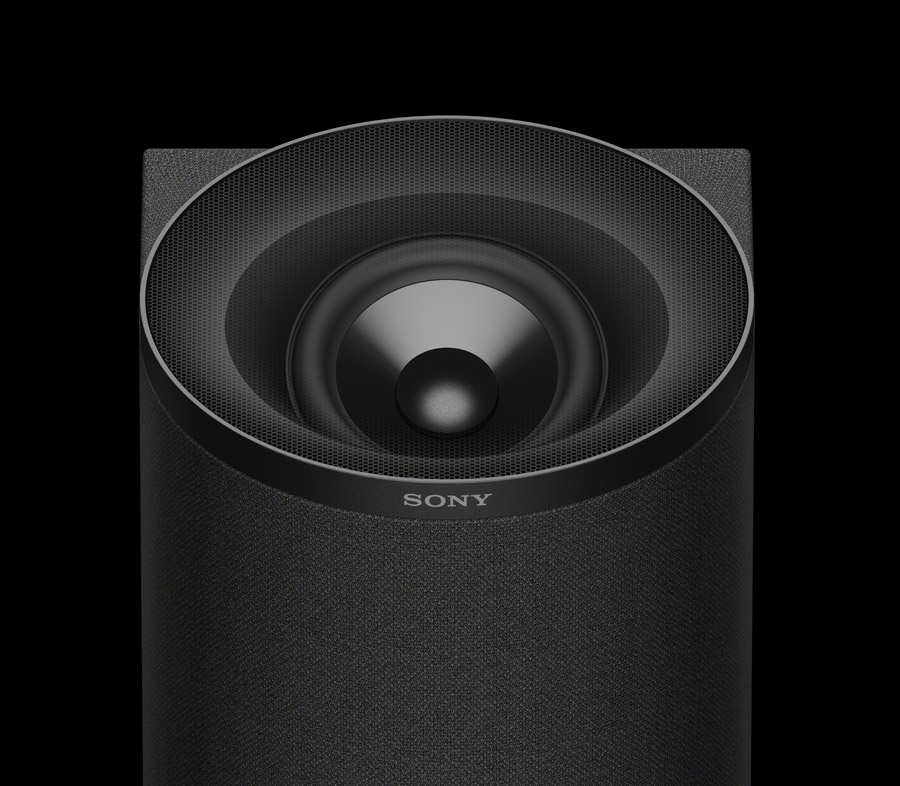
The front left and right speakers that come with the Trio system featured high quality angled up-firing drivers to reflect height channel effects off the ceiling.

The Trio isn’t replacing the Quad. It’s just providing another option for those who like the idea of variable width front left and right speakers and a dedicated center channel, without the wiring complexity of an A/V receiver and passive speakers.

Keep it in the Family (BRAVIA Family)

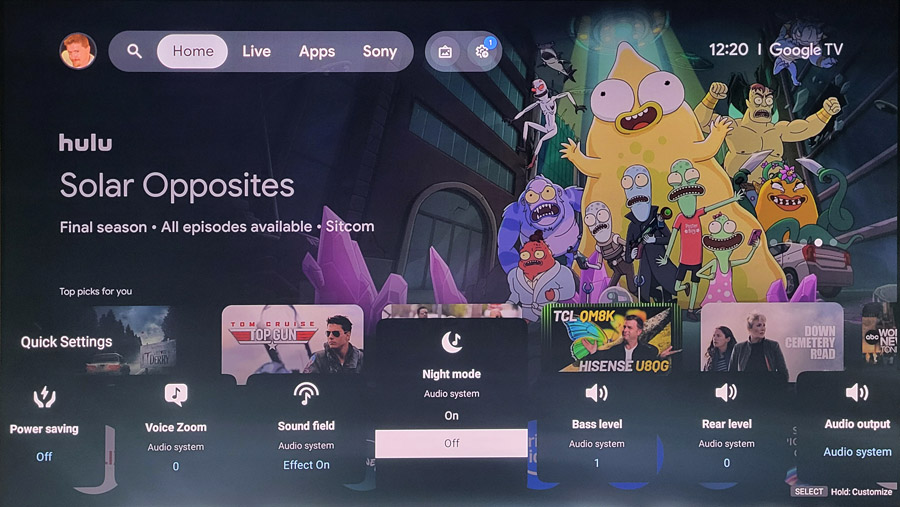
If you match the Trio up with a Sony TV, then you’ll be able to make all your audio adjustments right in the TV’s quick settings menu, and you’ll be able to take advantage of Sony’s AI-enhanced Voice Zoom 3 feature which elevates dialog without impacting the rest of the soundtrack.

Advertisement. Scroll to continue reading.
20251030_122026 Sony Quick Settings Menu 900px
When connected to compatible Sony BRAVIA TV, you can make audio adjustments to the BRAVIA Theater Trio from the TV’s Quick Settings menu.

The Sony BRAVIA Theater Trio system can decode Dolby Atmos and DTS:X immersive surround sound, in both lossless and lossy versions. However, unlike the BRAVIA Theater Bar 8 and Bar 9 as well as the QUAD system, the Theater Trio does not support 360 Reality Audio, an immersive format for music which competes with Dolby Atmos. To be fair, the catalog of music titles available in 360RA format is pretty limited, so this omission is not likely to be a deal breaker for most buyers.

20240517_153703-queen-dts-x-900px
The BRAVIA Theater Trio can decode IMAX Enhanced DTS-X soundtracks like “Queen Rock Montreal” on Disney+ on select devices (including most recent Sony TVs).

The BRAVIA Theater Trio is certified IMAX Enhanced, which means it can decode the IMAX Enhanced DTS-X soundtracks on Blu-ray Disc, UHD Blu-ray and in streaming services including Disney+ and Sony Pictures Core, applying the necessary EQ to the soundtrack for maximum impact.

Advertisement

For wireless connectivity, the Theater Trio supports WiFi 6e network for high reliability as well as Bluetooth and Apple AirPlay 2.

New Improved Calibration Microphone

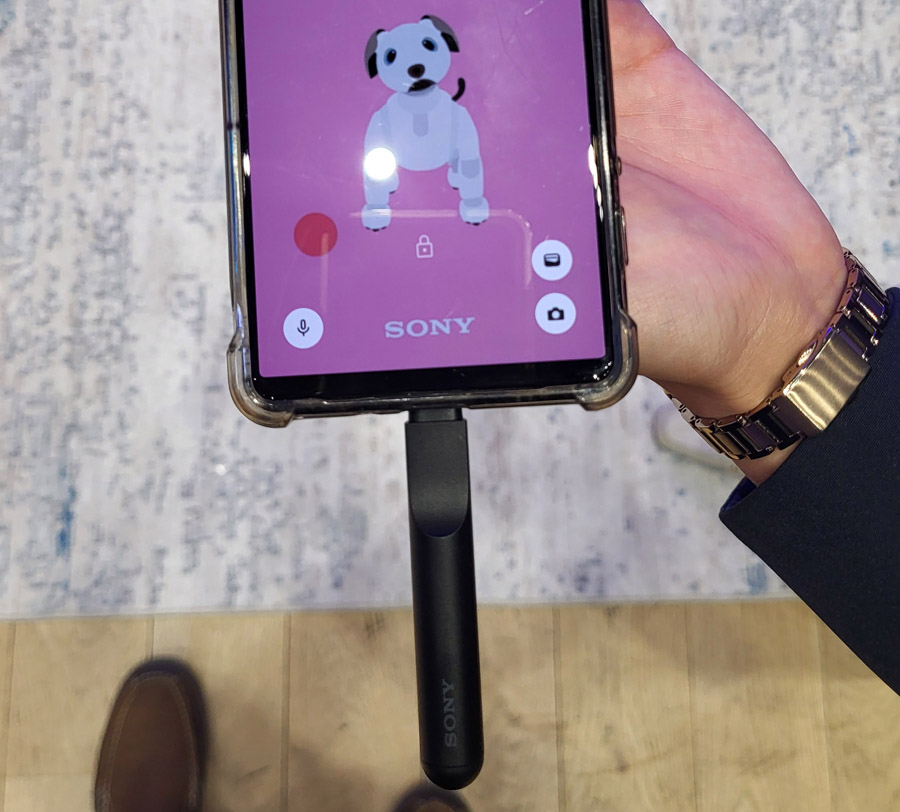
While previous Sony home theater products have used the microphone built into your phone for calibration, the BRAVIA Theater Trio comes with a dedicated high quality mic that plugs into your phone’s USB-C port for greater accuracy. This helps the system to better identify speaker positions and compensate for less-than-perfect speaker placement and room anomalies.

BRAVIA-Trio-Calibration-Microphone-20260427_151236-900px
The BRAVIA Theater Trio comes with a new calibration microphone which plugs into the USB-C port on most recent Android and Apple phones.

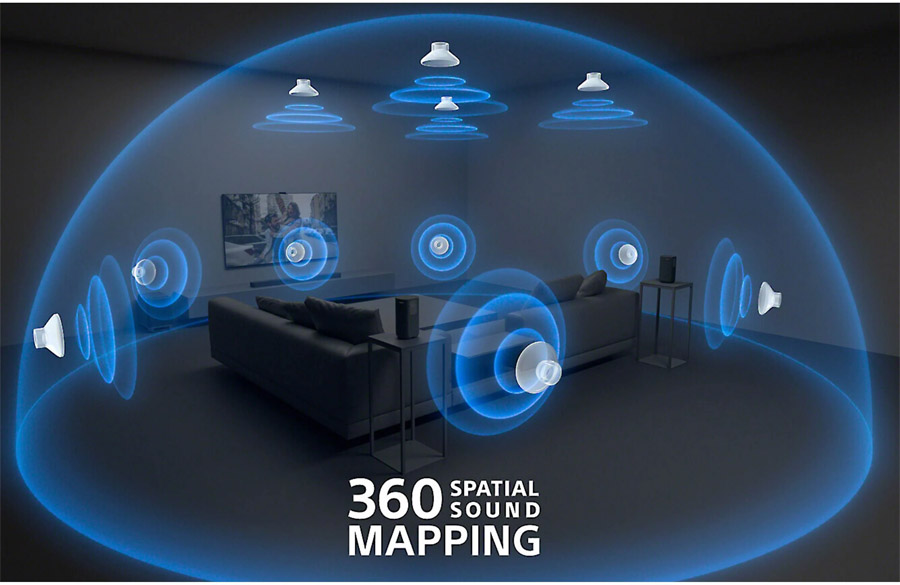
Speaking of speaker placement, the BRAVIA Theater Trio also has Sony’s 360 Spatial Sound Mapping (360 SSM) on board. This system compensates for imperfect speaker placement by creating phantom speaker channels all over the room in order to reproduce a more cohesive and expansive dome of sound.

BRAVIA-Theatre-Bar-9-360-Spatial-Sound-Mapping-900px
Sony 360 Spatial Sound Mapping can compensate for less than perfect speaker placement by generating virtual speaker channels where no physical speakers exist.

What’s The Catch?

At $2,199, Sony’s BRAVIA Theater Trio is significantly more expensive than Sony’s flagship soundbar, the BRAVIA Theater 9 ($1,198 at Amazon). And if you opt for the fully loaded system, with a pair of BRAVIA Theater Sub 9 subwoofers ($899 each) and BRAVIA Theater Rear 9 speakers ($748/pair), the list price of the full TRIO system gets pretty close to $5,000 (MSRP). At that price point, you might consider putting together a full home theater system with receiver and external speakers. You’ll be able to get better bang for your buck this way, though the set-up and wiring will be more complicated.

BRAVIA-Theater-Trio_with_Rear9_2 Sub9-900px
The Trio can be upgraded with rear channel speakers and up to two powered subwoofers. Shown here are the Trio with a pair of BRAVIA Theater Rear 9 speakers and two BRAVIA Theater Sub 9 subwoofers.

The Bottom Line

Apparently Sony likes to give its customers options. While soundbar-based systems offer simple set-up, the soundstage can be a bit narrow, simply due to the size of the bar. By offering an option to widen that stereo separation and keep a dedicated center channel for dialog reproduction, Sony is now giving buyers of extra large TVs and projection-based systems another potential solution. And it’s one we haven’t seen other companies match.

The Sony BRAVIA Theater Trio offers the wireless simplicity of a soundbar system with a hint at the performance of home theater separates. Its option to add not only rear speakers with up-firing height drivers but also up to two powered subwoofers gives buyers a clear upgrade path toward an audio system that can keep up with the visuals on a plus-sized TV screen. If you already own or are planning to purchase an extra large TV or home theater projection system, and the price point is within your budget, then the Sony BRAVIA Theater Trio is definitely worth a look and a listen.

Pricing & Availability

The Sony BRAVIA Theater Trio is available June 1, 2026 for $2,199.99 at authorized Sony dealers, with pre-orders being accepted now.

Advertisement

Source link

Continue Reading

Tech

I Played the New 007 James Bond Game. It’s Hitman With a Heart

Published

on

When a trailer popped up at last year’s Summer Game Fest for 007: First Light, fans breathed a sigh of relief when they saw that studio IO Interactive was behind it. Gamers thought that IOI’s beloved Hitman infiltration and assassination games would provide good groundwork for a game about the world’s most famous spy. And you know what? They were right — at least for the three hours of 007: First Light I got to play.

At an Art Deco-themed Los Angeles restaurant space, I tried out three chapters of the game, giving me a sense of what’s in store for prospective players curious about the first James Bond game to come out in 14 years. While the 1995 game GoldenEye was wildly popular, subsequent Bond games were far less successful in adapting the spy’s adventures to the medium. From the preview, 007: First Light looks like it could be a confident and inspired take on the James Bond franchise. We’ll know for sure when it launches on May 27.

Advertisement
An in-game screenshot of a crouching man preparing to use gadgets on a light fixture.

Bond’s handful of gadgets have varied uses depending on the situation.

IOI Interactive

A lot of that comes from how heavily 007: First Light draws on the Hitman gameplay it’s built on, to the point that it feels like a spy narrative wrapped around the games IO Interactive has already made. That’s not inherently a bad thing, but there were several moments where I felt like Bond was just another disguise that Hitman protagonist Agent 47 wore. Much of 007: First Light’s individuality will depend on the strength of its overarching narrative — not just to distinguish it from the story-light Hitman games, but also to live up to the globetrotting, high-society and high-octane adventures of the James Bond films and books.

And as a wholly new version of Bond, complete with a unique origin story, 007: First Light has a lot to prove. I’m not surprised, then, that the first of the three chapters I played began at the start of the game, with Bond as a Navy airman. That was followed by a peek at his training as an MI6 agent and finally a slice of the game after plot intrigue (and tragedy) kicks him into high gear, infiltrating a fancy gala.

What I played probably wasn’t representative of the whole game, and there are plot twists and turns I’ve been forbidden to write about. But I can say that it seems like it’ll be a unique 007 adventure that doesn’t retread the territory of any of the films. It offers something they don’t: In this game, Bond has close friends, and their impact on him changes the story. Perhaps he’ll grow into the womanizing lone wolf agent fans know so well, but at least in the early parts of 007: First Light, he’s more social — and human — than we’ve come to expect of the superspy. 

Advertisement
An in-game screenshot of a younger man visibly injured while wearing a flight suit.

IOI Interactive

How 007: First Light retells the James Bond story

As the game kicks off, we’re shown a young James Bond, portrayed by actor Patrick Gibson, as a Navy crewman on a routine mission who’s about to have a very bad day. En route to a training exercise near Iceland, his helicopter is shot down over open water. He barely manages to make it to shore. Bedraggled and cold, Bond — just a humble serviceman in a flight suit, for now — evades patrols of unknown gunmen and snags a radio to call for help. 

An MI6 agent responds, relaying instructions and pressganging the unarmed Bond into reconnaissance of what turns out to be one of the British intelligence agency’s secret research bases that’s been hijacked by a mystery mercenary outfit. Part tutorial and part introduction, the first mission shows the seeds of potential the young aircrewman has for skulduggery. He clocks key details to identify mercenaries, bluffs his way past gunmen and sneaks around to free imprisoned MI6 researchers, guiding them to safety during a hectic gunfight before finally blowing up the base.

Like any good Bond prologue, it’s followed by the story’s signature theme song, First Light, sung by Lana Del Rey.

The second segment I played was more freeform. After such a promising debut, Bond is inducted into MI6 agent training on the sun-dappled Mediterranean island of Malta, culminating in a mock infiltration obstacle course to test each prospective spy’s mettle. As Bond, I snuck in under the guise of instructors tracking my performance and fellow agent trainees cheering me on or taunting me with light banter as I made my way through. 

Advertisement
An in-game screenshot of an obstacle course-like arena with a man crouching behind boxes attempting to sneak around enemies.

IOI Interactive

Here’s where I learned the basics of 007: First Light’s infiltration system, which is very much like Hitman’s. I crept through tall grass and shadows, performing stealthy takedowns of guards as I worked toward the exit. I also got my first taste of the game’s simple but essential gadget system, using a watch to disable cameras and other electronics, then recharging it by snagging batteries from the occasional phone or car battery I came across. (Later, you can pick up chemicals to disorient and drug targets from a distance.) When I accidentally alerted a guard, Bond’s trusty fists — along with a decently deep fighting system featuring parries, dodges and throws — helped handle enemies. Guns will do the trick, too.

The third section was where things went sideways — and Bond starts to become 007.

007: First Light gives Bond relationships he doesn’t run from — for once

Sometime after presumably graduating training, Bond heads into a mission that goes awry and his whole team is suspended. Recuperating, he returns to the apartment in Kensington, London, that he shares with fellow 00 agents he’s grown close to. Going room to room, Bond muses over the silly little things that crop up when you share a home and a life with close friends: restaurant menus and little notes that speak to human connections. It felt like the boldest departure 007: First Light makes. The young, orphaned Bond has his own little family.

And as he realizes after finding a fake suicide note in his room, he has enemies. Bond fights off several assassins and dashes across rooftops while trying to evade a sniper, using his gadget watch to distract them and buy time. He tracks the last one to a gala thrown by a tech mogul — which, naturally, he must infiltrate.

Advertisement
An in-game screenshot of overhearing a lady's phone conversation while at a gala event.

IOI Interactive

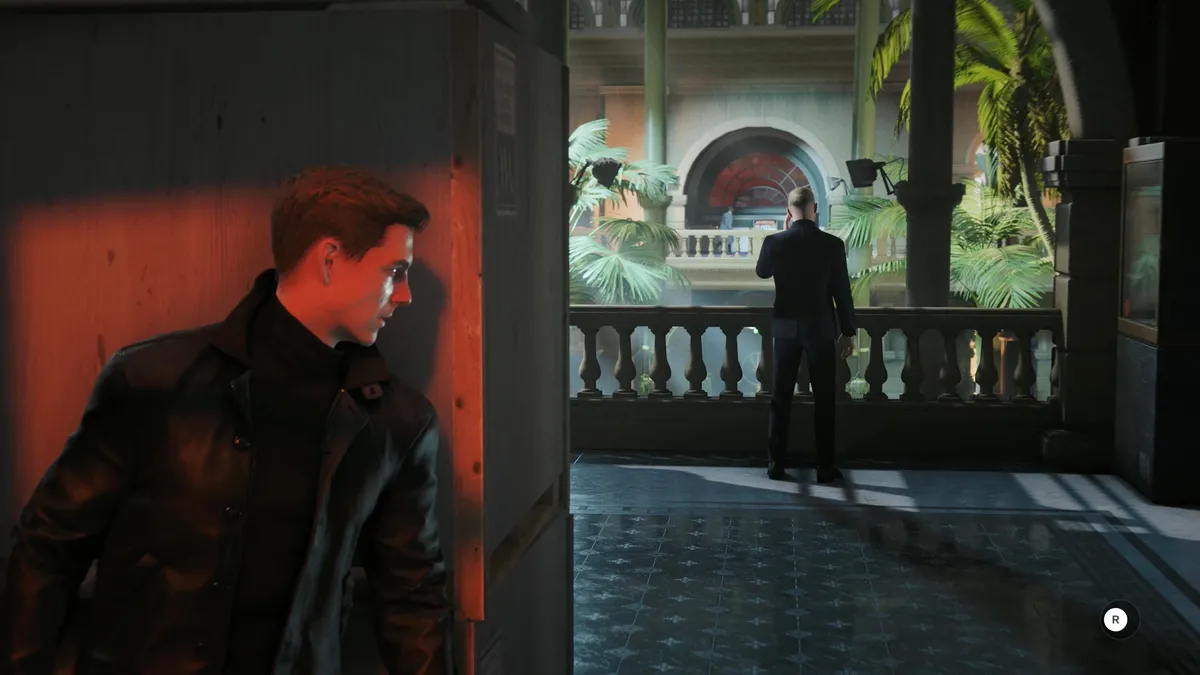
Hitman fans know what comes next, and the mission plays out much like it would in those games. Bond pickpockets a ticket, then must finagle a way upstairs to track the last assassin. How you do it is up to you: Do you pretend to be a photojournalist showing up for an interview? Bluff your way past security guards? Steal a security pass? This part of the preview — finding a way through glitzy gala attendees and fooling or fighting my way past layers of security — felt like the perfect blend of Hitman and James Bond.

Less so the subsequent boss fight with the final assassin, since Bond’s gadget vision outlines enemies through walls, draining tension as I snuck around to ambush my foe again and again until a climactic finish. I then ran through some tedious back rooms before emerging back into the gala to find Agent Roth, a beautiful and mysterious woman who had apparently appeared earlier in the game, setting her up as a classic Bond girl-style femme fatale. Before long, both she and Bond are locked up by the game’s antagonists (whom, again, I can’t reveal).

An in-game screenshot of a gunfight between Bond and an armed guard shooting at him.

IOI Interactive

After narrowly escaping death and sneaking around for a while, Bond runs a climactic gauntlet through a video art gallery — a long hall where screens glow a moody red as dozens of armed and armored gunmen file in. Here we go: peak Bond moment. While the previous encounters felt like quizzes on how to use your full array of guns, grappling tools and gadgets, this was the final exam. I hacked an electronic art installation to make a smokescreen, tackled guards, stunned foes and shot them dead. Exiting under gunfire from yet more enemies, I stole a garbage truck and careened through the streets as the 007 theme played. Fin.

007: First Light is promising, though not perfect, with issues such as misaligned footstep and voice audio pointing me in the wrong direction as enemies snuck up on me — something crucial in a stealth game that I hope gets fixed before release. Hitman fans may be split on how much of their favorite gameplay is repackaged for Bond’s adventure — a great tonal match that could still feel too familiar. Those new to IO Interactive’s games will likely enjoy it.

Advertisement

But despite how polished the stealth gameplay was, a lot hinges on the plot IO Interactive is building out, one that marks a novel departure from other Bond narratives by telling the story before the spy became super, yet one that’ll be tricky to get right. We’ll know soon enough when 007: First Light comes out May 27.

Source link

Advertisement
Continue Reading

Tech

Cork employee experience firm Poppulo bags France’s Sociabble

Published

on

Poppulo’s AI platform aims to help organisations deliver relevant and measurable employee communication.

Cork- and Colorado-based software company Poppulo has acquired French employee engagement platform Sociabble for an undisclosed value.

Poppulo’s AI platform aims to help organisations deliver relevant, measurable and governed employee communication.

The addition of Sociabble into its portfolio, the company said, would add an innovative social intranet, enhanced mobile and front-line support, and solutions for employee advocacy and recognition.

Advertisement

The combined platform will strengthen Poppulo’s AI capabilities by helping communicators improve targeting and optimise content performance, the company said.

“Organisations need clearer ways to connect communication to action,” said Ruth Fornell, the CEO of Poppulo.

“With Sociabble, we’re delivering a unified platform that works with the rest of their work tech, so leaders can reach every employee, understand what resonates and drive meaningful outcomes across the business.”

Founded as Newsweaver in 1996, Poppulo merged with US outfit Four Winds Interactive in 2021. Its clientele comprises more than 10,000 organisations, including more than 40 of the Fortune 100 companies.
Advertisement

The company said that internal communications and human resources departments are struggling to keep up with the pace of change, with the result that “AI is often layered onto disconnected processes without the insight or accountability needed to drive real impact”, and cited research suggests that only 20pc of employees are actively engaged.

The acquisition would help Poppulo improve communication and engagement across the complete digital employee experience and simplify work, insights and automation of internal communication workflows, it said.

“Together with Poppulo, we bring a unique value proposition to the employee experience market, with the ability to reach and engage more than 50m employees worldwide,” said Jean-Louis Bénard, the CEO of Sociabble.

“This scale gives us the strength to continue investing ambitiously in AI and innovation, two areas deeply rooted in the DNA of both companies.”

Advertisement

Don’t miss out on the knowledge you need to succeed. Sign up for the Daily Brief, Silicon Republic’s digest of need-to-know sci-tech news.

Source link

Advertisement
Continue Reading

Tech

Tech CEOs Are Apparently Suffering From AI Psychosis

Published

on

An anonymous reader quotes a report from TechCrunch: There is a certain wildness in the tech industry these days that both mimics previous eras of large changes, like cloud computing (runaway costs in the early days), and is like nothing we’ve ever seen before (record revenues accompanied by mass layoffs). One possible explanation: tech executives, especially CEOs, are collectively suffering from delusions of AI grandeur. And at least one tech CEO has said as much out loud: Box founder Aaron Levie.

“CEOs are uniquely prone to AI psychosis because they’re sufficiently distant from the last mile of work that still has to happen to generate most value with AI,” Levie wrote on X. CEOs “play with AI,” develop a prototype, or generate a contract, to use Levie’s examples, and then make the leap to believing agents can do the work. But these top-level executives aren’t the people who have to review code, discover bugs, and identify calls to hallucinated libraries before software is deployed. They aren’t responsible for training AI models on a company’s idiosyncratic contract terms, nor do they have to spend days combing through contracts to find sneaky terms, as Levie indicates.

In other words, Levie’s theory posits, CEOs don’t really understand processes well enough to know what really can and can’t be automated. But that lack of knowledge doesn’t stop them from acting on their beliefs. […] So what are CEOs to do instead? Levie advises CEOs to use AI “a ton” to really see what it can and can’t do, “and come out the other side with an appreciation for both the upside and the real work.”
Source link

Advertisement
Continue Reading

Trending

Copyright © 2025