

Business
Retired Officer Suggests Nancy Guthrie May Have Known Her Abductor in Disappearance


TUCSON, Ariz. — A retired police officer analyzing the disappearance of Nancy Guthrie has raised questions about whether the 84-year-old woman may have known her alleged kidnapper, pointing to what he describes as chaotic ransom communications and a lack of sustained financial demands more than four months after she vanished from her Arizona home.
Charles Brewer, a former law enforcement officer who has closely followed the case on his YouTube channel, shared his theory in a recent video, suggesting investigators should consider motives beyond financial gain tied to her daughter Savannah Guthrie’s public profile. The comments come as the investigation by the Pima County Sheriff’s Department and the FBI continues with no arrests or confirmed suspects.
Nancy Guthrie was reported missing on February 1, 2026, after failing to appear for a scheduled online church service. Authorities believe she was abducted from her Catalina Foothills residence the night before. Investigators discovered signs of forced entry, blood evidence believed to belong to her, and missing security equipment. Surveillance footage showed a masked individual tampering with the doorbell camera shortly before her disappearance.
Brewer’s Alternative Theory
In his video analysis, Brewer questioned the assumption that the abduction was primarily motivated by money due to Savannah Guthrie’s prominence as co-anchor of NBC’s “Today” show. He highlighted the absence of structured ransom negotiations and what he called inconsistent communications from those claiming responsibility.
“If this truly was a celebrity-targeted kidnapping connected directly to Savannah Guthrie, why has there been no meaningful ransom communication?” Brewer asked, according to reports on his analysis. “Why leave over a million dollars untouched? Why create ransom-style messages that reportedly make little sense? Why no sustained negotiations or proof of life, no sophisticated extortion strategy?”
Brewer described the behavior as “chaotic, disconnected, even emotionally driven, or possibly connected to something far more personal than the public originally believed.” He emphasized that he was not accusing any specific individuals, including family members, but urged investigators to explore potential personal connections within Nancy Guthrie’s immediate circle.
“Listen, if the public, including myself, was comfortable enough early on in discussing whether this crime was connected to Savannah Guthrie’s fame, her wealth, and public visibility, then it is equally reasonable to ask whether this case may somehow connect to someone else inside Nancy’s immediate world,” Brewer said. “Not necessarily family directly, but maybe somebody connected to them like a friend, an associate, maybe a business relationship, or what about a debt?”
Official Investigation Status
Pima County Sheriff Chris Nanos has repeatedly stated that the Guthrie family has been fully cooperative and cleared of any involvement. In a February press conference, Nanos said, “The Guthrie family, to include all siblings and spouses, has been cleared as possible suspects. The family has been nothing but cooperative and gracious and are victims in this case. To suggest otherwise is not only wrong, it is cruel.”
The investigation remains active, with thousands of tips received and analyzed. DNA evidence recovered from the scene has been sent to the FBI laboratory in Quantico for testing. Authorities have released images of the masked suspect and continue to search desert areas around Tucson for additional clues.
Several alleged ransom notes have surfaced, including one sent to media outlets demanding cryptocurrency. However, their authenticity has not been publicly confirmed by investigators. One note reportedly contained an apology mentioning Nancy Guthrie’s heart condition, claiming she had “gone to be with God,” though officials have not verified its legitimacy.
Family and Public Response
Savannah Guthrie temporarily stepped away from her broadcasting duties earlier this year to focus on the search for her mother. She has made emotional public appeals for information while expressing gratitude for the support received. The family has reportedly increased reward offers and hired private investigators to supplement official efforts.
The case has drawn intense national attention due to Savannah Guthrie’s high-profile role. The quiet Catalina Foothills neighborhood has experienced disruption from amateur investigators and media presence, prompting local complaints and parking restrictions near the family home.
Recent developments, including unexplained arrangements of rocks and cacti near the property, have fueled online speculation but have not been officially linked to the investigation. Officials continue to urge the public to avoid interfering with active search areas or spreading unverified theories.
Challenges in Prolonged Missing Person Cases
The Nancy Guthrie case illustrates the difficulties faced in high-profile disappearances involving elderly victims. After more than 100 days, the likelihood of certain outcomes decreases, yet authorities maintain hope that new leads or forensic breakthroughs could provide answers.
Brewer’s commentary reflects growing public discussion about alternative motives in cases where financial extortion patterns do not fully align with observed behavior. Similar analyses have emerged in other prominent missing person investigations, where personal connections or emotional factors sometimes prove relevant.
The Pima County Sheriff’s Department has reaffirmed its commitment to a thorough investigation. “We continue to pursue every credible lead,” officials said in recent statements. Federal authorities remain involved, particularly in analyzing digital evidence and potential interstate connections.
Broader Context and Community Impact
Nancy Guthrie was known locally as an active community member interested in neighborhood affairs and desert wildlife. Her disappearance has affected not only her immediate family but also the tight-knit Catalina Foothills area, where residents have organized volunteer searches and expressed concern over safety.
The case has highlighted vulnerabilities faced by elderly individuals living alone and the challenges of balancing public attention with investigative integrity. Media coverage has been extensive, with Savannah Guthrie’s platform bringing visibility that has generated both helpful tips and unwanted speculation.
As the investigation enters its fifth month, officials continue processing evidence and following leads. The DNA analysis from Quantico remains a key focal point, with results potentially providing new direction. Until then, the family and community await developments in a case that has captured national interest while remaining deeply personal for those closest to Nancy Guthrie.
Brewer concluded his analysis by calling for open-mindedness in considering all possible scenarios. While his theory introduces new questions, investigators have not publicly confirmed any shift in focus away from the initial abduction classification.
The resolution of the Nancy Guthrie case may ultimately depend on advances in forensic technology, persistent tip lines, or a breakthrough in understanding the circumstances surrounding her disappearance from her Tucson-area home on that January night. For now, the search continues with determination from both official agencies and the family determined to find answers.


Growing firms are under pressure to improve digital services more quickly, but without adding operational risk. Continuous deployment is becoming a business priority, as it gives teams a more reliable way to release software updates.
Software releases were once planned around fixed windows, internal calendars, and long checklists. A new feature, bug fix, pricing change, or security patch could wait for the next planned release window. For many growing businesses, that pace no longer fits the way customers, teams, and digital products operate.
More businesses now depend on software, even when they do not describe themselves as technology companies. Retailers, for instance, rely on ecommerce platforms. Logistics firms rely on tracking tools. Professional services firms use client portals. Hospitality businesses depend on booking and payment systems. When those systems fall behind, the impact is felt by customers as well as internal teams.
There is also a wider productivity question. The UK government’s SME Digital Adoption Taskforce has pointed to evidence that firm-level productivity improvements can reach 7 to 18% per technology adopted, depending on the product. Software delivery is part of that picture. As firms digitise more of their operations, they need a safer and more reliable way to release improvements.
Software delivery has become a business issue
In practical terms, continuous deployment allows the most recently developed software changes to move into production automatically after required checks are passed. Rather than bundling many changes into a large release, teams can move smaller updates into production more frequently.
For business owners and managers, the benefit of continuous development is not automation for its own sake. The practical value is a clearer route from an idea, fix, or compliance requirement to a live product. A checkout improvement, customer portal update, or urgent bug fix does not need to wait behind a large manual release cycle.
This becomes more important as additional teams, systems, and customer groups are involved. Early software habits often rely on personal knowledge, informal checks, and a few people knowing how everything works. That can be manageable in a small team, but it becomes less dependable when more products, integrations, departments, and stakeholders are in the picture.
Faster development needs stronger release discipline
AI is changing the pace of software work. The 2025 DORA report found that AI adoption among software development professionals has reached 90%, with more than 80% saying AI has increased their productivity. AI-assisted coding is helping firms move faster, but it also increases the need for clear delivery controls.
Faster coding does not automatically mean faster or safer release. Many developers still lose time to organisational inefficiencies, fragmented workflows, and difficulty finding information.
This is where the release process starts to matter beyond the technical team. It gives the business a repeatable workflow for checking, releasing, and monitoring software changes. Automated tests, approval rules, deployment records, and rollback plans help teams avoid turning every release into a special case.
Customers expect faster fixes
Customers rarely think about deployment processes, but they notice the results. Issues such as a failed payment, broken forms, slow account pages, or delayed booking updates can quickly affect trust. In competitive markets, customers may not give a growing firm much time to explain why a fix is still waiting for release.
Continuous deployment helps businesses release smaller improvements more often. That can make it easier to respond to feedback, correct defects, and test product changes without turning each update into a major event. Smaller releases can also make problems easier to trace, since fewer changes are introduced at once.
This is especially useful for firms that run customer-facing digital services. A business may not need to deploy every day, but it does need the capability to update software without unnecessary delay when customers or operations require it.
Risk management is part of the case
Faster releases only help if the business can still see, test, and reverse changes when needed. For many managers, “continuous deployment” may sound like code moving into live systems too easily. In practice, a mature deployment process should make software changes easier to track.
Good deployment practices define what checks must pass, who owns a service, how issues are monitored and what happens if a release causes a problem. This gives finance, operations, support, and compliance teams a clearer view of software change. It also reduces reliance on undocumented manual steps.
The same logic applies to security. This approach is not a substitute for secure development, access control, or vulnerability management. It can, however, help a business release urgent fixes more reliably once a problem has been identified. For firms handling customer data, payments, or partner integrations, that responsiveness has commercial value.
Growing firms need repeatable systems
Many growing firms reach a point where early processes become too fragile for the size of the business. Software release is one of those areas. A process that once felt flexible can begin to slow down product improvements, delay fixes, and create uncertainty across teams.
A mature release process gives businesses a more consistent way to manage software change. It supports faster updates, but its deeper value is repeatability. Teams know which checks apply, managers have better visibility, and customers receive improvements in smaller, safer increments.
The shift does not need to happen all at once. Firms can start by improving automated testing, cleaning up release documentation, strengthening monitoring, and deciding which changes still require human review. From there, they can move towards more frequent deployment at a pace that suits the business.
For growing firms, software delivery is now closely tied to customer experience, productivity, and operational resilience. Continuous deployment is becoming a business priority because it helps companies keep digital services moving without relying on improvised release habits.


The Trend Investing group includes qualified financial personnel with a Graduate Diploma in Applied Finance and Investment and well over 20 years of professional experience in financial markets. They search the globe for great investments with a focus on trending and emerging themes. The current focus is on electric vehicles, the EV metals supply chain, stationary energy storage and AI.They lead the investing group of the same brand name, Trend Investing. Features of the service include: Access to the Trend Investing portfolio, 7 monthly news updates, a monthly macro trends update, stock watchlist, CEO interviews, and direct access to the community and group leaders in chat.
Analyst’s Disclosure: I/we have a beneficial long position in the shares of SYRAH RESOURCES [ASX:SYR], ZENTEK LTD [TSXV:ZEN] either through stock ownership, options, or other derivatives. I wrote this article myself, and it expresses my own opinions. I am not receiving compensation for it (other than from Seeking Alpha). I have no business relationship with any company whose stock is mentioned in this article.
This article is for ‘information purposes only’ and should not be considered as any type of advice or recommendation. Readers should “Do Your Own Research” (“DYOR”) and all decisions are your own. See also Seeking Alpha Terms of Use of which all site users have agreed to follow. https://about.seekingalpha.com/terms
Seeking Alpha’s Disclosure: Past performance is no guarantee of future results. No recommendation or advice is being given as to whether any investment is suitable for a particular investor. Any views or opinions expressed above may not reflect those of Seeking Alpha as a whole. Seeking Alpha is not a licensed securities dealer, broker or US investment adviser or investment bank. Our analysts are third party authors that include both professional investors and individual investors who may not be licensed or certified by any institute or regulatory body.

The longtime Google employee was charged in New York for allegedly breaking insider trading laws.

Futu Holdings reports $418 million in share buybacks to date


New Zealand forecasts narrower budget deficit for 2025/26

Diamond Hill Capital Management, Inc. is a wholly owned subsidiary of Diamond Hill Investment Group, Inc. Diamond Hill Investment Group is a publicly traded company, and its shares trade on the NASDAQ (Ticker: DHIL). Note: This account is not managed or monitored by Diamond Hill Capital Management, and any messages sent via Seeking Alpha will not receive a response. For inquiries or communication, please use Diamond Hill Capital Management’s official channels.
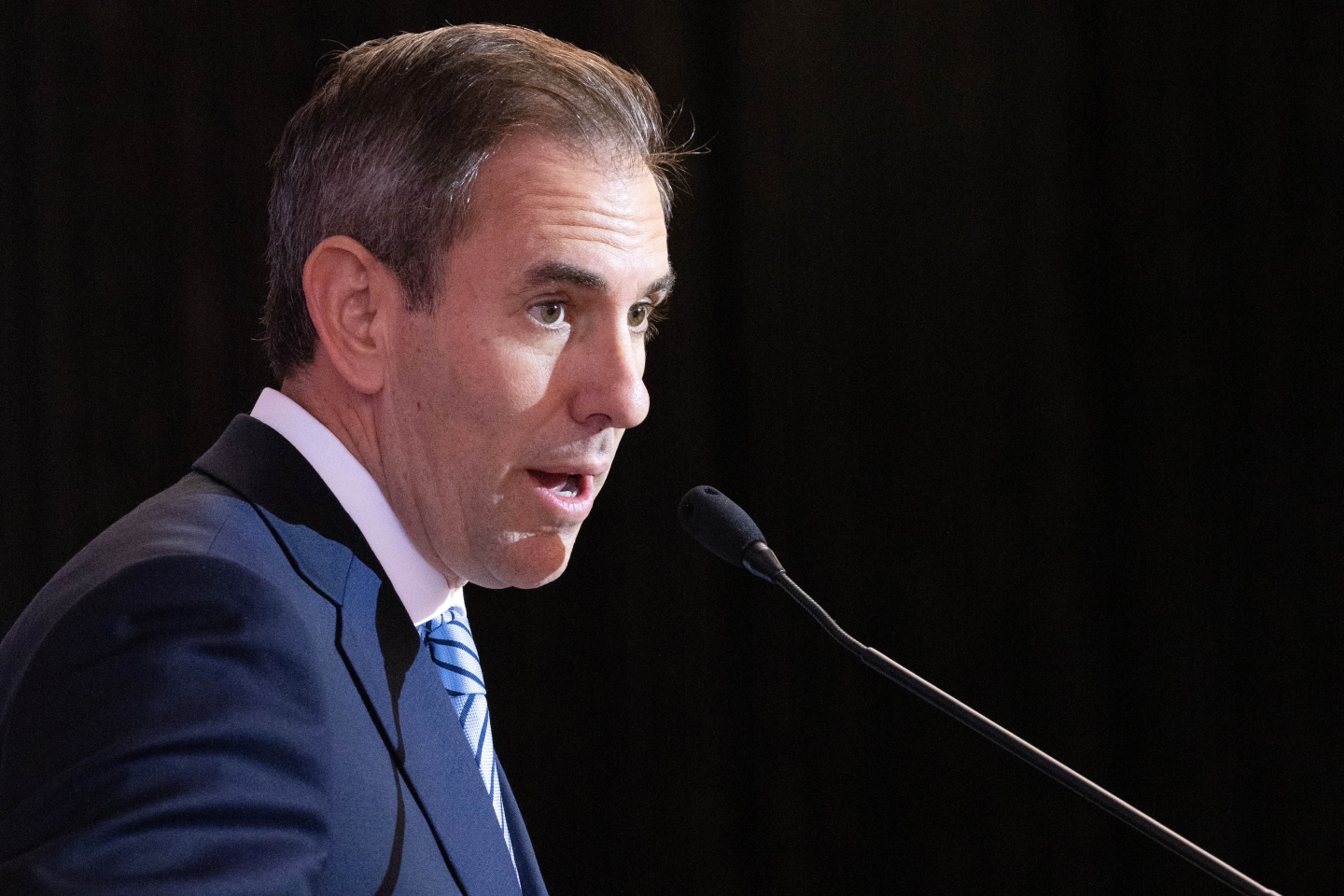
Treasurer Jim Chalmers introduced the landmark bill to parliament that includes changes to capital gains tax and negative gearing, as well as a $250-a-year rebate for workers.

The federal government is suing global industrial science company 3M for $2 billion over the costs of past and ongoing damage to defence sites, including RAAF Pearce, caused by PFAS chemicals.
Business
Stock Market Holiday 2026: Are NSE, BSE closed today for Bakri Id? Check market closing dates list

A total of 16 stock market holidays have been scheduled for 2026, out of which eight have already passed. After the Bakri Id holiday, trading will remain suspended on seven more occasions over the remaining nine months of the year.
Following today’s closure, the next market holiday will fall on Friday, June 26, for Muharram. In the second half of the year, markets will also remain closed on September 14 for Ganesh Chaturthi, October 2 for Gandhi Jayanti, October 20 for Dussehra, November 10 for Diwali Balipratipada, November 24 for Guru Nanak Jayanti and December 25 for Christmas, which will be the final market holiday of 2026.
Meanwhile, Multi Commodity Exchange of India will remain closed during the morning session on May 28 but will resume trading in the evening session. According to MCX’s annual trading calendar, the exchange has 16 trading holidays in 2026, with either partial or full-day closures.
The National Commodity & Derivatives Exchange Limited will remain shut for both trading sessions on the same day.

In 2026, four key holidays fall on weekends and therefore will not lead to additional market closures. These include Mahashivratri on February 15 and Eid-Ul-Fitr on March 21, both of which have already passed, along with Independence Day on August 15 and Diwali Laxmi Pujan on November 8.
Diwali Laxmi Pujan will fall on a Sunday this year, though exchanges will conduct the customary Muhurat Trading session on November 8. The timings for the special one-hour session will be announced closer to the date. Independence Day, meanwhile, falls on a Saturday.(Disclaimer: Recommendations, suggestions, views and opinions given by the experts are their own. These do not represent the views of The Economic Times)


South Korea holds rates, alert to inflation risks

Europe’s leading Bitcoin conference expands its cultural reach

10 Forgotten Fantasy Movies Better Than Most Blockbusters You’ve Already Seen

What Makes a Hoodie Look High-End


-

 Crypto World6 days ago
Blockchain.com files with SEC for U.S. IPO
-

 Fashion5 days ago
Holiday Weekend Open Thread – Corporette.com
-

 Crypto World6 days ago
Bitcoin Accumulation Weakens as BTC Realized Losses Hit $600M
-

 Tech3 days ago
Microsoft’s quiet Claude Code retreat and the real cost of enterprise AI
-

 Business6 days ago
Dell Technologies DELL Stock Surges 15% on AI Server Momentum and Analyst Upgrades in 2026
-

 Crypto World5 days ago
Robinhood crypto COO Tanya Denisova exits
-

 Business3 days ago
NYT Strands Answers May 24 2026 Revealed for Puzzle No. 812 Theme Summer Essentials
-

 Politics5 days ago
Makerfield: a tale of two social-media histories
-

 Crypto World6 days ago
Space X IPO Is ‘Bad News’ for Tech Stocks: But What About Bitcoin?
-

 Business6 days ago
Trump Invests $1M-$5M in Kura Sushi USA Chain With 27 California Locations
-

 Crypto World6 days ago
MicroStrategy’s Saylor Says Miners No Longer Set Bitcoin Price, Another Force Has Taken Over
-

 Tech6 days ago
WhatsApp ads could make Irish debut after discussions with DPC
-
Tech15 hours ago
The Samsung pay deal is the moment Korean unions changed register
-
 NewsBeat7 days ago
Charity run by Reform leader Malcolm Offord accused of ‘law breaking’ over Scottish registration
-
 Tech6 days ago
A 0.12% parameter add-on gives AI agents the working memory RAG can’t
-

 Crypto World6 days ago
AI infrastructure race heats up as IREN pitches full-stack strategy, WhiteFiber lands $160M deal
-
 Crypto World3 days ago
Nvidia (NVDA) CEO Calls on Super Micro to Strengthen Export Controls Amid Smuggling Probe
-

 Tech6 days ago
You Can Now Add ChatGPT To PowerPoint
-

 Tech3 days ago
Westone Audio and Etymotic Acquired by Fidelity Collective in Major IEM Market Move
-

 Sports6 days ago
2026 CJ Cup Byron Nelson leaderboard: Brooks Koepka finds putting stroke in Round 1
You must be logged in to post a comment Login