

Politics
Ofgem’s energy price cap a ‘total con’, says Richard Burgon

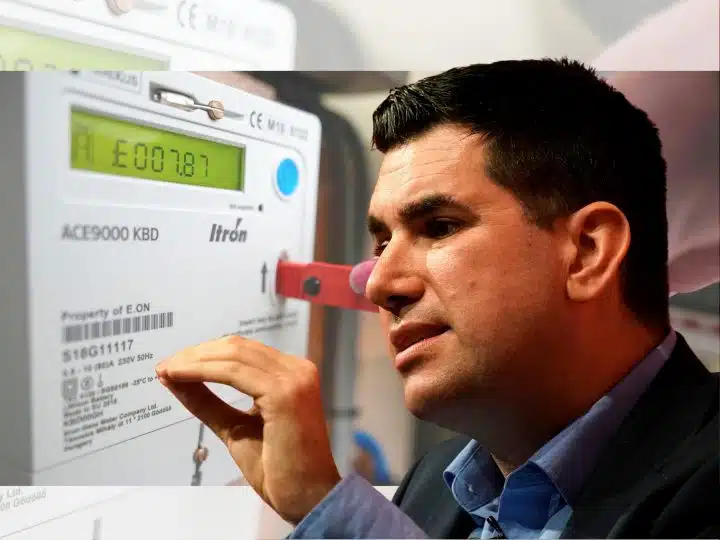

Labour MP Richard Burgon has spoken out against Ofgem’s price cap rise, labelling it a “total con”:
Ofgem’s so-called energy price cap is a total con. Bills are going up again
We need a real price cap that protects ordinary people, paid for through the profits of energy giants.
We need to replace expensive gas with cheaper renewables. And energy back in public ownership!
— Richard Burgon MP (@RichardBurgon) May 27, 2026
Ofgem energy price cap
Reporting on the latest Ofgem price hike, the Canary’s Rose Cocker explained:
On 27 May energy regulator Ofgem announced that it will raise the energy price cap for 1 July to 30 September 2026 by a massive 13%. That’s the sharpest hike in household energy prices of any summer in the past four years.
Bill-payers under the cap will now pay the equivalent of £1,862 a year from 1 July to 30 September for gas and electricity. That’s up from the current equivalent of £1,641 a year – an increase of around £18 a month, based on typical use.
Cocker added that Ofgem is blaming Trump and Israel’s war on Iran for the price increase. It should be noted, however, that while most of us are facing price increases, Shell just saw “first-quarter profits surge by 115%”. It’s a similar phenomenon to supermarkets experiencing record profits as the rest of us suffer record prices.
As Burgon notes, public ownership would improve things. Instead of losing money to shareholder profits, we could re-invest money into the network. We could also stabilise prices whenever an event like the current oil shock occurs.
On this topic, Cat Hobbs of We Own It said:
It is also time to rethink the private ownership of our energy grid. Across the sector, energy companies made £23.1 billion in profits last year, at a time when household energy bills were going up, and families were being squeezed on all fronts. Reinvesting profits that are currently being paid out to shareholders into cutting bills could go a long way to cut our energy bills and save people from falling further into fuel poverty.
Burnham to the rescue?
Many are hoping that Andy Burnham is the man to renationalise Britain’s utilities. The problem is that Burnham’s statements on the matter have been wishy-washy and conflicting:
Andy Burnham says we could have a "localised public control option" for Thames Water
What does that mean? Who is in charge? Where do the profits go?
We need nothing less than permanent PUBLIC OWNERSHIP of Thames Water with households, workers and anti sewage groups on the board pic.twitter.com/0s1OT1mMzz — Cat Hobbs (@CatHobbs) May 23, 2026
As we reported, Burnham has not committed to ‘renationalising’ anything as far as we’ve seen. Instead, he’s talked about putting utilities under “stronger public control”. Burnham also said:
He has also spoken of stronger public control over utility companies. “I use that phrase advisedly. People then shorthand it as nationalisation; it’s not the same thing,” he said, pointing to Greater Manchester’s bus services, which are run by private operators.
When we suggested this means Burnham has no plans to renationalise, he responded as follows:
I’m not doing anything of the kind. Just got to be realistic about how quickly it can be done.
— Andy Burnham (@AndyBurnhamGM) May 24, 2026
How quickly ‘what’ can be done, we don’t know, because he’s still not explained what he has in mind.
Reading between the lines, he seems to be suggesting that ‘stronger public control’ would be a stepping stone to full-on re-nationalisation? We don’t know, Andy — sounds like another centrist half-measure to us!
Hot air
Should Burnham come forwards with a clear plan for renationalisation, we’ll be sure to update you. Until then, we need to keep the pressure up. And this shouldn’t be difficult, because the public is massively in favour of nationalisation:

It’s almost like your average Briton doesn’t like being ripped off by private companies.
Featured image via Christopher Furlong / Getty Images
By Willem Moore



The morning cup of coffee has an impact that most consumers are unaware of. A real impact, in terms of carbon and water. New forms of stimulants are also appearing on the shelves and at the checkout in the UK, from caffeine pouches to concentrated shots, and they raise a legitimate question. The figures associated with a cup of coffee are higher than marketing tends to suggest. So how does coffee actually compare to small-format alternatives, per serving, by the kettle?
The hidden weight of your morning brew
Most of coffee’s environmental cost is paid before the beans leave the farm. On the farm, not in the cup. Between 75% and 91% of the total carbon footprint of a cup is generated at the cultivation and on-farm processing stage, led by fertiliser use, land use change and wet-processing emissions, according to Terrascope and CDP.
Deforestation in the coffee-producing regions of Brazil, Vietnam and Colombia accounts for around two million hectares cleared for coffee plantations between 2001 and 2015. Whilst this area is smaller than that devoted to cattle farming, it nevertheless represents a valuable resource for the communities living in coffee-growing regions. As for water consumption, the figures per cup are higher than most consumers imagine.
A growing alternative scene
Small-format stimulants have become noticeably more mainstream over the last few years. Caffeine pouches, concentrated ready-to-drink shots and cold brew on dose are now stocked alongside conventional variety UK retailers. WH Smith recently secured a national listing for one such brand, according to The Grocer. Use is climbing.
The category is still small in absolute terms, amounting to tens of millions of pounds rather than billions. Scale will come later. What matters is what the format does to the footprint per dose when a portion of demand shifts away from brewed cups.
What life-cycle analyses actually show
Available figures point in a consistent direction. One caveat applies: there is no published life-cycle study that makes a head-to-head dose-level comparison between brewed coffee and caffeine pouches, so the differences below are directional rather than exact.
Carbon and water per cup
The headline numbers are useful as a baseline:
- Black coffee: about 0.258 kilograms of carbon dioxide equivalent per cup
- Coffee with milk: about 0.844 kilograms per cup, with dairy carrying most of the difference
- Tea: about 34 litres of virtual water per cup
- Coffee: about 140 litres of virtual water per cup
Same direction, every measure. Most of coffee’s load sits in the bean itself and the dairy that goes with it, not in the brewing.
Mass per dose
Small-format stimulants carry less mass per dose, with a single pouch containing a fraction of a gram of active material against the seven grams of roasted bean that go into a brewed cup. That gap drives lower transport energy, less packaging per serving and a smaller land and water footprint for the same caffeine delivered.
None of this makes one format good and the other bad. The unit of analysis is what matters. Per kilogram of beans is one question. Per dose of caffeine, quite another. Consumer choices live at the dose level.
Coffee isn’t the villain – but it is resource-heavy
A morning cup of coffee is one of the better small pleasures in modern life, and there is no need to frame it as something to apologise for. The figures describe a resource-intensive product, not failing morals. Coffee is, after all, a tropical crop grown by people other than those who drink it.
Pressure is mounting from the other side too. Rising temperatures and erratic rainfall are projected to shrink the land suitable for coffee growing by 48% to 97% in key regions by 2050.
Taken together, the numbers suggest that complementation can be good, rather than replacement. Someone who keeps the home morning ritual and reaches for a pouch during a long commute is not abandoning coffee but spreading the load. That is a different decision to giving up the cup altogether, and one most readers can make without changing much else about their day.
What the choice means at scale
Around 98 million cups of coffee are drunk across the UK each day, according to the British Coffee Association. A figure that large means small individual choices compound into national-scale outcomes. Change one cup in twenty into a lower-footprint format and the country shifts roughly five million cups a day onto a lighter ledger.
This is not an argument directed at any particular brand or product. The important thing is to understand the true cost per dose across a population. Format matters. The data is now reliable enough for consumers, retailers and policymakers to do these calculations themselves. The result is more interesting than what the marketing suggests. It is worth doing the maths.
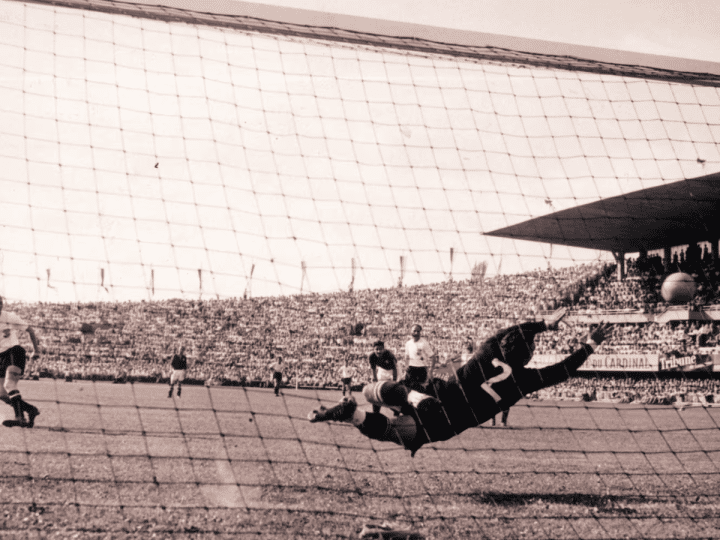

Hat-tricks are among the most celebrated feats in football, and since its inception in 1930, the World Cup has produced some truly remarkable examples. The tournament has seen a range of record-breaking hat-tricks, from fastest to youngest and oldest scorers.
Young legends and veterans
The earliest hat-trick in a World Cup match, in terms of game time, was scored by Austria’s Erich Probst in 1954, who netted three goals in 24 minutes against Czechoslovakia.
Meanwhile, the fastest hat-trick in terms of time between goals can be attributed to Hungary’s László Kiss. During the 1982 World Cup, hosted by Spain, Kiss scored three goals against El Salvador in 7 minutes and 42 seconds.
Some hat-tricks stand out not for speed, but for the age of the players. Brazilian Pelé holds the record as the youngest player to score a World Cup hat-trick, netting three goals against France in the 1958 semi-final when he was just 17 years-old.
At the opposite end of the spectrum, Portuguese forward Cristiano Ronaldo became one of the oldest players to achieve a World Cup hat-trick when he scored three goals in a thrilling 3–3 draw against Spain during the 2018 World Cup in Russia.
The hat-tricks that fell short
While hat-tricks often propel teams to victory, World Cup history shows that individual brilliance does not always secure a win.
- In 1938, Poland’s Ernst Wilimowski scored four goals against Brazil, yet Poland lost 6–5.
- In 1954, Switzerland’s hat-trick advantage could not prevent a 7–5 loss to Austria.
- During the 1986 World Cup, the Soviet Union suffered a 4–3 defeat to Belgium despite a hat-trick from one of their forwards.
- Most recently, in the 2022 World Cup final, Kylian Mbappé scored a hat-trick for France against Argentina, but France ultimately lost the title on penalties after a 3–3 draw.
These examples illustrate that even star performances don’t necessarily translate into team success.
Why hat-tricks matter
World Cup hat-tricks are a testament to skill, composure, and timing. Whether breaking age records, setting speed records, or thrilling fans with late goals, these moments endure in football history. From Pelé’s youthful brilliance to Mbappé’s 2022 heroics, they remind us why the World Cup remains the ultimate stage for unforgettable performances.
Featured image via FIFA
By Alaa Shamali
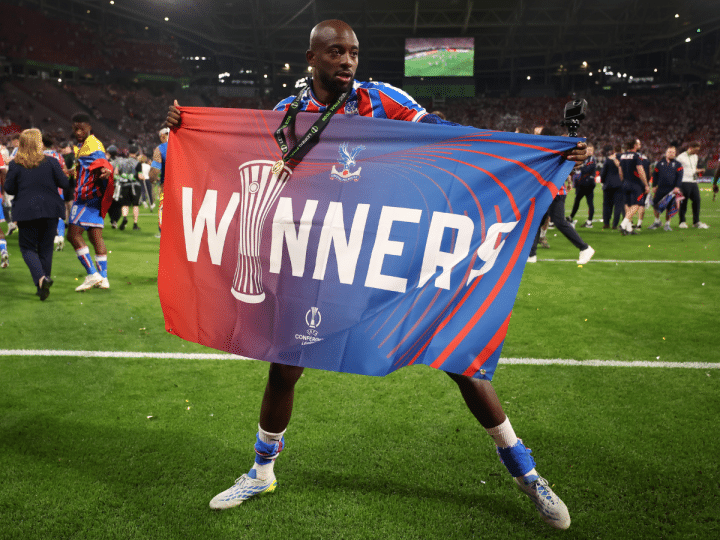

Oliver Glasner’s perfect farewell and Jean-Philippe Mateta’s decisive strike sealed a historic win in Leipzig, giving Crystal Palace their first European trophy after a whirlwind season. The victory capped a year that saw FA Cup glory, a Community Shield triumph, and a dramatic climb from uncertainty to celebration.
Crystal Palace storm to victory
A single goal decided a cagey final, with Mateta converting a rebound after Adam Wharton’s long range effort rattled the Rayo goalkeeper. Chances were scarce before the break, Tyrick Mitchell missing a gilt-edged header, while Rayo controlled possession but failed to create anything dangerous against Dean Henderson.
Palace fans held their breath as the second half started but then erupted when Mateta instinctively pounced on a loose ball to nod home and break the deadlock. The strikers journey this season has been turbulent, publicly linked with moves away in January, yet he stayed, recovered from injury, and delivered.
Rayo responded with urgency, Yeremy Pino testing the woodwork with a spectacular free kick that struck both posts and the Spanish side enjoyed the lions share of possession. Still, they could not fashion a clear chance to beat Henderson, whose calm presence between the sticks proved the key to keeping the slim lead.
Glasnor’s tenure at Selhurst Park will be remembered for transformation. When he arrived the club teetered near relegation, within a year he has overseen three trophy wins. His decision to depart was announced months ago, but he will be recognised as the best Palace have ever had.
Road to Leipzig
The route to Leipzig was not straightforward. Palace were denied Europa League entry last summer by UEFA ownership rules. That decision forced them into the Conference League instead. Rather than diminish resolve, the detour galvanised the squad, who navigated a gruelling schedule and emerged battle ready when it mattered most.
The final was a tactical battle, it took a disciplined performance coupled with clinical timing to snatch the win. Rayo’s technical fluency tested Palace but their inability to convert possession into clear opportunities proved their undoing, while Palace’s counter attacks carried a constant threat.
The celebrations that followed were bittersweet knowing that an amazing chapter is closing, whether they will reach these heights again remains to be seen. For the clubs hierarchy, the task will be to match what has been achieved this past year.
Rayo Vallecano depart with pride, their run to the final confirmed their resilience and tactical identity. Despite this loss they can build on a successful campaign that showcased attacking flare and defensive organisation. For manager Inigo Perez, lessons will be learned and the club will return to LaLiga with renewed purpose.
For Crystal Palace the immediate reward is Europa League football next season, a platform to attract talent, increase revenue, and test the squad against higher calibre opponents.
Fans will be hoping that the club can keep its core intact, as last summer the jewel of their team was sold to Arsenal. This summer will also test the clubs resolve to hold onto their players.
Palace will be looking to add quality in key areas to cope with the demands of continental competition and domestic ambition in seasons to come.
Moving forward
These questions will be addressed in the summer, for now the club, the players, and the coaches will be celebrating a historic achievement. Crystal Palace, champions of Europe.
Oliver Glasner leaves with a legacy; trophies, belief, and a squad forged in diversity. Jean Philippe Mateta’s goal will be inducted into Selhurst lore, a fitting end to transformative era.
Featured image via Getty/Alex Grimm
By Faz Ali
Politics
China Holidays 2026: The Best Travel Itineraries, All-Inclusive Flights And Tour Guides Tested
We hope you love the products we recommend! All of them were independently selected by our editors. Just so you know, HuffPost UK may collect a share of sales or other compensation from the links on this page if you decide to shop from them. Oh, and FYI — prices are accurate and items in stock as of time of publication.
If you’ve ever planned a long haul holiday, you’ll be well aware of the countless things you have to think about before you even get there.
Deciding the time of year you want to visit; finding flights that don’t cost an arm and a leg; figuring out whether you need a visa; I could go on.
Then there’s the limited time you have to see everything, which is especially difficult in a country as culturally rich as China.
Add to that booking accommodation and transport, the language barrier, and avoiding tourist traps when you’re there, and it’s enough to make you not want to go away in the first place. Not to mention the never ending challenges of flying anywhere right now.
Luckily, there is a way to circumvent having to navigate any of that.

For over 30 years, Wendy Wu Tours has specialised in running tours to China that will make you feel like you’re getting an exclusive, behind-the-scenes experience.
With decades of experience, Wendy Wu consults destination specialists to make sure you’ll experience the perfect mix of must-see attractions and local experiences you’d struggle to find yourself.
You know what that means: you’ll be able to avoid the hordes of tourists, which are only increasing to China each year – and it’ll save on hours of tiresome planning.
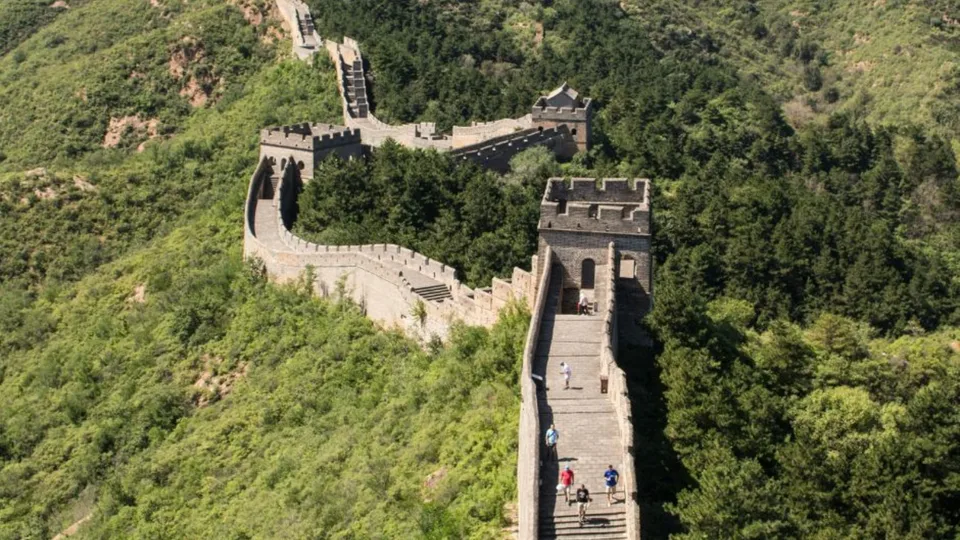
Of course, your trip will include all the best-known attractions, like walking along the Great Wall of China, marvelling at the Terracotta Warriors, sailing along the Yangtze River, and visiting panda conservation centres in Chengdu.
But that’s what the billions (six, to precise) of other tourists to China will be doing, too. Unlike them, though, Wendy Wu will also grant you access to experiences other tourists won’t know about.
Think: sharing lunch with a rural Chinese family, and tours through lesser-known regions so you can understand the full depths and diversity of the ancient country’s history.
And best of all, you won’t have to worry about any of the logistics. Choose from over 70 of Wendy Wu’s private or group tours to China, and the company will do everything for you.
Yes, that really means they’ll book your flights, accommodation, meals, guides, entrance fees, and transport – and it’s all included in your upfront cost.
It even works with trusted airlines so that it can deal with any unexpected changes to your travel, and provide hands-on support the entire time.
If none of the pre-planned trips appeal to you (which seems unlikely) you can also book an appointment to plan your very own trip.
Sound too good to be true? That’s why Wendy Wu has won the Best Specialist Operator at the Globe Travel Award for 16 consecutive years (this is where we’d whistle if we could).
It also has countless five-star reviews from happy customers who have done one of their tours of China.
One five-star review from a customer who did the China Experience tour enjoyed how knowledgeable their guide was.
“The tour guides were very knowledgeable, and it was good to hear their personal perspectives and experiences which shaped things for them and the changes that have advanced in modern China,” they said.
“It gave a very real element to the world beyond the facade of simply seeing what is in front of you.”
Another reviewer who did the Gems of China tour commented on the support Wendy Wu gave from booking through to the tour itself.
“From the first moment of booking we were very satisfied with the attention to detail and level of support we received from the company,” they said.
Others praised the quality of the hotels and transport connections, and not having to organise a trip themselves.
Whether you’ve never visited China before, or you want to deepen your knowledge of its history and culture, here are just a few of Wendy Wu’s pre-planned tours of China to explore now.

Includes:
- Imperial Beijing tour (including Tiananman Square)
- The Great Wall
- Tour of Ancient Xian, the former capital
- Terracotta Warriors
- Cruise through the Yangtze River
- Visit Chongqing Panda House
- Cruise down the Li River
- Visit Yangshuo region
- Explore Shanghai
Length: 16 days

Includes:
- Imperial Beijing tour (including Tiananman Square)
- The Great Wall
- Alleyways of the Muslim Quarter
- Terracotta Warriors
- Fly to Guilin to experience its stalagmites and caves
- Cruise down the Li River
- Yangshuo countryside and Tai Chi
- Chongqing hot springs
- Dazu carvings and drone show
- See the giant pandas at Chongqing Zoo
- Cruise through the Yangtze River
- Cruise through the Three Gorges and visit the dam
- Visit Zhangjiajie, ride on the glass elevator, and walk across the glass bridge
- Cable car to the top of Tianmen Mountain
- Explore Shanghai
Length: 20 days

Includes:
- Explore Shanghai
- Bullet train to Yichang and cruise the Yangtze river
- Explore Chiqikou
- Day at Chengdu Panda Reserve
- Terracotta Warriors
- Explore Beijing
- Great Wall of China
Length: 14 days.


We hope you love the products we recommend! All of them were independently selected by our editors. Just so you know, HuffPost UK may collect a share of sales or other compensation from the links on this page if you decide to shop from them. Oh, and FYI — prices are accurate and items in stock as of time of publication.
Once in a while, a sale swings around that we can’t help but scream from the rooftops about.
While, yes, Black Friday and Boxing Day sales are reliable, there’s nothing more exciting (for us) than a sale that crops up at random and lets us save a generous amount on our favourite products.
So naturally, when the latest Simba sale launched, we knew we were going to have to rave about it.
From now until 1 June, Simba is offering big savings on most of its bestselling five-star bedding.
Yup, this includes up to 25% off its hybrid mattresses and pillows, as well as up to 20% off its duvets, beds, toppers, protectors, bedding, and slippers. Whew.
Never heard of Simba before? Here’s a quick list of everything we love about its products:
If you’ve been thinking about upgrading your bed set up, this is your lucky day. To help you choose the right one for you, we’ve rounded up our top picks from the Simba range.
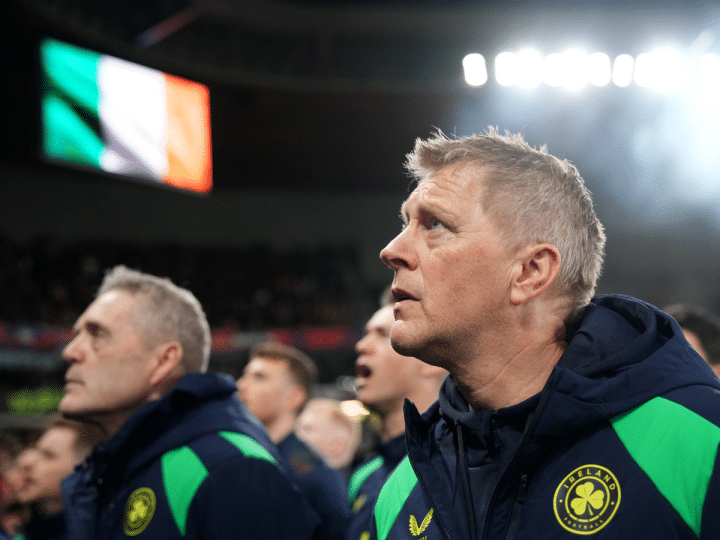

The Republic of Ireland’s national football team coach, Icelandic Heimir Hallgrímsson has described the upcoming matches against Israel in the UEFA Nations League as a ‘war to be won,’ amidst mounting political and public pressure in Ireland to boycott the Israeli team due to the war in Gaza.
Israel match a war to be won
The Irish Times reported that Hallgrímsson emphasized during a press conference before the friendly match against Qatar that “the best response is to win this match, to win this war against Israel on the pitch,” arguing that the Irish players are facing unfair criticism for playing the two matches.
The newspaper added that the coach defended his players, saying, ‘We are not the villains here,’ stressing that the team wants to focus on football and avoid the escalating political controversy. He continued:
Other decisions are not made by us, but all the players would like to represent the country and do well for them, no matter who is the opponent.
Double standards
The Irish Independent reported that Hallgrímsson had previously expressed his surprise at Israel’s continued participation in international tournaments, stating that he “sees no difference” between the sporting sanctions imposed on Russia and Israel’s current situation. These remarks reignited the debate within Irish sporting circles regarding double standards in European football.
Despite mounting pressure, the Football Association of Ireland confirmed its commitment to playing the two matches after the two national teams were drawn into the same group in the UEFA Nations League.
But, several government ministers will boycott the upcoming match against Israel in Dublin in protest against the genocide in Gaza. The newspaper added that the Irish government is facing increasing pressure to take a firmer stance on holding the match, while popular and human rights calls for a sporting boycott of Israel, similar to the sanctions previously imposed on Russia, continue.
Calls for wider boycott
Republic of Ireland captain Nathan Collins has made it clear that players won’t be stopped from “taking a stand” against Israel:
They are entitled to their own opinions. If they are very strong about that, we can’t stop them.
There are concerns that if players refuse to play, the team could be thrown out of the Nations League. However, that would be a small price to pay for resisting any normalisation of relations with genocidal Israel.
Featured image via Getty/Gabriel Kutcha
By Alaa Shamali
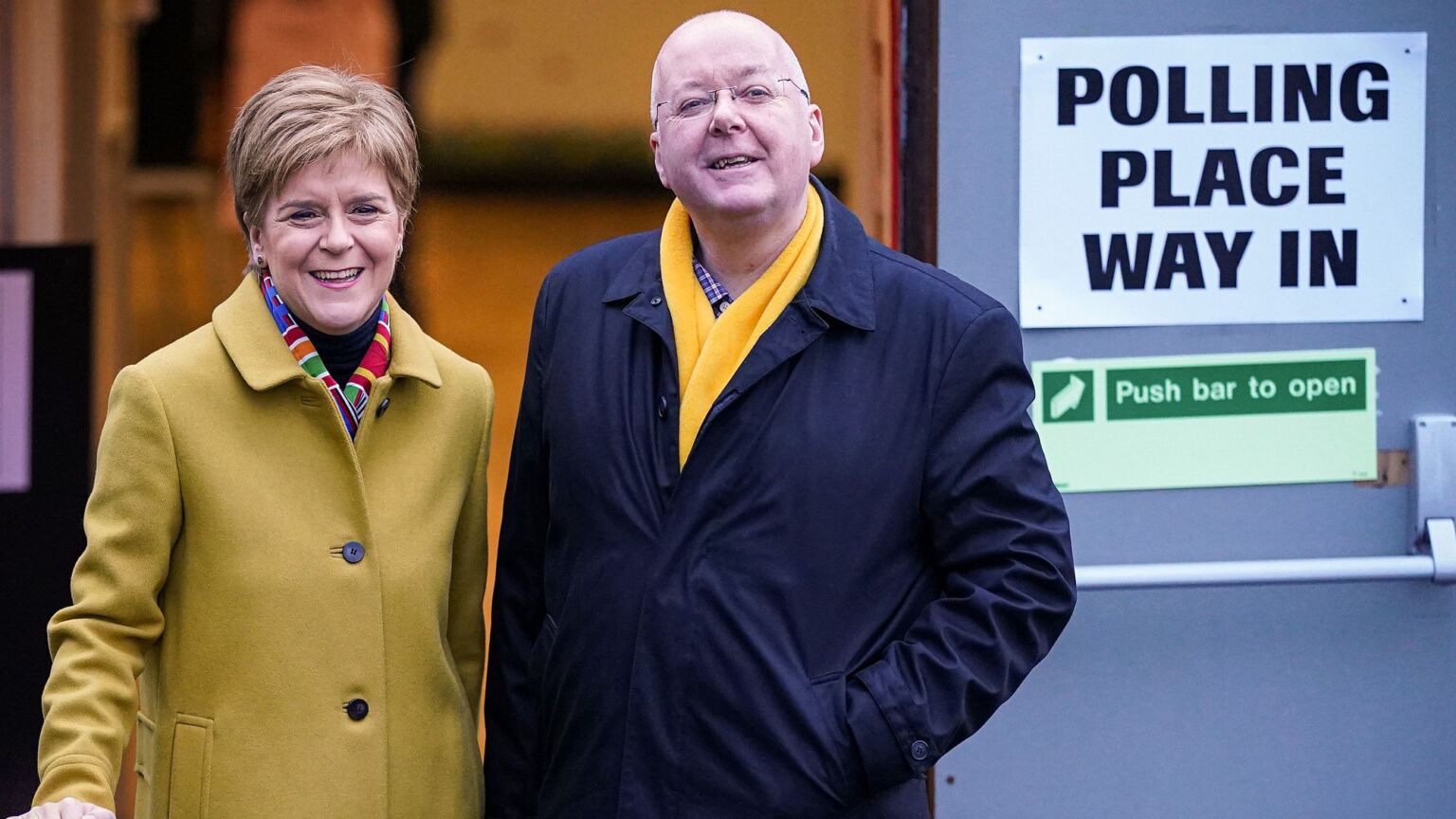
I must say that I hugged myself with glee when I heard that Nicola Sturgeon’s husband of 15 years, Peter Murrell, had been caught sitting on a bumper haul of luxury goods that made Aladdin’s cave look like a food bank.
Imagine the tongue-lashings he’ll be getting! Tracey Ullman’s brilliant parody of Sturgeon as a cruel Bond villain torturing innocent Scots celebrities for not being Scottish enough has never come more to mind. There is a distinct ‘You won’t like me when I’m angry’ feeling about her; if the walls of the Murrell dwelling could talk, what colourful Gaelic wrath might they reveal? I wonder if poor Peter might have been accused of being a ‘bampot’ or a ‘bawbag’ and even informed that ‘Yer bum’s oot the windae’?
Sturgeon’s lawyer has snootily implied that such frivolous things as shopping sprees are beneath the former first minister: ‘There appears to be an assumption that as FM, when Mr Murrell was busy buying multiple pens or pepper pots etc, she was with him. Ms Sturgeon was not, as unsurprisingly she was busy with other matters.’
I’m not totally convinced. She’s always been ready to stick that sharp little nose of hers into everybody’s business. If there’s one thing Sturgeon isn’t, it’s hands-off. Think of her Hate Crime and Public Order (Scotland) Act, which came into force on April 1 2024, prompting JK Rowling to write on X: ‘If you genuinely imagine I’d delete posts calling a man a man, so as not to be prosecuted under this ludicrous law, stand by for the mother of all April Fools’ jokes.’ You can’t imagine Sturgeon saying, ‘You do you, hun!’, to a husband, no matter how long they were asunder (they separated in 2025 and his ‘hobby’ started in 2010). If someone presents themselves as being efficient to the point of being a pocket calculator with a pixie cut, it’s hard to accept them as a ditsy broad who doesn’t notice that her husband is apparently attempting to set up a Caledonian branch of Harrods.
People used to call Mrs Thatcher ‘bossy’. But she just felt strongly about things – and she had a sense of humour about her dominant personality. ‘I’ve only got time to lose my temper and get my way!’, she is reputed to have said on walking into an EU meeting. When one looks at Sturgeon, the word is difficult to avoid, even if one is a rad-fem like myself. And to make it worse, she seems utterly humourless. The only vision she ever had was tunnel vision; she seemed to exist as a politician only to stop people doing things they wanted to do, and then to make their lives worse, while insisting that she’s making them better.
The Scottish people voted to stay in the United Kingdom; she demanded another referendum. The British people voted to leave the EU; she wanted to rejoin. She posed as a public-health crusader, advocating for strict lockdown, masking and vaccine passports; Scottish death rates for the Delta and Omicron variants of Covid-19 rose above those of England. More die of drug overdoses in Scotland than in any other European country, percentage-wise. By 2019, this figure had doubled from 2014, the year she came to power. More homeless people die on the street in Scotland than in any other country in the Union. She has no children, yet sought to impose a state guardian on every child in Scotland from before their birth until the age of 18; thankfully, her Named Person scheme was struck down by the UK Supreme Court.
She once claimed to be ‘a feminist to my fingertips’ and vowed she ‘would never support anything that I thought was an erosion of women’s rights’. But under her rule, the Hate Crime Act effectively shut down debate over whether men in frocks should be allowed to ruin everything women have, from sports trophies to toilets. Until the Isla Bryson case came to public notice, rapists were sent to female prisons if they had spent a mere six months ‘living as woman’ – this statement was even sillier in Scotland than in England, where the national dress for men is the kilt and thus men in skirts are everywhere.
Of course, Sturgeon would find such a comment ‘simplified and lurid’ – the phrase she used when asked to define what a woman is. She was accused of shutting down debate about self-anointed gender-recognition after saying, ‘We should focus on the real threats to women, not the threats that, while I appreciate that some of these views are very sincerely held, in my view, are not valid’. Ideas being ‘not valid’ often lead to the people who hold them being cast as non-people, and therefore perfectly okay to persecute.
Religion in Scotland always ran deeper than it did in England. Under the reign of Witchfinder Sturgeon, the woke trials were in full swing for many years. Sturgeon conducted them in an oddly bloodless way; she was the Joan of Arc of admin, who never saw a pint pot she didn’t want to penalise for not being metric. The only time she showed herself as truly human was when she was caught on camera celebrating Jo Swinson losing her seat.
Sturgeon’s resignation speech in 2023 seemed as Uncanny Valley as the rest of her output, with ‘burnout’ and the funeral of Scots independence activist Allan Angus cited, as well as tranny-related embarrassment. I never bought it; she’d been a tireless political zealot since she was a youngster in CND – and now, all of a sudden, she needed a wee rest, and ‘spend more time with her niece and nephews’? This seemed extra unlikely coming just weeks after she told the BBC that she still had ‘plenty in the tank’.
Something didn’t add up – and I don’t just mean that missing £400,000 that went astray from the SNP coffers. There had also been mounting curiosity about the loan of more than £100,000 given to the SNP by – yes! – Peter ‘I’m the man with the money’ Murrell in 2021 to help it out with ‘cash flow’ issues. (He must have flogged a few salt cellars?) ‘Robbing Peter to pay Paul’ takes on a whole new meaning here, with Robbing Peter being far from the innocent party.
Historically, the Scots are an admirable people. But when JM Barrie opined of his compatriots that ‘There are few more impressive sights than a Scotsman on the make’, I doubt whether he had splashing so much moolah that you make a pre-prison P Diddy look self-denying in mind. Once the chuckles have abated (and it will take quite a long time, as this is the funniest political scandal I can recall in my entire lifetime), perhaps the best thing about this whole glorious mess is that brave and gifted Scots politicians who came to grief under Sturgeon’s rule may come to the fore again, now that the stranglehold of the McMafia has been unravelled.
However this plays out, her reputation is ruined. As the hundreds of revellers in George Square put it as they reacted to her resignation with drinking and dancing: ‘Conga, conga, conga, Nicola’s no longer!’
Julie Burchill is a spiked columnist. Follow her Substack, ‘Notes from the Naughty Step’, here.


On 26 May, Scotland’s parliament voted for the powers to hold an independence referendum, while Downing Street has rejected the request.
A “golden opportunity” that would “put Scotland’s future in Scotland’s hands,” is how SNP leader and First Minister John Swinney described independence.
Members of the Scottish parliament, MSPs, agreed on the second referendum by a strong margin. The motion passing 72 votes to 55. Support from the Scottish Greens gave the SNP enough votes to defeat opposition from the unholy London-centric alliance between Labour, Reform, Tories and Lib-Dems. Keir Starmer said he wouldn’t give Scots what they want.
Pro-independence supporters have gathered outside Holyrood

It comes after the Scottish Parliament voted to call on Westminster to devolve the powers which would allow it to hold a second independence referendum pic.twitter.com/WgRBnYvnxi
— The National (@ScotNational) May 26, 2026
Scotland and the promise of devolution
On 7 May the SNP secured their fifth consecutive election win which — for many Scots — reinforces a pro-independence mandate. Speaking after this week’s vote, Swinney emphasised that Holyrood had:
clearly expressed its view that Scotland should have the powers to arrange an orderly referendum on independence.
But in 2022 the British Supreme Court ruled that any future referendum could only be held with the consent of the UK Government. No consent has been granted, nor does it appear likely.
One Downing Street spokesperson said this week that the British Government neither supports independence, or another referendum.
Speaking to the Canary in early May, now-elected Greens noted that this was not the first time a Scottish constitutional matter has been vetoed a MSPs. Kate Nevens and Q Manivannan pointed to a 2021 child rights motion, blocked when it sought to adopt a UN resolution. This set a precedent for UK courts to slap-down similar efforts.
Scottish voters, particularly pro-independence voters, often point out that England pushed Brexit onto Scotland despite an overwhelming 62% pro-EU majority, north of the border. Some even believe that Brexit may have swayed the independence vote had it happened before the referendum.
This is a bitter point for many given that the ‘Better Together’ — pro-union, Labour- and Tory-led — campaign often touted EU membership as a key reason to remain in the UK. That was dashed just two years later.
Scotland is not alone in their democratic deficit. Wales too, now governed for the first time by pro-independence Plaid Cyrmu, also lacks constitutional means for secession.
However, the North of Ireland retains the Good Friday constitutional right to many referenda when it decides. Ruled by for the first time by anti-unionists Sinn Fein since 2022, they arguably have the strongest hand.
Whether a formal coalition — a union against the Union — will form across Celtic nations remains possible.
Untied Kingdom: anti-unionist parties take power across the Celtic nations
How popular is independence?
At the original Scottish independence referendum in 2014, around 55% of voters opposed independence.
That percentage hovered around there since, although pro-‘yes’ reportedly peaked at 53% in mid-2020 and again in late 2022. Another polling scheme suggests that 2019–2021 saw sustained pro-independence support, hovering between 51-53%, but more recently this dropped.
Pro-independence politicians from the SNP and Scottish Greens suggested to the Canary a major factor in pro-independence sentiment slipping away. They blame an overall material impoverishment caused by the UK’s sustained cost-of-living crisis. Now-elected SNP MSP Kate Campbell, for instance, said:
People are focused on bread-and-butter issues right now. …
Housing, the cost-of-living, making sure people are just surviving and getting through at the moment — that has to be the priority for government.
However, indy support has not dropped below 43% since 2014, meaning that only the unionist camp shrank over time. Pro-unionists consistently hold less strong beliefs than pro-independence counterparts.
Demographic changes since 2014 might suggest that the figure could be much lower now, given that — like Brexit — age demographics reflected voter opinion. Younger Scots largely supported the pro-independence vote and still do, with clear pro-indy leanings for all Scots under 50.
Featured image via the Canary

spiked is funded by readers like you. Only 0.1% of regular readers currently support us. If just 1% did, we could grow our team and step up the fight for free speech and democracy.
Become a spiked supporter and enjoy unlimited, ad-free access, bonus content and exclusive events – while helping to keep independent journalism alive.
Monthly support makes the biggest difference. Thank you.
Laurence Fredricks, is Senior Researcher at Onward.
Britain could be on the verge of a Burnham building problem. It would be easy to believe Andy Burnham, the potential PM-in-waiting as many now see him, could be a positive for pro-development circles. After all, Manchester’s skyline has transformed under his mayoralty, driven in part by a relatively competitive, pro-growth and developer friendly planning regime, especially compared to London. But his recent comments on housing policy are concerning if not borderline catastrophic should they translate into policy, and this should worry anyone serious about the delivery of the homes that Britain needs.
“Since the 1980s, housing has increasingly been treated as a commodity to be bought and sold,” Burnham said. “If you see housing purely like that, you end up with a housing crisis – and that’s exactly where we are.”
Let’s be absolutely clear: housing is a commodity.
Housing is a private good. Housing is a store of wealth. And housing is an investment vehicle. This is a good thing!
These are the foundations of a functioning housing market which is integral to a functioning economy. It lends itself to economic activity as individuals can borrow against the value of their house, and use the store of wealth to support themselves in hard times and old age rather than relying on the state, amongst many other benefits. And yes, housing can be all of these things and still be a home. The two are not in conflict.
Let’s also be clear about the second half of the quote: the commodification of homes is not what leads to a housing crisis. Too few homes leads to a housing crisis.
Perhaps the rebuttal is that commodification is a product of too few homes pushing up house prices, which incentivises buying and selling. But surely this would incentivise developers to deliver more homes to buy and sell: this would happen if we allowed the markets to respond to market signals, and the shortage of homes would be resolved. But we do not, and this is where the housing crisis really stems from.
England has one of the lowest housing supply elasticities in the developed world: when house prices go up, signaling that people want more homes, almost nothing gets built in response. In a healthy market, rising prices attract more developers, supply increases, and price growth stabilises. In England, the planning system acts as a brake on that process. Developers cannot get the permissions they need to respond, and when they can, they are hit with an increasingly thick pile of costly obligations – add in sharply rising build costs driven by materials inflation and labour shortages, and schemes that looked profitable quickly become unviable.
The evidence is clear. Berkeley Homes has halted land acquisition in London. Only 52 per cent of homes granted planning consent in England since 2012/13 have actually been built. The problem is predominantly viability, the point at which the costs of building make development unworkable as a business proposition.
To suggest otherwise is a clear misunderstanding of how markets work. And this comes back to one of the core problems we currently face in Britain. Development is too often treated as a public service, something that can be ordered into action by politicians, burdened with social obligations, and still deliver with little regard for the costs. Development is a business. Business runs on profit, to survive, crucially, but also to grow and deliver more homes. This is true at every scale, from SME housebuilders to the major developers. Without a profit incentive, homes do not get built.
Burnham’s “housing first” platform centres on social housing as an alternative to the housing market: “We really haven’t had that approach in this country since the post-war years.” But post-war Britain was not a world without markets or private development. The difference was that homes could still be built at scale. What changed later was the emergence of an increasingly restrictive planning system that chokes supply. That, far more than the commodification of housing, is what created today’s crisis.
The direction of travel being set by the PM-in-waiting should be a grave concern. Instead of recognising the planning system and the mounting burdens placed on developers as the real barriers to housebuilding, Britain risks drifting toward a state led housing model where the delivery of housing comes at any cost – with the taxpayer ultimately footing the bill.
The answer is not to berate the commodification of housing, or treat housing as a public service to be commanded into existence. It is to fix the planning system, restore viability, and give the market the conditions it needs to deliver.

George R.R. Martin’s New Game of Thrones Project Finally Launches in 2 Months

The 12 Best Self Care Gifts to Get New Moms in 2026

Prostate cancer screening: Final guidance recommends against testing all men


-

 Crypto World7 days ago
Blockchain.com files with SEC for U.S. IPO
-

 Fashion6 days ago
Holiday Weekend Open Thread – Corporette.com
-
 Politics3 days ago
Bridgerton Season 5: Cast, Release Date And Everything We Know So Far
-

 Crypto World6 days ago
Bitcoin Accumulation Weakens as BTC Realized Losses Hit $600M
-

 Tech3 days ago
Microsoft’s quiet Claude Code retreat and the real cost of enterprise AI
-

 Business6 days ago
Dell Technologies DELL Stock Surges 15% on AI Server Momentum and Analyst Upgrades in 2026
-

 Crypto World5 days ago
Robinhood crypto COO Tanya Denisova exits
-

 Business4 days ago
NYT Strands Answers May 24 2026 Revealed for Puzzle No. 812 Theme Summer Essentials
-

 Business6 days ago
Trump Invests $1M-$5M in Kura Sushi USA Chain With 27 California Locations
-

 Politics6 days ago
Makerfield: a tale of two social-media histories
-

 Crypto World6 days ago
Space X IPO Is ‘Bad News’ for Tech Stocks: But What About Bitcoin?
-

 Business1 day ago
Selena Gomez Reportedly Upset Over Benny Blanco’s Comments on Her ‘Terrible’ Diet
-
 Crypto World6 days ago
MicroStrategy’s Saylor Says Miners No Longer Set Bitcoin Price, Another Force Has Taken Over
-

 Tech7 days ago
WhatsApp ads could make Irish debut after discussions with DPC
-

 Business3 days ago
BTS Sells Out Four Las Vegas Shows at Allegiant Stadium for ARIRANG World Tour
-
Tech23 hours ago
The Samsung pay deal is the moment Korean unions changed register
-
 NewsBeat7 days ago
Charity run by Reform leader Malcolm Offord accused of ‘law breaking’ over Scottish registration
-
 Tech6 days ago
A 0.12% parameter add-on gives AI agents the working memory RAG can’t
-

 Crypto World6 days ago
AI infrastructure race heats up as IREN pitches full-stack strategy, WhiteFiber lands $160M deal
-

 Tech3 days ago
Westone Audio and Etymotic Acquired by Fidelity Collective in Major IEM Market Move
You must be logged in to post a comment Login