

Business
April PCE: Inflation remained elevated amid Iran war


A ‘Mornings with Maria’ panel analyzes the markets, the impact from the conflict in Iran and investing in companies that the government has a stake in.
The Federal Reserve’s preferred inflation gauge remained stubbornly high in April as consumers continued to face elevated price growth.
The Commerce Department on Thursday reported that the personal consumption expenditures (PCE) index rose 0.4% on a monthly basis in April and is up 3.8% from a year ago. The monthly figures were slightly cooler than the 0.5% increase expected by economists polled by LSEG, while the annual figure was in line with expectations.

Consumer prices have risen due in part to the impact of the Iran war. (Benjamin Boshart/Bloomberg via Getty Images)
HOW DOES FED CHAIR NOMINEE KEVIN WARSH VIEW THE CENTRAL BANK’S INFLATION GOAL?
Core PCE, which excludes volatile measurements of food and energy prices, was up 0.2% from a month ago and increased 3.3% year over year. The monthly figure was cooler than the 0.3% increase estimated by the LSEG poll, while the annual figure was in line with expectations.
Federal Reserve policymakers are focused on the PCE headline figure as they try to bring inflation back to their long-run target of 2%, though they view core data as a better indicator of inflation. Compared with March’s annual readings, headline PCE rose from 3.5% to 3.8%, while core PCE increased from 3.2% to 3.3%.
Goods prices were up 1.2% in April compared with a year ago, and were down 0.1% from the prior month.
Services prices increased 2.5% on an annual basis in April, and increased 0.2%.
HIGH ENERGY PRICES RISK KEEPING INFLATION ABOVE 2% TARGET, CONCERNING FED POLICYMAKERS
The personal savings rate as a percentage of disposable personal income was 2.6% – down from 3.2% in March and 3.6% in February.
Since the start of last year, the personal savings rate has declined from 5.1% in January 2025 and a peak of 5.5% last April to its current level.
What experts are saying
“With headline inflation closer to 4% than 3%, the Fed continues to walk a tight rope. When adjusted for inflation, spending barely rose in this report,” said Ellen Zentner, chief economic strategist for Morgan Stanley Wealth Management. “Rising prices are really taking a bite out of consumption, and the decline in the savings rate shows consumers are dipping into savings to make ends meet.”
GAS PRICE SURGE HITTING LOW-INCOME HOUSEHOLDS HARDEST, FED STUDY FINDS
Heather Long, chief economist at Navy Federal Credit Union, said that the “pain is real for many Americans right now.”
“The prices of many basics are up and incomes are not keeping pace. People are dipping into their savings to try to make ends meet. The savings rate a year ago was 5.5%. Now it’s 2.6%. The larger tax refunds are helping keep people afloat, but those will be exhausted by July. Belt-tightening is inevitable later this year,” Long added.
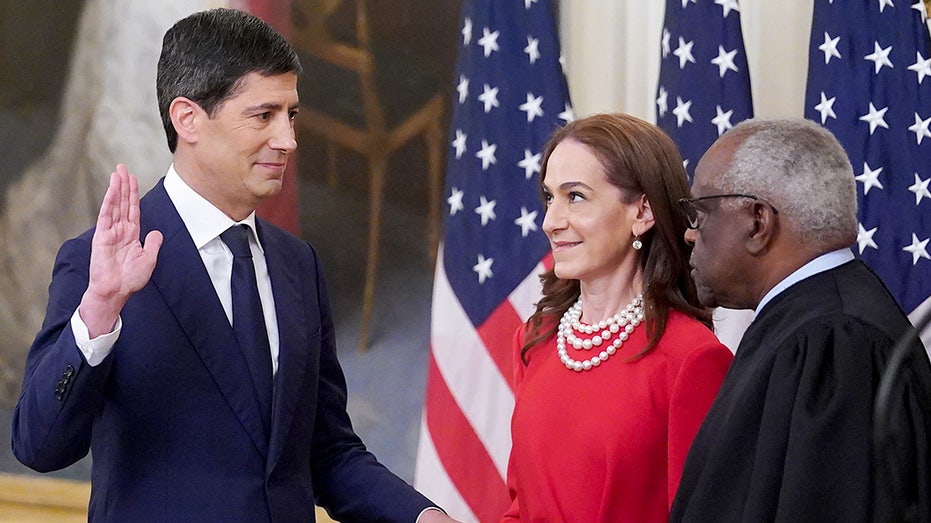
New Federal Reserve Chair Kevin Warsh was sworn in to the role last week and will oversee the central bank’s next monetary policy meeting in mid-June. (Al Drago/Bloomberg via Getty Images)
What does it mean for the Fed and markets?
The Federal Reserve is expected to keep interest rate cuts on pause for the near future, with the CME FedWatch tool showing a 98.8% probability of rates remaining at their current range of 3.5% to 3.75% after the central bank’s meeting next month.
The tool also shows a 47.4% chance rates will remain at their current level through the end of the year, with just a 0.6% chance of a 25 basis point rate cut by that time as opposed to a 39.2% chance of a rate hike of that size.
GET FOX BUSINESS ON THE GO BY CLICKING HERE
The stock market reaction to the PCE inflation report was muted. The benchmark S&P 500 index was little changed at open, while the Nasdaq was 0.5% in morning trading.



Edmund Ingham is a biotech consultant. He has been covering biotech, healthcare, and pharma for over 5 years, and has put together detailed reports of over 1,000 companies. He leads the investing group Haggerston BioHealth.
The group is for both novice and experienced biotech investors. It provides catalysts to look out for and buy and sell ratings. It also provides product sales and forecasts for all the Big Pharmas, forecasting, integrated financial statements, discounted cash flow analysis and market by market analysis. Learn more.
Analyst’s Disclosure: I/we have no stock, option or similar derivative position in any of the companies mentioned, but may initiate a beneficial Long position through a purchase of the stock, or the purchase of call options or similar derivatives in PSNL over the next 72 hours. I wrote this article myself, and it expresses my own opinions. I am not receiving compensation for it (other than from Seeking Alpha). I have no business relationship with any company whose stock is mentioned in this article.
Seeking Alpha’s Disclosure: Past performance is no guarantee of future results. No recommendation or advice is being given as to whether any investment is suitable for a particular investor. Any views or opinions expressed above may not reflect those of Seeking Alpha as a whole. Seeking Alpha is not a licensed securities dealer, broker or US investment adviser or investment bank. Our analysts are third party authors that include both professional investors and individual investors who may not be licensed or certified by any institute or regulatory body.
Business
US stocks today: S&P 500 and Nasdaq hit record closing highs as US and Iran agree to extend ceasefire

The news was first reported by Axios, which said that negotiations on Iran’s nuclear program would be held during the truce period, but that the plan still needed the approval of President Donald Trump.
“Traders are on a hair trigger with the back-and-forth on deal news, and have been leaning long to avoid getting trampled by a better-than-expected outcome. The harder part is that the inflationary forces may not abate as fast as markets want,” said Jamie Cox, managing partner at Harris Financial Group. Economic data showed U.S. inflation increased at its fastest pace in three years in April, driven by higher energy prices amid the Iran war. Meanwhile, U.S. GDP for the first quarter was revised lower to a 1.6% annualized increase, with momentum expected to slow this quarter.
According to preliminary data, the S&P 500 gained 43.50 points, or 0.58%, to end at 7,563.71 points, while the Nasdaq Composite gained 239.79 points, or 0.91%, to 26,917.47. The Dow Jones Industrial Average rose 24.11 points, or 0.04%, to 50,666.29. The S&P 500 healthcare index posted strong gains. Eli Lilly advanced after CVS Health said it would restore the drugmaker’s weight-loss injection, Zepbound, to its coverage and add its newly approved obesity pill Foundayo.
Tech shares also moved higher. Microsoft gained after news website the Information reported that the company would release a new coding model next week.

Marvell Technology rose after UBS raised its target price to $230 from $195.
The company’s shares have more than doubled so far this year.Snowflake shares soared after the data analytics firm lifted its annual product revenue forecast and announced a five-year AI infrastructure deal worth $6 billion with Amazon Web Services.
Peers Datadog and MongoDB also climbed.
Renewed confidence in AI and earnings growth momentum have underscored the recent rally despite the Middle East tensions, which have increased inflationary expectations.
“Markets continue to look through these risks because the global economy and corporate earnings remain relatively resilient,” said Jitania Kandhari, deputy CIO, solutions and multi-assets, at Morgan Stanley Investment Management.
“Geopolitical instability could ultimately accelerate spending in areas tied to AI, including cybersecurity, defense technology, energy infrastructure and supply-chain resiliency, reinforcing the long-term investment case.”
While the S&P 500 is trading at roughly 21 to 22 times forward earnings versus a trailing 10-year average of 19.7 times, investors are less concerned because earnings expectations are rising faster than stock prices, Kandhari said. Among other movers, Dollar Tree climbed after the discount retailer lifted its full-year profit forecast, while Best Buy also rose after the electronics vendor forecast second-quarter sales above estimates. Drone companies rose after the Wall Street Journal reported that the Trump administration was in talks to fund drone firms. Shares of Unusual Machines surged.

For years, online gambling carried a peculiar contradiction. It promised the thrill of the casino, yet often felt about as lively as filling out a tax form at midnight.
The spinning roulette wheels were digital animations in an Irish live casino. The blackjack dealers existed only as lines of code hidden behind polished interfaces. Efficient? Certainly. Exciting? Well… that depended on how vivid one’s imagination happened to be after two coffees and a losing streak.
Today, the Irish live casino market is no longer a niche curiosity tucked away inside online betting platforms. It has become one of the driving forces behind the transformation of online gambling itself. Real dealers, live-streamed tables, instant interaction, and immersive gameplay have turned what was once a solitary digital pastime into something far closer to the pulse of a physical casino floor — minus the sticky carpets and the man loudly explaining roulette “systems” to strangers.
The Technology That Made Online Gambling Feel Human Again
A decade ago, online casinos were efficient in the way airport terminals are efficient: clean, functional, and almost entirely devoid of soul. The games worked, the graphics flashed, the bets processed instantly — yet something essential was missing. Most platforms relied completely on random number generators, systems built to ensure fairness but incapable of reproducing the nervous electricity that gives gambling its peculiar appeal. Because a casino has never been just a place where money changes hands. It is theatre disguised as mathematics. The slow spin of a roulette wheel, the dealer’s pause before turning a card, the quiet tension around a table moments before someone wins big or loses badly — those details matter far more than the software underneath them. They’ve always traded in atmosphere: the pause before the cards are revealed, the noise of a crowded table, the peculiar tension that hangs in the air when a roulette wheel slows to its final click. Watching that happen in real time has a kind of gravity to it. An algorithm, however efficient, rarely captures that feeling.
Live dealer technology changed that equation with remarkable speed.
Modern platforms now use proper HD streams, a bunch of different camera angles, live chat boxes, and studios built to look exactly like high-end casinos. When you actually see a human dealer turning over the cards or spinning that wheel, something clicks mentally. It stops feeling like a cheap computer game and starts feeling real—kind of like the massive difference between playing an album on your phone versus actually standing in a packed gig feeling the bass hit your chest.
Punters in Ireland, especially the younger crowd who grew up on streaming and interactive apps, have absolutely jumped on this. Even if an automated game is completely secure, it just doesn’t give you that same gut feeling of fairness that seeing real cards does.
It’s actually pretty funny when you think about it: the more advanced the tech gets, the harder it tries to copy old-school human contact. After spending years trying to automate absolutely everything, tech has basically done a full U-turn just to bring back the basic suspense of a live card draw and a dealer talking to you.
Mobile Play Basically Put the Casino in Everyone’s Pocket
None of this boom would’ve happened without smartphones, full stop. Phones have completely shifted how Irish people gamble, turning these live dealer sites into portable entertainment you can pull up just about anywhere.
Going to a real casino used to be a whole event. You had to plan it out, travel down there, and spend hours under bright lights paying for overpriced drinks. Live casinos completely flip that. They sit in this handy sweet spot where you get the high-end vibe without any of the hassle. You can jump onto a blackjack table while chilling on the couch, sitting on the train, or just waiting around for your food to be ready at the takeaway.
Punters here just expect total flexibility nowadays, and the big betting sites are well aware of it. They’ve spent ages tweaking these live setups specifically for mobile use, so the video feeds don’t constantly freeze up and the buttons actually work the exact second your finger hits the glass.
Honestly, with 5G sorted across most of the country now, the speeds are unreal. There’s basically zero delay or annoying buffering, meaning everything happens right before your eyes in real time. That lack of lag is everything when it comes to making the game feel like the real deal. It used to be that hitting the casino required a proper road trip, but now? It’s just a tiny app sitting right next to your WhatsApp icon.
The Social Buzz That Old-School Online Casinos Totally Missed
The main reason these live games have taken off the way they have is actually pretty obvious: having a punt has always been a social thing.
The older digital casino games used to feel incredibly lonely. Just sitting there clicking a mouse while staring at a quiet, lifeless screen completely missed the raw energy of an actual casino floor. Live dealer setups finally bring back that missing chatter, the random table banter, and the feeling that you’re actually sharing a room with other people.
You can drop messages straight to the dealers via the chat, and plenty of tables let you talk to the other players as well. Tech-wise, adding a chat box sounds like a minor update, but mentally it changes the entire vibe. People are social animals, plain and simple. We want to complain or celebrate with someone else when money is on the line. Especially when we’re losing it, to be honest.
For the Irish crowd, the big draw is mixing the craic of a night out with placing a bet. The dealer behind the screen basically turns into a referee, host, and proper entertainer all rolled into one. When you get a genuinely good dealer, they know exactly how to dial up the tension, drop a decent joke, and keep a rhythm going that cold computer code just can’t pull off. Half the time, it honestly feels more like watching a live show than doing any standard betting.
Look at the rest of the internet right now, and this matches what everyone is doing anyway. We are all naturally gravitating toward stuff where we can actually join in—think spamming Twitch chats, jumping into massive multiplayer games, or listening to live podcasts—instead of just staring blankly at a video. Live casinos basically just slide perfectly right into that exact same modern digital habit.

Lululemon Athletica and company founder Chip Wilson are burying the hatchet.
They have reached a deal that will allow Wilson to name two new directors to the company’s board after its annual meeting in June. The company also agreed to add a third director with product and brand expertise in apparel to the board by Oct. 1.
In exchange, Wilson, who owns 8.7% of Lululemon’s shares, will agree to stop criticizing the company for 18 months.

SYDNEY — A woman from Queanbeyan in New South Wales became an instant multi-millionaire on Thursday night after winning the entire $60 million Powerball jackpot in draw 1567, thanks to a spontaneous decision to change one number on her ticket just before purchase.

The winning numbers were 5, 10, 12, 16, 26, 30, 34 with Powerball 11. The NSW woman was the sole Division One winner, taking home a total prize of $60,638,678.35 after her PowerHit entry also secured multiple Division Two prizes. She matched all seven main numbers plus the Powerball, becoming one of Australia’s biggest lottery winners this year.
The winner, who wished to remain anonymous beyond her location, was watching the women’s State of Origin when she received the life-changing call from The Lott. “Oh my god! Holy crap!” she exclaimed upon learning she was the only Division One winner. “I’m just sitting here watching the women’s State of Origin.”
In a remarkable twist, the woman revealed she almost didn’t win. She had initially selected numbers via a quick pick but decided at the last moment to make a change. “I actually changed one of the numbers on the PowerHit,” she said. “I did a fast select on the ticket, but then thought I had too many numbers in the 30s. I had 33 and 34, so I took out 33 and made it 5. How insane is that!”
Up until Thursday night, the winner had been carrying a mortgage. “Up until 10 minutes ago, I had a mortgage,” she told lottery officials. She plans to continue working, at least part-time, while focusing on sharing her windfall with family. “I’m still young enough to enjoy this, share it with the family and make sure everyone’s comfortable for the rest of my life.”
The Division Two winners each took home shares of $33,614.65, with several collecting just over $1 million depending on the number of correct entries.
Powerball’s History of Life-Changing Wins
Powerball, Australia’s biggest jackpotting lottery game, has been creating millionaires since its first draw on May 23, 1996. In the 30 years since, 587 Division One winners have collectively taken home more than $8.97 billion. So far in 2026, eight Division One winners across the country have shared more than $205 million, with four from New South Wales, three from Victoria and one from Western Australia.
The largest Powerball prize awarded this year prior to Thursday’s draw was $80 million. The game’s format, which requires matching seven numbers from 1 to 35 plus a Powerball from 1 to 20, creates massive jackpots that regularly roll over and capture national attention.
Matt Hart, a spokesman for The Lott, highlighted the game’s enduring popularity. “From offering a $1 million jackpot in 1996 to today’s era of blockbuster draws, Powerball has kept Australia on the edge of its seat for 30 years with sky-high dreams, blockbuster jackpots and life-changing wins,” he said. “For millions of Australians, Powerball has ignited countless hopes and dreams, and delivered some truly life-changing moments.”
The Odds and Psychology of Lottery Wins
The odds of winning Division One in Powerball are approximately one in 134 million, making Thursday’s result an extraordinarily rare event. Lottery experts note that while the vast majority of players never win significant prizes, the occasional massive jackpot creates powerful aspirational stories that drive continued participation.
Behavioral psychologists say last-minute changes like the winner’s decision to swap 33 for 5 are common among regular players. Many describe a sudden “gut feeling” or small adjustment that they believe alters their chances, even though each draw is completely random and independent.
The winner’s story also reflects a common pattern among major lottery victors — an initial decision to keep working, at least part-time, while adjusting to sudden wealth. Financial advisers often recommend this approach to maintain structure and avoid the pitfalls that can accompany rapid lifestyle changes.
Responsible Gambling and Community Impact
Lottery operators emphasize responsible play. While stories like Thursday’s create excitement, officials remind players that the vast majority of tickets do not win major prizes. The Lott encourages setting spending limits and viewing lottery participation as entertainment rather than an investment strategy.
For the Queanbeyan winner, the windfall represents an opportunity to secure her family’s future. She has not yet detailed specific plans beyond helping relatives and reducing work hours, but her measured response suggests a thoughtful approach to sudden wealth.
Major lottery wins often have ripple effects in local communities. Winners frequently support family members, local charities and small businesses. In regional areas like Queanbeyan, such windfalls can provide economic boosts through spending and investment.
Record-Breaking Year for Australian Lotteries
2026 has already proven exceptional for Australian lottery players. Multiple seven- and eight-figure wins across Powerball and other games have kept the nation’s attention on the possibility of life-changing prizes. The combination of large jackpots and human-interest stories continues to drive strong ticket sales nationwide.
As Australia’s lottery landscape evolves with digital innovation and expanded prize pools, stories like the Queanbeyan woman’s serve as powerful reminders of the game’s potential impact. While the odds remain long, the dream of a sudden windfall continues to captivate millions each week.
The winner has time to decide her next steps as lottery officials assist with financial planning and privacy arrangements. For now, she joins a select group of Australians whose lives were transformed by a single ticket and one instinctive number change.
Thursday’s draw continues Powerball’s reputation for delivering drama and fortune. From its humble beginnings three decades ago to today’s multi-million-dollar jackpots, the game remains a fixture in Australian culture, offering hope and excitement to players across the country.

People load their car after shopping at a Costco Wholesale store on March 21, 2026, in Bayonne, New Jersey.
Gary Hershorn | Corbis News | Getty Images
Costco Wholesale on Thursday reported an increase in net sales for its fiscal third quarter, beating Wall Street revenue expectations for the period.
The company reported net sales of $69.15 billion, up 11.6% from last year. It said adjusted comparable sales were up 6.6% for the quarter, with digital sales up nearly 21%.
Shares of the company were largely unchanged in extended trading.
Here’s how Costco performed in the period ended May 10 compared with what Wall Street was expecting, based on a survey of analysts by LSEG:
- Earnings per share: $4.93 vs. $4.93 expected
- Revenue: $70.53 billion vs. $69.81 billion expected
For the three-month period, Costco reported net income of $2.19 billion, or $4.93 per share, compared with $1.9 billion, or $4.28 per share, the year prior. Revenue rose to $70.53 billion from $63.2 billion in the year-ago period.
Costco said it saw paid memberships grow 4.1% for the quarter, along with a 37% increase in traffic on its website and app. Its top sales categories included pharmacy, home furnishings and gold and jewelry.
Costco has been at the forefront of a tariff dispute with the Trump administration after a Supreme Court decision invalidated some of President Donald Trump’s levies on foreign imports. The retailer previously said it would lower its prices if it received tariff refunds following the Supreme Court decision.
Analysts had previously expected the company to see higher demand at the onset of the war in the Middle East because of its cheaper gas prices and value offerings that appeal to a more cost-conscious consumer.
This story is developing. Please check back for updates.

Stifel reports 19% rise in client assets, loan growth

Rigel Pharmaceuticals director Ali-Jackson Kamil sells $72,925 in stock

CFRA Research senior vice president and head of technology Angelo Zino explains why Nvidia, AMD, Microsoft and Meta remain top ‘strong buy’ picks amid the ongoing AI-driven tech rally on ‘Making Money.’
Meta is rolling out paid subscription plans for Facebook, Instagram and WhatsApp as the company expands premium features and artificial intelligence offerings across its platforms.
Meta head of product Naomi Gleit announced the rollout in a video posted Wednesday, describing the subscriptions as part of a broader effort to offer enhanced tools across Meta’s apps and AI products.
“We’re starting to roll out Facebook Plus, Instagram Plus, WhatsApp Plus with enhanced features that our community already loves,” Gleit said in the video.
Meta said Instagram Plus and Facebook Plus will cost $3.99 per month, while WhatsApp Plus will cost $2.99 monthly. The plans are expected to begin rolling out globally in the coming weeks.
META LAYS OFF NEARLY 1,400 WASHINGTON EMPLOYEES IN LATEST TECH WORKFORCE CUT

Mark Zuckerberg, chief executive officer of Meta Platforms Inc., appears during the Meta Connect event in Menlo Park, Calif., on Sept. 17, 2025. (David Paul Morris/Bloomberg via Getty Images)
The subscriptions include platform-specific features focused on customization, messaging and audience engagement. Instagram Plus subscribers will gain access to expanded Story controls, audience insights, profile customization options and additional profile pins.
Facebook Plus users will receive enhanced Story features, animated reactions and profile personalization tools. WhatsApp Plus includes premium stickers, app themes, custom ringtones and expanded pinned chat capabilities.

Russia blocked the U.S.-based messaging app WhatsApp, citing the company’s failure to comply with local laws. (Reuters/Thomas White/File Photo)
Meta is also expanding subscription offerings tied to artificial intelligence tools under a broader “Meta One” umbrella. The company said it plans to test AI-focused subscription tiers priced at $7.99 per month and $19.99 per month that provide expanded access to more compute-intensive AI features, including advanced reasoning capabilities and additional image and video generation tools.
“We’re also testing new subscription plans that offer premium features for those who want to unlock more from our apps and AI glasses,” Gleit said.
Meta said the AI-focused subscriptions will initially be tested in select international markets and will include bundled premium features across Facebook, Instagram and WhatsApp.

The apps Instagram, Facebook and WhatsApp can be seen on the display of a smartphone in front of the logo of the Meta internet company. (Jens Büttner/picture alliance via Getty Images)
The company is also preparing subscription plans for businesses and creators that include enhanced profile visibility, audience insights, collaboration tools, clickable links in Instagram posts and Reels, and account support features.
Meta said the creator and business plans will initially launch in select test markets and are intended to help users grow audiences and manage their online presence more effectively.
Gleit said Meta is testing subscriptions under the name “Meta One.”
“Eventually, we see Meta One as the one place that brings our subscriptions together across all of our apps,” she said.
The new offerings appear separate from Meta Verified, the company’s existing subscription product focused on account verification and impersonation protections. The rollout comes as technology companies increasingly push subscription-based AI products and premium platform tools as they look to generate recurring revenue from artificial intelligence services.
Meta shares rose following reports of the subscription rollout. Shares of the company are up nearly 5% over the last five trading sessions.
CLICK HERE TO GET FOX BUSINESS ON THE GO
Gleit described the rollout as “just the beginning,” adding that Meta plans to introduce additional features over time.
Business
GameStop Shares Edge Higher to $21.76 as Retail Investor Interest Persists in Volatile 2026 Market

NEW YORK — GameStop Corp. shares rose modestly on Thursday, climbing 0.37 percent to $21.76, as retail traders continued to show interest in the video game retailer despite ongoing challenges in its core business and broader market uncertainty.
The stock’s movement came amid light trading volume in a session dominated by geopolitical tensions and shifting expectations for Federal Reserve policy. GameStop, once at the center of a massive retail trading frenzy in 2021, has seen its share price remain volatile throughout 2026, trading well below its meme-stock peaks but still drawing attention from individual investors.
The company, which operates hundreds of retail stores selling video games, consoles and collectibles, has been transitioning toward e-commerce and collectibles while reducing its physical footprint. First-quarter results earlier this year showed continued revenue pressure from declining brick-and-mortar sales, though cost-cutting measures helped stabilize margins.
Analysts remain divided on GameStop’s long-term prospects. While some see potential in its cash reserves and digital pivot, others question whether the company can successfully reinvent itself in an industry increasingly dominated by downloads and online platforms. The consensus rating among covering firms leans toward Hold, with average price targets well below current levels.
Recent Performance and Market Context
GameStop shares have experienced significant swings in 2026. The stock surged earlier in the year on renewed retail enthusiasm but has since given back gains amid weaker industry trends and macroeconomic headwinds. Thursday’s modest uptick reflects ongoing speculative interest rather than fundamental improvement.
The broader market environment has been challenging for discretionary retailers. Elevated interest rates, cautious consumer spending and competition from digital giants have weighed on traditional game retailers. GameStop’s heavy reliance on physical sales makes it particularly sensitive to these trends.
Despite these challenges, the company maintains a dedicated following among retail investors who view it as a symbol of grassroots market power. Social media platforms continue to feature discussions about potential short squeezes and turnaround narratives, though trading volumes remain far below 2021 peaks.
Company Strategy and Challenges
GameStop has taken steps to adapt to changing consumer habits. The company has expanded its e-commerce offerings, invested in collectibles and explored new revenue streams. However, progress has been uneven, and same-store sales have remained under pressure.
Leadership has emphasized cost discipline and inventory management. The company ended its most recent quarter with a strong cash position, providing some buffer against industry softness. Yet analysts caution that without a clear path to sustainable profitability, the stock could face further downside.
The video game industry itself is undergoing transformation. Major publishers are focusing on live-service models and subscription platforms, reducing the importance of traditional retail distribution. GameStop’s ability to carve out a meaningful role in this evolving landscape remains a key question for investors.
Retail Investor Sentiment
GameStop continues to attract attention from individual traders, many of whom first discovered the stock during the 2021 meme frenzy. Online forums and social media groups remain active, with users sharing price targets and speculation about potential catalysts.
This retail interest has contributed to periodic volatility, though without the same intensity seen in previous years. Short interest has moderated but remains elevated compared to most stocks, keeping the potential for sharp moves alive.
Market watchers note that while retail enthusiasm provides liquidity, it can also lead to disconnects between share price movements and underlying business fundamentals. GameStop’s earnings reports often trigger sharp reactions regardless of broader market trends.
Broader Retail Sector Trends
The discretionary retail environment in 2026 has been difficult. Higher borrowing costs and selective consumer spending have hurt many traditional retailers. GameStop’s performance reflects these pressures while also highlighting its unique position as a meme stock with a loyal following.
Competitors in the space have pursued different strategies, with some focusing exclusively on digital channels or diversifying into entertainment experiences. GameStop’s hybrid approach aims to leverage both its physical presence and online capabilities, but execution remains critical.
Outlook and Analyst Views
Looking ahead, analysts expect GameStop to face continued headwinds in its core business. Revenue projections for the year remain muted, though cost savings and potential new initiatives could provide some support.
Several firms have maintained neutral ratings, citing uncertainty around the company’s strategic direction. Price targets generally reflect skepticism about near-term catalysts, though a few more bullish voices see value in the company’s cash position and brand recognition.
Investors considering GameStop stock should weigh its speculative nature against traditional valuation metrics. The stock’s history of extreme volatility makes it unsuitable for conservative portfolios but potentially appealing for those comfortable with high risk.
As the company navigates industry changes and retail investor attention, its performance will likely remain a topic of interest across financial media and social platforms. Thursday’s modest gain adds another chapter to GameStop’s ongoing story in 2026’s unpredictable market environment.
The coming weeks will bring further earnings updates and industry developments that could influence the stock’s direction. For now, GameStop continues to trade as both a traditional retailer and a symbol of retail investor power, creating a unique dynamic that keeps market participants watching closely.
Pro Football Network Names Vikings’ Top Trade Bait

Meta Copies Snapchat’s Homework Again With ‘Plus’ Features for Instagram and Facebook

Personalis: Initiating Coverage Of Cancer Testing Biotech With A Buy Rating (NASDAQ:PSNL)


-

 Fashion6 days ago
Holiday Weekend Open Thread – Corporette.com
-

 Politics3 days ago
Bridgerton Season 5: Cast, Release Date And Everything We Know So Far
-

 Crypto World7 days ago
Bitcoin Accumulation Weakens as BTC Realized Losses Hit $600M
-

 Crypto World5 days ago
Robinhood crypto COO Tanya Denisova exits
-

 Business7 days ago
Trump Invests $1M-$5M in Kura Sushi USA Chain With 27 California Locations
-

 Tech3 days ago
Microsoft’s quiet Claude Code retreat and the real cost of enterprise AI
-

 Business4 days ago
NYT Strands Answers May 24 2026 Revealed for Puzzle No. 812 Theme Summer Essentials
-

 Business6 days ago
Dell Technologies DELL Stock Surges 15% on AI Server Momentum and Analyst Upgrades in 2026
-

 Business2 days ago
Selena Gomez Reportedly Upset Over Benny Blanco’s Comments on Her ‘Terrible’ Diet
-
 Crypto World2 days ago
Micron Crosses $1 Trillion Market Cap as AI Demand Reshapes Memory Sector
-

 Politics6 days ago
Makerfield: a tale of two social-media histories
-

 Crypto World6 days ago
Space X IPO Is ‘Bad News’ for Tech Stocks: But What About Bitcoin?
-

 Business4 days ago
BTS Sells Out Four Las Vegas Shows at Allegiant Stadium for ARIRANG World Tour
-

 Tech7 days ago
WhatsApp ads could make Irish debut after discussions with DPC
-

 Crypto World7 days ago
MicroStrategy’s Saylor Says Miners No Longer Set Bitcoin Price, Another Force Has Taken Over
-
Tech1 day ago
The Samsung pay deal is the moment Korean unions changed register
-
 Tech6 days ago
A 0.12% parameter add-on gives AI agents the working memory RAG can’t
-

 Crypto World6 days ago
AI infrastructure race heats up as IREN pitches full-stack strategy, WhiteFiber lands $160M deal
-

 Tech3 days ago
Westone Audio and Etymotic Acquired by Fidelity Collective in Major IEM Market Move
-
 Crypto World3 days ago
Nvidia (NVDA) CEO Calls on Super Micro to Strengthen Export Controls Amid Smuggling Probe
You must be logged in to post a comment Login