

Crypto World
Why the Ethereum Foundation is suddenly again at the center of crypto’s culture war



The Ethereum Foundation, the nonprofit organization that has long served as the closest thing Ethereum has to a central steward, has been facing renewed questions about its future after a wave of high-profile departures and mounting criticism from across the crypto industry.
In recent weeks, critics have accused the foundation of becoming insular, slow-moving and disconnected from the increasingly competitive realities of the blockchain industry, reigniting a years-long debate over whether the EF still serves a meaningful role inside Ethereum’s sprawling ecosystem, or whether the network has begun to outgrow the institution that helped create it.
“The EF is completely out of touch,” said Zak Cole, a longtime Ethereum contributor, during a recent appearance on Laura Shin’s Unchained podcast. “They’re funding hippos in Asia and doing a bunch of stuff nobody in the world gives a s*** about other than Vitalik and his little cabal.”
The backlash intensified after several prominent contributors departed the foundation earlier this year, a total of eight since January 2026, fueling speculation about whether the EF was entering a period of decline at a moment when Ethereum itself has become increasingly important to the broader crypto economy.
That question carries weight because the foundation has historically occupied a uniquely influential, and often deliberately ambiguous, position inside the ecosystem.
Founded in 2014 ahead of Ethereum’s launch, the Switzerland-based nonprofit originally functioned as the network’s organizing body. In Ethereum’s earliest years, the foundation funded client teams, coordinated developers, supported research and helped shepherd the network through technical upgrades and existential crises alike.
“The Ethereum Foundation started as the single sole organization around Ethereum,” said Hudson Jameson, a former coordinator at the Ethereum Foundation now serving as head of ecosystem at Certik. “Over time it has tried to minimize itself in order to raise other organizations and coordinating entities up.”
When Ethereum launched in 2015, few other institutions existed around the network. But over the last decade, Ethereum evolved from an experimental blockchain project into the financial backbone for much of crypto, underpinning decentralized finance, stablecoins, tokenized assets and an expanding network of layer-2 chains.
Today, Ethereum secures trillions of dollars in assets across its ecosystem. Yet the institution at its center still operates more like a research nonprofit than a traditional corporate entity, embracing a culture rooted in open-source coordination, decentralization and long-term experimentation rather than aggressive execution or market competition.
As Ethereum expanded into a sprawling ecosystem of companies, developers, layer 2 networks and venture-backed startups, the foundation increasingly attempted to step back from its role as Ethereum’s de facto center of gravity, at least in theory.
“There was still this need for a central coordinator,” Jameson said, particularly around network upgrades and ecosystem-wide technical coordination.
Chris Buolos, president of Dromos Labs, the main developer firm behind decentralized exchange Aerodrome which is on top of Ethereum layer-2 network Base, said the foundation still plays a role few other organizations in the ecosystem can credibly replicate.
“The EF is at its best as a research org, a credibly neutral convener, and a leading voice for advocacy, standards and roadmap,” Buolos said. “Having a neutral party in the room when otherwise-competing teams need to align on best practices is worth more than it sometimes gets credit for.”
That balancing act, remaining influential while trying not to appear controlling, has long defined the Ethereum Foundation. It has also made the organization a recurring lightning rod during periods of market stress, leadership transitions or ideological disagreements about Ethereum’s future.
Some critics argue the foundation has failed to adapt as Ethereum matured into critical financial infrastructure.
“Ethereum is no longer a startup,” Cole said. “It’s a mature and robust ecosystem. There’s billions, trillions of dollars on the line. Livelihoods are dependent on that.”
CoinDesk reached out to a representative at the foundation for comment, and had not heard back at the time of publication.
Others have previously accused the EF of prioritizing ideology over execution and moving too slowly as rival blockchain ecosystems aggressively compete for developers, users and institutional capital.
Buolos said some of the criticism directed at the foundation is justified, particularly around product direction and coordination with Ethereum’s application layer.
“The substantive critique, that direction has been unclear and wasteful and that the app layer has been a secondary concern, is fair,” he said. “The EF has tried to be many things to many constituencies at once, which is not only difficult to execute on but takes focus away from perhaps more product-oriented players.”
Jameson, however, argued that the recurring backlash reflects a deeper identity crisis inside Ethereum itself. “The biggest reason for there to be hoopla every time there is a communication crisis from the Ethereum Foundation is because every cycle we get new people and old people leave,” Jameson said.
Ethereum’s tensions sometimes reflect competing visions for what the network is supposed to become, according to Jameson. Some participants view Ethereum primarily as a financial asset and market platform, while others still see it as a broader social and technical project centered on self-sovereignty, neutrality and censorship resistance.
“People think they know what Ethereum is to them,” Jameson said.
Vitalik Buterin, Ethereum’s co-founder, pushed back last week against many of the recent criticisms in a lengthy post published last week, arguing that critics fundamentally misunderstand what the Ethereum Foundation is trying to become.
“EF is not a ‘center of Ethereum,’” Buterin wrote. “Rather EF is ‘one node, with a defined purpose, alongside other nodes.’”
According to Buterin, the foundation was never intended to function as a permanent executive authority over Ethereum, nor compete with venture-backed crypto companies focused on aggressive expansion or market capture. Instead, he said the EF is intentionally narrowing its scope around what he described as Ethereum’s core values: censorship resistance, openness, privacy and security, internally referred to as “CROPS.”
“The EF is choosing to use its remaining resources to pursue longevity over breadth,” Buterin wrote. “The EF focuses specifically on those activities critical to the success of ethereum as a censorship/capture-resistant, open, private and secure system, that would not happen otherwise.”
Whether the Ethereum Foundation is actually shrinking into irrelevance, or simply evolving into a smaller and more narrowly defined institution, remains an open question.
Still, Buolos said framing the foundation’s current transition as existential likely overstates the situation.
“A smaller org concentrated on the research only it can credibly do, such as post-quantum work, privacy, neutrality and other long-horizon questions that don’t have a commercial sponsor, is probably a healthier shape than the sprawl of the last few years,” he said. “The talent loss is real and the transition will be painful, but a leaner org aimed at hard problems with long timelines is useful to the ecosystem.”
But the debate itself reflects a broader reality: Ethereum today is no longer merely an experimental blockchain project. It is simultaneously an ideological movement, a financial system and a piece of global digital infrastructure. And the institution that helped build it is still struggling to define what role it should play next.
Read more: Ethereum’s identity crisis is deepening after high-profile ‘brain drain’ frustrates the community

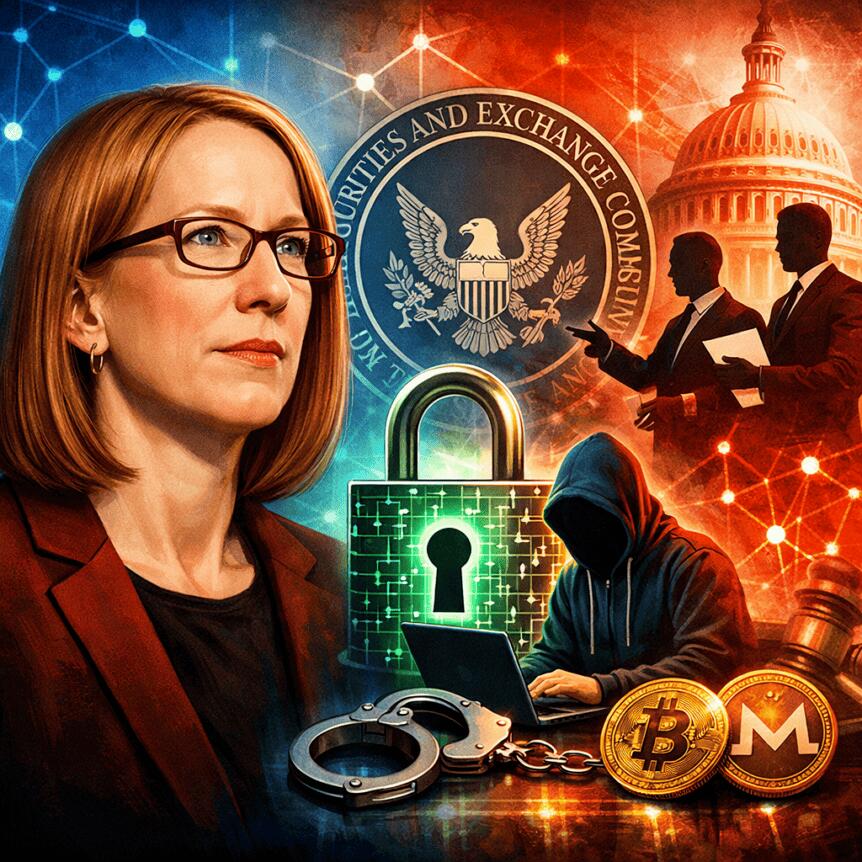
U.S. Securities and Exchange Commission (SEC) Commissioner Hester Peirce has flagged a growing undervaluation of financial privacy within U.S. regulation, urging policymakers to move away from treating privacy-preserving technologies with suspicion. Speaking at Georgetown Law, Peirce framed privacy-enhancing technologies as legitimate components of the modern financial ecosystem, not solely as tools associated with illicit activity.
According to a transcript published on the SEC’s website, Peirce argued that safeguarding financial privacy does not stand in opposition to national security objectives. “Empowering government to identify, pursue, and punish the bad guys is important to the security of the nation and its people, but so too is empowering people to protect information about their lives, including their financial lives,” she said.
Peirce emphasized that privacy technologies can help individuals shield themselves from hackers, scammers, and other malicious actors, and should not be construed as an opening for broader surveillance. She also urged developers building privacy-enhancing technologies to engage with the SEC’s Crypto Task Force, particularly on tools that could support Know Your Customer (KYC) and Anti-Money Laundering (AML) compliance requirements.
Key takeaways
- Privacy-preserving technologies are legitimate components of financial infrastructure and are not inherently tied to illicit activity.
- Protecting financial privacy does not conflict with national security objectives; both privacy protections and enforcement capabilities are necessary.
- Regulators are seeking constructive engagement with developers to align privacy innovations with KYC/AML obligations through the SEC Crypto Task Force.
- Global regulatory dynamics are evolving: the European Union is advancing MiCA and 2027 AML rules that could curb anonymous accounts and privacy-preserving cryptocurrencies.
- Industry activity in on-chain privacy tools—ranging from privacy-focused assets to private payment primitives for institutions—continues to shape compliance, licensing, and risk management considerations for firms operating in crypto markets.
Privacy in the regulatory mainstream and cross-border considerations
Peirce’s remarks situate privacy-enhancing technologies at the center of financial infrastructure discussions rather than at the periphery of enforcement. By highlighting that privacy and security can be complementary rather than mutually exclusive, she signals a regulatory posture that seeks to balance technology innovation with risk controls. The SEC’s framing appears to encourage a collaborative approach: privacy tools should not be viewed as antagonistic to regulatory objectives but as potential enablers of safer, more resilient markets when designed with compliance in mind.
Regulatory momentum and the EU policy landscape
The conversation about privacy in crypto is not limited to the United States. In the European Union, policymakers are integrating privacy considerations into a broader regulatory framework that aims to harmonize market integrity with consumer protections. MiCA (Markets in Crypto-Assets Regulation) and related AML policy developments are central to how privacy-preserving assets and tools will be treated across EU member states. Proposals under consideration could restrict anonymous accounts and limit support for privacy-focused cryptocurrencies, underscoring the cross-border regulatory risk for projects and institutions that rely on shielded transaction data or user anonymity features.
Legal experts warn that maintaining access to privacy-oriented digital assets remains a contentious and ongoing negotiation. Anja Blaj, a legal consultant at the European Crypto Initiative, described the ongoing struggle as a “constant battle” between the crypto industry and regulators over privacy policy and enforcement. This tension underscores the diverging regulatory trajectories that global firms must navigate when operating in multiple jurisdictions.
Industry developments and practical implications for compliance
Beyond policy debates, the market has seen tangible product developments aimed at enabling privacy without sacrificing onramp and oversight capabilities. For example, privacy-focused blockchain experiments and assets have attracted attention as firms seek to shield treasury movements, payment flows, or strategic trading data from competitors while preserving necessary auditability. In parallel, platforms have introduced privacy-enhanced features for institutional use, such as private payments or shielded transaction layers, designed to support regulated, compliant on-chain activity.
These developments illustrate a broader trend: institutions are pursuing privacy-aware architectures to reduce exposure to data leakage and profiling while remaining subject to KYC/AML, sanction screening, and licensing requirements. The implications for exchanges, custodians, banks, and other financial services providers include heightened emphasis on governance, data minimization, cryptographic risk assessments, and robust regulatory reporting capabilities. In this context, privacy technologies must be evaluated through the lens of risk management, policy alignment, and enforcement readiness.
Engagement, compliance, and the path forward
Peirce’s call for dialogue with the SEC Crypto Task Force points to a practical path for integrating privacy innovation with established compliance regimes. The task force serves as a channel for assessing how privacy-preserving tools can support or constrain KYC/AML objectives, licensing standards, and supervisory expectations. For crypto firms and financial institutions, this signals a need to document privacy-by-design approaches, establish auditable controls for data minimization and access, and maintain transparent governance around cryptographic privacy features.
Looking ahead, the regulatory landscape will continue to shape both product innovation and risk management. While privacy technologies can enhance user protections and resilience against crime, they also invite careful scrutiny to ensure that anonymity does not undermine anti-fraud measures or cross-border enforcement. For policymakers, the challenge lies in harmonizing privacy protections with the realities of global finance, while for market participants, the focus remains on building compliant, auditable privacy-enabled solutions that align with evolving licensing and oversight frameworks.
What comes next will hinge on ongoing rulemaking, enforcement actions, and collaborative efforts between regulators and industry players. Observers should monitor developments in MiCA and EU AML policy, the SEC’s ongoing Crypto Task Force initiatives, and cross-border regulatory formations that could influence the design and deployment of privacy-enhancing technologies in crypto markets.

A New York Bitcoin ownership lawsuit has triggered sharp legal criticism after plaintiffs sought control of 39,069 dormant wallets. The wallets reportedly hold about 3.7 million BTC, valued at nearly $286 billion. Ripple CTO Emeritus David Schwartz challenged the case and questioned its legal foundation.
Bitcoin Lawsuit Targets Dormant Wallets And Satoshi-Linked BTC
The lawsuit was filed by Noah Doe and two Wyoming-based companies, ABC Company and XYZ Company. They asked a New York court to award them control of inactive Bitcoin wallets. The filing claims the wallets qualify as abandoned property under New York law.
The plaintiffs argue they found a flaw that prevents the owners from using the wallets. They also reported the dormant addresses to the New York Police Department. Therefore, they say the wallets should receive treatment similar to lost property or unclaimed bank accounts.
The case filing includes addresses linked to Bitcoin creator Satoshi Nakamoto. It also names the 1Feex wallet connected to the Mt. Gox hack. That detail increased attention because the wallets hold major historical importance in the Bitcoin market.
Ripple’s David Schwartz Challenges Bitcoin Case Reasoning
David Schwartz criticized the lawsuit’s claim that New York has jurisdiction over the wallets. He said the argument relies on the idea that the property was found in New York. However, he described that reasoning as deeply flawed and legally weak.
Schwartz argued that Bitcoin wallets do not sit inside New York simply because someone reported them there. He said the case faces several major legal barriers. Moreover, he warned that a weak ruling could still create practical problems.
The Ripple executive said a favorable ruling for plaintiffs could affect future wallet movements. For example, funds moved to a United States exchange could face freeze requests. Plaintiffs could then claim those coins belong to them under the New York ruling.
BTC Ownership Debate Raises Wider Crypto Concerns
The lawsuit comes as old Bitcoin wallets continue to attract legal and technical debate. Many early wallets have stayed inactive for more than a decade. However, inactivity does not prove abandonment under standard ownership principles.
The filing also touches on one of Bitcoin’s most sensitive topics. Satoshi-linked BTC remains central to market history and public debate. Any legal attempt to control those coins would likely face strong challenges from the wider crypto community.
Schwartz warned that even a flawed ruling could cause damage without a timely challenge. He said courts sometimes treat old judgments differently after enough time passes. As a result, he urged serious attention before the case creates further legal risk.
Background Shows Growing Pressure Around Old Bitcoin Wallets
The case follows other debates about dormant Bitcoin holdings and possible protocol changes. Earlier, LayerTwo Labs CEO Paul Sztorc proposed a hard fork that drew attention to Satoshi’s BTC. The idea raised concerns before Sztorc later dismissed the seizure angle.
Old wallets remain difficult legal targets because blockchain ownership depends on private keys. Courts can issue orders, but networks do not transfer coins without valid signatures. Therefore, enforcement would likely depend on exchanges, custodians, and regulated platforms.
The New York case now places dormant Bitcoin ownership under a fresh spotlight. It also shows how legal claims can collide with blockchain design. For now, Schwartz’s criticism frames the lawsuit as a weak but potentially disruptive challenge.

US Securities and Exchange Commission (SEC) Commissioner Hester Peirce said financial privacy is becoming increasingly undervalued in US regulation, warning against treating privacy-preserving technologies with suspicion.
Speaking Wednesday at Georgetown Law, Peirce described privacy-enhancing technologies, including cryptographic tools, as legitimate components of modern financial infrastructure rather than tools primarily associated with criminal activity.
Peirce said that protecting financial privacy does not conflict with national security objectives.
“Empowering government to be able to identify, pursue, and punish the bad guys is important to the security of the nation and its people, but so too is empowering people to protect information about their lives, including their financial lives,” she said, according to a transcript published on the SEC’s website.
She added that privacy technologies can help individuals protect themselves from hackers, scammers and other malicious actors, and should not be viewed as “an opportunity for the government to watch more of what its citizens do.”
Peirce also encouraged developers building privacy-enhancing technologies to engage with the SEC’s Crypto Task Force, particularly on tools that could support Know Your Customer (KYC) and Anti-Money Laundering (AML) compliance requirements.
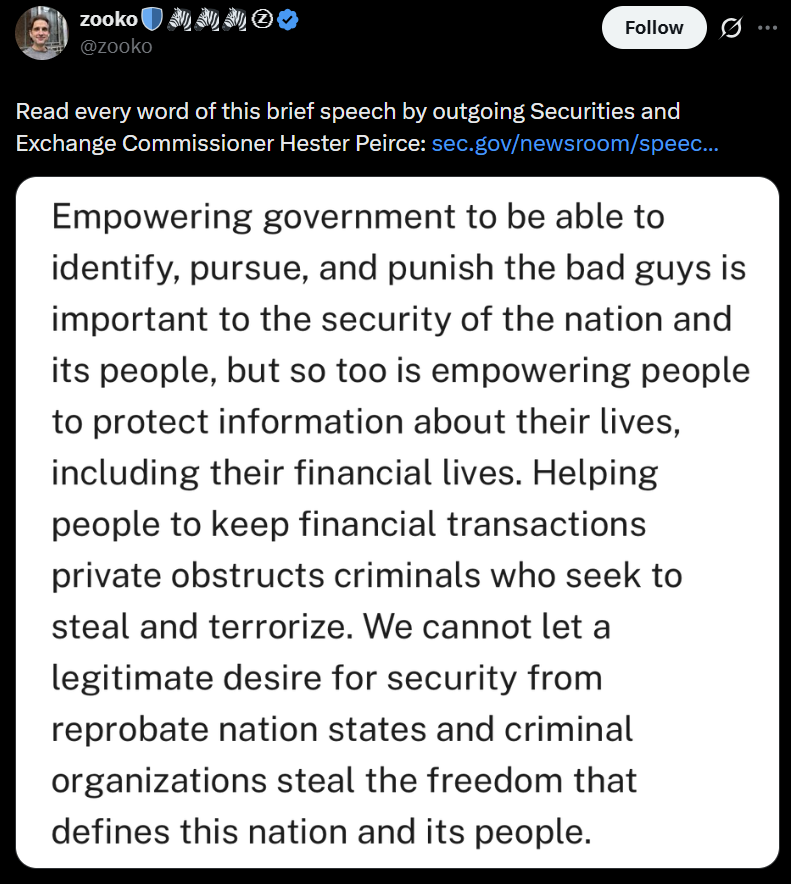
Source: zooko
Related: Tor Project to lead Web3 crowdfunding to support internet freedom
Privacy returns to crypto spotlight
Privacy and privacy-preserving technologies have long been one of cryptocurrency’s core use cases, with projects like Monero and Zcash built around shielding transaction data and user identities.
The debate returned to the spotlight over the past year as regulators and developers clashed over the role of privacy tools in crypto. While advocates argue these technologies protect users from surveillance, hackers and data exploitation, critics have raised concerns about their potential use in illicit finance.
The debate has also been taken up in the European Union, where regulators and blockchain industry participants are weighing new AML rules scheduled to take effect in 2027. Under the framework, credit institutions and crypto asset service providers would be prohibited from maintaining anonymous accounts or supporting privacy-preserving cryptocurrencies.
Maintaining access to privacy-focused digital assets has been a “constant battle” between the crypto industry and regulators, according to Anja Blaj, a legal consultant at the European Crypto Initiative.
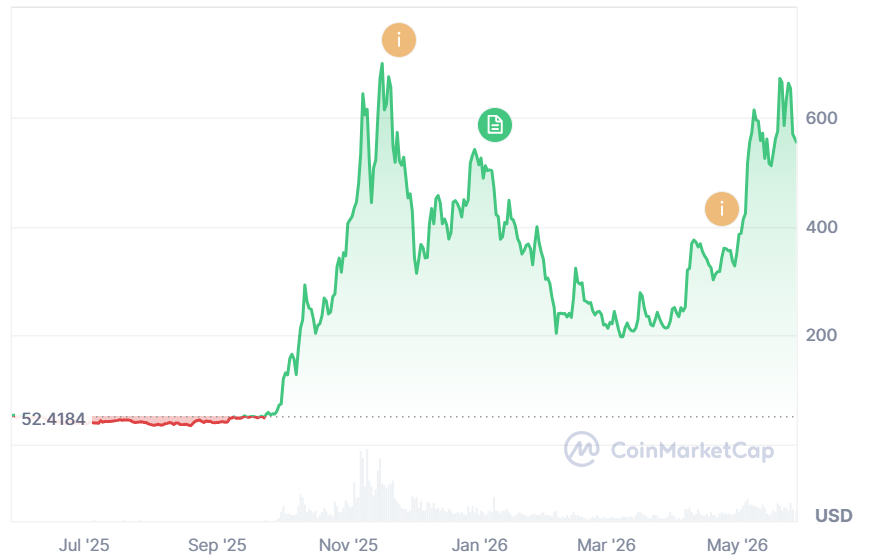
Growing interest in privacy-focused cryptocurrencies has helped drive Zcash prices sharply higher over the past year. Source: CoinMarketCap
At the same time, companies continue developing privacy-focused blockchain applications. Aptos unveiled a privacy-focused coin designed to help businesses transact onchain without exposing treasury movements, payment flows or trading strategies to competitors.
Polygon has also rolled out private stablecoin payments for institutions, positioning the feature as a way to support broader adoption of onchain transactions.
Related: Bitcoin developer launches privacy-focused Nostr VPN using public keys


Base, the Layer 2 blockchain incubated by Coinbase, activated its Azul network upgrade on mainnet this month, marking the chain's first independent protocol upgrade and a significant step toward Stage 2 decentralization. The upgrade launched on Base Sepolia testnet on April 21 and was targeted for… Read the full story at The Defiant


Ethereum treasury firm Bit Digital (BTBT) made its first ether (ETH) purchase since the October crypto market peak, but it’s already underwater on its acquisition as crypto prices are pulling back again.
The company said it bought roughly 8,568 ether (ETH) for $20 million on May 11, at an average price of $2,334 per token.
As ETH is currently trading near $1,980, the latest acquisition is already sitting on an unrealized loss of roughly $3 million, having gone down more than 15% over the past few weeks.
CEO Sam Tabar said the “timing reflects our view that market conditions had reset to a level consistent with our thesis.” In March, he argued on X that ETH’s weakness reflected leverage unwinding rather than deteriorating fundamentals. He pointed to stablecoin settlement, tokenized assets and AI-related transactions as long-term demand drivers for the network.
Bit Digital’s move stands out as most digital asset treasury firms have scaled back or stopped with their crypto accumulation plans over the past months. Falling crypto prices and widening discounts between their stock prices and underlying crypto holdings have pushed several firms to conserve cash, scale back buying or even sell assets to pay off debt.
The New York-based firm pivoted toward an Ethereum-focused treasury strategy from its bitcoin miner roots last year. The company now positions itself as a “Strategic Asset Company” focused on ETH accumulation, AI infrastructure and acquisitions.
The latest purchase lifted the firm’s treasury holdings to about 158,462 ETH, worth about $313 million at current prices, with part of its ETH staked directly and another portion deployed through liquid staking products to maintain flexibility.
The company also owns a controlling stake in high-performance computing firm WhiteFiber (WYFI), closely tied to the red-hot AI infrastructure buildout.

Key Takeaways
- Benchmark more than doubled its MRVL price target to $275 from $130 while reaffirming its Buy recommendation
- Following Q1 earnings, MRVL stock experienced an initial after-hours rally before retreating 3–4%
- Shares have surged 208% year-over-year, 126% in the last six months, and 26% in the past month alone
- Analyst optimism centers on accelerated revenue projections for fiscal years 2027 and 2028 spanning multiple product categories
- A wave of Wall Street firms—including Deutsche Bank, BofA, KeyBanc, Cantor Fitzgerald, and TD Cowen—have upgraded their price targets
Marvell Technology (MRVL) has emerged as a focal point for Wall Street analysts this week. Benchmark’s Cody Acree made waves Wednesday by more than doubling his price objective to $275 from $130, maintaining his Buy recommendation on the semiconductor stock.
Marvell Technology, Inc., MRVL
This aggressive revision followed Marvell’s release of first-quarter results that aligned with consensus forecasts, accompanied by second-quarter guidance slightly exceeding analyst projections. MRVL is currently changing hands near $196.32, translating to a market capitalization approaching $171 billion.
While shares jumped in extended trading immediately following the announcement, enthusiasm cooled as investors processed the results, with the stock declining approximately 3% to 4% by session’s end. Benchmark characterized this retreat as a natural recalibration of valuation expectations rather than evidence of deteriorating fundamentals.
The semiconductor company’s shares had already experienced a remarkable rally heading into the earnings announcement. MRVL has climbed 26% in just thirty days, advanced 126% over half a year, and skyrocketed 208% across twelve months. Such explosive performance naturally elevates investor expectations.
Why Benchmark Sees Significantly Higher Upside
Benchmark’s bullish stance extends far beyond the quarterly results themselves. The firm’s optimism stems from Marvell’s comprehensive multi-year AI infrastructure roadmap, which provided unprecedented granularity on growth trajectories across interconnect technologies, switching platforms, custom silicon solutions, AECs, retimers, data center interconnect, and scale-up optics.
The analyst firm specifically highlighted Marvell’s fiscal 2028 revenue framework projecting $16.5 billion and its fiscal 2029 custom-silicon ambitions as the primary catalysts justifying the elevated price target. Company leadership emphasized that scale-up switching capabilities and emerging optical programs remain largely ahead of current financial models—suggesting substantial untapped potential.
Valuation concerns persist, however. Trading at a P/E multiple of 65, MRVL appears expensive by traditional metrics. InvestingPro data indicates the shares are currently overvalued compared to Fair Value estimates. Yet the company’s PEG ratio of 0.16 implies the valuation premium may be warranted if Marvell’s aggressive growth trajectory materializes.
Widespread Analyst Enthusiasm
Benchmark represents just one voice in a growing chorus of optimistic Wall Street analysts. Deutsche Bank noted a modest Q1 beat while emphasizing a robust 12% sequential increase embedded in Q2 guidance, primarily fueled by Data Center segment strength.
BofA Securities elevated its fiscal 2027 and 2028 revenue forecasts, emphasizing Marvell’s diversified exposure across multiple technology verticals. KeyBanc increased its price objective based on accelerating demand for optical interconnect solutions driven by data center expansion and AI infrastructure deployment.
Cantor Fitzgerald similarly boosted its target, spotlighting AI-optimized infrastructure components as a critical growth vector. TD Cowen joined the upgrade cycle, identifying networking as a pivotal revenue driver going forward.
The critical question confronting institutional investors centers on how much of the fiscal 2028 and 2029 growth narrative is already reflected in the current share price—and whether emerging opportunities in optics and switching can deliver additional upside surprises.
MRVL was most recently quoted at $196.94, declining 0.89% during regular trading hours.

Crypto World
Bitcoin Crashes to $73,000 While Stellar (XLM) Defies Downturn With a 19% Surge: Market Watch
Crypto markets took a turn for the worse today, losing more than $100 million in total market capitalization.
This comes on the back of sharp intraday declines in Bitcoin, as well as the majority of large-cap cryptocurrencies. Derivatives markets also felt the pressure as liquidations surpassed $1 billion – a massive 24-hour increase.
Bitcoin Price Tumbles to $73K, What’s Next?
As soon as news that the US has resumed strikes on Iran and the latter retaliated immediately broke, the crypto market tanked.
Bitcoin is no exception. As the leading cryptocurrency, its price tumbled by more than 3.5% on the day, losing over $ 2,000 and reaching an intraday low below $73,000 before recovering slightly to its current level.

The consensus is that the drop is largely attributable to the military escalation, but it’s also worth noting that a massive $1.3 billion block sale took place the other day, in which someone liquidated a whopping 29 million shares of BlackRock’s IBIT spot Bitcoin ETF. It’s the largest single-day sale in the product’s history, executed just before today’s drop.
Legacy markets remain relatively flat, with the S&P 500 holding its position, suggesting that Wall Street doesn’t seem to take what’s happening between the US and Iran right now very seriously. Oil prices have also initially increased but then started to decline.
Stellar (XLM) Prints 18% Daily as Altcoins Falter
As you can see in the heatmap below, the altcoin market is almost entirely painted red. Pretty much all of the major altcoins are charting considerable losses, more or less in line with Bitcoin.
For instance, BNB, XRP, ETH, DOGE, LTC, AVAX, and many others are down between 3% and 4%, while other coins like TRX, HYPE, and TAO are down more than 6%.
One that stands out from the crowd is Stellar. XLM is up by a whopping 19%, at the time of this writing, completely decoupling from the rest of the market. Other good performers include RAIN, which is up by 9%, building further on yesterday’s gains.

The post Bitcoin Crashes to $73,000 While Stellar (XLM) Defies Downturn With a 19% Surge: Market Watch appeared first on CryptoPotato.


Bitcoin has slipped out of the world’s top 10 assets by market capitalization, with its value down to about $1.09 trillion as U.S. tech giants in the “Magnificent Seven” power higher.
Summary
- CoinDesk says bitcoin’s market cap has fallen to $1.09 trillion, knocking it out of the global top‑10 asset ranking.
- Gold, silver and every member of the Magnificent Seven now sit ahead of bitcoin on the league table of global assets.
- The drop follows a period when bitcoin had previously ranked as high as the fifth‑largest asset worldwide at over $2 trillion.
Bitcoin’s (BTC) slide down the asset leaderboard was flagged by CoinDesk, which posted that “$BTC drops out of the top 10 largest assets globally, with its market cap falling to $1.09T, behind gold, silver and every member of the Magnificent Seven.” Real‑time ranking site CompaniesMarketCap shows that puts bitcoin outside the top tier of global assets, after a period in 2025 and early 2026 where it had consistently jostled with mega‑cap tech firms and commodities for position.
From fifth‑largest asset to the second tier
This is not the first time bitcoin has moved dramatically up and down the global rankings.
In April 2025, for example, Yahoo Finance reported that bitcoin had become the fifth‑largest asset on earth with a market cap of about $1.86 trillion, overtaking Alphabet as its price broke above $94,000.
Other analyses, such as a piece on Coinfomania, noted that bitcoin later pushed past a $2 trillion market cap, briefly cementing its place as the fifth‑largest asset globally and putting it ahead of Google while trailing Nvidia. Even earlier, in early 2024, data collated by CryptoRank highlighted that bitcoin had cracked the top‑10 club by value, surpassing Berkshire Hathaway and JPMorgan to become the 10th‑largest asset at a market cap around $1.19 trillion.
What has changed over the last stretch is less that bitcoin has collapsed, and more that everything around it has inflated. As of the latest CompaniesMarketCap snapshot, aggregate global equity values top roughly $148 trillion, with the Magnificent Seven stocks alone approaching or exceeding $16 trillion in combined market cap and gold’s estimated capitalization near $30 trillion at record prices above $4,300 per ounce.
According to one recent analysis of the group on Investopedia, Nvidia, Microsoft, Apple, Alphabet, Amazon, Meta and Broadcom now dominate major equity indices, with the seven together worth around $16 trillion as of late August 2025.
Separate work comparing the Magnificent Seven to crypto markets by CoinGecko Research found that, over a five‑year window through mid‑2024, bitcoin and ether together represented less than 10% of the combined value of those seven tech giants.
Ranking optics versus the $1 trillion line
That context explains why some traders in the X replies to CoinDesk’s post were quick to dismiss the ranking milestone as more cosmetic than structural. One account argued that “falling out of top 10 while still sitting at $1.09T just means the mag seven had a good week, BTC has re‑entered and exited that list four times in two years. The ranking is noise, the $1T floor holding is the actual data point.”
On‑chain and macro‑focused outlets have made similar points when parsing bitcoin’s valuation against crisis backdrops. In March, newsletter outlet TFTC highlighted how bitcoin “barely moving, hovering around $67,000” with a roughly $1.09 trillion market cap during a sharp oil spike and global equity sell‑off suggested a form of emerging structural resilience, even as bitcoin’s rank versus tech stocks and commodities seesawed.
Put differently, bitcoin’s fall out of the top 10 club says as much about the Magnificent Seven’s continued melt‑up and gold’s blow‑off run as it does about crypto weakness. For long‑term holders who have watched bitcoin move from a curiosity to, at times, the fifth‑largest asset on earth, the more existential question is whether that $1 trillion market cap zone will keep acting as a floor—or whether the next macro shock knocks it down to a very different part of the table.


Asset manager VanEck has launched the first U.S. exchange-traded fund offering spot exposure to BNB, further expanding its crypto ETF offerings.
The VanEck BNB ETF, trading under the ticker VBNB, began trading with shares backed by BNB held in cold storage through custodian Anchorage Digital Bank, according to the company. The fund carries a sponsor fee of 0.39% and is listed on Nasdaq.
The ETF gives investors exposure to BNB through traditional brokerage accounts without requiring them to buy or store the token directly. BNB is the native token of BNB Chain and is used to pay network transaction fees across the blockchain ecosystem.
VanEck said BNB Chain processes more than 14 million transactions per day and supports over 2.5 million daily active users. The firm also cited Artemis data showing the network holds more than $16 billion in stablecoins and $3.6 billion in tokenized real-world assets.
The launch follows amended filings from VanEck and Grayscale tied to proposed spot BNB ETFs.
Spot bitcoin ETFs launched in the U.S. in January 2024, followed later by spot ether ETFs. These have since seen their total net assets surge to $86.45 billion and $11.6 billion respectively, according to SoSoValue data. ETFs for other altcoins including SOL, DOGE, HYPE, and XRP have since also been launched.

Super Micro Assists Taiwan in Smuggling Investigation
Super Micro Computer announced that its cooperation with Taiwanese authorities helped arrest three suspects linked to an AI server smuggling operation targeting China. The company also confirmed that officials stopped 50 servers from entering China through unauthorized channels.
The Super Micro AI server smuggling case involved servers that authorities said individuals deceptively acquired through an authorized reseller. Super Micro stated that it had followed a strict vetting process that exceeded regulatory compliance requirements before the products changed hands.
The investigation comes as US export controls continue to restrict advanced AI technology shipments to China. Super Micro builds AI servers powered by Nvidia chips, including GB200, B200, H200, and H100 systems. These products remain in high demand across global artificial intelligence markets.
Super Micro said it launched an internal investigation in April involving three individuals connected to an alleged conspiracy to violate export control rules. Taiwanese prosecutors later pursued detention requests against suspects accused of forging documents to move the servers into China.
Jensen Huang Urges Stronger Compliance Measures
Jensen Huang recently urged Super Micro to strengthen its compliance procedures following the smuggling allegations. Speaking in Taipei, Huang stated, “Ultimately Super Micro has to run their own company. I hope that they will enhance and improve their regulation compliance and avoid that from happening in the future.”
The Super Micro AI server smuggling investigation has increased attention on the responsibilities technology firms face under US export laws. Nvidia’s advanced AI chips have remained under restrictions designed to limit China’s access to high-performance computing technology.
At the same time, Chinese authorities have introduced measures aimed at reducing reliance on foreign semiconductor products. Those policies have intensified competition within the AI hardware sector and increased scrutiny around international technology trade.
The case also drew attention after US prosecutors charged Super Micro co-founder Yih-Shyan “Wally” Liaw in a separate investigation involving allegations of diverting Nvidia-powered servers to China. Liaw later resigned from the company’s board. Super Micro stated that authorities did not accuse the company itself of wrongdoing.
Investors’ Reaction to SMCI Shares
Investor sentiment improved after details of the Super Micro AI server smuggling investigation became public. Super Micro shares climbed more than 11% during Thursday trading, while Nvidia shares also moved higher.
Source: TradingView
Retail traders on Stocktwits showed bullish sentiment toward SMCI stock. Some investors pointed to improving company margins and its cooperation with regulators as positive signs for future performance.
SMCI shares have gained 44% since the start of the year, while Nvidia shares rose 14% during the same period. Semiconductor-related exchange-traded funds also posted strong gains over the past year as demand for AI infrastructure continued to grow.

SEC’s Peirce Defends Crypto Privacy Tools as Regulators Tighten Rules

60 Minutes’ Sharyn Alfonsi Contract Not Renewed Amid Clash

#money #tarot #888tarotcardreadingrashifal


-

 Fashion6 days ago
Holiday Weekend Open Thread – Corporette.com
-

 Politics3 days ago
Bridgerton Season 5: Cast, Release Date And Everything We Know So Far
-
 Crypto World7 days ago
Bitcoin Accumulation Weakens as BTC Realized Losses Hit $600M
-

 Crypto World6 days ago
Robinhood crypto COO Tanya Denisova exits
-

 Business7 days ago
Trump Invests $1M-$5M in Kura Sushi USA Chain With 27 California Locations
-

 Tech3 days ago
Microsoft’s quiet Claude Code retreat and the real cost of enterprise AI
-

 Business4 days ago
NYT Strands Answers May 24 2026 Revealed for Puzzle No. 812 Theme Summer Essentials
-

 Business6 days ago
Dell Technologies DELL Stock Surges 15% on AI Server Momentum and Analyst Upgrades in 2026
-

 Business2 days ago
Selena Gomez Reportedly Upset Over Benny Blanco’s Comments on Her ‘Terrible’ Diet
-
 Crypto World2 days ago
Micron Crosses $1 Trillion Market Cap as AI Demand Reshapes Memory Sector
-

 Politics6 days ago
Makerfield: a tale of two social-media histories
-

 Crypto World6 days ago
Space X IPO Is ‘Bad News’ for Tech Stocks: But What About Bitcoin?
-

 Business4 days ago
BTS Sells Out Four Las Vegas Shows at Allegiant Stadium for ARIRANG World Tour
-

 Tech7 days ago
WhatsApp ads could make Irish debut after discussions with DPC
-
 Crypto World7 days ago
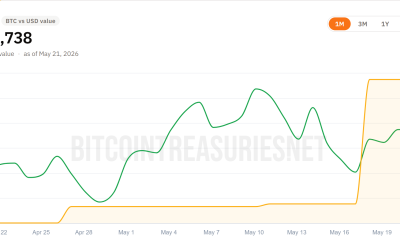
MicroStrategy’s Saylor Says Miners No Longer Set Bitcoin Price, Another Force Has Taken Over
-
Tech1 day ago
The Samsung pay deal is the moment Korean unions changed register
-
 Tech6 days ago
A 0.12% parameter add-on gives AI agents the working memory RAG can’t
-

 Tech3 days ago
Westone Audio and Etymotic Acquired by Fidelity Collective in Major IEM Market Move
-

 Tech2 days ago
Millions of AI agents imperiled by critical vulnerability in open source package
-

 Crypto World6 days ago
AI infrastructure race heats up as IREN pitches full-stack strategy, WhiteFiber lands $160M deal
You must be logged in to post a comment Login