Connect with us
DAPA Banner
DAPA Coin
DAPA
COIN PAYMENT ASSET
PRIVACY · BLOCKDAG · HOMOMORPHIC ENCRYPTION · RUST
ElGamal Encrypted MINE DAPA
🚫 GENESIS SOLD OUT
DAPAPAY COMING

NewsBeat

William Adams, the Bombay bureaucrat whose vision of a solar future was dashed by colonial conservatism

Published

on

William Adams, the Bombay bureaucrat whose vision of a solar future was dashed by colonial conservatism

William Adams was entranced by energy. As a young man, his interest was nursed by working as a clerk in a London patent office in the 1860s. This gave him an early look at some of the first British designs for exploiting solar energy using mirrors, water or both.

Adams would later recount his excitement at reading about the French mathematician Augustin Mouchot’s invention of the first machine ever to run on energy from the Sun. The device, which connected a solar boiler to a specifically designed steam engine, was warmly received by Napoleon III when it was presented to the emperor in 1866.

Inspired, Adams soon designed and patented his own rudimentary solar boiler. The only problem was, he needed more sun.


Advertisement

This series is dedicated to lesser-known, highly influential scientists who have had a powerful influence on the careers and research paths of many others, including the authors of these articles.


When offered the chance to become deputy registrar of Bombay by the Indian city’s governor, Sir Philip Edmond Wodehouse, Adams jumped at the opportunity. There, he became the first Briton to design, build and test a fully-functioning solar steam engine fit for industrial purpose.

But he also came up against the conservatism of India’s colonial rulers, who did not see this Bombay bureaucrat for the energy visionary that he undoubtedly was.

‘The rays beat like missiles’

Adams arrived in Bombay in 1873 to find it in the middle of a cotton boom, with mills popping up like mushrooms across the city. The population was growing so quickly that firewood was depleted for miles around. The landscape grew “bald as a billiard ball”, as Adams put it.

Advertisement

Every morning before setting off for work near Bombay’s central fort, Adams would set up his outdoor laboratory at his home in the southernmost Colaba district, near the open sea. He instructed an Indian fundhi (skilled carpenter) to build a set of three-tiered wooden shelves to hold 18 looking glasses.

“Each glass was moveable on a swivel in the same manner as an ordinary toilet glass”, Adams explained, meaning he could pivot each glass by “the touch of the finger”.

An engraving showing Bombay cotton yards in the 19th century.

Cotton yards sprang up all over Bombay in the latter half of the 19th century.
Art Collection 3/Alamy

Later, for open-air experiments, Adams used two banks of mirrors (36 in total) which made “the mercury in the thermometer boil, leaping up to over 670 degrees fahrenheit”. He then placed a copper cylinder containing three gallons of water in the focus of all 36 mirrors, making it boil in exactly 20 minutes.

But Adams’s ambition did not end there. To reach sufficient pressure in the boiler to drive a steam engine, this bureaucrat-cum-engineer built a giant concave mirror, 24 feet in diameter. He then sent for his London solar boiler, which was delivered by ship to Bombay in 1876.

Advertisement

One fine morning, Adams – wearing dark glasses for safety – turned his giant concave mirror on the copper cylinder filled with water. “The rays beat like missiles in a continuous and incessant storm of solar fire,” he wrote.

An hour later, the cylinder registered 55 pounds of pressure per square inch. He hired a steam engine of 3 horsepower and connected it to the boiler: the pressure moved the pistons. Adams had built the first working, British-designed solar steam engine.

For a fortnight, he kept the pump going near his bungalow in Colaba – proudly and sweatily displaying his innovation to government officials, newspaper reporters, mill owners and the local Indian communities. Members of the public were invited to witness his experiments too, via a notification in a Bombay newspaper.

Advertisement
Engraving showing William Adams's design for a portable solar cooking stove.

Adams’s design for a portable solar cooking stove.
Illustration from Cooking by Solar Heat by William Adams in Scientific American (1878), CC BY-NC-ND

‘An inexhaustible source of wealth’

In 1877, Adams wrote a letter to the editor of the Times of India arguing that the application of his solar steam engine would “make India the seat of the principal manufacturing industries of the world”.

Later, in his wildly ahead-of-its-time treatise Solar Heat: A Substitute for Fuel in Tropical Countries (1878), Adams argued that countries near the equator “possess, in their clear skies, a gratuitous and inexhaustible source of wealth, equal to that which western nations have to dig, with infinite labour and toil, from the bowels of the Earth”.

Adams sketched out plans to use solar heat for everything from cotton gins (engines to separate cotton fibres from seeds) to Hindu crematoria. He called upon the colonial British government to invest in this promising substitute for coal, which was then being imported to India at great expense.

Adams envisioned solar energy transforming the Raj. Just like the coal-combusting steam engine had replaced the waterwheel in England, he argued that thermal heat could now replace fossil fuels in India. But his colonial bosses were not persuaded.

‘Too subversive’

Adams was part of a 19th-century wave of global research into solar steam engines, as I explore in my postdoctoral project and upcoming book. But in contrast to fellow pioneers including Frenchman Mouchot, Adams built his solar steam engine to stimulate local Indian industry, not to benefit the colonial government.

Advertisement

The locals shared Adams’s belief in this technology. One even wrote to Scientific American magazine to express their desire for the rapid adoption of solar power:

My residence is in a tropical part of India … where fuel is scarce and dear … In this part of the country (about 300 miles north of Bombay), there is a great opening for cheap power in small units.

Bombay’s new governor Sir Richard Temple concluded, however, that solar heat “could not be used for commercial purposes on a large scale”. He argued that local factory owners would not like giving “the workmen a holiday on days when the sky is not clear”.

In truth, Adams’s invention was too subversive for Britain’s colonial officials and capitalists. In less sunny climes, solar energy – tethered to the seasonal rhythms of nature – might negate their commercial ambition for timeless industrial production. But they also saw India as an important market for British coal exports.

Advertisement
A huge solar power plant in western India.

AMPIN Energy’s solar power plant in Bhadla, western India. India is now the world’s third biggest generator of solar power.
Sarvajanik Puralekh/Wikimedia Commons, CC BY-SA

While a few mill owners adopted Adams’s auxiliary solar heater for their steam engines, most regarded it as a primitive contraption unfit to satisfy the demands of modern civilisation.

Increasingly frustrated that neither the industrial capitalists nor the colonial government supported his vision, Adams abandoned further experiments. His dream of India switching away from coal to solar power, from combustion to concentration, would not happen for at least another century.

Now, however, India is a world leader in the global energy transition. It heads the International Solar Alliance, and is the third largest solar power generator in the world.

Which begs the question: how much further advanced would this technology be had Adams’s 19th-century solar experiments been embraced by India’s colonial rulers at the time?


Advertisement

Source link

Continue Reading
Click to comment

You must be logged in to post a comment Login

Leave a Reply

NewsBeat

Brad Pitt’s son Maddox seeks to drop father’s surname

Published

on

Brad Pitt's son Maddox seeks to drop father's surname
Brad Pitt has reportedly become increasingly estranged from several of his children (Picture: AFP via Getty Images)

Brad Pitt once had six children all carrying his rather famous surname. These days, it’s becoming increasingly difficult to find one who still uses it.

Maddox Jolie-Pitt has reportedly become the latest of the actor’s children to distance himself from the family moniker, filing to change his name to Maddox Chivan Jolie.

The 24 year-old is said to have listed the reason for the request simply as ‘personal’.

Angelina Jolie shares six children with her former husband (Picture: R.J. Johnston/Toronto Star via Getty Images)

While the legal filing is new, the switch itself may not come as much of a surprise to the Fight Club actor. Earlier this year, Maddox appeared in the credits of his mother Angelina Jolie’s film Couture as ‘Maddox Jolie’, dropping the Pitt surname altogether.

More significantly, he’s far from the first sibling to do so. Last year, Shiloh legally changed her name from Shiloh Nouvel Jolie-Pitt to Shiloh Jolie shortly after turning 18. Her lawyer later described it as an ‘independent and significant decision’ and said she was merely following the legal process required to make the change.

Advertisement
Maddox (far right) is reported to have applied to change his surname to just ‘Jolie’ (Picture: Dimitrios Kambouris/Getty Images for FLC)

Zahara has also publicly moved away from the double-barrelled surname. During a sorority ceremony and later at her graduation from Spelman College, she was introduced as Zahara Marley Jolie rather than Zahara Jolie-Pitt.

Then there’s Vivienne, who appeared as ‘Vivienne Jolie’ in the playbill for the Broadway musical The Outsiders. So that’s now four siblings and four variations on the same message.

The former couple’s split continues to cast a long shadow over the family (Picture: Omer Cetres/Anadolu via Getty Images)

The growing distance between Pitt and several of his children has become one of the most visible legacies of his split from Jolie. Hollywood break-ups rarely stay private. Few, however, have continued to generate headlines quite as consistently as this one.

The roots of the family divide stretch back to a private jet flight in 2016. Days later, Jolie filed for divorce and later alleged that Pitt had physically and verbally assaulted members of the family – including the Tomb Raider and Salt star – during the journey.

In legal filings connected to an FBI investigation, Jolie claimed that Pitt argued with Maddox during the flight and put his hands on the then-15 year-old. Pitt has repeatedly denied the allegations and the FBI ultimately cleared him of wrongdoing.

Several of the couple’s children have publicly moved away from the Pitt surname (Picture: GONZALO/Bauer-Griffin/GC Images)

Nearly a decade later, reports continue to suggest that relationships within the family remain pretty strained. Maddox and his brother Pax are frequently cited as being the most distant from their father.

Pax previously made headlines after sharing a blistering social media post aimed at Pitt.

Advertisement

People close to Pitt have consistently rejected suggestions that he has given up on his children. Sources have maintained that he wants a relationship with all six and hopes that some of the divisions can eventually heal.

Although this latest news seems unlikely to indicate that any mending of relationships is on the horizon.

The 24 year-old previously appeared in credits as Maddox Jolie rather than Maddox Jolie-Pitt (Picture: John Berry/GC Images)

Those close to Jolie have offered a very different interpretation, arguing that the fractured relationships are a consequence of Pitt’s own actions.

Maddox was adopted by Jolie from Cambodia in 2002 before Pitt later adopted him after joining the family. More than two decades later, his decision to reportedly drop the Pitt surname appears to be the latest sign that the family divide is now deeper than ever.

Advertisement

Source link

Continue Reading

NewsBeat

Teva shoes review, tested by an experienced hiker

Published

on

Teva shoes review, tested by an experienced hiker

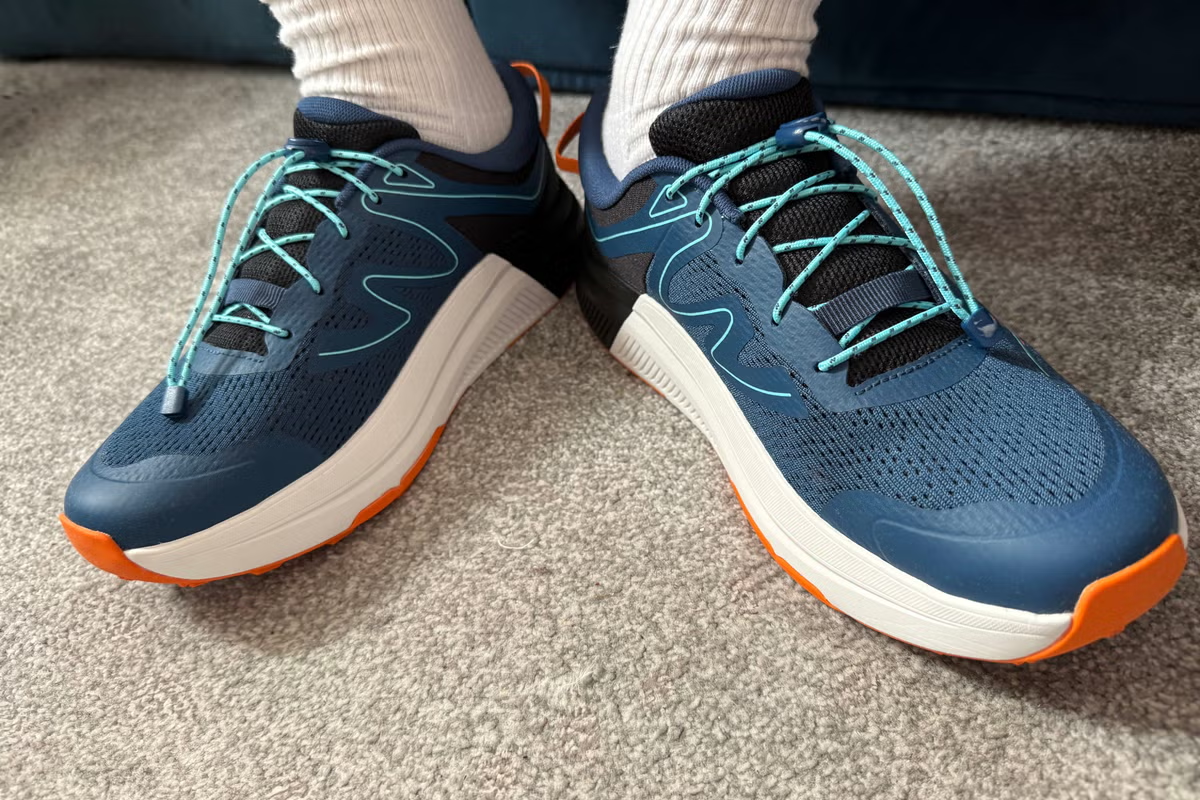
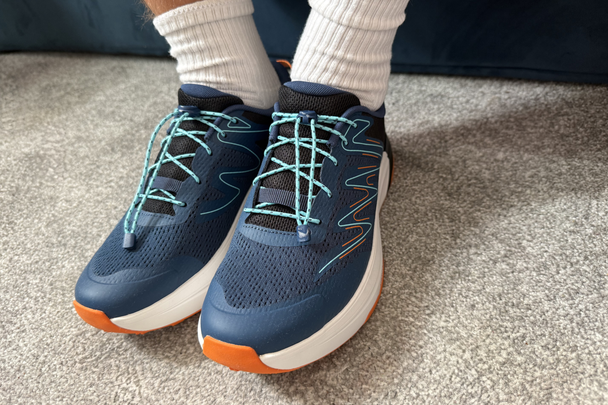
Kitted out with our Teva hurricane trailsetters in the respective men’s and women’s varieties, my partner and I set off on a loop walk through the South Downs.

Immediately we were both impressed with how spongy the shoes felt, having upgraded from the Craghoppers adflex low 2s. In my experience, the adflex shoes provided the brunt of their support via a firm fit, which secured the foot solidly in position. By contrast, I’d argue the trailsetters went one step further in planting my feet and ankles, combining an anchored feel with the brand’s ‘hyper-comf’ sponge to absorb reverberation and counteract the impact of hard, unpredictable ground.

The shoes were tested on sharp inclines and different types of terrain (Lucy Smith/The Independent)

As any well-versed hiker and tamper knows, loose scree and dry, dusty paths can leave you slipping and sliding all over the place, so a reliable tread and grip is essential. Along with your grip, you want to feel as though your ankles aren’t at risk of rolling as you traverse boulders, ditches and the like. While a hiking boot provides the utmost ankle support, a low hiking shoe like the trailsetter can be enough – so long as it’s been well designed.

The trailsetters are equipped with directional lugs (3D traction pads) on their soles, which ensure you’re able to brake from the heel and pick up speed from the toe. On top of the stop-start improvements these bring – specifically, I was able to come to firm halt after quickly descending a steep track – the lugs give your feet more purchase to bear your weight over tricky terrain, without rolling any ankles or, worse, taking a tumble.

Advertisement
teva hurricane trailsetters indybest
The drawstring tie takes a matter of seconds to secure (Lucy Smith/The Independent)

Circling back to the appeal of a low hiking shoe (instead of a boot), you can’t overlook the ease putting them on and off. On my year spent travelling New Zealand, including hiking a number of its great walks, my accommodation spanned scant tents and a low-roofed van. This meant that the task of donning my cumbersome hiking boots with their 16 lace-eyelets wasn’t the most appealing when I simply needed to run to the campsite loo in the early hours.

If you’re someone who frequently plans multi-day hikes, I’d urge you to consider the trailsetter’s low profile. You simply have to slide your foot into the shoe and pull the handy bungee drawstring. No water-logged laces, no impenetrable knots and a significantly lighter weight in your rucksack.

Admittedly, the trailsetters aren’t a perfect pick for marshland and extreme rain given they’re not waterproof. That said, with a rubber reinforcement across the toe, they’re definitely up to the task of April showers and muddy paths. In fact, they kept my feet entirely dry through a long, grassy field that was covered in morning dew.

Ultimately, at £115, Teva’s trailsetters – for both men and women – are a great mid-range pick. They’re not quite base camp material, but they won’t let you down on easy to moderate hikes such as Snowdon or the Seven Sisters. Providing, that is, that it’s not raining cats and dogs outside for the entirety of your excursion. Happy adventuring!

Source link

Advertisement
Continue Reading

NewsBeat

Gaza war has driven some mothers to marry off young daughters

Published

on

Gaza war has driven some mothers to marry off young daughters

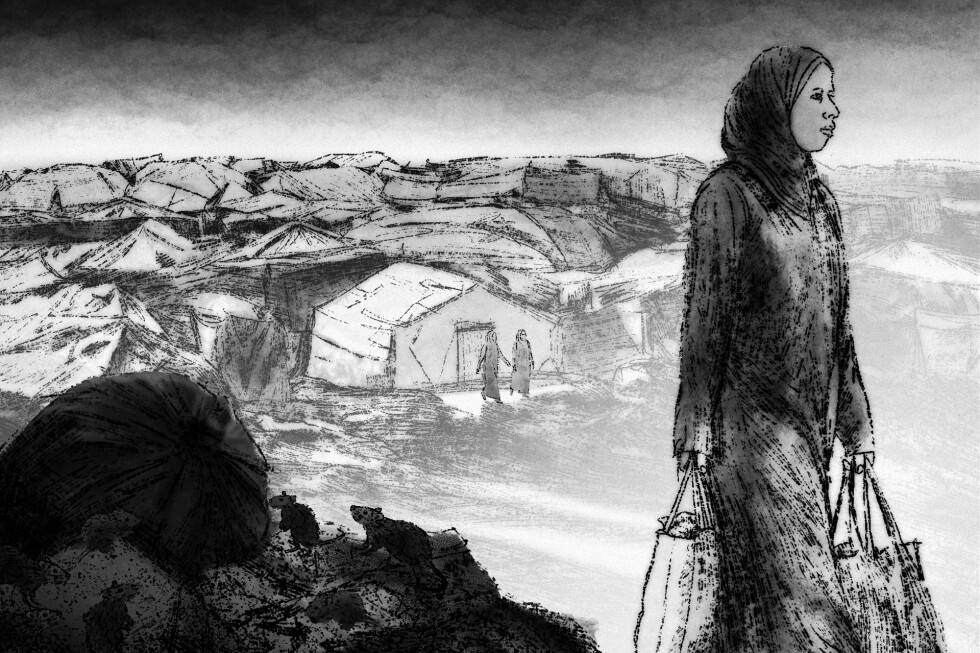
DEIR AL-BALAH, Gaza Strip (AP) — Majda was destitute. Her husband and eldest son had been killed by Israeli airstrikes. Living in a ragged tent in Gaza with rats and the stench of sewage, she couldn’t support her children and feared her daughters would be harassed going to the communal latrine in a camp with hundreds of strangers.

So she made a decision she now deeply regrets. She married off her 13- and 14-year-old daughters to men who promised safety and support.

“I thought I was protecting them,” she said. “Fear was slaughtering me.”

The devastation that Israel’s campaign has wreaked in Gaza has helped fuel an increase in marriages of young girls, according to experts and official data. With almost the entire population driven from their homes, most living in squalid camps and dependent on aid, some parents have sought some financial stability for their teen daughters by giving them away in marriage.

Advertisement

For the girls, it meant a loss of their childhood and future — and, often, dangerous pregnancies.

For Majda’s daughters, it meant horrific physical abuse.

Child marriage was declining before the war

Before the war, child marriage had been slowly declining in Gaza, according to the Palestinian Central Bureau of Statistics. In 2022, the last tally released by the bureau, 17.8% of marriages involved a girl under the age of 18, down from more than 22% in 2015.

Advertisement

The minimum legal age for marriage in Gaza is 17, with some exceptions allowed; the U.N. and most humanitarian groups categorize marriages of girls under 18 as early marriage.

That trend appears to have reversed.

After an Associated Press request, the Supreme Shariah Court in Gaza, where marriages are registered, gathered data from court employees. According to its figures, 20.6% of the 35,474 marriages recorded in 2024 and 2025 involved a girl under 18, including 627 marriages of girls under 15.

The real rate could be much higher because many marriages went unregistered during the chaos of the war, said Amal Siyam, director of the Women’s Affairs Center in Gaza. The number of marriage contracts recorded by the court dropped 35% in 2024, the first full year after Hamas’ Oct. 7, 2023, attack triggered the war.

The AP spoke to six girls in Gaza who got married between 13 and 16 and their parents, all on condition they not be identified by their full names because of the deep sensitivity of the issue. The AP does not identify rape victims. Majda agreed to be identified by only her first name.

Advertisement

All of the parents said that if not for the war, they would have never resorted to marrying off their daughters so young.

One mother is paralyzed by grief

After her husband and son were killed in separate strikes in April 2024, Majda descended into severe depression.

She begged the doctors for sedatives, which kept her asleep for days at a time. She couldn’t care for her girls in their patched-up tent by the sea, battered by wind, cold and rain in the winter. Charity kitchens, on which they depended for food, were scarce and irregular.

“I was entirely shaken from the inside,” Majda said.

Advertisement

Two brothers in their 20s, from a family that had been their neighbors in Gaza City before they were all forced to flee, asked to marry her daughters.

Majda, who got married at 14, didn’t want a similar fate for her girls. But her father joined the brothers’ family in insisting it was the only way. They promised, Majda said, that they could sign the marriage contracts but wait until after the war to bring the girls to live with their husbands.

“I was not in my right mind. I am still not in my right mind,” Majda said. “I don’t know how I agreed to this.”

Majda’s eldest daughter, who was 14 at the time, didn’t want to accept. “I felt lost,” the daughter said. “I thought if I got married, someone would be financially responsible for me … I truly regretted it.”

Marriage is seen as a way to ease the family burden

Most of the girls who spoke to the AP said they were not coerced by their parents to marry. But they felt a duty to ease the burden on their families.

Advertisement

By marrying, they were counted with their husbands as a separate family to receive aid from relief groups, rather than being under their parents’ allotment. Several girls also said that since schools largely shut down during the war, they saw no hope of continuing their education.

One girl said she and her parents and seven brothers and sisters were displaced more than 25 times during the war. Her father had been totally against early marriage and wanted her to enroll in university. But the family was so desperate that he agreed to a suitor.

She said she agreed as well. She was 16.

“I couldn’t forgive myself for taking a share of the little food my family had,” she said. She also worried that she and her siblings would be left without support if her parents were killed in an airstrike. Now 17, she was five months pregnant when she spoke to the AP.

Another girl also cited her family’s multiple displacements, each draining the little money they had. When they were sheltering at a hospital in Khan Younis, a 25-year-old man staying there asked to marry her. Then 17, she said she agreed.

Advertisement

“Marriage felt like the only sense of normalcy I could restore to my life,” she said.

The law in Gaza allows exceptions to the minimum age of 17 with parental consent and authorization by a judge. The Supreme Shariah Court has rules for court officials not to approve exceptions below the age of 14 years and seven months.

But parents sometimes enter informal agreements without officially registering the marriage. Two mothers who spoke to the AP did so, one of them after an official refused because her daughter was 14.

In the Israeli-occupied West Bank, the Palestinian Authority in 2019 set the minimum age at 18, and early marriages have plunged since to around 5%, according to official statistics.

Advertisement

Siyam said that at times of widespread displacement in conflicts with Israel, some Palestinians have seen marriage as a way to bring stability for their daughters. “Wars and conflicts lead to a return to more conservative traditions,” she said.

Younger girls who marry are more vulnerable to rape and violence, including abuse from in-laws as they load household chores on them, Siyam said. Because divorce rates in early marriages are high, “the girl ends up returning home with one or two children.”

Some girls were abused and fled

Majda said the in-laws broke their promise and soon demanded her elder daughter be brought to her 23-year-old husband, who was living in his family’s tents in Deir al-Balah.

For the first 10 days, the girl screamed whenever her husband approached her. “I kept screaming and he hit me,” the elder daughter said.

Advertisement

Eventually, his mother “tied up my hands above my head,” the daughter said. The husband then raped her.

After that, he repeatedly threatened to bring his mother to tie her up if she screamed, she said. She recounted repeated instances of rape and said on one occasion, she had to be taken to the hospital with bleeding.

A few months later, the family came to take her 13-year-old sister to join her 21-year-old husband. She “kept screaming that she did not want to get married,” Majda recalled.

The younger sister told the AP that she too was tied up by her mother-in-law and raped by her husband. She said she had two miscarriages, both after her husband kicked her while she was pregnant.

Advertisement

Majda’s elder daughter gave birth to a son. Months later, in November, she fled, carrying her son for 15 kilometers (9 miles) to her mother’s tent.

Not long after that, the younger sister also fled back to Majda. They then discovered that she was pregnant.

Girls experienced high-risk pregnancies

The maternity ward of Awda Hospital in central Gaza saw an increase in the rate of teenage pregnancies during the war, said the ward’s head, Yasser Shaaban. Many suffered severe health complications from getting pregnant so young, he said.

On top of that, the vast majority were malnourished, as Israeli restrictions on aid drove Gaza’s population to the brink of famine at times.

Advertisement

Four of the girls who spoke to the AP had given birth, and all described dangerous pregnancies or births. Three had at least one miscarriage.

One of them almost died during childbirth from severe bleeding, her mother said. She was 16 and severely malnourished at the time.

“I was unconscious for many days (after birth), and I couldn’t hold my daughter for a while,” the girl said.

The family faced another painful choice

Back with their mother, Majda’s daughters were terrified at any talk of going back to their husbands. Speaking to the AP in April, her youngest said returning would be akin to “death.”

Advertisement

Majda said her younger daughter had always been a talkative, playful girl. But since her marriage, “she does not talk to anyone, not to her husband and not to me,” she said.

The girls had returned to school, but the elder said she felt excluded and ashamed because she was the only student who was married with a baby. She described herself as a child mothering a child.

“I am tired,” she said. “I want to die.”

Majda was coming under heavy pressure from her father and her in-laws, who said she couldn’t afford to care for her daughters, the grandson and the baby on the way.

Advertisement

Women can divorce their husbands in Gaza, but the process is expensive and complicated. Divorce also carries stigma, mainly for women, and would make it difficult for the girls to ever remarry.

The in-laws assured Majda that her daughters would be treated well.

Feeling she had no choice, she relented. The girls returned to their husbands, now in Gaza City, in early May. Majda hasn’t been able to contact her daughters since then.

“They did not want to return,” she said. “They were crying.”

Advertisement

___

Ezzidin reported from Cairo.

Advertisement

Source link

Continue Reading

NewsBeat

TV star turned top crime author Richard Osman set for Stirling festival

Published

on

Daily Record

The ‘Thursday Murder Club’ writer will take centre stage at the popular event in September.

Acclaimed author and broadcaster Richard Osman will share centre stage at a prestigious literary festival in Stirling in September.

Advertisement

Bloody Scotland International Crime Writing Festival today reveals that the star of pointless and author of the best-selling Thursday Murder Club novels is the final early release headliner for the 2026 event.

He first visited the Stirling festival when as an unpublished author and his crime novels are now a regular fixture on bestseller lists around the world.

He said: “Can’t wait to come back to Stirling and the incredible ‘Bloody Scotland’ festival. I can 100 per cent guarantee this event will contain mirth, merriment, murder and mayhem, though not necessarily in that order. See you there!’

Other big names released so far include Lee Child (who sold out within 24 hours), S A Cosby, Tana French and Lucy Foley all of whom will be interviewed on stage by guest programmer, Denise Mina.

Advertisement

Richard Osman will be interviewed by long time friend and fellow crime writer, Mark Billingham. Tickets are on sale at www.bloodyscotland.com

The rest of the Bloody Scotland 2026 programme will be revealed at The Golden Lion in Stirling at noon on Thursday, June 4, followed by an event at 1.30pm with J D Kirk.

Bloody Scotland is Scotland’s International Crime Writing Festival, providing a showcase for the best crime writing from Scotland and the world, unique in that it was set up by a group of Scottish crime writers in 2012. Full information at bloodyscotland.com

All of the authors shortlisted for the Bloody Scotland Debut Prize have been invited to attend the programme launch. The long-list for the McIlvanney Prize will be revealed later in the month.

Advertisement

The 2026 festival begins on Friday, September 18 and concludes on Sunday, September 20.

The festival takes place in various venues (including The Albert Halls, Made in Stirling and the social hub of the festival, The Golden Lion Hotel) in the historic city of Stirling.

The Bloody Scotland board is made up of crime writers Lin Anderson, Craig Robertson, Gordon Brown, Abir Mukherjee plus Muriel Robertson and Catriona Reynolds.

Bloody Scotland receives vital funding from the National Lottery through Creative Scotland and Stirling Council. They are also grateful to their many sponsors and supporters including The Glencairn Glass, H W Fisher, Waterstones, The Open University in Scotland, the Faculty of Advocates, Lumo, Arnold Clark and Go Forth Stirling along with a wide range of publishers.

Advertisement

Creative Scotland is the public body that supports culture and creativity across all parts of Scotland, distributing funding provided by the Scottish Government and The National Lottery. Further information at creativescotland.com.

Follow on X, Facebook and Instagram. Learn more about the value of art and creativity in Scotland and join in at www.ourcreativevoice.scot

Edit”STIRLING: Richard Osman set for top festival”

Advertisement

Source link

Continue Reading

NewsBeat

Man covered in blood and needing 50 stitches after suspected XL Bully attack

Published

on

Wales Online

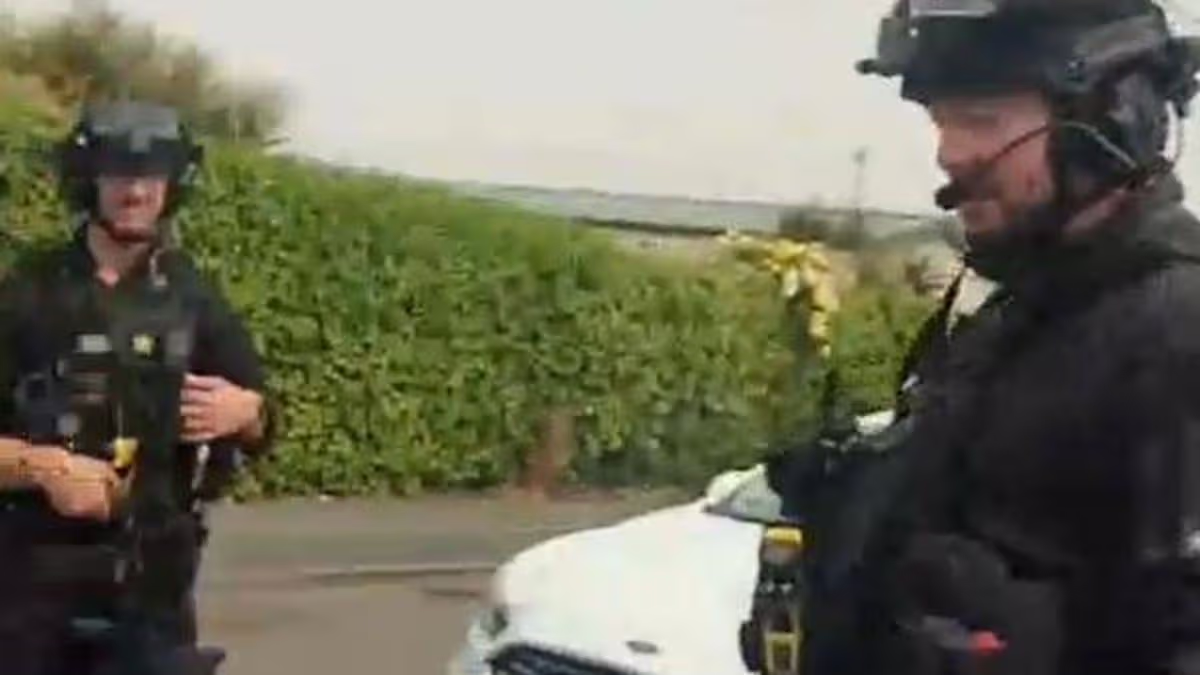
A man sustained severe facial injuries following an attack by what’s believed to be an “XL Bully” dog. The incident has sparked a police investigation to locate the dog and its suspected owner.

Luke Sanderson, 25, was set upon by the animal while speaking with another man. He was left with significant facial wounds in and around his mouth. A graphic image below, which some readers may find upsetting, shows the severity of Mr Sanderson’s injuries.

Mr Sanderson’s mother, Jo, revealed her son required up to 50 stitches for his wounds following the attack in Towyn Way West, Towyn earlier this week

She explained how it happened on Bank Holiday Monday when Luke was talking to a man and was then bitten on the mouth. Always keep on top of the latest Welsh news with our newsletter

“I was inside the house and Luke came in and his mouth was covered in blood. The police are involved and are now searching for him and the dog,” said Jo.

“Luke seems okay, it has traumatised him though and he doesn’t want the dog attacking anybody else. He is also worried it may attack a child. He was told he was lucky.”

Advertisement

“He went into hospital Monday night, got home about four in the morning. He went back Tuesday for day surgery where he had about 40-50 stitches. He’s on antibiotics and eye ointment. He’s got to go back on the 4th (of June) for another appointment.”

She added: “I am trying to keep calm about it because my son doesn’t want to make a fuss. He says, ‘I am still walking, still talking and I can leave the house – I’m fine’. That’s how he sees it.”

North Wales Police have launched an appeal to trace Darren Sheridan, aged 45, in connection with the incident.

A North Wales Police Denbighshire Coastal and Abergele appeal said: “Wanted. We are actively looking for Darren Sheridan (45) of Kinmel Bay. He is wanted on suspicion of failing to control a dangerous dog, and breach of a Domestic Abuse Protection Order (DAPO).

“If you have seen Darren, or have any information as to his whereabouts, please contact us via our live webchat or on 101 quoting ref 26000418267.”

Get daily breaking news updates on your phone by joining our WhatsApp community here. We occasionally treat members to special offers, promotions and ads from us and our partners. See our Privacy Notice

Source link

Advertisement
Continue Reading

NewsBeat

Jose Mourinho: Portuguese signs three-year deal to become Real Madrid manager

Published

on

Jose Mourinho

Real ended their 2025-26 campaign trophyless, with rivals Barcelona sealing the La Liga title with a 2-0 El Clasico victory.

Los Blancos’ Champions League run also ended with a 6-4 aggregate defeat by German champions Bayern Munich in the quarter-finals.

After leaving Real in 2013, Mourinho returned to England for a second stint at Chelsea, winning the third of his three Premier League titles, plus the EFL Cup, in the 2014-15 season.

Following his departure from the Blues by mutual consent in 2015, Mourinho joined Manchester United on a three-year deal in 2016.

Advertisement

He won the Europa League, EFL Cup and Community Shield during his first season at Old Trafford, but was sacked in December 2018 after a poor run of results.

Mourinho also had spells at Tottenham, Serie A side Roma, where he won the Europa Conference League in 2022, and Turkish club Fenerbahce, before taking over at Benfica.

Source link

Advertisement
Continue Reading

NewsBeat

AI versions of Churchill, Kahlo and Gandhi on Question Time

Published

on

AI versions of Churchill, Kahlo and Gandhi on Question Time

The BBC’s topical debate programme Question Time began in an usual way this week, featuring a panel of iconic people who all passed away decades ago.

Winston Churchill, Frida Khalo, Mahatma Gandhi and Emmeline Pankhurst briefly featured to introduce the programme’s topic – artificial intelligence (AI).

The programme went on to discuss the consequential issues of AI for the present day and beyond.

The real life panel consisted of Darren Jones, chief secretary to the prime minister; Julia Lopez, shadow secretary of state for science, innovation and technology; Mo Gawdat, author, entrepreneur and former chief business officer at Google X; Laura Gilbert, senior director of AI at the Tony Blair Institute for Global Change; and Victor Riparbelli, founder and CEO of London-based AI company Synthesia.

Advertisement

Watch the full programme here.

Source link

Continue Reading

NewsBeat

Champions League final: How to watch and why it isn’t free to air

Published

on

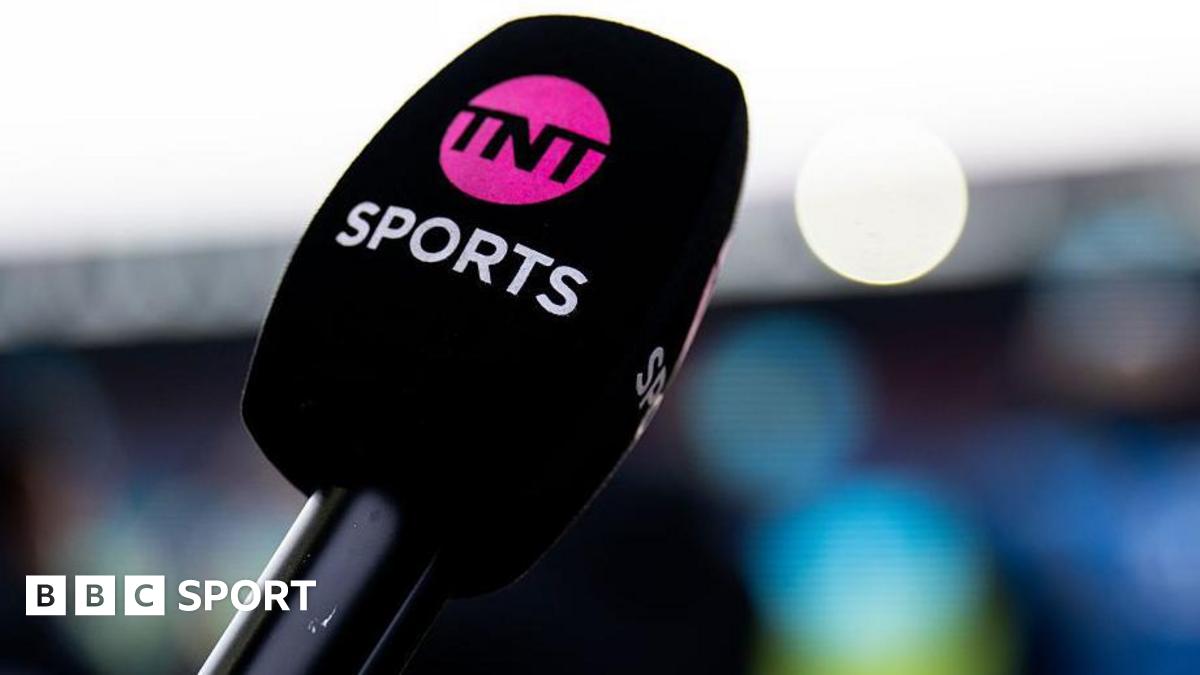
A microphone with the logo of TNT Sports

Six years ago, the government rejected a House of Lords select committee proposal to add the Champions League final to the list of “crown jewels” events, which would have ensured it would always be free-to-air.

Highlights of the Champions League final will be available on the BBC Sport website and across social media channels 15 minutes after the trophy lift, and on BBC iPlayer and television later in the evening.

Live commentary will also be on BBC Radio 5 Live.

The Champions League final had been free on ITV each year from 1993 – with the exception of the 1994 final, which the BBC showed live – until BT Sport won the rights, starting from 2015-16.

Advertisement

BT Sport continued to make it available without a subscription through to 2023, simultaneously broadcasting the game on its YouTube channel.

This changed after BT Sport was bought by Warner Bros Discovery and rebranded as TNT Sports.

While the finals remained available without cost, fans needed to sign up for a discovery+ account to get access.

Discovery+ has been replaced by Warner Bros Discovery’s new streaming service, HBO Max, which has no free option.

Advertisement

Fans will not need a full TNT Sports subscription, and can instead sign up for HBO Max for one month.

The cheapest subscription starts at £4.99, which would include all three matches, though most Sky customers already get HBO Max at no extra cost.

From 2027-28, TNT Sports will lose its European rights.

Paramount+ has picked up the Champions League, while the Europa League and the Conference League will move to Sky Sports.

Advertisement

Warner Bros Discovery has been approached for comment.

Source link

Continue Reading

NewsBeat

The Best Sleep Position To Survive Hot, Sweaty Nights

Published

on

The Best Sleep Position To Survive Hot, Sweaty Nights

The UK just experienced a record-breaking heatwave, which included a “tropical night”.

These sweaty sleeping conditions, which mean “the temperature does not fall below 20°C” per The Met Office, can be extremely damaging to our slumber. One paper found that while all hot weather is bad for our kip, heatwaves can snatch away more minutes of shut-eye than other warm conditions.

But what about the best sleep position for toasty temps?

Advertisement

The best sleep position for hot weather

Speaking to The Times, sleep consultant Alison Jones said side-sleeping is probably your best bet.

“Sleeping on your side exposes more of your body to the air, allowing heat to dissipate more effectively and helping to prevent temperature-related disturbance,” she explained.

The expert isn’t alone in making the recommendation.

Advertisement

Speaking to Tom’s Guide, sleep posture expert James Leinhardt said: “The part of your body that gives off the most heat includes your forehead, closely followed by the area at the bottom of your spine”.

He added that when you sleep on your back, there’s no room for this heat to escape: lying on your side means you’ll have the “least amount of contact with the bed, so the heat will naturally rise much quicker than if you’re lying on your back”.

Which is the best side to sleep on?

It turns out that the side you choose might matter, too.

Advertisement

Dr Abhinav Singh, a sleep medicine physician, told The Sleep Foundation that sleeping on your left side can help you to stay asleep if you experience stomach issues like heartburn or indigestion at night.

That’s because the stomach is curved; a lot of the acid-containing bulk lies on your left side, meaning it’s harder for the material to escape into your oesophagus when you adapt the position.

Some research suggests up to 10% of us could face GERD at night, which negatively affects sleep and can sometimes create a vicious cycle.

Advertisement

Source link

Continue Reading

NewsBeat

Canadian man who sold lethal chemicals linked to death of Brits admits aiding suicide

Published

on

Daily Mirror

Canadian national Kenneth Law, 60, has admitted charges of aiding suicide relating to Canadian victims – he has been linked to deaths in the UK

A Canadian man who sold lethal substances online to people across the world, including the UK, has admitted charges of aiding suicide.

Kenneth Law, 60, appeared in court in Ontario, Canada, on Friday where he formally entered his guilty pleas to a total of 14 counts, all relating to Canadian victims.

The National Crime Agency (NCA) and the Crown Prosecution Service (CPS) said 79 UK victims who died as a direct result of purchasing Law’s products will form part of the wider case into his offending.

Advertisement

Authorities informed the victims’ families that Law would not face criminal proceedings in the UK because of the potential for the hotel cook to challenge the extradition after being convicted of similar offences in Canada.

After his Canadian convictions, British prosecutors described Law as a “serial offender who callously exploited many vulnerable and innocent people exchanging their lives for his financial gain”.

He sold 1,200 packages to 40 countries across the world from Canada-based websites – with 286 individuals in the UK receiving the products, leading to 112 deaths.

The NCA and CPS said in a letter to bereaved families that it had been established Law sent 330 products to the UK in total.

Advertisement

Explaining why the UK victims would be taken into the Canadian case, the letter said: “We recognise that this may be painful to hear, and that some victims and bereaved families may have hoped to see a separate prosecution in England and Wales.

“This difficult decision was reached only after detailed consideration of all available options.”

The senior investigating officer at the NCA, Damon Hayes, told reporters including British victims in the Canadian case “guarantees all victims and families in the UK will see justice”.

He added: “This approach is not unusual in cases involving serious offending that crosses international borders.

Advertisement

“This will allow the judge to take into account the full extent of Law’s criminal behaviour, including the fact that his actions resulted in the deaths of people in this country.”

Victims’ families have criticised the move, with one bereaved father saying: “I am angry but not surprised.”

David Parfett, the father of philosophy student Thomas Parfett, who died aged 22 after taking his own life in Sunbury-on-Thames, Surrey, added: “For months, we have been told that the system is working and that existing measures are enough. They are not.

“If our own country will not put anyone on trial for these deaths, the very least it can do is hold a proper inquiry into how they were allowed to happen.”

Advertisement

The sister of 21-year-old Aimee Walton, from Southampton, who died in 2022, said that “doors have been shut” for families seeking justice.

Adele Zeynep Walton said: “The question for our own country is simpler still: who here will examine how the British state let this happen, and what it will do so that no other family goes through it?

“A foreign sentencing hearing cannot answer that. Only a statutory public inquiry can.”

Since opening its investigation in April 2023, the NCA has worked with 45 police forces across the UK to gather evidence on Law’s offending.

Advertisement

Specialist CPS prosecutor Andrew Hudson told reporters that “no victim has been left behind as part of this process”, adding that including British victims will “ensure that the full devastating extent of his criminal conduct is seen and considered by the sentence in court.”

Law was also investigated by police in the United States, Italy, Australia and New Zealand.

– Call Samaritans for free on 116 123, email jo@samaritans.org or visit samaritans.org.

This is a Breaking News story. You’ll be more likely to see our stories when any big news breaks in future by simply by clicking this link. You can also join The Mirror’s WhatsApp Community or follow us on Google News, Flipboard, Apple News, TikTok, Snapchat, Instagram, Twitter, Facebook, YouTube and Threads – or visit The Mirror homepage.

Advertisement

Source link

Continue Reading

Trending

Copyright © 2025