Connect with us
DAPA Banner
DAPA Coin
DAPA
COIN PAYMENT ASSET
PRIVACY · BLOCKDAG · HOMOMORPHIC ENCRYPTION · RUST
ElGamal Encrypted MINE DAPA
🚫 GENESIS SOLD OUT
DAPAPAY COMING

Tech

Matt Spears Built a Camper on a Jet Ski and Spent the Night in a Storm

Published

on

Matt Spears Jet Ski Camper Build
Matt Spears has turned more than one unlikely vehicle into a spot to sleep. His latest effort started with a big, damaged Sea-Doo Explorer jet ski that weighed well over a thousand pounds and stretched about twelve feet long. The machine had already crashed into rocks once, leaving cracks in the hull. He bought it anyway and set out to make it something he could live on for a night or longer.


The worst of the damage occurred where the upper and lower sections of the fiberglass body met, at the back of the jet ski. Matt used a die grinder to remove the shattered gelcoat and old material; it was a difficult task, but it needed to be completed before he could proceed. He next applied a couple layers of fiberglass mat saturated in resin, beginning small and working his way outwards. Fibreglass putty was utilized to smooth down the rough regions, and a two-part epoxy was employed to reattach the split pieces. After thoroughly cleaning everything with acetone, he could finally apply some fresh paint. When he eventually launched the Jet ski again, he was relieved to find that the repairs had held up well and that no water had leaked through.


CAPTAER Remote Control Boat for Kids, RC Boat for Pool, Lake, River and Pond with LED Lights…
  • Eye-Catching & Fully-Waterproof Design: The Boat built-in LED light stripes along with the full hull , making it stand out on the water and creates…
  • Kids-Friendly & Racing Fun : Offers 2 speed modes, High /Low speed for either kids’ safe learning or thrill-seeking. Including 2 RC boats and…
  • Capsized Recovery: Features with Self-righting function, the boat will automatically flip back to up position after capsizing on pool or lakes…

Matt Spears Jet Ski Camper Build
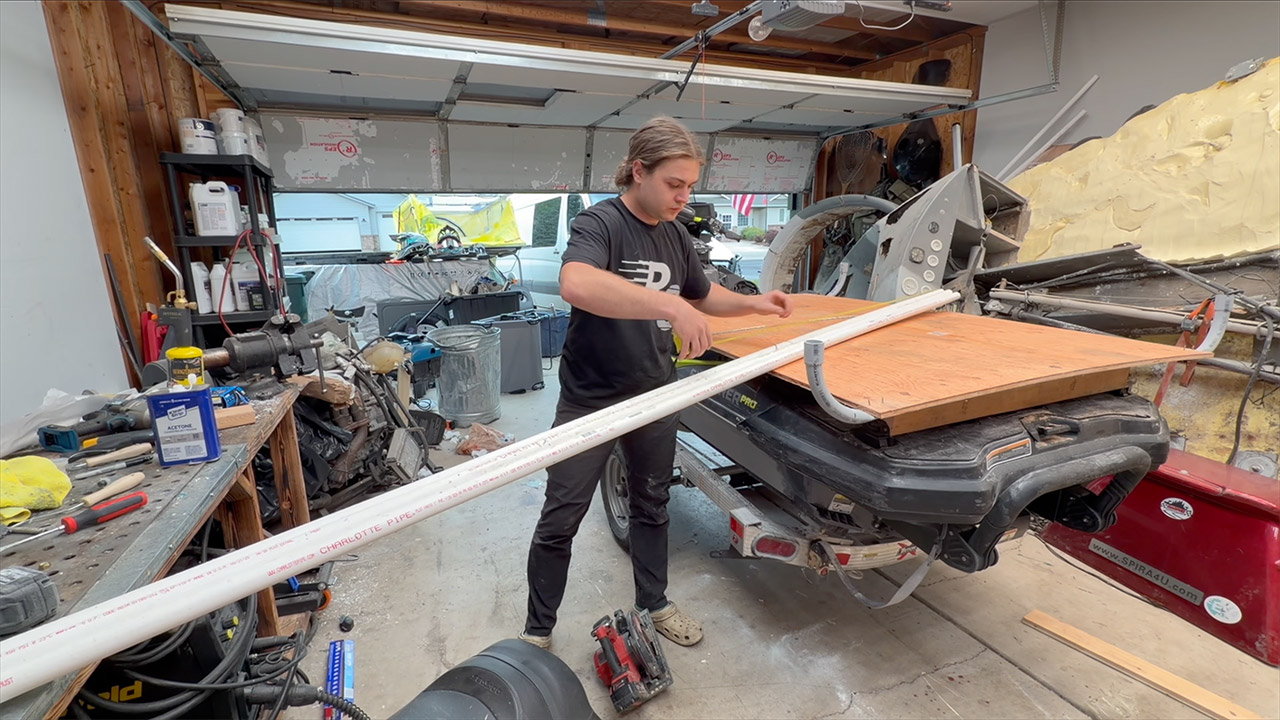
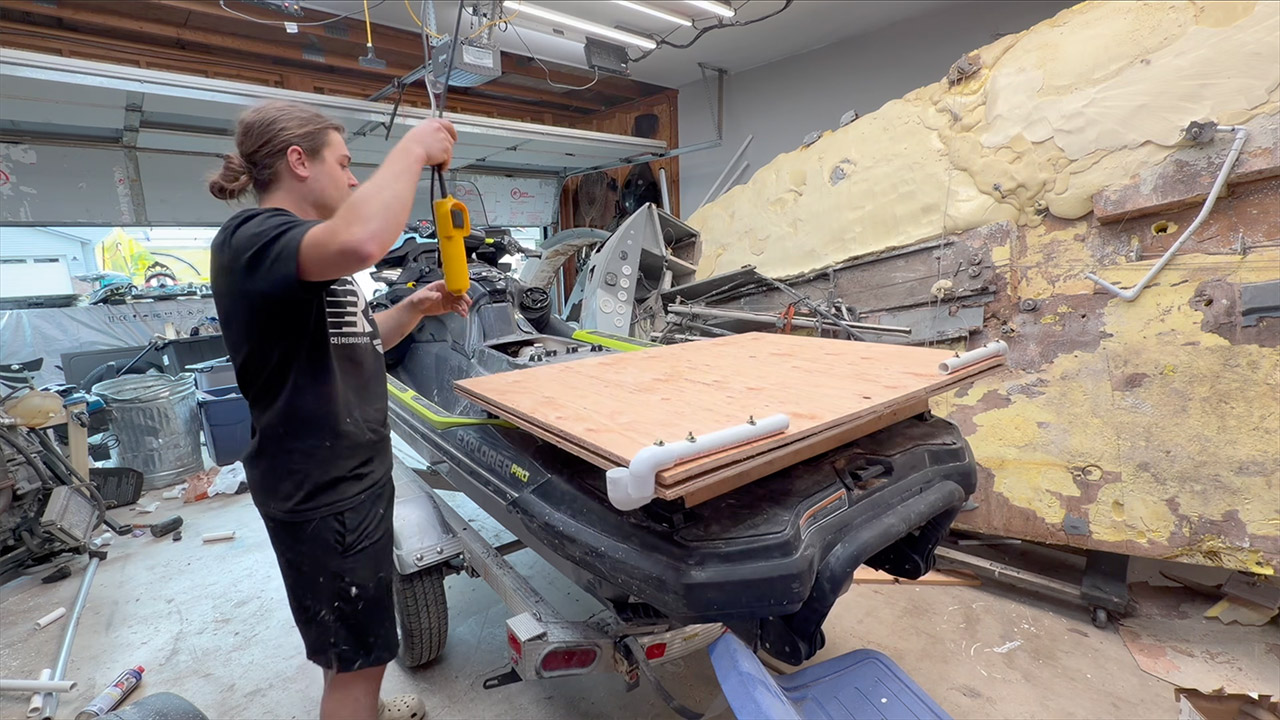
After fixing the hull, he concentrated on the sleeping quarters. He chose to utilize a full 4×8 sheet of plywood as the basis, which he cut into two 3×4-foot panels and fastened with three piano hinges to allow them to fold together for transport and open flat when necessary. He’d also built a simple wooden frame that clamps to the jet ski’s rear mounting points, ensuring the entire platform remains sturdy. He had originally tried using plastic clips to hold the panels in place, but they gave way under weight, so he replaced them with a wooden version, which proved to be much stronger.

Matt Spears Jet Ski Camper Build
Matt then decided to start building the shelter, hoping to create a covered wagon-style structure that would keep the rain out. He had screwed several 90-degree PVC elbows to the edges of the plywood to use as pegs, which was an excellent start. Even better, he replaced those flimsy tent poles with some sturdy PVC bars and carefully fastened them in place; the difference was night and day. Plus, he used PVC panels connected at 45-degree angles to direct water off the roof rather than collecting and weighting everything down. He then covered the entire structure with tent fabric, which had a built-in door and window. He also added many little lights to clip inside for when it got dark, and since his workshop space was limited, he was able to finish a piece of the construction while floating in the water.

Matt Spears Jet Ski Camper Build
The first big test came a little later, when Matt set out on the jet ski with the camper ready, despite the fact that a storm was approaching. By 9 p.m. that night, the wind had risen up significantly, pushing the jet ski away from the coast. He awoke to see the Jet Ski spinning slowly on the open water and used a pocket winch to pull it back in. He tied off and attempted to sleep, but it was difficult because the rock was tugging and the temperature had plummeted into the 30s and 40s. The shelter did a fantastic job of keeping the rain out, but the constant swaying of the waves made the entire place feel uneasy.

Matt Spears Jet Ski Camper Build
Cooking inside wasn’t an option because the action made him feel sick, so he went outside the next morning to prepare pancakes instead. The jet ski itself ran fine following the hull repairs, but even on minor waves, the side-to-side movement made the little platform an uncomfortable place to sit for lengthy periods of time. Despite this, Matt has grander plans for this machine, such as carrying extra fuel cans, fishing rods, and a crab pot and venturing out on longer sections of protected coastal sea into Alaska. The large Jet Ski has enough room and power to make such a trip possible.
[Source]

Source link

Advertisement
Continue Reading
Click to comment

You must be logged in to post a comment Login

Leave a Reply

Tech

Creative launches Sound Blaster AE-X for high-end audio enthusiasts

Published

on


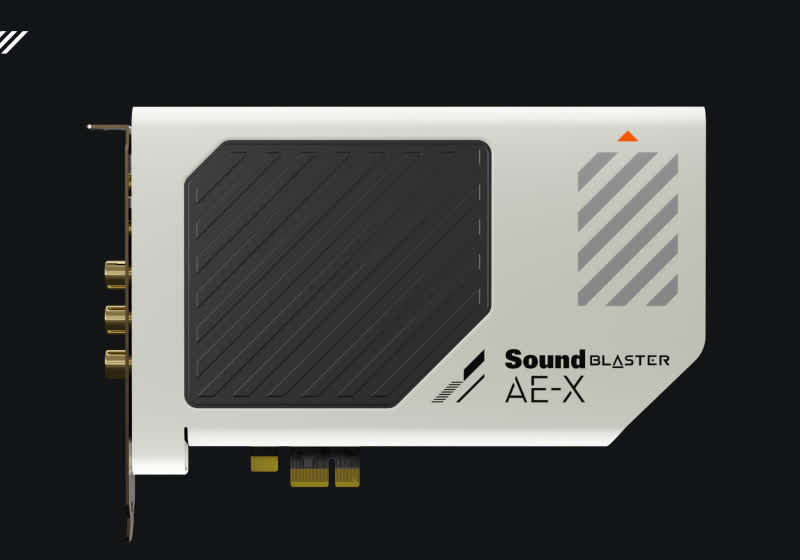
The Sound Blaster AE-X uses the same PCIe x1 interface as the previous model, though the underlying hardware appears to be on a different level. The new card leverages an ESS Sabre DAC (ES9039Q2M), which Creative says is engineered to deliver clearer sound, low harmonic distortion, and high dynamic range….
Read Entire Article
Source link

Continue Reading

Tech

CoStar buys Zonda for $800M to complete real estate data empire

Published

on

TL;DR

CoStar Group is acquiring Zonda, the leading new-home construction data and marketplace platform, for $800 million in cash. The deal fills the last gap in CoStar’s real estate data empire, which already spans commercial, multifamily, residential resale, and spatial data through more than 40 acquisitions totalling $7.3 billion.

CoStar Group has agreed to acquire Zonda, the leading provider of new-home construction data, homebuilder software, and residential real estate marketplaces, for $800 million in cash. The deal, announced on Thursday, is expected to close in the second half of 2026 and will be accretive to adjusted earnings per share in its first full year.

Advertisement

Zonda serves more than 3,000 customers across the homebuilding ecosystem, including many of the largest residential builders, developers, suppliers, and lenders in North America. Its platform covers the full lifecycle of new-home development, from land acquisition and construction forecasting to community marketing and online marketplaces, tracking more than 500 housing metrics.

Filling the new-construction gap

CoStar has spent the past 15 years assembling what is arguably the most comprehensive real estate information platform in the world. Its CoStar Suite dominates commercial real estate research. Like other data platform operators consolidating their markets, the company has expanded methodically through acquisitions, completing more than 40 deals for approximately $7.3 billion over that period.

Apartments.com now generates $1.1 billion in annual revenue. Homes.com, the company’s residential brokerage marketplace, has grown subscribers by 337% since the first quarter of 2024 and claims to be the second-largest and fastest-growing residential real estate marketplace in the United States. CoStar completed its $1.6 billion acquisition of Matterport, the 3D digital twin and AI company, in February 2025.

The pattern is clear. CoStar covered commercial real estate through its flagship product, multifamily rentals through Apartments.com, residential resale through Homes.com and Matterport, and the physical built environment through Matterport’s spatial data. New-home construction was the remaining gap. Zonda fills it.

What Zonda actually does

Zonda was created through a 2018 merger of Hanley Wood, a B2B information services company serving the US residential construction industry, and Meyers Research, a provider of real-time market data for homebuilders. Private equity firm MidOcean Partners orchestrated the combination and rebranded it as Zonda in 2020. The $800 million sale to CoStar represents the kind of PE exit that has become typical in the SaaS and data platform sector, where specialised vertical data companies are built through roll-ups and sold to larger platforms.

Advertisement

Zonda’s three core products are subscription-based data and intelligence covering the new-home market, online marketplaces for new homes in the US and Canada, and a suite of software tools for virtual home evaluation including visualisation, customisation, and tours. The data side tracks everything from lot availability and permit activity to pricing trends and absorption rates at the community level.

CoStar’s financial position

CoStar reported first-quarter 2026 revenue of $897 million, up 23% year on year, and expects full-year revenue of $3.8 billion, an 18% increase over 2025. Adjusted EBITDA is projected to reach $770 million, an 83% increase from 2025 and a 20% margin. The company has the balance sheet to absorb an $800 million cash deal without significant strain.

The stock, however, has not reflected the operational momentum. CoStar shares have declined roughly 49% over the past six months, a drop driven partly by heavy investment spending on Homes.com and partly by broader market scepticism about the timeline to profitability for the residential business. CEO Andy Florance has been buying shares on the open market, purchasing more than 70,000 shares at prices between $34.67 and $36.00 earlier this year.

The data monopoly question

With Zonda, CoStar will hold dominant or leading data positions across every major segment of the US real estate market. Proptech startups building AI-powered tools for real estate development, valuation, or investment will increasingly find that the underlying data they need flows through CoStar’s pipes.

Advertisement

That consolidation carries the same dynamics seen in other data-platform markets. A single operator controlling the reference data for an industry can set pricing, shape how participants see their own market, and create switching costs that entrench its position. CoStar’s pitch is that integration creates value: homebuilders using Zonda data will be able to list on Homes.com, track competitor pricing through CoStar analytics, and market to renters through Apartments.com, all within one ecosystem.

Whether that integration delivers value or simply concentrates pricing power will depend on execution. For now, CoStar has spent $800 million to ensure that the next generation of real estate intelligence runs on its platform, not someone else’s.

Source link

Advertisement
Continue Reading

Tech

ChargePoint, Powers Parts partner on transit EV bus charging

Published

on

TL;DR

ChargePoint and Powers Parts have partnered to sell charging hardware, software, and fleet telematics to transit agencies running PhoenixEV electric buses. The deal targets operators struggling with service gaps after Proterra’s 2023 bankruptcy, routing ChargePoint’s platform through Powers Parts’ existing distribution network.

ChargePoint and Powers Parts, a national distributor of electric vehicle components and fleet replacement parts, have announced a partnership to sell ChargePoint charging hardware, software, and fleet management services directly to transit agencies across North America. The deal targets operators running E2 and ZX5 electric buses built by PhoenixEV, the company that acquired Proterra’s transit bus assets out of bankruptcy in early 2024 for $3.5 million.

Advertisement

The partnership addresses a specific problem. Many transit agencies that bought Proterra’s E2 and ZX5 electric buses before the company’s 2023 bankruptcy are now operating those vehicles without adequate service, charging support, or fleet management tools. Powers Parts built its business around supplying replacement components to exactly these operators. Adding ChargePoint’s DC fast charging infrastructure and telematics platform to that distribution channel gives transit agencies a single procurement path for both parts and charging.

What the deal includes

Through the partnership, transit operators can purchase ChargePoint’s charging stations, fleet management software, and telematics services through Powers Parts’ existing distribution network. ChargePoint’s telematics platform integrates with all vehicle types and charging stations regardless of manufacturer, providing real-time visibility into battery health, route efficiency, and total cost of ownership. The software is OCPP compliant, meaning it can manage third-party charging hardware as well as ChargePoint’s own stations.

The telematics system also works with mixed-fuel fleets, which matters because most transit agencies are electrifying gradually rather than replacing entire fleets at once. An agency running a mix of diesel, compressed natural gas, and electric buses can manage all three through a single interface.

The Proterra aftermath

Proterra filed for Chapter 11 bankruptcy in August 2023 after years of losses despite being one of the most prominent US electric bus manufacturers. Its transit bus division was sold to Phoenix Motorcars, now PhoenixEV, for just $3.5 million. Volvo acquired Proterra’s battery and powertrain division for approximately $223 million. The charging infrastructure business was sold separately.

The bankruptcy left transit agencies that had invested in Proterra buses in a difficult position. Replacement parts, software updates, and charging infrastructure support, previously handled by a single integrated provider, were suddenly fragmented across multiple companies or simply unavailable. PhoenixEV inherited the bus platform and manufacturing rights, but the broader service ecosystem had to be rebuilt from scratch.

Advertisement

Transit electrification under pressure

The partnership arrives at a difficult moment for US transit electrification. The Federal Transit Administration’s Low or No Emission Vehicle Program has allocated $5.6 billion over five years from 2022 to 2026, driving hundreds of agencies to order electric buses. But the transition has exposed real operational challenges, including shorter-than-advertised battery range in extreme weather, lengthy charging times that disrupt scheduling, and a thin aftermarket parts supply chain.

California, which leads the country in electric bus adoption, has already delayed some of its zero-emission transit mandates to give the market time to stabilise. Agencies in colder climates have reported range reductions of 30% or more in winter, requiring more buses to cover the same routes.

ChargePoint’s fleet play

For ChargePoint, the partnership extends a push into fleet and transit charging that complements its larger consumer and commercial business. The company reported full fiscal year 2026 revenue of $411 million and operates more than 1.37 million public and private charging ports worldwide. Electric buses represent a growing share of that network, as transit agencies electrify under federal mandates and funding incentives.

CEO Rick Wilmer described transit as “critical to the broader electrification of transportation” and said the Powers Parts partnership expands ChargePoint’s reach across the transit ecosystem. The deal is a distribution agreement, not a technology breakthrough, but for agencies struggling with the aftermath of Proterra’s collapse, having a single channel for parts, charging, and fleet software is a practical improvement over the current patchwork.

Advertisement

Source link

Continue Reading

Tech

Bellevue’s AI boom: CoreWeave doubles down on office space

Published

on

One Bellevue Center in downtown Bellevue, Wash. (CBRE Photo)

Bellevue’s AI frenzy continues as CoreWeave recently doubled its footprint to 36,000 square feet at One Bellevue Center, according to a report in the Puget Sound Business Journal

Livingston, N.J.-based CoreWeave, which rents infrastructure to companies training and running large-scale artificial intelligence models, is expanding its engineering hub with dozens of open roles in the region.

Meanwhile, Bellevue is rapidly emerging as a focal point of the AI boom in the Seattle region, even as broader tech employment remains uneven with major layoffs at companies like Meta. Some have argued that the pendulum has swung from Seattle to Bellevue in terms of the tech epicenter in the region. 

The trend is certainly reshaping the Eastside into a developing AI corridor alongside Microsoft and Amazon. 

Just in the last six months: 

Advertisement
  • Crusoe, the Denver-based cloud and AI infrastructure company, opened a new office in a 7,400-square-foot space in the Key Center building in downtown Bellevue. 
  • Elon Musk’s xAI unveiled a 25,000-square-foot office in the former Epic Games space at Lincoln Square South in downtown Bellevue.
  • OpenAI moved into a new engineering office at City Center Plaza in Bellevue, a retro-modern, wood-paneled space for 250 employees in the region, with enough room in the tower to ultimately accommodate as many as 1,400 people.

CoreWeave raised $1.5 billion in an initial public offering last year, pricing at $40 per share. Now trading at more than $103 per share, the 9-year-old company is valued at $56 billion. It is led by Michael Intrator, who prior to co-founding CoreWeave served as CEO natural gas hedge fund Hudson Ridge Asset Management.

Citing permit filings submitted earlier this month, PSBJ reported that CoreWeave is expanding from one floor to two in the One Bellevue building.

The CoreWeave engineering hub is one of more than 100 in the Seattle region. GeekWire tracks the various outposts from companies including Anthropic, Armada, Databricks and UiPath here

We’ve reached out to CoreWeave for comment about the office space, and we will update this post as we learn more. 

Source link

Advertisement
Continue Reading

Tech

ThermoWorks’ Gravitas Scale Has A Detachable Display And A 20-Minute Memory

Published

on

The highly-regarded thermometer company is venturing into new territory.

ThermoWorks may be a company more known for its food thermometers, but it’s putting that reputation for supreme accuracy on the line in a new category. With the Gravitas, ThermoWorks is debuting its first scale, designed for precision measurements in the kitchen that are backed by the company’s rigorous testing and certified calibration. With the venture into uncharted territory, the Gravitas’s design and memory may outshine its accuracy though. 

The main feature of the Gravitas is a fully wireless, removable display so things like large bowls don’t block your measurements. The backlit display can be easily pulled off the base and placed in a more convenient spot. What’s more, its large digits, 180-degree auto rotation and integrated magnets give you even more options for placement. A 2.4GHz RF connection provides the wireless connectivity, which means you don’t have to worry about Bluetooth or Wi-Fi pairing. 

Another standout aspect of the Gravitas is its 20-minute memory. The scale will go into standby mode after five minutes of inactivity, but don’t be concerned about losing your last measurement. In this mode, the scale can remember the last reading for up to 15 minutes. Long battery life is also on the spec sheet: The Gravitas base unit can last 300 hours on its four AA batteries, and the display can run up to 350 hours on two AAs. The entire setup is IP66 rated and the measuring plate can be removed and washed by hand. 

Advertisement

In terms of performance, the Gravitas can measure to the tenth of a gram and to the thousandth of an ounce. NIST-traceable certified calibration backs ThermoWorks’ promise that the scale is accurate to within 0.7 grams. And as far was a weight limit goes, you’re fine to measure loads up to 11 pounds (5kg). 

The Gravitas is available for pre-order now for $119 in charcoal, red, white, blue and yellow colors.

Advertisement

Source link

Continue Reading

Tech

Wix CEO cites ‘fast evolution of AI capabilities’ in announcement of 20% workforce cut

Published

on


  • Wix has confirmed plans to lay off around one in five workers
  • Despite job cuts, the company will continue to hire new roles for an AI-first future
  • Share prices down following news, also down following disappointing Q1 EPS miss

Wix CEO Avishai Abrahami confirmed in an X post that the company will be laying off around 20% of its workers as a result of an ongoing restructuring initiative set to affect all departments.

Among the reasons cited for the mass layoffs were currency and exchange rate pressures, with many of the company’s workers and a large portion of its operating costs housed in Israel, under the Israeli Shekel.

Source link

Continue Reading

Tech

We Asked the ‘Future of Truth’ Author to Explain How He Used AI. It Didn’t Go Well

Published

on

Earlier this month, WIRED published an excerpt from Steve Rosenbaum’s buzzy new book, The Future of Truth, which looks at how artificial intelligence warps people’s sense of reality. Shortly thereafter, The New York Times reported that the book contained over a half-dozen made-up or misattributed quotes. In a statement, Rosenbaum, who has a master’s degree in “truth” from New York University, admitted that he had accidentally included “a handful” of “improperly attributed or synthetic” quotes. In an ironic twist, the veracity of a book about how AI impacts truth was now under intense scrutiny because of how its author had used AI.

After the Times story broke, WIRED took another look at our 1,450-word excerpt. The fact-checking team had reviewed it prior to publication, and we reconfirmed that its quotes and facts were accurate. But WIRED’s generative AI editorial policy prohibits the publication of AI-generated and AI-edited writing, and a reader email calling out the excerpt as being “blatantly AI-written” raised further questions about the extent to which Rosenbaum had used AI tools. In The Future of Truth’s acknowledgement section, Rosenbaum writes that ChatGPT, Claude, NaturalReaders, ProWritingAid, and Grammarly had helped “refine and polish the presentation of [his] ideas.” What, exactly, did that mean?

WIRED ran the excerpt through several AI-detection services, including Pangram, GPTZero, and ZeroGPT. Each service suggested that it was either likely AI-generated, or AI-generated with high confidence. But AI-detection tools are fallible, and can return inaccurate readings. So WIRED’s head of research emailed Rosenbaum directly to ask if and how he had used AI to write the excerpt.

He wrote back: “Like many writers working today, I used AI tools during parts of the research and editorial development process for the book, including source discovery, brainstorming, structural feedback, and language refinement.” But, he stressed, “the ideas, reporting, arguments, and final authorship are mine, and the WIRED excerpt was not generated by AI and then simply published as-is.” He urged WIRED’s editors to exercise caution trusting AI detection tools, noting that false positives can occur.

Advertisement

At this point, WIRED’s senior editors asked me to look into the episode, because I’ve covered AI slop in its various forms since 2024. My first step was to run the entire text of the book through Pangram’s detection tool. (While all AI-detection tools have limitations, and can show false-positives, Pangram is the current gold standard.) It came back that the book appeared to be 53 percent AI-generated, with an additional 9 percent registering as likely AI-assisted.

I called Rosenbaum and asked for a more detailed description of how he’d used AI to write the book, and whether he disputed Pangram’s results. (BenBella Books, whose imprint published The Future of Truth, did not return requests for comment. Simon & Schuster, which distributes BenBella’s books in the United States, declined to comment.)

Rosenbaum would not weigh in on the accuracy of Pangram’s results. In fact, he didn’t want to talk about them at all. “I don’t participate in that conversation,” he said. “It’s like saying, do you beat your wife? It’s one of those accusations that there’s no response to.”

He offered, instead, to broadly explain his editorial process. He says that at the beginning of the writing process, he used AI tools as search engines, helping him surface information for the more research-heavy sections of the book. To demonstrate how he might do this, he asked ChatGPT to describe me, then read the results out loud. The AI search more or less accurately described some of my prior stories, including work on AI-generated “zombie media sites.”

Advertisement

Source link

Continue Reading

Tech

Nintendo quietly launched a new game that’s just like WarioWare, and you can try it for free

Published

on


  • Nintendo has released a new mobile game
  • It’s called Pictonico! and it’s a minigame collection similar to the WarioWare titles
  • The game is free to start and available for both iOS and Android devices

Nintendo has launched a new mobile game out of the blue, and it’s pretty similar to the WarioWare series.

The game is called Pictonico! and it’s a minigame collection that uses photos of people from your phone’s gallery in up to 80 rather amusing minigames. These range from chomping on dragging on someone’s mouth to force them to devour fruit to plucking their nose hairs.

Source link

Continue Reading

Tech

iPhone leaks, Apple Vision Pro gaming, and the Ferrari Luce

Published

on

You thought the Apple Vision Pro was expensive, but now you could choose between buying 180 of the headset, or one Ferrari Luce designed by Jony Ive. Or you could just enjoy the good, the bad, and the sometimes silly iPhone rumors that came out this week, on the AppleInsider Podcast.

It is the run-up to WWDC and it’s also not really that long until the launch of the iPhone 18 range, so as always we’re now bombarded with rumors and leaks. Some of them are actually likely, though, and some of them look rather good.

Here’s how to sort out the good leaks from the poor or even the downright silly. Plus forget leaks, there’s news for gamers on Apple Vision Pro and it’s something you can play right now.

That’s not something you can say for the Jony Ive-designed Ferrari Luce car. It’s the talk of the week, for its design, for how the Pope was shown one, and for its price.

Advertisement

But even if you happen to have a spare $640,000, you can’t buy Ferrari’s first-ever electric vehicle yet. It will be out sometime by the end of the year, so you’ll have to wait a while before you can go from 0 to speeding ticket in 2 seconds.

BONUS: Subscribe via Patreon or Apple Podcasts to hear AppleInsider+, the extended edition. This time, we’re a pixel away from WWDC, so this is what we’re crossing our fingers for with iOS 27, iPadOS 27, and watchOS 27.

More AppleInsider podcasts

Tune in to our Smart Home Insider podcast covering the latest news, products, apps, and everything HomeKit related. Subscribe in Apple Podcasts, Overcast, or just search for HomeKit Insider wherever you get your podcasts.

Podcast artwork from Basic Apple Guy. Download the free wallpaper pack here.

Advertisement

Those interested in sponsoring the show can reach out to us at: [email protected].

Subscribe to AppleInsider on:

Keep up with everything Apple in the weekly AppleInsider Podcast. Just say, “Hey, Siri,” to your HomePod mini and ask for these podcasts, and our latest HomeKit Insider episode too. If you want an ad-free main AppleInsider Podcast experience, you can support the AppleInsider podcast by subscribing for $5 per month through Apple’s Podcasts app, or via Patreon if you prefer any other podcast player.

Advertisement

Source link

Continue Reading

Tech

The best Mac-friendly monitors in Samsung’s lineup fix Apple flaws

Published

on

A new wave of Samsung monitors is targeting Mac users with OLED panels, Thunderbolt 5 connectivity, and workstation features that Apple still doesn’t offer in its own display lineup.

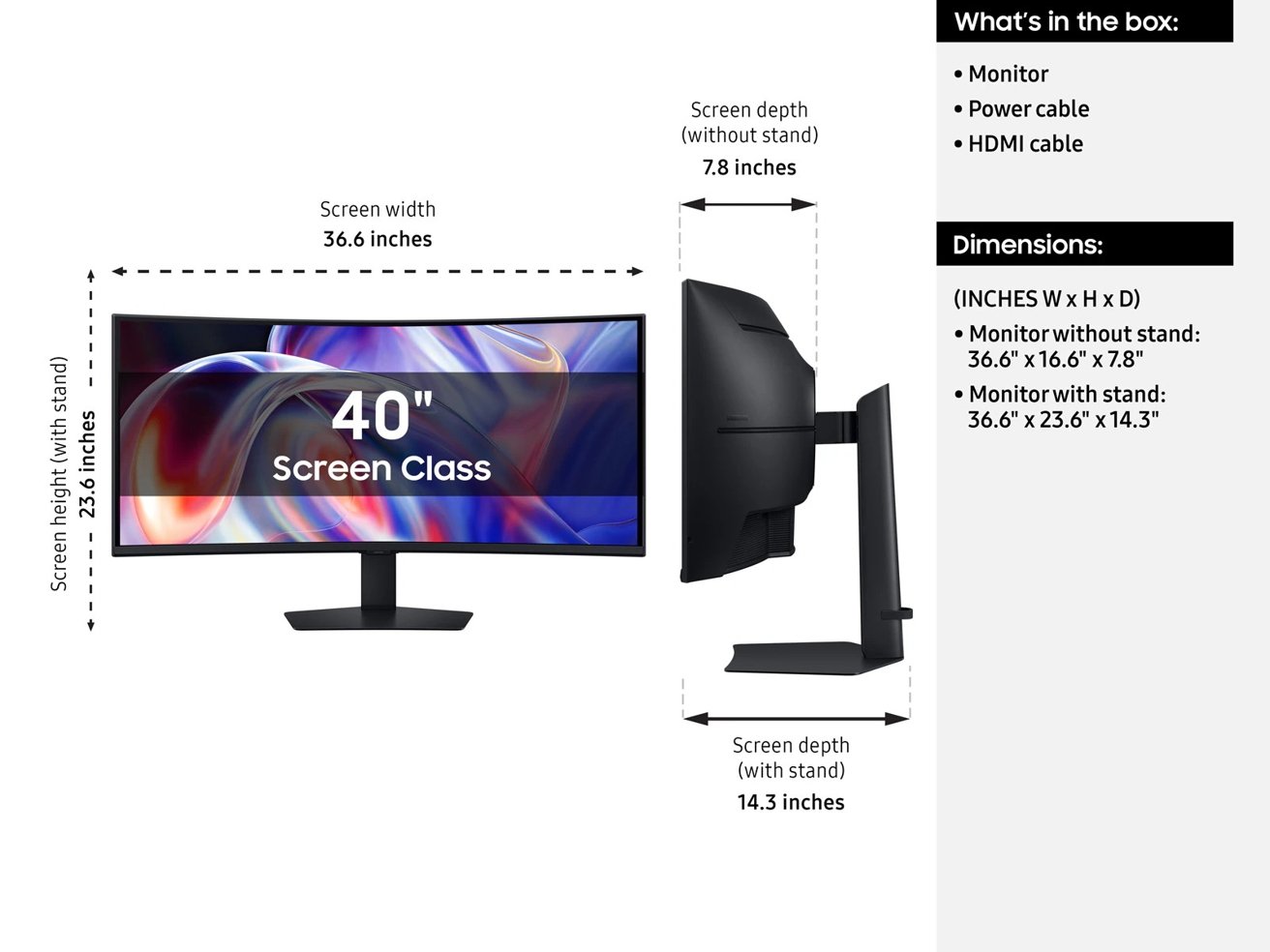
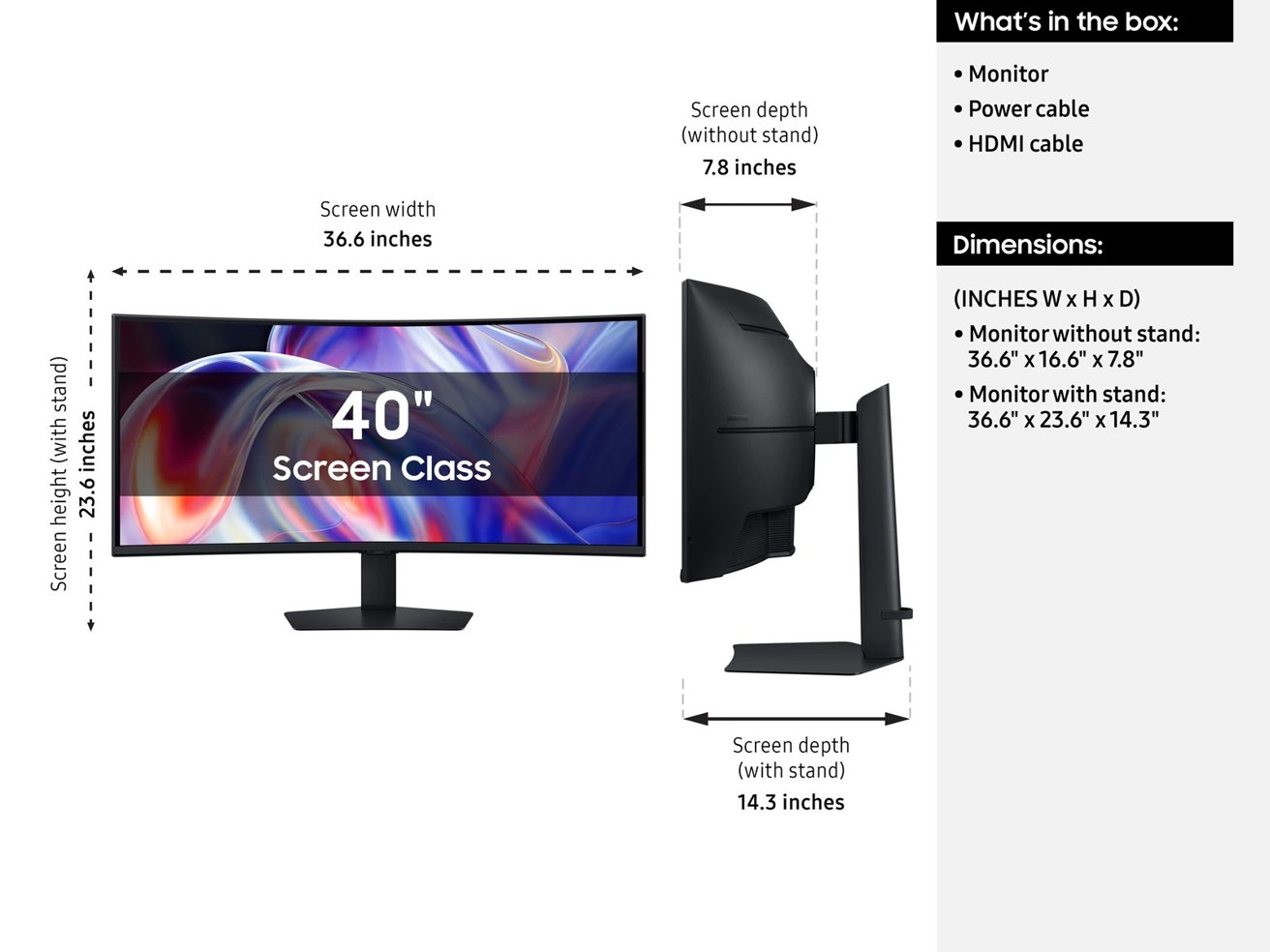
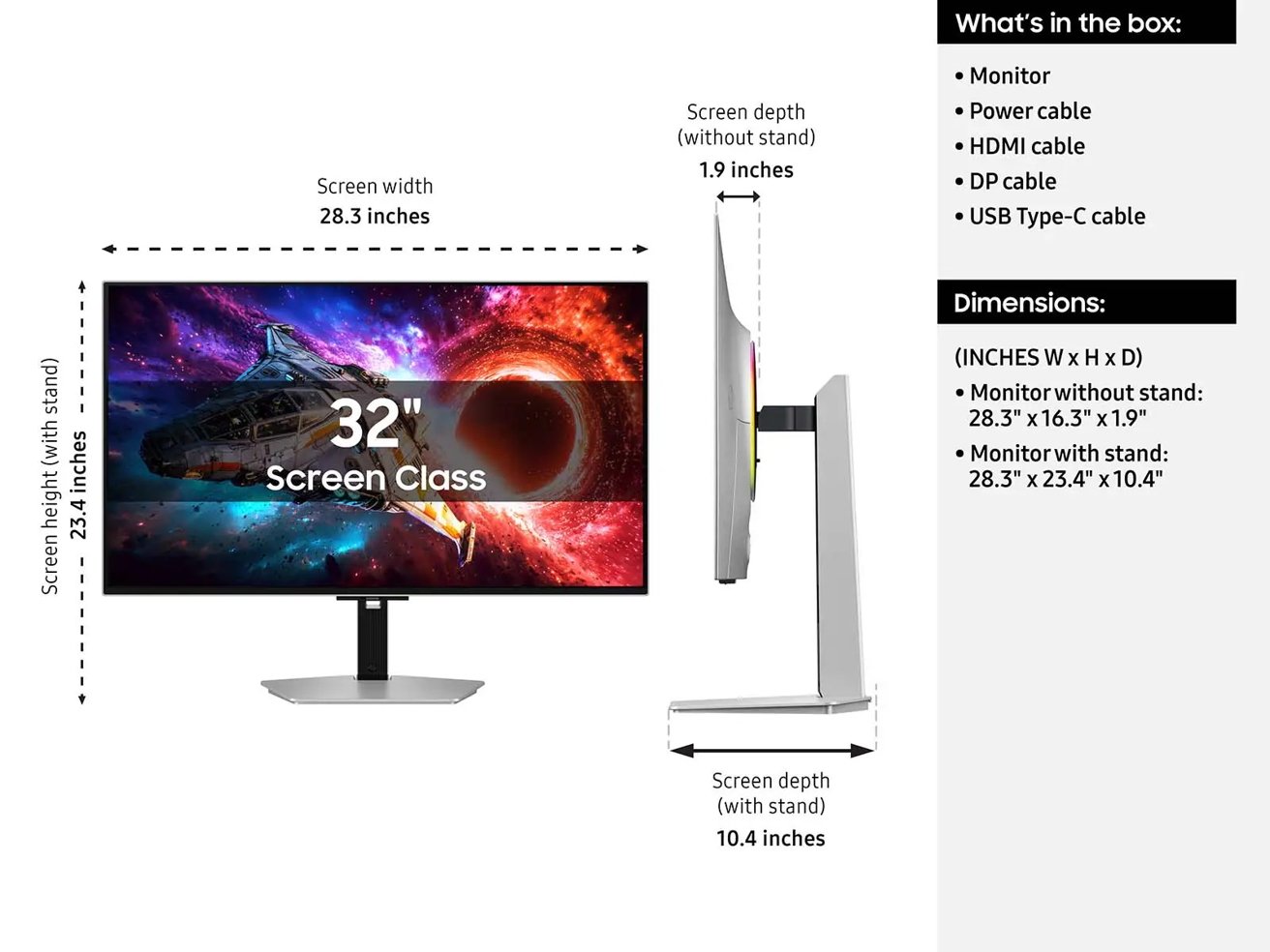
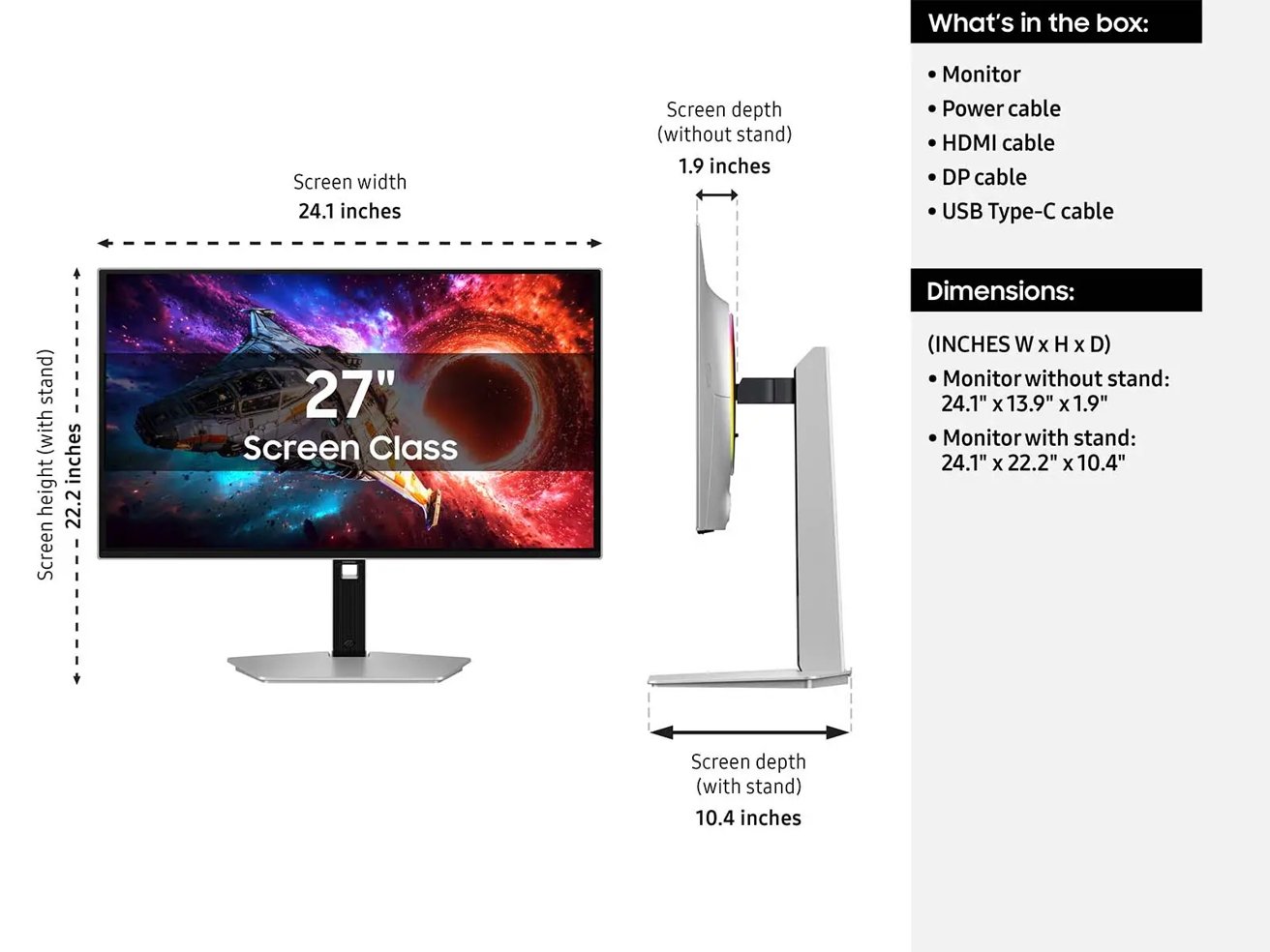
Samsung’s new lineup includes the 40-inch ViewFinity S8 S85TH, the 32-inch Odyssey OLED G8, and the 27-inch Odyssey OLED G8. The company built the displays for productivity and gaming, while adding features that fit naturally into MacBook, Mac mini, and Mac Studio setups.

Together, the monitors target capabilities Apple still doesn’t offer across its own display lineup.

Apple’s desktop display lineup remains limited to the Studio Display and Pro Display XDR. Apple doesn’t sell an OLED desktop monitor, an ultrawide display, or a monitor with integrated KVM switching and Thunderbolt 5 docking. Samsung’s latest displays target each of those categories.

Advertisement

ViewFinity S8 combines a large workspace with Thunderbolt 5

The 40-inch ViewFinity S8 S85TH is built around a curved 5K2K WUHD panel with a 144Hz refresh rate. The extra horizontal resolution creates room for multiple apps and documents without relying on a second display.

Thunderbolt 5 sits at the center of the design. The connection supports up to 80Gbps data transfers and up to 140W charging through a single cable, allowing a MacBook Pro to handle power, video, and data simultaneously.

40-inch widescreen curved monitor on stand, shown front and side, with measurements for width, height, and depth, plus text listing box contents and overall product dimensions40 Inch ViewFinity S8 S85TH 5K2K Curved Monitor (2026)

Samsung built docking features directly into the monitor instead of relying on separate accessories. The display includes Ethernet, USB-C, USB-A, HDMI, and DisplayPort connections, along with built-in speakers.

A built-in KVM switch also lets users control multiple computers with a single keyboard and mouse. For Mac users building a desktop workspace around a notebook, the display can replace a dock, Ethernet adapter, and KVM switch while providing more screen space than Apple’s Studio Display.

Samsung prices the 40-inch ViewFinity S8 S85TH at $1,399.99.

Advertisement

32-inch Odyssey OLED G8 pairs OLED image quality with creator-focused features

The 32-inch Odyssey OLED G8 combines a 4K QD-OLED panel with a 240Hz refresh rate, a 0.03ms response time, USB-C charging up to 98W, and DisplayPort 2.1 connectivity. The specification sheet reads like a gaming display, but several features extend well beyond gaming.

Pantone validation gives the monitor support for more than 2,100 Pantone colors and 110 SkinTone shades. VESA DisplayHDR True Black 500 certification and peak HDR brightness of up to 1,000 nits push the display beyond gaming.

32-inch computer monitor with thin bezel, space-themed screen, shown front and side. Dimensions and depth labeled, plus list of included items: cables, stand, and monitor.32 Inch Odyssey OLED G8 G80SH 4K Gaming Monitor (2026)

The combination makes the monitor a viable option for photo editing, design work, and video production.

Apple doesn’t offer an OLED desktop monitor. The Odyssey OLED G8 brings OLED contrast and per-pixel lighting control to a category Apple still serves exclusively with LCD displays, while adding refresh rates far beyond Apple’s monitors.

Samsung also includes a glare-reduction coating and support for AMD FreeSync Premium Pro and NVIDIA G-Sync Compatible technologies. The 32-inch Odyssey OLED G8 is priced at $1,299.99.

Advertisement

27-inch Odyssey OLED G8 brings OLED technology to a familiar size

The 27-inch Odyssey OLED G8 brings many of the same technologies as the larger model to a size familiar to Studio Display users. Samsung pairs a 4K QD-OLED panel with its Glare Free coating and OLED Safeguard+ protection features.

The display’s 166 pixels-per-inch density helps it stand out from many gaming-focused competitors. Its higher pixel density also produces a sharper image that’s better suited for productivity and creative work.

27-inch computer monitor showing colorful space scene, front and side views with labeled dimensions, plus text listing included cables, stand depth, and overall monitor width, height, and depth.27 Inch Odyssey OLED G8 G80SH 4K Gaming Monitor (2026)

The 27-inch size also fits naturally into workspaces already designed around Apple’s displays. Users interested in OLED technology without moving to an ultrawide or larger-format monitor may find the smaller Odyssey OLED G8 easier to integrate into an existing setup.

Like the 32-inch model, the display combines OLED image quality with a 240Hz refresh rate and modern laptop connectivity. Samsung prices the 27-inch Odyssey OLED G8 at $1,099.99.

Advertisement

Source link

Continue Reading

Trending

Copyright © 2025