

Business
Maersk: Looking At The Shipping Downside And Rotating



Idacorp Stock Is Still a Buy


How the Supreme Court is reshaping the US midterm elections
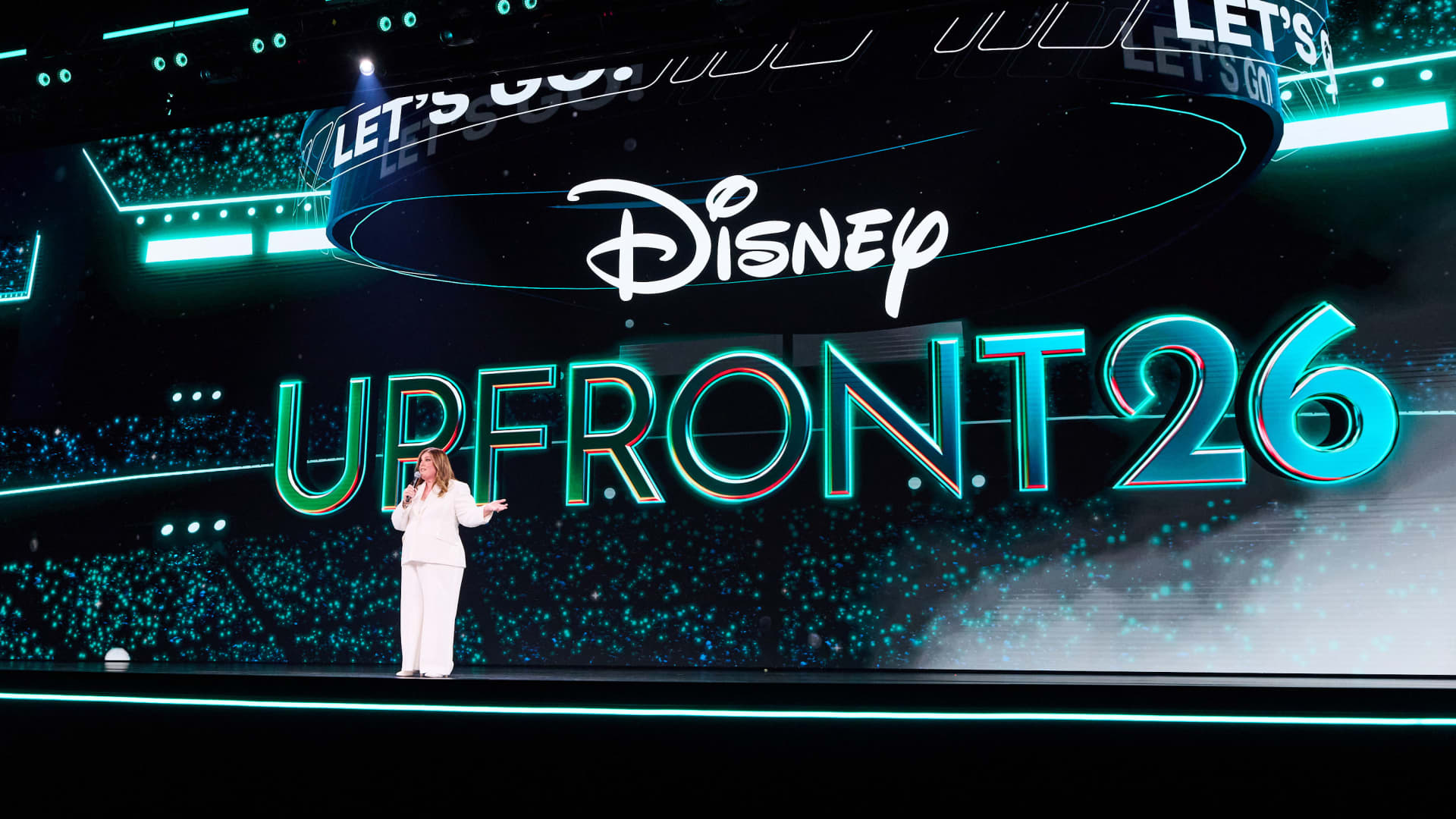
Rita Ferro at Disney Upfront 2026.
Courtesy: Disney Co.
As Rita Ferro, Disney president of global advertising, prepared to take the stage at the company’s recent upfront presentation, she had actor Paul Anthony Kelly on her mind.
Kelly recently portrayed John F. Kennedy Jr. in the limited FX TV series “Love Story,” and met Ferro at an earlier event. After a fangirl moment that included an iPhone snapshot, Ferro requested that Kelly introduce her at the annual pitch to advertisers.
“That’s the Disney difference: trust, innovation and unrivaled fandom. Not just with the stories they tell, but how they operate as a company,” Kelly said on stage earlier this month. “And all of this is in large part due to Rita Ferro.”
“She claims to be my biggest fan, but honestly I think I’m hers,” Kelly said.
Ferro is a 29-year veteran at Disney and has risen through various roles to the top of its advertising business. That places her at the center of a media industry rediscovering the importance of advertising, as traditional TV, streaming, digital and social platforms all jockey for viewers and ad dollars.
While Disney and other media companies held shows in mid-May to dazzle advertisers, the negotiations to lock in commitments are currently underway.
Ferro said in interviews with CNBC that she thinks fandom — from sports to entertainment franchises — is key to driving the Disney portfolio and what unites the company’s divisions under newly installed CEO Josh D’Amaro.
“When you think of ‘One Disney,’” Ferro said, referring to the strategy being undertaken by D’Amaro, “and all of the opportunities to tie in brand partnerships with our movie studio partners, [and] the corporate alliance pieces that can tie into park activations, it’s a far more interesting and dynamic opportunity than just a traditional media sales role.”
Rita Ferro and Paul Anthony Kelly.
Courtesy: Disney
From MTV to Disney
Ferro previously held roles at Disney at ESPN International, Disney Media Network’s Kids and Family, and Disney Interactive, which no longer exists but had focused on the development and distribution of video and mobile games, social media and other digital products.
In 2018, Ferro became president of advertising in the U.S., and in 2023, she took over the business globally. She now leads all advertising sales for Disney’s entertainment, news and sports properties across linear TV, digital and streaming.
“Everyday you’re learning, everyday is different and we spend so much time outside learning our partners’ businesses,” she said. “That’s what I love.”
The daughter of Cuban immigrants who came to the U.S. just before the start of the Cuban Revolution, Ferro was born and raised in Miami. She moved to New York City after graduating from Florida International University with the intention to become a copywriter and art director. After one class, she said, it became clear she wasn’t suited for that career.
Ferro said she soon got involved in fundraising for a production company that showcased Latino comedians and “realized that I was much better at that side.” She got her start in the media ad industry working for MTV in Latin America before its official launch.
“Those were the very early, early, early days of cable. MTV was maybe the second channel that launched in the region. In 1993 you’re building an industry that doesn’t exist,” said Ferro of her first job. “So I’m very fortunate, because I also got to do things with no blueprint. It was a little unsophisticated and unpolished … which I think I thrived in at the time.”
A few years later, her knowledge of Latin America and ability to speak Spanish helped Ferro land a job at Disney, which led her back to New York. She now resides in New Jersey with her husband and daughter, working in Disney’s Manhattan office when she’s not traveling for work.
Ferro said prior to the company’s upfront presentation earlier this month, she had hardly spent an uninterrupted week at home this year. Her schedule has included the CES trade show in Las Vegas, the Winter Olympics in Milan-Cortina, and the White House Correspondents’ Dinner in Washington, D.C. That’s in addition to visiting various Disney offices to see her global team and often attending sporting events with ESPN Chairman Jimmy Pitaro.
L-R: Lisa Sherman, Roger Goodell, Jimmy Pitaro and Rita Ferro.
Courtesy: Disney Co.
“One of the things that I admire most about her is the fact that she is in the field. You get to a certain level in sales and a lot of folks decide they’re going to focus on managing the team,” said Pitaro, one of three Disney leaders who Ferro reports to. “Rita does a fantastic job managing the team, but that is only a small part of what she considers her role to be.”
Colleagues of Ferro’s, both internally at Disney and more broadly across the industry, noted in interviews that her path to the top of a media giant’s ad business has been non-traditional. At the same time — perhaps serendipitously — her various roles over the years align with some of the main areas of growth now central to the media industry.
Selling the Disney portfolio
Co-Chairman of Disney Entertainment Alan Bergman speaks on stage during the Walt Disney Studios presentation at CinemaCon at The Colosseum at Caesars Palace on April 16, 2026 in Las Vegas, Nevada.
Valerie Macon | AFP | Getty Images
Disney has not been immune to recent industry turmoil, undergoing consolidations, reorganizations and leadership changes.
In March D’Amaro took over as CEO following Bob Iger’s second stint at the helm of the company — that most recent tenure lasting less than four years and designed to fortify Disney’s position in streaming, return the movie studio to its prior dominance and further propel its theme parks and experiences.
On his first day as CEO, D’Amaro said his goal was to focus the company on “coming together as one Disney to deliver a more connected, personalized and immersive experience to our consumers.”
Earlier this month during the company’s quarterly earnings call, CFO Hugh Johnston added it’s “about how we create, distribute, engage, and monetize our stories and brands across the company in a way that increases the lifetime value of our consumers and drives compounding returns for our bottom line – and thus for our shareholders.”
Monetizing stories is where Ferro comes in.
Her mandate spans entertainment TV networks — with marquee events like the Oscars and Grammys —streaming platforms Disney+ and Hulu and Disney’s sports portfolio, mainly comprised of ESPN’s linear and streaming options.
“Our portfolio is large, but it’s easy to navigate for our advertisers because of the way Rita has structured it. I’ll call it one-stop shopping for everything that they need,” said Debra OConnell, chairman of Disney Entertainment Television and another of Ferro’s bosses alongside Pitaro and Disney Entertainment Chairman Alan Bergman.
“She’s always been a leader, and asks, ‘How can I bring opportunities to clients that feel not only different, but also amplifying the engagement that a client could have with our audience?” said OConnell in an interview.
Media companies have leaned into established intellectual property in the face of widespread industry challenges including the decline of traditional cable TV subscribers; the push to make streaming profitable in a highly competitive landscape; and the slow recovery of the theatrical industry after the Covid pandemic — all while fighting to regain consumers’ attention that has shifted to social media platforms like TikTok.
The Walt Disney Company and CEO Josh D’Amaro, ring the Opening Bell from the 2026 Disney Upfront at the North Javits Center in New York City on May 12, 2026.
NYSE
Amid the shift to streaming, advertising’s role has only gained importance.
Wall Street once rewarded media companies for streaming subscriber growth, but as those numbers have plateaued for most companies, the addition of ad-supported options has been a new measure of success.
Although Hulu — which Disney acquired in pieces and took full control of in 2025 — was the first streamer to get in the advertising game, the company’s flagship service, Disney+, launched in 2019, added a cheaper, ad tier in late 2022.
During Disney’s most recent quarterly report in early May, the company’s entertainment segment reported that streaming revenue offset declines in both linear affiliate fees and advertising.
Disney+ saw double-digit ad revenue growth compared to the same period last year.
‘She’s always delivering’
As advertising reclaims the spotlight, live sports increasingly dominates the conversation. The category, which now grabs the biggest audiences and ad dollars, is seeing ever-rising media rights costs.
The NFL is in the midst of an 11-year, $111 billion media rights deal, while the NBA is in the first season of its 11-year, $77 billion deal. Higher rights fees means a need to capture return on investment. At Disney, that means leveraging “the power of live [events] and sports, and the strength of ESPN’s upcoming slate,” Pitaro said in an interview.
“[Ferro] gets and understands that,” he said. “That also comes with responsibility, right? Sports rights are expensive and so they have to be monetized, not just through affiliate fees but through ad sales and sponsorships. And she’s always delivering for us.”
This year ESPN will air the Super Bowl for the first time ever, and the game will return to Disney’s broadcast network ABC after 20 years. Super Bowl ads, which garner record money each year, are reportedly expected to sell for $10 million per 30-second spot.
Disney’s bet on sports and streaming amplified last August when the company launched the ESPN direct-to-consumer streaming app, which features all of the content from its TV network as well as exclusive programming.
“To me, live sports is just massively, massively valuable to to us,” said CFO Johnston at a recent investor conference. “More importantly, it’s massively valuable to advertisers because they want these big aggregated audiences and they value that tremendously.”
ESPN rings The Opening Bell at the New York Stock Exchange on Aug. 21, 2025.
NYSE
Getting ahead with tech
Emerging as a key differentiator in global advertising, and on display during this year’s upfront presentations, is technology.
“We’ve really redone our ad tech stack in a way that allows us to target for advertisers much, much more effectively,” Johnston said at an early March investor conference.
For Disney, that’s included the buildout of tools and offerings to unite streaming and linear TV for ad buyers; expanding measurement partnerships; creating Disney’s Audience Graph, essentially its own in-house first-party data about viewership; and in 2025 unveiling its ad-supported monthly active user methodology.
“That was very clear to me, that if we were to compete we needed to control our destiny,” rather than rely on a third-party platform, Ferro said.
These additions have debuted as part of Disney’s Tech and Data showcase at CES, which began in 2021, and serves as the unofficial kickoff to the upfront. Many ad tech and data firms offer these services to allow for better targeting as advertisers are demanding increasingly accurate audience measurement.
“She’s had the clarity of thought to say, ‘We need to be a tech-driven, data-driven organization with platforms that can compete at the level of Google and Meta,’” said Kevin Krim, CEO of ad data firm EDO. “Disney was early in investing in that stuff and aggressive in a way I think others sort of hesitated and then later went all in.”
Rita Ferro at Disney Upfront 2026.
Courtesy: Disney Co.
Much of Disney’s in-house tech has been integral as advertisers look for specifics to target viewers and measures outcomes.
Josh Mattison, executive vice president of digital revenue pricing, planning and operations at Disney, who reports to Ferro, said in an interview that Ferro made a point to learn the ins and outs of the digital tools at Disney’s disposal.
“She understood the importance of having your own ad tech stack in order to scale globally and respond to the market’s expectations,” Mattison said. “If you look at one dimension of how Rita leads, it’s through the lens of not just embracing technology, but really driving technology, both within Disney, but also taking a position in the industry of how important it is for customers and how important it is for our business.”
Tapping into international
Ferro’s next frontier is one that calls back to the beginning of her career.
International growth has emerged as a priority for many media companies, especially streaming services that see much of their additions outside of the U.S. The same is true for Disney.
“Disney+ has meaningful opportunity for growth internationally, and we’re focused on scaling outside the U.S.,” D’Amaro said during the company’s most recent quarterly earnings call. “We are increasing our local content investments, and early results — they’re encouraging.”
For Ferro, this translates to building out the ad-supported streaming business abroad in a similar way to what she’s done in the U.S.
“I started my career international, and so I’m very passionate about the international part of my job,” Ferro said. “The U.S. business is not only mature, but there is a like a cadence, if you will, that’s very regular.”
In comparison, she said, international markets come with more variety and more to learn.
This summer, Ferro plans to go to Paris for VivaTech, which she described as “the CES of Europe.” She’ll take her mother with her to celebrate the elder’s 80th birthday.
While in Paris, Ferro said she plans to meet with companies and discuss how the nuances of international markets can improve Disney’s business.
“For me, that’s super exciting,” Ferro said. “There’s a vibrancy and an opportunity that you’re like, ‘OK, I could really make an impact here.”
Our Dell Stock Pick Is Flying Off the Charts. We’re Sticking With it.
Business
Midcaps in a sweet spot? Why Nippon India’s Rupesh Patel sees a valuation correction despite new index peaks

Edited excerpts from a chat with Rupesh Patel, Senior Fund Manager – Equity Investments, Nippon India Mutual Fund:
Your Nippon India Growth Mid Cap Fund delivered a strong 22% over the last 5 years, beating the benchmark. But given your Growth at Reasonable Price (GARP) philosophy, where are you actually finding “reasonable” valuations in a midcap market that many currently see as overheated?
On an aggregate basis, the NSE Midcap 150 index has remained almost flat since September 2024. However, during this period, earnings have grown at a reasonable rate. In fact, midcap as a category has been the most resilient and delivered higher growth compared to other segments of the market. As a result, valuations today, though they appear higher compared to long-term averages, have corrected as compared to where we were in September 2024.
Coming to Nippon India Growth Fund, we follow a bottom-up approach to construct the portfolio and buy stocks based on their relative attractiveness on risk-reward equation. Some of the businesses in the category may appear expensive in the near term; however, the size of the opportunity and their ability to maintain earnings growth at a reasonable rate over the long term make them attractive from a medium to longer-term perspective.
You are overweight financials and underweight technology in the midcap fund. What’s the rationale? How do you think midcap lenders and midcap IT companies are placed at this stage?
Our OW stance on financials is on account of our exposure to lenders as well as other beneficiaries of financialization of savings like Life Insurance companies, asset management companies, Exchanges, etc.

On the lending side, most of our exposure is to well-capitalised lenders where asset quality is largely expected to hold, Return on Assets/ Return on Equity remains healthy, and valuations are reasonable in the context of the overall market.
In IT companies, we have been underweight since the last few quarters, largely owing to the risk of a slowdown in earnings growth on account of current geopolitical uncertainties and the impact of disruptions like AI. Valuations were also a concern till a few quarters back. Going ahead, as the dust settles and some of these companies evolve and adapt to new realities, growth will recover from current lows. Companies in this sector are generally capital efficient and generate free cash flow, making them attractive bets again as valuations turn favourable.Within the midcap space, how do you read the Q4 earnings season? What are your biggest takeaways for investors?
Q4 earnings season for midcaps has turned out to be quite resilient, and most companies are delivering on expectations. However, going ahead, risks related to deterioration in the macro environment, cost inflation, and logistics remain relevant. If current geopolitical uncertainties continue, we must be cognizant of these risks and their impact on earnings and valuations.
Given the growth trajectory, valuations and earnings, midcap companies are in a sweet spot. Would you agree?
If we look at the last few quarters, midcap companies’ earnings have remained resilient. Most of them have delivered healthy earnings growth even in Q4, FY’26. However, aggregate returns of midcap companies as represented by the NSE Midcap 150 index have remained flat since September 2024, resulting in a valuation correction over this period.
Further, midcap is a very diverse category with a universe representing multiple sectors and some unique and fast-growing profit pools that have the potential to grow meaningfully over the medium to long term; hence, on a bottom-up basis as well, opportunities exist in this segment of the market.
How have you been reshuffling your portfolio to realign it with the realities of war?
As mentioned earlier, we remain cognizant of risks arising on account of deteriorating macro conditions, inflation in costs and logistical challenges, if current geopolitical uncertainties persist. We also remain aware of the potential impact of these risks not only on earnings growth but also on market valuations. In some instances, current stock prices may already be reflecting risks of these uncertainties, making the risk-reward favourable. Hence, our approach is to remain aware of valuations and avoid vulnerable businesses.
From a 3-5 year perspective, which sectors do you think are best placed at this stage – both from a growth as well as a valuation perspective?
We remain positive on Financials, Consumer Discretionary, and select industrials.
Within financials, we are positive on lenders as well as companies that benefit from a bigger trend on the financialization of savings. Accordingly, we have exposure to companies in the insurance space, Asset Management Companies, Exchanges and other financial services companies. On lenders, asset quality remains benign, they are well capitalised, generate decent Return on Assets (RoA) and Return on Equity (RoE) and valuations are reasonable.
Consumer discretionary companies are likely to benefit from favourable demographics, growth in per capita incomes and trends on premiumization playing out in multiple categories over the medium to long term.
On the industrial front, the reason to be positive is on account of various initiatives taken by the government to encourage manufacturing in India. Select companies in Auto ancillaries, Electronics manufacturing, precision engineering and defence-related segments can also do well. However, these are broad sectors, and winners will have to be picked on a bottom-up basis, considering factors like their manufacturing prowess, management strength and cost competitiveness.
The midcap index has already hit a new peak this month, ahead of both small and largecaps. What’s the reason behind this optimism, and do you see valuation risk building?
Although the midcap index is close to an all-time high, its last 20 months’ returns have been flat despite midcap companies as an aggregate delivering superior growth. In that sense, valuations today have turned favourable on account of this time correction. Even if we look at the last 3 years’ earnings on a CAGR basis, midcap as a category has reported superior earnings growth as compared to broader markets. Going ahead as well, the outlook on midcap companies’ earnings growth continues to remain healthier. In that sense, the performance of the midcap index is largely a reflection of underlying earnings growth.
(Disclaimer: Recommendations, suggestions, views, and opinions given by experts are their own. These do not represent the views of the Economic Times.)
InterContinental Hotels Group: Positioned For Further Upside

Over the past two months, 14 penny stocks have witnessed sharp corrections, declining between 15% and 55%. These underperformers were identified through a screen that focused on stocks with a market capitalisation below Rs 1,000 crore, a share price under Rs 20, and a minimum recent trading volume of 5 lakh shares. The screen highlights low-priced, relatively liquid penny stocks that have come under significant selling pressure during the period. (Data source: ACE Equity)
Although penny stocks often attract investors with their low entry prices and potential for rapid gains, they come with substantial risks. Due to low liquidity, high volatility and limited transparency, they are prone to manipulation and sudden price drops. Without a clear strategy and strong risk controls, investors may face more losses than gains.

US castigates Europe over defence spend as NATO reassures Asia

With this, the total outflow by Foreign Portfolio Investors (FPIs) from the equity market has reached Rs 2.25 lakh crore in 2026, which is higher than the Rs 1.66 lakh crore pulled out during the entire 2025, according to data with the NSDL.
FPIs were net sellers in all months of 2026, except February. They withdrew Rs 35,962 crore in January before turning net buyers in February, when they invested Rs 22,615 crore, the highest monthly inflow in 17 months.
However, the trend reversed in March, when foreign investors pulled out a record Rs 1.17 lakh crore. The selling continued in April with net outflows of Rs 60,847 crore and extended into May with withdrawals of nearly Rs 33,000 crore.
FPIs have been selling Indian equities due to a combination of weak earnings growth, rupee depreciation and more attractive opportunities in other markets, market experts said. However, the pace of selling has been moderated.
Geojit Investments Chief Investment Strategist V K Vijayakumar said subdued earnings growth in India, compared with significantly stronger corporate performance in markets such as the US, Japan, South Korea and Taiwan, has prompted FPIs to shift capital overseas.
“The strong artificial intelligence-led rally in markets such as South Korea and Taiwan has also attracted foreign capital away from India,” Vijayakumar said.Sachin Jasuja, Head of Equities and Founding Partner at Centricity WealthTech, said the persistent depreciation of the rupee has emerged as another key factor behind FPI outflows.
“The rupee has weakened nearly 6 per cent so far in 2026 and around 10 per cent over the past year, falling from the mid-80s to about 95.5 against the US dollar despite RBI’s efforts to defend the currency,” he said.
Jasuja noted that India’s heavy dependence on crude oil imports has further aggravated concerns. With the country importing more than 80 per cent of its crude requirements, the sharp rise in Brent crude prices from the USD 70 per barrel range to USD 95-105 amid disruptions around the Strait of Hormuz has widened both the import bill and the current account deficit.
“A weaker rupee directly impacts dollar-denominated returns for foreign investors, making it one of the biggest reasons for continued FPI selling,” he said.
The pace of selling has been moderated in May compared to previous months.
Himanshu Srivastava, Principal – Manager Research at Morningstar Investment Research India, said moderation in outflows suggests that foreign investors are becoming less aggressive in reducing their India exposure compared with the heavy selling witnessed earlier in the year.
” One of the key reasons behind this trend has been the gradual improvement in global risk sentiment. Concerns around global trade tensions, tariff-related developments, and growth uncertainties, while still present, have eased somewhat from the elevated levels seen a few months ago,” he added.
On the outlook, Jasuja said a reversal in FPI flows is unlikely in the near term unless there is a significant improvement in macroeconomic conditions.

There Will Be Investing Opportunities When the Strait of Hormuz Reopens. Think ETFs.

Letter sparks fierce row over energy policy and Lib Dems

Kelly Rutherford’s Ballet Flats Scream ‘Upper East Side Rich Mom’
Idacorp Stock Is Still a Buy


-

 Business7 days ago
NYT Strands Answers May 24 2026 Revealed for Puzzle No. 812 Theme Summer Essentials
-

 NewsBeat4 days ago
Israel says it has killed new Hamas military leader in Gaza City airstrikes
-

 Tech4 days ago
NASA taps Blue Origin to deliver lunar rovers for Moon Base initiative
-

 Politics6 days ago
Bridgerton Season 5: Cast, Release Date And Everything We Know So Far
-

 News Videos4 days ago
XRP *JUST* SUCCEEDED!!!! CLARITY ACT EXPOSED!!! (SHE EXPOSED IT)
-
 Sports5 days ago
2026 NBA Finals schedule, odds: Knicks await Thunder or Spurs after winning East
-

 Business4 days ago
Selena Gomez Reportedly Upset Over Benny Blanco’s Comments on Her ‘Terrible’ Diet
-
 Crypto World5 days ago
Micron Crosses $1 Trillion Market Cap as AI Demand Reshapes Memory Sector
-
Crypto World7 days ago
Brian Armstrong Outlines Crypto Vision for the Future Financial System
-

 News Videos2 days ago
This is BROKEN! INSANE 5x MONEY CAR WASH WEEK! The NEW GTA Online UPDATE Today! (GTA5 New Update)
-

 Business6 days ago
BTS Sells Out Four Las Vegas Shows at Allegiant Stadium for ARIRANG World Tour
-
 Tech5 days ago
China assigns ID codes to 28,000+ humanoid robots
-
 NewsBeat6 days ago
Hottest May day ever as London hits 34.8C in 2C leap from previous records
-

 Tech6 days ago
Microsoft’s quiet Claude Code retreat and the real cost of enterprise AI
-

 Tech2 days ago
Waymo dominates autonomous vehicle registrations as Tesla trails behind
-

 Business6 days ago
Nikkei 225 Surges Past 65,000 for First Time as Iran Peace Hopes Fuel Record Rally
-
Tech4 days ago
The Samsung pay deal is the moment Korean unions changed register
-
 Entertainment5 days ago
‘Breaking Bad’ Star’s Easy-to-Binge 6-Part Crime Series Spin-Off Is Finally Heading to Free Streaming
-

 Tech6 days ago
Westone Audio and Etymotic Acquired by Fidelity Collective in Major IEM Market Move
-

 NewsBeat6 days ago
Crowds find riverside shade in York as temperatures soar
You must be logged in to post a comment Login