
TL;DR
Mrs. Dow Jones says the American dream is dead for young Americans, who are turning to gambling as traditional wealth paths become inaccessible.




Apple’s next-generation Pro iPhone could arrive with one of the biggest camera upgrades the company has introduced in years. But according to new analyst reports quoted by Forbes, that improvement may also come with a significant increase in manufacturing costs – raising fresh questions about whether future iPhone prices could climb even higher.
The focus of the latest leak is the iPhone 18 Pro and iPhone 18 Pro Max, which are expected to debut a new variable aperture camera system. Supply chain analyst Ming-Chi Kuo claims the upgraded camera module could cost Apple roughly 50 percent more than the camera hardware currently used in its Pro models.
That may not sound dramatic at first, but camera systems have increasingly become one of the most expensive and important components inside modern flagship smartphones.
Variable aperture technology has been rumored for iPhones for several years, and reports now suggest the feature has finally entered production for the iPhone 18 Pro lineup. Unlike current iPhone Pro models, which use a fixed aperture lens, the new system would allow the camera to physically adjust how much light enters the sensor. In practical terms, that means improved exposure control, more flexibility in challenging lighting conditions, and potentially more natural background blur effects without relying entirely on software processing.

Apple has largely relied on computational photography to improve image quality over the years, but a variable aperture would represent a more traditional camera hardware upgrade similar to features already seen on some premium Android phones.
According to Kuo, the new lens assembly is substantially more expensive than the seven-element plastic lens system Apple currently uses. Chinese supplier Sunny Optical is expected to handle a significant portion of production for the upgraded component.
The bigger story may not be the camera itself, but what it could mean for future iPhone pricing.
Apple has so far avoided major flagship price increases despite rising memory costs, more advanced chips, and growing manufacturing expenses. However, reports suggest the iPhone 18 Pro lineup is accumulating several expensive upgrades at once, including new camera technology, next-generation silicon, and additional connectivity features.

That has led to growing speculation that Apple may eventually need to pass some of those costs onto buyers.
Online reactions have already been mixed. Some users see variable aperture as a meaningful photography upgrade, while others argue that most everyday users may never notice the difference enough to justify higher prices.
Apple is expected to unveil the iPhone 18 Pro series in late 2026, and current reports suggest the devices could arrive alongside Apple’s first foldable iPhone.
For now, it remains unclear whether the higher camera costs will directly affect retail pricing. Apple has historically absorbed some component increases to maintain pricing stability, particularly in highly competitive markets.
Still, if the leaks prove accurate, the iPhone 18 Pro could become a test of how much consumers are willing to pay for advanced camera hardware. Apple clearly believes better photography remains one of the strongest reasons people upgrade their phones. The question is whether buyers will feel the same if the improvements arrive with a heavier price tag attached.

Like other online travel booking services, Priceline helps you compare offerings and rates for everything travel-related, like airline tickets, and hotel stays. Growing up, I always referred to singer/starship captain William Shatner as the annoying guy from Priceline, much to my grandmother and father’s horror. But, you have to admit, the ads were memorable and convincing, even if it did become Shatner’s legacy to a new generation. No celeb endorsement is needed to save with our Priceline promo codes, though. We update our Priceline coupons regularly to help you be a budget-friendly traveler, with Priceline coupon codes for dollars off car rentals, last-minute hotel bookings and other select discounts for (nearly) everything travel-related.
Summer means vacay and the best summer sports events are in full swing. With Priceline’s Fan Fest Getaways, you can get up to 60% off stays in host and watch party cities for the world cup, as well as various discounts in sports-centric cities, for stays as short as one match-day, to weekend-long celebrations. You can get $20 off your next trip when you use Priceline coupon code FANFEST, on everything travel-related, including hotel, flight, or rental car deals.
One of the easiest ways to save big on travel with Priceline is to sign up for VIP rewards. Sign up is free and includes tons of perks like best price guarantee, exclusive savings on hotels, rental car discounts, insider coupons, and more.
Early on, Priceline first became known for its “Name Your Own Price” system, where travelers would set their budget for airline tickets, hotel rooms, car rentals, and vacation packages. Details like the exact hotel were only shared after your credit card was charged, with no ability to cancel. This lives on, sorta, with Priceline’s Express Deals promo which shows up in the results for certain searches. Where, right now, you can get 10% off Express Deals when you sign up for VIP rewards.
Express Deals give you limited-time rates of up to 60% off on hotels, flights, and car rentals. Like the “Name Your Own Price” system, because of the extremely discounted rates of these deals, some details are hidden until after booking and are non-refundable.
To get the 10% off Hotel Express Deals, all you have to do is simply sign-up for Priceline emails. Your custom code will be sent straight to your inbox. For these Priceline Hotel Express Deals, the customer must sign in, use the search tool to find valid hotels with the Express Deals badge, and apply code at checkout to save big (and stay bad and bougie) on your next vacay.
We know travel can be egregiously expensive. That’s why we at WIRED rigorously test each Priceline coupon to make sure you’re getting those promised discounts on important travel details like flight, rental cars, and hotel bookings. Priceline sometimes had blanket deals, like 10% off promo codes when you sign up for emails. But some of Priceline’s best discounts are tied directly to the booking type you select. Savings fluctuate between Hotel Express Deals, Flight Express Deals, bundles, and VIP-exclusive rates, so make sure you’re checking to get the best deal for the type of booking you want to make.
The most effective method this month is the WIRED Priceline Booking Type Check:
If you’re like me, someone who wants to book for way less but doesn’t necessarily care about brand type, you may want to check out Priceline express deals. With this, there are exclusive Priceline discount code deals which offer “blind-booking” savings. This means that to get express deals, which often save 40-60%, you’ll book your room or flight without knowing the specific brand until after purchase.
With a ‘Hot Deal’ Priceline discount, you can get massive discounts on your next warm weather getaway. This means up to 99% off hotel bookings for destinations like Cancun and Maui. If you’re like me and in desperate need of sandy beaches at a fraction of the cost, explore the ‘Hot Deals‘ available right now, like $1,000 off hotels in Cancun and Maui (expires July 8), or if you want to stay within the Lower 48, Priceline has a deal for $500 off stays in LA hotels (expires July 6).
Make sure you check back often as we’re continuously updating Priceline promo codes, including massive savings with flash events like the “4-Day Cruise Flash Deal,” which give up to $1,250 to spend at sea after you book on top cruise lines. Happy sailing!
Oftentimes, the thing that makes travel pricey are the smaller expenses that stack up over time, like rental cars. You can greatly reduce upfront booking costs with a Priceline rental car promo code for immediate savings on vehicle bookings, including this Priceline coupon for $10 off your rental car booking.
When you’re a student, you’re often not in the position to have extra funds to travel. Priceline wants to close that gap of inaccessibility, by providing a Priceline student discount through verification by Student Beans. And there are tons of student-specific Priceline discount codes for specific Spring Break travel destinations and dates. Plus, students can maximize benefits through Priceline’s VIP Rewards program.
Priceline wants to reward members of the military, with Priceline promo code for American Forces Travel members. Once you verify your military service membership, you can save up to 50% on your next hotel stay and other exclusive travel discounts.
Booking travel and figuring out logistics, including flight delays and car rentals, can be a lot. That’s where Priceline customer service steps in. You can contact Priceline customer service securely anytime. Make sure you contact Priceline through official communication channels only, which are listed on the website and within apps directly. The fastest method of support is the 24/7 chat.
One of the best ways to save on your vacation this summer is by using the Priceline app. With the Priceline app, you can get 10% off when you purchase in-app, and 5% off on-site when you purchase any Hotel Express Deals (up to $50 in savings) with Priceline promo code SUMMERSTAY. Act now to save big on primo summer destinations like Florida, California, and Tokyo.
Soccer (or futbol) fans, rejoice! The World Cup is upon us yet again, and Priceline is offering 40% off stays near the world cup matches. With up to 40% off stays, these savings are based on “the average nightly price of hotels in nearby cities compared to the average nightly price of hotels in the primary city for the same travel period.” You can get massive savings on select package deals sitewide when you book a hotel and flight or car together. So whether you’re watching the World Cup games in Atlanta or Los Angeles, you can save big while you cheer on the beloved game.

Looking ahead: Two quiet moves – one from EA, one from Ultima’s creator – could end up reshaping what the series looks like in the years ahead. Electronic Arts recently filed new trademarks tied to Ultima, the long-running RPG series it acquired in 1992 and has mostly left dormant since. The filings don’t point to a specific project, but they do show EA is still actively protecting the Ultima name. Around the same time, Ultima creator Richard Garriott has been working to a different kind of schedule, one set by the quirks of US copyright law.
Garriott says he has tried several times over the years to bring Ultima back with EA’s help, but each effort stalled before anything concrete happened. “Every decade or so, I tried to work with EA on a revival of Ultima,” Garriott told Inside Games’ Brian Gaar. “They always seemed interested enough to start talking, then abandoned talks just as quickly.” Beyond those stalled talks, he’s now looking at other ways to move forward.
Under US law, creators can move to reclaim certain rights to their work 35 years after they transferred them. EA acquired the rights in 1992, making 2027 the first year Garriott can act on that 35-year rule. “And so, I have been waiting… finally, the time has come!” he said.

The wrinkle – and the part that matters most for how any future game actually gets built – is the way copyright and trademark split in this case. Even if Garriott regains the underlying rights to his original work, EA would still control the Ultima name and associated branding through trademark protection.
In practice, that could leave Ultima heading in two directions at once.
Garriott could build a new project based on elements he originally created for the series, but he wouldn’t be able to release it under the Ultima name. EA, for its part, would remain free to launch or license games under the Ultima brand, with or without Garriott’s involvement.
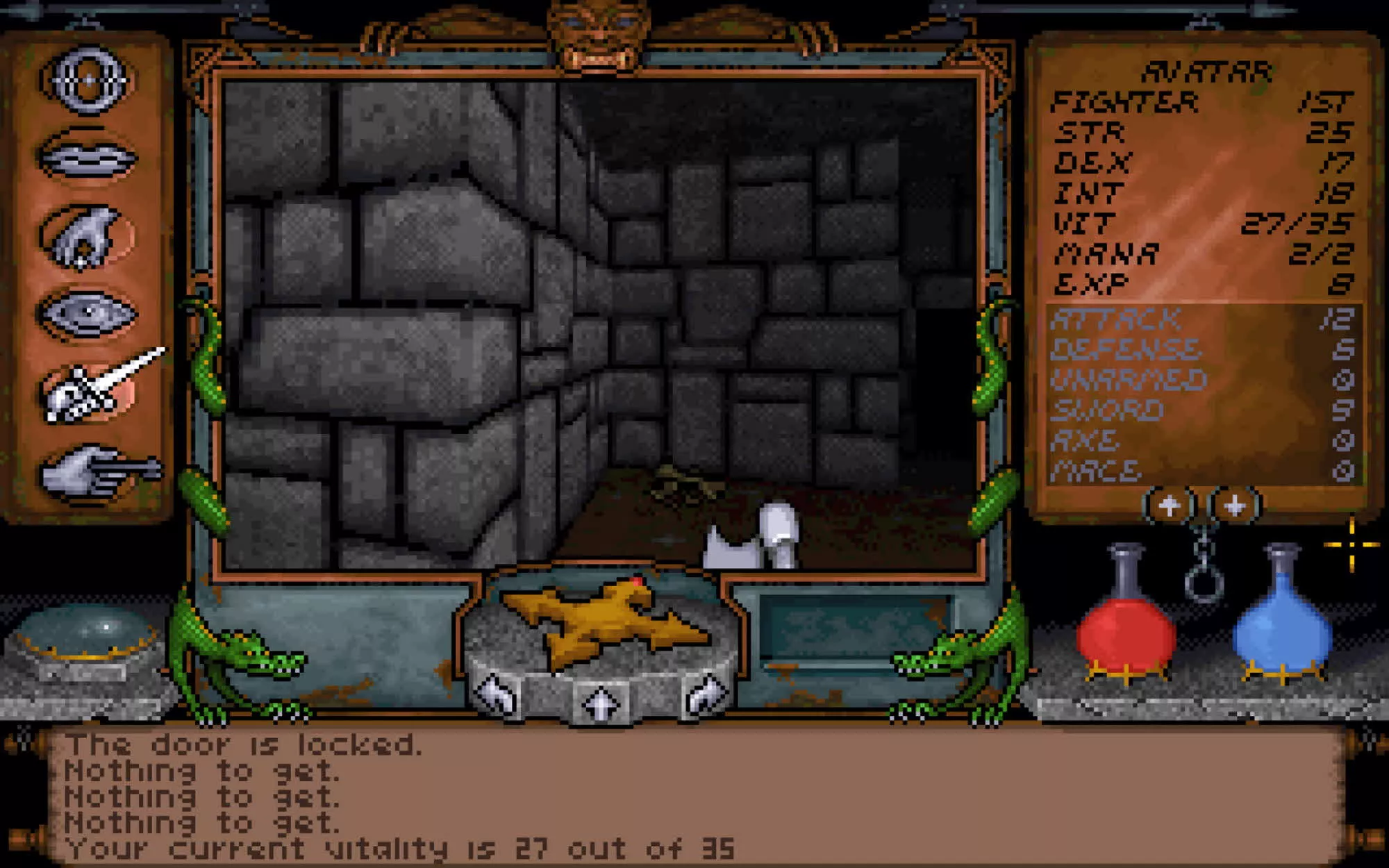
Garriott has hinted at how he’s thinking about that challenge: “‘Lord British’s Ultima’ will regain all the copyrights of my original work. What it will become is the next challenge.” Taken at face value, he seems more interested in reworking his old ideas than simply slapping the same logo on a new box.
That distinction matters. Ultima has been around for more than 40 years, and the series has already gone through long stretches of quiet followed by resurfacing in new forms. If Garriott does move ahead, he’ll need to decide what “Lord British’s Ultima” actually looks like in practice, a question he hasn’t yet answered publicly.

At the same time, EA’s trademark activity raises a separate set of possibilities. If EA does more with the trademarks, any new Ultima-branded project could look very different from the older games, though the company hasn’t said what it has in mind. Whether that happens remains unclear, but the filings suggest the IP hasn’t been shelved for good.
For now, neither side has laid out concrete plans. Garriott is expected to appear at Dragon Con later this year, where he said he hopes to have “more thoughts together about what that will actually mean.” Until then, both paths remain speculative.
Still, the setup is hard to ignore. It’s rare for a legacy franchise to reach a point where its original creator and its current owner can move forward at the same time, but under entirely different constraints. If both efforts materialize, Ultima could end up existing in two forms – one tied to its name, the other to its original design philosophy.

Whoop’s bracelet-style trackers deliver exhaustive activity tracking and biometric data compared to standard fitness trackers. The Whoop band is also an excellent tool for monitoring sleep and overall health. Our WIRED testers have been reviewing Whoop trackers since the Whoop 3.0, and have watched as the product has evolved into an AI-enabled personalized service.
But for most people, the Whoop may feel like an overinvestment, which is why Whoop is particularly popular among elite athletes. The company’s tiered subscription model can also be quite expensive for devices that are not medical instruments. Nonetheless, in the realm of biohacking, the gamification of health tracking is quite appealing. If you’re on the fence, we have a Whoop promo code and Whoop discount here, including a free trial before you commit to a purchase.
Whoop offers a free trial membership to new customers, no Whoop promo code needed, for anyone not sure about committing. It’s a one-month subscription to Peak, the company’s mid-tier plan that includes core features such as readiness scores and advanced features like health and stress monitoring. The Whoop free trial includes a pre-owned Whoop 5.0 device and wired charger, along with a brand-new band of your choice. According to Whoop, the pre-owned device is thoroughly tested to ensure it works, but it may have slight cosmetic flaws.
Once the trial ends, your membership will automatically renew for $239 per year unless canceled beforehand. Monthly financing with a one-year commitment is available, and you can also switch to a One or Life plan—just make sure to do so before your free trial ends. If you do decide to cancel, you’ll have to return your device and battery pack for the cost of shipping ($6).
Whoop’s annual memberships are not cheap. Fortunately, Whoop’s referral program lets you earn free months to offset future membership fees. For each friend you refer, you receive one month of membership credit, and your friend receives one free month when they join. If you have a month-to-month plan, referral credits apply to the next monthly charge until fully used. If you have a 12- or 24-month prepaid plan, credits will extend your renewal date. Referral credits are applied only after your friend has passed their return window or made their second payment, whichever occurs first.
Active and retired military members, as well as first responders, are eligible for a 10 percent Whoop discount code on Peak ($239/year) and Life ($359/year) memberships. You must verify your status through ID.me to receive the Whoop promo code.
Like the above discount, students can save 10% at Whoop. This 10% Whoop student discount applies to Peak, Life, and One memberships. All you need to do is verify your student status through StudentBeans to get the Whoop promo code for 10% off.
Say what you will about gift cards, but in the world of biohacking, a Whoop gift card is practically a love language. Instead of purchasing a Whoop device outright, which involves personal preference for both the membership and band, a gift card is a thoughtful alternative. The available amounts are $25, $50, $75, $100, $250, or $1,000. The gift card numbers are delivered by email along with instructions for redeeming them at checkout. You can either choose a specific gift recipient or send it to yourself to print and give in person. Please note that gift cards cannot be returned or exchanged, so I recommend this only if you know your friend has been dying for a Whoop.
Whoop offers a Whoop family plan to help everyone reach their goals more affordably. The Whoop family plan helps with multiple people’s daily accountability, competition, or motivation, with plans for up to keep costs down. When you choose a Whoop family plan, every member gets their own device and access to the app; each also comes with a complimentary band and a charger that keeps devices juiced for 14 days. With this, you’ll also get a lifetime warranty and 24/7 support. The Whoop Family Plan is for two to six people, and instead of members each paying an individual membership, each family has a single annual bill. Be sure to check out Whoop family memberships and see if it’s right for your clan.

Mrs. Dow Jones says the American dream is dead for young Americans, who are turning to gambling as traditional wealth paths become inaccessible.
The American dream is “very dead” for millennials and Gen Z, according to financial influencer Haley Sacks, better known as Mrs. Dow Jones. In an interview with Business Insider, Sacks argued that traditional markers of middle-class success, homeownership, stable careers, retirement savings, have become functionally inaccessible to younger Americans, pushing them toward gambling and side hustles as alternative paths to wealth.
The claim lands against a backdrop of record-breaking numbers in the US gambling industry. The American Gaming Association reported that US commercial gaming revenue hit nearly 79 billion dollars in 2025, an all-time high, with sports betting revenue reaching nearly 17 billion dollars, up roughly 23 percent year over year, and iGaming revenue exceeding ten billion dollars for the first time.
Young Americans are driving a significant share of that growth. A 2026 Northwestern Mutual survey found that 32 percent of Gen Z respondents and 24 percent of millennials either participate in or are considering sports betting, rates far above older age groups.

The 💜 of EU tech
The latest rumblings from the EU tech scene, a story from our wise ol’ founder Boris, and some questionable AI art. It’s free, every week, in your inbox. Sign up now!
Sacks, a Fortune 40 Under 40 honouree and founder of the financial education company Finance is Cool, frames the shift as rational rather than reckless. Her argument is that when a starter home costs multiples of a young worker’s annual salary and student debt averages roughly 33,000 dollars for millennials and 22,000 dollars for Gen Z, gambling starts to look like one of the few available shots at a life-changing sum of money.
The economic data offers some support for the underlying frustration. A Beyond Finance survey from March 2026 found that more than 70 percent of Gen Z and millennial respondents described their spending as “survival mode,” covering essentials with little left for saving or investing. The economic anxiety is showing up in other ways too, with university graduates booing commencement speakers who tell them AI will transform their careers while the entry-level job market contracts around them.
But the leap from economic frustration to gambling as a wealth strategy is where the argument runs into trouble. A joint study by researchers at UCLA, USC, and Harvard found that the introduction of online sports betting in a state was associated with a ten percent increase in the likelihood of bankruptcy among young adults. States that added mobile wagering saw a 25 percent increase.
The researchers found that the convenience of phone-based betting, available around the clock and requiring no trip to a casino, was a key driver of financial distress. The pattern is particularly concentrated among men under 35, the same demographic most aggressively targeted by sportsbook advertising.
Gambling addiction among young Americans is rising alongside the revenue. NPR has reported on a growing number of young adults presenting with gambling-related debt, with counsellors noting that many entered sports betting through free-bet promotions and social media advertising that framed wagering as a skill-based investment rather than a game of chance.
Sacks acknowledged in the Business Insider interview that gambling is not a financial plan, but argued the impulse behind it reveals something real about how disconnected traditional financial advice has become from the economic reality facing people under 40. She pointed to the gap between the advice young people receive, save consistently, invest in index funds, buy a home, and a housing market and labour environment that make following that advice feel impossible.
The tension between those two realities is not new, but its scale is. Tech layoffs framed as AI transformation have eliminated tens of thousands of entry-level and mid-career roles across the industry since 2024, compounding the sense among younger workers that the system is not built for them.
The financial services industry has noticed the shift. Betting platforms and fintech apps increasingly market themselves to younger users with language borrowed from investing, offering “portfolios” of bets and “research tools” that blur the line between trading and wagering. European regulators have started cracking down on prediction markets that straddle that same boundary, with Spain blocking Polymarket and Kalshi for operating without gambling licences.
In the US, the regulatory picture is more permissive. Thirty-eight states and Washington DC now allow some form of legal sports betting, up from just one state in 2018. The expansion has been driven by state governments attracted to tax revenue and by a Supreme Court ruling that struck down the federal ban on sports gambling.
It is worth noting some caveats about the framing. Sacks is a financial influencer and content creator, not an economist, and her conclusions are based on anecdotal observation and her audience’s experience rather than peer-reviewed research. The gambling industry’s record revenue does not by itself prove that young people are gambling instead of saving, it could reflect broader population growth in legal markets, more states coming online, or increased spending by existing bettors across all age groups.
The correlation between economic anxiety and gambling behaviour is well documented in academic literature, but correlation is not causation. Some young adults may gamble because they feel economically hopeless, others may gamble for entertainment, and the two groups likely overlap in ways the available data does not cleanly separate.
What the numbers do show clearly is that a generation facing record housing costs, significant student debt, and a contracting entry-level job market is also gambling at historically high rates, and that the financial consequences of that gambling are falling disproportionately on the youngest and most economically vulnerable bettors. Whether that represents a rational response to an irrational economy, as Sacks argues, or a dangerous coping mechanism being exploited by a rapidly expanding industry, depends on which side of the bankruptcy statistics you are standing on.


OS platforms
Bird-branded AI will ride on Stonking Stingray
Canonical has published more details about the local speech-to-text engine that will take dictation in the forthcoming Ubuntu version 26.10, aka “Stonking Stingray.”
In a post on the company’s Discourse forums on Wednesday, the outfit named one of the most significant new elements that’s coming in the next version: Myna: Speech to Text for Ubuntu Desktop.
Earlier this month, we reported from the Ubuntu Summit that Canonical was going big on AI and that one of the first signs would be speech-to-text input via locally run speech-recognition models. After the Summit, the company then published the Ubuntu Desktop 26.10 “Stonking Stingray” Roadmap, as we mentioned towards the end of our review of MX Linux 25.2.
The announcement explains – and illustrates – what the plan is, how it will work, and the user interface that the team is aiming for in the initial release:
For Ubuntu 26.10, we’re deliberately focusing on the basics: a reliable desktop dictation.
The initial experience will be simple: Press a keyboard shortcut, speak naturally, and see the resulting text appear in the application you’re using. Myna is designed to provide speech recognition with clear visual feedback while dictation is active.
This is good stuff. Although it won’t be an accessibility revolution on its own, it’s an important step and will help desktop Linux catch up with the commercial competition. Speech recognition is built into Apple’s macOS in a tool called Voice Control. On modern Macs with Apple Silicon processors, the recognition engine is on-device and works offline. For a few months in 2023, The Reg’s FOSS desk was unable to use his right arm, and when he returned to work, he dictated his articles into an M1 MacBook Air using this feature.
Register columnist Colin Hughes knows much more about such matters than we do. He wrote about how Voice Control needed more work later that same year, and he returned to the subject on Global Accessibility Awareness Day – May 21.
Microsoft’s current offering is called Voice Access, which is replacing the Windows Speech Recognition tool that Microsoft introduced with Windows Vista in 2006.
The Myna project will be open source, and there’s already a GitHub repository for it, but there’s not very much there yet beyond some planning notes. There’s time: although the October release of 26.10 is only about four months away, this is not a major new pioneering technology. Various tools can already do similar things.
One of the first was Mycroft, although it is no longer around: some three years ago, The Register described how the creator of the Linux virtual assistant blamed a “patent troll” for the project’s death. There is also Michal Kosciesza’s Speech Note tool, which you can install from Flathub.
Last August, we reported on the release of FFmpeg 8, which can use the local whisper.cpp version of OpenAI’s Whisper model to do on-device speech-to-text, enabling it to automatically add subtitles to video files.
Although this writer is unconcerned about being labelled an AI hater, we do feel allowing voice control of a PC is an acceptable and beneficial role for the technology. Or as the author of jqwik and noted AI skeptic Johannes Link put it, an Ethical Use of Generative AI. ®


VIRTUALIZATION
Soaring PC prices make alternatives to hardware refreshes interesting
Your next work PC could live in the cloud. A couple of years ago, the Cloud Software Group – the private-equity-owned vendor that mashed up Citrix with Tibco – built a tool to analyze the ideal desktop environment for its users, a cost-control exercise aimed at ensuring it wasn’t spending big on under-utilized endpoints. Last month, the company productized the result and put it on sale under the name “Citrix DaaS Flex.”
The product is effectively a front for Citrix’s existing portfolio of desktop-as-a-service (DaaS) and application publishing tools. Deploying Flex starts with an assessment of an organization’s endpoint fleet, which general manager for the company’s DaaS portfolio Shawn Bass told The Register often includes many inappropriate machines.
Bass believes that few organizations have the data to understand which cloudy PC instance types are appropriate for their users, or experience running fleets of hosted PCs, so they end up paying too much for virtual machines that have far more performance than some users require. Others, he said, end up with bill shock if they sign up for consumption-based pricing. Some use virtual PCs when they can easily get by with a hosted managed browser locked into certain SaaS sites and published apps.
Once Citrix figures out what your users need, it suggests “personas” – a collection of templates that suit different users. Bass said that organizations often need three personas – one each for task workers, knowledge workers, and power users. A persona could involve a full cloud PC, a managed browser, or just access to published apps.
Whatever the recommendation, Citrix goes and makes it all happen. Users don’t see the company’s products; they just get to consume endpoints. Citrix runs the virtual PCs in Azure.
Citrix charges for Flex using a system of credits. It might price a virtual PC for a power user at 60 credits a month, for example. After assessing users’ endpoint needs, Citrix will propose a credit budget, and a deal spanning three or more years and billed monthly. Users can hold back some credits to take into account seasonal usage spikes – Bass suggested retailers who add staff for Christmas shopping might plan to use more credits for a couple of months a year, without exceeding the total credits available over the life of a contract.
Citrix budgets for virtual PCs to run between 10 and 14 hours a day. If users burn the midnight oil and incur extra Azure costs, that’s Citrix’s problem.
Bass told us that Citrix plans to bring Flex into other hyperscale clouds and is also looking to make it work with on-prem platforms. The Reg suspects that will mean long-time partners like Nutanix get a look-in. A version for the channel is also in the works.
When we cover virtual desktops, readers often note that accessing a cloudy PC requires an actual PC, or another device, and suggest that’s wasteful.
Bass thinks the times may now suit DaaS, because the high price of memory means PC fleet refreshes are more expensive. Cloudy desktops, he thinks, therefore represent an upgrade path. Of course, he would say that because Citrix offers its own lightweight OS – eLux from Unicon – tailored to remote access and which comfortably runs on old PCs. Bass said customer interest in that offering is rising. ®

Looking for a different day?
A new Quordle puzzle appears at midnight each day for your time zone – which means that some people are always playing ‘today’s game’ while others are playing ‘yesterday’s’. If you’re looking for Sunday’s puzzle instead then click here: Quordle hints and answers for Sunday, June 21 (game #1609).
Quordle was one of the original Wordle alternatives and is still going strong now more than 1,400 games later. It offers a genuine challenge, though, so read on if you need some Quordle hints today – or scroll down further for the answers.
Enjoy playing word games? You can also check out my NYT Connections today and NYT Strands today pages for hints and answers for those puzzles, while Marc’s Wordle today column covers the original viral word game.
SPOILER WARNING: Information about Quordle today is below, so don’t read on if you don’t want to know the answers.
• The number of different vowels in Quordle today is 3*.
* Note that by vowel we mean the five standard vowels (A, E, I, O, U), not Y (which is sometimes counted as a vowel too).
• The number of Quordle answers containing a repeated letter today is 1.
• Yes. One of Q, Z, X or J appears among today’s Quordle answers.
• The number of today’s Quordle answers starting with the same letter is 2.
If you just want to know the answers at this stage, simply scroll down. If you’re not ready yet then here’s one more clue to make things a lot easier:
• W
• A
• C
• W
Right, the answers are below, so DO NOT SCROLL ANY FURTHER IF YOU DON’T WANT TO SEE THEM.

The answers to today’s Quordle, game #1610, are…
I am seriously out of form with two defeats in a row.
To be fair to myself, WAXEN is not the easiest of words to get — especially with one guess left. Kudos if you got it.

The answers to today’s Quordle Daily Sequence, game #1610, are…

 For most of us the abbreviation “CRT” brings to mind a monitor or TV. But at its core it’s about the special vacuum tube that makes the images appear.
Regardless of whether it’s just a simple monochrome CRT in an oscilloscope or a full RGB CRT, the basic steps to make it work in a device remain the same. In a recent video by [Void Electronics] these steps are worked through, including the biasing at the end that is necessary to get a stable image.
A big part of installing a CRT and driving it is knowing how to read its datasheet. Much like other vacuum tube types, there are heaters, control grids and a range of voltages to get right and keep happy. Even then you can still have a situation where you must troubleshoot problems, which is also touched upon in the video. All of this is demonstrated using an RFT B6S1 CRT as the subject, including how to build your own bias circuit.
Despite calling it an “obsolete skill”, there is still a lot of demand for CRTs in vintage lab equipment, arcade restorations and far more obscure fields that still have new CRTs produced for them. Not to mention that even today CRTs have characteristics that make them competitive with flat-screen technologies.
Looking for a different day?
A new NYT Strands puzzle appears at midnight each day for your time zone – which means that some people are always playing ‘today’s game’ while others are playing ‘yesterday’s’. If you’re looking for Sunday’s puzzle instead then click here: NYT Strands hints and answers for Sunday, June 21 (game #840).
Strands is the NYT’s latest word game after the likes of Wordle, Spelling Bee and Connections – and it’s great fun. It can be difficult, though, so read on for my Strands hints.
Want more word-based fun? Then check out my NYT Connections today and Quordle today pages for hints and answers for those games, and Marc’s Wordle today page for the original viral word game.
SPOILER WARNING: Information about NYT Strands today is below, so don’t read on if you don’t want to know the answers.
• Today’s NYT Strands theme is… Heebie-jeebies
Play any of these words to unlock the in-game hints system.
• Spangram has 10 letters
First side: left, 5th row
Last side: right, 8th row
Right, the answers are below, so DO NOT SCROLL ANY FURTHER IF YOU DON’T WANT TO SEE THEM.

The answers to today’s Strands, game #841, are…
I am not very good at watching horror movies as I am so easily spooked. It’s led to a few embarrassing moments of me falling off chairs during jump scares — even the false jump scare that’s intended to lull you into a false sense of security has me on the verge of trauma.
Perhaps if I’d have read the GOOSEBUMPS series of books when I was a kid I would be better acclimatized to shocks and gore.
Anyway, I digress. That spangram really opened up today’s game and fortunately I spotted it early after getting CREEPS. The only word I struggled with was BUTTERFLIES, which doesn’t quite fit with the others.
Strands is the NYT’s not-so-new-any-more word game, following Wordle and Connections. It’s now a fully fledged member of the NYT’s games stable that has been running for a year and which can be played on the NYT Games site on desktop or mobile.
I’ve got a full guide to how to play NYT Strands, complete with tips for solving it, so check that out if you’re struggling to beat it each day.
The Pentagon’s F-35 fighter fleet continues to face readiness challenges despite years of investment, modernization efforts, and sustained contractor support, as a US Government Accountability Office (GAO) report found only 25% of the aircraft were fully mission capable during fiscal 2025.
According to the GAO, the fleet’s mission-capable rate declined from 67% in fiscal 2021 to 44% in fiscal 2025.
The fully mission-capable rate, measuring aircraft able to perform all assigned missions, dropped from 38% to 25% during the same period.
The findings raise questions about a program expected to cost ∼$1.6 trillion in lifetime US sustainment expenses while serving as the backbone of American air power.
US Air Force officials attributed part of the deterioration to software delays affecting newly delivered aircraft, alongside corrosion concerns and persistent shortages of replacement components.
The report described the F-35 as the Defense Department’s most expensive weapons program while noting that performance goals remain unmet.
More than 800 F-35s are currently operated by the Pentagon, with plans to acquire roughly 1,700 additional jets by the mid-2040s.
Meanwhile, the Joint Program Office launched the Global Support Solution Reset in June 2025 to improve readiness and reverse years of declining availability.
Program officials established ambitious objectives under the initiative, seeking an 80% mission capable rate and a 65% fully mission-capable rate by 2030.
Achieving those goals is expected to require an additional $13.7 billion through fiscal 2031 beyond previous planning assumptions.
Only around $2.2 billion is directly associated with the reset initiative, while about $11.5 billion covers sustainment requirements exceeding earlier budget projections.
GAO warned that readiness levels could continue deteriorating before meaningful improvements emerge.
Internal program documentation reviewed by auditors indicated measurable gains may not appear until late 2026 or later.
The report also noted the Joint Program Office will depend on industry partners to deliver more than $7 billion in materials despite ongoing manufacturing limitations.
A 2025 Lockheed Martin study identified 48 components that suppliers cannot currently manufacture in sufficient quantities.
Those shortages include aircraft canopies, which GAO has repeatedly identified as a major contributor to grounded fighters.
Auditors also projected that by the mid-2030s, military services could face an annual sustainment shortfall of roughly $1.2 billion.
The report examined contractor incentive payments and concluded that readiness-focused rewards frequently failed to produce expected outcomes.
Between 2020 and 2023, Lockheed Martin received more than $114 million from ∼$269 million in available incentive fees, even as readiness measures generally stagnated or declined.
In 19 of 39 performance periods, recorded readiness figures were adjusted upward due to factors deemed outside contractor control.
GAO further found inconsistent documentation surrounding incentive calculations and payment tracking practices.
Since 2014, auditors have issued 46 sustainment recommendations concerning the F-35 program, although only 14 had been implemented by March 2026.
That 30% implementation rate, spanning more than a decade of oversight, suggests the Pentagon’s appetite for acting on independent findings remains limited at best.
Via Defense News

Follow TechRadar on Google News and add us as a preferred source to get our expert news, reviews, and opinion in your feeds.



Crude Oil Plunges Over 4% as US-Iran Agreement Reopens Hormuz Strait


The Adder At The Heart Of Intel’s 8087 FPU


Weekend Open Thread: Miami – Corporette.com

Wall Street Week Ahead: Investors see Micron earnings as pulse check of AI rally momentum


HIVE shares jump as $220M AI deal speeds Bitcoin mining pivot


FIFA World Cup 2026: Canada beat 9-men Qatar 6-0 to register first ever win | FIFA World Cup 2026


Jake Chervinsky accuses CME of protecting derivatives monopoly


MHP SE 2026 Q1 – Results – Earnings Call Presentation (OTCMKTS:MHPSY) 2026-06-20


Anthropic’s Dario Amodei Urged AI Unity at G7, Even as US Banned His Models


Brexit cost 6% of UK economy, Bank of England company data suggests


Soccer-U.S. defends Iran World Cup travel restrictions, says discussions ongoing

Can Charles Hoskinson Really Rescue Cardano?


Weeks Of In-The-Field Testing And A Verdict


Adobe adds its AI assistant to Premiere, Illustrator and InDesign


Andy Burnham and the meaning of Makerfield


Renter of Home in Anne Heche Crash Denies Settlement With Son

Iren (IREN) Stock Surges on Jefferies Buy Rating: AI Infrastructure Play Gains Momentum


Instagram Now Lets You Add A Unique Caption To Each Carousel Slide


BBC Reporter Discusses Cross Party Criticism Of Trumps Iran Deal


Nightcore – MONEY ON THE DASH (Soft Rock Version) (Lyrics)



You must be logged in to post a comment Login