
TL;DR
20 Snap alumni launched Ghost Angels to back AI startups building beyond the ad-driven social media model. Five deals done, 15 more planned.





This week, NASA shared more information about its planned moon base missions, Blue Origin’s New Glenn rocket exploded on the launchpad and the James Webb Space Telescope spotted a supermassive black hole that researchers say “may have formed within the first second after the big bang.” But first, we have updates on NASA’s X-59 quiet supersonic research plane and SpaceX’s Starship following last week’s test flight. Catch up here on this week’s science news.
Over the last decade, NASA has been developing an aircraft that could one day reach supersonic speeds — or travel faster than the speed of sound — without producing the thunderous sonic booms typically associated with this feat. The plane, called the X-59, took its first ever flight back in October and has conducted several more in the months since. Now, NASA says it’s ready to go supersonic. The X-59 is scheduled to take its first supersonic flight, hitting over 630 mph at an altitude of about 43,000 feet, in early June, according to the space agency.
Then, in a followup “mission conditions” test, it will reach 925 mph (Mach 1.4) at about 55,000 feet. After that, it’ll go for its max speed: Mach 1.6, or 1,218 mph, at an altitude of 60,000 feet. NASA isn’t ready to show off the X-59’s quiet supersonic capabilities yet, though. For this phase of testing, NASA noted in a blog post, “The X-59 will be accompanied by a traditional supersonic chase plane, so any quiet thump it produces in the current phase of testing will be obscured by louder, traditional sonic booms from the chase.”
SpaceX’s Starship V3 launched for the first time last week in a test flight that achieved much of what the company set out to do. But, it wasn’t entirely without hiccups, and the Federal Aviation Administration (FAA) has since ordered a pause on Starship flights while it investigates what went wrong and prevented the Super Heavy booster from making a soft splashdown as intended.
The issue arose after Starship separated from Super Heavy. “Following stage separation, the Super Heavy booster performed a directional flip maneuver and attempted its boostback burn,” SpaceX explained in a blog post following the launch. “It was unable to light all planned engines and performed a partial boostback burn that ended early. Super Heavy attempted to reignite its engines for the landing burn before experiencing a hard splashdown in the Gulf of America.” Starship went on to complete its journey and splashed down at the planned site in the Indian Ocean.
Liftoff of Starship! pic.twitter.com/LQLdjK5V6K
— SpaceX (@SpaceX) May 22, 2026
“After a thorough assessment of the operation, the FAA has determined the May 22 SpaceX Starship Flight 12 launch resulted in a mishap,” the agency said in a statement released this week. “The mishap involved the Super Heavy booster as it flew back to the Gulf of America after stage separation. There are no reports of public injury or damage to public property.” It added, “The FAA is requiring SpaceX to conduct a mishap investigation. The FAA will oversee the SpaceX-led investigation, be involved in every step of the process, and approve SpaceX’s final report, including any corrective actions.”
It’s not an uncommon move on the FAA’s part, and SpaceX has faced several such groundings over the years, many of which have been wrapped up fairly quickly. It likely won’t be very long before we see Starship back in action. “A return to flight of the Starship-Super Heavy vehicle is based on the FAA determining that any system, process, or procedure related to the mishap does not affect public safety,” the FAA noted in its statement.
The FAA grounded SpaceX competitor Blue Origin’s New Glenn rocket last month following its third mission, and it was just cleared earlier this week to resume flights. But, during a hotfire test on Friday, New Glenn exploded on the launch pad at Cape Canaveral. You can read more about that below.

London iPhone theft victims have reported threats, AirTag catches a burglar in Pittsburgh, and California prisoners did not receive iPads, all in this week’s Apple Crime Blotter.
The latest in an occasional AppleInsider series, looking at the world of Apple-related crime.
A 34-year-old temporary employee at a logistics facility in Illinois has been charged with stealing $31,000 worth of iPhones from the building.
According to Fox 32 Chicago, the man was caught on security footage entering a trailer, and later concealing the approximately 40 stolen iPhones in a sweater.
The man, who lives in Chicago, was charged with a felony count of theft.
The city of London has, in recent years, suffered a massive wave of iPhone thefts, with 81,000 reported stolen in 2024 and 71,000 in 2025.
The New York Times reported on May 23 that many of those victimized by such thefts have subsequently received threatening phone calls and text messages from the thieves.
“I know who you are and where you live,” was the message received by a Chicago resident whose iPhone was stolen in London. “I’ve killed or far less than a phone before.”
The threats, the newspaper said, have often been tied to the thieves’ desire to have the victims unlink their IDs from the stolen devices.
A man accused of both sexual assault and burglary has been caught after he stole an AirTag from the victim’s home.
According to CBS News Pittsburgh, the AirTag and $2 in cash were both taken from the victim’s home. Police followed the ping to a nearby location where the man was arrested, while fingerprints left at the scene also pointed to that particular suspect.
He confessed to the assault, but not to the theft of the AirTag. He has been charged with burglary, aggravated indecent assault, and indecent assault.
A report by City Journal in mid-May alleged that state prisoners in California, including some on death row, were given tablet computers. The report states that these tablets have been used by prisoners to watch pornography and for other controversial purposes.
However, multiple aggregations of that report by other media outlets, including one by Fox LA, have erroneously referred to the tablets in question as “iPads.”
BREAKING: Newsom approved taxpayer-funded prison iPads now tied to porn, X-rated chats, and even grooming allegations— while California loses $1.3 BILLION over Medicaid fraud. This is insane. Watch before they spin it. pic.twitter.com/35rrdc5paO
— Next News Network (@nextnews) May 14, 2026
They are not, as the original contract for the tablets was with Viapath/Global Tel Link. A recent bidding process led to a change in vendor to Securus Technologies.
Securus provides Android tablets under the EVOTAB brand. The tablets are not iPads, and there are no reports that Apple has ever been involved in the program.
In addition, the chairman of the House Oversight Committee, Rep. James Comer (R-SC) called the tablets “iPads” in announcing plans for Congress to investigate the program.
Why are taxpayers providing prisoners in California IPads to prey on women and minors?
These criminals are behind bars for a reason.
I’m demanding answers from Governor Newsom. https://t.co/KqLHj2vzKA
— Rep. James Comer (@RepJamesComer) May 26, 2026
Gov. Gavin Newsom may not have authorized iPads, but he did, earlier in May, preside over the release of California’s American Innovation Coin honoring Steve Jobs.
Brian O’Hara, the Minneapolis Police Chief and a prominent figure during the recent ICE siege in that city, resigned on May 26.
According to The New York Times, O’Hara stepped down following “a personnel investigation into his conduct,” and that “O’Hara had likely deleted a contact from his phone last year while facing a previous internal investigation into allegations that he had sexual relationships with city workers.” However, the report found no evidence that such relationships occurred.
KSTP published the report itself, which found that among the evidence in the “Original Investigation” was “Information from the City’s IT department about a transfer to City-managed Apple accounts on March 20, 2025.”
A man in Florida was arrested on May 17 and charged with stealing an iPhone and perpetrating a subsequent “wave of fraudulent credit card charges.”
CBS 12 reports a victim had approached the Stuart Police Department in December 2025 and reported that his iCloud account was compromised. Over the course of a month, the report said, the fraudulent purchases continued, which included gift cards and other items.
The man was arrested on five counts of fraudulent use of identification, petit theft, and theft of a credit card.
A resident of Folsom, Calif., told police that they were contacted by phone by a bogus Apple customer service representative.
According to The Folsom Times, the fake rep told the victim about false transactions, and later met the victim and “collected $15,000 in cash.”
Police in Rye, N.Y., put out a call in April to see if anyone recognized a “porch pirate” who was caught on camera stealing a “freshly delivered Apple Watch off the front porch of a residence in a neighborhood in close proximity to the Playland Parkway.”
The suspect, the police department said, “arrived on a motorized scooter 45 minutes after the package was delivered by UPS.”
An iPhone belonging to Bangladeshi actress Tanha Tasnia Islam was stolen in mid-May, reportedly by a man falsely posing as the driver for a different actor, Joy Chowdhury.
According to Daily New Nation, “discussions have begun,” in relation to the theft at Bangladesh Film Development Corporation (BFDC), as it took place while the actress was dubbing dialogue.
A woman competing in the Miss International Queen Philippines pageant had her silver iPhone 17 Pro Max stolen in mid-May.
The Daily Tribune wrote that the iPhone belonging to Mikay Bautista was “stolen by riding-in-tandem suspects” when she was in Quezon City.
Bautista was first runner-up in the competition, which took place two days after the theft.

Photograph: Pete Cottell
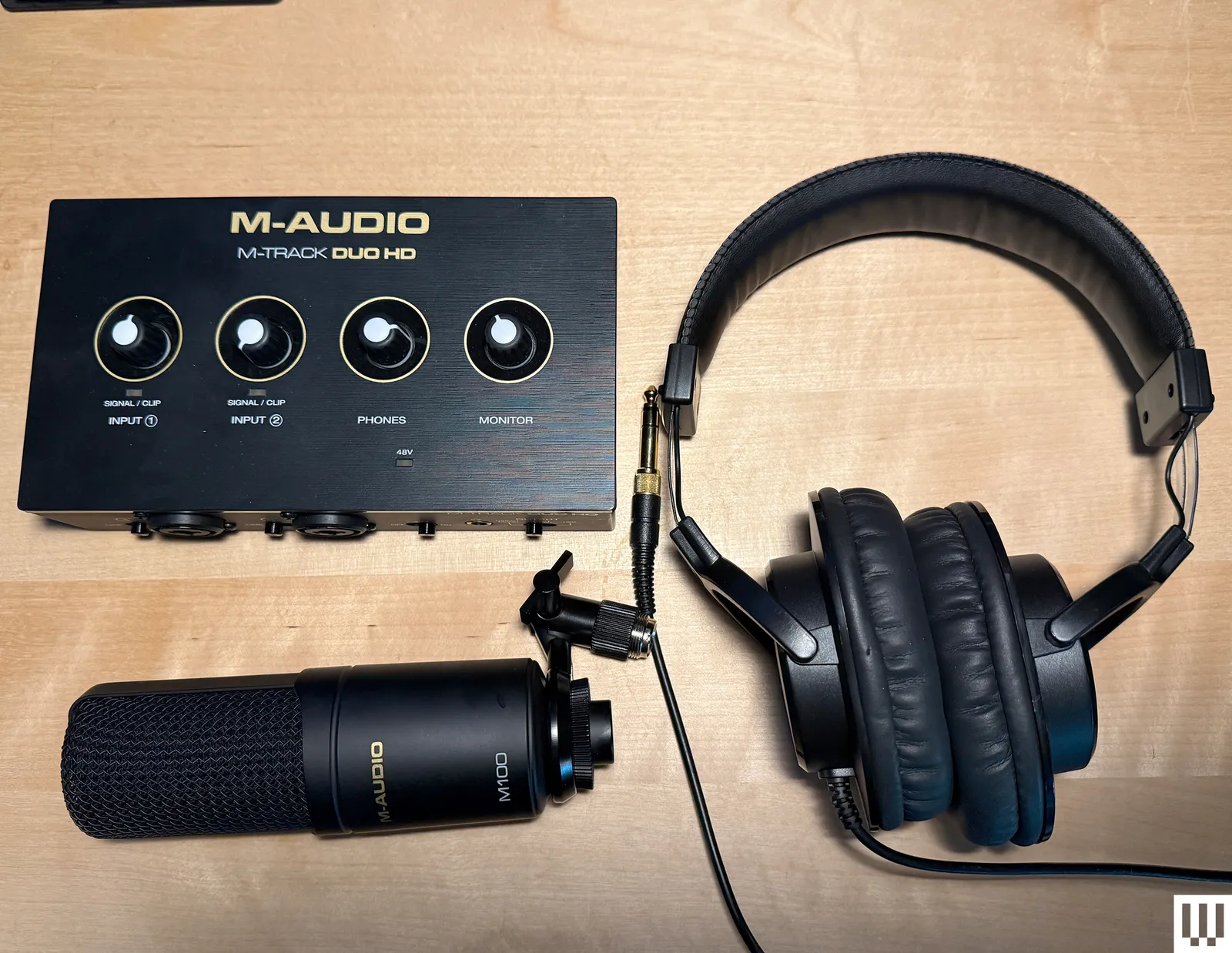
M-Audio has packaged everything this person would need in a tidy little box with its M Track Duo HD producer pack. It includes a two-channel class-compliant audio interface, an M100 condenser mic, a pair of HD41 headphones, a mic clip, a USB-C cable to connect the interface to your computer or mobile device, and an XLR cable to connect the mic to the interface—all for the low price of $200. Aside from a mic stand (we love this desk clamp boom arm stand from Innogear) and the unearned confidence necessary to speak into a mic for hours about a wide variety of esoteric topics, you need nothing else than what’s in this box to get started. Plug a few things in, fire up OBS or your favorite DAW, adjust the gain on the mic preamp, and get to work.
The interface is a lightweight box of plastic that’s about the size of a VHS tape or a self-help book you’d buy at an airport bookstore. The front panel has two combo XLR quarter-inch input jacks, both of which have separate line and instrument level impedance selectors. A 48-volt switch enables phantom power for both inputs at once, which is essential to power the included condenser mic or a Cloudlifter if you decide to go full-on PodBro and upgrade to a dynamic mic. There’s also a single quarter-inch TRS headphone jack and a three-way selector that dictates whether a direct mono, direct stereo, or USB signal feeds the dual-mono quarter-inch tip-sleeve output jacks on the back of the box.
Each channel has its own gain knob on the top of the unit, with an indicator light below that flashes white when a signal is present and red when the signal is clipping. Each preamp has 55 dB of gain on tap, which is more than enough to turn even the meekest of Teams meeting NPCs into audible, active participants. The motion of the knob is smooth and jitter-free until you hit the last 10 percent of its sweep, at which point some ambient digital noise seemingly clicks on and off as if it were triggered with a switch. This is way too much gain for any practical application due to the amount of clipping it’s likely to cause, so this is not a major concern for anyone who’s spent 30 minutes or so dialing in their levels and getting a feel for the thing.
The included condenser mic pairs well with the preamp in the interface. It’s a unipolar large-diaphragm condenser mic, which in normie language means the metal grate that covers the front of the mic is where you’ll want to point your voice, instead of the back. Condenser mics are much more sensitive to ambient noise than a dynamic mic, which is both an upside and a downside. A condenser mic works well a bit farther from your face than a dynamic mic, but you’ll need to boost the gain to pick up your voice at a greater distance. This picks up more background noise as well, which can lead to some embarrassing moments on Zoom calls when, say, the small flock of fowl your neighbor is illegally housing in their garage starts clucking nervously when a garbage truck rattles down the block. Luckily, Zoom has decent built-in noise suppression tools, so this was easy to address without any extra plugins or hardware.
The mic handles a standard male speaking voice quite well. I’m not fully trained on pensive NPR-speak just yet, but my standard tech-guy patter broadcast as clear as a bell with the mic 6 inches from my face, and the gain knob turned up to around 3 o’clock. The mic does not have a high-pass filter switch to roll off low-end rumble from accidental bumps into the stand or the mic itself, so you’ll need to take care to avoid fumbles that cause loud thumping noises if you prefer higher gain and a bit more distance from your mouth to the mic.
The Fitbit Air has entered the chat.
Fitness tracker pricing can be, well, a bit misleading. For example, say the $399 Oura Ring 5 seems to be within your budget at first glance. But to make it remotely useful, you’ll need to pay an extra $6 per month or $70 per year. Your total cost jumps up to around $550 after only two years. (And if you hang onto it for five years, you’re looking at at least $750.)
Oura isn’t even the most egregious subscription-based offender in this space. Whoop, the popular screenless fitness tracking band, requires a membership starting at $199 per year. Granted, that includes the device itself, unlike others. But you don’t need to be a math whiz to realize how quickly its cost can add up over the long term, too.
That’s why Google’s recently released Fitbit Air is so interesting. It’s basically a Whoop, with a one-time cost of $100. You can use most of its features without an additional subscription. What a concept! Let’s take a closer look at the landscape following the Fitbit Air’s entry, to see where you can cut through the paywall noise.
The Fitbit Air, starting at only $100, is the company’s direct rival to Whoop. Crucially, Google’s screenless band gives you all of its core features without a monthly fee. Only the Gemini-powered Al Coach and other perks (like workout videos) require a Google Health Premium subscription. If you do opt for that, you’ll pay $10 per month or $100 per year. But again, it’s more of an add-on than a necessity.
The device’s battery life is about seven days, half the Whoop’s 14-day uptime. But the Fitbit Air does charge quickly, so it shouldn’t be a huge deal. For example, our review unit went from 36 percent to 58 percent in just five minutes.
The Fitbit Air works with both Android and iOS phones. However, it requires the Google Health app and won’t sync natively with Apple Health.
Unlike the Fitbit Air and Whoop, the vívosmart 5 has a narrow, monochrome OLED display. That, combined with its slim profile, makes it a solid way to split the difference between a full-on fitness watch and a screenless tracking band.
The device logs your heart rhythm, sleep, steps and workouts. And Garmin’s Body Battery score estimates how long to wait before your next intense workout. Like the Fitbit Air and Whoop, the vívosmart 5 lacks built-in GPS and instead uses connected GPS via your paired phone.
Best of all, there’s no monthly fee whatsoever, so your $150 upfront investment unlocks everything the device can do.
The Garmin vívosmart 5 is compatible with Android and iOS. Its companion Garmin Connect app can sync with Apple Health and Google Health.
Although it has its limitations, the $400 Samsung Galaxy Ring also functions 100 percent without a monthly fee. It tracks sleep (duration, stages, and skin temperature) and activity. It can automatically detect walking and running and provide detailed metrics for both. It can last at least six days on a charge.
Unfortunately, the Galaxy Ring doesn’t work with iPhones. And while it works just fine with Android phones from other manufacturers, a Samsung device is required for Galaxy AI features and its double-pinch gesture controls.
Okay, maybe we’re cheating a bit here by including a full-fledged smartwatch. But the Apple Watch Series 11 has loads of health-tracking features without a monthly fee.
This latest model has longer battery life than the previous generation: up to 24 hours with regular use. On the health front, this model adds hypertension alerts. The watch can monitor your heart rate and blood oxygen levels, track your sleep (including a sleep score), and log a long list of workouts.
On the downside, the Apple Watch Series 11 starts at a hefty $400. It’s also iOS-only, so folks with Android phones are left out.
On the opposite end of the pricing spectrum is the Xiaomi Smart Band 10. The budget fitness tracker costs around $50 and has no subscription fees. Hard to beat that.
The device has a bigger, brighter and sharper display than its predecessor, with an improved screen-to-body ratio. It covers the basics, including heart rate monitoring and sleep tracking. It can last up to 21 days on a single charge. As a quirky bonus, you can even wear it as a necklace or attach it to your shoe.
What’s compromised at this ridiculously low price? First, the Xiaomi Smart Band 10 lacks built-in GPS. Its suite of sensors is also limited: It can’t sense ECG, blood pressure, skin temperature, barometer, altimeter, or HRV. Its sleep tracking also gets mixed feedback. This isn’t the device to get if you want premium health monitoring; it’s more about keeping the cost down.
The Xiaomi Smart Band 10 pairs with the Mi Fitness app, which is available on iOS and Android.
We may receive a commission on purchases made from links.
Air conditioners are a great way to stay cool in the summer. Many have central air in their homes to beat the heat, while some opt for plug-in, stationary window units to cool things down. Aside from those, there are also portable air conditioners. These stand on their own, have an exhaust hose, and can roll around on wheels or be picked up and moved as necessary.
There are plenty of benefits to a freestanding air conditioner. For one, if you’re trying to cool down a room but the windows are too small for a window unit, a portable air conditioner and its much smaller exhaust hose could be a prime solution. Window units are also heavy and awkward to carry on your own. A portable unit rolls around easily, so you can move it around and store it by yourself. Some of these portable units rank among the best budget-friendly air conditioners on the market today, too.
With that said, if you’re looking for reliable, effective cooling in a portable air conditioning format, no matter the price, there are plenty of strong options to consider. These are some of the best currently available in 2026, according to online sentiment.
In addition to its more well-known products, like refrigerators and washing machines, LG has also delved into portable air conditioners over the years. Among the brand’s best models is the LG LP1419IVSM, a $699.99 10,000 BTU SACC unit. LG markets it as a unit for rooms between 301 and 500 square feet, features an automated swinging vent that moves the cool air around, and has LG’s Auto Evaporation System to minimize water drainage and simplify maintenance. It is also compatible with the LG ThinQ app to monitor the unit and manage certain functions.
This LG unit is quite highly praised. The New York Times included it among its recommendations for best portable air conditioners in 2026, specifically praising the easy setup and teardown. New York Magazine’s praise echoed those strengths, while also highlighting how well the LG cools a room, its low-volume operation, and a premium construction that matched the higher cost. Similarly, Business Insider had a lot of good to say about this unit in its review, noting that its comparatively low energy consumption doesn’t hinder its ability to bring a room’s temperature down in short order.
Midea is another brand with a huge catalog of appliances, including a selection of air conditioners. One of the most well-regarded of its portable offerings is the Midea Duo MAP14S1TBL, which retails through the official Midea website for $659.99. This 12,000 BTU SACC unit cools, dehumidifies, and ventilates, utilizing two hoses to remove warm air from your space while pumping in the cool stuff. IT also has Wi-Fi support for remote control. It’s advertised as cooling up to 550 square feet, and according to reviews, it does so quite well.
Many regard the Midea Duo MAP14S1TBL as one of the best portable air conditioners available for sale. It topped Forbes’ list of the best portable air conditioners for 2026, receiving praise for its fast and effective cooling, as well as its low 42 to 49 dB noise level. Business Insider praised it for similar reasons, in addition to applauding its easy setup and the usefulness of its app connectivity. YouTuber Silver Cymbal gave this Midea unit high marks, too, recommending it as a worthwhile model that can cool down a sizeable room impressively well, despite the somewhat lacking connection points on the dual hoses.
Whynter specializes in cooling appliances, from small refrigerators to ice machines, and is also considered one of the most reliable air conditioner brands out there. The Whynter ARC-1230WN, one of its many air conditioners, is often regarded as one of the strongest available today. Typically found around the $600 mark, depending on where you buy it, this 12,000 BTU SACC unit is cools and circulates air through spaces up to 600 square feet. It also has Wi-Fi connectivity and compatibility with Amazon Alexa, Google Home, or the NetHome Plus app. Whynter also claims that this unit offers 40% to 50% energy savings compared to similar models.
Opinions of this Whynter unit are very positive. Forbes‘ 2023 review considered it the best portable air conditioner money could buy. The outlet felt that the dual-hose system made for quick setup and great cooling, while the wheels made it easy to move, despite its 75-pound weight. TechGearLab gave this unit high marks, too, noting that its impressive cooling — the unit dropped the outlet’s test room by around 12 degrees in roughly an hour — made up for its weight. Rtings considers the ARC-1230WN the best portable air conditioner it’s tested as of 2026, with cooling performance, ease setup, and low noise among its strengths.
If there’s one thing Dreo knows, it’s cooling. The Dreo AC515S — not to be confused with the similar Dreo AC516S air conditioner — is one of the best portable air-conditioning units available for those with tighter budgets and smaller rooms to cool. This is a less powerful unit than others on this list; it has 8,000 BTU SACC of cooling, with a recommended room size of around 350 feet. It is more affordable than other units, though, costing $539.99.
While it’s a bit weaker, this Dreo air conditioner has received very positive reviews since its introduction. For example, Reviewed ranked it among the top five best portable air conditioners of 2026. The publication described it as a quiet unit that cools effectively and blows straight across 16 feet with ease. Popular Mechanics appreciated its cooling capabilities, too, praising the Dreo app’s connectivity, physical remote, and the air conditioner’s price point. Bob Vila thought quite highly of the unit, too, thanks to its good cooling, impressive humidity control, and low noise output.
Selecting these portable air conditioners was a multi-step process. We dug into brands both large and small, getting a feel for the current portable air conditioner landscape. We combed through their products, looking for a balance of functionality, portability, and price, to ensure the units considered could deliver on multiple fronts. Of course, marketing speak on brand websites and online storefronts was not enough.
There also had to be multiple sources online to help justify these units’ place on this list. We relied on written reviews, video tests, and other assessments to develop an understanding of what these air conditioning units have to offer. We omitted air conditioners with a lot of negative opinions, persistent problems, or other issues, focusing on highly praised units with great features and compelling value for this list.

20 Snap alumni launched Ghost Angels to back AI startups building beyond the ad-driven social media model. Five deals done, 15 more planned.
Twenty Snap alumni have launched Ghost Angels, an angel fund backing the next generation of social media and consumer AI startups. The fund has invested in at least five companies and plans to deploy remaining capital into at least 15 more within the next year. It declined to disclose total fund size.
Max Rivera, who led global partnerships at Snap, started the fund in 2025 to formalise an already growing alumni angel community. He currently works at Microsoft’s AI division. The roughly 20 founder members include Alexandra Levitt, who ran Snap’s corporate accelerator, and Will Wu, a founding member of Snap’s product and design team.
“We were intentional about the mix,” Rivera told TechCrunch. “That diversity of thought and experience is core to how we evaluate deals and support founders.” The membership includes former senior executives alongside people earlier in their careers, plus a small number who still work at Snap.
Ghost Angels invests at pre-seed to seed stage in AI startups building in social media and consumer. Rivera said the biggest trend he has noticed is that “social” and “media” have actually split into two distinct categories.

The 💜 of EU tech
The latest rumblings from the EU tech scene, a story from our wise ol’ founder Boris, and some questionable AI art. It’s free, every week, in your inbox. Sign up now!
What consumers know as social media today is a platform that relies on ads, with algorithms driving content and recommendations. “A lot of people are disillusioned with that relative to the original promise of connecting people in your life,” Rivera said. The next generation is moving away from generalised platforms and toward niche communities.
Ghost Angels is backing both sides of the split. On the social side, founders are applying AI to deliver on the original promise of human connection. On the media side, AI-native formats and generative creative tools are lowering the barrier to creation and distribution across music, gaming, sports, and fashion.
Rivera has noticed that today’s founders operate differently from when he joined Snap nearly a decade ago. Teams are leaner. Founders launch fast and iterate in public. Monetisation is diversifying beyond ads into subscriptions, token-based models, usage-based pricing, and outcome-based revenue.
Meta’s launch of Forum this week underscores how the incumbents are also sensing the split. Forum, a standalone app built from Facebook Groups, is designed to capture the community discussion use case that Reddit currently dominates. The fact that Meta is unbundling Groups into a separate app validates Ghost Angels’ thesis that niche community tools are the next category.
Molly DeWolf Swenson, co-founder and CEO of portfolio company Mozi, said the “Snap alumni network is full of brilliant, influential people who inherently understand the problem space I’m playing in.” The fund’s value proposition to founders is not just capital but domain expertise from people who helped build one of the defining social platforms of the last decade.
The broader startup landscape is rewarding AI-native approaches that build for new categories rather than optimising existing ones. Peec AI hit $10 million ARR in six months by building for generative engine optimisation, a category that barely existed before ChatGPT changed how people search. Ghost Angels is betting that the same dynamic applies to social: the platforms that win will be built for AI-native interaction, not retrofitted with AI features.
The Snap alumni network is one of the most active in consumer tech. Snapchat’s culture of experimentation, its bet on ephemeral content, its early investment in AR, and its willingness to build products that looked strange before they looked obvious produced a generation of product thinkers who now see the next cycle forming. Ghost Angels is the vehicle for putting that conviction to work.


With ever-increasing RAM and SSD price hikes dominating headlines – and even Apple worried about how it’ll impact prices, I’ve spotted big discounts on two MacBook Air laptops right now. Right now, you can save $200 on the 15-inch MacBook Air M5 with 16GB RAM, paying $1099. And for an even more portable pick, the 13-inch MacBook Air M4 gets a $300 discount, also now $1099, which comes with 24GB RAM and 512GB SSD.
● Get the MacBook Air 15-inch (M5) for $1099 (was $1299) at Amazon
● Get the MacBook Air 13-inch (M4) for $1099 (was $1399) at Best Buy
These deals caught my eye because not long ago, CEO Tim Cook warned that significant changes in the memory market could lead to an “increasing impact” on Apple’s products.
Who knows what means – but I suspect it could translate into a mix of product shortages in high-memory SKUs and higher base costs for MacBooks, making it an excellent time to upgrade. Both slimline laptops feature the vibrant and beautiful Liquid Retina display, and come in a range of colors to suit your style. I’ve also seen the MacBook Air (M5) with 24GB RAM and 1TB SSD down to $1499 (was $1699) at Amazon, if you want a performance boost.
Is the MacBook Neo the better budget pick? That depends on your use, with the MacBook Air being the power powerful, portable option.
The Neo uses the considerably slower Apple A18 Pro CPU versus the M4 and M5 CPUs that higher-end MacBooks above offer.
The deals, as they stand, are unlikely to be beaten any time soon. For a larger display and a slightly beefier CPU, go with the M5 route. The more compact M4-based model’s additional 8GB of RAM is handy for memory-intensive workloads or even some light localized AI use cases.
Reviewing the MacBook Air (M4), we called it “best ultraportable”. Then the M5 model was released, and testing the 13-inch version, we hailed it as “still the best ultraportable” we’ve ever used.
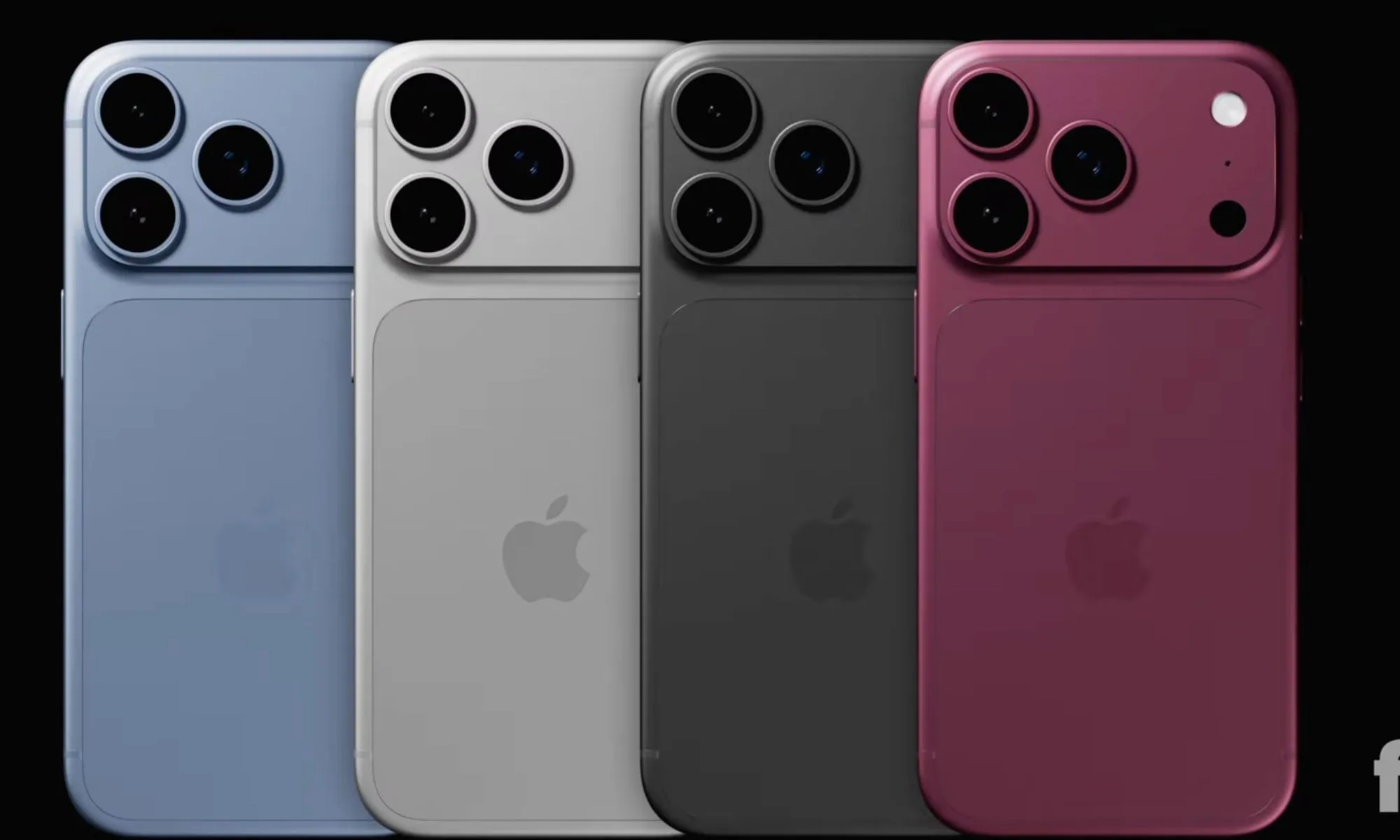
Apple’s next-generation Pro iPhone could arrive with one of the biggest camera upgrades the company has introduced in years. But according to new analyst reports quoted by Forbes, that improvement may also come with a significant increase in manufacturing costs – raising fresh questions about whether future iPhone prices could climb even higher.
The focus of the latest leak is the iPhone 18 Pro and iPhone 18 Pro Max, which are expected to debut a new variable aperture camera system. Supply chain analyst Ming-Chi Kuo claims the upgraded camera module could cost Apple roughly 50 percent more than the camera hardware currently used in its Pro models.
That may not sound dramatic at first, but camera systems have increasingly become one of the most expensive and important components inside modern flagship smartphones.
Variable aperture technology has been rumored for iPhones for several years, and reports now suggest the feature has finally entered production for the iPhone 18 Pro lineup. Unlike current iPhone Pro models, which use a fixed aperture lens, the new system would allow the camera to physically adjust how much light enters the sensor. In practical terms, that means improved exposure control, more flexibility in challenging lighting conditions, and potentially more natural background blur effects without relying entirely on software processing.
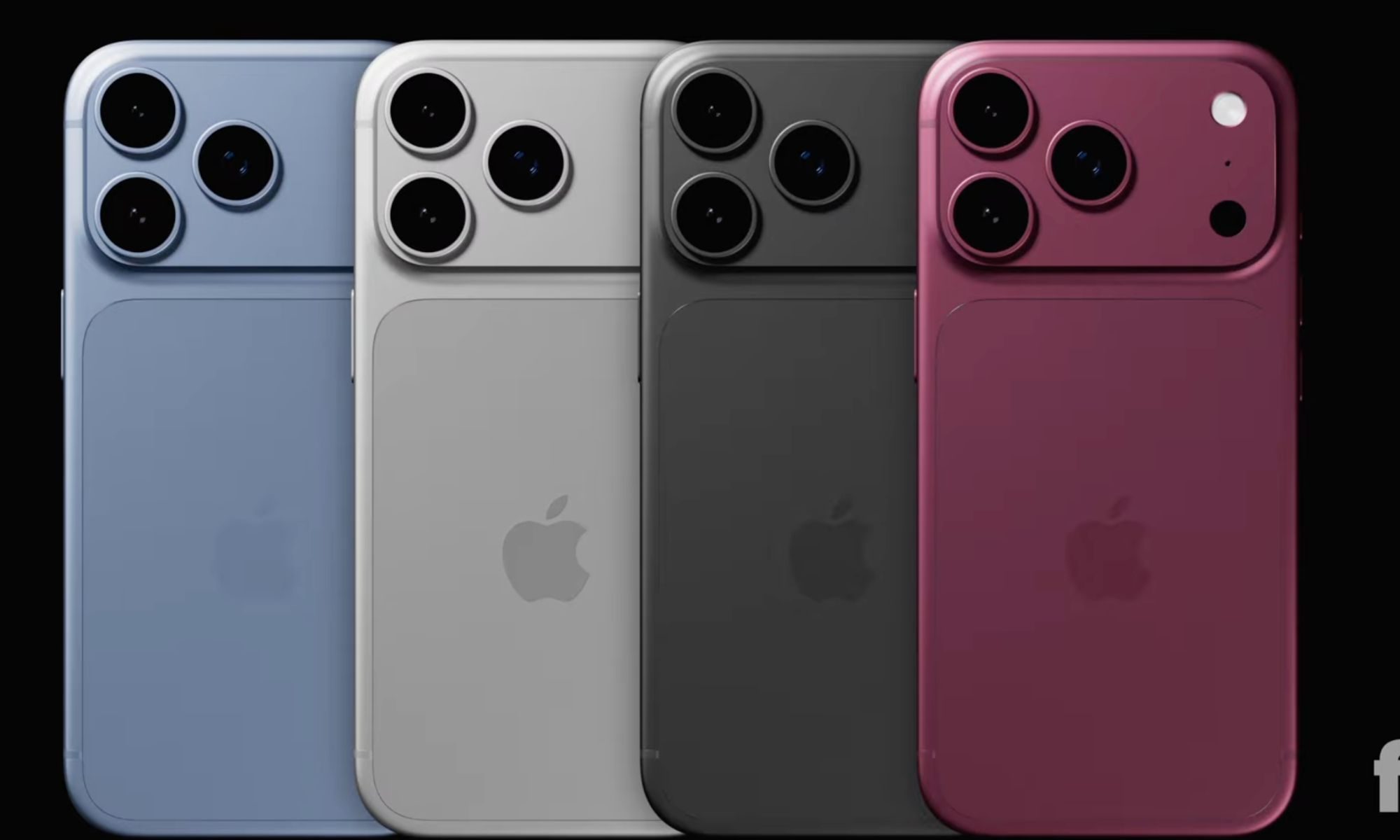
Apple has largely relied on computational photography to improve image quality over the years, but a variable aperture would represent a more traditional camera hardware upgrade similar to features already seen on some premium Android phones.
According to Kuo, the new lens assembly is substantially more expensive than the seven-element plastic lens system Apple currently uses. Chinese supplier Sunny Optical is expected to handle a significant portion of production for the upgraded component.
The bigger story may not be the camera itself, but what it could mean for future iPhone pricing.
Apple has so far avoided major flagship price increases despite rising memory costs, more advanced chips, and growing manufacturing expenses. However, reports suggest the iPhone 18 Pro lineup is accumulating several expensive upgrades at once, including new camera technology, next-generation silicon, and additional connectivity features.

That has led to growing speculation that Apple may eventually need to pass some of those costs onto buyers.
Online reactions have already been mixed. Some users see variable aperture as a meaningful photography upgrade, while others argue that most everyday users may never notice the difference enough to justify higher prices.
Apple is expected to unveil the iPhone 18 Pro series in late 2026, and current reports suggest the devices could arrive alongside Apple’s first foldable iPhone.
For now, it remains unclear whether the higher camera costs will directly affect retail pricing. Apple has historically absorbed some component increases to maintain pricing stability, particularly in highly competitive markets.
Still, if the leaks prove accurate, the iPhone 18 Pro could become a test of how much consumers are willing to pay for advanced camera hardware. Apple clearly believes better photography remains one of the strongest reasons people upgrade their phones. The question is whether buyers will feel the same if the improvements arrive with a heavier price tag attached.

The monitors used on older computers are now becoming difficult to find, as we doubt anything for MDA, CGA, Hercules, or EGA has been manufactured in decades. Even VGA, though there are plenty of surplus flat panels to be found, is not as ubiquitous as it once was. Where does that leave the retrocomputing enthusiast with an ISA PC and no screen? Perhaps [Ian Hanschen] has the answer with the PicoGraph, an ISA-to-USB-to-Displaylink adapter.
In hardware terms, it’s using a PicoMEM, a more general-purpose ISA card for emulating cards with a Pi Pico. The Pico hosts a USB DisplayLink adapter, which can connect to the screen of your choice. The software on the PicoMEM does the heavy lifting and provides MDA, Herc, EGA, and VGA support, as well as support for one of the 1990s Cirrus Logic SVGA chipsets. And yes, it appears to work with DOOM.
The practice of using 2020s microcontrollers to lend functionality to retrocomputers has revolutionised the art. We’ve seen many, with one of the more recent being a minimap add-on for an 8-bit Sinclair Spectrum.

“Unlimited” is a funny term. Unlimited cell phone plans often come with a long list of footnotes, terms, conditions, and exceptions. Mercifully, all of the Big Three cell companies have, by now, ditched throttling on their most expensive plans and include 5G data access in all their unlimited plans. Yet there are still many differences in the services they offer, and there are many differences between each carrier’s various tiers.
Cheaper “unlimited” tiers do offer unlimited talk and text. But they still have rules on how much data you get before they start throttling your speed, and some “unlimited” plans may throttle your data at any given time. It’s been a fixture of cell service plans for years.
It can be overwhelming, which is why I’ve broken it down. Below, I’ve highlighted what each of the three major carriers offers for “unlimited” individual and family plans to help you figure out which unlimited plan is best for you and your budget.
If you absolutely want to avoid slower data speeds at peak times, you’ll likely be choosing among the plans here. But look to our guide to the Best Prepaid Phone Plans for lower costs at the expense of some limitations. Also check out WIRED’s guides to the Best Android Phones, Best iPhones, and Best Cheap Phones.
Update February 2026: We updated prices and plans for all three major carriers. We added T-Mobile’s Essentials Saver Plan and rebranded Better Value Plan as well as AT&T’s rebranded Premium PL, Extra EL, Saver SL, and Value Plus VL plans.
The Essentials plan (with autopay, taxes/fees not included): 1 Line for $60/month | 2 Lines $90 | 3 Lines $90 | 4 Lines $100 | 5 Lines $125.
Essentials Saver plan (with autopay, taxes/fees not included): 1 Line for $50/month | 2 Lines $80 | 3 Lines $140
Experience More/Better Value (with autopay, taxes/fees not included): 1 Line for $85/month | 2 Lines $140 | 3 Lines $140 | 4 Lines $170 | 5 Lines $200
Experience Beyond (with autopay, taxes/fees not included): 1 Line for $100/month | 2 Lines $170 | 3 Lines $170 | 4 Lines $215 | 5 Lines $260
T-Mobile has the best 5G coverage among the big three, the highest 5G speeds, the fastest downloads and the best overall reliability, according to analysis from OpenSignal and Ookla. The carrier also makes claims to winning on value, when you take into account perks that include entertainment bundles, airplane WiFi, and access to satellite data in emergencies.
T-Mobile has rebranded its unlimited offerings this year but still offers three (or kinda four) main unlimited talk and text plans: Essentials, Experience More, and Experience Beyond. Only the two Experience plans offer true unlimited 5G data without any throttling or deprioritizing (i.e., making your phone stand in line for data behind other, more important, phones during peak demand.)
For merely occasional jet-setters and those who want consistent phone upgrades, Experience More is the best affordable phone plan among all services. This adds WiFi during flights, 4K video, 60 gigs of high-speed mobile hot-spotting, a modicum of international data, a AA membership, free ad-supported Netflix, and cheap ($3) Apple TV. It’ll also let you upgrade your phone every two years so random children don’t make fun of your ancient iPhone at a rest stop (yes, this has happened to me.)
If you want 3 lines or more and you’re a new T-Mobile customer (or a 5-year T-Mobile customer), you have access to an even better deal. The limited-time-only Better Value plan is in fact., possibly the best deal in phonedom at the moment. For the same price as the 3-to-5 line Experience More plans, you add free ad-supported Hulu, access to the T-Satellite emergency network, unlimited mobile hot-spotting, 30 gigs of international data in hundreds of countries, plus additional watch and tablet lines for just $5 a line. With the exception of phone upgrades every two years instead on every year, the perks are actually better than T-Mobile’s highest price plan, at a much lower price. This sale price is also locked in for 5 years.

Snapchat is already packed with little symbols that can be weirdly hard to decode. You have streaks, emojis, badges, scores, Best Friends, and if you use Snapchat Plus, a tiny solar system that shows where you sit in someone’s closest-friends list.
The feature is called Friend Solar System, though most people just call it Snapchat Planets. It takes your position in a friend’s Snapchat orbit and turns it into a planet. From Mercury to Neptune, these celestial bodies signify how close a person is to you.
The important thing to know is that Snapchat Planets is a Snapchat Plus feature, and it is now off by default for first-time subscribers. To use it, you’ll need to subscribe to Snapchat Plus and manually turn on Friend Solar System from the Snapchat Plus feature management page. Snapchat says the feature can be toggled on or off at any time.

Snapchat Planets are part of Snapchat’s Friend Solar System feature. When it’s enabled, Snapchat turns a friend’s Best Friends list into a solar system, with that friend as the sun and you as one of the planets around them.
In simple terms, the planet shows where you rank in that friend’s Best Friends list. If you appear as Mercury, you’re their closest Snapchat friend. If you appear as Venus, you’re second. If you appear as Earth, you’re third, and so on.

You can find this by opening someone’s Friendship Profile and tapping the Best Friends or Friends badge with a gold ring. Snapchat says tapping that badge shows which planet you are in their Solar System.
The planet you see is about your place in their solar system. It does not automatically mean they have the same position as yours.
The Snapchat Planets order follows the real solar system, minus Pluto. Mercury is the closest planet, while Neptune is the farthest.
As such, the planets of your friends in order from closest to furthest are as follows:
And yes, Pluto gets left out again.

So, if you tap a badge on someone’s profile and see Earth, that means you are third in their Snapchat Friend Solar System. If you see Neptune, you are still in their top eight, just farther out in the ranking.

Snapchat Planets can appear through two badges: Best Friends and Friends. A Best Friends badge means both of you are in each other’s closest-friends circle. In other words, you are in their top group, and they are in yours too. Meanwhile, a friend’s badge means you are in their Friend Solar System, but the relationship may not be mutual in the same way. You might be one of their top friends, even if they do not appear in the same position on your side.
Either way, tapping the badge is what reveals your planet, provided you have Snapchat Plus and the feature is turned on.
To check your Snapchat Planet, follow these steps:
If you do not see a badge, it usually means you either do not have Snapchat Plus, Friend Solar System is not enabled, or you are not in that person’s visible friend ranking.
Before you can use Snapchat Planets, you need Snapchat Plus. Pricing can vary by region and plan, so the safest way to check the current cost is inside the Snapchat app or through Snapchat’s subscription page. Snapchat also offers multiple Plus-related plans in some regions, and availability can vary.
Once you have Snapchat Plus, you may still need to turn on Friend Solar System manually.




NYT Strands Answers May 24 2026 Revealed for Puzzle No. 812 Theme Summer Essentials


Israel says it has killed new Hamas military leader in Gaza City airstrikes


NASA taps Blue Origin to deliver lunar rovers for Moon Base initiative


Bridgerton Season 5: Cast, Release Date And Everything We Know So Far


XRP *JUST* SUCCEEDED!!!! CLARITY ACT EXPOSED!!! (SHE EXPOSED IT)


2026 NBA Finals schedule, odds: Knicks await Thunder or Spurs after winning East


Selena Gomez Reportedly Upset Over Benny Blanco’s Comments on Her ‘Terrible’ Diet

Micron Crosses $1 Trillion Market Cap as AI Demand Reshapes Memory Sector
Brian Armstrong Outlines Crypto Vision for the Future Financial System


This is BROKEN! INSANE 5x MONEY CAR WASH WEEK! The NEW GTA Online UPDATE Today! (GTA5 New Update)


BTS Sells Out Four Las Vegas Shows at Allegiant Stadium for ARIRANG World Tour

China assigns ID codes to 28,000+ humanoid robots

Hottest May day ever as London hits 34.8C in 2C leap from previous records

Microsoft’s quiet Claude Code retreat and the real cost of enterprise AI


Waymo dominates autonomous vehicle registrations as Tesla trails behind


Nikkei 225 Surges Past 65,000 for First Time as Iran Peace Hopes Fuel Record Rally
The Samsung pay deal is the moment Korean unions changed register


Westone Audio and Etymotic Acquired by Fidelity Collective in Major IEM Market Move

‘Breaking Bad’ Star’s Easy-to-Binge 6-Part Crime Series Spin-Off Is Finally Heading to Free Streaming


Crowds find riverside shade in York as temperatures soar


You must be logged in to post a comment Login