

Business
CME Group launches 24/7 cryptocurrency futures trading



As the 2026 FIFA World Cup unfolds across North America, debates over the greatest players to grace the tournament’s storied history have intensified, with Lionel Messi, Diego Maradona and Pelé remaining at the center of discussions about who stands tallest among soccer’s immortals.
Pelé, the only player to win three World Cups, frequently tops expert rankings for his unparalleled impact across multiple eras. Maradona’s magical 1986 campaign and Messi’s triumphant 2022 victory each carry unique claims to supremacy, reflecting different generations and styles of play.
A recent BBC Sport ranking captured the essence of this perennial conversation by placing Pelé first, followed by Maradona and then Ronaldo Nazário, with Messi in fourth. Other lists from outlets like Sports Illustrated and The Independent echo similar sentiments while acknowledging the subjective nature of such evaluations.
1. Pelé (Brazil) The Brazilian legend remains the benchmark. Winning titles in 1958, 1962 and 1970, Pelé scored in two finals as a teenager and delivered consistent excellence. His 12 World Cup goals and iconic moments, including the 1958 final hat-trick contribution, cemented a legacy unmatched in longevity and team success.
2. Diego Maradona (Argentina) Maradona’s 1986 tournament stands as one of the most dominant individual performances ever. Carrying Argentina to victory with the “Hand of God” and “Goal of the Century” against England, he embodied genius and controversy. His leadership and flair in a single-handed run remain legendary.
3. Ronaldo Nazário (Brazil) The “Phenomenon” overcame injuries to star in 2002, scoring in the final and finishing with a then-record 15 World Cup goals. His 1994 and 2002 titles, combined with explosive skill, place him among the elite.
4. Lionel Messi (Argentina) Messi’s long-awaited 2022 triumph, where he scored seven goals and provided crucial assists, finally silenced critics. At 35 during that campaign, his vision and leadership elevated Argentina. In 2026, as he potentially plays in his final tournament, Messi continues adding to his legacy.
5. Franz Beckenbauer (Germany) The inventor of the modern libero role, Beckenbauer won as player in 1974 and manager in 1990. His elegance and tactical intelligence defined an era.
6. Garrincha (Brazil) Often overshadowed by Pelé, Garrincha’s dribbling wizardry shone in 1962, leading Brazil to victory after Pelé’s early injury. His joy and skill epitomized Brazilian flair.
7. Zinedine Zidane (France) Zidane’s 1998 final brace and majestic 2006 run, despite the infamous headbutt, showcased unparalleled grace under pressure.
8. Cafu (Brazil) The only player to appear in three consecutive World Cup finals (1994-2002), Cafu won two titles as captain, embodying consistency and leadership.
9. Miroslav Klose (Germany) The all-time World Cup goalscoring leader with 16 goals across multiple tournaments, Klose’s clinical finishing powered Germany’s successes.
10. Kylian Mbappé (France) or similar emerging names like Bobby Moore or Paolo Rossi round out many lists, highlighting defensive mastery or breakout performances.
These rankings highlight how World Cup success weighs heavily. Pelé’s three titles give him an edge in volume, Maradona’s singular brilliance captivates purists, and Messi’s complete career arc resonates with modern fans.
The debate extends beyond statistics. Pelé represented Brazil’s golden age and global popularization of the sport. Maradona symbolized resilience and national pride in 1986 amid political tensions. Messi combined individual excellence with collective achievement in 2022, often compared directly to his predecessors.
During the current 2026 tournament, with Argentina defending their crown and stars like Messi potentially extending their stories, these legacies are revisited. Younger talents such as Lamine Yamal or others may one day join the conversation.
Analysts note that era-specific factors complicate comparisons. Pelé faced fewer teams and different physical demands, while modern players deal with higher tactical sophistication and global scrutiny. Yet the World Cup remains the ultimate measuring stick.
Fan opinions vary widely. Some prioritize titles, others individual impact or longevity. Social media and expert panels frequently revisit these arguments, especially during major tournaments.
Beyond the top tier, players like Johan Cruyff, Alfredo Di Stéfano, and Bobby Charlton contributed immensely, though their World Cup triumphs were limited or absent. The tournament rewards peak performance under immense pressure.
As 2026 progresses, new heroes may emerge, but the pantheon of Pelé, Maradona and Messi endures. Their moments — Pelé’s tears of joy, Maradona’s solo runs, Messi’s lifted trophy — define soccer’s greatest stage.
The discussion enriches the sport, celebrating excellence across generations. Whether one favors Pelé’s dominance, Maradona’s magic or Messi’s artistry, these legends elevated the World Cup to its mythical status.
With expanded format and global attention in 2026, the stage is set for potential new chapters. Yet history suggests the established greats will continue dominating conversations for years to come.

Intellia presents Phase 3 results for HAE gene therapy lonvo-z

Who are the winners & losers in the quantum future

Memory chip shortage: How crazy could it get?
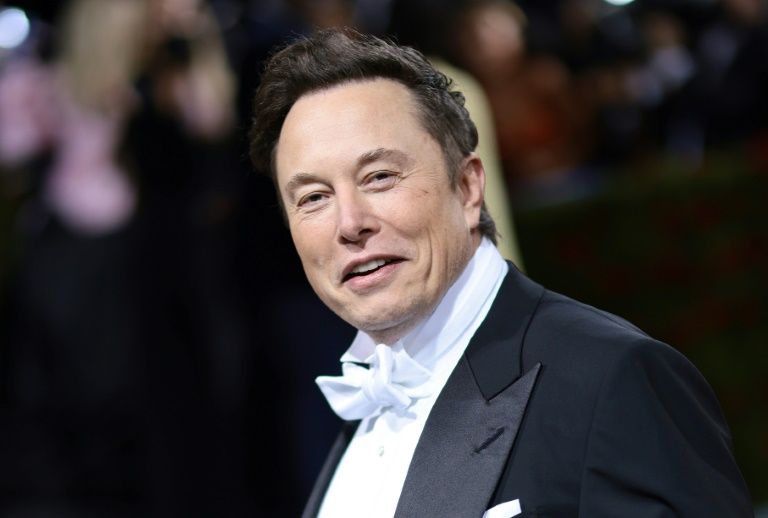
NEW YORK — SpaceX’s record-breaking initial public offering has thrust the aerospace pioneer into the public markets at a valuation exceeding $2 trillion, drawing intense investor interest as the company leverages reusable rocket technology, a booming satellite internet business and ambitious future projects in artificial intelligence and deep-space exploration.
With shares under the ticker SPCX trading actively following the debut, analysts and market watchers have outlined multiple factors supporting long-term interest in the stock. Here are 10 key reasons frequently cited for considering SpaceX as an investment in the latter half of 2026 and beyond.
1. Starlink’s Explosive Growth and Profitability Starlink, the company’s satellite broadband service, has emerged as the primary financial engine. It generated approximately $11.4 billion in revenue in 2025, representing over 60% of total company revenue, with strong operating profits. Subscriber numbers have surpassed 10 million, providing recurring high-margin cash flow that funds other initiatives.
The service continues expanding globally, addressing connectivity gaps in underserved regions while adding enterprise and government contracts. This stable revenue stream contrasts with the capital-intensive launch business and positions Starlink as a core growth driver.
2. Dominance in Commercial Launch Services SpaceX has revolutionized access to space with its Falcon 9 rocket, achieving unmatched reusability and cost efficiency. The company conducted a record number of launches in 2025 and maintains a significant share of the global market. This leadership creates a formidable moat and reliable revenue from commercial and government payloads.
3. Starship Development as a Game-Changer The next-generation Starship vehicle promises dramatically lower launch costs and heavier payload capacity. Successful progress toward full reusability could unlock new markets including point-to-point Earth transport, lunar missions and Mars ambitions. Analysts see this as a major upside catalyst despite execution risks.
4. Strong Government and Defense Contracts SpaceX benefits from substantial partnerships with NASA and the U.S. Space Force. Recent awards, including a $2.29 billion contract for military data networking via Starshield, underscore its critical role in national security and space infrastructure. Additional crewed missions to the International Space Station further solidify this relationship.
5. Expansion into AI and Orbital Computing The company is pursuing opportunities in space-based data centers and AI infrastructure, leveraging Starlink connectivity. This positions SpaceX at the intersection of space and technology megatrends, with potential for high-value contracts in compute and communications.
6. Rapid Revenue Growth Trajectory Overall revenue reached about $18.7 billion in 2025, up significantly year-over-year. Analysts project continued expansion into the $22-24 billion range for 2026, driven by Starlink scaling and launch cadence. This growth supports investor optimism despite current net losses tied to heavy R&D spending.
7. First-Mover Advantage in the Broader Space Economy Morgan Stanley and others forecast the space industry growing to trillions in the coming decades. SpaceX’s vertical integration across manufacturing, launches, satellites and services gives it a leading position to capture a substantial share of this expansion.
8. Technological Innovation and Vertical Integration From rocket engines to satellite production and user terminals, SpaceX controls key elements of its supply chain. This efficiency drives cost advantages and accelerates iteration, as evidenced by rapid Starlink deployment capabilities.
9. Potential for New Revenue Streams Initiatives like direct-to-cell connectivity through spectrum acquisitions and future applications of Starship open additional markets. These could diversify beyond current core businesses and enhance long-term cash flow.
10. Leadership and Long-Term Vision Under Elon Musk, the company has consistently achieved ambitious milestones. While concentrated leadership carries risks, the track record of execution has fueled confidence among supporters. Post-IPO, increased transparency and capital access could accelerate growth plans.
Despite these positives, analysts caution about the lofty valuation, execution risks on Starship, capital intensity and dependence on key personnel. Morningstar, for instance, has valued the company notably below its IPO levels, suggesting potential buying opportunities after initial trading volatility.
SpaceX reported solid first-quarter 2026 revenue growth, with Starlink continuing to anchor performance. The IPO proceeds are earmarked for further R&D, Starlink expansion and infrastructure investments.
Investors considering the stock should weigh their risk tolerance and time horizon carefully. The company’s trajectory depends on successful technology deployment, regulatory navigation and market demand for its services. Short-term volatility is expected given the hype surrounding the largest IPO in history.
Broader market enthusiasm for space and AI themes has supported strong post-IPO trading interest. However, sustainable gains will hinge on delivering operational milestones and profitability improvements over time.
SpaceX’s public debut marks a milestone for the commercial space sector, offering retail investors direct exposure to a company that has transformed perceptions of what is possible in orbit. As the firm navigates its transition to public ownership, ongoing performance in launches, subscriber additions and innovation will be closely watched.
Analysts from firms like Oppenheimer have initiated coverage with positive ratings, citing vertical integration and growth potential across multiple high-margin segments. Others highlight the need for patience as ambitious projects mature.
For those bullish on humanity’s expansion into space and the enabling technologies involved, SpaceX represents a high-conviction bet. The coming quarters will provide clearer signals on whether the company can convert its technological leads into shareholder value commensurate with current expectations.
As with any major growth stock, diversification and thorough due diligence remain essential. The 10 factors above capture the core investment thesis, but outcomes will ultimately depend on execution in a rapidly evolving industry.


Brett Ashcroft-Green, CFP® is a CERTIFIED FINANCIAL PLANNER™ professional and fee-only fiduciary. He is the owner and lead advisor at Ashcroft Green Advisors.Brett writes on Seeking Alpha about retirement planning, portfolio construction, and the analysis of undervalued blue-chip stocks.He has extensive experience working with high-net-worth and ultra-high-net-worth families, with a background in private credit and commercial real estate mezzanine financing as a business director for a large family office. His professional experience spans the United States and Asia, including several years living and working in China.Brett is fluent in Mandarin Chinese in both business and legal settings and previously served as a court interpreter. Over the course of his career, he has collaborated with leading commercial real estate developers including The Witkoff Group, Kushner Companies, The Durst Organization, and Fortress Investment Group.
Analyst’s Disclosure: I/we have a beneficial long position in the shares of ADX, SPY, VOO, QQQ either through stock ownership, options, or other derivatives. I wrote this article myself, and it expresses my own opinions. I am not receiving compensation for it (other than from Seeking Alpha). I have no business relationship with any company whose stock is mentioned in this article.
Disclaimer: The information in this article is intended for general informational and educational purposes only and does not constitute financial, investment, tax, or legal advice. The views expressed are solely those of the author, based on independent research, analysis, and professional experience. Although the author is a CERTIFIED FINANCIAL PLANNER™ (CFP®) and owner of Ashcroft Green Advisors, a fee-only registered investment advisory firm, the content may not be suitable for your individual financial situation, objectives, or risk tolerance. Readers should consult with a qualified financial professional before making any decisions based on this material.
The author and/or clients of Ashcroft Green Advisors may hold positions in securities discussed in this article.
Seeking Alpha’s Disclosure: Past performance is no guarantee of future results. No recommendation or advice is being given as to whether any investment is suitable for a particular investor. Any views or opinions expressed above may not reflect those of Seeking Alpha as a whole. Seeking Alpha is not a licensed securities dealer, broker or US investment adviser or investment bank. Our analysts are third party authors that include both professional investors and individual investors who may not be licensed or certified by any institute or regulatory body.
Agios presents detailed mitapivat trial results for sickle cell


Pythia Research focuses on multi-bagger stocks, primarily in the technology sector. Our approach combines financial analysis, behavioral finance, psychology, social sciences, and alternative metrics to assess companies with high conviction and asymmetric risk-reward potential. By leveraging both traditional and unconventional insights, we aim to uncover breakout opportunities before they gain mainstream attention. Our multidisciplinary strategy helps us navigate market sentiment, identify emerging trends, and invest in transformative businesses poised for exponential growth. We don’t just follow the market—we anticipate where disruption will create the next big winners.Markets don’t move purely on fundamentals; they move on perception, emotion, and bias. We lean into that reality. Investor behavior, anchoring to past valuations, herd mentality during rallies, panic selling from recency bias, creates persistent inefficiencies. These moments of mispricing often mark the start of a breakout, not the end of one.Rather than avoid psychological noise, we analyze it. When the crowd sees volatility, we assess whether it’s driven by emotion or fundamentals. Status quo bias can keep investors blind to companies redefining their category. Fear of uncertainty can delay recognition of businesses with clear but unconventional growth paths. We look for these disconnects.Our process blends deep research with signals others miss: sudden shifts in narrative, early social traction, founder-driven vision, or underappreciated momentum in developer or user adoption. These are often the precursors to exponential moves, if you catch them early.We focus on conviction plays, not safe bets. Each opportunity is evaluated for Risk/Reward profile: limited downside, explosive upside. We believe that the best returns come from understanding where belief is lagging reality.
Analyst’s Disclosure: I/we have a beneficial long position in the shares of MU either through stock ownership, options, or other derivatives. I wrote this article myself, and it expresses my own opinions. I am not receiving compensation for it (other than from Seeking Alpha). I have no business relationship with any company whose stock is mentioned in this article.
Seeking Alpha’s Disclosure: Past performance is no guarantee of future results. No recommendation or advice is being given as to whether any investment is suitable for a particular investor. Any views or opinions expressed above may not reflect those of Seeking Alpha as a whole. Seeking Alpha is not a licensed securities dealer, broker or US investment adviser or investment bank. Our analysts are third party authors that include both professional investors and individual investors who may not be licensed or certified by any institute or regulatory body.
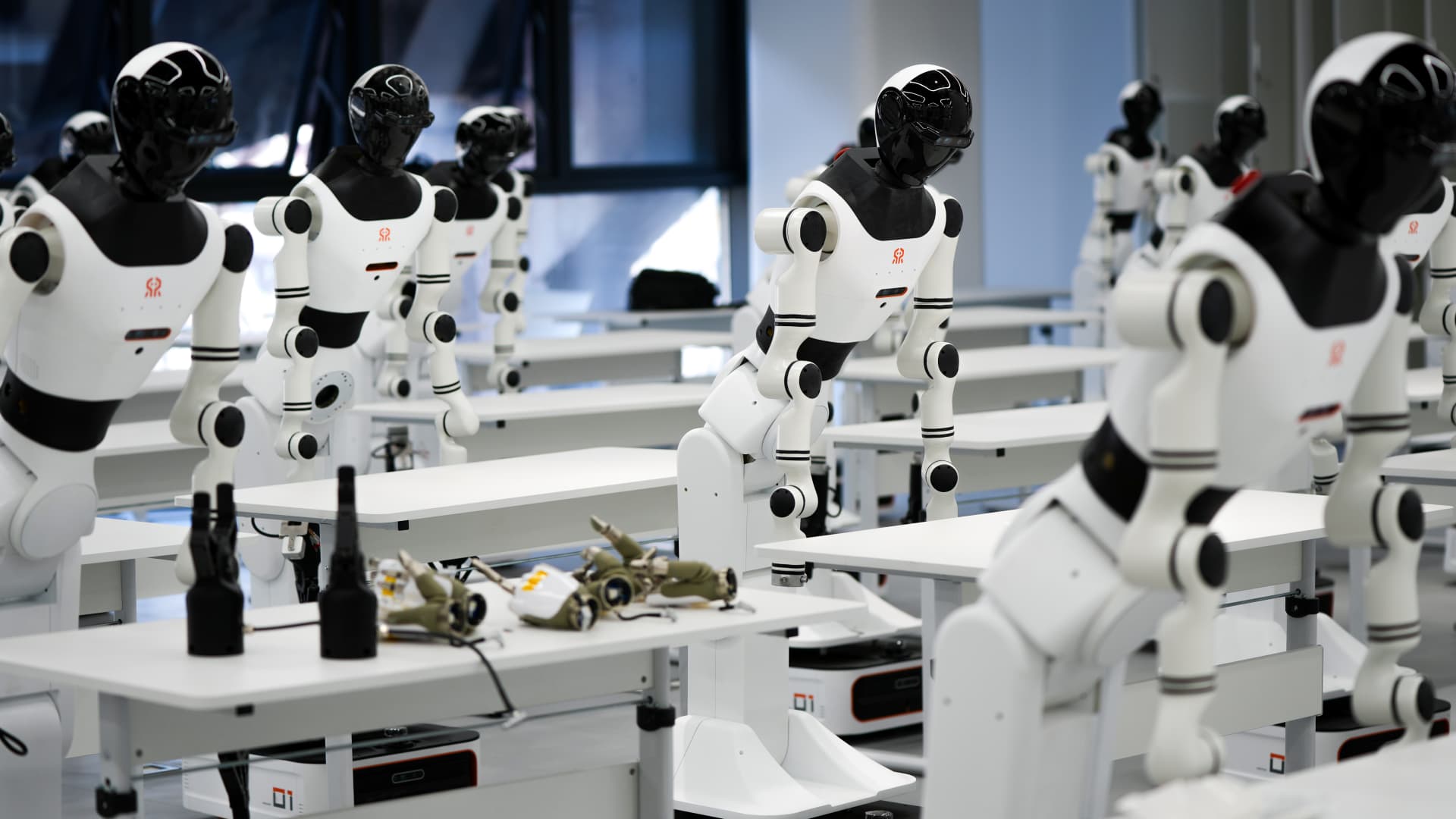
Humanoid industrial robot are on display at the humanoid robot data training center in Shougang Park on March 27, 2025 in Beijing, China.
VCG | China News Service | Getty Images
PARK CITY, Utah — Rivian Automotive CEO RJ Scaringe envisions a day in the not-so-distant future when the electric vehicle maker’s manufacturing employees will have a new type of colleague: humanoid robots.
“There’s going to be thousands of people that are collaborating alongside these robots. They’re going to be taking pictures, ‘Hey, check this out! My co-worker’s name is Phil, and he’s a robot,’” Scaringe said during a media event for the launch of the Rivian R2 EV.
The 43-year-old automotive enthusiast and tech entrepreneur started a robotics company last year called Mind Robotics. The company has raised more than $1 billion, according to Scaringe.
Humanoid robots are designed to be shaped and move like people. Artificial intelligence algorithms power their abilities along with complex hardware like semiconductors. Proponents say they could be used in various settings, from factories to hospitality and even in the home, while others have raised concerns about the devices replacing human jobs.
Scaringe said the company expects to reveal its first product in less than a year, with Rivian as a large minority shareholder and launch customer. Mind currently has roughly 20 open positions ranging from software and hardware engineers to data architects, according to its website.
Rivian CEO RJ Scaringe, who founded Mind Robotics late last year, speaks with media on June 3, 2026 during a launch event for the R2 electric SUV in Utah.
Michael Wayland / CNBC
Scaringe, who is executive chair and acting CEO of Mind, told CNBC that the plan is to keep the robotics company separate from Rivian, as opposed to the automaker partially shifting to make humanoid robots, like Tesla CEO Elon Musk is doing with his company.
“We have a deep relationship, and that was actually how we structured it,” Scaringe said during an interview. “A big part of structuring the business was to allow me to be able to spend time on both.”
The robotics strategy adds to a narrative of Scaringe doing things differently than Musk, despite obvious similarities in their companies. There have been enough comparisons that Rivian has even been called the “anti-Tesla” and Scaringe has been referred to as the “anti-Elon.”
“I’d say there’s a lot of alignment there, and I think that’s because, obviously, I’m biased, but I think they’re right … that autonomy is a super important technology,” Scaringe said about Tesla and Rivian. “But in terms of the products, they, in many ways, couldn’t be more different.”
So far Rivian and Mind are assisting each other, though, much like Musk’s companies have also done during developmental phases. That includes Musk’s xAI company merging with SpaceX before the company’s record-setting initial public offering on Friday as well as SpaceX purchasing vehicles from Tesla.
Scaringe said Rivian will be a “huge beneficiary” of Mind, which is using data from Rivian for training its AI models. Along with Rivian’s equity stake, the automaker will be Mind’s first customer for the robots.
“We realized it was such a big opportunity that deserved to be its own company,” said Scaringe. He said he believes there is a multitrillion-dollar total addressable market for industrial labor.
A Tesla Optimus robot hands out candy in front of the Nasdaq MarketSite in New York, US, on Monday, Oct. 27, 2025.
Michael Nagle | Bloomberg | Getty Images
Scaringe was visibly excited when speaking with media about the potential for AI and humanoid robotics, calling it “one of the most exciting times, perhaps in human history.”
“One hundred years from now, they’re going to be inheriting the work that we do over our lifetimes, and so I just think we’re so lucky that we get to be alive at the birth of AI,” Scaringe said.
Despite the optimism for humanoid robots, Scaringe said he expects the devices to work alongside humans rather than replace them completely for the foreseeable future, saying it takes a “long time” for vehicle assembly plants to become so-called “dark factories” which can be almost entirely run by robots.
“What I see happening is the simplest tasks will be taken on by robots. The more complex tasks that require higher levels of reasoning or more complex, more tactile levels of dexterity [will be done by humans],” he said.
Scaringe said manufacturers are dealing with an “extreme lack of labor,” from other automakers. Rivian currently has more than 30 open manufacturing and engineering jobs, according to the company’s website.
The need for such workers, as well as the rapid development of AI, Scaringe believes, will mean human employees will be working alongside a robot named “Phil” far sooner than they may expect.
“The rate at which this is moving is far faster than I’d say — like an order of magnitude faster — than the average person in society understands,” he said. “That’s going to be a particularly big challenge in the short-term to just have the average person … realize how fast the models are learning and how capable they are at doing almost everything.”
— CNBC’s Arjun Kharpal contributed to this report.
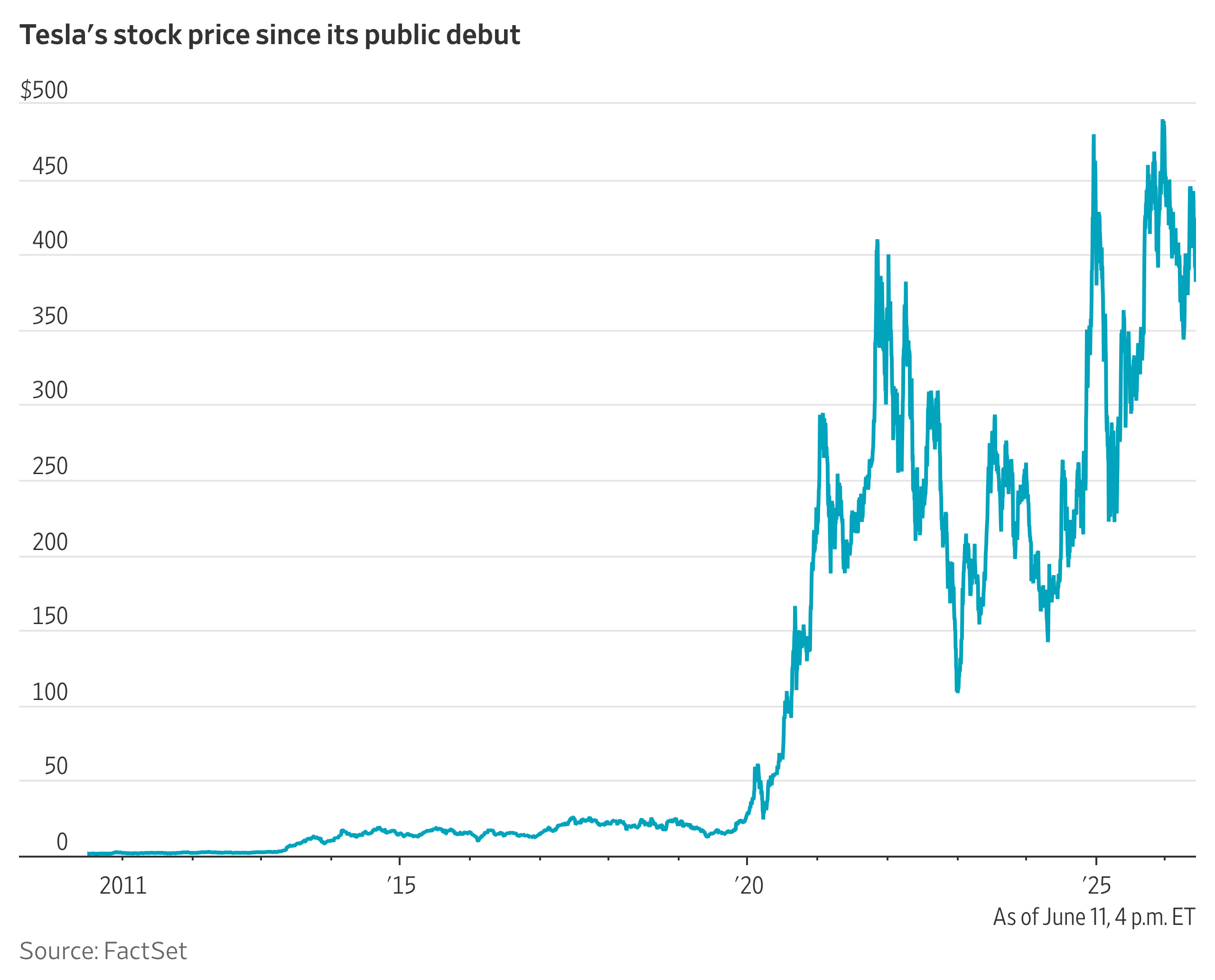
How SpaceX shares will trade today is anyone’s guess. But here’s a fun—if imperfect—guidepost: Tesla’s IPO.
Tesla debuted on Nasdaq nearly 16 years ago. Back then, the company was still a fledgling electric-vehicle maker and Elon Musk was far from a household name.
The stock jumped roughly 40% higher on its first day of trading, only to slip below its IPO price within a few days. The years that followed brought mostly good times for investors, with periodic pullbacks making for a wild ride.

Perpetual futures could become crypto’s next ETF moment

Belfast pogroms show loyalism is ideal vanguard of a future brownshirt Britain

Man City know Pep Guardiola’s Elliot Anderson transfer verdict after Thomas Tuchel admission


-

 NewsBeat6 days ago
Alexander Zverev wins the French Open to finally earn a 1st Grand Slam title
-
 Entertainment7 days ago
The Best Mystery Series of All Time Is Surging on Streaming 30 Years After It Ended
-

 Crypto World5 days ago
Anatomy of the June crypto crash: Fed, Iran, Saylor
-

 Crypto World2 days ago
Oppenheimer backs SpaceX as $70 billion retail frenzy builds
-

 Crypto World2 days ago
Markets Rally as SpaceX IPO Looms Amid Iran Tensions and Inflation Surge
-
 Crypto World7 days ago
Senator Cynthia Lummis Calls CLARITY Act the Most Consequential Financial Legislation of This Generation
-
 NewsBeat6 days ago
Alexander Zverev conquers demons and outlasts Flavio Cobolli to win French Open for first major title
-

 Tech6 days ago
Microsoft unveils seven homegrown AI models in new bid for ‘long term self-sufficiency’
-

 Business5 days ago
High Stakes for Wembanyama as New York Pushes for 3-0 Lead
-

 Tech6 days ago
Notion restores access to Anthropic after service disruption
-
 Business7 days ago
The Pain Points Taking a Fragile Tech Rally Down a Notch
-
 Crypto World5 days ago
Eli Lilly (LLY) Stock Surges 4% Following Breakthrough Sleep Apnea Trial Results
-
 Business6 days ago
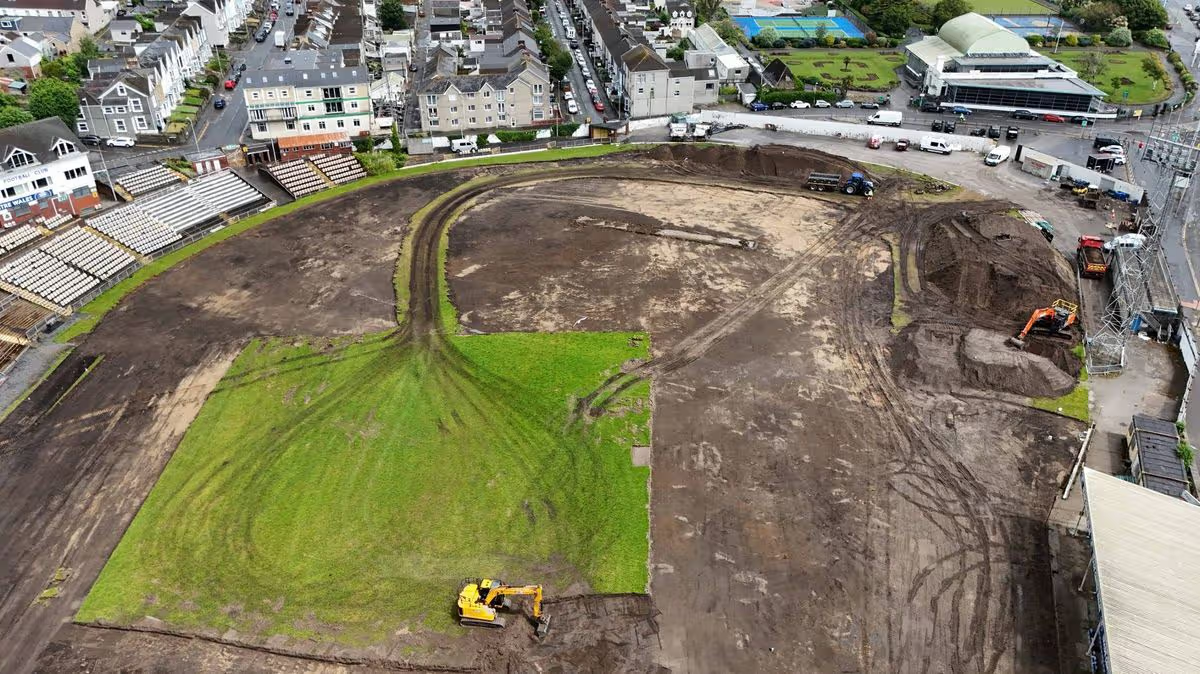
The investment to transform historic St Helen’s ground in Swansea
-

 Crypto World6 days ago
Trump’s AI Ownership Plan Could Benefit Anthropic at OpenAI’s Expense
-
 Sports4 days ago
Bangladesh beat Australia after 20 years in ODIs, register only their second win over six-time world champions | Cricket News
-

 Tech12 hours ago
NanoClaw integrates JFrog registries to secure AI agent downloads
-

 Crypto World7 hours ago
Bitget enters Argentina’s regulated crypto market through PSAV registration
-

 Tech23 hours ago
This Week In Security: Microsoft On Microsoft, Register Your Domains, Linux On ARM, And FreeBSD Joins The File Cache Club
-

 Politics2 days ago
Politics Home | Healey Resignation Is “Colossal Failure Of Government”, Says Former Labour Defence Secretary
-

 Sports2 days ago
First Time Since 1971: Australia Register Historic Low In ODI Cricket
You must be logged in to post a comment Login