

Crypto World
Radiant Capital to wind down after $50 million North Korea-linked hack



Radiant Capital has announced plans to wind down operations after failing to recover from a $50 million exploit that devastated the lending protocol and left it without sufficient funding to continue.
Summary
- Radiant Capital said it will wind down operations after failing to recover from a $50 million exploit and secure new funding.
- The protocol will remain online in a maintenance state, allowing users to withdraw funds and manage positions while development work ends.
- Investigations linked the 2024 attack to North Korea-aligned threat actors, while recovery efforts were hindered after portions of the stolen funds moved through Tornado Cash.
According to a statement published Monday by Radiant’s decentralized autonomous organization, the protocol could no longer identify a viable route forward after unsuccessful attempts to recover stolen assets, raise fresh capital, and maintain the resources needed to operate responsibly.
In a separate update shared on X, the DAO said contributors and community members had continued supporting the platform under increasingly challenging circumstances. The organization stated that without recovered funds, new investment, or renewed growth, the protocol could not remain sustainable.
The decision closes a difficult chapter for a project that once ranked among the largest cross-chain lending platforms.
Launched in 2022, Radiant sought to unify liquidity across multiple blockchains and grew rapidly during 2023. Data from the protocol shows its total value locked reached $386.8 million in December 2023.
Fortunes changed sharply after an October 2024 exploit that security researchers and later investigations linked to North Korean threat actors. Following the breach, Radiant’s total value locked fell to roughly $75 million and dropped to about $5 million within weeks, according to protocol data.
Recovery efforts failed to restore the protocol
While operations are being scaled back, Radiant said the protocol will not disappear entirely. Instead, it will move into what it described as a maintenance state.
Under that arrangement, the frontend will remain online, smart contracts will stay accessible, and users will still be able to withdraw assets, repay loans, and manage existing positions. Development work, protocol upgrades, and expansion efforts, however, will cease as DAO contributors step away from active operations.
Radiant also urged users to manage their exposure carefully while the protocol enters its final phase.
Remaining recovery initiatives connected to the hack will continue. The DAO said its remediation portal will stay open and any assets recovered in the future will be returned to affected users.
Previous recovery efforts have produced limited results. In October 2025, blockchain security firm CertiK reported that wallets linked to the attacker deposited 2,834 ETH into Tornado Cash after moving funds through multiple addresses and swaps involving DAI.
CertiK estimated that approximately $10.8 million worth of Ethereum had already been laundered through the mixer, complicating efforts to trace and recover the stolen assets.
North Korea-linked attack became a turning point
Radiant said in December 2024 that an attacker posing as a former contractor distributed malware through Telegram. According to the protocol, a malicious ZIP file circulated among developers for feedback, creating an entry point that ultimately led to the compromise.
A post-mortem investigation from cybersecurity firm Mandiant later linked the incident to the AppleJeus hacking group, which it identified as part of North Korea’s cyber ecosystem.
According to Mandiant, the attackers gained control of three of Radiant’s eleven multisig signer permissions and replaced the lending pool’s implementation contract, allowing them to steal approximately $53 million from the Arbitrum and BNB Chain deployments.
The tactics used in the attack later surfaced in other major crypto incidents. In April 2026, Drift Protocol said it had medium-high confidence that the same actors behind the Radiant breach were responsible for a separate exploit against its platform. Drift’s investigation concluded that the group spent months building trust with contributors through conference meetings and professional contacts before deploying malicious tools and links.
Market reaction to Radiant’s closure announcement remained negative. The protocol’s RDNT token fell 4.2% after the news.



Google has sued an organized cybercrime network it calls the “Outsider Enterprise,” accusing the China-based group of running AI-powered text scams.
The company is pursuing the case alongside the FBI, which is preparing its own enforcement actions, and is working with AT&T, T-Mobile, and Verizon to block the messages.
How the AI-Driven Scam Operation Worked
The network coordinated via Telegram and sold phishing kits that let criminals blast fake text campaigns impersonating Google and other brands, according to Google’s blog. Hundreds of thousands of victims lost a combined total in the millions.
Follow us on X to get the latest news as it happens
Investigators tied the group to 9,000 fake websites and more than 1 million fraudulent URLs. Android users flagged 55,000 spam texts in May alone. The Enterprise sent 2.5 million messages over that same period.
The case matters beyond text fraud. AI now lets attackers scale convincing scams that once required manual effort. BeInCrypto has tracked this shift across attacker tools, DeFi risks, and AI exploit pipelines that give attackers a structural edge over defenders.
The Wider Crackdown
Google paired the litigation with policy advocacy. The company is backing seven bipartisan bills, including the National Strategy for Combating Scams Act and the Stop SCAMS Against Seniors Act.
It also pointed to its own defenses. Google said its messaging tools now intercept more than 10 billion malicious messages each month. Android scam detection flags suspicious calls and contacts in real time.
The FBI framed the action as a model for shared defense against transnational fraud.
“Criminals increasingly use AI to make fraud like this more convincing and harder to detect,” Brett Leatherman, FBI Cyber Division, said.
Subscribe to our YouTube channel to watch leaders and journalists provide expert insights
The post Google Files Lawsuit to Dismantle AI-Powered Text Scam Operation appeared first on BeInCrypto.
Zcash has undergone a follow-up security audit using Anthropic’s Mythos system, which, according to founder Zooko Wilcox, found no additional serious vulnerabilities in the protocol after the recent Orchard flaw disclosure.
Summary
- Anthropic’s Mythos audit found no additional serious vulnerabilities in the Zcash protocol following the recent Orchard flaw disclosure.
- The review followed emergency upgrades that fixed a vulnerability that could theoretically have enabled unlimited counterfeit ZEC creation.
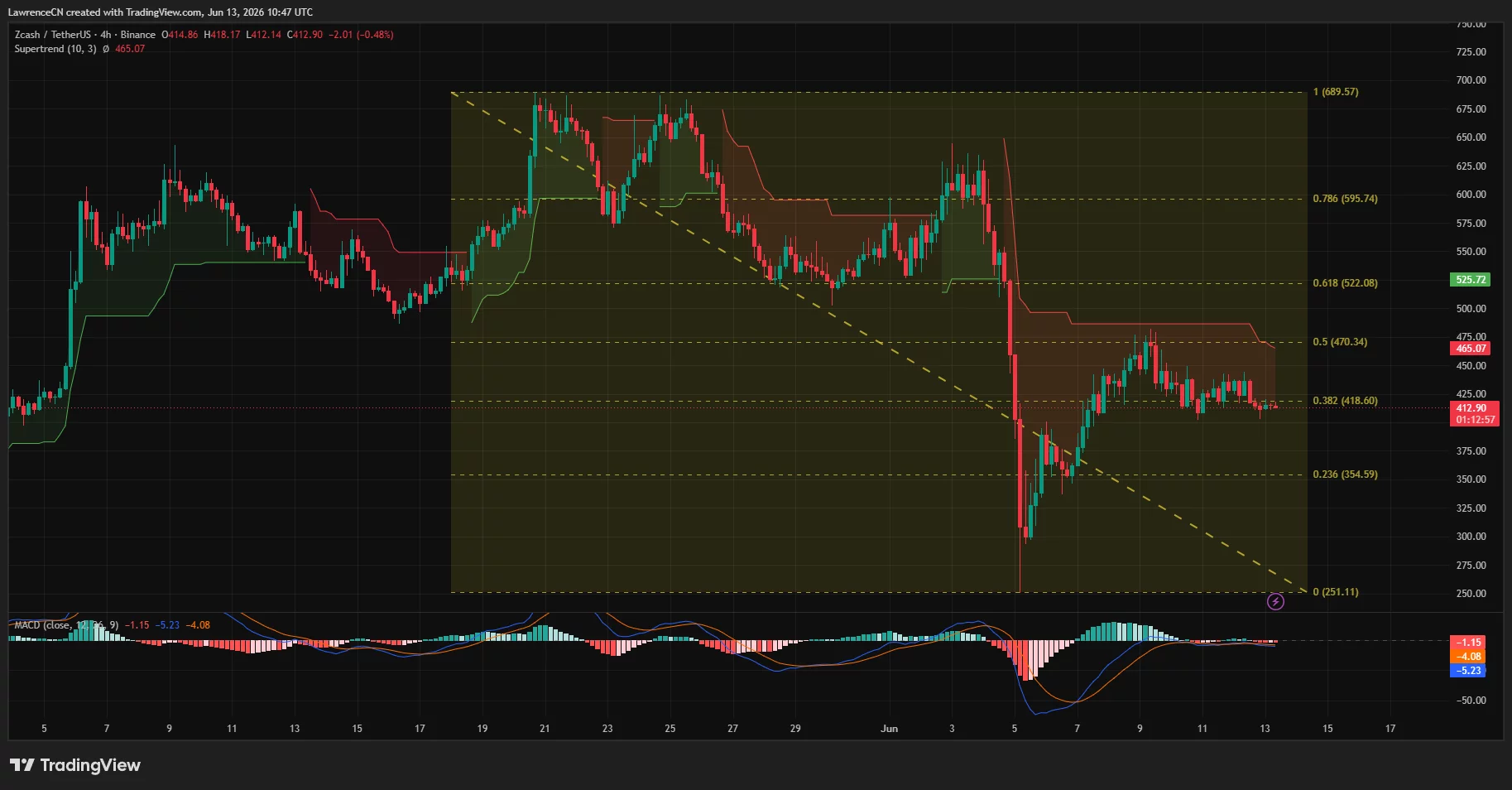
- ZEC has pulled back to around $417 after a sharp rebound, while technical indicators suggest resistance remains near the $465 level.
According to Wilcox, Anthropic carried out the audit at the request of Shielded Labs following the discovery of a vulnerability that could theoretically have allowed unlimited creation of counterfeit ZEC.
In a June 13 post on X, Wilcox thanked Anthropic for helping protect Zcash users and said the review did not identify any other serious bugs in the network.
The result comes little more than a week after the Zcash ecosystem rushed to contain a flaw in Orchard, the blockchain’s primary shielded transaction pool.
According to Shielded Labs, the defect could theoretically have enabled an attacker to create an unlimited amount of counterfeit ZEC. The organization said previous exploitation appeared unlikely, while acknowledging there is no cryptographic proof showing the vulnerability was never used.
Work on fixing the issue began before the flaw became public. According to Zcash Open Development Lab founder Josh Swihart, developers first deployed a soft fork that temporarily disabled Orchard transactions while technical details remained confidential.
A second upgrade, the NU6.2 hard fork, went live on June 3 and removed the vulnerability before Orchard transactions were re-enabled.
Emergency measures contained the Orchard flaw
Details released earlier by Wilcox showed the original vulnerability was identified on May 29 by security researcher Taylor Hornby during a targeted audit using Anthropic’s Opus 4.8 model. Hornby reported the issue to Zcash Open Development Lab, which coordinated a response across ecosystem participants before the fix was deployed.
Following the fix, Wilcox said teams across the Zcash ecosystem continued reviewing the protocol for additional risks. According to his June 13 update, Shielded Labs and other contributors are now focused on further security-hardening measures and plan to release additional updates as that work progresses.
Several organizations remain involved in the effort, including the Zcash Foundation, Tachyon Group, Valar Group, Shielded Labs, and Zcash Open Development Lab, according to Wilcox.
Ironwood proposal focuses on supply verification
Alongside the audit findings, Wilcox has continued promoting the proposed Ironwood upgrade, which he said would allow users to independently verify Zcash’s circulating supply by aggregating balances held across active pools once the upgrade is activated.
According to Wilcox, Ironwood would introduce a new location for holding shielded ZEC, place restrictions on transactions that could involve counterfeit coins, and incorporate additional security measures, including AI-assisted audits. He said the timeline for activation remains uncertain and will depend on further development work and community discussions.
The Orchard disclosure triggered a sharp sell-off in ZEC. The token lost more than 50% of its value between June 4 and June 5 before rebounding to $478.70 on June 9. ZEC has since fallen back to around $417 as investors reduced exposure to risk assets amid escalating tensions between the United States and Iran.
Technical indicators also show that the post-crash recovery is facing resistance. On the four-hour chart, ZEC has fallen back below the 38.2% Fibonacci retracement level at $418.60 after failing to hold gains near $478.70 earlier this week. The token also remains below the Supertrend resistance at roughly $465, which continues to cap upside attempts.
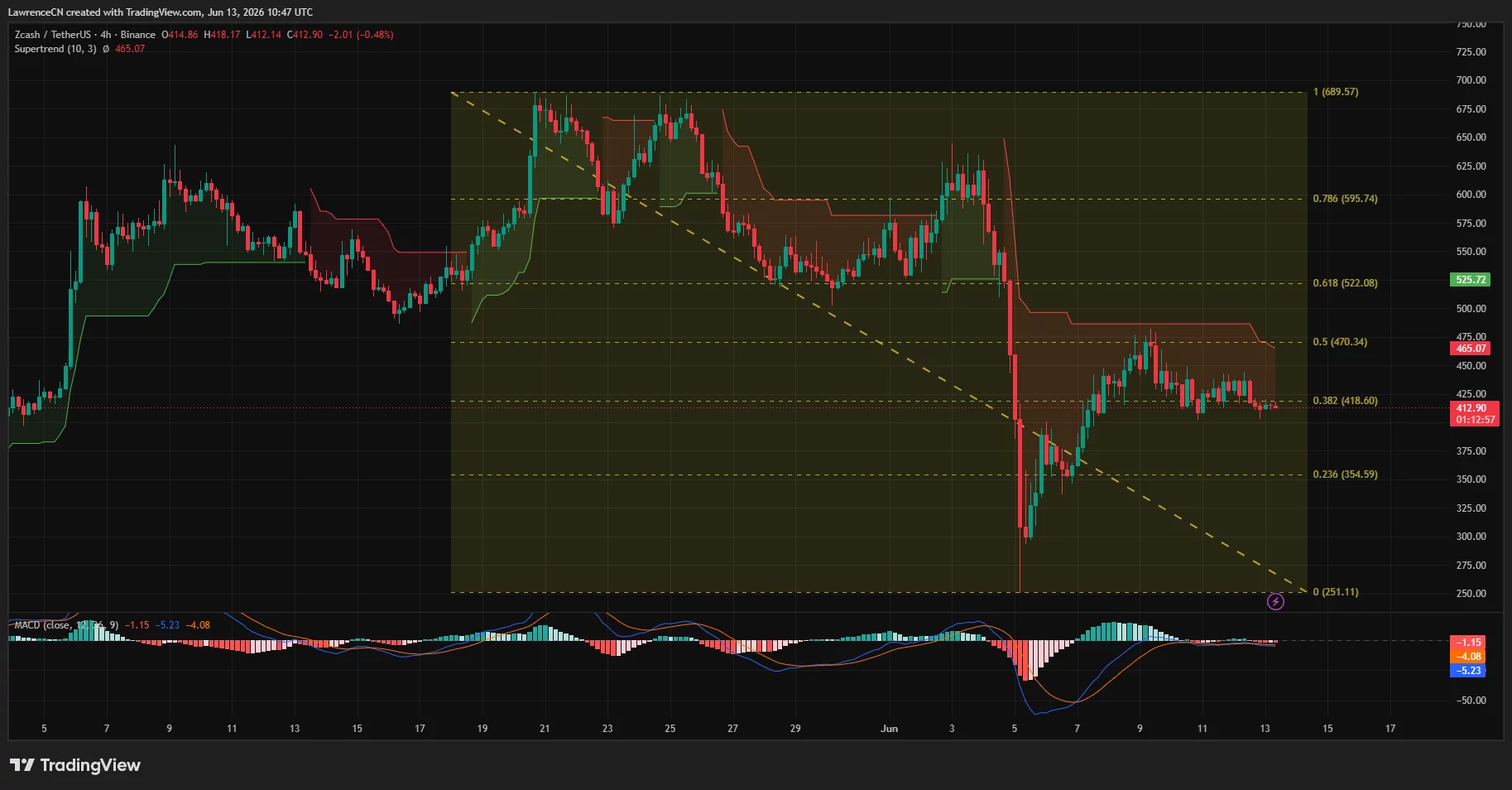
Unless buyers reclaim the $465-$470 area, the chart points to a possible retest of support near $355, which marks the 23.6% Fibonacci retracement level. Meanwhile, the MACD histogram has slipped back into negative territory after briefly turning positive during the recovery rally, indicating that buying pressure has weakened since the June 9 peak.
Key Takeaways
- Geoffrey Kendrick from Standard Chartered identifies Bitcoin’s cycle bottom at $59,000, reached on June 5
- Outflows totaling $5.72 billion from Bitcoin ETFs since mid-May linked to investor positioning for SpaceX’s public debut
- SpaceX commenced Nasdaq trading at $150 per share, currently up approximately 26%, potentially ending crypto liquidation pressure
- Progress on U.S.-Iran diplomatic negotiations and declining oil prices reducing macroeconomic headwinds for digital assets
- Year-end forecasts remain intact: $100,000 for Bitcoin and $4,000 for Ethereum
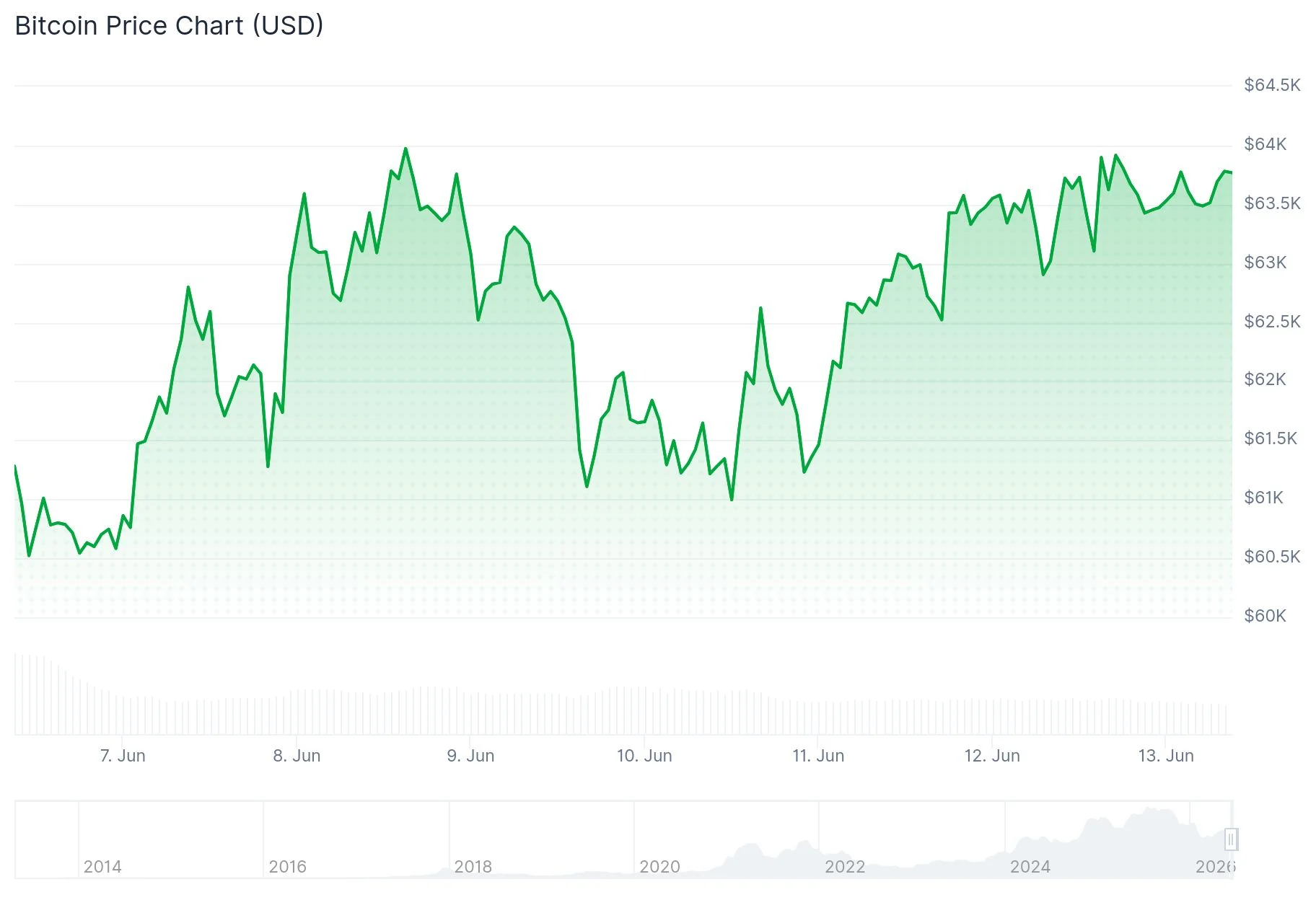
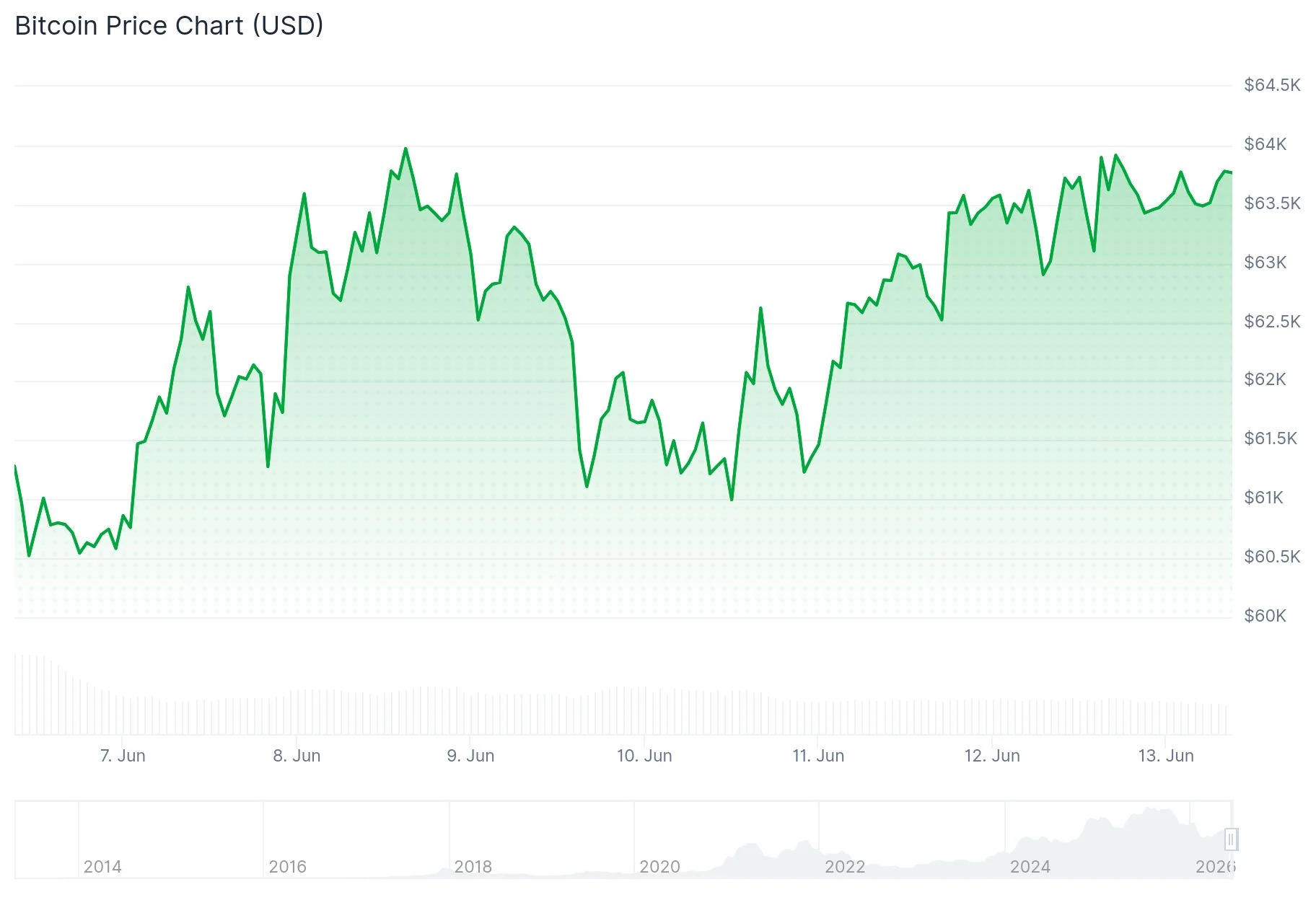
Bitcoin reached a low of $59,375 on June 5, 2026, based on CoinDesk pricing data. Geoffrey Kendrick, a digital asset analyst at Standard Chartered, has identified this level as the conclusive cycle bottom for the leading cryptocurrency.
“Winter is over. Welcome back to crypto Spring,” Kendrick declared in his Friday research note.
As of this writing, Bitcoin was changing hands just under $64,000, showing significant recovery from its recent trough.
The cryptocurrency’s descent from its record peak of $126,000 on October 6 to the $59,000 level constitutes a 53% drawdown.
SpaceX Public Offering Triggered Digital Asset Liquidation
Kendrick attributes much of the recent downward pressure to the SpaceX public offering. Market participants allegedly liquidated Bitcoin ETF positions to raise capital for participation in the highly anticipated IPO.
U.S.-listed spot Bitcoin exchange-traded funds experienced aggregate net redemptions of $5.72 billion beginning in the second week of May. This outflow magnitude ranks among the most severe since these investment vehicles launched.
SpaceX equity started trading on Nasdaq Friday morning at approximately $150 per share. Current trading levels show gains of roughly 26% above the initial offering price. Kendrick suggests this successful IPO may eliminate that particular source of selling pressure.
On decentralized exchange Hyperliquid, SpaceX derivative contracts were experiencing substantial trading activity, implying a company valuation reaching $2.4 trillion.
Declining Energy Prices and Middle East Diplomacy Bolster Outlook
The secondary catalyst Kendrick highlighted involves a prospective U.S.-Iran diplomatic agreement under discussion at the G7 summit. Should this materialize, it could prevent further escalation in global oil prices.
Reduced oil prices would alleviate upward pressure on U.S. Treasury yields. As yields decline, risk assets like Bitcoin typically experience renewed investor interest.
Brent crude retreated to approximately $87 per barrel, with West Texas Intermediate trading near $85, following President Trump’s comments about a probable peace agreement. Trump subsequently clarified on Truth Social that the publicly disclosed terms did not reflect what was actually negotiated, urging Iranian leadership to “get their act together.”
Three Confirmation Metrics for Market Bottom
Kendrick outlined three specific indicators he’s monitoring to validate the market floor thesis.
First, he anticipates Strategy, under Michael Saylor’s leadership, will reveal another Bitcoin acquisition on the upcoming Monday.
Second, he seeks sustained net-positive daily flows returning to U.S.-listed spot Bitcoin ETFs.
Third, he’s observing whether crude oil pricing maintains its downward trajectory.
Kendrick maintains his year-end projections: Bitcoin reaching $100,000 and Ethereum hitting $4,000. He additionally forecasts Ethereum will deliver superior returns compared to Bitcoin over the coming months.
For investors who established positions near the $59,000 bottom, achieving Kendrick’s $100,000 year-end projection would yield approximately 70% returns.

Crypto World
Ripple CEO Accused Jamie Dimon of Lying About CLARITY Act And Called Out $20Bn Reason Why

Ripple CEO Brad Garlinghouse went directly at JPMorgan chief Jamie Dimon on Fox Business Wednesday, accusing him of ‘intentional misrepresentation’ over the CLARITY Act, the pending Senate legislation that would establish a comprehensive regulatory framework for U.S. crypto markets.
The charge is specific: Garlinghouse says Dimon is distorting the bill’s compliance implications to protect JPMorgan’s payments business, which generates roughly $20 billion in annual revenue and over $5 billion in profit.
The confrontation follows Dimon’s late-May Fox Business interview with host Maria Bartiromo, where he called the CLARITY Act inadequate on AML and BSA grounds and labeled Coinbase co-founder and CEO Brian Armstrong, the bill’s most vocal corporate champion, ‘full of shit.’ Garlinghouse used the same platform, the same host, to fire back.
The flashpoint is one specific provision: whether crypto exchanges like Coinbase can offer stablecoin yield to users holding stablecoin balances on their platforms. That single clause has drawn the full force of the banking lobby, and, Garlinghouse argues, Dimon’s personal opposition.
Discover: The Best Crypto to Diversify Your Portfolio
Garlinghouse vs. Dimon: What the CLARITY Act Fight Is Actually About
Garlinghouse’s accusation is direct. ‘What Jamie Dimon did a disservice around… is that he’s representing that this reduces compliance concerns, that it makes it easier to do bad things,’ he told Bartiromo.
‘That’s just not true. It’s either intentional misrepresentation or even negligent to try to make support for the Clarity Act go away.’
Dimon’s stated position, that the CLARITY Act weakens anti-money-laundering and Bank Secrecy Act protections, gets one sentence of steel-manning: banks have a legitimate structural interest in ensuring crypto products carry equivalent compliance burdens.
— Coin Bureau (@coinbureau) June 12, 2026
 NEW: RIPPLE'S BRAD GARLINGHOUSE GOES OFF ON JP MORGAN-CHASE CEO
"Jamie Dimon has been dismissing this industry for a DECADE. He’s called it a Ponzi scheme, he’s called Bitcoin a pet rock.”
"JP Morgan generates $20 BILLION of revenue from their payments business.. So its clear… pic.twitter.com/v6QUeRlsDw
The problem, per Garlinghouse, is that the bill doesn’t actually reduce those burdens. It creates a framework where none currently exists.
The dispute centers on one provision: stablecoin yields offered on crypto exchanges. Armstrong threatened to pull Coinbase’s support for any draft that excluded the clause.
Dimon framed Armstrong as ‘the only one’ pushing for it, spending ‘hundreds of millions of dollars in Washington.’
Garlinghouse acknowledged Armstrong is representing Coinbase’s interests specifically, but added that ‘the industry wants clarity, and wants regulation.’
That distinction matters structurally: the fight over stablecoin yield is Coinbase’s hill, but the broader crypto regulation framework behind the CLARITY Act has wide industry support.
JPMorgan’s $20B Payments Business: Why Dimon Has a Dog in This Fight
$20 billion in annual revenue. $5 billion in profit. That is JPMorgan’s payments empire, and it is the number that makes Garlinghouse’s accusation land as analysis rather than rhetoric.
Stablecoin yields on exchanges directly threaten that business model. If users can park stablecoins on Coinbase or a Ripple-adjacent platform and earn yield, deposits migrate away from bank accounts.
JPMorgan’s custody and payments revenue depends on controlling that liquidity. Allowing crypto exchanges to replicate a core banking function, interest-bearing balances, chips at the foundation of that moat.

‘Jamie Dimon also should be clear he is trying to protect and dig a deeper moat for a business that’s extremely profitable for them,’ Garlinghouse said plainly.
JPMorgan has its own blockchain projects, JPM Coin and the Onyx platform, but critics including Garlinghouse have argued those are closed, permissioned systems designed to preserve JPMorgan’s control rather than enable open competition.
Dimon opposing the CLARITY Act while running a proprietary token network is the contradiction Garlinghouse is pointing at. Meanwhile, other major banks like Citi are moving deeper into tokenization, a divergence that exposes Dimon’s opposition as strategic, not principled.
Discover: The Best Token Presales
The post Ripple CEO Accused Jamie Dimon of Lying About CLARITY Act And Called Out $20Bn Reason Why appeared first on Cryptonews.

For the fifth consecutive week, the spot exchange-traded funds tracking the world’s largest cryptocurrency have ended in the red with more outflows than inflows.
However, the numbers are nowhere near as painful as they were during the previous week, and Friday was actually in the green.
5 in a Row
CryptoPotato has repeatedly reported in the past few weeks the poor performance of the spot Bitcoin ETFs, especially during the previous business week (the first for June). At the time, investors pulled out over $1.7 billion from the funds, making it the second-worst in the ETFs’ history.
Four out of the five business days last week were also in the red. The net withdrawals were $91.37 million on Monday, $77.44 million on Tuesday, $213.85 million on Wednesday, and $19.03 million on Thursday. The first silver lining is that net inflows finally dominated on Friday, with $85.85 million, according to data from SoSoValue.
Nevertheless, the week still ended in the red, with total net outflows of almost $316 million. The second silver lining, if it could be described as such, was the fact that the net withdrawals were nowhere near the billions recorded during the previous four weeks. However, the negative streak continues, as the ETFs have bled out over $5.7 billion since the week that ended on May 15.
The cumulative net inflows have declined even further, going from $59.34 billion on May 8 to $53.62 billion on June 12.
ETH ETFs in Red, Too
The landscape with the spot Ethereum ETFs is quite similar and painful. SoSoValue shows that the funds have been in the red for five consecutive weeks as well, but the last one was not as crushing as many of the previous.
In fact, Monday was a highly positive day, with investors inserting $82.37 million into the funds. However, the trend changed in the following days, with $40.85 million in net outflows on Tuesday, $35.59 million on Wednesday, $15.89 million on Thursday, and $4.95 million on Friday.
Consequently, the week ended with just under $15 million in net outflows, which is significantly lower than the $173 million withdrawn during the previous week.
The cumulative total net inflows dropped to under $11.20 billion on Friday after peaking at $12.09 billion on May 8.
The post Bitcoin ETFs Extend Major Red Streak, But There Is a Light at the End of the Tunnel appeared first on CryptoPotato.

Crypto markets may still be buffeted by macro news and uneven regulatory signals, but tokenization continues to look like the sector’s most durable theme. This week’s developments underscored that shift: Binance Research data points to accelerating demand for tokenized real-world assets (RWAs), while Kraken expanded tokenized access to SpaceX’s IPO via its xStocks platform.
Beyond tokenization, blockchain activity is also evolving. Prediction markets have now outpaced onchain gambling by volume for the first time, according to TRM Labs, and former FTX CEO Sam Bankman-Fried has filed a formal request for a U.S. presidential pardon.
Key takeaways
- Binance Research reports active tokenized RWAs rose 589% since early 2025, with tokenized bonds and money market funds adding $6.5 billion and tokenized stocks up 422%.
- Kraken says eligible users in more than 110 markets can access the SpaceX IPO through xStocks, receiving an allocation that maps 1:1 to tokenized shares.
- TRM Labs data shows prediction markets generated $36.6 billion in Q1 2026 volume versus $14 billion for onchain gambling—an inflection point after both surpassed $50 billion annually in 2025.
- Sam Bankman-Fried has formally applied for a presidential pardon through the U.S. DOJ Office of the Pardon Attorney, alongside ongoing appeals tied to his 2023 fraud conviction.
Tokenized RWAs keep expanding as asset mix broadens
Even as the broader crypto tape has been less cooperative, tokenized RWAs have continued to gain traction. According to Cointelegraph’s coverage citing Binance Research, the market for active tokenized RWAs has climbed 589% since early 2025.
Within that growth, Binance Research highlights meaningful contributions from multiple asset classes. Tokenized bonds and money market funds accounted for $6.5 billion in added value, while tokenized stocks increased by 422%. The message for investors is straightforward: tokenization demand is not confined to a single category—it’s spreading across products that resemble traditional fixed income and equity exposures.
The sector’s expansion also appears to be getting more diversified in terms of what investors can access. Platforms such as Ondo Global Markets have contributed to momentum in tokenized equities, while tokenized precious metals reportedly added $1.5 billion amid earlier demand for safe-haven exposure.
Meanwhile, traditional market infrastructure is also moving deeper into blockchain-related initiatives. Developments range from Apex Group’s tokenized fund services to The Clearing House’s planned tokenized deposit network, reflecting a wider industry push beyond purely crypto-native experiments. While these efforts differ in execution and maturity, taken together they point to a broader acceptance of tokenization as an infrastructure direction—not just an asset-narrative fad.
Kraken brings SpaceX IPO exposure to xStocks users in 110+ markets
One of the most immediate real-world catalysts this week came from Kraken, which rolled out tokenized access to the SpaceX IPO for eligible customers through its xStocks product. Cointelegraph previously reported on Kraken’s plan to provide access in more than 110 markets.
Kraken states that investors who received an allocation will be issued SPCXx, a tokenized representation backed 1:1 by the underlying equity. The exchange also says SPCXx can be traded 24/7 across participating platforms—an operational detail that matters for users comparing tokenized IPO access with traditional allocation and settlement timelines.
The rollout is also arriving at a moment when tokenized equities are benefiting from IPO-level demand. SpaceX reportedly targeted a $75 billion raise in its Nasdaq debut, and the offering was reported as oversubscribed by roughly four times ahead of public trading. If realized, this would align SpaceX with the “high-interest” characteristics that often draw participation into new issuance formats—whether through conventional retail channels or tokenized access.
For investors, the practical question is not only whether tokenization enables broader access, but also how liquidity and trading behavior work after allocation. Kraken’s promise of 24/7 tradability could be a differentiator, but market participants will still want to watch custody, trading venues, and how post-IPO pricing converges with the underlying shares across platforms.
Prediction markets overtake onchain gambling in Q1 2026
While tokenization expands into markets that look increasingly like traditional finance, speculative activity is also shifting. TRM Labs data shows that prediction markets surpassed onchain gambling for the first time in the first quarter of 2026.
According to Cointelegraph’s coverage of TRM Labs, prediction markets recorded $36.6 billion in volume in Q1 2026, compared with gambling’s $14 billion. The milestone follows a period where both categories exceeded $50 billion in annual volume in 2025, reinforcing that this is not a one-off seasonal swing.
Importantly, onchain gambling has not stalled. TRM Labs attributes gambling’s resilience to a loyal and growing user base, with quarterly wagering volume remaining near record highs despite broader market pullbacks. High rollers still dominate betting volume—TRM notes that these users averaged $13,558 per bet and $378,000 in lifetime gambling volume—yet the fastest growth is reportedly coming from casual bettors and daily participants, suggesting an opening of the market beyond a narrow set of whales.
For builders and traders, this change in relative volume has implications for product focus and liquidity. Prediction markets may increasingly attract more capital flow, but gambling’s continued user expansion implies both segments are likely to remain competitive. Watching which category sustains growth once the initial attention cycle fades will be key to understanding where the next wave of onchain engagement concentrates.
Sam Bankman-Fried files pardon request as appeals continue
Legal processes remain a live variable for crypto’s mainstream narrative. Former FTX CEO Sam Bankman-Fried has formally applied for a presidential pardon from U.S. President Donald Trump, according to reporting that ties the request to the U.S. Department of Justice Office of the Pardon Attorney.
The request appears on the DOJ’s Office of the Pardon Attorney’s list of pending clemency applications. The pardon effort is occurring alongside ongoing legal attempts to overturn his conviction—Bankman-Fried continues to appeal his 2023 fraud conviction and the 25-year prison sentence, while an additional request for a new trial was denied per Cointelegraph’s coverage.
Separately, recent months have also seen Bankman-Fried posting messages that appear increasingly aligned with Trump, even though the president has previously said he did not plan to pardon him. That tension highlights why the next steps matter: a pardon request may keep the issue in public view, but it does not change the underlying posture of an active appeal process.
Readers should watch how the DOJ process proceeds and whether any legal updates arrive that alter the timeline. In the meantime, the broader crypto industry will likely continue treating executive-level legal outcomes as an important—if unpredictable—risk factor for regulatory and reputational dynamics.
Cathie Wood’s ARK Invest purchased roughly $444 million worth of SpaceX shares on June 12 while reducing its exposure to Advanced Micro Devices, making one of its biggest portfolio shifts as Elon Musk’s rocket company began trading on public markets.
Summary
- ARK Invest purchased 3.29 million SpaceX shares worth roughly $444 million across four ETFs on June 12.
- The firm also trimmed its AMD position, selling 80,536 shares valued at about $39.3 million.
- SpaceX closed its first trading day nearly 19% above its IPO price, pushing its market value above $2.1 trillion and helping Elon Musk become the world’s first trillionaire.
According to data compiled by ARK Invest Tracker, the investment firm acquired a total of 3,291,184 SpaceX shares across its ARKK, ARKQ, ARKW, and ARKX exchange-traded funds. The purchases were valued at approximately $444.3 million.
The largest allocation came through the ARKK Innovation ETF, which bought 1.69 million shares. ARKQ added 736,442 shares, while ARKW and ARKX purchased 325,562 and 538,341 shares, respectively.
At the same time, ARK trimmed its position in AMD by selling 80,536 shares across ARKQ, ARKW, and ARKX. The transaction was valued at roughly $39.3 million and continued a broader reduction in the semiconductor company’s weighting within ARK’s portfolios.
ARK’s aggressive purchase came as investors rushed into SpaceX during its first day as a publicly traded company.
As reported by crypto.news earlier, the company priced its IPO at $135 per share, implying a valuation of roughly $1.77 trillion. Shares climbed as high as $176.52 during their first trading session before closing at $160.95, giving the company a market capitalization above $2.1 trillion.
The rally also pushed Elon Musk’s net worth above the $1 trillion mark, making him the world’s first trillionaire according to multiple wealth estimates published following the debut.
ARK increased its SpaceX exposure after years of backing Musk’s company
ARK’s latest purchase builds on a relationship that began well before SpaceX entered public markets. The investment firm first gained exposure to the company through its ARK Venture Fund in 2023, allowing investors to participate in the aerospace company’s growth while it remained private.
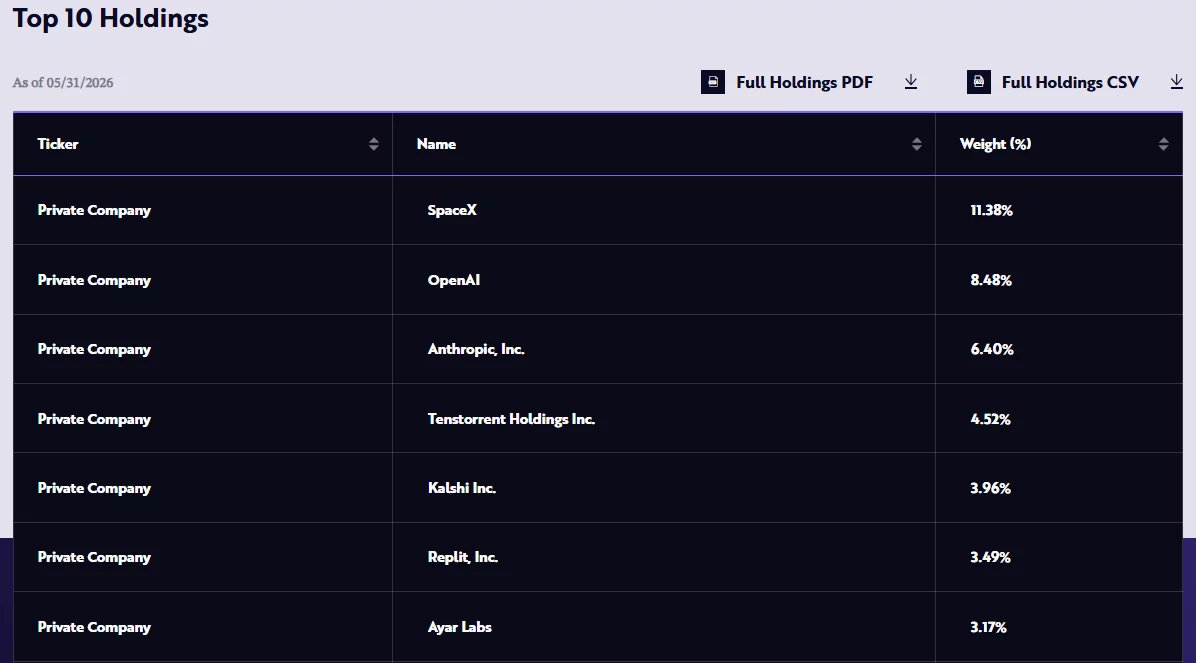
According to ARK data, SpaceX represented 11.38% of the ARK Venture Fund’s net assets as of May 31, making it the fund’s largest holding. Earlier in the year, the position accounted for 17.02% of net assets, indicating that the fund’s weighting has fluctuated over time as valuations and portfolio allocations changed.
Wood has remained one of Musk’s most vocal supporters. Earlier this month, she told Fox Business that “SpaceX has a 10-year lead on any other company,” reflecting ARK’s view that the company maintains a significant competitive advantage in both space transportation and satellite communications.
ARK’s valuation outlook remains above the IPO level
The SpaceX purchase follows a week of heavy portfolio rebalancing at ARK. Company records show the firm sold nearly 10 million shares across 20 companies before Friday’s purchase, with total sales estimated at up to $279 million. Much of that activity occurred on Thursday, when ARK disposed of roughly $234 million worth of stocks, including positions in Teradyne, Twist Bioscience, Iridium Communications, Robinhood, and Roku.
ARK’s long-term forecasts suggest the firm believes SpaceX can continue growing despite its already massive valuation. The company’s internal models project a base-case enterprise value of approximately $2.5 trillion by 2030, while its bull-case scenario reaches around $3.1 trillion. Even ARK’s bear-case estimate stands at roughly $1.7 trillion, close to SpaceX’s IPO valuation.
Wall Street remains divided on the stock’s prospects. Some analysts have published targets as high as $190 per share, arguing that investors are valuing SpaceX as a combination of aerospace, satellite internet, defense, and artificial intelligence businesses. Others have suggested the stock could eventually retreat toward $63 if future growth falls short of expectations embedded in its post-IPO valuation.
Disclosure: This article does not represent investment advice. The content and materials featured on this page are for educational purposes only.
Crypto World
Hyperliquid (HYPE) Surges 7% as Kalshi Futures Launch and SpaceX IPO Speculation Heat Up
Key Highlights
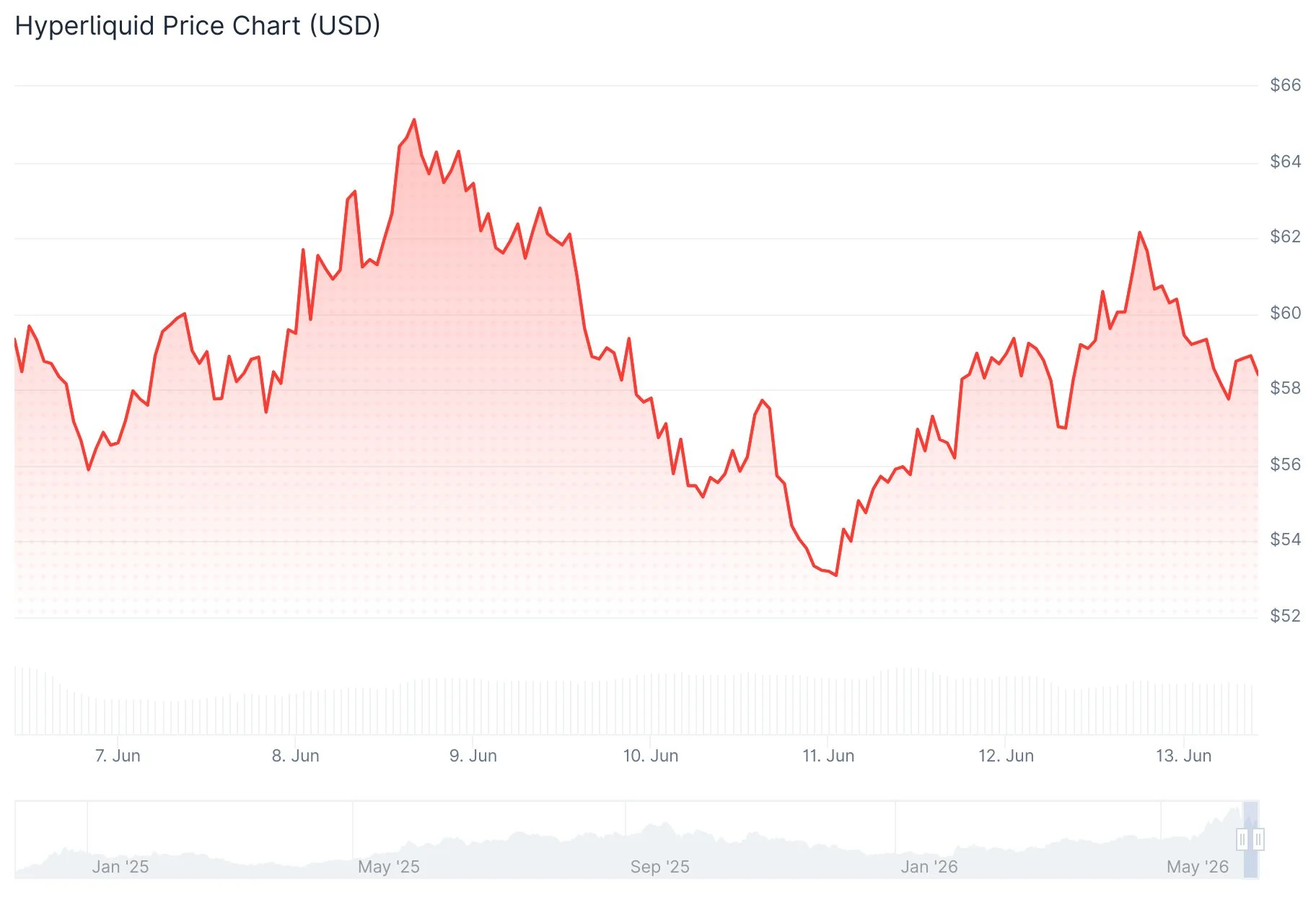
- HYPE token advanced more than 7% over 24 hours, reaching the $60–$61 range while Bitcoin remained relatively stable
- Kalshi introduced CFTC-regulated perpetual futures for HYPE on June 12, 2026, enabling U.S. retail access
- BitMEX founder Arthur Hayes criticized the SpaceX IPO as a “classic crypto grift,” suggesting insider selling could begin in July
- Open interest in HYPE futures surged to $2.56 billion, surpassing XRP’s $2.48 billion
- Technical analysis shows a falling wedge breakout suggesting potential upside toward $77.8
Hyperliquid (HYPE) recorded gains exceeding 7% during the 24-hour period ending June 12, 2026, with prices hovering between $60 and $61 as Bitcoin maintained stability above $63,000 and Ethereum traded around $1,600.
Throughout the previous 30 days, HYPE has registered approximately 50% in gains, bolstered by increasing trading activity and expanding platform usage.
This week’s price movement stemmed from two significant catalysts. Kalshi unveiled CFTC-regulated perpetual futures contracts for HYPE on June 12, establishing a compliant pathway for American traders to access the token.
Additionally, market participants flooded into Hyperliquid’s synthetic SPCX perpetual contract to secure SpaceX exposure before its anticipated public offering. The implied valuations in that market exceeded the IPO pricing, attracting substantial speculative interest.
Crypto analyst Altcoin Sherpa revealed a long position in HYPE ahead of SpaceX’s market debut, highlighting that the event might generate “a ton of volume” and increase awareness of Hyperliquid’s trading venues.
Former BitMEX CEO Arthur Hayes characterized the SpaceX IPO as a “classic crypto grift,” cautioning that early stakeholders might offload shares onto retail investors beginning in July. His remarks intensified speculation surrounding Hyperliquid’s SPCX perpetual contract.
Separately, Fomo rolled out perpetual trading functionality on Hyperliquid and Trade.xyz infrastructure, allowing users to trade equities, pre-IPO shares, cryptocurrencies, indices, and commodities through one unified platform.
HYPE Open Interest Overtakes XRP
Open interest for HYPE futures contracts increased 6.3% within 24 hours, reaching $2.56 billion and moving ahead of XRP’s $2.48 billion following a more modest 2% daily increase.
Daily trading volume expanded 1.71% to $3.89 billion. The simultaneous rise in both open interest and volume indicates fresh positions entering the market rather than simple position rollovers.
The Hyperliquid platform handled approximately $10.4 billion in perpetual futures volume during the past 24 hours. Its fee-based buyback mechanism channels a portion of protocol earnings and at minimum 90% of USDC yield toward HYPE token purchases from the open market.
Technical Analysis: Bullish Pattern Eyes $77.8
Examining the 4-hour timeframe, HYPE escaped from a multi-week falling wedge pattern that developed following the token’s all-time peak near $75.5 in early June. The breakout occurred near the wedge’s upper trendline, with support maintaining around the $54–$55 zone.
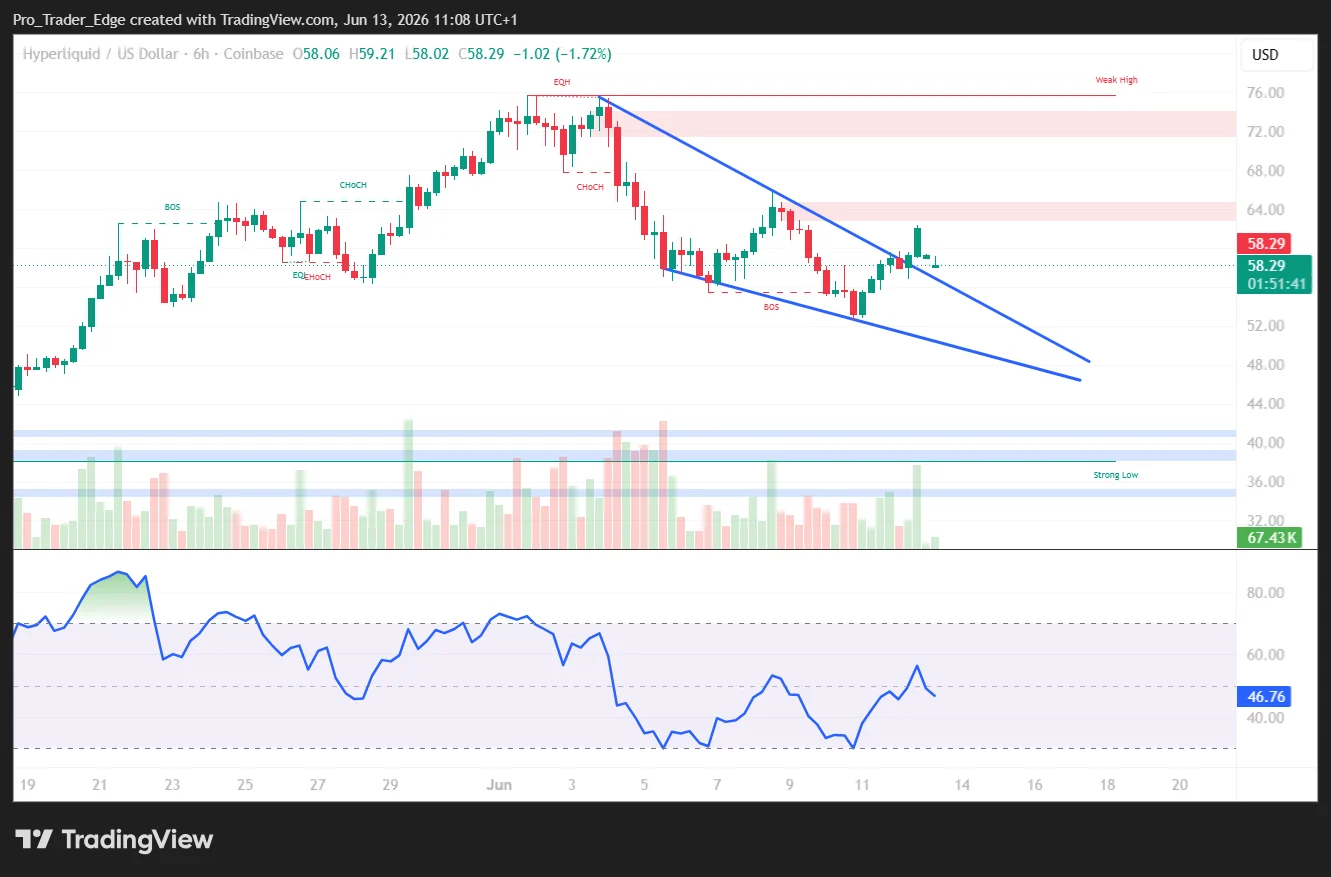
The technical pattern’s measured projection suggests approximately 20% upside potential from the breakout area, establishing a price objective around $77.8.
The 4-hour MACD indicator generated a bullish crossover signal, while the RSI climbed back above the 50 midpoint level. On the daily timeframe, HYPE is challenging the 0.618 Fibonacci retracement at $61.39. Breaking through that level exposes the subsequent resistance zone at $67.69.
The Supertrend indicator remains positioned near $74.3, suggesting the longer-term bullish trend hasn’t fully established confirmation.
Concentrated short liquidation zones between $61.5 and $63 visible on the CoinGlass heatmap may serve as price magnets should bullish momentum persist.


Zimbabwe has placed cryptocurrency firms under Reserve Bank of Zimbabwe oversight through new anti-money laundering rules.
Summary
- Zimbabwe’s Statutory Instrument 99 of 2026 places crypto firms under RBZ AML oversight.
- Crypto companies must register as VASPs before offering digital asset services locally.
- Firms with smart contract control, fund routing, or fee-setting powers must comply.
Statutory Instrument 99 of 2026 places crypto businesses under the RBZ unit that handles financial crime controls. The rules require firms that buy, sell, transfer, or store digital assets to register as VASPs.
Crypto firms must register as VASPs
The new framework gives Zimbabwe a formal rulebook for virtual asset service providers. It covers commercial firms that help customers access, move, hold, or exchange digital assets. The government introduced the regime after years of legal uncertainty in the crypto sector.
In 2018, the central bank ordered banks to stop processing crypto-related transactions. The latest rules end that gap by creating a direct registration process. Crypto companies now need legal recognition before they operate in the domestic market.
According to one report, Zimbabwe wants to avoid the Financial Action Task Force grey list. The report linked the rules to anti-money laundering and financial crime compliance. Techzim described the move as a regulatory message to global watchdogs. “A big part of S.I.99 is really Zimbabwe showing its homework to the world,” Techzim reported.
Compliance rules add banking-style demands
The regulations place crypto operators under compliance demands similar to those in commercial banking. Digital asset firms must create a legally registered domestic subsidiary. The statutory instrument also sets an annual registration fee of $500.
Directors must clear background checks before their firms receive approval. The rules require crypto companies to implement the travel rule. That requirement makes firms collect and share transaction data during qualifying asset transfers.
The framework focuses on financial crime controls rather than crypto adoption as legal tender. Techzim reported that the rules do not give sovereign endorsement to cryptocurrencies. The RBZ anti-money laundering arm will oversee the registered entities under the new regime. The rules therefore, connect crypto activity with existing national financial surveillance systems.
Smart contract control triggers compliance
The statutory instrument uses a technology-neutral approach for digital finance activities. It states that decentralization alone does not remove legal responsibility from operators. Organizations that can alter smart contracts meet the control test under the rules. Firms that route funds or set transaction fees also meet that compliance threshold.
This approach brings some decentralized finance structures into the regulatory perimeter. It focuses on control over systems, rather than labels used by crypto projects. Local fintech startups may face higher operating costs under the new requirements.
However, supporters of the rules say clear guidelines reduce the risk of sudden regulatory action. The legislation now gives Zimbabwe a formal registration path for crypto businesses. It also gives the RBZ direct oversight over companies that handle digital asset services.
Key Highlights
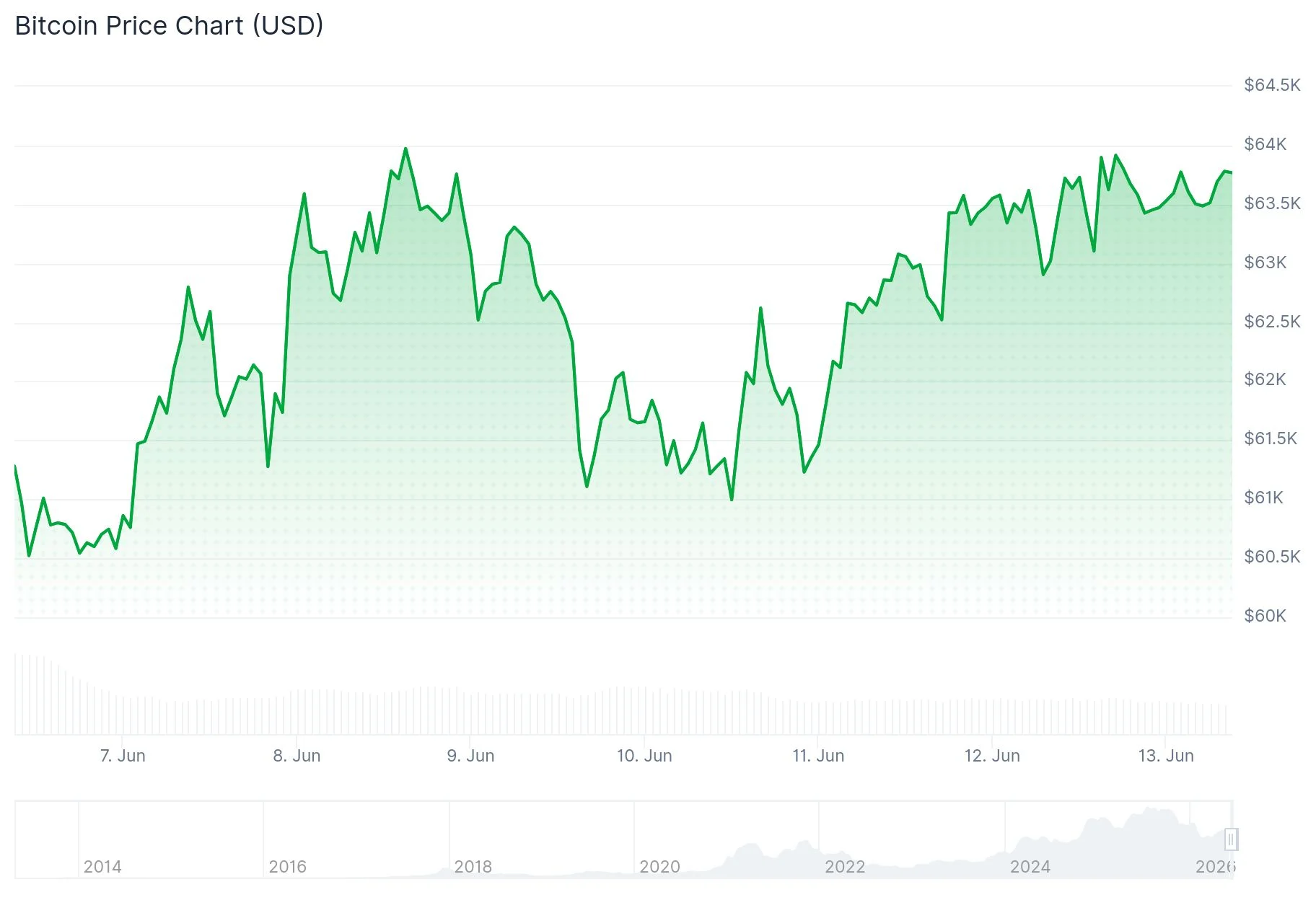
- Bitcoin surged past the $64,000 threshold following statements from Iran’s Foreign Minister indicating unprecedented progress toward a peace agreement with the United States.
- U.S. Vice President J.D. Vance corroborated reports that an accord is imminent, catalyzing further momentum in digital asset markets.
- The leading cryptocurrency began the trading week at $60,804 and temporarily fell beneath $60,000—a level not seen since November 2024.
- The Securities and Exchange Commission granted approval for NYSE Arca to list the T. Rowe Price Active Crypto ETF.
- Market analyst Ted Pillows forecasts BTC may decline to $50,000 before staging a substantial recovery toward $100,000.
Bitcoin has recovered to trade above $64,000 as optimism surrounding a potential diplomatic agreement between the United States and Iran bolstered appetite for risk-sensitive assets globally. The premier digital currency experienced significant volatility throughout the week before finishing with strong gains.
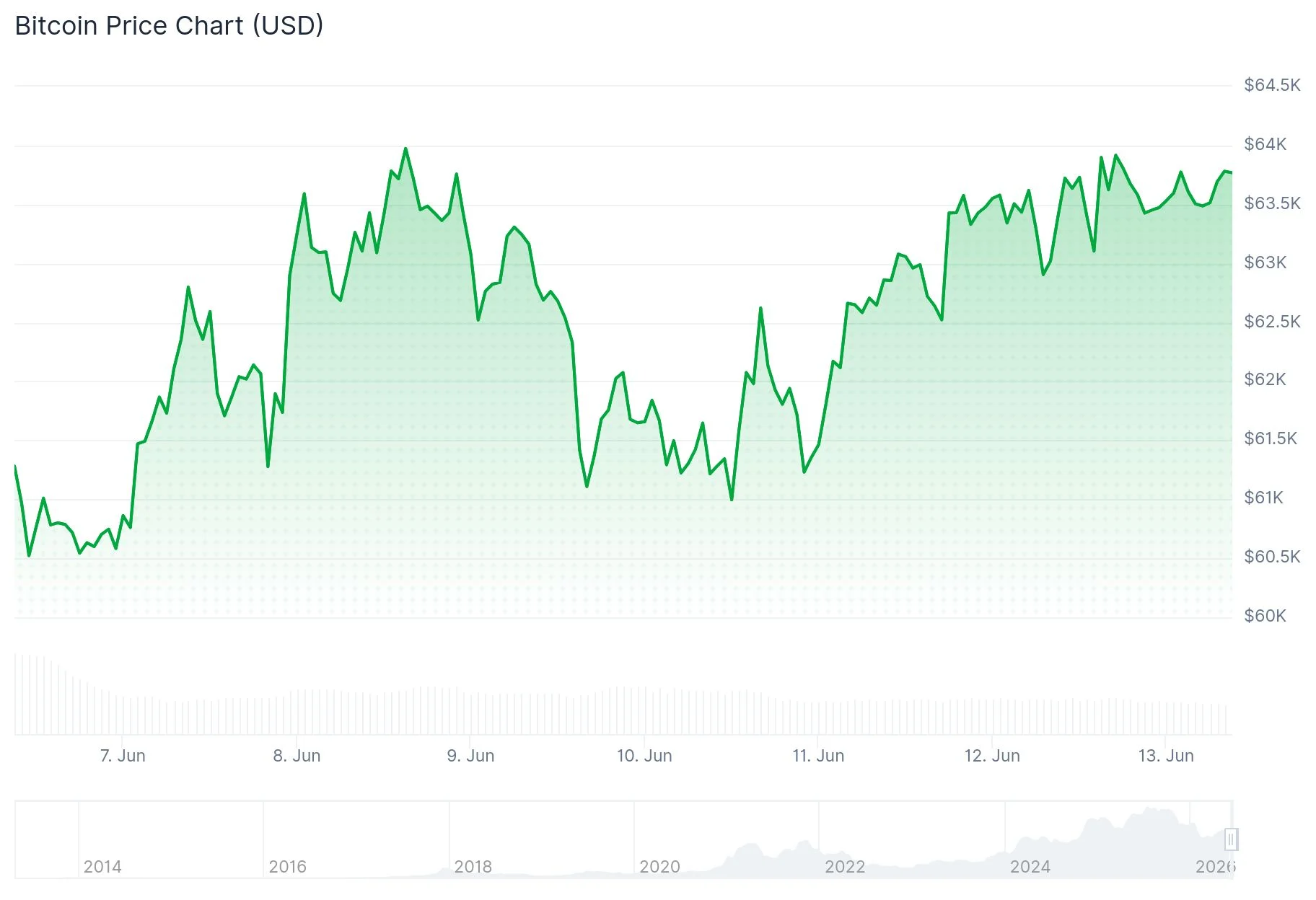
The cryptocurrency commenced the week trading at $60,804, having declined from elevated levels due to escalating geopolitical tensions across the Middle East, increasing crude oil valuations, and persistent inflation concerns that could maintain elevated interest rates. During this period, BTC briefly traded below the $60,000 mark for the first time since November 2024.
The reversal in market sentiment occurred when American government representatives indicated meaningful advancement toward finalizing an agreement with Iran. President Trump announced that a deal was within reach and suspended previously scheduled military operations against Iran. He further stated that both nations would jointly announce the location and timing for a formal signing ceremony.
Bitcoin advanced beyond $63,000 in response to Trump’s announcement, then gained additional momentum following confirmation from Iran’s Foreign Minister Abbas Araghchi.
Araghchi indicated that the Islamabad Memorandum of Understanding “has never been closer” to realization, while cautioning media outlets against speculating about specific terms before official publication.
Cryptocurrency market observer Ted Pillows offered his perspective on X, referencing historical pricing trends. He observed that BTC typically traded 10–20% beneath the 300-week exponential moving average prior to establishing a market bottom in previous cycles, and anticipates a comparable pattern currently—suggesting a potential floor around $50,000 before a substantial advance toward $100,000.
Cryptocurrency Markets Rally as International Tensions Subside
U.S. Vice President J.D. Vance likewise verified that an agreement is approaching finalization, while simultaneously dispelling circulating misinformation. He clarified that Iran would not receive direct monetary transfers and emphasized that no frozen assets would be released merely through signing the document.
“This agreement possesses the capability to fundamentally transform the region and establish enduring peace,” Vance declared.
Notwithstanding the encouraging rhetoric from both governments, decentralized prediction platform Polymarket currently assigns only a 37% probability to a permanent agreement being executed by June 30, with a 46% likelihood for completion at a subsequent date. Market participants remain cautious about fully incorporating a successful deal into asset valuations.
Bitcoin received additional support from the impressive Nasdaq introduction of SpaceX. The aerospace company founded by Elon Musk saw its shares appreciate approximately 19% during initial trading, generating positive momentum for growth-focused investments across multiple sectors.
Regulatory Approval Granted for Novel Crypto ETF
The Securities and Exchange Commission authorized NYSE Arca’s application to list the T. Rowe Price Active Crypto ETF. This actively managed investment vehicle will maintain the flexibility to allocate capital across multiple digital assets including Bitcoin, Ether, XRP, Solana, and Dogecoin.
This development represents continued progress in the proliferation of regulated cryptocurrency investment instruments available to American investors.
In related corporate news, Strategy—which maintains the largest institutional Bitcoin holdings—revealed it liquidated 32 BTC for approximately $2.5 million during the period spanning May 26 through May 31. The proceeds were allocated to fund dividend obligations on its preferred equity securities, representing a minimal portion of its comprehensive digital asset portfolio.
Spot Bitcoin exchange-traded funds have experienced consistent capital withdrawals in recent periods. Bitcoin is presently valued at approximately $63,814, remaining roughly 50% beneath its October 2025 all-time peak of $126,000.

Cambridge locals warned of 11-week road closures as 3.5km of gas mains to be replaced

Sea Stock: Many Positive Offsets For The Shopee Profitability Problem (NYSE:SE)

Google Files Lawsuit to Dismantle AI-Powered Text Scam Operation

BloFin War of Whales 2026 Grand Prix opens registration for $5M trading championship

Blockchain.com files with SEC for U.S. IPO

Israel says it has killed new Hamas military leader in Gaza City airstrikes

BITCOIN IS CRASHING, STOCKS FALLING FAST ON THIS NEWS!

The Death Spiral Has Begun… Bitcoin, Tech, and Stretch All Cracking!

Parkour MONEY HEIST Season 1 l Escape From Police Chase in REAL LIFE (Epic Parkour Escape POV Chase)
-

 NewsBeat5 days ago
Alexander Zverev wins the French Open to finally earn a 1st Grand Slam title
-
 Entertainment6 days ago
The Best Mystery Series of All Time Is Surging on Streaming 30 Years After It Ended
-

 Crypto World5 days ago
Anatomy of the June crypto crash: Fed, Iran, Saylor
-

 Crypto World2 days ago
Oppenheimer backs SpaceX as $70 billion retail frenzy builds
-

 Crypto World2 days ago
Markets Rally as SpaceX IPO Looms Amid Iran Tensions and Inflation Surge
-
 Crypto World7 days ago
Senator Cynthia Lummis Calls CLARITY Act the Most Consequential Financial Legislation of This Generation
-
 NewsBeat6 days ago
Alexander Zverev conquers demons and outlasts Flavio Cobolli to win French Open for first major title
-

 Tech6 days ago
Microsoft unveils seven homegrown AI models in new bid for ‘long term self-sufficiency’
-

 Business5 days ago
High Stakes for Wembanyama as New York Pushes for 3-0 Lead
-

 Tech5 days ago
Notion restores access to Anthropic after service disruption
-
 Business6 days ago
The Pain Points Taking a Fragile Tech Rally Down a Notch
-
 Crypto World5 days ago
Eli Lilly (LLY) Stock Surges 4% Following Breakthrough Sleep Apnea Trial Results
-
 Business6 days ago
The investment to transform historic St Helen’s ground in Swansea
-

 Crypto World6 days ago
Trump’s AI Ownership Plan Could Benefit Anthropic at OpenAI’s Expense
-
 Sports4 days ago
Bangladesh beat Australia after 20 years in ODIs, register only their second win over six-time world champions | Cricket News
-

 Tech10 hours ago
NanoClaw integrates JFrog registries to secure AI agent downloads
-

 Crypto World5 hours ago
Bitget enters Argentina’s regulated crypto market through PSAV registration
-

 Tech20 hours ago
This Week In Security: Microsoft On Microsoft, Register Your Domains, Linux On ARM, And FreeBSD Joins The File Cache Club
-

 Politics2 days ago
Politics Home | Healey Resignation Is “Colossal Failure Of Government”, Says Former Labour Defence Secretary
-

 Sports2 days ago
First Time Since 1971: Australia Register Historic Low In ODI Cricket
You must be logged in to post a comment Login