NEW YORK — Ubisoft’s popular tactical shooter Tom Clancy’s Rainbow Six Siege faced a setback Tuesday as the launch of its highly anticipated Year 11 Season 2, Operation System Override, encountered extended server maintenance, frustrating players eager to access new content.
The official Rainbow Six Siege account on X announced the delay shortly after the scheduled 9:00 a.m. EDT start time, stating that maintenance had been extended while teams worked to bring the new season live. “The Operation System Override maintenance will be extended for an estimated 30 minutes,” the account posted, followed by a later update noting ongoing work with further details to come.
The season introduces several major features, including the Ranked Overhaul 3.0, a new map called Calypso Casino, and updates to the operator Dokkaebi, who receives a new XK23 assault rifle and a remastered Jegeo Payload ability. These changes aim to refresh competitive play and expand the game’s tactical depth as it enters its 11th year.
Player Reactions and Community Frustration
Advertisement
The delay triggered a wave of responses from the player base, with many expressing disappointment over the timing on launch day. Comments ranged from understanding calls for thorough testing to sharp criticism of recurring issues with season rollouts. Some players noted the irony of the “System Override” theme amid technical hurdles, while others urged patience to avoid rushed implementation.
This is not the first time Rainbow Six Siege has experienced launch-day hiccups. The long-running title, known for its destructible environments and operator-based gameplay, has built a dedicated following despite occasional server and update challenges common in live-service games.
What Operation System Override Brings
The new season focuses heavily on competitive improvements. The Ranked 3.0 overhaul promises better matchmaking, clearer progression systems, and adjustments designed to reward skill more consistently. Ubisoft highlighted these changes in pre-launch notes, aiming to address longstanding player feedback on ranking fairness.
Advertisement
The Calypso Casino map introduces a fresh venue with casino-themed aesthetics, offering new lines of sight, destructible elements, and strategic opportunities. Dokkaebi’s updates enhance her utility, blending her existing hacking capabilities with improved firepower.
These additions come as the game continues to evolve following its shift toward broader accessibility. Earlier updates in Year 11 emphasized quality-of-life improvements, and Operation System Override builds on that momentum.
Broader Context for Rainbow Six Siege in 2026
Now in its second decade, Rainbow Six Siege remains one of Ubisoft’s flagship titles with a strong esports scene and consistent player base. The game has undergone significant transformations, including major balance passes, anti-cheat enhancements, and content expansions to keep veteran players engaged while attracting newcomers.
Advertisement
The Year 11 roadmap reflects Ubisoft’s commitment to the title’s longevity. With free-to-play elements and cross-platform play fully integrated, the studio continues investing in infrastructure and new features. However, technical reliability during peak update periods remains a point of discussion within the community.
Tuesday’s maintenance extension is expected to be resolved within hours, though exact resumption times were not immediately confirmed. The team emphasized that they would not rush the process to ensure stability.
Impact on Players and Esports
For casual players, the delay means postponed access to new operators, weapons, and cosmetics. Competitive players and streamers, who often plan content around season launches, face rescheduled streams and practice sessions. The delay could also affect early leaderboard activity once servers return.
Advertisement
Esports programming tied to the new season may see minor adjustments, though major tournaments typically follow a structured calendar that accounts for such variables. The ongoing R6 Stage 1 and preparations for larger events like the Six Invitational continue unaffected in the short term.
Ubisoft’s Track Record and Future Outlook
Ubisoft has a history of supporting Rainbow Six Siege through consistent seasonal content, a model that has sustained the game far beyond initial expectations. Each season typically brings operator reworks, map updates, and balance tweaks informed by data and community input.
Analysts note that while technical issues can temporarily dent player sentiment, the game’s core loop and dedicated fanbase provide resilience. Long-term success depends on delivering promised features like marketplace improvements and continued anti-toxicity measures.
Advertisement
As maintenance progresses, players are advised to monitor official channels for updates. Ubisoft’s support team is likely addressing backend issues to minimize post-launch bugs, a standard practice for major live-service deployments.
Community and Industry Perspective
The incident highlights challenges faced by live-service games in 2026, where high player expectations meet complex technical demands. Similar delays have occurred across titles from various publishers, often sparking temporary backlash before content releases restore enthusiasm.
For Rainbow Six Siege, the focus remains on delivering a polished experience. Once available, Operation System Override is poised to reinvigorate gameplay with its ranked changes and fresh map. Players can expect detailed patch notes upon launch detailing exact balance adjustments and bug fixes.
Advertisement
As the day progresses, attention will shift from the delay to in-game reactions. Early impressions of the new map and operator changes will likely dominate discussions once servers stabilize.
The extension serves as a reminder of the meticulous work required to maintain a title with millions of active users. Ubisoft’s transparency through real-time updates helps manage expectations, even if it doesn’t fully alleviate frustration on launch day.
With Rainbow Six Siege showing no signs of slowing down, this season represents another chapter in its enduring story. Fans will soon be able to dive into the new content, testing strategies on Calypso Casino and climbing the updated ranked ladder.
FREMONT, Calif. — Shares of Aehr Test Systems Inc. jumped more than 16% in morning trading Tuesday, climbing to $109.36 as investors continued to reward the semiconductor test equipment maker’s strong positioning in the artificial intelligence and data center infrastructure markets.
The stock opened higher and extended gains on elevated volume, reflecting ongoing enthusiasm for companies tied to AI chip production and reliability testing. Aehr’s FOX and Sonoma systems, used for wafer-level and packaged-part burn-in, have become critical tools for hyperscale customers validating high-power AI processors.
As of 10:32 a.m. EDT, Aehr shares had risen $15.74, or 16.81%, on the Nasdaq. The move pushed the company’s market capitalization above $3 billion, continuing a remarkable run that has seen the stock more than quadruple year-to-date.
Record Orders Fuel Optimism
Advertisement
The latest surge builds on momentum from April, when Aehr announced a record $41 million production order from its lead hyperscale AI customer for package-level burn-in of custom AI processor ASICs. That deal helped drive second-half fiscal 2026 bookings above $92 million, surpassing the company’s raised guidance range of $60 million to $80 million.
Deliveries from the order are scheduled to begin in fiscal 2027, which starts later this month. The transaction underscored Aehr’s deepening relationships with major cloud providers racing to expand AI capabilities.
In its fiscal third quarter ended February 2026, Aehr reported $37.2 million in bookings, achieving a book-to-bill ratio exceeding 3.5 times. While revenue came in at $10.3 million and the company posted a net loss, executives highlighted strong demand for both wafer-level and packaged-part solutions tied to AI and data center applications.
CEO Gayn Erickson noted the momentum in AI processor qualification and production burn-in. The company has also secured new customers in silicon photonics for data center optical interconnects, expanding its addressable market.
Advertisement
Conference Appearance Adds Visibility
Aehr’s leadership is scheduled to present at the William Blair 46th Annual Growth Stock Conference in Chicago on Tuesday afternoon. President and CEO Gayn Erickson and CFO Chris Siu are expected to discuss the company’s growth strategy and meet with institutional investors.
Such investor events often catalyze trading activity for small-cap technology names, particularly those with compelling secular tailwinds like AI infrastructure. Analysts have generally maintained bullish outlooks despite quarterly revenue variability, citing Aehr’s differentiated technology and expanding backlog.
Market Context and Challenges
Advertisement
Aehr operates in a niche but increasingly vital segment of the semiconductor supply chain. Its burn-in systems help manufacturers identify defects and ensure reliability before chips enter high-stakes AI data centers, where downtime carries enormous costs.
The company’s fiscal 2026 has been marked by volatility. Shares soared more than 144% in April alone following the record order and earlier silicon photonics wins. However, the company also completed a $60 million at-the-market equity offering, which some investors viewed as prudent capital raising to support growth but others saw as dilutive.
Insider selling has occurred at elevated prices, consistent with executives locking in gains after substantial appreciation. Still, institutional interest remains robust as AI spending forecasts continue climbing.
Broader semiconductor equipment peers have shown mixed performance, but names directly linked to AI accelerators and advanced packaging have commanded premiums. Aehr’s 52-week range spans from roughly $9.45 to $112, illustrating both the opportunity and volatility inherent in the sector.
Advertisement
Outlook and Strategic Position
Aehr has guided for fiscal 2026 revenue on the high end of $45 million to $50 million, with a return to non-GAAP profitability expected in the fourth quarter. Management sees multi-year growth driven by AI processor test and burn-in demand.
The company’s effective backlog, including post-quarter bookings, reached record levels, providing visibility into fiscal 2027. Follow-on orders for Sonoma ultra-high-power systems from existing AI customers further validate the platform’s adoption.
Analysts have raised price targets in recent months. Lake Street increased its target to $56 from $50, while Craig-Hallum upgraded the stock to Buy with a $68 target, citing improving business momentum.
Advertisement
Risks Remain
Despite the upside, challenges persist. Revenue has fluctuated due to the timing of large system shipments, and the company continues to invest in growth amid a competitive landscape. Macroeconomic uncertainty, potential slowdowns in AI capital expenditure, or shifts in customer spending could impact results.
Aehr’s small size relative to larger equipment giants also means thinner liquidity and higher beta to market swings. The stock’s rapid appreciation has raised valuation questions, though supporters argue the AI opportunity justifies current multiples given the backlog and technology edge.
Broader AI Infrastructure Theme
Advertisement
Aehr’s performance reflects the massive investment flowing into AI data centers. Hyperscalers and semiconductor designers are prioritizing rigorous testing to ensure chips meet demanding performance and reliability standards for large language models and inference workloads.
Silicon photonics, where Aehr recently added a major networking customer, represents another growth vector as data centers seek higher-bandwidth, lower-power optical connections.
As fiscal 2027 begins, Aehr appears well-positioned to capitalize on these trends. Tuesday’s trading suggests investors are betting the recent order momentum will translate into accelerating revenue and earnings in coming quarters.
Market participants will watch the William Blair presentation for any incremental color on customer pipeline, new product developments, or updated fiscal guidance. With the semiconductor test market evolving rapidly alongside AI advancements, Aehr’s specialized solutions could remain in high demand.
Areas in Yorkshire and Cheshire are identified as green energy hotspots, as well as existing locations in the North East and Humber
07:23, 02 Jun 2026Updated 07:28, 02 Jun 2026
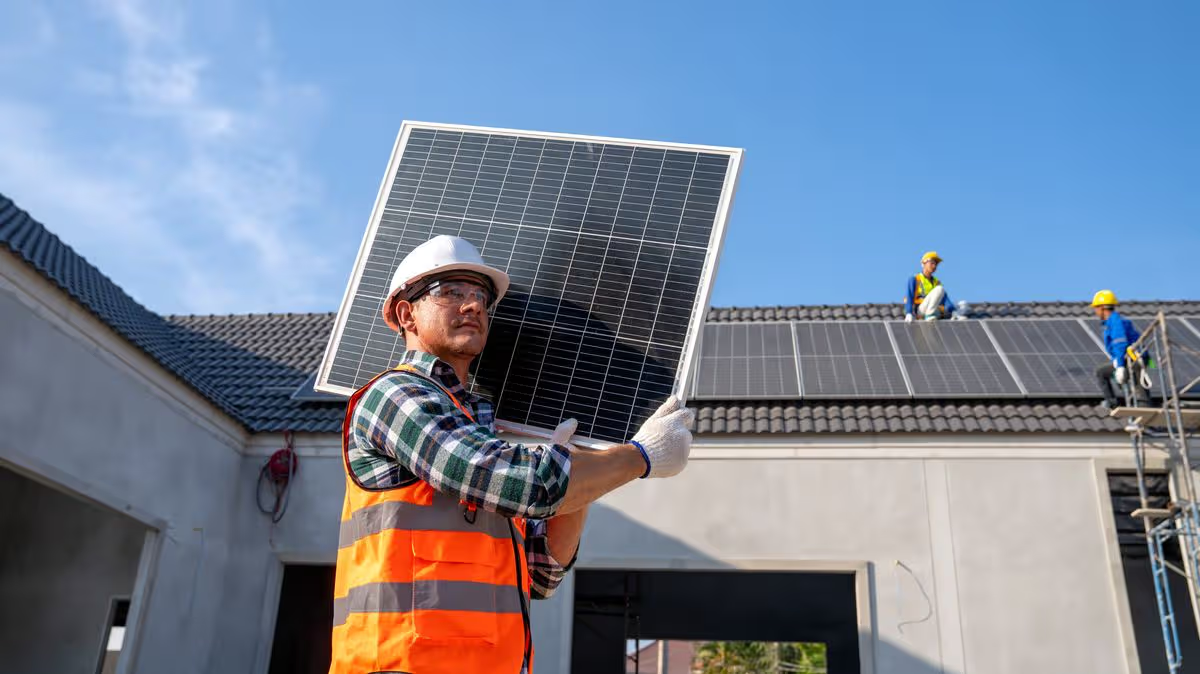
Young technician standing on metal platform installing heavy solar photo voltaic panel on blue sky background. Stand-alone solar panel system installation, efficiency and professionalism concept.
The drive to net zero is supporting 225,000 jobs in the North and adding more than £20bn to the economy, a new report says – with some unexpected ‘hotspots’ of activity being identified.
The annual report on the green economy from CBI Economics says the North East has the highest proportion of firms in England involved in the net zero economy, while the green sector in the Humber contributes the highest percentage of its GDP anywhere in England.
Advertisement
But it has also identified West and North Yorkshire, and the area around Cheshire, Warrington and North Wales as ‘hotspots’, both of which have green sectors worth more than £1bn. The Yorkshire area is highlighted for a range of energy projects, while Cheshire is benefiting from hydrogen projects around Ellesmere Port and Middlewich.
The report, which was commissioned by the independent Energy and Climate Intelligence Unit, says that renewable jobs are better paid than others, with an average salary of £43,142. But it warns that a breakdown in political consensus on net zero – with parties like Reform and the Conservatives signalling they would reverse or slow down current investments in green technology – risks putting the sector’s growth in jeopardy.
Louise Hellem, CBI chief economist, said: “This report makes clear the sustained scale of the opportunity in the UK’s net zero economy. It shows that clean power and decarbonisation are no longer future ambitions; they are already a significant and growing part of the UK’s industrial base. At a time when the UK must strengthen energy security and drive growth, the net zero economy is becoming central to the country’s competitiveness.”
Peter Chalkley, director of the Energy and Climate Intelligence Unit, said: “Reaching net zero emissions is scientifically the only way to bring the climate back into balance and stop climate change but it’s now become a major part of the UK economy. Thousands of small businesses across the UK are the unsung heroes of this net zero economy, installing solar panels, manufacturing parts for electric cars and in doing so creating greater energy independence for the UK, shielding us from the oil and gas price crises of recent times.”
Advertisement
The report has been backed by Darren Davidson, the Newcastle-born UK vice president for Siemens Energy. He said: “We welcome the findings of this report because they underline something those of us in the industry can already see clearly: the energy transition is not only essential for the UK’s future, it’s already creating skilled jobs, driving investment and revitalising communities right across the country.
“In my view, there has never been a more exciting time to work in the energy sector. We are transforming how Britain powers homes, businesses and industry, and that means creating long-term opportunities for people with the skills, ambition and commitment to build a cleaner, more secure energy system.”
The Blue Route had the support of environmental groups including Friends of the Earth Cymru
07:57, 02 Jun 2026Updated 08:04, 02 Jun 2026
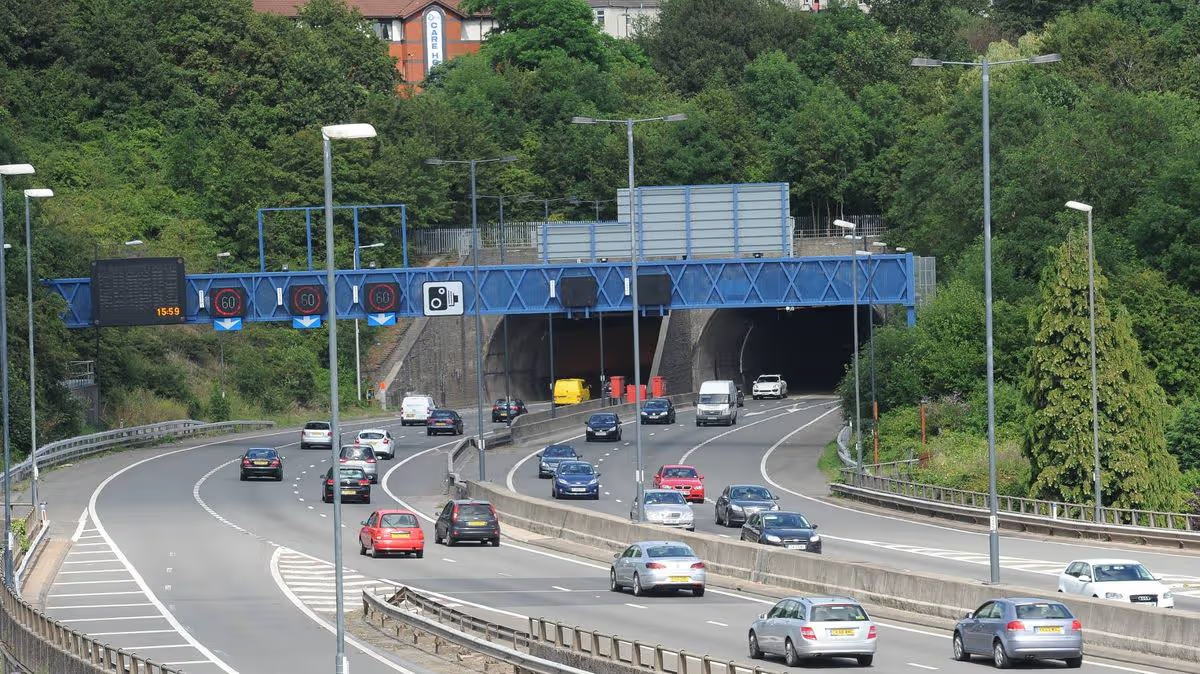
Brynglas Tunnels(Image: South Wales Echo)
Traffic congestion at the Brynglas Tunnels on the M4 near Newport has raised its head again. In 2021 Welsh Government set up the Transport Commission on congestion in south-east Wales chaired by Lord Burns with a team of well-respected Transport professionals. It recommended a public-transport-led series of solutions though some road-based options could be considered.
Rhun ap Iorweth the new First Minister has been drawn to say he will examine a roads-based means of relieving that congestion including the ‘Blue Route’.
Advertisement
This columnist wrote the Blue Route report published by the Institute of Welsh Affairs and the Chartered Institute of Logistics and Transport in 2013 as an alternative road solution when it was clear that Welsh Government’s ‘Black Route’ option – a new six lane motorway across parts of the Gwent levels – was unacceptable on cost and environmental grounds.
The Black Route is currently estimated at £2.5bn (£936m in 2013) compared with the Blue Route at £1bn (£380m in 2013). Also, congestion is mainly at peak working-day periods largely the result of work and school travel. This provides an opportunity for public transport to be the solution with possibly a Brynglas Tunnel by-pass if that is found necessary.
The Blue Route had the support of environmental groups including Friends of the Earth Cymru as it used the existing A48/ A4810 road footprint. It upgrades the A48 Newport Southern Distributor Road from the M4 (J28) to Queen’s Meadow and the A4810 running parallel to, and south of, the Llanwern steelworks site; now a major housing development with a ‘Burns Report’ railway station. It would rejoin the M4 (at J23A Magor Services).
This would be less disruptive than option C in the then government’s plan which built on the footprint of the A48 (at J28) to the M4 (J24) – the already congested Coldra interchange and passing a large established housing area at Ringland.
Advertisement
The Blue Route was expected to divert 15% of traffic from the M4 – sufficient to reduce congestion in the peak periods concerned through constructing overbridges at the intersections to achieve free flowing traffic. This could be built incrementally prioritising the most congested junctions thus spreading the cost over several years.
There is an argument that a new motorway would form a grand entry into Wales. However it will not solve the congestion problem. Research has shown that added capacity on a route will lead to extra traffic and create environmental damage along that route and the adjacent land alongside it. That may not only destroy habitats and green spaces but also homes and gardens.
It is not easy to persuade car users onto public transport but that has to be the policy direction for over congested roads in south-east Wales. The Burns report delivery unit in Welsh Government has worked up plans for the stations in the Burns plan together with adequate park and ride facilities and ride-on bus connections. The new tram-trains serving north of Cardiff commuters from later this year will show how effective such high-quality improvements can be.
As owners of the rail infrastructure in Wales (excluding Core Valley Lines north of Cardiff) it is the responsibility of the UK Department for Transport to fund track and station enhancements, as well as maintenance through Network Rail. This has so far not been forthcoming for the ‘Burns’ stations; and only small funding percentages in Valley Lines electrification and Cardiff Central reformation costs. Yet again showing how reasonable is the ‘ask’ from Welsh Government for responsibility for rail infrastructure and Barnett consequential funding from HM Treasury.
Advertisement
The development of more bus lanes and bus roads will make journey times by bus more attractive than the car. Prior to the introduction of trams in Dublin, the dual-carriageway road between south Dublin and the city centre in peak periods had one lane for buses only. Introduced in the 1980s, I saw its success for myself; because the journey time to / from the city centre by bus was less than in the over-crowded car lane.
However, the First Minister in looking for road solutions, might find one nearer home. The Menai Straits currently has two road crossings between Ynys Mon (his home territory) and the mainland. One of these designed by Thomas Telford (1826) can take limited traffic and a third crossing from the A55 is urgently required. Perhaps north Wales’ A55 expressway has a better case for road construction than the already highly transport-invested south east Wales.
Professor Stuart Cole CBE is Emeritus Professor of Transport (Economics and Policy), University of South Wales.
WASHINGTON — President Donald Trump announced Tuesday he is appointing Bill Pulte, the director of the Federal Housing Finance Agency, as acting director of national intelligence to replace Tulsi Gabbard, who is stepping down from the post at the end of the month.
Pulte, a 37-year-old Trump loyalist with a background in housing and private equity but no prior experience in intelligence or national security, will hold both positions simultaneously until a permanent replacement is named. The move places oversight of the nation’s 18 intelligence agencies in the hands of an official whose primary responsibilities have centered on mortgage giants Fannie Mae and Freddie Mac.
Trump made the announcement on Truth Social, praising Pulte’s financial stewardship. “William has deep experience managing the most sensitive matters in America, the safety and soundness of the Markets, and over 10 Trillion Dollars at Fannie Mae/Freddie Mac, a substantial increase from where it was just 12 months ago,” the president wrote.
“During this period, he will remain Director of the Federal Housing Finance Agency, and Chairman of Fannie Mae/Freddie Mac,” Trump added.
Advertisement
The appointment comes as Gabbard prepares to leave her role effective June 30. The former Hawaii congresswoman and 2020 Democratic presidential candidate cited her husband’s recent diagnosis with a rare form of bone cancer as the reason for her departure.
Gabbard had served in the position for roughly 16 months. Her tenure included efforts to restructure elements of the intelligence community and declassify certain records, though it was marked by reported tensions with the White House on foreign policy matters.
Pulte’s Background and Rise
Pulte, grandson of the late William Pulte who founded homebuilder PulteGroup, has deep roots in the housing industry. He founded Pulte Capital Partners in 2011, an investment firm focused on building and housing products. He also has a history of philanthropy, including work on Detroit blight removal.
Advertisement
Trump nominated him to lead the FHFA in early 2025. The Senate confirmed him in March 2025 on a 56-43 vote. As FHFA director, Pulte oversees the regulator for Fannie Mae, Freddie Mac and the Federal Home Loan Banks, entities central to the U.S. housing finance system that back trillions of dollars in mortgages.
During his time at the agency, Pulte has drawn attention for aggressive actions aligned with the administration’s priorities, including probes into mortgage-related matters involving political figures. Critics have questioned the scope of the agency’s role in such investigations, while supporters view him as a reformer focused on market stability and accountability.
Pulte has also made headlines for pledging to donate his government salary to wounded veterans, emphasizing public service.
Implications for Intelligence Community
Advertisement
The acting director of national intelligence coordinates the sprawling U.S. intelligence apparatus, including the CIA, NSA, FBI intelligence components and others. The role involves delivering daily briefings to the president and shaping intelligence priorities.
Pulte’s lack of intelligence background has raised eyebrows among national security veterans. The position does not require Senate confirmation for an acting appointee, allowing Trump to move quickly. A permanent nominee would face confirmation hearings where lawmakers are expected to scrutinize qualifications.
The choice reflects Trump’s preference for loyalists in key positions. Pulte has been a vocal supporter of the president and contributed financially to his campaigns. His selection continues a pattern of placing outsiders or allies in roles traditionally held by career national security professionals.
Broader Administration Context
Advertisement
Gabbard’s resignation marks the latest departure from Trump’s second-term Cabinet. At least four senior officials have left since the administration began. Her exit follows reports of policy differences, particularly on approaches to international conflicts.
The intelligence community is currently navigating multiple global challenges, including ongoing tensions with Iran and other hotspots. Continuity will fall initially to principal deputy Aaron Lukas before Pulte assumes the acting role.
Housing policy observers note that Pulte juggling both roles could strain bandwidth at the FHFA, which has been active in efforts to address housing affordability and mortgage market reforms. The agency manages entities critical to the broader economy, where any disruption could affect interest rates and lending.
Reactions and Outlook
Advertisement
Supporters of the appointment highlight Pulte’s management of large-scale financial operations as transferable skills for handling sensitive intelligence matters. They argue that fresh perspectives can challenge entrenched bureaucracies.
Critics, including some Democrats and national security analysts, express concern over the precedent of appointing officials without domain expertise to critical security posts. Questions have arisen about potential conflicts of interest given Pulte’s continued FHFA duties.
The White House has not detailed how Pulte will divide his time or whether additional support staff will be assigned. Administration officials describe the arrangement as temporary, with a permanent DNI nomination expected in coming weeks or months.
As Pulte transitions into the role, attention will turn to how he approaches intelligence priorities. The intelligence community has faced scrutiny in recent years over issues ranging from election security to foreign threats and domestic extremism.
Advertisement
This latest personnel shift underscores the fluid nature of Trump’s second term, where loyalty and alignment with the president’s agenda often take precedence in appointments. With midterm elections approaching and global instability persisting, the acting director’s performance will face close examination from Congress and the public.
Pulte’s dual responsibilities highlight the administration’s approach to governance, blending economic oversight with national security leadership in an unconventional manner. How effectively he manages these demands could influence future appointments and the direction of both housing policy and intelligence operations in the months ahead.
Investing wisely does not have to be rocket science. It is about discipline and running the numbers. You don’t have to be like a grandmaster chess player playing the game twenty moves ahead of your opponent, you just need to understand how the pieces work.
Analyst’s Disclosure: I/we have no stock, option or similar derivative position in any of the companies mentioned, and no plans to initiate any such positions within the next 72 hours. I wrote this article myself, and it expresses my own opinions. I am not receiving compensation for it (other than from Seeking Alpha). I have no business relationship with any company whose stock is mentioned in this article.
Seeking Alpha’s Disclosure: Past performance is no guarantee of future results. No recommendation or advice is being given as to whether any investment is suitable for a particular investor. Any views or opinions expressed above may not reflect those of Seeking Alpha as a whole. Seeking Alpha is not a licensed securities dealer, broker or US investment adviser or investment bank. Our analysts are third party authors that include both professional investors and individual investors who may not be licensed or certified by any institute or regulatory body.
Northern Trust Asset Management is a global investment manager that helps investors navigate changing market environments in efforts to realize their long-term objectives.
Entrusted with $1.2 trillion in assets under management as of March 31, 2024, we understand that investing ultimately serves a greater purpose and believe investors should be compensated for the risks they take — in all market environments and any investment strategy. That’s why we combine robust capital markets research, expert portfolio construction and comprehensive risk management in an effort to craft innovative and efficient solutions that seek to deliver targeted investment outcomes.
As engaged contributors to our communities, we consider it a great privilege to serve our investors and our communities with integrity, respect and transparency.
Northern Trust Asset Management is composed of Northern Trust Investments, Inc., Northern Trust Global Investments Limited, Northern Trust Fund Managers (Ireland) Limited, Northern Trust Global Investments Japan, K.K., NT Global Advisors, Inc., 50 South Capital Advisors, LLC, Northern Trust Asset Management Australia Pty Ltd, and investment personnel of The Northern Trust Company of Hong Kong Limited and The Northern Trust Company. Note: This account is not managed or monitored by Northern Trust Asset Management, and any messages sent via Seeking Alpha will not receive a response. For inquiries or communication, please use Northern Trust Asset Management’s official channels.
Ask a senior Thai official which country Thailand considers its most important strategic partner, and you will receive a carefully constructed non-answer — a fluent recitation of Thailand’s commitment to balanced relationships, multilateral frameworks, and ASEAN solidarity. Ask the same question to a Thai business executive, and you will likely get a more direct response: it depends entirely on what you are trying to do.
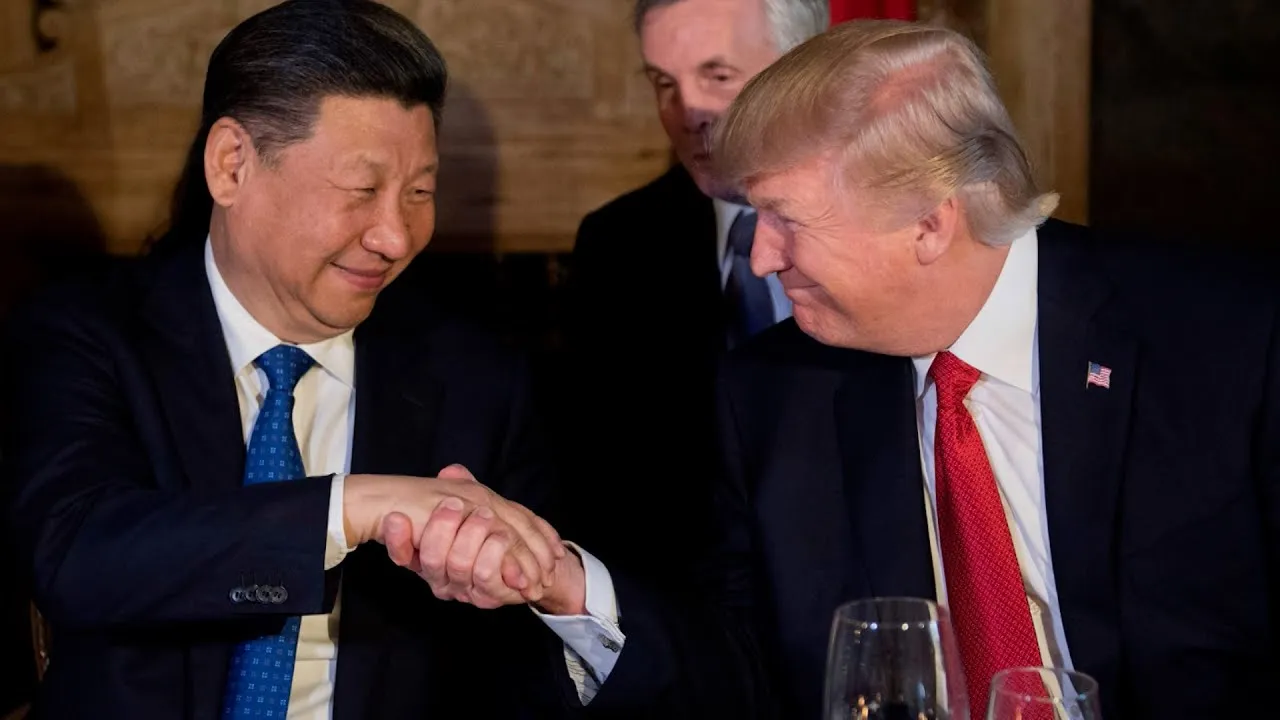
That gap between diplomatic language and commercial reality defines Thailand’s position in 2026 better than any policy document. Thailand is simultaneously China’s most economically integrated ASEAN partner, the United States’ oldest treaty ally in Southeast Asia, and an active architect of the ASEAN multilateral system. It is running all three identities at once — not because it cannot choose, but because it has decided, strategically, not to.
Key takeaways
Thailand’s multi-alignment is not indecision — it is policy.China accounts for $153 billion in bilateral trade and is Thailand’s largest investor. The US is Thailand’s oldest security ally and a critical export market. The EU, South Korea, and Canada are all active FTA partners. Bangkok is not hedging. It is deliberately cultivating leverage across all axes — and has been doing so for decades.
The tariff squeeze from Washington is real and tightening.China’s manufacturers using Thailand as an export base face intensifying US scrutiny on rules of origin, value addition, and supply chain provenance. The era of simple trade rerouting is over. Executives building supply chains through Thailand need a genuine value-addition strategy — not just a Thai address on a shipping label.
The tension at the heart of Thailand’s position is the opportunity for business.China’s $1 trillion global trade surplus is flooding ASEAN with capital, technology, and competitive pressure simultaneously. Thailand’s response — absorbing Chinese investment while actively diversifying its partnerships — creates exactly the kind of complex, multi-directional business environment where well-positioned companies thrive and poorly positioned ones get squeezed.
The paradox at the centre
Start with the number that defines Thailand’s strategic dilemma most sharply: 90.6 percent. That is the proportion of Thai respondents in the 2024 ISEAS-Yusof Ishak Institute survey who expressed concern about China’s growing economic influence — the highest rate in Southeast Asia, ahead of Vietnam, the Philippines, and every other ASEAN member state. It is a striking figure for a country whose government has simultaneously signed a five-year cooperation plan with Beijing, welcomed nearly $7 billion in Chinese investment, and invited Chinese firms to build its digital infrastructure.
The paradox is not a contradiction. It is a description of Thailand’s actual situation: deeply economically integrated with a partner it does not entirely trust, dependent on relationships it cannot afford to lose, and acutely aware of the risks that come with both. Thai policymakers have watched what happens when smaller economies become overly dependent on a single great power — and they have no intention of becoming a case study.
The result is a foreign policy posture that has no single name but is immediately recognisable in practice: say yes to Chinese investment while maintaining American security guarantees, pursue ASEAN solidarity while negotiating bilaterally with every major power, and never let any single partner feel so essential that it stops being a partner and starts being a constraint. It is a strategy built less on ideology than on instinct — the instinct of a small or middle power that has learned, often through hard experience, that alignment is a trap and optionality is survival.
Advertisement
In practical terms, this means signing infrastructure agreements with Beijing while quietly renewing basing arrangements with Washington, showing up to multilateral summits with carefully worded communiqués that satisfy everyone and commit to nothing irreversible, and cultivating enough economic interdependence with each major power to remain relevant without becoming dependent. The genius of the approach, if it can be called that, lies precisely in its refusal to be codified. A doctrine can be challenged, tested, or called out as a bluff. A disposition, a habit of perpetual calibration, is far harder to pin down or pressure into abandonment. The risk, of course, is that what looks like sophisticated balance can tip, under sufficient stress, into paralysis — or worse, into the appearance of bad faith to every partner simultaneously. But for now, and for the foreseeable future, it remains the dominant grammar of statecraft across much of the region.
The land bridge: China’s largest bet in Thailand
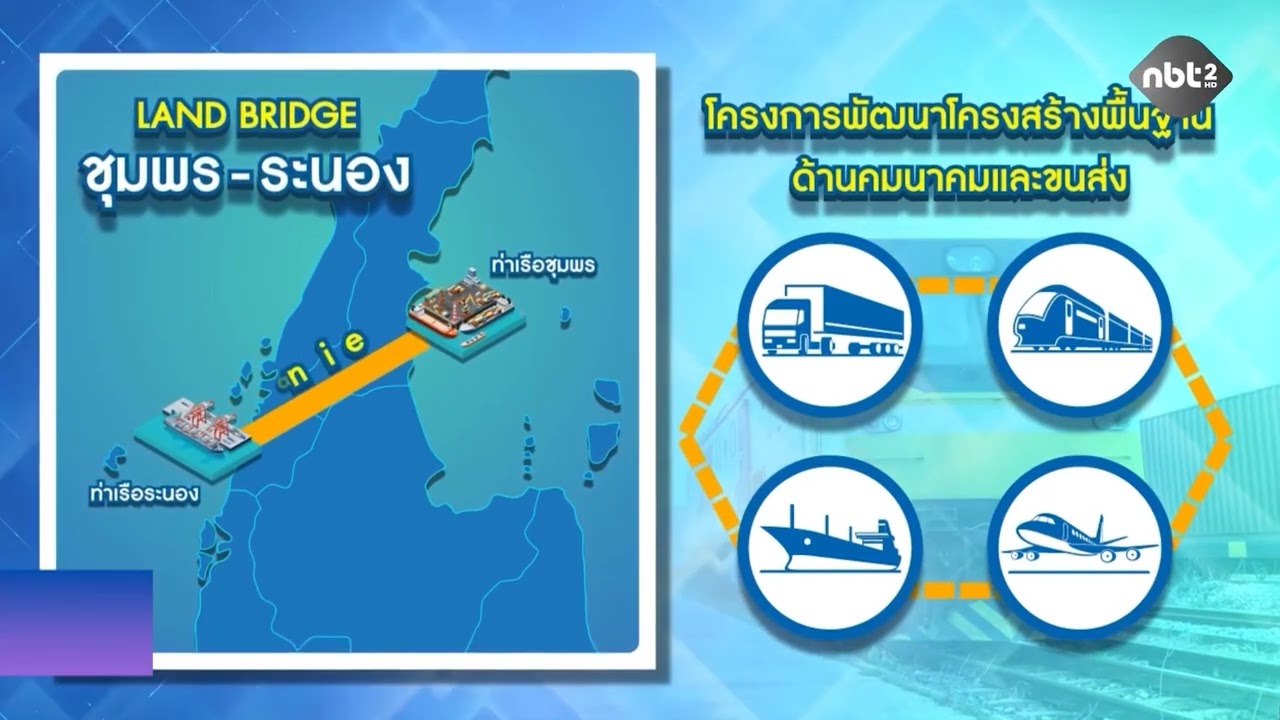
No single project better illustrates the complexity of Thailand’s position than the proposed Southern Economic Corridor land bridge — a megaproject connecting deep-sea ports on the Gulf of Thailand and the Andaman Sea via a 90-kilometre rail and motorway corridor across Chumphon and Ranong provinces.
The strategic logic is compelling. A completed land bridge would allow cargo to bypass the Strait of Malacca — one of the world’s most congested shipping chokepoints, through which roughly 40 percent of global trade currently passes — reducing transit times between the Indian Ocean and the South China Sea by two to five days and shaving significant costs off regional shipping routes.
China is the most widely expected primary backer for this project — for reasons that are as strategic as they are financial. A Thai land bridge funded and built by Chinese capital, using Chinese construction expertise, and integrated into Chinese-operated logistics networks would extend the reach of Chinese trade infrastructure deep into the Indian Ocean without requiring Chinese territorial control of any chokepoint. For Beijing, it is Belt and Road logic applied with extraordinary precision.
For Thailand, the calculus is more complicated. The project offers genuine economic transformation — an estimated $28 billion in infrastructure investment, tens of thousands of construction and operational jobs, and a permanent shift in Thailand’s position in regional logistics. But accepting Chinese backing at the scale required would deepen a dependency that Thai policymakers are simultaneously trying to manage. The land bridge negotiations, which have been underway for several years, are moving carefully — and the pace is deliberate, not accidental.
Advertisement
Washington’s pressure: the tariff tightrope
If Beijing represents Thailand’s deepest economic entanglement, Washington represents its most immediate commercial pressure point.
The United States shifted in 2025 from a China-specific tariff strategy to a broader, value-chain-wide protectionist approach targeting entire supply chains in electric vehicles, lithium-ion batteries, solar components, semiconductors, and steel. Countries across ASEAN — including Thailand — found themselves subject to scrutiny that previously applied only to direct Chinese exports.
The implications for Thailand are significant. A Thai facility that is majority-owned by a Chinese firm, uses primarily Chinese-sourced inputs, and exports finished goods to the US market now faces serious rules-of-origin questions that did not exist three years ago. The “36% tariff on Thai goods” framework that emerged from 2025 trade negotiations added urgency to those questions, placing Thailand in active dialogue with Washington over trade terms while simultaneously deepening its economic ties with Beijing.
As one trade expert from Chulalongkorn University put it: “The US wants assurances on market access, but Thailand is walking a tightrope between its largest trading partners.” That assessment captures the position precisely — and it applies not just to Thailand’s government but to every international company operating in the country.
Advertisement
The businesses best positioned to navigate this environment are those that can demonstrate genuine value addition in Thailand — local supply chain integration, Thai employment at skilled levels, meaningful R&D or design functions — rather than those that are simply using Thai addresses to access preferential trade terms. The era of tariff arbitrage through nominal Thai presence is over. The era of genuine Thailand-based value creation is just beginning.
BRICS, FTAs, and the diversification playbook
Thailand’s response to the pressure from both sides has been to accelerate its diversification — not away from China or the US, but toward a broader portfolio of relationships that reduces its exposure to any single partner’s leverage.
The BRICS application is the most visible symbol of this strategy. Thailand has applied for BRICS membership — a move that reads differently depending on who is interpreting it. For Beijing, it signals alignment with a China-led multilateral framework. For Washington, it raises questions about Thailand’s commitment to Western-aligned institutions. For Bangkok, it is simply the next logical step in a multi-alignment strategy that has been running for decades: join every club that offers leverage, and use membership in each to strengthen your position in all the others.
Simultaneously, Thailand is pursuing an ambitious FTA agenda. The Thailand-EU Free Trade Agreement — under negotiation for years — has regained momentum, driven partly by European interest in supply chain diversification and partly by Thai interest in reducing dependence on the China-US axis. FTA frameworks with South Korea and under the ASEAN-Canada agreement offer additional diversification vectors.
Advertisement
ASEAN trade with China rose 15 percent in 2024, while US trade increased 12 percent and EU trade remained strong at €258.7 billion — a distribution of relationships that reflects exactly the kind of balanced portfolio Thailand is trying to maintain at the national level. The FTA strategy is Thailand’s attempt to institutionalise that balance, locking in preferential access to multiple major markets so that no single partner can credibly threaten to withdraw access without consequence.
Public sentiment as a business risk
Strategic frameworks and FTA negotiations are one thing. Public sentiment is another — and executives operating in Thailand need to take the latter seriously.
The gap between Thailand’s government posture toward China and Thai public opinion about Chinese influence is one of the most significant political risks in the country’s business environment. The 90.6 percent concern figure from the ISEAS survey is not an outlier — it reflects consistent polling trends showing unease about Chinese economic dominance, Chinese land ownership, Chinese labour practices at Chinese-owned facilities, and the displacement of Thai manufacturers by Chinese competitors.
This sentiment has already produced concrete policy responses. Proposed VAT on low-priced Chinese goods, stricter enforcement of foreign business ownership rules, and parliamentary scrutiny of Chinese-funded infrastructure projects are all expressions of the same political dynamic: a government that wants Chinese investment but faces an electorate that is increasingly sceptical of Chinese influence.
Advertisement
For business executives, the implication is clear: a market entry strategy that ignores Thai public sentiment about China is not just politically naive — it is commercially risky. Chinese-invested businesses that integrate into local supply chains, hire Thai workers at all levels, and invest in community relationships are dramatically better positioned than those that operate as self-contained Chinese enclaves. Non-Chinese firms operating alongside Chinese partners need to understand how their association is perceived — and manage that perception actively.
The business strategy for Thailand’s multi-alignment reality
What does all of this mean for the executive making decisions about Thailand today?
First, understand which axis your business primarily operates on. A manufacturing operation selling primarily to the US market has different exposure — and different strategic requirements — than one selling into ASEAN or China. The tariff environment, the rules-of-origin requirements, and the political risk profile differ significantly across these axes. Know yours before you build.
Second, treat Thai partnerships as strategic assets, not operational conveniences. In a multi-alignment environment, a Thai partner with genuine government relationships, local supply chain integration, and community credibility is worth substantially more than a logistics facilitator. The companies that build real Thai partnerships will navigate Thailand’s political crosscurrents far more effectively than those that treat the country as a pass-through.
Advertisement
Third, plan for scenario divergence. Thailand’s balancing act is impressive, but it is not permanent. A sharp deterioration in US-China relations, a change of government in Bangkok, or a significant shift in Chinese investment flows could move the needle in any direction. Executives with five-to-ten-year horizons should stress-test their Thailand strategies against at least three divergent scenarios — closer alignment with China, closer alignment with the West, and continued multi-alignment — and ensure their position is viable under each.
Fourth, watch the land bridge. If Thailand secures financing for the Southern Economic Corridor project and construction begins, it will reshape regional logistics, investment flows, and geopolitical positioning in ways that affect every business with ASEAN exposure. It is the single most significant infrastructure development to monitor.
The bottom line
Thailand’s balancing act is not a failure to choose. It is a deliberate strategy, executed by a country that has spent fifty years learning how to extract maximum value from great-power competition without becoming its casualty.
For business executives, that strategy is both the context and the opportunity. A country committed to multi-alignment will keep its trade routes open, its investment environment active, and its diplomatic relationships functional regardless of what happens between Washington and Beijing. It will not be the cheapest operating environment in ASEAN. But it may well be the most resilient.
Advertisement
In a world defined by geopolitical volatility, resilience is undervalued — until it is the only thing that matters.
End of series — Thailand × China: The Business Opportunity
Articles in this series: 1. The Dragon Meets the Elephant · 2. Factory of the Future · 3. The EV Kingdom · 4. The Digital Silk Road · 5. The Balancing Act, Thailand’s Strategic Tightrope Between China, the US, and ASEAN
LONDON — Speculation is swirling around the upcoming wedding of Peter Phillips and Harriet Sperling, with unconfirmed reports suggesting Prince Harry and Meghan Markle may be considering an uninvited appearance at the event amid ongoing estrangement from parts of the royal family.
Prince Harry, Meghan Markle Not Invited to Peter Phillips Wedding as Family Rift Deepens IBTimes US
The June 6 ceremony in the Cotswolds is expected to be an intimate affair attended by close family and friends, including senior royals such as King Charles and Queen Camilla. However, multiple outlets report that the Duke and Duchess of Sussex have not received invitations, highlighting continued fractures within the family.
Sources close to the couple’s Montecito circle told New Idea magazine that Harry and Meghan have discussed the possibility of attending the reception with their children, Archie and Lilibet, believing they might not be turned away. One source described Harry as “desperate to speak to his family” and “devastated” over the lack of an official invitation.
These claims remain unverified, and representatives for Harry and Meghan have not publicly commented on the reports. Palace officials have similarly declined to address the speculation.
Background on the Wedding
Advertisement
Peter Phillips, 48, the son of Princess Anne and former husband of Autumn Kelly, is set to marry 45-year-old Harriet Sperling, an NHS nurse, in a private ceremony at All Saints Church in Kemble, Gloucestershire. The reception will follow in the Cotswolds area.
The event is described as low-key compared to previous royal weddings, with approximately 150 guests. While many family members are expected, reports indicate Princesses Beatrice and Eugenie are among those whose attendance has not been confirmed. Prince Andrew and Sarah Ferguson are also reportedly not invited.
A friend of Phillips told the Daily Mail that the couple has “simply lost touch” with Harry. “Peter and Harry haven’t spoken for several years and have simply lost touch. Peter and Harriet’s wedding is an intimate occasion with their close friends and immediate family around them in the Cotswolds,” the friend said.
The comment, made on “The Good, The Bad and The Rugby” podcast, quickly circulated in media coverage and was interpreted by some as underscoring the shift in Harry’s public image and family relationships since stepping back from royal duties in 2020.
Any potential trip to the UK by Harry would involve complex security arrangements. The duke is currently awaiting the outcome of a legal challenge regarding his personal protection when visiting Britain. He has expressed reluctance to return without adequate safeguards for himself and his family.
Royal experts note that an uninvited appearance at a private family event could create awkward dynamics, especially given the desire for an intimate celebration. One commentator suggested that Harry and Meghan’s presence could turn the wedding into a “PR circus,” complicating the couple’s wish for privacy.
Family Dynamics in Flux
The Phillips wedding comes at a time of evolving royal roles. Peter Phillips, who does not hold a royal title despite being the grandson of Queen Elizabeth II, has maintained a lower public profile. His first marriage ended in divorce in 2021. He and Sperling announced their engagement in 2025.
Advertisement
Observers point to the event as another marker of shifting inner circles within the family. While Harry once shared a close bond with his cousins, including joint appearances at polo matches and the 2012 Olympics, those relationships appear diminished.
The story has generated significant online discussion, reflecting enduring fascination with royal family matters. Tabloid coverage has framed the situation as evidence of Harry’s isolation, while supporters of the Sussexes argue that the lack of invitation reflects unfair treatment.
Advertisement
No official guest list has been released by the couple, and it remains unclear whether any last-minute changes could occur. Wedding planners for high-profile events often maintain flexibility, but insiders emphasize the desire for a private day focused on the bride and groom.
Broader Context
Harry and Meghan have focused on their Archewell Foundation initiatives, media projects and family life in Montecito since leaving the UK. Their children, Archie, 7, and Lilibet, 5, have limited public exposure. The couple has spoken about the challenges of raising them away from royal obligations.
For Phillips and Sperling, the wedding represents a new chapter. Sperling’s background in nursing has drawn comparisons to other royal spouses known for public service. The couple has made joint appearances, including at Easter services.
Advertisement
As the date approaches, attention will likely intensify on who attends and any visible signs of family unity or continued division. Royal watchers will monitor arrivals closely, though the private nature of the venue may limit media access.
The situation underscores the complexities facing the modern royal family: balancing tradition, personal relationships and public expectations. Whether Harry makes any attempt to bridge the gap remains uncertain, but current reporting suggests the divide persists.

















































You must be logged in to post a comment Login