Connect with us
DAPA Banner
DAPA Coin
DAPA
COIN PAYMENT ASSET
PRIVACY · BLOCKDAG · HOMOMORPHIC ENCRYPTION · RUST
ElGamal Encrypted MINE DAPA
🚫 GENESIS SOLD OUT
DAPAPAY COMING

Business

Greg Abel’s Berkshire Hathaway Places $10 Billion Bet on Alphabet in Major Portfolio Shift

Published

on

Greg Abel Faces First Berkshire Hathaway Annual Meeting as CEO

NEW YORK — Berkshire Hathaway, now under the leadership of Warren Buffett’s designated successor Greg Abel, has agreed to purchase $10 billion worth of Alphabet Inc. stock in a private placement, signaling a significant shift in the conglomerate’s investment strategy as it deploys capital more aggressively into big technology.

The deal, announced by Alphabet on Monday, includes $5 billion in Class A shares priced at approximately $352 each and $5 billion in Class C shares at around $348 each. The transaction marks one of Berkshire’s largest single investments in a technology company and highlights Abel’s growing influence following Buffett’s transition from day-to-day leadership.

Berkshire Hathaway, the Omaha-based conglomerate that owns diverse businesses including Geico insurance, Dairy Queen and Precision Castparts, has historically maintained a cautious approach to technology investments under Buffett. The legendary investor, known for his preference for traditional value stocks, has often expressed wariness about the rapid pace of change in the tech sector despite successful past holdings like Apple.

This $10 billion commitment to Alphabet, Google’s parent company, represents a notable departure. It comes as Berkshire sits on a substantial cash pile exceeding $300 billion, accumulated from strong operating performance and selective dealmaking. Analysts interpret the move as evidence of Abel’s willingness to lean into high-growth sectors while maintaining the discipline that has defined Berkshire for decades.

Advertisement

Greg Abel, who assumed the CEO role in 2025, has overseen day-to-day operations for several years as Buffett, now in his mid-90s, stepped back. The investment aligns with broader industry trends, as institutional investors increase exposure to artificial intelligence leaders like Alphabet amid explosive demand for cloud computing, search and AI infrastructure.

Alphabet has positioned itself at the forefront of AI development through models like Gemini and its vast data center network. The company reported strong revenue growth in recent quarters, driven by advertising recovery and cloud segment expansion. Berkshire’s investment provides Alphabet with a significant capital infusion while giving the conglomerate a stake in one of the world’s most valuable companies.

The private placement structure allows Berkshire to acquire shares directly from Alphabet at negotiated terms, potentially at a slight discount to public market prices. Such deals often appeal to both parties by providing the issuer immediate capital and the buyer favorable entry conditions with reduced market impact.

This transaction follows Berkshire’s pattern of opportunistic large-scale investments. Previous major moves under Buffett included substantial stakes in Apple, Bank of America and Occidental Petroleum. However, the direct engagement with a pure-play technology giant underscores evolving priorities under new leadership.

Advertisement

Wall Street reacted positively to the news. Alphabet shares rose in extended trading following the announcement, reflecting investor confidence that Berkshire’s involvement validates the company’s long-term prospects. Analysts noted that Berkshire’s due diligence process, known for its rigor, suggests thorough evaluation of Alphabet’s competitive position in AI and digital advertising.

The investment arrives at a pivotal time for both entities. Alphabet continues navigating regulatory challenges, including antitrust scrutiny over its search dominance and advertising practices. Berkshire, meanwhile, seeks productive deployment for its massive cash reserves amid elevated valuations across many sectors.

Abel’s background in energy and infrastructure has prepared him for overseeing Berkshire’s diverse portfolio. His leadership has emphasized operational excellence across subsidiaries while exploring new avenues for capital allocation. The Alphabet deal may preview additional technology-focused investments as AI reshapes industries from automotive to healthcare.

Berkshire’s portfolio already includes several technology-related holdings, but the scale of this commitment stands out. The conglomerate’s equity portfolio exceeds $700 billion in value, with Apple remaining its largest position despite some trimming in prior years. Adding a major stake in Alphabet diversifies exposure within the sector while betting on complementary strengths in data and computing.

Advertisement

Market observers see this as a pragmatic evolution rather than a wholesale strategy overhaul. Berkshire maintains its long-term, value-oriented philosophy but recognizes opportunities in companies with durable competitive advantages, or “moats,” as Buffett famously described. Alphabet’s vast user base, technological infrastructure and cash-generating businesses fit that framework.

The timing also reflects broader economic conditions in 2026. With interest rates stabilizing and AI investment accelerating, large corporations are attracting significant institutional capital. Berkshire’s move could encourage other value investors to reconsider technology exposure beyond traditional metrics.

For Alphabet, the partnership with Berkshire provides not just capital but also validation from one of the most respected names in investing. While Berkshire typically takes passive stakes, its involvement often draws positive attention and can support management during periods of external pressure.

Financial details indicate the transaction will close subject to customary conditions. Berkshire has a history of completing announced deals efficiently, suggesting this investment will soon appear in its quarterly filings.

Advertisement

This development occurs against a backdrop of leadership transition at Berkshire. Buffett has gradually reduced his public role while expressing confidence in Abel’s capabilities. The next generation of leadership faces the challenge of sustaining Berkshire’s exceptional track record of compounding capital over decades.

Analysts will closely monitor future Berkshire filings for the exact size of the Alphabet position relative to the overall portfolio. At current valuations, the $10 billion stake represents a meaningful but not outsized allocation, consistent with Berkshire’s risk management approach.

The investment also highlights ongoing convergence between traditional value investing and growth technology. As AI drives productivity gains across the economy, companies like Alphabet are generating cash flows and strategic importance that appeal even to disciplined long-term investors.

Looking ahead, Berkshire may continue balancing its traditional holdings in insurance, railroads and consumer goods with selective technology exposure. The Alphabet transaction demonstrates flexibility without abandoning core principles of buying high-quality businesses at reasonable prices.

Advertisement

For investors following Berkshire’s moves, this deal offers insight into Abel’s priorities. Emphasis on AI infrastructure and digital platforms suggests a forward-looking perspective while preserving the conglomerate’s financial strength and operational diversity.

The market will watch for any follow-on actions, such as additional purchases in the open market or further private transactions. Berkshire’s history shows patience after initial investments, allowing time for businesses to compound value.

Alphabet, for its part, continues executing on multiple fronts — from AI research to cloud growth and hardware initiatives. The capital from Berkshire strengthens its position to compete aggressively in a rapidly evolving technological landscape.

This $10 billion bet underscores a key theme in 2026 markets: established powerhouses with proven cash flows and innovation pipelines remain attractive even at premium valuations when backed by rigorous analysis.

Advertisement

As Berkshire evolves under Greg Abel, moves like this Alphabet investment signal continuity with adaptation — honoring Buffett’s legacy while positioning the company for the opportunities of a technology-driven future. The deal reinforces Berkshire’s status as one of the most influential investors globally while highlighting Alphabet’s central role in the modern economy.

Continue Reading
Click to comment

You must be logged in to post a comment Login

Leave a Reply

Business

Macy’s (M) earnings Q1 2026

Published

on

Macy's (M) earnings Q1 2026

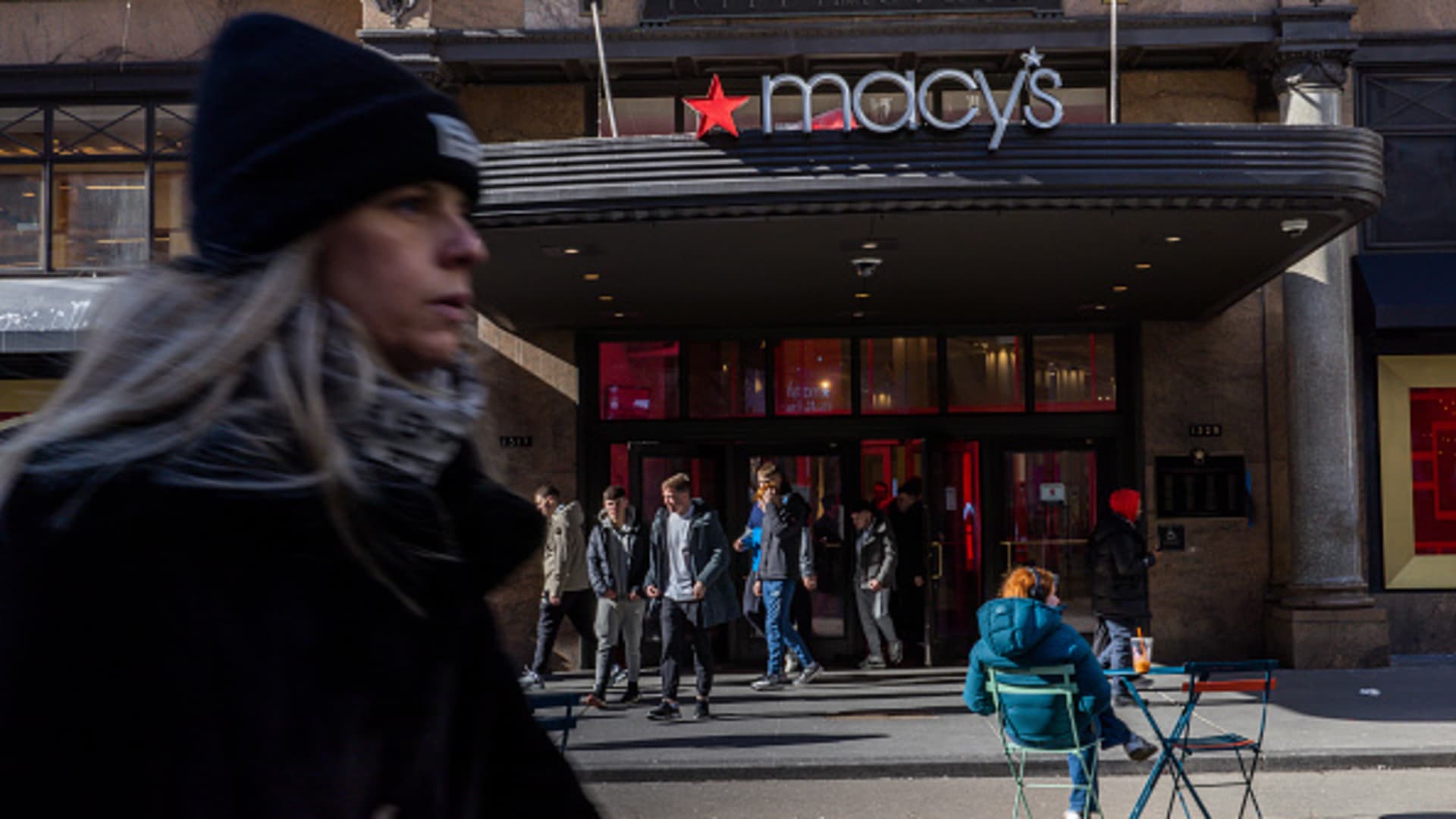
People walk around the Macys Flagship store in New York City on January 14, 2025. 

Eduardo Munoz Alvarez | Corbis News | Getty Images

Macy’s posted its strongest first-quarter comparable sales performance in four years on Wednesday, as the legacy department store’s turnaround continues to show progress. 

Advertisement

Led by the 200 so-called reimagined stores Macy’s has upgraded, comparable sales grew 3% overall during the quarter and 1.6% at its namesake banner.  

At Bloomingdale’s, comparable sales grew 10.2%, helped by an array of buzzy brands, a “fun factor” unique in the luxury landscape and the recent bankruptcy of rival Saks Fifth Avenue, CEO Tony Spring told CNBC in an interview. 

“Is the disruption in the marketplace helpful to us? Sure,” he said. “Is it the primary reason we’re growing? No.” 

Spring said better-than-expected sales and profitability led the company to raise its full fiscal year guidance after taking a cautious outlook earlier in the year. 

Advertisement

It’s now expecting 2026 net sales to be between $21.5 billion and $21.75 billion, largely ahead of expectations of $21.59 billion, according to LSEG. It anticipates earnings per share will be between $2 and $2.20, up from a previous range of between $1.90 and $2.10. 

It now expects comparable sales to climb between 0.5% and 1.2% for the year, versus a previous outlook of a 0.5% drop to a 0.5% increase.

Many retailers have reported strong growth during their fiscal first quarters in recent weeks due in part to higher than usual tax refunds. Some companies issued more cautious guidance for the current quarter over concerns less stimulus in the economy could lead to slower demand, especially as shoppers pay more for gas due to the war in the Middle East.

Spring said tax refunds “definitely” helped during the first quarter, but weren’t the only reason why Macy’s grew. Crucially, the same trends the company saw during the first quarter have so far continued into the second, he said. 

Advertisement

“We did raise our guidance in both sales and profit for the remainder of the year to reflect the business trends that we’re seeing as we start the second quarter, so pleased with the second quarter to date and the breadth of the categories that are performing,” said Spring. “Don’t see any significant change in the consumer approach to our categories and our business across all three of our name plates.” 

He said the steady consumer behavior led Macy’s to hike its outlook “despite the macroeconomic and geopolitical uncertainty.”

Here’s how the department store did in its first fiscal quarter compared with what Wall Street was anticipating, based on a survey of analysts by LSEG:

  • Earnings per share: 13 cents adjusted. The figure wasn’t immediately comparable to estimates. 
  • Revenue: $4.68 billion vs. $4.61 billion expected

The company’s reported net income for the three-month period that ended May 2 was $63 million, or 23 cents per share, compared with $38 million, or 13 cents per share, a year earlier. Adjusting for restructuring costs and other one-time charges, Macy’s posted earnings per share of 13 cents.

Sales rose to $4.68 billion, up about 2% from $4.60 billion a year earlier. 

Advertisement

Macy’s is about two years into a three-year turnaround that Spring has spearheaded since taking over as the retailer’s chief executive. It’s included closing underperforming stores at dead malls across the country and reinvesting in the ones it decided to keep open.

Those investments have included a focus on retail fundamentals, like ensuring stores have enough staff, are enjoyable to spend time in and are stocked with items people actually want to buy.

“We’re not doing the fancy stuff, we’re doing the stuff that makes the biggest difference in the business,” said Spring. “We are really focused on product, we are really focused on taking care of the customer, and I think the results show that when we do those two things consistently, and we don’t get bored, we stay relentless in our commitment, we get the results we’re looking for.”

Choose CNBC as your preferred source on Google and never miss a moment from the most trusted name in business news.
Advertisement
Continue Reading

Business

Nation's largest carbon farming project unveiled on WA's south coast

Published

on

Nation's largest carbon farming project unveiled on WA's south coast

Some 16 million trees will be planted across 28,000ha of Great Southern farmland for a project worth an estimated $40 million.

Continue Reading

Business

Paladin Energy Shares Surge 11% on Strong Uranium Market Momentum and Operational Gains

Published

on

Fluence Energy Stock Explodes 40% on Record $5.6B Backlog and

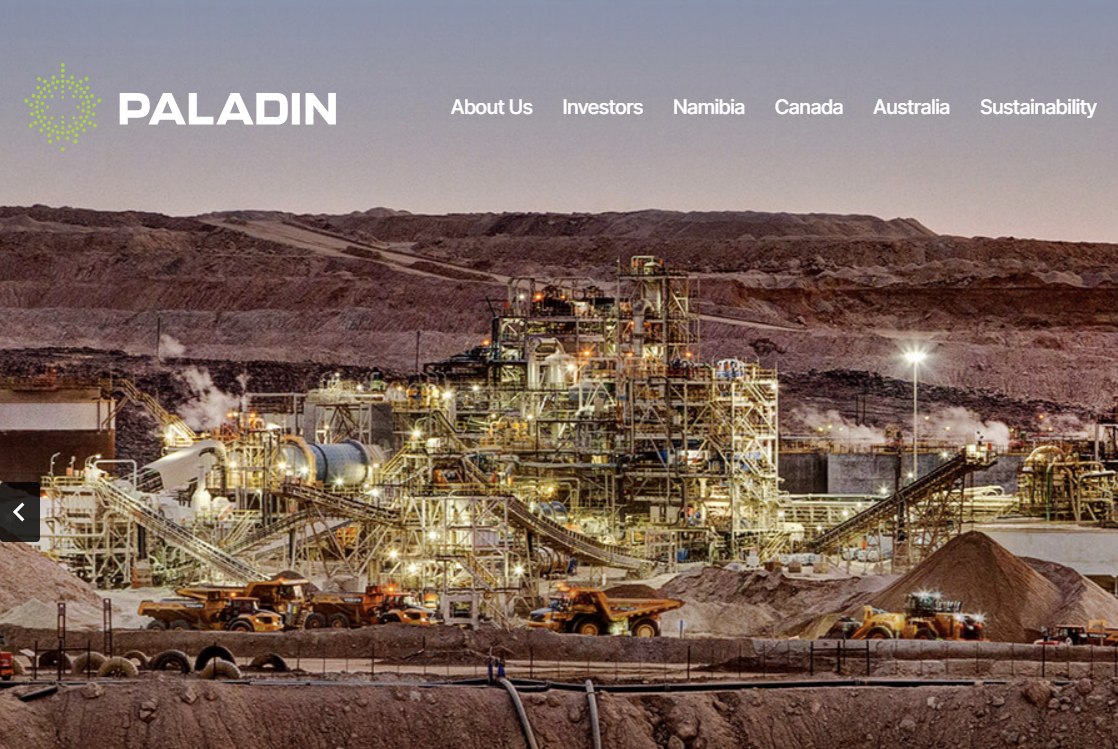
Paladin Energy Ltd shares jumped more than 11% on Wednesday, closing at $11.85 after gaining $1.22, as investors bet on continued strength in the global uranium sector amid rising nuclear energy demand and the company’s solid production ramp-up at its flagship Langer Heinrich mine in Namibia.

The Australian-listed uranium producer, also traded on the TSX under PDN, saw heavy trading volume as broader sector optimism lifted several peers. Paladin’s market capitalization climbed toward $4.8 billion following the sharp daily move, reflecting renewed confidence in its growth trajectory as a significant independent uranium supplier.

The surge comes amid a favorable backdrop for uranium companies. Global interest in nuclear power as a reliable, low-carbon energy source has intensified, driven by data center electricity needs for artificial intelligence, energy security concerns in Europe, and policy support in multiple nations. Spot uranium prices have remained elevated throughout 2026, supporting producer margins.

Paladin’s primary asset, the 75%-owned Langer Heinrich Mine in Namibia, has been a key driver of recent performance. The company has successfully ramped up production at the restarted operation, achieving consistent output improvements and cost efficiencies. Recent quarterly reports highlighted sequential gains in uranium production and sales, with the mine approaching target capacity levels.

Advertisement

In its March 2026 quarter update, Paladin revised full-year production guidance upward by 11%, signaling confidence in operational delivery. The company reported strong sales revenue and maintained disciplined cost control despite industry-wide inflationary pressures on mining inputs.

Chief Executive Officer Ian Purdy has emphasized the strategic positioning of Langer Heinrich in a tightening uranium market. The mine’s large-scale, low-cost profile positions Paladin to benefit from long-term contracts with utility customers across the United States, Europe and Asia.

Analysts largely maintain positive outlooks on the stock. Consensus price targets hover around A$13.00-A$13.20, implying additional upside from current levels, with some forecasts reaching as high as A$17. Several brokers cite the company’s robust balance sheet, exploration portfolio in Canada and Australia, and exposure to structural supply deficits as key attractions.

Paladin also holds development assets such as the Patterson Lake South project in Canada’s Athabasca Basin, one of the world’s premier uranium districts. Progress on regulatory approvals and feasibility work at these sites adds longer-term growth potential beyond current production.

Advertisement

The company’s financial turnaround has been notable. For the nine months ending March 31, 2026, Paladin swung to a modest net profit from prior losses, supported by higher realized prices and volumes. While some cash flow metrics drew scrutiny, overall liquidity remains solid with substantial working capital.

Uranium market fundamentals underpin the optimism. Supply constraints persist due to years of underinvestment following the Fukushima disaster, while demand forecasts continue rising. Utilities are securing long-term supply agreements, often at premium prices, to ensure fuel security for reactor fleets.

Namibia, home to Langer Heinrich, has emerged as a stable and attractive jurisdiction for uranium mining. The country offers established infrastructure and government support for resource development, helping Paladin accelerate its ramp-up schedule.

Investors appear to be rewarding Paladin’s execution after earlier volatility. The stock has delivered strong multi-year gains, though it experienced pullbacks during periods of sector-wide corrections. Wednesday’s 11.48% advance recouped some recent ground and pushed the shares closer to 52-week highs seen earlier in 2026.

Advertisement

Broader sector dynamics also played a role. Several other uranium developers and producers posted gains amid positive sentiment around nuclear energy’s role in global decarbonization. Paladin’s relatively pure-play exposure makes it a favored vehicle for investors seeking leveraged upside to uranium prices.

Risks remain, however. Uranium prices can be volatile, and any slowdown in reactor restarts or new builds could pressure the market. Operational challenges at Langer Heinrich, such as processing plant reliability or labor issues, could affect guidance. Geopolitical factors in Africa and regulatory hurdles in Canada represent additional considerations.

Paladin has worked to mitigate these through diversified project pipelines and conservative financial management. The company completed equity raisings in prior periods to strengthen its balance sheet, providing flexibility for development and potential acquisitions.

Looking forward, analysts expect Paladin to generate increasing free cash flow as Langer Heinrich reaches steady-state production. This could enable dividend considerations or accelerated investment in its exploration portfolio. The company continues to engage with substantial holders and institutional investors, as evidenced by recent shareholding disclosures.

Advertisement

For retail and institutional investors alike, Paladin represents a compelling way to gain exposure to the nuclear renaissance. Its scale as a producing entity distinguishes it from pure explorers, while growth projects provide upside optionality.

Market watchers will closely monitor upcoming quarterly production reports and any updates on Canadian asset advancements. With the Northern Hemisphere summer traditionally a quieter period for uranium news, any positive surprises could sustain momentum.

Paladin’s dual listing on the ASX and TSX broadens its investor base, particularly appealing to North American funds interested in critical minerals and clean energy plays. Trading liquidity has improved as the company’s profile rises alongside the uranium sector.

As global energy policies evolve, Paladin’s ability to deliver reliable uranium supply positions it favorably. Wednesday’s sharp share price reaction underscores the market’s appetite for high-quality operators in this space, especially those demonstrating both current production and future growth potential.

Advertisement

The uranium story remains intact despite periodic volatility, with many experts forecasting multi-year strength. For Paladin Energy, sustained operational success at Langer Heinrich could translate into further shareholder value as the company solidifies its role in the global nuclear fuel supply chain.

Continue Reading

Business

Eternal to ICICI Bank: 15 stocks on Axis Securities buy list for June – Add to cart

Published

on

Eternal to ICICI Bank: 15 stocks on Axis Securities buy list for June - Add to cart

Axis warns that higher crude oil prices, rupee weakness, inflation and a weak monsoon remain important risks. It advises investors to keep 10-15% liquidity available and focus on high-quality companies with strong balance sheets and earnings visibility.

(Disclaimer: Recommendations, suggestions, views and opinions given by the experts are their own. These do not represent the views of Economic Times)

Continue Reading

Business

Eli Lilly to use GLP-1 windfall to fund M&A and diversify pipeline

Published

on

Eli Lilly to use GLP-1 windfall to fund M&A and diversify pipeline
Lilly’s Van Naarden: Nothing is off the table for dealmaking

Jacob Van Naarden is busy. 

In addition to running Eli Lilly‘s oncology business, he’s now responsible for finding the drugmaker’s next opportunities as head of business development. And Lilly, now the world’s largest pharmaceutical company, is hungrier than ever for deals. 

“The company’s financial strength right now, driven mostly by the weight loss business, is so strong,” Van Naarden said in an interview at the American Society of Clinical Oncology’s annual meeting. “We have this really like almost generational opportunity to redeploy that capital in all of our disease areas to not only fuel growth for the company in the decades to come, but to help a lot more patients with all different kinds of diseases, and so we’re executing against that strategy.”

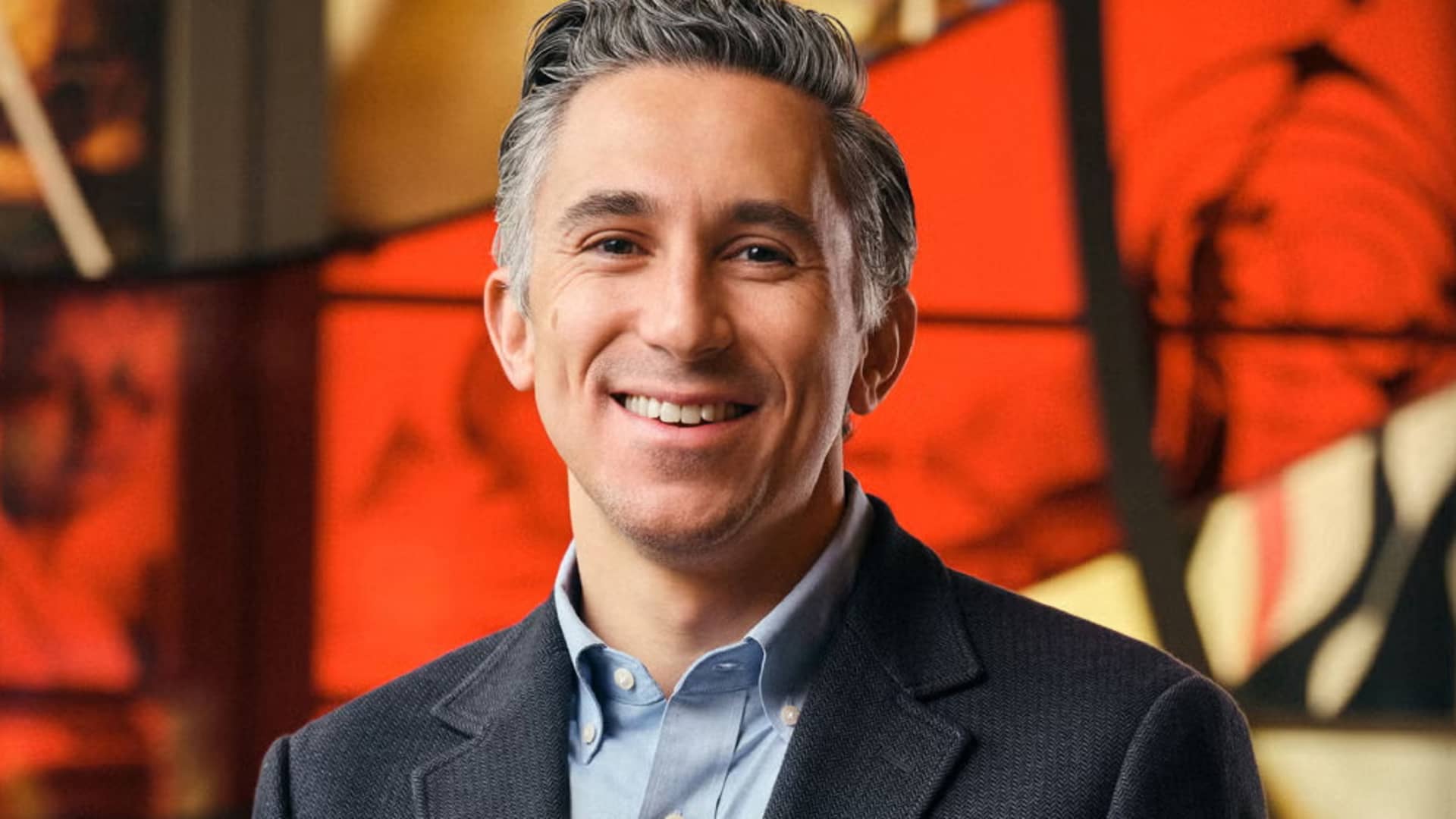
Jacob S. Van Naarden,
Executive Vice President; President of Lilly Oncology and Head of Corporate Business Development, Eli Lilly and Company.

Advertisement

Courtesy: Eli Lilly

Not even halfway into the year, Lilly has already announced it will spend more than $10 billion upfront and potentially up to $25 billion on eight acquisitions. For all of last year, Lilly spent about $4 billion on roughly 40 deals. 

The spending spree reflects an intentional shift in how Lilly approaches dealmaking now that the company is larger and more highly valued than ever before. The company’s market capitalization now stands at about $1 trillion, up from $190 billion in 2021, according to data from LSEG. Lilly is the first health-care company to join the trillion-dollar club, which is dominated by tech firms.

Previously, the drugmaker primarily liked to place bets on early-stage assets that were inexpensive because they were riskier. Now, it’s using the windfall from its GLP-1 drugs like Mounjaro and Zepbound to pursue experimental drugs that are more likely to work – and carry larger price tags because of it. 

Advertisement

“These things are medicines,” Van Naarden said in a separate interview at his Stamford, Connecticut office. “How big will they be? What’s the development plan? When will they get approved? Like, I don’t yet know all that. Obviously we have projections, but you can see enough to say OK, this is real, and we can underwrite paying a bigger price than we pay for some real preclinical thing. So that’s been a big part of where we’ve been focused in addition to running the high-volume, early-stage strategy.”

Two Mounjaro KwikPen injection pens are in front of the Eli Lilly logo displayed on a screen in this illustration photo in Athens, Greece, on March 1, 2026.

Nikos Pekiaridis | Nurphoto | Getty Images

Van Naarden said his boss, Lilly CEO Dave Ricks, approached him last fall about leading business development in addition to his main job as head of Lilly’s oncology business. The company wanted to sharpen its dealmaking skills and start widening its aperture beyond the early bets where Lilly liked to focus. 

Advertisement

He started to execute the strategy early this year.

Lilly’s planned acquisition of Centessa Pharmaceuticals, announced in March, could reach up to $7.8 billion if the company meets certain milestones for its experimental drugs for sleep disorders like narcolepsy. That would make it Lilly’s second-ever largest deal behind the company’s $8 billion acquisition of Loxo Oncology in 2019. Van Naarden was the chief operating officer at Loxo at the time.

While large for Lilly, deals of roughly $8 billion are still small compared to agreements from other large pharmaceutical companies. It raises the question of how big Lilly could go.

Van Naarden doesn’t want to set arbitrary size spending limits. He says it’s about how compelling the science is and how big the opportunity is for patients and for Lilly.

Advertisement

Some of the deals announced this year fall under Lilly’s current specialties of oncology, neuroscience, cardiometabolic health and immunology. Others, like Lilly’s recently announced acquisitions of three vaccine companies, will take the company into new areas. 

“We’re looking at all kinds of things that don’t neatly fit into one of those four buckets, so don’t be surprised if we have more to come for things that you know don’t perhaps neatly fit within what we’ve done historically,” Van Naarden said this week at ASCO. “If you see it, it means we’re excited, and we think we can make a big impact.”

Is there anything that’s off the table?

“No,” he said, “not really.”

Advertisement
Choose CNBC as your preferred source on Google and never miss a moment from the most trusted name in business news.
Continue Reading

Business

Dudley’s Aluminium lands Cardiff and Vale new campuses contract

Published

on

Business Live

It will partner with main contractor Bouygues UK

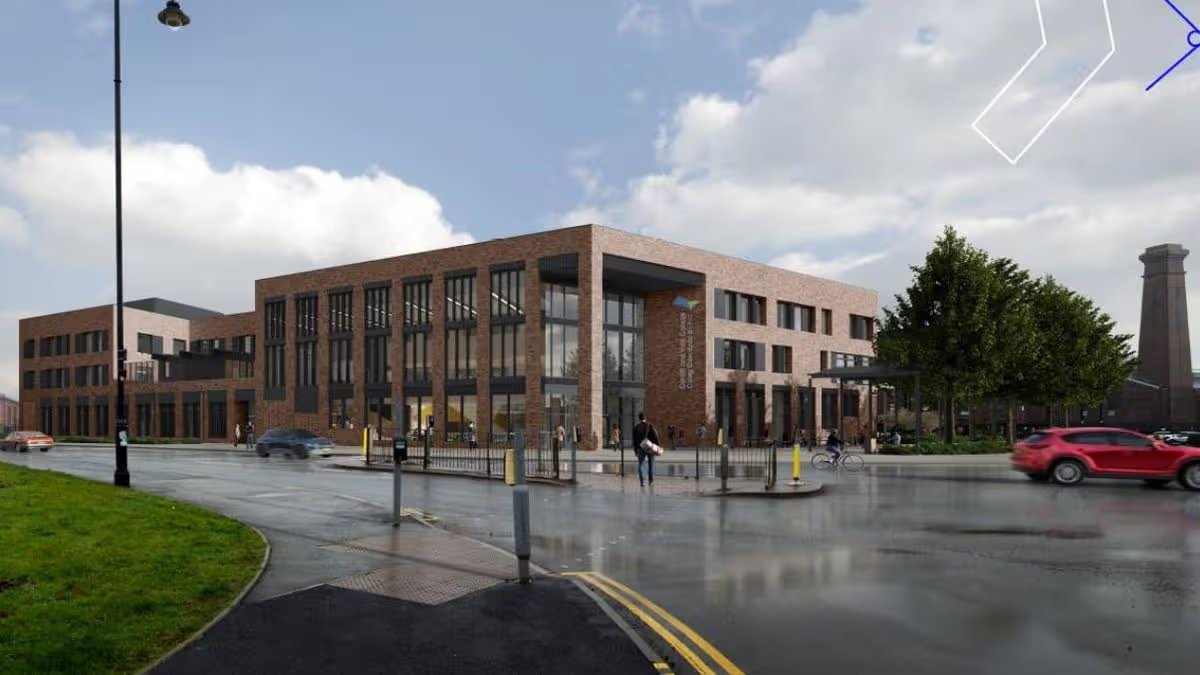
An artist's impression of what the new Cardiff and Vale College campus on land south of Hood Road, Barry could look like

Artist impression of Cardiff and Vale College;s Barry waterfront campus.(Image: Sheppard Robson)

Fabricator Dudley’s Aluminium is supporting the construction of two campuses for Cardiff and Vale College in the Vale of Glamorgan.

Dudley’s will be partnering with main contractor Bouygues UK on the under construction campuses for the largest college provider in the UK and the biggest in Wales.

Advertisement

The college, in a £119m investment , is delivering a new Barry waterfront campus, a community-focused college in the heart of the town, which will replace its existing ageing Colcot Road campus.

Its Advanced Technology Centre near Cardiff Airport will meet the skills needs of employers, apprentices and those working in advanced technologies. Both campuses are scheduled to open in September 2027.

Cardiff-based Dudley’s and will install metal technology curtain walling, windows and high insulation doors on the builds.

Artist impression of the Advanced Technology Centre.

Steve Muir, commercial director at Dudley’s Aluminium, said: “We are thrilled to be working with Bouygues on Cardiff and Vale College’s new campuses in the Vale of Glamorgan. Our proven track record in the education sector will ensure the project is delivered to high standards, providing quality teaching and learning environments that meet the needs of students, employers and the wider community.”

Advertisement

Since 1993, Dudley’s Aluminium has provided full in-house design, fabrication and installation capabilities, completing projects across the education, health, commercial, retail, residential and defence sectors throughout the UK and Channel Islands.

Continue Reading

Business

BioPharma Credit provides up to $150m loan to Mineralys

Published

on


BioPharma Credit provides up to $150m loan to Mineralys

Continue Reading

Business

Buy or Sell Palantir Stock in 2026? Analysts Weigh AI Momentum Against High Valuation

Published

on

Palantir

NEW YORK — Palantir Technologies Inc. shares have delivered substantial gains in recent years but now trade at elevated valuations as the data analytics company capitalizes on surging demand for artificial intelligence platforms across government and commercial sectors in 2026.

As of early June, Palantir stock closed around $152 after recent volatility, reflecting both strong fundamental performance and investor concerns over premium multiples. Wall Street maintains a moderate buy consensus, with average 12-month price targets near $193, implying roughly 27% upside from current levels.

The company reported exceptional first-quarter results in May, with revenue reaching $1.633 billion, an 85% increase year-over-year. U.S. revenue grew 104%, driven by 133% growth in commercial sales and 84% expansion in government contracts. Palantir raised its full-year 2026 revenue guidance to $7.65-$7.66 billion, signaling 71% growth.

CEO Alex Karp highlighted the accelerating U.S. market as central to the company’s trajectory. “Momentum surged as we grew 85% last quarter — our highest-ever year-over-year growth rate — by more than doubling our U.S. business,” he stated in the earnings release.

Advertisement

Palantir’s Artificial Intelligence Platform (AIP) has become a key growth driver, enabling organizations to deploy AI rapidly while maintaining data governance. Strong adoption in both defense and enterprise segments has fueled optimism, with major contracts including a $300 million deal with the U.S. Department of Agriculture.

Analysts largely favor the stock. Of 31 covering firms, 19 rate it buy, 10 hold and two sell. Consensus targets range from a low of $90 to a high of $255, with many citing continued commercial momentum and government tailwinds.

Supporters point to Palantir’s sticky customer relationships and expanding addressable market. The company’s focus on large deals exceeding $1 million has yielded consistent total contract value growth. Its platforms serve critical national security needs while expanding into commercial applications like supply chain optimization and financial services.

However, valuation remains a central debate. Palantir trades at forward price-to-earnings multiples exceeding 150 times, far above traditional software peers. Critics argue that any slowdown in AI spending or execution challenges could trigger significant multiple compression.

Advertisement

Recent pullbacks, including a drop from 2025 highs near $207, have created entry points for some investors. Rosenblatt analysts described the dip as a buying opportunity, citing robust earnings momentum and defense-AI synergies.

Risks include heavy dependence on government contracts, which can face budgetary and political uncertainties. Insider selling by executives, including CEO Alex Karp, has also drawn attention, though such activity is common in growth companies with substantial equity compensation.

On the positive side, Palantir’s Rule of 40 score — combining revenue growth and profitability — reached 145% in the first quarter, demonstrating exceptional balance between expansion and margins. Adjusted operating margins hit 60%, with strong free cash flow generation.

Commercial growth represents the biggest upside catalyst. U.S. commercial revenue guidance was raised sharply, reflecting accelerating enterprise adoption of AI tools. Analysts expect this segment to become an even larger contributor as more Fortune 500 companies integrate Palantir’s platforms.

Advertisement

The company’s dual focus on government stability and commercial upside differentiates it from pure-play AI hardware firms. While competitors face cyclical semiconductor demand, Palantir benefits from recurring software revenue and platform lock-in effects.

Broader market context influences the outlook. Strong AI enthusiasm has supported technology stocks, but higher interest rates and potential economic slowdowns could pressure high-valuation names. Palantir’s beta makes it sensitive to shifts in risk sentiment.

Longer-term forecasts remain constructive. Some analysts project Palantir could reach $225 per share by early 2027 if earnings growth continues beating expectations. The company has consistently exceeded consensus estimates, often by double-digit margins.

For buy-and-hold investors, the case rests on Palantir establishing itself as essential AI infrastructure. Its ontology-based approach to data integration offers advantages in complex environments where competitors struggle.

Advertisement

Skeptics highlight execution risks and competition from larger cloud providers and specialized AI firms. Sustaining triple-digit commercial growth will require flawless delivery and continued innovation.

Portfolio allocation matters. Growth-oriented investors with high risk tolerance may add to positions on dips, while conservative accounts might limit exposure or wait for better valuation entry points.

Recent trading patterns show heightened volatility. Shares surged on strong earnings but faced profit-taking as some questioned sustainability at current levels. Volume remains robust, indicating sustained investor interest.

Palantir’s balance sheet strength provides flexibility for acquisitions or share repurchases, though the company has prioritized growth investments. Its cash position and minimal debt offer resilience during uncertain periods.

Advertisement

As 2026 progresses, key catalysts include quarterly results, new contract announcements and potential expansion in international markets. The second half of the year could clarify whether commercial momentum can offset any government spending fluctuations.

Investment decisions ultimately depend on individual circumstances, time horizons and risk appetite. While consensus leans bullish, the wide dispersion in price targets reflects genuine debate over appropriate valuation for a high-growth AI software leader.

Palantir has transformed from a niche data analytics firm into a prominent AI player. Its 2026 performance will test whether exceptional growth justifies premium pricing or if normalization lies ahead.

Investors should monitor upcoming earnings for sustained U.S. commercial acceleration and margin trends. In a dynamic technology landscape, Palantir’s ability to execute on its ambitious guidance will determine if the stock rewards shareholders over the remainder of 2026 and beyond.

Advertisement
Continue Reading

Business

Opinion: Fracking forecast a split decision

Published

on

Opinion: Fracking forecast a split decision

OPINION: Roger Cook’s gas supply ultimatum will create cracks in Labor unity.

Continue Reading

Business

Suno raises $400 million at $5.4 billion valuation

Published

on


Suno raises $400 million at $5.4 billion valuation

Continue Reading

Trending

Copyright © 2025