

Crypto World
Nvidia CEO Just Crowned the “Next Trillion-Dollar” Chip Stock and It Went Up 33%

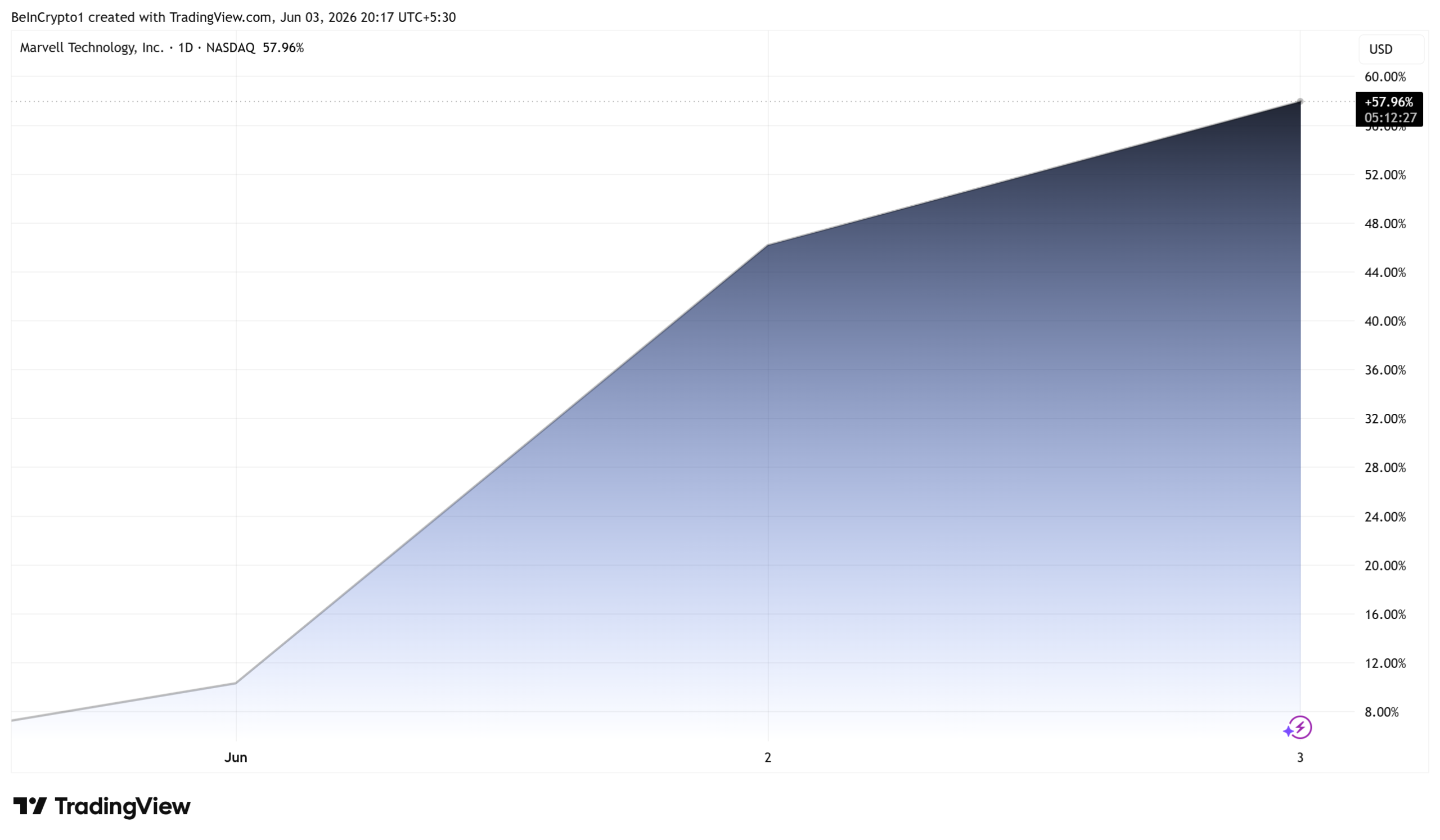
Nvidia CEO Jensen Huang called Marvell Technology the next trillion-dollar company at Computex on June 2. Marvell shares jumped about 33% in a single session, their biggest one-day gain on record. The move added roughly $56 billion in market value, pushing Marvell above $250 billion.
The endorsement landed as investor Michael Burry warned that Nvidia itself faces concentrated demand and hidden financing risk across the AI buildout.

What Jensen Huang Said About Marvell
Huang made a surprise appearance during Marvell CEO Matt Murphy’s keynote in Taipei, spending about 10 minutes on stage. He praised Marvell’s networking and connectivity chips as essential to data centers, where AI workloads run across thousands of linked processors that must share data quickly.
The remark followed Nvidia’s roughly $2 billion equity investment in Marvell, which tied the firm’s custom accelerators and optical networking to Nvidia’s AI factory architecture.
Follow us on X to get the latest news as it happens
Why the Marvell Bull Case Holds
Bulls argue connectivity is the next bottleneck in AI systems after raw compute and memory. Marvell builds the switches, optics, and custom silicon that link those clusters, and data center products now drive most of its revenue.
Skeptics counter that Marvell trades at a steep valuation. It also faces strong competition from Broadcom in networking silicon.
“…the next trillion-dollar company,” CNBC reported, citing Jensen Huang.
A single endorsement rarely changes fundamentals, yet Huang’s words carry weight with traders. Analysts have also stayed broadly bullish on Nvidia, reflecting confidence in the wider AI trade.
Michael Burry’s Warning on Nvidia
Michael Burry, known for his role in The Big Short, has taken the other side of the AI story. His firm, Scion Asset Management, bought put options (short orders) on one million Nvidia shares.
Burry flagged Nvidia’s customer concentration as a core risk. He said the top three customers now account for 64% of Nvidia’s accounts receivable, up from 56% the prior quarter and about 33% in 2020.
He also described much of today’s spending as a temporary benchmarking phase he calls a tokenmaxxing bubble. In his view, that demand looks permanent now, but could fade.
“The conditions for an aggressive fall are as strong as they have been in the history of the stock,” Burry stated.
Burry’s caution echoes other warnings he has issued about a wider market bubble. He has recently been shorting chip stocks as well.
His thesis points to leveraging hidden across the system. A Moody’s report in February found that Microsoft, Amazon, Alphabet, Meta, and Oracle have $662 billion in future data center lease commitments that are not yet reflected on their balance sheets.
That figure equals roughly 113% of the five companies’ adjusted debt, according to Moody’s. The obligations become real cash costs once the leases begin.
Other signals have added to the caution. Reports of falling H200 rental prices have raised questions about near-term GPU demand.
The post Nvidia CEO Just Crowned the “Next Trillion-Dollar” Chip Stock and It Went Up 33% appeared first on BeInCrypto.


Key Highlights
- Sadot Group finalized the purchase of 100% of Anira Consulting FZC (Tradewell), based in the UAE, for a total of $12 million on June 2, 2026
- The transaction brings TradeOS into the fold—a comprehensive Commodity Trading and Risk Management (CTRM) solution designed for enterprise use
- The purchase price was settled entirely through equity issuance and a convertible note bearing zero interest, with all instruments convertible at $3.00 per share
- Both the preferred shares and convertible instrument include ownership limitation provisions and require Nasdaq stockholder approval
- Shares of SDOT climbed more than 91% following the announcement, despite the firm’s modest market capitalization of only $2.44 million
Sadot Group finalized its purchase of Anira Consulting FZC on June 2, 2026, bringing a Sharjah-headquartered commodity trading operation and its proprietary TradeOS CTRM technology under its umbrella for a transaction value of $12 million.
Shares of SDOT jumped over 91% following the announcement. For a business with a total market valuation of merely $2.44 million, this represents an extraordinary single-session gain.
The transaction was structured entirely without cash payments. The purchase consideration consisted of 135,000 common shares priced at $3.00 each, 1,000 Series B preferred shares with a unit value of $6,595, and a $5 million convertible promissory note carrying zero interest and maturing on June 2, 2028.
Both the preferred equity and the note carry conversion rights into common shares at $3.00 per unit, though these are restricted by ownership limitation clauses and Nasdaq stockholder approval requirements.
Anira Consulting conducts business under the Tradewell brand and maintains its registration within the Sharjah free zone in the United Arab Emirates. Its primary focus areas include physical commodity trading operations and risk management advisory services.
TradeOS Platform Capabilities
TradeOS represents the primary strategic asset in this transaction. The platform functions as an enterprise-level CTRM solution engineered to manage trade execution, live profit and loss calculation, risk assessment, logistics coordination, treasury operations, financial accounting, and compliance requirements within an integrated straight-through processing framework.
This represents a comprehensive technology suite for a platform now owned by an organization of Sadot’s current scale. Company officials characterized the acquisition as materially significant to Sadot’s business operations.
Under the deal terms, revenues generated by Anira will be directed first toward settling pre-existing obligations and software-related commitments before distribution elsewhere. Sadot indicated this revenue waterfall structure was implemented to control dilution exposure and mitigate credit risk.
Wall Street Maintains Skeptical Stance
The risk factors are clear-cut: significant revenue decline across the past twelve months, substantial operational losses, negative shareholder equity, and persistent cash consumption.
Sadot is additionally navigating an outstanding Nasdaq equity listing compliance matter and recently executed an expansion of its authorized share count—both identified as supplementary risk considerations.
Technical indicators point to a Sell rating, with typical daily trading volume hovering around 539,000 shares. The stock has maintained a downward trajectory, and technical analysts observe that oversold conditions have not yet triggered a trend reversal.
Sadot Group’s present market capitalization stands at $2.44 million, firmly positioning it within micro-cap classification. The 91% intraday price movement underscores the extremely limited liquidity in the stock.
The Anira and TradeOS acquisition represents Sadot Group’s declared strategy to construct a technology-powered commodity trading enterprise. The transaction reached completion on June 2, 2026, with the definitive Share Purchase Agreement executed on the same date.



SpaceX has outlined plans for a record $75 billion stock market debut that would value Elon Musk’s space and AI company at about $1.77 trillion.
Summary
- SpaceX plans to raise $75 billion through an IPO that would value the company at about $1.77 trillion.
- Elon Musk would keep 82.4% voting control after the offering, according to the company’s SEC filing.
- The IPO could surpass Saudi Aramco’s 2019 listing and become the largest public offering in history.
- SpaceX said the proceeds will support its rocket, Starlink, artificial intelligence and space data center plans.
According to a filing with the U.S. Securities and Exchange Commission, SpaceX plans to sell 555.6 million shares at $135 each in an initial public offering. The company set a single offer price instead of giving investors a price range, a move the filing places at the center of one of the largest listings ever proposed.
The planned IPO would surpass Saudi Aramco’s 2019 listing, which raised $29.4 billion, according to the figures cited in the filing. SpaceX said its shares are expected to start trading next Friday, subject to final approvals and market conditions.
Elon Musk set to retain voting control
The SEC filing said Musk currently owns about half of SpaceX. After the offering, the filing said he would still hold nearly half of the company’s total shares.
At the same time, SpaceX said some of Musk’s holdings carry stronger voting rights. The filing said he would control 82.4% of the company’s voting power after the IPO, giving him firm control over major corporate decisions.
Based on the proposed $135 share price, Musk’s SpaceX stake would be worth about $841 billion, according to the company’s IPO math. Forbes’ real-time billionaire tracker currently estimates the figure to be close to the combined wealth of Larry Page, Sergey Brin, and Larry Ellison.
AI plans add to SpaceX valuation story
SpaceX said in its IPO documents that the company’s future plans now extend beyond rockets, satellites, and Starlink internet services. The filing said SpaceX also plans to invest heavily in artificial intelligence and space-based data centers.
Musk founded SpaceX in 2002 to develop rockets and carry payloads into orbit. According to the company’s documents, Starlink became a major business line after its satellite internet service expanded commercially in 2021.
In February, Musk merged SpaceX with xAI, the artificial intelligence company linked to X, according to the filing. SpaceX said AI now plays a key role in its long-term investment plans, although the company also said the business will need heavy capital spending.
IPO could expand Musk’s wealth lead
The filing said proceeds from the offering will help fund SpaceX’s space and artificial intelligence operations. The company also suggested future stock sales may be needed because of the large costs tied to rockets, satellites, computing systems and AI infrastructure.
If SpaceX trades at the proposed valuation, Musk’s combined wealth could rise sharply. The report said his Tesla stake was worth just under $300 billion at Wednesday’s closing price, which could push his total net worth toward $1.1 trillion when added to his SpaceX holdings.
SpaceX’s planned debut comes as other artificial intelligence companies prepare for public offerings. Anthropic has already announced plans to IPO, while OpenAI is also expected to follow, according to the report.
The report said those listings could create thousands of new millionaires and some billionaires, even as many AI firms continue to face questions over profitability.

TLDR:
- DTCC has selected Stellar blockchain to support its real-world asset tokenization platform strategy.
- Analyst MikybullCrypto projects XLM could reach between $5 and $11 based on a multi-year chart pattern.
- Global search interest for Stellar XLM has climbed to its highest level in the past three months.
- A confirmed breakout above long-term resistance remains key before any major XLM price target is validated.
Stellar XLM has returned to the spotlight following a major development in traditional finance. The Depository Trust and Clearing Corporation (DTCC) announced plans to connect its tokenization platform to the Stellar blockchain.
This move has renewed institutional interest in XLM. Analysts are now projecting a potential historic breakout, with price targets ranging from $5 to $11. Market sentiment around XLM has also shifted notably in recent weeks.
DTCC Selects Stellar Blockchain for Asset Tokenization
The DTCC is widely regarded as the backbone of U.S. securities settlement infrastructure. Its decision to integrate the Stellar blockchain marks a meaningful step toward institutional blockchain adoption. The move positions Stellar as a potential settlement layer for tokenized real-world financial assets.
As part of a multi-chain strategy, DTCC has identified Stellar as a capable network for tokenized representations of traditional financial instruments.
This reinforces growing interest from institutions in public blockchain networks. It also strengthens the broader narrative around real-world asset adoption in crypto markets.
Institutional integrations of this scale rarely produce immediate price movements. They tend to act as long-term catalysts rather than short-term triggers. Still, the development has added weight to the bullish case being built around XLM.
Technical Structure Points to Cyclical Breakout Potential
Following the DTCC announcement, Stellar XLM recorded one of its strongest price rebounds in recent months. This move aligns with a long-term technical pattern tracked by analyst MikybullCrypto on the monthly timeframe. The structure dates back to 2017 and has remained intact across multiple market cycles.
The pattern features a long-term ascending support trendline and a horizontal resistance zone tested repeatedly at previous market peaks.
The current price position, labeled as point E in the analyst’s chart, reflects another bounce from this established support line. Each prior interaction with this trendline has been followed by a recovery phase of varying magnitude.
Based on this recurring structure, MikybullCrypto outlines a bullish projection with a potential target range of $5 to $11 for Stellar XLM.
A confirmed breakout above long-standing resistance would be required to validate this scenario. Without that confirmation, the projection remains speculative.
Market Sentiment and Search Interest Rise Around XLM
Beyond technical analysis, sentiment data is also shifting in favor of Stellar. Reports indicate that global search interest for XLM has reached a three-month high. Retail attention is climbing across major social media platforms as well.
The growing focus on tokenization and blockchain-based financial infrastructure is adding momentum to the XLM narrative.
Real-world asset tokenization has become one of the dominant themes across crypto markets in recent months. Stellar’s positioning within this trend is drawing fresh attention from both traders and observers.
However, sustaining this momentum will depend on broader market conditions. Strong macro crypto performance and continued institutional adoption translating into on-chain activity are key requirements. The $5 to $11 target range is contingent on all these conditions being met simultaneously.
Stellar XLM currently sits at the intersection of institutional adoption and a long-standing technical structure. The DTCC integration and the cyclical chart pattern together form the foundation of the current bullish narrative.
Traders are now watching closely for confirmation of a breakout above long-term resistance.

Key Highlights
- META stock has declined approximately 10% year-to-date in 2026, trading about 25% below its August 2025 high of nearly $800, resulting in a market cap loss of roughly $500 billion.
- Morgan Stanley maintains META as a preferred investment with a $775 price target, representing approximately 30% potential upside from present levels.
- On Wednesday, Meta unveiled its AI-driven Business Agent, now available across WhatsApp, Messenger, and Instagram for businesses worldwide.
- Morgan Stanley estimates that if fewer than one-third of Meta’s 3.5 billion daily active users execute just one query daily, the AI chatbot could produce $10 billion in yearly revenue.
- Meta reported Q1 revenue of $56.3 billion, exceeding analyst projections, while providing Q2 revenue guidance ranging from $58 billion to $61 billion.
Meta Platforms experienced a significant Wednesday announcement. The social media giant introduced its Meta Business Agent — an artificial intelligence solution enabling businesses to streamline customer engagement across WhatsApp, Messenger, and Instagram. The platform can handle inquiries, schedule appointments, screen potential customers, and complete transactions in multiple languages.
Over one million businesses have already adopted early versions of this technology on WhatsApp and Messenger. The broader deployment begins with free access, with premium subscription options scheduled for introduction later this year.
During a London event on Wednesday, CEO Mark Zuckerberg stated that the new agent will “assume greater responsibilities and ultimately assist in managing your entire business.”
That’s an ambitious statement. Market acceptance remains uncertain.
META stock has fallen nearly 10% in 2026, positioning it as the poorest performer within the Magnificent Seven cohort. Currently trading around $596, the stock sits approximately 25% beneath the near-$800 high reached in August 2025. This downturn has eliminated roughly $500 billion in shareholder value.
The company is barely maintaining its position within the S&P 500’s top ten constituents, as Micron Technology and Berkshire Hathaway narrow the valuation gap.
Morgan Stanley’s Investment Thesis
Morgan Stanley analyst Brian Nowak remains undeterred by recent performance. He designates META as a premier investment opportunity and maintains a $775 price objective — suggesting potential gains of approximately 30% from current trading levels.
“Investor sentiment has reached its bottom,” Nowak stated in a Wednesday research note. He contends that the present valuation discount relative to megacap competitors overlooks the substantial strength of Meta’s user engagement and revenue generation capabilities.
Nowak highlights four emerging product categories he believes could drive share price appreciation. Meta AI leads his analysis.
He calculates that if merely one-third of Meta’s 3.5 billion daily active users submit a single search query daily, this could generate $10 billion in incremental annual revenue and boost his 2028 earnings projection of $35.79 per share by 8%. Increased usage patterns could elevate that impact to 20% upside.
Subscription services represent an additional growth driver. Nowak projects these could contribute $7 billion in revenue and $2 in earnings growth as Meta begins monetizing its user base through paid offerings.
Capital Expenditure Concerns
The primary investor concern centers on Meta’s capital investment strategy. The company has announced $600 billion in total capital expenditures, including $350 billion allocated over the upcoming two years. That represents substantial investment with limited clarity on return generation.
Reality Labs continues operating at a loss. Quest virtual reality headsets and AI-enabled eyewear haven’t produced material financial contributions.
Operational performance, however, remains solid. Q1 revenue totaled $56.3 billion, surpassing analyst expectations. Q2 guidance ranges between $58 billion and $61 billion.
Meta’s proprietary reasoning system, Muse Spark, generated a 10% increase in Instagram Reels engagement and an 8% boost for Facebook video — marking the strongest engagement metrics in four years.
The Business Agent Platform has also established integrations with Shopify, Zendesk, and Shopee, providing businesses with comprehensive tools to develop and implement agents across their operations.
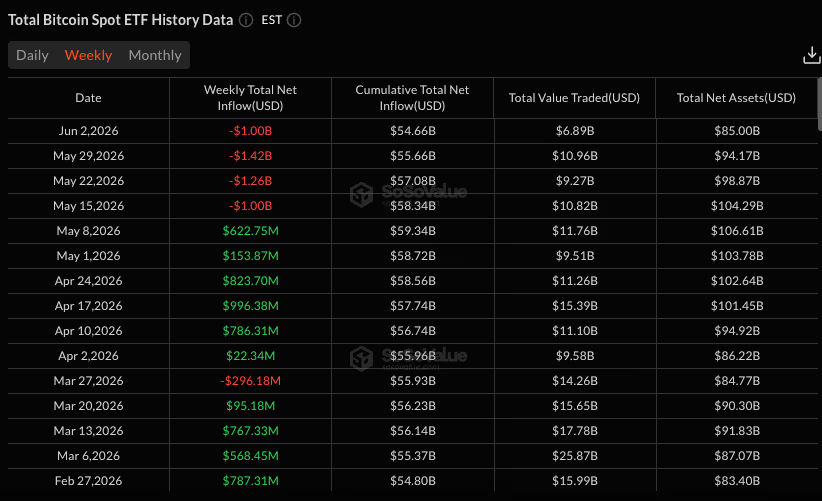
Bitcoin briefly plunged below $62,000 Thursday morning Hong Kong time, triggering more than $1.5 billion in leveraged crypto liquidations over the past 24 hours as a wave of forced selling accelerated the market’s steepest decline in months.
More than 208,000 traders were liquidated across crypto markets, according to CoinGlass data, with bitcoin accounting for over $800 million of the losses and ether another $386 million.
The liquidation wave coincided with continued weakness in institutional demand. Investors have pulled approximately $1 billion from U.S. spot bitcoin ETFs this week, according to SoSoValue data, extending the funds’ record streak of net outflows.

Presto Research argued Thursday in a note that bitcoin’s weakness may reflect broader competition for investor capital rather than any single crypto-specific catalyst.
The firm said bitcoin’s major drawdowns this year have coincided with rallies in gold and artificial intelligence stocks as investors scaled back expectations for Federal Reserve rate cuts.
If that relationship holds, Presto argues, bitcoin’s recovery may depend less on crypto market developments and more on easing inflation concerns and a renewed shift toward liquidity-sensitive assets.
Read more: Bitcoin isn’t crashing because of Saylor, it’s losing the momentum trade
Cardano founder Charles Hoskinson has warned that more businesses could disappear from the network after analytics platform TapTools announced it was shutting down operations amid worsening economic conditions across the ecosystem.
Summary
- Charles Hoskinson warned that more Cardano projects could fail following the shutdown of analytics platform TapTools.
- TapTools cited rising operating costs, while Hoskinson pointed to weak market conditions and funding challenges.
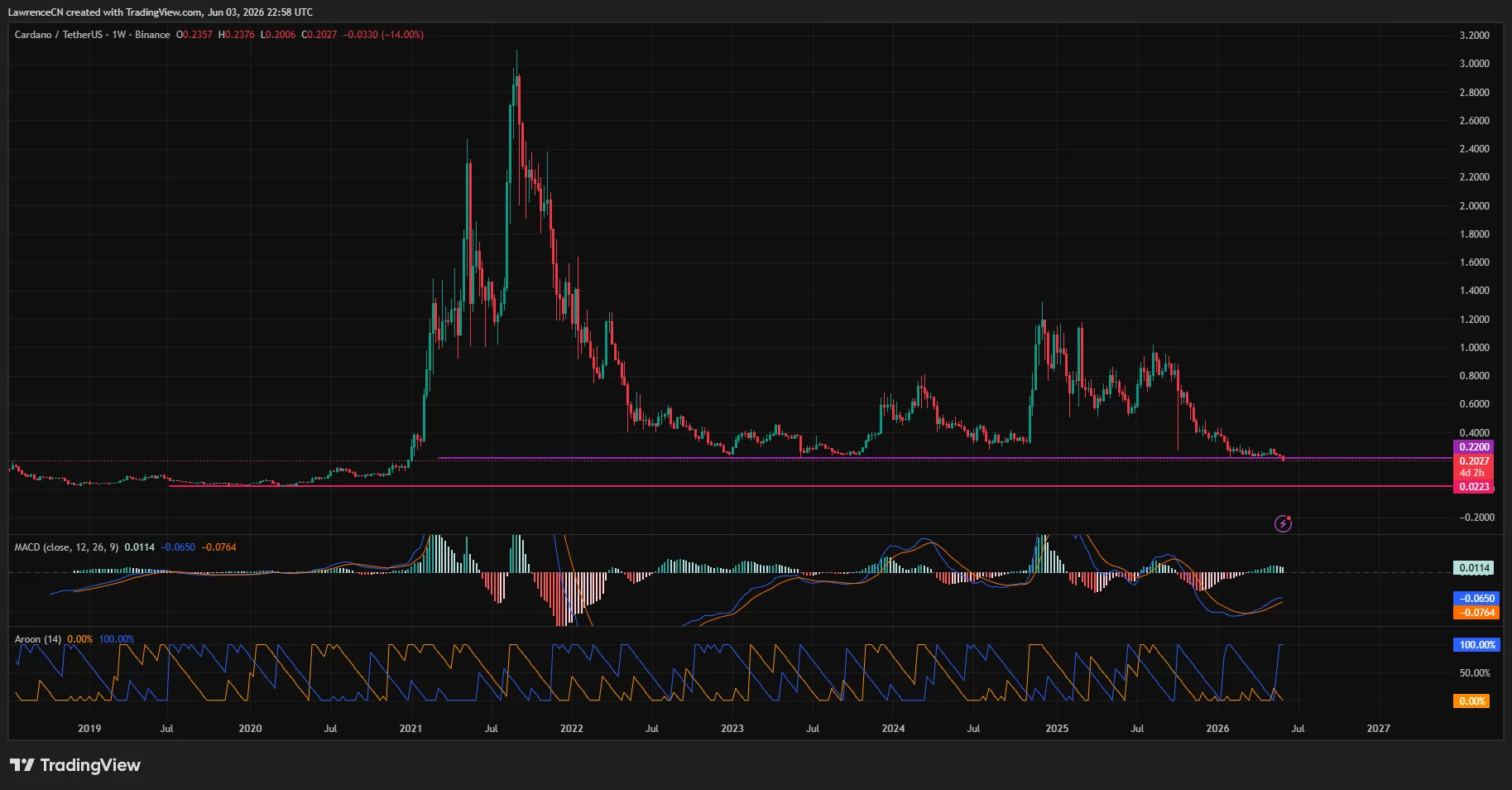
- ADA traded near $0.20, with key support at $0.22 and deeper downside risks if the level breaks.
In a video published on his YouTube channel, Hoskinson said the closure of TapTools is likely not an isolated event. According to Hoskinson, difficult market conditions have already placed heavy pressure on Cardano-based projects, and additional failures could follow if the ecosystem does not address its funding and growth challenges.
The warning comes as Cardano’s native token ADA continues to struggle. According to data from crypto.news, Cardano (ADA) price recently traded near $0.20 after falling another 6% over the past 24 hours. The token is down roughly 70% over the last year and remains more than 93% below its record high of $3.09 reached in 2021.
Why are Cardano projects facing growing pressure?
Speaking about the state of the network, Hoskinson said he had expected a wave of business failures at the start of the year because of weak crypto market conditions. He argued that shrinking revenues and limited capital have made it increasingly difficult for teams to continue operating.
“I said at the beginning of the year, we’re going to see a lot of people collapse because the markets are really bad. There’s going to be a wave of failures in the ecosystem.”
While some community members have blamed him for the situation, Hoskinson rejected suggestions that he has direct control over the network’s future. He told viewers that Cardano’s problems require a collective response from the community and ecosystem participants rather than intervention from a single individual.
Alongside those concerns, Hoskinson pointed to several initiatives that he said were intended to strengthen the ecosystem. According to his comments, efforts to acquire and commercialize applications within Cardano encountered resistance from parts of the community.
Funding has become another point of disagreement. Hoskinson said proposals involving treasury spending to support decentralized applications have struggled to gain backing. A recent community vote against hosting the annual Cardano Summit was cited by him as another example of reluctance to commit ecosystem funds toward growth initiatives.
“There doesn’t seem to be a lot of community desire to spend the treasury to take these ventures to the next level.”
TapTools cites rising operating costs behind shutdown
Details shared by TapTools indicate that financial realities played a major role in its decision to wind down after four years of development on Cardano.
In a statement posted on X, the company said infrastructure expenses, software development, customer support, and ongoing maintenance costs had become increasingly difficult to sustain. TapTools added that it could not responsibly commit to future operations under current conditions.
The closure has become a focal point in a larger debate over the long-term sustainability of projects building on Cardano. According to Hoskinson, continued inaction could lead to consolidation across the ecosystem as smaller applications struggle to survive.
Despite the challenges, Hoskinson maintained that Cardano possesses the technical foundation and community needed to compete. He argued that the network is not losing builders because of its technology or philosophy, but because economic conditions are making it harder for businesses to remain viable.
As market pressure continues and ADA trades near multi-year lows, Hoskinson warned that additional departures from the ecosystem could occur unless stronger support mechanisms emerge for developers and startups operating on the network.
What does the ADA price chart show?
ADA’s prolonged decline has pushed the token to one of its most important support levels since its 2021 bull-market breakout.
On the weekly chart, ADA recently fell below the long-standing $0.22 support area and was trading near $0.20 at press time. The level had previously acted as resistance before the 2021 rally and later served as a floor during several market corrections.
A decisive breakdown below this zone could expose the next major support area near $0.02, according to TradingView data.
Technical indicators remain mixed. The weekly MACD has produced a bullish crossover, with the MACD line moving above the signal line and the histogram turning positive. While this suggests selling pressure may be easing, both indicators remain below the zero line, indicating the broader trend is still bearish.
Meanwhile, the Aroon indicator shows Aroon Up at 100% and Aroon Down at 0%, a reading typically associated with strengthening upward momentum. Even so, the signal has yet to be confirmed by a meaningful recovery in price, with ADA continuing to trade near multi-year lows.
The chart suggests ADA is approaching a critical inflection point. A successful defense of the current support zone could allow a recovery toward the $0.35-$0.40 resistance area, while a breakdown may increase the risk of a deeper decline toward historical support levels.
Crypto World
Market Movers: Marvell’s AI Surge, Alphabet’s Massive Spend, GameStop’s Rally, and Oil’s Climb
TLDR
- Marvell Technology stock soared following comments from Nvidia CEO Jensen Huang about the company’s potential to reach trillion-dollar valuation
- Alphabet’s announcement of an $80 billion AI infrastructure investment has created division among investors concerned about returns
- GameStop shares climbed after the company exceeded earnings forecasts and revealed a $2 billion share repurchase program
- Semiconductor and AI hardware companies like Broadcom, Nvidia, and Dell dominated trading volume on Wall Street
- Oil prices surged past $95 a barrel, driving energy sector gains while stoking inflation worries
Marvell Technology Rallies on CEO’s Trillion-Dollar Vision
Marvell Technology emerged as a standout performer in today’s trading session. The stock continued its upward trajectory after Nvidia’s CEO Jensen Huang reportedly indicated the semiconductor firm has the potential to reach a trillion-dollar market capitalization.
These remarks triggered renewed investor enthusiasm for Marvell shares. The firm specializes in networking semiconductors, customized AI processors, and data center equipment utilized by leading cloud service providers.
Market participants view Marvell as a prime beneficiary of the ongoing AI infrastructure buildout. The company’s technology forms a critical component of the backbone required to operate large-scale artificial intelligence deployments.
The stock’s surge rippled through the semiconductor sector, boosting confidence across AI-related equities. Market watchers increasingly anticipate sustained AI demand growth as enterprises and public institutions compete to develop cutting-edge systems.
Alphabet’s $80 Billion AI Investment Sparks Debate
Alphabet captured market attention following its disclosure of an $80 billion allocation toward AI infrastructure development and expansion. The magnitude of this capital commitment has generated mixed reactions from the investment community.
Proponents argue the expenditure is essential to remain competitive with rivals including Microsoft, Amazon, and OpenAI. Skeptics express concern that such aggressive capital deployment could compress profit margins if AI-generated revenues fail to materialize proportionally.
This discussion mirrors broader anxieties emerging throughout the technology industry. AI infrastructure development is emerging as one of the most capital-intensive technological competitions in modern business history.
Nevertheless, numerous investors maintain confidence in Alphabet’s long-term prospects. The company’s dominant search platform, expanding cloud services, and AI capabilities continue to represent formidable competitive advantages.
GameStop Rallies Following Strong Earnings and Buyback Announcement
GameStop captured headlines after delivering quarterly results that exceeded analyst projections. The video game retailer simultaneously unveiled a $2 billion stock repurchase initiative, propelling shares significantly higher.
The buyback announcement demonstrates management’s optimism regarding the company’s strategic trajectory. Share repurchases reduce outstanding equity, potentially providing price support through reduced supply.
While meme-stock fervor has subsided from previous heights, GameStop demonstrated its continued ability to generate momentum and capture retail investor interest. The move provided a temporary boost to other speculative equities.
Semiconductor Stocks Maintain Market Spotlight
Broadcom, Nvidia, Dell, HPE, and Super Micro Computer ranked among the day’s most heavily traded securities. Market participants continue positioning AI hardware companies as premier long-term growth opportunities.
Broadcom faces its upcoming earnings announcement later this week. Analysts are particularly focused on management commentary regarding custom AI semiconductor demand and cloud infrastructure spending trends.
A positive earnings report from Broadcom could provide additional momentum to the semiconductor sector rally. Chip stocks have delivered superior returns compared to most market segments in recent months.
The market continues favoring companies with direct exposure to AI hardware and infrastructure development. This trend has enabled semiconductor equities to outperform numerous other industry groups.
Crude Oil Breaks $95 Amid Escalating Geopolitical Concerns
Beyond technology, oil prices commanded significant attention. Crude oil advanced beyond $95 per barrel as Middle Eastern geopolitical tensions escalated.
Energy sector stocks posted substantial gains following the commodity price surge. Elevated oil prices simultaneously renewed concerns about inflation and potential implications for Federal Reserve monetary policy decisions.
Increasing energy costs introduce additional uncertainty into the market’s forward outlook. Heightened inflationary pressure could influence the central bank’s approach to interest rate adjustments.
Today’s market activity highlighted the dominant themes currently influencing investor sentiment. Artificial intelligence, semiconductor innovation, retail trading dynamics, and geopolitical uncertainty all contributed to shaping the session’s narrative.

According to Cointelegraph, U.S. Treasury Secretary Scott Bessent told lawmakers that the department is advancing plans to establish a strategic Bitcoin reserve and a United States digital asset stockpile, building on President Trump’s executive order issued more than a year earlier. Speaking at a Senate Finance Committee hearing on the Treasury’s fiscal year 2027 budget, Bessent stated that the department is “proceeding with all deliberate speed” on the 2025 order to establish Bitcoin and digital asset reserves. The Reuters-style framing here is that the reserve effort remains underway, with governance and practical design still being developed as part of a broader digital assets initiative.
The Treasury indicated that the reserve, when assembled, has to date been filled with crypto assets seized by the government, and there were no additional acquisition plans disclosed as of March. Bessent underscored that the effort is uncharted territory—“new technology, this is new ground”—and stressed the importance of integrating best practices to ensure durability of the program over time. The current public figure associated with the scale of the initiative is the quantity of assets held in reserve.
The United States reportedly holds 328,372 BTC in its reserves, valued at about $215 billion at the time of publication. While lawmakers have pursued efforts to codify Trump’s order into law, the broader regulatory framework surrounding digital assets continues to evolve. In parallel, some jurisdictions have begun to legislate state-controlled crypto reserves or related mechanisms.
Key takeaways
- The Treasury is pursuing the Trump administration’s executive order to establish a strategic Bitcoin reserve and a broader digital asset stockpile, with officials describing progress as proceeding with “all deliberate speed.”
- The reserve has been populated with crypto seized by the government, and no additional acquisition plans were announced as of March, according to public remarks.
- The United States reportedly holds 328,372 BTC in its reserves, valued at roughly $215 billion at the time of reporting, highlighting the scale and policy implications of state-held digital assets.
- Legislative momentum around the Digital Asset Market Clarity (CLARITY) Act remains a focal point, with House passage completed and Senate committees weighing their versions; the White House signaled a July–summer timeline for action.
- State-level developments, such as Texas’s enactment of its own crypto reserve framework, illustrate a growing regulatory mosaic that intersects with federal approaches to custody, supervision, and market integrity.
Strategic reserve development and current holdings
At the center of the Treasury’s briefing is a long-horizon governance challenge: turning a presidential directive into a functional, auditable, and legally robust strategic reserve. Bessent framed the effort as a “new technology” and “new ground,” emphasizing that the department is pursuing a design that will be durable and resilient for ongoing use. The rhetoric signals an emphasis on formalized custody standards, risk controls, and transparent stewardship as the program transitions from concept to practice.
On the operational footing, officials indicated that the existing crypto stockpile largely comprises assets seized in enforcement actions. There were no announced plans to acquire additional cryptocurrency beyond those holdings as of the latest public disclosures. The size of the holdings—328,372 BTC—illustrates the scale of the policy discussion surrounding a state-managed digital asset reserve and its potential implications for monetary sovereignty, sanctions enforcement, and public‑private collaboration in custody and liquidity management.
The disclosure of a substantial BTC stake anchored the debate around governance, risk management, analytics, and cross-border policy alignment. For institutional analysts and compliance teams, the question is not only custody but how such a reserve would interface with existing AML/KYC frameworks, sanctions regimes, and financial-market infrastructure while remaining compliant with domestic and international law. The public record indicates a careful approach to building a durable, legally defensible framework, acknowledging that this is a novel type of state asset holding within a complex financial ecosystem.
Regulatory progress and the CLARITY Act: framing onshore clarity
Bessent turned to the Digital Asset Market Clarity (CLARITY) Act when addressing questions about a legislative pathway for the sector. The bill, designed to address securities and commodities issues for digital assets, has advanced through House deliberations and now faces reconciliation with Senate measures. Senate committees—particularly Banking and Agriculture—have produced their own versions, and the full chamber will need to harmonize the bills before a vote can occur. The administration’s position has been that a coherent federal framework is essential to aligning U.S. practices with global standards and to providing clear custody and enforcement expectations for industry participants.
As part of the broader regulatory conversation, officials highlighted that the Treasury views the CLARITY Act, alongside recently enacted stablecoin legislation, as a critical step toward “bringing US best practices onshore” and establishing robust custody standards. White House crypto adviser Patrick Witt framed the administration’s objective as delivering predictable oversight and workable rules that support legitimate innovation while constraining risk. The timeline presented by administration officials positions a possible Senate passage in the summer, with some observers predicting a signing ceremony around Independence Day or shortly thereafter, though partisan dynamics and procedural hurdles remain a focal point for lawmakers and market participants.
For institutions, the CLARITY Act signals the potential for clearer regulatory boundaries and more explicit licensing pathways for digital-asset custodians, exchanges, and custodial banks. From a compliance perspective, the act could shape how firms structure their AML/KYC programs, monitoring controls, and licensing interactions across state and federal jurisdictions, including cross-border operations and transitional arrangements as regulatory definitions converge.
State trajectories, enforcement context, and cross-border implications
Beyond federal deliberations, state-level actions are shaping the policy environment for digital assets. Texas, for example, has enacted legislation creating its own framework for state-controlled crypto reserves, illustrating a growing willingness among states to formalize digital-asset custody and strategic holdings. This development contributes to a nuanced regulatory mosaic in which state authorities, federal agencies, and international counterparts must navigate differing models of asset control, oversight, and public accountability.
On the enforcement front, the Treasury and other agencies continue to coordinate with sector participants, with ongoing discussions about how seized assets, sanctions regimes, and cross-border usage intersect with national security and financial stability objectives. The broader question of how much of a role a national reserve should play in sanctions enforcement, monetary policy considerations, and international relationships remains unsettled, with lawmakers examining how to balance strategic assets with risk controls and market integrity.
Additionally, developments in sanctions enforcement and foreign-policy considerations—such as the reported seizures of digital assets tied to other jurisdictions—underscore the need for robust governance, transparent reporting, and interoperable compliance standards. The evolving policy landscape will be a key area for institutions to monitor, particularly for banks, exchanges, and asset managers that engage with digital assets in regulated contexts.
Closing perspective
The Treasury’s ongoing work to establish a strategic Bitcoin reserve and a formal digital asset stockpile sits at the intersection of national policy, regulatory design, and practical financial-market operations. As the CLARITY Act advances and state initiatives unfold, the risk and compliance implications for institutions remain front and center. The coming months will reveal how federal and state authorities reconcile jurisdictional differences, implement custody and reporting standards, and define the role of state-held assets within a broader sovereign financial architecture.
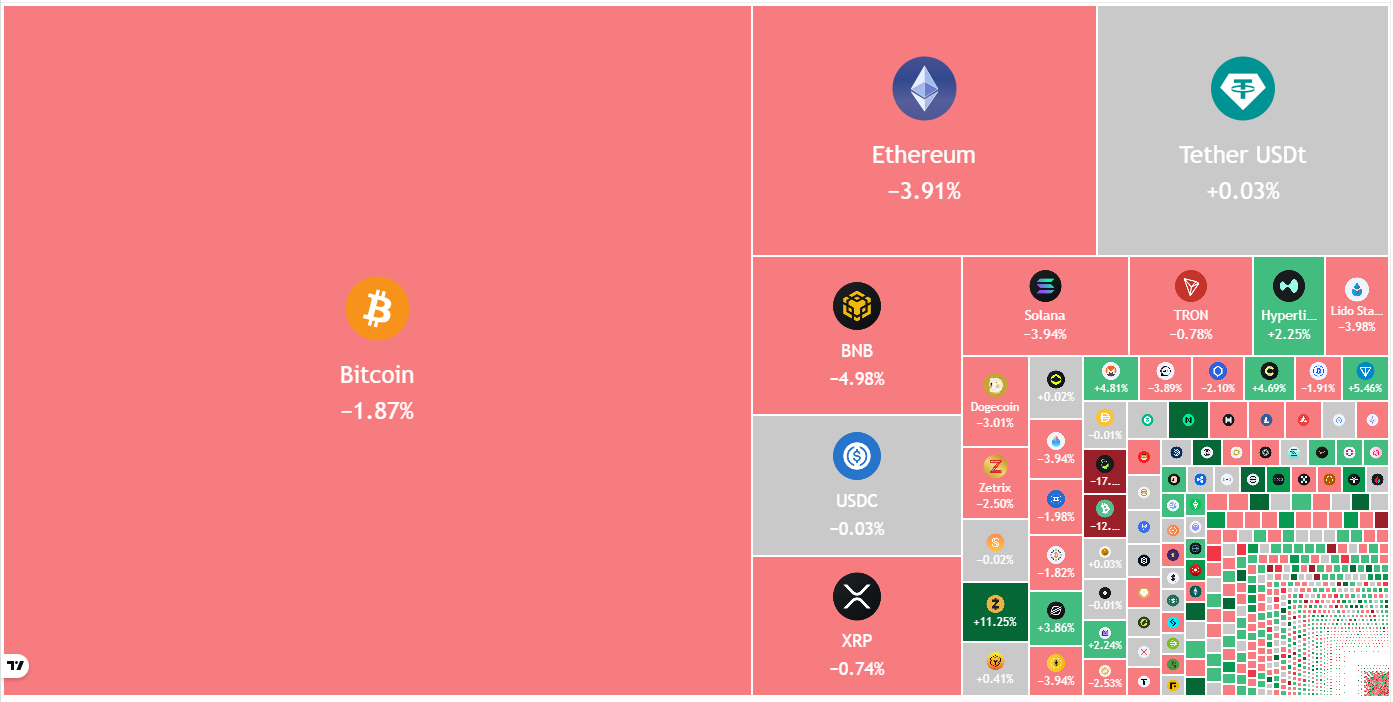
Key points:
- Bitcoin risks falling below $65,000, but lower levels are likely to attract solid buying by the bulls.
- HYPE, ZEC and XLM look strong on the charts while other major altcoins risk resuming their downtrend.
Bitcoin (BTC) is attempting a bounce off the $65,426 level, but the bulls are struggling to hold onto higher levels. The launch of fresh strikes by the US and Iran has hurt sentiment, but Bitrue Research Institute research lead Andri Fauzan Adziima told Cointelegraph that the fall was more about “leveraged liquidations, heavy ETF outflows, and technical breakdowns than pure Iran news, but it amplifies the fear.”
All eyes have shifted to BTC’s yearly lows of $60,000. Veteran trader Peter Brandt said in a post on X that BTC has formed an expanding triangle, a common and reliable pattern. He projects a decline to about $56,000, but added that a move above $75,000 would invalidate this bearish view.
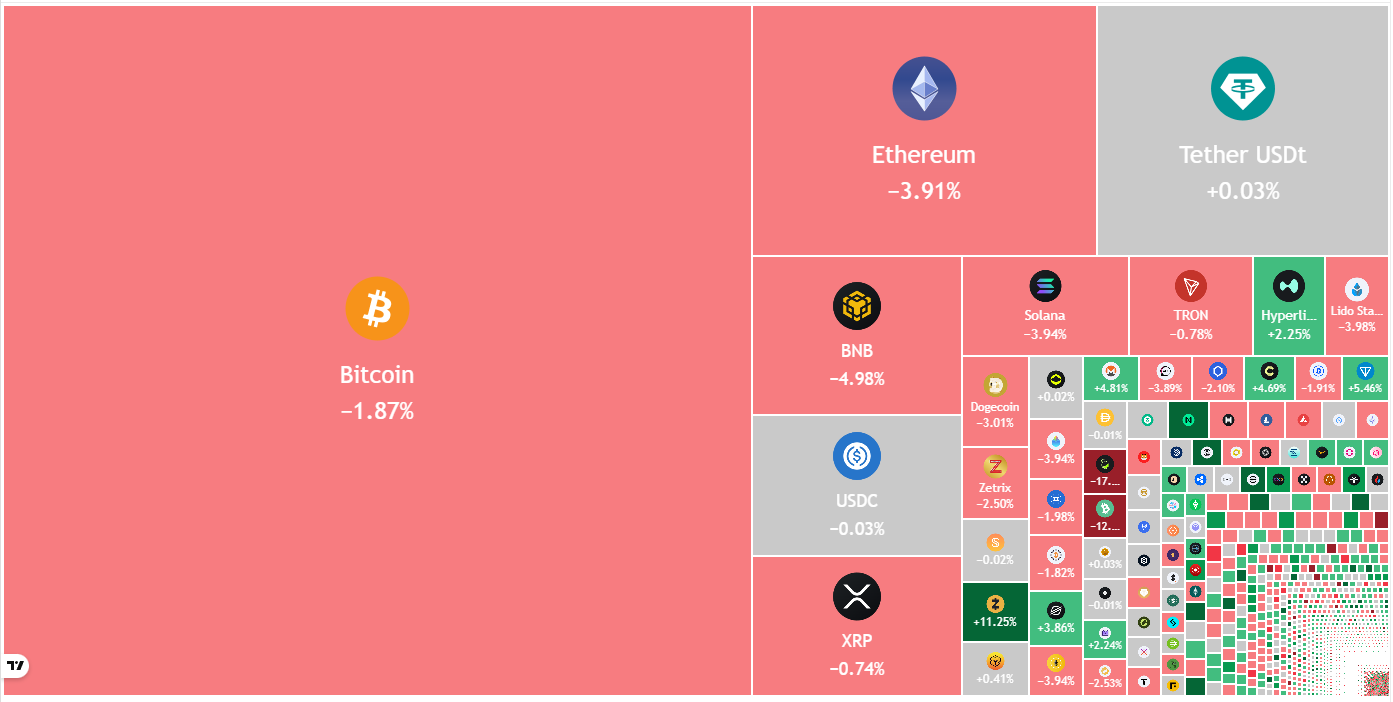
Crypto market data daily view. Source: TradingView
The short-term trend has turned negative, but the bulls are unlikely to give up without a fight. Buyers are expected to enter the $65,000 to $60,000 zone, but relief rallies are likely to be sold into. Volatility is likely to increase over the next few days as the bulls and bears battle for supremacy. Buyers will have to propel the price above $77,000 to signal that BTC has bottomed out in the short term.
What are the crucial support levels to watch out for in BTC and the major altcoins? Let’s analyze the charts of the top 10 cryptocurrencies to find out.
Bitcoin price prediction
BTC collapsed after breaking below the support line on Tuesday, indicating aggressive liquidation of long positions.
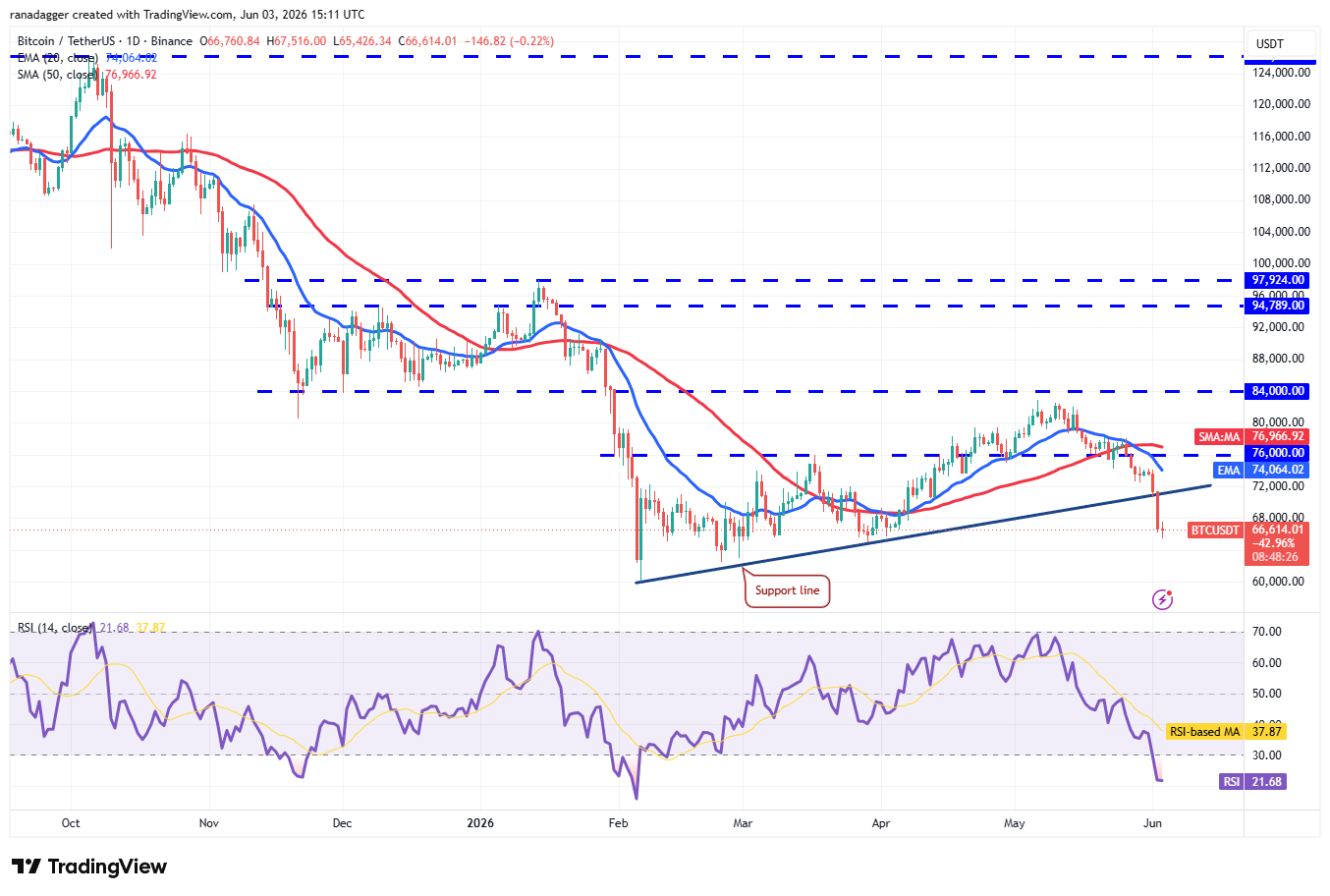
BTC/USDT daily chart. Source: Cointelegraph/TradingView
There is support at $65,000, but that may not hold. That clears the path for a drop to the $62,500 to $60,000 support zone. Buyers are expected to defend the zone with all their might, as a close below it would signal a resumption of the downtrend. The BTC/USDT pair then risks falling to $50,000.
The bears will attempt to maintain their advantage by selling the relief rallies to the 20-day exponential moving average ($74,064). Buyers will have to secure a close above the 50-day simple moving average ($76,966) to signal a comeback.
Ether price prediction
Ether’s (ETH) $1,916 to $2,465 range resolved to the downside on Tuesday, indicating that the bears are in control.
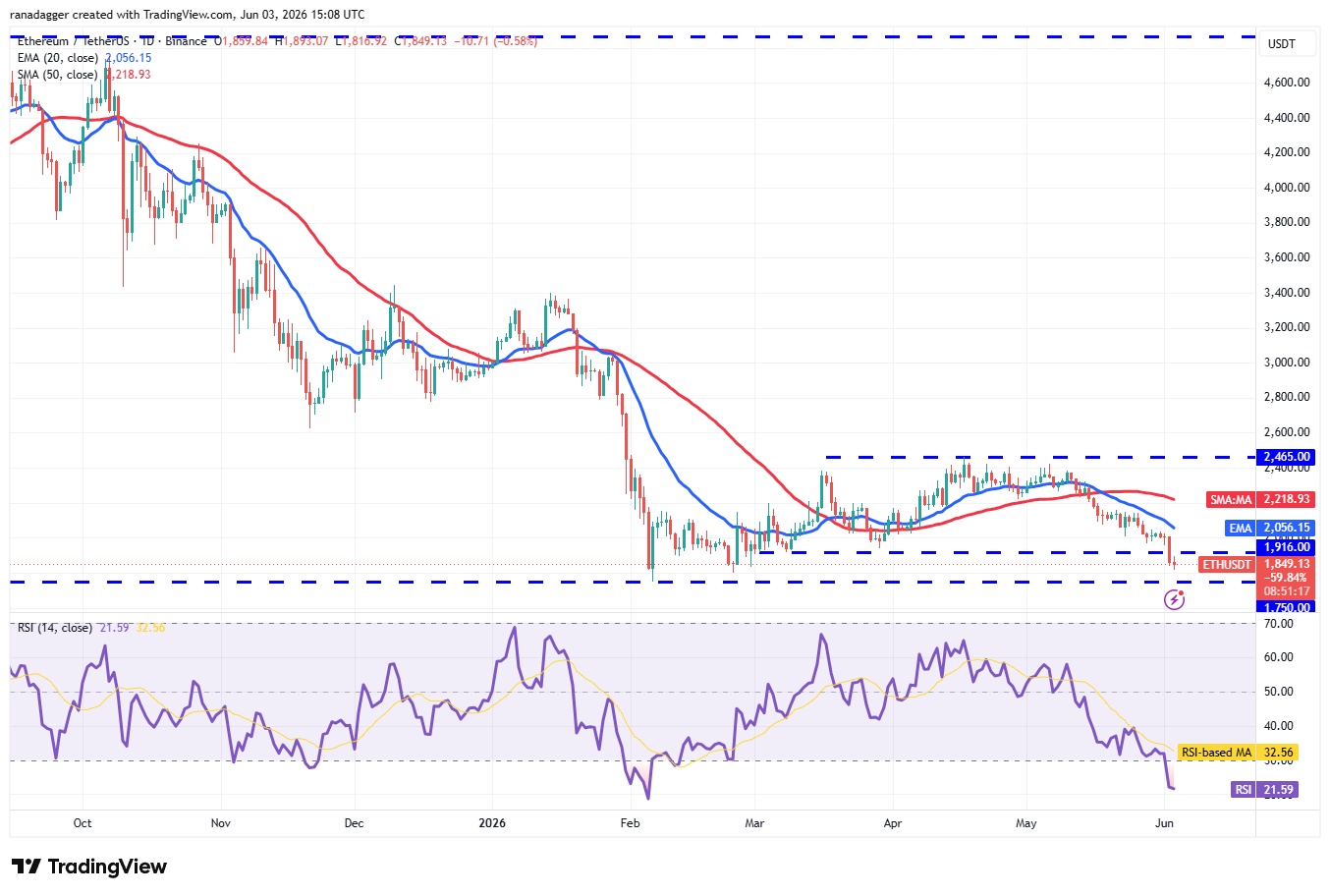
ETH/USDT daily chart. Source: Cointelegraph/TradingView
The ETH/USDT pair may dip to the solid support at $1,750. The oversold level on the relative strength index (RSI) suggests a bounce is possible from $1,750, but rallies are likely to be sold into. A shallow rebound increases the possibility of a break below the $1,750 level. If that happens, the ETH price may plummet to $1,550.
Buyers have an uphill task ahead of them. They will have to swiftly push and sustain the price above the 20-day EMA ($2,056) to suggest that selling pressure is easing. The pair may then rise to the 50-day SMA ($2,218).
BNB price prediction
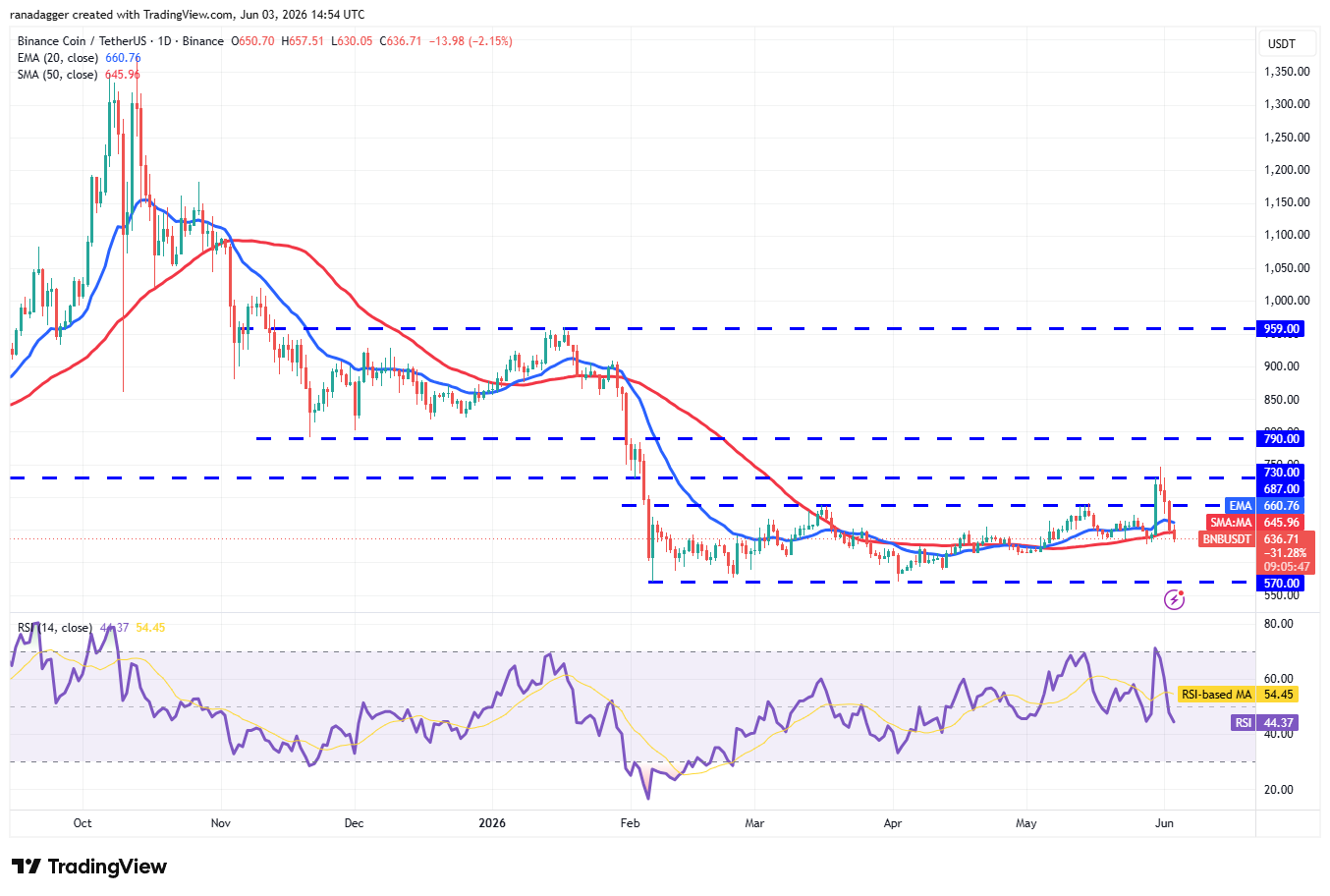
BNB (BNB) fell below the breakout level of $687 on Monday and extended its decline to the 50-day SMA ($645) on Tuesday.
BNB/USDT daily chart. Source: Cointelegraph/TradingView
The drop back below $687 may have trapped the aggressive bulls. The $628 level may act as a temporary support, but it is likely to be broken. If that happens, the BNB/USDT pair may plummet to solid support at $570.
This negative view will be invalidated in the near term if the BNB price turns up sharply from the current level and breaks above $745. That signals solid demand at lower levels. The pair may then march to $790 and later to $900.
XRP price prediction
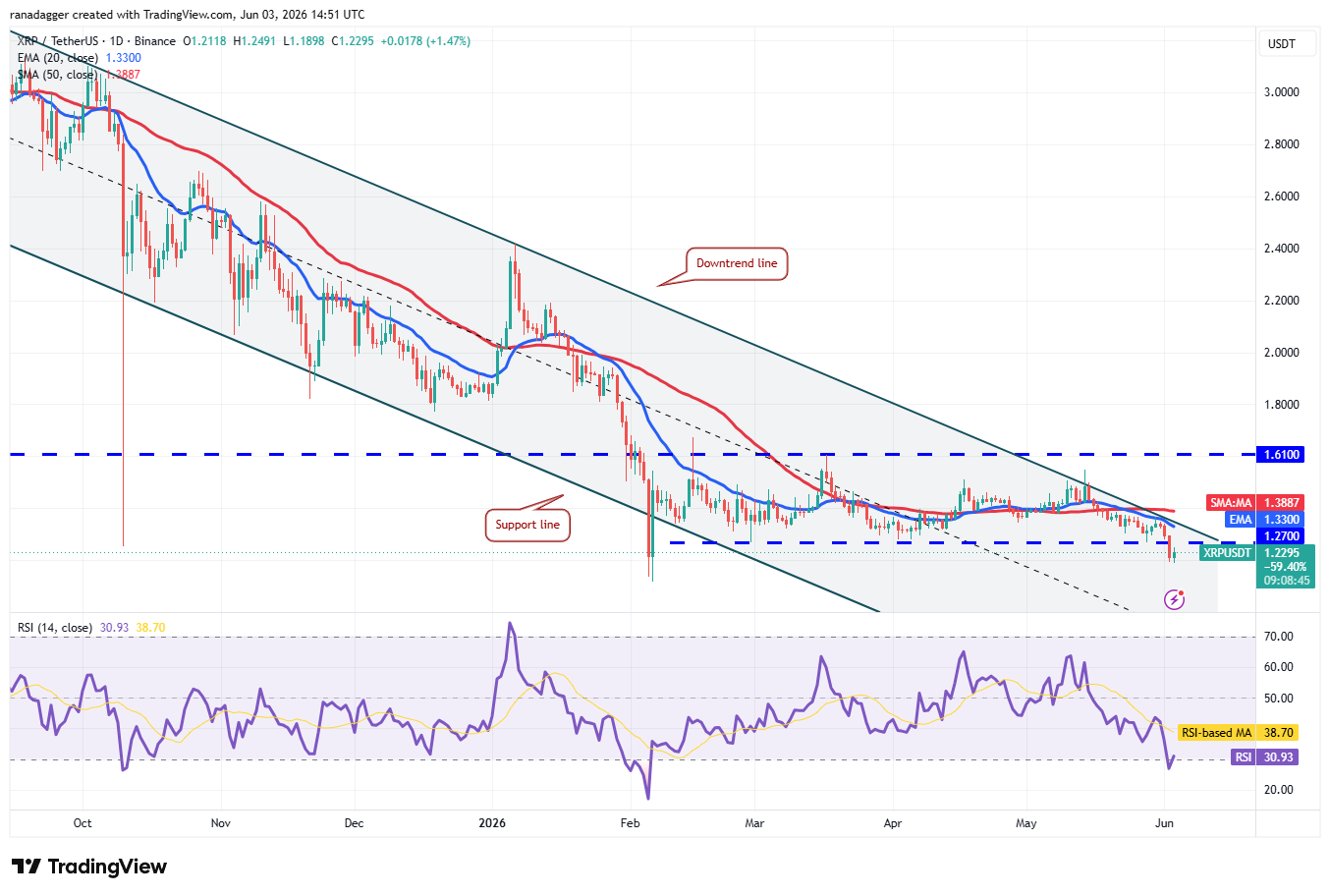
XRP (XRP) broke below the strong support of $1.27 on Tuesday, indicating that the bears are in charge.
XRP/USDT daily chart. Source: Cointelegraph/TradingView
The next support on the downside is the Feb. 6 intraday low of $1.11. Buyers are expected to fiercely defend the $1.11 level, as a close below it signals the start of the next leg of the downtrend to $1.
On the way up, the downtrend line is the first hurdle for the bulls to overcome. If they clear that, the XRP/USDT pair may climb to $1.61. Sellers are expected to pose a substantial challenge at the $1.61 level, but if the bulls prevail, a new up move may begin.
Solana price prediction
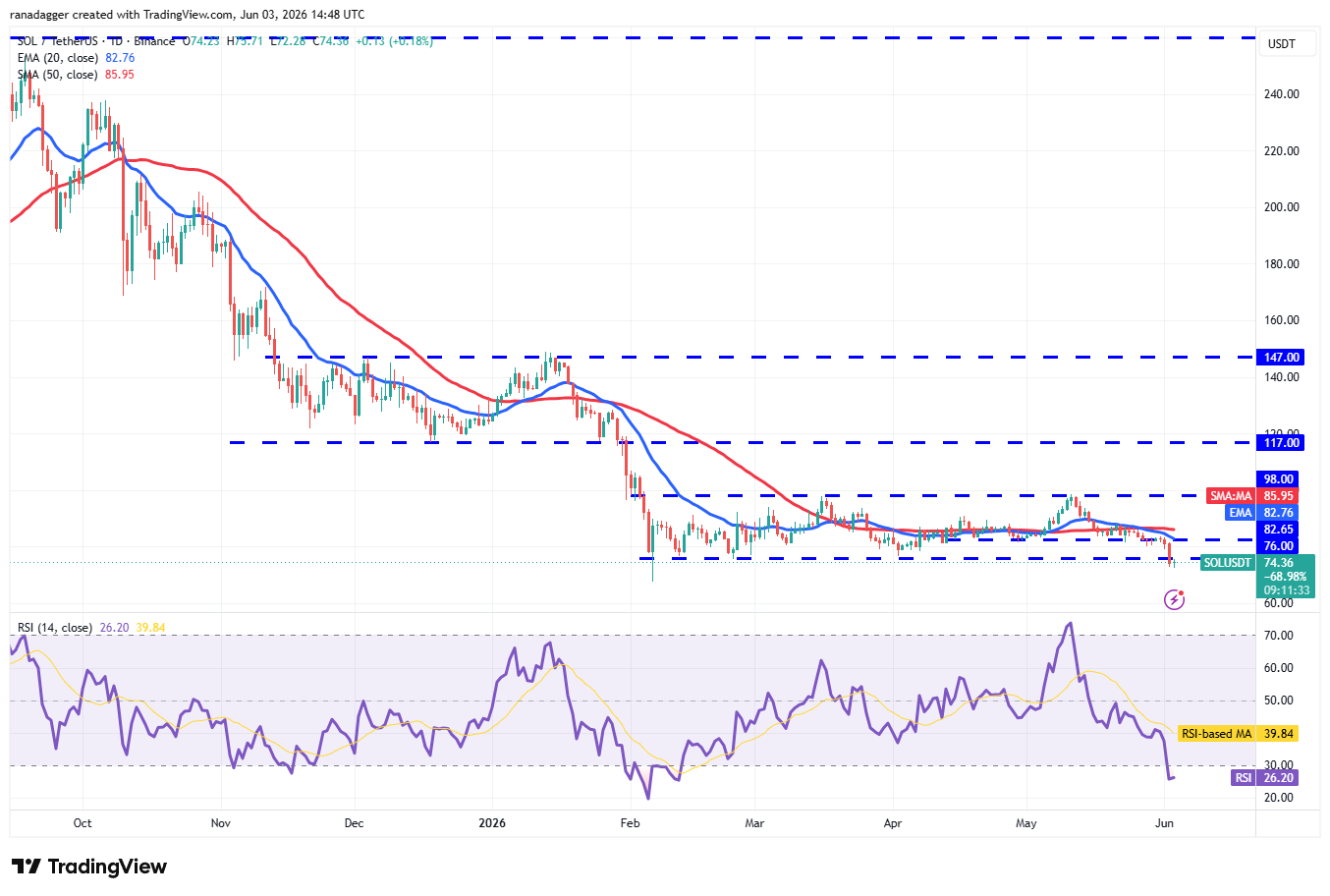
Solana (SOL) closed below the $76 support on Tuesday, indicating that the bears have overpowered the bulls.
SOL/USDT daily chart. Source: Cointelegraph/TradingView
The bulls will attempt to push the SOL price back above $76, but are expected to face significant resistance from the bears. If the price declines from $76, the next stop is likely the Feb. 6 low of $67. Buyers will strive to hold the $67 level, as a close below it may sink the SOL/USDT pair to $60.
Buyers will have to drive and maintain the price above the moving averages to suggest that the break below $76 may have been a bear trap.
Hyperliquid price prediction
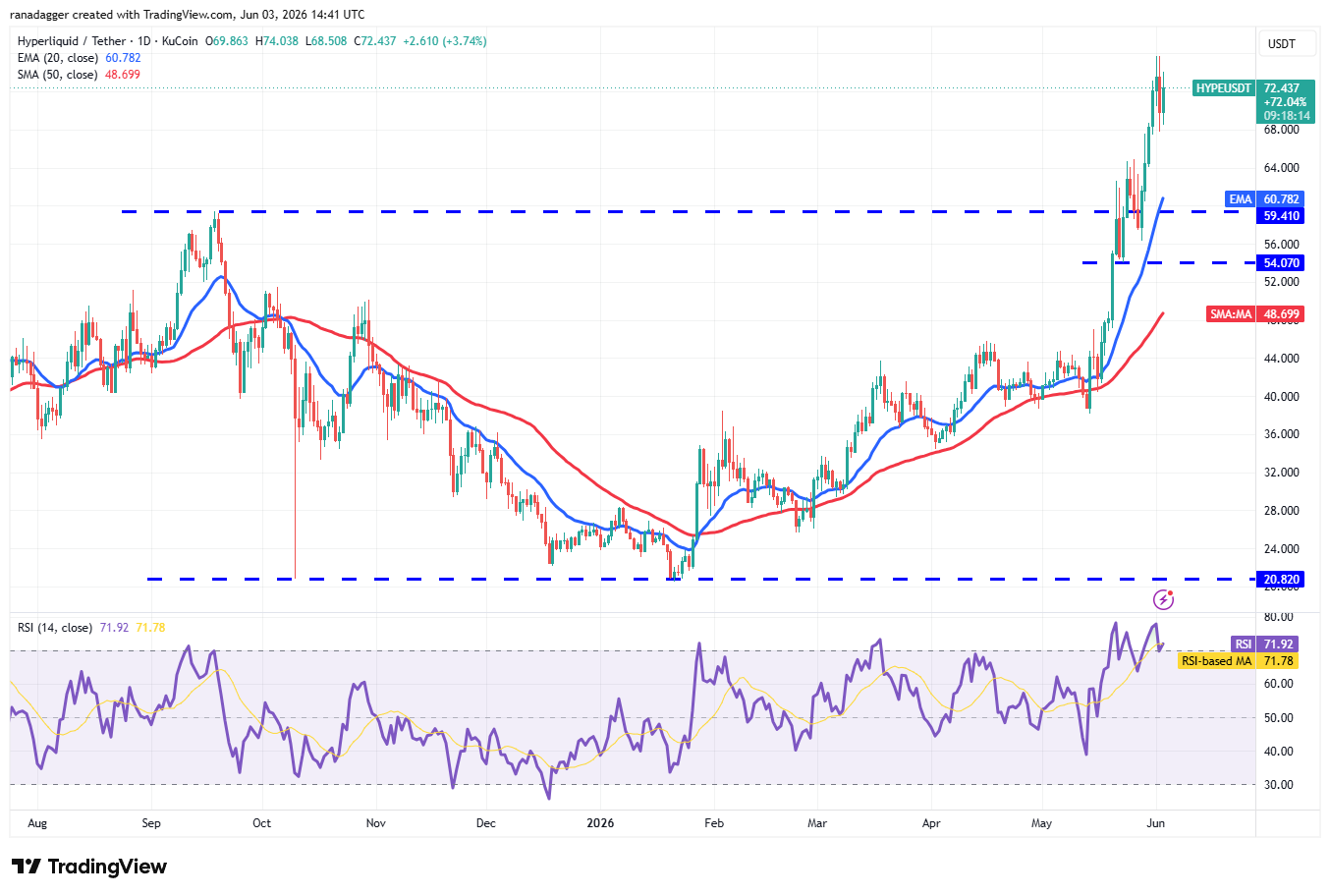
Hyperliquid (HYPE) has held strong among all the mayhem, signaling that the bulls expect the uptrend to continue.
HYPE/USDT daily chart. Source: Cointelegraph/TradingView
Profit-booking was seen near $75, but the shallow pullback suggests the bulls view the dips as buying opportunities. If buyers push the HYPE price above $75, the rally could reach the $85-$89 zone.
The first support on the downside is $64, and then the breakout level of $59.41. If the HYPE/USDT pair rebounds off $59.41, it suggests that the bulls have flipped the level into support. The buyers will then again attempt to resume the uptrend.
Dogecoin price prediction
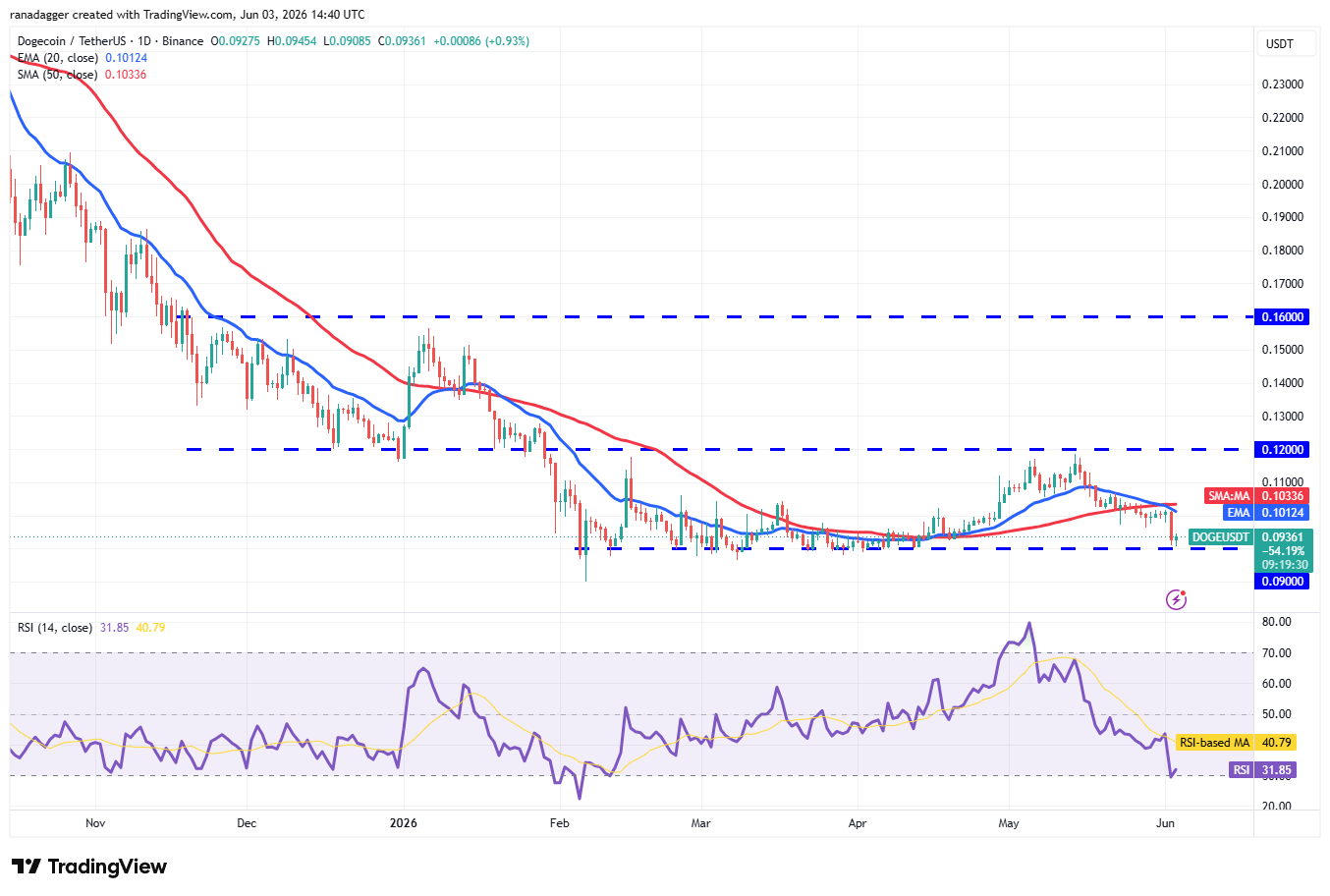
Dogecoin (DOGE) has dipped to the support of the $0.09 to $0.12 range, where buyers are expected to step in.
DOGE/USDT daily chart. Source: Cointelegraph/TradingView
If the DOGE price turns up from the current level, the bears will attempt to halt the recovery at the 20-day EMA ($0.10). If the price turns down sharply from the 20-day EMA, the risk of a break below $0.09 increases. The DOGE/USDT pair may then slump to $0.08.
This negative view will be invalidated in the near term if the price rises above the moving averages. That suggests the pair may extend its stay inside the range for a few more days.
Related: Bitcoin copying 2022 ‘almost perfectly’ as trader sees key support failing
Zcash price prediction
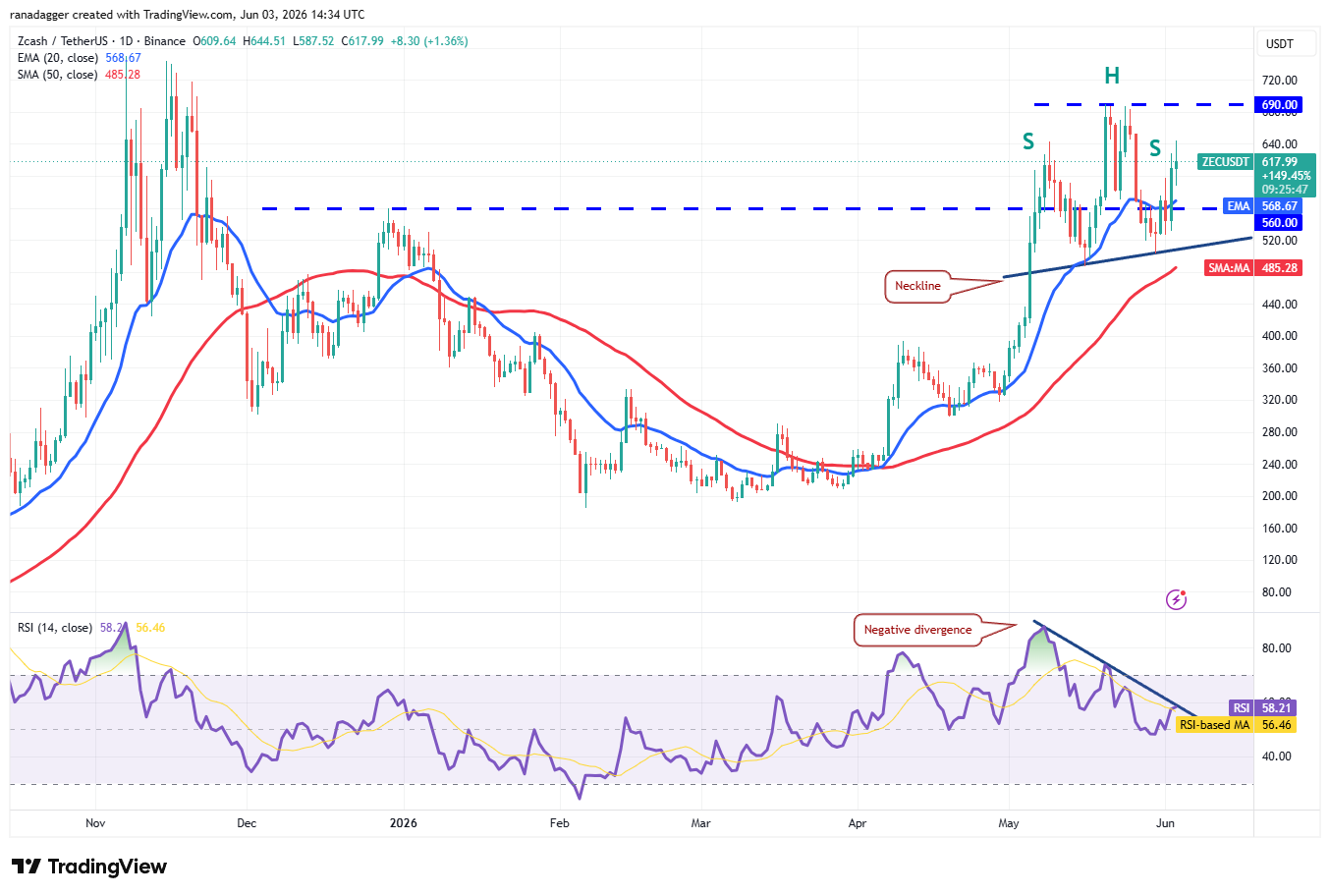
Zcash (ZEC) turned up and closed above the 20-day EMA ($568) on Tuesday, indicating buying at lower levels.
ZEC/USDT daily chart. Source: Cointelegraph/TradingView
The bulls will have to drive and maintain the ZEC price above $690 to signal the resumption of the uptrend. If they manage to do that, the ZEC/USDT pair may rally to $750, where the bears are expected to mount a strong defense. However, if buyers overcome the barrier, the pair may soar to $856.
Sellers are likely to have other plans. They will attempt to pull the price below the neckline of the developing head-and-shoulders pattern. A close below the neckline signals that the pair may have topped out in the short term.
Cardano price prediction
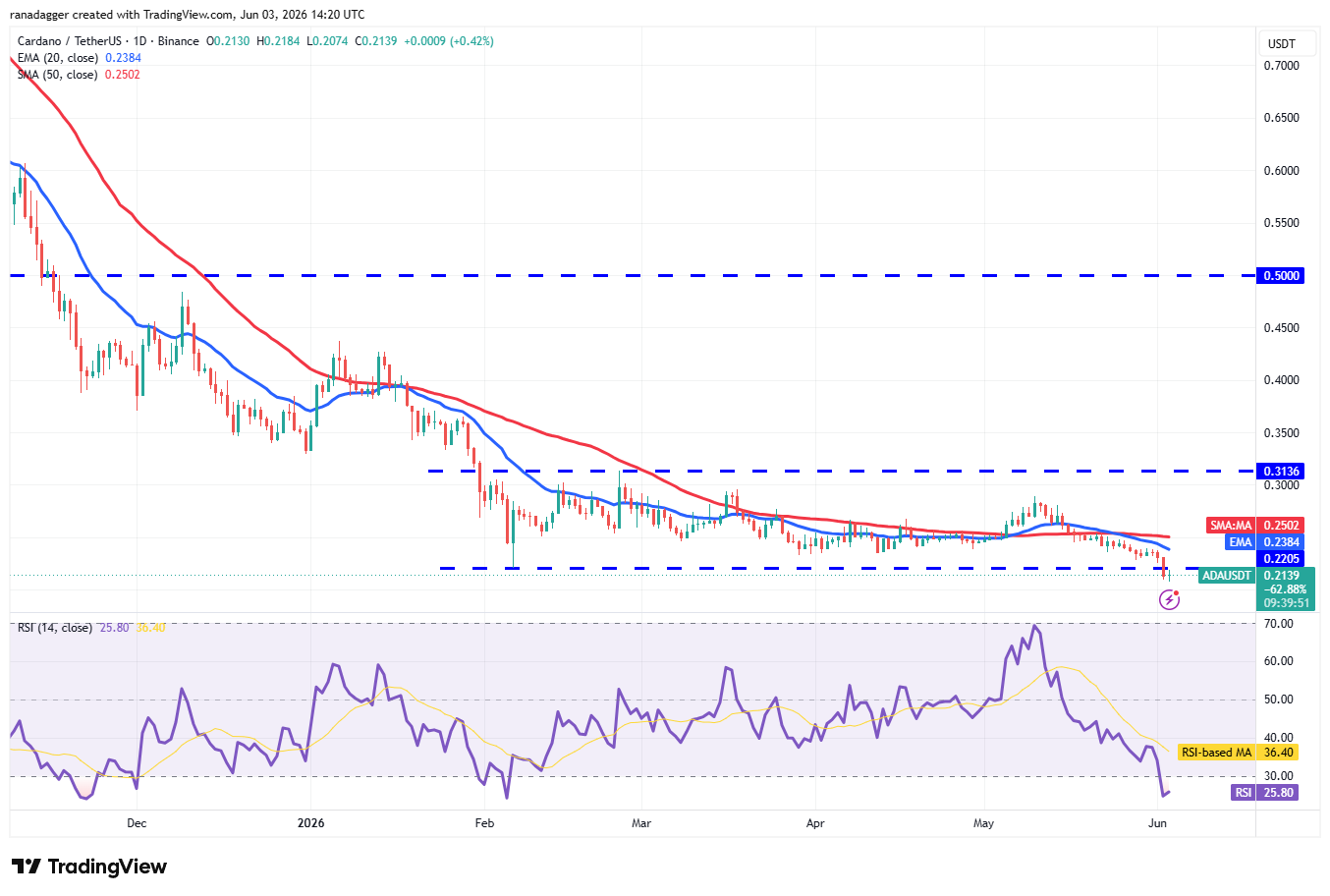
Cardano (ADA) continued lower, plunging below the $0.22 support on Tuesday, signaling the resumption of the downtrend.
ADA/USDT daily chart. Source: Cointelegraph/TradingView
The RSI has slipped into oversold territory, increasing the likelihood of consolidation or a relief rally in the near term. Any recovery attempt is expected to face selling at $0.22 and then at the 20-day EMA ($0.24). If the ADA price breaks down from the overhead resistance, the bears will attempt to pull the ADA/USDT pair down to $0.20.
Buyers will be back in the driver’s seat on a close above the 50-day SMA ($0.25). That suggests the market rejected the break below $0.22.
Stellar price prediction
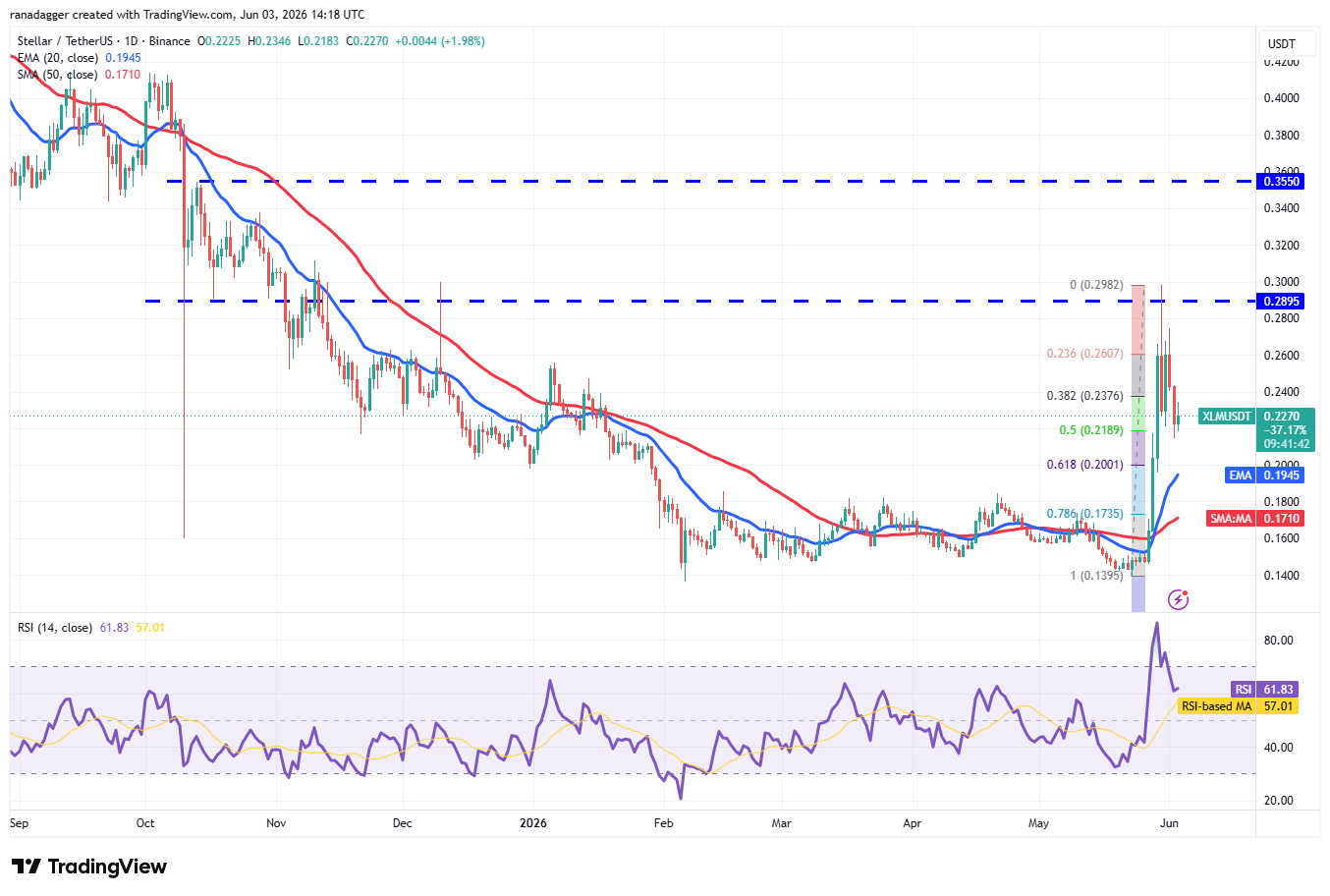
Stellar (XLM) has been in a bull phase of its own, rising from $0.14 on May 23 to $0.30 on May 30.
XLM/USDT daily chart. Source: Cointelegraph/TradingView
The sharp rally prompted profit-booking by short-term traders, pulling the XLM price down to the 50% Fibonacci retracement level at $0.22. If the price rises from the current level, the bulls will attempt to push the XLM/USDT pair above $0.27 and then $0.30. If they succeed, the pair may surge to $0.35.
Contrary to this assumption, if the price declines and breaks below the 61.8% retracement level at $0.20, it suggests the pair may have topped out in the near term.
Crypto World
Bitcoin selloff continues as prices slide below $63,000 for the first time since February
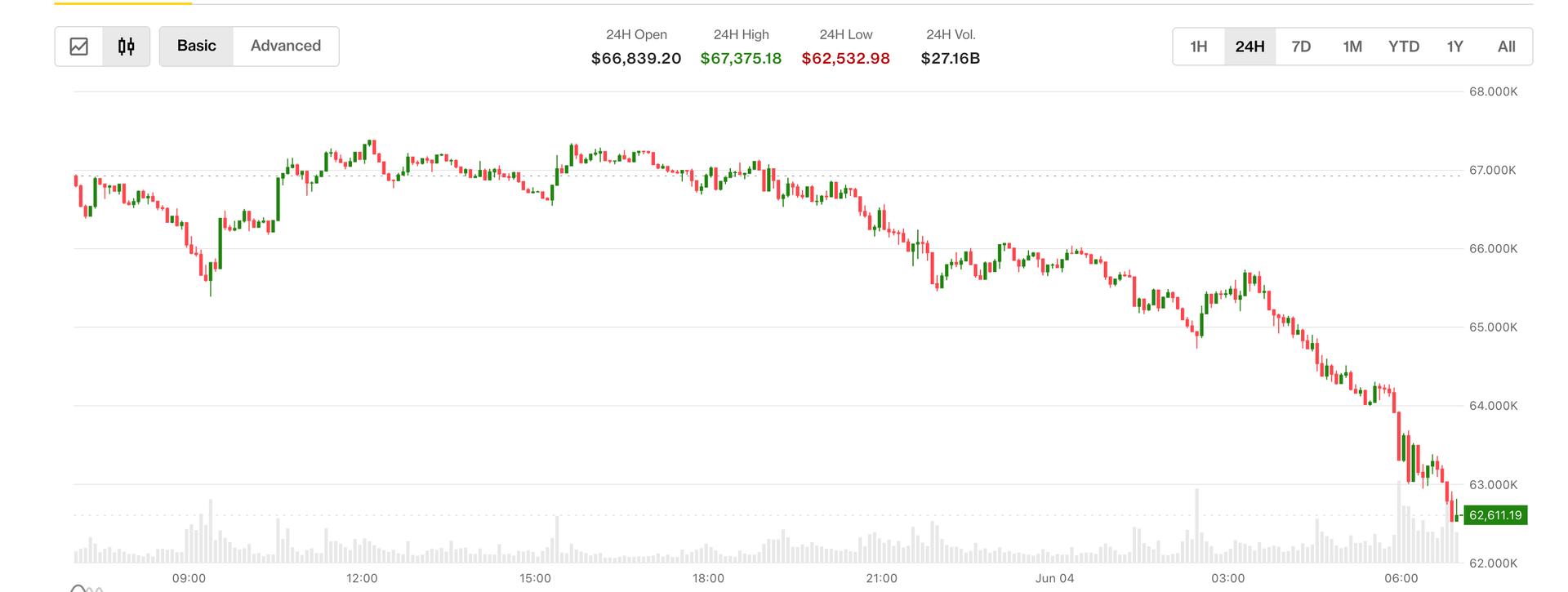
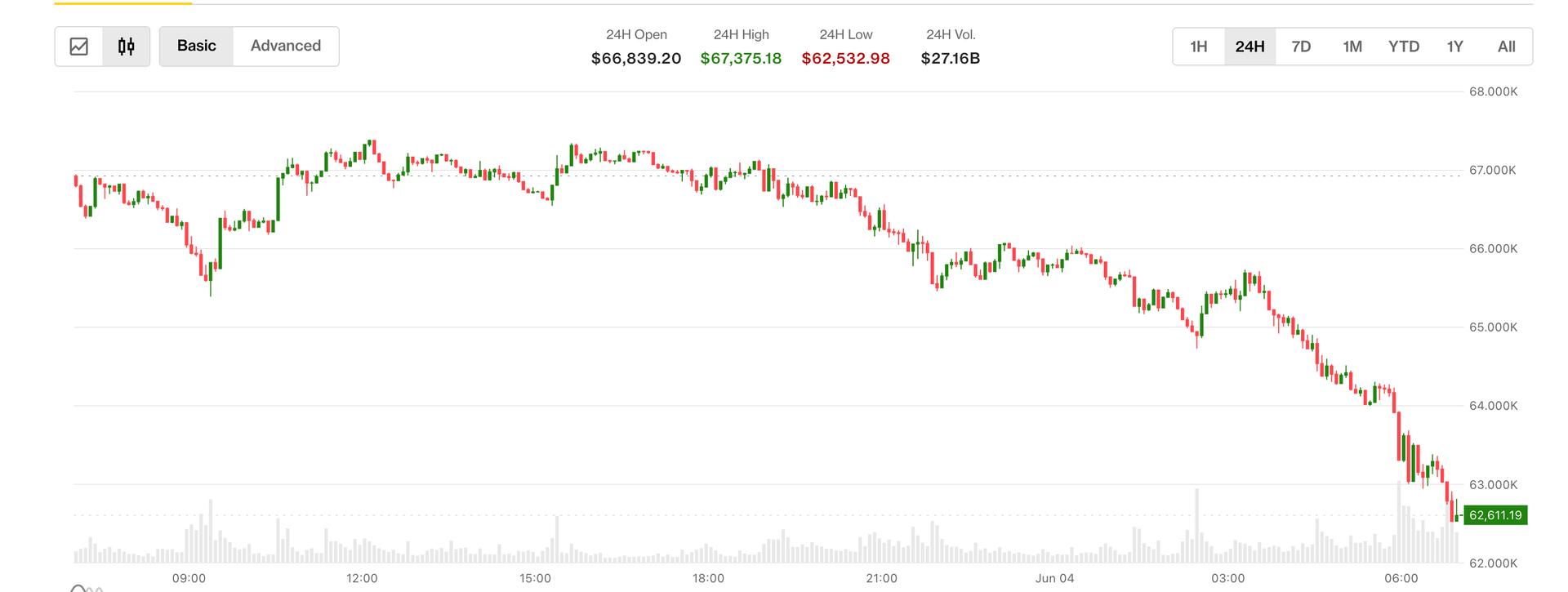
Bitcoin extended losses early Thursday, falling to $63,000 for the first time since February 24. The cryptocurrency has lost over 14% this week alone and 21% over the past four weeks, according to CoinDesk data.
The selloff has triggered demand for protective options plays, pushing the fear gauge, the 30-day implied volatility index BVIV, to 53.17, its highest level since April 2.
Investors yanked another $50 million from U.S.-listed spot ETFs Wednesday, marking the 13th consecutive trading day of outflows from these vehicles, which are viewed as a proxy for institutional demand.
“A broad sell-off in crypto, which started with Strategy’s transfer triggering ETF outflows and is now fueled by speculative news about Mt. Gox liquidations, signals a potential continued sell-off. BTC at $50k is a level some are starting to talk about as a bottom this year,” Paul Howard, senior director at liquidity provider Wincent, said in an email.
“Whilst there is a long way to go, the absence of catalysts and the movement of liquidity into other tech sectors such as AI indicate we have further volatility ahead,” he added.
Some traders are closely watching levels around $60,000 as potential support. The February crash saw prices nearly test that level on some exchanges before the sell-off ran out of steam
“The first major zone I’m watching is the low $60k region, because that is where a lot of important pieces start coming together. We have the local low around $59.9k. We have the 200-week moving average now sitting in that same general area,” analysts at data tracking platform Material Indicators said in an email.
“That does not guarantee support. It simply tells us this is where the market should have to make a decision,” they added.

But Just What Is This ‘Artificial Intelligence’?

Deputy CM Bhatti Vikramarka 1 Crore Financial Assistance To NPDCL Lineman | CVR News

Bernardo Silva’s U-turn over future as his agent drops six-word statement



-

 Tech6 days ago
Waymo dominates autonomous vehicle registrations as Tesla trails behind
-

 News Videos6 days ago
This is BROKEN! INSANE 5x MONEY CAR WASH WEEK! The NEW GTA Online UPDATE Today! (GTA5 New Update)
-
 Tech5 days ago
SpaceX just won a second Golden Dome contract. This one is $4.16 billion.
-

 Business2 days ago
Jade Biosciences, Inc. (JBIO) Discusses Positive Interim Results From JADE101 Phase I Healthy Volunteer Study and Development Plans Transcript
-

 News Videos5 days ago
SHE IS KILLING XRP!!! WATCH URGENT AND ACT FAST
-
 NewsBeat5 days ago
FIRST NIGHT REVIEW: Take That bring the Circus back to life in spectacular sun-soaked style
-
Crypto World5 days ago
CFTC Has Approved the First Regulated Bitcoin Perpetual Contract in the U.S.
-

 Business5 days ago
Is the Spurs Phenom Already Better Than Prime Diesel?
-

 Politics5 days ago
The House | Inside Andy Burnham’s Makerfield Campaign: “Nobody Thinks This Is In The Bag”
-
 NewsBeat5 days ago
Novak Djokovic v Joao Fonseca LIVE: French Open latest scores and results after Jannik Sinner’s shocking collapse
-
 Entertainment5 days ago
Weak ‘Supergirl’ Box Office Tracking Amid Milly Alcock Backlash
-
 Crypto World5 days ago
Snowflake (SNOW) Stock Rallies on Strong Q1 Results and AI Product Growth
-

 Business5 days ago
Demand Conditions Improve In Chemicals Sector In April 2026
-
 Crypto World5 days ago
MicroStrategy Moves $30 Million in BTC to Coinbase Prime: Is the Bitcoin Sell-Off Already Here?
-

 Tech6 days ago
This Week In Security: Ubiquiti Fixes, And FreeBSD Joins The Club You Don’t Want To Join
-

 Entertainment6 days ago
Maddox Jolie-Pitt Legally Requests to Drop Brad’s Surname
-
 Entertainment5 days ago
One of the Greatest Sitcoms of All Time Shoots Up Apple TV’s Charts 11 Years Later
-
 Crypto World2 days ago
Seagate (STX) Stock Surges to Record High on AI Boom and Legal Settlement
-
 NewsBeat5 days ago
Everything you need to know as Cambridge’s Strawberry Fair returns after cancelled year
-
 Entertainment5 days ago
Britney Spears Shares Troubling Update After Hard Year
You must be logged in to post a comment Login