

Tech
Qobuz Is the Anti-Spotify Music Streamer You’ve Been Waiting For

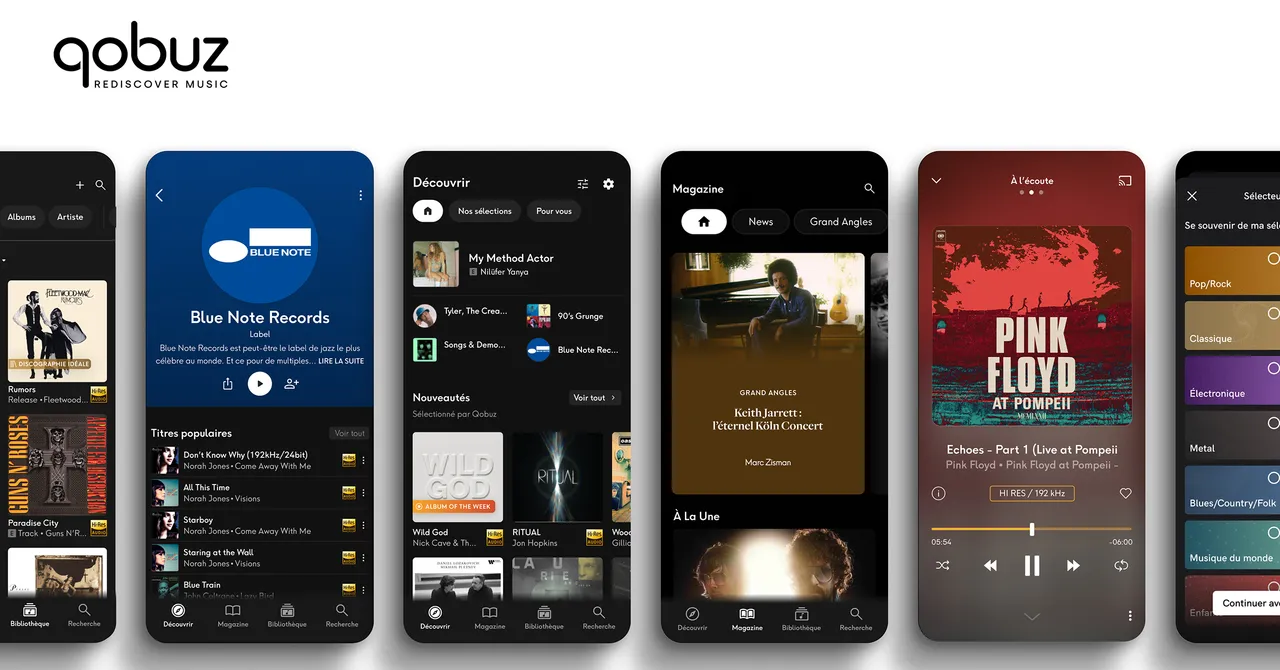
When Dan Mackta, Qobuz’s New York–based managing director, was looking for musicians to endorse the music streaming service after its US launch in 2019, he tapped up a friend—the manager of the Flaming Lips. It was mid-pandemic levels of tricky.
“I flew to Oklahoma to shoot with Wayne Coyne,” Mackta says. “He shows up wearing one of those helmets, with the ventilation system to protect you, a metallic puffer jacket and big silver moon boots.” They couldn’t hear a word Coyne said in the helmet, so the frontman went home and shot the promo video himself: “How to pronounce this weird word ‘ko-buzz.’”
The Qobuz questions after “How do you say it?” are likely “Can I transfer my music library across?” and “Does it have everything?” The answers: yes and almost. Case in point: I recently switched to Qobuz, after nearly 20 years with Spotify. (Emotional.) I used a third-party service called Soundizz to transfer my songs; it took half an afternoon to port, with a more than 90 percent hit rate for my playlists.
One Million Club
I’m not alone, according to Mackta, who landed at Qobuz after years at major and indie record labels—2025 was a banner year for the 19-year-old company. Twelve months ago, Qobuz had around 500,000 subscribers. The French streamer had grown steadily since 2007, targeting “people who already knew what hi-res music was” with its 100 million–plus catalog of lossless CD-quality and 24-bit music.
The first winds of change arrived with Liz Pelly’s January 2025 book Mood Machine, which criticized Spotify’s business practices, featuring interviews with former employees and artists calling for fairer industry economics. As Mackta puts it, “This is not a music company; music was just a means to an end.” It renewed the scuttlebutt amongst artists about low payouts, and Qobuz’s daily US trial numbers started to pick up.
In mid-October, free-tier users started posting the ICE recruitment ads they saw on Spotify, which went viral on TikTok and Instagram Reels. “The day that story broke was our biggest day ever in the US,” Mackta says. Qobuz saw another spike in numbers, plateauing until Spotify’s own marketing convinced more people to switch in early December. “The second best day was Spotify Wrapped,” he says. Qobuz hoovered up everyone from audiophiles and “conscious consumers” responding to boycotts like Death to Spotify and Indivisible, to K-pop superfans searching for high-quality downloads.
Qobuz now has 1.2 million active monthly users, and its streaming revenue shot up 45.7 percent in 2025, compared to 8.8 percent growth in overall paid music streaming. Around a third of its revenue now comes from the US, its biggest market. Those are still teeny numbers next to Spotify (293 million paid subscribers) and Apple Music (more than 100 million). “For us to say we’re gonna compete with Apple or Amazon,” Mackta says, “we might as well say we’re trying to launch a rocket.” Qobuz’s goal is to reach 1 percent of the paid streaming market; under its French CEO Denis Thébaud, it expects to reach profitability by March 2027.
Higher Payouts
For years, Qobuz had popped up in posts by artists bemoaning being paid “a quarter of a cent per stream” on big platforms versus “a much higher number” on Qobuz. Wading into digital payment structures to labels and rights holders can get murky, with low transparency, vague payout ranges and, same as it ever was, conflicts between labels and artists. But in multiple evaluations and artist anecdotes, Qobuz has the highest pay-per-stream, edging out rival hi-res music service Tidal and, in some cases, paying out five to six times as much as Spotify.
An average per-stream rate is an artificial metric, which doesn’t reflect how everyone gets paid. But in March 2025, the company released that all-important number, verified by an independent auditor: Qobuz pays an average of $0.01873 per stream, or $18.73 per 1,000 streams. “We knew we had the best number so we thought we’ll just lay it down,” Mackta says. “Anyone else want to tell us what theirs is? They don’t.” Spotify’s average per-stream range is around $0.003 to $0.005 per stream, or $3 to $5 per 1,000 streams.

Tech
Clearaudio N2 MM Cartridge Debuts With Featherlight German Precision and Heavyweight Vinyl Sound
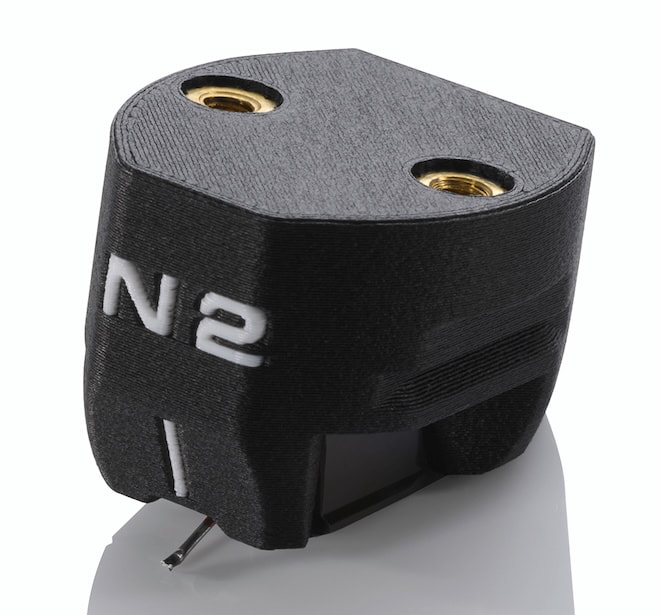
Clearaudio did not exactly hide at High End Vienna 2026. The German analog specialist rolled into the show with new turntables, artist editions, and a Rammstein-branded deck that became one of the more talked-about analog products on the floor. Because apparently nothing says precision vinyl playback like industrial metal, LEDs, and a room full of hi-fi people pretending they were always huge Rammstein fans.
But the product that might matter most to real-world turntable owners is a lot smaller and far less theatrical. The new Clearaudio N2 MM cartridge is a moving-magnet design priced at just $290 USD, and that puts it directly in the path of Audio-Technica, Grado, Ortofon, and Sumiko, four brands that already own a lot of space in the affordable cartridge conversation.
The N2 is designed for broad tonearm compatibility, which makes it a practical upgrade for a wide range of turntables. Clearaudio carries over the proven motor assembly from the N1, but adds a new carbon fiber-reinforced housing produced using 3D printing technology, with the goal of improving rigidity, resonance control, and long-term consistency.
The N2 may not have generated the same noise as Clearaudio’s Rammstein turntable in Vienna, but it could prove to be the more relevant product for listeners looking to improve an existing deck without spending high-end cartridge money.
Clearaudio N2 MM Cartridge Targets the Affordable Upgrade Market
The Clearaudio N2 MM cartridge is built around a simple but important idea: control unwanted vibration before it reaches the generator system.
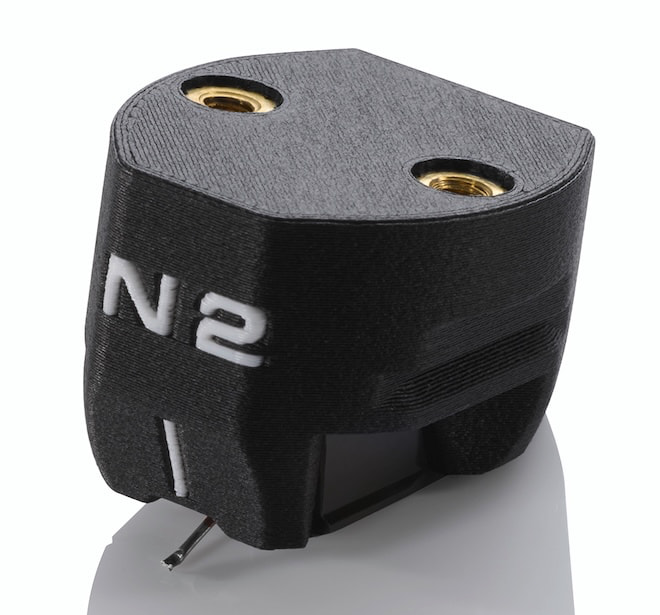
The key change is the new PETG-CF body, a carbon fibre-reinforced engineering polymer that gives the cartridge housing greater rigidity than standard plastic without adding unnecessary mass. Cartridge bodies are not passive decoration. They influence how energy moves through the cartridge, headshell, and tonearm. By using a stiffer, lower-resonance material, Clearaudio is trying to give the stylus and motor assembly a quieter mechanical platform to work from.
That matters because the N2 shares the proven motor assembly of the N1, but moves away from the heavier aluminium body. At 8.5 grams, the N2 is significantly lighter, which broadens compatibility with a wider range of tonearms, including lightweight designs that may not have been an ideal match for the N1. In practical terms, this should make setup easier and reduce the chances of running into compliance, counterweight, or tracking-force issues. Very German problem solving: make it lighter, stiffer, and harder to blame on the tonearm.
Output voltage is rated at 3.3mV, putting the N2 on the same level as Clearaudio’s Concept v2 series. That makes it suitable for standard moving magnet phono inputs without requiring extra gain, a step-up transformer, or other system changes. For most users, the N2 should slot directly into an existing MM setup.
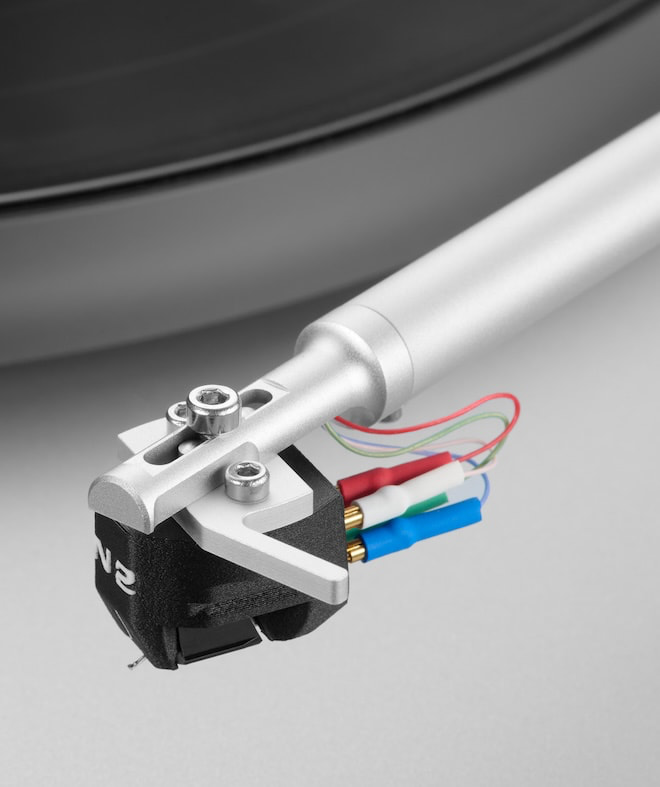
Clearaudio also pays attention to the small installation details. The laser-finished black housing gives the cartridge a more precise, industrial look, while integrated threaded inserts should make mounting more secure and less frustrating than designs that rely on loose nuts and tiny hardware.
At £250, €250, and $290, the N2 is not chasing exotic cartridge money. It is a lightweight, rigid, low-resonance MM design aimed at improving mechanical stability, tonearm compatibility, and everyday usability without turning cartridge setup into a weekend engineering project.
The Bottom Line
The Clearaudio N2’s most interesting feature is not simply that it is another affordable MM cartridge. The hook is the engineering: a 3D-printed PETG-CF carbon fibre-reinforced body, low-resonance construction, 8.5g weight, integrated threaded inserts, and a 3.3mV output that should work with standard MM phono stages. At $290, that puts it directly against the Audio-Technica AT-VM740xML and AT-VM745xML, Goldring E4, Grado Gold4, Grado Opus4, Sumiko Olympia, and the unavoidable Ortofon 2M Blue.
Some of those rivals offer more advanced stylus profiles. Some have stronger name recognition. What Clearaudio brings is materials engineering and resonance control in a lightweight cartridge that should be easier to mount, easier to match, and more practical than a lot of high-end analog hardware wearing a scarier price tag.
Related Reading:


Many electric vehicles (EVs) only take electricity from the grid, but an increasingly growing technology is slowly becoming more prevalent on EVs: bidirectional charging. As opposed to unidirectional (one-way) charging, bidirectional charging allows for electricity to flow in two directions –- in the case of EVs, between the EV and a power source or load. Bidirectional charging effectively turns certain EVs into mobile power banks, allowing owners to use them as a backup generator or even sell excess energy back to the grid with EV power export (EVPE) applications like V2G (Vehicle-To-Grid).
There’s a two-pronged problem (pun intended) with bidirectional charging, though. First, bidirectional charging and EVPE applications, despite growing interest, are still catching on. Automakers like Tesla, Nissan, Volkswagen, and GM all offer a mix of EVPE applications through bidirectional charging, while other EV makers are coming around. Other manufacturers are expected to ramp up production of models with bidirectional charging tech, and General Motors is working towards making it standard across all of its EV models by model year 2026.
Then there’s the issue of battery life, and how bidirectional charging may adversely affect the long-term health of the electric car’s expensive battery. Assessing battery degradation is nuanced, but the consensus is that the extra charge/discharge cycles does slightly increase wear on the battery, according to a study conducted by RWTH Aachen University. But, the overall impact on the battery depends on several factors.
Bidirectional charging includes V2H, V2G, V2L, and V2X
Bidirectional charging consists of three different types: V2H (Vehicle-to-Home), V2L (Vehicle-to-Load), and V2G (Vehicle-to-Grid). Vehicle-to-Everything (V2X) is a blanket term that refers to all of the methods. The presence of these features is determined by the car maker, but they all function just as they sound. V2H allows an EV to supply power to a home’s electrical system, and could save owners up to 90% of charging costs. V2L lets the EV function as a mobile power bank for external loads (laptops, appliances, etc.), while V2G allows the EV to supply energy directly to the power grid, and in turn be compensated for it.
V2G is perhaps the most interesting of the three, as it incentivizes EV owners to contribute to the overall stability and demand of the grid when the car is parked and not in use. The earning potential with V2G varies depending on the program and the utility rates; a study by The University of Delaware shows a passenger EV can make as much as $3,359/year. Other estimates aren’t far off, reporting earning potential at over $3,000/year. A study by the University of Rochester also showed the potential for EV owners to save as much as $150/year on their electric bill while participating in V2G programs.
This, of course, depends on the availability of V2G programs. Texas, California, Connecticut, and Maryland are all leading the way in testing the scalability of V2G through pilot programs.
Bidirectional charging does increase wear on the battery, but it’s complicated …
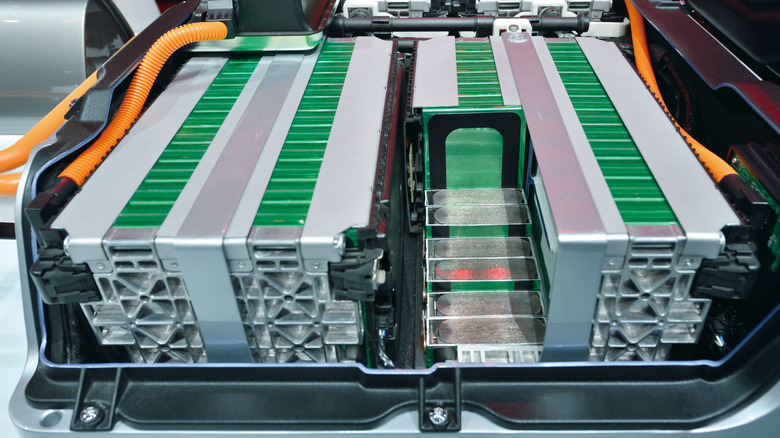
There’s no getting around the fact that increasing the amount of cycles a lithium-ion battery goes through increases the wear and ageing of the battery. The same is true with EV batteries and bidirectional charging. However, there’s cycle aging, and then there’s calendar aging –- increasing one doesn’t necessarily increase the other.
Environmental factors, thermal management, and the conditions in which V2G is being used are important variables when weighing value against battery degradation. Evidence shows that shallow discharge cycles can greatly mitigate degradation, and an IEEE study found that while bidirectional charging can lead to a decrease in battery capacity, heat was the biggest factor.
A study published in Applied Energy shows that over the course of 10 years, cycle age is decreased by 15% under normal EV conditions, whereas it decreased by 25% with V2G application. That same study also showed an average compensation rate of €132/MWh (about $150) for V2G participation. While V2X applications could potentially cost you in the long run, it could also pay for itself, especially if you’re properly maintaining the EV’s battery.
Battery warranty is perhaps the bigger question, as many OEM warranties do not explicitly state warranty coverage for bidirectional charging applications like V2G. While warranty policy is still catching up, some EV manufacturers are slowly updating their warranty language to include some level of bidirectional charging. Both Ford and Nissan have begun to support bidirectional charging, albeit under certain conditions; Ford limits the application to V2H with approved hardware, and Nissan supports specific V2G pilot programs. BYD has agreed to warranty a number of batteries in a V2G trial in Australia. Others, like General Motors, have begun to fully embrace bidirectional charging.


SpaceX is now worth more than Amazon, at least for as long as the rally holds. Shares of the rocket company rose more than 10% on Tuesday, extending a run that began at its market debut and putting it on course to become the world’s fifth most valuable listed company, four trading days after it went public.
The stock was last up 10.1% at $211.80, according to Reuters, which works out to a market capitalisation of nearly $2.8tn if the gains stick. Amazon was last valued at $2.66tn.
The move followed a 19% jump on Monday, the first full day of trading, which itself followed a debut that already ranked as the largest initial public offering ever attempted.
The numbers underneath the rally are unusual enough to merit a second look. More than $1.16bn worth of SpaceX shares changed hands, which Reuters reported was several times the combined trading volume in Nvidia, Microsoft, Tesla, and Apple. A newly listed company outtrading four of the most heavily traded stocks on the market, put together, is not a normal week on the Nasdaq.
Much of that comes down to scarcity. SpaceX’s IPO floated only about 4.2% of the company’s shares, rising to roughly 4.9% once underwriters exercised the greenshoe option in full.
That leaves an extremely thin free float chasing heavy retail demand, the kind of supply-demand mismatch that can move a price far and fast in either direction. A small float is a wonderful thing on the way up.
The starting point was already historic. SpaceX priced its IPO at $135 a share for a $1.75tn valuation, raising $75bn in what TNW and others called the biggest listing on record.
The stock drew demand from retail investors worldwide, including $2.2bn from Japanese buyers alone, a measure of how broad the appetite ran before the first share traded.
The valuation it is now testing rests on a business with one profit engine and several expensive bets. Starlink, the satellite-internet division, generated the bulk of SpaceX’s revenue and effectively all of its operating profit last year, even as its growth maths has got harder and average revenue per user has slipped.
Starship and the xAI operations remain capital sinks that investors are pricing for years of growth they have not yet seen.
For Elon Musk, the arithmetic is personal as well as corporate. The listing handed him a paper fortune large enough to make him a trillionaire, and his and insiders’ voting control of the company survived the float intact. Tuesday’s climb adds to that total on paper, though paper is the operative word while the float stays this thin.
If SpaceX holds the fifth-place spot is a question for the closing bell rather than the premarket tape. A stock that can rise 19% in a day on a sliver of available shares can give the gain back on the same mechanics. For now, a company that was private a week ago is trading just behind Amazon, and the market is still deciding what that is worth.
Tech
Xiaoban Might be World’s First Self-Driving Toilet Robot That Brings Relief Straight to Your Bedside


Yueban, a Tuobang-owned brand that focuses in accessible solutions, debuted their latest innovation , Xiaoban, at the 2026 Shanghai International Aged Care, Assistive Devices, and Rehabilitation Medical Expo. This is essentially a mobile smart toilet built specifically for people who have mobility challenges or rely on others for daily care.
Simply push one button on the remote or issue a voice command to activate Xiaoban. It zooms about on its own and focuses on its target owing to a network of sensors and an internal AI that monitors its surroundings in real time. This allows it to easily avoid furniture, doorways, and other obstructions, ultimately landing at your selected location, whether it’s beside your bedside or elsewhere in the house. Consider it the opposite of your typical toilet routine, in which you must get up and go to the loo rather than the loo coming to you.
Sale

iRobot Roomba Plus 505X Combo Robot Vacuum & Mop + AutoWash Dock, Auto‑Empties up to 75 Days, Extending…
- A DEEPER CLEAN—EVEN WHERE DIRT LOVES TO HIDE. With advanced DualClean Mop Pads and PerfectEdge technology the Roomba Plus 505X reaches deeper into…
- THE DOCK THAT HANDLES THE DIRTY WORK. The AutoWash Dock empties debris for up to 75 days and washes, refreshes, and heat‑dries mop pads—so you…
- POWERFUL ENOUGH FOR REAL‑LIFE MESSES. From scattered cereal to muddy pawprints, enjoy confident cleaning with up to 70× stronger suction* paired…
Once it’s in place, you can sit back and relax on the stable-looking seat, and the armrests and backrest help you stay as relaxed as possible while using it. Once you’re finished, the robot will take care of everything on its own. There’s warm water for a bidet wash, a warm blast of air to dry you off, and a last flourish of ultra violet light to disinfect everything, all while its smart odor isolation mechanism keeps any leftover odors under control.

When you’re finished, simply get up and walk away, or indicate that it’s safe to return to base, and Xiaoban will return to its docking station, which is connected to your home’s plumbing system. It has an inbuilt grinder that grinds down waste, eliminating the possibility of pipe obstructions. Then it goes through a self-cleaning procedure, replenishes its water, and charges its battery so it is ready to go the following time.

Xiaoban’s navigation engine is driven by a 3D obstacle avoidance AI combined with some very slick multi-sensor fusion technology, which provides a real-time view of the room’s layout as it moves around. There are even LiDAR and other detectors that allow it to change direction on the fly if something gets in the way. The low-profile design ensures stability on any floor, and the controls are large and easy enough for almost anyone to use, even if they have limited hand strength.

Yueban created a mock-up of a home atmosphere for the event so that attendees could get a true sense of what the product is all about. The researchers demonstrated how easy it is for the robot to glide out of its dock and into a bedroom with no assistance from anyone. People were able to watch the obstacle avoidance system in action and assess how effectively it handled a real-world room, furniture, and distances between things. Caregivers, facility workers, and even the elderly would come over to check out the controls, asking all sorts of practical questions about how to operate the item on a daily basis.

Yueban’s team had been developing Xiaoban with the intention of using it in private homes, elder care facilities, and other settings. In China, it will cost around 28,999 yuan (approximately $4,000), but we don’t know how much it will cost or when it will be available in other countries.
[Source]

France’s domestic intelligence agency is dropping Palantir. The DGSI will replace the American firm’s data-analysis tools with software from ChapsVision, a French company, Prime Minister Sebastien Lecornu said on Tuesday, framing the switch as part of a wider push to put sovereign technology at the centre of the French state.
The timing is the part worth pausing on. Palantir announced the renewal of its three-year DGSI contract in December 2025, extending a relationship that had run for the better part of a decade.
Six months later, the agency that signed that renewal is preparing to walk away from it. The French government did not explain how the two decisions sit together, and it is an awkward sequence to read in order.
The replacement is ChapsVision’s ArgonOS, an AI-powered data-processing platform built by the firm controlled by the entrepreneur Olivier Dellenbach. ChapsVision had positioned itself for exactly this moment, having competed in a French procurement process launched in 2022 for a heterogeneous-data-processing tool, alongside the Thales-Eviden joint venture Athea and others.
As of late 2025, none of the domestic candidates had reached operational stage, which is part of why Palantir kept the contract in the first place.

The 💜 of EU tech
The latest rumblings from the EU tech scene, a story from our wise ol’ founder Boris, and some questionable AI art. It’s free, every week, in your inbox. Sign up now!
That gap between ambition and readiness has been the recurring French story on Palantir. Sovereignty was always the stated goal, and the practical absence of a homegrown tool that could match Palantir’s performance kept pushing the deadline back.
The announcement is, in effect, the government deciding the alternative is now good enough to commit to, whether or not the procurement record fully agrees.
The move arrives inside a broader European turn against the company. Germany’s domestic intelligence service, the BfV, recently chose ChapsVision over Palantir for its own data analysis, and the Bundeswehr has been pressing for a secure cloud in which no foreign firm has structural access.
Palantir has, accordingly, been facing German military rejection and investor jitters at the same time. In Britain, the government has been reviewing its £330m NHS contract with the firm. The pattern is European governments reconsidering how much of their most sensitive infrastructure should run on American software.
The reconsideration has a beneficiary class, and France has been building it deliberately. The ChapsVision decision landed the same day Lecornu confirmed that French civil servants would get an AI assistant powered by Mistral, the company the government most often holds up as Europe’s sovereign answer to the American labs.
Mistral’s chief executive, Arthur Mensch, has argued for two years that Europe must own and operate its own AI infrastructure rather than rent it, and the DGSI switch is that argument applied to the most sensitive corner of government.
What has not been disclosed is the timeline for the handover, the value of the ChapsVision contract, or what becomes of the Palantir agreement that was renewed only months ago.
Migrating an intelligence service from one analytical platform to another is not a flip of a switch, and the practical transition is likely to run well beyond the announcement. Palantir did not immediately comment on the French decision.

Prime Day is just around the corner, and while AI has tried its best to spoil our beloved tech gadgets and accessories, Yeedi has a few neat deals in store. The robot maker has already kicked off its early Prime Day deals, offering discounts of up to 67% across some of its most popular models. What’s interesting here is that Yeedi is also offering Prime Protection. In simple terms, if you buy an eligible robot vacuum now and its price drops even further during Prime Day, Yeedi says it’ll refund the difference. So you don’t have to play the usual waiting game and wonder if a better deal is coming next week
Yeedi Prime Day Deals

The standout deal is easily the Yeedi S14 Plus. Normally priced at $1,200, it’s currently available for just $499. For the money, you get a robot vacuum with a powerful 18,000Pa suction system and a built-in mop. In expert reviews, the S14 Plus picks up over 80% of sand from hardwood floors and delivers respectable carpet performance as well, making it a solid all-around option for most homes. If you’re looking for a robot vacuum that can handle everything from pet hair to sticky kitchen messes, this is probably the one we’d recommend.
The Yeedi M14 Plus is getting a healthy discount too. The price drops from $600 to $400. It’s a great vacuum for everyday cleaning, performing on par with the S14 Plus on normal surfaces. However, it falls behind the S14 Plus when carpets enter the equation. That’s why we’d still lean toward the S14 Plus if you want a more versatile cleaning companion. On the other hand, if your home is mostly hardwood, tile, or laminate flooring, the M14 Plus becomes a very compelling option at this price.
Starting June 23, shoppers can grab the Yeedi M16 Infinity for $499.99, down from its usual $799.99 price. The company is also discounting the S20 Infinity to $699.99, which is a substantial drop from its original $1,199.99 price. If you’re looking for something more premium, the S20 Infinity Ultra will be available for $849.99 instead of $999.99. Meanwhile, the S16 Plus drops to $499.99 from $699.99. Yeedi is also teasing a deal on an upcoming product called the C14 Pro Plus. Once it launches, the robot vacuum will be available for $279.99, down from its regular price of $349.99.

Looking for the most recent Strands answer? Click here for our daily Strands hints, as well as our daily answers and hints for The New York Times Mini Crossword, Wordle, Connections and Connections: Sports Edition puzzles.
Today’s NYT Strands puzzle was a bit challenging, but the answers were fun. Some of them are difficult to unscramble, so if you need hints and answers, read on.
I go into depth about the rules for Strands in this story.
If you’re looking for today’s Wordle, Connections and Mini Crossword answers, you can visit CNET’s NYT puzzle hints page.
Read more: NYT Connections Turns 1: These Are the 5 Toughest Puzzles So Far
Hint for today’s Strands puzzle
Today’s Strands theme is: For here or to go?
If that doesn’t help you, here’s a clue: Time to eat.
Clue words to unlock in-game hints
Your goal is to find hidden words that fit the puzzle’s theme. If you’re stuck, find any words you can. Every time you find three words of four letters or more, Strands will reveal one of the theme words. These are the words I used to get those hints but any words of four or more letters that you find will work:
- WAND, SAND, HAND, LOAD, SUNG, DRAW, LUNCH, WASH, MUNCH, SPAT, SPATS, PAST, PATS.
Answers for today’s Strands puzzle
These are the answers that tie into the theme. The goal of the puzzle is to find them all, including the spangram, a theme word that reaches from one side of the puzzle to the other. When you have all of them (I originally thought there were always eight but learned that the number can vary), every letter on the board will be used. Here are the nonspangram answers:
- GYRO, SOUP, WRAP, RAMEN, SANDWICH, SALAD, TACOS
Today’s Strands spangram
The completed NYT Strands puzzle for June 16, 2026.
Today’s Strands spangram is WHATSFORLUNCH. To find it, start with the W that’s the first letter on the top row, and wind over and down, kind of forming a numeral 7.
Toughest Strands puzzles
Here are some of the Strands topics I’ve found to be the toughest.
#1: Dated slang. Maybe you didn’t even use this lingo when it was cool. Toughest word: PHAT.
#2: Thar she blows! I guess marine biologists might ace this one. Toughest word: BALEEN or RIGHT.
#3: Off the hook. Again, it helps to know a lot about sea creatures. Sorry, Charlie. Toughest word: BIGEYE or SKIPJACK.


While Microsoft sweeps the confetti off the floor of its Build event, it may be a good moment to reflect on what it didn’t say as much as what it did. Taking the spotlight was AI agent Scout, ready to “understand how work gets done” and “take action without needing to be prompted.” The software behemoth’s leading database, SQL Server, barely got a mention.
On its own, it may not be a big deal, but Microsoft watchers also noted that long-time SQL Server champion Rohan Kumar left the company in June, while Arun Ulag, president of Azure Data, currently holds the SQL Server remit. He’s also responsible for the Fabric analytics and AI platform and a portfolio of open source database services.
Taken together with the news that Microsoft’s own terms and conditions allow customers to take SQL Server licenses to AWS’s RDS database service without paying twice – thanks to a feature that lets them provide their own SQL Server installation media – the vibe around SQL Server has changed.
“I don’t think it is a priority,” said Andrew Snodgrass, research vice president of analyst company Directions on Microsoft. “With Kumar leaving, that’s become very evident. I think the world of Ulag, but [SQL Server] is not where his focus is for the future. I’m afraid Microsoft are going to leave it languishing.”
He said his concerns for Microsoft’s flagship DBMS began when the 2022 version was released with a “bunch of Azure integration capabilities that no one was really asking for.” It ended up being “more of a marketing release than something that was truly engineered to meet customer needs,” Snodgrass said.
While the introduction of vector search in the 2025 edition was welcomed by users, PostgreSQL, MongoDB, and Oracle users had been benefiting from the feature for years.
“At Build, Arun Ulag stood up there and talked about all the new stuff: highlights of the database news there was HorizonDB, a PostgreSQL database service with a new form of scale-out capability,” Snodgrass said.
“There was no news about SQL Server, which was stunning, because SQL Server 2025 just came out at the end of last year, and in that they put in AI vector search, which I think is one of the greatest additions to SQL Server I’ve seen in ten years.”
But it seems Microsoft is as interested in its PostgreSQL and other open source database services as it is in its own SQL Server offering. So long as it drives workloads in Azure, it is all good for Microsoft, Snodgrass said.
“It’s the kind of thing Dad might say: it’s not that I’m angry at Microsoft for what they’ve done to SQL Server, I’m just disappointed,” he said.
A Microsoft spokesperson said: “Customers have real choice in how they run SQL Server, and we’ve designed our licensing to be clear and flexible across environments. We’re fully committed to SQL Server and continuing to invest in its innovation, security, and long-term support so customers can confidently run their most critical workloads and build what’s next.”
Microsoft first released SQL Server in 1989 as a 16-bit version for the OS/2 operating system, which was a joint project with IBM. Despite challenges from Oracle, open source systems like PostgreSQL and MySQL, as well as a string of NoSQL databases such as MongoDB, it remains highly popular with users and developers. It is third behind Oracle and MySQL – ahead of PostgreSQL – on the DB-Engines ranking, which measures citations, Google data, and job searches. In the Stack Overflow survey of professional developers, it ranks fourth behind PostgreSQL, MySQL, and SQLite, but well ahead of Oracle, which lies in tenth.
Adam Ronthal, vice president analyst at Gartner, said Microsoft’s approach to SQL Server can be explained by looking at two different priorities.
First, despite the hype around the cloud and AI, Microsoft made around $15 billion in revenue from the on-prem DBMS market, largely from SQL Server. It’s second in terms of market share (33 percent) only to Oracle, which holds nearly 40 percent of the on-prem DBMS market.
“If you look at Microsoft’s growth in the on-prem business in 2025, they were growing around 8 percent, so Microsoft continues to have a business in the on-prem that is growing in high single digits,” he said.
There is no way that Microsoft will walk away from that kind of revenue, Ronthal told The Register.
Meanwhile, SQL Server customers represent a good opportunity for Microsoft to convert users to Azure SQL, and the SQL database in Fabric, its data analytics environment, as they are built on a consistent database engine. Microsoft wants people to see that Azure provides a seamless path to build and scale AI applications with deeply integrated data services, security, and governance.
However, Ronthal added that specific compatibility would depend on the implementation of T-SQL in the application users want to move.
“As we go full into managed services, I don’t have full control over the underlying operating system, and I might not have the same level of control over the configuration of the database itself.”
For commercial, off-the-shelf software, the ease of migration would depend on the vendor certification, he said.
As well as wanting to defend its on-prem SQL Server revenue, Microsoft also sees that AI and cloud are driving the market.
In the cloud, the market is dominated by a family of databases based on PostgreSQL or closely related to the open source database.
“The de facto API for relational databases has emerged to be Postgres right now, and so we see many vendors implement wire from compatible Postgres APIs, which provides end users a hedge against lock-in,” Ronthal said.
A string of startups have tried to grab this market, including Cockroach Labs, Yugabyte, and pgEdge, all of which offer distributed capabilities and varying compatibility with PostgreSQL. Microsoft cannot ignore this development, hence its investment in HorizonDB, its own distributed PostgreSQL. Microsoft also has the DBaaS offering, Azure Database for PostgreSQL.
As well as defending the growing on-prem database market, Microsoft is trying to capture the higher growth in cloud databases and catch up with AWS.
As such, it is incorporating operational databases under the Fabric umbrella, including NoSQL database Cosmos, Azure SQL, and Postgres capabilities. “If we look at the drivers of the market right now, which are cloud and AI – Fabric is a core component of AI – then the growth for Microsoft is largely going to be driven by Fabric adoption, where they’re putting a tremendous amount of focus and effort,” Ronthal said.
Nonetheless, Microsoft has deep enough pockets in terms of engineering budget to afford to battle it out on both fronts. In that sense, SQL Server workloads that end up on AWS still make sense.
“Microsoft has some rationalization to do in the portfolio, because there are multiple ways to run SQL Server,” Ronthal said. “You’ve got Azure SQL, managed instances, SQL Server in VMs. These provide slightly different levels of compatibility with what you might be doing in the on-prem world, and right now, the fact that there are multiple options actually makes it difficult for end users to figure out what to do. I would love to see Microsoft make it more unified and easier for people to consume.”
In the cloud DBMS market, AWS has the upper hand by a considerable margin. In 2025, AWS made about $37 billion in cloud DBMS revenue, according to Gartner, while Microsoft made about $18.3 billion.
If a SQL Server customer can leverage an existing investment in Microsoft and bring it to AWS, Microsoft loses that business for Azure, “but on the plus side, they don’t lose a SQL Server customer, and that’s probably more important,” Ronthal said.
Of the leading vendors – Oracle, IBM, Microsoft, and SAP – only Microsoft has grown their market share in the last 15 years, Ronthal pointed out. Microsoft has proved capable of riding out changes in the market with both its cloud services and SQL Server strategy. Whether that’s also good for SQL Server customers might be up for debate, but since support for the 2025 version ends in 2036, they have plenty of time to plan. ®

Longtime Slashdot reader necro81 writes: The heavily promoted, $499 T1 “Trump Phone” was originally said to be “Made in the USA” and ship in September 2025. Later, that was downgraded to “Assembled in the USA.” Given the Trump Organization’s lack of engineering or supply chain expertise, many assumed the “T1” would just be a private-label phone made by someone else. After a number of delays, the first phones are finally shipping.
iFixit has performed a teardown and concluded that the T1 is a just gold-painted 2024 HTC U24 Pro — a device from a Taiwanese company, probably using mainland China design and supply chains. In collaboration with NBC News, the iFixit team examined both phones using CT scans, side-by-side teardowns, and even reassembled a working T1 using a U24 Pro main board. As for “assembled in the USA,” that may be true, in the same sense that your phone’s repairman can “assemble” a phone from a handful of subassemblies sourced from someone else. Or it may have been assembled in Guangdong, China like the other U24 Pros.
iFixit sums it up: “What you have is not an ‘American-Proud Design,’ but a phone designed in China, made in China, with the vast majority of parts sourced from China. I’m failing to find any stirring of American pride within me. I’ve certainly felt it before, so I can confirm that it is absent at this time.” Quinn Nelson of Snazzy Labs on YouTube also published a comprehensive video of his experience ordering, unboxing, and tearing down the phone. “From pre-order emails landing in Gmail spam thanks to botched DMARC records, to paying for the $47.45 Trump Mobile 47 Plan over the phone, the entire buying experience was a disaster worthy of its own review,” writes Nelson.

[This is a sponsored article with the Singapore Government Partnerships Office.]
Singapore’s push in artificial intelligence (AI) has accelerated in recent years, with adoption expected to contribute billions to the economy.
To unlock this potential, the government is creating spaces that bring together industry, researchers, and public sector players to collaborate, innovate and share knowledge.
One such initiative is Lorong AI, launched in Jan 2025 by the Ministry of Digital Development and Information (MDDI). The hub provides a collaborative space for practitioners across sectors to connect, exchange ideas, and partner on AI projects.
Lorong AI has been operating as a pilot initiative at a WeWork co-working space at Cross Street over the past year. There is an activity held almost every day of the week, and in Feb 2026, Lorong AI expanded its operations to a larger space at Vidacity in one-north.
This expansion comes at a pivotal time, as Deputy Prime Minister Gan Kim Yong recently announced on Mar 2, 2026 that Kampong AI—Singapore’s first AI park combining work and living spaces—will be developed at one-north by 2028.
Vulcan Post went down to the new Lorong AI site at one-north to find out more about how Lorong AI is trying to bring people in the industry, as well as other sectors, together.
Lorong AI was inspired by large tech hubs overseas
Speaking to Vulcan Post, Edmund Zhou, director-in-charge of Lorong AI, shared that the idea for the hub came about following a visit by MDDI officers to large tech centres like Silicon Valley and Dubai’s Area 2071, a few years ago.
What they observed at these hubs was not just the presence of capital or talent, but people running into each other, conversations spilling beyond scheduled meetings, and communities forming around shared problems. Natural partnerships emerged from purposeful and incidental interactions.

This gave inspiration to open a place in Singapore where ideas and collaborations on AI can flow as freely as “conversations down an alley.” The name “Lorong AI” was chosen to reflect this vision—a local flavour for a space where people could gather to find out “what the word on the street is” about AI.
“If you are a practitioner, you can easily relate to some of the interesting things happening here,” Zhou said. “And if you are someone looking to explore, adopt, or just learn more about AI, this can also be a place for you.”
Lorong AI’s events can attract hundreds

Lorong AI started with trialling weekly ‘AI Wednesdays’ in 2024, before opening it up to the general public.
AI Wednesdays was created for public officers, and led by scientists, engineers, and researchers, covering various topics from technical deep dives on model development to discussions on emerging industry trends.
As the scope of engagement grew, programmes like ‘Co-working Mondays,’ ‘AI ToolsDays,’ ‘ThursTalks’ and ‘Fri-DIYs’—were added to the programming for the week, with the latest addition of ‘Out of Lorong Experiences’ and ‘Gotong Royong.’
“No two days are the same, as with every week,” said Assistant Director of MDDI, Muhammad Zahari bin Abu Talib, who is also one of the MDDI officers who oversees Lorong AI’s daily operations.
Of course, participant demographics expanded as well. Lorong AI now sees practitioners, industry players, and curious newcomers all coming together to learn from each other and explore potential collaborations.

Although Lorong AI’s initial WeWork space at Cross Street could only seat 70 people, talks by industry leaders from companies like OpenAI, Manus and Figma frequently attract over 100 attendees, far exceeding its capacity.
While the team invites companies to share their insights with the community, they draw firm lines to ensure the collaborative space isn’t used as a channel for product promotion. This keeps the focus on genuine knowledge-sharing and partnership-building.
The importance of face-to-face interactions
At Lorong AI’s newest one-north space, the team foresees more exciting events, workshops, and hackathons to come with its larger 140-person seating space.
It is intentionally designed as an open-concept space, which encourages informal conversations in which anyone can chime in, catalysing future collaborations.

Small, tangible details—like member lanyards or a board showing who’s around—make it easier to spot each other and start talking. With so much AI talent in one place, those casual interactions can quietly grow into new ideas and unexpected partnerships.
While it may seem ironic for a tech-driven initiative to emphasise physical space, the team believes that face-to-face interaction is essential for building the trust that drives partnerships. “If it’s purely virtual, a lot of things seem a little bit more transactional, and then the communication somehow lacks a little bit of the human touch,” Zhou noted.
In addition, if an individual ever needs help in any area, the Lorong AI team would suggest companies or individuals with expertise and link them up.
From conversations to concrete outcomes
In 2025 alone, Lorong AI saw 4,000 attendees across its events. It now has over 260 paying members, about two-thirds of whom are AI practitioners, with the remainder comprising researchers and curious newcomers working on products or programmes.
Besides locals, there have been transient visitors from overseas, who, on their pit stops in Singapore, give talks at Lorong AI’s programmes.

Impressively, more than 14 collaborations have sprouted from discussions at Lorong AI. The team’s goal is simple: “We are trying to increase the number of collisions through both engineered interactions via events and incidental interactions through co-working.”
For example, Zhou shared that a group of members who were comparing AI models ended up collaborating and publishing a research paper together. The paper, co-authored by responsible AI and cybersecurity experts, focused on detecting and disrupting hostile AI agents.
Another instance saw an individual with a limited AI background come into Lorong AI, thinking of ways to launch a business. Through involvement in the community, they acquired the skills and knowledge needed to develop an AI coach for physical fitness.
Lorong AI as a foundational piece of the bigger AI puzzle

Loy Hui Chien, one of the first distinguished contributors, shared that having a space like Lorong AI is vital to the AI scene in Singapore.
As someone who doesn’t work in the technology space, he has found the community at Lorong AI to be pivotal to his AI journey, from self-learning fundamentals to building a research agent that can curate sources and produce reports in minutes.
Especially for a small country like Singapore, we can do more with (more) synergy fostered amongst the AI community in spaces like Lorong AI.
Loy Hui Chien
Zhou, who has been closely involved in the initiative, sees it as a reinforcing loop: the more value participants derive from the space, the more like-minded individuals it attracts.
As Singapore positions itself in the global AI race, Lorong AI aims to play a role in building the collaborative networks that will drive the nation’s AI future.
Lorong AI will play a contributing role [to support Singapore’s AI landscape]. What we hear from people who come is that they appreciate having a community they can turn to.
Edmund Zhou
This vision of creating collaborative spaces extends beyond Lorong AI to initiatives like the upcoming Kampong AI, further cementing Singapore’s commitment to partnership-driven AI development.
In a domain defined by algorithms and automation, Lorong AI is betting that the real differentiator may still be something fundamentally human: the power of conversation.
You can find out more about Lorong AI here, and sign up for programmes through this link.
Inspired by Lorong AI’s community-driven approach? Beyond project guidance, the Singapore Government Partnerships Office has launched a new SG Partnerships Fund to support citizen-led initiatives at different stages of development.
Featured Image Credit: Lorong AI

The xAI Trojan Horse Inside SpaceX's IPO

DTCC picked Stellar to tokenize wall street: Explained

Bunnie Xo Slammed Split Rumors Before Jelly Roll Divorce


-

 Business2 days ago
No Jackpot Winner as $257 Million Prize Rolls Over to $269 Million Monday Draw
-

 Crypto World5 days ago
Oppenheimer backs SpaceX as $70 billion retail frenzy builds
-

 Fashion4 days ago
Weekend Open Thread: Tuckernuck – Corporette.com
-

 Crypto World5 days ago
Markets Rally as SpaceX IPO Looms Amid Iran Tensions and Inflation Surge
-
 Crypto World2 days ago
Zimbabwe Requires Crypto Businesses to Register Annually Under New FIU Regulations
-

 Tech3 days ago
NanoClaw integrates JFrog registries to secure AI agent downloads
-
 Sports7 days ago
Bangladesh beat Australia after 20 years in ODIs, register only their second win over six-time world champions | Cricket News
-

 Crypto World3 days ago
Bitget enters Argentina’s regulated crypto market through PSAV registration
-

 Tech4 days ago
This Week In Security: Microsoft On Microsoft, Register Your Domains, Linux On ARM, And FreeBSD Joins The File Cache Club
-
 Tech5 days ago
Dutton Ranch star claims they ‘didn’t see any disruption’ on set following Chad Feehan’s exit from Yellowstone spinoff fueled by Taylor Sheridan clash rumors
-

 NewsBeat5 days ago
El Nino has formed in the Pacific and could set records, forecasters say
-

 Business6 days ago
Thailand Ranks Second Worldwide for AI Adoption Growth, Microsoft Reports
-

 Tech6 days ago
‘This is Seattle’s position on AI’: City Council votes unanimously to pause big new data centers
-

 Politics5 days ago
Politics Home | Healey Resignation Is “Colossal Failure Of Government”, Says Former Labour Defence Secretary
-
 Entertainment5 days ago
Donnie Wahlberg & More Heat Up Las Vegas at Circa’s Barry’s Downtown Prime
-
 Tech5 days ago
Opendoor Ends India Operations, Fueling a Bigger Conversation About AI and Outsourcing
-

 Sports5 days ago
First Time Since 1971: Australia Register Historic Low In ODI Cricket
-

 Politics5 days ago
Belfast burns, while Met chief points finger at Iran and Russia
-

 NewsBeat4 days ago
FBI searches office of Ohio voter registration group
-

 Business5 days ago
AT&T: Verizon's 27% Outperformance Sets Up A Solid Entry Point
You must be logged in to post a comment Login