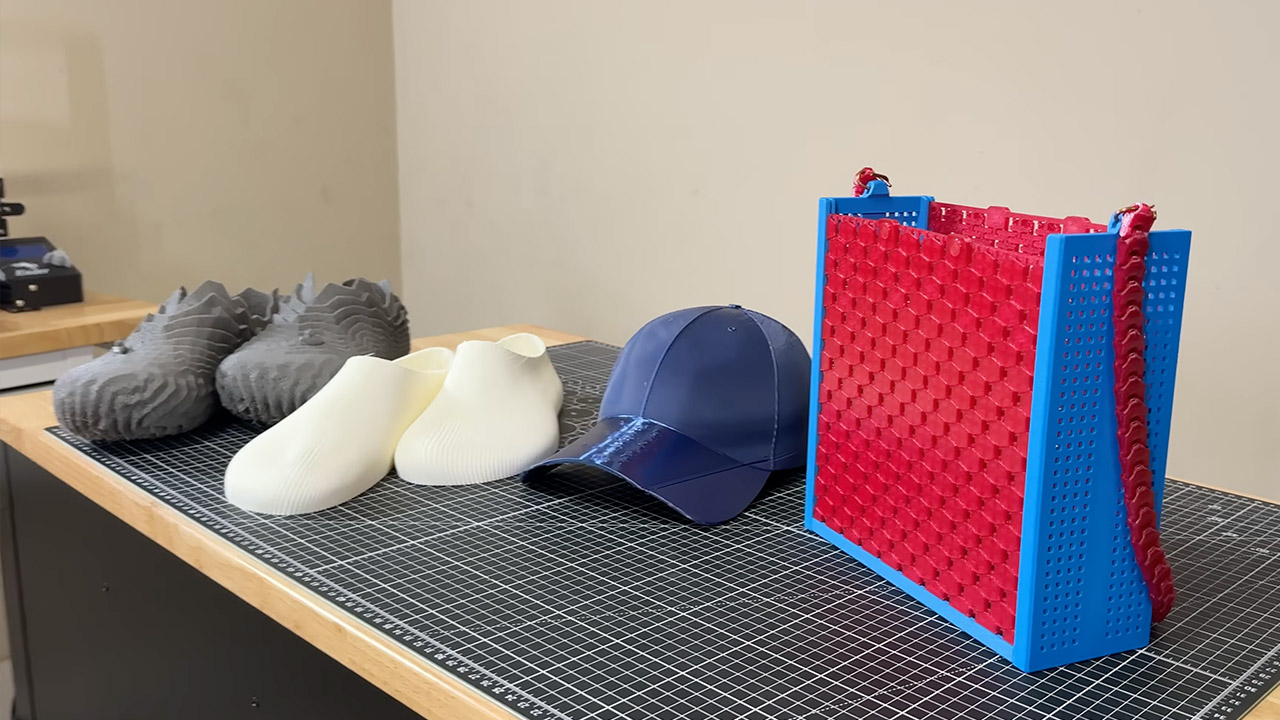
Matthew Trahan has turned his workshop into a testing ground for unusual ideas. Past projects included full-size musical instruments, bedroom furniture, and even a life-size copy of himself. Each build pushed what desktop machines could handle. His newest effort went further still. He set out to create every single piece of clothing he would wear, starting from rolls of plastic filament and ending with something he could actually put on.
At first, the notion appeared to be as simple as checking off a list: make a shirt, shorts, shoes, socks, hat, belt, wallet, bow tie, glasses, watch, and bag without ever going to a store or cutting any fabric. Most of the files for the pieces were available online from public model sites, but before the printer began laying down the first layer, the owner spent 33 hours fine-tuning the drawings on his computer to meet his measurements. The actual job began with printing, which took weeks. His trusty Prusa Core 1L handled the larger portions, such as the shorts. Smaller printers took care of the rest. The overall print time came to 560 hours, which included a lot of waiting about. The project used more than 8,000 grams of filament. That’s about 8 kg, and the filament used was as different as the products themselves. Flexible TPU was employed for shoes, socks, and hats because, well, you need material that bends and cushions in a foot-related application. Stiffer PLA and PETG were utilized for the outfit’s more structural components, such as the shirt and shorts. As for the cost, it came out to a nice figure of $25 to $30, but don’t forget to factor in the cost of the printers themselves, which was not included.
A1 mini + LED Lamp Kit for Creative Light Projects: Bring your ideas to life with the included LED Lamp Kit. Simply print compatible lamp models and…
The Perfect 3D Printer for Beginners: A1 mini 3D Printer is designed to make 3D printing easy from day one with automatic calibration, simple setup…
Experience the Bambu Lab Ecosystem: Access MakerWorld’s huge library of ready-to-print models, manage prints through the Bambu Handy app, and enjoy…
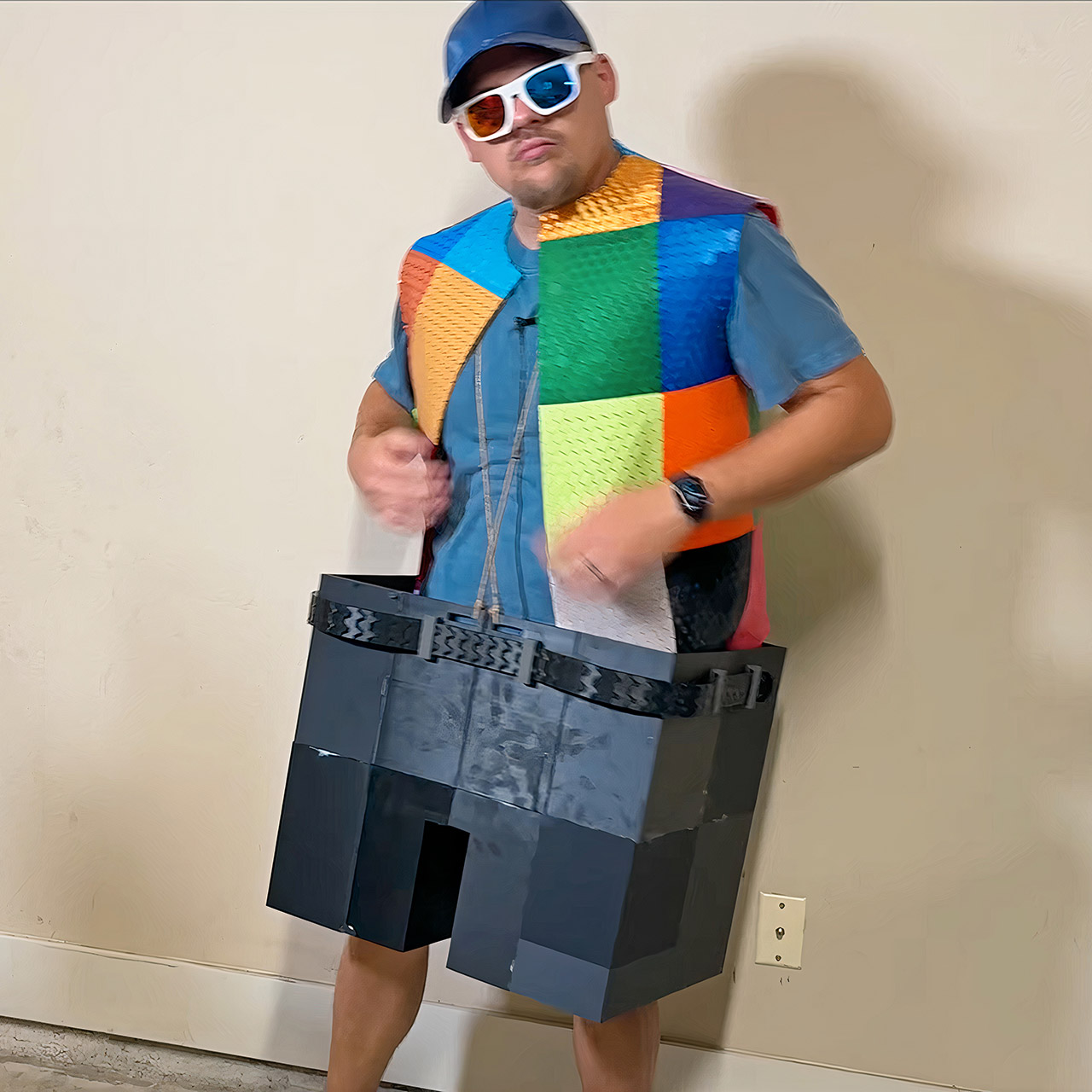
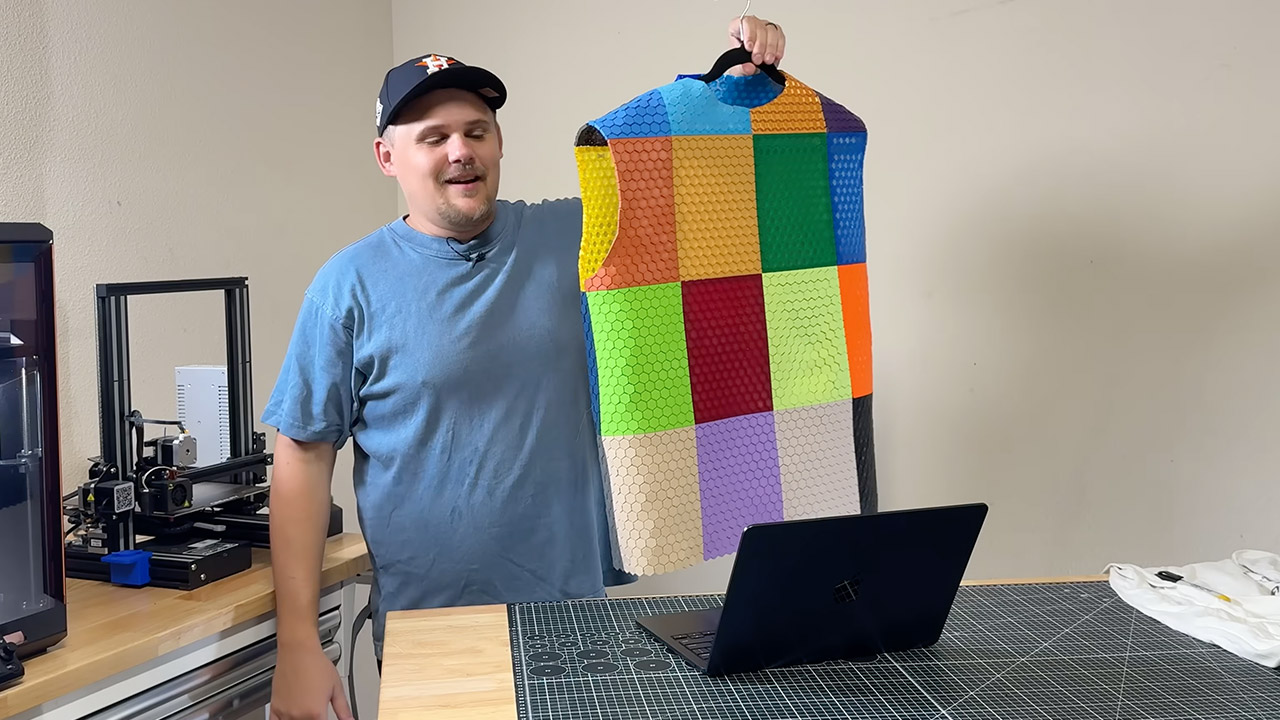
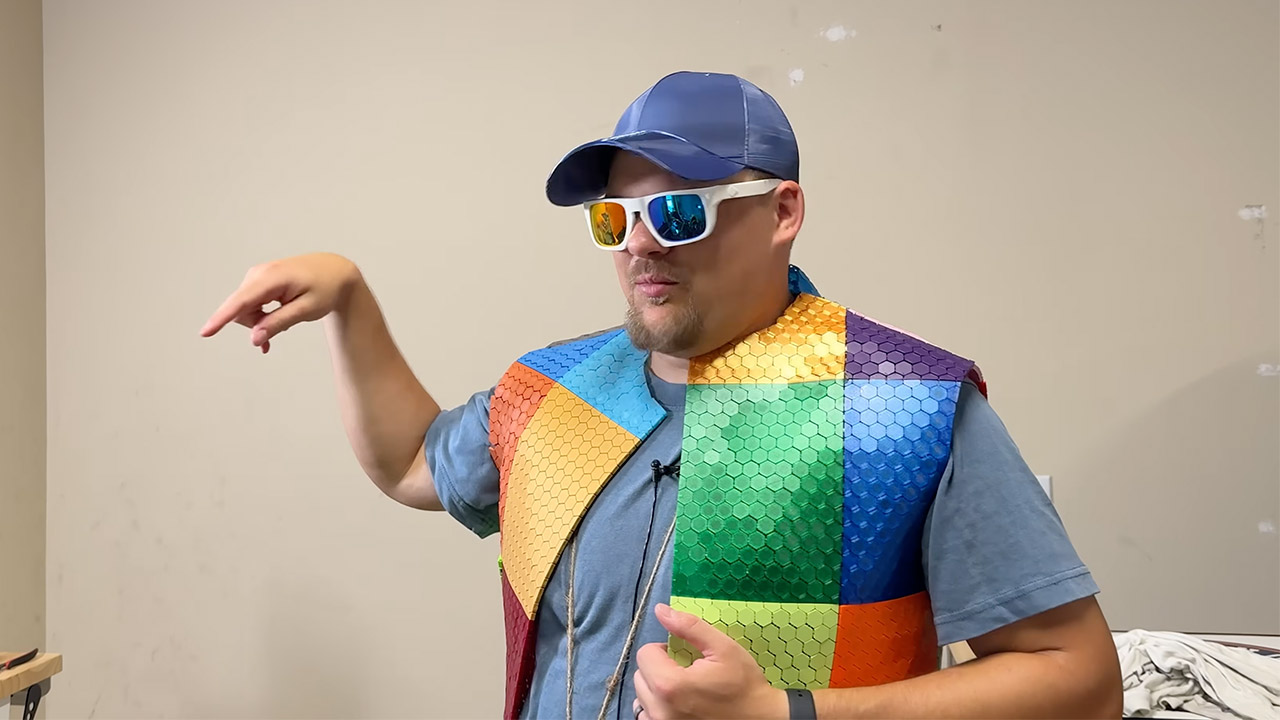
The shirt was the true highlight of the outfit, with interlocking hexagonal shapes giving it a distinct look and feel. Small gaps and flexible connectors allowed for some give, and magnets were utilized to hold the modular portions together. Finally, everything was put together! You get a stiff-looking garment that really retains its shape, giving it the appearance of costume armor rather than something you’d wear on a daily basis. The sleeves proved to be a bit of a problem, and the general fit was a little loose in some spots and tight in others.
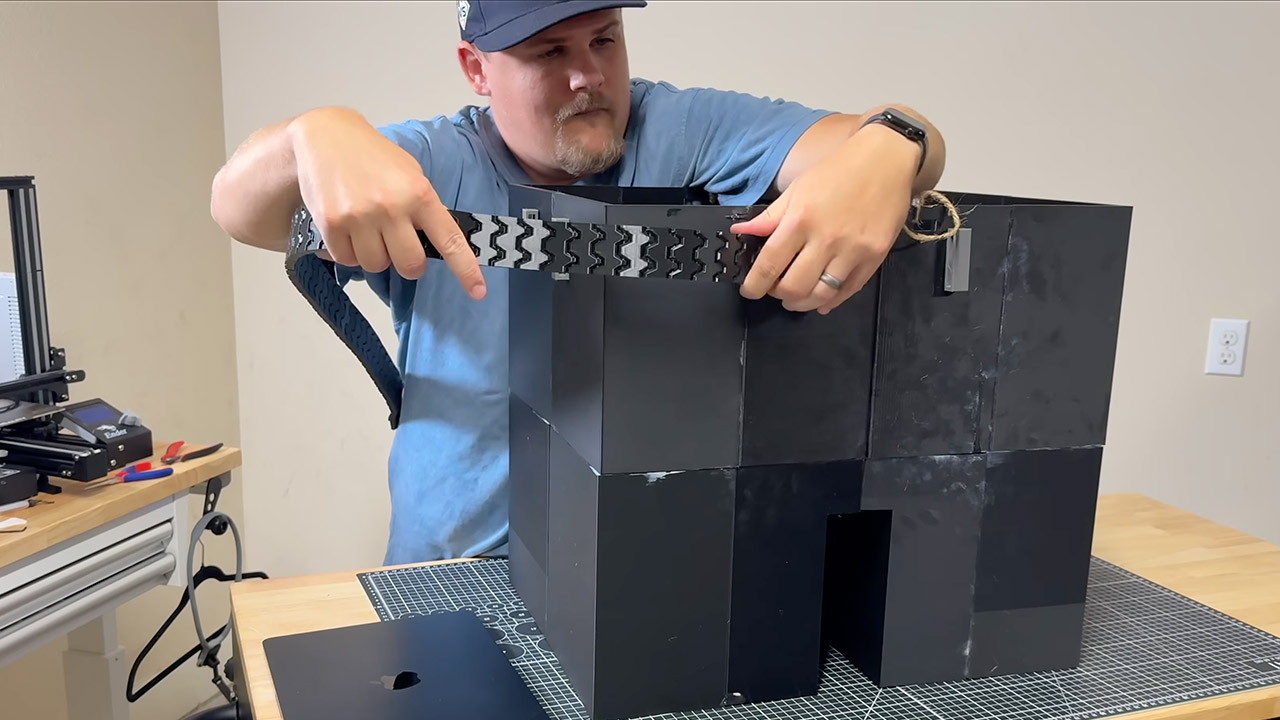
The shorts, while a little big and boxy, had a Minecraft-likeness about them that made you look twice. Belt loops and suspender holes provided several alternatives for securing them, but let’s be honest: the wide cut and firm plastic made them difficult to wear in practice. Still, the extra room inside had one redeeming feature: storage space, and while they looked cool, they did require some suspenders to keep them up.
Shoes and socks, on the other hand, were completely unexpected, since the soft, spongy TPU utilized in the shoes resulted in a sort of barefoot shoe that worked out rather nicely. The socks, which were made of the same flexible material, felt bouncy to the touch instead of abrasive. Trahan tested the entire costume, laced everything up tight, and ran a mile in 8 minutes and 20 seconds. His feet did protest a little at the end, but credit to the shoes for holding up well and providing enough protection to complete the task.
Compared to the main outfit, the accessories were a breeze. The hat fit slightly larger than normal without requiring much tweaking. The belt, wallet, bow tie, and watch all performed their basic functions without difficulty. Glasses, on the other hand, looked great at first but quickly started to rub on the ears. Overall, these were the easier parts, as none of them required as much sacrifice as the major garments. When everything was put together, the overall look was unlike anything you’d find in a store, as the colors on the shirt stood out, the shorts dominated the lower half with their sheer size, the soft shoes and socks kept the feet happy for a while, and the upper body was a little restricted due to all the stiff sections. [Source]
Houston, TX, USA – September 10, 2018: The Marriott Marquis is a Four Diamond hotel located in downtown Houston and features a Texas shaped pool, five restaurants and beautiful views from all angles.Joe Hendrickson
1777 Walker St., (713) 654-1777
Adjacent to the George R. Brown Convention Center downtown, the Marriott Marquis has another 100,000 square feet of meeting space of its own, including Houston’s largest ballroom. Often mentioned as the top hotel in town, it caters to business travelers and pleasure seekers alike, famously featuring the world’s largest Texas-shaped lazy river on its roof. If you don’t think that’s something anyone would brag about then you haven’t spent enough time in the state.
1100 Texas Ave., (713) 221-0011
A more affordable lodging option located in what was formerly Shell Oil’s headquarters, this refurbished downtown hotel offers quick access to the convention center and Daikin Park, which the Astros call home. You may not be able to paddle around in the rooftop plunge pool like you would at the Marquis, but a quick, cooling dip at the end of the day will not disappoint, nor will the free cookies at bedtime.
Advertisement
Courtesy of Bunkhouse Hotels
4110 Loretto Dr., (832) 844-0057
This new, midcentury-inspired gem can be found in the Montrose neighborhood, a block away from the Menil Collection, arguably the best and most eclectic museum in town. The boutique property includes just 71 rooms and is designed to fit in with its surroundings, which are largely residential and very subdued in comparison to the more raucous downtown. Despite its small size, it still has room for a small event space, private pool, and a slick lobby lounge.
111 N Post Oak Ln., (713) 680-2626
The Houstonian occupies a massive 27 acres in Houston’s West Oaks district, just outside the Loop. Despite its central location, the hotel offers a level of seclusion you won’t find anywhere else in town. It’s probably why George H. W. Bush used the hotel as his official residence for years in the 1980s and spent time here for decades after. The 125,000-square-foot spa is also the largest in the state.
Advertisement
2222 W Loop S, (713) 627-7600
Another Galleria-area hotel, this is an all-around good option for business travelers who need executive-focused amenities like 24-hour business and fitness center access, shuttle service, and meeting and event space (all 50,000 square feet of it). With 485 guest rooms on its 23 floors, there’s probably space for your whole organization to find a berth for the week.
Where to Work
Houston has hundreds of coworking spaces, so chances are you’ll be able to find something close to where you’re staying. As with most things in this city, travel time is an essential consideration. These picks may be some of the best options in town, but no sane Houstonian would recommend you spend an hour in traffic to get to one of them if another solid option is closer.
Advertisement
Courtesy of POST
401 Franklin St., (713) 999-2550
Named for the former post office that used to occupy this Museum District space (it was a railroad depot before that), POST was redeveloped in 2019 as a cultural center that includes food-hall-style dining, an art museum, a concert hall, and a rooftop garden. It’s also got loads of workspace options ranging from single desks to full offices, with day passes starting at $25.
4201 Main St.
Rice University helped to develop the Ion District, which occupies 16 acres in Midtown and serves as a technology park and innovation center for tech and energy outfits, and now includes the largest climate and sustainable energy incubator in the country. Coworking passes (starting at $60/day) get you access to the venue’s copious networking events plus snacks and coffee.
Advertisement
1430 Yale St., (832) 203-5115
This boutique office space is ideal for those doing business in the Heights, with amenities including an on-site notary, conference room rentals, and virtual office options for those who need a physical address in town. Plenty of usage options are available from $25 day passes to $359 monthly memberships (which include free conference room access).
Where to Get Coffee
Yes, there are nearly 200 Starbucks in the greater Houston area, and while you’re welcome to visit them or any other corporate chain for your pick-me-up, these spots offer a more refined (and independent) experience that, if nothing else, will help you impress your business colleagues with your sophisticated palate.
Blendin focuses on sourcing coffee from unique locations with a “tree to cup” philosophy, which means your cup (or bag of beans) is likely to hail from a single farm in Panama, Ethiopia, Burundi, or somewhere further afield. Put yourself in the hands of the barista at one of the two locations to help you find the perfect base for your latte.
1018 Westheimer Rd.
At this beloved local coffee shop with a full menu, you’re best off pairing your Vietnamese matcha or Golden Monkey tea with a hearty brunch, like a smoked salmon scramble or scratch biscuits topped with smoked ham. Skip lunch to make room.
[Tony Goacher] has worked with a lot of cheap brushless DC motor controllers built in China. They can be very cost-effective, but sometimes limited in performance or capability, particularly when it comes to low-speed operation. Thus, he’s been working on a project to make cheap controllers more capable.
The prime problems [Tony] has faced are jerkiness, throttle deadspots, and inconsistent torque delivery at low speeds. This is especially the case when running brushless motors on heavier vehicles, where the greater inertia can compound any minor problems to the point things become undriveable. [Tony]’s solution has been to create a signal interceptor that lives in between a throttle and the cheap motor controller to change their overall behavior.
The demo vehicle for this build is TrakTrike, a sort of bicycle-half-track hybrid that [Tony] built for EMF Camp 2022. After blowing up some nicer controllers, [Tony] specced some cheaper parts from AliExpress. Only, the low-speed control was terrible, and the dual motor controllers didn’t respond identically to throttle and would cause the vehicle to steer or crab, making driving difficult. This was fixed by dropping in an Arduino Nano after the throttle, and before the two motor controllers. It allows calibrating the throttle output from the Arduino to eliminate dead spots, while also tuning the throttle output to left and right motors individually so they respond more similarly. There are also custom acceleration and deceleration curves that make the controllers respond more smoothly, and a precise crawling speed for consistent low-speed maneuvering.
Advertisement
Just by doing some fancy throttle smoothing and control, [Tony] was able to greatly improve the usability of these cheap controllers, for the price of an Arduino Nano and little more. Files are on GitHub for those eager to attempt the hack themselves. There are other ways to go about this of course, like diving into field-oriented control, if you’re so inclined. Alternatively, speculate on how you’d tackle this engineering challenge down in the comments.
Time to switch back to paper and harvest that suddenly valuable RAM
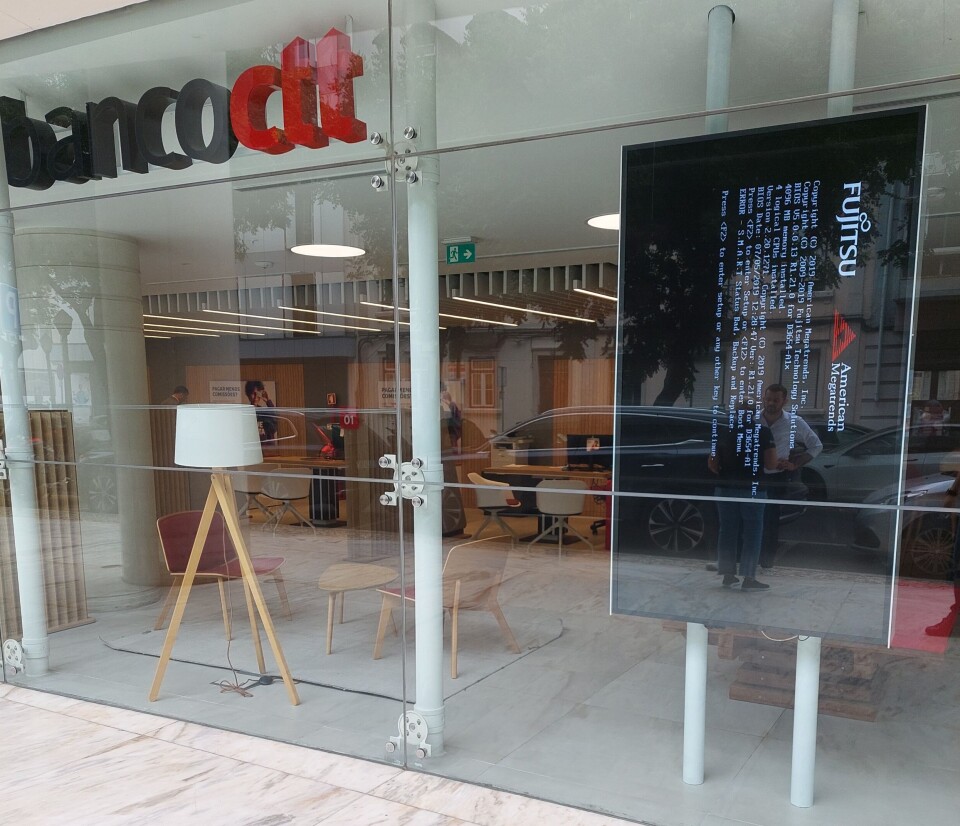
BORK!BORK!BORK! It’s not all sunshine and Pastel de nata in Portugal. Behind the hundreds of ways of cooking fish and bottles of sweet, fortified wine lurks our old friend – a BIOS screen misbehaving in a window.
Spotted by eagle-eyed Register reader Mário in Lisbon, the digital sign looking out on the street from a branch of Banco CTT looks like it is in imminent danger of a storage failure. The “S.M.A.R.T. Status Bad” indicates that something has made the storage media (hard drive or SSD) unhappy, and Banco CTT should take a break from flogging financial services to replace the unit before it fails completely.
Advertisement
A jab of a key should allow the digital sign to continue doing its thing, and there is some computer hardware in the background that we’re sure an enterprising Reg reader could plug into the screen to put it out of its misery – at least temporarily.
While we applaud Mário for his attentiveness, it is also worth noting that Lisbon is a lovely city with much to recommend – there is history to explore, cuisine to sample, and local culture to enjoy. This hack is a particular fan of the labyrinthine streets of Alfama, and the iconic trams are sufficient to satisfy anyone’s inner public transport nerd.
Back to the bork.
Visible on the screen is the amount of memory installed. Four gigabytes, by the looks of things, which seems excessive for something that is probably only going to show a jumped-up slideshow to passersby.
Advertisement
Then again, considering the cost of RAM nowadays, that screen might be considerably more valuable today than it was only a few months ago. While we’re not familiar with the financial products on offer from Banco CTT, we’d wager that few – if any – can keep up with the relentless rise in RAM prices.
It cannot be much longer before it makes more financial sense to replace digital signage with printed paper and harvest the suddenly valuable chips within, although where would that leave The Register’s bork desk? ®
NPCI CEO says AI will drive UPI to a billion daily transactions via fraud detection, credit, and voice onboarding. PhonePe and Google Pay hold 80%+ share.
India’s Unified Payment Interface has grown to over 750 million daily transactions, and the head of the body that oversees it says AI will be central to reaching a billion. Dilip Asbe, MD and CEO of the National Payments Corporation of India, told TechCrunch at Mumbai Tech Week that AI could drive the next half billion users through fraud prevention, credit distribution, and multilingual voice onboarding.
“AI will be used very effectively when we look at the next wave of UPI, and that includes all aspects, including reaching new users,” Asbe said. “We must use AI effectively to protect our current citizens, to find fraud, and to find mules. AI must also be used to provide credit to all the users and merchants who have digital footprints.”
NPCI launched a voice assistant-based payment system in 2023, but Asbe acknowledged adoption has not taken off yet. He said voice models need to be more accurate before they become a critical component of the payment ecosystem. India has been debating its AI sovereignty more intensely in recent weeks, with proposals for a $5 billion annual sovereign AI fund and calls to build small language models tailored to local languages and use cases.
Advertisement
The 💜 of EU tech
The latest rumblings from the EU tech scene, a story from our wise ol’ founder Boris, and some questionable AI art. It’s free, every week, in your inbox. Sign up now!
Asbe sees an opportunity there. “We have a very rich data set in our ecosystem,” he said. “I think there is a big opportunity for Indian companies, the banks, FinTechs, and the ecosystem, to create small language models which are sharp, specific, and as deterministic as possible.” NPCI already launched a model called FIMI to resolve user disputes, which Asbe said now serves over a million users for cancelling mandates and resolving issues.
On regulation, Asbe said India can adopt AI-powered finance with the right protections. He wants systems that can trace the instructions and consent a user gave to an AI agent if something goes wrong. NPCI demonstrated agentic commerce and payments with Razorpay last year, but a wider rollout has not followed.
Advertisement
The UPI market remains heavily concentrated. PhonePe and Google Pay control over 80% of transaction share. A regulatory cap that would limit any single app to 30% is set to take effect on December 31, 2026, unless NPCI defers the deadline again. Asbe said switching costs between apps are low and that the concentration reflects the absence of a viable commercial model for newer entrants. “The moment we see the commercial model being available to the ecosystem, I believe newer players will start investing very heavily,” he said.
NPCI’s own app, BHIM, holds roughly 1% market share despite growing transaction volumes. Asbe said there is no specific share target for BHIM, but as India’s digital economy scales toward its largest-ever tech IPOs and $110 billion AI infrastructure plans, NPCI wants BHIM to serve as a sovereign and secure alternative.
Tesla has settled a lawsuit connected to a fatal 2023 crash involving a vehicle using the company’s advanced driver assistance system known as Full Self-Driving.
Bloomberg was first to report on the settlement. Terms were not disclosed.
The lawsuit was filed against Tesla and the driver by the daughter of Johna Story, a 71-year-old woman who was struck by a Tesla Model Y. Story was hit after she stepped out of her own vehicle to direct traffic around a crash that had occurred earlier due to sun glare.
The National Highway Traffic Safety Administration (NHTSA) opened an investigation into Tesla’s FSD (Supervised) automated driving software in 2024 after four reported crashes in low visibility conditions — including the one involving Story. The NHTSA said, at the time, it was investigating the driver assistance system to find out whether it could “detect and respond appropriately to reduced roadway visibility conditions,” such as “sun glare, fog, or airborne dust.”
Advertisement
That investigation was upgraded in March 2026 to an engineering analysis. In that report, the agency wrote “Available incident data raise concerns that Tesla’s degradation detection system, both as originally deployed and later updated, fails to detect and/or warn the driver appropriately under degraded visibility conditions such as glare and airborne obscurants.”
While the settlement ends the family’s lawsuit, this upgraded NHTSA investigation has not yet been closed. At stake for Tesla for the federal investigation is a host of possible outcomes, including a recall.
The federal agency also opened an investigation into FSD in October 2025 after receiving reports the software caused the vehicles to run red lights or cross into the wrong lane.
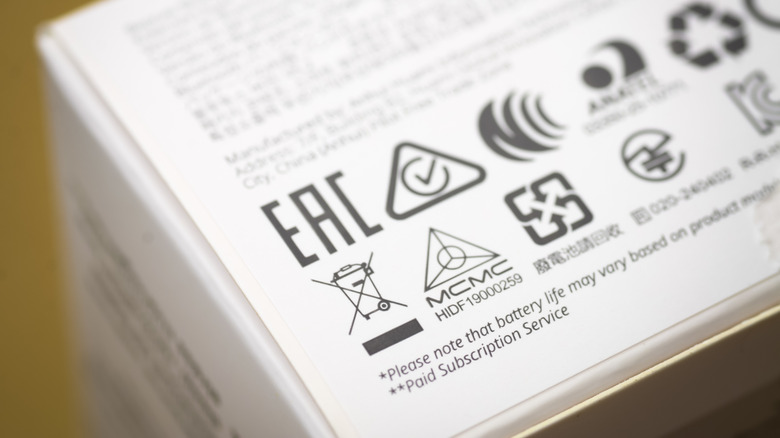
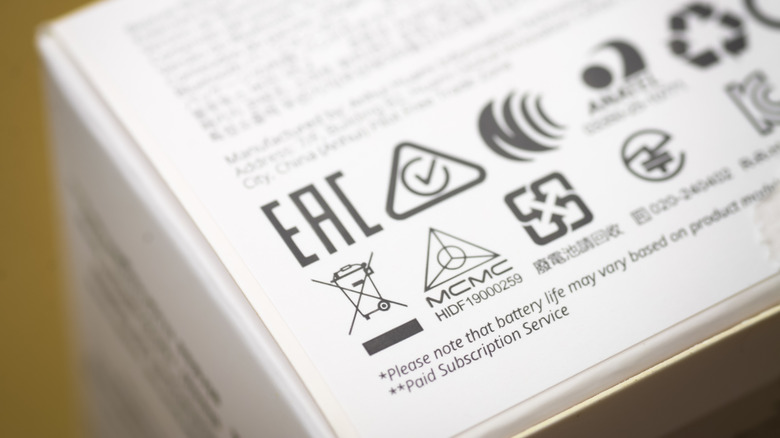
Flip over the box of any product, and you’ll usually see that it’s adorned with a number of official-looking logos at the bottom. Most of us don’t give these markings a second thought, but they all signify an important step –- or steps -– required in order to bring that product to specific markets or to meet certain standards related to safety or testing. You’ve almost certainly come across an ETL Listed marking from Intertek, or maybe a UL Listed or UL Certified marking on a package.
Depending on where you live, you may also have seen an EAC marking on a product’s packaging. The Eurasian Conformity (EAC) mark shows that a product has met compliance requirements as established by the Customs Union of the Eurasian Economic Union (EAEU). A product with an EAC certificate means that it can be bought and sold across all member states of the EAEU, which includes Armenia, Belarus, Kazakhstan, Kyrgyzstan, and Russia. It’s not uncommon to find un-branded, cheap electronics on marketplaces like Amazon that try to skirt these certifications, and those are products you should avoid buying.
Advertisement
What EAC certification actually means
JuliyaR/Shutterstock
Similar to how the CE marking on electronics and other products works, any product bearing the EAC mark means that it complies with the various technical regulations governed by the Eurasian Customs Union. Many of the technical regulations set forth by the EAEU are based on previous existing standards from its member states, such as Russia’s GOST-R or Kazakh’s GOST-K. The basis of these regulations are to establish safety standards and requirements for the consumer and the environment, and the EAEU has 52 technical regulations it has adopted spanning multiple product categories.
Three methods exist for obtaining an EAC mark, and it usually depends on the products and where they are coming from -– for example, whether they’re originating from a EAEU member state or being imported by a foreign manufacturer. These methods include EAC Certificate of Conformity, EAC Declaration of Conformity, or a Certificate of State Registration. The biggest difference between an EAC Certificate and an EAC Declaration is required testing. The EAC Declaration of Conformity allows a manufacturer to provide its own testing and documentation to verify compliance, where an EAC Certificate always requires independent testing through an approved laboratory, and the certificate has to be issued by a certification body.
A Certificate of State Registration provides proof that certain products in the EAEU meet sanitary guidelines. These include food and beverages, hygiene products, or equipment that comes in contact with food and water. In cases where a product doesn’t fall under established EAEU guidelines for EAC certification, it is still required to meet conformity standards according to its governing member state, and frameworks such as Russia’s GOST-R are still important for addressing those products.
Advertisement
EAC and CE marks are similar, but not the same
Hasim Ramle/Shutterstock
Another marking stamped on products is the CE marking, and it is used to largely achieve the same thing as the EAC mark –- to ensure products being sold meet minimum safety and health requirements serving both the customer and the environment. The primary difference is in which markets the marks are intended to serve: The EAC mark serves countries within the EAEU, and the CE mark serves those within the European Union (EU) and the European Economic Area (EEA). While there are similarities in some of the regulations for each mark, there is no mutual recognition between them and they are separate systems. However, certain products may require both marks if they are being sold across different markets.
Another key difference is foreign manufacturers can self-apply for CE conformity, rather than having to go through an independent representative in the case of EAC certification. It’s also important to recognize that there is no entity or body that validates product compliance or that issues a certification. It is up to the manufacturer to ensure product compliance with any and all applicable CE rules, maintain proper documentation, and use the CE mark legally. In some cases, a company may need to address a notified body (an EU-authorized independent organization) for third-party conformity assessment.
Advertisement
Because the onus of conformity is mostly on the companies that sell the products, CE marks are also commonly abused or forged. The best way to spot a fake CE mark is to be aware of the design requirements in using one legally. The regulations and directives that form the underpinning of the CE and EAC marks often have a ripple effect on other markets, such as the case of Europe forcing Apple’s iPhone to switch to USB-C.
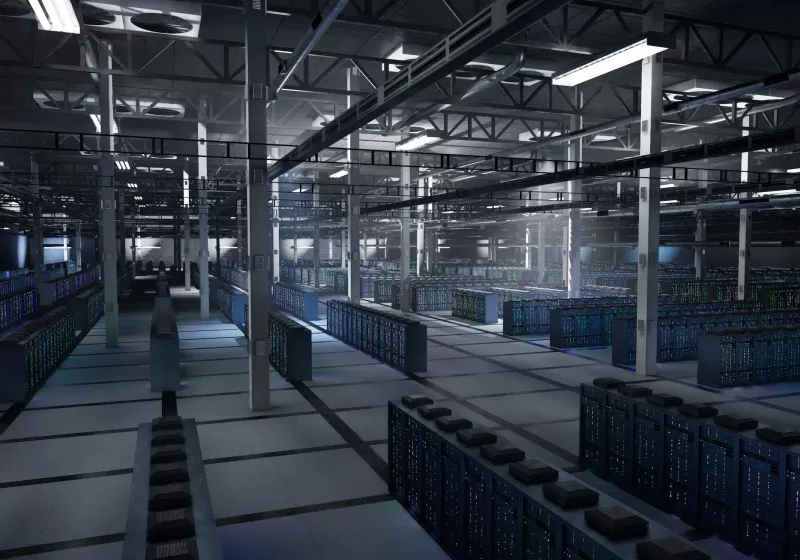
What is often framed as a race to develop smarter AI models is, in practice, a massive industrial expansion. Data centers require dense clusters of advanced chips, extensive cooling systems, fiber networks, and backup power. Columbia University economist Stijn Van Nieuwerburgh put it plainly, describing the effort to the Wall… Read Entire Article Source link
Dana, 46, and Calista, 43, are two women in Florida who turned to the subreddit as they reckoned with the possibility of being evicted due to prolonged unemployment.
Calista tells WIRED that she has applied to more than a thousand full-time positions since losing her remote job in February 2024 but can’t seem to land an interview. She says she’s three months behind on rent. “I’ve never been close to homelessness like this before. It’s a new experience,” she says. “It’s very helpful to see the stories from other people, see the things they’ve tried, just that solidarity.”
Dana, who has extensive work experience in software development, says she has been laid off four times since the start of the Covid-19 pandemic, most recently in November, in part due to the AI boom. A single mother, she has discussed the possibility of living in a tent with her son, who recently graduated from high school. “So many people are in similar situations,” Dana says of the stories she’s read online. “It’s honestly been the most helpful from a mental perspective. I don’t feel so alone.” This is contrary, she says, to the stigmatization of poverty that she feels in her own city.
Politicians and commentators who demonize the homeless population as mentally ill drug addicts—such as former reality TV star Spencer Pratt, who ran a failed mayoral campaign in Los Angeles that characterized them as “zombies” on “super meth”—are distorting the issues at play, says Margot Kushel, director of the Benioff Homelessness and Housing Initiative at UC San Francisco.
Advertisement
“What we’re seeing in the numbers of people experiencing homelessness isn’t that we suddenly have this increase in people with mental health or substance use problems,” she says. “What we have is that the rent is too damn high.”
The cruel ways unhoused people are depicted in the media add “to the already very heavy burden of homelessness,” Kushel continues, with groups like r/almosthomeless countering those narratives and making people feel seen.
Keith, 35, in South Carolina, says he attempted suicide in 2023 after a long battle with alcoholism. He recounts how he survived jumping off a bridge but broke his back. After he received a spinal fusion, he found it difficult to work or do much of anything physical because of his injury, and finally he wound up homeless. He took to sleeping in the woods outside a hospital where he says he regularly sought assistance. “I was just staying there, like trying to get into the mental health department or something like that,” Keith says. “They would just turn you away.”
Later, Keith says, he secured a spot at a local Salvation Army shelter, found a job at a gas station, and in January made the transition into a studio apartment, staying sober and “building something that resembled a normal life,” he says. Yet lately he has started to worry that he’s “watching years of progress disappear in slow motion.” A succession of restaurant jobs, including dishwashing and prep work, have proven impossible with his back problem, and he has avoided further medical treatment for fear of the cost. Now he expects to be evicted, and he’s dreading a return to an unhoused existence.
Nadella promoted Jacob Andreou to EVP of Copilot after one year. He oversees 11,000 people and is building a super app while only 4.5% of 365 users pay.
“This is one of the most intensely competitive environments tech has seen in the last 20 years,” Andreou told Fortune. “Because the technology is moving so quickly, the reality is a six to twelve month roadmap doesn’t really exist in the way it used to.”
The profile paints Andreou as a technically hands-on leader who personally codes alongside developers. He built Copilot Tasks, an AI agent that can autonomously perform multi-step actions like ordering food, in roughly two months. That speed impressed Nadella, who dismantled Microsoft’s entire senior leadership structure this year in favour of startup-style engineering groups.
Andreou’s appointment freed Mustafa Suleyman, the DeepMind co-founder, to focus on proprietary AI models rather than day-to-day product management. The two work closely but run separate organisations. Suleyman told a group of roughly 80 developers in March that the future of software development means fewer people working harder by leveraging AI agents, according to Fortune.
Advertisement
The challenge is substantial. Only about 4.5% of 450 million Microsoft 365 customers pay for Copilot, and its free consumer version trails far behind ChatGPT. Microsoft’s stock is down double digits over the past year as investors question AI spending and the company’s reliance on OpenAI. Jefferies analyst Brent Thill said the general perception of Copilot is that “it stinks.”
Before Microsoft, Andreou spent eight years at Snap scaling the platform from 80 million to 360 million daily active users. He then joined Greylock as a venture partner backing consumer AI startups. At Microsoft, he has introduced consumption-based pricing alongside seat licences, scaled back the Copilot icons that irritated Windows users, and launched Copilot Cowork to compete with Anthropic’s Claude.
Not everyone is on board with the new culture. Current and former employees told Fortune that some teams now work 12-hour days, feel daily panic to keep up with Anthropic and other labs, and worry that shipping speed risks compliance problems. Critics say Andreou can be overconfident and still has to prove himself in enterprise software, where the burden is building durable revenue at scale.
Andreou’s three stated priorities are delivering a superior AI chat product, achieving leading model quality without being late to market, and providing a trusted way to integrate various models. The super app, expected by end of summer, will let users toggle between personal and enterprise accounts in one interface. Microsoft is also exploring hosting DeepSeek and other open-source models inside Copilot Cowork, while Nadella has warned against industry reliance on only a few AI providers.
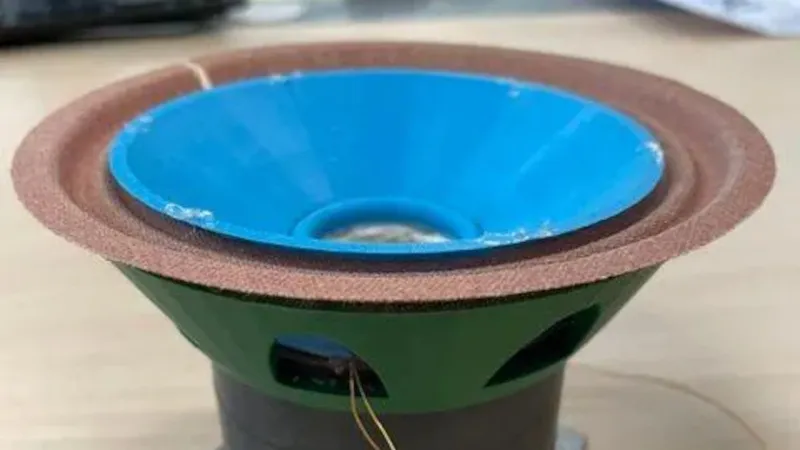
In all moving-coil speakers, a coil of wire is held in a radial magnetic field. To this is attached a cone, and when a current is passed through the coil the whole thing moves to create the sound. The tricky part of making one comes in making the cone itself, and in particular the suspension system that holds it in place while allowing it to move backwards and forwards. It’s normal for these components to be moulded from thick paper.
This design uses a 3D printed frame and cone, with the 3D printing providing excellent rigidity. The suspension system is a circular corrugated sheet, and it’s made in this case using papier-maché made from wet toilet paper, and a 3D printed mould. We particularly like this technique.
Advertisement
This is an impressive build, simply for having made a recognizable and working speaker in the first place. There’s no demo video so we have no idea how it sounds, but for us the point is more in the construction than the reproduction.




















































You must be logged in to post a comment Login