





Connect with us
DAPA Banner
DAPA Coin
DAPA
COIN PAYMENT ASSET
PRIVACY · BLOCKDAG · HOMOMORPHIC ENCRYPTION · RUST
ElGamal Encrypted MINE DAPA
🚫 GENESIS SOLD OUT
DAPAPAY COMING

Business

General Mills debuts protein-filled Honey Nut Cheerios

Published

on

General Mills debuts protein-filled Honey Nut Cheerios
Continue Reading
Click to comment

You must be logged in to post a comment Login

Leave a Reply

Business

Disney $50M class action settlement covers YouTube TV subscribers

Published

on

Disney $50M class action settlement covers YouTube TV subscribers

Disney is set to pay out a $50 million settlement in a class action lawsuit that alleged the entertainment giant broke antitrust and consumer protection laws by pushing prices for streaming subscriptions higher.

The settlement follows a 2022 federal class action lawsuit that was filed by YouTube TV and DirecTV Stream subscribers who claimed the company engaged in anticompetitive conduct to raise the prices of streaming services’ live TV plans due to its control over in-demand programming, such as ESPN and Hulu.

Advertisement

The class action suit, known as Biddle v. Disney, alleged that Disney limited the ability of rivals to offer lower-cost streaming services because of the company’s requirement that streaming platforms include ESPN in basic channel packages as part of its carriage agreements. Plaintiffs alleged that contributed to higher consumer prices across the streaming platforms.

Disney has denied wrongdoing, and no court has determined the company violated the law. The company agreed to the settlement without admitting liability.

DISNEY CEO UNVEILS ENTERTAINMENT GIANT’S NEW 3-PILLAR GROWTH PLAN

Disney+ logo

Disney reached a settlement agreement in the class action suit over its impact on streaming bundle prices. (Patrick T. Fallon/AFP via Getty Images)

Who is eligible for the Disney settlement?

Consumers who had paid subscriptions to YouTube TV or DirecTV Stream between April 1, 2019, to March 31, 2026, are eligible to receive a share of the settlement fund.

Advertisement

For DirecTV subscribers, eligibility covers DirecTV Stream, DirecTV Now and AT&T TV Now plans within the covered period.

A similar case involving Disney’s impact on streaming subscription prices involving FuboTV was filed covering a seven-year period. However, FuboTV plaintiffs haven’t reached a settlement with Disney, so they aren’t eligible at this time.

DISNEY REPORTEDLY SHELVES ESPN SPINOFF TALKS IN MAJOR CALL UNDER NEW CEO

Ticker Security Last Change Change %
DIS THE WALT DISNEY CO. 98.63 -0.16 -0.16%

How much are settlement payments?

Settlement payments will vary based on how long a subscriber was paying for a YouTube TV or DirecTV Stream subscription during the period covered by the settlement.

Advertisement

They will also be determined based on the number of eligible claims received, after subtracting attorneys’ fees.

The court will hold a final hearing to approve the settlement on Jan. 14, 2027, and shortly after that the payments will be issued to eligible claimants.

DISNEY LAYS OFF 1,000 EMPLOYEES ACROSS TV AND FILM UNDER NEW CEO

Sunday Ticket in Los Angeles

DirecTV Stream subscribers in the covered period can file a settlement claim. (Stefanie Keenan/Getty Images for NFL SUNDAY TICKET on DIRECTV)

How to file a claim

Subscribers who are eligible for the settlement can submit a claim form to receive a pro rata cash payment that’s proportional to the duration of their YouTube TV and/or DirecTV Stream subscription.

Advertisement

Before filing the claim, an eligible member of the class will need the unique ID printed on the notice they received through the mail or email. If an individual didn’t receive the notice or lost it, they may contact the settlement administrator for assistance.

GET FOX BUSINESS ON THE GO BY CLICKING HERE

There is no requirement to submit receipts or subscription documentation when filing a claim, and eligible customers will certify the start and end dates of a subscription under penalty of perjury.

The deadline to submit claim forms is Sept. 8, 2026, for claims submitted online or via mail. Eligible members wishing to submit a claim or read more information may find it at the Biddle v. Disney claims website here.

Advertisement
Continue Reading

Business

The Quiet Powerhouse Driving the UK Economy

Published

on

The Quiet Powerhouse Driving the UK Economy

There is no shortage of admiration for Britain’s fastest-growing businesses, and nor should there be.

The entrepreneurs who disrupt industries, scale at speed and pull in investment embody much of what makes British enterprise so widely admired. They are a reminder that innovation, ambition and resilience remain alive and well in every corner of the economy.

At the Lloyds British Business Excellence Awards, we celebrate those firms with pride. They represent the future. But if we are to build that future properly, we must also give due credit to the businesses already carrying so much of the economy today.

Britain’s mid-market is, in many respects, our economic backbone. These are the companies that have made the difficult passage from start-up to sustainable enterprise. They have moved beyond proving an idea and into the far harder work of building something that lasts, creating thousands of jobs, investing in people, supporting supply chains and contributing in real terms to regional and national prosperity.

The numbers bear this out. Mid-sized firms make up roughly 0.5 per cent of UK companies yet account for around a quarter of private-sector employment and close to a third of economic output, contributing some £1.3 trillion in turnover. They rarely command the headlines in the way unicorns or venture-backed scale-ups do. Yet their contribution is, frankly, immeasurable.

Advertisement

Every year, the awards give us the privilege of meeting businesses that show exactly what sustainable success looks like.

Take Net World Sports, recognised as Lloyds Mid-Size Business of the Year. From its base in North Wales, it has grown into a global sporting goods business, exporting British innovation around the world while creating high-quality employment and investing continually in its people and infrastructure. Its story is a reminder that world-class companies are being built in every region of the UK, not just the major cities.

Or consider Travel Counsellors, whose steady growth over more than three decades has shown that putting people and relationships at the heart of a business is not simply good culture, it is good business. Its continued success illustrates how mid-market firms build resilience through trust, loyalty and long-term thinking.

More recently, Tropic Skincare, winner of the Lloyds Mid-Market Business of the Year (pictured), has demonstrated that rapid commercial success and purpose-led leadership are not mutually exclusive. Under Susie Ma’s leadership, the company continues to scale while holding firm to an unwavering commitment to ethical sourcing, sustainability and the empowerment of thousands of independent ambassadors across the country.

Advertisement

Realise Training Group, recognised for Mid-Market Growth, shows another side of Britain’s economic success. By training more than 16,000 learners a year and employing hundreds of people, its expansion directly strengthens the UK’s workforce and productivity, delivering social impact alongside commercial returns.

These businesses may operate in very different sectors, but they share something fundamental. They have moved beyond merely building successful companies. They are building institutions.

Taken together, Britain’s mid-market firms employ millions of people. They invest in apprenticeships, nurture future leaders, adopt emerging technologies and support thousands of suppliers across every nation and region of the UK. They are often the anchor employers in their local economies, providing stability in uncertain times while continuing to invest for the future. Importantly, they have mastered one of the hardest disciplines in business: longevity.

That contribution is finally being recognised at a national level. A government-backed council to champion the country’s “unsung” mid-sized businesses is now giving the sector a more unified voice on issues from planning and infrastructure to the persistent skills shortage. It is a welcome acknowledgement that, much like the small and medium-sized firms so often described as the backbone of our economy, the middle of the market has been underserved by the national conversation for too long.

Advertisement

At the Lloyds British Business Excellence Awards, we celebrate organisations at every stage of that journey, from ambitious start-ups to established market leaders, as this year’s line-up of finalists makes clear. What unites them all is excellence.

Excellence is not measured by valuation or headline growth alone. It is reflected in leadership, culture, innovation, resilience, customer commitment and the positive impact a business has on its people and communities.

Britain’s future will not be built by one type of business alone. It will be built by ambitious start-ups becoming scale-ups, scale-ups becoming established enterprises, and established mid-market businesses continuing to innovate, invest and inspire the next generation. That is why supporting the entire business lifecycle matters.

Because while tomorrow’s unicorns will undoubtedly shape future headlines, it is Britain’s mid-market businesses that power our economy every single day. They may not always be the loudest voices in British business. But they are, without question, among its strongest.

Advertisement

Entries close for the 2026 Lloyds Business Excellence Awards on July 3rd.


Sarah Austin

Sarah Austin

Sarah Austin, founder and Director of the Lloyds British Business Excellence Awards, champions British entrepreneurship, inspiring businesses to start and stay in Britain. She tirelessly supports women in business, fostering innovation, resilience, collaboration, sustainable growth, opportunity, ambition, leadership, and lasting economic prosperity across communities, empowering future generations of entrepreneurs nationwide.

Advertisement
Continue Reading

Business

Nike (NKE) Q4 2026 earnings

Published

on

Nike (NKE) Q4 2026 earnings

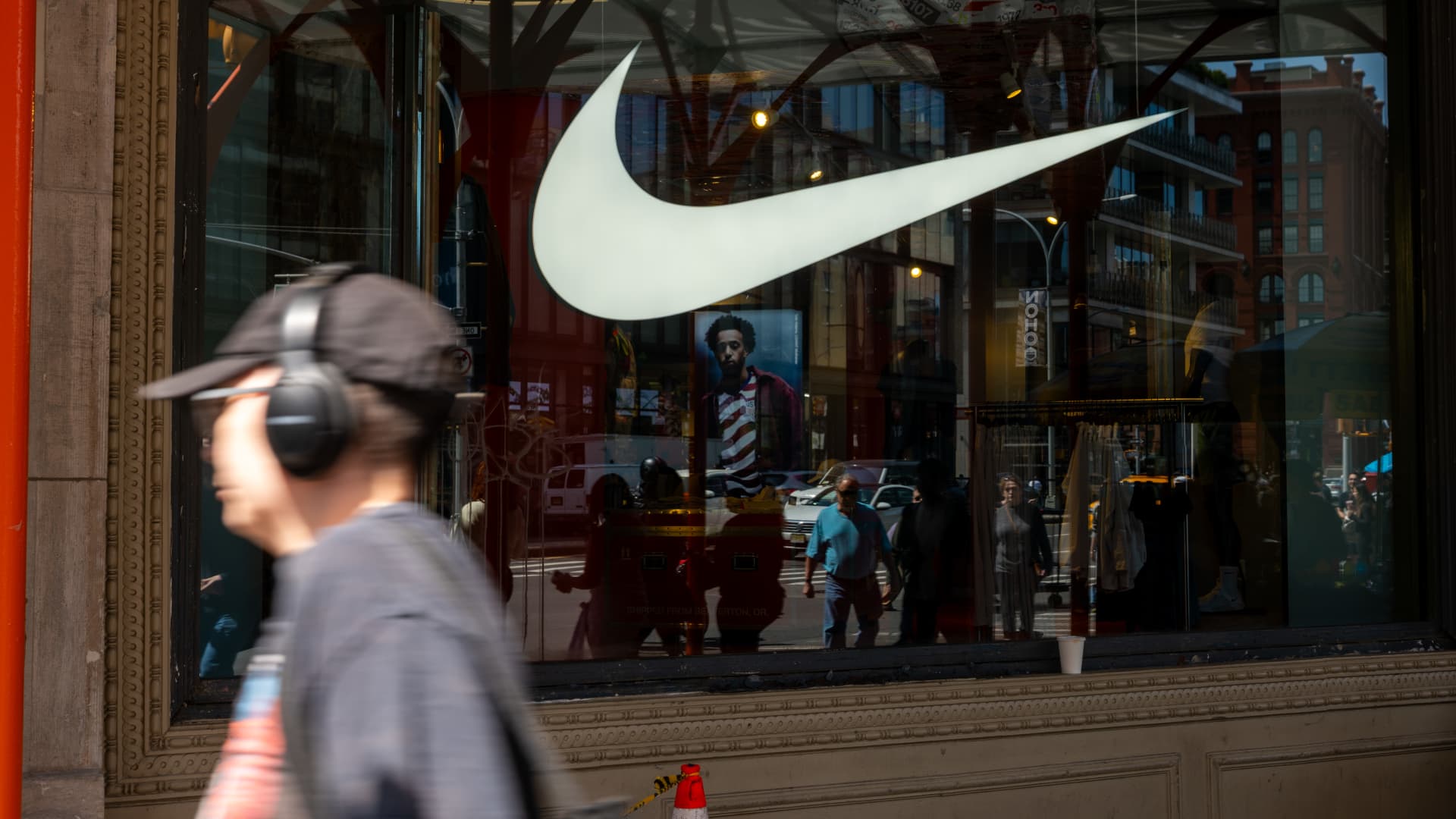
The iconic Nike swoosh design is displayed in a window of the athletic company’s new store on Broadway in Manhattan on April 24, 2026 in New York City.

Spencer Platt | Getty Images

Nike is set to report fiscal fourth-quarter results after the bell Tuesday as the shoe retailer struggles to regain sales growth and turn around its business under CEO Elliott Hill.

Advertisement

The company previously said it expected sales to fall for the rest of the calendar year, while projecting a decline of 2% to 4% in its fiscal fourth quarter. That expectation was well under Wall Street estimates of an increase of 1.9%.

Still, Nike said last week that its results will include an unexpected benefit from tariff refunds that was “not contemplated in the company’s previously provided guidance.”

Chief Financial Officer Matt Friend said on the earnings call for the fiscal third quarter that Nike expects sales to fall by a low single-digit percentage for the rest of the calendar year, led by growth in North America but offset by a big drop in China. The company’s gross profit margin also took a hit last quarter due to higher tariffs in North America.

In its fiscal third quarter, Nike reported steady growth in North America with a 3% sales increase, while its Greater China market saw revenue sink 7% to $1.62 billion for the quarter.

Advertisement

Here’s what analysts are expecting from Nike for its fiscal fourth quarter, according to a survey of analysts by LSEG:

  • Earnings per share: 13 cents expected
  • Revenue: $10.86 billion expected

For the full fiscal year, analysts are expecting revenue of $46.27 billion and earnings per share of $1.51. They’re also projecting revenue of $46.47 billion for the next fiscal year ending in May 2027.

The earnings come as Hill has been trying to reposition Nike for growth amid slumping sales. The company previously warned its turnaround would not be linear as certain parts of the business improve at different rates.

Hill previously said that the parts of the business that Nike initially focused on turning around are beginning to see “momentum.”

The turnaround effort is also placed against a backdrop of macroeconomic uncertainty, with tariffs, the war in the Middle East, soaring gas prices and more. Friend said on the third-quarter earnings call with analysts that Nike could face unexpected impacts from the broader backdrop, including volatility from rising oil prices and lowered consumer confidence.

Advertisement

“We are focused on what we can control,” Friend said at the time.

In April, Nike instituted a sweeping round of layoffs, cutting 1,400 roles across the organization in its second workforce reduction of the year.

Last week, the company announced a planned CFO transition, with former Pfizer executive David Denton taking over for Friend effective Aug. 17.

Still, Nike has seen a boom from the World Cup, hosted across North America this summer. While it’s not an official sponsor, the company saw its advertisements massively outpace sneaker rival Adidas and gain significant traction across social media.

Advertisement

Nike will host a conference call with analysts at 5 p.m. ET.

Choose CNBC as your preferred source on Google and never miss a moment from the most trusted name in business news.
Continue Reading

Business

Tonix: 'Hold' Based On Tonmya Payer Expansions And MDD Trial Initiation

Published

on

Tonix: 'Hold' Based On Tonmya Payer Expansions And MDD Trial Initiation

Tonix: 'Hold' Based On Tonmya Payer Expansions And MDD Trial Initiation

Continue Reading

Business

Premier Forest Products reports surging revenues through acquisition and organic growth

Published

on

Business Live

The Newport headquartered business is expecting revenues to reach £200m next year

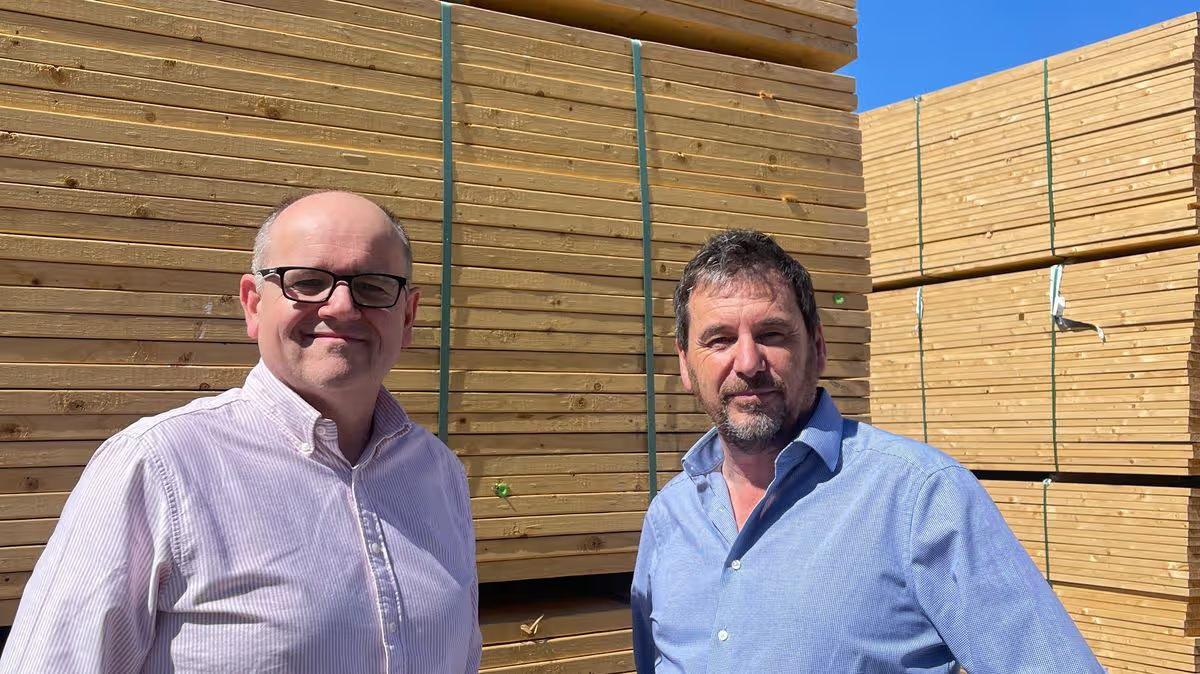
Terry Edgell and Neil Davies of Premier Forest Products.

Premier Forest Products has reported surging revenues through its strategy of acquisition and organic growth.

Over the last year the Newport headquartered business has made a number of key acquisitions, including timber engineering specialist National Timber Systems and multiple former Arnold Laver sites from National Timber Group England.

Advertisement

These additions have further strengthened Premier Forest’s capabilities across timber distribution, manufacturing, and logistics. The business, one of the UK’s leading independent timber and timber processing groups, said that audited revenues for its last financial to the end of April this year are expected to come in at £125m, while for its current 2026/27 year revenues are expected to rise significantly to £200m.

The company said it has delivered this growth despite continued economic pressure across the sector including fiscal changes, rising operational costs and ongoing geopolitical instability impacting global trade.

Head count has grown from 400 employees to almost 800 across the group following the acquisitions, while the HR function has doubled in size to support workforce development. It has also strengthened its senior leadership team through a series of strategic appointments and promotions, including the promotion of Neil Davies from chief financial officer to chief financial and operating officer.

Alongside commercial performance, Premier Forest said its environmental, social and governance (ESG) commitments are increasingly influencing customer relationships and procurement opportunities.

Advertisement

The business continues to expand programmes around its corporate parenting scheme with a new cohort joining the group in July, its prisoner rehabilitation scheme, military covenant commitments and employment support initiatives, with these projects now forming an important part of major framework discussions and tender opportunities. It also recently expanded banking facilities with HSBC which will support continued investment and ensure the business remains agile for future acquisition opportunities as the market evolves.

Terry Edgell, co-founder and chief executive of Premier Forest Products, said: “The market has remained difficult for many businesses, particularly with ongoing fiscal pressures and the wider impact of geopolitical uncertainty on trading conditions.

Our approach has been to continue investing in infrastructure, in systems, in capability and most importantly in people so we are ready to capitalise when markets strengthen again.

“ESG and social value are no longer secondary conversations, they are central to how major organisations select partners. What’s important for us is that these initiatives are authentic and embedded into the culture of the business, not simply box-ticking exercises.

Advertisement

“We’ve built strong momentum over the last year, but ultimately our success comes down to our people. It is the talent within the organisation that drives Premier Forest forward.”

Mr Davies said: “Premier Forest has continued to evolve rapidly, with the business delivering significant growth over the last year through strategic acquisitions, expansion across key markets, and continued investment throughout the group. This progress has further strengthened our market position and created a broader, more resilient platform for future development.

The next 12 months will be an important period for the business as we continue integrating our recent acquisitions, strengthening operations across the group, and building on the momentum we have created.

“With a growing national presence, an expanding customer base, and continued focus on operational excellence, the business is well positioned to support further sustainable long-term growth.”
Advertisement
Continue Reading

Business

Kawhi Leonard’s Trade to Toronto Raptors Stalls Over Clippers Demand for Untouchable Young Star

Published

on

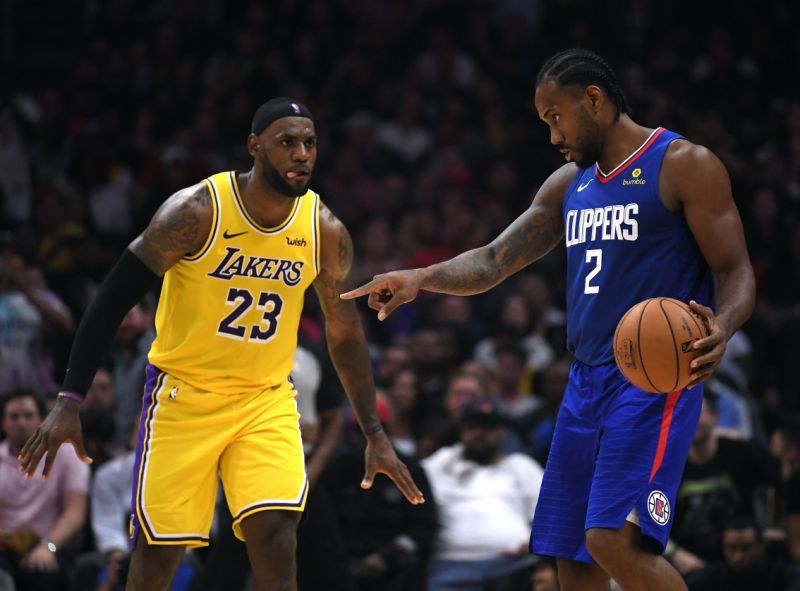
LeBron James defends Kawhi Leonard during Lakers vs. Clippers NBA 2019-20 season opener.

TORONTO — A deal that would send Kawhi Leonard back to the Toronto Raptors appears increasingly likely, but the Los Angeles Clippers and Raptors remain stuck on one central sticking point: which of Toronto’s young players will be included in the return package.

Leonard, the two-time NBA champion and former Raptors Finals MVP, has reportedly told teams he will only sign a contract extension with Toronto if traded, a stance that has significantly narrowed his market and given the Raptors meaningful leverage in negotiations with Los Angeles. ESPN’s Shams Charania reported that a trade could happen as soon as Monday, while NBA insiders have separately confirmed that the Clippers and Raptors are “seriously engaged” in discussions that have stretched on for more than a week.

The core obstacle, according to Sportsnet’s Michael Grange, centers on the Raptors’ refusal to include two specific players in any potential deal. Grange reported that second-year wing Ja’Kobe Walter would not be part of any package Toronto offers, adding that rookie Collin Murray-Boyles is similarly considered off-limits.

“Plenty of noise around Leonard/Clippers/Raptors potential deal, but my understanding is second-year wing Ja’Kobe Walter would NOT be part of any deal the Raptors might make, per sources,” Grange wrote. “It almost goes without saying prize rookie Colin Murray-Boyles is off limits also.”

Advertisement

Murray-Boyles, the No. 9 overall pick in the 2025 NBA Draft, emerged as one of the league’s most promising rookies last season, averaging 8.5 points, 5.0 rebounds and 1.9 assists while earning a spot on the All-Rookie Second Team and establishing himself as one of the NBA’s better young defenders. He raised his game further during Toronto’s playoff series against the Cleveland Cavaliers, reinforcing the Raptors’ view of him as a potential long-term cornerstone. Given that Los Angeles is parting with its best remaining player, the Clippers naturally view Murray-Boyles as the centerpiece they would want in return, but Toronto has made clear that asset will not be on the table.

Walter, the No. 8 pick in the 2024 NBA Draft, has also shown steady growth across his first two professional seasons. He started five of Toronto’s seven playoff games against Cleveland this past season and averaged 11.1 points during that postseason stretch, building on a regular season in which he finished as the only Raptor attempting at least three 3-pointers per game while shooting 40% from beyond the arc. Walter remains ineligible for a contract extension until next offseason and is expected to come off Toronto’s bench next year, but his demonstrated trajectory has been enough for the Raptors to shield him from trade discussions as well.

With both Murray-Boyles and Walter ruled out, reporting indicates the most frequently discussed trade framework would send forward Brandon Ingram, guard Gradey Dick and draft compensation to Los Angeles in exchange for Leonard. Ingram, an All-Star for Toronto last season who averaged 21.5 points, 5.6 rebounds and 3.7 assists, is under contract for just two more seasons, giving the Clippers a high-production piece with future financial flexibility. Dick, 23, struggled through a down season averaging just 6.0 points but remains viewed as a high-upside shooter who some analysts believe could thrive in a different system in Los Angeles.

Despite Ingram’s inclusion, the Clippers reportedly view that offer as lopsided in Toronto’s favor. Los Angeles remains far more interested in extracting Murray-Boyles specifically, but with the Raptors holding firm, the two sides have yet to find common ground on what would satisfy both franchises. Some reporting has floated an alternative package built around Walter, Ingram and a future first-round pick as potentially the best offer the Clippers could realistically extract from Toronto, though that scenario has not been confirmed as an active proposal and would still leave the final decision in Los Angeles’ hands on whether to accept terms that exclude its preferred target.

Advertisement

Leonard’s situation carries additional complexity beyond the trade framework itself. He is entering the final year of his contract, worth more than $50 million, and the NBA is separately investigating whether Leonard and the Clippers circumvented the salary cap through a sponsorship agreement tied to the now-defunct company Aspiration. Should the league determine wrongdoing occurred, Leonard’s contract could potentially be voided altogether, adding a layer of uncertainty that looms over any trade discussion regardless of which assets ultimately change hands.

Even setting aside that investigation, Leonard’s age and recent injury history have shaped how aggressively the Raptors are willing to negotiate. Now 35 and coming off a season in which he averaged a career-best 27.9 points, 6.4 rebounds, 3.6 assists and 1.9 steals across 65 games while shooting over 50% from the field and 38% from three-point range, Leonard remains an elite offensive talent when healthy. But his extensive injury history over the past several seasons has tempered how much young, controllable talent Toronto is willing to surrender for what could ultimately amount to a single fully healthy season before Leonard’s career winds down.

Leonard previously spent one season with the Raptors in 2019, leading the franchise to its first and only NBA championship before departing that summer to join the Clippers. His tenure in Los Angeles has since been marked by a pattern of disappointing playoff results and recurring injury setbacks, a history that has fueled speculation about a potential homecoming as Toronto looks to elevate itself back into legitimate championship contention.

For now, with the Raptors unwilling to part with either of their most promising young building blocks and the Clippers unconvinced that the offers on the table represent fair value for their franchise player, the two sides remain at an impasse even as both have continued engaging in what league sources describe as serious, ongoing negotiations. Whether Toronto’s leverage, rooted in Leonard’s stated preference to sign an extension only with the Raptors, ultimately forces Los Angeles to accept a deal built around Ingram, Dick and draft compensation rather than Murray-Boyles or Walter will likely determine whether this blockbuster trade comes together in the days ahead or stalls out entirely as free agency proceeds elsewhere around the league.

Advertisement
Continue Reading

Business

Emma Jones Marks First Year as UK Eyes Toughest Late Payment Regime

Published

on

Emma Jones CBE, the renowned founder of Enterprise Nation and one of the UK’s most vocal champions of small businesses, has been appointed as the new small business commissioner. She will take up the role on 23 June, succeeding Liz Barclay, who completes her four-year term at the end of this month.

A year into the job, Britain’s Small Business Commissioner is about to be handed real teeth, and she intends to use them.

Emma Jones CBE has marked her first anniversary as the UK’s Small Business Commissioner, capping twelve months of hard campaigning on behalf of the country’s 5.5 million small firms with the prospect of the most far-reaching shake-up of payment law in a generation. Since taking up the role, the Enterprise Nation founder has trained her attention on speeding up payment times, putting digital tools to work for small traders, and protecting the cash flow that keeps the nation’s smallest businesses alive.

The timing is no accident. Her milestone arrives just as the government’s Commercial Payments Bill, also referred to as the Small Business Protections Bill, completes its passage into Parliament. The legislation is designed to give Britain the toughest late payment regime in the G7 and, crucially, to convert the Office of the Small Business Commissioner (OSBC) from a mediation service into a genuine enforcement body with the power to investigate and to fine.

For anyone who has run a small business, the problem it targets needs little explanation. Late payment drains an estimated £11 billion from the economy every year, and the human cost behind that figure is what Jones returns to again and again.

“Having started, scaled, and sold businesses myself, I know first-hand how draining it is to chase the money you have already rightfully earned,” she said, reflecting on her first year. “This year, our small but mighty team has focused heavily on reducing the hours business owners waste on non-productive tasks so they can reinvest that energy back into growth.”

Advertisement

She is blunt about the scale of the drag. “Late payment isn’t just an administrative inconvenience, it is a massive barrier to excelling,” she said. Joint research from the Department for Business and Trade and the OSBC, she noted, shows UK small businesses lose a staggering 133 million hours of staff time every year purely chasing overdue invoices, an average of 86 hours for every affected firm. “This is time stolen directly from product development, training, and expanding operations. As we look to the year ahead, the new legislation represents a monumental shift. It gives us the teeth we need to end this culture of delay and unlock the full potential of our small business community.”

Jones has spent her opening year reshaping how the OSBC reaches and supports small firms. Acting as an independent advocate for micro-businesses and SMEs squeezed by large corporate supply chains, her office has clawed back £1.5 million for small businesses caught out by late payment, building on the Commissioner’s wider track record of recovering money owed to suppliers.

On the digital front, she has published fresh guidance alongside a payment pledge signed by major UK eCommerce marketplaces including eBay, Temu, PayPal and SumUp, and produced AI advice tailored to small firms. Behind the scenes, she has worked closely with the Department for Business and Trade and research partners to lay the groundwork for the incoming Bill, drawing on international best practice to shape it.

Cultural change has been a constant theme. More than 600 businesses across the UK have now signed up to the Fair Payment Code, among them HSBC, Barclays, NatWest, Nationwide, Heathrow Airport, Amey, Kier, AXA, Boeing, BT and Welsh Water. Jones has also grown the office’s social media reach and launched an interview series, ‘Get the money moving’, with leading voices in the fair payment space. In person, she has met more than 5,000 people and run monthly SME Safaris, sending civil servants out to meet founders in their real trading environments.

Advertisement

The year ahead will be defined by readying the business community for the Commercial Payments (Late Payments) Bill now making its way through Parliament. The government has billed the package as the toughest crackdown on late payments in over 25 years, and the detail bears that out.

Under the reforms, the Commissioner will gain powers to investigate the persistent poor payment practices of larger businesses, adjudicate disputes outside the court system, and levy financial penalties on repeat offenders that could run into tens of millions of pounds. The OSBC will also be able to act on anonymous complaints, shielding small suppliers from the threat of corporate retaliation when they speak up.

Two further measures go to the heart of the cash flow problem. Large companies will be capped at a maximum of 60 days’ payment terms when dealing with smaller suppliers, and statutory interest of 8% above the Bank of England base rate will apply automatically to overdue invoices, stripping away a firm’s ability to contract out of late fees. The new powers for the Commissioner were confirmed when the Bill was introduced to Parliament, alongside the wider crackdown on firms that pay late.

Before the legislation takes effect, Jones is focused on keeping the quality of casework and support high, welcoming more firms onto the Fair Payment Code, and exploring a future in which the office covers some of its own costs while positioning the UK as a global leader in the shift to a prompt payment economy.

Advertisement

After a year of persuasion, in other words, the Commissioner is preparing for a year of enforcement. For the 5.5 million small businesses she represents, the difference could be measured in both hours and pounds.


Amy Ingham

Amy is a newly qualified journalist specialising in business journalism at Business Matters with responsibility for news content for what is now the UK’s largest print and online source of current business news.

Advertisement
Continue Reading

Business

Savannah Guthrie May Step Away From Today Show Again as New Ransom Note Claims Mother Is Dead

Published

on

Savannah Guthrie & Nancy Guthrie

NEW YORK — Savannah Guthrie may be forced to step away from her role as “Today” co-anchor for a second time, according to a person close to the situation cited by The U.S. Sun, as new developments in the nearly five-month-old disappearance of her mother, Nancy Guthrie, continue to weigh heavily on the broadcaster.

Nancy Guthrie, 84, has been missing since Feb. 1, when she was reported absent from her Tucson, Arizona, home after failing to attend a scheduled church service. Investigators have said evidence found at the scene, including blood and signs of forced entry, points to a violent struggle, and the case has since been treated as a likely abduction. Savannah Guthrie took a leave of absence from “Today” in the immediate aftermath of her mother’s disappearance before making an emotional return to the anchor desk on April 6.

The renewed possibility of another leave comes after a new ransom note surfaced, sent to TMZ and reportedly claiming that Nancy Guthrie is no longer alive. According to reporting on the note’s contents, the sender also claimed to possess video evidence of those allegedly responsible for her disappearance, asserting it could “deliver them on a silver platter” if certain demands were met. As of this report, authorities have not publicly confirmed the authenticity of the note, and no suspects or persons of interest have been formally named by either the Pima County Sheriff’s Department or the FBI as the investigation approaches the five-month mark.

A source described to The U.S. Sun the strain the situation has placed on Guthrie personally, characterizing her as someone who is “holding it together” even as the emotional weight of the case becomes harder to manage privately while continuing to appear on national television each morning.

Advertisement

According to that source, NBC executives are reportedly preparing contingency plans in case Guthrie needs to step away from her on-air duties again, potentially with little advance notice. The source indicated that network leadership hopes she will be able to continue working through the ongoing investigation, while also acknowledging the possibility that she may need to leave the anchor desk unexpectedly given the unpredictable nature of new developments in her mother’s case.

Hoda Kotb, who previously stepped back into the lead co-anchor role alongside Craig Melvin during Guthrie’s earlier leave of absence, is reportedly prepared to do so again if needed. The source framed any potential return by Kotb not as a permanent replacement, but as a supportive measure intended to give Guthrie room to focus on her family during an exceptionally difficult period.

“If Savannah needs her, she’ll be in that chair immediately. There wasn’t a second of hesitation,” the source said. “This isn’t about replacing Savannah. It’s about giving her the space to focus on finding her mother.”

The source also described the broader toll the prolonged investigation has taken on Guthrie behind the scenes, even as she has continued to maintain her public role.

Advertisement

“Savannah is determined not to let viewers down, but behind the scenes, everyone can see how emotionally drained she is. She’s running on pure courage,” the insider said.

Guthrie has not publicly confirmed any specific plans to step away from “Today” again, and NBC has not issued an official statement addressing the speculation reported by The U.S. Sun. The situation remains fluid, with developments in the investigation, including the latest ransom note, continuing to unfold in real time and shape how Guthrie and the network are navigating her on-air commitments.

The newest ransom note adds to a pattern of unverified communications that have surfaced periodically throughout the case. According to details reported on the note’s content, the sender claimed there were two individuals involved in Nancy Guthrie’s disappearance, including a primary figure described only as the “main guy,” and asserted that video evidence existed documenting the alleged abduction. In exchange for a substantial cryptocurrency payment, the sender claimed that Nancy Guthrie’s location would be easy to locate for anyone aware of where to look. Investigators have not confirmed whether any of these claims hold credibility, and similar unverified messages have surfaced multiple times since the case first began making national headlines in February.

Following news of the latest note, Guthrie addressed the situation directly during a recent broadcast of “Today,” choosing to speak briefly despite her general reluctance to comment on her family’s ongoing case while continuing to anchor the program.

Advertisement

“I can’t pretend I’m not here, and since I am, I just wanted to take the opportunity to ask people, really to beg people to come forward, somebody knows something,” Guthrie said on air.

That on-air appeal reflected a broader pattern that has defined much of Guthrie’s public response to her mother’s disappearance: a deliberate effort to continue performing her professional duties while periodically using her platform to renew pleas for public assistance in the case. Throughout the investigation, Guthrie and her siblings have repeatedly issued public statements and video messages directed at both the broader public and, at times, directly at those believed responsible for their mother’s disappearance, seeking any information that might help bring the case closer to resolution.

With the investigation still active and no confirmed suspects identified nearly five months after Nancy Guthrie vanished, the uncertainty surrounding both the case itself and Savannah Guthrie’s continued presence on “Today” appears likely to persist. For now, network insiders cited in recent reporting suggest NBC is treating any further absence as a real possibility rather than a remote contingency, underscoring just how unpredictable the situation has become for Guthrie and her family as they continue to wait for definitive answers about what happened to Nancy.

Advertisement
Continue Reading

Business

Management buyout at Tyneside air conditioning firm puts son of previous owner in charge

Published

on

Business Live

Acrol has been operating since the mid-1970s and its new owner has been backed by Mercia Debt Finance

Acrol is based in Gateshead.

From left: Andy Clough, Laurence Richardson and Daniel Wood.(Image: Mercia Debt Finance)

A Tyneside air conditioning company has marked its 50th year with a management buyout backed by six-figure funding.

Acrol Air Condition employs 40 staff at its Gateshead base, from which it designs and installs systems for a range of industries. The firm has acquired by sales director Daniel Wood, who is also the son of one of the previous owners, in a deal backed by a £300,000 loan from NPIF II – Mercia Debt Finance, which is managed by Mercia as part of the Northern Powerhouse Investment Fund II (NPIF II).

Arcrol was founded in Newcastle in the mid-1970s as a marine industry specialist before moving to Gateshead in 1993, at the time it was acquired by Daniel’s father Thomas Wood and business partner Mike Kears. Together they expanded beyond the marine industry, and the new deal will release their shareholding, though they will continue to work in the business.

Daniel Wood started working for the firm as an apprentice more than 20 years ago and will now become managing director. He has ambitions to boost turnover four-fold in the next five to 10 years, via winning more work in the renewables sector and exploring the datacentre market

Advertisement

He said: “When Tom and Mike took over Acrol, it was a small design house serving the marine industry. They did a great job by turning it into a one-stop shop with its own manufacturing facilities, strong equipment and material supply chains and a broad client base. It’s exciting to be taking over the business and I see plenty of scope to grow across all sectors including the ever expanding datacentre market.”

Acrol installs cooling and heat pump equipment ranging from small domestic systems up to industrial-scale systems serving large commercial sites. It can manufacture custom-built systems in house and also offers service and maintenance.

The company has provided equipment for locations ranging from a Newcastle police station and MTV’s London headquarters to ships in Taiwan. It is currently working on HMRC’s new regional centre in Newcastle.

Andy Clough of Mercia Debt added: “Air conditioning and heat pumps are in growing demand and modern systems combine both to create efficient climate control solutions. Acrol already has a proven track record for delivering large-scale projects nationwide. The funding has enabled Dan to take over the reins and he is now keen to take advantage of opportunities in this growing market.”

Advertisement

Peter Blackrock of Real Finance provided fundraising advice to Acrol, while Elephants Child acted as corporate finance advisers and TC Group provided accountancy services. Ignition Law provided legal advice to the company while Jacksons Law advised Dan Wood.

NPIF II – Mercia Debt Finance can provide investments in the NPIF II area with a primary focus on the Yorkshire and the Humber regions of North Yorkshire, Hull and East Yorkshire, West Yorkshire and South Yorkshire.

Continue Reading

Business

Tesla Stock Ticks Higher Today as Morgan Stanley Lifts Delivery Forecast Ahead of Closely Watched Q2 Report

Published

on

Air Products Shares Jump 9 Percent on Strategic Pivot Away

Tesla shares edged higher Tuesday, climbing 0.65% to $414.53, as investors looked ahead to the electric automaker’s pivotal second-quarter delivery report amid renewed optimism from Wall Street about a potential rebound in European and Chinese sales.

The modest gain comes after a volatile stretch for the stock, which has swung considerably in recent sessions as markets weighed Tesla’s near-term delivery trajectory against the longer-term narrative built around the company’s autonomous driving and robotics ambitions. Shares closed Monday at $409.09, down 0.67% on the day, after trading in a range between $379.30 and $413.27 during the session, reflecting the kind of intraday volatility that has become characteristic of the stock in recent weeks.

The most significant catalyst shaping sentiment heading into Tuesday’s session was a delivery forecast upgrade from Morgan Stanley, which raised its projection for Tesla’s second-quarter vehicle deliveries above the broader Wall Street consensus, citing signs of a rebound in sales across both Europe and China. The upgrade offers a notable counterpoint to concerns that have lingered over Tesla’s delivery trends for much of the year, with the upcoming Q2 delivery report widely viewed by analysts as a critical data point that could either reinforce confidence in a recovery or signal continued challenges with inventory management across key international markets.

Tesla has also continued to expand its presence in markets tied to its advanced driver-assistance technology. The company is working to broaden its reach in Europe, where a growing number of countries have moved to approve Tesla’s Full Self-Driving, supervised, technology for use, a regulatory expansion that analysts have flagged as a meaningful tailwind for the stock given how central autonomous driving capability has become to Tesla’s broader investment narrative.

Advertisement

Beyond the core automotive business, Tesla has continued building out partnerships tied to its energy operations. The company struck an agreement with residential solar provider Sunrun aimed at delivering power for data centers, part of a broader industry trend in which electric vehicle and clean energy companies are positioning themselves to capitalize on surging electricity demand tied to artificial intelligence infrastructure buildouts across the country.

Tesla’s regulatory standing has also seen recent improvement on at least one front. The National Highway Traffic Safety Administration closed investigations tied to certain Model 3 and other vehicle issues in recent days, removing a source of overhang that had periodically weighed on investor sentiment toward the stock. At the same time, Tesla has faced a more unusual operational challenge in the form of rising vehicle battery theft, a problem one report described as having become “an epidemic” in certain markets, even as the stock continued climbing despite that specific headwind.

Wall Street’s broader view of Tesla remains sharply divided heading into the company’s delivery report. Some analysts have continued to argue that Tesla’s valuation hinges almost entirely on the pace and credibility of its artificial intelligence and autonomy ambitions, with one analyst note suggesting that Tesla stock is unlikely to consistently outperform the broader Nasdaq index until its Full Self-Driving technology reaches near-perfect reliability rates. Other commentary has framed Tesla’s bull case as one in which the company’s broader AI narrative, spanning autonomous driving, robotics and energy infrastructure, continues to outweigh more traditional valuation concerns tied to its core vehicle business, even as some investors have begun openly questioning whether the stock’s premium multiple can be sustained without clearer near-term financial results to support it.

Tesla’s stock performance over longer time horizons has lagged broader market benchmarks despite the company’s continued prominence in market commentary. Shares have risen roughly 69% over the past five years through late June, according to Motley Fool analysis, compared with an 85% total return for the S&P 500 over the same period, a gap that has surprised some investors given Tesla’s outsized presence in financial media and retail investor portfolios. The stock’s all-time closing high of $489.88 was reached on Dec. 16, 2025, with the 52-week trading range spanning from a low of $288.77, touched July 7, 2025, to a high of $498.83, reached Dec. 22, 2025.

Advertisement

Much of Tesla’s longer-term investment case continues to rest on two strategic pillars beyond its core vehicle manufacturing business: the Robotaxi autonomous ride-hailing service and the Optimus humanoid robot program. Tesla is preparing its Fremont, California, factory with the eventual goal of producing up to 1 million robots annually, part of an ambition Chief Executive Elon Musk has previously suggested could one day push Tesla’s total market capitalization as high as $25 trillion, should the Optimus program scale successfully. Analysts examining the company’s longer-term prospects have generally agreed that the timeline for both autonomous driving and robotics reaching meaningful financial scale remains highly uncertain, with some cautioning that Tesla’s current valuation already prices in an exceptionally optimistic outcome for both initiatives, leaving limited room for error if either program develops more slowly than the market currently anticipates.

Tesla’s broader competitive landscape within the electric vehicle sector has also factored into recent trading. Rival EV makers, including Rivian, Lucid Group and China’s XPeng, posted notable gains in recent sessions alongside Tesla, suggesting at least some of the sector’s recent momentum has been driven by broader industry sentiment rather than factors specific to any single company. Traditional automakers Ford and General Motors, by contrast, traded modestly lower over the same period, underscoring a continued divergence in investor enthusiasm between established legacy manufacturers and electric vehicle-focused companies.

With Tesla’s market capitalization sitting at approximately $1.55 trillion and the stock trading at a price-to-earnings ratio well above 300, the company’s valuation continues to reflect investor expectations that extend far beyond its current vehicle delivery and profitability trends. As the company approaches its formal second-quarter delivery announcement, investors are likely to parse the results closely for signs of whether Morgan Stanley’s more optimistic forecast for European and Chinese demand proves accurate, a data point that could meaningfully influence the stock’s trajectory heading into the second half of 2026, regardless of how the broader AI and robotics narrative continues to evolve in the months ahead.

Advertisement
Continue Reading

Trending

Copyright © 2025