

Business
ETMarkets Smart Talk | Why some NRIs pay zero tax on mutual fund gains in India: Sreepriya NS of Entrust Family Office explains


One such provision, which has sparked considerable discussion on social media, allows eligible NRIs residing in countries such as Dubai (UAE), Singapore and Mauritius to pay no capital gains tax in India on mutual fund investments, subject to the provisions of the applicable tax treaty.
In this edition of ETMarkets Smart Talk, Sreepriya NS, Co-founder and Director, Entrust Family Office, explains the legal framework behind this tax treatment, why mutual fund units are treated differently from company shares under DTAAs, and discusses how NRIs are approaching India as a long-term investment destination.
She also shares insights on portfolio diversification, the growing appeal of REITs and fractional real estate, common investment mistakes to avoid, and why goal-based planning is becoming increasingly important for global Indian investors. Edited Excerpts –
Q) How are NRIs looking at India as a long-term investment destination? And what are the other hot countries which they invest in?

A) NRIs continue to view India as a compelling long-term investment destination, driven by its strong domestic consumption, demographic dividend, and a rapidly formalising economy.Many are drawn not just by the potential for financial returns, but by the emotional and strategic value of investing in their country of origin — whether that’s through real estate, startups, listed equities, or legacy planning.
Simultaneously, NRIs are increasingly diversifying their portfolios across geographies. Countries like Singapore, the UAE, the US, and the UK remain attractive due to their stable financial ecosystems, regulatory ease, and access to global investment opportunities.
In particular, Singapore and Dubai are emerging as investment hubs due to their tax efficiency, business-friendly environments, and proximity to India. Additionally, many NRIs with family or business linkages abroad invest in local real estate and private funds, aligning these investments with their global lifestyle.
There is also a growing trend of tactical investments in emerging markets such as Vietnam, Indonesia, select African nations, and parts of Eastern Europe, offering high-growth potential.
This trend reflects a balanced strategy: India continues to represent ‘roots and returns’, while global markets provide ‘reach and resilience’.
Key Statistics (as of Dec 2024):
• Mutual Fund Investments by NRIs: Approx. USD 18–20 billion (~INR 1.6 lakh crore)
• NRI Bank Deposits: Approx. USD 162 billion (~INR 13.7 lakh crore) across FCNR, NRE, and NRO accounts
Q) There is big debate on social media about taxation. Help us understand why NRIs In Dubai, Singapore & Mauritius have to pay zero tax on mutual fund gains?
A) In case of Mutual funds, (which as per SEBI regulation, are established as a trust) the gains from sale of a unit cannot be treated the same as gains from sale of share of a company.
Hence, under the Article 13 (5) of the DTAA with the above countries, the gains are taxable only in the country of residence of NRIs of such countries, and not in India.
Q) How much money is moving in real estate/REIT/fractional investment? Is the right way?
A) While specific data on NRI investments into REITs and fractional ownership models in India remains limited, the broader trend in real estate investment is significant.
NRIs invested approximately USD 3.1 billion (INR 26,000 crore) in Indian real estate during the first half of 2024, following a total investment of around USD 13 billion in 2023.
The growing interest in REITs and fractional ownership platforms reflects a shift toward more structured, accessible, and diversified real estate investment opportunities.
These models offer NRIs the advantage of transparency, liquidity, and lower ticket sizes — making real estate participation more feasible without the operational complexities of direct ownership.
While not a one-size-fits-all approach, REITs and fractional investments are increasingly seen as efficient, regulated, and scalable avenues for NRIs to participate in India’s real estate growth story.
Many NRIs continue to hold significant real estate assets in India, despite having settled abroad for decades. At Entrust, we’ve supported families like one from Hyderabad, now in the U.S. for over 35 years, with managing their residential and commercial properties.
The real challenge often lies with the next generation, who face the burden of inheritance, tenant management, and compliance from afar. As a bespoke family office, we help simplify this complexity—offering peace of mind and practical solutions so they can focus on their lives overseas.
Q) What are the big mistakes which NRIs should avoid when making investment in India?
A) One of the biggest mistakes NRIs often make when investing in India is approaching it with the same mindset or assumptions they use in their resident countries. India is a dynamic, high-growth market — but it also comes with its own set of regulatory, taxation, and liquidity nuances.
The foremost important thing to consider while investing in India is to have clarity about the purpose of such investments. This determines further requirements – such as cash flows, inheritance/estate planning, repatriation etc. from such investments.
It also simplifies the asset allocation decision and the selection of products/vehicles. In the absence of such clarity, one gets caught in the ‘latest’ trend of investment products, or the preferred options of the dealer/distributor.
A few common pitfalls to avoid:
1. Lack of Clarity on Objectives
2. Overexposure to Real Estate
3. Ignoring Tax Implications
4. Using Informal Channels(Investing through family or friends without a proper legal or advisory framework can result in misaligned decisions and, in some cases, loss of control or transparency)
5. One-Size-Fits-All Approach: Assuming what works for resident Indians will work for NRIs can be misleading. NRIs have access to different investment opportunities and risks, and need tailored strategies that factor in currency exposure, repatriation rules, and global asset allocation.
The key is to approach India with professional guidance, clear intent, and a balanced view — combining emotional connection with financial discipline.
 Agencies
Q) What is the money mindset which NRIs follow. Are there any common attributes?
A) There is no single, uniform money mindset that defines all NRIs. Their investment approach and financial behaviour vary significantly based on their stage of life, their country of residence, their financial goals, and evolving personal circumstances.
However, some common attributes do emerge. Many NRIs display a strong preference for financial prudence, long-term wealth creation, and portfolio diversification across geographies.
Their strategies often reflect a balance between emotional ties to India and practical considerations driven by global exposure and opportunities.
Depending on their objectives—whether it’s retirement planning, wealth preservation, or legacy creation—their mindset evolves in alignment with their individual context and the macroeconomic environment.
In essence, while there is no monolithic mindset, there is a consistent focus on strategic, informed, and goal-oriented financial planning.
Q) Which investment options or asset classes are hot favourites of NRIs and why?
A) Rather than identifying “favorite” asset classes in a broad sense, our approach is rooted in understanding the unique needs, objectives, and risk profiles of each NRI family.
Investment decisions are highly individualised and based on their life stage, financial goals, and geographic exposure.
That said, most NRI portfolios typically comprise a diversified mix of asset classes — including listed equities, debt instruments, mutual funds, real estate, REITs, and alternative investment avenues such as private equity or structured products. This diversification helps balance growth, income, and capital preservation objectives.
Ultimately, we don’t prescribe investments based on popularity, but offer solutions tailored to each client’s financial strategy and long-term vision.
Q) Which sectors are more preferred when NRIs look to invest in India?
A) NRIs typically do not exhibit a strong bias toward any single sector. Instead, they prefer a diversified allocation across the broader Indian market.
This approach not only aligns with prudent investment principles but also reflects confidence in India’s multi-sectoral growth story.
India’s attractiveness as an investment destination lies in its robust and resilient economy, offering opportunities across sectors such as financial services, technology, healthcare, manufacturing, infrastructure, and consumer goods.
Rather than chasing sector-specific trends, most NRIs seek balanced exposure that captures the overall growth momentum of the country while managing risk effectively.
NRI investors are typically sector-agnostic but prioritize market-driven strategies with a strong focus on liquidity and repatriation. At Entrust, we’ve curated bespoke strategies for NRI clients — one of which is a dividend-yield portfolio we’ve used over the last five years.
It’s equity-oriented with a defensive tilt, focused on high quality dividend paying companies to ensure stable returns. Notably, dividends are 100% repatriable under RBI norms, making this an effective income-generating and risk-mitigating strategy in today’s volatile environment.
Q) What about luxury items – art, cars, watches which of the themes are hot favourites?
A) Luxury collectibles such as art, vintage cars, and high-end watches often form a part of an NRI’s lifestyle and legacy portfolio, but preferences in this space are highly personal.
These choices are typically driven by individual taste, passion, and in many cases, a desire to preserve heritage or express identity.
For some, interests in art, music, or cultural artifacts are closely tied to philanthropic values or legacy planning — supporting causes, institutions, or cultural preservation initiatives.
Rather than being driven purely by investment returns, these assets often reflect emotional and aesthetic considerations, making them deeply unique to each family.
(Disclaimer: Recommendations, suggestions, views, and opinions given by experts are their own. These do not represent the views of the Economic Times)

In total, about 30 unique adverts appeared promoting child sexual abuse, although some of these were shared by multiple accounts.
The alias account was also shown about 20 ads featuring adult pornography.
The distribution of both child sexual abuse material and adult pornography are criminal offences in India, while Meta’s policy states that ads must not contain adult nudity, genitals or content that sexually exploits or endangers children. The BBC has reported all of the ads and the Telegram channels to the Indian authorities.
One ad showed a boy and girl, both of whom appeared to be about 12 years old, engaging in a sexual act.
Another showed a man with his arm around a girl, with text saying he was 52 and the girl was 12. “Click to watch more,” it said, linking out to a Telegram channel.
The BBC reported an advert to Instagram showing a very young girl in tears, with wording indicating that she had been sexually assaulted.
But 24 hours later, Instagram replied saying it hadn’t removed the advert because “our review team found that the advertiser’s ad does not go against our community standards”.
Meta later told the BBC that “no system is perfect, and our review process may not detect all policy violations”.
“We continue to run proactive detection technology on ads once they’re live, and anyone can report an ad to us that they think breaks our rules,” Meta said.
It added that when it becomes aware of apparent child exploitation it reports it to the National Center for Missing and Exploited Children (NCMEC), in compliance with the law. The NCMEC is the centralised global reporting system for the online sexual exploitation of children.
We reported two channels to Telegram for selling child sexual abuse videos.
One of them was subsequently taken down and replaced with a message saying: “This group can’t be displayed because it violated Telegram’s Terms of Service,” but the other continued to post new videos for sale.
Critics have previously accused the platform of not doing enough to prevent the sharing of criminal content.
The Dubai-based company is not a member of either the NCMEC or the Internet Watch Foundation, which also works with most online platforms to find, report and remove such material.
Telegram told the BBC that the company uses both automated and human moderation to eradicate child sexual abuse material (CSAM) from the app, and as a result it says it has “virtually eliminated the public spread of CSAM from its platform”.

Narendra Solanki from Anand Rathi Shares & Stock Brokers believes the upcoming results will largely reinforce the strength of domestic-facing sectors, while export-oriented industries like IT may continue to face pressure.
IT Likely to Remain Under Pressure
The IT sector is expected to remain in focus this earnings season as investors assess the impact of artificial intelligence-led disruption, delayed client spending and global uncertainty on growth prospects.According to Solanki, caution remains warranted despite attractive valuations.
“Results are around the corner, and the first results will start coming from the 9th. Coming to the IT sector, our positioning is neutral to cautious, especially in this quarter. The sector is currently facing multiple headwinds, right from AI disruption to the West Asia crisis. We are also seeing deals being delayed, with clients not committing upfront, so deal closures are not happening at the pace we used to see. These factors are likely to continue impacting the IT sector in the near term,” he said.
While near-term challenges remain, he believes the second half of the financial year could witness an improvement.
“One thing is certain: the second half is going to be better than the first half. However, one key risk remains whether there is any possibility of trimming the FY27 growth guidance, especially at the higher end. That is something the market should watch carefully in the management commentaries this quarter. The top-end guidance of around 2.5% to 3.5% now looks difficult, especially after recent commentary from Accenture. That is why our stance remains neutral to cautious in Q1,” he said.
FMCG May Spring a Positive Surprise
While markets have largely been optimistic on sectors such as auto ancillaries, manufacturing and power transmission & distribution, Solanki believes the biggest surprise could emerge from FMCG and discretionary consumption.
He points to easing inflation, lower crude oil prices and resilient demand trends as factors that could support stronger-than-expected earnings.
“Broadly, sectors like auto ancillaries, manufacturing and power T&D should continue to perform well. The surprising factor may come from the FMCG pack, where markets are currently cautious. However, there have been decent price hikes in the FMCG space, overall inflation has come down, crude oil prices have softened, and both rural and urban demand have shown resilience. So, there can be a positive surprise, especially in the FMCG or discretionary space,” he said.
He also expects domestic manufacturing, healthcare and banking to remain strong performers.
“Auto and auto ancillaries should continue to perform well. The hospitals segment within healthcare should also perform well. Banks are expected to remain strong, with overall credit growth at around 7.7%. Industrial growth data is also promising, so overall the domestic manufacturing sector should continue to perform well,” he said.
PSU Banks Continue to Outshine
Among financials, Solanki continues to favour public sector banks over their private-sector counterparts, citing consistent earnings growth, improving profitability and healthy asset quality.
“Compared with private banks, we remain committed to public sector banks because they have continuously posted better growth over the last seven straight quarters, and there is no reason for that momentum to stop. Return ratios are improving, asset quality continues to remain good, and provisioning has been very healthy, with more than an 80% provisioning run rate. We do not see any near-term risk and continue to favour public sector banks over private banks,” he said.
Real Estate Rally May Be Nearing a Pause
Although real estate stocks have staged a sharp recovery, Solanki believes much of the optimism has already been reflected in valuations. Rising inventory levels could begin to weigh on the sector in the coming quarters.
“Most of the rally has already been done. If you look at inventory build-up, it has risen from 14 months to 18 months, which is the first alarming sign. The good part of the rally is behind us, and after one or two quarters we could start seeing some consolidation or slack in the sector. Unsold inventory is steadily rising and now stands at around 18 months, which could impact the second quarter,” he said.
Management Guidance Will Be the Biggest Trigger
Beyond the headline earnings numbers, Solanki believes management guidance will play a decisive role in shaping investor sentiment, particularly in the IT sector where expectations may still be too optimistic.
“As I mentioned earlier, IT may be trading at historically lower valuations in terms of price-to-earnings ratios, but any cut in guidance by companies, especially in the first half, may not yet be fully priced in by the market. That will remain one of the key things to watch in the management commentaries,” he said.
The Bottom Line
The Q1 earnings season is shaping up as a test of sectoral divergence rather than broad-based strength. Domestic themes—including PSU banks, manufacturing, healthcare and auto ancillaries—are expected to remain resilient, while FMCG could emerge as an unexpected outperformer. In contrast, IT companies face heightened scrutiny, with investors closely tracking demand commentary and any revisions to growth guidance that could influence market sentiment in the months ahead.

Indonesia recovers body of American pilot killed by rebels in Papua, military says
The Cook Government has known for more than a year this moment might arrive.
When former AFL star Nicky Winmar was charged over an alleged assault last May, a political risk emerged alongside the criminal proceedings.
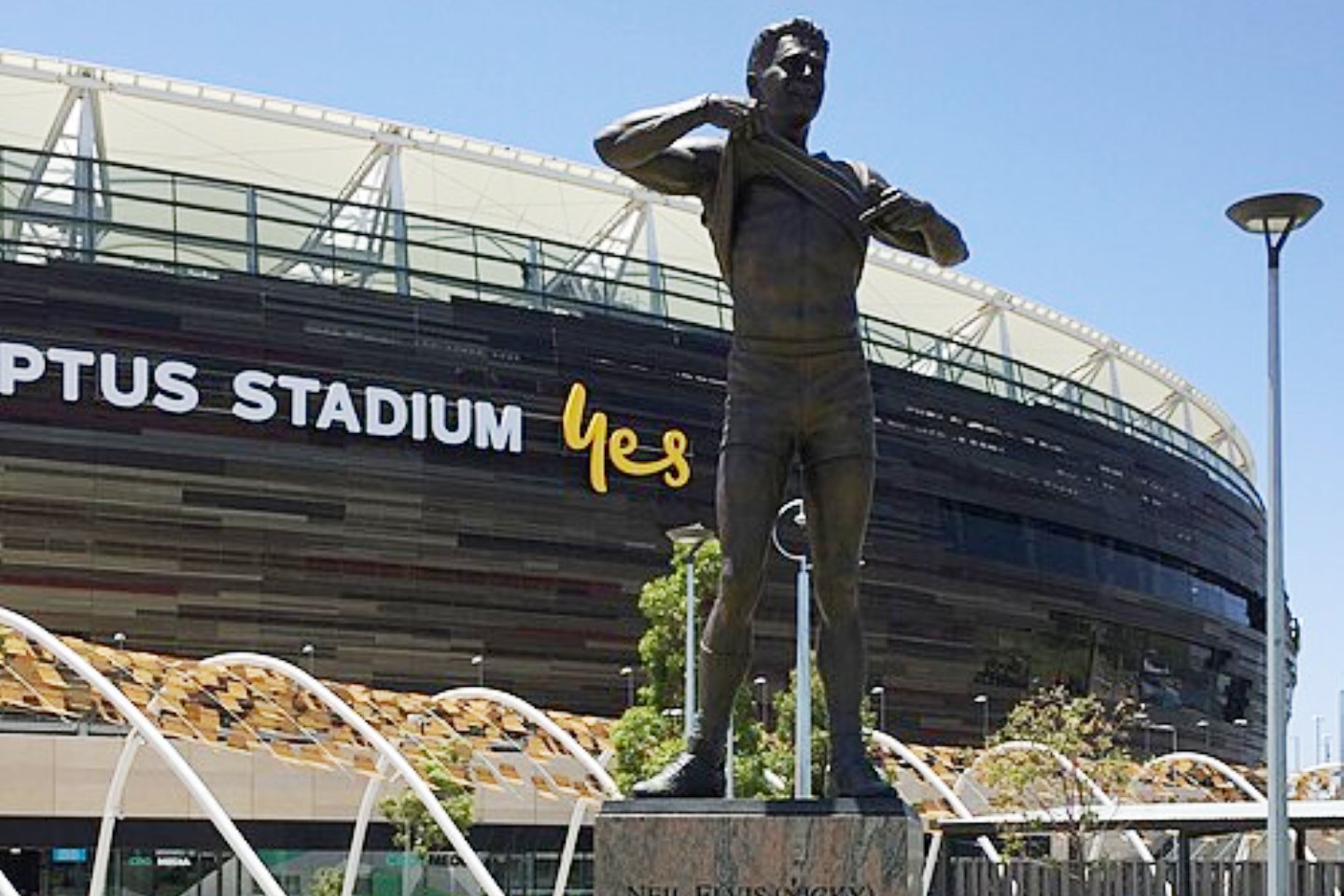
Winmar is not just another sporting great; He is the only individual honoured with a permanent statue at Optus Stadium, a monument supported by the State Government to commemorate his defining stand against racism in Australian football. It was unveiled by then-Premier Mark McGowan.
Now that Winmar has been convicted of assault offences against a female, the government can no longer avoid the question.
Does the statue stay?
Whatever answer it gives will come with political consequences.
If the government leaves the statue in place, critics will ask why Western Australia’s premier sporting venue continues to honour a man convicted of assaulting a woman.
Ministers regularly speak about respect for women and the importance of tackling family and domestic violence. Those statements will inevitably be measured against the decision they make about Winmar.
But removing the statue presents an equally difficult political challenge.
Winmar remains one of Australia’s most significant Indigenous sporting figures. His stand against racism in 1993 changed Australian football and became part of the nation’s broader story about race and reconciliation.
Imagine, for a minute, Winmar’s became just the second statue to be taken down in Western Australia because of the poor behaviour of the subject. The first featured Captain James Stirling, who led the 1834 Pinjarra Massacre for which Governor Chris Dawson has recently apologised.
Statues of John Septimus Roe (a member of the massacre party who didn’t fire a shot and also the surveyor-general charged with carving up land stolen from the Indigenous people) and the Explorer’s Monument at Fremantle that commemorates Maitland Brown (who led a punitive raid in which up to 40 Indigenous people were killed in retribution for the murder of three explorers) are still standing.
And that is where the Cook Government finds itself wedged.
This is a government that has already discovered how politically volatile Indigenous issues can become. The Aboriginal Cultural Heritage Act remains one of the defining political failures of its time in government, leaving ministers understandably cautious about decisions that intersect with Indigenous recognition and symbolism.
Against that backdrop, removing one of the city’s most prominent statues of an Indigenous person would be politically risky.
Leaving it untouched may prove no less so, and doubtless they will wait for the appeal period to expire before making the call.
Meanwhile, the AFL is no less wedged. The country’s highest-profile sporting body commissioned the statue and, presumably, still has a stake in its appearance at the stadium. Its position on this matter, given the slew of issues it has had with the poor behaviour of men, deserves scrutiny.


India’s June services growth slips to 17-month low as demand, hiring cool, PMI shows

“We’ve experienced someone struggling to put food on the table for their children and they decided to put their horse to sleep,” Fiona Long said.
The National Equine Welfare Council (NEWC) found that more than 80% of equine owners across the UK, external were concerned about the continued pressure of increased costs of equine-keeping.
Five percent were considering euthanising their horse due to rising costs, with owners unable to afford the farrier and regular vet call-outs.
It was more common and affordable to have horses in the past but these days it was a “luxury” as the cost of grass seed, bales of hay and vet prices rise, Long said.
“A big bale of hay was £10 around 30 years ago, now it’s £90. Livery costs were static for around 20 years before owners started putting up prices two years ago,” she added.
The farm co-owner said that offering lower prices was a way to “give back” to horses and allow them to continue living for years after they stop being ridden.
“Horses aren’t a hobby, they are a lifestyle and they offer us so much fulfilment, so for them to be horses themselves, that’s giving back to them,” staff member Jo Woods said.
Business
Hitachi Energy, GE Vernova, Siemens Energy, other power equipment stocks crash up to 10%. Here’s why

Hitachi Energy India shares tumbled nearly 8% to Rs 31,150 apiece, while those of GE Vernova T&D India crashed around 10% to Rs 4,361 apiece. Siemens Energy India shares dropped over 6%, while CG Power and Industrial Solutions plunged over 7%. Cummins India shares fell 2% on Friday morning.
Chinese power equipment suppliers to participate in govt tenders
The government granted exemptions to four Chinese companies, namely TBEA Energy, Nanjing Electric India, New Northeast Electric India and Taikai Electric (India), for a period of two years, allowing them to supply electrical equipment in India and participate in the tenders, the order from India’s Ministry of Finance dated June 24 and reviewed by Reuters said. The reported government notification highlighted that the exemption should not be treated as a precedent for other companies.
Earlier this year, Reuters reported citing government officials that India has begun easing its restrictions on buying Chinese equipment after a deadly 2020 border clash, allowing state-run power and coal companies to start limited imports as shortages and project delays mount.
Following the 2020 clash, Indian government mandated that Chinese bidders must register with a government panel and secure political and security clearances before competing for any state contract. However, the report had then said that India has now begun to allow state-run entities to procure a power-transmission component from China without government approval.
Also Read | India eases curbs on Chinese equipment imports for power, coal as projects delayed
India-China ties
This comes at a time when India and China are beginning to rebuild their commercial ties. China has overtaken the US to emerge as India’s largest trading partner in 2025-26, with bilateral trade reaching $151.1 billion, while the country’s trade deficit with Beijing widened to an all-time high of $112.16 billion during the period, according to the Indian Commerce Ministry data.
India’s exports to China rose 36.66% to $19.47 billion during the last fiscal year, while imports increased 16% to $131.63 billion. The trade deficit swelled to an all-time high of $112.6 billion in 2025-26 as against $99.2 billion in 2024-25.
Also Read | Indian envoy holds talks with senior Chinese commerce ministry official on trade ties(With inputs from agencies)
(Disclaimer: Recommendations, suggestions, views and opinions given by the experts are their own. These do not represent the views of The Economic Times)

OPINION: There has been a noticeable change in how European food and wine establishments interact with tourists.

Sensex gained over 650 points, while Nifty 50 rose above 24,350 during Friday’s trading session. The sharp gains added nearly Rs 2.4 lakh crore to the total market capitalisation of all companies listed on BSE, pulling it up to Rs 482 lakh crore.
IT stocks continued to record strong gains, with HCL Tech, Tech Mahindra, Infosys and TCS shares rising 2-5% to lead gains on the Sensex. Tata Steel, Bajaj Finserv and Bharat Electronics shares followed, rising more than 1% each. Bucking the trend, M&M shares fell nearly 1% on Friday morning.
Broader markets, however, sharply underperformed benchmarks, with the Nifty Midcap 100 index rising only 0.2% and the Nifty Smallcap 100 index rising 0.5%. This came as India VIX, which measures volatility in the market, dropped over 1% to 12.13.
Also Read | Adani Enterprises increases QIP size to Rs 15,000 crore, draws bumper 3.8x bids
Sectorally, Nifty IT jumped more than 2% to lead gains. Nifty Metal also rose over 1.5%. Nifty Auto and Nifty PSU Bank indices, however, slipped into the red. The overall market breadth was positive, with 1,832 advances and 607 declines on the NSE, while 91 remained unchanged.
Here are the key factors boosting market sentiment today:
1) Fed rate hike worries cool down
US job growth slowed sharply in June and payroll gains for the prior two months were revised lower, data released on Thursday showed, pointing to a cooling labour market and prompting financial markets to reduce expectations for a near-term rate hike. The unemployment rate dropped to 4.2% last month from 4.3% in May as workers left the labour force, pushing the participation rate to the lowest level in more than five years.”The figures challenged the narrative that the Fed remains on track to hike in the second half of this year,” Reuters quoted Westpac analysts as saying in a research report. The tepid jobs data doused traders’ expectations of an imminent rate hike and raised the odds that the Fed will keep rates on hold until October.
Traders are now pricing in a 46.8% probability that the U.S. central bank will keep rates steady at its meeting on September 15 to 16, compared to a 35.8% chance a day earlier, according to the CME Group’s FedWatch tool.
2) Rupee opens higher
Rupee rose 18 paise to 95.17 against the US dollar in early trade. This came on the back of a weaker US dollar after the tepid jobs report. The dollar index, which measures the greenback against a basket of currencies, was 0.2% lower at 100.77 after a 0.5% decline on Thursday. It is on course for its biggest weekly drop since early April.
3) FII outflows taper off
Foreign investors remained net sellers of Indian equities, net selling shares worth nearly Rs 312 crore on Thursday, according to provisional data on the NSE. This is marginal when compared to the massive FII outflows seen earlier this year during the raging war in the Middle East.
4) Heavy buying in IT stocks
The overall market optimism was boosted by strong buying in heavyweight IT stocks like HCL Tech, TCS and Infosys. The IT stocks are extending sharp gains today, after tumbling to fresh 52-week lows earlier this week.
IT companies derive a significant portion of their revenue from the North American market. Rate hikes or a spike in inflation in the US can weigh on discretionary spending, which, in turn, may affect the sector’s growth prospects. Hence, lower expectations of Fed rate hikes, along with low valuations, are boosting the IT stocks.
5) Positive global cues
Dalal Street is accompanying global peers in sharp gains today. South Korea’s Kospi jumped 2.5%, while Japan’s Nikkei gained around 1% on Friday morning. Hong Kong’s Hang Seng and China’s Shanghai Composite also rose nearly 1% each.
On Wall Street, the Dow Jones Industrial Average rose more than 1% to post a record closing high on Thursday and a fourth straight week of gains. European markets also closed in the deep green yesterday.
6) Iran-US peace efforts
“No news is good news” is what can summarise today’s market scenario. The peace efforts in the Middle East are holding well so far, and no escalation has been reported yet. This comes after Iran and the US held peace talks in Doha earlier this week.
Iran is now preparing for the days-long funeral for the late Supreme Leader Ayatollah Ali Khamenei, whose death early in March had sparked the raging war. US President Donald Trump, meanwhile, has claimed that Iran has conceded to nearly all American conditions in the ongoing diplomatic negotiations while emphasising that the primary objective of the discussions remains preventing Tehran from obtaining nuclear weapons.
7) Oil prices
Oil prices inched up slightly to $72 per barrel, but continue to hover near the pre-war levels as the peace efforts continue to hold well so far. Kuwait’s oil production rose sharply to 1.65 million barrels per day in June from 580,000 bpd in May, Reuters reported, citing sources on Thursday, as the OPEC member boosted exports following the US-Iran interim peace agreement.
Also, at least five supertankers carrying around 10 million barrels of Saudi oil have exited the Strait of Hormuz, with Saudi Aramco switching to spot pricing to speed sales in Asia, Reuters further reported.
What lies ahead?
India’s outperformance continues, aided partly by the weakness in KOSPI and the general weakness in the chip trade, said VK Vijayakumar, Chief Investment Strategist at Geojit Investments. He added that the continuing tapering of the FII outflows is another significant factor supporting the market. But the rally will not sustain unless it is supported by fundamental factors.
“The crash in crude to pre-war level is the strongest macro support to the economy and the market. Purely from the market perspective, a strong fundamental support is the gaining strength of the banking stocks. Latest news regarding the FCNR (B) scheme is that it is receiving a good response, particularly from West Asia, where HNIs are eager to get good and safe returns in the context of the uncertainty caused by the war,” according to the analyst.
Leading banks are offering attractive leverage on deposits and mobilising big money, Vijayalkumar said, noting that there are reports that this scheme may succeed in mobilising up to $60 billion. Since there is impressive credit growth in the economy, these FCNR (B) deposits will come in handy for the deposit-starved leading banks to significantly scale up their lending. “In brief, banking stocks have the fundamental strength to sustain the rally in Bank Nifty. The IT stocks are witnessing an uptrend triggered by low valuations. But the sector has no fundamental strength to sustain the rally,” he added.
Technical view on Nifty
The near-term outlook remains cautiously optimistic, according to Rajesh Palviya, Head of Research at Axis Direct. “Sustained strength above the 24,000 mark keeps the broader trend positive, with immediate resistance seen at 24,300, followed by 24,450. On the downside, 24,050 remains a key support, while a breach could trigger a corrective move towards 23,900,” he said.
Investors, however, should remain watchful of the ongoing global technology selloff, as renewed weakness in semiconductor stocks could prompt profit booking after the recent sharp rally in domestic IT names, he added.
(With inputs from agencies)
(Disclaimer: Recommendations, suggestions, views and opinions given by the experts are their own. These do not represent the views of The Economic Times)

The company reported gross disbursements of approximately Rs 19,500 crore in Q1FY27, marking a sharp increase from Rs 14,651 crore in the corresponding quarter last year. Sequentially, disbursements also improved from Rs 17,506 crore reported in Q4 FY26.
Assets under management (AUM) rose 24% year-on-year to approximately Rs 1,49,610 crore as of June 30, 2026, compared with Rs 1,20,420 crore a year earlier. On a sequential basis, AUM expanded by around Rs 8,904 crore during the quarter.
The company’s loan assets (AR) also witnessed healthy growth, increasing to approximately Rs 1,31,150 crore as of June 30, 2026, from Rs 1,05,954 crore in the same period last year, reflecting sustained demand for housing finance.
Stock price trend and technical outlook
Bajaj Housing Finance has remained in an uptrend, with the stock advancing nearly 15% over the past three months. It currently commands a market capitalisation of Rs 73,866 crore, while its 52-week high stands at Rs 124.
From a valuation perspective, Bajaj Housing Finance trades at a P/E multiple of 28.85, with a price-to-sales ratio of 5.46 and a price-to-book ratio of 3.28, reflecting its current market valuation relative to its financial performance and net worth.
From a technical perspective, the stock continues to display positive momentum. Its 14-day Relative Strength Index (RSI) stands at 60.8, indicating strengthening buying interest while remaining below the overbought zone of 70. Additionally, the stock is trading above seven of its eight key simple moving averages (SMAs), reinforcing the prevailing bullish trend.
Also read: HCL Tech surges 6% on $1.14 billion AI deal; Mercedes-Benz likely clientThe shareholding pattern showed mixed trends during the March 2026 quarter. Foreign Institutional Investors (FIIs) marginally raised their stake in Bajaj Housing Finance to 0.99%, up from 0.94% in the previous quarter, signalling continued institutional interest. In contrast, mutual funds trimmed their holding to 0.35% from 0.63%, indicating some profit booking. Meanwhile, promoter ownership remained unchanged at a robust 86.70%, reflecting sustained confidence from the company’s promoters.
(Disclaimer: Recommendations, suggestions, views and opinions given by the experts are their own. These do not represent the views of Economic Times)

Franklin Templeton Executes Tokenized U.S. Treasury Trade With Stablecoins on Canton Network

7 Perfect Double Features To Watch With ‘Obsession’

The Nintendo/Palworld Patent Suit Appears To Be Heading For A Muted Conclusion


-

 Fashion7 days ago
Weekend Open Thread: Staud – Corporette.com
-

 Crypto World3 days ago
Strategy authorizes up to $1.25B in Bitcoin sales under new capital plan
-

 Business7 days ago
Asia stock markets slide as tech shares slump
-

 News Videos4 days ago
MAJOR BITCOIN & MARKET UPDATE!!!! (MUST WATCH ASAP!!!)
-

 Tech3 days ago
Anonymous researcher drops 0-day ‘exploitarium’ repo
-

 Crypto World6 days ago
Coinbase, Circle Deepen Crypto Stock Losses Despite Resilient S&P 500
-

 Business3 days ago
Australia treasurer says alleged access of prime minister’s bank data ’incredibly concerning’
-

 Crypto World6 days ago
Kraken's xStocks Opens Bending Spoons IPO Registration to EEA Retail
-

 Sports6 days ago
FIH Pro League: India defeat Pakistan 7-1, register biggest win of campaign | Other Sports News
-

 Tech5 days ago
Bluekit phishing kit adopts browser-in-the-middle for login theft
-

 Tech6 days ago
Russian hackers now target Signal backup recovery keys
-

 Crypto World7 days ago
Tether (USDT) Passes Ether in Market Cap as ETH Drops Toward $1.5K
-
Crypto World7 days ago
Hyperliquid Named on Singapore MAS Investor Alert Register
-

 Crypto World7 days ago
RTX holders must register wallets before token distribution begins
-

 Sports2 days ago
Broncos roster: OL Ben Powers (No. 74) entering final year of contract
-
 Business4 days ago
The AI boom won’t burst all at once. It will pop in ‘rolling bubbles’: Macquarie
-

 Tech5 days ago
Claude Code turned every engineer into three. Now companies need more product thinkers
-
 Crypto World7 days ago
SpaceX Called a Market Top Signal Just 2 Weeks After Its $86 Billion IPO
-

 Tech6 days ago
Silicon Valley paid to kill AI regulation, now it wants the rules back
-

 NewsBeat2 days ago
Presenter Caroline Flack’s brother Paul Flack dies aged 55
You must be logged in to post a comment Login