

Business
Independence Day Puzzle Has a Very American Double-Letter Twist

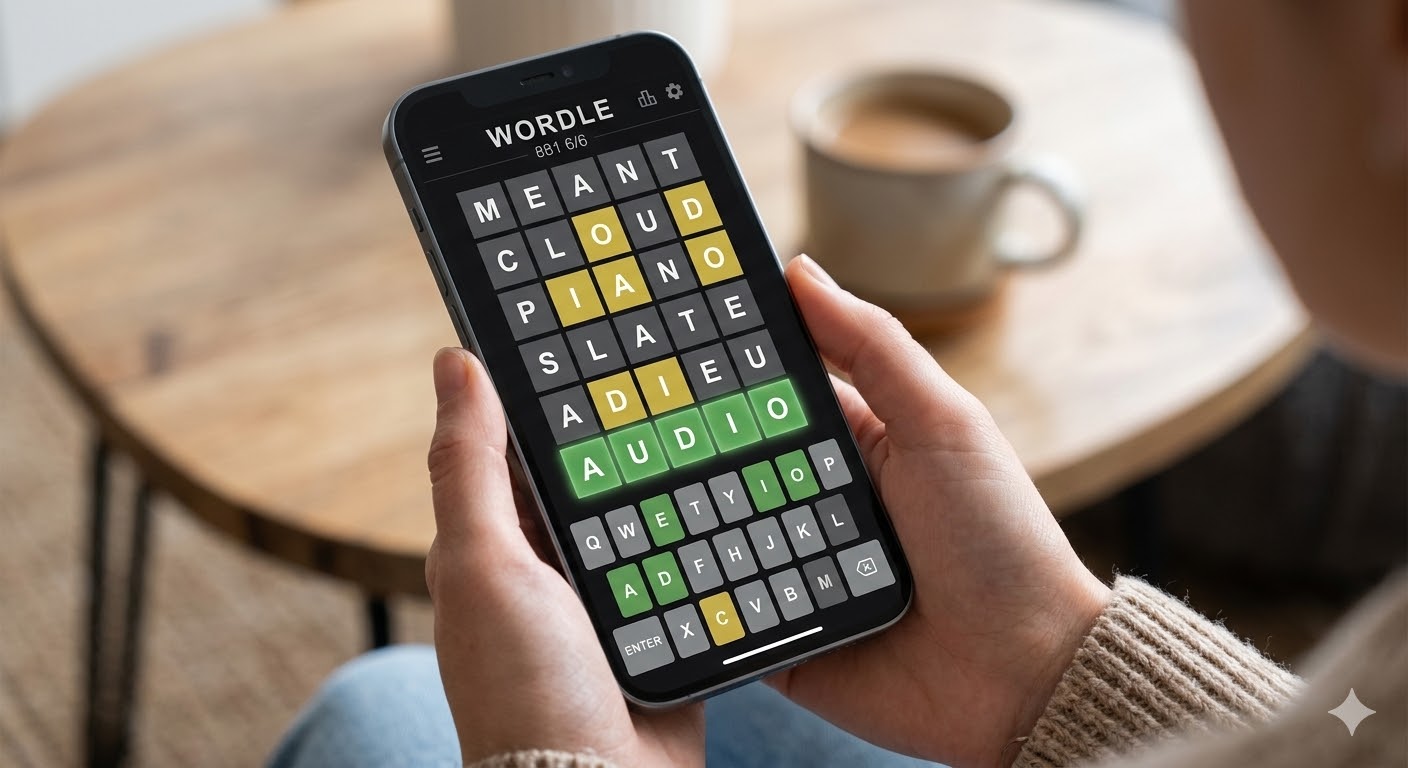
Millions of Americans woke up on the nation’s 250th birthday, July 4, and reached for their phones to check the morning Wordle before the barbecue got started. What they found was puzzle number 1,841, a five-letter word that immediately struck many players as a fittingly patriotic choice for Independence Day, even if its origins trace not to Philadelphia but to Naples.
The answer to today’s Wordle is PIZZA.
It is, by any measure, a perfectly themed solution for a holiday built around backyard cookouts, gatherings with family and friends, and the very particular American tradition of ordering takeout when the grill runs out of space. Pizza arrived in the United States with Italian immigrant communities in the late 19th and early 20th centuries, took root in cities like New York, Chicago and New Haven, and over the following century became so thoroughly embedded in American food culture that it now ranks among the most consumed foods in the country. An estimated 3 billion pizzas are sold in the United States every year, with the average American eating roughly 23 pounds of pizza annually. Its presence on the Fourth of July is about as inevitable as fireworks.
For Wordle purposes, the word is a reasonably tricky proposition despite its familiarity. PIZZA contains two vowels and three consonants, starts with P and ends with A, and crucially features a double Z at its center, a letter pairing that sits at the exact intersection of unusual and unfamiliar in the Wordle context. Most experienced players build their opening strategies around the most common Wordle letters, typically a mix from the group containing R, S, T, N, L, E, A and O. The letter Z, one of the least common in standard English usage, rarely appears in those opening frameworks. When it appears twice in five letters, the word becomes considerably more resistant to standard elimination strategies.
The most effective openers for today’s puzzle tended to be those that secured an early confirmation of the P, the I and the A, the word’s two vowels and its most distinctive consonant beyond the double Z. Starting words such as PHASE, IDEAL, PLANE or APRIL each gave solvers a meaningful foothold from which to reconstruct the word’s structure, particularly once the double-Z middle revealed itself through the process of elimination. Players who opened with standard vowel-heavy words like ORATE or RAISE found themselves with minimal useful feedback after the first guess, since none of the letters in those common openers appear anywhere in PIZZA.
The double Z specifically is the trap that likely cost the most streaks today. Wordle players who correctly identified the P as the first letter and the A as the last letter through their early guesses still faced an unusual challenge in reconstructing the interior, since a Z-Z combination does not appear in many five-letter English words and does not naturally surface as a guess even for players who know a word ends with the right letters. Experienced players often remind each other that repeated letters are more common in Wordle answers than intuition suggests, pointing to past answers including SHEEP, BLOOM and PUPPY as examples, but applying that principle specifically to Z requires a level of vocabulary recall that even regular players can stumble on.
The connection between today’s answer and the holiday on which it falls adds a pleasing layer of thematic resonance that has not gone unnoticed on social media this morning. The New York Times’ Wordle editing team, led by puzzle editor Tracy Bennett, has not confirmed whether the Independence Day placement was deliberate, but the combination of a universally recognized American food with a national celebration has generated the kind of enthusiastic online response that particularly satisfying or well-timed Wordle answers tend to produce.
Today’s puzzle is number 1,841 in the Wordle sequence, a milestone that speaks to how thoroughly the game has embedded itself in daily life since Josh Wardle created it in 2021 as a private project for his partner before it went viral globally in January 2022. The New York Times acquired it shortly afterward for a reported seven-figure sum and has maintained its core mechanics, free daily access and single-puzzle-per-day format throughout more than three years of operation under its editorial umbrella. Wordle now sits alongside Connections, Strands, Spelling Bee and the Mini Crossword as part of the Times’ suite of daily games products that have collectively attracted tens of millions of regular players.
For players whose streaks survived the double-Z challenge today, tomorrow’s puzzle arrives with a clean slate. For those who did not, the only consolation is that PIZZA is genuinely one of the more memorable, thematically appropriate and conversation-generating answers the puzzle has produced in its history, the kind of word that makes non-players smile when they hear it described and that reminds regular players why they keep coming back to a two-minute word game every morning, including on a national holiday when there are plenty of other things competing for their attention.



Leo Nelissen is a macro-focused equity strategist and long-term investor with more than a decade of experience on Seeking Alpha, where he has built a following of over 50,000 readers. His work combines big-picture macro analysis, geopolitical insight, and bottom-up research to identify high-quality businesses and long-term investment opportunities. He is the founder of Main Street Alpha, a Seeking Alpha Investing Group focused on macro strategy, real portfolios, dividend investing, and disciplined capital allocation for long-term investors.
Analyst’s Disclosure: I/we have no stock, option or similar derivative position in any of the companies mentioned, and no plans to initiate any such positions within the next 72 hours. I wrote this article myself, and it expresses my own opinions. I am not receiving compensation for it (other than from Seeking Alpha). I have no business relationship with any company whose stock is mentioned in this article.
Seeking Alpha’s Disclosure: Past performance is no guarantee of future results. No recommendation or advice is being given as to whether any investment is suitable for a particular investor. Any views or opinions expressed above may not reflect those of Seeking Alpha as a whole. Seeking Alpha is not a licensed securities dealer, broker or US investment adviser or investment bank. Our analysts are third party authors that include both professional investors and individual investors who may not be licensed or certified by any institute or regulatory body.

The proposed issue is structured entirely as an offer for sale (OFS), according to the draft papers.
Cube Highways Trust (Cube InvIT), which owns a portfolio of highway assets across India, had 27 operational assets spanning 8,754 lane kilometres across 12 states and one Union Territory as of March 31, 2026, with an average residual concession life of 18 years.
In a message to unitholders in the FY26 annual report, its Chief Executive Officer Vinay C Sekar said the trust’s strategy remains focused on disciplined acquisitions, predictable distributions, financial prudence and operational efficiency.
About 85 per cent of the portfolio comprises toll road assets that benefit from traffic growth and inflation-linked toll revisions, and the remaining 15 per cent consists of annuity assets backed by contracted payments from the National Highways Authority of India (NHAI).

Cube InvIT declared a distribution per unit of Rs 13.77 for FY26, taking total distributions for the year to Rs 1,851 crore.
Its net debt stood at Rs 17,768 crore at the end of March, while its net debt-to-enterprise value ratio was 46.82 per cent. Moreover, assets under management rose to Rs 36,842 crore, supported by nine acquisitions during the fiscal year.
The trust has also signed commitment letters for four highway projects with a combined enterprise value of about Rs 7,300 crore, which would expand its portfolio to 31 assets across 13 states and one Union Territory. It has also secured a right of first offer on three sponsor assets, providing an additional pipeline for future growth.

Buy These 2 Durable Income Hedges Against The AI Sell-Off
OneMain Holdings: I Still Like This 7% Yield In My Portfolio

Mag 7 Stocks: Risk Or Opportunity In The Making?
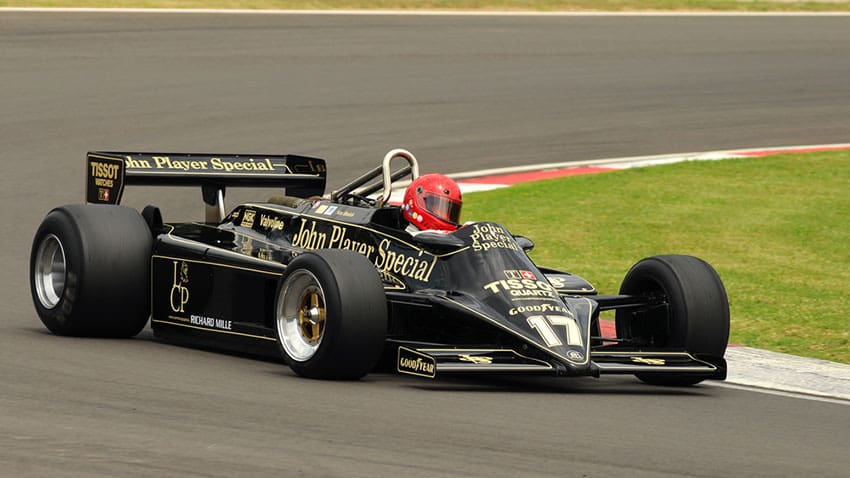
Stand at Becketts this weekend as the historic demonstration runs howl past and you could be forgiven for thinking the calendar has slipped.
The blue-and-gold of a Rothmans Williams, the screaming yellow of a Benson & Hedges Jordan, a Tyrrell in Elf colours, a McLaren still wearing its day-glo Marlboro chevrons: to a certain generation these liveries are as evocative as the engine notes. Yet look closely at those sidepods and you are not looking at a paddock. You are looking at a corporate graveyard.
The British Grand Prix that surrounds them could not be more different. A record crowd of well over half a million, a sprint format, a global streaming audience raised on Drive to Survive, and a sport that, as Business Matters reported this week, is now worth £12bn a year to the UK economy. But in the 1980s and 1990s Formula One was a very different commercial proposition: a rolling billboard held together by tobacco money, corporate vanity and the occasional fraudster. The teams, Williams, McLaren, Jordan, Tyrrell, survived, evolved or were absorbed. Many of the companies whose logos paid the bills did not. Their fates read like a potted history of three decades of business upheaval.
The tobacco giants: regulated out, swallowed up
No sector defined the era like tobacco. By 1995, nine of the top ten drivers in the world championship carried a cigarette brand on their overalls, and the sport’s aesthetic was effectively designed in the marketing departments of London and Winston-Salem.
Rothmans is the most instructive case. The brand arrived at Williams in 1994 and turned the FW16 into what one Italian commentator called “a cigarette packet on four wheels”, white, blue and gold, and utterly unmistakable throughout the seasons that carried Damon Hill and Jacques Villeneuve to their world titles. Yet within two years of leaving the sport’s front line, Rothmans International plc ceased to exist as an independent business. In 1999 it was swallowed by British American Tobacco in a merger waved through by the European Commission, and the Rothmans, Dunhill and Player’s brands disappeared into BAT’s portfolio, where they remain. The company that once wrote some of the biggest cheques in world sport is now a line item in someone else’s annual report.
Benson & Hedges followed a similar arc. Eddie Jordan’s masterstroke in 1996 was persuading Gallaher to paint his cars gold, then yellow, spawning the Buzzin’ Hornets and Bitten & Hisses workarounds when national advertising bans began to bite. B&H stayed with Jordan until 2005, by which time the FIA had already decreed that tobacco branding would be gone by the end of 2006. Gallaher, the last great independent British tobacco house, did not long outlive the ban that ended its motor racing adventure: in April 2007 it was acquired by Japan Tobacco for around £7.5bn, then the largest ever foreign takeover by a Japanese company.
Camel, which had splashed its yellow across Lotus, Benetton and Williams, read the regulatory runes earlier than most. When France banned tobacco advertising in motorsport in 1992, R.J. Reynolds began its retreat, and by the end of 1993 the desert dromedary had largely vanished from the grid. The lesson for any business built on a single, regulation-exposed revenue stream is timeless: the writing appears on the wall long before the wall falls on you.
Only Marlboro defied gravity. Philip Morris outlasted every rival, moved its money quietly to Ferrari, and kept paying long after its name could legally appear on the cars, proof that in sponsorship, as in business, the deepest relationships survive even when the logo cannot.
The technology names: disrupted at full speed
If tobacco was regulated out of existence, the technology sponsors of the era were simply out-innovated, an irony for brands that attached themselves to the fastest-moving sport on earth.
Consider the Williams FW15C of 1993, arguably the most technologically sophisticated F1 car ever built, with its active suspension and traction control. On its flanks sat Sega, then the swaggering champion of the console wars, which even had Sonic the Hedgehog’s feet painted below the cockpit and supplied a Sonic-shaped winner’s trophy, famously lifted not by a Williams driver but by Ayrton Senna at Donington, after which McLaren mischievously painted a squashed hedgehog on his car. Sega was at its absolute commercial peak. Within eight years it was gone from the hardware business entirely: bruised by the 32X and Saturn missteps and unable to sustain the Dreamcast against Sony and Nintendo, it exited consoles in 2001 to become a software publisher. The company survives, indeed, in a pleasing footnote, Sega returned to the grid last year as a gaming partner of McLaren, the very team that once taunted its Williams deal with a squashed-hedgehog sticker, but the colossus that sponsored world champions does not.
Compaq tells the same story at corporate scale. The Texan PC maker became a principal sponsor of the BMW Williams team in 2000, its logo carried by Ralf Schumacher and a young Juan Pablo Montoya. In May 2002, mid-season, Compaq was consumed by Hewlett-Packard in one of the most contentious mergers in tech history, and, in a neat piece of symbolism, the branding on the Williams cars was changed from Compaq to HP at that year’s British Grand Prix at Silverstone. A brand that had been one of the world’s biggest computer companies was reduced to a mid-race livery swap, and eventually retired altogether.
The telecoms adventure: two crashes for the price of one
The dot-com era brought a new breed of sponsor, and no partnership captured its giddiness better than Orange and Arrows. The mobile operator’s papaya livery made the 2000 Arrows A21 one of the best-looking cars on the grid, but the relationship delivered a double collapse. Arrows, run by the flamboyant Tom Walkinshaw, ran out of money and folded during 2002, its cars famously failing to appear at races while lawyers argued. Orange declined to renew and retreated from the sport. The sponsor fared better than the team, but not as an independent company: it had already been bought by France Télécom in 2000 at the very top of the telecoms bubble. The twist is that the brand ultimately devoured its owner, France Télécom judged the Orange name so much stronger than its own that in 2013 it renamed the entire group Orange S.A. Sometimes the sponsorship asset outlives the balance sheet that acquired it.
The cautionary tale: when the money was never real
And then there were the sponsors who were not what they seemed. Leyton House, the Japanese property and leisure group whose turquoise March cars very nearly won the 1990 French Grand Prix with Ivan Capelli, collapsed in scandal when founder Akira Akagi was arrested in 1991 over a fraud involving Fuji Bank. The team died with him, and F1 learned, not for the last time, as anyone who remembers more recent crypto logos will attest, that due diligence on a sponsor’s money matters as much as the size of the cheque.
What the survivors teach us
It would be wrong to paint the whole era as a graveyard. Canon, which backed Williams through its Mansell-Piquet pomp, remains a global imaging power. Elf, the French fuel brand on every Tyrrell and Renault of the period, lives on inside TotalEnergies, still in the sport today. And the teams themselves proved remarkably durable assets: Tyrrell’s entry was sold to BAT and became BAR, then Honda, then Brawn, and is today Mercedes-AMG F1; Jordan’s Silverstone factory now houses Aston Martin’s title challengers. In Formula One, as sponsorship strategist and author Jackie Fast, whose best-selling book PINPOINT chronicles what actually works in sponsorship, might observe, the platform has consistently outlived the brands that paid for it.
That, perhaps, is the real business story hiding in this weekend’s nostalgia. A grid livery is a leading indicator: it tells you which sectors have cash, confidence and something to prove. In 1986 that meant cigarettes; in 1993, video games; in 2000, PC makers and telecoms; today it is crypto exchanges, cloud computing and logistics giants, sectors whose own thirty-year survival is anything but guaranteed. The sport’s £12bn UK footprint suggests Formula One itself has never been healthier. History suggests the same cannot be assumed of the names painted on its cars.
So when the old Rothmans Williams crackles past the pits this afternoon, spare a thought not just for the drivers who wrestled it, but for the marketing directors who signed the deals, men and women who believed, entirely reasonably, that their brands were as permanent as the sport they adorned. Formula One is still here. Rothmans, Gallaher, Compaq, Leyton House and Sega’s console empire are not. In business, as at Becketts, nothing stays flat-out forever.

Paul Jones
Harvard alumni and former New York Times journalist. Editor of Business Matters for over 15 years, the UKs largest business magazine. I am also head of Capital Business Media’s automotive division working for clients such as Red Bull Racing, Honda, Aston Martin and Infiniti.

It isn’t just the rank-and-file facing return-to-office crackdowns. The co-founder of an $8 billion asset-management firm was ousted for not complying with his own in-office policy—and now he is suing.
William Nieporte ran the firm Bramshill Investments with two high-school classmates for about a decade before they fired him in 2022. The reason: “You have willfully and deliberately failed to report to ‘in-person’ work,” the other co-owners wrote in a termination letter reviewed by The Wall Street Journal.
Copyright ©2026 Dow Jones & Company, Inc. All Rights Reserved. 87990cbe856818d5eddac44c7b1cdeb8
Micron: The AI Infrastructure Winner Trapped By Its Own Success

Independent Equity Researcher exploring global market opportunities
Analyst’s Disclosure: I/we have no stock, option or similar derivative position in any of the companies mentioned, and no plans to initiate any such positions within the next 72 hours. I wrote this article myself, and it expresses my own opinions. I am not receiving compensation for it (other than from Seeking Alpha). I have no business relationship with any company whose stock is mentioned in this article.
Seeking Alpha’s Disclosure: Past performance is no guarantee of future results. No recommendation or advice is being given as to whether any investment is suitable for a particular investor. Any views or opinions expressed above may not reflect those of Seeking Alpha as a whole. Seeking Alpha is not a licensed securities dealer, broker or US investment adviser or investment bank. Our analysts are third party authors that include both professional investors and individual investors who may not be licensed or certified by any institute or regulatory body.
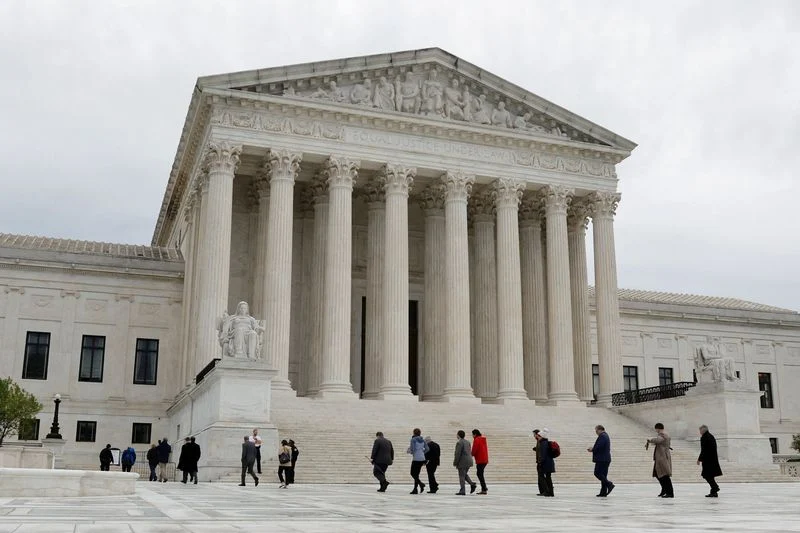

US Supreme Court to hear gun, LGBT, voting rights cases in next term

HOW DOES DMO AFFORD ALL THOSE SUPERCARS? #automobile #motivation #cars #lifestyle #money #fyp

The Millionaire Boom Is Real – But So Is The Market Trap

Binance outflows triple as ETH withdrawals hit 3-year high

No Jackpot Winner as $257 Million Prize Rolls Over to $269 Million Monday Draw

Renter of Home in Anne Heche Crash Denies Settlement With Son

Weekend Open Thread: Staud – Corporette.com
HOW DOES DMO AFFORD ALL THOSE SUPERCARS? #automobile #motivation #cars #lifestyle #money #fyp

Trump’s cryptocurrency gains#shorts #shortvideo #trending #actress #celebrity

Trump Responds To Questions On $1.4 Billion Financial Disclosure | APT
-

 Fashion2 days ago
Weekend Open Thread: High Hopes
-

 Politics2 days ago
The House | “Reframing the debate from a binary discussion of winners and losers”: Yuan Yang reviews ‘We Are Not Machines’
-

 Crypto World5 days ago
Strategy authorizes up to $1.25B in Bitcoin sales under new capital plan
-

 News Videos7 days ago
MAJOR BITCOIN & MARKET UPDATE!!!! (MUST WATCH ASAP!!!)
-

 Tech5 days ago
Anonymous researcher drops 0-day ‘exploitarium’ repo
-

 Business5 days ago
Australia treasurer says alleged access of prime minister’s bank data ’incredibly concerning’
-

 News Videos5 days ago
How to Build INSANE Live Financial Dashboards With Claude
-
 NewsBeat8 hours ago
Taylor Swift and Travis Kelce wedding staffer hilariously struggles to keep her cool while checking in megastars
-
 Business6 days ago
The AI boom won’t burst all at once. It will pop in ‘rolling bubbles’: Macquarie
-

 Sports4 days ago
Broncos roster: OL Ben Powers (No. 74) entering final year of contract
-

 NewsBeat5 days ago
Presenter Caroline Flack’s brother Paul Flack dies aged 55
-

 Crypto World3 days ago
Binance stock trading tops $1B in first month after launch
-

 Crypto World3 days ago
Alibaba-affiliate Ant Group enters the humanoid robot market with 12 deals
-
 NewsBeat3 days ago
New exhibition reflects five decades of movement between island of Ireland and GB
-
 Crypto World4 days ago
Airdrop Registration Becomes Key Focus For Remittix As RTX Launch Updates Approach
-

 Business2 days ago
What a 10 Percent Drop Means for Buyers, Sellers and Renters
-

 Business4 days ago
Meta Platforms Stock Jumps 7% Today as Bloomberg Reports Company Plans to Enter the Cloud Business
-

 Crypto World3 days ago
Binance Re-Enters Philippines As EU MiCA Rules Restrict Access
-

 Crypto World2 days ago
Standard Chartered Secures MiCA License as ESMA Adds 37 New Crypto Firms
-

 Tech6 days ago
The attack that hijacked Claude Code came through Sentry. Datadog, PagerDuty, and Jira have the same exposure.
You must be logged in to post a comment Login