



Connect with us
DAPA Banner
DAPA Coin
DAPA
COIN PAYMENT ASSET
PRIVACY · BLOCKDAG · HOMOMORPHIC ENCRYPTION · RUST
ElGamal Encrypted MINE DAPA
🚫 GENESIS SOLD OUT
DAPAPAY COMING

Business

Hundreds of jobs at risk in John Lewis’ gift wrapping and money exchange services

Published

on

Swingers

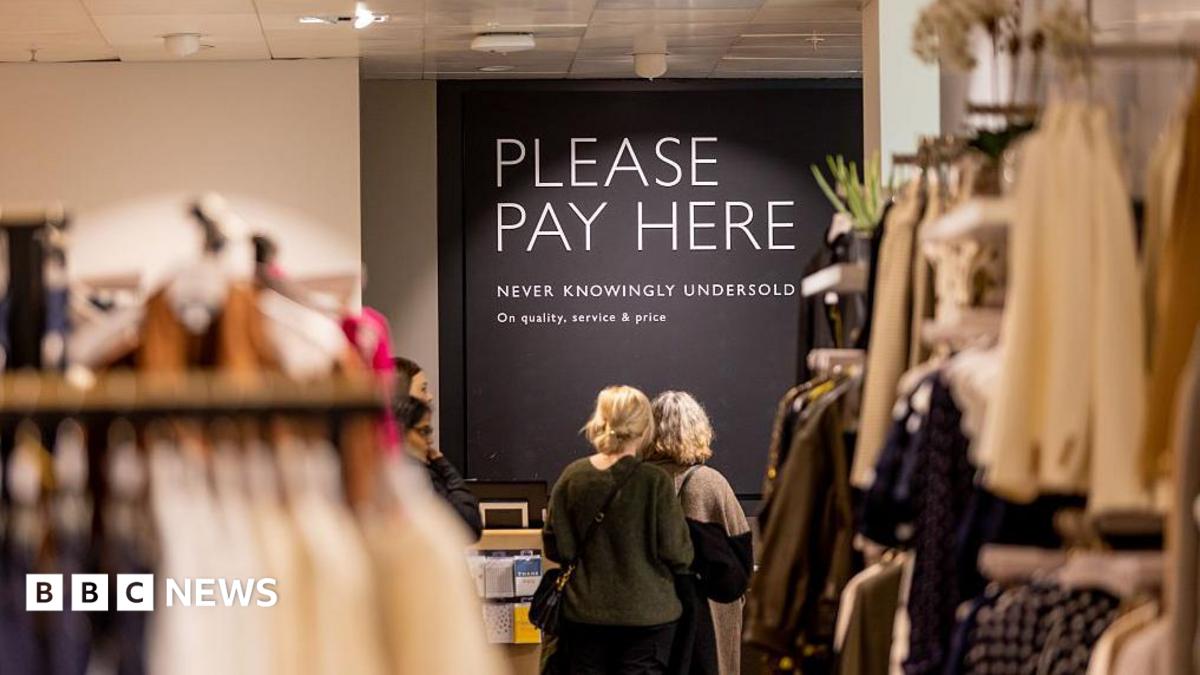
Around 200 John Lewis staff could lose their jobs as the retailer looks to close its in-store money exchange services and dedicated gift wrapping areas.

No final decision has been made but the job cuts will happen in the autumn if the redundancy plans it is consulting on are approved.

John Lewis said the decision to close its in-store bureaux de change was due to falling demand and that it would move gift-wrapping services from a specialised area to its tills.

A spokesperson said it would support affected staff “throughout the consultation process and support redeployment where possible”.

Advertisement

They added: “As we focus on modernising this proposition to meet our customers’ changing needs, we’re proposing to close our in-store foreign exchange bureaus as well as our gift wrapping service.

“As a result, we’re regretfully consulting with partners who currently deliver these services.”

The retailer said customers were increasingly ordering foreign currency online and collecting it in store. It also said some other customers were choosing instead to use their credit cards or digital payments while abroad.

It added that the changes to its gift wrapping services would make it more accessible.

Advertisement

The money exchange closure will affect 30 shops while the gift wrapping services closure will affect 25 shops.

The retailer has been going through many changes under its chair. Jason Tarry, who took over in 2024 after a tough few years that saw it cut jobs and close several stores

It closed its housebuilding arm in February, in a move which also led to some job losses. And, in March, the retailer said it would be awarding its staff a bonus for the first time in four years as its profits and sales improved.

The bonus had been scrapped during the Covid pandemic, marking the first time this had happened since 1953.

Advertisement

John Lewis’ latest results show the business reported a pre-tax loss of £21m due to £120m worth of one-off costs which mainly related to write-downs in the value of old tech systems.

But underlying profits rose 6% to £134m. Sales across the business rose by 5% to £13.4bn.

Sales growth was higher at Waitrose compared with John Lewis. Supermarket sales grew by 7% to £8.5bn in the year to the end of January compared to a 3% increase to £4.9bn at department stores.

Advertisement
Continue Reading
Click to comment

You must be logged in to post a comment Login

Leave a Reply

Business

ITV hits such as I'm a Celebrity to stay free to watch after Sky takeover

Published

on

Swingers

Sky boss Dana Strong’s comments came as the channel announces it is buying ITV’s media and entertainment divisions in a £1.6bn deal.

Continue Reading

Business

How to Solve Puzzle Number 1123 Fast

Published

on

Nancy Guthrie

The New York Times’ Connections puzzle returned Wednesday with its 1,123rd edition, a grid that puzzle trackers widely described as one of the trickier challenges of the week, built around a deliberate web of overlapping themes involving woodworking, literature, guitar technique and classic phrase completion.

Connections, edited by Wyna Liu, asks players to sort 16 words into four groups of four based on a shared theme, with categories color-coded by difficulty from yellow, the easiest, through green and blue, up to purple, typically the most conceptually demanding. Players are allowed four incorrect guesses before the puzzle ends, and the game has grown into one of the Times’ most widely played daily offerings, trailing only Wordle in overall popularity among the publication’s expanding suite of word and logic games.

Wednesday’s grid featured the following 16 words: GRATE, PLANE, SHAVE, SLIVER, DRIFT, PLOT, THEME, THREAD, PICK, PLUCK, STRUM, TAP, CARDS, LORDS, WAX and WORSHIP. According to multiple outlets that covered the puzzle, the grid was constructed with an unusually high density of deliberate misdirection, with several words plausibly fitting more than one category depending on how a solver initially interpreted them.

For those seeking a nudge before diving into the full solution, outlets circulated general hints without revealing the specific groupings. The yellow category was described as referring to verbs or tools that produce very thin pieces of something. The green category was hinted at as words describing a recurring or central idea within a work, often in a literary or narrative sense. The blue category was described as four different ways to make sound on a stringed instrument. The purple category, as usual the trickiest of the four, was hinted at as words that commonly follow the phrase “House of.”

Advertisement

For players ready for the complete answers, puzzle number 1,123 broke down as follows.

The yellow category, titled “Cut Into Thin Pieces,” included GRATE, PLANE, SHAVE and SLIVER. Each word describes an action or tool associated with reducing something into thin slices or shavings, whether grating cheese, planing wood, shaving a surface, or slivering an ingredient. Puzzle commentary described this group as a relatively accessible entry point, with GRATE in particular helping many solvers quickly recognize the underlying pattern.

The green category, titled “Motif,” grouped together DRIFT, PLOT, THEME and THREAD. Each of these words can describe a recurring idea, narrative element or central concept running through a work of literature, film or other storytelling medium. Puzzle trackers flagged this category as particularly deceptive, noting that THREAD in particular tempts solvers to interpret it literally, in a sewing or textile sense, rather than recognizing its figurative use to describe a narrative thread running through a story. Similarly, PLOT can easily mislead players toward associations with land, gardening or scheming rather than its narrative meaning, unless a solver has already identified THEME as part of the same group.

The blue category, “Guitar-Playing Techniques,” included PICK, PLUCK, STRUM and TAP. Each word describes a distinct method of producing sound on a stringed instrument. Commentary on the puzzle noted that PLANE and TAP in particular served as effective red herrings elsewhere in the grid, with PLANE misleading solvers toward an aircraft association rather than its correct placement in the yellow “thin pieces” category, and TAP tempting players to think of a faucet or a light touch rather than its correct guitar-technique meaning.

Advertisement

The purple category, the day’s most difficult, was titled “House of ___” and featured CARDS, LORDS, WAX and WORSHIP. Each word completes a familiar two-word phrase when paired with “House of”: House of Cards, House of Lords, House of Wax, and House of Worship. Commentary on the puzzle noted that CARDS and LORDS tend to be recognized relatively quickly given their strong association with well-known phrases, while WAX and WORSHIP proved less immediately obvious unless a solver was already actively thinking in terms of phrase completion.

One columnist covering the puzzle for TechRadar described completing the grid with a single mistake, explaining that they had initially grouped THREAD, SHAVE, WAX and PLUCK together under the mistaken assumption that all four related to methods of hair removal, a red herring the columnist described as particularly cleverly constructed given how naturally those four words fit that alternate theme. After recognizing the error, the columnist noted they were able to solve the remaining three categories with relative ease, though they admitted some hesitation over correctly placing TAP within the guitar-technique group.

Puzzle trackers broadly agreed that Wednesday’s grid rewarded patience over speed, given the sheer number of words capable of plausibly fitting into more than one category. Coverage from Eastern Herald noted that several words appeared to fit woodworking, literary or musical themes simultaneously, making the puzzle one of the trickier entries of the week even for experienced solvers accustomed to spotting the game’s typical patterns of misdirection.

According to general strategy guidance the Times has offered for the game, players tend to find the most success by first identifying categories that feel clearly and unambiguously defined, since building early momentum with confident correct guesses can help maintain focus heading into trickier groupings. Solvers are also encouraged to consider alternate or figurative meanings of individual words, since Connections puzzles are deliberately constructed to include significant overlap between categories, a pattern once again on full display in Wednesday’s grid.

Advertisement

Connections continues to draw a devoted daily following since its official launch in June 2023, with new puzzles released at midnight in each player’s local time zone. That schedule means solvers around the world are often working through different numbered editions of the game at any given moment, a quirk that has become a familiar part of the daily routine for the puzzle’s global player base.

With Wednesday’s puzzle now resolved, attention turns to Thursday’s edition, puzzle number 1,124, set to go live at midnight in each player’s respective time zone. As with previous days, puzzle trackers and columnists covering the game are expected to publish a fresh round of hints and eventual answers for that edition as players around the world continue their daily routines of guessing, deducing and working to preserve their personal Connections solving streaks.

Continue Reading

Business

Airbnb and local councils crack down on social home listings

Published

on

Swingers

Under the data-sharing programme, coordinated by the Public Sector Fraud Authority within the Cabinet Office, local authorities across London, as well as Edinburgh City Council, Birmingham City Council and Anglesey Council will work with Airbnb and listings confirmed as operating without permission will be removed.

David Harvey from Westminster City Council, said the authority believes about 3,000 of the borough’s 13,000 Airbnb listings are illegally sublet social homes.

He said all council tenancy and lease agreements prohibit short-term letting, and added that Westminster had 7,500 households on its waiting list for social housing.

“We want to free up those Airbnbs to be social homes again,” he said.

Advertisement

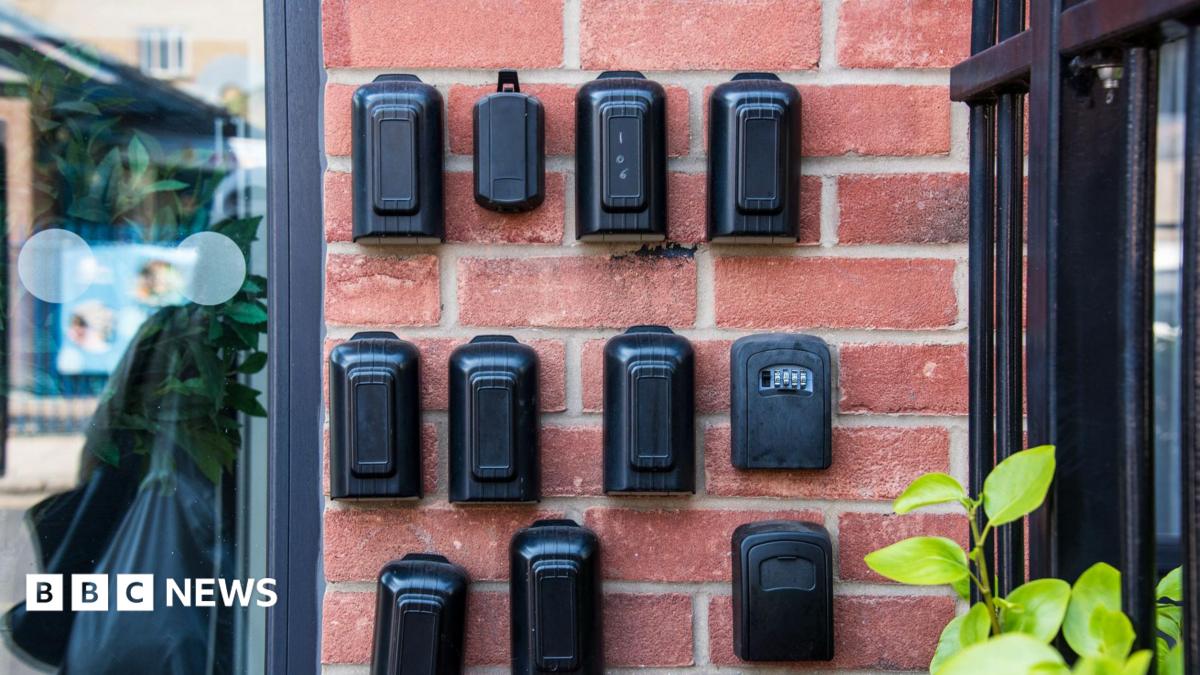
Harvey described the new data-sharing arrangement as “just the tip of the iceberg”, and housing officers had to “play detectives” by searching for lock boxes and speaking to neighbours to uncover suspected fraud.

More than 1.3 million households in England are currently on waiting lists for a social home, a rise of 10% in the past two years. Over 300,000 of those are in London.

The social housing action campaign said these homes “should be exclusively held for those in urgent need of housing, but the Cabinet Office’s focus on the tiny proportion that are rented out as short term lets is a calculated distraction.

“Even though this happens on such a negligible scale, it really makes very little impact on the acute housing crisis.”

Advertisement

Cabinet Office Minister Satvir Kaur said “This isn’t an either/or.

“One in 20 social homes potentially are being used fraudulently. It’s right and proper that we find those homes and use them for those who truly need them.”

She added: “£39 billion is also being invested into a new social and affordable homes programme, with an ambition to deliver around 300,000 new homes over the programme’s lifetime”.

The Cabinet Office and the Public Sector Fraud authority said the data-sharing initiative was expected “to return hundreds of properties to genuine families in its first year” as councils could confiscate illegally-let flats and reallocate to someone on the social housing waiting list.

Advertisement
Continue Reading

Business

‘Hardest quarter since the 2008 crash’: Investment plans plunge as Liverpool firms fear inflation and fuel costs

Published

on

Business Live

Liverpool Chamber chief calls for tax and red tape changes as retail and hospitality under pressure

Paul Cherpeau, CEO of Liverpool Chamber of Commerce

Paul Cherpeau, CEO at Liverpool Chamber of Commerce(Image: Gareth Jones Photographer)

The proportion of businesses planning to increase investment in their work has fallen to its lowest level since lockdown as bosses fear rising costs, a new survey has shown.

And as one Merseyside firm said Q2 “has been the hardest quarter for us since the financial crash of 2008”, the CEO of Liverpool Chamber of Commerce says the new Prime Minister must cut red tape and the tax burden on business to give firms the confidence to grow.

Just 17% of respondents in the latest British Chambers of Commerce (BCC) Quarterly Economic Survey said they planned to increase investment in plant, machinery or equipment over the next three months, down from 21% in the previous quarter. Some 26% of those polled said they planned to cut back on investment, while the rest of those polled were expecting no change.

Confidence also fell, with 44% of those polled expecting improved turnover in the next 12 months – down on 49% in the first quarter – and 23% expecting turnover to decline. Just 29% reported rising sales in the previous three months, with a similar number seeing falling sales.

Advertisement

Some two thirds of those polled said they were worried about inflation – up from 50% in Q1. The biggest worry as labour costs, particularly among those in engineering and construction, while more firms were also worried about fuel costs following the Iran war.

The hardest hit sectors were retail and hospitality, with just 31% of hospitality firms and 36% of retailers expecting increased turnover.

Paul Cherpeau, chief executive of Liverpool Chamber, said: “The cost of doing business remains high and sales growth is slow, and this is understandably having a negative impact on the confidence and investment intentions of many firms here in the Liverpool City Region.

“Not for the first time, we see retail and hospitality – two crucial sectors in our local economy – bearing the greatest brunt of those headwinds, while we know from our conversations with members in construction and engineering that they are especially feeling the burden of higher labour costs, which in turn is depressing their ability to offer apprenticeships or hire young people.

Advertisement

“Geopolitical uncertainty and punitive policies at home have created an almost instinctive aversion to risk among many business owners, who will need to see a clear path of future growth and fewer barriers to trade before they will consider making investment decisions.

“That’s the task at hand for the government – and the new Prime Minister – moving forward. They must cut red tape, reduce the tax burden, and deliver policies that incentivise, rather than stymie, ambition.”

What Liverpool businesses told the Chamber

More than 4,700 UK firms took part in the national Quarterly Economic Survey. The study gives bosses the chance to leave anonymous comments about how their businesses are doing – here are some of the comments from Liverpool firms

  • “The Iran war has had a huge impact on business confidence and our customers are postponing investments that they had planned to make. It has been the hardest quarter for us since the financial crash of 2008.”
  • “Despite having good rates of remuneration there is a severe shortage of skilled personnel available making recruitment and long-term expansion difficult. The business has taken on apprentices as a long-term option but will only see the rewards in 2 to 3 years’ time, placing extra financial pressures in the short term. Due to the cost of living crisis, customers’ average spend is down. Increase in Business Rates and increases in NIC’s & wages contributing to additional pressures.”
  • “Our current operating environment is becoming increasingly challenging due to rising costs, growing demand for services and increasing expectations from clients. Costs associated with staffing, software licensing, cybersecurity, insurance, utilities and compliance continues to rise year-on-year, placing pressure on operating margins. At the same time, we are committed to delivering value to our clients and have consciously absorbed many of these cost increases rather than passing them directly on. Whilst this approach has helped maintain strong client relationships and supported organisations facing their own financial pressures, particularly within the charity and third sectors, it has resulted in increased pressure on profitability.”
  • “We are extremely busy with good long-term orders. We need to invest and grow. High taxation slows down the pace of recruitment and investment. New employment rules mean we are very careful in who we take on.”

Continue Reading

Business

Global Market: Samsung, SK Hynix rebound as bargain buying offsets AI chip selloff fears

Published

on

Global Market: Samsung, SK Hynix rebound as bargain buying offsets AI chip selloff fears
Shares of South Korean chipmakers Samsung Electronics and SK Hynix rebounded on Wednesday after an early selloff, as investors took advantage of lower valuations following a sharp decline driven by concerns over the sustainability of the artificial intelligence-led semiconductor rally, Reuters reported.

Samsung recovered to trade as much as 1.4% higher after initially falling up to 4.4%, while SK Hynix erased early losses and surged as much as 5.8% after dropping as much as 5% at the open. The early weakness mirrored overnight declines in U.S. semiconductor stocks.

According to Reuters, analysts said investor expectations for the semiconductor sector remain largely intact as the earnings season is still in its early stages. They expect memory chip supply to stay tight through the third quarter, supporting earnings and encouraging bargain buying after Tuesday’s sharp correction.

Investor sentiment also received a boost from optimism surrounding SK Hynix’s planned U.S. listing.

Advertisement

However, analysts cautioned that while memory chip pricing is expected to remain favourable in the near term, price increases during the second half of 2026 are likely to moderate compared with the first half due to a higher base of comparison.


Reuters reported that a Kiwoom Securities analyst lowered his target price for Samsung by around 9% to 390,000 won, citing rising costs for key components such as CPUs and package substrates. Higher component costs are pushing up prices of PCs and smartphones, making customers more cautious about increasing memory purchases, the analyst said. Samsung shares were last trading at 290,000 won.
JPMorgan said memory pricing will remain the primary earnings driver in the second half of the year, according to Reuters. The bank expects supply to continue trailing demand despite increasing customer resistance to higher prices. It also said conventional NAND chip pricing could outperform investor expectations, supported by strong demand from U.S. hyperscale data centre operators.The recovery came after a broad sell-off in U.S. semiconductor stocks overnight. Intel dropped 9.7%, Micron Technology declined 4.7%, and Advanced Micro Devices (AMD) fell 6.5%; the Philadelphia Semiconductor Index lost 4.7% as investors reassessed whether AI-related spending can maintain its current pace, Reuters reported.

The market weakness was triggered by Samsung’s preliminary second-quarter earnings released on Tuesday. Although the company projected a 19-fold jump in quarterly operating profit, the results fell short of elevated investor expectations fuelled by robust demand for AI memory chips.

Samsung’s disappointing market reaction sparked a broader retreat in AI-linked stocks in South Korea before the weakness spread to Wall Street, highlighting growing investor sensitivity to lofty valuations across the semiconductor sector.


(Disclaimer: Recommendations, suggestions, views, and opinions given by experts are their own. These do not represent the views of the Economic Times.)

Advertisement
Continue Reading

Business

Cockatoo Island iron ore mine owner in administration

Published

on

Cockatoo Island iron ore mine owner in administration

The owner of a mothballed iron ore mine on Cockatoo Island has tumbled into administration, with insolvency practitioners assessing a sale or recapitalisation.

Continue Reading

Business

Protests break out in Havana as Cuba struggles to restore electricity

Published

on


Protests break out in Havana as Cuba struggles to restore electricity

Continue Reading

Business

How a groundbreaking microfinance program is empowering women entrepreneurs in Indonesia

Published

on

How a groundbreaking microfinance program is empowering women entrepreneurs in Indonesia

Millions of Indonesian women are excluded from the workforce or stuck in low-productivity jobs. The Mekaar microfinance initiative, using group lending, is empowering these women. By providing loans, savings programs, and empowerment training, Mekaar helps women like Suryani escape debt traps and grow their businesses.

Digitalization is further enhancing Mekaar’s reach and efficiency, promoting financial inclusion. This initiative is crucial for unlocking women’s economic potential, contributing to Indonesia’s GDP and closing gender gaps.

  • Millions of Indonesian women remain excluded from the workforce – or trapped in low-productivity sectors.
  • The country’s microfinance initiative Mekaar, rooted in the group-lending model, is helping to liberate women economically.
  • Digitalization would further improve the traditional microfinancing model and promote financial inclusion for underprivileged Indonesian women.

Suryani, a typical Indonesian housewife, lives in a slum community nestled in the heart of West Sulawesi. Her husband, Wahyudi, constantly moved from odd job to odd job and never held steady employment. Financially struggling, Suryani started a business utilizing her skills in crafting clothing accessories. With little savings and no other financial options, she did what most in rural Indonesia would do: turned to loan sharks, known locally as “rentenir”, despite the exorbitant interest rates. Immediately, she was caught in a downward debt spiral.

Like many at this income level, Suryani had become enslaved to the debt she accrued and unable to accumulate capital to grow her business. She stands as one among millions of underprivileged Indonesian women desperately in need of affordable financing and empowerment to escape the pervasive poverty trap.

Source link

Advertisement

Continue Reading

Business

Iran targets sites in Bahrain, Kuwait after wave of US strikes

Published

on


Iran targets sites in Bahrain, Kuwait after wave of US strikes

Continue Reading

Business

A Practical Guide for SMEs

Published

on

Homeowners and small business owners often focus on day-to-day operations, sometimes overlooking critical aspects of safety and comfort.

What workplace health and safety means for SMEs

Health and safety is simply about preventing harm and reducing risks in the workplace environment. It involves implementing rules, regulations and procedures that aim to protect employees, visitors and businesses from unnecessary injuries, illnesses or operational disruptions.

Health and safety applies to every business regardless of size. For small and medium-sized businesses (SME) effective health and safety management is arguably more crucial. One single incident can have a greater impact on business continuity, financial performance, and reputation.

For SMEs, workplace health and safety extends beyond employee wellbeing. A strong safety culture can have a direct positive impact on business operations, performance and growth.

Organisations that take a proactive approach to health and safety rather than reactive approach are more likely to benefit from a more productive workforce, improved efficiency and a reduced risk of injury and operational disruption.

Advertisement

In 2026, workplace health and safety is becoming increasingly important as business leaders recognise the link between a productive and healthy workforce and increased return on investment (ROI). Investing in health and safety is seen as a strategic business decision supporting both employees and business growth.

Why health and safety still matters for growing SMEs

Health and safety is a significant competitive advantage for growing SMEs. While all organisations face workplace risks, the impact of an incident is often far greater for SMEs than for larger organisations with greater financial resources, higher liquidity and more comprehensive insurance cover.

A single health and safety incident can have a detrimental impact for a small business. Whether it results in production pauses, operational disruption, increased insurance premiums or compensation costs, the financial and reputational impact can be substantial.

Investing in robust health and safety training,clear reinforcements and a strong safety culture helps protect employees and promotes business continuity. By reducing the likelihood of incidents, SMEs can maintain productivity, avoid unnecessary costs andprioritise sustainable growth and performance.

Advertisement

In addition, health and safety is becoming increasingly an important factor in attracting and retaining top talent. Today’s workforce is more aware of health and safety risks and places a greater value on employee wellbeing. As a result, they expect employers to provide safe and supportive working environments.

Additionally, expectations from clients, regulators and shareholders around health and safety standards are increasing. Businesses that meet these expectations can gain a competitive edge, improve employee engagement and retention and build a stronger reputation.

The workplace risks SMEs often underestimate

As SMEs often operate with fewer employees, smaller budgets and less supervision, simple oversights are more likely to occur and mistakes are easier to make. Health and safety risks are also often underestimated and their impact on a business can be greater than anticipated.

  • Slips, trips and falls: One of the most common causes of workplace injuries, often resulting from poor housekeeping, uneven surfaces or poor lighting. Regular inspections and effective health and safety procedures can greatly reduce these risks.
  • Manual handling and lifting injuries: Improper training for correct lifting techniques when handling heavy materials can lead to unnecessary injuries. Providing employees with the appropriate training and equipment helps reduce injuries and minimise time lost through absence.
  • Workplace fatigue and burnout: Heavy workloads and limited staffing can lead to fatigue and burnout. Employees that experience sustained pressure are more likely to experience burn out, resulting in decreased production and increased risk of workplace incidents.
  • Stress and mental health risks: High levels of workplace stress can negatively affect employee wellbeing, engagement and performance. Creating a supportive working environment where workers are comfortable to openly communicate can help reduce these risks.
  • Lone working hazards: Employees in SMEs are often required to work alone or without direct supervision. Without clear health and safety procedures and regular check-ins, employees may face increased risk in the event of an incident.
  • Vehicle-related incidents: Employees driving for work purposes such as driving company vehicles or making deliveries face risks such as collisions, loading and unloading injuries and fatigue. Regular training and reinforcement of safe practices can help minimise these hazards.
  • Everyday human error and unsafe behaviours: Routine mistakes, shortcuts, and distractions remain some of the biggest contributors to workplace incidents. A strong safety culture with regular training, clear communication, and consistent reinforcement helps reduce unsafe behaviours and makes safety part of each employee’s daily routine.

The cost of getting workplace safety wrong

For SMEs, the real cost of an incident extends far beyond the initial accident. Businesses may also experience:

  • Increased employee absence: Incidents can lead to long periods of absence placing pressure on remaining staff members and increasing the risk of fatigue, errors, and burnout.
  • Workers compensation claims and insurance costs: Following an incident, businesses may be required to pay compensation which can contribute to higher insurance premiums.
  • Legal exposure and regulatory penalties: Failure to meet health and safety guidelines, can result in fines, penalties or legal action.
  • Reduced productivity and operational disruption: Incidents often disrupt normal operations for a period of time. Depending on damage to equipment and the time it takes to resume production, businesses can experience a significant downtime and reduced profitability.
  • Lower employee morale and engagement: Workplaces with poor safety standards can negatively affect employee engagement and job satisfaction. This can lead to increased absenteeism and higher turnover.
  • Recruitment and retention challenges: As employees place greater value on wellbeing and safety, organisations with a poor reputation surrounding safety may struggle to attract and retain top talent.
  • Damage to business reputation and customer trust: Incidents can damage how a business is perceived by future clients, customers and stakeholders. A poor reputation can potentially result in lost contracts, reduced profits and less growth.
  • Long-term financial impact on growing businesses: When combined, factors such as lost productivity, legal fees, insurance premium increases, recruitment costs and lost contracts can create significant long-term financial losses.

Key workplace health and safety actions every SME should take

Creating a safe and comfortable working environment doesn’t have to be complicated. By implementing a few key health and safety practices, SMEs can reduce risk, protect employees and support business growth.

Key actions include:

Advertisement
  • Conduct regular risk assessments.
  • Identify and control workplace hazards.
  • Provide clear safety policies and procedures.
  • Deliver regular employee training.
  • Encourage incident and near-miss reporting.
  • Maintain accurate safety records.
  • Review safety performance regularly.
  • Involve managers and supervisors in safety initiatives.
  • Promote employee participation in safety improvements.
  • Continuously update processes as the business grows.

Practical steps SMEs can take to build a safer workplace

To build a safer workplace, SMEs need to take a proactive approach to health and safety by embedding safe practices into their daily operations.

Start by establishing a structured health and safety policy that clearly defines the responsibilities of both employees and employers. Policies and procedures should be reviewed regularly to ensure they remain effective, compliant and are adapted as the business grows.

Regular workplace inspections and risk assessments can help identify hazards before they become incidents. Providing employees with comprehensive workplace health and safety training ensures they understand how to work safely, recognise workplace hazards, identify the signs of fatigue, and report risks before they develop into more serious issues.

Managers and team leaders should also receive in-depth health and safety training. They can then lead by example and reinforce safe practices. Businesses should also develop clear emergency response plans to minimise the impact of any workplace incident and ensure employers know how to respond effectively.

Finally, organisations should have a dedicated reporting system where employees can feel comfortable raising any safety concerns and report near misses without fearing blame.

Advertisement

Safety discussions should be made an active part of daily conversations combined with the monitoring and review of safety performance metrics in order to improve policies and help to maintain a safe workplace while supporting business growth.

Creating a safety culture that grows with the business

Health and safety should not be treated as a one-off compliance exercise, but as a proactive, ongoing part of everyday operations. A strong safety culture is a key driver of sustainable business growth. When a business prioritises safety, they are better positioned to prevent workplace incidents and maximise productivity and performance.

Business leaders play a critical role in shaping a positive safety culture. By leading by example, implementing and following clear protocols and reinforcing safe working practices, they help promote safety throughout the organisation.

Health and safety should also be continuously monitored and improved. Regular reviews of incidents, inspections and performance data help identify opportunities for improvement and minimise risk while promoting employee engagement.

Advertisement

As teams expand and operations become more complex, an organisation’s approach to health and safety should evolve alongside the business. Embedding safety into everyday business activities delivers long-term benefits, including reduced risk, improved employee engagement, higher productivity, and stronger staff retention.

Advertisement
Continue Reading

Trending

Copyright © 2025