
Politics
Maine Democratic voters are wary about repeating mistakes of 2024


BRUNSWICK, Maine — The effort to push Graham Platner out of the Maine Senate race has some Democrats flashing back to 2024 — and making them worry about abandoning their nominee.
Platner has seen a dramatic drop in support within the party and has lost his biggest financial backers after POLITICO reported that a woman said he forced her to have sex with him, which he denies. Democrats in Maine are already jockeying to replace him on the ballot and take on GOP Sen. Susan Collins — all before Platner has even dropped out of the race.
That series of events, several voters said in interviews, dredged up unwelcome memories of one fateful summer two years ago, when former President Joe Biden ended his reelection bid late, leaving his Vice President Kamala Harris just 107 days to beat Donald Trump. Then, she lost.
Platner should end his bid “only if he does it in time for another good strong candidate to actually hit the ground really running like hell,” Claudia Knox, 85, told POLITICO.
“I do want a fighter. I do want Collins out. So, the question to me is, if he withdraws, what happens? That’s my question,” she added. “Maybe he should hurry up, because this is feeling parallel to Joe Biden and Kamala Harris.”
Some Maine voters told POLITICO they’re doubtful that another candidate can replicate Platner’s momentum, even as some of them want him to drop out. They’re skeptical of what the process to replace him would even look like and worried whether Democrats have enough time to both pick a new nominee and unseat Collins.
Linda, a 79-year-old Brunswick resident who declined to share her last name, said that it was time for Platner to end his campaign. But she’s worried Democrats now face potentially insurmountable odds to defeat Collins with just four months left before the general election.
“It’s going to be tough, tough, tough. It’s going to be very tough,” she said. “I think [Democrats] have a reasonable slate of people to work with. … They can’t just go blue sky now. I mean, they’ve got to focus.”
If Platner withdraws by Monday, the Maine Democratic Party has until July 27 to name his replacement. Some officials have already begun maneuvering to identify who can step in and are considering the unsuccessful candidates for governor in this year’s primary — Secretary of State Shenna Bellows, former public health official Nirav Shah and former Maine Senate President Troy Jackson — as well as state Rep. Valli Geiger and brewery owner Dan Kleban, who briefly launched his own Senate campaign last year.
Harris’ experience shows the difficulty for a candidate to step in late in the process and rebuild Democrats’ ticket-topping campaign. Platner’s replacement will have a short runway to reintroduce themself to voters and broadcast their policy priorities — all while continually having to distance their campaign from the oysterman and his string of controversies.
But the two situations are not entirely analogous. None of the candidates have shared a ticket with Platner, and all have forcefully denounced him. Harris, on the other hand, had to contend with the four years she served alongside Biden, as his presidency grew increasingly unpopular.
Biden and Harris spokespeople did not respond to requests for comment.
Those differences haven’t calmed some Maine voters’ early concerns at this nascent stage in the process, though.
“We are just leery about a new kind of Kamala Harris situation, where we don’t get to choose whatever Democratic candidate will be on the ticket,” said Stephanie Gardner, 38, as she removed her Graham Platner campaign sign from her yard in Topsham on Tuesday morning.
Gardner said she believes it’s time for Platner to step aside and wants Jackson to step up in his stead. Jackson, who touted endorsements from Platner and Sen. Bernie Sanders (I-Vt.) in his unsuccessful run for governor, has already filed paperwork exploring a run.
Rose Heithoff, 35, said that she might prefer a process in which party leaders help winnow the field to avoid a full intraparty war, but acknowledged that didn’t solve Democrats’ problems in 2024: “If you look back at the Biden-Harris situation, that was a fumble in some ways because I think people felt like they didn’t necessarily have the choice,” she said.
The Maine Democratic Party has promised an open process and that it will reveal details as soon as Platner withdraws from the race. In a fiery Tuesday evening post on social media, Maine Democratic Party Executive Director Devon Murphy-Anderson also slammed Platner’s team for reaching out to party officials to “put their thumb on the scale of what this process looks like.”
But for now, it’s unclear whether there will be any public debates and campaigning, or how much voters will have a say.
Platner said on social media within minutes of POLITICO’s report publishing Monday that he was “taking the time to reflect on the best path forward.” By Tuesday, he had cancelled fundraisers, pulled down ads, and lost support from his biggest backers, including Sanders. The powerful national Democratic campaign arm and outside groups who’ve helped fund Platner’s bid said they would focus their resources elsewhere.
Even so, some voters don’t want to see Platner go at all, worried about the consequences for the race.
On Monday, outside the site of a cancelled town hall in Gorham where Platner was scheduled to field questions from voters, Kirk Little, 78, said “the Democratic Party disqualifies people too soon” and he is sticking with Platner — for now.
POLITICO had published Racicot’s allegations just an hour before the event was supposed to begin, and Little had heard of it from a radio broadcast in his car.
“If it’s true, is it disqualifying historically? Yes. But since Trump, stuff like this that we used to think of as historically disqualifying isn’t,” he said. “I’ll still vote for the guy.”

About 30 miles away in Sanford, just north of the Maine-New Hampshire border, a group of about 10 Maine voters gathered in the parking lot of a veterans community center where Platner was set to appear after his town hall in Gorham. Once it became clear that he would not show, the would-be attendees started commiserating over the canceled event and the day’s news.
Rob Brandow, 41, of nearby Waterboro, leaned against the wooden fence surrounding the building and quietly followed the conversation from a few feet away. “It’s a tough one,” he told POLITICO of the allegations. “The honest answer is, I actually don’t care.”
“I think it’s possible philosophically to walk that line where I say, like, ‘Yes, those things are bad, it shouldn’t happen, and those allegations should be given appropriate due process to see the light of day,’” he said. “And simultaneously Susan Collins should not be re-elected.”
Jessica Piper contributed reporting.


A former Royal Navy commander has monstered Reform UK’s plan to use the military to return small boat migrants back to where they came from.
Tom Sharpe said the policy “starts to unravel quite quickly” and would not work.
Reform said it will launch “the largest military operation in the English Channel since World War Two” if it wins the next election.
Under “Project Fortress”, a joint military command with units from the Royal Navy, Royal Marines, RAF and British Army would be set up to track incoming boats and then send them back to France and Belgium.
But speaking on Radio 4’s Today programme, Sharpe, said the Royal Navy no no longer had enough ships to carry out the mission.
The retired commander said: “There’s a notion that the Royal Navy could steam in over the horizon and fix this problem, which is declining slightly anyway.
“The reality, when you start looking at what ships we have, which is basically none.
“He’s talking about the largest maritime operation in the Channel since World War 2 – a very evocative image, but that’s not the reality. We don’t have the ships.
“And if you do bring your ships to bear, and you start investigating what exactly you’re going to do with them and where, it starts to unravel quite quickly.”
Sharpe said the UK Border Force was already equipped to do what Reform wants the military to achieve.
“A billion pound warship that’s configured for anti-air warfare or anti-submarine warfare, which are both threats to the UK, is not best used ferrying people around,” he said. “You’re better off using an actual ferry.”
He also queried whether France would agree to accept the small boats if they were turned back.
He said: “It needs their total approval, which I don’t think we’ll get. Brutally, why would we?”
Reform leader Nigel Farage and Zia Yusuf, the party’s home affairs spokesman, will outline the party’s policy at a press conference on Monday.
Yusuf said: “Nigel Farage will order His Majesty’s Royal Navy to ensure that not a single unauthorised vessel crossing the English Channel makes it to the shores of the United Kingdom.
“Those who attempt it will be intercepted by our Armed Forces and returned to France.”
But a Labour spokesman said: “Reform have reheated an old announcement in their latest desperate bid to distract from their growing sleaze scandals.”
Listen to Commons People, the podcast that makes politics easy. Every week, Kevin Schofield and Kate Nicholson unpack the week’s biggest stories to keep you informed. Join us for straightforward analysis of what’s going on at Westminster.


©Alamy.Cheese Scientist

Dame Prue Leith is a writer, broadcaster, entrepreneur and campaigner who has become one of the most recognisable faces on British television. As part of our Women in Westminster series, we sat down with Dame Prue to talk about both living and dying well
Any discussion with Dame Prue Leith moves at a breathless pace. Over the course of our sit-down conversation, we travel from apartheid-era South Africa to the Sorbonne in the early 1960s, and on to her current campaign for the right to a dignified death in later life.
It feels that Leith has crammed the contents of several lifetimes into one. Born in South Africa, Leith tells us that her upbringing was in many respects one of privilege. However, she adds that history teaches us that privilege can sometimes be an enabler for driving change rather than an obstacle to it.
“It’s interesting how often female heroes come from the educated middle classes or upper classes,” she tells us. “Because they’re the people who had the time and the leisure and the education to realise how they could change things.”
She points to the example provided by her own mother, South African actor Margaret Inglis. Leith has clear memories of her, along with other middle-class women, actively protesting against the inequities of the apartheid state.
“I remember my mother coming home one day and she was wearing a black coat,” she remembers. “It was winter, and it was covered in egg yolk because she’d been on the town hall steps and pro-apartheid morons have been throwing eggs at them.”
For any interviewer, getting Leith to open up is not difficult. She clearly relishes recounting elements of what is, by any standards, a remarkable life.
“First of all, I’m a complete blabbermouth,” she laughs. “I’ll tell anybody anything. I think I embarrass my family sometimes. I remember when I wrote my most recent book, and I gave a copy to my son. He said, ‘ Oh my God, mum, not more revelations, please’.”
It is that openness, and Leith’s ability to connect with different audiences, that has led to her becoming one of the best-known broadcasters in the UK. You get the sense that for Leith, speaking out is itself an act of liberation. That was not always the case. During her childhood in South Africa, she remembers that there were many conversational topics that were firmly off limits.
“When I was young, there were things you didn’t talk about at dinner. You didn’t talk about politics. You didn’t talk about sex. You didn’t talk about money. You didn’t talk about food,” she says. “God knows what you did talk about. Those are the interesting things. There’s nothing left.”
Leith’s willingness to step into areas where conversations may previously have been off-limits is a quality that has encouraged the broadcaster to speak out in recent years in support of assisted dying. She is a patron of Dignity in Dying, an organisation campaigning to allow everyone the right to a good death. It is a cause that she became passionate about after watching her brother, David, suffering with terminal bone cancer on a hospital ward.
“Sometimes he would be begging, crying, screaming,” she recalls. “I remember once him absolutely yelping. It’s very unpleasant for everybody else in the ward. And it’s horrible for the nurses, and they’re powerless to do anything about it.”
That experience led to Leith joining other voices in pressing for a change to the law to allow terminally ill people more choice at the end of their lives.
Leith is now 86. I ask her whether her own death is something she contemplates more as she gets older.
“Oh, of course,” she says. “Everybody does. I don’t fear death. I certainly don’t welcome it. You know, I don’t want to die, but I do want to be able to die if I find life intolerable.”
That option is currently not available to Leith or indeed to anyone else seeking choice at the end of their lives. Recent legislation to allow assisted dying failed to clear the House of Lords after some peers used procedural devices to slow its progression. Leith tells us that she is angry at the way that happened, describing the behaviour of some peers as “disgraceful.”
“It actually brings the House of Lords into disrepute,” she says. “The reason that a bill goes to the Lords is that they’re supposed to scrutinise it and improve it. They are not meant to bury it under over a thousand amendments. They let the side down. But it’s coming back, and I think it might get through. It’s time.”
Leith remains optimistic that the weight of public support behind a change to the law means that it will eventually happen. She tells us that such a change is desperately needed, despite the efforts of the bill’s opponents, who include her own son, Reform MP Danny Kruger.
“He really leads the anti-assisted dying crowd, which is a bit ironic,” she tells us. “But I have got him to admit that if it’s legal, he will hold my hand when my time comes. He said, if it’s illegal, and I still do it, he’ll have to look the other way.”
That exchange typifies Leith. She is a woman who has spent a lifetime refusing to avoid difficult conversations. Whether campaigning for better school food or for greater choice at the end of life, her instinct is always to confront difficult subjects honestly and openly.
“Nearly everything that I’ve got involved with has been because of personal experience,” she says. “Just feeling, ‘This is wrong, somebody should do something about it.’ And because I’m a bossy woman, it tends to occur to me that I could do something about it.”
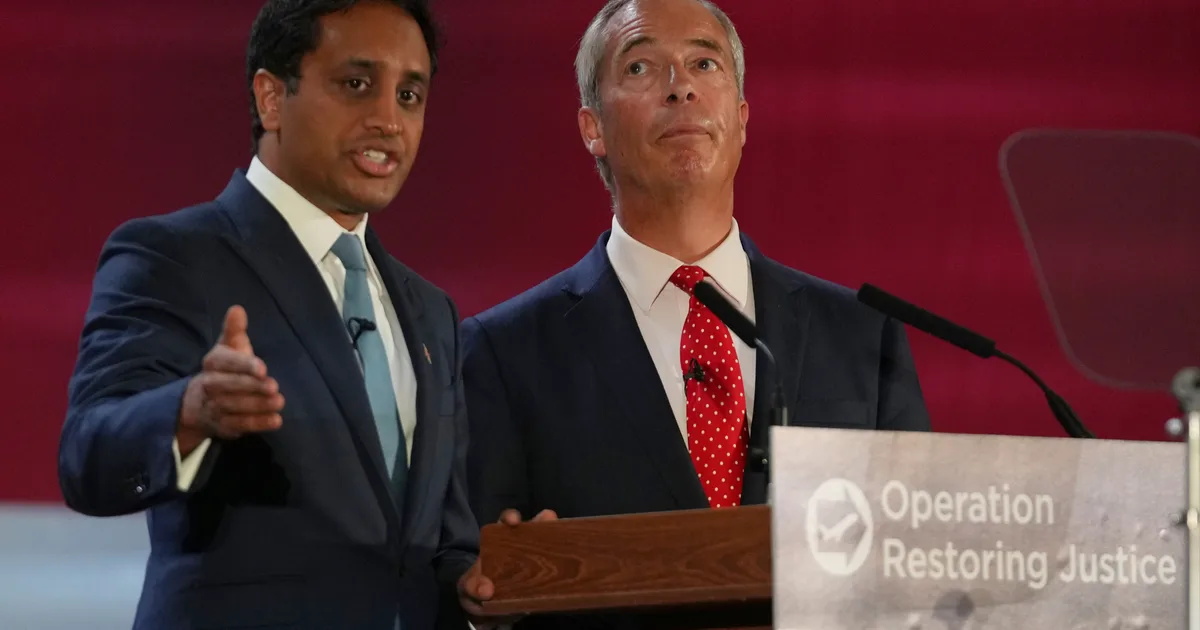
Reform UK have been mocked over a “reheated” plan to use the Royal Navy to turn back migrants coming to the UK in small boats.
The right-wing party said it will launch “the largest military operation in the English Channel since World War Two” if it wins the next election.
But Labour pointed out that Reform leader Nigel Farage had already announced the plan earlier this year.
They said it was only being highlighted again to distract from the ongoing controversy over Farage’s financial affairs.
Farage and Reform home affairs spokesman Zia Yusuf will unveil the so-called “Operation Fortress” policy at a press conference on Monday.
It would see a Reform government set up a joint military command with units from the Royal Navy, Royal Marines, RAF and British Army to track incoming boats and then send them back to France and Belgium.
Yusuf said: “Britain is being invaded. Tory and Labour governments responded with a free ferry service and free hotels.
“Reform UK will respond by launching the largest military operation in the English Channel since World War Two.
“Nigel Farage will order His Majesty’s Royal Navy to ensure that not a single unauthorised vessel crossing the English Channel makes it to the shores of the United Kingdom.
“Those who attempt it will be intercepted by our Armed Forces and returned to France.”
But a Labour spokesman said: “Reform have reheated an old announcement in their latest desperate bid to distract from their growing sleaze scandals.
“Anger and easy answers won’t bring crossings down. The serious action we’ve taken have started to have a real impact and has led to 46,000 attempted crossings stopped, and 70,000 people with no right to be here removed.
“We know there’s more to do on this complex issue.
“What is far less complicated is Nigel Farage’s brazen attempts to dodge scrutiny over his secret £5 million gift from a crypto billionaire. It’s time he stopped the distraction tactics and came clean with the public.”
Prime minister Andy Burnham yesterday pledged to be “relentless” in his attempts to stop the small boat crossings.
Listen to Commons People, the podcast that makes politics easy. Every week, Kevin Schofield and Kate Nicholson unpack the week’s biggest stories to keep you informed. Join us for straightforward analysis of what’s going on at Westminster.

Rupert Lowe has offered his former colleague Nigel Farage an alliance to unite the right.
The leader of Restore Britain, a far-right splinter group which formed after Lowe was kicked out of Reform UK, suggested it was time for the two rivals to “put our differences aside” in a public address.
It comes after the right-wing vote was split in the Greater Manchester mayoral contest, leading to Labour candidate Bev Craig’s victory.
Reform’s Sian Astley finished second with 111,928 votes while Restore’s Marlon West finished fourth with 46,289 votes in the first round.
In a video statement on X, Lowe said this result “showed what Restore Britain can deliver”, and suggested they work together to defeat the left-wing.
He said: “Nigel, my message is simple. If you are prepared to work together around serious policies, serious reform, and serious government, then so are we.
“Millions of British people deserve a patriotic government to put our national interest before any personal differences that you and I may have…
“Now is the time to put our differences aside and cooperate for the good of the country that we all love.”
However, he said any deal relied on several key conditions Reform must agree to.
That included a call for mass deportations to “reverse” mass immigration, restoring the “demographic security” for so-called native Brits and tackling the rise of Islamism by banning the burka.
He also called for a referendum on the death penalty and urged Reform to restore a “self-sufficient Britain” by cutting welfare.
His olive branch comes after Reform started to slump in the polls against Labour, amid growing scrutiny over Farage’s finances and Andy Burnham’s takeover of the government.
The Reform UK leader is currently fighting a by-election in Clacton which he triggered last month.
He decided to start a “people versus the establishment” contest following a sleaze probe into a £5 million donation which he failed to register with parliament.
Farage later issued a lengthy statement on X which appeared to respond to Lowe on Sunday.
He said: “Only one party truly has the possibility of delivering change.
“To deliver that change, I understand Reform UK will need the support of people from other parties, as well as millions who have never voted before.
“That is the broad coalition I am building.”
He added that Reform “will always be open to anyone who shares our commitment to restoring Britain’s borders, rebuilding our economy, renewing our democracy and putting the British people first.”
He promised to “put country before party but insisted “I will never turn my back on my team”.
He said: “There will always be a home in Reform UK for those who believe that 14 years of Conservative government, followed by the last 2 years of Labour, have failed the British people… and that our country now needs a fundamentally different direction.
“I will continue to do whatever is necessary to defeat the left and provide Britain with the strong, serious leadership it deserves.
“This is the last chance for our country, and we cannot afford to waste it.”
Listen to Commons People, the podcast that makes politics easy. Every week, Kevin Schofield and Kate Nicholson unpack the week’s biggest stories to keep you informed. Join us for straightforward analysis of what’s going on at Westminster.
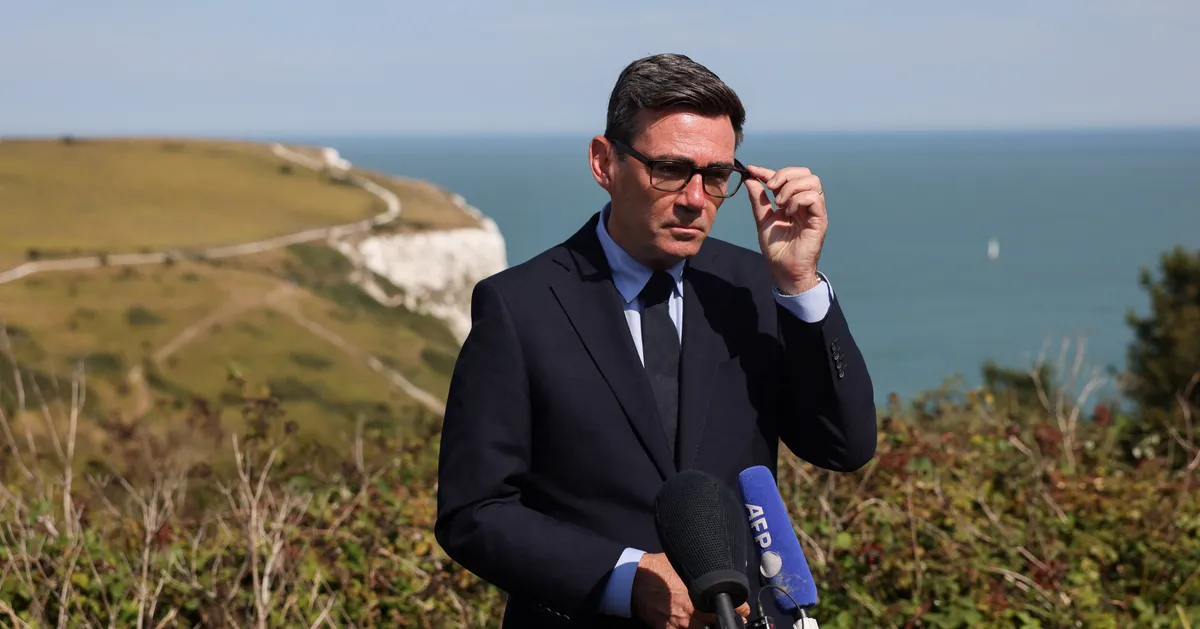
Andy Burnham has promised his government will be “relentless” in curbing how many people arrive in the UK on small boats.
Speaking from Dover, the prime minister said the number of English Channel crossings are down by 50% this year compared to the same period in 2025.
“The month we’ve just had in July has been the lowest number for six years,” he said. “So clearly progress has been made.
“But we’re not complacent, that’s why I’m here, it’s why I’ve come down on Sunday to see the team, to listen to what they think needs to be done, what further can be done.
“We’re just going to be relentless.”
He promised the government was “changing the whole approach” by putting enforcement officers on either side of the Channel to tackle people-smuggling gangs.
He made it clear that Labour would also look to build more safe routes for asylum seekers to come to the UK.
“That also takes away the selling points of the gangs. So on every level we’ve got to come at this, but crucially increasing the enforcement activity,” he said.
“So there’s been a doubling of officers through the National Crime Agency on the UK side of the Channel and French officers are now similarly doubled in number working on the beaches over there.”
The Home Office announced the number of NCA officers tackling smuggling gangs had risen to almost 800 from 376 at the start of 2025.
Concerns over illegal migration have grown after tens of thousands of migrants swam into the Spanish exclave of Ceuta last week.
The prime minister acknowledged that 98% of those people have already been returned to Morocco.
But he added: “There’s a broader issue about the Schengen area and our relationship with it, and of course, I would want to be in regular dialogue with the EU on those issues.”
Burnham has been criticised by his right-wing opponents for not focusing on the matter during his first fortnight in power.
More than 2,000 migrants have arrived on small boats since he got the keys to No.10 on July 20.
But the PM said he wants to “deal with the issue rather than play politics with the issue”.
He added: “The public don’t like the idea that the border looks like it’s not controlled. We need to bring back that control. But also we need to offer support for people who genuinely need it.”
Listen to Commons People, the podcast that makes politics easy. Every week, Kevin Schofield and Kate Nicholson unpack the week’s biggest stories to keep you informed. Join us for straightforward analysis of what’s going on at Westminster.


People have criticised generative AI for the many ways in which it’s corrupting what it means to be human. The latest example of this comes from OpenAI CEO, Sam Altman.
What if you just talked to your children
— Alex Hirsch (@_AlexHirsch) July 31, 2026
OpenAI…
Young people today are growing up at a time when they can use generative AI to do their assignments for them. Workers can use AI to write their emails. Half of what you read online could be written by AI. In other words, we live in a world in which human communication is increasingly devoid of the human element.
As such, it’s unsurprising people have reacted to Altman with messages like the following from BuccoCapital Bloke:
Over the next few years you are going to have to fight with everything you’ve got to retain your humanity. They will try to convince you to give up connecting with each other, to give up truly being alive. It will be the most important fight of your whole life
Helen Lewis wrote:
I’m in awe of how sociopathic this comes off. What if I… actually enjoy talking to my family about their lives and interests?
Dylan Dittrich commented:
“Cool use case of chatgpt” and it’s just the worst, most dehumanizing idea you’ve ever heard.
Some responded sarcastically, including the Wild Geerters account:
Seems like a lot of hassle. A cool idea would be to replace the kids with AI chatbot kids and then have chatgpt talk to the chatbot kids on the drive, and maybe let AI drive the car while you chill at home watching an AI generated movie about a guy driving his kids to school
Jathan Sadowski remarked:
Telling my child to stop talking because I’m listening to the AI podcast about their soccer game and upcoming birthday.
Let’s stay human everyone
Despite claims to the contrary, generative AI is not an intelligent technology, and it seems unlikely it ever will be. That doesn’t mean it can’t act as a substitute for human interaction, though, and the threat to what that could mean for society is grave.
Be sure to speak to your children and loved ones and be grateful for the opportunity to do so.
Featured image via EPA/ BBC
By Willem Moore


The US has dropped a 2,000-pound bomb on the home of an Iranian family on Qeshm Island, murdering a two-year-old and his parents. Two other children were pulled from the rubble alive.
The U.S. dropped a 2,000-pound bomb on an Iranian family’s home this week on Qeshm Island, killing a 2-year-old and his parents.
Barbaric savagery by soulless ghouls. pic.twitter.com/n4EfzZsxIG
— Rania Khalek (@RaniaKhalek) August 1, 2026
The US attacked the residedential area of Iran overnight on Thursday 30 July.
According to the New York Times, the size of the crater and weapon fragments suggest that the bomb was a 2,000-pound Mark-84. This is one of the US military’s largest conventional bombs.
Additionally, the location and time of the strikes are consistent with where the US military was operating at the time.
US has created a pattern of destruction
Of course, this is part of a pattern.
For years, Israel, funded by the US, has dropped 2,000-pound American bombs on Gaza, in an attempt to systematically wipe out Palestinians, including refugees in tents.
2,000-pound Mark 84 bomb was what Biden-Harris sent to lsrael on a regular basis to kill and flatten Gaza in their genocidal campaign. https://t.co/aTIoTr2A5k
— CanCanGirl&TobyBear
(@ApricotForever) August 1, 2026


Both the Trump and Biden regimes green-lighted it.
Now, the US is doing the same to Iran.
For years, Israel was using 2,000lb American bombs to kill Gazan refugees in tents. Both the Biden and Trump administrations permitted it.
A precedent was set.
Now it appears the US is doing the same in Iran.
A 2000lb bomb was dropped on a family house in Qeshm, killing a taxi…
— Trita Parsi (@tparsi) August 1, 2026
During the first month of Israel’s genocide in Gaza, Israel dropped hundreds of these bombs. Many of them are capable of killing or wounding people more than 1,000 feet away.
At the time, satellite images revealed more than 500 impact craters over 12 metres in diameter. This is consistent with those left behind by 2,000-pound bombs.
The U.S. should be held accountable for these war crimes https://t.co/hsrFKxcWCY
— Ray Jackson (@RayJackson123) August 2, 2026
International humanitarian law dictates that militaries should take “all feasible precautions” to minimise civilian harm. Of course, that means not attacking innocent civilians.
“The choice to use that type of munition in such a densely populated area is “very difficult to reconcile with” https://t.co/2zu3d2utPE
— Reem Rifai (@ReemRifai_) August 1, 2026
But the US and Israel have never cared about the lives of Palestinian, Lebanese, or Iranian families. They are rogue terrorist states, and as long as the world continues to whitewash their crimes, they will continue destroying, bombing and murdering the people of West Asia.
On Thursday, an airstrike killed 3 a mom, a dad, and their 2-year-old son on Qeshm Island in southern Iran.
Our visual investigation (drawing on photos/videos from the site, satellite imagery, weapon fragments, and a crater size estimate, analyzed by weapons experts… pic.twitter.com/54xGryP0CI
— Christiaan Triebert (@trbrtc) August 1, 2026
Feature image via New York Times
By HG

Of all the self-help videos that sneak into my algorithm, the ‘Sunday Reset’ is my favourite. In a kind of tribute to Marie Kondo, a Japanese ‘organising consultant’, glamorous influencers manage to make loading the dishwasher and meal prep look aspirational. My Sunday follows a similar, if slightly less aesthetic, formula: three loads of washing, the weekly shop and off to Mass. My Catholic identity is a significant part of my life and so Sunday Mass is an important part of my routine – it gives me time to reflect and think. It tethers my week to something constant and reassuring.
As Christians, we’re taught to ‘keep holy the sabbath’. Although I’m sure theologians will have more to say on this, I have never felt guilty going straight from morning Mass to Lidl. Growing up in Scotland, it’s not something I’d ever thought about. There we can’t buy alcohol until after 10pm, sure, but the shops open whenever they want for everything else.
When I moved down south, I thought it was odd, and annoying, that the big Lidl near me had very different opening hours from the wee Tesco. When I learned the real reason – that the law demands shops over 280 square metres can only open for six consecutive hours between 10am and 6pm – I was baffled. Even more so when I discovered that, in 2016, there were many Scottish MPs who voted against the easing of England and Wales’ Sunday restrictions.
There is no coherent reason for the rules to remain as they are. When you consider that the rules only apply to shops over a certain (arbitrary) size and that even those larger shops are allowed to open for some of the day, the idea that they are doing anything to keep Sunday special is ludicrous. There are no similar restrictions on any other kind of Sunday activity. Making the Sunday shopping experience inconvenient is doing nothing to protect our immortal souls.
Most people in the UK have the same two days off: Saturday and Sunday. How they spend their time over the weekend depends on their priorities. The state should not be infringing on the British people’s rights to enjoy their Sunday. In any case, for people who do prefer a slow Sunday, there would be nothing compelling them to change.
For retail staff, the truth is that even when these larger retail shops are closed, they don’t automatically get the evening off. There are hundreds of tasks to be done when the doors of the shop are locked. Restocking shelves, tidying the storeroom, refolding knitwear, marking down prices – the law doesn’t prohibit the shop from scheduling shifts for staff, only from serving customers.
That aside, why should retail workers be compelled to have Sunday evenings off? Hospitality endures no such restriction. Taxi drivers, hairdressers, public-transport staff, pilots, nail technicians – none of these professions has special rules. They are allowed to make decisions about their schedules that suit them. There are plenty of reasons people are happy to work on Sundays: teenagers and students looking for weekend jobs, or people who prefer shift work to match their spouse’s schedule.
The government’s own figures show that the repeal of these laws could generate up to £1.4 billion annually for the UK economy. It would open up thousands of work hours for people who would be happy to work weekend shifts. Given the rate of unemployment among young people, the government should consider this a gift.
Retail workers and shoppers are adults. They should be allowed to make decisions that are best for them. An absence of Sunday restrictions in Scotland has not ushered in a new golden age of retail. But it has opened more jobs, created flexibility in rotas and relieved some packed-lunch-related stress.
If keeping holy the sabbath isn’t possible from inside a Tesco larger than 280 square metres before 11am, then that’s a conversation for me and my maker, not for the government.
Lucy Rogers is the head of community at Looking for Growth, the political movement to end decline and save Britain.


Calls have grown for FIFA President Gianni Infantino to resign or face a vote of no confidence.
According to the Telegraph, UEFA’s stance is no longer limited to objecting to the proposed sale of a share of the World Cup’s commercial rights; it has evolved into questioning Infantino’s ability to continue leading FIFA.
UEFA officials believe that the recent crisis over the now-dropped FIFA Forward Enterprise (FFE) project has exposed a flaw in the body’s decisionmaking mechanisms.
The project being pursued without sufficient consultation with the continental confederations and member associations, is a breach of the principles of governance and transparency, officials argue.
Infantino U-turning hasn’t been enough
Opposition is no longer confined to Europe as the Asian Football Confederation and Confederation of North, Central American and Caribbean Association Football (CONCACAF) have joined the ranks of those rejecting the way Infantino has managed the project.
Reports suggest that this alignment gives the opposition considerable political clout within the international federation.
There’s a belief in European circles that it may be possible to rally the necessary support to call for an extraordinary FIFA Congress, which could see a vote of no confidence in Infantino if the crisis persists. Infantino has led FIFA for the past 10 years.
Nevertheless, no official announcement has yet been made confirming that the opposition camp has the legally required number of votes to impose such a move. Given that Infantino continues to enjoy the support of influential confederations, most notably the Confederation of African Football (CAF) and the South American Football Confederation (CONMEBOL), the balance of power within FIFA remains open to all possibilities.
FIFA’s backtracking hasn’t ended the crisis
The Guardian noted that the current battle represents the greatest political challenge Infantino has faced since taking office as FIFA president. He has never before faced a coalition of this scale, bringing together continental confederations that wield significant electoral clout within the General Assembly.
The fate of any formal motion of no confidence remains dependent on the opposition’s ability to secure the required majority. However, the current crisis reveals a widening rift in trust between Infantino and a number of his key football partners, which opens the door to a significant struggle for leadership.
Featured image via the Canary
By Alaa Shamali
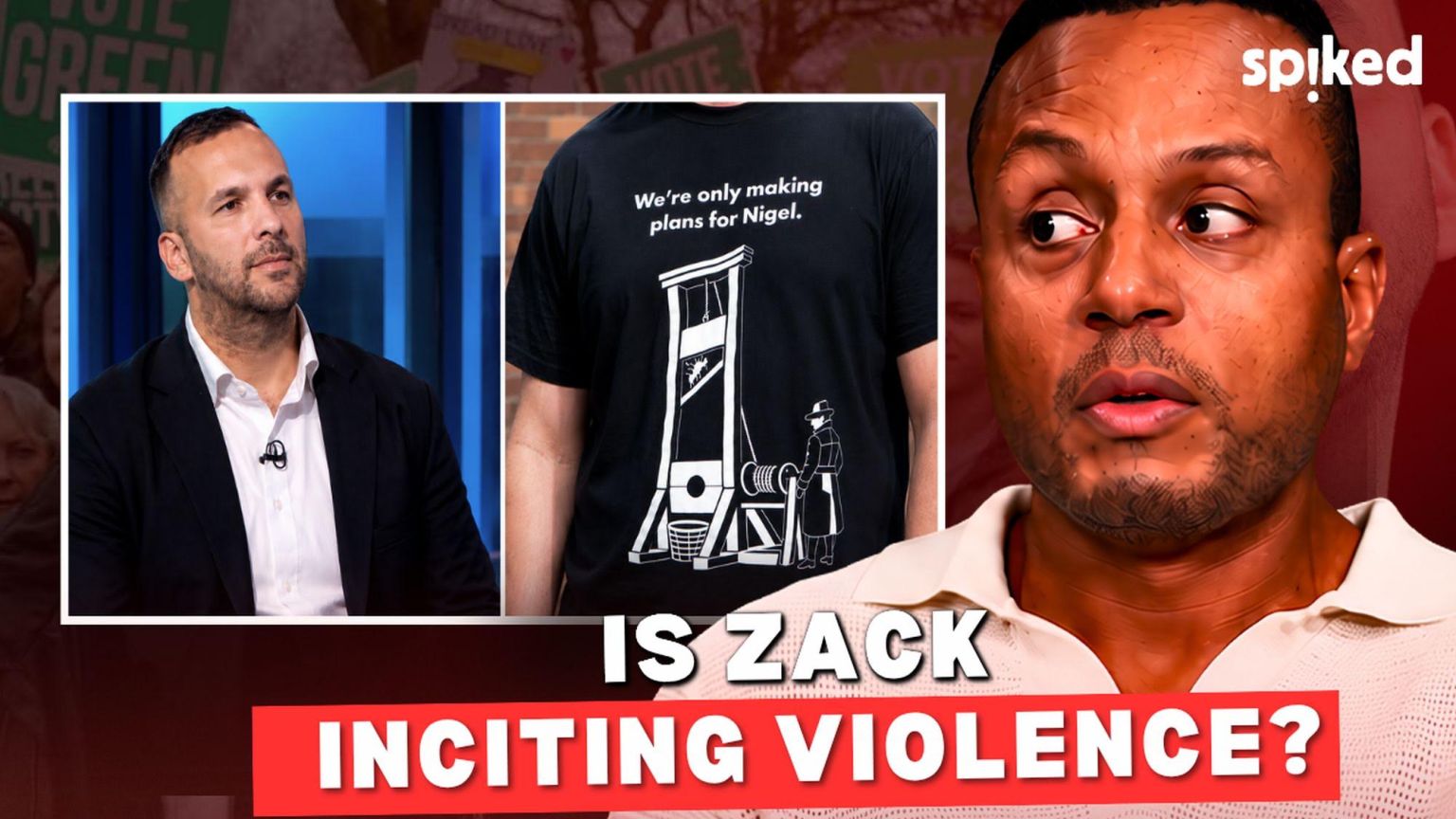
The post Zack Polanski: an incitement to murder Nigel Farage? appeared first on spiked.

Seven-month hunt continues for wanted man
Why is Capita stock rallying today?
Coldcard Wallet Attacks Enter Fourth Wave, Putting 449 BTC at Risk


-

 Business4 days ago
Why Trees Belong on the Risk Register
-

 Fashion3 days ago
Weekend Open Thread: Wit & Wisdom
-

 Politics2 days ago
Meta enters AI-training agreement with far-right ‘propaganda rag’ Newsmax
-
 Entertainment6 days ago
‘Stargate’ Creator’s New Sci-Fi Series Returns for Season 3 Tomorrow
-

 Politics7 days ago
Luke Littler dismantles Gerwyn Price to retain title in Blackpool
-

 Crypto World2 days ago
MicroStrategy Post-Earnings CLARITY Act Push Could Add New Catalyst for Its Stock
-

 Politics6 days ago
The Part of the Electric Transition Nobody Wants to Discuss
-

 Business5 days ago
Major shareholder moves on Canyon
-

 Crypto World2 days ago
XRP Ledger v3.3.0 brings five institutional features
-

 News Videos4 days ago
Bitcoin Enters the 3rd Stage of the Bear Market
-

 Crypto World5 days ago
Kraken Enables Retail Access to Jersey Mike’s IPO via Tokenized Shares
-

 Tech6 days ago
New macOS Sequoia & Sonoma security updates for older Macs
-

 News Videos5 days ago
Claude: Build Financial Dashboards in Minutes (2026)
-

 Politics4 days ago
Luke Littler’s dominance sparks GOAT debate
-

 Business5 days ago
Johnson & Johnson agrees to $5.5B settlement over talc cancer claims
-

 Sports3 days ago
Seema Kaliramna Wins Discus Throw Bronze, Takes India’s CWG Medals Tally To 17
-

 Crypto World22 hours ago
Crypto PAC spending tops $2M in Michigan House race
-

 Business3 days ago
Trump Announces Hamas Disarmament Agreement as Iran Strikes Kuwait Air Base and US Attacks Pause Overnight
-

 Tech5 days ago
Gemini can now summarize the messiest comment threads in Google Docs
-

 Tech1 day ago
ESET tracks rise in malicious AI skills and adaptable malware
You must be logged in to post a comment Login