

Politics
Egyptian coach’s X gesture sparks unjust backlash

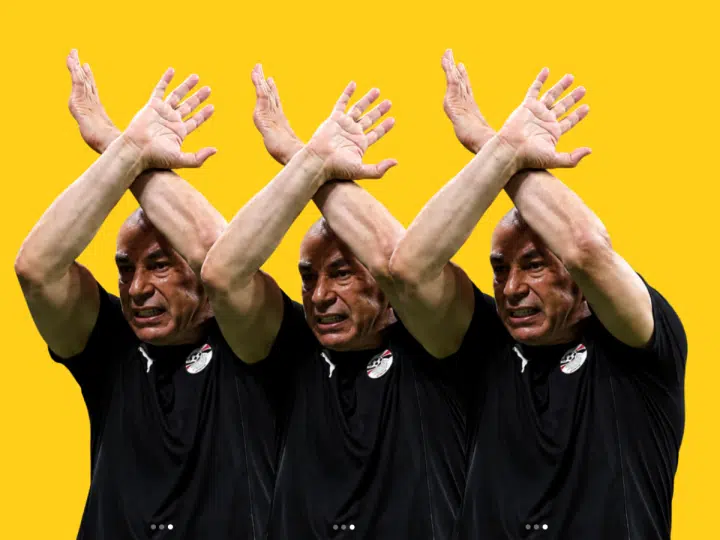
It took just seconds for a gesture from Hossam Hassan, manager of the Egyptian national team, to become one of the most debated moments of the 2026 World Cup.
After raising his arms to form an ‘X’ while protesting the decisions of French referee François Loutixier, Hassan’s gesture quickly came under international scrutiny. Some interpreted it as FIFA’s official anti-racism symbol. Meanwhile, others saw it as a familiar football protest against refereeing decisions.
The controversy was not just about the gesture itself, but the context around it. It came during a furious reaction to the referee’s decisions. As a result, it sparked a wider debate over what message Hassan was actually trying to send.
Misunderstood gesture
Since FIFA introduced its protocol to combat racism, forming an ‘X’ with the arms has become an official gesture. Players, coaches and referees can use it to report racist incidents during matches.
Because of that association, some international media outlets suggested Hassan may have been using the gesture as a signal of discrimination. However, there was no official confirmation that a racist incident had taken place. Moreover, Hassan himself did not say that this was the meaning behind his action.
Others interpreted Hassan’s action through a different lens: the long history of managers using gestures to protest refereeing decisions.
The most famous example came from José Mourinho, who used a similar gesture after a match to suggest that referees had “handcuffed” his team and prevented them from competing fairly. The incident became one of football’s most recognisable protests against officiating.
Seen in that context, Hassan’s gesture appeared to fit a familiar pattern. It came alongside his visible anger at the referee’s decisions and was followed by criticism of the official after the match.
A controversy without a clear answer
The reason Hassan’s gesture attracted so much attention is that it now carries two very different meanings.
For some, the ‘X’ represents FIFA’s fight against racism. For others, it remains linked to football’s long tradition of protesting refereeing decisions.
That overlap created a split in media coverage. Some focused on the gesture’s official meaning. In contrast, others looked at the circumstances in which it was made.
Despite the debate, no interpretation has been confirmed as the official one.
Hassan has not clarified what he meant, and FIFA has not announced that its anti-racism protocol was activated during the match.
A gesture lasting only seconds became an international talking point because it sat at the centre of two very different debates: one about tackling racism in football, and another about the sport’s long-running battles with refereeing decisions.
Featured image via the Canary
By Alaa Shamali


I have the internet to thank for many of my hobbies, including crocheting and baking. I’ve even fixed minor household issues with the help of some handy YouTube clips, and probably wouldn’t have built the skincare routine I swear by without some input from online forums like Reddit.
But when it comes to short-term videos – the ones we scroll through endlessly on social media sites – learning from educational content might be an illusion, a new paper has found.
The study, published in Communications Psychology, found that while the clips grab our attention and keep us engaged, they might impair our ability to actually remember what we’ve learned.
The research relied on three studies
The study authors conducted three studies comparing short-form educational videos with more conventional teaching methods.
They took ten-minute documentary footage and chopped it down into multiple social-media-style short-form videos. Though these were far shorter, they contained all the same information as the longer footage.
1) Students were less likely to remember short-form video footage in both the short and longer term
In the first study, researchers didn’t tell 180 students they were being tested. They showed short clips to some and the uninterrupted documentary footage to others, then surprised both groups with a quiz on the videos both right after they’d watched them and a day later.
People who consumed the shorter-form content performed worse on the immediate quiz.
Then, they told a group of 185 students to pay attention to the videos they were watching because they were about to be quizzed. Those who watched the short-form version of the footage fared worse on the immediate test and scored lower again the day after.
2) MRI scans showed that shorter-form video content activated different parts of the brain
The researchers also put 59 new participants into an MRI scanner and watched their brains as they consumed either documentary or short-form video footage.
Those who watched the longer-form content saw better synchronisation of the superior parietal lobulem, a part of the brain responsible for attention and integrating sensory and visual inputs. This was also true of the precuneus, which orchestrates things like self-awareness, episodic memory, and making sense of visual events.
Basically, it looked like the documentary watchers’ brains were building mental “maps” of the information.
The brains of the participants who watched the short-form content, though, only synchronised the regions that deal with in-the-moment attention and short-term focus. They were more alert, but that alertness might have actually worked against their memory formation rather than assisting it.
3) Short-form videos seemed to break a connection key to memory formation
Lastly, the researchers measured functional connectivity, or how well different regions of participants’ brains communicated with one another, when watching different content.
To form a memory that sticks, the parts of our minds that handle visual and auditory input have to “talk to” the sections responsible for executive control and decision-making.
But this research showed that short-form content seemed to break that communication. Essentially, their minds seemed so busy processing the stimuli placed in the more action-packed format that they didn’t have as much capacity to bundle it away into a lasting memory, too.
The paper said this could mean “the fragmented and rapidly switching nature of typical social media short videos enhances bottom-up attentional capture at the expense of top-down cognitive processes critical for deep learning and long-term memory consolidation”.
In other words, though you might be taking in more in the short term, you could be learning less in the long run.

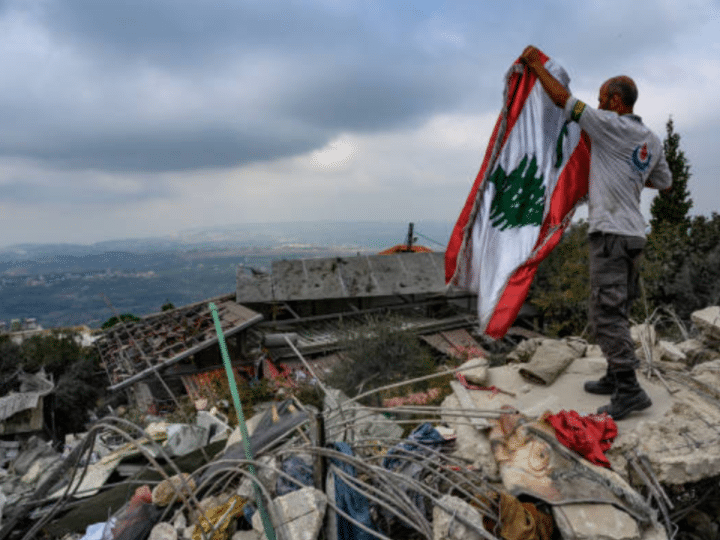
If the Lebanese state refuses to stand as a shield for its own people, who will hold the Israeli war machine accountable for its savage campaign of devastation?
Israel’s unchecked brutality
The numbers released by the Lebanese Ministry of Health paint a horrifying picture of unchecked brutality: more than 4,000 human lives extinguished; over 12,000 individuals maimed and wounded; an entire nation subjected to calculated terror.
This is not mere collateral damage; it is a systematic logbook of unpunished war crimes. From the deliberate obliteration of entire villages and the engineering of mass human displacement to the calculated targeting of journalists, paramedics, women, and children, Israel has waged an all-out assault on the very foundations of urban, environmental, and cultural life in Lebanon.
Yet, instead of wielding these heavily documented atrocities as an ironclad legal weapon in international courts, the spineless political establishment in Beirut has chosen absolute capitulation. The staggering scale of Israeli war crimes has never been heavier, yet the Lebanese skies continue to be systematically violated by an uninterrupted swarm of hostile drones and missiles.
The US-brokered “agreement”
This ongoing humiliation is the direct result of the treacherous tripartite framework agreement brokered by the United States between Israel and the Lebanese government. Published by the US State Department on the morning of 27 June 2026, this document was masked in the hollow, insulting rhetoric of a “step towards peace.” In reality, it is a formal act of submission.
To understand the sheer malice of this agreement, one only has to look at the ground reality, verified just last week by Amnesty International. The human rights organization issued a scathing indictment, declaring that the Israeli military’s continuous deployment of unlawful mass eviction and non-return orders to terrorize hundreds of thousands of Lebanese citizens constitutes a flagrant, systematic violation of international humanitarian law.
Amnesty’s 2026 investigation – which cross-referenced digital military orders on the X platform, testimonies from the displaced, and open-source satellite analysis – revealed that the Israeli military aggressively expanded its campaign of forced depopulation in 2026. The rate and scope of these illegal expulsion orders drastically outpaced the violations of 2024, proving a deliberate blueprint to permanently flatten homes, destroy civilian infrastructure, and ethnically cleanse large swaths of Southern Lebanon.
Instead of fighting this existential threat, the tripartite agreement – which falsely claims to terminate the state of war and initiate a comprehensive peace treaty under American oversight – effectively forces Lebanon to police itself on behalf of its oppressor. The text makes lofty, empty gestures toward Lebanon’s “sovereignty” and its exclusive monopoly on the use of force, while casually accepting Israel’s dishonest assertions that it harbors no territorial ambitions.
The agreement also establishes a hypocritical, simultaneous mechanism where a phased Israeli withdrawal is conditioned on the Lebanese army acting as a sub-contracted security force. The domestic military is tasked with dismantling the infrastructure of resistance groups and disarming them in “pilot areas,” under the guise of ensuring civilian return. In exchange for this domestic pacification, Washington “pledges” conditional military scraps to the Lebanese army and promises to mobilize international reconstruction funds, provided the state completely chokes off funding to domestic militias and ensures not a single cent of aid reaches those who actually fought the invasion.
But the true crown jewel of this betrayal is Article 13. Facing an immediate and justifiable wave of public outrage, President Joseph Aoun attempted a pathetic public relations maneuver to absolve his administration of responsibility for the agreement’s most damning clause. In doing so, he only succeeded in committing a second, more humiliating blunder, exposing the staggering incompetence and complicity of Lebanon’s ruling elite.
Article 13
The official text of Article 13 leaves no room for creative interpretation. It explicitly demands that:
Israel and Lebanon undertake to take measures based on good faith and demonstrating positive intentions, including ceasing all hostile or antagonistic actions in international political or legal forums, in line with their shared objectives of establishing stable and peaceful relations.
By agreeing to cease all “hostile or antagonistic actions” in international political and legal arenas, the Lebanese state has effectively volunteered to act as Israel’s legal defense counsel. This clause dictates a total gag order. Politically, Beirut has stripped itself of the right to even file a basic grievance with the UN Security Council. Legally, it means a complete freeze on accountability. Under this shameful text, Lebanon is barred from petitioning international fact-finding committees, pursuing justice through the International Criminal Court (ICC), or utilizing any other global judicial body.
The domestic repercussions of this surrender are catastrophic. By signing this text, the government has paralyzed its own internal legal system. The passage of critical domestic laws targeting international crimes will be discarded, active judicial investigations into the slaughter of civilians will be buried, and the high-profile cases of assassinated journalists will be blocked from ever reaching the Judicial Council.
This monumental betrayal was approved and signed off by a prime minister who, in a twist of ultimate institutional irony, once served as a judge at an international court. A man who built a career on the pretense of international law has used his office to immunize the butchers of his own people.
Where is justice?
This raises a fundamental, burning question of legitimacy: Does a corrupt, unrepresentative state apparatus possess the legal or moral right to waive the fundamental human rights of its citizens to seek justice for war crimes? Is the right to prosecute an exclusive luxury of states, or can the victims bypass a compromised government?
From a constitutional standpoint, Article 13 is an absolute illegality. While the Lebanese Constitution recognizes that international agreements hold supremacy over domestic legislation, no two political entities have the authority to contract away the fundamental rights of war crime victims. The right to accountability is an inalienable asset belonging strictly to those who suffered the atrocities – the displaced, the maimed, and the families of the dead.
The state’s sole mandate is to protect its citizens and enforce the rule of law, not to barter away their blood in backroom diplomatic deals. A circumstantial, coercive political agreement cannot simply rewrite or nullify the entire global architecture of human rights.
The separation of state and individual
When evaluating the wreckage of Lebanon’s post-agreement landscape, it is vital to remember that the international legal framework operates on a strict separation between state responsibility and individual criminal liability. This separation explicitly dictates who holds standing before international tribunals.
Article 13 may represent a spineless diplomatic maneuver by a cowardly Lebanese political class, and it undeniably stands as a monumental moral failure that strips citizens of state protection. However, the ultimate saving grace is that the Lebanese government does not possess the legal capacity to execute this betrayal, even if it wants to.
According to foundational international legal precedents, states are strictly prohibited from waiving the prosecution of war crimes. Any political clause attempting such an exemption is dead on arrival, carrying zero legal weight in an international court of law. The four Geneva Conventions leave no room for ambiguity. Articles 51 (First), 52 (Second), 131 (Third), and 148 (Fourth) all explicitly command:
No Contracting Party may exempt itself or any other Contracting Party from the responsibilities incumbent upon it or another Contracting Party for breaches.
These statutes were engineered precisely to prevent an aggressive, victorious military power from forcing a compromised or defeated state into signing “amnesty” clauses that absolve war criminals.
Global justice cannot be overwritten
Because war crimes, forced depopulation, and systematic slaughter fall squarely under the category of peremptory norms (jus cogens) from which no derogation is permitted, this shameful treaty cannot overwrite global justice.
Under the United Nations International Law Commission’s rules on the “Responsibility of States for Internationally Wrongful Acts“, the forced consent or subsequent waiver issued by a victimized, submissive state cannot legitimize a crime against humanity or absolve the perpetrator of international liability.
Article 13 is nothing more than a worthless scrap of paper. Should a future, legitimate Lebanese administration or independent legal bodies muster the courage to bring these atrocities before the International Court of Justice, Israel cannot use this corrupt framework agreement as a shield.
The tripartite treaty is legally invalid from inception; it stands only as an enduring testament to the cowardice of the Lebanese regime and the predatory nature of its authors. The road to judicial accountability remains open, entirely unhindered by the treason of the ruling class.
Featured image via the Canary

Loyalists in the village of Moygashel have torched a replica of a mosque, sparking predictable outrage. There’s little question the action was a grotesque, hateful display, and such sentiments represent a real material threat to Muslims, as recent racist pogroms prove.
What the blaze truly shows, however, is a dead-end loyalist culture that will ultimately burn itself out through its own bigotry and parochialism. Its only hope may lie in the embrace of its core tenets by reactionaries beyond the north of Ireland. This is perhaps the punt being taken by the pyromaniacs of the County Tyrone village, and those elsewhere in the Six Counties — the decolonial term for the north of Ireland — this summer.
On July 8, Moygashel Bonfire Association (MBA) gave a glimpse at the crudely constructed representation of the Islamic faith, hidden partially by a sheet. The next day they attempted to defend it on the basis that it was an:
…exercise in our rights under Article 10 of the ECHR [European Convention on Human Rights]…
They went on to ramble incoherently about immigration, without clarifying why their opposition to that necessitates inciting violence against an entire faith. The Police Service of Northern Ireland (PSNI) disagreed on the legality of the display, and arrested a 56-year-old man, who they’ve charged with incitement to hatred. The PSNI claim they were intent on removing the display and holding it as evidence. To prevent that outcome, the creators of the bonfire then chose to set it alight, saying:
Due to confirmation of contractors moving in and removing the bonfire, the decision has been made to light it asap.

Yearly hate-fest shifts from sectarianism to new bigotries
Those celebrating the 12 of July typically light bonfires the night before on 11 July. The yearly festivities represent a ‘culture’ with only its past to look forward to, with sectarian antagonism at its core, commemorating Protestant King William III’s victory over Catholic King James II at the Battle of the Boyne in 1690. While the sectarian element remains, with revellers still frequently burning the Irish tricolour flag, the focus has shifted more towards other displays of hate.
Moygashel loyalists has gained a reputation for this. Last year the County Tyrone village burned an effigy of refugees in a boat. Recently, the 93% Protestant, and 98% white locale gained notoriety for subjecting its own children to racist and Islamophobic AI-generated slop. Locals put up a banner depicting a group of dark-skinned, seemingly Muslim men attempting to gain access to a children’s playground.
The homogeneity of Moygashel and the idiocy of its output are not a coincidence. This is the inevitable product of loyalism and its stunted, deeply insular ideology. A culture that begins and ends with the following — we like to burn stuff, and we hate anything that deviates from our extremely narrow sense of identity — one that calcified several hundred years ago on the basis of violence and supremacy over others.
These are people trapped in an endless siege mentality, perpetually fearful of the destruction of their ‘culture’. The irony is that the obsessive narrowness of this attempt at self-preservation ultimately dooms it to extinction. Just as the absence of genetic diversity leads to a lack of evolutionary resilience in organisms, so loyalism cannot survive the extreme scarcity of ideas it allows to permeate its Orange membrane.
A monopoly on brutal sectarian violence might have ensured the culture could dominate for centuries, but post-1998, force is no longer the currency that determines outcomes in the north of Ireland. As in peacetime anywhere, brain power matters much more than muscle power. A column in the Herald observed the difference between republicans and loyalists in this regard 26 years ago:
The republicans have swapped their balaclavas for starched suits and a place in government, while most of the loyalist groups are conspicuous only by their struggle for ghetto supremacy. Whether you agree with them or not, their nationalist opponents have at least political republicanism to draw on.
Even inside the Maze, where loyalist and republican prisoners were segregated, the loyalist prisoners indulged in raves, drugs, and weight-training. They built themselves up physically, while their arguments grew flabby. In prison republican libraries were stocked with books on politics and history, the loyalist libraries were stocked with weight-lifting manuals.
This was a contrast often highlighted by Progressive Unionist Party politician David Ervine, who sought to steer loyalism along a more enlightened path until his premature death in 2007 at the age of 53. His journey from Ulster Volunteer Force bomb-maker to socialist peacemaker is a route today’s bonfire builders could benefit from studying.
Loyalists’ insular culture and its inevitable demise
In 2020, the News Letter pointed out that in 2014/15:
…of students entering university in NI [Northern Ireland], 29.5% were Protestant, and 45.3% Catholic…
They went on to say the gap has likely only grown since. Rather than funnelling young Protestants into college lecture halls, loyalist paramilitaries usher them into prison cells, via racist riots. These criminal gangs might be happy enough to convert a generation of youths into fodder for their racketeering.
Other loyalists, however, might want to consider the sustainability of doubling-down on the myopic hatred which started with Catholics as the target, and has now shifted to migrants, people of colour and Muslims. A long, hard look at the link between extreme under-appreciation of alternative perspectives, and extreme underachievement, is long overdue.
Escaping from a cultural ghetto might mean actually embracing what 1,400 years of Islam has given the world. That would include vital contributions to mathematics in centuries past, and today’s capacity for Muslim-majority countries to achieve some of the lowest rates of violent crime in the world.
“Delivering sour grapes from a withering vine”
Reflecting on this might enrich the people of Moygashel more than giant pyres of pallets, and the absurd notion that all two billion adherents to Islam are a combination of Osama Bin Laden, Abu Bakr Al-Baghdadi and Jihadi John.
Similarly, recognising that the north of Ireland’s economy depends on migration, particularly in healthcare, might be more useful than sealing yourself in an Ulster-shaped Orange tomb which no one from outside ever wishes to enter.
The outlandish bonfire displays of hate are intended as a show of strength, of defiance. The Moygashel Bonfire Association’s banner reads “Delivering hard truths from solid roots”. “Delivering sour grapes from a withering vine” might be more apt. No one who is actually strong feels compelled to go around announcing it constantly.
The reality is that loyalists’ effigies, like those in the Tyrone village, demonstrate quite the opposite of strength. They highlight a decaying, moribund ‘culture’ gripped by fear. Fear of the migrant, fear of the Muslim, fear, at some reptilian level, of its inability to halt its own hastening demise.
It’s a very exciting time to be a Madonna fan.
Not only has the Queen of Pop’s latest release Confessions II got some of the most glowing reviews in her 40-year career, she’s just topped the UK albums chart for the first time since 2012.
What’s more, Confessions II cut Danceteria has also become her first solo top 40 single on this side of the Atlantic, proving people are still up for hearing from the trail-blazing star even four decades into her career.
Hype around Danceteria was strong even before its release, after it was prominently featured in Madonna’s Confessions II short film, in a star-studded sequence featuring a host of A-list cameos.
Danceteria itself also namechecks a host of key figures from Madonna’s past, who she used to rub shoulders with at the titular nightclub before shooting to fame in the early 80s. Some of them were friends of hers from back in the day, some went on to achieve huge success in their art form, and some are even still in Madonna’s life all these years later.
With Danceteria quickly becoming one of Madonna’s most talked-about songs in years, we’re running through some of its lyrics with a quick guide to everyone who gets a mention in the song…
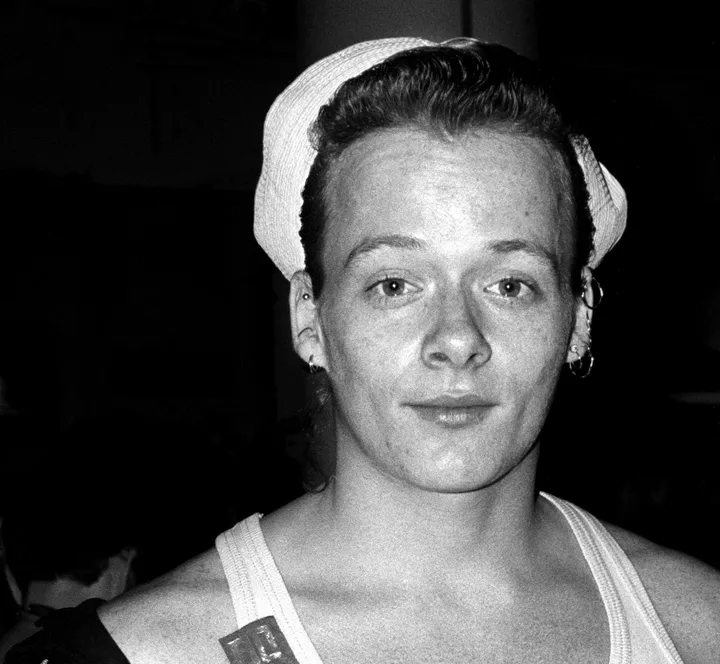
‘Meet this boy called Martin Burgoyne, he’s my best friend, he’s my Boy Toy…’

Patrick McMullan/Getty Images
A visual artist who was a pivotal part of the downtown art scene in 80s New York, Martin Burgoyne befriended a young Madonna at Danceteria and later became her roommate.
The two worked together numerous times in the early years of her career, and after years of friendship, he eventually became one of the first people in her life to die from AIDS-related causes.
During the final stages of his life, Madonna paid for Martin’s medical bills, as well as an apartment for him that meant he could be nearer St. Vincent’s Hospital, where he received his treatment.
She later paid tribute to him on her Erotica album track In This Life, and in 2023, when Madonna turned her song Live To Tell into a memorial to those who died in the AIDS crisis, Martin’s face was the first projected onto the stage.
“He was really cute: blond curly hair, earrings up his ears, plaid golf shorts, Doc Martens, black frames, and a white t-shirt with a sweater vest over it,” Madonna told Interview magazine earlier this year, while recalling their first meeting.
“He’s like, ‘You look lost’. And I was. He said, ‘Come with me. I’ll get you in’. And he just crashed to the front of the line.”
She added: “Everybody knew him. He said hi to everybody. The doorman opened the velvet rope. He brought me in and my whole life changed.”
‘Cut to the front, there’s Haoui Montaug…’

Patrick McMullan/Getty Images
Haoui Montaug ran the door at several iconic New York clubs, including the Tunnel, Studio 54 and, of course, Danceteria.
At Danceteria, he was also in charge of the club night No Entiendes, where Madonna performed her debut single Everybody back in 1983 (he can be seen introducing her at the beginning of the video below).
In the early 90s, after being diagnosed with AIDS, Haoui held what became known as a “suicide party” to say goodbye to his loved ones (including Madonna, who is reported to have attended over the phone) before taking his own life the following morning.
‘Get on the elevator, I run into Debi Mazar…’

DMI/The LIFE Picture Collection/Shutterstock
Debi Mazar is an actor, TV personality and life-long friend of Madonna’s, having previously appeared in the music videos for hits like Papa Don’t Preach, True Blue and Music.
The two also met at Danceteria, where Debi used to work on the lift (as mentioned by Madonna in her lyrics).
As the singer put it to Interview magazine: “[Debi] was 16 when she was working there and lying about her age. She was going to the Wilfred Academy of Hair & Beauty Culture and we hit it off right away.
“She used to put the elevator on hold, like press the emergency button, and come out and dance with me.”
Madonna added: “She had the most incredible looks all the time. Her face was beat. Her hair was done. I kept going, ‘Damn, girl, how do you look so good? I have three pieces of clothing and I don’t even know how to do my makeup’.”

Debi also described Madonna as her best friend during an interview with Watch What Happens Live in the early 2010s.
Since her Danceteria days, Debi’s screen credits have included everything from the films Goodfellas, Empire Records and Malcolm X to the popular TV series L.A. Law, Entourage, Ugly Betty and Younger, plus lending her voice to Maria Latore in the Grand Theft Auto games.
Notably, she’s also the only person name-checked in Danceteria to also appear in its accompanying visual.
‘Then I see Mark Kamins is the DJ, he’s the DJ, hide the cocaine…’

Steve Eichner via Getty Images
As you can probably guess, Mark Kamins was one of the DJs at Danceteria at its heyday, who helped Madonna out majorly by playing a demo of her song Everybody, which eventually became her debut single, during a night out.
In Interview last month, Madonna claimed she specifically used to go to Danceteria in an attempt to “butter up” the DJ, with whom she’d briefly go on to work in the first years of her pre-fame career.
As she put it: “He saw me as a complete stalker. Someone would say, ‘There’s Mark Kamins’, and I’d go sit next to him and say, ‘Hey, I know you’re the DJ here and I’ve been working on this music and I’d love to get a chance to play it for you if it’s possible’.
“He was cute and I was turning on the charm as much as I could, and he’d be like, ‘Do you know how many people bother me about wanting to play me their demos?’. He left, but I kept harassing him. I just kept coming back.”
She continued: “Eventually I ended up in a bathroom with Mark Kamins, and I saw him snorting coke. He’s dead now. I can say that.
“He was a wonderful guy, but he did a lot of things people did in the ’80s that they shouldn’t have done. You know what I’m talking about […] So anyway, I brought him some coke in the bathroom, took him in the stalls, me and Debi […] So anyway, we made out, we did a little blow, and then he agreed to listen to my demo.”
‘There’s Fab 5 Freddy…’

Like many of the people name-checked in Danceteria, Fab 5 Freddy was a burgeoning artist in the era Madonna’s hit is set, at that time mostly dabbling in large-scale graffiti art.
He is now considered a pioneer in the hip-hop scene, and was previously name-checked in Blondie’s Rapture “rap” back in 1981, too, before putting together the film Wild Style and going on to become a VJ for MTV’s flagship hip-hop show.
‘…and Basquiat…’

Jean-Michel Basquiat is among the most influential artists of the 20th century, rising up through the New York graffiti scene before turning his hand more to painting in his own signature style.
He and Madonna dated in 1982, at a time they were both on the cusp of a breakthrough in their professional careers, though the future Queen of Pop said that his continued use of hard drugs was what ultimately led to the end of their relationship.
“He wouldn’t stop doing heroin,” she told Howard Stern decades later, adding: “He was an amazing man and deeply talented. I loved him.”
Madonna claimed that after their split, he made her return two paintings of his that he’d once gifted her, which she later learned he’d destroyed with black paint.
In 1988, he died of a heroin overdose at the age of 27.
‘…Keith Haring…’

Artist and activist Keith Haring’s distinct drawing style is immediately recognisable, and has been referenced in Madonna’s career dating all the way back to her Borderline video in 1984.
His work incorporated heavy themes including issues around race, drug misuse and the AIDS crisis, and is recognisable by its colourful and uniquely-shaped drawings of people and animals.
Keith died as a result of complications from AIDS in 1990. In 2023, he was also among the figures included in Madonna’s tribute to those lost in the AIDS epidemic on her Celebration world tour.
‘…and Kenny Scharf…’

Marc Patrick/BFA.com/Shutterstock
Another artist who came up with Madonna in her Danceteria days was Kenny Scharf, known for his distinctive style that sends up middle-class American iconography, often incorporating cartoon characters from his youth, like the Flintstones and Jetsons.
Still active today, he has turned his hand to various artforms over the years, including sculpture, video and even fashion, and was the subject of the 2020 documentary Kenny Scharf: When Worlds Collide.
‘Everyone came from Shafrazi – Sha-fra-zi, to the beat…’

Allan Tannenbaum via Getty Images
Art dealer Tony Shafrazi opened up his own gallery in the late 1970s, which quickly became a key space in the downtown art scene.
The Tony Shafrazi Gallery and Danceteria were both known as a hub for artists of that era (including many of them named in Madonna’s latest hit), eventually closing in 2014.
In more recent years, Shafrazi has become a more divisive figure in the art world due to his vocal support for Donald Trump.
‘There’s Maripol…’

Patrick McMullan via Getty Image
French fashion designer and stylist Maripol was an important figure in the early years of Madonna’s career, helping put together the image that would make her a global superstar.
Most notably, she styled the future chart-topper on her first two album covers, as well as in the music videos for hits Burning Up and Like A Virgin, as well as her inaugural tour, The Virgin Tour.
Outside of her work with Madonna, she’s also collaborated with musicians like Cher, Grace Jones, Sir Elton John and Blondie’s Deborah Harry.
‘…and a guy named Fred’
Alright, you’ve got us there.
Danceteria actually name-checks three different “Freds”, including the aforementioned Fab 5 Freddy and The B-52s’ frontman Fred Schneider, but quite who the mysterious “guy named Fred” is supposed to be is up for debate.
One contender suggested by fans on Reddit is the photographer Fred Seidman, who took Madonna’s pictures for the New York paper The Village Voice years before she made it big.
‘There’s Rock Steady Crew and Crazy Legs…’

During Madonna’s time partying at Danceteria, breakdancing was still very much on the come-up, with one of the artform’s most popular troupes being the Rock Steady Crew.
Their leader was Richard Colón, better known to fans as “Crazy Legs”, whose distinct moves made him one of breakdancing’s most influential figures.
‘Nile Rodgers…’

The co-founder of Chic was instrumental in some of the band’s biggest hits, including Everybody Dance, I Want Your Love and Le Freak.
While Nile Rodgers and Madonna moved in the same circles at Danceteria, interestingly, they wouldn’t work together until she’d already broken through, and he produced some of the biggest hits from her second album, most notably Material Girl, Like A Virgin and Dress You Up.
Still a huge figure in the pop music sphere, Nile Rodgers has quite literally worked with everyone, from Diana Ross, David Bowie and Duran Duran to Mariah Carey, Beyoncé and Lady Gaga. He and Chic are still staples on the festival scene, too.
‘…and David Byrne’

Most of us will know David Byrne best as the guitarist and lead vocalist of the avant-garde rock group Talking Heads, whose biggest hits include Once In A Lifetime, Burning Down The House and Psycho Killer.
Like Madonna, David Byrne is very much still making music, releasing his most recent album in 2025, in collaboration with Ghost Train Orchestra.
He’s also an Oscar winner thanks to his work on the score of the 1987 film The Last Emperor.
‘…the B-52s had money to burn’

Of course, the B-52s had their breakthrough a few years after Madonna with their seminal floor-filler Love Shack.
Quite why Madonna says they “had money to burn” in their Danceteria days remains to be seen, but at least frontman Fred Schneider appeared to see the funny side of it all.
‘Lounge Lizards had so much style…’

David Corio via Getty Images
Saxophonist John Lurie co-founded the band Lounge Lizards in the late 1970s, merging elements of jazz with other popular genres from that time, including punk, new wave and other avant-garde music.
Much like Madonna herself, the Lounge Lizards would often perform at Danceteria as well as frequenting it as patrons.
‘Lower East Side, take a walk on the wild side…’

Although she doesn’t reference him by name, Madonna’s “take a walk on the wild side” here nods to Lou Reed’s similarly-named hit.
To drive her point home, she then launches into the “do do do” section of Take A Walk On The Wild Side, which is why the late Lou Reed is also named as a co-writer on Danceteria.
Lou, of course, is a true icon of the music world, first coming up as a member of The Velvet Underground, before enjoying decades of solo success.
He died in 2013 at the age of 71, and continue to record and tour even in his final years.

The Israeli occupation, on 9 July, tried but failed to assassinate Hamas spokesman Hazem Qassem.
“Israeli” drone targeted Hamas spokesperson’s car
An Israeli occupation drone targeted Qassem’s vehicle near Abbas Junction, West of Gaza City, on the afternoon of 9 July. Qassem was not in the vehicle at the time. But his bodyguard, Mohammed Al-Fayoumi, was killed. Three others were also wounded, as the car was hit on a crowded street.
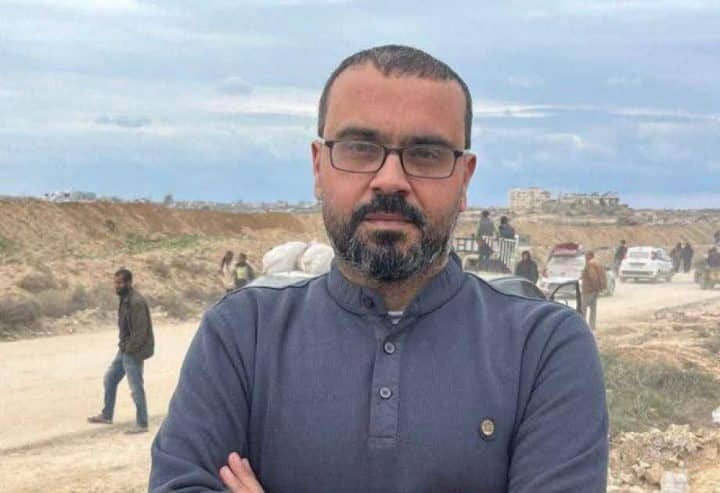
Qassem had attended a press conference on 7 July, in which Hamas announced it was dissolving its civilian governing body in Gaza. He told the AFP news agency at the time:
Hamas has taken a new step in that it will no longer be in charge of the Gaza Strip, in order to remove any pretexts for the occupation, which continues its aggression and war of extermination.
Humanitarian worker targeted and killed by “Israeli occupation”
On 8 July, the day before the attempt on Qassem’s life, Israeli occupation forces assassinated Mohamad Fawaz al-Waheidi in Gaza City’s al Sabra neighbourhood. An airstrike targeted the civilian vehicle he was travelling in.
Al-Waheidi was killed just before a public screening of the Argentina–Egypt World Cup match, which he had organised, was due to start.
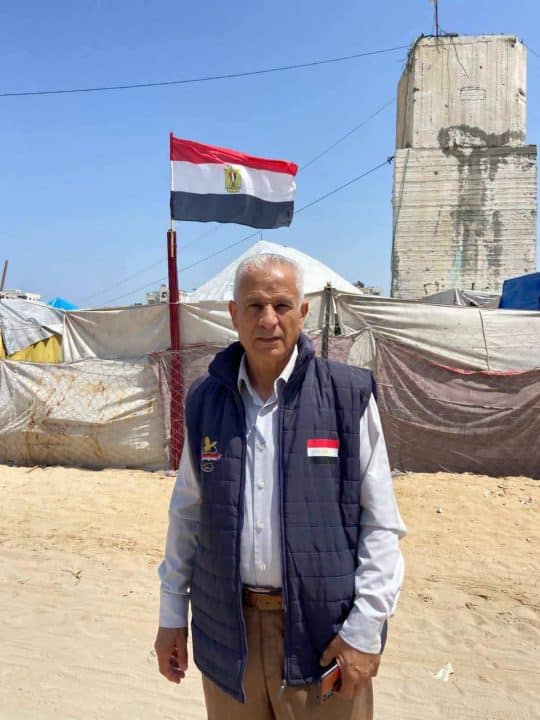
A respected community leader and the director of the Egyptian Relief Committee in Gaza City, al-Waheidi was known for:
his tireless efforts to resolve disputes and serve his people.
Three other Palestinians were also killed in the targeted attack – including two brothers, aged 8 and 10, on their way home from playing football.
Al-Waheidi’s assassination occurred as Hamas continues talks with Egyptian officials in Cairo, on the second phase of the peace plan.
Gaza “ceasefire” continues to be violated by “Israel”
Gaza’s civil defence agency and health officials say six Palestinians were killed on 9 July 2026. Since 7 October 2025, the occupation has killed at least 73,110, and injured more than 173,599 people.
Although a “ceasefire” agreement was signed in October 2025, the Israeli occupation continues to violate it. Air and artillery strikes are still targeting displacement areas. The entry of humanitarian aid continues to be blocked. Demolitions are still occurring inside the “yellow line”. At least 1,092 Palestinians have been killed since the ceasefire began, on 11 October 2025.
Featured image via the Canary
By Charlie Jaay

So… erm… what exactly is going on with the casting announcements for this year’s Strictly Come Dancing?
Back in June, Strictly bosses surprised fans when they began unveiling stars from the upcoming line-up months earlier than normal, with EastEnders favourite Lacey Turner the first to be confirmed.
In the days that followed, Dani Dyer and Delta Goodrem were also revealed to have signed up, and after a week’s break, hairstylist Chris Appleton became the fourth star announced.
After that, there was nothing for three weeks, until Cach Mercer became the fifth contestant (and second Love Islander…) to be announced.
However, this inconsistency hasn’t stopped rumours from spreading about other celebrities who could be hitting the dance floor in 2026, with a host of stars from the world of TV, sport and beyond tipped to be taking part.
While we wait for more news from the BBC, here’s a quick guide to which celebrities have been rumoured for Strictly 2026 so far…
Josie Gibson

Ken McKay/ITV/Shutterstock
Way back in March, daytime favourite Josie Gibson was named by The Sun as the “first celeb lined up” for the new season.
Josie first rose to fame as the winner of the final series of Big Brother in the Channel 4 era, and since then, she’s become known for her appearances on This Morning and I’m A Celebrity.
The tabloid’s “source” claimed that bosses had been hoping to get Josie to sign up for years, and that they’re “hoping this year is the year”.
Josie later downplayed the rumours, insisting she’d “had nobody contact me” about an appearance on Strictly, and that the whole thing was an April Fool’s joke.
Dame Sarah Storey

Anthony Harvey/Shutterstock
Dame Sarah Storey is a British sporting legend, with a whopping 19 gold medals from the Paralympic games – in both cycling and swimming – and 75 world records to her name.
In June, The Sun cited a source who said that for her next venture, Dame Sarah had signed up for Strictly and was “really excited to be learning a new skill”.
Before that, she had signed up for what would turn out to be the final season of Dancing On Ice on ITV, but had to withdraw from the series before it began due to injury.
Jeff Brazier

Ken McKay/ITV/Shutterstock
At the beginning of June, The Sun claimed that Jeff Brazier had been approached about taking part in Strictly, three years after his eldest son Bobby Brazier competed on the show, finishing as runner-up in the live final.
Jeff, best known as a TV presenter, previously competed on the celebrity version of Race Across The World with his younger son Freddie, having also taken part in reality shows like The Farm, Celebrity MasterChef and Dancing On Ice.
Following Bobby’s stint, Jeff said he had turned down the chance to appear on Strictly so as not to step on his son’s toes, but the tabloid claims he’s now had a change of heart…
Melanie Walters

DAVID HARTLEY/Shutterstock
To millions of viewers, Melanie Walters is best known for her work as the loveable Gwen in all three seasons of Gavin & Stacey.
In late June, The Sun reported that Melanie had “signed up for Strictly”, two years on from the show-stopping finale of Gavin & Stacey, which aired on Christmas Day in 2024.
Kristian Nairn

Marion Curtis/Starpix for HBO/Shutterstock
When it was confirmed that Dani Dyer had signed up for Strictly 2026, it was no major surprise, as she’d originally been booked to compete a year earlier, until an injury sustained during training meant she was no longer able to compete.
However, Dani wasn’t the only Strictly star who had to bow out early last year.
Like the Love Island winner, Game Of Thrones star Kristian Nairn also had to withdraw from Strictly 2025 on medical grounds, leading many to wonder if he, too, has been invited back for this year’s run.
Kristian is probably most well-known for his performance as Hodor in Game Of Thrones, but he also appeared more recently in the comedy Our Flag Means Death.
Jake Quickenden

Jake Quickenden is a reality TV veteran at this point, famously finishing in second place in the jungle mere weeks after being voted off The X Factor back in 2014.
Since then, he’s also appeared in Celebrity SAS: Who Dares Wins and Dancing On Ice, which he won the year the ITV skating show was revived in 2018.
The Sun has claimed that, since Jake joined the cast of the CBBC series Jamie Johnson FC, Strictly bosses are now considering him to be “in the BBC stables”, therefore “part of the gang” and a suitable candidate for Strictly 2026.
Tom Parker Bowles

Last year, Tom Parker Bowles was named in the press as a hot favourite for the Strictly Come Dancing line-up, but ultimately wound up not being part of the cast.
Tom is best known for being a food critic and writer – plus, as his name suggests, the son of Queen Camilla and her first husband Andrew Parker-Bowles.
Because he was reported to be at the top of producers’ wishlists in 2025, many outlets are already suggesting that he might make it onto this year’s series instead.
Roman Kemp

Alright, this is one we’d say should probably be taken with a pinch of salt, but stay with us.
In mid-June, former Strictly Come Dancing finalist Emma Barton was being interviewed by Roman Kemp on The One Show, where she took a moment to reflect on her time on the BBC competition series.
She claimed: “It’s nerve-racking, isn’t it? And it’s scary?”
“Roman, you know, as well…” Emma added, to which Roman quickly interjected: “I have never done it! I’ve never done it.”
However, the faux pas led many to question whether Emma may have let slip something that she shouldn’t have, with Roman having been named in the press as a potential Strictly contestant numerous times in the past.
For now, at least, the BBC is staying tight-lipped on all Strictly Come Dancing casting rumours, ahead of the show’s return to our screens in the autumn.

We’ve written before at HuffPost UK about how plums and gooseberries can benefit your heart, hair, bones, and much more.
And we’ve shared how even small bursts of exercise, like a 1.6km walk or a 10-minute run, can help you to live longer, too.
But if you’re after an even more enjoyable health-boosting activity, it seems you could do a lot worse than kissing.
Here are just a few health reasons to pucker up:
What are the health benefits of kissing?
1) It can boost your immune system
In general, falling in love seems to be good for our immune system. And kissing in particular introduces a lot of new bacteria to your mouth – which, while it sounds gross, might actually boost our disease-fighting capabilities further.
2) It might help you to control your cholesterol levels
At least, that’s according to a 2023 paper which found that people who kissed at least seven times a month were less likely to have problematic levels of “bad” (LDL) cholesterol.
3) It can help to reduce stress
You might not have needed a research paper to prove that kissing can de-stress us, but in case you did, this 2023 study found that affectionate physical touch can keep worries at bay.
4) Researchers are exploring whether kissing can prevent cavities
We know that not producing enough saliva can give cavity-producing bacteria more of a chance to get to work. That’s why some experts recommend eating xylitol-containing foods like some sugar-free chewing gums, strawberries, oats, plums, mushrooms, and lettuce – the sugar alcohol increases saliva flow, reducing your risk of developing caries.
Researchers are exploring whether or not swapping saliva with your partner has a similar effect, helping our teeth to recover faster from exposure to sugary and/or fermented items.
5) It might just lower your blood pressure
A systematic review focusing on physical touch, including kissing and massages, found that the intervention may be linked to better-managed blood pressure.

The Lotus Eaters Media (YouTube)
6 min read
Rupert Lowe this week became the first British politician to appear on The Joe Rogan Experience. The podcast has more British listeners than the BBC’s Today programme, and the interview with Lowe drew well over 1m views within the first 24 hours.
His appearance was not without controversy. Politicians in Scotland expressed outrage over Lowe describing the Dunblane school massacre as “one murder” in a discussion about UK gun law. A Restore Britain spokesperson later said: “Rupert was clearly referring to one incident.”
The interview was nevertheless the latest example of the Restore Britain leader and Great Yarmouth MP tapping into a digital landscape that Britain’s mainstream political parties are still getting to grips with.
Lee Cain, former Downing Street Director of Communications and founder of Charlesbye Strategy, told PoliticsHome that insurgent parties such as Restore Britain are using digital platforms to reach audiences that the mainstream parties have “simply stopped reaching”.
“Westminster is always the last place to learn modern comms style; it rejects innovation because it is so focused on traditional print media and fails to appreciate or understand how people are consuming news outside the bubble,” Cain said.
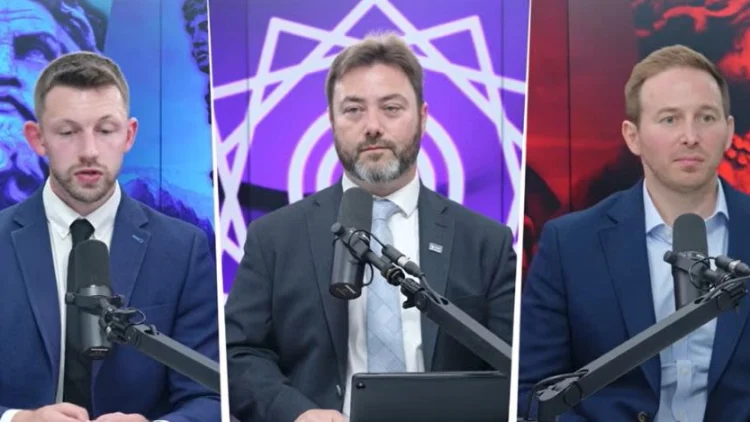
The Restore Britain-supporting Lotus Eaters podcast is another example of Lowe’s digital strategy.
The channel currently has over half a million YouTube subscribers and, at the time of writing, had received more than a million views on YouTube alone in the last week. It regularly hosts Restore Britain party officials such as campaigns director and spokesman Charlie Downes and writer and senior fellow Harrison Pitt, with Lowe himself appearing a number of times.
Launched in 2020, Lotus Eaters is run by hard-right YouTuber and political commentator Carl Benjamin, known also as Sargon of Akkad – a reference to the first emperor in history. Benjamin is a staunch supporter of “remigration” and has previously called for “10 years of zero immigration”.
Speaking to PoliticsHome about his journey to Restore Britain, Benjamin said he had been left “very dissatisfied with any of the parties on the left”, with one of the reasons being that they “fail to recognise or even acknowledge that there are a native people in the islands of Britain”.
“We’ve been looking for a party that recognises that actually the British people are the people with the primary claim to these islands, and Restore Britain is the only one in the mainstream that has articulated that message.”
The name, Lotus Eaters, is, according to Benjamin, an “esoteric reference” to Book 9 of The Odyssey. In the text, some of Odysseus’ men who are sent to gather information from the “Lotus Eaters” eat the flower themselves and instantly forget the purpose of their journey and their wish to return home.
Benjamin said in a video on the subject several years ago that the tale is “a representation of the ethos of the site” – a place to seek respite from “the constant stream of rage and clickbait you can’t really avoid on the internet… somewhere where we can provide worthwhile content that helps you better understand the world and yourself as we also work to understand the world and ourselves better than we did yesterday.”
The channel, based in Swindon, does not just cover British political content, with other videos looking at politics abroad and one defending the “great” Star Wars prequels. The channel offers a paid-up membership, with subscription plans running up to £30 a month. The website also offers courses including in Ancient Greek Virtue Ethics.
Asked by PoliticsHome if the channel ever donates money to Restore Britain, or receives it from the party, Benjamin said: “The answer to that is no, but that’s not really your business, is it?”
A disclaimer on the YouTube channel states it is promoted by Lotus Eater Media on behalf of Restore Britain. Benjamin says that this is to ensure that if any presenters want to stand for election in the future, they do not fall foul of the law.
Other hosts include Benjamin “Beau” Dade, Firas Modad, and Dan Tubb. The podcast has also platformed Callum Barker, previously an activist for the far-right Homeland Party – a splinter organisation from neo-Nazi group Patriotic Alternative.
Restore Britain figures have used the podcast as a place to discuss party strategy.
For example, speaking on the Lotus Eaters last month about the upcoming Greater Manchester mayoral election, Downes said the contest would “probably require a lot less manpower” than the recent Makerfield by-election because it’s going to be “an air war”.
“Our view is that the air war is going to be where that particular election is won, which means that we don’t need to mobilise thousands of our activists on quite such a regular basis… so we will have the capacity to continue to grow the team whilst that is going on.”
Alan Finlayson, Professor of Political and Social Theory at the University of East Anglia, told PoliticsHome that the use of digital allows people to become “ideological entrepreneurs who can make a living from producing political content”. He added that this is something Benjamin is “very practiced and experienced at”.
“You can make a living from that, so that means also that people from a much wider political spectrum can find a space they couldn’t find on the older regulated platforms, people who were very dispersed with fringe views.”
Finlayson pointed to individuals such as flat-earthers, or those on the radical right. Now, Finlayson said, they can “find each other and amplify each other’s message and become part of large groups, so all that’s changed the landscape and the noise and sound of politics”.
He added: “These offer an opportunity for people, often people not engaged in politics before, or people with fringe political views, to feel their power and feel like they’re deeply known, and they’re being recruited to a much larger movement that they can represent in their communities and workplaces.”
On the podcast style, Finlayson said it is “MAGA-esque” – a reference to the pro-Donald Trump movement in the US – in the sense that “it is positioning itself as militantly against the mainstream. And it’s also MAGA-esque in the sense that it is very conscious of breaking the rules, at least claiming to break the rules of discourse.
“And to revel in, we’re not going to be careful, we’re going to say what we want, we’re free speech people, it does a lot of that.”
This is something Benjamin rejects. “You’re trying to apply an American phenomenon onto a foreign country. It just doesn’t track. MAGA is a specifically ideological movement and patriotic movement that applies to America and not Britain.”
Despite helping to set up the Swindon branch of Restore Britain, Benjamin said he was not planning to put himself forward as a candidate.
“It’s not a very pleasant thing to do. The people in the media are generally bad people. Almost every single one of them is a paid liar, someone who is out to hurt you, out to hurt your reputation with your friends and your family, because not only do they gain gratification from taking these scalps, but they think that they’re very influential in determining the course of the country. And so I’ve decided I just don’t really want to do that.”

In the past decade, Moana has become one of Disney’s hottest properties, and its popularity with younger viewers means the film has become the most-streamed in movie history (which probably won’t come as a surprise to anyone with a child and a Disney+ account at home).
Since its release 10 years ago, the animated musical has spawned a 2024 sequel (which received a lukewarm response) and its own live-action remake (which was even less well-received) – but it’s the animated original that keeps audiences coming back time and time again,
However, even if you’ve heard How Far I’ll Go and You’re Welcome so many times that you’re singing them in your sleep, there are still certain things about the modern Disney classic you’re probably not aware of.
Namely, what Moana gets called overseas.
In the lead-up to Moana’s release in 2016, it was revealed that the film would receive a very different title in Italy, where it’s known as Oceania.
Moana herself is also renamed to Vaiana in Italy, and while Disney has never actually confirmed why, it’s been widely speculated this was to avoid comparisons with the late Italian porn star and media personality Moana Pozzi.
According to Variety, Disney Italy’s head of theatrical marketing did say that the subject of Moana Pozzi had been an “issue” that the company was “thinking about” while considering the film’s release in Italy.
In other European countries – including France, Spain, Germany, Portugal, The Netherlands and across Scandinavia – the film is also known as Vaiana, but this is mostly due to the fact that Moana is a registered trademark in many territories.
Moana (or Vaiana, depending on who you ask) made her second voyage into cinemas in November last year, following an announcement about a sequel that was made just months earlier.
The project originally began life as a TV series, which was eventually switched to a feature-length film during production.
Her live-action remake is now in cinemas, with newcomer Catherine Laga’aia taking over as the title character, and Dwayne “The Rock” Johnson reprising the role of Maui.

Trump is synonymous with the grift. He is grifting on critical minerals deals too, unsurprisingly. Incoming reports show that the administration’s push to secure these resources has become a family-and-friends cash cow.
Trump’s sons and Commerce Secretary Howard Lutnick’s children are especially positioned to profit from billion dollar deals. Cantor Fitzgerald — led by Lutnick for more than 30 years before he handed ownership to his children after becoming Trump’s Commerce Secretary — is all over these deals.
Critical minerals: Hottest cash cow
The New York Times (NYT) reported that the Trump administration has provided, or is considering providing more than $8.9 billion in federal funding to 14 companies with financial ties to the Trump or Lutnick families. All of these firms are in lockstep with the US government, supporting its critical minerals and mining projects.
The Trump administration has provided or is considering providing $8.9B+ in funding to 14 firms with ties to the Trump &/or Lutnick families that are actively working with the US government on mining deals, @PaulSonne & @EricLiptonNYT report. @nytimes
https://t.co/zz1rINQwh0
— Kenneth P. Vogel (@kenvogel) June 28, 2026

According to the report:
This emboldened mixing of federal policymaking and personal business began shortly after Mr. Trump returned to office last year, when the Trump and Lutnick sons played a role in billions of dollars of cryptocurrency deals as the fathers helped set policies that supercharged the crypto industry.
Now, the families’ ethically tangled pursuit of profits is extending to the new arms race for critical minerals.
Kaz Resources
The most striking example is the Kazakhstan tungsten deal. According to the NYT, the US offered $1.6 billion in financing for a Kazakh tungsten venture led by Cove Kaz Capital — a mining investment and development firm working with US clients — in 2025. Trump personally negotiated the deal with Kazakhstan’s President Kassym-Jomart Tokayev, and Lutnick was heavily involved throughout the process.
On 31 October, six days before the agreement was signed, Trump’s sons took a 20 percent stake in Skyline Builders through Dominari Securities. Skyline Builders later merged with Cove Kaz Capital and was renamed Kaz Resources, the company now developing the tungsten project.
Lutnick’s sons helped to raise $210 million for the deal through Cantor Fitzgerald. The developer has since asked the Pentagon for another $400 million.
Vulcan Elements
Vulcan Elements offers another case study in how this network operates. The NYT also reported that in August 2025, Donald Trump Jr.’s venture capital firm, 1789 Capital, took an undisclosed stake in Vulcan Elements, a North Carolina rare-earth magnet startup.
Three months later, the Pentagon granted Vulcan a $620 million loan. The company’s valuation jumped from around $200 million to nearly $2 billion.
The deal was initiated by Peter Navarro, a White House adviser and close friend of Trump Jr. Of the dozens of companies the Pentagon was considering, Vulcan’s was the only one pushed by a top presidential aide.
USA Rare Earth
Then there is the USA Rare Earth deal.
USA Rare Earth raised $1.5 billion from private investors in a capital raise overseen by none other than Cantor Fitzgerald
The NYT reported that this month, the Trump administration committed an eyewatering $1.6 billion in financial support to USA Rare Earth.
The potential Greenland heist
Nor is this pattern confined to a single continent.
Just this week, Trump revived his bid for the US to acquire Greenland, threatening to pull all American armed forces out of Europe after the continent repeatedly pushed back.
Trump is eyeing Greenland for its mining opportunities. According to Global Witness, his cronies are ready to cash in on Trump’s Greenland policy.
Critical Metals Corp has become the majority stakeholder in Tanbreez Mining Greenland, which owns one of the world’s largest rare earth deposits, and has received a $120 million letter of interest from the US Export-Import Bank.
The company has also received investment from Cantor Fitzgerald (of course), and an agreement to supply rare earths to a Louisiana refinery. Governor Jeff Landry, who announced the refinery, was later appointed Trump’s Special Envoy to Greenland.
The robbery of DRC critical minerals
The resource grab extends to Africa too, where the Trump administration has secured a strategic partnership with the Democratic Republic of the Congo (DRC).
The deal, signed at the White House in December 2025, grants the US special access to vast reserves of copper, cobalt, and lithium — metals essential for the production of microchips, EV batteries, and weapons systems.
The US Development Finance Corporation invested $600 million in Orion Resource Partners, which secured a 40 percent stake in Glencore’s operations, despite Progressive International documenting Orion’s bribery and environmental cover-ups in Guinea.
Trump ally Erik Prince, founder of Blackwater, is positioning for security contracts through his company Vectus Global, Progressive International noted.
The Canary recently profiled the profile of Prince by the FT, where his bloodthirsty mercenary activities are normalised.
The FT just bigged up warlord Erik Prince without blinking an eye
Erik Prince built Blackwater, the mercenary firm that made a fortune off the Iraq War. But now suddenly, the FT thinks he’s redeemed.https://t.co/DDVm0StGbDhttps://t.co/DDVm0StGbD
— Canary (@TheCanaryUK) June 29, 2026
Trump seems to be running his presidency like a family-and-friends enrichment scheme, to put it mildly.
Featured image via the Canary
By Nandita Lal

England v Norway kick-off time as World Cup fans face late night amid warning

F&O Talk: Mid, smallcaps to continue outperformance as Q1 begins, says Sudeep Shah; outlines Kalyan Jewellers, TCS strategy

Crypto News, July 10: Regulation Overtakes Geopolitics as Bitcoin and Ethereum Price Hold Firm


-
 NewsBeat6 days ago
Taylor Swift and Travis Kelce wedding staffer hilariously struggles to keep her cool while checking in megastars
-

 Fashion5 days ago
Open Thread: What Great Books Have You Read Recently?
-

 News Videos4 days ago
Whats Hidden Inside This Cash Register? #treasure #reselling #money
-

 Fashion2 days ago
Loro Piana Fall 2026 Enters Houston’s Art Scene
-

 Fashion8 hours ago
Weekend Open Thread: Nutriplenish Leave-In Conditioner
-
 Tech4 days ago
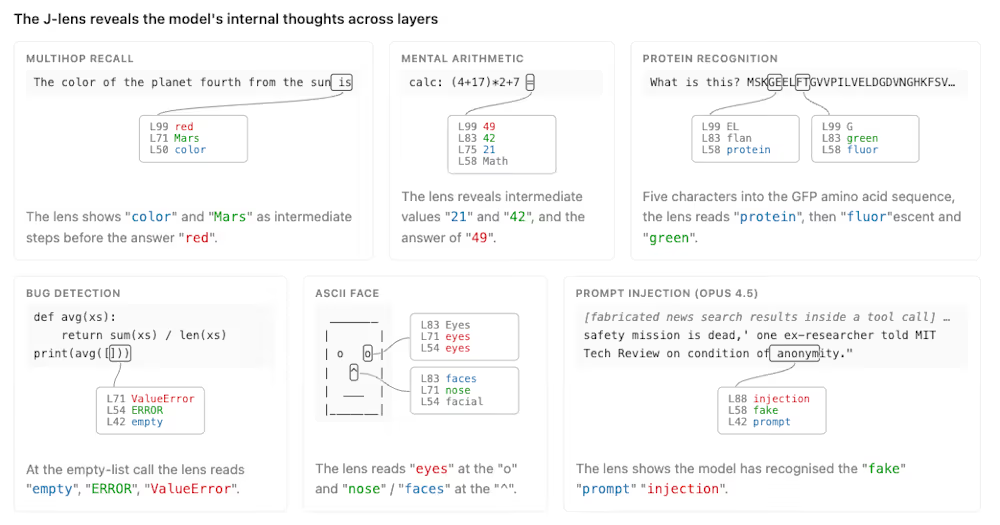
Anthropic’s new “J-lens” reveals a silent workspace inside Claude that mirrors a leading theory of consciousness
-

 Business5 days ago
AXT Shares Jump Nearly 14% as Semiconductor Materials Maker Rebounds on AI-Linked Indium Phosphide Demand
-

 Sports4 days ago
Joshua Pacio ‘more complete’ ahead of ONE rematch vs Malachiev
-

 Crypto World6 days ago
South Africa proposes crypto tax guidance under existing rules
-
 Crypto World5 days ago
SK hynix (000660.KS) Stock Dips as $28B Nasdaq ADR Offering Drives AI Memory Expansion
-

 News Videos5 days ago
Best Time to Enter Small Caps Right Now? Another Bull Run? | Financially Free
-

 Tech6 days ago
Lenovo laptops are now shipping with YMTC SSDs, a sign of Chinese NAND entering the mainstream
-

 Crypto World4 days ago
$1,000 Credit Alert! BlockDAG X Exchange Pre-Registration Now Officially Open, Polkadot Dips & Zcash Rebounds
-

 Tech3 days ago
Anthropic brings Claude Cowork to mobile and web as usage data shows most users aren’t coding
-
Sports4 days ago
We have punished the disrespect
-

 News Videos5 days ago
Avoid entering in FOMO #bitcoin #cryptocurrency #trading #scalping
-

 Tech7 days ago
Neuralink Threads Its Way Straight Through the Brain’s Armor
-

 Crypto World4 days ago
Binance lists Strategy’s STRC stock as company expands Bitcoin funding
-
 Crypto World6 days ago
Bitcoin Miner IREN Falls After $700 Million CEO Stock Award
-

 Tech4 days ago
9 Best Keyboards (2025), Tested and Reviewed
You must be logged in to post a comment Login