

Business
JPMorgan Chase, Goldman Sachs, Bank of America


(L-R) Brian Moynihan, Chairman and CEO of Bank of America; Jamie Dimon, Chairman and CEO of JPMorgan Chase; and Jane Fraser, CEO of Citigroup; testify during a Senate Banking Committee hearing at the Hart Senate Office Building on December 06, 2023 in Washington, DC.
Win Mcnamee | Getty Images
Expectations are high that when banks start posting second-quarter results Tuesday, led by JPMorgan Chase and Bank of America, revenue from trading equities and fixed income will approach, or even exceed, the records set earlier this year.
That’s a key part of what veteran analyst Mike Mayo of Wells Fargo calls the “sweet spot” in the financial sector right now. Both of banking’s profit engines — Wall Street and Main Street — are in growth mode at the same time.
The largest U.S. banks are raking in rising fees from helping corporations tap the markets, punctuated by last month’s giant SpaceX IPO, while risk-taking traders are also thriving as geopolitical unrest including the Iran war stokes volatility across asset classes.
“You saw the largest IPO in history, a pace of mergers that’s on track to be a record year, and a broadening out of trading to include equity and fixed income across myriad geographies,” Mayo told CNBC.
The quarter’s big bank earnings come at an unusually favorable moment for the industry. After years of navigating higher interest rates and inflation-fueled recession fears, lenders are benefiting from a rare combination of booming Wall Street activity, resilient consumer credit and a long-awaited pickup in business lending.
“There’s not much more you can ask for,” Mayo said.
The trends, which coincide with the Trump administration’s push to ease banking regulations, have helped financial stocks outperform the broader market for two straight years, Mayo noted. That streak also raises the stakes as investors look for signs the momentum can continue into 2027.
JPMorgan, Bank of America, Citigroup, Wells Fargo and Goldman Sachs are set to post results early Tuesday, with Morgan Stanley reporting Wednesday.
‘Big money maker’
Investment banking revenue for the group could surge 26% from a year ago, while trading revenue could jump 14%, according to KBW analyst Chris McGratty.
Besides the hundreds of millions of dollars in fees that SpaceX paid banks — led by Goldman Sachs and Morgan Stanley — for the IPO itself, the firms garnered fees for raising debt for the newly public company, and also have a shot at managing the wealth of newly minted millionaires and billionaires.
On top of that, Goldman and Morgan Stanley likely reaped so-called “soft dollars” from the SpaceX IPO, according to Jay Ritter, professor emeritus of finance at the University of Florida’s Warrington College of Business.
SpaceX CEO Elon Musk, speaks on a screen remotely from SpaceX headquarters in Starbase, Texas, speaks before the launch of SpaceX’s initial public offering (IPO) at the Nasdaq MarketSite in New York on June 12, 2026.
Adam Jeffery | CNBC
Soft dollars are essentially fees that hedge funds pay investment banks for a slice of an oversubscribed IPO, Ritter said.
“The big money maker for investment banks in IPOs is not the bankers’ fee, but the ability to allocate shares to hedge funds and some active mutual funds that pay soft dollars,” he said.
Meanwhile, trading gains were driven by strength in equities as stock markets climbed during the quarter, as well as heightened activity in fixed income after the Iran conflict sent oil prices, interest rates and currencies swinging, McGratty said.
“Banks are doing a good job these days of capturing the upside of volatility, whereas in previous cycles, they’ve been caught offsides,” McGratty said.
‘Demand is back’
But Mayo argued that the more important development this quarter might be happening away from Wall Street.
The less glamorous business of commercial lending could be turning the corner after years of weakness as banks look to wrest market share from private credit lenders and as the artificial intelligence-fueled spending boom spreads to the rest of the economy, he said.
“Demand is back as companies treat the uncertainty as the new normal and build that new factory, invest in plants and get on with business,” Mayo said.
The trend could benefit regional lenders including Fifth Third because commercial lending represents a larger share of their business than it does for diversified giants like JPMorgan, Mayo said.
Construction of a $16 billion data center developed by Related Digital for Oracle and Open AI, in Saline, Michigan, May 6, 2026.
Jim West | Universal Images Group | Getty Images
Consumer banking also appears healthy. Low unemployment has kept borrowers current on mortgages, auto loans and credit cards, limiting losses.
There are still some risks for the quarter, including potential blowups in the private credit realm, even though that concern has subsided for most banks in the absence of new “cockroaches” emerging. JPMorgan CEO Jamie Dimon warned analysts and investors last year after the collapse of subprime car lender Tricolor Holdings that “when you see one cockroach, there are probably more.”
Another is whether competition over deposits is intensifying, as some players have been forced to pay higher rates to attract and keep savers’ dollars, McGratty said. In an environment where interest rates are steady or rising, that could pressure lender margins.
After two years of market-beating returns, investors are becoming less interested in how strong the last quarter was than whether this unusually favorable backdrop can last.
“We know the quarter’s going to be strong, so I think the question that you ask yourself is around sustainability, right?” McGratty said. “Is it all sustainable?”

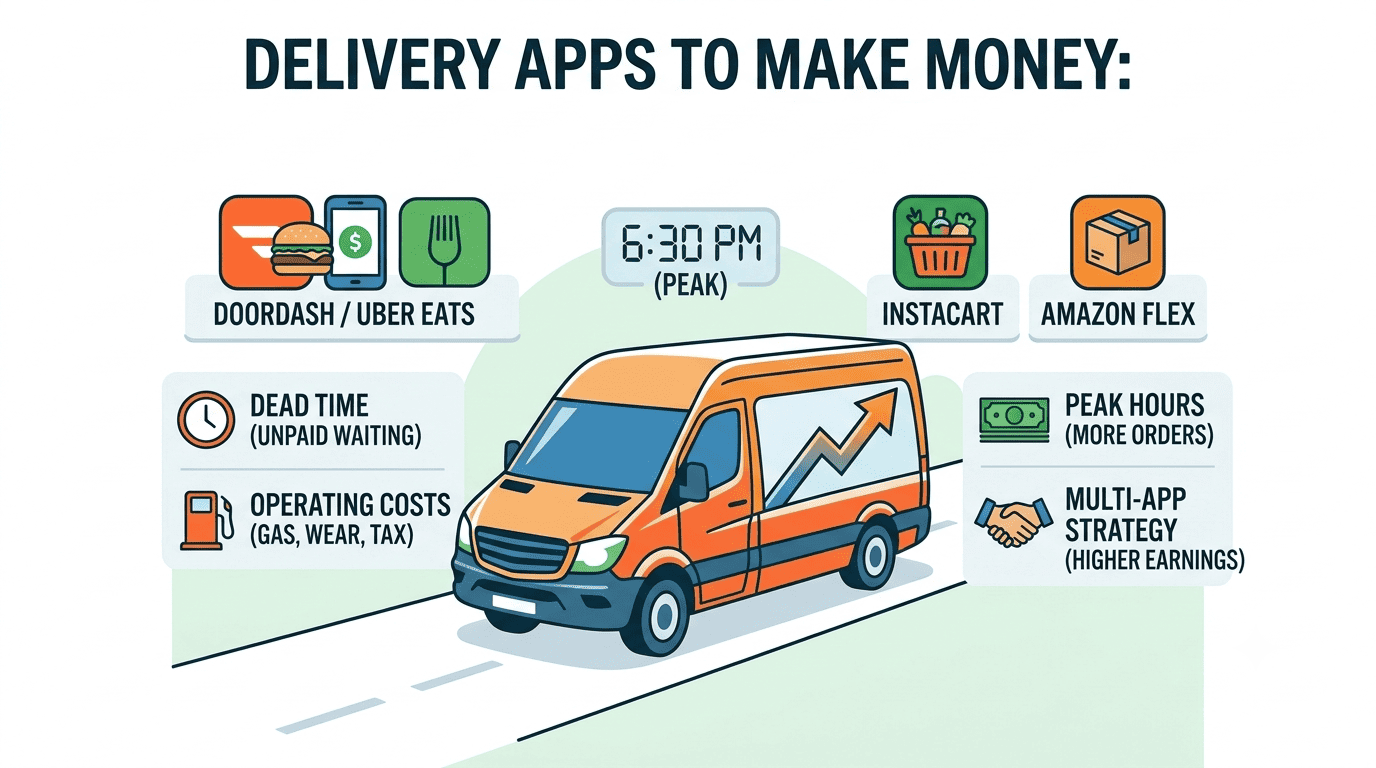
Three winters ago, I decided delivery driving was going to be my genius side hustle. I had a car, a phone, and crucially a wildly inflated sense of how much “flexible income” actually means. I pictured myself cruising around town, podcast on, cash rolling in between errands. Two hours and four food deliveries later, I’d made $19. Minus gas, that came out to something like $6.40 an hour, which is less than I would’ve made standing perfectly still and doing nothing. I still, for reasons I cannot defend, kept the app on my phone for another eight months.
So: are delivery apps actually a smart way to make money, or just a well-marketed way to burn a tank of gas for gas-station wages? The honest answer is it depends entirely on which app, which city, which hours, and whether you’re willing to treat it like a numbers game instead of a vibe. Here’s what the data and a lot of driver forums actually say.
The delivery apps worth your time in 2026
- DoorDash — biggest order volume, most markets
- Uber Eats — pairs well with rideshare driving
- Instacart — grocery shopping, higher per-batch pay
- Shipt — grocery delivery with a loyalty/tipping edge
- Amazon Flex — scheduled blocks, package delivery
- Walmart Spark — grocery and general merchandise delivery
- Grubhub — steadier in dense urban markets
- Roadie — “on-the-way” deliveries, good for spare vehicle space
- Apps for trucks/vans (Bungii, GoShare, Curri) — heavy-item hauling, higher hourly ceiling
Below is the real breakdown of what each one pays, who it’s actually good for, and where the marketing outruns reality.
Does DoorDash still pay off in 2026?
DoorDash remains the biggest name in the game, and for good reason- the order volume is unmatched in most cities, and sign-up takes about five minutes. Average pay lands around $15–$25 an hour before expenses, though that range swings hard depending on your market and whether you’re driving during a genuine rush or just refreshing the app hoping something pings. The tradeoff for that volume is competition: in saturated areas, you’ll spend real time waiting between orders, and that dead time doesn’t pay.
Worth it if you live somewhere with consistent lunch and dinner demand. Less worth it if you’re in a smaller market where three other Dashers are circling the same three restaurants.
Is Uber Eats better if you’re already driving for Uber?
If you’re already signed up to drive passengers, Uber Eats is close to a no-brainer — you can toggle to delivery when rides slow down and keep earning either way. On its own, though, the pay is a touch lower than DoorDash in most markets, generally $12–$20 an hour. The real value here is flexibility: fewer awkward conversations with strangers in your back seat, more control over exactly what kind of driving you’re doing at any given moment.
Is Instacart the better bet if you’d rather shop than drive?
Instacart flips the model: instead of picking up and dropping off, you’re shopping an actual grocery list, which means more time per order but noticeably higher pay — often $15–$30 an hour, with the top end reserved for big batches during peak hours. It’s more physically and mentally involved than food delivery (substitutions, weighing produce, hunting down that one specific brand of oat milk), but the tipping culture tends to reward shoppers who communicate well and get orders right the first time.
This is a strong option if you’d rather be inside a store than behind a wheel for three straight hours.
What makes Shipt different from Instacart?
Shipt runs on a similar model to Instacart — shop, deliver, repeat — but it’s built around Target and a handful of retail partners, and shoppers who build repeat relationships with the same customers often see it pay off in loyalty and better tips. Average pay sits around $16–$22 an hour. The catch: getting approved can take longer than some competitors, and route availability depends heavily on how saturated your zip code already is with other shoppers.
Is Amazon Flex actually the highest-paying option?
Of the mainstream apps, Amazon Flex is frequently cited as one of the better-paying choices — $18–$25 an hour is a common range, and you know your earnings upfront because you’re booking a fixed block (usually two to four hours) rather than gambling on per-order pings. The predictability is the whole appeal. The downside is that popular blocks get snapped up fast, so if you’re not fast on the draw when new slots post, you may find yourself checking the app repeatedly with nothing to show for it.
Does Walmart Spark deserve more attention than it gets?
Spark doesn’t get talked about as much as the bigger names, but it’s worth a look if there’s a Walmart or Sam’s Club nearby — you’ll deliver groceries and general merchandise, and pay tends to land in a similar range to Instacart and Shipt. Availability is the limiting factor here more than pay; it’s simply not as widespread yet.
Where does Grubhub fit into all of this?
Grubhub was one of the original food delivery apps, and while it’s lost significant market share to DoorDash and Uber Eats and changed corporate ownership more than once along the way, it still operates its own driver network in a number of cities. Pay tends to run $10–$17 an hour, generally lower than DoorDash or Uber Eats, but drivers in dense urban markets sometimes report steadier demand and fewer wild swings in order flow.
Is Roadie worth downloading if you’re not trying to drive full-time?
Roadie takes a genuinely different approach: instead of building a schedule around deliveries, it’s designed to monetize trips you’re already taking. Multi-stop gigs pay somewhere in the $25–$50 range, and there’s no requirement that you’re delivering food- it might be a suitcase, a piece of furniture, or a random Craigslist find someone needs moved across town. It’s less a full-time income stream and more a way to make an errand you were running anyway slightly less annoying.
Can you actually make more money hauling instead of delivering food?
This is the piece most “best delivery apps” lists gloss over: apps built around heavy or bulky items — think Bungii, GoShare, and Curri — consistently pay more per hour than food delivery, sometimes two to three times as much. One 2026 industry analysis tracking roughly a billion gig trips found task-based hauling work outearning standard food delivery by a wide margin. The logic checks out: fewer people own a pickup truck or cargo van, so the pool of available drivers is smaller, and platforms pay a premium to fill jobs. The tradeoff is obvious, you need the right vehicle, and you need to be willing to actually lift the couch.
How much should you realistically expect to make?
Here’s where the marketing and the math tend to part ways. Every app’s advertised hourly rate is gross pay- before gas, before the extra wear on your brakes and transmission, before the portion of your car’s depreciation that’s quietly happening every time you drive for money instead of pleasure. A driver technically “earning” $22 an hour on paper might be walking away with closer to $15–$17 once fuel and mileage are accounted for, and that’s before you’ve set aside anything for the self-employment tax bill waiting for you the following spring.
Is it smarter to run multiple apps at once?
Almost every experienced driver will tell you the same thing: don’t marry one app. Running DoorDash, Uber Eats, and Instacart simultaneously and accepting whichever offer pings highest first- is the closest thing to a proven strategy in this space. It fills the dead time that kills your hourly rate on any single platform, and it hedges against the days when one app’s demand mysteriously dries up for no explainable reason (every driver has a story about this).
The tradeoff is mental load. Juggling three notification streams while driving isn’t for everyone, and there’s a real argument for picking one or two apps you can actually manage well rather than spreading yourself across five and doing all of them mediocre.
What don’t the app store descriptions mention?
A few things worth knowing before you sign up for anything:
- You’re a 1099 contractor, not an employee. No withholding, no benefits, and a tax bill that can catch first-timers off guard.
- Vehicle wear adds up faster than people expect. Oil changes, brake pads, and higher insurance premiums (some personal auto policies exclude commercial delivery use entirely) are real costs, not hypothetical ones.
- Age and background-check requirements vary. Most platforms require drivers to be at least 18 or 19, hold a valid license, carry insurance, and pass a background check — Instacart’s shopper-only track is one of the few that doesn’t require a car at all.
- “Average pay” figures are averages, not guarantees. Your actual market, the time of day you drive, and local tipping culture will move your real number more than any app’s advertised range.
None of this means delivery apps are a bad way to make money for a lot of people, especially those with an already-flexible schedule, they’re a genuinely useful way to turn spare hours into cash without a job interview. But treating it as a strategic, numbers-driven side hustle instead of easy money is what separates the drivers actually building meaningful extra income from the ones burning gas for less than minimum wage- which, if it wasn’t already obvious, is a club I know from firsthand, deeply humbling experience.

Crude Oil Higher; Earnings Kick Off To Highlight Week

Conflicting Consumer Sentiment Data
Business
10 Things to Know About Ana Maria Markovic, Croatia’s Rising Soccer Star Now Playing in New York City


Ana Maria Markovic has built a growing public profile that spans professional soccer, entrepreneurship and social media, drawing attention both for her play on the field and her life off it. Here are 10 things to know about the Croatian forward.
- She’s a rising star for the Croatia national team. Markovic, born November 9, 1999, in the canton of Zurich, Switzerland, to Croat parents from Split, plays as a forward and has represented Croatia’s women’s national team on the international stage since 2021.
- Her soccer journey started later than most. Markovic spent 10 years as a competitive gymnast before transitioning to soccer, a switch she has credited to her younger sister, who was already playing for FC Zurich at the time. She began playing organized football at age 13 with FC Schlieren before joining FC Zurich’s U21 squad at 15.
- She rose quickly through Swiss women’s football. After her time in FC Zurich’s youth system, Markovic stepped into the Women’s Super League with GC Women, where she became known as something of a breakout talent in Swiss football circles, drawing coverage from outlets including 20 Minuten, which profiled her as a “GC Shootingstar.”
- She overcame a serious knee injury. In a match against her former club FC Zurich on March 4, 2023, Markovic suffered a torn ACL along with additional ligament damage, a significant setback that required an extended recovery before she could return to competitive play.
- She’s played professionally across three countries. Markovic’s club career has taken her from Switzerland to Portugal, where she played for Damaiense before her move was officially announced in February 2025, and most recently to the United States, where she has played for Brooklyn FC in New York City since 2025, embracing what she has described as a new chapter of growth on the global stage of women’s soccer.
- She plays alongside her sister. Markovic is the sister of Kiki Markovic, who also signed with Brooklyn FC, with the club confirming the signing of both sisters in an August 2025 announcement, giving the pair the opportunity to compete together professionally in the United States.
- She’s an entrepreneur as well as an athlete. In 2022, Markovic co-founded Reloadz, a startup focused on developing innovative beverage concepts for active lifestyles, including a vegan protein water product. She continues to promote the venture on her own website and social media channels alongside her soccer career.
- She has a significant social media following. Markovic maintains an active online presence across platforms, with roughly 3 million followers on Instagram and around 1.4 million followers and 26.7 million likes on TikTok, where she shares content related to both her soccer career and her life based in New York City.
- Her relationship has made headlines during major tournaments. Markovic is dating Portuguese soccer player Tomas Ribeiro, a defender for Cultural y Deportiva Leonesa. The couple drew attention during the 2026 World Cup when Markovic posted a lighthearted wager on Instagram ahead of Portugal’s Round of 16 match against Croatia, writing, “Someone’s sleeping on the couch tonight.” Ribeiro responded to the post, “Guess who’s gonna be?” Croatia went on to lose the match 2-1, meaning Markovic reportedly had the bed to herself that night.
- She’s been described among the most recognizable faces in Croatian women’s soccer. Croatian outlets, including Vecernji.hr, have referred to Markovic as one of the more visually striking figures in the sport internationally, while other Croatian media have also highlighted her path from gymnastics and modeling into professional football and the Croatia national team setup, a background she has discussed in interviews tracing her unconventional route into the sport.
Markovic’s combination of on-field ability and off-field visibility has helped her build a following that extends well beyond traditional women’s soccer audiences, particularly following her move to the United States in 2025. As a member of Brooklyn FC, she now competes in one of the sport’s most closely watched emerging American markets, giving her continued exposure both domestically and internationally as women’s professional soccer continues to expand its audience in the U.S.
Her entrepreneurial work with Reloadz has also positioned her among a growing group of professional athletes building business ventures alongside their playing careers, a trend that has become increasingly common among top-tier soccer players looking to diversify their public profiles and income streams beyond traditional sponsorship deals.
Markovic’s injury recovery following her 2023 ACL tear also reflects a broader storyline common among elite women’s soccer players, many of whom have faced high rates of ACL injuries in recent years, a pattern that has drawn increased attention from sports medicine researchers and led to calls for further study into injury prevention specifically within women’s soccer.
As she continues her career with Brooklyn FC and the Croatia national team, Markovic’s profile appears likely to keep growing, both through her performances on the field and her continued visibility across social media platforms, where her personal life, including her relationship with Ribeiro, has increasingly become part of the broader public narrative surrounding her career. With her sister also on the Brooklyn FC roster and her business venture continuing to develop alongside her playing schedule, Markovic has built a multifaceted public presence that extends well beyond the traditional boundaries of a professional athlete’s career, positioning her as one of the more closely followed rising figures in international women’s soccer heading into the sport’s next major competitive cycles.
Cheryl Casone and Scott Ladner discuss the week’s significant economic data, including June CPI, PPI, and retail sales. Ladner emphasizes watching big bank earnings for insights into consumer behavior.
American families are increasingly being pushed past their financial limits at the grocery checkout counter, turning to credit card debt just to keep food on the table, according to a new study.
Data released Monday from the Urban Institute found that a cumulative 32% increase in food costs over the last five years has pushed more than one in four working-age Americans into credit card debt just to cover their regular grocery bills.
“Groceries are one of the largest household budget items for families. Over the past five years, food costs have increased substantially,” the report said. “This means that families today face persistently higher prices when they go to the grocery store, and food affordability remains a key concern for many.”
The report also found, “Between 2023 and 2025, the share of working-age adults who paid for groceries with a credit card and did not make the minimum payment increased, signaling worsening financial distress among families.”
While recent relief at the gas pump offered a temporary inflation reprieve, corporate supply chain strains and the lingering effects of global trade and geopolitical shocks are expected to keep prices elevated for the foreseeable future, The Conference Board Chief Economist Dana M. Peterson recently told Fox News Digital. She predicted everyday Americans will continue to feel the squeeze at the grocery store, with the Federal Reserve’s 2% inflation goal remaining out of reach until at least 2028.
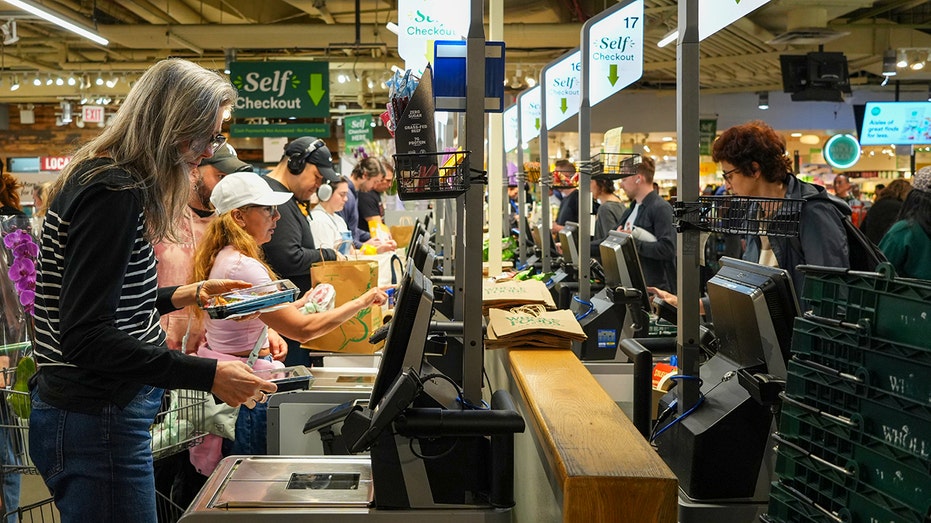
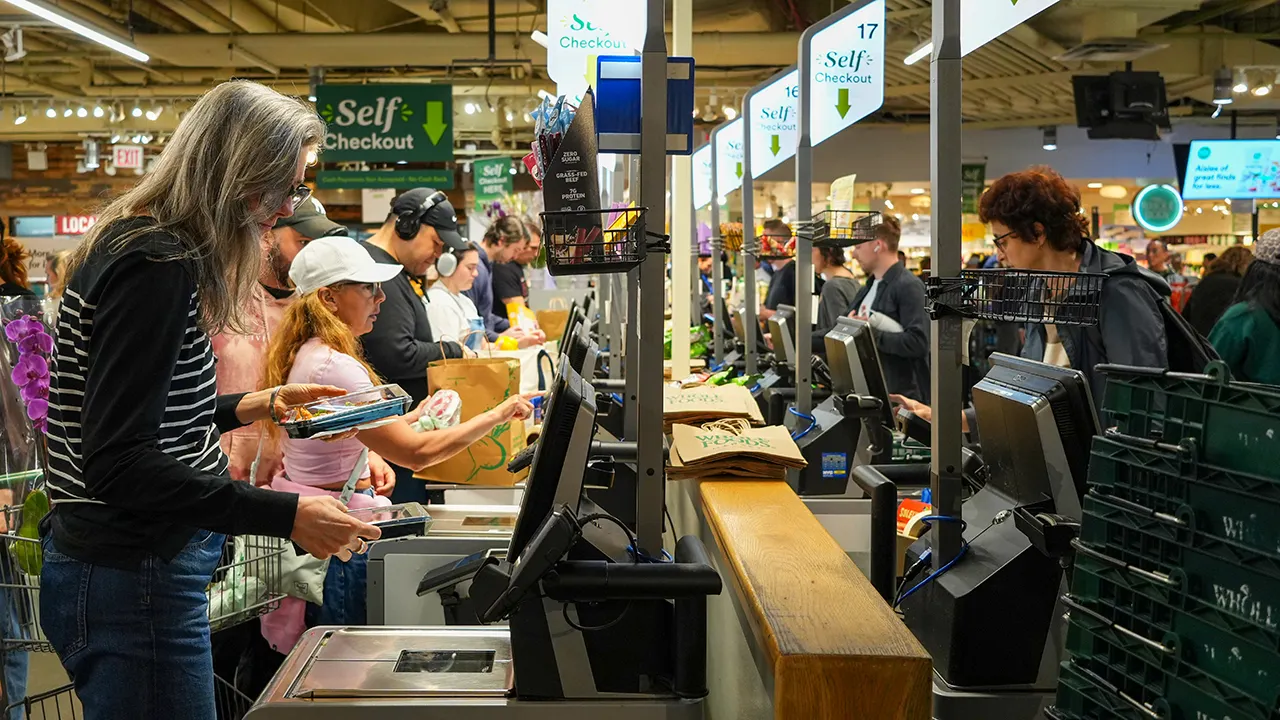
Customers self-check out at a Whole Foods supermarket in Manhattan on May 13, 2025, in New York City. (Getty Images)
Though June’s inflation data via the consumer price index (CPI) will be released this Tuesday, April’s personal consumption expenditures (PCE) index rose 0.4% on a monthly basis and is up 3.8% from a year ago.
The Urban Institute findings underscore current price pressures, noting 63.2% of working-age Americans ages 18-64 charged their grocery purchases to credit cards last year. More than one-quarter of those individuals then encountered repayment struggles.
FOX Business anchors discuss products they believe are widely overpriced. Answers include bottled water, Dyson hair dryers, luxury handbags, and McDonald’s value meals, sparking a lively debate about quality versus cost among the panel.
Additionally, the share of individuals who failed to make the minimum payment on credit cards used for grocery purchases increased from 7.1% in 2023 to 8.7% in 2025.
“Buy now, pay later” installment plans were used by 8.9% of adults to secure food, but more than a third (34.8%) of those users failed to make an installment payment on time.
GET FOX BUSINESS ON THE GO BY CLICKING HERE
Conference Board Chief Economist Dana M. Peterson speaks to Fox News Digital about decelerating CEO confidence and her long-term inflation outlook.
Those hit hardest by the food costs are middle-income earners, the data shows, with middle-class families earning between 200% and 400% of the federal poverty level seeing missed minimum credit card payments on food jump from 9.3% in 2023 to 12.3% in 2025.
“Although access to credit and savings can provide a lifeline for families struggling to meet basic needs,” the Urban Institute wrote, “relying too much on these strategies may lead to financial instability if they have a hard time keeping up with debt or do not recover financially after drawing down savings.”

.webp?t=1744719746)
The 6% jump marked the first quarterly increase in over two years.

Brad Pitt and Angelina Jolie’s decade-long custody arrangement has officially come to an end, as their youngest children, twins Knox and Vivienne, turned 18 this month, freeing both parents from the legal restrictions that have governed their relationship with the couple’s six children since their 2016 split.
The twins, born in Nice, France, on July 12, 2008, are the youngest of the six children Jolie and Pitt share, following Maddox, 24, Pax, 22, Zahara, 21, and Shiloh, 20. With all six children now legal adults, the former couple are no longer bound by the custody terms that shaped much of their post-divorce lives, marking what amounts to a new chapter for both Pitt and Jolie roughly two years after their divorce was formally settled.
Jolie filed for divorce from Pitt in September 2016 after 12 years together, an announcement that stunned fans given the couple’s status as one of the most closely watched relationships in Hollywood. What followed was an unusually protracted legal battle, stretching roughly eight years and covering both the couple’s shared assets and the custody of their children, before the divorce was finally settled in December 2024.
Jolie had spoken publicly years earlier about how central the custody agreement was to her day-to-day life, including her decision to remain based in Los Angeles. In a 2014 interview with The Hollywood Reporter, Jolie explained that the custody terms were the primary reason she stayed in the city at all. “As soon as they’re 18, I’ll be able to leave,” she said at the time, adding that she planned to spend significant time abroad once free of the arrangement. “I’ll spend a lot of time in Cambodia. I’ll spend time visiting my family members wherever they may be in the world.”
More recently, Jolie suggested in an interview with Variety in June that her children have been not just aware of, but actively encouraging of, the freedom she would gain once Knox and Vivienne turned 18. “My kids are almost all 18, so now they want to see me travelling the world, they want me to get out and do things,” Jolie said. “They know me more than anybody, and they still like me, which says a lot. I think they’re very encouraging of me kind of getting back to aspects of myself that maybe I hadn’t felt as free to do.”
While the end of the custody agreement marks a significant milestone for Jolie, Pitt’s relationship with the couple’s children has followed a markedly different trajectory in recent years. Pitt is now largely estranged from his six children, and five of them have taken the notable step of publicly removing his surname from their own names, choosing instead to go simply by Jolie.
Shiloh was the first of the siblings to legally change her name, doing so upon turning 18 in 2024. Maddox followed soon after, filing legal documents to officially drop the Pitt surname, having previously been credited as Maddox Jolie in the film “Couture.” Zahara publicly dropped the surname during her college commencement ceremony in May 2026, later filing to legally change her name to Zahara Jolie. Vivienne chose to be credited as Vivienne Jolie during the 2024 Broadway production of “The Outsiders,” while Knox opted to have the name Knox Jolie printed on his high school diploma. Pax remains the only one of the six children who has not publicly taken steps to drop his father’s surname.
Despite the resolution of both the divorce and the custody arrangement, Pitt and Jolie remain entangled in a separate, contentious legal dispute over their jointly owned French winery, Château Miraval, a multimillion-dollar battle that has continued well beyond the settlement of their divorce and custody terms and shows no clear sign of resolution.
Jolie and Pitt were together beginning in 2004, marrying in 2014 before announcing their split just two years later in 2016. Their relationship, and subsequent divorce, became one of the most closely tracked celebrity separations of the past decade, in part because of the scale of their shared family and assets, and in part because of how long the legal proceedings ultimately took to resolve.
With the custody agreement now formally concluded, both Pitt and Jolie enter a phase of their post-divorce lives no longer shaped by the day-to-day logistical and legal obligations tied to raising minor children together. For Jolie, that shift appears to align with plans she has discussed publicly for more than a decade, centered on increased international travel and time spent with extended family and humanitarian work abroad, including in Cambodia, where she has maintained long-standing personal and philanthropic ties.
The end of the custody arrangement does not, however, close the book on the legal ties that continue to connect the former couple. The ongoing dispute over Château Miraval, the winery the couple purchased together in the south of France in 2008 and later became a flashpoint in their divorce proceedings, remains unresolved and continues to keep Pitt and Jolie legally connected even as the custody chapter of their relationship comes to a formal end.
As their children continue to step further into adulthood, several of them have also begun carving out their own public identities separate from their famous parents, with Zahara’s recent college graduation and the visible pattern of surname changes among the siblings reflecting a broader shift in how the six children are choosing to define themselves publicly, nearly a decade after their parents’ split first made international headlines.
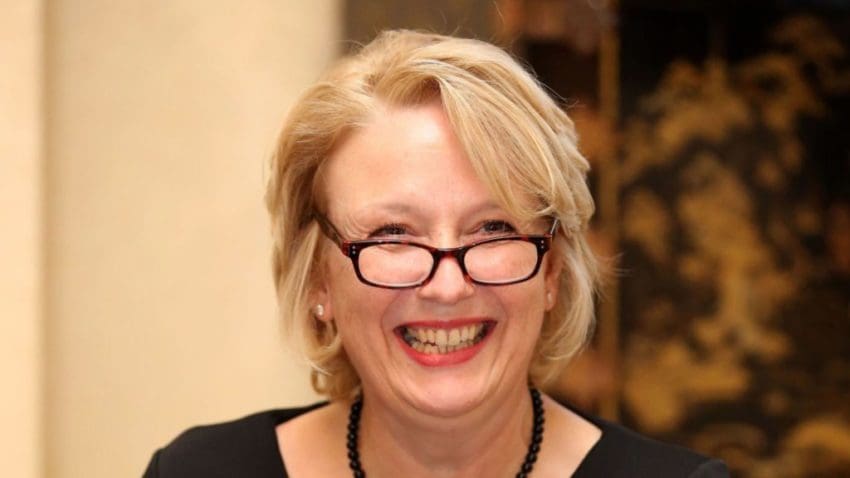
The banker who bought Northern Rock and turned Virgin Money into a high-street challenger is the government’s choice to run the Financial Reporting Council, the watchdog that polices the auditors and accountants every UK business depends on.
Business Secretary Peter Kyle has named Dame Jayne-Anne Gadhia DBE CVO as his preferred candidate to chair the FRC, succeeding Sir Jan du Plessis when he steps down on 30 September.
For business owners, the appointment matters more than the acronym suggests. The FRC sets the standards behind company accounts and audits, the numbers on which lenders, investors and trading partners decide whether to back a business. It has shown its teeth in recent years, imposing a record £48 million in fines on audit firms over failures at Carillion and London Capital & Finance.
Dame Jayne-Anne arrives with a CV that spans both sides of the regulatory fence. A chartered accountant by training, she led Virgin Money from 2007 to 2018, steering the acquisition of Northern Rock and the listing of the combined business. Since then she has been a founder and dealmaker in fintech, giving her rare first-hand experience of what regulation feels like from the smaller end of the market.
She currently chairs Moneyfarm, OVO and Shakespeare’s Globe, serves as Lead NED at HMRC and Senior Independent Director at the Tate, sits on the boards of PRA Group and Innovo Group, and advises SumUp. She also spent five years as the government’s Women in Finance Champion, following her review that led to the Women in Finance Charter, now signed by more than 400 firms.
Mr Kyle said: “Dame Jayne-Anne Gadhia has a proven track record in driving growth and championing high standards in the organisations she leads, along with exceptional experience in financial services.
“She is perfectly placed to lead the FRC at this important time and I look forward to working with her to boost confidence in British businesses.”
Dame Jayne-Anne said: “I am honoured to be appointed Chair of the FRC at such an important time for the organisation and for the UK economy. Strong corporate governance, high-quality reporting and trusted audit are not abstract regulatory goals — they are the foundations on which businesses grow, investors commit capital and public confidence is maintained. The FRC has done impressive work in recent years to raise standards and modernise how it regulates and I look forward to working with Richard and the whole team to build on that progress.”
She inherits a regulator that has worked to reposition itself as more focused, transparent and proportionate under Sir Jan, a shift smaller firms will hope continues at a time when 96 per cent of businesses say regulators are creating unnecessary problems in their industries.
Richard Moriarty, the FRC’s chief executive, said: “I am delighted with Dame Jayne-Anne’s appointment and look forward to working with her. Her exceptional experience, her deep understanding of what it takes to build and lead institutions that command public trust, and her commitment to the role the FRC can play in supporting our economy make her ideally suited to lead our Board.”
Her nomination follows an open competition for the post. The Business and Trade Committee will hold a pre-appointment scrutiny hearing before the Secretary of State confirms the appointment.

Paul Jones
Harvard alumni and former New York Times journalist. Editor of Business Matters for over 15 years, the UKs largest business magazine. I am also head of Capital Business Media’s automotive division working for clients such as Red Bull Racing, Honda, Aston Martin and Infiniti.

CHPY Vs. DRAM: Buy The Diversified De-Risking Route, Hold The Memory Bet


Company’s Jungle Blue and Arctic Blue also are available in powder formats.

Prince Harry is feeling ‘really energised’ after visiting King Charles with Meghan and his children for first time in four years

Delivery Apps to Make Money in 2026: What Actually Pays (And What’s Just Marketing)

Iran Just Struck 5 Countries, and Cardano Dropped to $0.16: But Kraken Quietly Staked $1B


-

 Fashion7 days ago
Open Thread: What Great Books Have You Read Recently?
-

 News Videos6 days ago
Whats Hidden Inside This Cash Register? #treasure #reselling #money
-

 Fashion4 days ago
Loro Piana Fall 2026 Enters Houston’s Art Scene
-

 Fashion3 days ago
Weekend Open Thread: Nutriplenish Leave-In Conditioner
-

 Crypto World7 days ago
$1,000 Credit Alert! BlockDAG X Exchange Pre-Registration Now Officially Open, Polkadot Dips & Zcash Rebounds
-
 Tech6 days ago
Anthropic’s new “J-lens” reveals a silent workspace inside Claude that mirrors a leading theory of consciousness
-

 News Videos7 days ago
Best Time to Enter Small Caps Right Now? Another Bull Run? | Financially Free
-

 Business7 days ago
AXT Shares Jump Nearly 14% as Semiconductor Materials Maker Rebounds on AI-Linked Indium Phosphide Demand
-

 Sports6 days ago
Joshua Pacio ‘more complete’ ahead of ONE rematch vs Malachiev
-
 Sports4 days ago
2026 Genesis Scottish Open Thursday TV coverage: Round 1
-

 Tech6 days ago
Anthropic brings Claude Cowork to mobile and web as usage data shows most users aren’t coding
-
 Crypto World7 days ago
SK hynix (000660.KS) Stock Dips as $28B Nasdaq ADR Offering Drives AI Memory Expansion
-

 Sports3 days ago
Super Eagles star Moses Simon opens up on Liverpool transfer regret
-
Sports6 days ago
We have punished the disrespect
-

 Crypto World6 days ago
Binance lists Strategy’s STRC stock as company expands Bitcoin funding
-

 Tech4 days ago
Character.AI enters the microdrama arena with its own productions, but there’s a twist
-

 Tech7 days ago
9 Best Keyboards (2025), Tested and Reviewed
-

 Business6 days ago
Enbridge: AI Tailwind Priced In (Rating Downgrade)
-

 Crypto World6 days ago
Claude AI Created Something Anthropic Never Designed
-

 Crypto World6 days ago
Nasdaq arthritis company holding Moshe Hogeg crypto hits all-time low
You must be logged in to post a comment Login