





Connect with us

Sports

Why Arthur Fery’s Wimbledon fairytale distracts from the real issues within British tennis

Published

on

It’s been a good summer to be the world No 114. First Maja Chwalinska produced one of tennis’ great fairytale stories to reach the French Open final as a qualifier, winning nine matches in a row to get there; then Britain’s Arthur Fery embarked on a similarly unpredictable run to the Wimbledon semi-finals as a wildcard.

But while Fery’s magical run has stolen the headlines and the hearts of punters around Wimbledon, it stands in stark contrast to the overall performance of the home nation. Only a week before the wildcard’s astonishing win over Grigor Dimitrov in a five-set thriller, Britain endured its worst-ever opening day at Wimbledon, with 10 defeats from 10 matches.

All in all 15 Britons were to fall in the first round. Some of those were wildcards or qualifiers who simply ran into far superior opposition; others, including some of Britain’s best players, utterly failed to take the golden chance offered to them. There is a wider crisis in British tennis; Fery’s feelgood run has simply papered over the cracks.

Since Andy Murray’s retirement British tennis has been led by Cameron Norrie, usually a dependable, solid player who was left bitterly disappointed by a first-round exit. In his absence there is little leadership among the Brits on the men’s tour, which is largely populated by talented if injury-prone athletes who are yet to turn themselves into consistent features at big tournaments, or the women’s, which has the odd top-50 presence but is mostly top-100 players who have probably reached their ceiling.

It’s not like there are no Brits at all – there are 19 men in the top 300, a good return – but few have been able to truly break through, or stay there, and the gulf between winning at Challenger level – as three Brits did this weekend – and on the ATP Tour is mighty.

Advertisement

Despite having much more financial might, particularly as the host of a grand slam which generates a huge chunk of overall Tour revenue, the UK’s tennis system is light-years behind the likes of Italy (eight men in the top 100, including five-time major winner Jannik Sinner, grand slam semi-finalist Matteo Arnaldi and French Open runner-up Flavio Cobolli) on the men’s side or Czechia (nine in the top 100 and three of the last four Wimbledon champions) on the women’s.

There are lessons to be drawn from those countries, but also from much closer to home: the scarcely believable success story which is British men’s doubles. For the last four years running a Brit has won the Wimbledon title; last year it was two, Julian Cash and Lloyd Glasspool. There are five British men in the world’s top 20 and they frequently battle for the top titles, notably at the ATP Finals last year, where all of those five made the semi-finals. Their success is owed in part to the highly regarded Louis Cayer, the national men’s doubles coach – the only one in existence.

Arthur Fery has jumped up the rankings to world No 36 and British No 1
Arthur Fery has jumped up the rankings to world No 36 and British No 1 (PA Wire)

One could point simply to luck of the draw: you can’t manufacture a tennis prodigy out of thin air, and there’s nothing to be done about once-in-a-generation talents cropping up elsewhere in Europe. But a lot of it comes down to the environment players are raised in and the access they have to opportunity.

Some would suggest the fact that promising young players are recruited to the National Academy in Loughborough, and the nature of the centralised model the LTA has recently opted for, have weakened grassroots tennis. Few local clubs are given the resources to produce top players in the manner in which clubs across Europe’s tennis behemoths do, while children who aren’t talent-spotted at a young age can fall through the cracks without the opportunity to develop. There is little investment in coaching and clubs at a micro level, with the inevitable result that young players who can’t afford or access expensive coaching, top-class facilities, or regular, quality tournament fields go by the wayside.

And it hardly bodes well for the health of the centralised system that most of the top British players of the current era, rather than progressing all the way through that pathway, went to college in the US. Norrie paved the way in playing college tennis at Texas Christian University, which Jacob Fearnley also attended, while Fery progressed to the professional tour via a tennis scholarship to Stanford, where he became the top-ranked college player in the States. Andy Murray famously joined Barcelona’s Sanchez-Casal Academy as a teen and grew up training in Spain rather than in the UK. It hardly inspires confidence in a system if players choose to leave it in their droves – and if they achieve greater things than those staying behind.

Advertisement
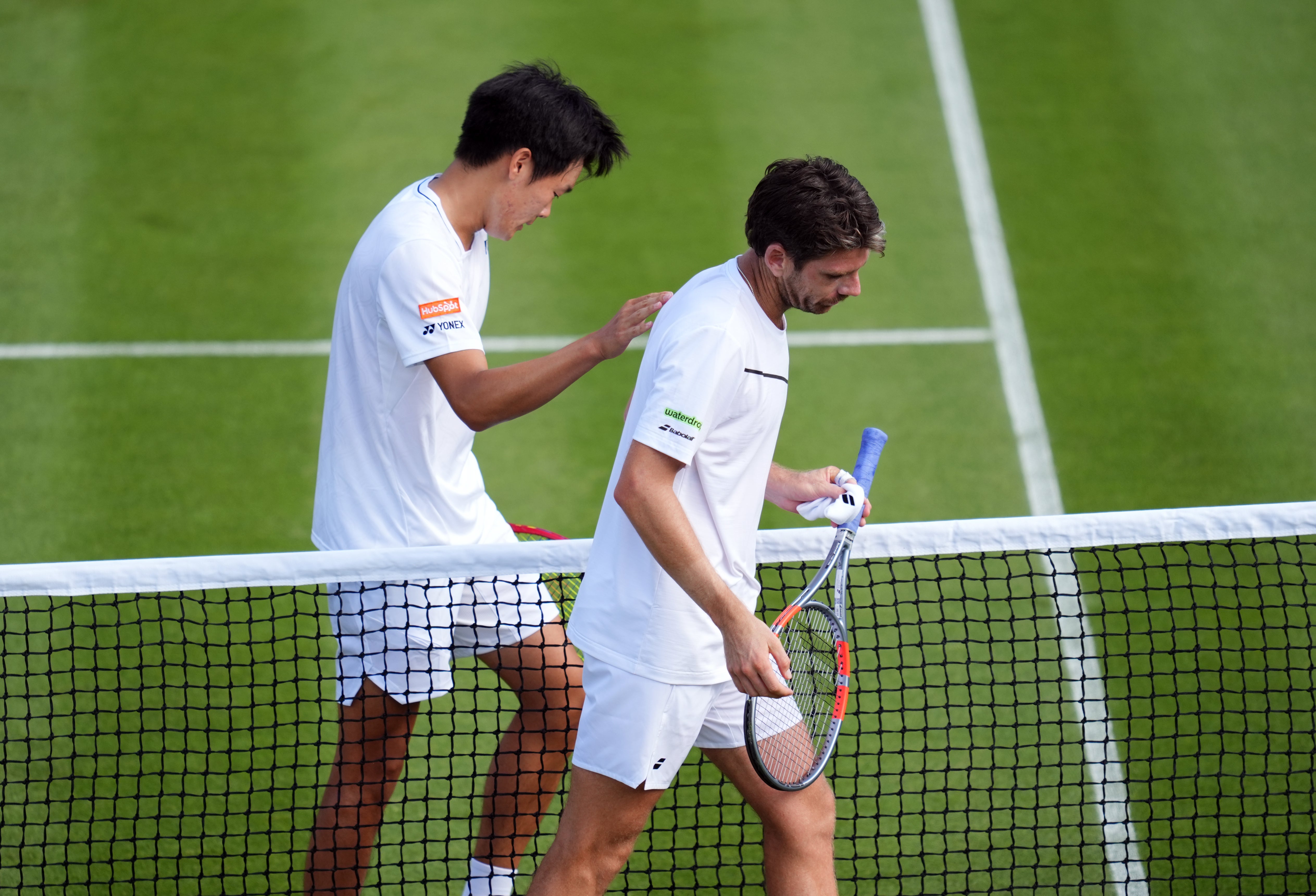
Cameron Norrie was knocked out by collegiate player Michael Zheng in a surprise first-round defeat
Cameron Norrie was knocked out by collegiate player Michael Zheng in a surprise first-round defeat (PA Wire)

And there are concerns over the durability of home players, too. Jack Draper is capable of astonishing highs, reaching a peak ranking of fourth in the world last year, but since then he has been consigned to the treatment room with a series of worrying injuries, having already endured numerous injury layoffs earlier in his budding career. The litany of injuries Emma Raducanu has had to deal with could fill an entire book. Another promising Brit, Sonay Kartal, has missed the entire clay and grass swings with a troublesome back injury. Perhaps it is simply awkward timing, a strange coincidence; but few other countries have half their top talent laid off at the same time.

There are further awkward questions to be asked, too. Until Fery’s glorious run, discussions about wildcards at Wimbledon largely centred around Dan Evans, the retiring hero who was not granted a proper send-off at his home slam, his career instead coming to an end on the lowkey Court 15 alongside doubles partner Henry Searle.

Dan Evans’ playing career came to an end in front of around 300 people on court 15
Dan Evans’ playing career came to an end in front of around 300 people on court 15 (Getty)

He lambasted the LTA for “not having the minerals” to tell him explicitly why he wasn’t given a singles wildcard (the governing body advises the AELTC on its wildcard selection), and for its failure to wish him well on his retirement in person. It all added to the impression of a governing body locked away in an ivory tower, interested in bottom lines rather than nurturing players both young and old.

Perhaps this is unfair, but sport is a results-based business, and those results aren’t forthcoming. Fery’s run to the semi-finals is a stunning achievement and not to be trifled with. But it shouldn’t obscure the deeper issues within British tennis, which cannot be solved by one young starlet having a dazzling breakout run every few years. Instead, it should be the catalyst to turn those runs into sustained success and consistency at the top, to put Britain’s talent among the tennis elite.

Source link

Advertisement
Continue Reading
Click to comment

You must be logged in to post a comment Login

Leave a Reply

Sports

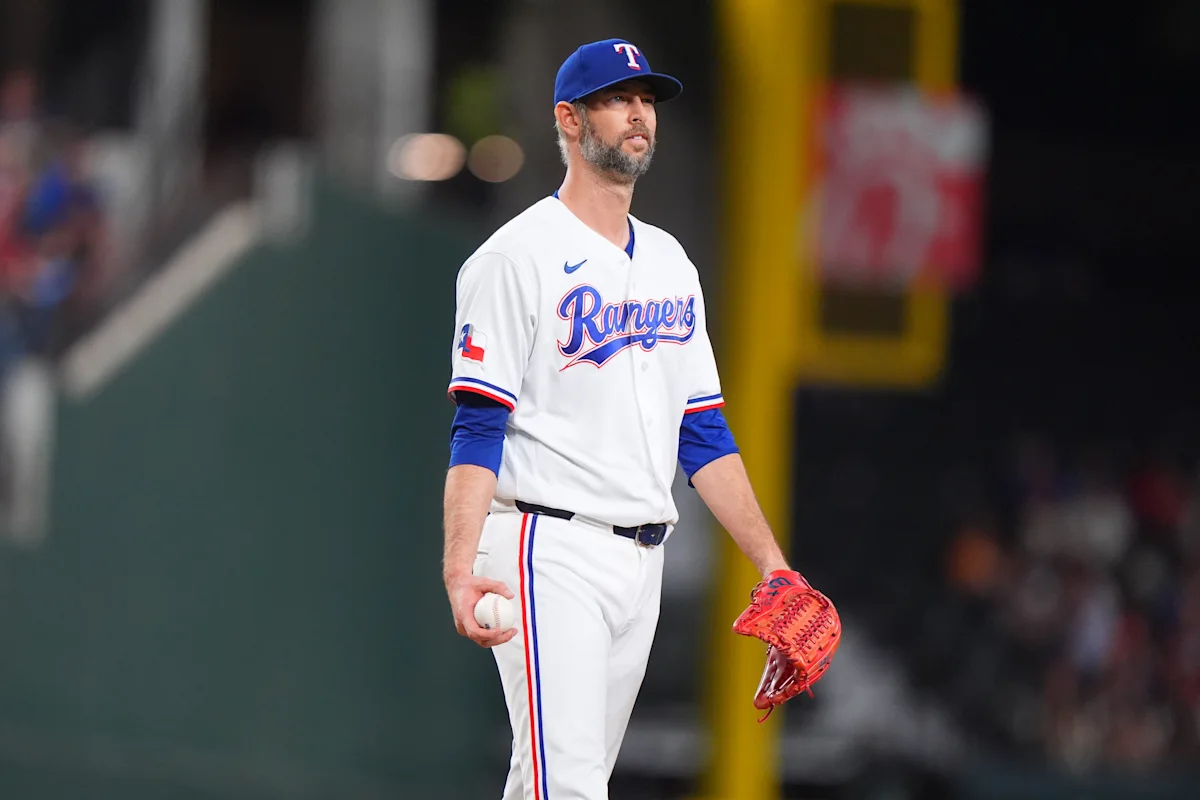
Veteran righty Chris Martin designated for assignment by Rangers after third IL stint

Published

on

ARLINGTON, Texas (AP) — Veteran right-handed reliever Chris Martin was designated for assignment by the Texas Rangers on Monday after being reinstated from his third injured list stint this season because of a right shoulder issue.

Martin, who turned 40 in June, is 1-1 with a 9.00 ERA in 16 games this season, allowing 25 hits and 14 earned runs in 14 innings. He missed 75 games during his three IL stints.

Advertisement

The 6-foot-8 Martin is an Arlington native who initially played for his hometown team in 2018 and 2019. He returned to the Rangers last season, when he had a 2.98 ERA over 49 relief appearances.

Advertisement

Martin is 19-25 with a 3.53 ERA in 434 relief appearances over 11 big league seasons with seven teams. His 149 games with the Rangers are the most with a single team, and he pitched 100 games for Boston in 2023 and 2024.

___

AP MLB: https://apnews.com/hub/mlb

Source link

Advertisement
Continue Reading

Sports

Explained: How Pakistan pacer’s British citizenship puts PSL 2027 contract in limbo | Cricket News

Published

on

Explained: How Pakistan pacer's British citizenship puts PSL 2027 contract in limbo
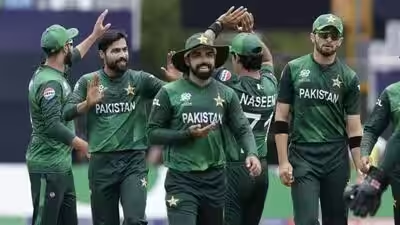
Pakistan’s Mohammad Amir, second left, celebrates with teammates after the dismissal (File photo)

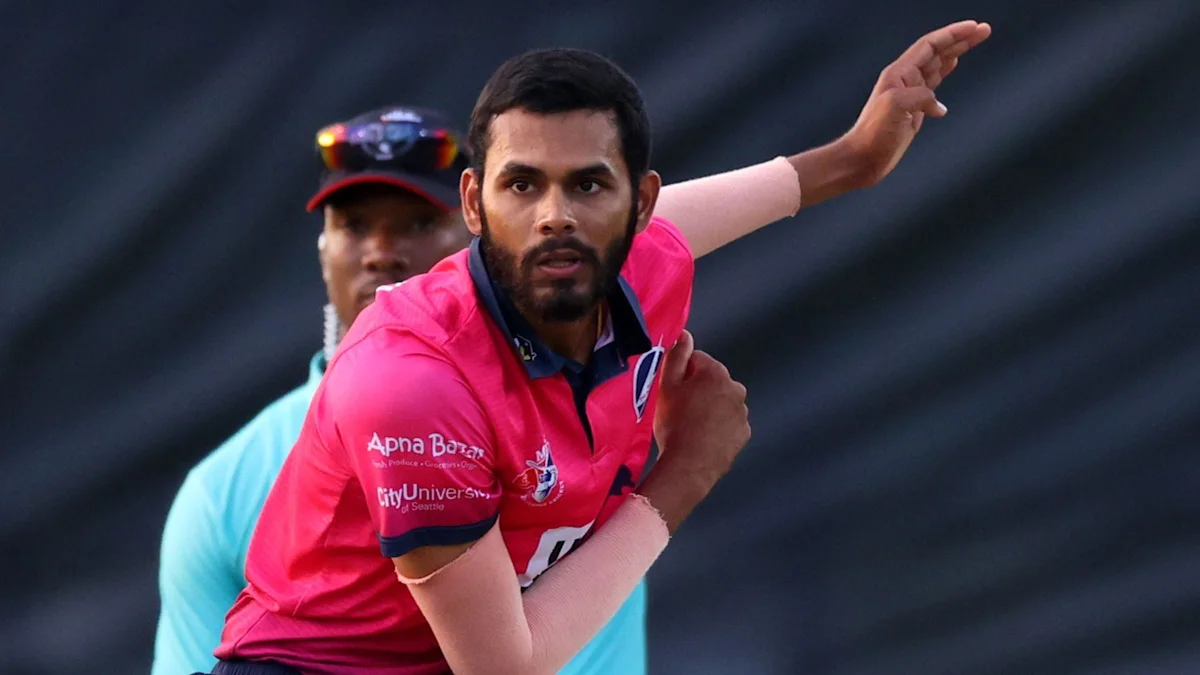
Mohammad Amir‘s new British citizenship could create a fresh complication for the Pakistan fast bowler ahead of the 2027 Pakistan Super League (PSL). Although Amir played as a domestic cricketer in the PSL until last season, he is now expected to be treated as an overseas player.Amir spoke about the change during an appearance on Wisden’s The Scoop Extended, revealing that his new citizenship status would affect how he is classified in the PSL. His British citizenship was confirmed in June after Nottinghamshire signed him for the 2026 Vitality Blast.The move has already allowed Amir to be treated as a domestic player in English competitions. He also played for Trent Rockets in the 2026 edition of The Hundred after replacing David Payne.

What does it mean for Amir’s PSL future?

The situation is different in Pakistan. Amir is expected to be classified as an overseas player in the PSL, meaning any team wanting him will have to use one of its foreign-player slots.Amir played for Rawalpindi in PSL 2026 after being bought for PKR 5.4 crore in the league’s first auction. He was among the team’s major signings alongside Naseem Shah and Daryl Mitchell.The change could create a problem because players retained or bought before PSL 2026 were given two-year contracts covering the 2026 and 2027 seasons. Under the PSL auction rules, teams can retain up to seven players for PSL 12, while released players return to the auction pool.The Pakistan Cricket Board (PCB) has not yet clarified whether Rawalpindi can keep Amir under his existing deal after his status changes. The team may have to release him, renegotiate his contract or use an overseas-player slot to retain him.Reports suggesting that PSL 2027 could be Amir’s final season have not been confirmed by the cricketer, PCB or Rawalpindi.For now, what is clear is that Amir holds a British passport, is treated as a domestic player in England and is expected to be an overseas player in the PSL. A formal PCB clarification on his Rawalpindi contract is still awaited.

Source link

Advertisement
Continue Reading

Sports

5 Simple keys to help you stop digging your wedges

Published

on

A high, soft pitch is one of the most satisfying shots in golf, and it’s easier to hit than you might think. Start by using a sand wedge or lob wedge. The loft of these clubs helps launch the ball, while the bounce allows the club to glide through the turf.

Many golfers struggle because the leading edge digs into the ground, causing fat or stubbed shots. Learn to use the bounce correctly, and you’ll start hitting crisp, consistent pitch shots around the green.

Here are five keys that will help you use the bounce of your club more effectively and improve your short game.

1. Set the clubface square

Lofted wedges are designed to appear open at address. Properly setting the club on its sole is critical because it allows the wedge’s full loft and bounce to work as intended.

Advertisement

Start with the clubface square to slightly open. Opening the face more can increase launch and bounce, which may benefit higher-speed players. But for most golfers, square to slightly open is an ideal starting point.

2. Keep the clubhead centered

Ball position is a key to consistent pitch shots. Ideally, the clubhead should be positioned near the center, or slightly forward, in your stance.

This helps reduce excessive forward shaft lean, which can expose the leading edge and cause the club to dig. If you prefer playing the ball farther back in your stance, opening the face slightly can add bounce and help offset the steeper shaft angle.

3. Start with a neutral shaft position

A neutral shaft position at address helps maintain the wedge’s natural loft and bounce. As a starting point, the grip should point toward the center of your body rather than significantly forward. This allows the sole of the wedge to rest on the turf as it was designed and gives the bounce a chance to work.

Advertisement

4. Proper release through impact

While your address position matters, the shaft angle at impact is even more important. Unlike a full swing shot, pitches do not require significant forward shaft lean at impact. With shorter swings and lower clubhead speeds, too much lean can expose the leading edge and cause the club to dig.

Instead, let the clubhead release naturally so it aligns more closely with the shaft through impact. This release pattern is different from a full swing and allows the bounce to interact with the turf first, creating cleaner contact and more consistent results.

5. Find a wedge that fits you

Even the best technique will only get you so far if you’ve got the wrong wedge setup. The right combination of loft, bounce, and sole design plays a major role in how the club interacts with the turf.

If your wedges consistently dig or feel harsh through impact, it may be an equipment issue rather than a technique issue. First, make sure your fundamentals are sound with a qualified golf instructor. Then, getting properly fit for your wedges can be a game changer.

Advertisement

Source link

Continue Reading

Sports

Pochettino agrees new USA deal until 2030

Published

on

Mauricio Pochettino has agreed a new deal to remain as manager of the United States men’s national team until 2030.

The former Tottenham Hotspur and Chelsea boss has been in charge since September 2024 and led the USA to the last 16 of the 2026 World Cup on home soil.

The co-hosts topped their group after wins over Paraguay and Australia before beating Bosnia-Herzegovina 2-0 in the last 32.

Advertisement

Their World Cup run ended with a heavy 4-1 defeat by Belgium.

Under the new agreement, Pochettino and his coaching staff will have a bigger role within US Soccer. They will also advise and support the organisation on areas including youth development, coaching education, professional league partnerships and the wider national team pathway.

“Working together with US Soccer over the past two years, it has become clear to us that there is tremendous potential to make the men’s national team programme even stronger,” Pochettino said.

Advertisement

“We are excited by the opportunity to bring all our experience and knowledge to even more areas of US Soccer while helping strengthen the pathways for players, coaches and teams across the federation.

“We want to try to have a lasting impact on the sport in the country that has welcomed us so warmly and for that impact to extend beyond results on the field.”

US Soccer president Cindy Parlow Cone praised the work done by Pochettino and his staff.

“Mauricio has built a culture where players trust the group, trust the process and trust each other,” she said.

Advertisement

“We saw the impact of that belief in the way the team grew, competed and performed on the world’s biggest stage.

“That culture, and the staff who helped build it, are exactly what we want to continue investing in for the men’s national team now and for the future.”

Source link

Advertisement
Continue Reading

Sports

5 players who are switching states ahead of India’s 2026-27 domestic season ft. Shashank Singh

Published

on

The annual pre-season transfer window in Indian domestic cricket allows players to switch state associations as outstation or guest recruits under the Board of Control for Cricket in India (BCCI) regulations.

State teams are permitted up to three guest players to strengthen their squads ahead of the Ranji Trophy, Vijay Hazare Trophy, and Syed Mushtaq Ali Trophy campaigns. These transfers are driven by players seeking more game time, specialized roles, or leadership opportunities, while developing state teams aim to recruit veteran talents to bolster their squad depth.

The upcoming 2026-27 season features several notable moves, with prominent domestic regulars and IPL players shifting allegiances. Let’s take a look at five such moves.

#1 Shashank Singh

The Punjab Kings (PBKS) all-rounder Shashank Singh will turn up for Puducherry in the 2026-27 season after shifting base from Chhattisgarh. The Chhattisgarh State Cricket Sangh (CSCS) has already issued an NOC to the player.

Singh alleged that the state association didn’t support him while he was recovering from an injury that he suffered last season. He further claimed that the association questioned his commitment, saying that the batter only wanted to play in the Indian Premier League (IPL).

The 27-year-old added that CSCS officials didn’t give him any clarity over why he was left out of the Chhattisgarh Premier League and the team’s pre-season camp.

Advertisement

Singh has played 21 first-class games for Chhattisgarh over the last seven years. He has also represented the state in 31 List A and 42 T20s.


#2 Yash Dayal

Royal Challengers Bengaluru fast bowler Yash Dayal will represent Chhattisgarh in the upcoming domestic season. He has already joined the team’s pre-season camp in Alur.

Dayal has not played any competitive cricket since the IPL 2025 final, after which he faced charges relating to sexual assault. The left-arm pacer was retained by Gorakhpur Lions for the upcoming UP T20 League. However, he didn’t feature in the 18-member squad the franchise announced following the auction.

The 28-year-old has represented Uttar Pradesh in 27 first-class, 23 List A, and 71 T20s, picking up 186 wickets across formats, including two five-wicket hauls.

Advertisement

Dayal will look to start fresh for Chhattisgarh in the upcoming season and make his way back to the scheme of things.


#3 Dharmendrasinh Jadeja

Chhattisgarh is looking to build a strong squad for the upcoming domestic season. As a result, they have roped in Saurashtra‘s veteran left-arm spinner Dharmendrasinh Jadeja.

The 35-year-old spinner has been a stalwart in the domestic circuit, picking up 423 wickets in 100 first-class matches, including seven 10-wicket hauls and 26 five-fors. Jadeja also has 121 List A and 65 T20 wickets under his belt.

Jadeja is also a very handy batter in the lower order, accumulating almost 2900 runs across formats. He also has 10 fifties under his belt.

Advertisement

Jadeja’s addition will certainly boost Chhattisgarh’s squad depth as they look to put in a spirited performance next season.


#4 Prasad Pawar

Mumbai wicketkeeper-batter Prasad Pawar has signed with Puducherry to play alongside Shashank Singh as a guest player in the upcoming domestic season.

Prasad has struggled for game time in the Mumbai squad, with Hardik Tamore playing as the first-choice wicketkeeper-batter. As a result, Prasad has decided to shift base to Puducherry in search of more playing time.

Prasad made his List A debut in 2021, while his first-class and T20 debuts came in 2023. Overall, he has represented Mumbai in 27 matches, scoring 591 runs, including one hundred and fifty each.

Advertisement

#5 Jayant Yadav

An offspinner from Haryana, Jayant Yadav, has decided to join Chhattisgarh for the 2026-27 domestic season. He brings truckloads of experience along with him, having represented India in six Tests and two ODIs while picking up 17 wickets in total.

Yadav has 96 first-class, 74 List A, and 95 T20s under his belt, picking up 272, 68, and 61 wickets, respectively, including two 10-wicket hauls and 15 five-fors. He is also very handy with the bat in the lower order, scoring 4781 runs, including three hundreds and 22 fifties. The 36-year-old cricketer also has one Test hundred and fifty each to his name.

Chhattisgarh will rely heavily on the spin duo of Yadav and Jadeja to bring laurels for the team in the upcoming season.