

Crypto World
XRP is a commodity until the SEC changes its mind



XRP won. Seven years of legal limbo ended on a single Wednesday in March, when two agencies put it in writing. What almost nobody has noticed is what kind of writing it was, and how little it would take to unwrite.
Summary
- On March 17, 2026, the SEC and CFTC jointly issued a 68-page interpretive release naming XRP among the digital commodities that are not securities under federal law, ending seven years of ambiguity in one document.
- The release is binding on both agencies, which makes it far stronger than the staff guidance the industry lived on before. It is not a statute and not a formal rule.
- That places XRP’s legal status on the third rung of a four-rung ladder: staff guidance, Commission interpretation, formal rule, statute. A future Commission can reinterpret without asking Congress for anything.
- The interpretation does not replace the Howey test. It tells you what XRP is; it does not permanently settle how any particular offer or sale of it gets treated.
- Two things could upgrade it. The SEC’s Regulation Crypto rulemaking would turn interpretation into rule. The CLARITY Act would turn it into law. One is stalled in the Senate and the other is sitting at the White House awaiting review.
For most of a decade, the single most important fact about XRP was a question: is it a security? The question survived a four-year lawsuit, a split ruling, a $125 million penalty, and the end of the case itself, because none of those resolved the underlying classification for anyone other than Ripple. Then, on March 17, 2026, it stopped being a question. The Securities and Exchange Commission, joined by the Commodity Futures Trading Commission, published a joint interpretive release that named XRP outright as a digital commodity. Not a security. In writing, from both agencies, at Commission level. The most consequential American crypto policy document in years, and it arrived without a single vote in Congress. That last detail is the whole story, and it cuts in both directions.
What the March release actually did
The document runs 68 pages and carries Release Numbers 33-11412 and 34-105020. It sorts crypto assets into five categories: digital commodities, digital collectibles, digital tools, payment stablecoins, and digital securities. Only the last of those, meaning tokenized versions of traditional instruments such as stocks and Treasuries, sits fully under SEC jurisdiction. Everything else falls primarily to the CFTC or outside securities regulation entirely.
XRP is named in the first category. So are Bitcoin, Ether, Solana, Dogecoin, Cardano, Avalanche, Chainlink, Polkadot, Hedera, Litecoin, Bitcoin Cash, Shiba Inu, Stellar, Tezos, and Aptos. Press coverage generally counted 16 named assets; several SEC-filed prospectuses describe the list as 18, and the discrepancy appears to come from how the release’s examples are counted rather than from any dispute about XRP’s inclusion.
The test the release applies is worth reading closely, because it explains why XRP qualified. A digital commodity is an asset intrinsically linked to and deriving its value from the programmatic operation of a functional crypto system, together with supply and demand dynamics, instead of from the expectation of profits from the essential managerial efforts of others. That final clause is Howey’s language, inverted. XRP is a commodity precisely because the XRP Ledger runs without Ripple’s managerial effort determining its value. The thing XRP holders spent years arguing became the legal basis for the classification.
The release also addressed the mechanics that had been left dangling for years: how a non-security crypto asset may become subject to an investment contract, how it may cease to be subject to one, and how the securities laws apply to airdrops, protocol mining, protocol staking, and the wrapping of a non-security asset. It follows the SEC’s Crypto Task Force, stood up in January 2025, and Project Crypto, which became a joint SEC-CFTC initiative in January 2026, along with a memorandum of understanding announced days earlier.
Both chairs put their names on the shift in language nobody could misread. Atkins, speaking at the DC Blockchain Summit, said his agency is not the securities and everything commission anymore. Selig, for the CFTC, said the wait was over and committed to rules of the road that let the industry operate onshore.
Why this is stronger than people assume
The reflexive crypto reaction to any agency action is that it is worthless because the next administration undoes it. That reaction is lazy here, and the reason is a distinction most coverage skipped.
This is a Commission-level interpretation, not staff guidance. The difference is not cosmetic. Staff guidance represents the views of agency personnel and binds nobody, which is why the industry spent years being told that no-action letters and staff statements carried no legal weight. As Jenner and Block noted in its client alert, the March interpretation is binding on the SEC and the CFTC. The agencies have committed themselves, and the CFTC further committed to administering the Commodity Exchange Act consistently with the SEC’s reading. That is the strongest thing short of a rule.
The practical effects arrived immediately and are already load-bearing. Fund issuers began citing the release directly in registration statements: Grayscale and Hashdex prospectuses point to it as the basis on which their index constituents are not securities. Accredited investors and fund managers could reclassify holdings and adjust compliance programs without waiting for the GENIUS Act’s full implementation in November 2026. Exchanges listing named assets shed a category of risk they had carried since 2018. A framework that private capital has already built products on top of is considerably harder to unwind than a memo, because unwinding it now means breaking live registered products.
There is a political durability argument too. Reversing the classification of Bitcoin, Ether, and XRP would require a future Commission to explain why a functional ledger’s token became a security again, against its own recent 68-page reasoning, in the face of litigation from every issuer relying on it. Agencies can do that. They rarely enjoy it.
Why it is weaker than a law
Now the other side, and it is the reason this piece exists. Everything above describes strength within the executive branch. None of it describes permanence.
The interpretation is administrative action. It is not a statute. Any future administration can direct its agencies to reinterpret, and no congressional vote is required to do it. The current regulatory floor under XRP was created by two agency chairs and can be lifted by two different agency chairs. The industry spent 2018 through 2025 learning what it feels like when a Commission decides that the previous Commission’s posture was wrong, and nothing in the March release prevents that from happening again. It simply raises the cost.
The release also does not supersede Howey. Norton Rose Fulbright made the point plainly: the joint interpretation does not replace the Supreme Court’s test. It cannot, because an interpretive release cannot overrule the Court. What the agencies did was explain how they will apply existing law. A court hearing a private securities claim is not bound by the agencies’ view of the statute, and the security status of any specific asset still turns on the facts and circumstances of its offer and sale. The SEC said as much: an asset may cease to be linked to an investment contract as the relevant facts evolve, which is the same sentence read backwards.
That leaves a gap that matters for XRP specifically. The 2023 ruling in the Ripple case drew a line between programmatic sales on exchanges and institutional sales, treating them differently. The March interpretation classifies the asset. It does not immunize every transaction in that asset. An aggressive future enforcement posture would not need to declare XRP a security to cause problems. It would only need to find managerial effort in a particular offering.
And there is the awkward provenance question. The framework XRP holders are now relying on was produced by the same agency that spent four years litigating against Ripple and collected a $125 million penalty. That agency did not change its mind because the law changed. It changed its mind because its leadership changed. Which is precisely the argument for wanting something more permanent.
The ladder
The useful way to hold all of this is as a hierarchy of durability, because XRP’s status is not binary. It sits on a specific rung.
Staff guidance is the bottom. Non-binding, reversible by a memo, worth roughly what the issuing staff’s tenure is worth. This is what crypto had for years.
Commission-level interpretation is where XRP sits today. Binding on the SEC and CFTC, reasoned in public across 68 pages, relied upon in live registration statements. Reversible by a future Commission through the same instrument that created it, with no involvement from Congress and no notice-and-comment obligation.
A formal rule is the next rung, and it is the one currently in motion. The SEC’s Regulation Crypto proposal sits in the agency’s July 2026 rulemaking slot, under review at the White House Office of Information and Regulatory Affairs. Rules go through notice and comment, which is slow and irritating and precisely why they are hard to unwind. Reversing a final rule generally requires another full rulemaking, with a reasoned explanation that survives judicial review. Bankless made the observation that most outlets missed: the SEC has leaned on staff guidance and its taxonomy so far, but formal rules are far harder for a future commission to undo.
A statute is the top. The CLARITY Act would put the taxonomy into law, at which point unwinding it requires Congress, which is a body that struggles to pass anything at all. That difficulty is the feature.
So XRP holders currently occupy rung two of four, with rung three under White House review and rung four stuck on the Senate calendar with no floor vote scheduled and roughly three working weeks left before the August recess. That is the actual position, and it is neither the triumph nor the mirage that the two loudest camps describe.
The four years everyone forgot to price
There is a piece of history worth putting next to the March release, because it explains why the classification felt like an ending and why it is not one.
The SEC sued Ripple in December 2020, alleging XRP had been sold as an unregistered security. The case ran four years and produced a split ruling in 2023: sales to institutional buyers were investment contracts, while programmatic sales on exchanges were not, because anonymous buyers on an order book could not know whose effort they were relying on. Ripple ultimately paid a $125 million penalty and the litigation wound down in 2025. Exchanges delisted XRP for American users during the case and relisted after it. Billions in market value moved on procedural filings.
Notice what that outcome did and did not settle. It resolved claims against one company. It did not classify XRP for anyone else, which is why the question survived the case that was supposed to answer it. Every other market participant was left reading a district court opinion about someone else’s conduct and guessing. That guessing is what ended in March, and it ended not because a court ruled or Congress voted, but because agency leadership changed and the new leadership read the same statute differently.
That is the part worth sitting with. The law did not change between 2020 and 2026. The Securities Act of 1933 reads the same. Howey reads the same. The XRP Ledger runs the same consensus it ran when the lawsuit was filed. What changed was who occupied the chairs, and the outcome flipped from four years of litigation to a 68-page release naming XRP as a commodity in the first category.
Anyone who believes that dynamic runs in only one direction has not been paying attention. The same mechanism that delivered the win is the mechanism that could withdraw it, and it requires nothing more dramatic than another election and another appointment. This is exactly why the ladder matters, and exactly why the industry pushed for statute instead of settling for the agency’s blessing. A framework that can be reversed by a personnel change is not a framework. It is a truce.
The counterpoint, and it is a fair one, is that this cuts against the doom case too. If a hostile Commission could reclassify XRP tomorrow, it could also have done so at any point in the past decade and largely did try. The industry survived. Exchanges relisted. The asset persisted through the worst enforcement posture the SEC could produce, which suggests the practical downside of reinterpretation is a repeat of a period XRP already lived through and outlasted, not an existential event. The market has already stress-tested the bear case, and XRP is still here.
What this means for the price nobody wants to hear
XRP trades around $1.10 to $1.15, having reclaimed that support after a macro-driven rally cooled. A year ago it traded near $3.65. Analysts note that regulatory risk on Ripple has fallen to a multi-year bottom following the end of the SEC litigation, and demand from domestic funds has stabilized accordingly.
Both of those sentences are true simultaneously, and their coexistence is the most instructive fact about this market. The single largest overhang on XRP for seven years was legal uncertainty. That overhang has been removed more decisively than the most optimistic holder could have scripted in 2022: named, in writing, by both agencies, at Commission level. And the token is down roughly 70% from a year ago.
The honest conclusion is that legal clarity was necessary and is not sufficient. It removed a reason not to own XRP. It did not create a reason to own it. Those are different things, and the market has now run the experiment. Anyone still arguing that the next regulatory milestone is the catalyst has to explain why the biggest regulatory milestone in the asset’s history produced a lower price.
Which loops back to the ladder, and to why the rung matters even in a market that appears not to care. The value of moving from interpretation to rule to statute is not that it triggers a rally. It is that it removes the tail. As long as XRP’s classification rests on administrative action, an unknown future Commission holds an option to reopen a question that took seven years and $125 million to close the first time. Codification does not make XRP go up. It makes the worst case go away. In an asset that has spent a decade pricing legal risk, retiring the possibility of its return is worth something, and it is worth it quietly, over years, in the form of institutions that will hold it because they no longer need a legal opinion to do so.
What to watch
Three things, in order of how much they would change.
Regulation Crypto clearing OIRA and reaching public comment. The proposal is slotted for July. If it publishes and survives comment substantially intact, XRP moves from rung two to rung three, and the classification gets meaningfully harder to reverse. Watch whether the decentralization off-ramp language stays intact, since that is the provision doing the same work the taxonomy does.
The CLARITY Act reaching a floor vote before August 7. If it passes and is signed, the taxonomy becomes statute and the question closes permanently. If it dies, the entire American crypto framework rests on one agency’s interpretation and one agency’s pending rule, which is the outcome the industry spent a year lobbying to avoid.
Any enforcement action that tests the edges. The interpretation classifies assets. It does not classify transactions. The first case that alleges a specific XRP offering carried managerial effort, notwithstanding XRP’s commodity status, will show how much the March release actually protects. Until that happens, its practical strength is theoretical.
XRP won its argument. It won it in the weakest venue that could have delivered the win, from an agency that could deliver it because its leadership changed and could withdraw it for the same reason. Whether that victory is permanent is being decided right now, in a rulemaking review and on a Senate calendar, and almost none of it is being decided by anything Ripple does.
Disclaimer: This article is for information and educational purposes only and does not constitute financial, investment, or legal advice. It describes regulatory interpretations and pending rulemaking, both of which can change, and it is not a legal opinion on the status of any asset. Nothing here is a recommendation to buy or sell anything. Always do your own research. Information is accurate as of July 17, 2026.
Frequently Asked Questions
Is XRP a security?
No, according to the SEC and CFTC. On March 17, 2026, the two agencies jointly issued a 68-page interpretive release classifying XRP as a digital commodity, meaning it is not a security under federal law. The classification also covers Bitcoin, Ether, Solana, and roughly a dozen other named assets. The release is binding on both agencies.
Why does XRP qualify as a digital commodity?
Because the test asks whether an asset derives its value from the programmatic operation of a functional crypto system and from supply and demand, instead of from the expectation of profits from the essential managerial efforts of others. The XRP Ledger operates without Ripple’s managerial effort determining the token’s value, which is the argument holders made for years and which became the basis of the classification.
Can the SEC reverse this?
Yes, without asking Congress. It is administrative action, not statute. A future Commission could issue a new interpretation. What makes reversal costly rather than trivial is that this is a Commission-level interpretation binding on both agencies, publicly reasoned across 68 pages, and already relied upon in live registration statements filed by fund issuers, so unwinding it would mean disrupting registered products and inviting litigation.
Does the interpretation replace the Howey test?
No. An interpretive release cannot overrule a Supreme Court decision. The agencies explained how they will apply existing law, and the SEC noted that an asset’s security status still depends on the facts and circumstances of its offer and sale. A court hearing a private claim is not bound by the agencies’ view. The release classifies assets; it does not immunize every transaction in them.
How is this different from the Ripple lawsuit outcome?
The lawsuit resolved claims against one company and produced a split ruling distinguishing programmatic exchange sales from institutional sales, plus a $125 million penalty. It did not settle XRP’s classification for anyone else. The March 2026 interpretation classifies the asset itself, applies to all market participants, and comes from both agencies jointly.
What would make XRP’s status permanent?
Two things, in ascending order of durability. The SEC’s Regulation Crypto proposal, currently in the agency’s July 2026 rulemaking slot and under White House review, would convert interpretation into a formal rule, which requires another full rulemaking to reverse. The CLARITY Act would write the taxonomy into statute, which would require an act of Congress to undo.
If the legal question is settled, why is XRP down?
Because legal clarity removed a reason not to own XRP without creating a reason to own it. Regulatory risk on Ripple has fallen to a multi-year bottom and the token still trades near $1.10 against roughly $3.65 a year ago. The market has effectively run the experiment: the largest regulatory milestone in the asset’s history did not produce a higher price, which suggests the price is being set by broader market conditions instead of by classification.

Crypto World
Inside Zcash’s new node that targets Visa-scale privacy at 50,000 transactions per second


Throughput targets and Tachyon’s role
The reason for building all this is arithmetic.
Mastercard and Visa process more than 50,000 transactions per second, and the team calls that figure ‘“its floor, not its target.” Zcash’s current cryptography would require a node to take in and verify more than 500 megabytes of data every second to keep up, because every private transaction carries a proof, and proofs are large.
That is roughly a full DVD of data arriving every ten seconds, continuously, and no current Zcash software runs anywhere near that. But the missing piece is the reason each bottleneck exists.
Bowe’s Project Tachyon is tackling this by working on recursive proofs, in which one proof attests to the validity of thousands of others, dramatically reducing the amount of data that must be checked at consensus.
Under Tachyon, a node verifies a single proof instead of the thousands, which the team says reduces the requirement for consensus data from 100 megabytes per second to 500 megabytes, a level they claim is technically achievable with careful engineering.
Wallet bottlenecks and Valar’s PIR solution
Wallets have a different problem. Because Zcash hides who a transaction is for, a wallet cannot ask a server which transactions belong to it without giving itself away. It pulls down everything and tests each one, which is why wallet software tops out at about one transaction per second.


Robinhood CEO Vlad Tenev has defended trading against claims that it should be treated as gambling as the brokerage takes on a role in the U.S.
Summary
- Robinhood is helping operate Trump Accounts as it seeks deeper ties with younger American investors.
- Tenev rejects labeling all trading as gambling, arguing speculation remains necessary for functioning financial markets.
- Robinhood is expanding beyond stocks and crypto into prediction markets, tokenization, banking, and global finance.
Government’s new Trump Accounts program. The accounts are designed to help children start investing early as Robinhood broadens its business beyond retail trading.
In an interview with The New York Times, Tenev said Robinhood is working with the government to operate the accounts. He also said more than 90% of his personal net worth remains invested in Robinhood shares. His comments come as the company expands into prediction markets, tokenized assets and other financial services.
Robinhood takes a role in Trump Accounts
Trump Accounts are tax-deferred investment accounts created for children. Those born from 2025 through 2028 can receive a $1,000 government contribution. Robinhood helped develop the app used to manage the program, while families can begin making contributions after account activation. The company has presented the program as an effort to bring people into long-term investing.
Tenev sees the government partnership as a way to reach a new generation of users. Robinhood became linked with younger retail traders during the pandemic, when activity in stocks, options and cryptocurrencies rose sharply. The company now wants to build a broader relationship with customers that extends beyond short-term trading and into long-term financial products.
Tenev rejects a simple link between trading and gambling
Tenev pushed back against criticism that Robinhood encourages younger users to “gamble” through financial markets. He argued that trading should not automatically be described as gambling. He said speculation plays a core role in markets because buyers and sellers make predictions about future prices when deciding where to place capital.
The debate has become more relevant as Robinhood expands its prediction market business. As reported by crypto.news, Bernstein projected that Robinhood’s prediction market revenue could reach $586 million in 2026, up from about $150 million in 2025. The growth has brought more attention to the line between regulated trading, event contracts and betting.
Robinhood works to move beyond its meme-stock image
Robinhood became closely associated with the 2021 meme-stock boom and the GameStop trading episode. Tenev said the company is now trying to move past that image and build a platform that can cover a wider range of assets and financial transactions. Its recent product launches show how far the company is extending beyond its original commission-free brokerage model.
Robinhood launched Robinhood Chain on July 1 as an Ethereum layer-2 network focused on tokenized real-world assets. The company has also gained approval for Robinhood Securities to act as an IPO underwriter, as reported by crypto.news. Those moves give Robinhood roles in trading, blockchain infrastructure and capital markets as it builds a wider financial platform.
Tenev keeps most of his wealth tied to Robinhood
Tenev told The New York Times that more than 90% of his personal net worth is held in Robinhood shares. The statement gives context to his long-term position on the company as Robinhood expands into new markets and products. The company’s shares have also drawn attention after a strong rally during its broader product push.
As reported by crypto.news, Tenev sold 375,000 Robinhood shares on July 6 through a Rule 10b5-1 trading plan adopted in September 2025. He still held more than 48.2 million Class B shares after the transaction. Robinhood’s latest strategy now combines retail trading, prediction markets, tokenization and government-backed investment accounts as the company seeks a larger role in global finance.


France’s National Gambling Authority has ordered internet service providers to block Polymarket, escalating a regulatory dispute that began in 2024. The Autorité nationale des jeux, known as the ANJ, said the prediction market platform promotes gambling services that are not authorized under French law.
Summary
- France ordered internet providers to block Polymarket after earlier geoblocking failed to restrict local access.
- ANJ cited illegal gambling, absent identity checks, and concerns that weather sensors may be hacked.
- Czech and EU actions show prediction markets face growing pressure across several regulatory frameworks worldwide.
France ordered the block on July 16 after the ANJ said users had circumvented an earlier geoblocking measure. The regulator has monitored Polymarket since November 2024 over concerns that its prediction markets amount to unauthorized gambling services in the country.
France moves from geoblocking to an ISP block
The ANJ said prediction market websites qualify as illegal gambling services under French law. It also warned that promoting an unauthorized gambling platform can carry a fine of up to €100,000. The same penalty can apply to people who publicly share odds or payout ratios to promote unlicensed gambling services.
The regulator said Polymarket’s audience in France continued to grow despite the earlier restriction. It recorded 578,751 visits and 205,057 unique visitors in June 2026. The ANJ said the platform’s homepage continued to display live odds, which it viewed as promotion of an unauthorized service. The authority blocked 1,290 URLs in 2025 under its administrative powers.
France is not the only European country taking action against the platform. The Czech Republic recently ordered internet service providers to block Polymarket, as reported by crypto.news, after authorities classified the platform as an unauthorized gambling service.
Regulator raises questions over user checks and market integrity
The ANJ also cited concerns about how some event markets operated. It said some bets “appeared to be rigged” and that weather sensors linked to certain markets “may have been hacked.” French prosecutors opened a cybercrime investigation on May 4, with the case assigned to the Office for Combating Cybercrime.
According to the regulator, the investigation also found that Polymarket services available to French and European users lacked an adequate user identification system. The ANJ said stronger identity and location checks would be needed to prevent people in France from accessing the platform.
Concerns about how prediction markets settle contracts have also attracted academic attention. A Stanford-led study identified possible incentives for settlement-price manipulation, as reported by crypto.news. The research examined five-minute Bitcoin prediction markets and estimated that about $1.28 million shifted from regular traders to more sophisticated participants.
European scrutiny of prediction markets keeps growing
Regulators across Europe are taking different approaches to prediction markets. Some authorities treat the platforms as gambling services, while financial regulators are assessing whether certain contracts fall under securities or derivatives rules.
The European Securities and Markets Authority recently said some event-based contracts could qualify as financial instruments under MiFID II. As reported by crypto.news, contracts that fall under those rules could also face existing European restrictions on binary options offered to retail traders.
The different approaches reflect the structure of prediction markets, where users trade contracts based on the outcome of elections, sporting events, economic releases and other future events. France has taken the position that Polymarket operates as an unauthorized gambling service and has now moved from restricting transactions to blocking access to the website.
Polymarket also faces pressure outside France
Polymarket and other prediction market operators are also facing legal disputes in the United States. Kentucky sued several platforms, including Polymarket and Kalshi, accusing them of offering sports betting without state licenses.
The Commodity Futures Trading Commission later challenged state intervention in federally regulated event contracts. The regulator’s dispute with Kentucky is part of a broader fight over who has authority to oversee prediction markets. The CFTC sued Kentucky as the regulatory conflict widened, as reported by crypto.news.
Polymarket has also faced security concerns. A frontend phishing attack resulted in losses of about $3.1 million across 11 wallets, with affected users set to receive refunds.
France’s latest order adds to the growing number of restrictions facing prediction market platforms. The ANJ said it would continue monitoring Polymarket and any measures introduced to verify users’ identities and locations before they can access its services.


Michael Saylor argued that corporate ownership of Bitcoin (BTC) is inevitable, framing companies as the legal engines it needs to succeed.
He made the case in a July 18 post on X, saying that firms provide efficiency and creditworthiness that no individual can match on their own.
Saylor’s Case for Corporate Bitcoin Ownership
Bitcoin has moved from an individual store of value to an asset held increasingly on corporate books. Saylor, chairman of Strategy (MSTR), has pushed that shift harder than any other executive.
His firm built what is often described as part of Bitcoin’s long-term endgame, a strategy built on relentless institutional accumulation. Saylor has used his platform to promote that strategy for years, giving his posts outsized influence among crypto investors.
Saylor’s post framed companies as vehicles that let people organize under the law more efficiently than individuals acting on their own.
In the post above, he listed efficiency, transparency, creditworthiness, scale, resilience, and continuity as advantages only companies can provide.
Saylor closed by calling corporate adoption not just useful but structurally necessary for Bitcoin’s path toward becoming global money.
Institutions Keep Building Bitcoin Treasuries
Saylor’s thesis lines up with a broader trend across markets. BeInCrypto’s tracking shows an institutional Bitcoin adoption index climbing steadily this year, as banks and asset managers add exposure.
That index puts major bank Bitcoin adoption at 32%, with Fidelity well ahead of Japanese lenders. Meanwhile, firms outside the United States have followed a similar corporate Bitcoin treasury playbook.
Metaplanet, for instance, recently became the world’s third-largest holder, trailing only Strategy and Twenty One Capital.
Bitcoin traded near $63,900 on Saturday, up roughly 1.4% over 24 hours. That modest gain provides Saylor’s argument with a stable backdrop, though it says little about whether corporate demand alone can sustain the network’s long-term growth.
Critics Question Strategy’s Own Playbook
However, Strategy’s own approach has drawn scrutiny in recent months. Ripple CEO Brad Garlinghouse recently leveled pointed criticism at Strategy, even while remaining bullish on Bitcoin itself. He argued that leverage tied to a single volatile asset carries risks a simple ownership thesis does not address.
Strategy’s preferred shares have also traded well below par this year, a detail Saylor’s post did not mention.
Saylor treats corporate adoption as a foregone conclusion. Whether balance sheets can absorb Bitcoin’s volatility as smoothly as he predicts remains an open question.
Investors watching Strategy’s stock in the coming weeks may get an early read on how convincing that pitch really is.
The post Michael Saylor Calls Corporate Bitcoin Adoption Necessary and Inevitable appeared first on BeInCrypto.
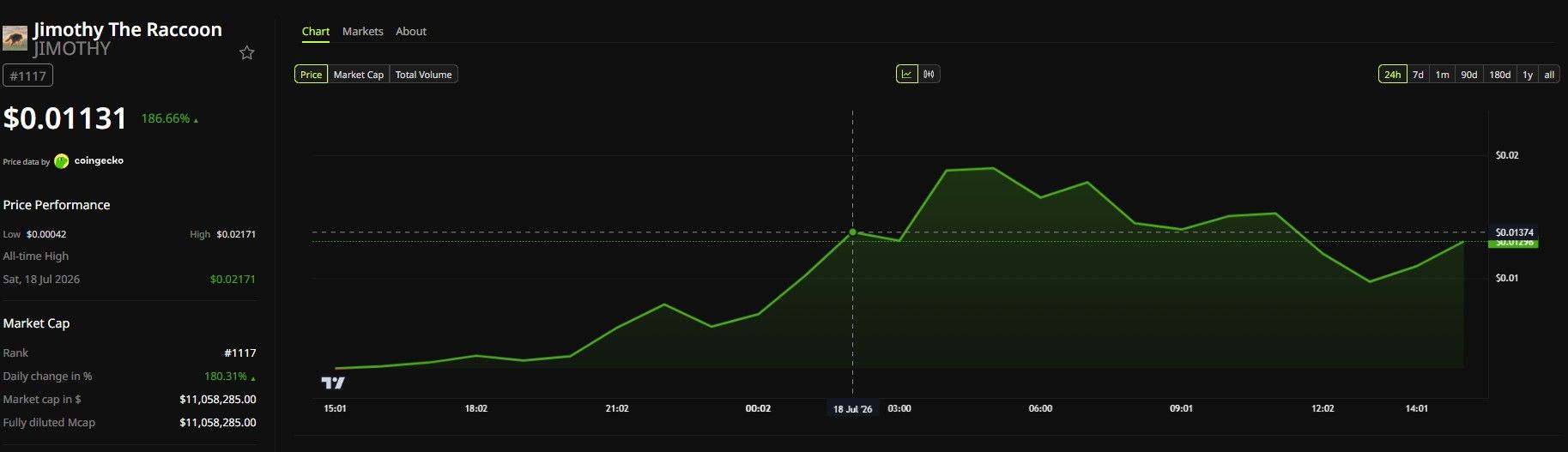
Jimothy The Raccoon (JIMOTHY), a Solana meme coin named after a viral Seattle raccoon, jumped 186% in 24 hours. Live BeInCrypto market data puts its market cap near $11 million.
Anonymous developers launched the token this week. Clips of the animal’s odd shape had already spread across social media, and traders piled in within hours of its Solana debut.
A Raccoon Named Jimothy Became an Overnight Icon
Seattle resident Kiana Hall filmed the raccoon near a Ballard neighborhood Goodwill earlier this week.
Marcie Logsdon, an associate professor at Washington State University’s Veterinary Teaching Hospital, said the raccoon likely has short spine syndrome, a rare congenital condition that shortens the spine and limits mobility.
“I was surprised and honestly a little bit inspired that he is that resilient”
The moment echoes a recent meme coin frenzy triggered by a hoax about Binance founder Changpeng Zhao. In that case too, a viral clip preceded a same-day token launch.

Pump.fun Trending Page Turned Attention Into Trading Volume
Anonymous creators listed JIMOTHY on Pump.fun. The platform’s trending page then exposed the token to a wide pool of Solana traders within hours.
Pump.fun’s official account then reposted the token on X, pushing it in front of an even larger trading audience. A dedicated subreddit and a wave of fan merchandise followed. Tattoo artists even offered discounts for raccoon-inspired ink.
The launch also arrived during a broader Pump.fun trading rebound. The platform’s share of profitable traders has climbed for four straight months.
Meanwhile, Solana network activity has jumped even as the SOL token itself struggles. Meme coin launches keep pulling in fresh volume.
Analysts Warn the Rally May Not Hold
JIMOTHY’s trading volume topped $36 million in the past day. Its price has climbed more than 50-fold from its low to an all-time high of $0.0217, according to live rankings data.
The token still ranks 1,117th by market capitalization, tiny next to Solana’s blue-chip names, and its supply sits near one billion coins.
However, tokens built on viral animal moments rarely hold their gains once the news cycle fades.
The pattern already played out this year in a World Cup meme coin rally tied to footballer Erling Haaland. A similar narrative-driven token rally followed Pentagon UFO files, and both cooled within weeks.
The post Jimothy The Raccoon Solana Token Climbs 186% After Viral Meme Fame appeared first on BeInCrypto.
Berkshire’s Equity Portfolio Is Rallying, but the Apple Sales Still Sting
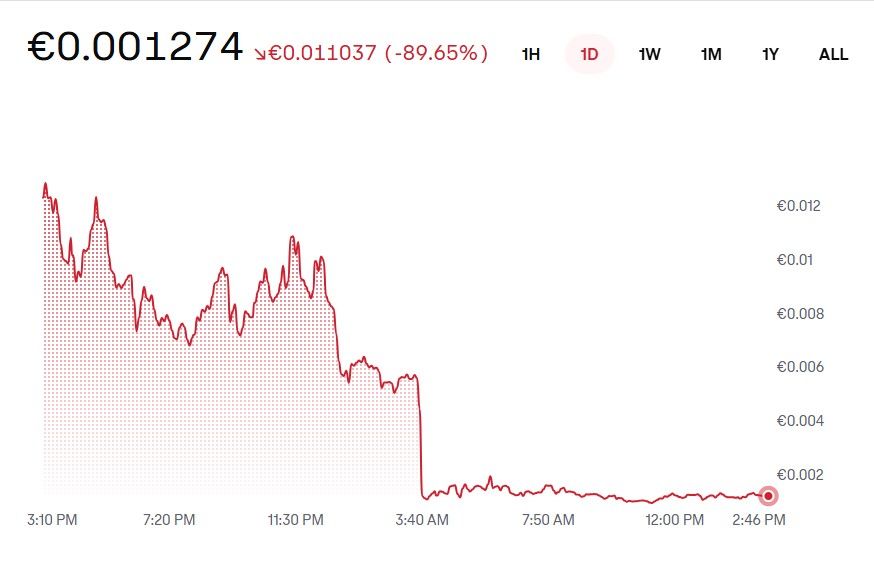
Coinbase CEO Brian Armstrong briefly swapped his X profile picture for a cartoon mascot. The move sent BRIAN, a meme coin on Coinbase’s Base network, surging. Its market cap jumped from under $1 million to $37 million in hours.
The token is officially named Coinbase Man. Developers sent roughly 80% of its 1 billion supply to Armstrong’s wallet at launch. The rally collapsed once Armstrong reverted to his original profile picture, a CryptoPunk NFT.
The Rally Behind BRIAN’s Surge
BRIAN’s climb followed a familiar pattern. A single social signal from a recognizable figure can move markets faster than any product update. Traders read Armstrong’s profile swap as tacit approval.
The reaction echoed how celebrity-driven meme coin rallies have played out elsewhere this year. It also followed a rockier stretch for Base, whose earlier content coin experiments had already left users burned.
Historically, executive gestures have moved token prices well before fundamentals catch up. Volume on decentralized exchanges spiked within minutes, and the token’s price climbed roughly thirty-sevenfold from its starting point.
However, neither Coinbase nor Armstrong endorsed BRIAN directly at any point.
BRIAN’s Reversal
Momentum reversed within hours. Armstrong swapped his picture back to his usual CryptoPunk, and liquidity for BRIAN thinned almost immediately. The token’s market cap fell by more than 90%, to near $1.3 million, according to Coinbase’s price page.
Meanwhile, trading volume remained elevated at around $12 million over 24 hours. That gap suggested traders were exiting rather than holding through the drop.
The reversal also arrived during a stretch of Coinbase controversies, including its recent AI prediction market dispute. Therefore, the episode resembled a narrative that overheated rather than a coordinated rug pull.

What the Crash Signals for Base
The swing raises questions about which network retail traders trust next, especially as rival chains’ meme coin volumes draw growing attention. Armstrong has separately criticized restrictive investor rules, arguing that regulation should protect rather than exclude smaller traders.
The contrast is notable. His comments favor retail access, yet BRIAN’s collapse shows how quickly that access can turn costly. The episode suggests that when executives even casually gesture toward a token, retail money follows quickly, regardless of the token’s backing.
The post Coinbase CEO Changed His Profile Picture and This Meme Coin Soared 37x appeared first on BeInCrypto.
Amazon Web Services (AWS) confirmed that a display bug caused some customer bills to be displayed in the trillions. In a few cases, estimates reached the quadrillions of dollars.
AWS Support said an initial rollback attempt failed to fix the error right away. The bug hit the Billing Console’s estimate tools, not actual invoices.
How Amazon’s Billing Console Broke
A faulty calculation entered AWS’s estimated billing subsystem and multiplied normal usage by absurd totals. Customers whose monthly bills typically run in the hundreds suddenly saw projections with 15 zeros.
This is not AWS’s first reliability scare this year. In May, an AWS data center outage disrupted trading at Coinbase, a major crypto exchange.
A Bitcoin price display glitch hit Revolut the same month. Both cases show how a single backend fault can ripple through products that millions of people use daily.
AWS also signed a $6 billion Snowflake AI infrastructure deal in May, a sign of its scale in enterprise computing. Therefore, a pricing bug at this scale draws attention well beyond AWS’s regular customer base.

Amazon’s “Very Slight Miscalculation”
Amazon’s technical teams continued working on the reporting issue after the rollback proved insufficient. The company said it expects corrected figures to appear soon.
Rather than stick to a dry apology, the official AWS account on X leaned into the absurdity of the numbers. It called the error a typo and a “slight miscalculation,” then added “very slight” for effect.
The post closed with a wink, asking customers what they planned to do with their imaginary trillions.
Amazon reiterated that no manual steps are required and that the bug affects estimates only, not billed amounts.
A Pattern of Automated Errors
The incident lands amid a broader run of automation mishaps at major platforms. Coinbase faced criticism this month over an AI prediction market error that surfaced a false World Cup result.
Meanwhile, AI mega-cap earnings season volatility has trading desks watching cloud providers closely for stability.
As AWS backfills accurate data across its dashboards, the episode raises a question about automated systems. How much scrutiny should these systems face before reaching customers?
The post Amazon AWS Apologizes After Quadrillion-Dollar Glitch Terrifies Cloud Users appeared first on BeInCrypto.

TradFi institutions are adopting blockchain to improve their existing operations, not because they have embraced decentralization, venture capital firm a16z said in its latest report.
The technology helps lower operating costs, speed up settlement, expand distribution, and “tighten its grip” on customer relationships, which makes it a practical business tool rather than an ideological shift.
TradFi’s Blockchain Push
Institutions are not blending into DeFi as it exists today. Instead, a16z stated that they are adopting only the elements of DeFi that fit their regulatory, operational, and risk requirements while leaving behind features that do not. This selective approach is reshaping blockchain-based finance into something different from both traditional finance and current DeFi.
The result is an emerging form of programmable financial infrastructure designed to meet institutional needs while using the technology as its foundation.
According to a16z, initiatives such as JPMorgan’s permissioned blockchain for institutional deposits and tokenized money market funds from BlackRock and Franklin Templeton are not examples of institutions embracing DeFi. Instead, they are using blockchain to improve existing financial services like interbank settlements, fund subscriptions, and yield-bearing products.
They benefit from blockchain features such as programmability, transparency, and atomic settlement while intentionally avoiding core DeFi principles like open access, pseudonymity, and trustless execution. The focus is on making traditional financial infrastructure more efficient rather than adopting decentralized finance in its original form.
Crypto Must Look Beyond Wall Street
The blockchain capabilities now being adopted by institutions were first developed in open, permissionless ecosystems rather than inside banks or traditional financial firms. Those environments allowed developers to test new financial models and infrastructure. As a result, institutional adoption is largely built on innovations that originated in the open crypto ecosystem.
The report argued that the industry should not focus too heavily on banks and asset managers simply because they are major customers. While traditional financial institutions represent an important source of demand, they do not define the industry’s full potential, and opportunities beyond TradFi should not be overlooked.
“Designing for institutional requirements is a legitimate and valuable pursuit, but it is only one lane, not the whole road.”
The post a16z Reveals What TradFi Really Wants From Blockchain appeared first on CryptoPotato.
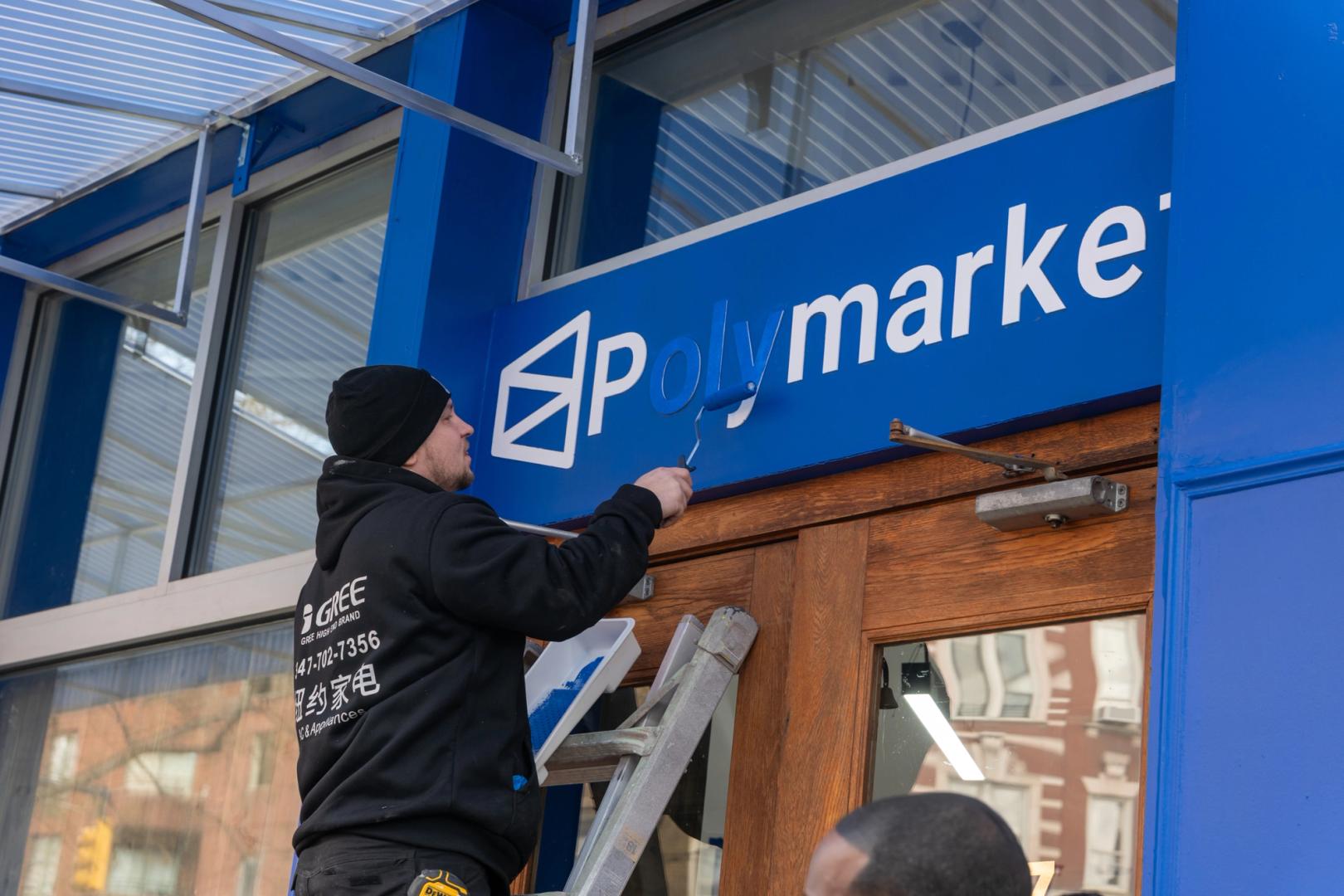
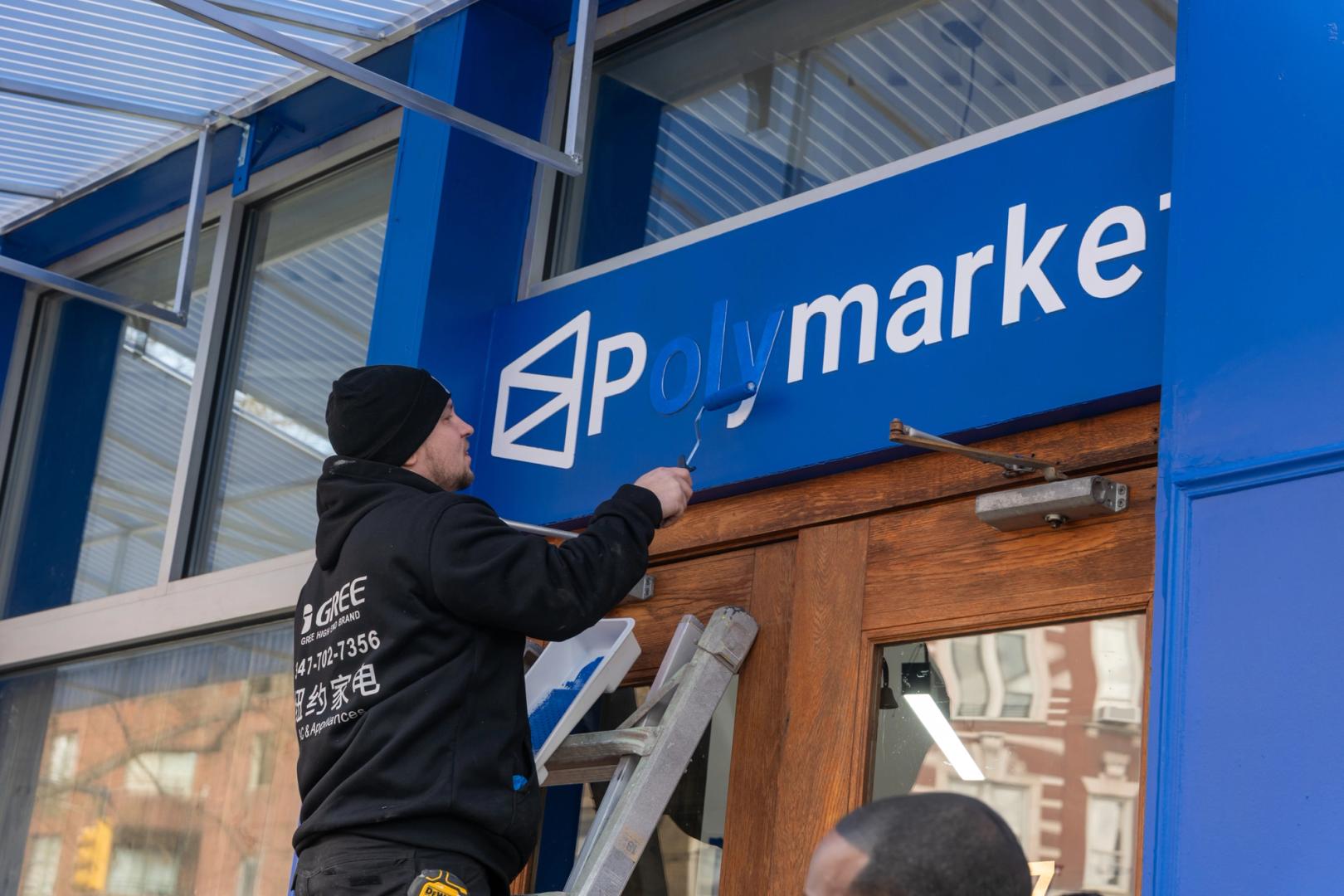
France’s gambling regulator, the Autorité Nationale des Jeux (ANJ), ordered internet service providers to block Polymarket on July 16, treating the prediction market as an illegal gambling site rather than a financial trading venue.
The ANJ said earlier restrictions had failed to keep French users off the platform. Polymarket drew 578,751 visits from 205,057 unique visitors in France in June, according to Similarweb data cited by the regulator, despite a ban on financial transactions in place since November 2024. A VPN was enough to bypass it.
The homepage remained accessible, allowing users to view live markets and odds. The ANJ said the real-time odds display promoted an unauthorized gambling service.
“The site’s homepage, which dynamically displays real-time odds for various events open to betting, thus serves as a major channel for disseminating and promoting Polymarket’s offerings, even though the site’s operations are not authorized in France,” the regulator wrote. Fines can reach 100,000 euros ($114,380).
Polymarket didn’t immediately respond to a comment from CoinDesk.
The ANJ also cited a complaint from France’s weather service, Météo-France, over a tampered temperature sensor tied to weather-based bets, prompting the Paris prosecutor’s cybercrime unit to open an investigation on May 4.

Why Lewis & Cooper of Northallerton is a ‘crown jewel’

Thai PM Meets 40+ European Firms to Boost Trade and Advance EU FTA

Inside Zcash’s new node that targets Visa-scale privacy at 50,000 transactions per second


-
 NewsBeat3 days ago
London Mayor Sadiq Khan handed a peerage by Keir Starmer alongside 15 other Labour figures… just days before the PM leaves No10
-

 Fashion1 day ago
Weekend Open Thread – Corporette.com
-

 Politics19 hours ago
The House | The City of London can help the new chancellor deliver growth in every postcode
-

 Crypto World3 days ago
CFTC blocks Kalshi from unwinding Michigan trades after court order
-

 Politics4 days ago
Young campaigners urge incoming PM to act on outdoor junk food ads
-

 Business3 days ago
Nvidia Stock Slips After Big Tuesday Rally as Huang Confirms Vera Rubin Chip Is Now in Production Today
-

 Crypto World19 hours ago
Ripple Payments Joins MiCA With 14 Firms, Does It Mean Anything For XRP?
-
 Entertainment4 days ago
Disney’s Most Ambitious Failed Star Wars Attraction Is Coming to SDCC
-

 Crypto World1 day ago
Ripple wins EU-wide access as ESMA adds it to MiCA register
-

 Business3 days ago
Palantir Shares Rise After Expanded Nvidia Partnership and Fresh Analyst Upgrades Ahead of Earnings Day
-

 Crypto World2 days ago
Injective Submits SEC Transfer-Agent Registration to Onchain Ownership Records
-

 Tech5 days ago
Get Your ESP32 Sunny Side Up With This Solar Dev Board
-

 News Videos4 days ago
XRP BOMBSHELL… XRP OMBOARDED FOR TRANSACTIONS!!!
-

 NewsBeat2 days ago
Registration is now open for March for Men with Kev 2026
-

 Tech4 days ago
Dark Secrets Emerge When Jailbreaking LLMs
-
 Sports3 days ago
New Cornerback Enters Vikings Trade Rumor Mill
-

 News Videos2 days ago
Money | Class 12 Economics | CBSE Board Exam 2026-27
-

 Business2 days ago
Banco Bilbao Vizcaya Argentaria, S.A. (BBVA) Discusses Global Macro Environment and Economic Outlook for Core Markets Transcript
-

 Crypto World2 days ago
Claude Fable 5 Slips to Second in AI Coding Leaderboard
-
 Tech5 days ago
Cloudflare Precursor Watches Your Mouse and Keyboard To Decide If You Are Human
You must be logged in to post a comment Login