

Crypto World
Did L2s break Ethereum’s ultrasound money?



Ethereum’s best marketing line was that using it destroyed it, that every transaction burned ETH and shrank the supply. Then the network solved its scaling problem, activity fled to layer 2s, and the burn collapsed. The scaling worked. The scarcity did not survive it.
Summary
- Ethereum’s “ultrasound money” thesis held that EIP-1559 fee burning would outpace new issuance, making ETH deflationary and a superior store of value to Bitcoin.
- It worked briefly after the 2022 Merge. Then the March 2024 Dencun upgrade moved activity to layer-2 rollups paying near-zero fees, and the daily burn collapsed from thousands of ETH to as low as 50 to 70.
- ETH has since been mildly inflationary, with net supply growth around 0.2% to 0.8% annually depending on the period, reversing the deflation the thesis promised.
- The December 2025 Fusaka upgrade added EIP-7918, a blob fee floor designed to restore a minimum burn. Fidelity modeled it would have added roughly $78.6 million in burn across 93% of days since 2024.
- The deeper tension is unresolved: a cheap, scaled Ethereum burns less than a congested, expensive one, so the network’s success as infrastructure works against its scarcity as an asset.
For about eighteen months, Ethereum had the best story in crypto, and the story was a paradox: the more people used the network, the rarer its token became. Every transaction burned a little ETH, and when the network was busy enough, it burned more than it created. Supply went down. The community called it ultrasound money, a deliberate jab at Bitcoin’s “sound money,” complete with a bat emoji and a movement.
For a while, the data backed it up. Then Ethereum did the thing it had promised to do for years, which was to scale, and scaling broke the story. Activity moved to layer-2 networks that pay almost nothing to the base chain, the burn collapsed, and ETH quietly went inflationary again. This is the story of how Ethereum’s greatest technical success dismantled its best economic narrative, and whether a December upgrade can put the pieces back.
What ultrasound money actually meant
The mechanism is worth getting exactly right, because the whole debate turns on it.
In August 2021, Ethereum activated EIP-1559, which changed how transaction fees work. Instead of paying miners directly, every transaction now pays a base fee that is burned, permanently removed from circulation. The busier the network, the higher the base fee, and the more ETH destroyed. On its own, that is just a fee-burning mechanism. It became a monetary thesis when Ethereum switched from proof-of-work to proof-of-stake in the September 2022 Merge, which cut new ETH issuance by roughly 90%, because the network no longer had to pay energy-intensive miners.
Put the two together, and you get the ultrasound thesis. Issuance dropped to a trickle after the Merge. Burning continued with every transaction. If burning exceeded issuance, total ETH supply would shrink over time, making the asset deflationary. And a deflationary asset with growing demand should, in theory, appreciate. Ethereum would become harder money than Bitcoin, whose supply still grows, hence “ultrasound.” The tracking site ultrasound.money existed to display exactly this: supply ticking down, day by day.
For a stretch after the Merge, it happened. Supply fell back toward and below the level it sat at during the Merge itself. Burns outpaced issuance. The narrative was not hype; it was, for that window, an accurate description of the data. That is what made it powerful, and what made its reversal so awkward.
How scaling broke it
The break came from Ethereum solving its most famous problem, and the irony is total.
Ethereum’s scaling strategy is to push transactions off the expensive base layer and onto layer-2 rollups, networks like Arbitrum, Optimism, and Base that process transactions cheaply and then post compressed data back to Ethereum for security. The base layer becomes a settlement and data-availability layer; the rollups handle the actual activity. This is the roadmap Ethereum has pursued for years, and it works.
The March 2024 Dencun upgrade was the pivotal moment. It introduced EIP-4844, “blob” transactions, a separate and far cheaper data channel for rollups to post their data. Costs for layer 2s dropped by a factor of 10 to 100. Activity that used to happen on mainnet, paying mainnet fees and burning mainnet ETH, moved to rollups paying blob fees that were, in practice, close to zero because blob space was massively oversupplied relative to demand.
The effect on the burn was immediate and severe. Before Dencun, Ethereum burned thousands of ETH per day during busy periods. After Dencun, daily burn dropped to as low as 50 to 70 ETH. The base layer had lost its primary fee source. With issuance running around 1,700 ETH per day and burn collapsing well below that, the equation flipped: Ethereum began creating more ETH than it destroyed. By various measures across 2025 and into 2026, net annual inflation ran somewhere between roughly 0.2% and 0.8%, depending on the window. ETH supply crossed back above its Merge-era level. The deflation was over.
The mechanism that made ultrasound money true, EIP-1559 burning at scale, had not been removed. It had been bypassed. The activity simply moved to a layer where the burn does not happen in any meaningful amount. Ethereum scaled successfully and, in doing so, severed the link between usage and scarcity that the entire thesis depended on.
The bull case: it still works, just differently
The response from Ethereum’s defenders is not denial. It is reframing, and parts of it are genuinely strong.
The first point is that elastic scarcity is the actual feature, not permanent deflation. Ethereum was never designed to deflate forever at a fixed rate. It was designed to burn in proportion to demand, which means it becomes deflationary when the network is busy and mildly inflationary when it is quiet. During periods of high mainnet activity, above roughly 16 gwei average gas, burn still exceeds issuance, and ETH still goes net deflationary, temporarily. The mechanism works exactly as designed; it is just that a scaled network spends more time in the quiet regime. In this reading, ultrasound money was always conditional, and the condition is demand, not a promise.
The second point is that issuance is still radically lower than before. Even mildly inflationary, Ethereum issues roughly 90% less ETH than it did under proof-of-work. Compared to Bitcoin, which currently inflates at around 0.8% annually on a fixed schedule, Ethereum’s roughly 0.2% net inflation in calmer periods is actually lower. Both assets inflate in 2026; Ethereum, by some measures, inflates less. The “harder than Bitcoin” claim survives in a narrow, technical form even without net deflation.
The third point is that the supply figure overstates the sell pressure. Roughly 28% to 30% of all ETH is locked in staking, earning yield and not circulating. The tradeable float, ETH actually available on exchanges, is meaningfully smaller than the headline supply number, and it shrinks as more ETH is staked. A modestly inflating total supply with a large and growing staked portion is a very different pressure than the raw inflation number suggests. Demand from ETFs, treasury companies, and staking can absorb 0.2% inflation without difficulty.
And the fourth point is simply that the store-of-value case never rested on deflation alone. As long as demand for Ethereum’s blockspace, its role as settlement for stablecoins, tokenization, and DeFi, grows faster than supply, price can rise regardless of whether supply ticks up 0.2% a year. Scarcity was a nice story. Utility is the real thesis.
The bear case: the narrative was load-bearing
The skeptical reading is that the ultrasound story was not just marketing, that it was doing real work in the investment case, and that losing it matters more than the reframing admits.
The blunt version comes from the on-chain data and the people watching it leave. Daily network fee revenue on Ethereum fell from near $40 million in early 2025 to a local low around $10 million in 2026. That is not just a burn problem; it is a value-accrual problem. If the base layer captures little fee revenue because activity happens on rollups that pay it almost nothing, then holding ETH is a bet on an asset whose own network is monetizing its users poorly. Some analyses have tied this directly to developer attrition and reduced whale support, framing the end of ultrasound money as the end of a period when ETH had a clean, quantifiable reason to appreciate.
The deeper problem is structural and hard to argue away: a scaled, efficient Ethereum is less deflationary than a congested, expensive one. This is the tension at the center of the whole debate. The very thing that makes Ethereum better as infrastructure, cheap transactions, more capacity, activity on fast rollups, is the thing that reduces the burn. Ethereum cannot simultaneously be the cheap, high-throughput settlement layer it wants to be and the fee-burning deflationary asset the ultrasound thesis needed. Those are in direct conflict, and the roadmap chose scaling. The asset thesis was, in a real sense, sacrificed to the technology roadmap.
Then there is the value-capture question that rollups sharpen. Layer 2s use Ethereum for security and pay it a pittance for the privilege. Robinhood’s own chain is an example: analyses of corporate L2s show the base layer capturing a rounding error of the economics while providing the security that makes the whole arrangement credible. If Ethereum’s future is thousands of rollups settling to it cheaply, then Ethereum is providing enormous value and capturing little of it, and no amount of narrative reframing fixes a value-capture problem that lives in the fee structure.
The fix nobody is talking about
Which brings us to December 2025, and the upgrade that was designed, in part, to address exactly this, and that most of the market ignored.
The Fusaka upgrade activated on December 3, 2025. Its headline features were about scaling further, PeerDAS and expanded blob capacity. But buried in it was EIP-7918, the “blob base fee bound,” which is the most direct attempt yet to repair the burn. The problem Dencun created was that blob fees could collapse to near-zero, one wei, when execution costs dominated and blob demand was soft, which meant rollups consumed Ethereum’s capacity almost for free and burned almost nothing. EIP-7918 sets a floor: it ties the minimum blob fee to the execution base fee, roughly the execution base fee divided by 16, so that even in quiet periods rollups pay a meaningful minimum, and a minimum stream of ETH gets burned.
The modeling is striking. Fidelity Digital Assets analyzed what would have happened if EIP-7918 had been active since blobs launched, and found that on 93% of days since the 2024 Dencun upgrade, the adjusted fee would have exceeded the actual fee, generating an estimated additional $78.6 million, roughly 24,641 ETH, in cumulative blob-fee revenue. Blockworks noted that had the mechanism been introduced in June 2025, burnt blob fees would have been nearly 8x higher. The intent is explicit: restore a floor under the burn so that as stablecoins, DeFi, and tokenization migrate to rollups, ETH still captures value from that activity instead of subsidizing it.
The honest caveat is that this is a floor, not a restoration. EIP-7918 prevents the burn from collapsing to zero; it does not recreate the thousands-of-ETH-per-day burn of the congested mainnet era. Whether it produces measurable, sustained deflation depends on how much activity flows through blobs and how high execution base fees run, and the market is still watching. It is a serious, well-designed attempt to reconnect usage and scarcity. It is not a return to 2022.
Sound money versus ultrasound money, honestly compared
Because the entire thesis was built as a shot at Bitcoin, it is worth putting the two monetary models side by side without the tribalism, since the comparison is more interesting than either camp admits.
Bitcoin offers fixed scarcity. The supply schedule is written into the protocol, capped at 21 million coins, and halves on a predictable timetable roughly every four years. A holder knows today, with certainty, what Bitcoin’s issuance will be in 2030 and 2040. That certainty is the entire product. Bitcoin does not react to demand, does not burn, does not adjust; it simply issues on schedule toward a hard cap, and its current inflation runs around 0.8% annually, trending toward zero over decades. The trade-off Bitcoin holders accept is that the base layer offers little native utility and no yield. You hold it for the certainty, and you give up productivity in exchange.
Ethereum offered, and to a degree still offers, elastic scarcity. Supply responds to network demand: high usage burns more and can push ETH net deflationary; low usage burns less and lets mild inflation through. The appeal was a token that becomes scarcer precisely when it is most used, tying the asset’s scarcity to the network’s success. The trade-off, which the L2 era exposed, is that elasticity cuts both ways.
A demand-responsive supply is only deflationary when demand is high on the layer that burns, and Ethereum deliberately moved demand to layers that do not burn. Bitcoin’s rigidity, often criticized as inflexible, turned out to be the thing that made its monetary promise keepable. Ethereum’s flexibility, often praised as sophisticated, turned out to be the thing that made its monetary promise conditional.
The honest scorecard is that these are different products for different buyers, not better and worse versions of the same thing. Bitcoin sells certainty and asks you to forgo utility. Ethereum sells utility and asks you to accept that its scarcity depends on how that utility is used. The ultrasound-money era was the brief window when Ethereum appeared to offer both, certainty of deflation and utility of a working network, and that window closed not because Ethereum failed but because it succeeded at scaling.
A holder choosing between them in 2026 is really choosing between guaranteed scarcity with no yield and demand-driven scarcity with staking yield and network utility. Framed that way, the loss of ultrasound money is less a defeat than a clarification: Ethereum was never going to be Bitcoin, and the burn was hiding how different the two bets actually are.
What this means for holding ETH
Strip away the narrative fight and the practical question is whether the ultrasound story mattered to the price, and the uncomfortable answer is that it is hard to tell, because ETH has underperformed through the entire period regardless.
The clean way to see it: the ultrasound thesis was strongest right after the Merge, and it has been dismantled steadily since Dencun in March 2024. Over that same window, ETH has been a persistent underperformer against both Bitcoin and its own former highs. Either the market was pricing the loss of the deflation narrative, or the market never cared about the narrative and ETH’s problems lie elsewhere, in L2 value leakage, in competition from Solana, in the sheer difficulty of the modular roadmap. Both readings are defensible, and they point to different conclusions about whether fixing the burn fixes the price.
The most honest framing is that ultrasound money was a proxy for a real question that has not gone away: does Ethereum capture value from its own success? When the network was congested and expensive, the answer was visibly yes; the burn made it legible. When the network scaled and cheapened, the answer became murky, and the burn stopped telling the story. EIP-7918 is an attempt to make the answer legible again by putting a floor under value capture.
Whether it works will show up not in the marketing but in two numbers over the next year: net ETH supply, and base-layer fee revenue. If both turn up meaningfully, the thesis has a second life. If they do not, then ultrasound money was a phase, not a property, and Ethereum’s investment case has to stand on utility alone, which is a harder, slower, less tweetable argument than the one that shrank the supply.
Frequently Asked Questions
What is Ethereum ultrasound money?
It is the thesis that Ethereum’s ETH token would become deflationary and a superior store of value to Bitcoin. It rests on two mechanisms: EIP-1559, activated in 2021, which burns a portion of every transaction fee, and the 2022 Merge, which cut new ETH issuance by roughly 90%. When burning exceeds issuance, total supply shrinks. The term was a play on Bitcoin’s “sound money” branding.
Is Ethereum still deflationary in 2026?
Not on a net basis, in normal conditions. After the March 2024 Dencun upgrade shifted activity to cheap layer-2 rollups, the burn collapsed, and ETH became mildly inflationary, with net supply growth around 0.2% to 0.8% annually depending on the period. During bursts of high mainnet activity, it can still turn temporarily deflationary, but the sustained deflation of the immediate post-Merge period ended.
Why did layer 2s break the burn?
Because they moved activity off the base layer, where transactions burned meaningful ETH, onto rollups that pay near-zero fees. The Dencun upgrade introduced cheap “blob” transactions for rollups, cutting their costs 10 to 100 times. Blob space was oversupplied, so blob fees fell close to zero, and the daily burn dropped from thousands of ETH to as low as 50 to 70. The activity continued; the burn did not follow it.
Does this mean ETH is a worse investment?
Not necessarily, and defenders make several counterpoints: issuance is still about 90% lower than under proof-of-work, roughly 0.2% net inflation in calm periods is actually below Bitcoin’s, nearly a third of ETH is locked in staking and off the market, and the real case rests on demand for blockspace rather than deflation. Critics counter that base-layer fee revenue collapsed too, raising a genuine value-capture problem.
What is EIP-7918?
A change introduced in Ethereum’s December 2025 Fusaka upgrade that sets a minimum price for blob transactions, tied to the execution base fee, roughly that fee divided by 16. It prevents blob fees from collapsing to near-zero during quiet periods, ensuring a minimum stream of ETH is burned. Fidelity modeled that it would have added roughly $78.6 million in cumulative burn across 93% of days since 2024 had it existed earlier.
Did Fusaka restore ultrasound money?
No, it put a floor under the burn rather than restoring the deflation of the post-Merge era. EIP-7918 stops the burn from collapsing to zero and improves value capture as activity migrates to rollups, but it does not recreate the thousands-of-ETH-per-day burn of the congested mainnet period. Whether it produces sustained net deflation depends on blob activity and execution fees, and remains to be seen.
Is Ethereum still harder money than Bitcoin?
In a narrow technical sense, sometimes. In calm periods, Ethereum’s roughly 0.2% net inflation can run below Bitcoin’s roughly 0.8% fixed-schedule inflation. But Bitcoin offers predictable, protocol-guaranteed scarcity indefinitely, while Ethereum’s supply is elastic and responds to demand, so it can inflate more during quiet, scaled periods. They offer different kinds of scarcity: fixed and certain versus elastic and demand-driven.
What should I watch to know if the thesis recovers?
Two numbers over the next year: net ETH supply growth, and Ethereum base-layer fee revenue. If EIP-7918 and rising rollup activity push net supply back toward flat or negative while base-layer revenue climbs from its roughly $10 million lows, the value-capture story recovers. If supply keeps growing and fee revenue stays depressed, ultrasound money was a temporary phase, and ETH’s case rests on utility and demand alone.
Disclaimer: This article is for information and educational purposes only and does not constitute financial or investment advice. It describes monetary mechanics and network upgrades whose effects are uncertain and still developing. Nothing here is a recommendation to buy or sell any asset. Always do your own research. Figures on supply, burn, and inflation move continuously and are accurate as of July 17, 2026.

BNB Chain has become the largest blockchain for assets tracked under Franklin Templeton’s Benji tokenization platform, with about $1.5 billion recorded on the network.
Summary
- BNB Chain now hosts $1.5 billion of Franklin Templeton Benji platform assets, leading all networks.
- RWA.xyz data shows BNB Chain holds 61.71%, while Stellar has fallen to second place overall.
- Franklin Templeton keeps expanding tokenized finance through Kraken, MoonPay, Binance, and multiple public blockchains globally.
The figure represents 61.71% of the platform’s distributed asset value, according to RWA.xyz data cited byBNB Chain.
The milestone marks a sharp change in the platform’s network distribution. BNB Chain holdings rose 1,226% over the past month, moving ahead of Stellar, which previously held the largest share. The data refers to the wider Benji platform rather than only the standalone BENJI tokenized money market fund.
BNB Chain takes the largest share of Benji assets
RWA.xyz lists Franklin Templeton’s Benji platform with about $2.44 billion in distributed assets as of July 18. BNB Chain accounts for roughly $1.5 billion of that total. Stellar follows with about $573.4 million, while Ethereum holds around $159.1 million.
Base, Arbitrum, Avalanche, Polygon and Aptos hold smaller amounts. The shift follows Franklin Templeton’s decision to bring its Benji Technology Platform to BNB Chain in 2025. The integration allowed the asset manager to use BNB Chain for transactions and ownership records tied to tokenized financial products.
RWA.xyz separately lists the BENJI asset at about $734.3 million, showing why the platform and fund figures should not be treated as identical. The broader platform includes multiple tokenized products, while BENJI represents one share of the Franklin OnChain U.S. Government Money Fund for investors.
Stellar remains central to Franklin Templeton’s tokenization history
Franklin Templeton launched its blockchain-based money market fund on Stellar in 2021. The product became an early example of a U.S.-registered mutual fund using public blockchain technology to process transactions and maintain share ownership records.
Crypto analyst ALLINCRYPTO said Stellar provided the early foundation before Franklin Templeton expanded its tokenization strategy across more networks. However, current RWA.xyz data shows that BNB Chain now holds the largest share of assets tracked across the broader Benji platform. The data does not show how much of the recent increase came from new issuance compared with assets moved between networks.
Franklin Templeton expands BENJI access across crypto platforms
Franklin Templeton has also expanded the use of its tokenized products through major crypto companies. As reported by crypto.news, the firm added BENJI to MoonPay Trade in June, allowing eligible institutional clients to move between stablecoins and tokenized fund products through an onchain trading system.
The asset manager also partnered with Kraken parent Payward to integrate BENJI as a collateral and cash management tool. As reported by crypto.news, the partnership also covers plans to develop more tokenized investment products. A separate Franklin Templeton and Binance arrangement allows eligible institutions to use tokenized money market fund shares as off-exchange collateral.
Tokenized finance gains wider institutional distribution
Franklin Templeton’s multi-chain strategy comes as more traditional financial firms use public blockchains to distribute regulated investment products. The company has expanded its tokenization work across several networks while also developing new products and distribution partnerships.
As reported by crypto.news, Franklin Templeton has also worked with Ondo Finance on tokenized ETFs designed for round-the-clock wallet-based trading outside the United States. The latest BNB Chain data shows how quickly blockchain distribution can change as issuers add new networks and institutional access points.
For now, BNB Chain leads Franklin Templeton’s broader Benji platform by distributed value, while Stellar remains the network where the firm began its public blockchain fund strategy.


Strategy Chairman Michael Saylor has stepped up his opposition to Bitcoin Improvement Proposal 110, arguing that the temporary soft fork could weaken Bitcoin’s neutral base rules.
Summary
- Saylor says BIP 110 risks Bitcoin neutrality by restricting transactions through new consensus-level protocol rules.
- BIP 110 would temporarily limit data-heavy transactions while leaving outputs created before activation entirely unaffected.
- Miner support remains near zero, while Saylor and Back warn disputed rules could divide Bitcoin.
In an article titled “110 Reasons BIP 110 Is a Bad Idea,” Saylor said the network should not use consensus changes to decide which valid transactions deserve access to block space.
In Saylor’s article, he argued that Bitcoin cannot reliably determine why transaction data exists. He closed with the line: “Bitcoin does not need guardians of purity. It needs guardians of neutrality.”
Saylor challenges consensus restrictions on transaction data
BIP 110, formally called the Reduced Data Temporary Softfork, would apply consensus rules for about one year. The official BIP 110 specification would restrict large data fields, limit OP_RETURN outputs to 83 bytes and cap payloads at 256 bytes. Outputs created before activation would remain exempt.
Supporters say the proposal would reduce arbitrary data storage and lower burdens on node operators. Saylor accepts that some inscriptions, tokens and files may have value or may be linked to harmful activity. However, he questions whether those concerns justify changing Bitcoin’s consensus rules to block transaction structures the network currently accepts.
Neutrality becomes the center of the BIP 110 debate
Saylor’s argument focuses on the difference between transaction intent and transaction structure. He said the protocol cannot know whether data represents an image, proof, authentication record, contract or another future use. Under his view, miners, node operators and fee markets should handle disputed activity without imposing new base-layer restrictions.
The position follows an earlier clash over the proposal. Saylor and Blockstream co-founder Adam Back opposed BIP 110 and warned that enforcing disputed rules without broad support could create fork risks. Saylor previously called the proposal’s consensus precedent “extremely dangerous.”
Miner support remains a key test for BIP 110
BIP 110 uses a modified activation process that seeks support from 1,109 of 2,016 mined blocks, equal to 55%. Crypto.news reported on July 12 that miner signaling remained near zero, far below the threshold needed to lock in the proposed rules.
Bitcoin developer Luke Dashjr continues to support the proposal. As reported by crypto.news, Dashjr rejected calls to withdraw BIP 110 as debate grew over Ordinals, Runes and other data-heavy uses. Supporters argue that such activity increases storage demands and moves Bitcoin away from peer-to-peer money.
Saylor calls for slower change at Bitcoin’s base layer
Saylor’s latest comments fit his broader view that Bitcoin should change cautiously. He has argued that the network’s value comes from predictable rules rather than frequent feature changes. His BIP 110 critique says policy tools, pruning, fee pricing and second-layer development offer alternatives for managing resource use without changing consensus.
The dispute also tests how Bitcoin reaches agreement when developers, miners, node operators and users disagree. As reported by crypto.news, Saylor described Bitcoin as a network where capital, node activity and mining power remain in balance. His latest position places neutrality at the center of that debate while BIP 110 moves toward its activation window.
Crypto World
This Week’s Biggest Gainers and Losers Revealed as Bitcoin (BTC) Aims at $65K: Weekend Watch
Bitcoin continues with its gradual weekend climb and has neared $65,000 after bouncing from $63,700 yesterday.
Most larger-cap alts have remained still over the past 24 hours, which is why we will focus on their weekly moves, where ZEC, CRO, LTC, and ONDO stand out.
Can BTC Reclaim $65K?
The previous weekend was also quite sluggish but slightly positive for BTC, as it stood at around $64,000 for 48 hours straight despite the new attacks between the US and Iran. However, the market finally priced in the skyrocketing tension on Monday morning with a painful dip to $61,800.
The softer-than-expected CPI numbers for June announced on Tuesday, though, were well received by BTC as the asset flew by several grand to $65,600 on Wednesday. This became its highest price tag in about three weeks.
However, it couldn’t keep the momentum going and crashed toward $62,000 once again on Thursday and Friday. Nevertheless, the bulls intercepted the move and didn’t allow another leg down. Instead, BTC recovered some ground to $64,000 yesterday and climbed to almost $65,000 earlier today. It still remains below that level, which has been categorized as key for its short-term price performance.
Bitcoin’s market capitalization has risen to almost $1.3 trillion on CG, while its dominance over the altcoins has rocketed to over 57%.

Weekly Gainers and Losers
Ethereum jumped to almost $1,950 earlier this week, and even though it has dropped by nearly $100 since then, it’s still 4.2% up since last Sunday. ZEC is the biggest gainer from the larger caps, gaining 9% to $560. LTC, ONDO, and CRO have posted impressive increases as well, up to 8% in the case of Crypto.com’s native token.
In contrast, HYPE has plunged by more than 9%. Nevertheless, it has defended the $60 support and now sits inches above it. BCH, CC, TAO, and AAVE have marked significant losses since last Sunday as well.
The total crypto market cap, though, has increased by approximately $60 billion since this time a week ago and now sits above $2.270 trillion on CG.

The post This Week’s Biggest Gainers and Losers Revealed as Bitcoin (BTC) Aims at $65K: Weekend Watch appeared first on CryptoPotato.


FTX will begin its fifth creditor distribution on July 31, sending nearly $900 million to eligible claimants under its court-approved recovery plan.
Summary
- FTX will distribute nearly $900 million to eligible creditors beginning July 31 through approved providers.
- The fifth payout round pushes total creditor distributions to about $10 billion since FTX collapsed.
- Bankman-Fried faces growing political resistance to clemency after losing his appeal against the fraud conviction.
The payment will cover creditors in the Convenience and Non-Convenience Classes who completed required steps before the June 16 record date.
A repayment update shared by creditor advocate Sunil Kavuri said eligible users can receive funds through BitGo, Kraken or Payoneer. Payments should arrive within one to three business days after distribution starts. The new round brings total payouts since FTX entered bankruptcy to about $10 billion.
FTX moves ahead with fifth creditor distribution
FTX’s recovery process continues nearly four years after the exchange filed for Chapter 11 bankruptcy in November 2022. The company collapsed after a liquidity crisis exposed a large gap in customer assets and left users unable to access funds held on the platform.
Convenience claims below $50,000 are set to receive 120% of their allowed claim value under the recovery plan. Other eligible classes are expected to receive distributions of about 103% to 105%, according to the creditor update. FTX said future dates will depend on claim approvals and eligibility.
Bankruptcy estate keeps returning recovered funds
The July payment follows earlier rounds that returned billions of dollars to former customers and creditors. The estate has funded repayments through recovered cash, investments and asset sales carried out during the bankruptcy process.
Some of those sales have drawn criticism from creditors because several assets later rose sharply in value. As reported by crypto.news, the estate sold a 5% stake in Cursor developer Anysphere for $200,000 in 2023. That former stake was later estimated at about $3 billion based on a reported $60 billion valuation.
Legal disputes tied to FTX remain active
FTX’s collapse continues to produce lawsuits involving former executives, advisers and other parties linked to the exchange. In May, law firm Fenwick & West agreed to pay $54 million to settle claims brought by former FTX customers.
As reported by crypto.news, the plaintiffs accused the firm of helping create legal structures that allowed FTX and Alameda Research to move customer funds without proper safeguards. Fenwick denied wrongdoing, and the proposed settlement requires court approval.
Bankman-Fried faces resistance to clemency
Former FTX CEO Sam Bankman-Fried remains in federal prison after a jury convicted him of fraud and conspiracy charges linked to the exchange’s collapse. A judge sentenced him to 25 years in prison in 2024.
His legal options narrowed in June when a federal appeals court upheld his conviction and sentence. As reported by crypto.news, the court rejected arguments that the trial judge improperly limited evidence that Bankman-Fried wanted to present.
Bankman-Fried has also sought a presidential pardon, but the effort faces political opposition. The U.S. Senate unanimously adopted a resolution opposing clemency, as reported by crypto.news. The resolution cannot prevent a president from granting a pardon, but it places senators on record against clemency.
The latest $900 million payout keeps FTX’s repayment process moving while legal cases tied to the exchange remain unresolved. Creditors who qualify for the July round must use an approved distribution provider and complete all required verification steps before receiving funds.


Coinbase product executive Jordan Fish, better known as Cobie, said the company has become too distant from crypto-native users as questions grow over trust in the Base ecosystem.
Summary
- Cobie says Coinbase lost touch with crypto-native users after avoidable mistakes damaged trust across Base.
- Base App leadership shifted to Cobie as Coinbase refocuses product on trading and onchain activity.
- Rune questioned whether Base can attract users while community members continue to distrust management decisions.
His comments followed a public challenge from crypto commentator Rune over how the Base App plans to attract onchain users after recent community disputes.
Cobie said he had taken responsibility for the Base App and Coinbase trading products only days earlier. He also made clear that he does not run the Base blockchain. Jesse Pollak confirmed the leadership change, saying he had handed the app to Cobie so he could focus on the Base network.
Rune questions whether Base can rebuild user trust
Rune asked how the Base App could bring more users onchain when some supporters feel the ecosystem has repeatedly damaged their trust. He said Base still has strong infrastructure but questioned whether the project could attract new users without changing how its teams interact with the community.
Cobie acknowledged the criticism in a public exchange shared by Wu Blockchain. He said Coinbase had operated in an “ivory tower” to some extent and had become distant from users, especially crypto-native users. He also said Coinbase and Base had lost a large amount of trust through mistakes that could have been avoided.
Cobie added that the problems could not be fixed within a week or even a month. He said he plans to listen more closely to onchain users and create stronger links between product developers and the people using Coinbase products.
Cobie takes over as Base changes product direction
The comments came days after Pollak transferred leadership of the Base App to Cobie. As reported by crypto.news, Pollak stepped back from the app after Base’s focus on social products failed to produce the growth the team expected.
Pollak will now focus more closely on the Base blockchain, while Cobie oversees the Base App alongside Coinbase’s wider trading products. The shift gives Cobie responsibility for products including the main Coinbase App and its advanced trading services.
The management change also follows a wider reset in Base’s product strategy. Coinbase CEO Brian Armstrong recently admitted that Base had “messed up” with content coins, as reported by crypto.news. The network has since shifted more of its attention toward trading, payments and AI-related products.
Base faces pressure after product and network setbacks
Base has faced several setbacks while changing its product strategy. The network suffered a nearly two-hour halt in block production in June after an invalid block created a consensus problem.
As reported by crypto.news, Pollak said user funds remained safe during the outage but described the incident as unacceptable for infrastructure built to support financial activity around the clock.
Base has also continued to expand its technical infrastructure. The network recently activated its B20 token standard, which allows developers to issue stablecoins and tokenized assets with built-in controls for issuers.
The B20 standard followed Base’s Beryl network upgrade, as reported by crypto.news, and forms part of the network’s broader push into trading and financial applications.
Cobie says closer contact with users will take time
Cobie said rebuilding trust would require sustained work. He plans to listen more closely to crypto-native users, connect product teams more directly with the community and focus on products that users actually want.
His comments focused mainly on the Base App and Coinbase trading products rather than the Base blockchain itself. Rune later said Base’s underlying infrastructure could still compete among leading layer-2 networks but argued that the project needs to place users at the center of its decisions.
Cobie joined Coinbase after the company acquired Echo, the onchain fundraising platform he founded. Coinbase announced the $375 million Echo acquisition in October 2025, bringing Cobie into a larger role within the company.
His move into leadership of the Base App now comes as Coinbase tries to rebuild stronger ties with crypto-native users while expanding its trading and onchain products.

Bitcoin has managed to recover some ground from the early July drop to a multi-year low and now fights for $65,000. On the more macro scale, though, the asset has flashed a signal that preceded one of the most impressive rallies in its recent history.
Can it do it again now?
BTC to $500K and Beyond?
The signal in question was the formation of a bullish RSI divergence on the weekly chart, as outlined by popular analyst Ali Martinez. It emerges when the asset’s price and its 14-period Relative Strength Index on a weekly chart move in the opposite direction, suggesting that the underlying trend is losing momentum.
According to Martinez, the last time this happened was four years ago during the 2022 bear cycle. At the time, BTC bottomed at around $16,000 before the next expansion phase began, culminating three years later in a new peak of over $126,000.
The subsequent correction since that October peak has driven the cryptocurrency south to around $60,000, where the bullish RSI divergence appeared. History is no indicator of future price performance, but it’s still fun to speculate that if bitcoin were to mimic its 2022-2025 rally precisely, it would skyrocket to over half a million dollars per unit.
The Right and Wrong Strategies
Fellow analyst Altcoin Sherpa noted that the 200-EMA on the 4-hour chart had flipped for the first time in months, but BTC still needs to reclaim $65,000 to signal that the dip and bottom are in during this cycle.
Michaël van de Poppe spoke about when and how investors should consider (re-)entering the bitcoin ecosystem. He argued that many expect another leg down and a drop to $40,000 in the next few months and want to buy there. However, he asked what their plan B would be if that didn’t happen.
“Most of those people will then be buying back at $90,000 per bitcoin. That, to me, is a stupid strategy to go for.”
Instead, he believes buying at current levels is such a “phenomenal opportunity” that investors should take advantage of and wait 2-5 years to fully enjoy the potential price appreciation. And, if BTC indeed dips to $40,000, that would be an “even extra opportunity,” but he wouldn’t rely blindly on such a scenario.
The post This Rare Bitcoin Signal Preceded a 700% Rally: Is History About to Repeat? appeared first on CryptoPotato.
Crypto World
Inside Zcash’s new node that targets Visa-scale privacy at 50,000 transactions per second


Throughput targets and Tachyon’s role
The reason for building all this is arithmetic.
Mastercard and Visa process more than 50,000 transactions per second, and the team calls that figure ‘“its floor, not its target.” Zcash’s current cryptography would require a node to take in and verify more than 500 megabytes of data every second to keep up, because every private transaction carries a proof, and proofs are large.
That is roughly a full DVD of data arriving every ten seconds, continuously, and no current Zcash software runs anywhere near that. But the missing piece is the reason each bottleneck exists.
Bowe’s Project Tachyon is tackling this by working on recursive proofs, in which one proof attests to the validity of thousands of others, dramatically reducing the amount of data that must be checked at consensus.
Under Tachyon, a node verifies a single proof instead of the thousands, which the team says reduces the requirement for consensus data from 100 megabytes per second to 500 megabytes, a level they claim is technically achievable with careful engineering.
Wallet bottlenecks and Valar’s PIR solution
Wallets have a different problem. Because Zcash hides who a transaction is for, a wallet cannot ask a server which transactions belong to it without giving itself away. It pulls down everything and tests each one, which is why wallet software tops out at about one transaction per second.


Robinhood CEO Vlad Tenev has defended trading against claims that it should be treated as gambling as the brokerage takes on a role in the U.S.
Summary
- Robinhood is helping operate Trump Accounts as it seeks deeper ties with younger American investors.
- Tenev rejects labeling all trading as gambling, arguing speculation remains necessary for functioning financial markets.
- Robinhood is expanding beyond stocks and crypto into prediction markets, tokenization, banking, and global finance.
Government’s new Trump Accounts program. The accounts are designed to help children start investing early as Robinhood broadens its business beyond retail trading.
In an interview with The New York Times, Tenev said Robinhood is working with the government to operate the accounts. He also said more than 90% of his personal net worth remains invested in Robinhood shares. His comments come as the company expands into prediction markets, tokenized assets and other financial services.
Robinhood takes a role in Trump Accounts
Trump Accounts are tax-deferred investment accounts created for children. Those born from 2025 through 2028 can receive a $1,000 government contribution. Robinhood helped develop the app used to manage the program, while families can begin making contributions after account activation. The company has presented the program as an effort to bring people into long-term investing.
Tenev sees the government partnership as a way to reach a new generation of users. Robinhood became linked with younger retail traders during the pandemic, when activity in stocks, options and cryptocurrencies rose sharply. The company now wants to build a broader relationship with customers that extends beyond short-term trading and into long-term financial products.
Tenev rejects a simple link between trading and gambling
Tenev pushed back against criticism that Robinhood encourages younger users to “gamble” through financial markets. He argued that trading should not automatically be described as gambling. He said speculation plays a core role in markets because buyers and sellers make predictions about future prices when deciding where to place capital.
The debate has become more relevant as Robinhood expands its prediction market business. As reported by crypto.news, Bernstein projected that Robinhood’s prediction market revenue could reach $586 million in 2026, up from about $150 million in 2025. The growth has brought more attention to the line between regulated trading, event contracts and betting.
Robinhood works to move beyond its meme-stock image
Robinhood became closely associated with the 2021 meme-stock boom and the GameStop trading episode. Tenev said the company is now trying to move past that image and build a platform that can cover a wider range of assets and financial transactions. Its recent product launches show how far the company is extending beyond its original commission-free brokerage model.
Robinhood launched Robinhood Chain on July 1 as an Ethereum layer-2 network focused on tokenized real-world assets. The company has also gained approval for Robinhood Securities to act as an IPO underwriter, as reported by crypto.news. Those moves give Robinhood roles in trading, blockchain infrastructure and capital markets as it builds a wider financial platform.
Tenev keeps most of his wealth tied to Robinhood
Tenev told The New York Times that more than 90% of his personal net worth is held in Robinhood shares. The statement gives context to his long-term position on the company as Robinhood expands into new markets and products. The company’s shares have also drawn attention after a strong rally during its broader product push.
As reported by crypto.news, Tenev sold 375,000 Robinhood shares on July 6 through a Rule 10b5-1 trading plan adopted in September 2025. He still held more than 48.2 million Class B shares after the transaction. Robinhood’s latest strategy now combines retail trading, prediction markets, tokenization and government-backed investment accounts as the company seeks a larger role in global finance.


France’s National Gambling Authority has ordered internet service providers to block Polymarket, escalating a regulatory dispute that began in 2024. The Autorité nationale des jeux, known as the ANJ, said the prediction market platform promotes gambling services that are not authorized under French law.
Summary
- France ordered internet providers to block Polymarket after earlier geoblocking failed to restrict local access.
- ANJ cited illegal gambling, absent identity checks, and concerns that weather sensors may be hacked.
- Czech and EU actions show prediction markets face growing pressure across several regulatory frameworks worldwide.
France ordered the block on July 16 after the ANJ said users had circumvented an earlier geoblocking measure. The regulator has monitored Polymarket since November 2024 over concerns that its prediction markets amount to unauthorized gambling services in the country.
France moves from geoblocking to an ISP block
The ANJ said prediction market websites qualify as illegal gambling services under French law. It also warned that promoting an unauthorized gambling platform can carry a fine of up to €100,000. The same penalty can apply to people who publicly share odds or payout ratios to promote unlicensed gambling services.
The regulator said Polymarket’s audience in France continued to grow despite the earlier restriction. It recorded 578,751 visits and 205,057 unique visitors in June 2026. The ANJ said the platform’s homepage continued to display live odds, which it viewed as promotion of an unauthorized service. The authority blocked 1,290 URLs in 2025 under its administrative powers.
France is not the only European country taking action against the platform. The Czech Republic recently ordered internet service providers to block Polymarket, as reported by crypto.news, after authorities classified the platform as an unauthorized gambling service.
Regulator raises questions over user checks and market integrity
The ANJ also cited concerns about how some event markets operated. It said some bets “appeared to be rigged” and that weather sensors linked to certain markets “may have been hacked.” French prosecutors opened a cybercrime investigation on May 4, with the case assigned to the Office for Combating Cybercrime.
According to the regulator, the investigation also found that Polymarket services available to French and European users lacked an adequate user identification system. The ANJ said stronger identity and location checks would be needed to prevent people in France from accessing the platform.
Concerns about how prediction markets settle contracts have also attracted academic attention. A Stanford-led study identified possible incentives for settlement-price manipulation, as reported by crypto.news. The research examined five-minute Bitcoin prediction markets and estimated that about $1.28 million shifted from regular traders to more sophisticated participants.
European scrutiny of prediction markets keeps growing
Regulators across Europe are taking different approaches to prediction markets. Some authorities treat the platforms as gambling services, while financial regulators are assessing whether certain contracts fall under securities or derivatives rules.
The European Securities and Markets Authority recently said some event-based contracts could qualify as financial instruments under MiFID II. As reported by crypto.news, contracts that fall under those rules could also face existing European restrictions on binary options offered to retail traders.
The different approaches reflect the structure of prediction markets, where users trade contracts based on the outcome of elections, sporting events, economic releases and other future events. France has taken the position that Polymarket operates as an unauthorized gambling service and has now moved from restricting transactions to blocking access to the website.
Polymarket also faces pressure outside France
Polymarket and other prediction market operators are also facing legal disputes in the United States. Kentucky sued several platforms, including Polymarket and Kalshi, accusing them of offering sports betting without state licenses.
The Commodity Futures Trading Commission later challenged state intervention in federally regulated event contracts. The regulator’s dispute with Kentucky is part of a broader fight over who has authority to oversee prediction markets. The CFTC sued Kentucky as the regulatory conflict widened, as reported by crypto.news.
Polymarket has also faced security concerns. A frontend phishing attack resulted in losses of about $3.1 million across 11 wallets, with affected users set to receive refunds.
France’s latest order adds to the growing number of restrictions facing prediction market platforms. The ANJ said it would continue monitoring Polymarket and any measures introduced to verify users’ identities and locations before they can access its services.
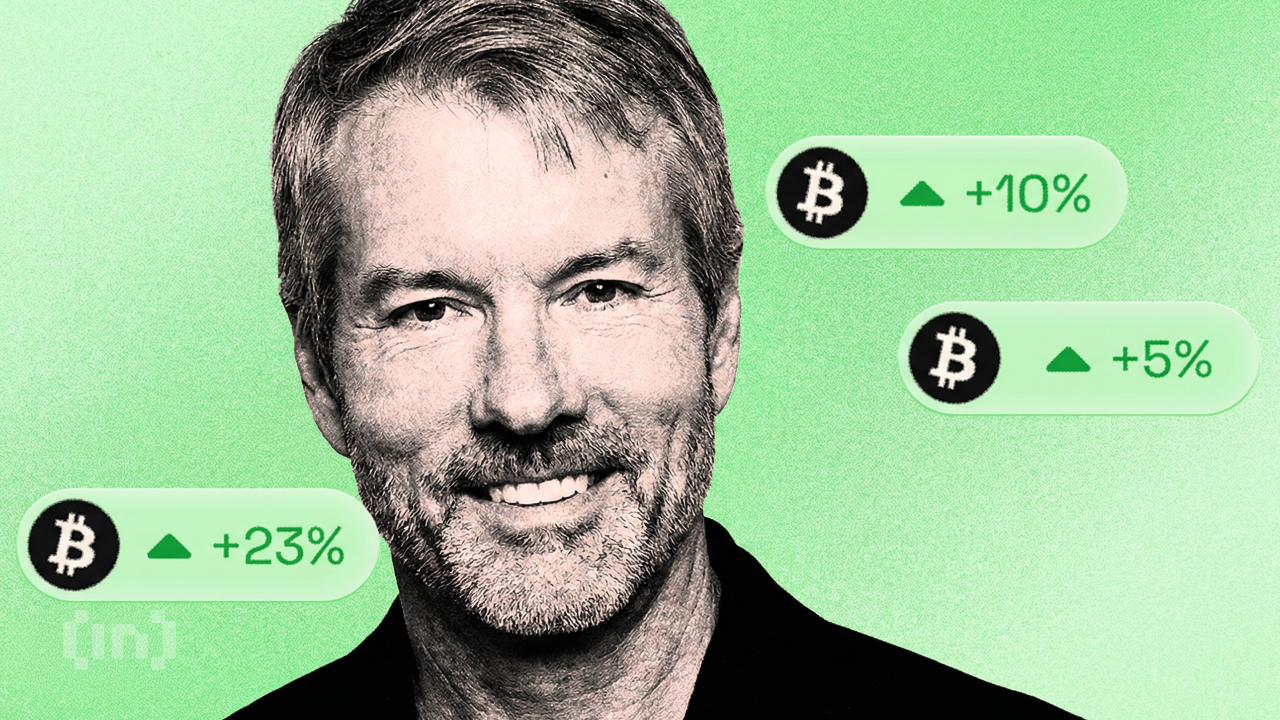
Michael Saylor argued that corporate ownership of Bitcoin (BTC) is inevitable, framing companies as the legal engines it needs to succeed.
He made the case in a July 18 post on X, saying that firms provide efficiency and creditworthiness that no individual can match on their own.
Saylor’s Case for Corporate Bitcoin Ownership
Bitcoin has moved from an individual store of value to an asset held increasingly on corporate books. Saylor, chairman of Strategy (MSTR), has pushed that shift harder than any other executive.
His firm built what is often described as part of Bitcoin’s long-term endgame, a strategy built on relentless institutional accumulation. Saylor has used his platform to promote that strategy for years, giving his posts outsized influence among crypto investors.
Saylor’s post framed companies as vehicles that let people organize under the law more efficiently than individuals acting on their own.
In the post above, he listed efficiency, transparency, creditworthiness, scale, resilience, and continuity as advantages only companies can provide.
Saylor closed by calling corporate adoption not just useful but structurally necessary for Bitcoin’s path toward becoming global money.
Institutions Keep Building Bitcoin Treasuries
Saylor’s thesis lines up with a broader trend across markets. BeInCrypto’s tracking shows an institutional Bitcoin adoption index climbing steadily this year, as banks and asset managers add exposure.
That index puts major bank Bitcoin adoption at 32%, with Fidelity well ahead of Japanese lenders. Meanwhile, firms outside the United States have followed a similar corporate Bitcoin treasury playbook.
Metaplanet, for instance, recently became the world’s third-largest holder, trailing only Strategy and Twenty One Capital.
Bitcoin traded near $63,900 on Saturday, up roughly 1.4% over 24 hours. That modest gain provides Saylor’s argument with a stable backdrop, though it says little about whether corporate demand alone can sustain the network’s long-term growth.
Critics Question Strategy’s Own Playbook
However, Strategy’s own approach has drawn scrutiny in recent months. Ripple CEO Brad Garlinghouse recently leveled pointed criticism at Strategy, even while remaining bullish on Bitcoin itself. He argued that leverage tied to a single volatile asset carries risks a simple ownership thesis does not address.
Strategy’s preferred shares have also traded well below par this year, a detail Saylor’s post did not mention.
Saylor treats corporate adoption as a foregone conclusion. Whether balance sheets can absorb Bitcoin’s volatility as smoothly as he predicts remains an open question.
Investors watching Strategy’s stock in the coming weeks may get an early read on how convincing that pitch really is.
The post Michael Saylor Calls Corporate Bitcoin Adoption Necessary and Inevitable appeared first on BeInCrypto.

Worst Husband in Financial Audit History

Blenheim Road set to close for electricity works in July

Dubai International Airport Is Open Today Despite Ongoing Mideast Tension Delays and Airline Suspensions


-
 NewsBeat3 days ago
London Mayor Sadiq Khan handed a peerage by Keir Starmer alongside 15 other Labour figures… just days before the PM leaves No10
-

 Fashion2 days ago
Weekend Open Thread – Corporette.com
-

 Politics21 hours ago
The House | The City of London can help the new chancellor deliver growth in every postcode
-

 Crypto World3 days ago
CFTC blocks Kalshi from unwinding Michigan trades after court order
-

 Politics4 days ago
Young campaigners urge incoming PM to act on outdoor junk food ads
-

 Business3 days ago
Nvidia Stock Slips After Big Tuesday Rally as Huang Confirms Vera Rubin Chip Is Now in Production Today
-

 Crypto World21 hours ago
Ripple Payments Joins MiCA With 14 Firms, Does It Mean Anything For XRP?
-
 Entertainment4 days ago
Disney’s Most Ambitious Failed Star Wars Attraction Is Coming to SDCC
-

 Crypto World1 day ago
Ripple wins EU-wide access as ESMA adds it to MiCA register
-

 Business3 days ago
Palantir Shares Rise After Expanded Nvidia Partnership and Fresh Analyst Upgrades Ahead of Earnings Day
-

 Crypto World2 days ago
Injective Submits SEC Transfer-Agent Registration to Onchain Ownership Records
-

 Tech5 days ago
Get Your ESP32 Sunny Side Up With This Solar Dev Board
-

 News Videos4 days ago
XRP BOMBSHELL… XRP OMBOARDED FOR TRANSACTIONS!!!
-

 NewsBeat2 days ago
Registration is now open for March for Men with Kev 2026
-

 Tech4 days ago
Dark Secrets Emerge When Jailbreaking LLMs
-
 Sports3 days ago
New Cornerback Enters Vikings Trade Rumor Mill
-

 News Videos2 days ago
Money | Class 12 Economics | CBSE Board Exam 2026-27
-

 Business2 days ago
Banco Bilbao Vizcaya Argentaria, S.A. (BBVA) Discusses Global Macro Environment and Economic Outlook for Core Markets Transcript
-
 Crypto World2 days ago
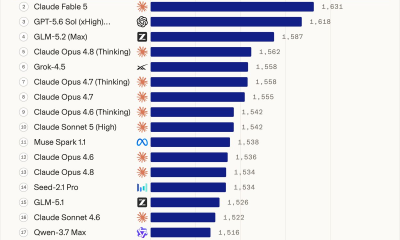
Claude Fable 5 Slips to Second in AI Coding Leaderboard
-
 Crypto World2 days ago
Two July Windows Left: The CLARITY Act’s Senate Fight and What Failure Means
You must be logged in to post a comment Login