A new Quordle puzzle appears at midnight each day for your time zone – which means that some people are always playing ‘today’s game’ while others are playing ‘yesterday’s’. If you’re looking for Saturday’s puzzle instead then click here: Quordle hints and answers for Saturday, July 18 (game #1636).
Quordle was one of the original Wordle alternatives and is still going strong now more than 1,500 games later. It offers a genuine challenge, though, so read on if you need some Quordle hints today — or scroll down further for the answers.
Enjoy playing word games? You can also check out my NYT Connections today and NYT Strands today pages for hints and answers for those puzzles, while Marc’s Wordle today column covers the original viral word game.
Advertisement
SPOILER WARNING: Information about Quordle today is below, so don’t read on if you don’t want to know the answers.
Latest Videos From
Quordle today (game #1637) — hint #1 — Vowels
How many different vowels are in Quordle today?
• The number of different vowels in Quordle today is 4*.
* Note that by vowel we mean the five standard vowels (A, E, I, O, U), not Y (which is sometimes counted as a vowel too).
Advertisement
Quordle today (game #1637) — hint #2 — repeated letters
Do any of today’s Quordle answers contain repeated letters?
• The number of Quordle answers containing a repeated letter today is 1.
Quordle today (game #1637) — hint #3 — uncommon letters
Do the letters Q, Z, X or J appear in Quordle today?
• No. None of Q, Z, X or J appear among today’s Quordle answers.
We spend hours testing every product or service we review, so you can be sure you’re buying the best. Find out more about how we test.
Razer Hammerhead V3 HyperSpeed: two-minute review
The first thing I thought when I pulled the Razer Hammerhead V3 HyperSpeed gaming earbuds out of their box was “Wow, these are ugly.”
Not exactly the strongest first impression, but it’s unavoidable when each bud has a weird, bulbous design that gives them an appearance like a pair of obese AirPods. The shiny black plastic material looks cheap, as does the printed Razer logo on the outside, which (despite all the Razer Chroma branding on the box) is just a decal that doesn’t illuminate.
Advertisement
They’re thankfully not uncomfortable to wear, but even in your ears they’re nowhere near as stylish as similarly priced competitors like the SteelSeries Arctis GameBuds.
Latest Videos From
With much flatter sound, they’re significantly less versatile (especially if you’re after a pair of gaming earbuds that you can also use to listen to music) and offer fewer features than that model to boot, with inferior active noise cancellation (ANC) that fails to block out most background noise when you’re out and about.
(Image credit: Future)
The Razer buds’ biggest benefit is the use of the latest Bluetooth 6.0 standard, which allows for ultra-low-latency connectivity with compatible devices and is ideal if you’re a serious mobile gamer looking for something to use with the latest phones. The included 2.4GHz Razer HyperSpeed Wireless dongle is also impressively compact and offers similar low-latency performance on PC, PlayStation 5, and handhelds like the Nintendo Switch 2.
Advertisement
This alone might be worth the compromises elsewhere if you’re a really serious mobile gamer, though there are a few more things worthy of praise. The included case is well-designed and feels pretty high quality, with an attractive RGB strip that is illuminated to denote pairing or charging status. I also really like how you don’t have to take the dongle if you want to use it: simply plug the case into your machine, and you’re ready to go, which makes it basically impossible to leave behind.
Find the Razer Hammerhead V3 HyperSpeed gaming earbuds at the right price – and they could be a good pick.
Sign up for breaking news, reviews, opinion, top tech deals, and more.
The Razer Hammer V3 HyperSpeed gaming earbuds cost $129.99 / £129.99 / AU$229.95 if you buy them directly from Razer, which is where I would recommend getting them, as stock at other retailers seems spotty.
If you do choose to buy from the likes of Amazon, be mindful not to accidentally purchase the cheaper Razer Hammerhead V3 X or older Razer Hammerhead True Wireless X model, as they look very similar.
At this price, the earbuds are going head to head with the likes of the SteelSeries Arctis GameBuds, which originally launched at $159.99 / £159.99 / AU$359 but are now regularly discounted to around $130 / £100 in the US and UK.
Even factoring in the added $30 / £30 at full price, I think the Arctis GameBuds are much better value. They offer a much more stylish design, versatile sound that you can easily customize with hundreds of selectable EQ profiles, in addition to slightly better overall battery life.
Advertisement
Razer Hammerhead V3 HyperSpeed review: specs
Swipe to scroll horizontally
Row 0 – Cell 0
Razer Hammerhead True Wireless X
Price
$129.99 / £129.99 / AU$229.95
Weight
Advertisement
0.19oz / 5.6g (each bud); 2.22oz / 63g (case)
Compatibility
PC, PS5, mobile, Nintendo Switch, Nintendo Switch 2
Connection type
Advertisement
2.4GHz HyperSpeed Wireless / Bluetooth 6.0
Battery life
~40 hours
Features
Advertisement
THX Spatial Audio license included
Software
Razer Audio (mobile) / Razer Synapse (PC)
Advertisement
Razer Hammerhead V3 HyperSpeed review: design and features
Look bulky and dated
THX Spatial Audio support
Case is good
You should know by now that I’m not a big fan of how these earbuds look. They have a basic stemmed in-ear design with quite a bulbous body constructed from shiny black plastic and a cheap-looking green Razer decal on the back. They honestly look like something you’d buy on Amazon for under 50 bucks rather than a product from a premium gaming brand.
The case is much better, at least. It’s large, but still easily pocketable, and has a pleasant matte texture to its exterior and a very robust hinge with satisfyingly strong magnets. There’s a subtle strip of LED lighting on it as well, which lights up in an attractive rainbow pattern when the case is opened. It also illuminates different colors to denote charging or pairing status, battery level, and so on, which makes it surprisingly practical as well.
Inside the case, there’s plenty of space for the two earbuds and a little slot for the compact HyperSpeed Wireless dongle. When in the case, the dongle is nestled inside a Type-C port with passthrough connectivity. This means you can plug the entire case directly into your PC or console in order to pair the buds, which is pretty handy and helps keep everything in one place.
Aside from this, the Razer Hammerhead V3 HyperSpeed gaming earbuds don’t have a particularly expansive feature set compared to the offerings of other brands. The earbuds support ANC and a transparency mode, in addition to automatic pausing when removed from your ears. The compatible software offers three default EQ profiles (for gaming, music, and movies, respectively) plus the ability to create your own.
On PC, the buds come with a license key for THX Spatial Audio, which simulates 360-degree sound decently well and is a solid bonus.
Although it is impressively low-latency and thus suited for competitive gaming, I found the sound of the Razer Hammerhead V3 HyperSpeed to be so-so compared to similarly priced alternatives. In the default gaming preset, the bass is plenty punchy, but they lack clarity and sounds quite muffled in the high end. It’s good enough for the likes of PUBG: Battlegroundsor Counter-Strike 2, but would be an incredibly poor fit for more story-driven titles.
The music-listening experience is bad, and no amount of EQ tweaking could remedy the uninspiring sound. I would recommend swerving the default music EQ as well, as it’s absolutely rancid and tanks not only the bass but also the low mids, leading to sound that’s not dissimilar to that produced by the free earbuds you get on an airplane.
Alternating between the Razer Hammerhead V3 HyperSpeed and the SteelSeries Arctis GameBuds, there is simply no contest: the SteelSeries pair sounds better no matter what you throw at it, and the fact that it can handle music too means that you don’t need to buy a second pair to use with your phone.
The ANC also underperforms compared to alternatives, be they the GameBuds or others such as the Sony Inzone Buds. It fails to block out much background sound and even struggles to drown out the consistent, low noise from a desk fan. If you want to take these on a plane, just forget about it.
Advertisement
The microphones are okay, but not particularly reliable. With any kind of background noise, they can begin to struggle to pick up your voice – which had me relying on my desktop mic instead. Touch controls are quite awkward as well. They feel unresponsive and struggle to pick up inputs, leading to frequent accidental pauses or skips if you’re trying to use them for your tunes.
The battery life is at least one area where the Razer Hammerhead V3 HyperSpeed doesn’t disappoint. I easily managed 7-8 hours per charge with the buds, and the case holds enough to fully top them up about four times when you’re on the go.
(Image credit: Future)
Should I buy the Razer Hammerhead V3 HyperSpeed?
Advertisement
Buy it if…
Don’t buy it if…
Razer Hammerhead V3 HyperSpeed review: also consider
Here are two more compelling options to weigh up.
Swipe to scroll horizontally
Row 0 – Cell 0
Razer Hammerhead V3 HyperSpeed
Advertisement
SteelSeries Arctis GameBuds
PlayStation Pulse Explore earbuds
Price
$129.99 / £129.99 / AU$229.95
Advertisement
$159.99 / £159.99 / AU$359
$199.99 / £199.99 / AU$329
Weight
0.19oz / 5.6g (each bud); 2.22oz / 63g (case)
Advertisement
0.19oz / 5.3g (each bud); 1.7oz / 48.7g (case)
0.2oz / 6.5g (one earbud with medium tip)
Compatibility
PC, PS5, mobile, Nintendo Switch, Nintendo Switch 2
Advertisement
Xbox, PlayStation, Nintendo Switch, PC
PS5, PlayStation Portal, PC, mobile
Connection type
2.4GHz HyperSpeed Wireless / Bluetooth 6.0
Advertisement
2.4Ghz (via USB-C), Bluetooth 5.3 (mobile)
PlayStation Link wireless, Bluetooth (mobile)
Battery life
~40 hours
Advertisement
Up to 40 hours (buds 10 hours; case 30 hours)
5 hours with 10 hours from the charging case
Features
THX Spatial Audio license included
Advertisement
360° Spatial Audio, Qi Wireless Charging Case, 6mm neodymium drivers, four-mic ANC, transparency mode, in-ear detection/sensor, IP55 rating, fast charge, companion app with more than 100 presets
Planar Magnetic Drivers, AI-enhanced noise rejection, Dual Device connectivity, 3 sets of ear tips
Throughout my time with the buds, I compared the experience to my hands-on testing of other gaming earbuds, including the SteelSeries Arctis GameBuds and other products featured on our best gaming earbuds guide.
An advanced threat actor is abusing the update mechanism for the ViPNet private networking product suite to target Russian organizations, including government agencies.
Dubbed HelloNet, the campaign has been active since at least May, deploying a malicious payload that acts as a proxy and loader for additional malware.
According to Kaspersky researchers, HelloNet has impacted organizations in the government, energy, transport, education, and logistics sectors.
ViPNet update abuse
ViPNet is a family of Russian information-security products developed by InfoTeCS, providing VPN, endpoint, and network access protection, firewall, certificate management, centralized administration, and secure messaging and file transfer.
The tool is commonly used in Russia, where it is certified by the authorities for use in government and other regulated environments.
Advertisement
Due to its market reach in Russia, especially among high-value organizations, it has been targeted often by hackers. In April, 2025, Kaspersky reported that threat actors impersonated a ViPNet update in attacks.
In the latest campaign, attackers placed a malicious file (wtsapi32.dll, dubbed HelloInjector) inside the local ViPNet Update System directory to be sideloaded at system startup via the legitimate itcsrvup64.exe.
This DLL is the first-stage loader that injects into the svchost.exe process, granting next-stage payloads elevated privileges on Windows and persistence across reboots.
Kaspersky does not describe exactly how the attackers gained initial access to perform this file change, nor do they claim that ViPNet’s update infrastructure itself was compromised.
Advertisement
Malware toolset
HelloInjector runs its embedded payload, which Kaspersky named HelloProxy, in memory and contacts the command-and-control (C2) server to receive additional modules.
One of these modules is HelloExecutor, a backdoor that can execute commands and conduct network reconnaissance on the host.
A second one is HelloCleaner, a tool that removes ViPNet log data to hide the malicious activity.
Another implant called HelloBackdoor is Rust-based and supports uploading and downloading files, as well as command execution.
Advertisement
Kaspersky has tentatively attributed the campaign to an unidentified Chinese-speaking advanced persistent threat (APT) group.
However, the researchers stressed that the evidence is weak, relying primarily on an unused string referencing the Chinese website sina.com and a malware download mirror hosted by the University of Science and Technology of China.
As a result, they assign the attribution low confidence and do not rule out the possibility of a false flag operation.
The cybersecurity firm recommends thorough monitoring of systems running ViPNet software, particularly traffic passing through ports 5003, 5060 (HelloProxy), and 443 (HelloBackdoor).
Advertisement
Security teams log 54% of successful attacks and alert on just 14%. The rest move through your environment unseen.
The Picus whitepaper shows how breach and attack simulation tests your SIEM and EDR rules so threats stop slipping by detection.
Researchers found confidence increased even as accuracy fell
In 2026, AI still “hallucinates” and gives you wrong answers a good chunk of the time. Nevertheless, academics from French and Italian universities have found that access to AI advice suppresses critical thinking, making people more likely to confidently parrot incorrect information that the bot provided.
“For humans, the capacity to say, ‘I don’t know,’ is very important because it represents the recognition of the limits of our own knowledge,” said Valerio Capraro, associate professor at the University of Milano-Bicocca, in a phone interview.
Advertisement
“But now with AI, we can get an easy answer to virtually every question, so we wondered whether this would interfere with human capacity to say, ‘I don’t know,’ to suspend judgment.”
Capraro and co-authors Chiara Marcoccia (École Normale Supérieure) and Walter Quattrociocchi (Sapienza University of Rome) set out to see how access to AI advice affects people’s willingness to admit ignorance.
The title of their paper reveals their findings: “AI advice suppresses people’s willingness to say ‘I don’t know’, even when the advice is wrong and accuracy is incentivized.”
Capraro said that he and his colleagues designed a set of questions where large language models typically fail. In this instance, they asked study participants to answer questions about visual details in films, such as the color of the team’s uniform in Bend It Like Beckham or the vehicle Monica drives in Like a Cat on a Highway.
Advertisement
The researchers expected these sorts of details would be absent from most model training data, which was the case for the model used in the experiment (Step 3.5 Flash). They also tested recent frontier models (GPT-5.5, Claude Sonnet 4.6, Gemini 3.5 Flash), which missed the vehicle question but often got other details correct.
They used Step 3.5 Flash because it was usually wrong, as explained in the paper, so any reduction in judgment could not be explained away as sensible delegation to a reliable tool.
“We divided human participants into two groups,” explained Capraro. “One group had to answer these questions without AI advice, and another group could ask the AI for advice. What we found is that in the baseline, 44 percent of people responded that they didn’t know the answer, so they suspended judgment. With AI advice, only three percent did so. So the judgment suspension collapsed.”
Capraro said that even more interestingly, accuracy collapsed when AI help was available. In other words, they trusted AI’s answer more than their own.
Advertisement
“In the baseline, 27 percent of people gave the correct answer,” he said. “With AI advice, only nine percent of people gave the correct answer. So some would-be correct people asked for AI advice and became wrong.”
Also, access to AI advice made people more confident that they were correct. The baseline level was 30 percent, he said, but with AI help, confidence rose to 76 percent. They believed the bots, despite the possibility of hallucinations.
“So basically people became much worse – the accuracy was only one third – but they were twice as confident,” he said.
The researchers also conducted the experiment with monetary incentives, which helped a bit. Willingness to suspend judgment and admit ignorance rose from 3 percent to 8 percent and accuracy rose from 9 percent to 16 percent but was still below the baseline of 44 percent and 27 percent respectively.
Advertisement
While the researchers chose questions about film trivia, they contend their findings can be generalized across other domains.
Capraro said that he believes this is an issue that needs to be dealt with at a societal level through AI literacy and education policy initiatives. “Of course model providers should try to help, but I would imagine that the incentives are not very much aligned,” he said. “A much more promising approach would be at the educational level.”
“I’m very much concerned for children, because adults have learned critical thinking. But for children who basically are born with these systems, the risk is that they don’t even learn the basic critical skills.” ®
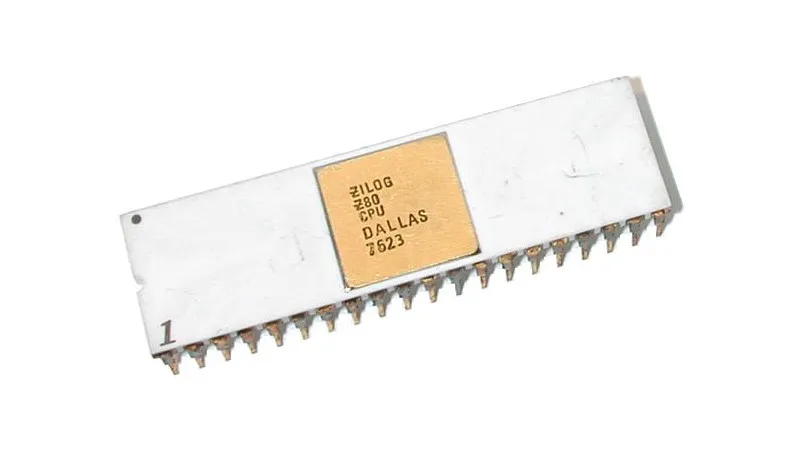
Perhaps the saddest thing about the Zilog Z80 is that this humble 8-bit microprocessor wasn’t allowed to live until its 50th birthday. This, fortunately, doesn’t prevent people like [David Oberhollenzer] from reminiscing on this influential processor and what it means to them personally.
First released in July of 1976, this humble 8-bit miracle would go on to power not just a range of home computers, but also be found in everything from industrial controllers to arcade systems. Despite this success, the new owner of Zilog — Littelfuse — decided to put an end to this winning streak in 2024 for the stand-alone processor and its peripherals.
Meanwhile, the Z80 architecture is still very much alive and kicking, such as in the form of the eZ80 SoC in the TI 84+ CE calculator that [grubbycoder] ported Sonic 2 from the Z80-based Sega Master System.
Among all of this modern-day Z80 goodness, we also have a few gems from the past to admire, such as the OS that Zilog made for this architecture in the form of Z80-RIO, which was sadly not as successful as the hardware.
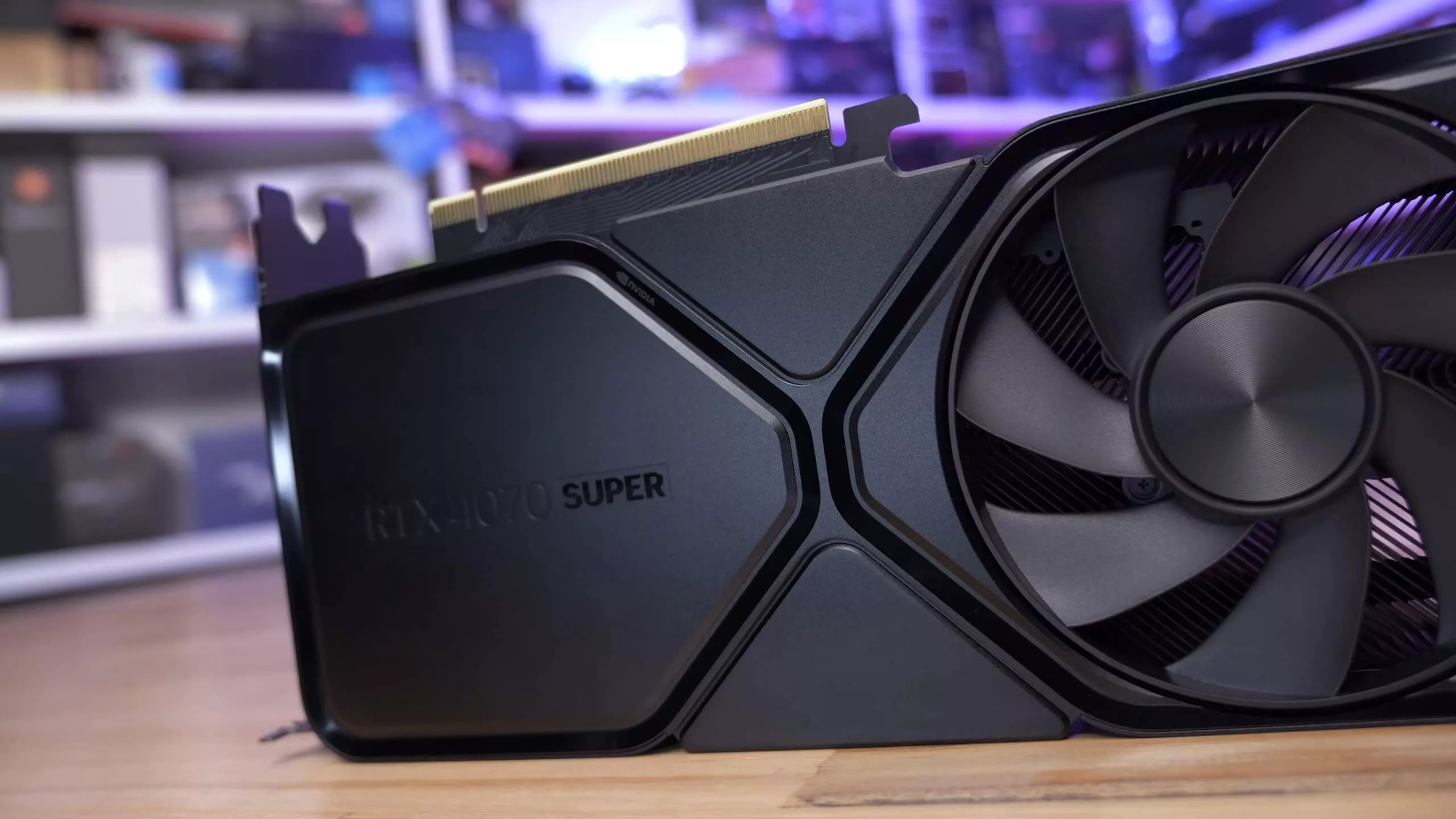
Rumor mill: The RTX 5000 series is real – according to reports, an Nvidia board partner already has one of the cards in its possession. However, a familiar problem is preventing them from being released, one that will come as no surprise to anyone.
The latest RTX 5000 Super story, which comes from VideoCardz, claims that Nvidia has told the board partner holding onto the card that it can’t be released yet because of the price of 3GB GDDR7 memory components.
The publication’s sources say that a 3GB GDDR7 chip currently costs between $60 and $70, while a standard 2GB GDDR7 chip is just $20. Paying over three times more for a 50% memory boost is going to skyrocket the cards’ BOM cost.
At a time when components already cost a fortune as AI hyperscalers snap up all the DRAM and NAND manufacturing capacity, releasing RTX 5000 Super cards with comically high price tags isn’t going to prove popular.
Advertisement
Another issue is that since 2025, Nvidia has left it to board partners to source their own memory chips. If these companies are told by Nvidia that they have to sell the Super series at or close to MSRP, they’re likely not to make any cards at all, rather than take a huge loss on each one sold.
Using 3GB GDDR7 memory chips allows Nvidia to push up the cards’ memory capacity without changing the number of memory modules or altering the memory bus. But their high price is proving to be an issue.
Three RTX 5000 Super models are reportedly in the works: the GeForce RTX 5080 Super, RTX 5070 Ti Super and RTX 5070 Super. This aligns with previous rumors, which included some of those cards’ alleged specs.
RTX 5080
RTX 5080 Super
RTX 5070 Ti
RTX 5070 Ti Super
RTX 5070
RTX 5070 Super
GPU Die
GB203
GB205
CUDA Cores
10,752
8,960
6,144
6,400
Memory Capacity
16 GB
24 GB
16 GB
24 GB
12 GB
18 GB
Memory Speed
30 Gbps
32 Gbps
28 Gbps
Bus Type
256-bit
192-bit
Total Board Power
360W
415W
300W
350W
250W
275W
Nvidia is also said to have an RTX 5050 9GB ready that uses the 3GB GDDR7 models. Like the Super series, its release date still hasn’t been decided because of the chips’ prohibitive price.
Advertisement
If Nvidia really is waiting for memory prices to drop before releasing the cards, it could be a while before we see them. SK Hynix predicts that 2027 will be the worst year ever for the industry from a supply perspective, and that demand will continue to outpace supply even beyond 2030.
This is the latest piece of RTX 5000 Super news we’ve heard recently. The RTX 5080 Super just appeared in Seasonic’s PSU calculator, joining the RTX 5070 Super and RTX 5070 Ti Super, which were added in September.
Renowned leaker MEGAsizeGPU, who has a good track record when it comes to Nvidia rumors, said last month that the RTX 5000 Super series could be released this year, but that’s looking increasingly less likely.
A flaw in Anthropic’s Claude for Chrome browser extension could allow a malicious extension to trigger predefined AI actions by simulating user clicks, potentially allowing it to abuse Claude’s access to connected services such as Gmail, Google Docs, Google Calendar, and Salesforce.
The issue was discovered by Ax Sharma of Manifold Security, who says it stems from how the Claude extension determines whether a user intentionally requested one of its built-in tasks.
Chrome extensions with permission to run on a website can inject JavaScript into the page, allowing them to read and modify its contents. This includes changing page elements, reading information displayed on a site, and generating click and keyboard events programmatically.
According to Manifold’s report, the Claude extension listens for click events on a specific page element that launches one of its built-in AI workflows. These workflows are predefined tasks that allow Claude to perform actions in connected services such as Gmail, Google Docs, Google Calendar, and Salesforce.
The supported workflows include:
Advertisement
usecase-gmail: read recent Gmail, identify promotional emails, and click unsubscribe
usecase-gdocs: open the user’s latest Google Doc, read all comments and feedback
usecase-calendar: read Google Calendar, find free slots, create meetings
usecase-salesforce: modify Salesforce leads, convert them to opportunities
The researchers found the extension accepted JavaScript-generated click events without verifying whether they originated from a real user.
When a browser generates an event from a real user action, such as a mouse click or key press, it marks it as trusted by setting the Event.isTrusted property to true. However, if JavaScript is used to generate the event, the browser automatically sets Event.isTrusted to false, allowing webpages and extensions to distinguish between real user interactions and events generated by JavaScript.
According to Manifold Security, the Claude browser extension did not verify that a click event originated from a real user by checking the browser’s Event.isTrusted property before executing one of its predefined workflows.
Instead, a malicious extension with permission to modify content on the ‘claude.ai’ domain could inject a page element containing one of nine supported task identifiers and generate a synthetic click event.
Although the browser correctly marked the event as untrusted, Sharma says the Claude extension treated it as a legitimate user click and executed the requested AI action.
Advertisement
The researcher notes that the flaw does not allow arbitrary prompt injection, but instead, the attack is limited to the nine predefined tasks built into the extension.
The attack also does not allow a website to compromise the Claude extension directly, but requires an attacker to trick a user into installing a malicious extension that can execute code on claude.ai.
That extension could then manipulate the webpage and trigger the Claude extension’s workflows.
While a malicious browser extension already has broad access to webpages it can run on, the researchers say this flaw allows it to abuse Claude’s authenticated access to various connected services.
Advertisement
The impact depends on the Claude extension’s configuration and whether users choose to approve sensitive actions or have Claude’s optional “Act without asking” setting enabled, which allows predefined workflows to execute automatically.
In a second finding, the researchers found an internal ‘skipPermissions=true‘ parameter that bypassed certain permission checks when launching the extension.
However, they acknowledged that the mechanism was not directly exploitable on its own and would require another vulnerability to create a specially crafted URL.
The researchers reported both findings to Anthropic through the company’s bug bounty program. Anthropic acknowledged the reports and closed the synthetic-click report, stating they were already tracking it as a broader issue. The second flaw, involving the internal skipPermissions=true parameter, was classified as informational.
Advertisement
Manifold says the flaws are still exploitable in the latest version, 1.0.80, of the browser extension, released on July 7.
“Manifold verified July 7 that both findings remain reproducible in 1.0.80. The content script and side-panel handlers we cited are byte-identical to the v1.0.72 source,” reads the report.
Security teams log 54% of successful attacks and alert on just 14%. The rest move through your environment unseen.
The Picus whitepaper shows how breach and attack simulation tests your SIEM and EDR rules so threats stop slipping by detection.
B2B revenue teams average 23 vendors yet pipelines remain flat. The problem is not the AI models but the fragmented storage architecture underneath them. A Company Brain, a centralized intelligence layer that feeds shared memory and judgement to a network of specialized agents, turns isolated tools into a compounding revenue engine. Founders who build the brain first will outpace those still bolting agents onto legacy CRMs.
Founders eagerly bought into the promise of autonomous agents over the past year, and software usage skyrocketed across the industry as teams rushed to adopt the latest tools.
Despite this massive investment in new technology, sales pipelines remained completely flat. This is the ultimate paradox facing modern revenue teams today. The average business-to-business go-to-market team currently runs software from 23 separate vendors.
Teams deployed artificial intelligence across their workflows expecting a massive leap in efficiency and conversion rates. They received a surge of noise and inboxes full of generic outreach instead.
The gap between the promise of artificial intelligence and the reality of sales performance is widening rapidly. We are generating more activity than ever before, but not more revenue.
Advertisement
The problem does not lie with the artificial intelligence models themselves. The core issue is the fundamental architecture we are forcing these models to operate within.
Building a Centralized Go-to-Market Engine
The entire go-to-market industry has been running on storage rather than true intelligence. For decades, revenue teams relied heavily on systems of record to manage their daily operations. These platforms serve a single distinct purpose, which is storing information until a human being decides to act on it.
Every single customer interaction essentially starts from zero. Artificial intelligence did not fix broken sales playbooks. It scaled those broken playbooks to an unprecedented degree. Solving this requires a new approach entirely. Platforms like Alta understand that the fix is not retrofitting intelligence onto legacy databases. The solution requires starting from scratch with a completely different framework.
Teams need a system where every tool talks to a single source of truth. You can learn more about how to stop holding AI agents back by moving away from fragmented storage solutions and embracing unified systems.
Advertisement
The technology sector made a massive miscalculation when it dropped intelligent agents onto legacy storage architecture as isolated point solutions. Each tool operates entirely in the dark within this flawed framework. There is no shared memory across the tech stack and no shared judgement guiding the overarching strategy.
Customer relationship management platforms and sales engagement databases operate exactly this way. That foundational architecture worked perfectly when people did all of the actual work and made all the strategic decisions. It breaks down entirely when companies want software that acts autonomously.
A System of Actions represents a completely different software category rather than a simple feature bolted onto an existing database. A true System of Actions decides what to do next and then executes the task without human intervention.
The Architecture of the Company Brain
The transformation begins with establishing a Company Brain. This concept refers to a centralized intelligence layer that actively maps how your specific revenue engine operates from top to bottom.
Advertisement
A coordinated network of specialized agents shares this single brain to execute their daily tasks. This central hub holds all the institutional memory and operational skills required to close deals. It makes the complex judgment calls about what the system should do next based on historical data. The connected agents then execute the actual work in the field. They handle prospecting, outbound messaging, inbound lead qualification, calling, and continuous campaign optimization simultaneously.
Intelligence compounds massively when it is shared across a unified network rather than isolated in silos. Every single action taken by an agent feeds directly back into the central brain in real time. This constant feedback loop ensures that the learning curve never plateaus. Agents built for completely different jobs evolve together as a single cohesive unit with every customer interaction.
When one agent learns that a specific messaging angle works, the entire network instantly adapts to leverage that new insight. Conversely, the lessons learned by a standalone tool stay trapped forever inside that specific software silo.
The transition toward an agentic web weaving the next web with AI agents highlights why interconnected intelligence will always outperform disconnected software. The Company Brain turns isolated tasks into a highly synchronized and constantly improving revenue operation.
Advertisement
Implementing Intelligence Across the Stack
Building this architecture requires a deliberate sequence of events to ensure long-term success.
You must build the central brain first before deploying any autonomous agents into the field. The central intelligence layer must be fueled by over fifty distinct data sources and hundreds of unique buying signals to be truly effective. Once the brain is fully established, specialized agents are built for distinct jobs and powered by that single source of truth. These agents then run seamlessly on top of the technology stack that your sales and marketing teams already use every single day.
This connected setup allows the software to execute complex playbooks that adapt dynamically. If a prospect shows high intent on a pricing page, the brain processes that signal and instantly directs the outbound agent to draft a highly contextual message.
Every replied email and every closed deal makes the whole system tangibly smarter for the next interaction. For those looking to understand the technical mechanics behind this shift, exploring a beginner’s guide to building AI agents provides great insight into how these autonomous networks function at a basic level.
Advertisement
The key differentiator for modern enterprise teams is that the central intelligence layer dictates the overarching strategy while the specialized agents simply handle the daily execution.
The Litmus Test for Founders
Founders and revenue leaders must critically evaluate their current technology stack today. You need to run a simple test on your own organization to see where you stand.
Do your artificial intelligence tools actually share memory, judgement, and feedback loops? Or does each tool learn entirely alone in a vacuum?
If your team is drowning in disconnected software and buyers are actively ignoring your automated outreach, adding more effort will never fix the problem.
Advertisement
You need a centralized system that actually learns from every single interaction. The gap between companies that built the brain first and companies still bolting agents onto legacy storage widens every single day.
Operating without a shared intelligence layer is a massive strategic disadvantage you can no longer afford in a competitive market.
Historically, the DJI brand has been all about drones. It remains an undisputed leader in that category, but in recent years its also solidified a name in compact cameras for content capture.
The two key ranges are the Osmo Actionand the OsmoPocket. The Action is DJI’s classic action camera, with a rugged build designed to happily capture high-quality content no matter how much you bump, drop, submerge, freeze, or generally throw it about. The Pocket is a compact, image-stabilizing gimbal camera designed for vloggers. It can easily switch between vertical and horizontal shooting, and is set up to make selfie capture easy. There are also a couple of outliers: the Osmo 360 360-degree camera and the tiny, wearable Osmo Nano.
Most of these cams are leaders in their respective categories — this brand crops up in numerous best-of lists, including the best action camera, best 360 camera and best vlogging camera. If you’re thinking of buying one but aren’t quite sure of your options, or which to pick, you’ve come to the right place.
Advertisement
Our camera review team has tested every single one of the DJI cameras currently available to buy, and below you’ll find a quick guide to the different models, plus summaries of our main testing takeaways, and links to read the full review for each (hit the More details button).
Osmo Actions are traditional action cameras — DJI’s answer to a GoPro. They sport an all-in-one design, with all the hallmarks you’d expect from a good action cam: a robust, waterproof, compact design, front and back screens, mics, and features like time-lapse, slow-mo and (on newer models) subject tracking.
Advertisement
The current generation is the Osmo Action 6, but the Osmo Action 5 Pro (there’s no not-Pro version, so treat this like a naming quirk) and the Osmo Action 4 are widely available too, including direct from DJI. It’s also quite easy to get hold of an Osmo Action 3.
Sign up for breaking news, reviews, opinion, top tech deals, and more.
The specs and features differ slightly from model to model — you can see our review of each one by hitting the ‘More details’ button, and this DJI Osmo Action comparison page is useful for highlighting the differences.
You’ll struggle to find either now, but the two previous models are the Action 2 and the original Osmo Action. The Action 2 was a particularly interesting swerve from DJI — it looked completely different from the rest of the range, with a modular build. For the third gen, DJI pivoted straight back to a more traditional all-in-one design, and that’s what it’s stuck with ever since.
Advertisement
DJI Osmo Pocket
Osmo pockets are compact, gimbal-stabilized 4K cameras designed specifically for vlogging. The current model is the DJI Osmo Pocket 4 — although it’s not yet sold in the US. The Osmo Pocket 3 is still widely available to buy, as (to a certain extent) is the DJI Pocket 2.
Both the 3 and 4 boast a compact design, excellent video stabilization, crisp 4K video, the ability to swap easily between vertical and horizontal shooting. The 4th gen version polishes things up a bit, improving the slow-mo mode, bumping up the video specs, tightening up the subject tracking and making it available in more modes, boosting battery life and increasing the internal memory. It also adds a magnetic gimbal arm, onto which accessories such as fill lights can be snapped.
Advertisement
If you’re not quite sure about the Pocket range, another option for content creators is to stick with your phone for recording, but add in a DJI Osmo Mobile — a smartphone gimbal with advanced tracking capabilities.
Outliers
Finally, there are a couple of (as-yet) standalone DJI cameras. The DJI Osmo Nano is a shrunk-down and stripped back version of its Action series. Small enough to be mounted on a pendant or hat, it’s designed for on-the-go content capture. The magnetic, modular design makes it nice and versatile.
Advertisement
The Osmo 360 is a DJI’s first 360-degree camera, and we thought it was “undeniably extremely compelling” first effort. We were impressed with the pricing too, which is very competitive within that particular market.
The Coca-Cola Company disclosed today that a ransomware attack impacting its Fairlife dairy subsidiary has disrupted operations, temporarily suspending production of Fairlife products across the United States.
In a Form 8-K filing with the U.S. Securities and Exchange Commission (SEC), Coca-Cola said Fairlife detected unauthorized access to some of its systems, including its production-related systems, in connection with a ransomware attack.
“After detecting the issue, the Company promptly activated its incident response and business continuity protocols,” Coca-Cola said in the filing.
“The Company’s investigation and assessment of the impact of the incident is ongoing, with the assistance of outside advisors and cybersecurity experts. The Company has also notified law enforcement.”
The company said product quality and safety have not been affected by the ransomware attack.
Advertisement
However, it confirmed that production at Fairlife’s U.S. facilities has been temporarily suspended while the company responds to the incident and restores impacted systems.
Canadian production operations are not currently affected.
Coca-Cola says it is working to restore affected systems and resume operations, but the full impact of the incident is being investigated.
Due to this, it has not yet been determined whether the cyberattack is reasonably likely to materially affect the Company
Advertisement
If you have any information regarding this incident or other undisclosed attacks, you can contact us confidentially via Signal at 646-961-3731 or at tips@bleepingcomputer.com.
Fairlife is one of Coca-Cola’s dairy brands and produces ultra-filtered milk products, protein shakes, and nutrition drinks sold in the United States.
The company’s products include Ultra-Filtered Milk, Core Power Protein Shakes, and Nutrition Plan.
At this time, Coca-Cola has not disclosed whether any data was stolen during the attack, whether the company is being extorted, or which ransomware operation is responsible.
Advertisement
No ransomware gang has claimed responsibility for the attack at this time. If data was stolen during the intrusion, the attackers will likely attempt to extort the company later by threatening to publish it unless a ransom is paid.
When BleepingComputer contacted Coca-Cola to ask whether the attackers stole data, whether the company had received an extortion demand, and which ransomware gang was behind the attack, a spokesperson said the company had nothing additional to share beyond its public statement.
Security teams log 54% of successful attacks and alert on just 14%. The rest move through your environment unseen.
The Picus whitepaper shows how breach and attack simulation tests your SIEM and EDR rules so threats stop slipping by detection.
Battery life is usually one of the first things to take a hit as a laptop gets older, and the MacBook Neo is no exception. After years of regular use (or if you bought a used MacBook Neo), Apple’s entry-level laptop will likely be due for a battery upgrade. Luckily, it isn’t hard to get a new one at a relatively affordable price tag too, compared to a MacBook Pro, for instance. This is especially true for owners who have AppleCare, Apple’s customer support and warranty services. That being said, there are several options for replacing MacBook Neo’s battery.
For starters, if you don’t have a warranty, going directly through Apple will cost you $149. However, in case you have AppleCare, you won’t need to pay anything, provided the battery holds less than 80% of its original capacity. You can always do it yourself if you’re knowledgeable enough or willing to try. Apple sells replacement batteries (and other parts) via the Self Service Repair Store, which is authorized and managed by Apple. In case you opt for this route, you’ll pay $134.25 for a new battery, slashed to $111.75 when you return the old battery to Apple.
Provided you don’t have a warranty, that’s $37.25 less than letting Apple handle the replacement. For those of you who aren’t completely sure about what you’re doing, you may be better off letting the company do its thing. However, if you get the urge for some DIY-ing, just remember to read the repair manuals — found on Apple’s Self Service Repair site — or watch some videos. The good news is that Apple’s Chromebook alternative has a surprisingly repairable design, and the battery is easily accessible after you unscrew the bottom cover.
Advertisement
How long does a Mac Neo battery last?
Apple listed that the MacBook Neo’s battery is rated for a maximum of 1000 cycles. A single cycle is equivalent to a person using 100% of the battery’s total capacity over time, which could happen over several charges. This translates to a lifespan of about four to six years on average, depending on daily usage. Additionally, Apple stated that MacBook Neo’s battery may last up to 16 hours on a single charge.
Advertisement
One more thing. Let’s say you notice that your MacBook Neo’s battery isn’t holding a charge as it used to. You can check the battery health by clicking on the Apple logo and selecting System Settings. Afterwards, click on Battery, and you’ll get an overview of its health. Clicking the information button under Battery Health will give you additional data, including the Maximum Capacity. If the maximum capacity has fallen below 80% or you see a Service Recommended warning from macOS, it might be time for a replacement.


































































You must be logged in to post a comment Login