





Connect with us
DAPA Banner

Business

Leveraging Business Intelligence to Assess Workforce Availability and Wage Trends in Indonesia

Published

on

Leveraging Business Intelligence to Assess Workforce Availability and Wage Trends in Indonesia

Indonesia’s workforce exceeds 153 million, mainly in Java; wages vary by province, significantly impacting labor costs, with mandatory contributions and allowances adding fixed costs to employment expenses.

Indonesia’s Workforce and Industrial Regions

As of February 2025, Indonesia’s labor force consisted of approximately 153 million people, with 145.77 million employed. The majority of this workforce, about 56–58 percent, is concentrated on the island of Java, which serves as the country’s economic hub. Java hosts the primary manufacturing and service corridors, especially in the Jakarta metropolitan area, West Java, Central Java, and East Java, making it central to Indonesia’s industrial activity and labor markets.

Variations in Minimum Wages Across Provinces

Minimum wages in Indonesia are set at the provincial level and act as mandatory cost floors for employers. In 2026, Jakarta’s minimum wage is IDR 5,729,876 (US$339) monthly, about 130–150% higher than wages in key Java provinces like West Java (IDR 2,317,601), Central Java (IDR 2,327,386), and East Java (IDR 2,446,880). This wage disparity can significantly impact payroll expenses, especially for labor-intensive businesses with large entry-level workforces, potentially adding over IDR 20–22 billion (US$1.3–1.4 million) annually.

Long-term Employment Costs and Statutory Contributions

Beyond base wages, employers must account for additional statutory costs that elevate employment expenses. Mandatory social security contributions include the Old Age Security (JHT) at 3.7% and the Pension program (JP) at 2%, along with an annual religious holiday allowance (THR) equal to one month’s wage. These fixed-multiplier costs must be incorporated into operating budgets from the start, influencing the total cost of employment and workforce planning.

Advertisement


Read the original article : Using Business Intelligence to Evaluate Workforce Availability and Wage Levels in Indonesia

Continue Reading
Click to comment

You must be logged in to post a comment Login

Leave a Reply

Business

Countries plot ways to reopen Strait of Hormuz

Published

on

Countries plot ways to reopen Strait of Hormuz

Thirty-five countries will meet to discuss ways of reopening the Strait of Hormuz, weeks after the key shipping route was closed by the US-Israeli war on Iran.

Continue Reading

Business

New Haircare Line, Legal Wins and Personal Rebirth

Published

on

Cardi B

Cardi B is stepping confidently into a new chapter in April 2026, launching her own haircare line, celebrating fresh legal victories and openly discussing personal transformation following her 2024 divorce from Offset, while continuing her sold-out “Little Miss Drama” tour and teasing future music projects.

Cardi B

The Grammy-winning rapper appeared on the “Aspire with Emma Grede” podcast on March 31, 2026, where she described feeling “reborn” after filing for divorce from Offset. “I feel like last year a new person was reborn,” Cardi said. “I don’t know if it was the divorce. I don’t know if something woke me up. I feel like I’m definitely a new person.” The candid reflection highlighted her growth as a mother of four and a businesswoman determined to take greater control of her career and finances.

Cardi, 33, is preparing to launch Grow-Good Beauty, her haircare line, on April 15. During the same podcast appearance, she addressed assumptions that she is entering the beauty space in direct competition with stars like Beyoncé and Rihanna. She dismissed the idea, expressing support for her peers while emphasizing her focus on creating quality products for her audience. The move represents another step in her entrepreneurial journey, following successful ventures in fashion and other endorsements.

In a significant legal development, a federal judge in Texas dismissed a $50 million copyright infringement lawsuit against Cardi on March 30, 2026. The suit claimed her 2025 hit “Enough (Miami)” improperly used elements from the song “Greasy Frybread” featured in the FX series “Reservation Dogs.” The judge ruled that further amendments to the complaint would be futile, marking another courtroom victory for the rapper, who has successfully defended multiple intellectual property cases in recent years.

Cardi’s “Little Miss Drama” tour, supporting her sophomore album “Am I the Drama?,” continues to draw strong crowds. On March 31, she sold out the newly renovated TD Coliseum in Hamilton, Ontario, Canada, just weeks after publicly urging fans to buy tickets to preserve her streak of sold-out shows. The tour, her first major arena run in six years, has been praised for high-energy performances and custom stage elements, including standout footwear choices that have generated fashion buzz.

Advertisement

The Bronx native has been open about balancing motherhood with her career. She welcomed her fourth child, a son with NFL star Stefon Diggs, in late 2025. Recent reports suggest the couple has faced challenges, though Cardi has focused publicly on personal growth and professional momentum rather than relationship details.

Looking ahead, Cardi has teased plans for another album in 2026, aiming for a faster turnaround than previous projects. In late 2025 interviews, she expressed a desire for a “new era” with a different sound, signaling creative evolution following the success of “Am I the Drama?,” which peaked at No. 5 on the Billboard Canadian Albums chart and received strong critical attention for its genre-blending approach.

Cardi has also spoken about making intentional changes to her physical appearance once the tour concludes in mid-April. In backstage comments, she joked about heading to Colombia to adjust some cosmetic enhancements, reflecting her history of candid discussions about body image and past procedures.

Her 2026 trajectory shows a clear shift toward greater ownership. In the podcast with Emma Grede, Cardi discussed learning from earlier business deals and prioritizing investments that build long-term wealth rather than short-term gains. “I was tired of making everyone else rich,” she remarked, underscoring her evolving mindset as an entrepreneur and artist.

Advertisement

Fans have responded enthusiastically to her transparency and momentum. Social media has been filled with support for her haircare launch, tour successes and personal reflections. The “Little Miss Drama” tour has showcased her as a performer at the top of her game, with high-production values and emotional connection to audiences.

Industry observers note that Cardi’s ability to navigate public scrutiny while building multiple revenue streams sets her apart in hip-hop. From chart-topping singles to business ventures, she continues to expand her influence beyond music.

As April unfolds, attention turns to the April 15 debut of Grow-Good Beauty. Early promotional materials suggest a focus on quality ingredients and accessibility, aligning with Cardi’s goal of creating products that resonate with her diverse fanbase.

The rapper’s legal wins provide additional momentum. Successfully defending against high-profile copyright claims reinforces her position as an artist who protects her creative work while pushing boundaries in the industry.

Advertisement

Cardi’s openness about rebirth and reset has resonated with many followers facing their own life changes. Her message of forward movement — “We can only go forward now” — echoes through recent interviews and social posts, framing 2026 as a year of intentional growth.

With the tour wrapping soon and new projects on the horizon, Cardi B shows no signs of slowing down. Her blend of raw honesty, business acumen and artistic drive continues to captivate audiences worldwide.

Whether launching beauty products, defending her catalog in court or reflecting on personal evolution, the artist once known for viral moments has matured into a multifaceted entertainer with clear vision for the future.

As fans await the haircare line and potential new music, Cardi’s 2026 narrative centers on empowerment, resilience and self-reinvention — themes that have defined much of her public journey from reality television to global stardom.

Advertisement
Continue Reading

Business

A year on: Four ways Trump's tariffs have changed the global economy

Published

on

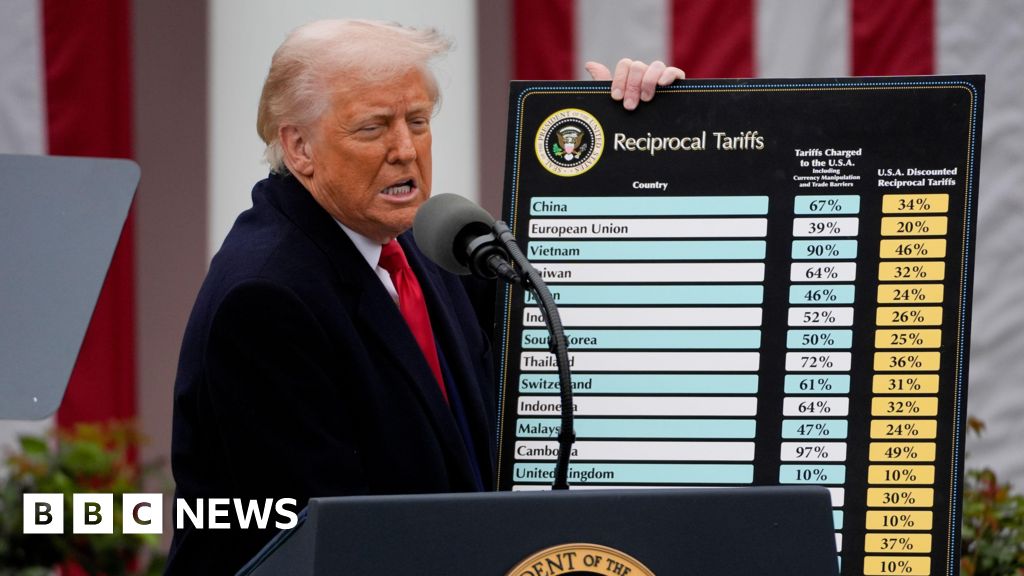
A year on: Four ways Trump's tariffs have changed the global economy

US tariffs stand at the highest rate in decades. But what has the impact been?

Continue Reading

Business

Singapore Airlines had live musicians performing for nearly a year

Published

on

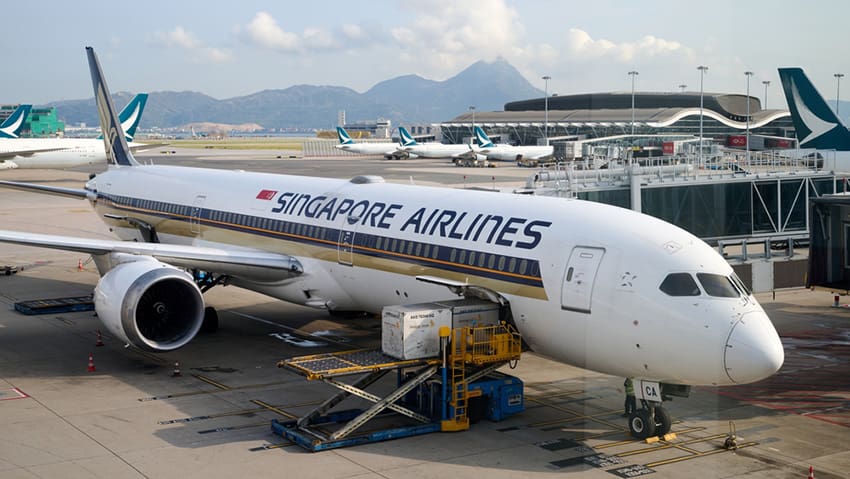
Singapore Airlines had live musicians performing for nearly a year

Long before seatback screens, playlists and onboard internet connection became standard, Singapore Airlines experimented with something close to a lounge show in the sky.

Back in 1976, the airline trialed live musical performances on its jumbo jets, and what began as a publicity stunt ended up as a regular part of the journey before disappearing less than a year later.

The experience of live music aboard

This story belongs to a very different era of flying. Singapore Airlines, in the mid-1970s, was still shaping its identity and looking for ways to stand out. Inflight movies and music were only just arriving with Boeing 747s, and the airline experimented with all kinds of onboard distractions. One of the boldest ideas the company tried was live entertainment: in April 1976, SIA launched a trial on the Singapore-Sydney route with a Filipino trio called Los Amigos, who performed a 45-minute set covering 13 popular songs.

For passengers, it felt unusual even by the standards of the time. Today, cabin entertainment is largely private and screen-based, with each traveler disappearing into a film, a playlist or a podcast on their own. Back then, the performance was shared by the whole cabin, creating a collective moment that modern flying rarely offers. According to MileLion, 86% of passengers enjoyed their performance, enough for the airline to move from trial mode to regular live performances the following month. The music was available to First and Economy Class passengers at no extra charge, making it a signature flourish of the company.

Still, romance and reality do not always travel well together at cruising altitude. The performers themselves found the conditions tough: singers complained that the engines were too loud, so they had to yell the lyrics, while the dry cabin air affected their voices before the flight was over. What sounded glamorous in theory quickly became problematic in practice, both for those on stage and for some of those in their seats. By February 1977, the experiment ended because of the loss of novelty and a noticeable increase in passenger complaints. The idea lasted roughly ten months as a regular feature, one of the reasons it remains a curious chapter in the airline’s history.

Advertisement

Airlines now offer different alternatives to their passengers

The old experiment feels even more fascinating when set against what airlines offer now. Singapore Airlines’ own current onboard offer includes KrisWorld and KrisWorld Digital, where passengers can browse films, television, audio content, and featured articles, while also accessing live TV channels, web-based games, or personal devices and in-flight Wi-Fi that can be used to access an online casino, check the latest news, or even plan activities to do once the passenger arrives at their destination.

Considering the live performances, the cabin has shifted from shared spectacle to personalized choice. Delta, for example, says its Delta Studio platform offers more than 1,000 hours of free entertainment, including movies, series, playlists, podcasts, and live satellite TV on select flights. JetBlue has gone a step further with Blueprint by JetBlue, a platform that adds watch parties, saved favorites, viewing recommendations and the ability to pick up where a passenger left off on a previous flight, while also tying the experience to the carrier’s broader seatback and Wi-Fi ecosystem.

That may be the clearest contrast with Singapore Airlines’ live-music era. In 1976, airlines were trying to surprise travelers with something they had never seen before. In 2026, the goal is usually to let passengers shape the journey themselves, whether that means streaming a series, checking live sports, messaging over Wi-Fi or syncing entertainment across devices. The tools are different, the cabins are quieter, and no one is belting out songs over engine noise anymore. But the basic ambition has not changed much: make time in the air feel a little less like waiting, and a little more like an experience worth remembering.

Advertisement

Continue Reading

Business

‘Prime location’ site with development potential goes on market in Wirral town

Published

on

Business Live

Heswall Day Centre approved for sale in September 2025

The Heswall Day Centre site.

The Heswall Day Centre site(Image: Google Maps)

A Wirral Council building in a “prime location” less than half an hour from Liverpool is up for sale. People are being invited to send in offers for what could be a lucrative site for a developer.

Advertisement

Heswall Day Centre was approved for sale by senior councillors in September 2025. The centre on Telegraph Road, near the town’s Tesco was one of nine facilities providing adult social care services but closed in September 2024.

A council report said this was due to a heating failure with the building left in a dilapidated condition. The service had helped support 52 adults who have been moved to other facilities.

A survey carried out by the council found it would cost a significant amount of money to refurbish and bring it back into use, something the financially-struggling authority said it can’t afford. It was estimated over £500,000 will be needed to bring the building back into use while estimates for a full refurbishment of the building could have costed as much as £5.6m.

Before it closed in September 2024, the centre was closed earlier in the year to remove toxic asbestos from the building. When it reopened in July, further issues were found due to the condition.

Advertisement

In September, the heating failed and services were moved out while investigations took place. A report before councillors said the asbestos made things tricky as “the investigation and survey involved disturbing the sub-structure and piping where there were asbestos risks.”

The possible sale was criticised by two parents in June 2025 Peter Linnane and John Daby said the closure of Heswall had had a massive impact on their sons Mark and Ben. When he heard about the plans at the time, Peter said: “I was absolutely horrified. I couldn’t believe it.”

Now the centre has been put on the market. An advert for the 1.09 acre site said it “provides a prime redevelopment opportunity subject to the necessary planning consents” in a “prime location” and “may be suitable for various uses”. The site is bordered by the Heswall Ambulance Station as well as the Heswall and Pensby Medical Centre.

If sold, the sale could generate a significant sum of money for Wirral Council to spend on other projects. Heswall is one of the wealthiest areas in Wirral with an average house price of £488,645 and detached houses in the area selling on average for £632,015.

Advertisement

A brochure attached to the advert highlighted that it is 24 minutes from Liverpool city centre and 65 minutes from Manchester city centre by car. It is also six minutes from Heswall railway station, 10 minutes from Arrowe Park Hospital, 24 minutes from central Chester, and 40 minutes from Liverpool John Lennon Airport..

The document produced by Lambert Smith Hampton said: “The opportunity is located within a well-established suburban area with strong residential characteristics. Heswall is home to popular bars, restaurants, shops and coffee shops which results in the town being popular for locals and visitors alike.”

To find all the planning applications, traffic diversions, road layout changes, alcohol licence applications and more in your community, visit the Public Notices Portal.

Advertisement
Continue Reading

Business

CBH rail project contractors in legal feud over alleged $2m debt

Published

on

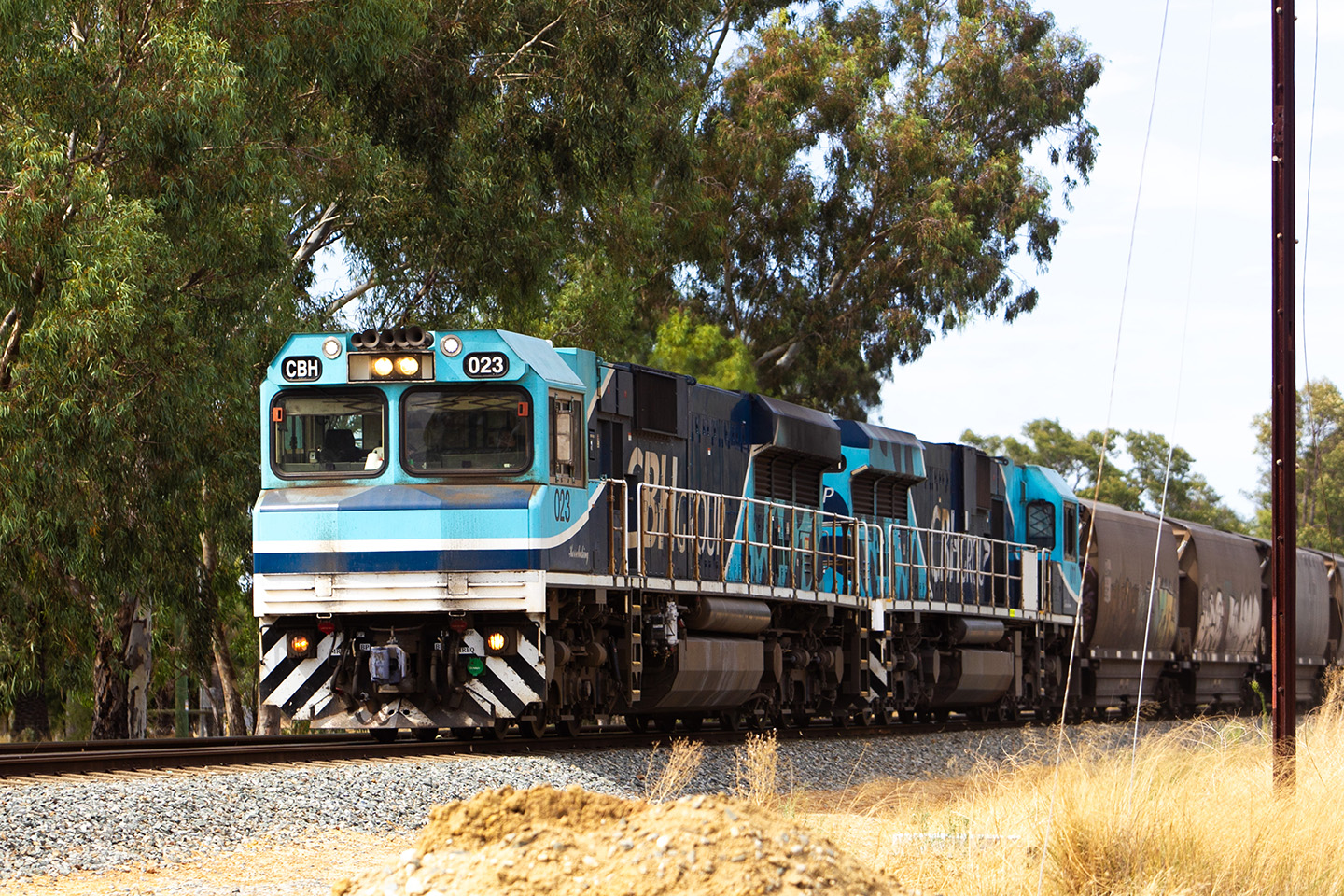
CBH rail project contractors in legal feud over alleged $2m debt

Two contractors of CBH Group’s rapid rail project are in a legal dispute over a multi-million-dollar settlement.

Continue Reading

Business

Defence giant Babcock announces new Plymouth base for 2,000 staff

Published

on

Business Live

The move is expected to boost the city’s economy

A CGI of Babcock's new Capability Centre in Plymouth

A CGI of Babcock’s new Capability Centre in Plymouth(Image: Babcock)

Defence giant Babcock has announced it will be opening a huge new base in Plymouth city centre which will house some 2,000 staff. The company said on Thursday (April 2) its new so-called Capability Centre will be located in the former Dingles and House of Fraser building, on 40-46 Parade.

The new facility will be in addition to the Dockyard and will help “free up vital space” at the Devonport site, according to Babcock.

The engineering business said the move would “significantly increase” footfall in the city-centre, support local businesses and services, and boost Plymouth’s economy

The plans, first announced in June last year, will see some staff transition from Devonport Royal Dockyard to the new facility, which will support the company’s long-term operations.

Advertisement

Harry Holt, deputy chief executive of Babcock said: “Securing a location for our new off‑site facility is a significant milestone.

“Importantly, it will strengthen the capabilities required to deliver this critical work in the defence of our nation. The move reinforces our commitment to Team Plymouth, supporting sustainable prosperity by creating high‑quality jobs, strengthening Plymouth’s economy and accelerating regeneration in the city centre.

“With major investment through the Ministry of Defence in our Devonport co‑located site and new services, including our MoveSmart shuttle bus service, it is an exciting time for Babcock and for Plymouth. We remain committed to this journey with our colleagues, customer and partners, moving forward, together.”

Tudor Evans, leader of Plymouth City Council, said the opening of the centre was “fantastic news for Plymouth” and would deliver “a major boost to people and businesses”.

Advertisement

“It marks an important moment for the city and shows what’s possible when Team Plymouth partners come together,” he said.

Luke Pollard, MP for Plymouth Sutton and Devonport, said the move was a “huge vote of confidence” in the city and its regeneration plans. “By relocating roles into the city centre, this move creates vital space at Devonport for the billions of pounds being invested in new defence infrastructure, equipment, and capability, supporting both our armed forces and the local economy,” he said.

Lord Vernon Coaker, who joined the Ministry of Defence in 2024, added: “With Babcock’s new Capability Centre bringing jobs into the heart of the city, it will boost the local economy and help cement Plymouth’s status as a nationally significant hub for defence, engineering and innovation.

“This is exactly the kind of investment we want to see as part of our wider mission to strengthen UK defence and spread opportunity across the country. The power of collaborative working as part of Team Plymouth will unlock Defence driven growth amongst our partners.”

Advertisement
Continue Reading

Business

FRA: NAV Should Continue To Erode If Distribution Isn't Cut (Downgrade)

Published

on

FRA: NAV Should Continue To Erode If Distribution Isn't Cut (Downgrade)

FRA: NAV Should Continue To Erode If Distribution Isn't Cut (Downgrade)

Continue Reading

Business

SUV-led demand keeps PV segment on strong growth path: Subhash Gate

Published

on

SUV-led demand keeps PV segment on strong growth path: Subhash Gate
India’s automobile sector continues to reflect a tale of two segments—strong momentum in passenger vehicles (PVs), led by SUVs, and emerging caution in commercial vehicles (CVs) and tractors amid global uncertainties and supply-side concerns.

Recent monthly sales data underscores the resilience of the PV segment. Leading automakers such as Mahindra & Mahindra, Maruti Suzuki, and Tata Motors have reported robust growth, with SUVs continuing to dominate demand across both urban and rural markets. However, not all players are riding the same wave. Hyundai, for instance, has posted a marginal decline in domestic volumes over the past year, hinting at intensifying competition and shifting consumer preferences.

Offering his perspective on the sector, Subhash Gate from Choice Institutional Equities noted, “So, if you are talking about the PV space, like we already know that all the companies are coming with very good numbers. Like, if you are talking about Mahindra & Mahindra, Maruti, Tata Motors, three companies have come up with very good numbers in the month. We also expect same thing during the month.” He added that SUV-led growth remains the key driver, stating, “We expect that all the PV segment which is driven by SUVs will definitely perform very well in this particular month.”

The March quarter performance has also exceeded expectations. Gate pointed out, “If you are talking about in fourth quarter, the numbers are coming in 21.1% overall if you are talking about. So, as per our expectation numbers have come up with very good in this particular quarter and all the numbers are in line with our estimate.” He further emphasized that both rural and urban demand trends are supporting the growth trajectory, with PV volumes expected to grow in the range of 15–20%.

Advertisement

CV Segment Faces Temporary Speed Bump

In contrast, the commercial vehicle segment is witnessing signs of a near-term slowdown. While the longer-term outlook remains intact due to a favorable replacement cycle, short-term disruptions are becoming evident.
Gate explained, “So if you are talking about commercial vehicles, even in our report also we explained that there is a replacement cycle is going on because if we talk about previously there were two seasons we saw the replacement cycle which is 2009 to 2012, after that 2014 to 2019 and now 2026 to 2028 we expect this replacement cycle will boom, the commercial vehicle segment.”
However, caution among buyers is rising. “But what happened in the commercial vehicle segment is that like now people are more cautious about the logistic issues. So, because of that people are afraid to buy commercial vehicles,” he said.
Despite this, some pockets remain resilient. Gate highlighted that “In terms of M&HCV trucks as well as in terms of LCV, like 10 to 11 percentage as per our expectation the numbers are pretty good.” Yet, weakness in the bus segment has dragged overall performance, impacting companies like Ashok Leyland and Eicher Motors.

He also flagged external risks, noting, “We expect that because of supply chain disruption and logistic issues, commercial vehicles numbers may get impacted but will definitely if war situation may get prolonged, it will definitely be impacted for next two to three months.” Still, he maintained confidence in the structural upcycle, adding that the replacement cycle is expected to continue until 2028.

Supply Risks and Cost Pressures Loom
Beyond demand trends, the industry faces potential headwinds from rising input costs and supply constraints, particularly related to gas availability and pricing.

Gate observed, “So, if you are talking about like recently government has hiked the price. So, it will definitely impact the demand of the overall auto industry.” He also warned of broader implications, stating that higher freight, insurance, and export-related costs could weigh on the sector, especially since exports account for 15–20% of total sales.

Advertisement

On the production front, automakers have so far avoided disruptions, but risks remain. “Right now we are not facing till 31st March we are not facing any kind of production disruption, but as soon as these gas related, CNG related issues will persist longer time, it will definitely impact auto ancillaries, then it will directly impact production of these particular companies,” he said.

Capacity utilization is another concern, particularly for market leader Maruti Suzuki. “Maruti Suzuki already work on full capacity of 90 to 100 percentage… if they get hampered for this particular production disruption, it will definitely impact on their volumes going ahead,” Gate cautioned.

Tractor Segment: Mixed Signals Ahead
The tractor segment, often seen as a proxy for rural health, is also showing early signs of stress despite a strong base.

Gate explained, “Right now if you see that even most of the managements had told in the conference call that tractor industry may get some kind of slip in upcoming months or upcoming quarters because of the rabi and all these kharif picks are not that much efficient in this particular season.”

Advertisement

While March numbers remain healthy on a year-on-year basis, underlying risks tied to agricultural output and fertility conditions could lead to volatility in the coming quarters.

The Road Ahead
The Indian auto sector remains fundamentally strong, supported by SUV demand, rural recovery, and an ongoing CV replacement cycle. However, near-term uncertainties—from geopolitical tensions to supply chain disruptions and input cost pressures—are likely to create pockets of volatility.

For now, the growth engine is firmly in the hands of passenger vehicles. Whether commercial vehicles and tractors can regain momentum will depend largely on how quickly global and domestic disruptions ease.

Advertisement
Continue Reading

Business

FTSE 100 suffers worst month since Covid as Iran war sends oil prices soaring

Published

on

Business Live

London’s blue-chip index fell more than 7% in March

A member of staff poses next to a trading board at the London Stock Exchange

A member of staff poses next to a trading board at the London Stock Exchange (Image: Getty Images)

The FTSE 100 experienced its most severe month since the pandemic in March after the United States’ conflict in the Middle East triggered a historic market response, resulting in spiralling government borrowing costs and oil prices undergoing their largest single-month surge on record.

Despite a relief rally on Tuesday, London’s blue-chip index declined over seven per cent throughout the month when Donald Trump and Israel’s attack on Iran escalated into the Middle East’s most serious regional conflict this century.

Markets have fluctuated dramatically since the end of February, with growing speculation about whether the Strait of Hormuz, a crucial shipping route out of the Persian Gulf that typically channels a quarter of the world’s seaborne oil supplies and a fifth of its natural gas, might be reopened.

The strait’s effective closure has led to a period of intense strain in energy markets. Brent crude – the global benchmark for oil prices – recorded its largest single-month increase on record, while WTI crude rose similarly steeply.

Advertisement

Brent, which traded at historic lows for much of 2025, increased more than 50 per cent in March to exceed $100 a barrel for the first time since Russia’s invasion of Ukraine. The commodity concluded the month at $107/barrel, meaning its gains for March narrowly surpassed the previous monthly record set in 1990 when Saddam Hussein invaded Kuwait, as reported by City AM.

Jose Torres, senior economist at Interactive Brokers, said: “President Trump’s attempts to inject calm into markets appear to be losing impact each time.”

The hostilities have also triggered a dramatic reassessment of the interest rate trajectory, causing the Government’s short-term borrowing costs to endure their worst month since Liz Truss’s ill-fated mini-Budget. The yield on the two-year gilt, amongst the most frequently issued UK bonds, jumped by almost a full percentage point throughout March, erasing billions from the Chancellor’s fiscal headroom.

Before the outbreak of hostilities, traders had anticipated the Bank of England would reduce its central interest rate three times during 2026, amidst a rapidly deteriorating labour market and a more moderate inflation outlook. However, fearing the escalating energy prices would push up costs across the broader economy, investors completely reversed those expectations, with markets now forecasting between three and four interest rate rises before year-end.

Advertisement

Britain’s government bonds experienced the most dramatic fluctuations amongst developed nations. Experts have suggested temporary price increases are less probable in the UK due to its range of regulated sectors and exposed energy market. The damaging sell-off in shorter-term gilts also triggered a cascade of concerns regarding the UK’s fiscal viability, prompting longer-dated bonds to face pressure from traders as well. The 10-year gilt yield rose marginally above five per cent for the first time since the global financial crisis, while 30-year gilts remain at levels unseen this century.

Kathleen Brooks, research director at XTB, described the bond market movements as “astonishing” and contended in a note that the government bore some responsibility.

“It is unwilling to cut fuel duty or VAT on fuel in this environment. Instead it is blaming price gouging by petrol forecourt owners,” she said.

“There is absolutely no evidence of this, and the RAC has reported that forecourt owners only make a slim six per cent profit margin on a litre of fuel. It is the government’s coffers who line their pockets during an energy price shock.”

Advertisement

The month has brought a sudden stop to what had been an impressive performance for UK assets, with both equities and government bonds experiencing a robust first quarter in 2026.

The FTSE 100 surpassed the 10,000-point threshold for the first time in its history in January, continuing a remarkable run from 2025 when it was the world’s top-performing major index. Fuelled by investors’ appetite for exposure to mining and the striking valuations, the index continued to set a series of new records, nearing the 11,000 points mark just before the conflict.

Government bonds also saw a rally into 2026, driven by expectations of interest rate reductions and several indications that ministers were prioritising managing the public finances.

Advertisement
Continue Reading

Trending

Copyright © 2025