

Business
Long-Term Investors Should Listen Up




jetcityimage/iStock Editorial via Getty Images

Listen below or on the go on Apple Podcasts and Spotify

Focus will move beyond autos to AI. (0:17) Comi-Con starts Thursday. (1:52) U.S. strikes Iran’s Revolutionary Guard. (2:24)
The following is an abridged transcript:
With earnings season in full swing and Tesla (TSLA) is lined up to report Wednesday.
Analysts expect Tesla to report revenue of $26.4B, EPS of $0.54 and automotive gross margin excluding credits slightly above 18%.
Tesla already disclosed that it delivered 480,126 vehicles in Q2 and produced 451,758. Beyond the core numbers, investor attention will once again center on the updates on autonomy, software, the robotaxi rollout, and AI4-AI5 chips, as well as the capex needed for the company to be a leader in physical AI.
SA Analyst Yiannis Zourmpanos says Tesla enters earnings with momentum on its side.
“The improvement in demand, rising analyst expectations, and strong execution show that the market could be undervaluing the stock’s potential earnings performance,” he added.
But Agar Capital warns a great company does not necessarily mean a great stock.
They argue its market cap of $1.5T is overvalued by $1T for “businesses that still lack commercial scale, complete authorizations, verifiable unit economics, and significant FCF.”
Here’s how the rest of the earnings calendar shapes up:
Domino’s Pizza (DPZ) and AMC Entertainment (AMC) report Monday.
Novartis (NVSEF), 3M (MMM), GM (GM) and Halliburton (HAL) are due Tuesday.
Alphabet (GOOG) (GOOGL), Texas Instruments (TXN), IBM (IBM), AT&T (T), ServiceNow (NOW), Philip Morris (PM) and Kinder Morgan (KMI) join Tesla on Wednesday.
Thursday brings reports from Intel (INTC), T-Mobile (TMUS), Lockheed Martin (LMT), Union Pacific (UNP) and Comcast (CMCSA).
American Express (AXP), Verizon (VZ) and Charter Communications (CHTR) close out the week on Friday.
The economic calendar is very light, but this week also brings, AMD’s (AMD) Advancing AI event in San Francisco on Wednesday, where CEO Lisa Su is expected to outline the chipmaker’s latest AI strategy.
The biennial Farnborough International Airshow begins Monday, with Boeing (BA), Airbus (EADSF), Embraer (EMBJ) and other industry leaders expected to announce aircraft orders and showcase new technologies.
And San Diego Comic-Con kicks off Thursday, with Disney (DIS), Warner Bros. Discovery (WBD), and Apple (AAPL) among the media companies expected to showcase upcoming films and streaming content.
In the news this weekend, the U.S. military launched airstrikes targeting Iran’s Islamic Revolutionary Guard Corps on Sunday in retaliation for an attack in Jordan that killed two American service members and wounded four others, further escalating the conflict between Washington and Tehran.
Walmart (WMT) announced that it has removed four bagged iceberg lettuce salad products after receiving a notice from its supplier, Taylor Farms, as recalls tied to a cyclosporiasis outbreak that causes explosive diarrhea widen.
Taylor Farms is one of the largest suppliers of fresh vegetables and packaged salads in North America, serving retailers including not just Walmart (WMT), but Costco (COST) and Whole Foods Market (AMZN) as well as McDonald’s (MCD) and Taco Bell (YUM).
And for income investors, Caterpillar (CAT) and Colgate-Palmolive (CL) go ex-dividend on Monday.
Caterpillar pays on August 19 and Colgate-Palmolive on August 14.
Dell (DELL) goes ex-dividend Tuesday, with a July 31 payout date.
Pfizer (PFE) goes ex-dividend on Friday, paying out Sept. 1.
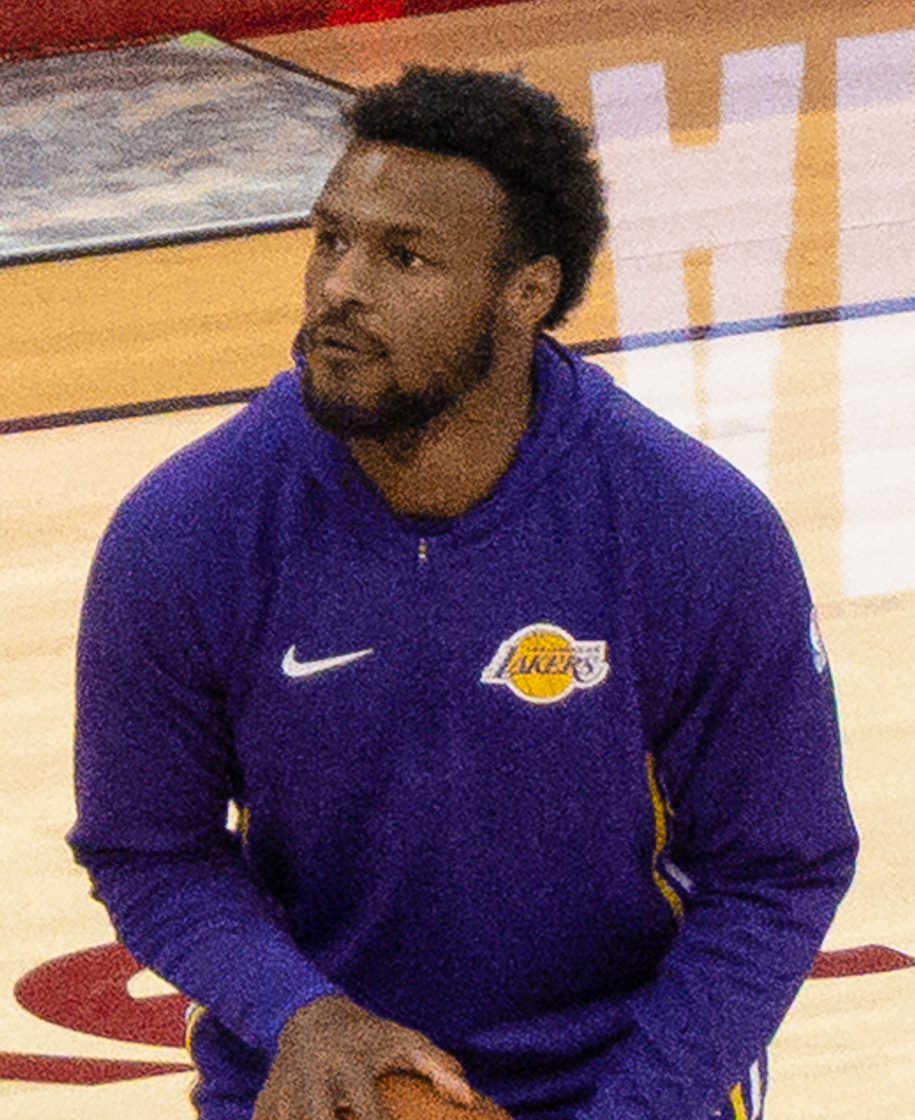
The NBA’s trade rumor mill continued running hot over the weekend, with the league largely stuck in a holding pattern while LeBron James finalizes his free agency decision, freeing up front offices to explore other moves in the meantime. Here are five of the latest storylines circulating around the league.
Nikola Jovic and the Miami Heat. After completing their blockbuster trade for Giannis Antetokounmpo, the Heat now face the challenge of filling out a roster that currently sits at 12 players and needs at least two more additions before training camp. While Miami’s top priority remains a potential LeBron James signing, the team is separately seeking rotation-caliber veterans capable of contributing immediately, and has hoped to find a trade market for forward Nikola Jovic, the 2022 first-round pick whose development has fallen short of the team’s original expectations. At 23 years old and 6-foot-10, Jovic still carries enough physical tools that rival teams have shown interest, even as his time in Miami’s rotation has yet to fully take off.
Bronny James and the Lakers. With his father’s free agency decision still pending, speculation has continued swirling around whether the Los Angeles Lakers might eventually trade Bronny James to reunite him with LeBron wherever he signs. According to reporting from Dan Woike of The Athletic, the Lakers would be open to moving Bronny out of respect for LeBron if that was specifically what the four-time MVP wanted, but the organization has no independent plans to trade Bronny simply for the sake of doing so. That reporting reinforces earlier indications from league sources that Bronny’s path forward is not automatically tied to his father’s eventual destination, particularly after the Lakers chose to fully guarantee his contract for the 2026-27 season earlier this month.
Domantas Sabonis. The Sacramento Kings center has continued to surface in trade speculation as one of the veteran All-Stars who could be on the move this offseason, according to ESPN’s tracking of the league’s most significant potential deals. Sabonis joins a growing list of established stars, including Giannis Antetokounmpo, Kawhi Leonard, LaMelo Ball and Ja Morant, who have already changed teams this summer, with league insiders continuing to monitor whether Sacramento ultimately decides to pivot its franchise direction by exploring a trade market for its two-time All-Star.
Zach LaVine’s opt-in and its ripple effect for Golden State. Sacramento Kings guard Zach LaVine announced he is opting into his $49 million player option for the 2026-27 season, according to his agent, Klutch Sports CEO Rich Paul, in a report from ESPN’s Shams Charania. While the move directly affects LaVine’s own situation in Sacramento, Charania noted that it carries broader implications for the Golden State Warriors, giving the team additional financial flexibility to simultaneously pursue LeBron James in free agency while also exploring a potential trade for Anthony Davis, James’ former Lakers teammate now with the Washington Wizards.
Kawhi Leonard’s stalled trade to Toronto. Leonard’s trade from the LA Clippers to the Toronto Raptors, agreed to on June 30 in exchange for Brandon Ingram, Gradey Dick, multiple first-round picks and a pick swap, remains unfinalized as the NBA continues investigating whether Leonard’s endorsement agreement with the startup Aspiration constituted a circumvention of the salary cap. NBA Commissioner Adam Silver has signaled a desire to resolve the matter soon, saying before the NBA Finals that both franchises need clarity on their roster situations regardless of how the investigation concludes. Until the league issues a final ruling, the trade remains in limbo, leaving both Toronto and the Clippers unable to fully finalize their offseason plans around Leonard’s situation.
Beyond these five storylines, the broader NBA offseason has already produced a wave of significant moves that continue reshaping the league’s competitive landscape heading into training camp. The Milwaukee Bucks completed their long-rumored trade sending Antetokounmpo to Miami in exchange for four players, four first-round picks and a pick swap. The Boston Celtics stunned the league by trading 2024 Finals MVP Jaylen Brown to the Philadelphia 76ers in exchange for Paul George and four draft picks. The Minnesota Timberwolves acquired LaMelo Ball from the Charlotte Hornets, while separately sending Julius Randle to the Brooklyn Nets in a deal that also routed center Nic Claxton to the Chicago Bulls. The Memphis Grizzlies, meanwhile, completed the dismantling of what had briefly looked like one of the league’s most promising young cores, trading Ja Morant to the Portland Trail Blazers after having already moved Desmond Bane and Jaren Jackson Jr. over the preceding 12 months.
Elsewhere, the New York Knicks lost center Mitchell Robinson to the rival Boston Celtics in free agency, a departure that will sting for New York given how directly Robinson now fills Boston’s need at the position following the earlier departures of Kristaps Porziņģis and Al Horford. According to Charania, Robinson’s new deal includes a player option for its third year, giving him an eventual opportunity to test free agency again depending on how his fit in Boston develops.
With training camps now on the horizon, the NBA’s offseason remains defined largely by the unresolved question of where LeBron James will ultimately sign, a decision that continues to hold up related moves across multiple franchises still waiting to see how their own roster plans might shift depending on his final choice. James himself has given little indication his timeline will accelerate to accommodate the league’s preferences, telling reporters and fans alike that he intends to make the decision on his own terms, leaving teams including Miami, Sacramento and others to continue exploring secondary roster moves in the meantime rather than waiting entirely on James’ announcement before finalizing their own offseason plans.

BTAL: Market Neutral Vs Recent Market Shocks
Business
Top 10 Countries With the Best AI Technology in 2026, From the U.S. to South Korea in the New Rankings

A wave of new global rankings released this year has attempted to answer one of the technology industry’s most closely watched questions: which countries currently lead the world in artificial intelligence. While methodologies vary across different research organizations, several consistent names continue topping the lists in 2026, spanning countries recognized for foundational model development, enterprise adoption rates and national AI governance strategies alike.
According to a synthesis of rankings drawing on the Stanford AI Index, the Tortoise Global AI Index and IMD’s Digital Competitiveness Rankings, the United States, China and Singapore currently lead global AI adoption in 2026, followed by the United Kingdom, Germany, Israel, South Korea, Canada, the United Arab Emirates and Japan.
United States. The U.S. remains the world’s dominant force in foundational AI research and development, home to leading labs including OpenAI, Anthropic and Google DeepMind, and continues attracting the largest share of global private AI investment. In the AI Readiness Index compiled by Oxford Insights, the United States posted the highest overall score of any country globally, at 87.03 out of 100, leading specifically in Innovation Capacity and Technology-Sector Maturity. Despite that dominance in building AI systems, the U.S. notably ranks outside the global top 20 in one key adoption metric, according to Visual Capitalist’s analysis of Microsoft usage data, with a smaller share of its working-age population using AI tools regularly compared with several smaller economies.
China. China continues to rank as the second-strongest AI power globally, distinguished by massive scale in AI education and research output. According to the Global AI Brain Race Report 2026, China maintains 107 universities recognized among the world’s top institutions for AI-related subjects, more than four times the 26 held by the United States, giving the country an unmatched academic talent pipeline even as its scores on measures of responsible AI governance and policy transparency trail significantly behind Western counterparts.
Singapore. Singapore has consistently ranked among the top three nations globally for both AI readiness and adoption, posting an AI Readiness Index score of 84.25, the second-highest in the world behind the United States. Singapore’s strength lies in its combination of strong government AI strategy, robust data infrastructure and high real-world usage, with Visual Capitalist’s adoption data showing 63% of the country’s working-age population actively using AI tools, the second-highest adoption rate of any nation after the United Arab Emirates.
United Kingdom. The U.K. rounds out the traditional top tier of AI leadership, posting an AI Readiness Index score of 78.88, driven by strong government policy frameworks and a mature technology sector. Alongside Canada, the U.K. has positioned itself at the forefront of international discussions on AI governance, contributing significantly to national and global frameworks aimed at guiding safe and responsible AI development.
Germany. Germany has emerged as one of Europe’s leading AI economies, benefiting from a strong industrial and manufacturing base that has accelerated enterprise adoption of AI tools across sectors including automotive and advanced manufacturing, helping anchor the country’s position among the world’s top 10 AI nations in 2026.
Israel. Despite its comparatively small population, Israel continues punching well above its weight in global AI rankings, driven by a dense concentration of AI startups, strong government-backed research funding and a technology sector deeply integrated with both defense and commercial AI applications.
South Korea. South Korea posted an AI Readiness Index score of 79.98, placing it among the world’s top five nations on that measure, supported by strong technology-sector maturity and substantial government investment in AI infrastructure and semiconductor manufacturing capacity that underpins much of the global AI hardware supply chain.
Canada. Canada ranks among North America’s top AI performers alongside the United States, posting particularly strong scores in Governance and Ethics, at 94.14, and Data Availability, at 93.15, according to the Oxford Insights index. Canada’s open-source AI research contributions, anchored by institutions including the University of Toronto, have proven especially influential globally, and the country has positioned itself as a leading voice in responsible AI deployment and governance discussions.
United Arab Emirates. The UAE has emerged as the world’s clear leader in practical AI adoption, with more than 70% of its working-age population using AI tools regularly, according to Microsoft usage data analyzed by Visual Capitalist, a rate significantly higher than any other country tracked. That real-world usage reflects the UAE’s aggressive national AI strategy and substantial government investment aimed at positioning the country as a global AI hub despite its comparatively small population and research base relative to countries like the U.S. or China.
Japan. Japan rounds out the top 10, drawing on a combination of advanced robotics expertise, strong corporate AI investment and government-backed initiatives aimed at integrating AI more deeply into the country’s manufacturing and aging-population healthcare sectors.
Beyond this top tier, several smaller European economies have posted standout enterprise AI adoption rates in 2026 despite not always ranking among the broader top 10 in overall AI capability. According to Eurostat data cited by Alice Labs, Denmark leads the European Union with a 42% enterprise AI adoption rate, followed by Finland at 37.8%, Sweden at 35%, Belgium at 34.5% and the Netherlands at 33.2%, all comfortably ahead of the broader EU27 average of 20%.
Researchers caution that no single ranking fully captures a country’s AI standing, since different indices weigh factors including research output, government policy, private investment, infrastructure readiness and real-world adoption differently. As one analysis from Core AI Dominance 2026 put it, AI leadership today is “multi-dimensional,” extending well beyond which country builds the most powerful foundational model to include which nations can most effectively translate AI research into responsible, widely adopted commercial and public-sector applications. With global AI investment continuing to accelerate and adoption rates climbing across both advanced and emerging economies, analysts expect the composition of these rankings to keep shifting in the years ahead as more countries roll out national AI strategies aimed at closing the gap with the current leaders.
Business
Soccer-With security lines and star-studded spectacle, World Cup prepares for final showdown

Soccer-With security lines and star-studded spectacle, World Cup prepares for final showdown

Hanizam/iStock via Getty Images

Dear Investors and Friends,
The NZS Growth Equity strategy (“strategy” or “portfolio”) had a gross return of +24.96% and a net return of +24.76% for the second quarter as compared to +14.79% for the Morningstar Global Target Market Exposure Index (the “Index”) over the same period. Year-to-date, the strategy generated a gross return of +14.03% and a net return of +13.63%, versus +11.00% for the Index.
*Since inception: January 1, 2020; returns as of June 30, 2026. One cannot invest directly in an index.
Performance Overview
Equity markets were strong in the second quarter of 2026. As we noted in our last quarterly letter, weakness in the first quarter provided some of the most attractive valuations in growth equities we had seen in some time. That starting point met seemingly insatiable demand for AI infrastructure, progress towards geopolitical stabilization, and generally positive earnings reports, which drove strength in the second quarter. The portfolio outperformed the index, primarily due to our overweight in Semiconductors, stock selection in areas like Software and Industrials, and our zero weight to Energy. The resilient and optional portions of the portfolio both carried their respective weight in terms of contribution to returns and outperformed.
Information Technology contributed the most to absolute returns, though Industrials and Communication Services also outperformed. Each of the top-five individual contributors to absolute returns were in the Semiconductor industry and, more importantly, in the AI infrastructure ecosystem. In addition to the improving outlook reflected in chips broadly, ARM Holdings (ARM) shares were further lifted by the company’s announced plan to develop its first in-house chip, a CPU for AI workloads. Lam Research (LRCX), which is a critical supplier of etching equipment used in the production of semiconductors, saw strengthening tailwinds to their outlook as some key chip manufacturing customers publicly committed to higher capital expenditures to expand capacity. ASML Holdings (ASML), Taiwan Semiconductor (TSM), and Marvell (MRVL) were also top-five contributors.
Only Real Estate and Healthcare contributed negatively to absolute returns, but Materials and Financials lagged. Intuitive Surgical (ISRG) was the top individual detractor to absolute returns in the quarter. While fundamentals remain solid for Intuitive Surgical, the stock’s multiple has not been immune from the broad de-rating in “quality growth” stocks we’ve seen outside of the AI ecosystem (see discussion below). Nintendo (NTDOY) was weak in the period after issuing forward guidance that disappointed due to the increasing costs of memory chips going into their gaming hardware. The other top-five detractors were Tyler Technologies (TYL), ON Semiconductor (ON), and CoStar Group (CSGP).
Portfolio Positioning
Over the quarter, the team actively added net basis points to Information Technology, Healthcare, and Communication Services and reduced exposure to Consumer Discretionary, Real Estate, and Financials. The portfolio remains overweight Information Technology, Industrials, and Healthcare.
Those familiar with our strategy may know a key part of our process concerns reassessment of optional positions that outperform their way into the “middle” of the portfolio. If the team determines that the range of outcomes has narrowed enough for promotion to a resilient position, we add capital; otherwise, we trim the position back to optionality. While we might leave incremental upside on the table, we believe this strict reduction in overactive stocks with wide ranging outcomes allows us to continue benefiting from further upside without letting risk run. This quarter, the portfolio had five positions that worked their way into the middle – a few even ran all the way through the middle in a single day. This situation is unusual and perhaps symptomatic of the volatility in the market. In the cases of ARM Holdings, Marvell, Lattice Semiconductor (LSCC), and Snowflake (SNOW), we trimmed the positions back to optionality. For example, Marvell rallied significantly after Jensen Huang extolled the company as “the next trillion-dollar company” on stage at Computex in Taiwan. While we agree it’s within the range of outcomes, in our view, Jensen’s statement only resulted in the market applying a higher valuation to a stock whose fundamental range of outcomes remained unchanged; thus, we trimmed Marvell. Quanta Services (PWR) also ran into the middle during the quarter, and we ultimately decided to add capital and promote the position to resilient, reflecting our view that the fundamental range of outcomes for Quanta’s business – a US provider of craft labor for electricity generation, transmission, and distribution infrastructure – has continued to narrow.
Elsewhere, NVIDIA (NVDA) was added back to the portfolio as a resilient position late in the quarter. NVIDIA had been a long-time holding in the portfolio before we exited in the third quarter of 2025. The stock has since lagged the broad surge in the AI semiconductor ecosystem as the market began contemplating budding risks to the GPU’s market share in AI compute. This scenario was our primary concern when we exited the position, but we now think the lowered valuation more than compensates for this type of risk. Further, NVIDIA’s growth relative to competitors indicates the GPU is actually taking share at present. Other new additions to the portfolio were optionality positions in ON Semiconductor, Descartes (DSGX), CATL, CrowdStrike (CRWD), Datadog (DDOG), Lumentum (LITE), and Axogen (AXGN). We also added materially to ASML, Amphenol (APH), Intuitive Surgical, and Axon.
Healthcare: Are investors going homeopathic?
A trend we’ve been discussing is the steep derating in what was previously considered the “quality growth” cohort. This group has historically traded at premium multiples for perceived uncorrelated durable growth, strong returns on capital, and high terminal value. Businesses within this cohort that haven’t been deemed “AI beneficiaries”, however, have seen their valuations cut significantly. Of course, part of this broad derating is simply tied to higher interest rate expectations weighing on valuations. But, given that higher interest rate expectations did not dampen all corners of the market (e.g., AI), it seems likely to us that there is another element at play – namely, capital being reallocated from quality growth to feed the AI behemoth. Some days you can almost hear the torrential rush of dollar bills. Why invest in a company that aims to compound earnings in the low-to-mid double digits per year when you can invest in companies whose stocks are going up 10% a week?! We’re of course being provocative with that statement and, to be fair, many of these left-for-dead compounders have simply not provided much earnings growth to compound (e.g., we’ve been waiting for a broad industrial recovery for years at this point). Further, AI has widened the perceived range of outcomes for many sectors – software, marketplaces, IT services, and insurance brokers, to name a few. In sum, regardless of whether we agree or disagree with the market, in most cases we understand the factors underlying the capital influx/efflux.
With that preamble, one sector that we’ve found increasingly attractive is Healthcare. Following the prolonged post-pandemic hangover, fundamentals have turned the corner and returned to growth. We also wonder if disruptive forces are actually more likely to have positive impacts on long-term industry growth. As an example, certain markets in the sector may be negatively impacted by the adoption of GLP-1s, but perhaps a larger number of markets stand to profit. The orthopedics industry could benefit at the margin from increased longevity and/or more patients meeting strict BMI cutoffs that many surgeons use for a hip or knee replacement. We are also intrigued by the longer-term potential for AI to assist in the front-end of the drug discovery process, which could improve trial success rates and lead to more drugs reaching production. This scenario would benefit suppliers of capital equipment, consumables, or services in drug manufacturing. The U.S. BIOSECURE Act was signed into law in late 2025 (with bipartisan support) and prohibits federal agencies and recipients of federal funds from procuring or using biotechnology equipment or services provided by designated “companies of concern”, primarily targeting China. In theory, this legislation could drive a period of increased U.S. demand for capital equipment and drug manufacturing services. Lastly, the Healthcare sector is somewhat uniquely untethered to the future of AI infrastructure capex – something that can no longer be said for anything closely tied to even broad macroeconomic outlook. We think this distinction makes the sector valuable from a portfolio construction perspective.
Given this combination of improving fundamentals, the potential for emerging tailwinds in the industry, and the potential portfolio construction benefits of including a sector uncorrelated to AI capex spending, we’ve been surprised by the extent of multiple compression in the Healthcare sector. Given this context, last quarter we incrementally added net capital to some of our existing holdings in the sector, including Intuitive Surgical, HeartFlow (HTFL), and Stryker (SYK), and we introduced Axogen and WuXi XDC (WXXWY) as optionality positions. Axogen provides nerve grafts used for peripheral nerve repair. Following BLA approval of their Avance nerve allograft and related positive momentum in insurance coverage, we think Axogen is highly asymmetric to a future where nerve repair becomes standard-of-care, including for patients undergoing a mastectomy or prostatectomy (PSA to look into Axogen’s tech if you or someone you know could benefit). WuXi XDC is a China-based Contract Research, Development, and Manufacturing Organization (CRDMO) focused on bioconjugates, an exciting research area that is rapidly developing new therapies. The aforementioned U.S. BIOSECURE Act provided us an attractive entry point into this rapidly growing business and will also keep a lid on position size given the range of outcomes. In short, we think a modestly higher dose of this “quality growth” sector is good for our portfolio’s health, and we’ve been incrementally expressing this view.
Team Update
We are excited to welcome Cecile Stone to NZS as an Investment Operations Associate. Cecile recently graduated from the University of Colorado Boulder Leeds School of Business and will support Nick Perez, our Director of Operations. Welcome to the team, Cecile!
Conclusion
Thank you to our investors for your continued trust, support, and insights. Interacting with our partners is a valuable part of our process. Please reach out to Alexandra Pope (alexandra@nzscapital.com) if you would like to connect and, as always, we appreciate any questions, comments, or ideas.
The NZS Team
Editor’s Note: The summary bullets for this article were chosen by Seeking Alpha editors.
Business
Poor Sleep Rewires the Aging Brain Differently by Age and Sex, New Binghamton University Study Finds

Poor sleep quality affects the brain’s internal communication networks in strikingly different ways depending on a person’s age and biological sex, according to a new study led by researchers at Binghamton University, State University of New York, with older women showing patterns that resemble the earliest, silent stages of Alzheimer’s disease.
The study, published in the journal Neurobiology of Aging under the title “Sleep quality is associated with default mode and salience network connectivity differently across age and sex,” analyzed brain scans from two large groups totaling more than 1,300 participants to examine how brain networks connect while at rest in people who reported poor sleep quality. The research was led by psychology graduate student Sepehr Gourabi and Associate Professor of Psychology Ian McDonough, both at Binghamton University, alongside co-authors Selene Tan, Matthew Cribbet and Jeanne Cundiff of the University of Alabama.
The findings revealed distinct patterns depending on a participant’s stage of life. In college-age adults, poor sleep quality was associated with overconnected brain regions involved in physical movement, a pattern researchers interpreted as a sign that younger bodies simply weren’t physically prepared to fall asleep. In older adults, generally defined in the study as those age 65 and above, that same movement-related connectivity pattern was reversed, with those regions showing under-connection. Instead, older adults with poor sleep exhibited hyperconnectivity in brain regions involved in cognition rather than movement.
McDonough summarized the overall pattern observed in older participants. “We discovered that the poorly slept older brain looks like it is suffering from a general breakdown in its sleep-regulation systems,” he said.
The most striking findings emerged among older women specifically. That group showed abnormal hyperconnectivity between the brain’s Default Mode Network, which governs internal thoughts and memory, and the Frontal Parietal Network, which supports sustained attention and working memory. According to the study, this pattern of excessive communication between the two networks was directly linked to poorer memory performance among the affected participants, and closely mirrors brain wiring patterns previously observed during the preclinical, symptom-free stages of Alzheimer’s disease, McDonough said.
Researchers said the underlying reasons behind these age- and sex-based differences remain unclear. One possibility is that older adults become habituated to a state of heightened arousal over time, or develop coping mechanisms that include greater willingness to use sleep-related medications. Another potential factor is rumination, a pattern of persistent overthinking often associated with anxiety or depression, though researchers noted that anyone can experience rumination depending on their individual circumstances, regardless of a formal mental health diagnosis.
McDonough offered a possible explanation for how this state of mental agitation could interfere with healthy sleep patterns. “One strong possibility is that people who have a lot of running thoughts right before bed are not in a calm state, but rather more of an agitated state,” he said.
The research also touched on the complex and still-debated relationship between depression and cognitive decline. McDonough noted that some prior studies have identified a link between depression and dementia, while other research has found that depression can sometimes closely resemble cognitive decline on the surface, with cognitive function improving once the underlying depression itself is treated.
A central unresolved question raised by the study involves the direction of causation between sleep and brain connectivity: do abnormal brain network connections cause sleep dysfunction in the first place, or does poor sleep itself lead researchers to observe those network abnormalities afterward? The study’s data offered a partial answer on this point, with researchers finding that hyperconnectivity between the Default Mode Network and Frontal Parietal Network was associated with worsening cognition over time, suggesting that cognitive consequences tend to follow sleep disturbances or increased connectivity between these networks, rather than preceding them, according to McDonough.
Researchers emphasized that growing scientific evidence continues to point toward between-network brain connectivity, particularly involving the Default Mode Network, as an early warning sign of declining brain health more broadly. Because of that connection, the study’s authors said getting sufficient, quality sleep remains an important factor in protecting long-term cognitive health across the lifespan.
The study’s authors offered different practical takeaways depending on a person’s age group. For younger adults, McDonough suggested that efforts specifically aimed at reducing physical and mental arousal before bedtime, such as journaling to help quiet racing thoughts, could prove helpful given the movement-related overconnectivity observed in that age group. For older adults, the researchers said the underlying mechanisms remain considerably less clear, given that heightened arousal does not appear to be the primary driver of the sleep-related connectivity changes observed in that population. McDonough recommended that anyone experiencing ongoing sleep problems consult with their physician for personalized guidance rather than relying solely on general recommendations.
Looking ahead, McDonough suggested that if abnormal brain connectivity changes do in fact precede sleep loss rather than simply result from it, then interventions specifically aimed at strengthening brain network function directly could represent one promising avenue for future treatment approaches. “If connectivity changes do precede sleep loss, then strengthening brain networks could be one solution,” he said.
The study adds to a growing body of research examining the relationship between sleep quality and long-term brain health, an area of increasing scientific interest given sleep’s established role in memory consolidation, cognitive maintenance, and the clearance of proteins associated with neurodegenerative disease. While the current findings stop short of establishing a direct causal pathway between poor sleep and conditions like Alzheimer’s disease, the researchers said the observed similarities between older women’s brain connectivity patterns and those seen in preclinical Alzheimer’s cases warrant continued investigation into how sleep-related interventions might eventually factor into broader efforts to protect cognitive health as people age.


Vasily Zyryanov is an individual investor and writer.He uses various techniques to find both relatively underpriced equities with strong upside potential and relatively overappreciated companies that have inflated valuation for a reason.In his research, he pays much attention to the energy sector (oil & gas supermajors, mid-cap, and small-cap exploration & production companies, the oilfield services firms), while he also covers a plethora of other industries from mining and chemicals to luxury bellwethers.He firmly believes that apart from simple profit and sales analysis, a meticulous investor must assess Free Cash Flow and Return on Capital to gain deeper insights and avoid sophomoric conclusions.While he favors underappreciated and misunderstood equities, he also acknowledges that some growth stocks do deserve their premium valuation, and its an investor’s primary goal to delve deeper and uncover if the market’s current opinion is correct or not.
Analyst’s Disclosure: I/we have no stock, option or similar derivative position in any of the companies mentioned, and no plans to initiate any such positions within the next 72 hours. I wrote this article myself, and it expresses my own opinions. I am not receiving compensation for it (other than from Seeking Alpha). I have no business relationship with any company whose stock is mentioned in this article.
Seeking Alpha’s Disclosure: Past performance is no guarantee of future results. No recommendation or advice is being given as to whether any investment is suitable for a particular investor. Any views or opinions expressed above may not reflect those of Seeking Alpha as a whole. Seeking Alpha is not a licensed securities dealer, broker or US investment adviser or investment bank. Our analysts are third party authors that include both professional investors and individual investors who may not be licensed or certified by any institute or regulatory body.

ICE officers to wear body cameras during vehicle stops, border czar says

Bellows withdraws from US Senate race as Maine Democrats regroup

Influencer Breaks Silence After Missing Report

Russia launches major ballistic-missile attack on Ukrainian cities

Wall Street Brunch: Tesla Reports With Earnings In Full Swing (undefined:TSLA)


-
 NewsBeat3 days ago
London Mayor Sadiq Khan handed a peerage by Keir Starmer alongside 15 other Labour figures… just days before the PM leaves No10
-

 Fashion2 days ago
Weekend Open Thread – Corporette.com
-

 Politics1 day ago
The House | The City of London can help the new chancellor deliver growth in every postcode
-

 Politics4 days ago
Young campaigners urge incoming PM to act on outdoor junk food ads
-

 Crypto World4 days ago
CFTC blocks Kalshi from unwinding Michigan trades after court order
-

 Business4 days ago
Nvidia Stock Slips After Big Tuesday Rally as Huang Confirms Vera Rubin Chip Is Now in Production Today
-

 Crypto World1 day ago
Ripple Payments Joins MiCA With 14 Firms, Does It Mean Anything For XRP?
-

 Politics5 hours ago
Democrats look to World Cup watch parties to register thousands of voters
-

 Crypto World2 days ago
Ripple wins EU-wide access as ESMA adds it to MiCA register
-
 Entertainment4 days ago
Disney’s Most Ambitious Failed Star Wars Attraction Is Coming to SDCC
-
 Crypto World2 days ago
Two July Windows Left: The CLARITY Act’s Senate Fight and What Failure Means
-

 Business4 days ago
Palantir Shares Rise After Expanded Nvidia Partnership and Fresh Analyst Upgrades Ahead of Earnings Day
-

 Crypto World3 days ago
Injective Submits SEC Transfer-Agent Registration to Onchain Ownership Records
-

 Tech6 days ago
Get Your ESP32 Sunny Side Up With This Solar Dev Board
-

 News Videos5 days ago
XRP BOMBSHELL… XRP OMBOARDED FOR TRANSACTIONS!!!
-

 NewsBeat2 days ago
Registration is now open for March for Men with Kev 2026
-

 Tech5 days ago
Dark Secrets Emerge When Jailbreaking LLMs
-
 Sports4 days ago
New Cornerback Enters Vikings Trade Rumor Mill
-

 News Videos2 days ago
Money | Class 12 Economics | CBSE Board Exam 2026-27
-

 Business3 days ago
Banco Bilbao Vizcaya Argentaria, S.A. (BBVA) Discusses Global Macro Environment and Economic Outlook for Core Markets Transcript
You must be logged in to post a comment Login