

Business
Thai PM Meets 40+ European Firms to Boost Trade and Advance EU FTA

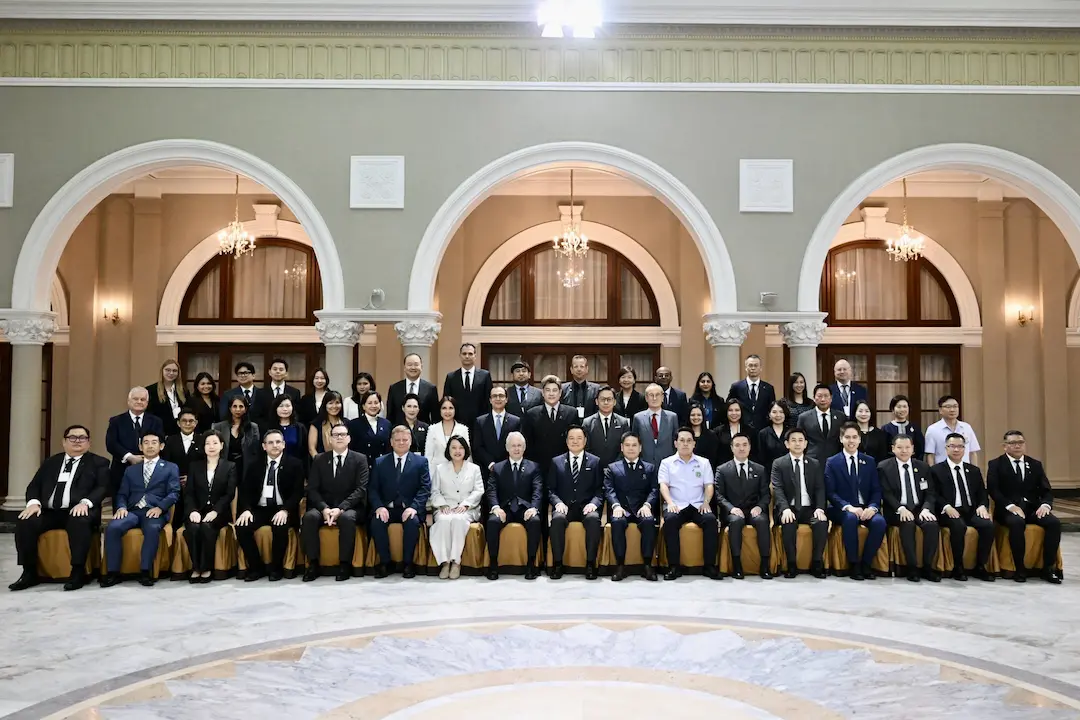
Prime Minister Anutin Charnvirakul met with over 40 European companies to enhance trade and investment ties, emphasizing Thailand’s commitment to digital infrastructure and positioning as an industrial hub while pursuing the Thailand-EU Free Trade Agreement.
Key Points
- Meeting Overview: Prime Minister Anutin Charnvirakul met over 40 European company executives at Government House on July 16, discussing trade and investment within the EU-ASEAN Business Council framework. The dialogue underscored Europe’s importance as a key economic partner for Thailand.
- Government Priorities: Anutin highlighted plans to enhance digital infrastructure, AI, clean energy, and transportation networks while improving the investment climate through the Thailand FastPass program and pursuing the Thailand-EU Free Trade Agreement (FTA).
- European Business Perspectives: European representatives affirmed Thailand’s appeal as an investment destination due to its strategic location and skilled workforce. They advocated for closer cooperation in various sectors and supported Thailand’s OECD membership and the FTA, alongside the government’s initiative to reform outdated regulations.
Prime Minister Anutin Charnvirakul met with executives from more than 40 European companies on July 16 at Government House during a meeting with the EU-ASEAN Business Council and the European Association for Business and Commerce. The discussions covered trade, investment, and broader economic cooperation between Thailand and the European Union.
Anutin said Europe remains one of Thailand’s key economic partners and that continued investment by leading European companies reflects confidence in the country’s long-term potential. He outlined the government’s priorities of expanding digital infrastructure, artificial intelligence, clean energy, transportation networks, and logistics, while improving the investment climate through the Thailand FastPass program, OECD accession, and progress toward the Thailand-EU Free Trade Agreement.
The prime minister also said the government is working to position Thailand as a regional hub for industries including semiconductors, digital technology, clean energy, life sciences, modern agriculture, and food production. He added that concluding the Thailand-EU FTA would expand market access for Thai products and create new opportunities for businesses.
Representatives of the European business community said Thailand remains an attractive investment destination because of its strategic location, manufacturing base, and skilled workforce. They also expressed support for Thailand’s OECD membership and the Thailand-EU FTA while proposing closer cooperation in manufacturing, healthcare, food, finance, and the digital economy. The government also reaffirmed plans to simplify business procedures by updating more than 7,000 outdated laws and regulations.
Source : Thai PM Welcomes European Executives to Advance Thailand-EU FTA
Other People are Reading


Trump says he told Carney that Canada must get wildfires under control
For a common sample of 164 companies, revenue grew 17.5% on a low base a year ago, the fastest in at least nine quarters.
Net profit rose 14.5% year-on-year, marking a second consecutive quarter of double-digit growth. In the year-ago period, revenue and profit had risen by 4.7% and 11.5%, respectively.
The sample’s operating margin was under pressure due to higher input costs.
 Agencies
Operating Margin Contracts

For the total sample, operating margin contracted to 20.9% in the June quarter from 26.9% in the year-ago quarter. Excluding lenders, the sample’s operating margin fell to 14.7% from 17.3% by a similar comparison. The proportion of raw material cost in sales for the truncated sample shot up to 33.3% from 29.8% a year ago, reflecting input price inflation due to geopolitical conflict.
Read more: Refining gains, clean energy push lift Reliance outlook despite retail drag
Some banks and finance companies reported strong numbers, boosting overall net profit growth. Excluding lenders, the sample’s net profit growth shrank to just 1.2%. The share of banks and finance companies in the total sample’s net profit rose to 56.9% in the June quarter from 51.3% a year ago.The total sample’s profit growth was muted by Reliance Industries Ltd (RIL) numbers. Net profit at the country’s largest company by revenue and market cap fell 22.4% year-on-year to Rs20,946 crore. Excluding RIL, the sample’s net profit surged to 24.1%. The lower profit was attributable to an exceptional gain of Rs 8,924 crore recorded in the year-ago quarter on the sale of RIL’s stake in Asian Paints.
At the beginning of the results season, analysts had anticipated double-digit growth in the aggregate net profit of the Nifty 50 companies, aided by banks and finance companies. “The overall earnings growth is anticipated to be healthy, anchored by financials, metals, and capital goods companies,” Motilal Oswal Financial Services said in a preview report.
Clarity on the financial trend will emerge as more companies from across sectors declare quarterly numbers in the coming weeks.
Read more: Nifty ready for 24,500-24,750 levels after breakout rally: Analysts
Business
Oil Price Today (July 20): Crude oil jumps 3%, crosses $90 as US and Iran exchange attacks. $100 in sight?
Crude oil price on July 20
Brent crude futures rose $2.69, or 3.05%, to $90.79 a barrel, their highest level since June 11. The benchmark extended last week’s rally, when it gained 15.9%, marking its biggest weekly advance since April. U.S. West Texas Intermediate (WTI) crude climbed $2.19, or 2.65%, to $84.68 a barrel, the highest since June 12. Front-month WTI prices had jumped 15.5% last week, their strongest weekly gain since early March.
Tensions in the Middle East worsened over the weekend as the U.S. carried out a ninth consecutive night of strikes on Iran, while U.S. allies Kuwait and Bahrain reported fresh Iranian attacks.
Also read: A dangerous new phase of war? Iran’s military is being hit ‘very hard’, says Donald Trump
Both sides have increasingly targeted shipping activity in recent days. The U.S. said it is enforcing a naval blockade on Iranian ports, while Iran said it is targeting vessels that violate its navigation rules in the Strait of Hormuz, a vital waterway that typically carries around one-fifth of global oil trade. Separately, the United Kingdom Maritime Trade Operations agency reported that a vessel was on fire northwest of Oman’s Kumzar early on Monday.”The coming days and weeks will provide a clearer picture of the sustainable level of oil exports from the region under renewed dual blockades,” Barclays analyst Amarpreet Singh said in a note.
What are experts saying? Goldman Sachs said Brent crude could climb above $110 a barrel in the fourth quarter if the recovery in Gulf exports remains delayed. However, the investment bank expects prices to retreat into the $60s by the end of the year if geopolitical tensions ease and production recovers more quickly than anticipated.
“At the current point there are no signs of a ceasefire again. But in case there is a ceasefire immediately imposed, we don’t expect Brent oil prices to fall beyond $70 per barrel. It is likely to remain the lower support for the near term,” Pranav Mer, Senior Vice President, Currency and Commodity at JM Financial, told ETMarkets.
Anindya Banerjee, Head of Commodity Research at Kotak Securities, said crude oil has once again started factoring in geopolitical risks. “Any strike on major Gulf export infrastructure could force a retest of $95-100 and beyond,” he said.
Also read:Oil is crude once again! Is $95 the new normal and what it means for Indian investors?
He added that the market is responding less to the military action itself and more to the fading prospects of diplomacy. He noted that Tehran has set fresh conditions for restarting negotiations, and every new development is delaying the return of normal tanker movement through the Strait of Hormuz, where traffic had already remained well below pre-war levels.
Nuvama Institutional Equities cautioned that a prolonged closure of the Strait of Hormuz could disrupt nearly 20 million barrels a day of crude oil flows. In such a scenario, it said oil prices could rise to between $110 and $150 a barrel.
(Disclaimer: Recommendations, suggestions, views and opinions given by the experts are their own. These do not represent the views of The Economic Times)

Perenti boss Vanessa Torres has welcomed the company’s contract extension at AngloGold Ashanti’s Iduapriem gold mine in Ghana.
McDonald's: Still Not Good Enough
Business
Stock split alert! Last day to buy this smallcap stock that rallied 580% in 3 years. Do you own?

According to SEBI’s T+1 settlement cycle, investors must buy a company’s shares at least one trading day before the record date to ensure the shares are credited to their demat accounts in time, and they become eligible for the corporate action. Accordingly, today is the last opportunity for investors to buy the shares so that they are credited to their accounts by Tuesday, making them eligible for the stock split.
All about Pondy Oxides & Chemicals stock split
Pondy Oxides & Chemicals, which claims to be India’s largest secondary lead manufacturer and a pioneer in lead alloys, announced in May that its board of directors approved the plan to split two shares of the company with a face value of Rs 5 each into five shares with a face value of Rs 2 each.
The company said the rationale behind the stock split was to enhance the liquidity of its shares and encourage participation from small investors by making the stock more affordable to buy. After the stock split, the company’s authorised capital of 4.03 crore shares would split into 10.07 crore shares.
Pondy Oxides & Chemicals announced earlier this month that it has fixed July 21 (Tuesday) as the record date to determine shareholder eligibility for the stock split.
Also read: Mukul Agrawal raises stake in this microcap NBFC, smallcap textile player in Q1. Do you own?
What this means for Pondy Oxides & Chemicals shareholders
While the number of outstanding shares increases, the company’s overall market capitalisation remains unchanged. A lower share price can make the stock more accessible to retail investors, potentially improving participation and trading volumes.
If an investor owns 200 shares of Pondy Oxides & Chemicals worth Rs 100 each, she would see that get split into 500 shares worth Rs 40 each. However, there would be no change to the total value of her holding, which stands at Rs 20,000.
Pondy Oxides & Chemicals share price
Pondy Oxides & Chemicals shares dropped more than 5% in one week but gained over 1% in one month. The stock has overall declined 11% in 2026 so far.
In the longer term, the stock has delivered 37% returns over one year and over 580% in three years. The company has a market capitalisation of Rs 4,120 crore.Also read: Vijay Kedia buys over 3 lakh shares of Websol Energy; solar stock zooms 1,080% in 3 years
(Disclaimer: Recommendations, suggestions, views and opinions given by the experts are their own. These do not represent the views of The Economic Times)

US launches Iran strikes for ninth day as another American confirmed killed
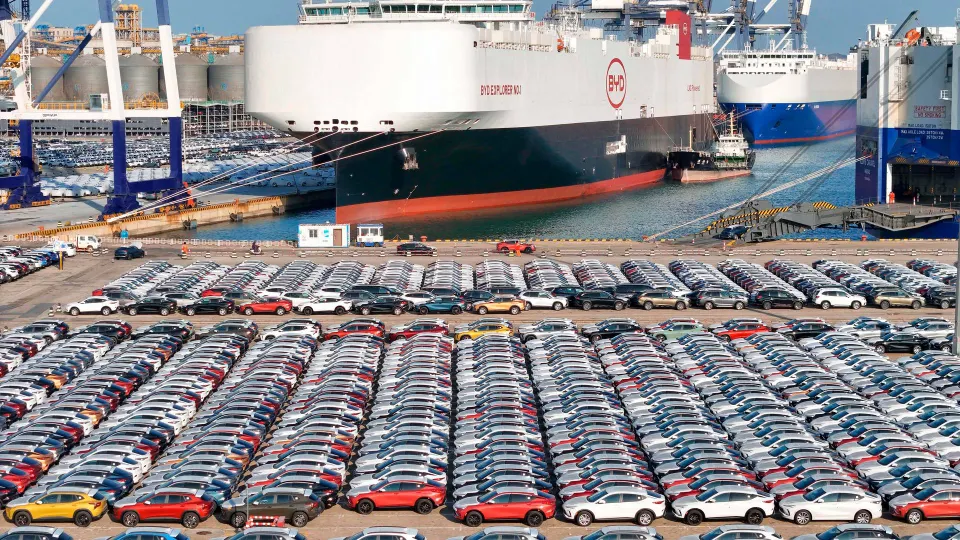
- Thailand’s consumer protection authority has launched nationwide inspections of electric vehicle dealerships, targeting misleading product disclosures, battery warranty terms, and deficient after-sales networks. The move follows 1,348 combined EV-related complaints logged between 2024 and 2026, with vehicle defects, unreturned deposits, and post-purchase price cuts among the most common grievances.
- The inspections coincide with a draft Lemon Law advancing through parliament that would shift the burden of proof for defective goods onto sellers. Chinese manufacturers, which hold an estimated 70 to 80 percent of Thailand’s EV market, face growing pressure to demonstrate adequate warranty coverage and service infrastructure as enforcement expands beyond Bangkok.
Thailand’s government has ordered nationwide inspections of electric vehicle dealers and showrooms, tightening scrutiny of a market that has grown faster than the regulatory and after-sales infrastructure built to support it. The directive, issued by the Office of the Consumer Protection Board (OCPB), comes as complaints over defective vehicles, misleading range claims and collapsing service networks pile up across the country’s dominant EV segment.
Inspections start in Bangkok, expand nationwide
Prime Minister’s Office Minister Supamas Isarabhakdi, who oversees the OCPB, has instructed secretary-general Ronnarong Phoolpipat to intensify inspections of EV sales outlets, requiring dealers to display accurate and complete product information in compliance with existing labelling law. Checks will begin in Bangkok and surrounding provinces before rolling out nationwide, and businesses found to be missing required labels or withholding information face legal action.
The OCPB is paying particular attention to battery performance disclosures and the terms of battery warranties, an area regulators see as central to the long-term cost and resale value of an EV. The agency is coordinating with the Thai Industrial Standards Institute and the Department of Land Transport to tighten certification and registration disclosure standards, and has been ordered to compile an “EV Labels” e-book covering every model sold in the country, alongside consumer rights guidance and pre-purchase inspection advice.
“Complete disclosure is the starting point for fairness in transactions,” Supamas said, framing the crackdown as an extension of existing consumer law rather than a wait for new legislation to take effect.
A rapid rise in complaints
The scrutiny follows a sharp increase in consumer grievances. Between 2024 and 2026, the OCPB logged 556 EV-related complaints, while the Thailand Consumers Council received a further 792, bringing the combined total to 1,348 cases. Authorities say 72.3 percent have already been resolved.
Vehicle defects and malfunctions make up the largest share of complaints, at 47.3 percent. Failure to refund booking deposits accounts for 18.2 percent, and sharp post-purchase price cuts — a familiar complaint in a market that has seen repeated rounds of discounting — represent 14.7 percent. Unfulfilled promotional offers make up 13.1 percent, with accidents and delayed repairs adding a further 2.9 percent. Officials say complaints have broadened beyond pricing disputes to cover vehicle safety, spare parts shortages, assembly standards and after-sales service failures more generally.
The context: a price war built on subsidy-driven overcapacity
The tightened oversight lands in a market that has expanded on the back of aggressive government incentives and equally aggressive Chinese manufacturer competition. EV sales surged 70 percent in 2025 to roughly 140,000 vehicles, nearly a quarter of all new car sales, according to International Energy Agency figures, and Chinese brands now hold an estimated 70 to 80 percent of Thailand’s EV market, with seven of the top ten sellers being Chinese.
That growth has come with strain. Thailand’s EV3.0 and EV3.5 incentive schemes required manufacturers receiving subsidies to offset imports with local production within set deadlines, a commitment some producers have struggled to meet, pushing them toward discounting and, in weaker cases, toward scaling back service networks to manage costs.
BYD, the market leader with roughly 40 percent share, has previously faced government scrutiny over discounts of up to 340,000 baht per vehicle, though it was cleared of wrongdoing by a consumer watchdog. Smaller entrants such as Neta have faced separate scrutiny over unmet local production offsets tied to their subsidy commitments. The resulting combination — sharp promotional swings, uneven dealer networks and a wave of new brands with limited track records in the market — is precisely the terrain in which the OCPB’s complaint categories have clustered.
The Lemon Law backdrop
The dealer inspections are also a bridge to more structural change. Thailand’s draft Liability for Defective Goods Act, commonly called the Lemon Law, passed its first House reading on 24 June 2026 by a unanimous 420–0 vote and is now with a 24-member special committee. The bill would reverse the burden of proof for defective goods, requiring sellers to demonstrate a product was not defective at delivery rather than requiring buyers to prove it was. Automobiles would carry a one-year statutory presumption period, with repairs capped at 90 days, and strict liability provisions specifically for cars and motorcycles.
The bill, the first piece of legislation submitted to parliament by Prime Minister Anutin Charnvirakul’s government, still needs second and third readings, Senate passage and publication in the Royal Gazette before taking effect. Until then, the OCPB says it will lean on existing consumer protection law governing product labelling and advertising — which is effectively what the current inspection drive represents.
What it means for automakers
For Chinese manufacturers that have built Thailand into their largest overseas production base — including BYD’s Rayong factory and the more than $4.1 billion in EV investment pledges the country has attracted across 198 projects — the message from Bangkok is not hostile to the sector itself. Officials continue to frame EVs as central to the kingdom’s “30@30” production strategy and energy security goals. But the inspection drive, paired with the Lemon Law working through committee, signals that the era of unchecked discount-driven expansion is giving way to a phase where warranty terms, after-sales capacity and disclosure standards will be enforced rather than assumed. Dealers and manufacturers with thin service networks or opaque battery warranty terms are likely to face the most immediate pressure as inspections expand beyond Bangkok in the coming months.
Other People are Reading

The U.S. dollar climbed 0.1% to 162.48 yen, the greenback’s strongest level since July 9, as geopolitical tensions rose and investors sought safe-haven assets.
The euro was down 0.1% at $1.1426, while the British pound was level at $1.3445. The Australian dollar slipped 0.1% to $0.6975, while the New Zealand dollar declined 0.2% to $0.5833.
“FX markets were relatively subdued, with the USD broadly stable, while the AUD weakened against the greenback and most major currencies,” Westpac analysts wrote in a research report.
“Market sentiment continued to deteriorate as concerns around semiconductor valuations weighed on risk appetite, while tensions in the Middle East escalated after Iran suspended its commitments under the interim peace deal.”
Brent crude futures jumped 3.3% to $90.97 a barrel at the start of Asian trading after the U.S. said on Sunday it had begun a ninth straight night of attacks against Iran after earlier announcing that at least two U.S. military personnel were killed in Jordan.
Markets continue to anticipate no change to rates at the Federal Reserve’s next meeting on July 29, with Fed funds futures pricing an implied 85.6% probability of a hold, compared to a 61.5% chance a month ago, according to the CME Group’s FedWatch tool. Cleveland Fed President Beth Hammack on Friday added her voice to a growing chorus of policymakers arguing interest rates may need to rise to beat back persistent inflation, setting up a charged debate at the Fed’s next meeting and the possibility of dissents at Chair Kevin Warsh’s second meeting at the helm.
The U.S. dollar index, which measures the greenback’s strength against a basket of six currencies, was up 0.1% at 100.84.
In cryptocurrencies, bitcoin was up 0.2% at $64,637.89, while ether was 0.2% higher at $1,869.72.


Excellent academic Finance background and Finance professional with over five years of cumulative experience in Consulting & Audit Firms including a professional Valuation position, FP&A and Controlling positions, and Financial writing.My approach is mostly value-oriented. However, valuation is rarely an appropriate short- to mid-term timing indicator, but rather hints at long-term chances or risks. In my pieces, I assign the written word and data presented more value than a simple rating and might often rate hold/neutral, even when my inclination is bullish or bearish. Rating systems do not consider time horizons or investment strategies. My articles aim to inform, not to make decisions.
Analyst’s Disclosure: I/we have a beneficial long position in the shares of MSFT, GOOGL either through stock ownership, options, or other derivatives. I wrote this article myself, and it expresses my own opinions. I am not receiving compensation for it (other than from Seeking Alpha). I have no business relationship with any company whose stock is mentioned in this article.
Seeking Alpha’s Disclosure: Past performance is no guarantee of future results. No recommendation or advice is being given as to whether any investment is suitable for a particular investor. Any views or opinions expressed above may not reflect those of Seeking Alpha as a whole. Seeking Alpha is not a licensed securities dealer, broker or US investment adviser or investment bank. Our analysts are third party authors that include both professional investors and individual investors who may not be licensed or certified by any institute or regulatory body.

Terence Crawford says one man is ‘for sure’ the face of boxing now he’s retired

Long-running Apple antitrust case may come to a premature end

The five Belfast hotel restaurants ranked among the best in the UK


-
 NewsBeat3 days ago
London Mayor Sadiq Khan handed a peerage by Keir Starmer alongside 15 other Labour figures… just days before the PM leaves No10
-

 Fashion2 days ago
Weekend Open Thread – Corporette.com
-

 Politics2 days ago
The House | The City of London can help the new chancellor deliver growth in every postcode
-

 Politics5 days ago
Young campaigners urge incoming PM to act on outdoor junk food ads
-

 Crypto World4 days ago
CFTC blocks Kalshi from unwinding Michigan trades after court order
-

 Business4 days ago
Nvidia Stock Slips After Big Tuesday Rally as Huang Confirms Vera Rubin Chip Is Now in Production Today
-
 Crypto World3 days ago
Two July Windows Left: The CLARITY Act’s Senate Fight and What Failure Means
-

 Crypto World2 days ago
Ripple Payments Joins MiCA With 14 Firms, Does It Mean Anything For XRP?
-

 Politics13 hours ago
Democrats look to World Cup watch parties to register thousands of voters
-

 Crypto World2 days ago
Ripple wins EU-wide access as ESMA adds it to MiCA register
-
 Entertainment4 days ago
Disney’s Most Ambitious Failed Star Wars Attraction Is Coming to SDCC
-

 Business4 days ago
Palantir Shares Rise After Expanded Nvidia Partnership and Fresh Analyst Upgrades Ahead of Earnings Day
-

 Crypto World3 days ago
Injective Submits SEC Transfer-Agent Registration to Onchain Ownership Records
-

 Tech6 days ago
Get Your ESP32 Sunny Side Up With This Solar Dev Board
-

 News Videos5 days ago
XRP BOMBSHELL… XRP OMBOARDED FOR TRANSACTIONS!!!
-

 NewsBeat3 days ago
Registration is now open for March for Men with Kev 2026
-

 Tech5 days ago
Dark Secrets Emerge When Jailbreaking LLMs
-
 Sports4 days ago
New Cornerback Enters Vikings Trade Rumor Mill
-

 News Videos3 days ago
Money | Class 12 Economics | CBSE Board Exam 2026-27
-

 Business3 days ago
Banco Bilbao Vizcaya Argentaria, S.A. (BBVA) Discusses Global Macro Environment and Economic Outlook for Core Markets Transcript
You must be logged in to post a comment Login