

Politics
What Personal Trainers Wish Every Gymgoer Understood

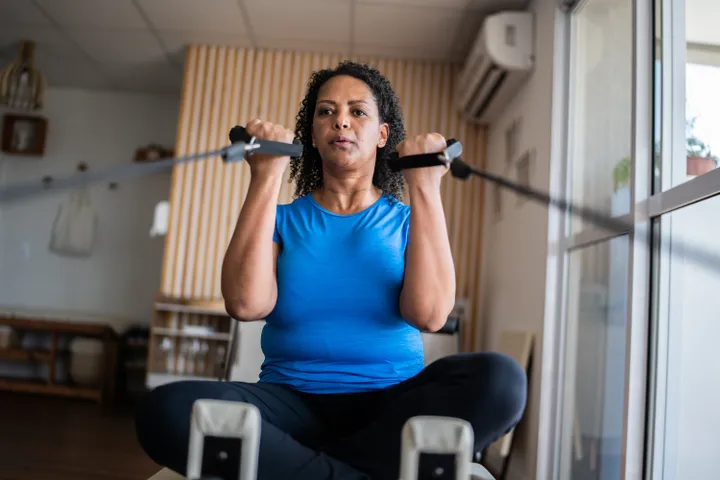
Whether you’re a first-timer who’s barely touched a free weight or a seasoned regular who’s been hitting the same machines for years, you can still learn a lot from personal trainers.
HuffPost asked fitness professionals across the country what they wish more gymgoers understood about exercise. Their answers might just change the way you work out.
1. Consistency beats perfection every single time
“I wish people knew that consistency beats perfection every time,” Thomas Banicky, senior district fitness manager at 24 Hour Fitness, told HuffPost.
“You do not need a flawless workout plan or a two-hour gym session to make meaningful progress. Showing up regularly, building sustainable habits and focusing on gradual improvement will almost always lead to better long-term results than trying to do everything perfectly for a few weeks and burning out.”
You don’t need to overcomplicate your workouts or pressure yourself to make the “perfect” program.
“Fitness isn’t all-or-nothing,” said Denise Chakoian, a certified fitness trainer and owner of Core Cycle and Fitness LaGree.
“Too many people think that if they can’t exercise for an hour, six days a week, then they shouldn’t exercise at all. That’s simply not the case. Consistency will always trump perfection – 20 to 30 minutes of movement is better than none at all and can have huge benefits for your health.”
“The people making real progress are rarely the loudest ones in the room,” echoed April Medrano, vice president of programming, education and experience at STRIDE Fitness.
“What I wish more people understood is that progress is built in the unglamorous middle. Everyone wants the transformation, but the magic is in the boring repetition – the same lift, the same habits, the same showing up week after week.”
2. Results take months and years, not days and weeks
“Good things take time,” said Mallory Fox, a National Academy of Sports Medicine master trainer and wellness coach.
“Clients often have unrealistic expectations about the time required to meet their goals. While everyone’s progress is different, a good rule of thumb I like to share is that they’ll start to feel results in the first four weeks and see results in the first four months.”
While that timeline might feel slow and discouraging, it sets a realistic standard that promotes consistency, sustainability and injury prevention.
“We live in a society of instant gratification, but your body doesn’t work that way,” Chakoian said. “If you want to see changes in your strength, body composition and overall health, it’s going to take months and years of consistency, not days or weeks.”
Fitness isn’t about punishing your body. It’s about building a body that serves you well for decades.
– Karen Lord, trainer
Certified personal trainer Josh Schlottman recommended tracking long-term data over short-term dopamine hits. Progressive overload over time is key.
“Humans are naturally inclined to chase sensations like the pump, the burn, the sweat and the soreness,” he said.
“But I wish people understood that muscle soreness correlates very poorly with muscle growth. Soreness is mostly just a sign that your body went through some novel stimulus, but not necessarily that you had an optimal workout. If you’re not adding weight to the bar or doing more reps over time, then you’re not building strength or muscle.”
3. The hardest workout is not always the most effective
“One thing I wish more people understood is that the hardest workout is not always the most effective workout,” said Antonietta Vicario, chief training officer at PVOLVE.
“A lot of people chase a completely depleted feeling, but if you do not have the mobility, stability and core control to support intensity in movements, your body will find ways to compensate.”
Rather than setting unrealistic and counterproductive goals, she recommended starting modestly to gauge where your body is with a particular exercise and then adding incrementally as you build tolerance over time. The goal is not to wipe yourself out every time you exercise.
“Fitness isn’t about punishing your body,” said trainer and Karen Lord Pilates founder Karen Lord.
“It’s about building a body that serves you well for decades. If your workout leaves you feeling stronger, moving better, and looking forward to coming back tomorrow, that’s a much better measure of success than simply leaving completely exhausted.”
Be mindful of form and technique. Don’t push through sharp pains or clear signs of overtraining for the sake of a more intense or longer workout, either. Understand the difference between the soreness and discomfort from working out and the acute, stabbing pains that signal something is wrong.

FG Trade via Getty Images
4. What happens outside the gym matters as much as what happens inside it
“Your lifestyle influences your gains just as much as your workouts,” Schlottman said. “Psychological stress can literally double the time it takes for your body to recover from a workout and can also double your injury risk. Sleep deprivation also deteriorates nutrient partitioning. This means you’ll lose more muscle and keep more fat while dieting. Fitness is really a lifestyle, and you can’t out-train chronic stress or sleep deprivation.”
Exercise alone won’t help you reach your fitness goals without proper nutrition, stress management, rest and other healthy habits outside the gym.
“I wish more people understood how much the small things matter,” said WalkFit certified personal trainer David J. Sautter.
“Many gym-goers focus entirely on their workouts, but factors like daily movement, sleep, hydration and recovery all play a huge role in the results you see. Even something as simple as walking more each day is often underrated, despite the wide range of physical and mental health benefits it provides.”
5. Nobody is watching you as closely as you think
“Many people avoid the gym because they’re worried about being judged. In reality, most people are focused on their own workout, and trainers are usually excited to see someone taking a step toward improving their health,” said certified personal trainer Tara De Leon.
“Gymtimidation” is a real thing. But try to remember everyone was a beginner once, and people are usually too absorbed in their own workouts at the gym to scrutinise yours.
“People are far more focused on their own workout than on anyone else’s,” said Kat Pasle-Green, a health and fitness coach with Bay Club. “Walking into a gym can feel intimidating for some, but people respect consistency and genuine effort over perfection. Everyone starts somewhere, and we get better together.”
Try to resist the urge to compare yourself to others as well. Remember, everyone has a different body, different experience level and different goals. That’s why there’s no one-size-fits-all approach to fitness.
6. Don’t assume everyone is there to lose weight
“I would never assume someone’s goal is weight loss,” De Leon said. “People come to the gym for so many reasons – stress relief, strength, community, injury recovery, mental health and fun, just to name a few. No matter what their body size is, leading with a weight-loss assumption is often reductive and alienating, especially for women.”
She recalled a client who was battling cancer and had lost a significant amount of weight, but people would approach her asking what her weight loss secret was.
“She always replied, ‘Cancer! I’m dying. I’d rather be fat and alive though.’ You just never know what other people are going through, so assuming [you know] their goals isn’t a good idea,” De Leon said.

PixelsEffect via Getty Images
Fitness is about more than looks – working out builds muscle, promotes longevity, boosts confidence, improves quality of life, helps with heart and brain health, prevents injuries and so much more. Everyone at the gym has a different story and reason for being there, and all you can see is that they’re putting in the work.
“The person struggling through their workout may be fighting something you’ll never know about,” said Joshua King, training lead at Life Time Gainesville.
“The person who’s overweight may have already lost 80 pounds. The older adult lifting weights may not be training to look better, but they’re training to stay strong, independent and able to play with their grandkids for years to come.”
7. Basic gym etiquette goes a long way
Kelsey Holgate, a personal training leader and nutrition lead at Life Time Savage, said you should always “wipe down equipment after visible sweat is on the machine. It grosses people out and is not hygienic”.
Basic gym etiquette is pretty simple, and it goes a long way.
“Leave equipment cleaner than you found it,” King advised. “It’s a simple way to respect the next person. Re-rack your weights. It’s basic respect and gym etiquette.”
Skipping these steps is both inconsiderate and unsafe. Being a responsible gymgoer requires being aware that you’re in a shared space. Resist the urge to spend more time on your phone than you do actually training as well.
“I’d never hog equipment between sets while scrolling my phone,” Medrano said. “If someone’s waiting, I let them work in. The gym is shared space, and rest periods don’t require a screen.”
8. Never skip the warm-up and recovery
“I would never go into a workout without warming up,” Holgate said. “When I say warming up, I’m not talking cardio. I’m talking about movement patterns that help activate the muscles that you’re about to train. You are more likely to get injured or recruit the wrong muscle groups.”
Warm-ups help us get into the right mindset, promote mobility and support the nervous system as we embark on exercises like heavy lifting or high-intensity training – leading to improved performance. Similarly, recovery is crucial.
“One thing I wish more people understood is that recovery is productive,” Banicky said. “Many gym-goers feel guilty when they take a rest day or spend time on mobility and recovery work, but that is often where adaptation happens. Muscles do not get stronger during the workout. They get stronger when the body repairs and rebuilds afterward.”
9. It’s OK – and even smart – to ask for help
“I would recommend everyone to meet with a trainer to learn proper movement patterns,” Holgate said. “I also think meeting with a trainer helps individuals learn proper use of the equipment. It also gives them more confidence when they are in the gym vs. just roaming around.”
Even just a handful of sessions with a fitness professional can help you gain essential knowledge and skills to train effectively for life. They’ll help you learn proper form and movement to maximize safety and results. A trainer can also help you determine the best individual program for your specific needs and limitations.
“Two people can have the same goal and require completely different approaches based on their experience, lifestyle, schedule, mobility and recovery capacity,” Banicky said.
There are many considerations around biomechanics, progression and individual priorities. Working with a pro and studying fitness best practices can also help you figure out when and how to switch up your exercises to challenge yourself and see results.
“I wish more people knew it’s OK to ask for help,” Medrano said. “Most of us in this industry got into it because we genuinely want to see you win. There’s no shame in not knowing something. The only mistake is letting that stop you from starting.”

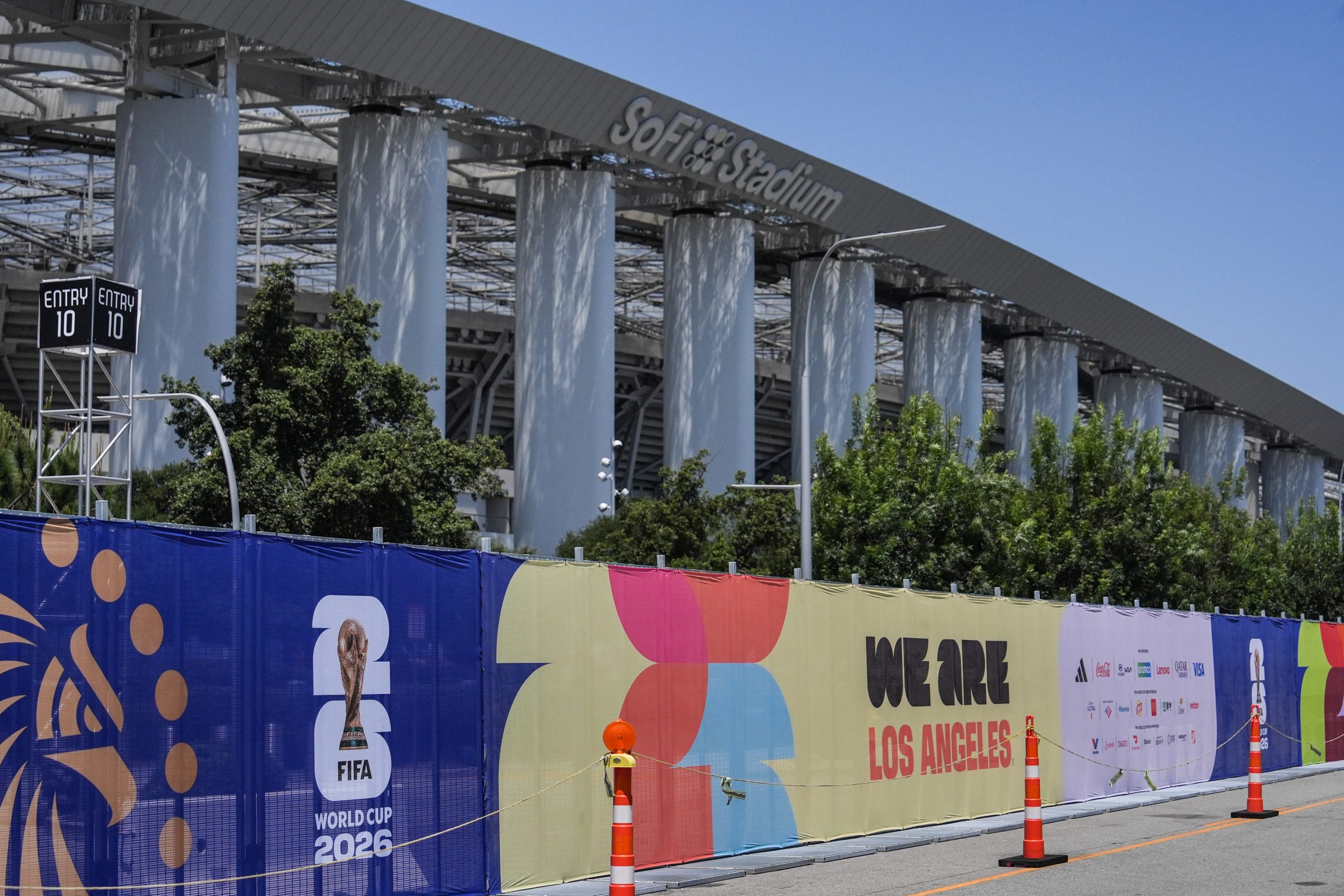

Los Angeles leaders are spending billions to make the 2028 Olympics a story of climate and environmental policy progress, reports Alex Nieves.
Transit and community groups want to know whether the investment will be part of the region’s Olympic legacy or just a flash in the pan.
The question of just how enduring their efforts will be was a throughline Tuesday and Wednesday at the Los Angeles Cleantech Incubator’s Road to 2028 summit — an event focused on leveraging the Olympic Games to accelerate clean energy and transportation development in the state’s most populous region.
The overall vibe of the conference was an optimistic one, as Los Angeles County and dozens of cities are hustling to secure hundreds of buses, plant trees and clean waterways before millions of people descend on the region in two years for the Games. But some attendees were already wondering what comes after the two-week mega event is over.
“When we look to the future, if once the games leave and we have not left communities better than the way we found them, then we have all lost,” said Cynthia Mitchell-Heard, CEO of the Los Angeles Urban League, speaking on a panel of grant recipients who’ve received funding from the LA Olympics organizing committee for environmental projects. (The Urban League received $100,000 to create a workforce development program for people affected by last year’s Altadena fire.)
Catherine Baltazar, associate director of advocacy and organizing at Climate Resolve, argued that throwing dollars at infrastructure projects won’t guarantee long-term progress in communities that have historically lacked resources and disproportionately borne the brunt of climate change.
“Investment should not end when the Games end,” Baltazar said. “We know that these communities will continue long after the Games, and so for me, that’s the legacy that I want.”
The focus on the post-2028 future comes in part because of what was seen as a successful test run during this summer’s World Cup. The region hosted eight matches at SoFi Stadium in Inglewood, avoiding any major snafus while seeing a significant spike in public transit use.
While the Olympics will be far larger than the World Cup, the region has structural advantages over many past Olympic host cities, including enough existing venues to house every sporting event. Much of the preparation now is centered on buying and leasing roughly 1,700 buses — including 500 electric school buses — to shuttle fans to and from venues that will be transit-only.
Transit advocates argue that those investments, including recent expansions of Los Angeles’ light-rail system, don’t solve for structural budget deficits that could threaten service cuts — as bus and rail operators have already warned about farther north in the Bay Area.
Los Angeles’ legislative delegation has failed the last two years to secure a boost in the state budget for systems like LA Metro, which faces a $2.3 billion deficit through 2030. Metrolink, a commuter rail line that serves six counties across Southern California, has indefinitely extended a 20 percent reduction in weekday service amid a $30 million deficit.
Matt Petersen, CEO of the Cleantech Incubator, told POLITICO the budget challenge has only intensified under a Trump administration hostile toward clean transportation.
“Local governments are struggling, states are struggling on how to put the resources where they’re needed,” he said. “I think the bottom line is: Without the feds, it’s super hard.”
But he said he still believes that Los Angeles is “well on the way to being ready” for the Games and to leave a lasting benefit for the community.
“That’s really what we’re here to do,” he said. “Ten years after the Games, what will we have seen manifest because of this moment?”


CHICAGO — The United States’ third-largest city felt confident passing on this year’s World Cup in part because the city’s sports loyalty was well-scripted. The Bears owned Sundays. The Cubs and White Sox divided baseball fans. And the Bulls still carry the glow of the Jordan dynasty.
But a whole new generation of sports teams is betting Chicago’s appetite for sports is bigger than its traditional loyalties — and that fans are ready for something different.
The WNBA’s Chicago Sky is preparing to host the league’s All-Star weekend July 23-26. The Chicago Stars are trying to build a women’s soccer franchise in a city with deep youth participation and a growing appetite for the sport. And the Chicago Fire are planning a new privately financed stadium in the South Loop and are investing heavily in youth development and facilities.
The timing is notable.
The city’s newest teams are making their pitch at the same moment two of Chicago’s oldest franchises are asking for help building new homes.
The McCaskey family continues to pursue public assistance for a new Bears stadium, whether in Illinois or Indiana. White Sox owner Jerry Reinsdorf has sought public support for a proposed South Loop ballpark. Those requests have triggered a familiar debate: whether taxpayers should help finance stadium projects for billion-dollar sports franchises while governments struggle with schools, transit and other basic services.
The newer teams are offering a different message. Chicago Fire owner Joe Mansueto, another Chicago billionaire, privately funded the team’s $750 million stadium, though the Chicago City Council earlier this week approved a $425 million tax subsidy to fund the surrounding infrastructure. Their pitch is not built around nostalgia but around investing in communities.
At a sports and business forum at the Obama Presidential Center this week, Fire Chief Marketing Officer Dan Moriarty described a shift in how soccer is being consumed in Chicago. The sport’s audience is younger, more diverse and increasingly global, he said, with fans who already follow international clubs now looking for a local connection. He pointed to a simple sign of change: at Chicago farmers markets, soccer jerseys are increasingly common — even if many of them still carry the names of European clubs.
The challenge, he said, is turning those fans into supporters of Chicago teams.
“Soccer has this lifestyle aspect,” former U.S. women’s national team goalkeeper Alyssa Naeher said during the discussion. “It brings people together.”
That may be soccer’s biggest advantage in Chicago. The city is already a global crossroads, with neighborhoods shaped by generations of immigrants and communities that have long embraced the sport. The Fire are betting that global stars can accelerate that connection. The club recently signed Polish striker Robert Lewandowski, one of the world’s most accomplished players, as part of a broader effort to raise the team’s profile.
Women’s sports are riding a similar wave.
“Women’s sports generally, and particularly soccer, has seen an evolution in this country,” said Laura Ricketts, who is a bridge to the old and new in sports. She’s a co-owner of the Chicago Cubs, an investor in the WNBA’s Chicago Sky and executive director of the Chicago Stars women’s soccer team.
“What we’re now seeing [is] an explosion, especially in the NWSL,” she said of the National Women’s Soccer League. “We’re growing, and the best way [to see it is] our fan base is growing.”
She compares women’s soccer today to the NBA or Major League Baseball of the early 1980s. “There’s just so much opportunity,” said Ricketts. Women’s soccer, she said, has benefited from decades of investment in youth leagues and college programs. That foundation is now translating into a professional audience.
The growth is not just about attendance. It is about loyalty. Women’s sports fans, Ricketts said, tend to be younger and highly engaged, with a strong connection to the brands and communities supporting the teams.
With World Cup interest, “We’re just seeing the tip of the iceberg for soccer in this country.”
She said there’s been similar investment into basketball and she hopes Chicago sees the benefits of that as it hosts the WNBA All-Star weekend, marking three decades of the league.
“The momentum continues right here in Chicago,” Sky co-owner Nadia Rawlinson said, describing the event as a celebration of how far women’s basketball has come — and how much further it can go.
None of this means the Bears, Cubs, White Sox or Bulls are losing their place in Chicago’s sports hierarchy. But newer teams are making a case for a place alongside them.


Stories of fans left outside stadiums, duped by “ghost tickets” on resale platforms, were everywhere at this year’s World Cup. But advocates are hopeful the near-endless stream of negative headlines and angry supporters will spur long-sought-after laws to outlaw the practice of speculative ticket selling, when resellers put tickets they don’t yet have on the open market.
At the state level, it would seem they’re right.
Illinois, North Carolina and Washington, D.C. have all passed legislation banning speculative ticket sales since the beginning of the World Cup. Connecticut, Oregon and Vermont have also enacted ghost ticket bans this year. And Massachusetts Gov. Maura Healey announced her intention to file a bill prohibiting ghost tickets — among other consumer-friendly initiatives — on Thursday.
“It’s definitely raising eyebrows in the state of politicians and legislators to really ban ghost ticketing, speculative ticketing,” said Scott Friedman, podcast host and co-founder of the Ticket Talk Network. “When you have it happen at this scale, that not just affects the United States, it’s a global tournament for heaven’s sake. Absolutely, change is coming.”
“You see dozens of these bills percolating around the country,” said John Breyault, vice president of public policy, telecommunications and fraud at the National Consumers League. “Most of which have some kind of ban on speculative tickets.”
There’s action at the federal level, too. Though advocacy groups aren’t exactly aligned on a path forward in Congress. Breyault and the NCL have been active in promoting the TICKET Act, which passed the House in April and moved through the Senate Commerce Committee in June.
Proponents say the bill would ban speculative ticket sales and safeguard consumers against fraudulent ticket websites.
“In this environment, where Republicans and Democrats can’t agree that the sky is blue on some days, that’s a rare occurrence,” Breyault said.
But Stephen Parker, the executive director of the National Independent Venue Association, said the “you could drive a Mack Truck” through the TICKET Act’s ghost ticketing provisions. Music groups, too, have panned the bill, arguing it would still allow speculative ticket sales by permitting sellers to advertise ticket procurement services for tickets they do not yet possess.
For now, Parker said, the most encouraging action is happening in the states.
“This is happening across the country, and ultimately, what we are seeing is state legislators from both parties saying enough is enough. If Congress isn’t going to do something, we are, and we couldn’t be more grateful for their work.”


New York and New Jersey planned to spend roughly a half billion dollars hosting eight World Cup matches, including today’s final. But once it’s over, lawmakers in both states want to know if they got their money’s worth.
In New York City, Councilmember Virginia Maloney, who leads the chamber’s committee on economic development, is going to lead that examination.
“First I want to make sure we recouped our cost,” she said in an interview on Friday at a coffee shop in her Manhattan district, which includes the Upper East Side. “I’m not confident we can say that.”
She said data seems mixed on how well hotels did because of the World Cup. Bookings initially appeared low, but it seems like hotels recovered closer to the matches. However, it’s not clear if that’s because of the World Cup or the other major events happening this summer in the city, including the July 4th festivities and the Knicks’ championship win — which means an analysis will have to try to untangle what economic activity happened because of the World Cup and what would have happened anyway.
“What is irrefutable is that bars and restaurants were seeing a lot more activity and action in New York, and that translates into real economic benefit for New Yorkers,” Maloney said.
Maloney attributes that to a lot of things, including a law signed by Gov. Kathy Hochul to temporarily extend hours for bars and restaurants.
One report from the Queens Chamber of Commerce found a 30 percent increase in businesses for people going out to drink and eat.
“The economic benefit was not necessarily people who were going to the World Cup, but just people participating in the summer of New York, going to all five boroughs to celebrate or be out together,” she said.
The host committee released a study last summer predicting $3.3 billion in economic impact across New York and New Jersey, including about $432 million in state and local tax revenues.
Maloney worried about rosy projections from FIFA and its boosters compared to the reality on the ground. A preliminary study by the host committee of just the group stage found $1.2 billion in direct economic impact, Bloomberg reported.
Maloney views the experience as a learning opportunity for other big events the city puts on, including future political conventions and the 2042 Olympics, which the state and city are exploring a bid for.
“It should be something that you can make a playbook out of, not where you’re starting from scratch every time there’s a major event,” Maloney said.

Forget Zohran Mamdani. The local elected official who really rules MetLife Stadium today is Jeffrey Lahullier, whose 10,000-person town sees its population swell by more than 800 percent whenever there’s an event at the stadium complex in the middle of his turf, writes POLITICO’s Will McCarthy:
Read Will’s story “The World Cup came to town. The town grew eight times larger” here.


Mikie Sherrill has embraced the World Cup like few other Democratic governors, save perhaps Gov. Josh Shapiro in Pennsylvania.
She has been to seven matches, built a tight relationship with the former standout U.S. goalkeeper Tony Meola and will take in today’s final at MetLife Stadium in New Jersey. (She missed one match because she was working on her first budget).
“There’s a lot of controversy over whether or not this makes sense. We’ll be doing all the math as these returns come in,” Sherrill said. “When I came into office, I really was focused on how to make this a net benefit for the state, and how to bring everyone into the state. If you’re going to host this game where one in three people in the world will be watching this final, you want the people of New Jersey to feel like they’re part of it, and not just that there are some elite people going to watch the game, but they’re actually able to take part in the excitement, and these fan zones have been really wonderful for that as well.”
Six months into her term, Sherrill spoke exclusively with POLITICO to talk about her battles with FIFA, President Donald Trump and, also, how she ended up in a puddle of beer doing the viral Viking Row celebration with an army of Norway fans outside of MetLife.
The interview has been lightly edited for length and clarity.
How did you end up in that puddle of beer?
I think we’ve seen all over the internet people who are loving our delis and our Wawas and enjoying the shore, and I think it’s just been such a fantastic feeling. And we had Norway come, and as you’ve seen on social media, they were rowing. I rowed at Navy my freshman and sophomore year at Navy, so I had a little bit of a kinship there to all the rowers coming from Norway. So when they were coming back to the stadium, we reached out and said, “Hey, are you guys rowing? We want to come touch base and welcome you to the state. And they said, ‘Yeah, come row with us.’ So I did, and it was really a lot of fun.”
What have your battles been like with FIFA, particularly on cost-of-living issues?
I would say everything we’ve gotten out of the World Cup, we built.
I would really like to leverage it — if the Women’s World Cup is going to be in the U.S. — I would really like to leverage a little bit of what a special place it is to host a World Cup game here. And really try to leverage that for better benefits for the state because FIFA put nothing into this. I mean they’re making $11 billion and now they’re trying to sell grass, and they’re trying not to pay their bills. It’s really a problem.
So you’d be open to being a host site again in 2031?
If it made sense economically, yes.
President Donald Trump — whom you have battled — will be at the final on Sunday. How are you going to handle that?
What I think has been interesting is I think a lot of people went into Trump’s second administration thinking they had learned how to handle him in his first administration, and the word on the street seemed to be you just do an insane amount of flattery, and then get what you want, and just you know kind of work that way. You know, keep your head down, don’t say too much, just flatter the hell out of him, and then I’ll give you what you want. And I don’t think that has been the case in the second administration.
And so we in New Jersey had a year of watching him operate, and every promise he made, he walked back. And so the art of the deal to Trump seems to be. Figure out what you want, leverage the heck out of you, and never give it to you. But try to have you sell your soul in the process.
I just largely have focused on delivering for the people of New Jersey. And when he tries to punish people here in New Jersey, like when he tried to stop the Gateway Tunnel funding, when he gave out pink slips to the 1,000 workers that were already on the job, good union jobs. I didn’t try to cut some deal with him. I didn’t say I was going to name Penn Station after him or something because it wasn’t his money to leverage. I just took him to court almost immediately, and we won. And then he appealed it, and we won again. And now he’s, you know, said he’s going to build some mass detention facility in Roxbury in a warehouse that only has two bathrooms, and he thinks he’s going to put 2000 people in it. And there’s no sewersystem, so we took him to court, and we won.
So it’s not that we’re throwing gratuitous punches here. I’m just constantly fighting for the people of New Jersey, and when he attacks them, I’m going to stand up.
What are your predictions for the final on Sunday? Is Argentina going to prevail? How many goals is Messi going to score? What are some things that you’d make Kalshi bets on?
I don’t do Kalshi bets. But there are a lot of people from South America that live in New Jersey. A lot of our citizens have family there, and they’re going to kill me because nobody down there likes Argentina, right? But I will tell you, I… I feel like Argentina with Messi playing for the MLS. It’s just it’s almost like the closest thing we were getting this year to a hometown team.


POLITICO asked some of the most dedicated tourney followers in American politics to share their predictions for the final.
New York Gov. Kathy Hochul: “Coming from Buffalo, we root for the underdogs, those who have not had the championship. Argentina’s had their opportunity. When was the last time Spain won? That was a long time ago.”
Rob Bonta, California attorney general, former Yale soccer player and father to professional soccer player Reina Bonta: “The South American champs vs. the European Champs. Messi vs Yamal. The current 39-year-old GOAT vs the 19-year-old wunderkind. Argentina vs Spain. Argentina has come from behind in the final minutes multiple times and grittily found a way to defend their World Cup title, led by the little magician #10. Spain dismantled France with their tiki-taka/rondo possession, tactical dominance and beautiful football on full display. Two teams at the top of their game, playing for the most coveted trophy in football. It should be a final for the ages! I’m so conflicted! Love them both.”
San Francisco Mayor Daniel Lurie: “1-1 after extra time, Argentina wins on penalties. After what we have seen in three knockout games from Messi and his team, they will win back-to-back, and he will be considered the greatest player of all time, surpassing Maradona.”
Mia Bonta, assemblymember and mother to professional soccer player Reina Bonta: “I’m rooting for Argentina, the team including Messi have just played a phenomenal, gritty tournament. But most Bontas are thinking Spain is going to walk away with the trophy.”
Tammy Murphy, former first lady of New Jersey and current chair of the World Cup host committee: “As we approach the final, I’m wearing two hats. As chair of the New York New Jersey FIFA World Cup Host Committee, my focus is on delivering an exceptional experience for everyone — from seamless transportation and strong security to a safe, welcoming atmosphere and a lasting economic impact for our region. As a fan of the game, it’s hard not to get emotional knowing we’re about to witness Match 104 after an incredible 39-day tournament. While I have to admit I was disappointed to see England fall in the semifinal, given my family’s English roots on my mother’s side, it’s hard not to be excited about a historic first: the reigning European champions facing the reigning South American champions in a World Cup final. It has all the makings of an unforgettable match. Game on!”
San Jose Mayor Matt Mahan: “Given San Jose’s Spanish roots as the first official pueblo in ‘Alta California,’ I’m going to call it 2-1 for Spain with a late-match Argentinian surge that falls just short.”
Tom Steyer, Democratic megadonor, former California gubernatorial candidate and former Yale soccer player: Spain, 2-1.
Randy Villegas, a Bernie Sanders-backed progressive running against GOP Rep. David Valadao: Spain, 2-1.
State Sen. Ben Allen, chair of the Senate Special Committee on International Sporting Events: Could not comment because he was too devastated by England’s loss to Argentina.
New Jersey Gov. Mikie Sherrill: “In my heart, I just feel connected … to Argentina. In my head, I guess just watching Spain’s midfield, it’s hard to imagine that that doesn’t prevail.”
Sen. Todd Young (R-Ind.): 2-1 Argentina, with a goal and an assist for Lionel Messi.

NEW YORK — There’s no bots about it.
The New York City-themed World Cup jerseys announced by Mayor Zohran Mamdani in June and released online from July 8 to July 16 sold out every morning within minutes, though the Mamdani administration tells POLITICO there was no foul play involved.
Frustrated shoppers suspected scalpers using automated bots to buy the jerseys within seconds during each morning’s release at 10 a.m., but New York’s Department of Citywide Administrative Services said it only detected two out of 3,500 orders that came from bots.
“The NYC soccer jerseys have been tremendously popular—thousands have attempted to purchase through CityStore online every day. One thousand very real, very happy New Yorkers have already picked up their jerseys in person—we have not seen widespread bot activity,” a DCAS spokesperson said in a statement.
The two detected bot orders were canceled, the spokesperson added.
The jerseys’ high demand and low supply is a more likely explanation for why they sold out so quickly. The website limited releases to 500 jerseys every morning, and averaged 25,000 visitors to the store during the week it was for sale.
DCAS said it used Shopify’s bot prevention services such as CAPTCHA tests and required in-person pick-ups to prevent automated purchases.


SANFORD, Maine — Troy Jackson has effectively secured the Democratic nomination in the crucial Maine Senate race, winning the support of a majority of the state delegates who will officially nominate a candidate next weekend.
While they are not legally bound to support him, nearly two-thirds of the 601 delegates have committed to voting for Jackson at that statewide convention. Jackson dominated the county-level meetings this weekend that selected those delegates, with two rivals falling far behind — and one of them, Maine Secretary of State Shenna Bellows, dropping out of the race partway through the process Sunday.
The party’s statewide convention in Bangor, Maine, next weekend will cap a tumultuous scramble to replace Graham Platner, who won the primary but dropped out this month after POLITICO reported that a woman he previously dated said he forced her to have sex with him. Platner denied the allegations.
A progressive 5th generation logger from the far-northern corner of Allagash, Maine, Jackson has had a long career in organizing progressive activists and ties to Sen. Bernie Sanders (I-Vt.), who had endorsed him in his gubernatorial race earlier this year.
The candidate will have less than four months to spin up a major battleground Senate campaign against GOP Sen. Susan Collins, the only Senate Republican running for reelection in a state carried by former Vice President Kamala Harris in 2024.
Jackson turned his attention to the general election at a Sunday morning rally ahead of the delegate meeting in York County, where he secured the support of enough delegates to cross the 50 percent threshold.
“Whether you supported me from the beginning, or are still deciding, or support another candidate, there is a place for you in this movement,” he told a few dozen supporters in a school parking lot in Sanford, Maine, echoing what has been a familiar line in his speeches since entering the Senate race. “Because we’re not going to defeat Susan Collins by making this movement smaller. There’s no way that that’s ever going to work.”
Bellows dropped out of the race just minutes before voting began on Sunday and encouraged Democrats to coalesce behind Jackson.
“This has been an unprecedented nominating process, compressed into days instead of months, and I’m grateful to every volunteer who worked around the clock for this movement,” she said in a statement. “That energy is exactly what we need to beat Susan Collins in November — and Democrats don’t have a day to waste in unifying around that shared goal.”
Jackson’s whirlwind path to the nomination is the prologue to an even tougher test. Collins has defeated well-funded Democrats of all stripes since she was first elected in 1996, and currently has an $11 million war chest in reserves, according to the latest filings from the Federal Election Commission.
And Jackson’s last-minute ascension puts him at an even greater disadvantage: Maine’s nominating convention on Saturday is just 101 days before Election Day in November, giving Jackson less time to run against Collins than Harris had in her losing campaign against Donald Trump in 2024.
“We’re going to have to put our ground game even more into maximum overdrive,” Jackson told reporters after his Sanford rally, referencing Platner’s large number of town halls and his short timeline. “What did Graham have, 70 town halls? If we did one every other day we wouldn’t be able to do 70 from here on out.”
Jackson also said he will have to quickly introduce himself to the southern part of the state, given he hails from the far-north and represented the area in the state Senate.
“I’m not as well known down here,” he said. “I’m six hours away from my home. And as we know, the state legislature means nothing. Nobody’s following it. It’s a lot of work to make sure people know what I’m about.”
Many former Platner supporters were part of the team of volunteers, organizers and delegate nominees that whipped votes for Jackson’s delegate slate in counties across Maine over the weekend. The strength of his organizing operation helped Jackson jump out to a commanding lead after Saturday’s meetings, including a sweep of all 149 delegates in Cumberland County, the largest county in the state.
Travis Jones, a former Platner supporter from Seal Harbor, Maine, who was elected as a delegate alternate in Hancock County, where Platner lives, said he’s backing Jackson because of the similarities between Platner’s progressive agenda and the Jackson campaign.
“I was a big supporter of the previous candidate, Graham Platner. I really liked his policies. Troy mirrors a lot of those,” Jones said ahead of the delegate meeting in Ellsworth, Maine, on Saturday. “The previous campaign really energized me, and here I am today.”


Our Adam Wren spent the last six weeks exploring the summer’s most unlikely fling: between Donald Trump’s MAGA movement and the communitarian, cosmopolitan sport whose flagship event he embraced.
You can read Adam’s POLITICO Magazine piece, “America First, Soccer Second” here.
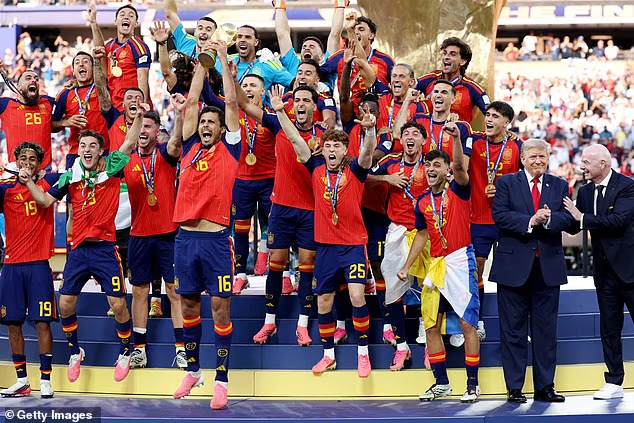
Donald Trump ignores FIFA president’s call to leave the stage as he joins Spain’s World Cup final trophy lift in awkward moment

Deep Yellow awards Tumas contracts worth $34m

Former WWE star offers to join Tony Khan’s promotion


-
 NewsBeat4 days ago
London Mayor Sadiq Khan handed a peerage by Keir Starmer alongside 15 other Labour figures… just days before the PM leaves No10
-

 Fashion2 days ago
Weekend Open Thread – Corporette.com
-

 Politics2 days ago
The House | The City of London can help the new chancellor deliver growth in every postcode
-

 Politics5 days ago
Young campaigners urge incoming PM to act on outdoor junk food ads
-

 Crypto World4 days ago
CFTC blocks Kalshi from unwinding Michigan trades after court order
-

 Business4 days ago
Nvidia Stock Slips After Big Tuesday Rally as Huang Confirms Vera Rubin Chip Is Now in Production Today
-
 Crypto World3 days ago
Two July Windows Left: The CLARITY Act’s Senate Fight and What Failure Means
-

 Crypto World2 days ago
Ripple Payments Joins MiCA With 14 Firms, Does It Mean Anything For XRP?
-

 Politics15 hours ago
Democrats look to World Cup watch parties to register thousands of voters
-

 Crypto World2 days ago
Ripple wins EU-wide access as ESMA adds it to MiCA register
-
 Entertainment4 days ago
Disney’s Most Ambitious Failed Star Wars Attraction Is Coming to SDCC
-

 Business4 days ago
Palantir Shares Rise After Expanded Nvidia Partnership and Fresh Analyst Upgrades Ahead of Earnings Day
-

 Crypto World3 days ago
Injective Submits SEC Transfer-Agent Registration to Onchain Ownership Records
-

 Tech6 days ago
Get Your ESP32 Sunny Side Up With This Solar Dev Board
-

 News Videos5 days ago
XRP BOMBSHELL… XRP OMBOARDED FOR TRANSACTIONS!!!
-

 NewsBeat3 days ago
Registration is now open for March for Men with Kev 2026
-

 Tech5 days ago
Dark Secrets Emerge When Jailbreaking LLMs
-
 Sports4 days ago
New Cornerback Enters Vikings Trade Rumor Mill
-

 News Videos3 days ago
Money | Class 12 Economics | CBSE Board Exam 2026-27
-

 Business3 days ago
Banco Bilbao Vizcaya Argentaria, S.A. (BBVA) Discusses Global Macro Environment and Economic Outlook for Core Markets Transcript
You must be logged in to post a comment Login