
Security teams log 54% of successful attacks and alert on just 14%. The rest move through your environment unseen.
The Picus whitepaper shows how breach and attack simulation tests your SIEM and EDR rules so threats stop slipping by detection.



An anonymous reader quotes a report from Forbes: The cost of producing new results on ten longstanding mathematical problems just fell to $2,000, according to OpenAI, which says its Astra model generated machine-checkable proofs for questions that had resisted human progress for decades. OpenAI published the work on August 1 and used it to give its next major model family a name: Astra. The results run across group theory, high-dimensional geometry, coding theory, quantum complexity, lattice cryptography and extremal combinatorics. They arrived as a 249-page manuscript collection and, alongside it, something the field has not seen attached to an AI claim before at this scale: a machine-checkable certificate for every single result.
The problems were not textbook exercises dressed up as discoveries. Each had been open for at least ten years, most of them far longer, and several sit at the center of their subfields:
– A construction establishing the existence of non-sofic groups, a question that has occupied group theorists for years.
– A disproof of Connes’s rigidity conjecture, a long-standing problem in the theory of von Neumann algebras.
– An improvement to the general upper bound on sphere-packing density in high dimensions, a bound that had stood since 1978.
– Three problems come from the catalogue of open questions left behind by Paul Erdos. The announcement follows another result from May, when OpenAI used a similar reasoning model to produce an original mathematical proof disproving a famous unsolved conjecture in geometry, which was first posed by Paul Erdos in 1946.
Security researchers have discovered three attacks that allow malware on already-compromised Windows devices to abuse Google Password Manager’s synced passkeys to take over accounts, bypass user verification, and extract passkey private keys.
Passkeys are a passwordless authentication method that uses cryptographic keys stored on a user’s device to sign in to online accounts.
They are considered safer than passwords because they cannot be guessed, reused, or easily stolen through phishing, while also allowing users to authenticate with a PIN or biometrics, such as a fingerprint or facial recognition.

“Unlike passwords, passkeys can’t be shared, copied, written down, or accidentally given to someone else. This makes them more secure against phishing,” reads Google’s passkey documentation.
However, a new report by Palo Alto Networks’ Unit 42 demonstrates three novel attacks, collectively called “Pass-ta-key,” that target Google Password Manager in Chrome on Windows devices equipped with a Trusted Platform Module (TPM).
All three attacks require malware to already be running on the victim’s computer and do not break the cryptography used by passkeys. Instead, they exploit weaknesses in how Chrome and Google’s cloud authenticator handle device trust, onboarding, recovery, and synced credentials.
The first technique, named Pass-ta-key, allows unprivileged malware to impersonate a trusted device and request a valid authentication response for one of the victim’s passkeys.
The malware abuses Chrome’s TPM-backed device identity key to sign a request sent to Google’s cloud authenticator. This can be done without administrator privileges, user interaction, biometrics, or unlocking the device.
Google’s cloud authenticator then treats the request as coming from the victim’s trusted computer and returns a signed authentication response, known as an assertion, that can be used to log in to the targeted account.
However, the assertion includes a User Verified flag indicating whether biometric or PIN verification occurred. This causes the attack to fail if a service requires and properly validates that user verification was successful.

While the attack failed against GitHub, which properly checked the User Verified flag, Unit 42 said it successfully tested the attack against eBay. Although eBay required user verification, it did not properly validate the flag indicating whether that verification occurred.
eBay has since fixed the issue after the researchers reported it.
The second technique, named Silver Pass-ta-key, goes further by allowing attackers to register their own user-verification key with Google’s cloud authenticator.
The attacker first uses malware on the compromised device to force Chrome to re-register it by invalidating its existing verification key or deleting the local file containing its passkey state.
During the re-registration process, the attacker can register a user-verification key they control because the cloud authenticator does not validate whether the new key originated from trusted hardware.
Google then accepts requests signed with the attacker’s key as proof that the victim unlocked the device using a PIN or biometrics. This allows the attacker to access accounts that properly require and validate user verification.
Once the malicious key is registered, the attacker can authenticate from another system without needing further access to the victim’s computer.
The third and most severe technique, named Golden Pass-ta-key, allows malware to obtain the master key used to encrypt all passkeys synced through the victim’s Google Password Manager account.
This master key, known as the security domain secret, is temporarily sent to Chrome when a device registers or recovers access to the account.
Unit 42 initially found that Chrome exposed the secret in plaintext through its internal FIDO logs. Google removed the secret from the logs after the researchers reported the issue, but Unit 42 says it is still sent to Chrome and remains temporarily accessible in the browser’s process memory.
“Although Google removed this secret from Chrome’s logging output following our report, the SDS is still sent to the client and remains accessible in Chrome’s process memory,” explains Unit 42.
“If the attacker forces the victim to re-register with the cloud authenticator and knows the pattern to look for, they can extract the SDS directly from memory.”
The attacker can then use the stolen master key to decrypt the victim’s synced passkey records and recover their private keys. Those private keys can be transferred to another system and used to impersonate the victim and sign in to their accounts.
Unit 42 warns that the stolen master key could also be used to decrypt future passkeys synced to the account. Google’s current implementation reportedly provides no way to rotate or revoke the key, meaning current and future synced passkeys remain protected by the same secret.
While the researchers say passkeys remain significantly safer than traditional passwords, the attacks demonstrate that they do not eliminate the risks posed by malware already running on a compromised device.
Unit 42 recommends that websites require and properly validate user verification. Credential managers should also validate newly registered device keys, harden recovery and device re-registration processes, and prevent master keys from becoming accessible in browser memory.
The researchers disclosed the Google Password Manager attacks to Google and reported related user-verification flaws to affected services, including eBay, before publishing their findings.
BleepingComputer contacted Google for comment on Unit 42’s findings and to ask whether the described attacks have been fully addressed, but a response was not immediately available.

Security teams log 54% of successful attacks and alert on just 14%. The rest move through your environment unseen.
The Picus whitepaper shows how breach and attack simulation tests your SIEM and EDR rules so threats stop slipping by detection.

Just a few weeks ago, Sony announced that it would stop producing games on physical media starting in 2028 and a very loud portion of Sony’s customers lost their freaking minds. And, in this writer’s opinion, for very good reason. Having no physical media option for your games is going to make game preservation efforts nearly impossible. It makes gaming companies coming up with physical collectables to ship with their games a much more complicated prospect. And, as Sony itself likes to remind us over and over again, a game purchased digitally isn’t a game purchased at all, but rather a limited and temporary license to play a game for however long the publisher decides it should be available.
Given the backlash, it’s not all that surprising that some groups out there are attempting to organize against PlayStation usage blackouts in protest, though we’ll see how far they actually get with that. Given that Sony itself seems to be willing to give those angry customers a giant middle finger through it all, it’s hard to see it having much effect.
“There are various reasons we made this decision, the biggest being that the digitalization of content overall has been progressing, that’s the big factor,” Sony chief financial officer Lin Tao said through an interpreter during a Q&A on July 31. “It’s not just for PlayStation, but for all kinds of content, digitalization is progressing.”
“And so when we think about the future—and we put in a lot of thought and time, and we cautiously considered this—and we came to this conclusion, and we’re going to cautiously move this forward. And to this decision, we have received various opinions and people have strong views, and we understand that the community has put forth those views to us. Games are loved by many people. It’s a form of entertainment that’s loved by people, and it’s connected to people’s fond memories in many cases. And so we understand those emotions. We want to consider that. And in the future digital ecosystem, how do we engage the gamers is something that we would like to continue to explore.”
Now, I want to be clear that the word salad above is also the result of a translation. I have no idea how or if this would read any differently in its original language. But I sure would hope it would, because all those words above say absolutely nothing other than, “Yeah, we don’t care, we’re doing this anyway.”
It didn’t get any better when questions were asked from an investment standpoint. One analyst asked the perfectly reasonable question of what this was going to do to the downstream gaming retailers and Sony’s relationship with them. Tau’s answer was that those retailers can still sell mostly empty boxes.
In response, Tao pointed out that publishers will still be able to ship empty boxes with codes inside to stores in markets like North America and argued that PlayStation hardware will win on affordability.
“About the retailers, there are regional characteristics, and for each regional partner, we try to have a thorough dialogue so that we can end up in a win-win situation,” the CFO said.
No concern for preservation efforts. No concern for the 20% or so customers who still want to buy physical media. No concern for any brick and mortar retail partners and what will happen to them.
It appears Sony is going to listen to anyone but its own customers on this one.
Filed Under: backlash, discs, ownership, physical discs, playstation, video games
Companies: sony

Vibe-coding startup Superblocks announced a multiyear joint marketing agreement with Amazon Web Services (AWS) that enables its tool to be embedded within the private clouds of AWS customers.
That means an enterprise on AWS that subscribes to Superblocks will be able to offer vibe coding to the company’s business users, and those apps will not send data or information externally to model providers or databases. The apps will spin up Amazon Aurora databases within the company’s private cloud, not, for instance, create external Supabase databases, the vibe-coding database of choice.
The apps will also integrate with Amazon Bedrock, the cloud giant’s AI app development/AI gateway/inference platform. Essentially, these apps will automatically fall under IT’s management and security, rather than be rogue applications.
“We’re going to bring it to your data inside your private cloud,” Superblocks co-founder and CEO Brad Menezes tells TechCrunch of vibe coding. “The big thing about that is data never leaves. … It’s their AWS account and basically secure with all of the auditing, all of the encryption, all of the network controls.”
AWS will also help sell Superblocks to enterprises as it does for many of its Marketplace partners. “We support partners where we see strong customer demand and alignment with how customers want to build,” an AWS spokesperson tells TechCrunch.
Still, AWS does not yet have its own vibe-coding agent aimed at business users. It has Kiro, an AI coding agent aimed at developers. Amazon also has an AI assistant, Quick, for business users. But again, that’s more like a Claude Cowork or Microsoft Copilot, rather than a Lovable or Replit.
So this should be a nice boost for early-stage Superblocks, which has 50 employees and raised a total of $60 million as of its Series A, announced in May 2025, backed by Spark Capital, Kleiner Perkins, Meritech Capital, and Greenoaks.
Yet, it’s actually a more significant symbol than that. It’s part of a growing trend where the hyperscaler cloud providers urge their enterprise customers to separate their AI models from all the other scaffolding needed to run enterprise AI and do so on their clouds. They want enterprises to buy AI harnesses (aka agentic apps), AI orchestration, security tools, and the like from them, and not from the frontier providers.
In the past few weeks, Microsoft CEO Satya Nadella has been banging the drum with exactly that message. He’s been telling his many enterprise customers to use multiple models to reduce costs and avoid lock-in. He’s also been preaching that the AI labs are not trustworthy enough to turn to for agent orchestration or app-level harnesses because they may use that data to study a business and later compete with it.
Enterprises perhaps don’t need such warnings. They have already decided to adopt multiple models, particularly frontier Chinese open-weight options. “That is flipped because 60 days ago they were like, I want a specific model. It’s called Anthropic,” Menezes adds.
Open models, for instance, accounted for 29% of all traffic routed through Vercel’s AI gateway last month, a popular tool among enterprises to manage multi-model AI use.
Then, by necessity, all of their AI scaffolding can’t be tied to one provider.
“Having a multi-model strategy across big frontier labs, OpenAI, Anthropic, and open source — and I’d say Chinese open source right now, but also U.S. open source is now starting to come up. It’s a must-have for the CIO,” he says. They want model choice for coding as well as customer service, HR, [and] sales automation, he adds.
Menezes says the movement is so strong, he predicts that “any enterprise that is betting on a single model provider, that executive will be fired.”
So now we’re seeing the cloud providers bring vibe coding for business users into private, secure clouds, too. That’s like a potential second wave after bringing AI coding agents for enterprise developers. “It’s an emerging category with real momentum, and exactly the kind of innovation we support,” AWS tells TechCrunch.
When you purchase through links in our articles, we may earn a small commission. This doesn’t affect our editorial independence.
The fate of physical game discs seems to be set in stone, with an all-digital library becoming increasingly inevitable. Microsoft, though, may at least give Xbox owners a way to bring their shelves full of physical games along for the journey.
A leaked Microsoft roadmap sent to game publishers details the planned rollout of Xbox’s Disc-to-Digital program alongside a much larger backwards-compatibility push. The document reportedly targets August for general availability, October for the full launch of original Xbox games on PC, and a gradual Xbox 360 rollout beginning in 2027.
The new Disc-to-Digital system reportedly works by inserting a supported Xbox One or Xbox Series game into an Xbox One or Series X with an optical drive. Microsoft will then grant a digital license tied to both the player’s account and that particular disc. This adds to the convenience as the owner can access that title across supported Xbox devices, removing the need to repeatedly insert the disc.
Microsoft appears to have addressed the obvious resale loophole too. When the disc changes hands, its digital entitlement transfers to the new owner, removing access from the previous account. This is a very important detail as it ensures that gamers are still allowed to lend, trade, or sell compatible games.

Publisher participation will reportedly be optional. Companies can decide which games qualify and may retain control over conversion pricing, rights, and branding. You could therefore face a fee to digitize certain titles, while other publishers may decline to participate entirely. A disc-drive console is also required to initiate the conversion, which unfortunately leaves out Series S owners. The roadmap originally listed a July public beta and August general release. However, this seems to have been delayed, while the August target may have slipped as well.
Microsoft has already launched an early version of original Xbox compatibility on PC with Blinx: The Time Sweeper, Conker: Live and Reloaded, Crimson Skies, and Fuzion Frenzy. Digital owners can carry their licenses onto supported PCs and handhelds, while all four games are included with Game Pass.

The leaked roadmap places the program’s full launch in October, suggesting a much larger wave of original Xbox titles is coming. Xbox 360 support would follow gradually between 2027 and 2028. Participating games are reportedly being prepared for Microsoft’s next-generation Project Helix console, Xbox-branded PCs, and handheld devices. Publishers will decide whether their games participate, how much they cost, and whether they join Game Pass.
Sony is ending discs for new PlayStation releases in January 2028 without announcing an equivalent migration program. Xbox appears headed toward the same all-digital destination, but this leaked roadmap could prevent the journey from leaving generations of physical games stranded.
In brief: As energy demands from AI, electric vehicles, and other technologies mount, the tech sector’s interest in battery storage has grown sharply in recent years. In the latest example, the son of Dell’s founder has teamed up with a SpaceX alumnus to break into the fast-growing home battery storage market.
Home battery storage, which can lower electric bills by feeding power back to the grid, is gaining popularity across the US, particularly in warmer regions. A startup led by Zach Dell shows how the industry is expanding options for grid operators.
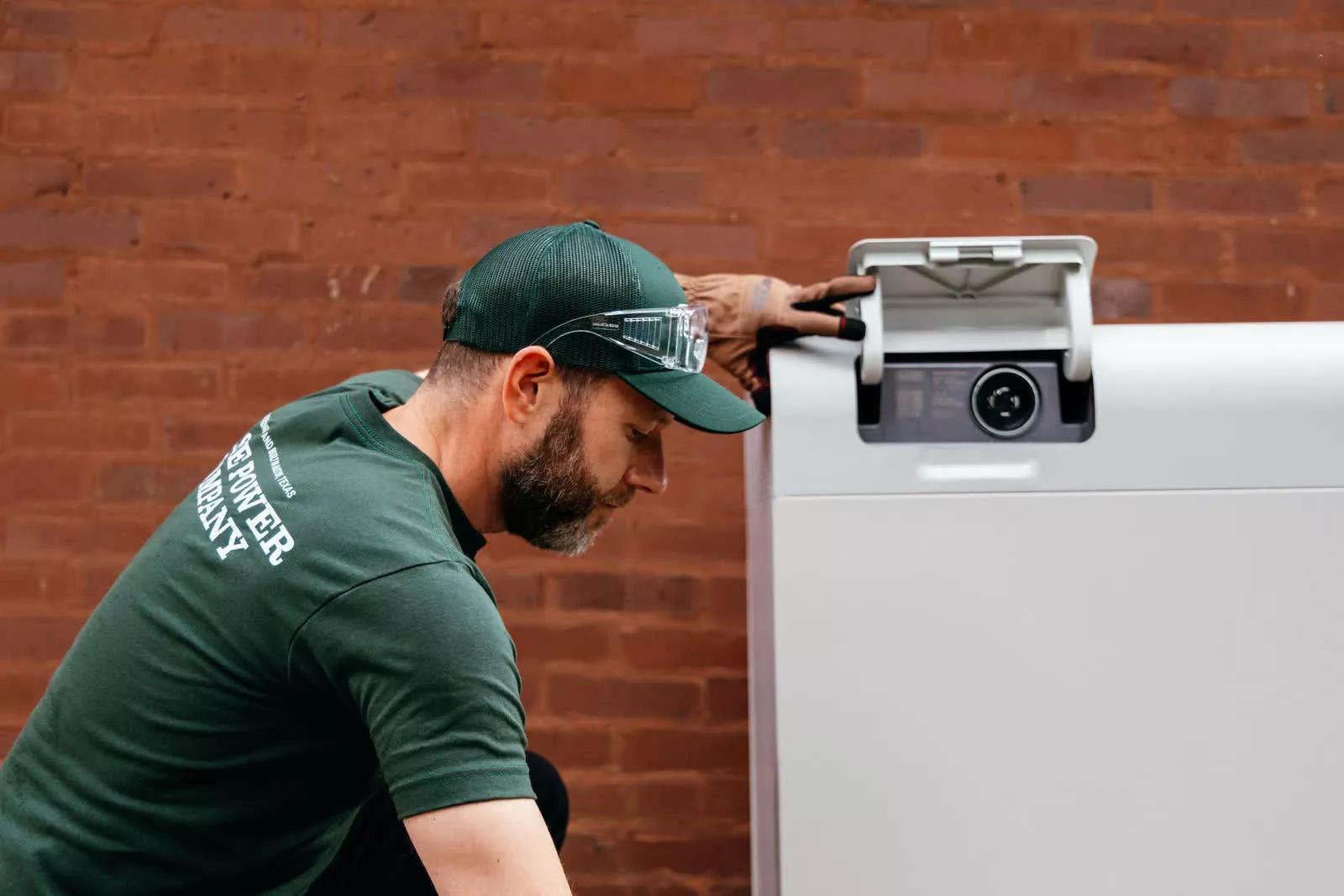
Although local battery storage has historically been tied to home solar power, the technology is increasingly showing up in homes with or without solar panels. Installing an air-conditioning-compressor-sized battery near a home’s electric meter lets homeowners store energy when it’s cheap, usually during the day, and helps stabilize the grid during peak hours.
Dell’s company, Base Power, installs about 100 39-kWh home batteries a day and expects to double that pace by the end of 2026. So far, it has installed roughly 550 megawatt-hours, on par with a large utility-scale storage project.

The company is helping drive a broader trend. Partly encouraged by state policy in Texas, California, Arizona, and Hawaii, US homeowners installed a record 673 megawatts of storage in the first quarter of this year, according to the Energy Information Administration.
The American Clean Power Association and Wood Mackenzie report that of the 3.3 gigawatts of power capacity and 8.4 gigawatt-hours of total energy storage the US installed during the quarter, home batteries accounted for 1.3 gigawatt-hours.
The end of federal tax incentives for residential solar and battery installations has made both technologies less economically attractive, but individual states are finding their own ways to compensate homeowners who install batteries. Hawaii, for instance, pays $400 per kilowatt of installed capacity, while California offers recurring payments for contributions to the grid.
Base offers batteries that can power homes for 36 to 72 hours during outages and lower energy bills when connected to the grid. In regions with battery network policies, Base can enter agreements with local authorities; where those policies don’t exist, it can double as a home backup battery retailer and an electric grid operator.
Early financial backer Antonio Gracias and co-founder Justin Lopas, both with SpaceX ties, believe Base and similar operations can help the US energy grid power a return to domestic manufacturing. Many also see them as a way to help meet the massive energy demands of AI data centers.


Microsoft has linked a global campaign targeting hospitality Wi-Fi networks to the Russian threat actor Midnight Blizzard, also known as APT29.
The activity was previously disclosed in a report from cybersecurity company ReliaQuest, which detailed how the attacker changed DNS settings on Wi-Fi devices to steal Microsoft 365 accounts.
Besides attributing the campaign to Russian hackers tracked as Storm-2945 – a sub-cluster of Midnight Blizzard, Microsoft identified two malware families called CornFlake and ChocoShell with capabilities for persistent access, credential theft, surveillance, and data exfiltration.
Microsoft named the campaign CaptiveCrunch and believes it has been active since at least early May, although the threat actor has been running device and OAuth code phishing operations since February.
The attackers manipulate DNS and HTTP traffic on networks served by captive portal equipment, allowing them to intercept user connections to hotel and conference center Wi-Fi networks.
Like ReliaQuest, Microsoft was unable to determine the exact initial compromise, although it noted signs of breaches in shared infrastructure rather than isolated devices.
After modifying DNS settings, the attacker can redirect victims to phishing pages that impersonate Microsoft 365 login portals, or to device code phishing pages that abuse Microsoft Entra ID authentication flows. Microsoft observed this activity since July.
A third option not previously disclosed involves using fake browser and operating system update pages that deliver malware to Windows via ClickFix prompts for user verification.
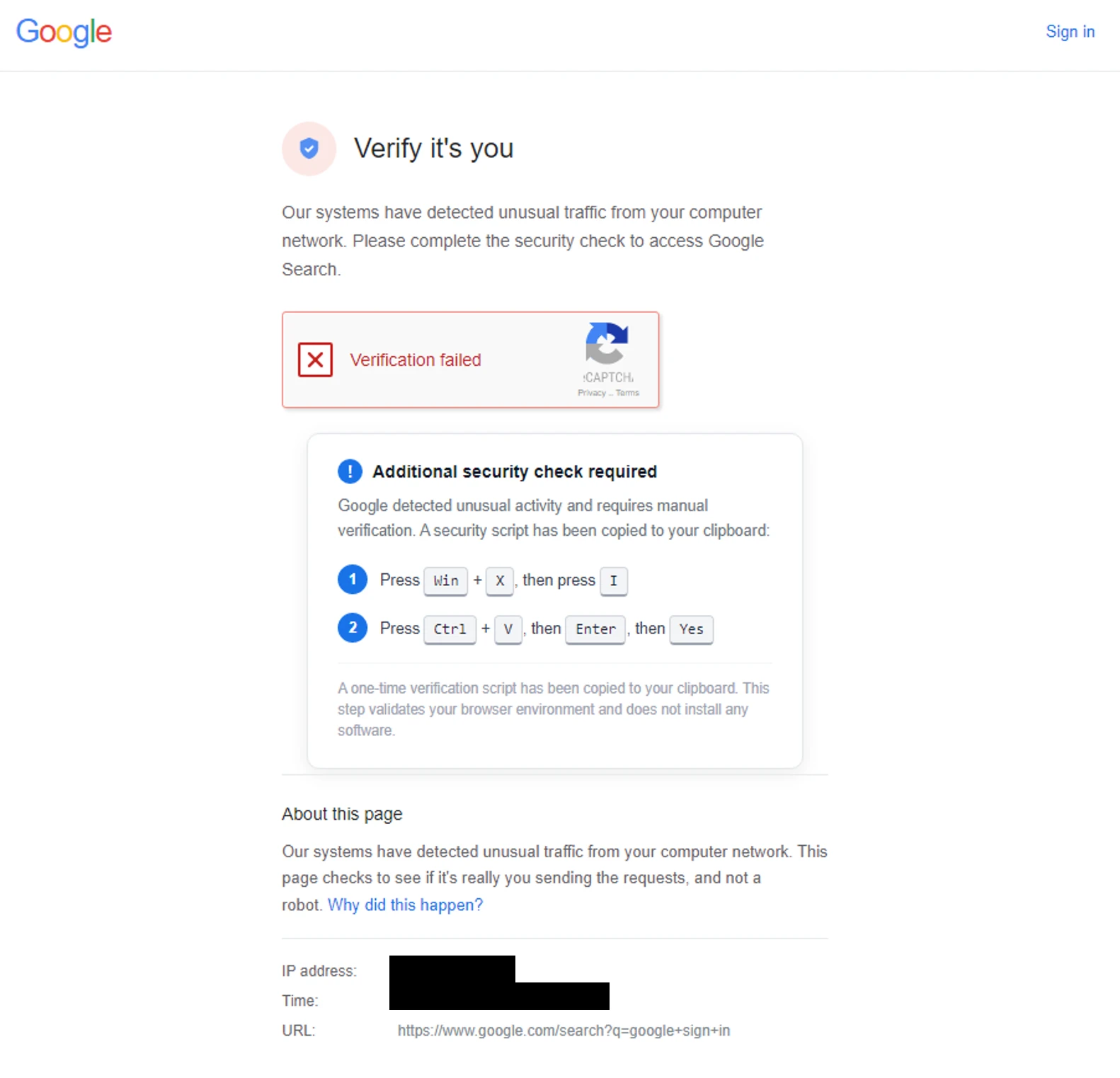
Microsoft also found evidence in some ClickFix landings indicating that the threat actor is also targeting Android devices to deliver an APK file.
Microsoft analyzed the two new Windows malware families and found that CornFlake is a Go-based remote access trojan (RAT) that offers the following capabilities:
When executed, CornFlake shows a fake progress window to distract the user while the binary copies to %AppData% for persistence.
According to the researchers, the bogus window can be configured to appear as a Windows update screen, a Defender virus scan, a disk optimization utility, a network diagnostics tool, a browser update prompt, or a document viewer installer.
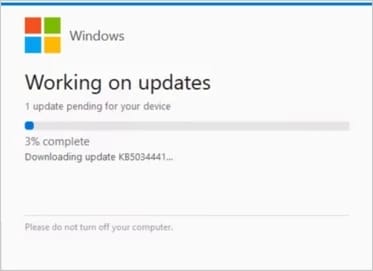
CornFlake disguises itself as “Cloud Sync Service” to appear as a legitimate Windows component, and uses multiple persistence mechanisms on the host, including Windows service registrations, registry run keys, named tasks, and a watchdog routine designed to restore any of the available persistence mechanisms.
The second payload, ChocoShell, is an in-memory PowerShell credential stealer that targets browser cookies, saved passwords, Microsoft 365 and Azure AD tokens, and Wi-Fi credentials.
.jpg)
Based on the extensive comments in the code, Microsoft assesses that AI tools were likely used to develop the two pieces of malware.
The researchers also discovered an unprotected web-based management panel named FruitStone that the threat actor used to handle infected systems, browse victim files, execute PowerShell commands, and capture screenshots and keystrokes.
Microsoft recommends treating hotel and conference Wi-Fi as untrusted, using private cellular or managed connections whenever possible, and avoiding software updates or tools offered through captive portals.
It is also recommended to adopt phishing-resistant authentication with MFA and passkeys, disable Microsoft Entra device code authentication when not needed, and avoid using corporate credentials to register for guest Wi-Fi networks.
Security teams log 54% of successful attacks and alert on just 14%. The rest move through your environment unseen.
The Picus whitepaper shows how breach and attack simulation tests your SIEM and EDR rules so threats stop slipping by detection.
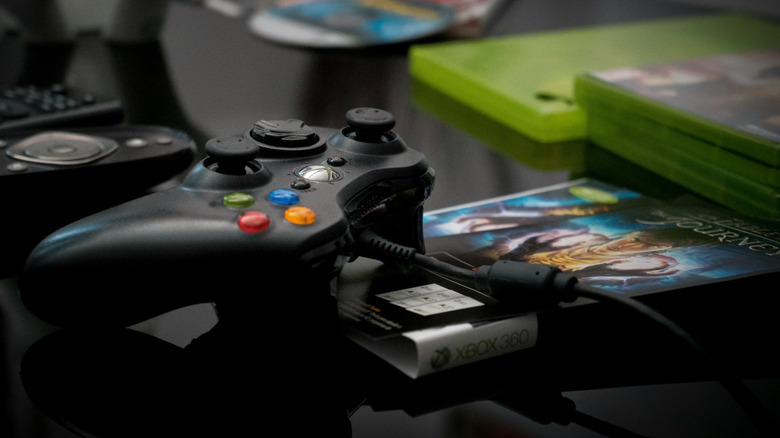
Like Sony, Xbox may be laying the groundwork for an all-digital future.
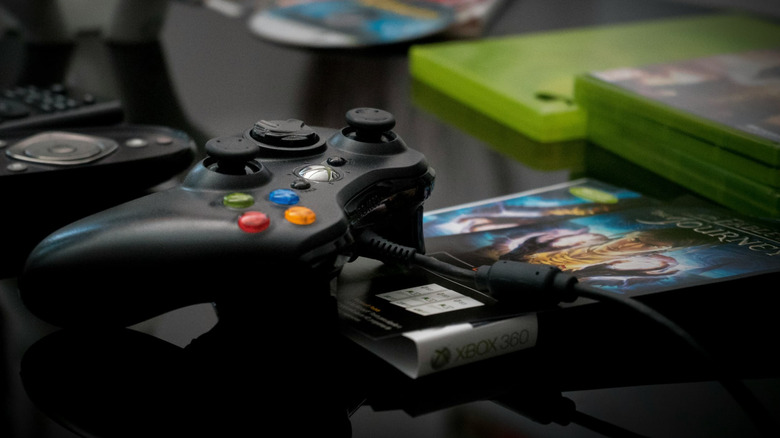
It seems Microsoft is planning to bring Xbox 360 games to PC alongside those for its original console. A feature that will enable consumers to get digital versions of Xbox games they own on disc may be deployed soon as well.
That’s according to The Verge, which got its hands on a document that Microsoft recently shared with developers. The paperwork reportedly stated they’ll be able to opt into making their Xbox 360 games backward compatible in order to run on the upcoming Project Helix console — which will run PC games — PC and handheld systems.
It’s said that developers can set their own prices for the PC versions and bring their titles to Game Pass if they wish. It seems likely these games will have Xbox Play Anywhere support, so you should be able to play them anywhere across the Xbox ecosystem after buying them once. It’s believed that Microsoft will gradually roll out this program over the next couple of years.
If it goes ahead with the Xbox 360 plan, Microsoft will be building on a project to bring games from the original Xbox to PC. Microsoft announced that initiative last month with an initial batch of four games. The Verge reports that Microsoft is set to expand that program in October with a “full launch.” Microsoft said it would bring achievements to original Xbox games, so perhaps October’s when that’ll happen too.
For what it’s worth, when Microsoft started bringing Xbox games to PC a couple of weeks ago, data miners quickly discovered something interesting within the files. As Tom’s Hardware reported, the company included the official emulator (dubbed Xe03 or Fission) that it uses to run Xbox 360 games on Xbox One and Xbox Series X/S games. Within Fission is another emulator called XeFu or Fusion, which allows for emulation of the original Xbox on modern consoles and now PC.
Meanwhile, it appears the disc-to-digital program (which ties a digital copy of a game to a corresponding disc) may ramp up very soon. The document reportedly stated that a public beta was supposed to begin for Xbox Insiders in July ahead of broader availability this month, but it appears there’s been a delay. The disc-to-digital program would offer a way for players to have continued access to games for which they have physical copies on Project Helix. It’s not clear if that system will have a disc drive or if, like PlayStation, Xbox plans to stop making game discs entirely.
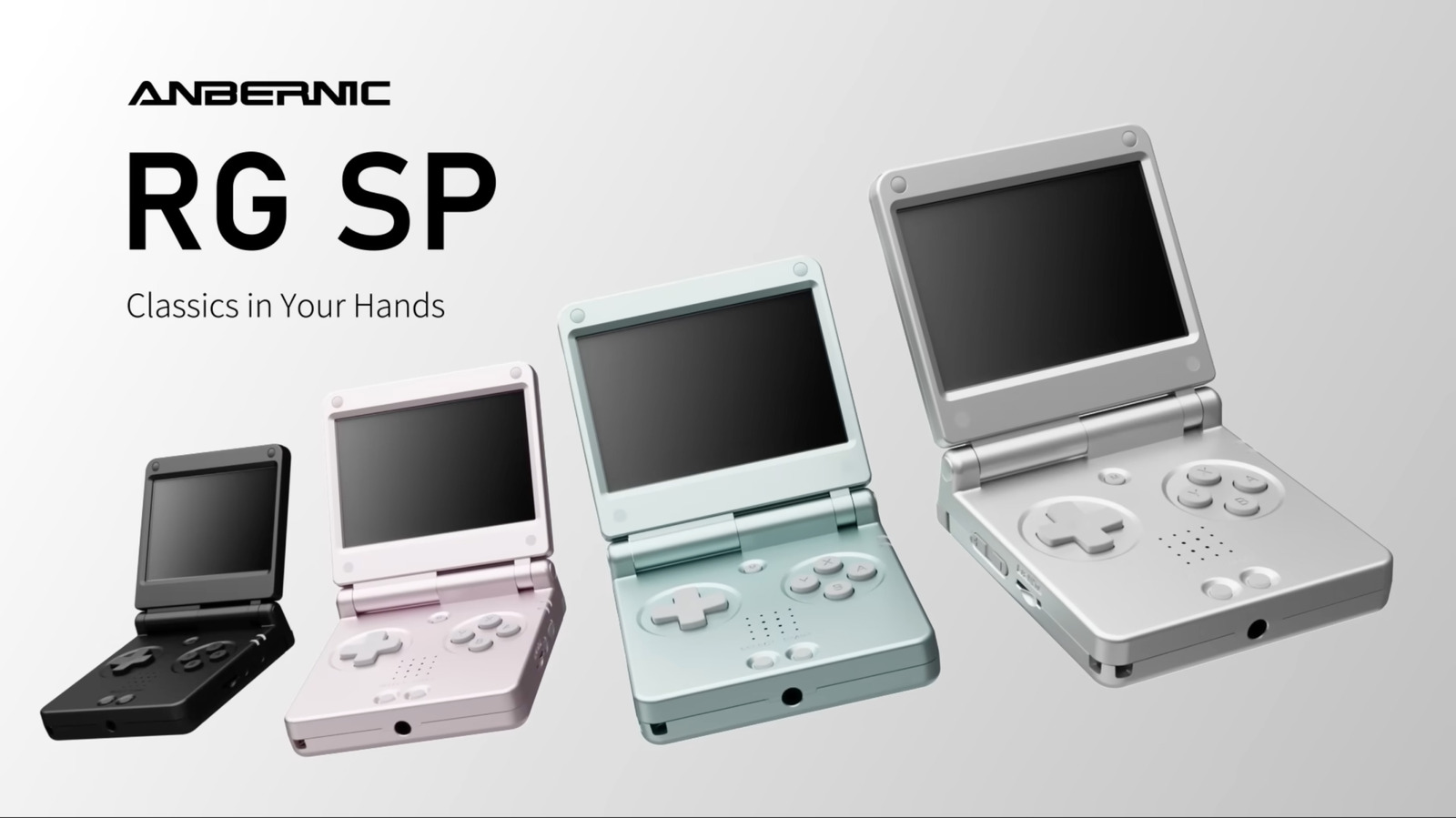
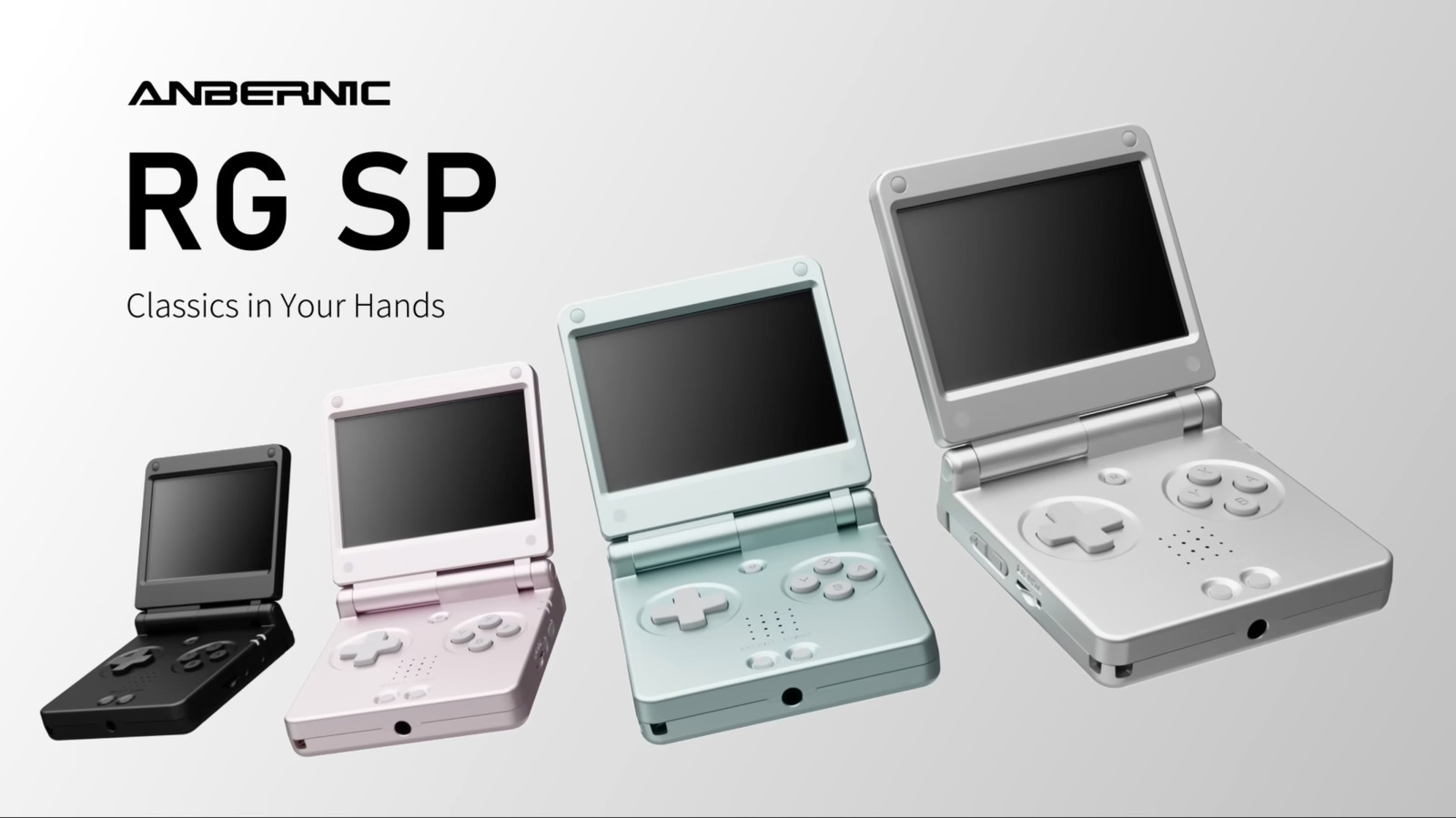
This modern-day Game Boy Advance SP remake starts at $65, but Anbernic is offering early bird pricing.
Anbernic’s modern-day reimagining of the Game Boy Advance SP is going to be cheaper than Nintendo’s clamshell handheld when it first came out in 2003. The handheld maker first revealed the RG SP a few weeks ago without divulging the price range or release date. Now, Anbernic is planning to open up orders for its affordable clamshell on August 5 at 6AM ET/3AM PT with a starting retail price of $65, which can be reduced with early bird pricing.
The RG SP represents Anbernic’s third attempt at recreating the legendary GBA SP, after the RG 35XXSP and the RG 34XXSP. Anbernic decided to stick to a 3.4-inch display that better matches the GBA SP’s aspect ratio and a 3,300mAH battery that should provide six hours of gameplay, but ditched the analog sticks we saw with the RG 34XXSP. With the H700 chip, the RG SP should still handle game emulation all the way up to PSP titles.
If you want to upgrade beyond the base model, the RG SP that comes with an extra 64GB of memory will cost $80 and the 128GB option will go for $95. Anbernic is offering a $7 discount for anyone who purchases the RG SP within the first three days of availability.

Facepalm: Tencent has reportedly canceled Last Sentinel, its ambitious cyberpunk open-world crime game that was supposed to rival Rockstar’s Grand Theft Auto. The game had been in development at Tencent’s Lightspeed LA studio for more than six years, with the Chinese tech giant reportedly investing more than $300 million in its development.
While Tencent disputes the cancellation rumors, Bloomberg News claims that the project is effectively dead, with around 80 developers reportedly laid off this week. Lightspeed LA confirmed the layoffs, citing a “shift (in) creative and development direction” following “extensive internal reviews and play-testing.”
While the report of Last Sentinel’s shutdown is disappointing, it is not entirely unexpected. The game was unveiled with a flashy teaser at The Game Awards in 2023, but Lightspeed LA failed to show any public gameplay even after more than six years of development. Additionally, internal testing in early 2026 reportedly received predominantly negative feedback, effectively sealing the game’s fate.
The report claims that the project was plagued by several problems throughout its six-year development, including the studio’s controversial leadership style, which insiders described as “polarizing.” Industry veterans also believe that a team of only a few hundred developers was always going to struggle to build a worthy GTA competitor.
Despite the reported cancellation of Last Sentinel, Lightspeed LA remains operational, with the remaining staff being moved to an unannounced open-world project headed by creative director Todd Papy. The report adds that some of Last Sentinel’s code and gameplay elements may be reused in the new game and other Tencent titles.
Lightspeed LA was established in 2020 under Tencent’s Shenzhen-headquartered LightSpeed Studios. Led by Steve Martin, the former head of Rockstar San Diego, the studio was tasked with developing an open-world sandbox game featuring a female protagonist and centered on vehicle theft, similar to GTA, Saints Row, Cyberpunk 2077, and Watch Dogs 2.
Lightspeed LA is not the first Tencent-backed North American studio to run into trouble. Established by Tencent’s TiMi Studio Group to create AAA games for Western audiences, TiMi Montreal closed earlier this year after five years of operation without ever releasing an original game. The Los Angeles-based Team Kaiju also shut down in 2023 after canceling an unannounced project.

AI may not make your digital audio player sound any better, but it is increasingly likely to make the next one more expensive.
Shanling has issued a blunt warning that rapidly rising component and material costs will lead to higher prices across its product range. Beginning in August 2026, newly introduced models will carry higher MSRPs, while fresh production runs of existing products are expected to become more expensive as they reach distributors during August and September.
More concerning for consumers, Shanling says some products may be discontinued because their current pricing can no longer be maintained without pushing them into the wrong part of the market.

Shanling says the problem began with rising prices for processors and RAM but has since spread to more basic memory components, printed circuit boards, copper wiring, aluminum, and other electronic parts.
The company expects three major consequences:
Shanling has not yet identified which existing models will increase in price, how large those increases will be, or which products are most vulnerable to being discontinued.
That distinction matters. Nobody should start panic-buying every silver box with a Shanling logo as though the machines have finally become self-aware. Current products remain available, and regional pricing will depend on distributor inventories, currency movements, import costs, and dealer policies.
However, the warning suggests that the first visible increases could appear as existing inventory is replaced by more expensive production batches.
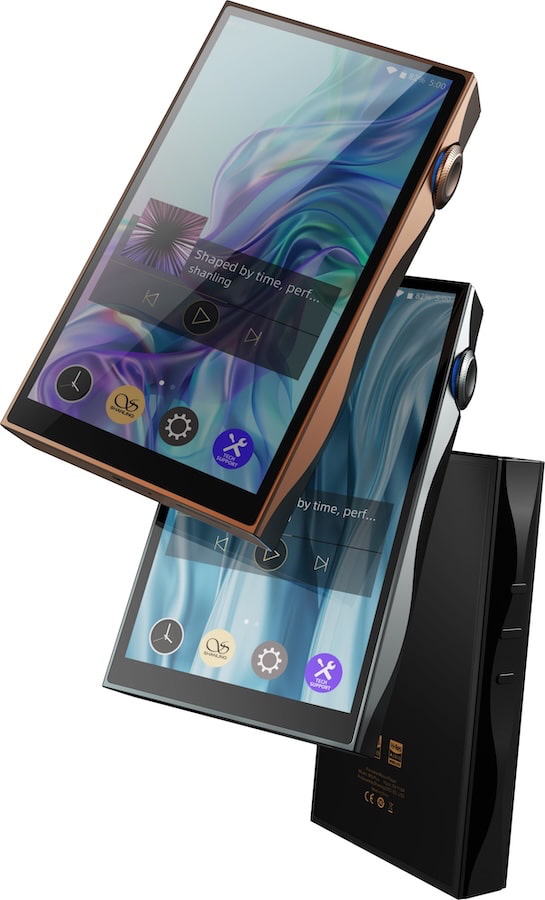
The company has already demonstrated how memory prices can affect its product lineup.
In March, Shanling replaced the $469 M3 Plus with the $559 M3 Plus Master Edition, citing sharply higher memory costs caused by what it called the “AI chase.” The new version received 6GB of RAM, power-supply revisions, capacitor changes, and a slightly different sonic tuning, so the additional $90 was not merely a price increase pasted onto the same player.
Still, Shanling made it clear that the original product could no longer be manufactured at its previous price.
The new warning indicates that the M3 Plus was not an isolated case.
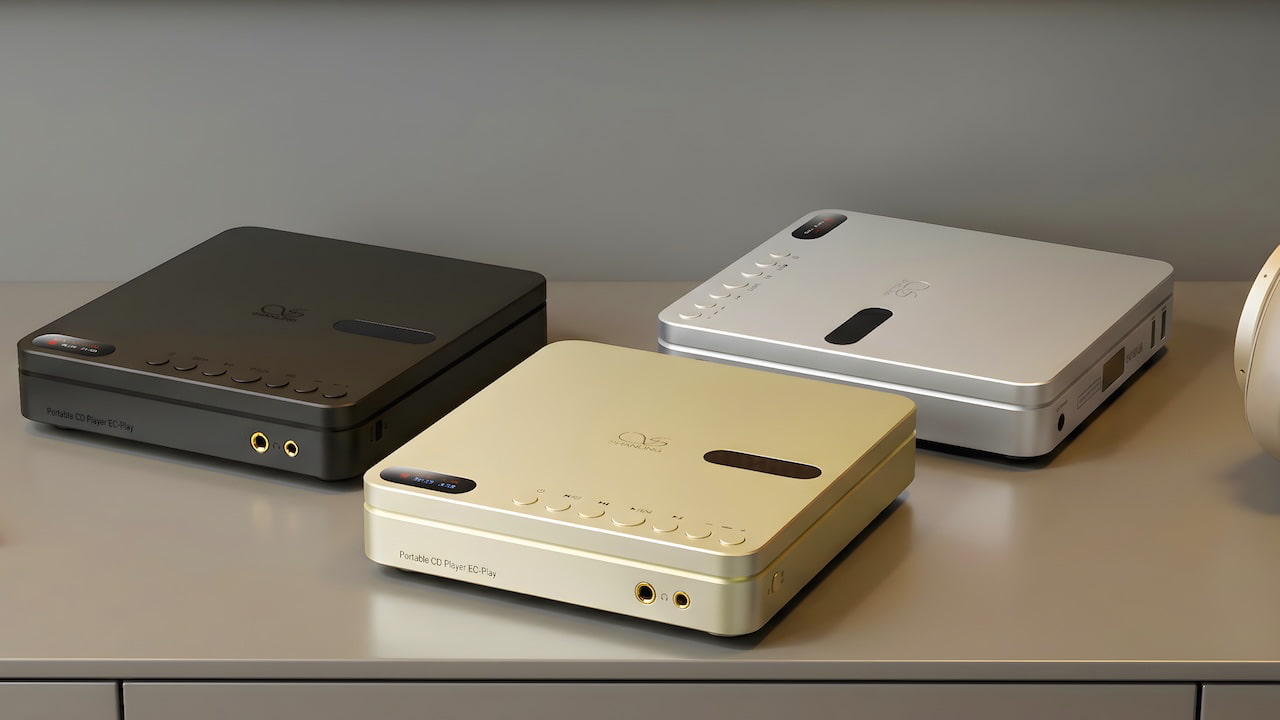
Shanling competes in some of the most price-sensitive corners of the hi-fi market.
Its current lineup includes the $129 M0 Pura digital audio player, the $199 EC Play portable CD player, the $629 EC Zero T Max tube and R2R CD player, and the SM90 network player priced below $1,000. The company also sells desktop DACs, headphone amplifiers, Bluetooth components, full-size disc players, and more expensive portable players.
A $50 or $100 increase is inconvenient on a flagship player costing several thousand dollars. On a $129 or $199 product, it can completely change the competitive landscape.
Shanling may therefore face three unattractive choices: raise prices, reduce specifications, or discontinue products that can no longer be manufactured profitably. The company has so far indicated that it expects to use at least two of those options.
The enormous expansion of AI data centers has changed how semiconductor manufacturers allocate production capacity.
AI servers require vast quantities of high-bandwidth memory and high-capacity DDR5. Those parts also generate higher margins than the conventional DRAM and NAND used in consumer electronics, giving manufacturers a powerful incentive to prioritize data-center customers.
IDC says this shift is restricting the supply of general-purpose memory while raising costs for smartphones, computers, and other consumer products. The research firm does not view the problem as a simple short-term inventory cycle, but as a potentially lasting reallocation of manufacturing capacity toward AI infrastructure.
Samsung has also warned that the global memory shortage could persist through 2028 as large data-center customers secure capacity through long-term supply agreements.
The impact is now spreading beyond products that contain large amounts of memory. Shanling says costs are also rising for PCBs, copper, aluminum, and other basic materials used throughout audio components.
Your portable CD player is not secretly training a large language model while you listen to Dire Straits. It is simply competing for parts and manufacturing resources with an industry that can spend considerably more money securing them.
FiiO raised US prices on several products beginning April 1, including the JM21, M21, M33, and DISC portable CD player. The updated prices ranged from $89.99 for the DISC to $699.99 for the M33.
Roku has also increased prices across its streaming-player lineup, with some models rising by as much as $50 as memory and storage costs reach home-theater products.
Shanling’s announcement is more troubling because it extends beyond higher prices. The possibility of discontinued products means consumers could face fewer choices, particularly in entry-level and mid-priced categories where manufacturers have less room to absorb additional costs.
Shanling’s answer is unusually direct: “Honestly, we do not know.”
The company says it is not optimistic that component manufacturers will quickly increase availability or reverse the current pricing trend. Shanling has promised to announce individual product changes in advance whenever possible.
For consumers already considering a Shanling DAP, portable CD player, streamer, or headphone amplifier, the sensible approach is to watch dealer inventory and official announcements over the next two months.
There is no evidence that every product will suddenly become more expensive on the same day. But Shanling has now confirmed that higher prices are coming, and that some existing models may not return once current production runs are exhausted.
AI was supposed to make consumer electronics smarter. So far, it is also making them more expensive and occasionally making them disappear.
Reference: https://en.shanling.com/article/101328





Why Trees Belong on the Risk Register


Weekend Open Thread: Wit & Wisdom


Meta enters AI-training agreement with far-right ‘propaganda rag’ Newsmax

‘Stargate’ Creator’s New Sci-Fi Series Returns for Season 3 Tomorrow


MicroStrategy Post-Earnings CLARITY Act Push Could Add New Catalyst for Its Stock


The Part of the Electric Transition Nobody Wants to Discuss


Major shareholder moves on Canyon


XRP Ledger v3.3.0 brings five institutional features


Bitcoin Enters the 3rd Stage of the Bear Market


Kraken Enables Retail Access to Jersey Mike’s IPO via Tokenized Shares


Reform UK betrays West Mids residents by running from party pledges


Luke Littler’s dominance sparks GOAT debate


Claude: Build Financial Dashboards in Minutes (2026)


Seema Kaliramna Wins Discus Throw Bronze, Takes India’s CWG Medals Tally To 17


New York sues Kalshi over prediction market gambling


Johnson & Johnson agrees to $5.5B settlement over talc cancer claims


Crypto PAC spending tops $2M in Michigan House race


Trump Announces Hamas Disarmament Agreement as Iran Strikes Kuwait Air Base and US Attacks Pause Overnight


Gemini can now summarize the messiest comment threads in Google Docs


ESET tracks rise in malicious AI skills and adaptable malware


You must be logged in to post a comment Login