




Connect with us

Business

Guggenheim Names Top Biotechnology Stock Pick

Published

on

Continue Reading
Click to comment

You must be logged in to post a comment Login

Leave a Reply

Business

Encounter Resources at Diggers & Dealers: niobium growth drives push

Published

on


Encounter Resources at Diggers & Dealers: niobium growth drives push

Continue Reading

Business

Could heatwaves make your supermarket shop more expensive?

Published

on

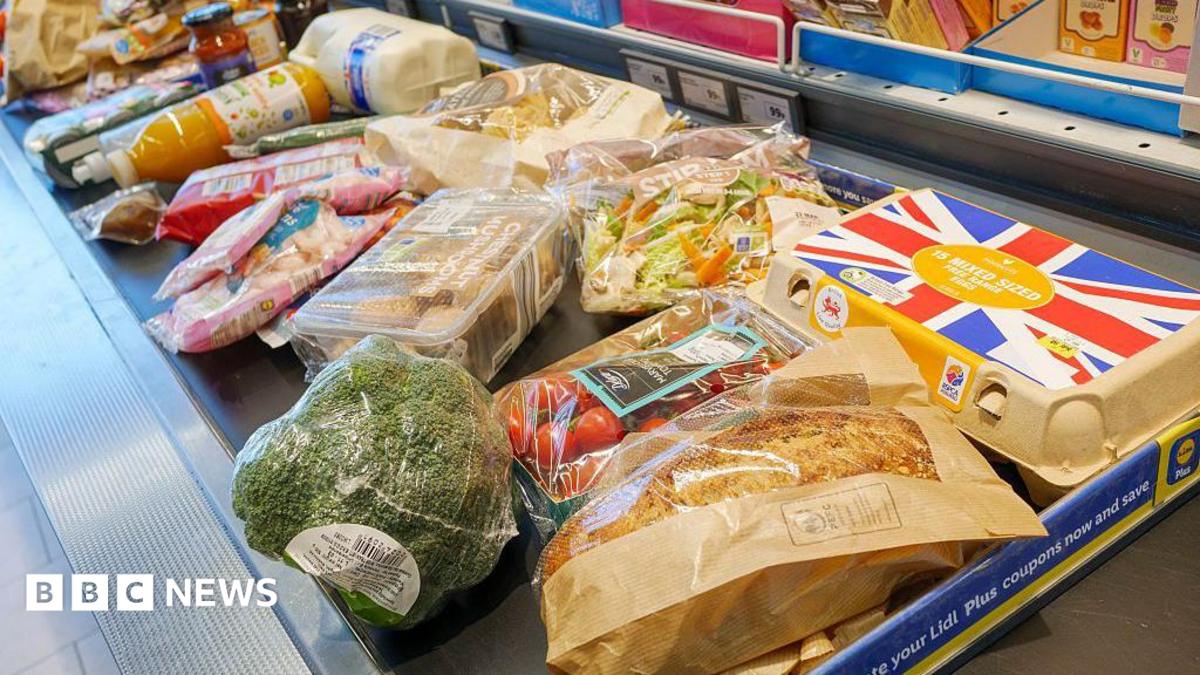
Supermarket freezer door, with sign saying: "NOT COOL Sorry, but this freezer is out of order. We're working hard to fix it as soon as we can."

A supply chain involves a small number of stages, from a product being made until it gets to the shops for people to buy.

If you take a loaf of bread as an example, first the grain is grown, harvested, milled and stored until it is ready to be taken to a factory.

Those ingredients are used to bake and package the bread, which is taken to warehouses before eventually ending up on supermarket shelves.

Each stage of that process will incur expenses such as transport and storage, and rising costs at any step could end up in the product you buy being more expensive.

Advertisement

Last week, farmers and flour producers said they were adapting to the challenges of dealing with the earliest harvest for 50 years.

And the National Farmers’ Union has warned there could be a shortage of certain food products if current drought conditions continue.

More from Cambridgeshire:

“One week of hot weather will not make a loaf of bread more expensive,” says Prof Manoj Dora, director of the Centre for Intelligent Supply Chains at Anglia Ruskin University, which has campuses in Cambridgeshire and Essex.

Advertisement

But he says prices could rise if supplies of crops run out, largely because of how it would affect the very beginning of the supply chain.

“We may see that meat, milk, eggs, and chicken will be impacted by [a lack of] animal feed,” he says.

“Across different food products, prices could surge if we do not manage these things immediately.”

Dora describes the UK’s supply chain as “resilient” so the effects of the heatwave may not be felt immediately.

Advertisement

“We need to start thinking of the long term by reconfiguring our supply chain in terms of locations and transportation, and by supporting the farmers,” he adds.

Continue Reading

Business

Measure of a minister is what remains

Published

on

Measure of a minister is what remains

Yes. Corporate subscriptions are available for teams and organisations, with discounted rates as user numbers increase. Pricing starts from $1,625 + GST per user.
Get in touch
to discuss the right option for your organisation.

Business News subscriptions are used by executives, investors, consultants and professionals who need to stay informed and make better decisions about the WA market. When you subscribe you’ll get

  • Unlimited access to WA’s most trusted business journalism
  • Data & Insights — detailed profiles of WA companies, people, projects and deals
  • MyBN — a personalised feed based on the companies, people and sectors you follow
  • Special publications and industry reports
  • Daily and weekly email newsletters

Data & Insights is a research tool built specifically for the WA market. It draws on more than 30 years of Business News reporting, updated regularly to reflect what’s happening now. Use it to:

  • Look up detailed profiles of WA companies, including financials, directors and ownership
  • Find decision-makers and track their career movements
  • Research live and completed projects across WA industries
  • Monitor deals, appointments and market activity
  • Access industry rankings and league tables

Data & Insights is updated daily by our dedicated research team, which uses the latest announcements, ASX filings and editorial coverage to keep our person, company, list and project records up to date.

Business News welcome all opportunities to make our dataset accurate, complete and current, so if you have an update request, please email the team at
general@businessnews.com.au, and we’d be happy to assist.

Advertisement

MyBN
is part of every subscription. It’s your personalised view of Business News. You can follow the companies, people, sectors and projects that matter to you, and get a news feed and alerts tailored to your interests. You can save articles to read later and retain only what you need.

Only subscribers have full access to all content on the Business News website.

Advertisement

If staying informed about the WA economy is part of your job, and/or you’re looking for networking opportunities in WA, Business News is built for you.

Business News subscribers are:

  • Executives and directors tracking competitors, clients and market movements
  • Investors and advisers researching companies, deals and industry trends
  • Consultants and professionals staying across sectors relevant to their clients
  • Business owners looking for leads, context and market intelligence

Most Business News publications cover national or global markets. Business News is focused entirely on Western Australia, which means the journalism, the data and the intelligence are all built around WA companies, people and projects — not adapted from a national feed. Data & Insights, included with every subscription, combines more than 30 years of WA-specific editorial research with live business data. There’s no comparable product for the WA market.

Advertisement

The Morning Digest Email provides a comprehensive wrap of the major headlines, relevant to WA business, and includes with a snapshot of the overnight news covering oil, gold and ASX-listed companies.

The Afternoon Wrap Email focuses on the news covered by our team of journalists during the course of the working day, including exclusive stories and analysis, all of which relates to WA business and the local economy.

The BN Weekender Email contains a wrap of the Business News from the week that was, highlighting the top stories in each area of WA business.
Sign up for free.

Advertisement

We’re happy to help.
Get in touch
and our team will come back to you.

Advertisement
Continue Reading

Business

FPI inflows into Indian G-Secs dry up as US rate hike looms

Published

on

FPI inflows into Indian G-Secs dry up as US rate hike looms
Mumbai: Market participants are closely watching foreign portfolio investor (FPI) activity in fully accessible route (FAR) securities as some investors, who had bought into them in anticipation of their inclusion in the Bloomberg global bond gauge, are expected to lighten positions accumulated over the past two months.

Inflows into Indian debt have already tapered over the past two weeks, with the daily average inflow in July being just about ₹300 crore. In June, the daily average FPI inflow in debt was 10 times more-at nearly ₹3,000 crore. On a monthly basis, FPIs invested ₹41,774 crore in June and ₹7,581 crores in July, CCIL data showed.

Read more: New closing auction triggers confusion, sparks late Nifty swings

US 10-year yield falls from 18-month high on Iran peace talk hopes
Advertisement

U.S. Treasury yields saw a decline on Monday as oil prices plummeted. President Donald Trump’s recent announcement about renewed discussions with Iran helped ease inflation concerns, pushing U.S. crude prices down to below eighty dollars per barrel. Consequently, the benchmark ten-year Treasury yield fell from an eighteen-month peak, and the two-year yield also saw a substantial drop.


On Monday, the benchmark 10-year bond yield reacted marginally to Bloomberg’s decision to defer inclusion of India in the Index. Traders remain wary of one key medium-term risk-the possibility of interest rate hikes by the US Federal Reserve.

FPI Inflows into Indian G-Secs Dry up as US Rate Hike LoomsAgencies

watch out More outflows likely with Bloomberg delaying India’s inclusion in global bond gauge

“One or two hikes are being priced in because we don’t know how global rates would be over the course of the year. But right now, the bias is towards staying put. I don’t expect a major rally and 6.70% or lower levels are possible if oil prices fall further,” said Alok Singh, head of treasury at CSB Bank.


Yields on 10-year government bond closed at 6.84% on Monday against 6.83% last Friday The one-year overnight indexed swap (OIS) curve averaged 5.88%, suggesting markets are pricing in at least one rate hike over the next 12 months.
FPIs offloaded their holding partly because the Bloomberg index provider delayed by two weeks announcing its decision on whether it would be including India in the index. Furthermore, yields on US treasury bills became attractive after they touched 5% and currently it is at 4.70, a trader with a private bank said.Traders said fresh data showing inflows through the ECB and FCNR(B) schemes and a cooling in oil prices helped offset the negative sentiment.

Traders are not taking a large position ahead of the monetary policy scheduled to be announced on Wednesday even as an ET poll of 12 economists said that the central bank will maintain the policy rate unchanged yet again. Markets will closely watch the RBI’s commentary for any hawkish signals, which could provide clues on the future path of monetary policy, treasury heads said.

Advertisement
Continue Reading

Business

ITC Q1 earnings hit by cigarette tax burden; FMCG, paper businesses offer support

Published

on

ITC Q1 earnings hit by cigarette tax burden; FMCG, paper businesses offer support
ET Intelligence Group: ITC’s June 2026 quarter earnings reflected the impact of higher cigarette taxes and West Asia-related disruptions, with a 27% year-on-year fall in net profit despite 28% increase in gross revenue. However, resilient growth in the consumer segment and a strong recovery in the paperboards and packaging business helped cushion the impact. While categories such as dairy, snacks, noodles, frozen foods and personal care continued to gain traction, earnings are likely to remain under pressure in the near term as ITC gradually passes on the higher cigarette taxes through calibrated pricing actions. The company flagged input cost inflation, weak monsoon progress, lower kharif sowing and continued geopolitical uncertainty as key risks.

Read more: FPI inflows into Indian G-Secs dry up as US rate hike looms

The cigarettes business, which contributes nearly 48% to the total business, remained a key drag on profitability. The segment revenue surged due to an increase in excise duties from February 2026, but profit dropped as the company adopted a staggered pricing strategy to minimise consumer downtrading and prevent migration to illicit trade.

Cigarette Tax, Input Costs to Weigh on ITC in the Near TermAgencies

The FMCG-others segment, which contributes one-fifth to the entire business, delivered another strong quarter led by dairy, snacks, noodles and frozen foods, each registering more than 20% growth, alongside mid-teen growth in personal care products.
The agri business faced a challenging quarter due to trade disruptions linked to the West Asia conflict, weaker tobacco demand, and a high base. However, ITC stated the underlying revenue grew 9% after adjusting for wheat timing differences and geopolitical disruptions, aided by growth in value-added agri products such as spices and fruits and vegetables. Growth in paperboards, paper and packaging was aided by improved realisations, moderation in wood costs, stronger demand for value-added products and exports, and strong growth in the packaging business.


Elara Capital has reduced ITC’s earnings estimates by 11.7% and 4.4% for FY27 and FY28. Motilal Oswal Financial Services (MOFSL) has also cut FY27-28 EPS estimates by 2% as slower-than-expected increase in cigarette prices is likely to weigh on FY27 earnings.

Continue Reading

Business

Rise in small business ‘whisk takers’ prompts review of bake sheds

Published

on

Business Live

There has been a surge in home bakers selling from their own properties in recent years

Mikaela Bartlett runs The Treat Shed in Kingsteignton and is one of the rising number of small business operators running such enterprises (Image courtesy: Mikaela Bartlett).

Mikaela Bartlett runs The Treat Shed in Kingsteignton (Image: Local Democracy Reporting Service / Mikaela Bartlett)

A surge in budding bakers looking to establish their own small businesses has prompted a Devon council to reassess its policies.

Advertisement

Given that these so-called ‘”whisk takers” are not operating from commercial premises and typically sell their goods directly from their own properties via modest sheds, questions have arisen over what licences or permissions they are required to obtain.

The matter even featured in an Institute of Licensing webinar last month, examining how local councils need to secure street trading licences or consents.

East Devon District Council confirmed it had received a growing number of enquiries from individuals seeking to run bake sheds from their properties, raising the question of how such an activity sits within its existing street trading policies.

At a recent licensing meeting, chair Councillor Joe Whibley (Independent, Exmouth Town) said: “I do think the ‘whisk takers’ need to know where they stand.

Advertisement

“No ‘bun’ intended.”

Phillippa Norsworthy, a licensing manager at the council, confirmed that bake sheds were being handled in accordance with its current street trading policy.

“This means the majority of bake sheds fall into the category of requiring street trading consent and we are dealing with them on this basis,” she said.

“This means that a street trading consent application must be made and it is treated to the same application criteria as all street trading consents. However, we are currently reviewing our street trading policy.”

Advertisement

Ms Norsworthy confirmed that no updates had yet been made to this policy, meaning there remained no further clarity on bake sheds or whether the regulations surrounding them might be revised.

“All street trading applications are subject to an initial application fee of £45.00 and an annual consent renewal fee of £45.00,” she added, setting out the current position.

Mikaela Bartlett runs The Treat Shed in Kingsteignton, a venture she launched after seeking a creative outlet during maternity leave with her second child, having previously worked in corporate roles.

Although Kingsteignton falls outside East Devon, the passionate baker has had to navigate the permissions required by her own local council.

Advertisement

“The Treat Shed officially opened its doors at the end of April, so it’s a relatively new venture,” she said.

“I have a 5 very good food hygiene rating, my kitchen has been inspected – everyone who opens a food business is required to register with the council and have your kitchen inspected as we’re selling to the public.

“I also have public liability insurance, business insurance and have done food hygiene and allergen awareness courses.”

Ms Bartlett added that upon speaking to Teignbridge District Council, her local authority, she was informed that a street trading licence was not required in her area.

Advertisement

An Institute of Licensing webinar, attended by an East Devon council officer, indicated that all councils must take into account the legislation governing street trading – namely the Local Government (Miscellaneous Provisions) Act 1982 – alongside their own street trading policies and guidance when assessing street trading consents for bake sheds.

However, Ms Norsworthy noted that local councils “vary greatly” in their approach to handling street trading applications.

She further explained that bake sheds operating in East Devon are required to register with the environmental health team, and that any street trading consent application must include a site map, a photograph of the trading unit, a copy of an insurance certificate, evidence of a food hygiene rating, along with other formal identity documentation.

The planning department is routinely consulted on street trading applications and would therefore contact the applicant directly should any planning concerns arise.

Advertisement
Continue Reading

Business

Govt moves spark development options

Published

on

Govt moves spark development options

Surplus government land in the western suburbs is attracting developers’ attention.

Continue Reading

Business

American farmers feed growing demand with less farmland

Published

on

American farmers feed growing demand with less farmland

CADIZ, Ky. – The U.S. soybean industry is working to meet growing global demand despite operating with less farmland and fewer farms.

According to the Department of Agriculture, the U.S. had about 943 million acres of farmland in 2000. That figure has since fallen about 7% to 874 million acres. The USDA also reported that the country lost approximately 307,000 farms over the same period.

Advertisement

Meanwhile, global demand for American agricultural products, particularly soybeans, has surged. Farmers are seeking new markets for their crops while working to produce more from each acre.

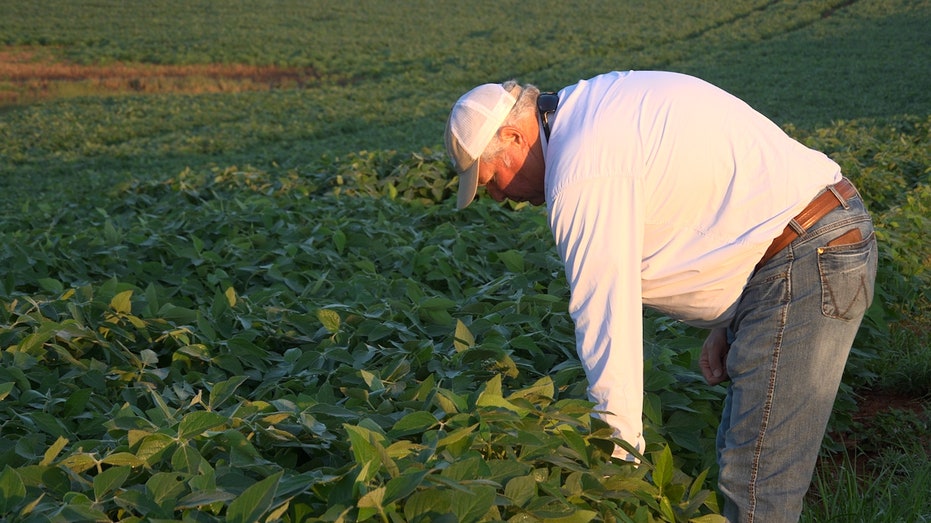
Barry Alexander is a seventh-generation farmer in Cadiz, Kentucky. Soybeans account for about half of the crops grown at Cundiff Farms during the summer.

TRUMP DECLARES FOOD SUPPLY EMERGENCY, SUSPENDS TARIFFS ON KEY FERTILIZER IMPORTS

Kentucky Soy Farmer in Field

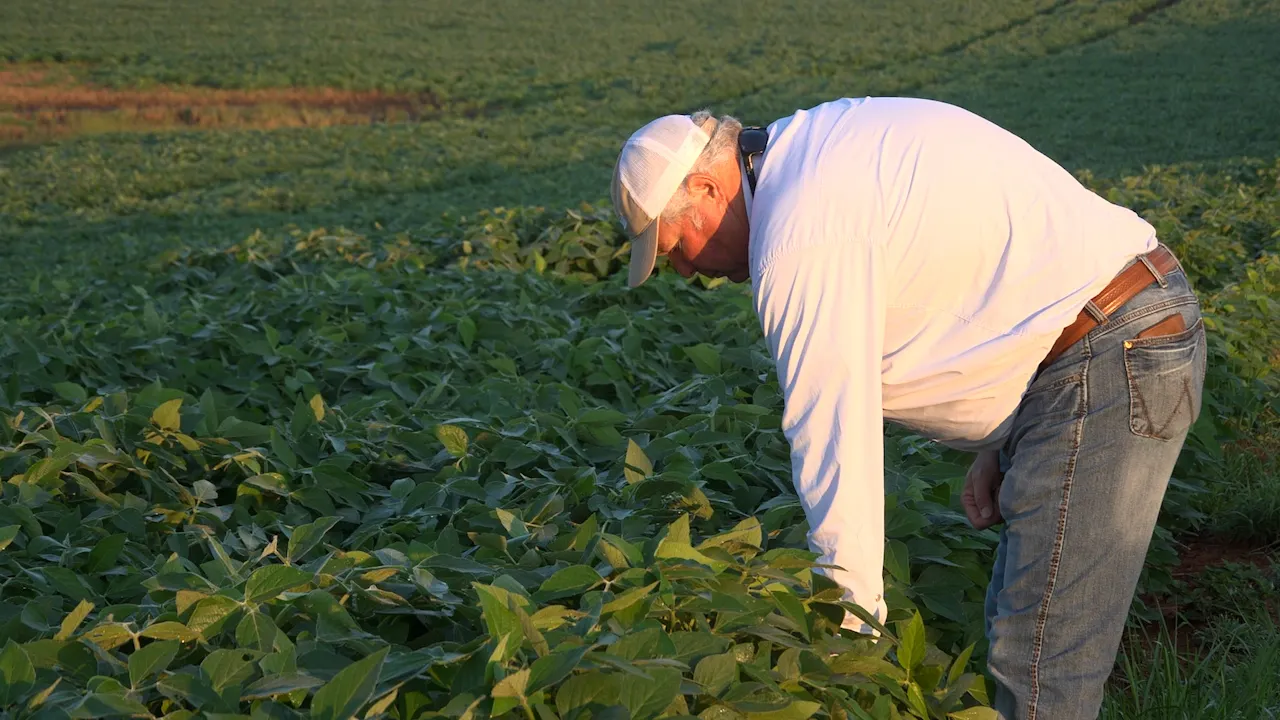
Barry Alexander is a seventh-generation farmer in Kentucky who ships a chunk of his soy crop overseas.  (FOX / Fox News)

Alexander said he has not lost farmland to urban development, but he has noticed farms shrinking as cities expand into rural areas.

Advertisement

“Land is going away every day, and that’s one commodity they’re not going to reproduce,” Alexander said. “Whenever that land is gone and gone out of production, it’s no longer going to be farmland. The population is increasing, and the demand for food is increasing.”

TRUMP DEFENDS TARIFFS AHEAD OF LOOMING MIDTERMS, SAYS THEY HAVE MADE THE US ‘A FORTUNE’

Kentucky’s soybean harvest begins in September and runs through October. A portion of Alexander’s crop is shipped overseas, including to China, the top customer for U.S. soybeans.

“A lot of our product is actually for export. We put it on the rivers here nearby, and it ships down to the Gulf of Mexico to New Orleans and is actually shipped overseas,” Alexander said. 

Advertisement
Kentucky Soy Field

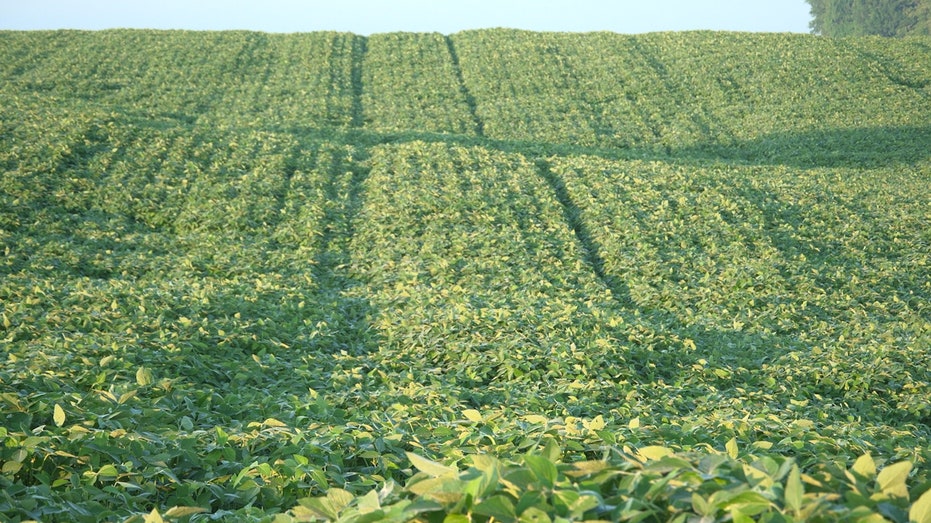
According to the USDA, the amount of farmland in the United States has shrunk about 7% since 2000. (FOX / Fox News)

In 2025, China agreed to purchase 25 million metric tons of U.S. soybeans annually. The country initially failed to meet that benchmark as President Donald Trump’s trade war escalated.

The American Soybean Association said China later began purchasing more American soybeans as prices rallied.

“We’re on a positive trend, but we still got a long ways to go to completely hit the targets that they’ve agreed to,” Caleb Ragland, chairman of the American Soybean Association, said. “Obviously, we’ve had some bumps in the road in our relationship, but they’re too big of a customer to just write off.”

Ragland said China consumes more soy than any other country combined. Much of it is processed into soy protein used to raise pigs and poultry, two major staples in Chinese cuisine.

Advertisement

“They need our soy protein to help grow and produce their meat protein that their people want,” Ragland said.

TRUMP DECLARES FOOD SUPPLY EMERGENCY, SUSPENDS TARIFFS ON KEY FERTILIZER IMPORTS

China currently has a 10% tariff on all U.S. agricultural products. Chinese officials have discussed removing the tariff, which Ragland said would make American soybeans more competitive with South American producers.

South America remains a major force in the global soybean trade.

Advertisement

“I mean, that’s been a 10% tax that has made us uncompetitive when it comes to the cash price that the Chinese customers would pay for soybeans,” Ragland said.

Soybean crop in Kentucky

Farmers are working to pack in more soy production with less land as global demand for American soy increases.  (FOX / Fox News)

A portion of soybean profits goes into a checkoff program that the United Soybean Board uses to research and develop new markets for the crop.

Since the Soy Checkoff was established under the 1990 Farm Bill, annual American soybean production has increased from 2 billion bushels to about 4 billion bushels.

“We treat every acre individually, and we treat it to produce the most it possibly can,” Alexander said. 

Advertisement

GET FOX BUSINESS ON THE GO BY CLICKING HERE

Brent Gatton, chairman of the United Soybean Board, said checkoff investments have helped open new fuel markets and supported U.S. soybean trade with more than 90 countries.

“Because of the checkoff, there are thousands of new uses we get. Soy oil is in Goodyear tires and artificial turf, and soy foam is a great success story,” Gatton said. 

Farmers hope this year’s higher soy prices mixed with larger purchases could help them at least break even after years of high input costs.

Advertisement
Continue Reading

Business

Why is WuXi AppTec stock surging today?

Published

on


Why is WuXi AppTec stock surging today?

Continue Reading

Business

Shein targets $30-$40 billion valuation for Hong Kong IPO- Reuters

Published

on


Shein targets $30-$40 billion valuation for Hong Kong IPO- Reuters

Continue Reading

Trending

Copyright © 2025