



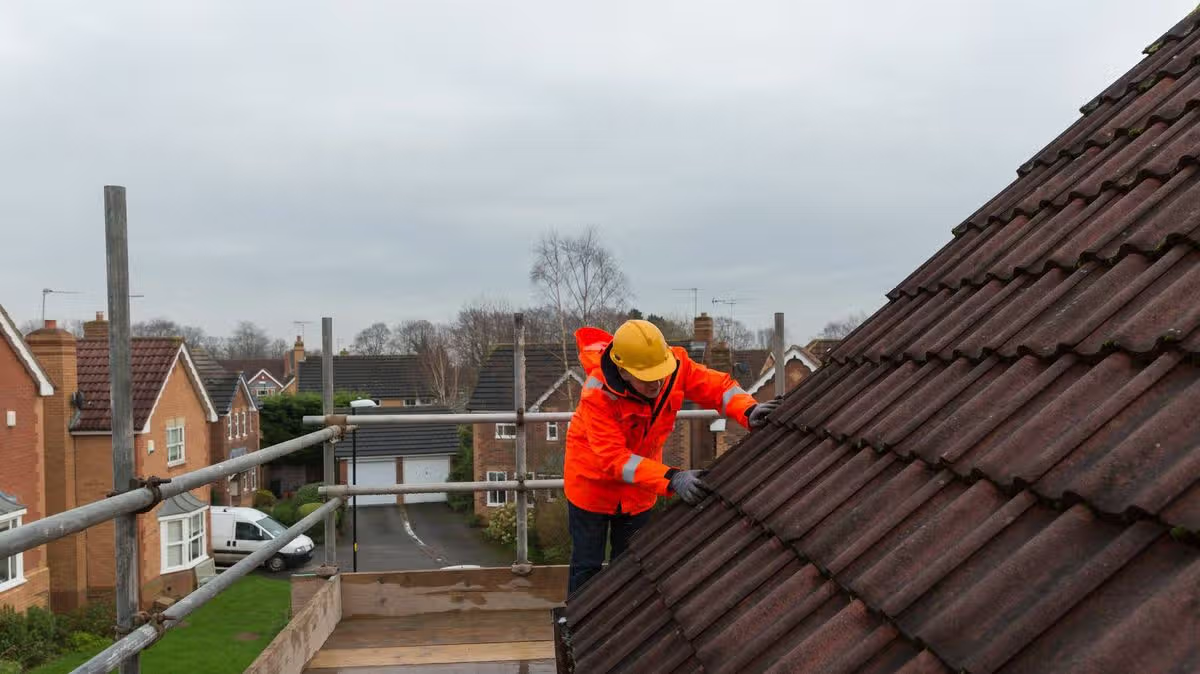
If your neighbour is building an extension too close to your property boundary, you have specific legal rights
Home extensions are a popular choice for homeowners looking to expand their living space. Yet these projects can frequently spark disagreements with neighbours, especially over how close the new build can be to the property line.
Under UK law, a neighbour has the right to construct right up to the boundary of your property, but they’re prohibited from crossing it, building over it, or allowing roof features such as guttering to overhang it. If an extension appears too near, your entitlements will hinge on boundary restrictions, planning rules, and party wall legislation.
There’s no universal minimum distance requirement for every property for a neighbour’s extension work. The requirements differ based on the extension type, its height, the effect on neighbouring properties, and whether it qualifies under permitted development or needs planning approval.
What are the rules on building near boundaries?
With Permitted Development Rights or Planning Permission, construction can take place as close as 50mm from your neighbour’s boundary, typically at no additional expense. However, if you wish to build directly on the boundary itself, a Party Wall Agreement becomes necessary, which usually demands your neighbour’s approval and may also require a surveyor’s involvement, particularly if your proposals impact any shared walls or structures, reports Wales Online.
Under permitted development regulations (which remain largely uniform across England and Wales for these particular measurements), an extension may be built near a boundary. However, if any part of it lies within two metres of the boundary line, the highest point of the eaves must not exceed three metres.
A single-storey rear extension has a maximum height restriction of four metres. Property owners typically have the right to build up to their property boundary. Under the Party Wall Act 1996, a neighbour may extend their structure right up to the boundary or even upon it, provided they adhere to the correct legal procedures. This usually involves serving a Party Wall Notice on the adjacent property owner at least two months prior to commencing any works.
If the extension involves excavation within three to six metres of your property, depending on the depth of the new foundations, you must receive notification. Should you object to the notice, both parties must appoint a surveyor to produce a “Party Wall Award,” which sets out how the works should proceed to reduce damage and disruption.
When constructing an extension, many homeowners seek to build as near to the edge as feasible to maximise space. Nevertheless, building regulations and local planning requirements usually establish a minimum setback distance.
In many locations, regulations stipulate a minimum distance of one metre between an extension’s edge and the boundary line. This requirement is primarily designed for fire prevention, stopping flames from spreading easily between properties, while also ensuring access for ongoing maintenance work.
What protections exist for light and privacy?
Among the most important legal safeguards for neighbours is the “Right to Light.” Should a new extension substantially diminish the natural light coming through your windows (particularly if you’ve benefited from that light for two decades or longer), you could have legitimate grounds for legal action.
This represents a civil issue distinct from planning consent. Even when a neighbour has secured council approval, they cannot lawfully breach your established right to light.
Privacy represents another key consideration. Planning authorities typically guard against “overlooking” by limiting windows on side walls or mandating the installation of obscured glazing. Should you believe an extension would compromise your privacy or cast excessive shadow over your garden, these concerns should be voiced during the planning submission stage.
When is professional guidance necessary?
If you’re worried about a neighbour’s construction proposals, the initial approach should be a direct conversation with them. Should that prove unproductive, seeking advice from a Party Wall surveyor or a solicitor who specialises in property law would be sensible.
Taking action promptly is vital. It’s far simpler to modify plans before building work commences than to pursue an injunction or compensation once the brickwork is already in place.

















![Dim4ou x Shunaka - Need Da Money [OFFICIAL 4K VIDEO] 2024](https://wordupnews.com/wp-content/uploads/2026/05/1777808654_maxresdefault-80x80.jpg)






































You must be logged in to post a comment Login