
Crypto World
Amazon’s $3 Trillion Record Lasts One Day as Stock Takes Big Hit

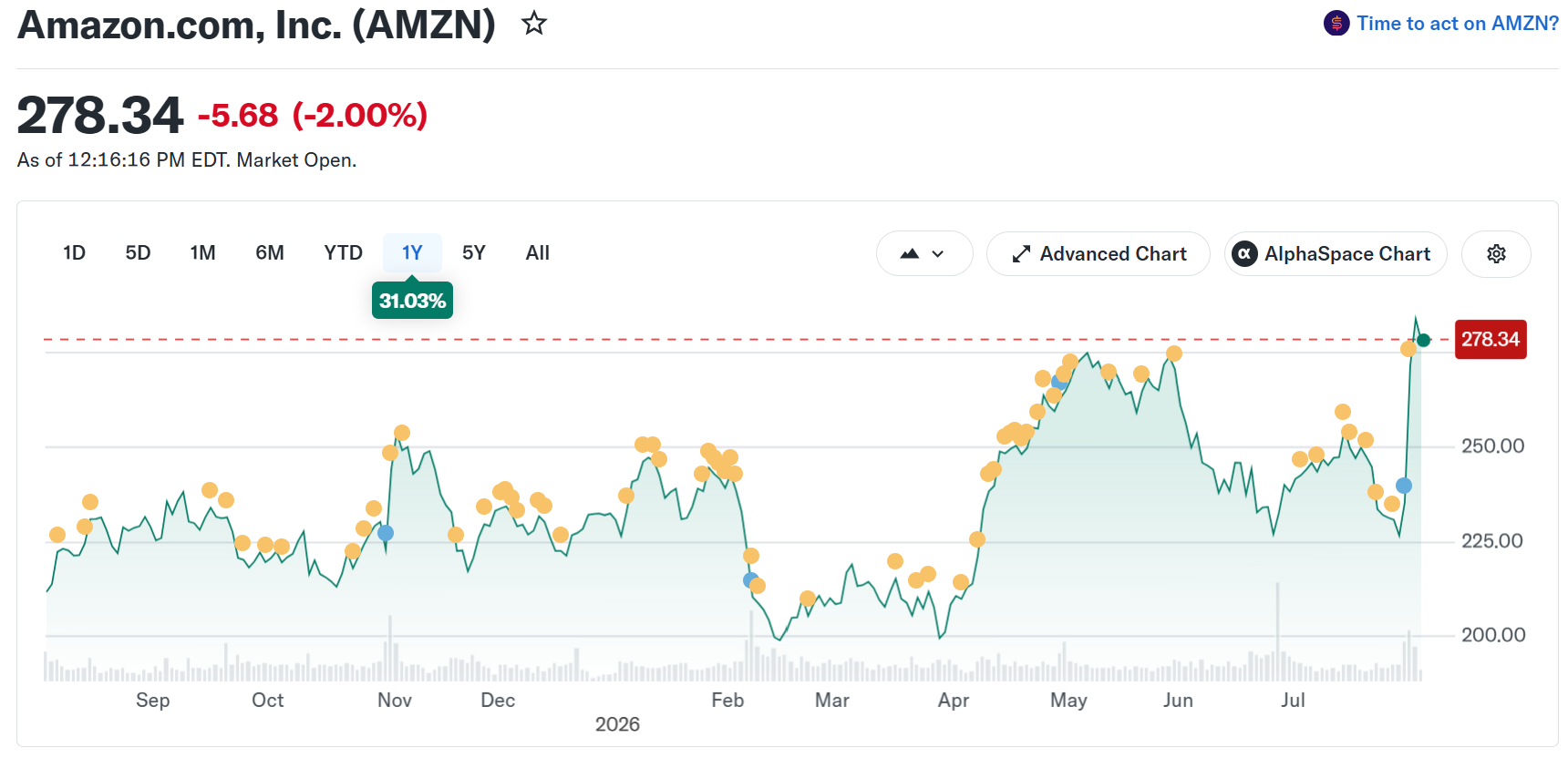
Jeff Bezos wants to sell 15 million Amazon shares. The price tag is about $4.07 billion. Amazon.com Inc. (AMZN) fell more than 2% on Tuesday.
The timing stands out. Amazon had just closed at a record and passed $3 trillion in value for the first time.
Bezos Amazon Stock Sale Was Priced Before the Record
Bezos filed a Form 144. That is the notice an insider files before selling restricted shares.
The notice puts the total value at $4,073,700,000. Divide that by 15 million shares and you get $271.58 each. That was Friday’s closing price, not Monday’s.
Amazon then rose 4.58% on Monday and closed at $284.02, an all-time high. It touched $287.20 during the day.
At Monday’s close, the same shares were worth roughly $4.26 billion. Bezos priced his sale before the record, not after it.
Morgan Stanley Smith Barney will handle the trades on Nasdaq. Bezos received the shares as founder stock in July 1994.
The sales follow a Rule 10b5-1 plan he set up on November 14, 2025. These plans lock in trades months ahead. That shields insiders from claims they traded on private information.
AMZN changed hands near $277.41 late Tuesday morning, down 2.33%. A year ago it closed at $211.65.

Follow us on X to get the latest news as it happens
He Is Selling Less Stock Than He Did Last Year
None of this is new for Bezos. He has filed the same kind of notice repeatedly since 2024.
Here is how his last three compare.
- August 2026, 15 million shares for $4.07 billion, or $271.58 each
- June 2025, 25 million shares for $5.43 billion, or $217.12 each
- November 2024, 16.35 million shares for $3.05 billion, or $186.40 each
So this is his smallest sale by share count. It is his second biggest by dollars.
The stock did that work, not Bezos. Each plan used the same broker and was set months in advance.
AWS Is Why the Price Got This High
Amazon’s second quarter earnings beat started the rally. Sales rose 20% to $200.6 billion. Operating income jumped to $27.5 billion from $19.2 billion.
Amazon Web Services (AWS) is the company’s cloud arm. It grew 37% to $42.2 billion. Its operating income climbed to $16.6 billion from $10.2 billion.
Banks moved fast. More than a dozen raised Amazon price targets. Benchmark went to $400, roughly 44% above Tuesday’s price.
That growth costs money. Amazon spent $54.2 billion on property and equipment last quarter. Over 12 months the bill reached $169 billion.
Free cash flow turned negative, an outflow of $7.6 billion. Other big tech names face the same AI capex draining cash.
Bezos still owned 880,948,653 shares in early May. That is close to 8% of Amazon. This sale trims about 1.7% of his stake.
It reads as diversification, not a warning. The next Form 4 filing will show what the shares actually sold for.
The post Amazon’s $3 Trillion Record Lasts One Day as Stock Takes Big Hit appeared first on BeInCrypto.

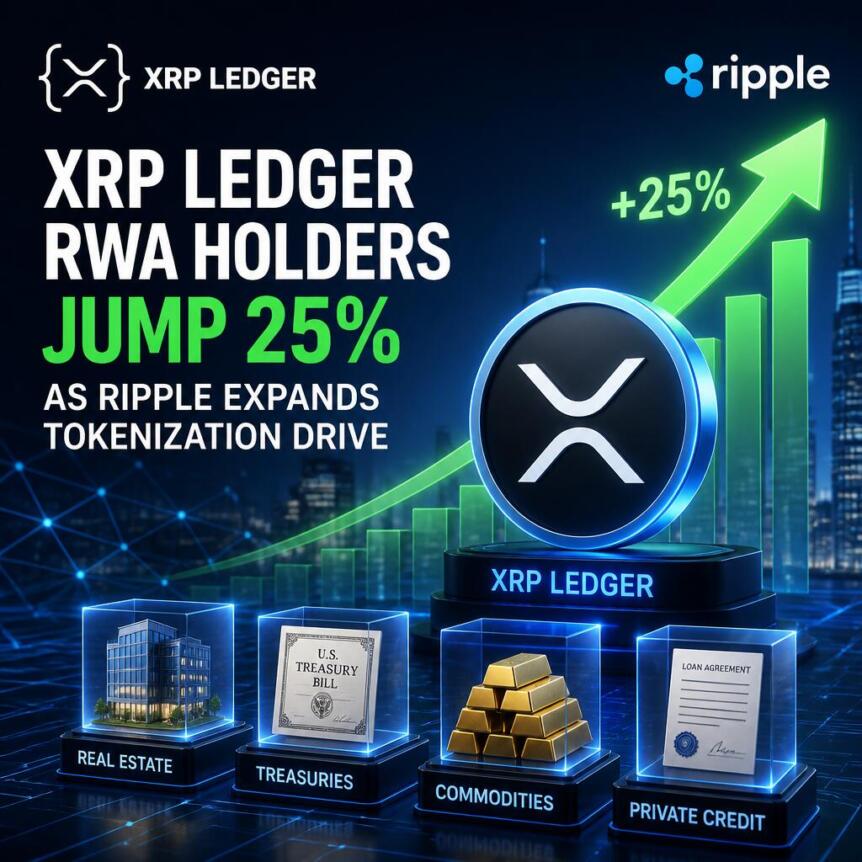
The XRP Ledger recorded a sharp rise in real-world asset holders as Ripple expanded its tokenization strategy. RWA holder numbers increased 25.16% during the past month, reflecting stronger activity across the network. However, the blockchain’s stablecoin market remained under pressure despite modest growth in participating addresses.
XRP Ledger RWA Holders Rise 25%
The XRP Ledger’s RWA ecosystem gained more holders as tokenized finance attracted additional users and businesses. Data showed a 25.16% monthly increase in addresses holding tokenized real-world assets on XRPL. This growth strengthened the network’s position within the expanding blockchain-based asset market.
Real-world assets represent physical or traditional financial products recorded and managed through blockchain technology. These assets can include bonds, property, commodities, funds, and private credit products. Tokenization can simplify ownership transfers while improving settlement speed and access to financial markets.
XRPL supports tokenized assets through fast settlement, low transaction costs, and built-in exchange functions. These features allow companies to issue, move, and trade assets without relying on multiple external systems. Consequently, the network has become a practical option for institutions exploring blockchain-based financial products.
Ripple Expands XRPL Tokenization Infrastructure
Ripple recently invested in two major companies to expand infrastructure supporting institutional tokenization on the XRP Ledger. The investments form part of Ripple’s broader plan to bring more financial assets onto blockchain networks. They also support tools needed for custody, settlement, compliance, issuance, and secondary market activity.
Ripple has increased its focus on capital markets as institutions explore tokenized funds and other digital financial products. The company aims to position XRPL as a reliable network for enterprise payments and asset management. Therefore, Ripple continues to add partnerships and services that connect traditional finance with blockchain infrastructure.
More than 1,000 developers and businesses now build products and services across the XRP Ledger ecosystem. These participants support payments, token issuance, decentralized trading, custody, compliance, and institutional settlement services. Their activity broadens XRPL’s utility beyond XRP transfers and strengthens its role in digital finance.
XRPL has operated for more than a decade and uses a consensus system without traditional mining. The network processes transactions within seconds and charges relatively low fees for transfers. These features have supported Ripple’s efforts to promote the ledger for cross-border payments and tokenized assets.
XRPL Stablecoin Market Remains Below Peak
Despite the RWA holder increase, the XRP Ledger’s stablecoin market recorded another decline during the month. Stablecoin market capitalization fell 9.04% and reached approximately $901.4 million. The decrease showed that holder growth has not yet produced a wider recovery in stablecoin value.
However, the number of stablecoin holders increased 0.92% during the same 30-day period. More than 60,240 addresses held stablecoins on XRPL after the monthly increase. This change suggests that participation expanded slightly even as the total market value declined.
Stablecoins support payments, trading, settlement, and liquidity across tokenized financial markets. Ripple also uses RLUSD to strengthen its payment and institutional product ecosystem. The dollar-backed asset operates on both the XRP Ledger and Ethereum, which extends its reach.
A stronger stablecoin market could improve liquidity for tokenized assets issued through the XRP Ledger. Stablecoins allow users to settle trades without moving funds through traditional banking systems. Therefore, their adoption could support Ripple’s wider institutional finance strategy and encourage more activity across XRPL.
The latest figures show uneven growth across the XRP Ledger’s expanding tokenization market. RWA holders increased quickly, while stablecoin capitalization continued to fall during the same period. Ripple’s infrastructure push now provides the main foundation for further adoption across both sectors.
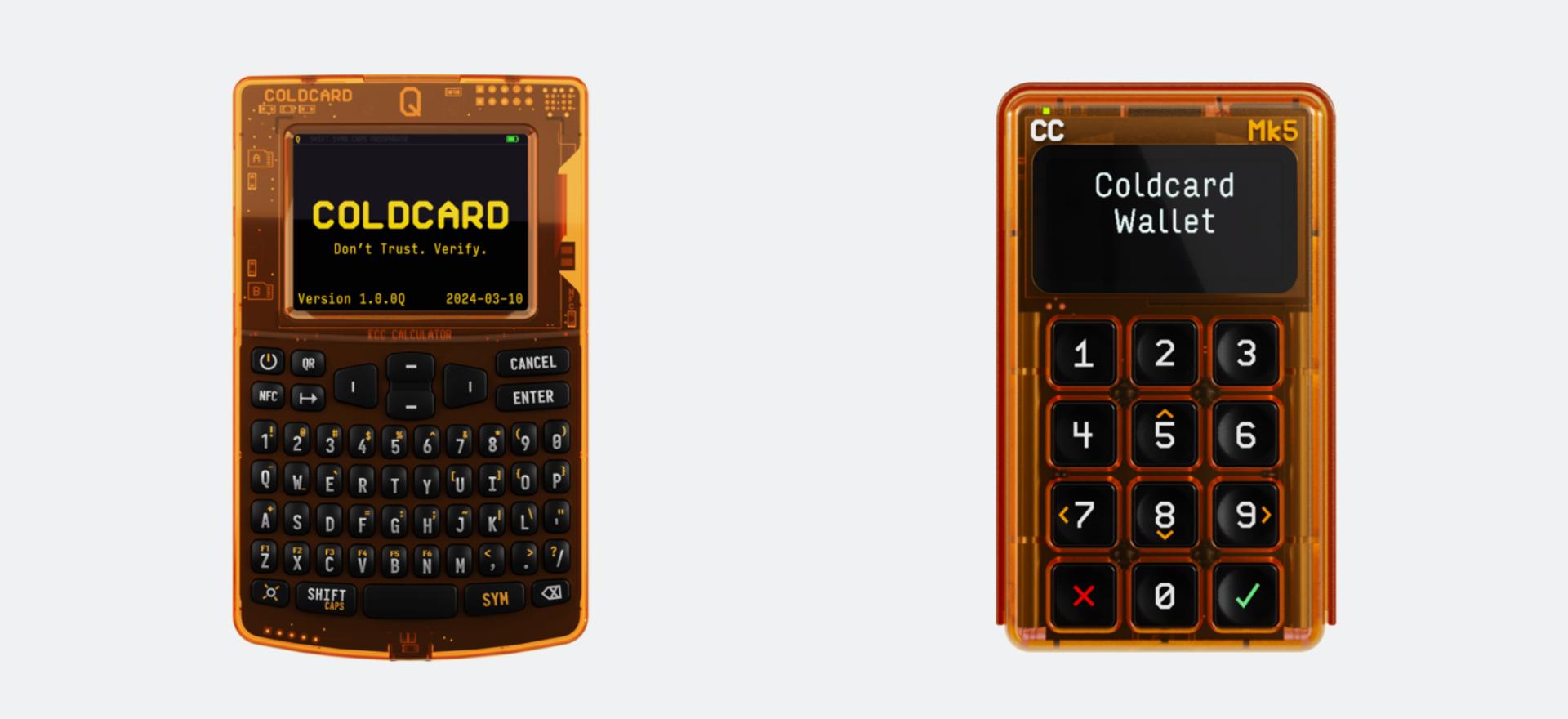
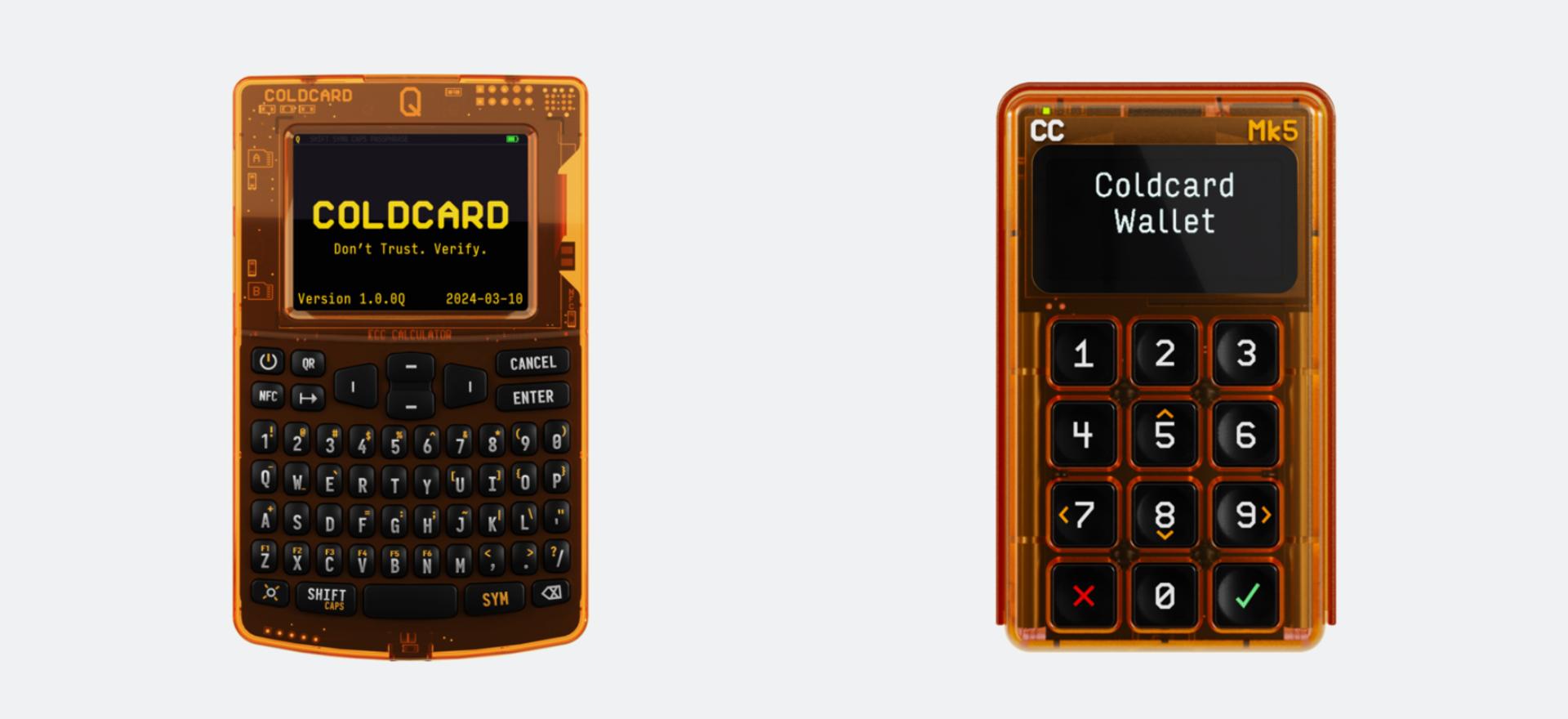
The risk, which remains until users take action, is confined to specific devices and firmware. Owners of the Mk3, Coldcard’s 2019 model, should move their funds now if the wallet was set up on firmware 4.0.1 or later. Mk4, Mk5 and Q owners on firmware below 5.6.0 or 1.5.0Q should update, create a new wallet and then move their coins across.
Coinkite has said the exception is anyone who used the device’s dice option, where a user physically rolls dice at least 50 times and types in the results, and the wallet builds its key from those numbers instead of generating its own. Those wallets never touched the broken code and are safe.
A seed is the master key controlling a wallet’s coins, so one produced with too little randomness, or entropy, can be guessed and regenerated by an attacker, who can then drain the wallet without ever touching the device.
Vincent Bouzon, cybersecurity expert at Ledger, which makes competing hardware wallets, said the incident was a failure of one implementation rather than a verdict on self-custody.
“Every wallet ultimately depends on a root secret generated from high-quality entropy,” Bouzon told CoinDesk in an email, adding that the generation of that entropy “must be anchored in secure hardware, with an architecture that cannot silently downgrade to an untrusted software-based source.”


Ethereum researchers have proposed a new issuance model that would gradually burn validator rewards and reduce them to zero once about half of ETH’s supply is staked.
Summary
- EIP-8361 would burn a growing share of validator rewards as Ethereum’s staking ratio increases.
- Rewards would reach zero near 60.25 million staked ETH, equal to roughly half the current supply.
- The draft proposes an 18-month transition period to limit abrupt changes in validator yields.
- EIP-8361 remains under community review and has not been approved for an Ethereum upgrade.
EIP-8361 would taper Ethereum staking rewards
Ethereum researchers Jérôme de Tychey, Justin Drake, dapplion, pintail, pa7x1, and Ladislaus von Daniels submitted EIP-8361 as a draft Core Ethereum Improvement Proposal.
Called Tapered Issuance Burn, the mechanism would destroy part of the rewards validators receive for attestations, proposing blocks, and participating in sync committees. The share burned would rise alongside the proportion of ETH committed to staking.
The burn rate would eventually reach 100% when about 60.25 million ETH is staked. Based on Ethereum’s current circulating supply of about 120.7 million ETH, that level represents close to 50% of all ETH. CoinMarketCap data placed the circulating supply at roughly 120.68 million ETH at the time of writing.
As a result, validators would no longer receive consensus-layer issuance rewards after staking reaches the proposed threshold. They could still earn other forms of revenue, including transaction priority fees and maximal extractable value.
Why Ethereum researchers want to change issuance
EIP-8361 seeks to remove what its authors describe as a permanent incentive for more ETH to enter staking, even when additional deposits may provide limited security benefits.
“The current issuance curve continues offering a yield of around 1.5% even if nearly all ETH is staked,” the authors wrote.
They added that “the remaining yield floor provides no point at which issuance stops encouraging additional staking.”
Under the draft model, annual ETH issuance would peak at approximately 0.5% of supply when the staking ratio reaches about 20%. Issuance would then decline as more ETH enters staking before reaching zero near the 50% threshold.
Ethereum’s staking ratio has already exceeded one-third of its supply. The proposal estimates that more than 70 million ETH could be staked by January 2028 if demand continues under the existing reward structure.
Transition would protect validator yields initially
The researchers proposed an 18-month transition rather than applying the permanent reward curve at once.
Ethereum’s base reward factor would initially rise from 64 to 128 before gradually returning to its current level. The temporary adjustment is intended to keep validator yields near their existing range during the early phase before the tapered burn becomes more restrictive.
For US validators and staking service providers, the proposal could change the economics of operating Ethereum infrastructure if developers eventually include it in a network upgrade. Lower issuance rewards could affect expected returns, although the draft would not alter US tax or securities rules governing staking.
The plan also follows a separate Ethereum research proposal reported by crypto.news in June. That mechanism, known as validator redirected revenue, would allow validators to direct between 0% and 10% of their staking income toward ecosystem funding.
Under that proposal, contributions would become mandatory if 51% of validators supported a redirect rate above zero. Its authors argued that shared funding could help pay for research, security, and public tools used across Ethereum.
EIP-8361 still faces community review
EIP-8361 is a draft and does not automatically change Ethereum’s monetary policy. It must move through technical review, community debate, and developer coordination before it can be considered for a future network upgrade.
The proposal has already drawn concerns that less predictable yields could affect solo validators, institutional staking operations, and decentralized finance strategies built around staked ETH.
ETH showed no clear reaction tied to the draft. The token traded near $1,878, up about 0.5% over 24 hours, with approximately $7.86 billion in trading volume at the time of writing, according to CoinMarketCap.


BNY has tapped crypto financial services firm Galaxy (GLXY) to add staking capabilities to its digital asset custody platform, the companies announced Tuesday.
The new service will allow institutional clients to stake digital assets held in custody through BNY’s platform, pending regulatory approval. Galaxy will provide the staking infrastructure while also serving as a design partner as BNY expands its blockchain-based services.
Staking allows holders of certain crypto assets to help secure blockchain networks by locking up their tokens in exchange for rewards. For large investors, offering staking through the same platform that holds their assets removes the need to transfer tokens to a separate provider.
BNY, formerly known as Bank of New York Mellon, has steadily expanded its digital asset business since launching crypto custody services in 2022. The bank oversees tens of trillions of dollars in assets under custody and administration, making its moves into blockchain infrastructure closely watched across the financial industry.
The financial services firm recently said it was shifting its core transfer agency record-keeping onto blockchain technology, creating a single onchain ownership ledger that it said will reduce reliance on multiple intermediaries. It also plans to introduce around-the-clock settlement for traditional and tokenized U.S. Treasuries in 2027 and begin testing tokenized Treasuries on a private blockchain before the end of this year.
Dogecoin price traded near $0.070 as SPCX stock extended its rebound ahead of SpaceX’s first earnings report as a public company.
Summary
- Dogecoin price traded at $0.07035, with daily momentum remaining weak but stable.
- SPCX climbed 4.6% to $119.71, recovering from its early August low.
- DOGE must clear $0.07273–$0.07398 to strengthen its short-term recovery.
- SpaceX earnings and an approaching insider-share unlock could drive further volatility.
Dogecoin price holds near $0.070
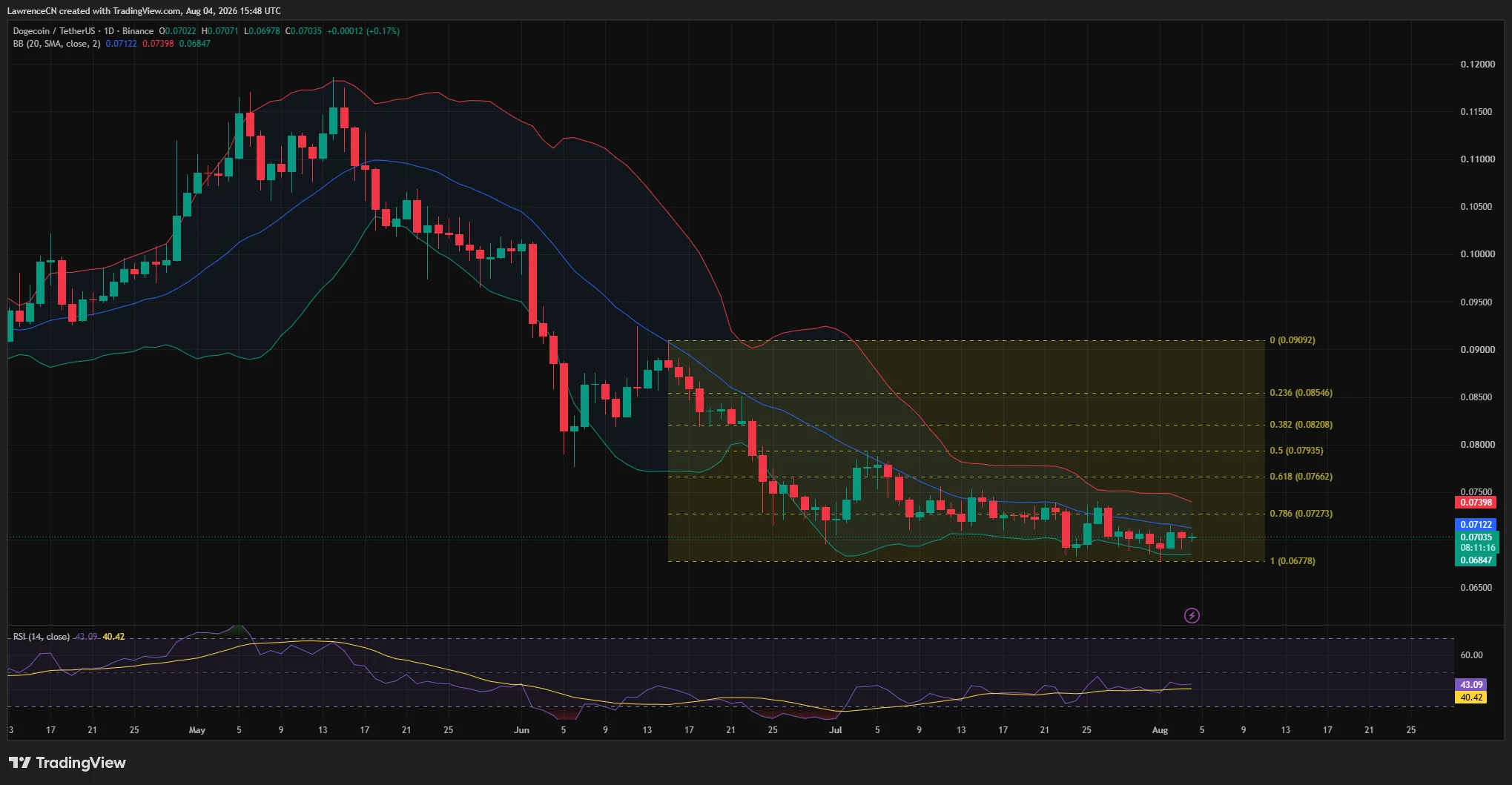
According to data from crypto.news, Dogecoin (DOGE) price was trading at $0.07035 at the time of writing, remaining near the lower end of its three-month range. The meme coin has stabilized after falling from a May peak above $0.117, but the daily chart has yet to confirm a sustained bullish reversal.
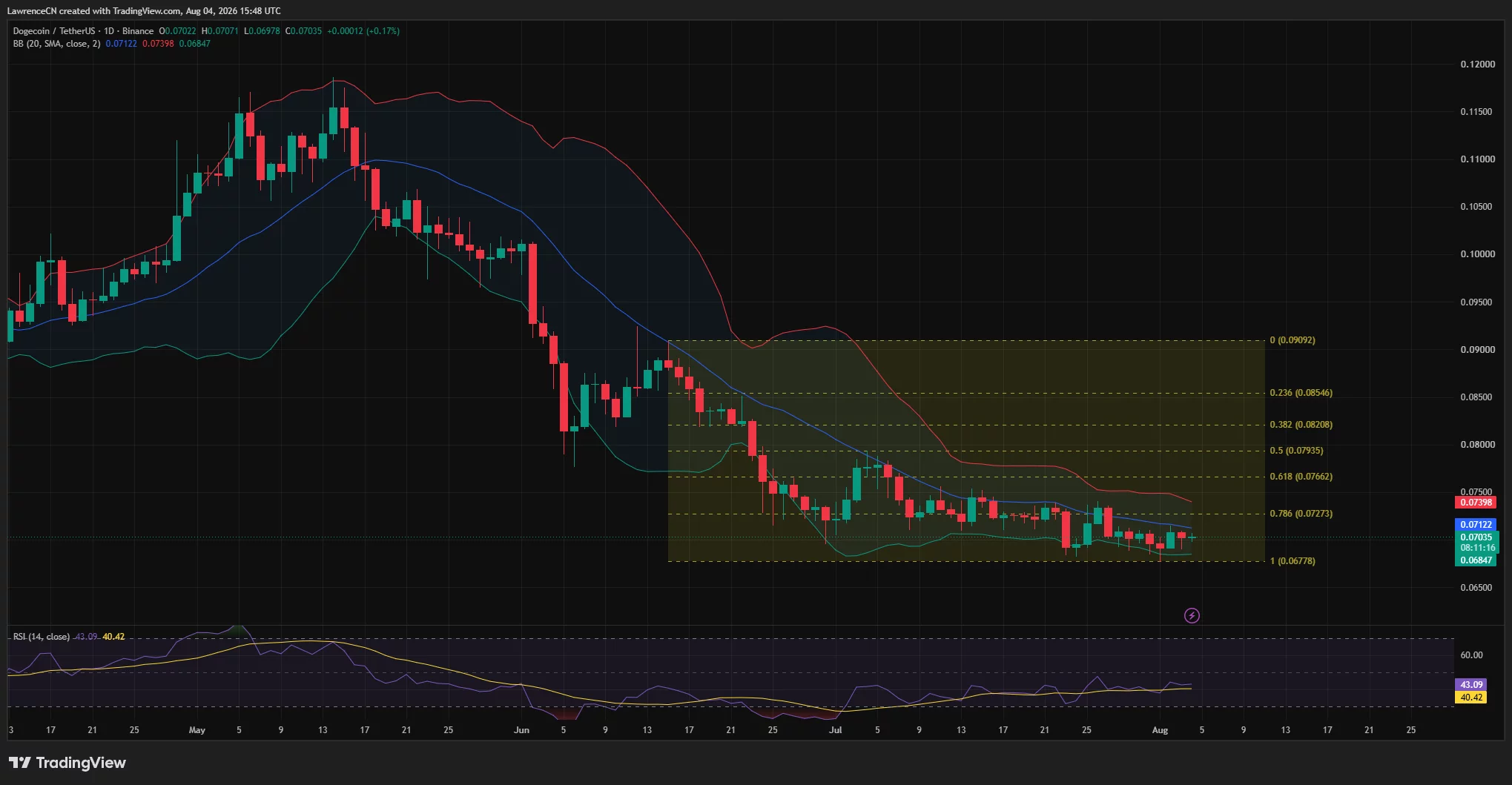
DOGE is trading below the Bollinger Bands’ 20-day midpoint at $0.07122. The level represents the first barrier buyers must reclaim before challenging the upper band at $0.07398.
The daily Relative Strength Index stood at 43.09, slightly above its moving average of 40.42. The reading shows that momentum has improved but remains below the neutral 50 mark, leaving sellers with a modest advantage.
Dogecoin’s immediate price action is unfolding alongside a broader crypto market recovery. Bitcoin traded around $63,400, while Ethereum hovered near $1,840. However, DOGE’s gains remained limited as traders waited for a stronger catalyst.
SpaceX earnings put Musk-linked assets in focus
SpaceX is scheduled to release its second-quarter results after the U.S. market closes on Tuesday. Management will hold an audio webcast at 4:30 p.m. ET, according to the company’s investor announcement.
The report will be SpaceX’s first since its June initial public offering. Investors are expected to focus on Starlink subscriber growth, Starship spending and the financial impact of the company’s artificial intelligence operations.
Analysts expect SpaceX to report about $6.8 billion in quarterly revenue and a loss of roughly $0.23 per share, according to Yahoo Finance. Market estimates vary, with some forecasts pointing to a quarterly net loss of between $1.55 billion and $1.9 billion.
Options pricing implied that SpaceX shares could move about 15% in either direction after the report, potentially changing the company’s valuation by approximately $225 billion, Reuters reported.
Dogecoin has no direct financial link to SpaceX earnings. However, both assets remain connected through market sentiment surrounding Elon Musk. This association can attract speculative DOGE trading when Musk-owned companies dominate U.S. market attention, though it does not guarantee a corresponding price move.
Dogecoin price must break $0.07398
The daily chart places DOGE’s first significant resistance at $0.07273, corresponding to the 78.6% Fibonacci retracement of its decline from $0.09092 to $0.06778.
A daily close above that level would expose the upper Bollinger Band at $0.07398. Buyers would then need to break $0.07662, the 61.8% Fibonacci level, to establish a more convincing recovery.
Continued momentum above $0.07662 could open a move toward $0.07935. The next resistance levels would stand at $0.08208 and $0.08546, although DOGE would require stronger volume and an RSI move above 50 to support that scenario.
On the downside, the lower Bollinger Band sits at $0.06847. A loss of that level could return DOGE to the $0.06778 range low.
Breaking below $0.06778 would invalidate the immediate rebound and extend the bearish structure that has controlled the daily chart since May.
SPCX stock tests $119 Fibonacci resistance
SPCX stock traded at $119.71 on the 4-hour chart after gaining 4.6%. Shares rebounded from a low near $105 and moved back above the 78.6% Fibonacci retracement level at $119.34.
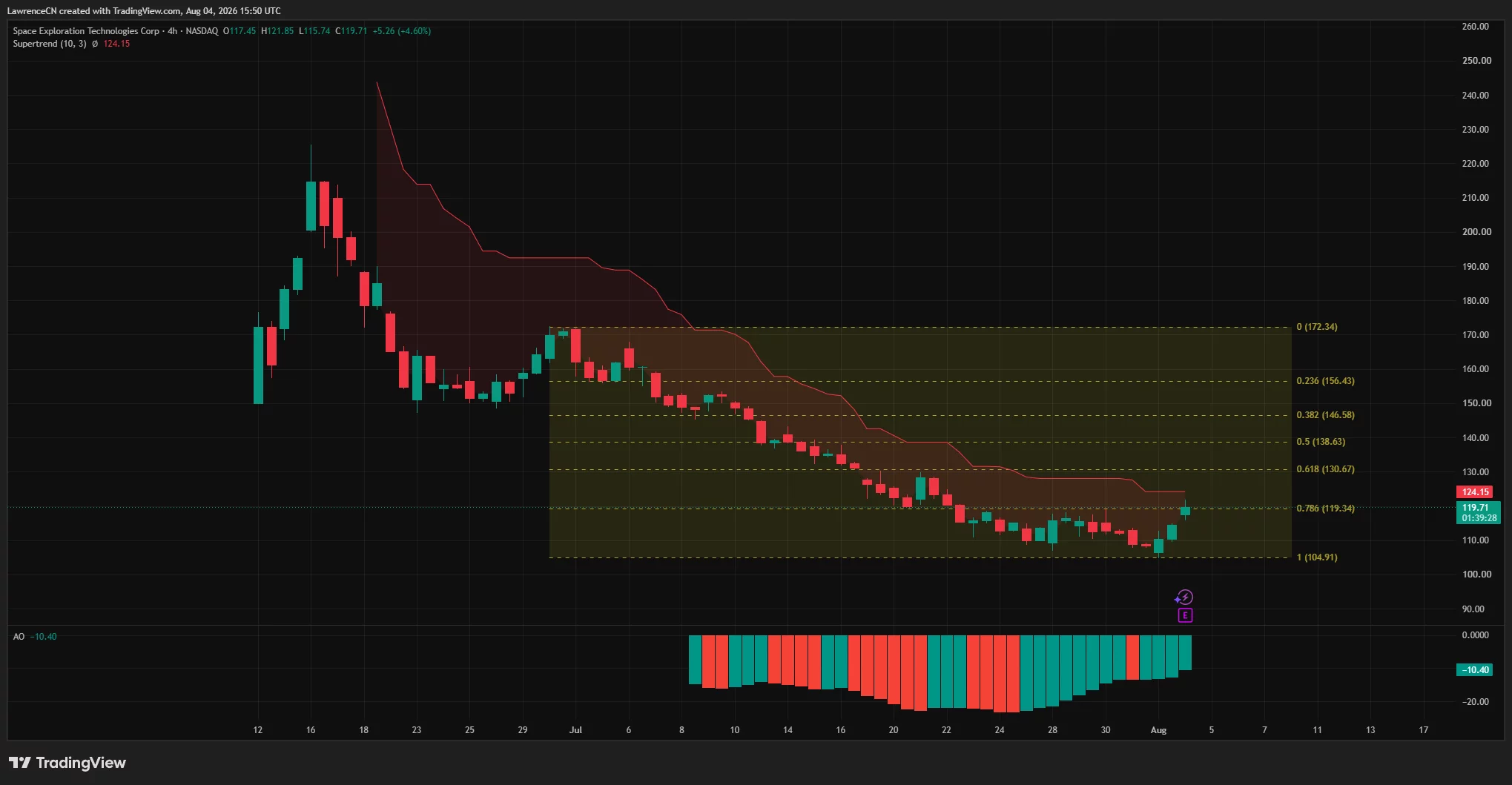
Holding above $119.34 would allow buyers to challenge the 4-hour Supertrend resistance at $124.15. A confirmed break above the Supertrend could shift the short-term signal and place $130.67 in focus.
Further resistance stands at $138.63 and $146.58. However, the broader chart remains bearish after SPCX declined from $172.34 in early July and from its June high above $220.
The Awesome Oscillator remained negative at minus 10.40, showing that bearish momentum has not fully disappeared. Its rising bars nevertheless indicate that downward pressure is easing as the stock rebounds.
Failure to hold $119.34 could send SPCX back toward $114 and $110. The primary technical floor remains near $104.91.
Earnings and share unlock could increase volatility
SpaceX’s earnings will not be the only event affecting the stock. An IPO lockup is due to expire on Aug. 6, potentially allowing insiders and early investors to sell up to 911.5 million shares, according to Business Insider.
That incoming supply could limit an earnings-driven rally or deepen a decline if SpaceX misses market expectations. Strong Starlink growth, improved margins or clearer spending guidance could instead help SPCX hold its recovery.
For Dogecoin, the technical picture remains neutral-to-bearish while the price stays below $0.07273. SpaceX earnings may lift trading interest around Musk-linked assets, but DOGE still needs a confirmed breakout above $0.07398 to turn that attention into a stronger price recovery.
Disclosure: This article does not represent investment advice. The content and materials featured on this page are for educational purposes only.


Recent earnings calls from Open USD’s highest-profile backers, however, paint a more nuanced picture. Executives at Coinbase, Visa and Mastercard all said they intend to support multiple stablecoins instead of betting on a single winner, describing Open USD as another network to connect to rather than a replacement for USDC.
Multi-coin strategy
During its second-quarter earnings call last week, Coinbase reassured investors about its close relationship with Circle. Chief Financial Officer Alesia Haas said the exchange has already met the conditions to renew its commercial agreement with Circle and will continue growing the USDC ecosystem.
CEO Brian Armstrong also said Coinbase remains a “multi-stablecoin platform” and wants to support whichever stablecoins customers choose to use. The exchange already supports USDC alongside Tether’s USDT and PayPal’s PYUSD, he said, with Open USD creating “additional business opportunities and revenue opportunities.”
Ryan McInerney, CEO of Visa, struck a similar tone during his firm’s earnings call, describing the company as “multi-coin, multi-chain” and saying that Visa’s role is to help clients connect to whichever stablecoins gain adoption.
“Our role is not to pick winners,” he said.
Notably, Visa offered the first live example of pushing Open USD to customers. The firm last month launched its Visa Stablecoin Platform, giving banks, fintechs and payment providers tools to access, store, redeem and move stablecoins, with OUSD serving as the initial supported token.
Bybit has secured an Electronic Money Institution license in Austria, allowing its local payments subsidiary to offer regulated electronic money and payment services across the European Union.
Summary
- Austria’s FMA granted Bybit Payments GmbH an EMI license on Aug. 4.
- The license covers electronic money issuance and several regulated payment services.
- Bybit EU GmbH will continue handling crypto services under its separate MiCA authorization.
- Bybit plans to add payment cards, open banking and merchant services, subject to approval.
Bybit gains approval for regulated EU payments
Austria’s Financial Market Authority granted the license to Bybit Payments GmbH on Aug. 4 under the country’s E-Money Act 2010.
The authorization allows the Vienna-based company to issue electronic money and provide payment services under Austria’s Payment Services Act 2018. Those permissions cover incoming and outgoing payments, payment transactions, and issuing and acquiring payment instruments, according to the FMA’s licensing notice.
Bybit said the license gives its payments subsidiary a regulated foundation for expanding financial services across Europe through Bybit.eu.
“Europe is setting the global benchmark for how digital assets and financial services can evolve together under clear regulation,” said Georg Harer, managing director of Bybit EU GmbH and Bybit Payments GmbH.
Harer said the EMI license and Bybit’s existing Markets in Crypto-Assets authorization create complementary regulatory foundations for crypto assets, payments and other financial services.
Bybit keeps payments and crypto services separate
Bybit Payments GmbH will operate independently from Bybit EU GmbH, the entity responsible for the exchange’s crypto-asset services under MiCA.
Customers will be able to access both service categories through Bybit.eu, but each subsidiary will remain responsible only for activities covered by its respective authorization. The structure allows Bybit to offer a unified interface without combining its payment and crypto operations under one regulatory permission.
“This licence enables Bybit Payments GmbH to build regulated payment capabilities that complement the crypto-asset services offered by Bybit EU GmbH,” said Bernhard Krick, managing director of Bybit Payments GmbH.
Krick added that preserving a clear distinction between the two entities is essential because each company must remain within its approved regulatory scope.
The arrangement reflects the division between electronic money regulation and crypto-asset supervision in Europe. An EMI license covers fiat-linked payment activities, while a MiCA authorization governs services such as crypto trading, custody and transfers.
License opens path to cards and open banking
Bybit said its payments unit could eventually introduce person-to-person transfers, electronic money products and Strong Customer Authentication features. The company is also considering open banking tools, merchant payment services and payment cards.
Those offerings remain subject to further regulatory requirements and product approvals. Bybit did not provide a launch schedule or specify which European markets would receive the services first.
The authorization gives the exchange another regulated entry point as it expands through locally supervised subsidiaries. In July, Bybit launched a domestic platform in Indonesia after acquiring a majority stake in PT Enkripsi Teknologi Handal, previously known as NOBI.
The acquisition established Bybit Indonesia as a local entity supervised by Indonesia’s Financial Services Authority, known as the OJK. Its rollout began with plans to support more than 500 trading pairs while using Bybit’s global liquidity and locally required market controls.
EU framework contrasts with US crypto rules
The Austrian approval does not extend Bybit.eu services to customers in the United States. European financial licenses generally apply within the European Economic Area and do not replace federal or state approvals required for serving US customers.
However, the expansion shows how MiCA and existing European payment laws can provide separate but coordinated regulatory routes for crypto trading and fiat payment services.
The US has no direct equivalent to MiCA’s single regional framework. Crypto companies offering payment services may instead face a combination of federal obligations and state-by-state money transmitter licensing requirements.
Bybit’s next step will be converting its Austrian authorization into consumer-facing payment products. Its ability to launch cards, merchant tools and open banking services will depend on regulatory clearances, technical integration and the markets selected for the initial rollout.


There are 15 separate attackers draining BTC from Coldcard customers’ hardware wallets, Galaxy Research concluded on Tuesday morning — and more thieves seem to be arriving by the day.
As the exploitation of last week’s newly-discovered firmware flaw continues, estimated victim losses have topped $130 million from 7,300 wallets and rising.
Given the number of affected wallets, there are probably thousands of victims, and many long-term holders might not even be aware of their losses. Galaxy Research has heard from 73 victims as of Monday.
The fifteenth attacker surfaced overnight after an owner reported losing less than a single BTC. That report led Galaxy to identify an uncatalogued attacker who had already pulled 12 BTC out of 126 wallet addresses.
Galaxy filed the attacker’s on-chain behavior under footprint “O,” the fifteenth letter of the alphabet.
Researchers are labeling each footprint as victims come forward, and the letters are still going up.
Because the vulnerability is public knowledge, any hacker with sufficient knowledge and computational power can join the crime wave.
Stealing money from Coldcard users simply requires scanning Bitcoin’s blockchain for vulnerable wallets and brute-force guessing of private keys that have low entropy due to Coldcard’s faulty firmware.
Read more: What to do if you’re a Coldcard victim
The Coldcard attack keeps getting worse
Coldcard firmware routed wallet seed generation into MicroPython’s software fallback, a pseudo-random number generator rather than true random generator.
Coinkite, the device manufacturer, estimates that the seed phrases its devices generated contained only “about 40 bits” on its Coldcard Mk2 and Mk3 models — far below its 128-bit target.
Later models like Coldcarrd Mk4 land at “about 72 bits,” the company concedes — still far lower entropy than is required to protect customers from brute-force computation.
Unfortunately, the public keys associated with these weak private keys sit on a public ledger accessible on a worldwide, permissionless basis. The opening wave of thefts occurred last week, a few hours before Coinkite issued any advisory.
Coinkite co-founder Rodolfo Novak wrote on July 31, “We take full accountability for the firmware bug and we offer our sincere apologies to those affected.” Coinkite has since shipped hotfixes for every affected model and release track.
It warned again today, “The threat is still active.”
Affected wallet owners must move their BTC to safekeeping. “Updating the firmware does not repair a seed that was generated by affected firmware,” the company notes in its post-mortem.
Interestingly, the hackers are keeping most of their BTC without immediate attempts to spend or liquidate their ill-gotten proceeds.
Galaxy reports that “90% of stolen coins haven’t moved. 100% of coins in Waves 1, 2, and 3 have not moved.”
Law enforcement departments around the world are investigating the criminal activity. If you’re a Coldcard victim, consider reporting your loss to local and federal officials.
Got a tip? Send us an email securely via Protos Leaks. For more informed news and investigations, follow us on X, Bluesky, and Google News, or subscribe to our YouTube channel.
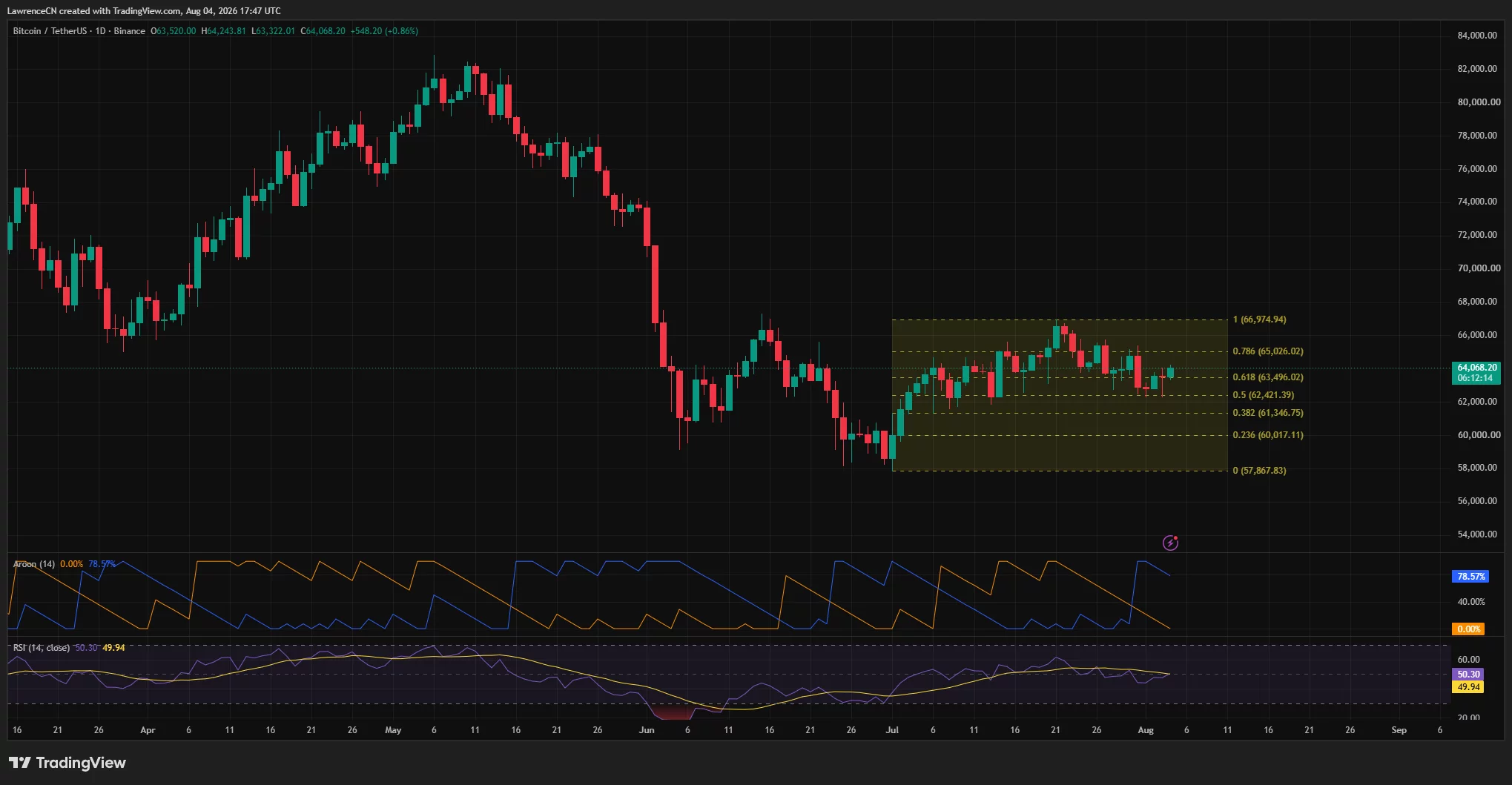
Bitcoin price rebounded above $64,000 as Qatar reported progress in efforts to restart US-Iran negotiations, while technical charts pointed to a possible breakout from a descending channel.
Summary
- Bitcoin price recovered from $62,400 to above $64,000 as geopolitical concerns eased.
- A 4-hour close above $64,300 could open a move toward $65,500 and $66,500.
- Sell orders between $64,000 and $65,000 remain an immediate obstacle for buyers.
- Liquidation liquidity is concentrated near $62,000, raising the risk of another downside sweep.
Bitcoin price rebounds above $64,000
According to data from crypto.news, Bitcoin (BTC) price traded near $64,100 late Tuesday, recovering from an intraday low around $63,300 and extending its rebound from the $62,400-$62,500 support area.
The daily chart showed BTC closing above the 61.8% Fibonacci retracement level at $63,496. Holding this threshold would keep the recovery structure intact and allow buyers to target the 78.6% retracement at $65,026.
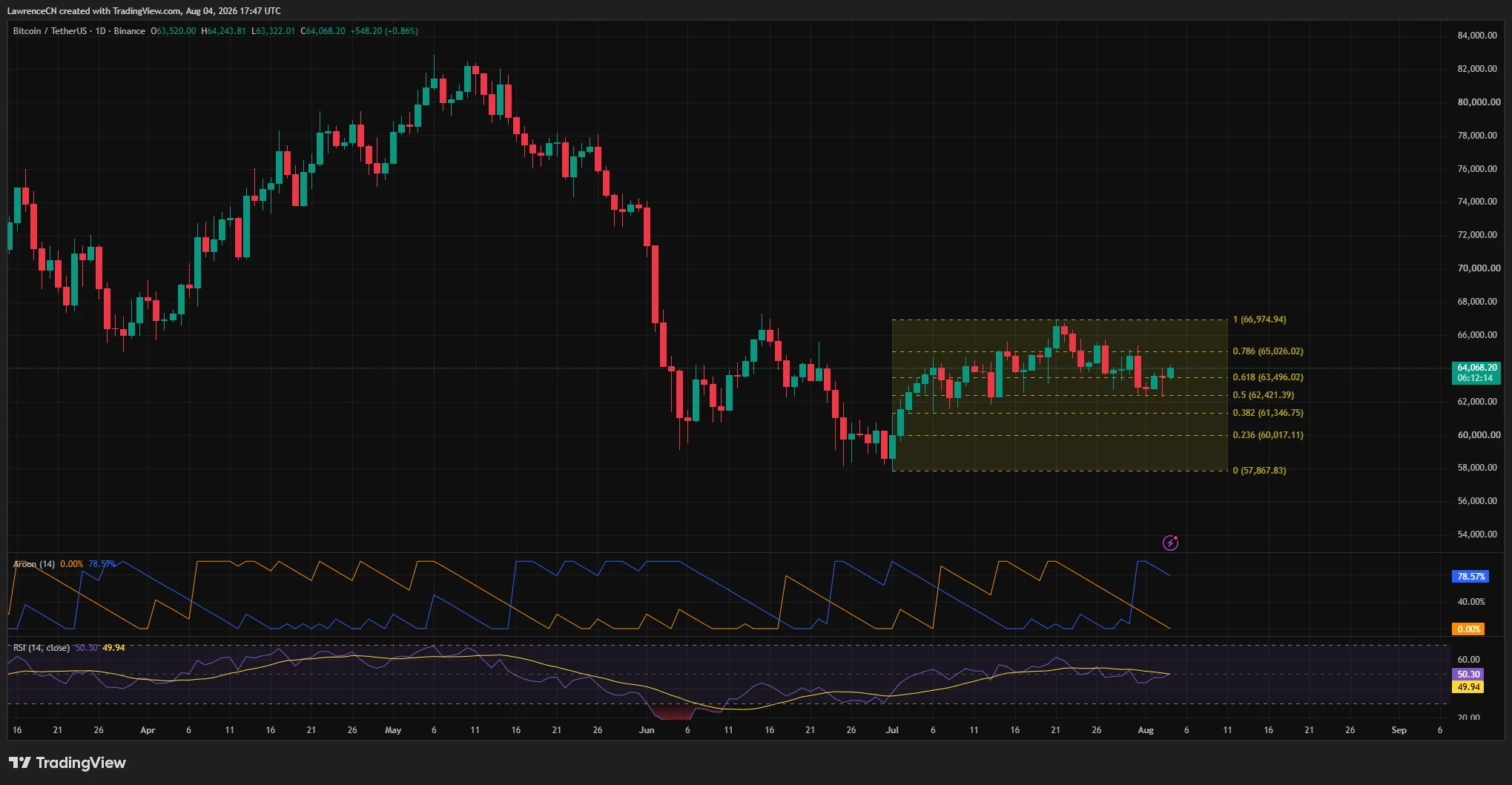
Momentum has also improved. The daily Relative Strength Index stood at 50.30, moving slightly above its signal line at 49.94. The reading places Bitcoin in neutral territory and suggests neither buyers nor sellers have full control.
The Aroon indicator offered a more positive signal. Aroon Up stood at 78.57%, while Aroon Down fell to zero, showing that recent highs are becoming more relevant than recent lows.
However, Bitcoin remains inside a broader consolidation range between approximately $57,868 and $66,975. A daily close above $65,026 would strengthen the short-term recovery, but the July high near $66,975 remains the larger breakout level.
US-Iran talks support demand for risk assets
Bitcoin’s rebound followed Qatar’s confirmation that regional mediators were working to bring the United States and Iran back to negotiations.
Qatari Foreign Ministry spokesperson Majed Al-Ansari said Doha wanted conditions in the Strait of Hormuz to return to normal. Qatar, Pakistan, and Oman are exchanging proposals between Washington and Tehran, although no timetable has been set for an agreement.
“What matters to us now is the resumption of negotiations, and to achieve this, a ceasefire and the reopening of the Strait of Hormuz must be guaranteed,” Al-Ansari said.
The diplomatic push has eased some concerns surrounding global energy supplies. The Strait of Hormuz remains one of the world’s most important oil transit routes, meaning any reopening could reduce pressure on crude prices and improve demand for risk assets.
Still, the negotiations remain uncertain. Iran has denied holding direct talks with Washington, describing its discussions as negotiations with Oman. Shipping activity through the strait also remains restricted despite reported diplomatic progress.
For US investors, the outcome could affect Bitcoin through oil prices, inflation expectations, and broader risk sentiment. A ceasefire and restored shipping traffic could support crypto and equities, while another breakdown in talks may renew demand for cash and other defensive assets.
Bitcoin tests descending channel resistance
The 4-hour chart showed Bitcoin testing the upper boundary of a descending parallel channel that has guided price action since the July 21 peak near $66,700.
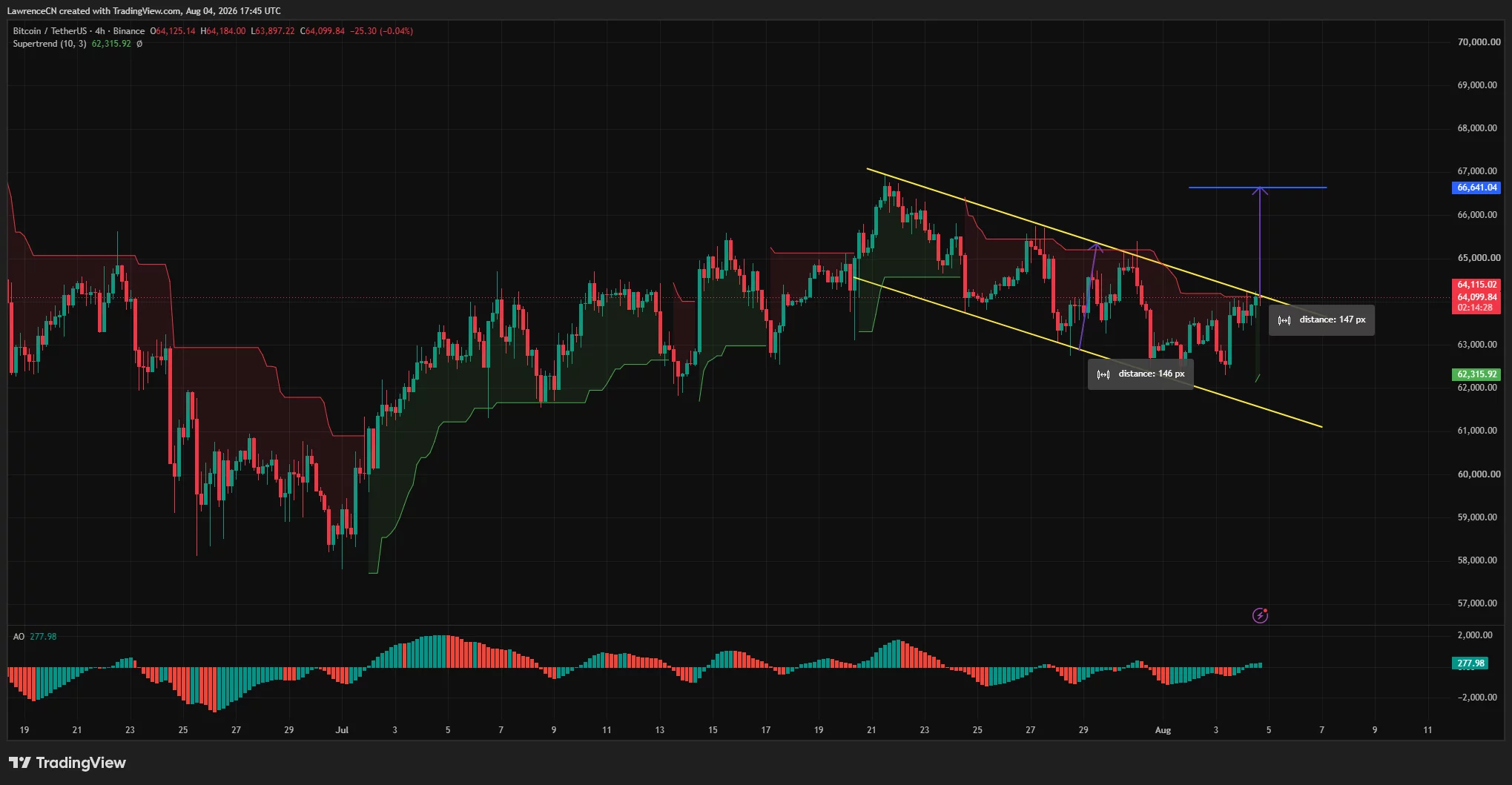
BTC briefly moved above the channel boundary before returning toward $64,100, showing that buyers have yet to confirm a breakout. The Supertrend indicator also placed immediate resistance near $64,115, almost level with the current price.
Analyst Ali Martinez identified $64,300 as the key confirmation level. According to Martinez, a 4-hour close above that price could validate the channel breakout and open the way toward $65,500 or $66,500.
The Awesome Oscillator climbed to 277.98 and printed rising green bars, indicating that bullish momentum was building on the 4-hour timeframe. However, momentum alone may not be enough if Bitcoin fails to absorb overhead supply.
Order-book data shared by analyst Ted Pillows showed large sell orders appearing between $64,000 and $65,000. This supply helps explain why BTC has repeatedly struggled to extend gains above the current range.
A confirmed break above $65,000 would place the next targets at $65,500 and $66,641. Failure to clear the channel could send the price back toward $63,500 and the 4-hour Supertrend support near $62,316.
Liquidation map keeps $62,000 in focus
The one-week Bitcoin liquidation heatmap showed a large concentration of leveraged positions near $62,000. It was the brightest liquidity band below the current price and may attract price if the recovery loses momentum.
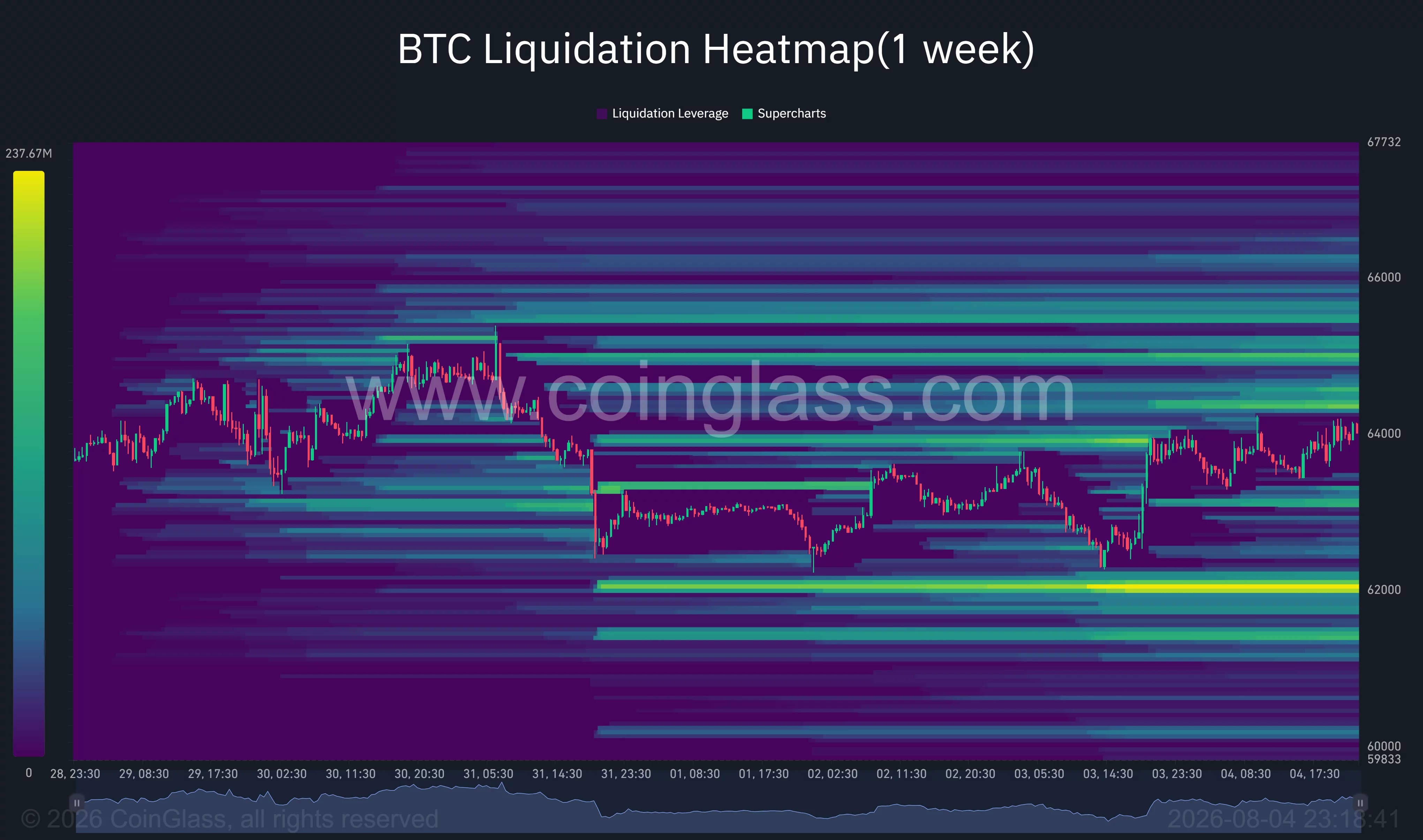
Smaller liquidity clusters appeared around $63,000, while several bands were visible above Bitcoin between $64,500 and $66,000. These levels could fuel a short squeeze if BTC closes above $64,300 and forces bearish positions to exit.
The bullish scenario depends on Bitcoin holding $63,496 and breaking the $64,300-$65,000 supply zone. That would support targets at $65,500, $66,500, and eventually $66,975.
The bearish scenario begins with a loss of $63,500. Such a move could expose $62,421, followed by the liquidation cluster near $62,000. A deeper decline would bring the $61,347 Fibonacci level back into focus.
US-Iran diplomacy may determine which liquidity zone Bitcoin reaches first. Continued progress toward a ceasefire could support a breakout, but stalled talks or renewed disruption in the Strait of Hormuz would leave the recovery vulnerable.
Disclosure: This article does not represent investment advice. The content and materials featured on this page are for educational purposes only.
Crypto World
Philadelphia Fed President Paulson content with current rates, but keeping an open mind
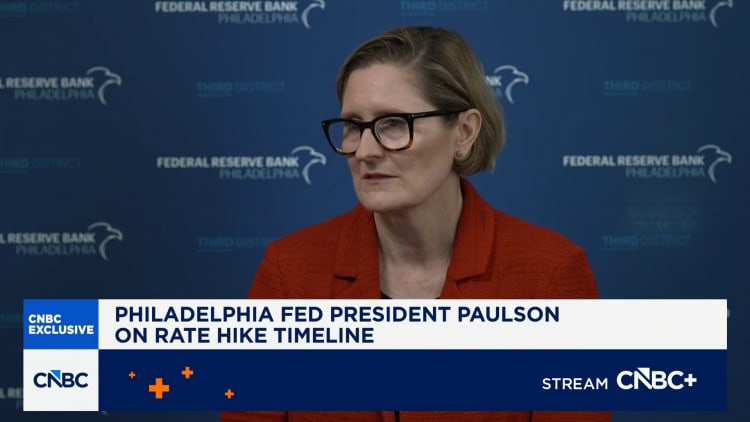

Philadelphia Federal Reserve President Anna Paulson said Tuesday that she thinks the current level of interest rates is sufficient to keep inflation moving toward the central bank’s goal.
In her first CNBC interview, the policymaker insisted she has an open mind about where monetary policy should go, but was confident in her vote last week to keep the Fed’s benchmark borrowing rate anchored at its current target level of 3.5%-3.75%.
“I think we need … policy that’s mildly restrictive, and I think policy has been mildly restrictive to get underlying inflation back down to 2% in an acceptable time period,” Paulson told CNBC’s Steve Liesman during a “Squawk Box” interview. “I need to see progress from here.”
The level of restriction that the current policy level is having on the economy is a key debate point for Fed officials, who have held rates steady all year as inflation has stayed well above the 2% target.
At last week’s meeting, the Federal Open Market Committee, of which Paulson is a voting member, opted by a 9-3 tally to keep the hold on rates. Dissenting voters questioned whether the current rate level is sufficiently restrictive to bring inflation lower.
However, Paulson said voting with the majority wasn’t a tough decision.
“For me, it was not a close call,” she said, adding that she thinks underlying inflation outside of energy supply shocks, tariffs and other factors is around 2.4%-2.8%. The core inflation level that the Fed uses as its primary forecasting tool was 3.3% in June, the Commerce Department reported Thursday.
If that level doesn’t move lower, then Paulson said she’ll be open to adjusting rates.
“Maybe there was a little bit of mild progress over the last several months, but I want to see more progress on that, and that’s what I’m really focused on,” she said. “If we don’t see that progress, then we have to be open to recalibrating monetary policy. You know, we need to get to 2%.”
Paulson added she is keeping an “open mind” about some of the changes Chairman Kevin Warsh has discussed, including the potential to reduce the frequency of FOMC meetings from the current level of eight per year.
“It’s healthy to have a discussion about that,” she said.

More Fleadh Cheoil Belfast road closures announced due to ‘high footfall’ in city centre

Funding supports SCO2’s Nextract Technology rollout

XRP Ledger RWA Holders Jump 25% As Ripple Expands Tokenization Drive

Renter of Home in Anne Heche Crash Denies Settlement With Son

No Jackpot Winner as $257 Million Prize Rolls Over to $269 Million Monday Draw

Weekend Open Thread: Staud – Corporette.com

Bitcoin & Ethereum Price Analysis Today | Market Trend & Next Move | BTC & ETH Price Prediction 2026

The Biggest Professional Victim in Financial Audit History | Caleb Hammer Clips

Crypto Investors – Prepare For A Week Of Complete Chaos.
-

 Business6 days ago
Why Trees Belong on the Risk Register
-

 Fashion4 days ago
Weekend Open Thread: Wit & Wisdom
-

 Politics4 days ago
Meta enters AI-training agreement with far-right ‘propaganda rag’ Newsmax
-

 Crypto World3 days ago
MicroStrategy Post-Earnings CLARITY Act Push Could Add New Catalyst for Its Stock
-

 Politics6 days ago
Reform UK betrays West Mids residents by running from party pledges
-

 Business7 days ago
Major shareholder moves on Canyon
-

 Crypto World4 days ago
XRP Ledger v3.3.0 brings five institutional features
-

 News Videos5 days ago
Bitcoin Enters the 3rd Stage of the Bear Market
-

 Politics2 days ago
Zack Polanski: an incitement to murder Nigel Farage?
-

 Crypto World7 days ago
Kraken Enables Retail Access to Jersey Mike’s IPO via Tokenized Shares
-

 Politics5 days ago
Luke Littler’s dominance sparks GOAT debate
-

 Sports5 days ago
Seema Kaliramna Wins Discus Throw Bronze, Takes India’s CWG Medals Tally To 17
-

 News Videos7 days ago
Claude: Build Financial Dashboards in Minutes (2026)
-

 Crypto World4 days ago
New York sues Kalshi over prediction market gambling
-

 Crypto World2 days ago
Crypto PAC spending tops $2M in Michigan House race
-

 Business7 days ago
Johnson & Johnson agrees to $5.5B settlement over talc cancer claims
-

 Business4 days ago
Trump Announces Hamas Disarmament Agreement as Iran Strikes Kuwait Air Base and US Attacks Pause Overnight
-

 Tech6 days ago
Gemini can now summarize the messiest comment threads in Google Docs
-

 Tech3 days ago
ESET tracks rise in malicious AI skills and adaptable malware
-

 NewsBeat5 days ago
Four people die trying to cross Channel in small boats
You must be logged in to post a comment Login