
Security teams log 54% of successful attacks and alert on just 14%. The rest move through your environment unseen.
The Picus whitepaper shows how breach and attack simulation tests your SIEM and EDR rules so threats stop slipping by detection.



I don’t know but when your best argument is “we got locked out of our accounts for supporting violent insurrectionists,” maybe it’s time to stop arguing.
But if there’s anything Trump likes, it’s being a plaintiff in a lawsuit. So, that’s exactly what the Trump Organization argued, in hopes of pressuring Capital One into a presumably hefty settlement.
The case centers on roughly 385 accounts tied to the Trump Organization, Eric Trump and a collection of affiliated businesses — including a winery, a bottled-water company and a golf course developer — that banked with Capital One for more than a decade before the accounts were shut down in mid-2021.
In an amended complaint filed earlier in July, the Trump-affiliated companies insisted the closures had nothing to do with financial crime or money-laundering, but everything to do with politics.
The Trump Organization alleges Capital One moved to distance itself from Donald Trump after the Capitol riot and that the bank’s cited anti-money-laundering rationale was invented after the fact to cover for that decision.
If you need a reason to “distance” your company from persons or organizations, that’s a pretty good reason. If you’ve chosen to align yourself with violent insurrectionists and rely on them for financial support, then it’s pretty much “you’ve made your bed, now please take your business elsewhere.”
But what Capital One is alleging in its response to the Trump Organization’s lawsuit somehow makes the Trump Organization look even worse than it did when it first filed its lawsuit alleging some weird form of political persecution.
According to Capital One’s motion to dismiss [PDF], this had nothing to do with acts that were unsavory (buddying up with violent insurrectionists) and everything to do with stuff that is indisputably illegal, rather than merely unseemly.
The SAC [second amended complaint] concedes that Capital One’s decision to terminate the accounts was expressly permitted by the governing agreement and instead rests on vague allegations of political discrimination that are not supported by any of the documents attached to the SAC. To the contrary, those documents and Plaintiffs’ own allegations make clear that Capital One closed Plaintiffs’ accounts for anti-money laundering (“AML”) reasons. The closures were the result of months of analysis and a careful review by Capital One’s AML team in accordance with bank policies and regulatory guidance. Capital One never publicized the termination decision nor its confidential internal process giving rise to the closure, and it permitted Plaintiffs several months (and granted several extensions) to find new banking services, which they did.
It wasn’t because you guys wanted to destroy democracy! It’s because you seemed like you were engaged in actual crimes!
In any event, as Trump and his Trumpians surely know, private companies can terminate accounts at a moment’s notice for any reason they choose to do so. That’s the bargain consumers agree to when utilizing corporate services. Just because it happens to you doesn’t make it immediately actionable. If you don’t like the terms of the agreement, don’t agree to it. Take your business elsewhere. Otherwise, deal with it and take your business elsewhere when you’re told this particular place of business is no longer an option.
But let’s not lose sight of the main thing here. The Trump Organization walked into court insisting it was the victim of “political discrimination.” Now, the organization is facing the considerable possibility of limping out of court looking like the grifters we’ve always assumed them to be.
And claiming Capital One had a legal obligation to tell the Trump Organization it was being investigated for suspected money laundering does nothing but allow Capital One to permanently link the organization to money-laundering allegations on the public record. No one suspected of criminal activity is due a head’s up, whether it’s from a private entity or a government agency.
As Capital One points out, no matter whose name is on the letterhead, the institution’s obligations during this money laundering investigation were to the government, not to the aggrieved party hoping to turn this into a paycheck.
Plaintiffs’ argument that Capital One should have proceeded with the contractually-permitted termination process differently and given Plaintiffs an opportunity to explain suspicious transactions fails for the additional reason that Capital One had no duty to do so. As a federally regulated financial institution, Capital One is subject to the Bank Secrecy Act (“BSA”) and its implementing regulations, under which a bank’s BSA-mandated compliance obligations are “owed to the United States and not private bank customers.”
The Trump Organization now has multiple self-inflicted gunshot wounds in its feet. It could stop the bleeding by conceding defeat and agreeing to the dismissal. But if history has proven anything, it’s that Trump never knows when to stop. And while this isn’t Trump himself suing, it’s safe to assume the Trump Organization won’t accept defeat. But it probably should. If it insists on keeping this case alive, there’s a good chance some more rounds of discovery will be necessary. And when that happens, all the details supporting Capital One’s money laundering investigation are going to come out. I, for one, hope this litigation survives this motion to dismiss.
Filed Under: corruption, debanking, donald trump, insurrection, january 6, money laundering, political violence, trump administration
Companies: capital one, trump organization
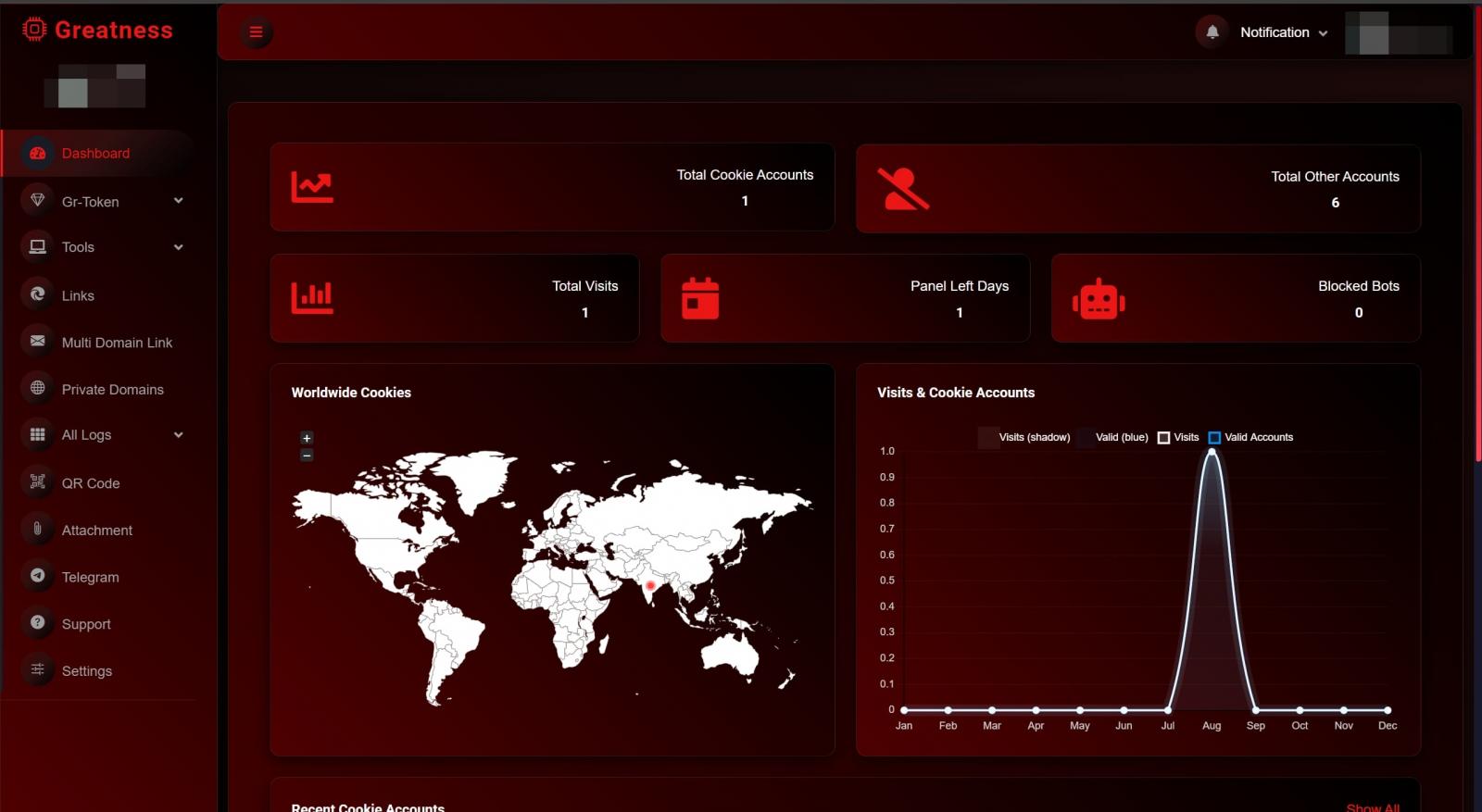
The Greatness phishing-as-a-service (PhaaS) platform has expanded from credential phishing to adversary-in-the-middle attacks and device-code phishing targeting Microsoft 365 accounts.
The platform has been active since at least mid-2022, targeting Microsoft 365 users in the United States, Canada, the UK, Australia, and South Africa.
It evolved over the years and now targets multiple platforms, including Microsoft 365, iCloud, Yahoo, and Google Workspace.
Currently, it is sold for $289 per month to cybercriminals over a Telegram channel with thousands of subscribers.
In a recent campaign observed by researchers at email security company ZeroBEC, Greatness operators abused the RingCentral communications platform to bypass email security filters on the recipient side.
RingCentral is a communications platform used by businesses for services such as cloud calling, messaging, and voicemail.
In the Greatness phishing activity, the attacker impersonated the platform by claiming their emails came from service@ringcentral[.]com, targeting actual users of the service.
These emails used fake voicemail and performance-review notifications as lures to entice recipients to open them.
Although the messages originated from an unknown IONOS mail server, failed SPF and DMARC checks, and had no DKIM signature, they were still accepted by the receiving systems because RingCentral was whitelisted.
Moreover, the emails included a fraudulent banner claiming that the sender had been verified by the organization’s safe-sender list, which helped reduce suspicion at the human level.
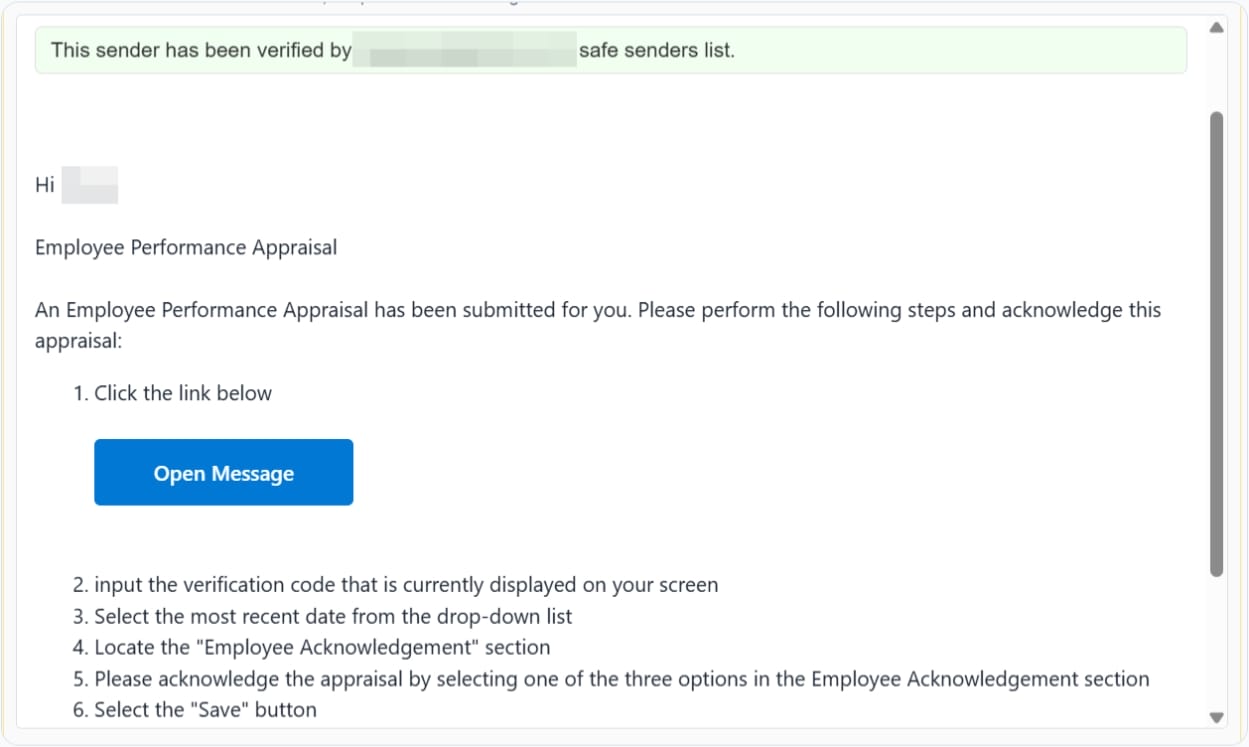
ZeroBEC explains that the tactic achieved a Spam Confidence Level (SCL) of -1 on Microsoft Exchange, allowing them to bypass the normal email filtering stages.
Clicking the button embedded in those emails took victims to the Greatness infrastructure, where they were routed either through a Microsoft adversary-in-the-middle (AiTM) phishing flow that captured an MFA-approved authentication token or through a device-code phishing flow.
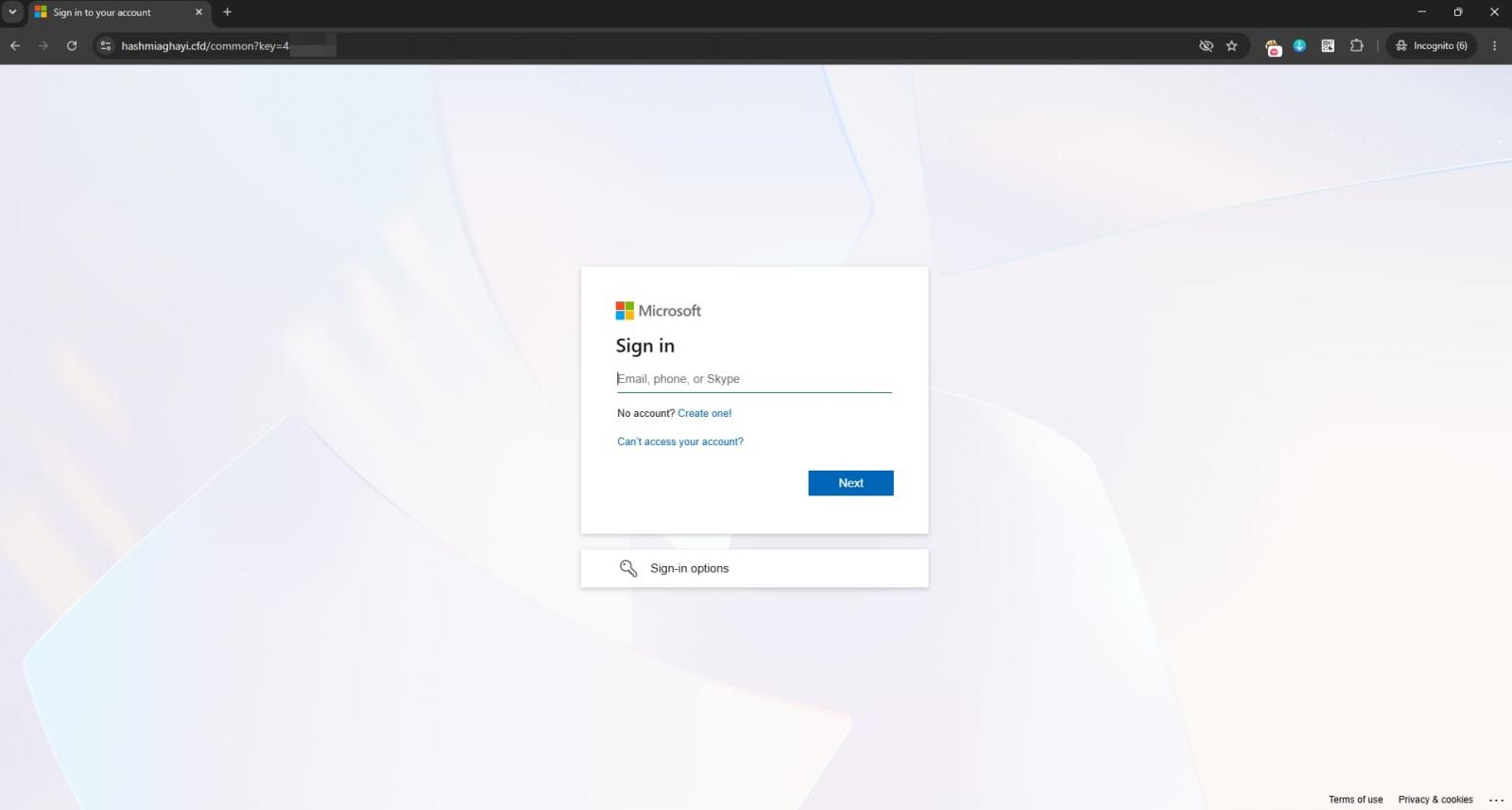
Post-compromise, the attacker replayed Microsoft 365 authentication tokens from VPS and commercial VPN infrastructure to access the compromised accounts.
They then enumerated Outlook mailboxes, Teams conversations, SharePoint sites, OneDrive files, contacts, calendars, and registered applications through Microsoft Graph, with access persisting for more than two weeks in some cases.
It should be noted that RingCentral recently disclosed a data breach incident which was claimed by threat actor ShinyHunters.
“This incident has affected data for a limited portion of RingCentral customers, and we are communicating with affected customers directly,” explained the company in a security bulletin published July 28.
ZeroBEC comments that it’s likely that cybercriminals using Greatness got a list of valid targets, users of the RingCentral platform, from that incident, though a connection cannot be confidently made.
The researchers recommend auditing safe-sender lists and replacing blanket domain exclusions with rules requiring valid email authentication.
Also, hunt for Greatness infrastructure and suspicious MFA-approved Microsoft 365 sign-ins from hosting or VPN addresses.
If compromise is suspected, administrators should revoke all access and refresh tokens, review OAuth consent, Microsoft Graph activity, and access to Microsoft 365 services.

Security teams log 54% of successful attacks and alert on just 14%. The rest move through your environment unseen.
The Picus whitepaper shows how breach and attack simulation tests your SIEM and EDR rules so threats stop slipping by detection.
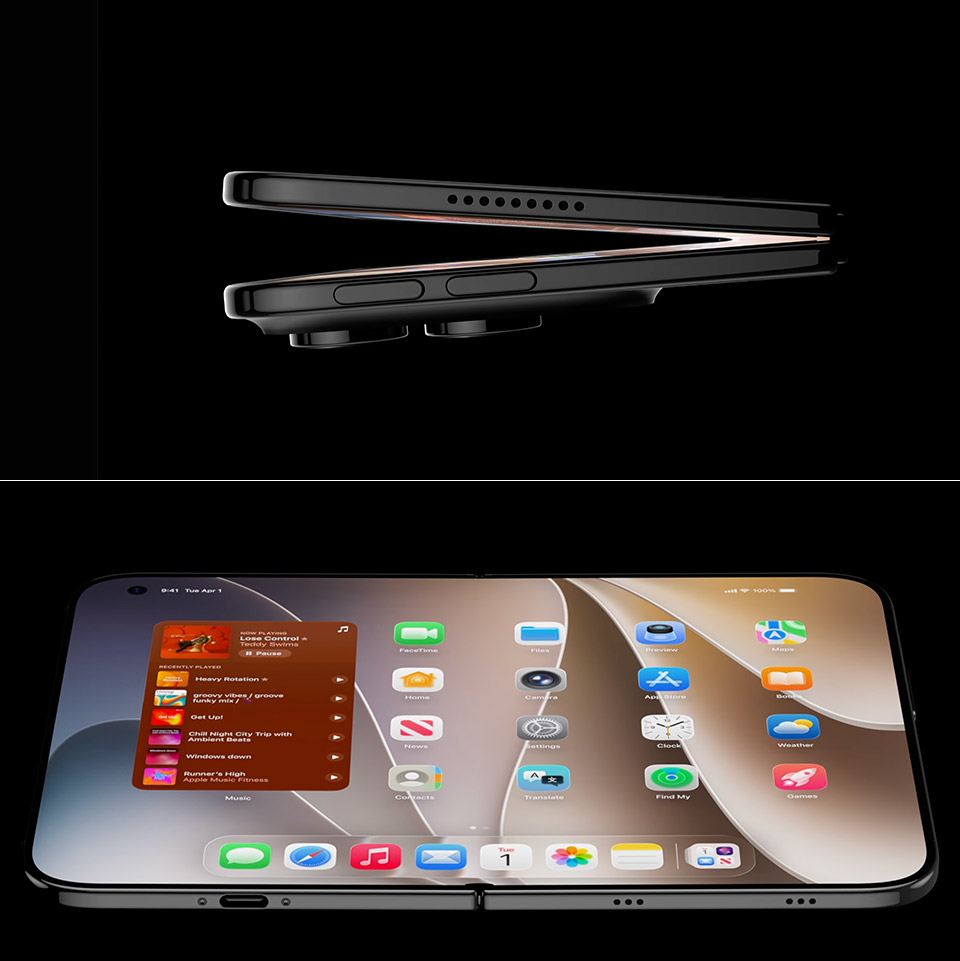
Jon Prosser’s latest Front Page Tech (FPT) lays out the most complete picture yet of what he calls the iPhone Ultra. He presents it as a book-style foldable that arrives this September alongside the iPhone 18 Pro and Pro Max, and positions it as the clear premium model of the year. Base iPhone 18 and Air models wait until later, with two color options being offered at launch: black / grey, and white / silver.
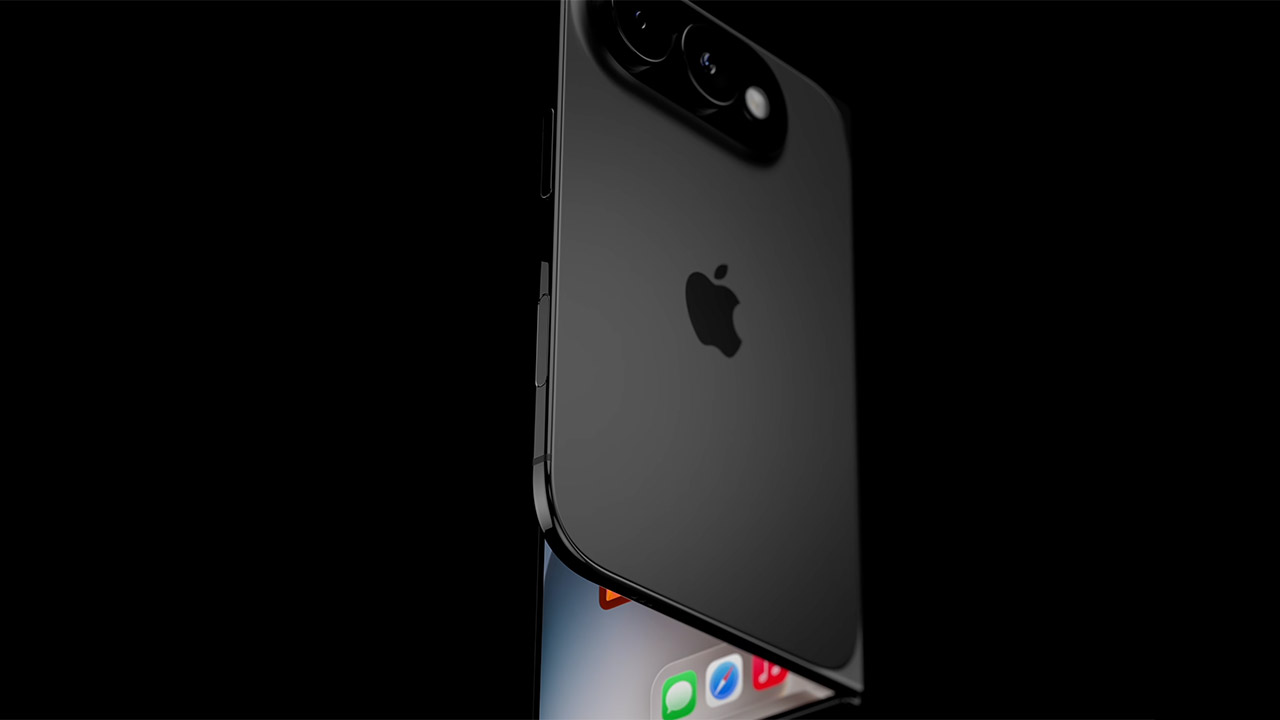
Closed, this phone feels completely familiar, somewhat wider than previous iPhones but still fits easily into your pocket, measuring approximately 9 to 9.5 millimeters thick. When you open it up, it’s only 4.5 mm thick, which is significantly thinner than the existing iPhone Air. Prosser claims that the difference will be noticeable the first moment someone picks up both handsets, owing to the titanium build and painstaking engineering that has gone into making the open phone feel as strong as a rock. Many users may even be tempted to forego a case entirely, as Apple proved with the Air by performing a few flashy (but probably not very rigorous) drops.

In terms of this phone, the hinge receives the most attention, with Prosser revealing that it is constructed on a liquid-metal design that relies on custom 3D-printed pieces and a unique plate that disperses any strain or stress. The crease depth is roughly 0.15 millimeters, so it’s not fully gone, but it’s less obvious in regular use, with the inner display looking practically seamless. This is the same architecture that allows the phone to be so thin while still feeling so robust.
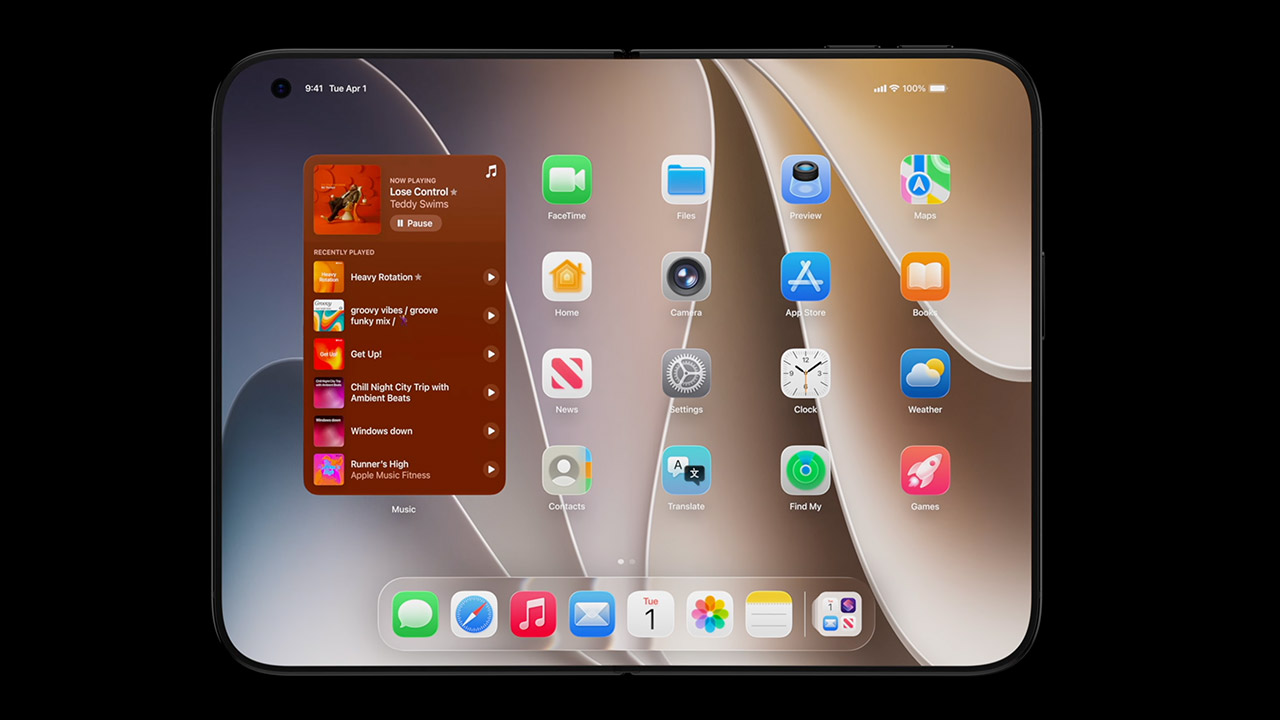
Screen sizes follow a nice pattern, with a compact outer panel and a significantly larger inner one. Expect something around 5.5 inches on the exterior and 7.8 inches on the inside, with a larger aspect ratio and more tablet-like design than a regular phone. When closed, it behaves similarly to any other iPhone, but when opened, it transforms into a tiny tablet that you can still easily carry in one hand. According to Prosser, Apple actively pushed developers at WWDC to stop designing for the same old fixed sizes and orientations, and code strings for fold state and angle degrees are already appearing in iOS 27 builds to match the updated hardware.

Cameras are kept very practical rather than striving for the ‘largest and flashiest’ approach, with a dual setup on the rear consisting of a 48-megapixel main and ultra-wide lens lying on a horizontal plateau reminiscent of the Air. There is no telephoto lens in sight since there just isn’t enough room. When the phone is closed, the front-facing selfie camera handles calls and other functions. Some prototypes have placed the camera underneath the display, allowing it to disappear while the device is open, yet the physical Camera Control button remains, albeit taking up interior space.
Power comes from an A20-series chip paired with a large 12 gigabytes of RAM, which should be sufficient for Apple’s AI tasks. There is also an in-house C2 modem, which enhances efficiency and provides satellite communication. The battery capacity appears to be the highest of any iPhone so yet, built around some high-density cells in the 5,800 milliamp-hour area. Face ID is no longer available because there is no physical space for that hardware in this tiny body, however Touch ID returns in the power button.
Software receives as much attention as hardware. Split screen mode now appears on the large inner screen, and it is a long-awaited feature that makes the larger display more functional than just something to show off; running two programs side by side is the new normal. Everyday operations, such as watching a video while answering messages, no longer require awkward workarounds and instead become second nature.

The price is rumored to be far higher than $2,000, and may even exceed $2500 for those with higher end storage levels, putting the Ultra in a league far above the Pro Max. Apple has not confirmed anything, and has even sued Prosser for some previous leaks he did, but the sheer volume of matching code references, WWDC clues, and all the physical facts he has matching up is keeping the whole story alive.

The Russo-Ukrainian War has seen both sides of the conflict innovate with all kinds of new and improved high-tech tools. Drones have become some of the most important weapon platforms of the war, but that’s only one aspect of innovation that’s seen new weapons, vehicles, and ammunition arrive in the battlespace. Getting personnel into and out of dangerous areas quickly has long been an aspect of modern military operations, and a new motorcycle Ukraine is using is a cut above the rest.
The MUL.E is Ukraine’s first all-wheel-drive electric motorcycle, and it received operational approval for use in combat in July 2026. While motorcycles are nothing new to military units and have been in use since World War I, an electric bike that’s not only ruggedized but also mine-resistant with a range of 62 miles is something the world’s battlefields haven’t seen previously. The bike’s design and various features offer an impressive option to the constantly-moving Ukrainian forces, which will receive an unknown number of MUL.Es via the Ukrainian Department of Defense.
Much of the MUL.E’s design was informed by combat experiences and lessons learned, helping to drive innovation while maintaining performance goals with the new vehicle. Of course, there’s more to the MUL.E than a simple mine-resistant electric bike, as it is chargeable in the field via a gasoline generator that’s mounted onto the frame. If personnel run down its batteries, they can throw some gas at the problem and charge them back up to return to the fight, making the MUL.E an incredibly useful military motorcycle. Additionally, it can be used to provide power to a unit.

The MUL.E is more than meets the eye, though it’s not a Transformer. Instead, it’s a highly versatile two-wheeled vehicle that’s likely to make an impact in the ongoing conflict. The motorcycle is packed with features, including two independent motors offering improved stability, silent operation with high-performance electronic motors, a long autonomous operating time, an extensive range of around 62 miles, high mine resistance via low ground pressure, a high top speed, and more.
The MUL.E can also tow a loaded trailer; it’s quick to deploy and pack up to redeploy to other areas, and it has low visibility. Silent operation and mine resistance are two of its greatest battlefield features, as traditional military motorcycles make plenty of noise that is detectable from a great distance. The MUL.E. seeks to outperform its predecessors and has the tech to do so. The bike features wide off-road tires, enabling it to cover all kinds of terrain, whether it’s deep snow, loose sand, or marshland.
Anti-tank and anti-vehicle mines are designed to detonate when enough pressure is applied, but the MUL.E. offers little more than an infantryman’s foot-worth of pressure, making it possible to operate across a minefield. This isn’t true of incredibly dangerous anti-personnel mines, and the two types are often co-located to create mixed minefields. The Ukrainian MoD authorized the purchase of 1,500 bikes in 2026, though it’s unclear how many of them will be MUL.Es, as the nation also operates numerous dirt bikes and other two-wheeled vehicles.

Bending Spoons has made its first acquisition since going public last month at an $18 billion valuation, agreeing to buy spreadsheet and database startup Airtable for $1.28 billion in cash. Airtable joins a growing portfolio of notable brands owned by the Italian app developer, including Evernote, WeTransfer, EventBrite, and Vimeo. TechCrunch reports: Founded in 2013, Airtable has so far raised more than $1.4 billion over multiple funding rounds. At its peak, during the boom days of 2021, it was valued at over $11 billion, but earlier this year, its shares were said to be trading on the secondary markets at a valuation of $4 billion. With its current net cash-and-cash-equivalents balance, Airtable is now valued at about $2.25 billion, Bending Spoons said.
“Airtable is a pioneering brand reshaping how teams organize data and manage critical workflows. The value being delivered is reflected in annual recurring revenue growing over 20% YoY to approximately $480 million as of June 2026, and joining forces with Bending Spoons will accelerate innovation even further,” Bending Spoons’ founder Luca Ferrari said in a statement.

It’s also highlighting classic titles from the past two and a half decades on Game Pass.

This fall, Xbox will mark its 25th anniversary, and it is giving away some freebies to players in honor of the milestone. (Sadly, the previously announced translucent green Xbox Series X will not be free.)
A special 25th anniversary badge will be granted to any players who log into Xbox on console, PC or the Xbox mobile app between now and the end of the year. The company partnered with two community creators who have designed Xbox-themed artwork that players can use as their gamerpic, theme or dynamic background. These works by Klobrille and Ben Kenobi are available starting today.
If you’re on console, go to Settings > Profile > Customize profile to choose one of their pieces as your gamerpic or theme. For the full look, go to Settings > General > Personalization > My background > Dynamic background to use a free piece as your dynamic background on console. For the Xbox app on PC, you can find the freebies under the View Profile menu. Choose the pencil icon to update your gamerpic or go to Customize profile to change your theme.
Finally, Game Pass will be highlighting some iconic titles from Xbox’s 25 years. The press release announcing the latest freebies included Fable Anniversary, Halo: The Master Chief Collection, Fallout 4 and Psychonauts 2. More news will be shared to Xbox’s dedicated website in the coming months ahead of the actual anniversary date of November 15.
It’s a tough time to celebrate for Xbox fans after the company has seen a brutal number of cancelled titles and job cuts across its studios, including at the teams that made some of those games the brand is highlighting. Hopefully leadership can start making some more positive headlines soon.
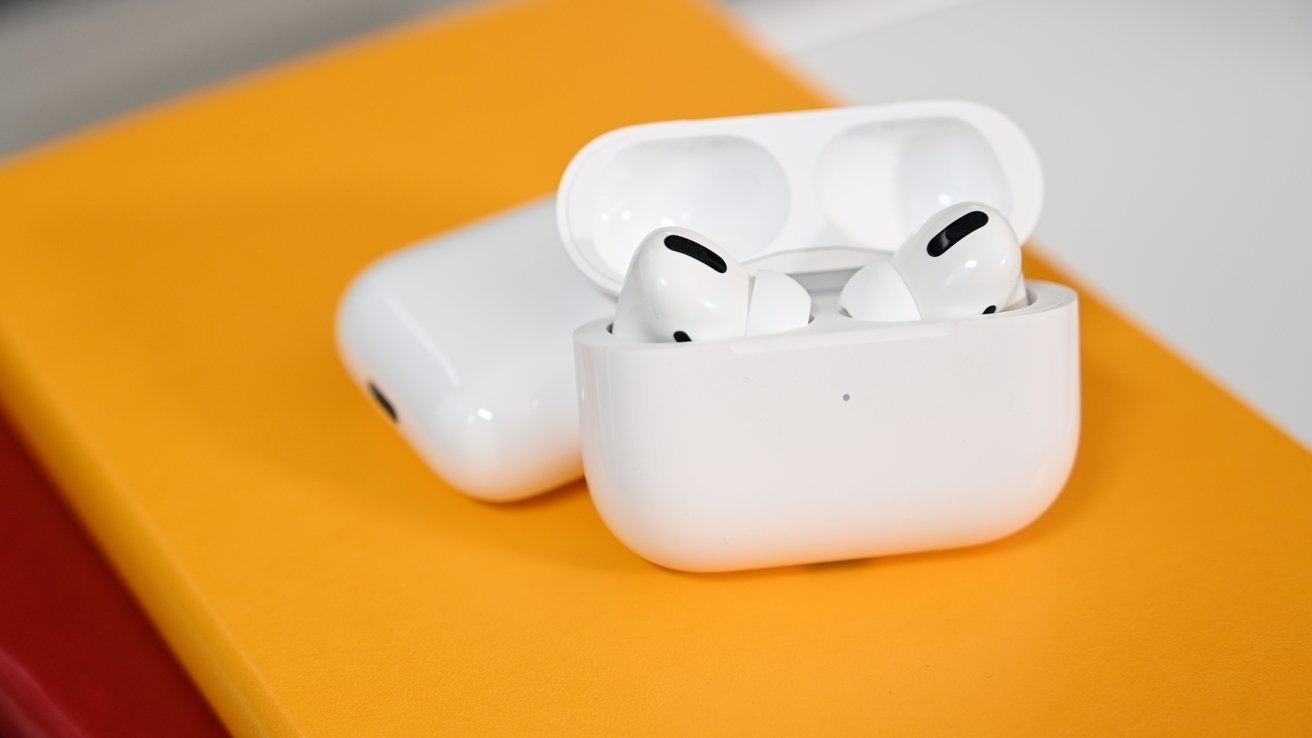
Apple has introduced new beta firmware for AirPods, AirPods Pro, and AirPods Max, so that developers can continue testing out inbound iOS 27 features.
Apple will be introducing a number of new features for select AirPods models this fall, as part of the iOS 27 and other 27-gen operating system releases. Ahead of that release, it is testing out the features via beta firmware builds.
The new firmware, build 9A5336b, replaces the previous build, 9A5314b, which Apple seeded on July 7. It can be downloaded to the AirPods Pro 2 and AirPods Pro 3, AirPods 4, and AirPods Max 2.
It is intended to be used only by developers, not the general public. A public version is expected within days.
To install the beta, users need to be running on iOS 26, iPadOS 26, macOS 26, or later releases. There is an option under the AirPods settings interface to enable the firmware installation.
Once enabled, the update itself happens automatically, when you place the AirPods on charge near the host device.
Among the changes users can expect from the AirPods firmware is a new EQ setting in iOS 27. Other changes to make the management of AirPods easier are also anticipated to arrive.

I didn’t expect Samsung to be the one crossing the finish line first here, given how much noise Dolby Vision 2 made when it was announced (September 2025).
The company has confirmed its next HDR format, and it’s arriving on a popular OTT platform this month, beating Dolby Vision 2 to the punch.
Called HDR10+ Advanced, Samsung’s new HDR format is arriving on Prime Video this month, and the company’s 2026 TV models should support it. The genuinely surprising part for me is that this format only got announced back in November, months after Dolby Vision 2, and Samsung still managed to ship it first.
Now, Samsung hasn’t said exactly which TV models qualify, or how much Prime Video content we’ll get at launch. However, a promotional image confirms the Amazon series Ride or Die will support it.
Under the hood, this update bundles six separate upgrades. It includes a brightness boost built for today’s punchier TV panels, genre-specific picture tuning, more precise local dimming for mini-LED sets, and, last but not least, improved color accuracy.
At their core, both formats are chasing the same idea. They’re after smarter, scene-by-scene motion smoothing that handles fast action without slipping into that dreaded “soap opera” look older TVs are known for.

Samsung’s version goes by the name Intelligent Motion Smoothing. It’s paired with a gaming-focused mode aimed partly at cloud gaming services. Dolby Vision 2’s version is called Authentic Motion, just so you know.
The real issue here isn’t about the similarities or the differences, in my opinion. It’s about a chaotic format war breaking out between players in the TV industry.
Hisense, Philips, and TCL are all lining up behind Dolby Vision 2, perhaps to close the gap with premium brands that often go with proprietary chip-level picture processing and the tiered flexibility (Dolby Vision 2 vs. Dolby Vision 2 Max) that could help them differentiate between value and premium products.
Peacock and Canal+ have also committed to stream that format once it’s actually ready, as the format needs a software update to enable it. LG, on the other hand, is sitting this fight out entirely. Instead, it’s building its own separate system with Prime Video.
Samsung avoided Dolby’s licensing fee while shipping a competing format first. That suggests real financial motivation behind the rush.

Most conversations about generative artificial intelligence in schools eventually zoom in on using AI in the classroom. Before districts redesign teaching and learning around AI, they may need to answer a more fundamental question: Can schools afford an AI-first future?
The question sounds strange because generative AI is often presented as software with free and low cost tiers to individual users. Teachers open a browser window, type a prompt, and receive a response in seconds. The experience feels almost weightless and as simple as a Google search. The infrastructure behind that interaction is much more complicated.
A useful way to think about generative AI is to remember the large desktop computers that once sat in school computer labs. Students interacted with a monitor and keyboard, but much of the important work happened elsewhere inside a massive tower packed with hardware.
Today’s AI systems operate similarly, except the tower has been replaced by massive data centers located hundreds or thousands of miles away — and increasingly in some cases, just a few miles away.
An explanation is in order. How do chatbots and the hardware behind them work? Think of the chatbot prompt as the remote control. The hardware stored at the data center is the wiring within a television, and the chatbot’s output is what appears on screen as you watch and flick through channels.
Every student prompt, teacher-generated lesson plan or AI-assisted feedback comment depends on specialized processors, networking infrastructure, electricity, water, and increasingly scarce computing capacity.
Most discussions about AI in education begin after those systems are already in place. However, a growing body of research suggests schools should pay closer attention to the infrastructure itself.
Researchers studying AI adoption in education have largely focused on classroom implementation, AI literacy and governance. Stanford’s review of the evidence base for AI in K-12 education found that adoption continues to outpace rigorous evidence about educational outcomes. At the same time, UNESCO and other organizations have increasingly emphasized governance, transparency and human oversight as schools experiment with AI tools.
A separate body of research examines the infrastructure that makes those tools possible. Urban planners, computer engineers and environmental researchers have begun documenting the physical footprint of artificial intelligence. Their work points to a reality that is largely invisible to educators: generative AI is both software and hardware that requires robust infrastructure to support and scale.
Research by Xiaofan Liang, PhD on data centers describes how AI expansion increasingly shapes land use, energy systems, local planning decisions and community development. Research by Shaolei Ren, PhD on power and water demand demonstrates that large-scale AI deployment carries substantial resource requirements that extend well beyond the technology sector. Researchers and policymakers are now examining how data center growth affects electricity demand, water consumption, electrical grid capacity, and environmental sustainability.
According to estimates cited by the Congressional Research Service, U.S. data centers consumed about 176 terawatt-hours of electricity in 2023, roughly 4.4% of all U.S. electricity consumption. Using average residential electricity consumption estimates from the U.S. Energy Information Administration, that’s enough electricity to power nearly 17 million American homes for a year. The map below shows where the United States sits in the world’s energy picture and why AI’s growing appetite for power matters.
Attribution: Hannah Ritchie, Pablo Rosado, and Max Roser (2020) – “Energy Production and Consumption” Published online at OurWorldinData.org. (archived on May 18, 2026).
Traditionally, districts purchase educational technology such as learning management systems, assessment platforms and instructional software through licensing agreements that can often be forecast years into the future. But generative AI operates differently.
Unlike traditional software, which becomes cheaper to distribute as it scales, generative AI continues generating costs each time users engage with the system. Industry observers increasingly point to what’s called “inference costs,” which are the computing resources required to generate responses. These are some of the major costs of LLMs for consumers and one of the central economic challenges facing AI companies.
For schools, how can a district plan for these costs, and what happens when the costs far exceed expectations? Put another way, it’s unclear whether generative AI is financially feasible for schools.
Many districts are currently experimenting with AI through pilot programs, limited licenses or AI features embedded within existing products. There are few examples of what universal access would actually cost.
What would it mean for every student and their teachers to have access to generative AI every day? Before we address this question, there is another cost variable to consider: data privacy.
Many educators and parents have expressed concerns about student information flowing into commercial AI systems. One response has been to advocate for private deployments, district-controlled systems or locally hosted models that offer greater oversight and protection.
Those approaches may provide stronger governance, but they also require additional investment. That makes student data privacy a matter of policy and infrastructure. The more control schools want over data, the more likely they are to encounter costs related to storage, cybersecurity, hardware, networking and technical expertise.
Meanwhile, the broader market continues to evolve.
OpenAI, Anthropic and other major AI companies are still competing to define the commercial landscape. Product offerings change frequently. Pricing models continue to evolve. Infrastructure investments remain enormous.
The result is a technology ecosystem with long-term economics that remains uncertain at precisely the moment schools are being encouraged to integrate it more deeply into teaching and learning. This uncertainty arrives during a challenging financial period for many districts.
Federal ESSER funding has expired. States continue debating educational technology spending priorities. District leaders face growing pressure to justify technology investments while responding to staffing shortages, student mental health concerns, and academic recovery efforts post-COVID-19 school shutdowns.
Against that backdrop, AI presents a different kind of procurement question: Do districts understand the long-term commitments they may be making when AI becomes embedded in curriculum, assessment and daily operations?
There is still one more cost factor to consider: community impact around data centers. Data centers are expanding rapidly across the United States. Local governments and residents are increasingly debating the benefits and tradeoffs associated with new facilities. Questions about energy demand, water consumption, environmental exposure and land use have become common features of public meetings and planning discussions.
For educators, these debates may seem distant from classroom practice. But every discussion about AI in schools ultimately depends on the infrastructure being built in communities across the country.
Schools are currently debating how to integrate AI into teaching and learning while the infrastructure, economics and governance systems required to support large-scale adoption are still taking shape.
Before schools decide how deeply AI belongs in classrooms, they may need a clearer understanding of how much it costs and if it’s feasible to maintain the systems that make an AI-ready classroom possible.


Competitive pressure and AI tools are reshaping how organizations innovate. As development cycles compress and markets evolve more rapidly than ever, the ability to make confident, data-driven R&D decisions has become a competitive advantage.
The 2026 R&D Benchmark Report examines how leading organizations are responding to these challenges, and where they continue to struggle. The research reveals that while AI adoption is widespread, many organizations still lack the intelligence needed to prioritize the right opportunities, eliminate low-value projects early, and reduce costly late-stage failures. Instead, teams often contend with fragmented data sources, lengthy approval processes, and critical insights that arrive too late to influence key investment decisions.
Drawing on responses from more than 200 senior R&D leaders across nine industries, this report provides practical benchmark data and insights into the strategies organizations are using to reduce R&D waste and accelerate time to market.
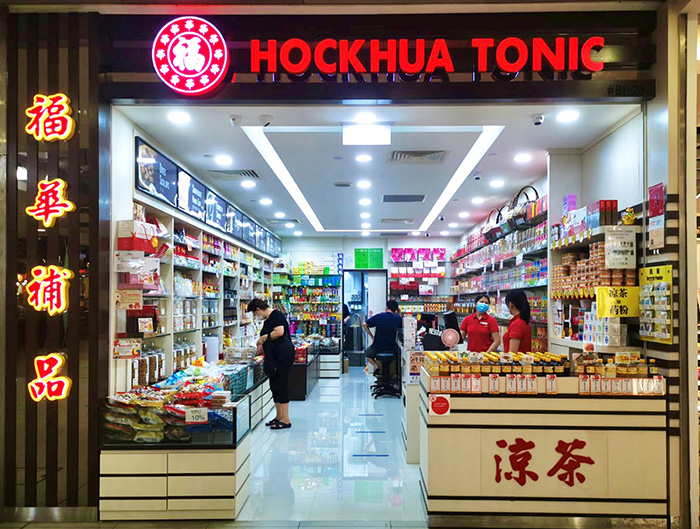
Most Singaporeans have walked past a Hockhua Tonic store without thinking twice. Its iconic red signage, the scent of dried herbs, and rows of grab-and-go herbal teas blend so seamlessly into Singapore’s heartland malls that the brand has become part of the landscape.
Which makes it easy to miss what’s actually going on: a S$150 million business with over 80 outlets across Singapore and Malaysia, a loyalty programme with over 480,000 registered members, and a supply chain that stretches from ginseng farms in Ontario, Canada, to bird’s nest operations in West Malaysia.
What founder Chan Tiong Cheng started with his mother in 1986 as a small wholesale business importing American ginseng from Canada has since grown into Singapore’s largest traditional Chinese medicine retail chain. Today, Hockhua operates three manufacturing plants in Singapore and reports an annual turnover of S$150 million.
Here’s its story.

The founding of Hockhua began in 1986, when Chan and his mother, Madam Lee Ang Cho, started importing American ginseng from Canada and selling it wholesale. Back then, Hockhua neither had a retail presence nor branding—just a wholesale company with a supply chain and a bet that Singapore’s Chinese community would keep wanting ginseng.
The mother-son duo was right.
In 1987, Chan brought in three partners and expanded the wholesale operation, setting up at Kampong Kranji. Demand for traditional Chinese health products was growing as Singapore’s middle class expanded and began spending on wellness.
By 1989, there was enough confidence to open the first physical retail outlet, Hockhua Ginseng Birdnest Trading Enterprise in Hougang.
The shop was popular enough to trigger several more openings in quick succession between 1990 and 1995. By 1992, the company had already begun describing itself as a “comprehensive traditional health food chain.” It claimed that revenue had tripled from S$2 million to S$6 million between 1990 and 1993.

What distinguishes Hockhua’s growth from most Singapore retail stories is how much of it was vertical. Rather than simply opening more shops selling other people’s products, Chan kept bringing more of the supply chain in-house.
The process began in 1996 with the formation of SHW Trading Enterprise—later renamed Hockhua Tonic Pte Ltd—to handle direct imports. By cutting out intermediaries, the company lowered procurement costs, exercised tighter quality control, and kept retail prices competitive.
Over the next few years, Hockhua expanded that strategy further. By 2000, it had established six subsidiary companies specialising in different product categories, including ginseng, bird’s nest, Chinese herbs, agri-food, seafood, and traditional medicine.
The corporate structure that emerged looked very different from a typical retail chain. Under Hockhua Holdings, subsidiaries oversee cultivation, sourcing, processing, manufacturing and distribution, with the retail outlets serving as only the final touchpoint.
In many ways, Hockhua resembles a vertically integrated agricultural and manufacturing group that happens to sell through retail stores.
That integration stretches well beyond Singapore. The company says it cultivates its own ginseng through partner farms in Ontario, Canada, and Jilin Province, China. It has also operated its own bird’s nest farms in West Malaysia since 2009, while an Indonesian processing facility was added in 2018.
Its abalone is sourced from eight countries, including Australia, New Zealand, Japan and Chile. Meanwhile, more than 20 patented TCM products in capsule and powder form are manufactured across three Singapore plants spanning some 13,000 square metres—a sizeable manufacturing footprint by local standards.
Today, Hockhua carries over 1,000 products. Its flagship brands include Golden for ginseng, Golden Cow for bird’s nest, and Tiger King for abalone, each spanning multiple grades and price points, from everyday health supplements to premium festive gift sets.
Beyond sourcing and manufacturing, Hockhua also invested early in customer retention. In 1991, it became the first medical hall in Singapore to introduce a loyalty points programme—long before app-based rewards became commonplace.
Today, the programme has more than 480,000 registered members across Singapore and Malaysia.
The company also broadened its retail appeal beyond traditional Chinese medicine.

Since opening its first Oriental Herbal Tea outlet in 2000, Hockhua has sold freshly brewed herbal drinks alongside its core products. Priced from under S$2 and brewed daily using ingredients such as luohan fruit and chrysanthemum, the drinks offer a low-cost entry point for customers who might otherwise never step into a TCM shop.
By 2019, Hockhua operated 15 licensed herbal tea outlets under the Hockhua Herbal Tea and Oriental Herbal Tea brands.
While the company does not disclose revenue from the business separately, the tea counters likely play an important role in driving foot traffic and introducing new customers to its broader range of health products.

Hock Hua’s numbers tell a story of quiet, compounding growth over the years.
What started as a S$2 million wholesale operation in 1990 had tripled to S$6 million by 1993, impressive for a business barely out of its first retail experiment.
The real scale of what Hockhua had built became clearer over the following decade: by 2009, with 46 retail shops and 15 herbal tea stores across Singapore plus a handful of Malaysia outlets, revenue had reached S$83 million.
It crossed S$100 million sometime around 2012, and according to Superbrands Volume 15, published in 2024, turnover stood at S$150 million in the year prior, making it one of the most resilient retail operations in Singapore’s wellness space.

In 2014, Hockhua launched its e-store, which eventually paved the way for further e-commerce expansion in 2018 across Qoo10, Lazada, RedMart, and Shopee.
Expansion into neighbouring Malaysia began in 2007 with the first two outlets in Kuala Lumpur. A factory and warehouse were established in Malacca in 2015 to centralise product storage, processing and distribution to Malaysia outlets.
A China outlet opened in Fuzhou in 2016 and later relocated to a new shopping mall in Xiamen in 2019, a foray into the waters of the world’s largest TCM market, though the China presence has remained modest in Hockhua’s public accounts, except for a few processing plants like one in Gansu, China.
On the awards front, Hockhua has achieved Superbrands status every year from 2008 to 2024 and received a Silver Award from the Singapore Food Agency in 2018 for ten consecutive years of Grade A food hygiene.
In 2019, it was recognised under the Singapore Quality Class for business excellence and nominated as a Singapore heritage brand.
With its history, Hockhua occupies a significant position in Singapore’s commercial landscape as a homegrown brand selling traditional products to customers who remember their parents buying the same things, while simultaneously trying to stay relevant to a generation that approaches wellness very differently.
Singapore’s broader wellness economy reached US$23.2 billion (S$29.7 billion) in 2024, ranking 37th globally and up from US$15 billion (S$19.2 billion) in 2021. Within this thriving sector, the specific local market for vitamins and health supplements was valued at approximately US$583 million (S$746.9 million) in 2024 and is projected to reach US$752 million (S$963.4 million) by 2029.
But whether that wave is carrying TCM along with it, or whether younger Singaporeans are reaching for collagen drinks instead of bird’s nest, is a harder question to answer.
What they do show is a business that has compounded steadily for nearly four decades, from bringing Canadian ginseng into Singapore to a S$150 million retail operation. In a retail environment that has seen far more famous names stumble, that is its own kind of achievement.
Featured Image Credit: Capitaland







Why Trees Belong on the Risk Register


Weekend Open Thread: Wit & Wisdom


Meta enters AI-training agreement with far-right ‘propaganda rag’ Newsmax


Reform UK betrays West Mids residents by running from party pledges


MicroStrategy Post-Earnings CLARITY Act Push Could Add New Catalyst for Its Stock


Major shareholder moves on Canyon


XRP Ledger v3.3.0 brings five institutional features


Zack Polanski: an incitement to murder Nigel Farage?


Bitcoin Enters the 3rd Stage of the Bear Market


Kraken Enables Retail Access to Jersey Mike’s IPO via Tokenized Shares


Luke Littler’s dominance sparks GOAT debate


Seema Kaliramna Wins Discus Throw Bronze, Takes India’s CWG Medals Tally To 17


New York sues Kalshi over prediction market gambling


Crypto PAC spending tops $2M in Michigan House race


Johnson & Johnson agrees to $5.5B settlement over talc cancer claims


Trump Announces Hamas Disarmament Agreement as Iran Strikes Kuwait Air Base and US Attacks Pause Overnight


Gemini can now summarize the messiest comment threads in Google Docs


ESET tracks rise in malicious AI skills and adaptable malware


Four people die trying to cross Channel in small boats

Gemini Spark can now use Chrome logins and saved passwords to run errands on your behalf
You must be logged in to post a comment Login