
Crypto World
White House Weighs Extending Historic Jones Act Waiver to Lower Gas Prices



The Trump Administration is likely to extend a waiver of a century-old shipping law in an effort to keep energy prices down, officials said.
After Iran militarized the Strait of Hormuz in retaliation for the U.S. and Israel launching the war on Feb. 28, disrupting global energy supplies and sending oil prices skyrocketing, the Trump Administration temporarily suspended the Jones Act. The law requires that cargo moving between U.S. ports be carried on ships built in the U.S., owned by American companies, and predominantly crewed by Americans. By allowing foreign ships to transport cargo in the U.S., the waiver made domestic shipping more flexible, although estimates suggest the waiver would reduce oil prices by only a few cents per gallon.
The waiver has been extended once before and could be extended again as recent flare-ups between the U.S. and Iran dim hopes of a quick return to normal shipping through the Strait of Hormuz and lower energy prices.
“I think another extension, temporary extension, of the Jones Act waivers is quite likely to happen,” Energy Secretary Chris Wright said at a media briefing in Texas on Tuesday. “These temporary suspensions of the Jones Act have been quite helpful for moving energy around our country.”
The current suspension will expire on Aug. 16, and the oil industry had reportedly expected a decision on an extension by the end of July. But the waiver has faced criticism from American maritime companies that argue it weakens the domestic shipping industry and does little to meaningfully lower fuel prices. Trump officials are reportedly still deciding whether to extend the waiver.
Still, Trump is facing increasing pressure to bring down U.S. petrol prices—currently averaging more than $4 a gallon—while the war’s economic and human costs have become a political liability for Republicans ahead of the midterm elections in November.
By Aug. 16, the waiver will reach 150 days, making this the longest suspension of Jones Act shipping restrictions in the program’s history. The waiver was first issued for a 60-day period on March 17, then extended for a 90-day period beginning May 18.
President Donald Trump and his officials have also explored other avenues to lower fuel costs as the war against Iran has threatened to spillover into new shipping routes and prolong economic pain for Americans and the rest of the world. On Monday, Trump called on ExxonMobil and Chevron—the two biggest U.S. oil companies—to return their surging profits to customers at the pump.
“President Trump believes in markets and he believes in capitalism. But he’ll use every tool he has, including the bully pulpit, to try to encourage and put pressure to lower energy prices for Americans,” Wright said.
To waiver or not to waiver
The Jones Act, part of the Merchant Marine Act of 1920, was initially enacted to strengthen the U.S. shipping industry after World War I. The policy was rooted in an 1817 law that restricted domestic maritime trade to U.S.-owned vessels and a 1789 law that encouraged U.S.-built and -owned ships through preferential tax treatment.
Since the Jones Act rules were first waived till the end of July, there have been 196 voyages conducted under the waiver, according to government data. The waiver covers hundreds of commodities, including crude oil, refined petroleum products, natural gas, coal, ammonia, and fertilizers. It has increased the availability of tankers to move critical fuel supplies around the country, Wright said, noting that it has kept energy prices in California and on the East Coast “lower than they would otherwise be.” He said fuel prices should come down in the coming weeks.
The Administration appears likely to extend the waiver, although an extension is not confirmed and may have restrictions. Trump officials have reportedly met with industry representatives and lawmakers about potentially narrowing the scope of the waiver to be more targeted and friendlier to the domestic shipping industry.
The Maritime Trades Department, which represents U.S. and Canadian maritime workers, argued that the waiver threatens American vessel operators, mariners and shipyards by upending a law that is “the backbone to the American industrial workforce.” Without the law’s protections for American-owned and -operated vessels, the influx of foreign vessels could potentially lead to losses for U.S. shipyards, ultimately hurting the broader economy, the union said.
Maritime firms have also said that the waiver produces minimal savings for consumers and urged the U.S. government to pursue more effective cost-saving measures. In an article published by the Center for Maritime Strategy, non-resident senior fellow John McCown argued that the Jones Act’s benefits far outweigh its costs.
“The waiver was justified as an emergency measure to lower fuel prices. It should be judged on whether it achieved that objective. And despite more than 130 foreign voyages under the waiver, consumers have seen little measurable relief at the pump,” William Doyle, a former Federal Maritime Commission member, wrote in a letter to the Washington Post in July.
And both maritime firms and some lawmakers have raised concerns about the waiver’s potential impact on national security.
In a June 30 letter to Trump, Republican House Speaker Mike Johnson and House Majority leader Steve Scalise, as well as 50 other House Republicans, called the waiver “a loophole exploited by adversarial countries to erode America’s maritime dominance.” The group of lawmakers urged the Administration to let the waiver expire on Aug. 16.
Two Democratic lawmakers separately penned a letter opposing the waiver and calling for greater scrutiny of its use.
Maritime companies and unions argue the waiver has opened protected U.S. domestic trade up to vessels linked to China, a major maritime rival of the U.S., while diverting business away from U.S. carriers. In June, American maritime groups raised concern about one such vessel, Jin Zhou Wan, whose operator is a subsidiary of state-owned China COSCO Shipping Corporation, which appears on the Pentagon’s list of Chinese military-linked companies. Voyages by Jin Zhou Wan carried asphalt—which is covered by the waiver—rather than fuel, which critics cited as evidence that the waiver is overly broad.
Extended waivers could weaken demand for U.S.-built and -crewed vessels, groups say, potentially discouraging investment in domestic maritime capacity and undermining the Trump Administration’s goal of rebuilding the American shipbuilding industry.
Pressure to lower gas prices
The Trump Administration has already taken other measures aimed at lowering energy prices. In March, the Administration authorized the release of 172 million barrels of crude oil from the country’s national stockpile. Also in March, it temporarily eased sanctions on some oil supplies from Russia and Iran.
Trump has also called out the biggest U.S. oil companies for “making too much money” amid the energy crisis. ExxonMobil recorded a $14.5 billion profit in the second quarter of 2026—105% more than the same period last year—and Chevron recorded a $12.1 billion profit—385% higher year over year.
“When you look at one company where they made 12 times what they made the year before, they ought to give some of that back to the public,” Trump told reporters in the Oval Office on Monday. “And they better cut the retail price, the consumer price.”
Oil prices initially fell after the U.S. and Iran signed a memorandum of understanding in mid-June, but climbed again after the agreement broke down and fighting resumed. Prices have fallen again this week on hopes for a diplomatic breakthrough as mediators reported progress towards an agreement, but it could still take some time for global energy prices to stabilize. Wright previously said it could take “many months to get back to normal flows of energy” after the crisis in the Strait of Hormuz ends. Analysts previously told TIME it could take months for shipping through the Strait to return to prewar levels, and further fighting between the U.S. and Iran or a breakdown of negotiations could prolong that recovery.


Bitcoin traded largely unchanged near the $64,000 level at the start of the Wall Street session on Wednesday, showing little follow-through despite a broad risk-on push in traditional markets. The muted action stood in contrast to gold’s renewed strength, as the precious metal climbed to its highest levels in about six weeks.
While US equities continued to build on recent record highs, investors appear to be treating Bitcoin more cautiously—at least for now—amid signals that have to line up before a durable rebound can take hold.
Key takeaways
- BTC held steady around $64,000 as gold rose 2.8% to $4,213 per ounce, its highest since June 22.
- Gold’s strength has been linked to Chinese demand, including reported inflows into China-based gold-backed ETFs.
- US stocks maintained momentum, with the S&P 500 reaching 7,793 and a majority of constituents trading above their 50-day moving average.
- Bitcoin’s recovery still appears contingent on multiple factors, including spot Bitcoin ETF inflows, easing bond yields, and fewer expectations of Federal Reserve rate hikes.
Gold regains footing as China demand returns to focus
Market data reviewed by TradingView pointed to a notable divergence: precious metals and US equities were advancing, while Bitcoin lacked directional momentum. Gold was a clear leader, gaining 2.8% to $4,213 per ounce—its highest level since June 22.
Bloomberg attributed the push higher to Chinese buying and reported 14 consecutive days of inflows for domestic gold-backed exchange-traded funds. The broader backdrop has also been shaped by the World Gold Council’s description of China ETF flows earlier this year: the organization’s data indicates June delivered the worst month of outflows on record, yet year-to-date inflows still stand at 40 billion yuan (about $5.6 billion). Even with June’s weakness, the first half remains the second-best on record for inflows.
The World Gold Council noted that demand has stayed resilient amid geopolitical and economic uncertainties, while ongoing purchases by the People’s Bank of China have offered additional support for sentiment. The organization cited central bank activity totaling 82 tonnes over the 20 months through June.
US equities extend gains while Bitcoin lags
Risk assets in the US remained strong on the day. The S&P 500 pushed higher to 7,793, building on Tuesday’s all-time highs noted in earlier Cointelegraph coverage. That tone in equities came alongside a market breadth read from Bloomberg ETF analyst Eric Balchunas, who said 66% of S&P 500 stocks were above their 50-day moving average and 57% were outperforming a benchmark tracker.
For Bitcoin, the result was a second consecutive session of relative underperformance versus the optimism seen in US stocks. Instead of aligning with the day’s broader “buy the dip” behavior, BTC stayed pinned in a tight range, reinforcing the view that the market’s appetite for recovery is still fragile.
Analysis flags a recovery that needs several conditions to align
Bitcoin’s price action has largely centered on the $64,000 area on shorter time frames, with traders continuing to reference the broader “bear market” structure they believe is still in place. One of the more widely discussed technical themes comes from trader and analyst Rekt Capital, who argued that if the current support zone produces weaker rallies, BTC could form lower highs and eventually break down into the $58,000–$66,000 range.
On the fundamental and macro side, CryptoQuant’s research—published Tuesday—outlined three prerequisites it suggested for a more durable rebound: persistent inflows to US spot Bitcoin ETFs, cooling in US bond yields, and a reduced expectation of additional Federal Reserve rate hikes. In other words, Bitcoin may need both crypto-specific demand and a friendlier macro environment to sustain momentum beyond short-lived relief moves.
CryptoQuant also pointed to a market microstructure condition via the Coinbase Premium, which measures the price difference between Coinbase and Binance’s BTC/USDT pairs. The firm said that metric also needed to return to positive territory, reiterating earlier analysis from June. Cointelegraph previously reported that the Coinbase Premium had been negative for nearly 80 days, and the latest framing maintains that this imbalance has not yet corrected.
What investors should watch next
For BTC, the near-term question is whether gold-driven risk hedging and equity strength can translate into sustained crypto demand—or whether Bitcoin remains constrained until ETF inflows, bond yields, and rate expectations shift in sync. Watch for evidence that the Coinbase Premium improves alongside any acceleration in US spot Bitcoin ETF inflows, because multiple analysts now treat that combination as a prerequisite for a more credible recovery.

In the latest Bitcoin news, Arthur Hayes, BitMEX co-founder and chief investment officer of Maelstrom, published a detailed macro framework on February 17 arguing that AI-driven white-collar job losses will ignite an AI credit crisis severe enough to force the Federal Reserve into large-scale money printing, and that Bitcoin, as the asset most directly wired to global fiat liquidity, will be the primary beneficiary, ultimately reaching a new all-time high and potentially hitting BTC $1 million.
The argument is not a simple bull take: Hayes frames two distinct scenarios and explicitly warns traders to keep leverage limited until the Fed shows its hand.
The analytical core of the Substack post, titled This Is Fine, is a quantitative model estimating the credit damage that a 20% reduction in US knowledge workers would inflict on commercial bank balance sheets.
Hayes uses Bureau of Labor Statistics data, putting the current knowledge worker population at 72.1 million out of a total working population of 164.5 million.

Applying a 20% displacement scenario generates approximately $330 billion in consumer credit losses and $227 billion in mortgage losses, a combined $557 billion that, net of existing loan loss reserves, represents a 13% write-down of US commercial bank equity.
Thirteen percent sounds manageable in aggregate, but Hayes notes the distribution is the problem. The eight Too Big to Fail institutions are adequately capitalized; the thousands of smaller regional banks are not.
The market will identify the weakest balance sheets, crush their stock prices, trigger regulatory capital breaches, and spark depositor flight, a sequence Hayes compares directly to the regional bank collapses of early 2023, but at greater magnitude because the underlying cause is structural and irreversible rather than idiosyncratic.
Discover: Everyone’s Got a Take. Get Free $25 to Actually Trade Yours
Bitcoin News: BTC as the Fiat Liquidity Fire Alarm
Hayes describes Bitcoin as “the global fiat liquidity fire alarm” and “the most responsive freely traded asset to the fiat credit supply.”
The divergence between Bitcoin and the Nasdaq 100, with Bitcoin declining sharply from its October 2025 all-time high while the Nasdaq held relatively flat, is, in his reading, not noise but signal: the market is already pricing the deflationary impact of AI job losses on consumer credit, even if the broader equity complex has not yet caught up.
The mechanism is familiar from 2008. Credit losses impair bank assets, weaker institutions approach insolvency, the Federal Reserve panics and initiates Federal Reserve money printing at scale, fiat liquidity surges, and Bitcoin reprices sharply higher.
Hayes draws the historical parallel explicitly: a 20% near-term knowledge worker displacement is, by his calculation, roughly half as severe as the 2008 GFC credit event, which still required over a decade of monetary expansion to repair. The Fed’s response to an AI-driven crisis would logically be at least as aggressive.
What makes the AI version potentially faster and more disruptive than the China manufacturing shock of the 2000s is the nature of the work being automated. Blue-collar manufacturing jobs manipulate physical atoms; the displacement took decades.
Knowledge workers manipulate digital information, which AI tools can replicate at the speed of light. Hayes argues the pace of AI job losses will therefore compress dramatically relative to historical labor transitions, leaving less time for the credit system to absorb the shock gradually.
Discover: Your Market Calls Are Worth Something. Start With Free $25 on Kalshi
The Fed’s Political Paralysis and the Two-Scenario Trade
Hayes does not expect the Fed to act preemptively. His read on the institution is that it requires a visible crisis, failed banks, frozen credit markets, and collapsing depositor confidence before it will override internal political resistance and press the liquidity button at the scale needed.
That delay is itself a risk factor for traders: the worse the initial credit-destruction event, the larger the eventual monetary response, and the more violent Bitcoin’s recovery from whatever lows it hits during the dislocation.
This is where Hayes lays out the two-scenario structure that shapes the trade. Either Bitcoin’s drawdown from $126,000 to the low $60,000s was the full downside move and equities will eventually converge lower to confirm the macro thesis, or Bitcoin has further to fall as the credit crisis develops and stocks decline sharply.
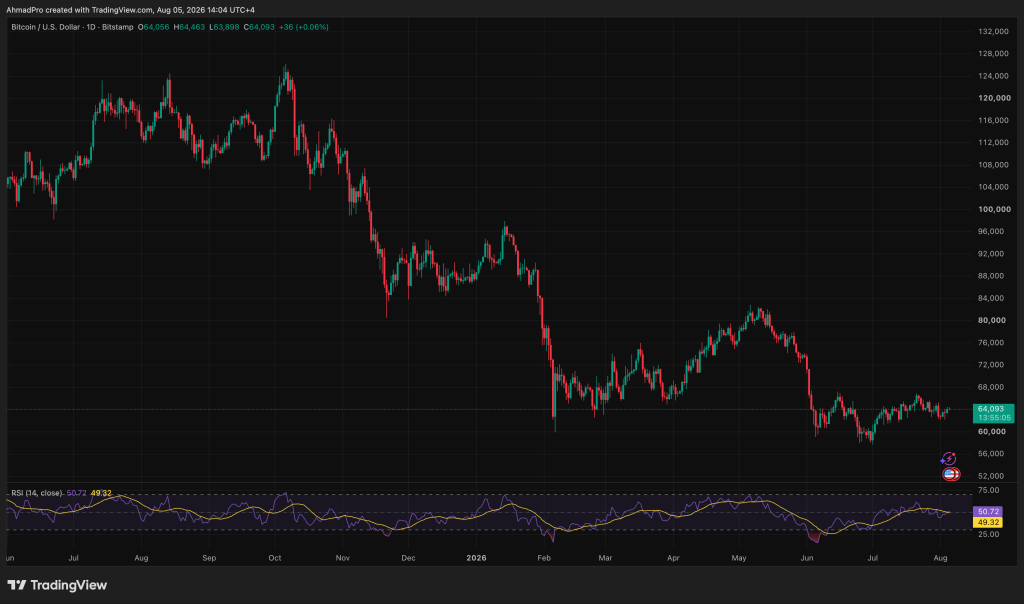
Neither scenario supports adding leveraged exposure now. Hayes is explicit: wait for a confirmed Fed pivot before deploying aggressively into risk assets. For active traders tracking current Bitcoin technical levels, the implication is that the next major entry signal comes from the Fed’s balance sheet, not from price action alone.
Once the Fed does blink, Hayes said Maelstrom will deploy excess stablecoins into two specific altcoins: Zcash and Hyperliquid. The selection of Zcash is notable given Hayes’ prior public exit from ZEC following a protocol bug; the return to the position signals a reassessment.
Hyperliquid’s inclusion reflects the view that a surge in fiat liquidity benefits high-beta DeFi infrastructure with genuine revenue and usage metrics.
Discover: Get Paid to Be Right, $25 to Start on Kalshi
Don’t Miss Out on Our $1,000 USDT Airdrop on ByBit
The post Arthur Hayes Says AI Bubble Could Make BTC Hit $1M appeared first on Cryptonews.


JPMorgan, which raised its price target to $240 from $225, said it now expects the space company’s capital expenditures to reach nearly $200 billion in both 2027 and 2028, adding more pressure on free cash flow. “We now project capex of nearly $200 billion in both 2027 & 2028, which further pressures free cash flow in 2027, a trend we see across the hyperscalers,” the analysts wrote.
The bank also pointed to Thursday’s lock-up expiration, when 911.5 million shares could become eligible for sale, potentially increasing the public float by 143%, though it said much of the event may already be priced in because investors have had months to prepare.
Raymond James reiterated its Street-high $800 price target, arguing the company’s operating performance remains strong.
Shares are currently changing hands at $111.80.
Crypto World
BNB Chain Launches “Build the Era” Hackathon to Find the Official BNB Agent Studio Marketplace

[PRESS RELEASE – Dubai, UAE, August 5th, 2026]
BNB Chain, one of the most active blockchain ecosystems worldwide, today announced Build the Era, an open hackathon challenging builders to create the definitive AI agent marketplace on BNB Smart Chain (BSC). The winning submission will have the opportunity to become the officially adopted BNB Agent Studio marketplace, backed by BNB Chain as a standalone product with its own brand and team.
The hackathon addresses a discoverability gap that has emerged as agent activity on BSC has scaled. More than 200,000 AI agents are now registered on BSC under ERC-8004, the standard for onchain agent identity — roughly 60% of all registered agents across 26 networks.
Participants are asked to build the marketplace itself, not a portfolio of individual agents, and submissions will be judged primarily on how easily someone can discover and hire an agent through the platform. Agents registered under ERC-8004 already carry onchain identity and a track record other software can query; the core task for builders is making that data legible to a person deciding who to hire. The hackathon has no fixed tracks for the main prize; allowing teams to compete across different domains, as well as for partner prizes. The community will define what a BSC-native marketplace should look like.
To guide development, BNB Chain will share reference agents and skills spanning four categories: monitoring agents that track markets, wallets, and positions; grid trading agents that run automated strategies within set ranges; health factor agents that monitor loan positions to act ahead of liquidation; and yield agents that reallocate capital toward the highest-earning opportunities. These categories are intended as guidance rather than fixed judging criteria.
The winning marketplace will be considered for adoption as BNB Agent Studio’s official community marketplace, with BNB Chain backing continued development, user acquisition, and growth alongside the ecosystem. Taking first place does not preclude teams from also competing for partner-sponsored prizes.
Build the Era carries more than $40,000 in prizes from BNB Chain and ecosystem partners, alongside token and credit rewards:
- BNB Chain: $30,000 USDT
- TermiX: $10,000 USDT
- PancakeSwap: 1,000 CAKE
- AltLayer: 8004scan Pro plans
- Altana: 50,000 XP
Submissions will be scored against published criteria covering functionality, data quality, agent diversity, and real-world usage, with full details available when the build period opens. Partner tracks, where applicable, are judged separately according to each sponsor’s own criteria.
Build the Era is open to solo builders and teams, with submissions accepted via intake form through the close of the build period.
Key dates:
- Build period: August 5 – September 9
- Judging: September 9 – September 23
- Winner announcement: November 5
Build the Era follows the BNB Agent Studio launch and reflects BNB Chain’s continued push to make autonomous agents something anyone on BSC can find, hire, and put to work.
About BNB Chain
BNB Chain is a community-driven decentralized blockchain ecosystem powering Web3 applications across DeFi, AI, gaming, and consumer use cases. Its multi-chain architecture spans BNB Smart Chain (BSC), opBNB, and BNB Greenfield, providing the infrastructure for builders deploying onchain applications at scale. For more information, visit www.bnbchain.org.
The post BNB Chain Launches “Build the Era” Hackathon to Find the Official BNB Agent Studio Marketplace appeared first on CryptoPotato.

Prediction market platform Polymarket is in preliminary discussions to raise $1 billion at a valuation of above $20 billion, according to sources familiar with the ongoing negotiations.
The latest discussions come only a few months after the platform closed a $15 billion funding round in April.
Polymarket Looks To Raise $1 Billion
If the latest funding round is successful, it would likely double Polymarket’s October 2025 valuation of $9 billion. The company secured a $15 billion valuation during its April funding round, bringing hedge fund D.E. Shaw & Co. and venture capital firm G Squared on board as new investors. Polymarket also secured a $600 million investment from Intercontinental Exchange Inc. during April’s funding round, bringing the total investment close to $1 billion.
Since the April funding round, Polymarket has launched its US exchange and reported annualized revenue of over $1.2 billion. Daily notional volume on Polymarket’s US exchange has crossed $100 million, a substantial increase from the $75 million reported in May. Negotiations remain at an early stage, with no term sheet, closing date, or final investor sheet publicly available. A $20 billion valuation would value Polymarket nearly 33% higher than the April 2026 funding round, and more than twice Bloomberg’s October 2025 valuation.
Why Polymarket Has A Strong Case For Higher Valuation
Polymarket’s return to the US market as a regulated entity gives it a highly regulated growth channel and bolsters its case for a higher valuation. Polymarket US is listed as QCX LLC, a designated contract market, in the Commodity Futures Trading Commission’s (CFTC) official registry. Polymarket has submitted rule changes, liquidity programs, surveillance, and trading procedures since its listing. According to Bloomberg, Polymarket opened its US exchange after its April 2026 funding round.
Polymarket’s reported revenue growth supports the platform’s push for a higher valuation, and trading data revealed a significant jump in trading activity on the US platform.
Kalshi’s $22 Billion Valuation
Kalshi, Polymarket’s biggest rival, announced a Series F funding round at a $22 billion valuation. The funding round was led by Coatue, with investments from Andreessen Horowitz, Sequoia Capital, IVP, Paradigm, AKR Invest, and Morgan Stanley. The prediction market reported an 800% increase in trading volume, while its annualized trading volume rose from $52 billion to $178 billion. Kalshi also claimed it controlled over 90% of the US prediction market when it announced the funding round, while independent data showed Kalshi processed over three times the combined volume of Polymarket’s international and US platforms.
Polymarket plans to leverage its crypto settlement infrastructure, international reach, brand recognition, and partnership with Intercontinental Exchange to narrow the valuation gap with Kalshi.
Ongoing Regulatory Disputes Could Hamper Funding
Polymarket US is facing lawsuits in several US states that argue sports events contracts equate to gambling and are subject to state, not federal, laws. Polymarket and QCX were also the subject of a civil complaint filed by the Nevada Gaming Control Board to stop companies like Polymarket from offering unlicensed wagering in Nevada. Both Polymarket and Kalshi are also locked in a dispute about whether the Commodity Exchange Act gives the CFTC exclusive authority over prediction markets.
Disclaimer: This article is provided for informational purposes only. It is not offered or intended to be used as legal, tax, investment, financial, or other advice.


What the regimes reveal
Splitting the window into bull, bear and sideways markets by the 200-day moving average sharpens the picture considerably. In bull regimes both approaches beat the plain 60/40, though the trend version retained much of the upside on a more controlled path. Bear regimes produced the widest gap. Spot exposure transmitted more of crypto’s drawdown into the broader portfolio, while the trend sleeve, designed to step away from persistent downtrends, kept losses shallower and the ride more survivable.
Sideways markets deserve more attention than they usually receive. Range-bound conditions, where prices churn without a clear direction, offer no strong trend to reward conviction and no clean rebound to rescue poor timing. Through those stretches, direct bitcoin exposure struggled to justify its added volatility, while the rules-based sleeve had a better chance of avoiding risk without reward. Real portfolios spend a great deal of time in exactly these noisy, indecisive transitions.
The forward case
Three structural forces will shape how these choices play out. The post-ETF market is more flow-sensitive, so demand shocks travel quickly and can amplify both trends and reversals. Supply growth is anchored by the 2024 halving and will keep shrinking. Regulatory clarity in major jurisdictions continues to separate investible projects from speculative noise, raising the premium on transparent benchmarks and institutional-grade products.

RedotPay is facing a lawsuit seeking around $473 million in damages from Binance-affiliated companies.
The case centers on allegations that the Hong Kong-based stablecoin payments firm diverted more than 470,000 users from Binance Card by allowing them to fund the firm’s payment cards through Binance Pay outside the terms of an existing commercial agreement.
Bloomberg reported the lawsuit on Wednesday and cited a Hong Kong court filing which revealed the exchange’s affiliates Nest Trading, Distributed Technologies Ltd., and Chaintecs Consulting Singapore brought the case against RedotPay’s co-founders Gao Zhangpeng, Chan Wa Choi, and Yao Chao.
Agreement Breach
The plaintiffs calculated the claimed damages using a lifetime customer value of $925 for each allegedly diverted user. Chaintecs has also brought a related case in Singapore, the hearing of which is scheduled for Friday.
The dispute comes months after Binance’s decision to end its support for the company. In an update, the exchange previously said that Binance Pay features and functionality on the RedotPay platform were discontinued from April 3, 2026, as part of its review of merchant partners.
Meanwhile, the Hong Kong-based firm has been expanding its presence in crypto payments and preparing for a possible public listing. It was in talks to raise as much as $150 million, with the potential funding coming as it targets a US IPO that could value the business above $4 billion. JPMorgan Chase, Goldman Sachs and Jefferies Financial Group were advising the company on a potential New York listing that could come as early as this year.
It had raised $194 million in two funding rounds back in September and December 2025. Coinbase Ventures, Circle Ventures and Blockchain Capital were among the investors. RedotPay has also posted significant growth in transaction activity. Its annualized total payment volume crossed $10 billion in December 2025, while its full-year TPV increased 300% year over year.
User Growth and Expansion
The RedotPay dispute comes as Binance continues to expand its reach across the broader financial market. In July, the exchange said its registered user base had climbed to 323 million across more than 100 countries, increasing 7% in the first half of 2026.
Institutional users also surged by 9% during the same period. Its cumulative trading volume reached $156 trillion after $11.4 trillion was added in the first six months.
Beyond crypto, its traditional finance products have generated more than $80 billion in monthly trading volume since March. Its stock trading service, which was launched in June, crossed $1 billion in assets under management within a month.
The post Binance Affiliates Sue RedotPay Founders for Nearly $473 Million appeared first on CryptoPotato.
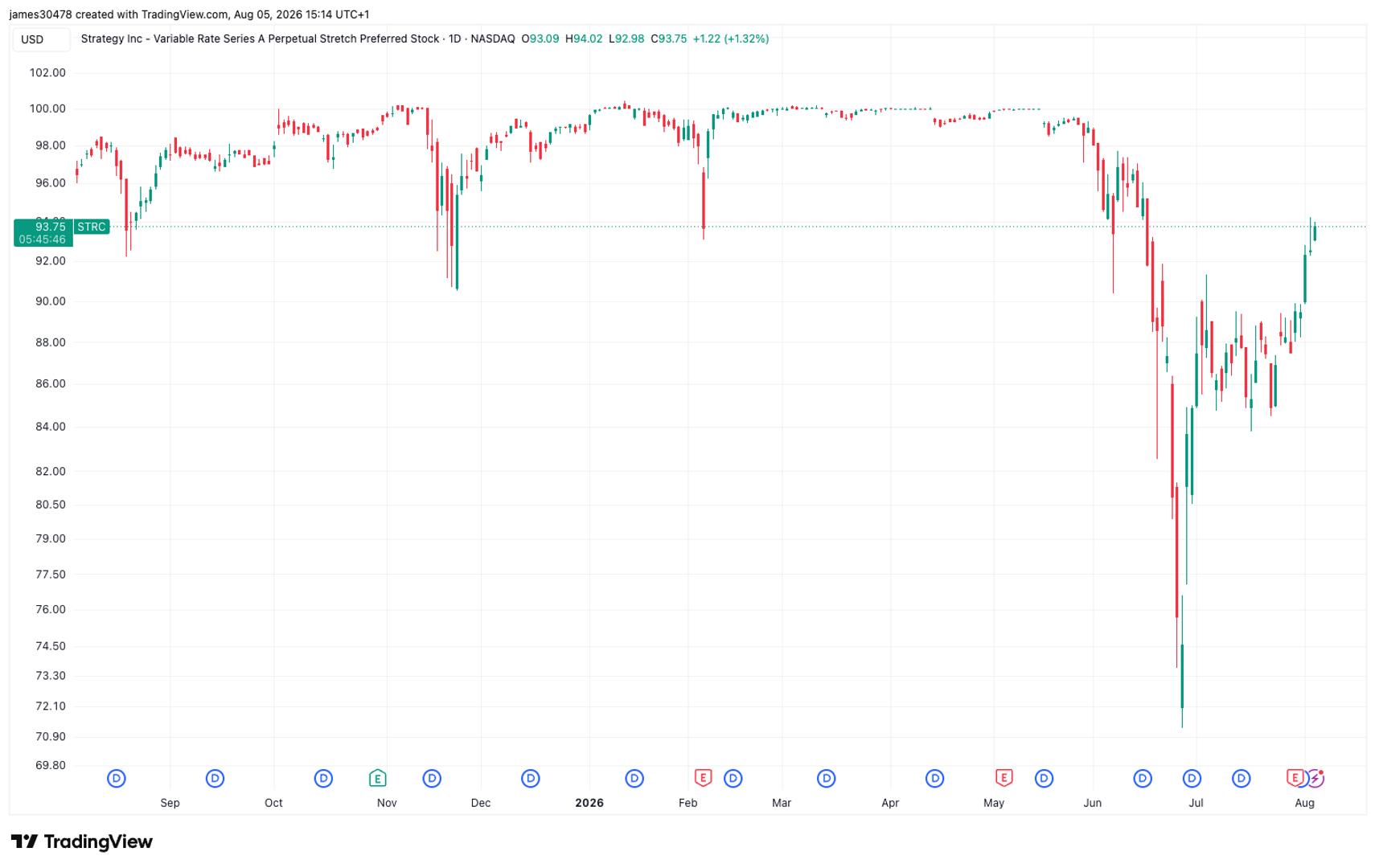
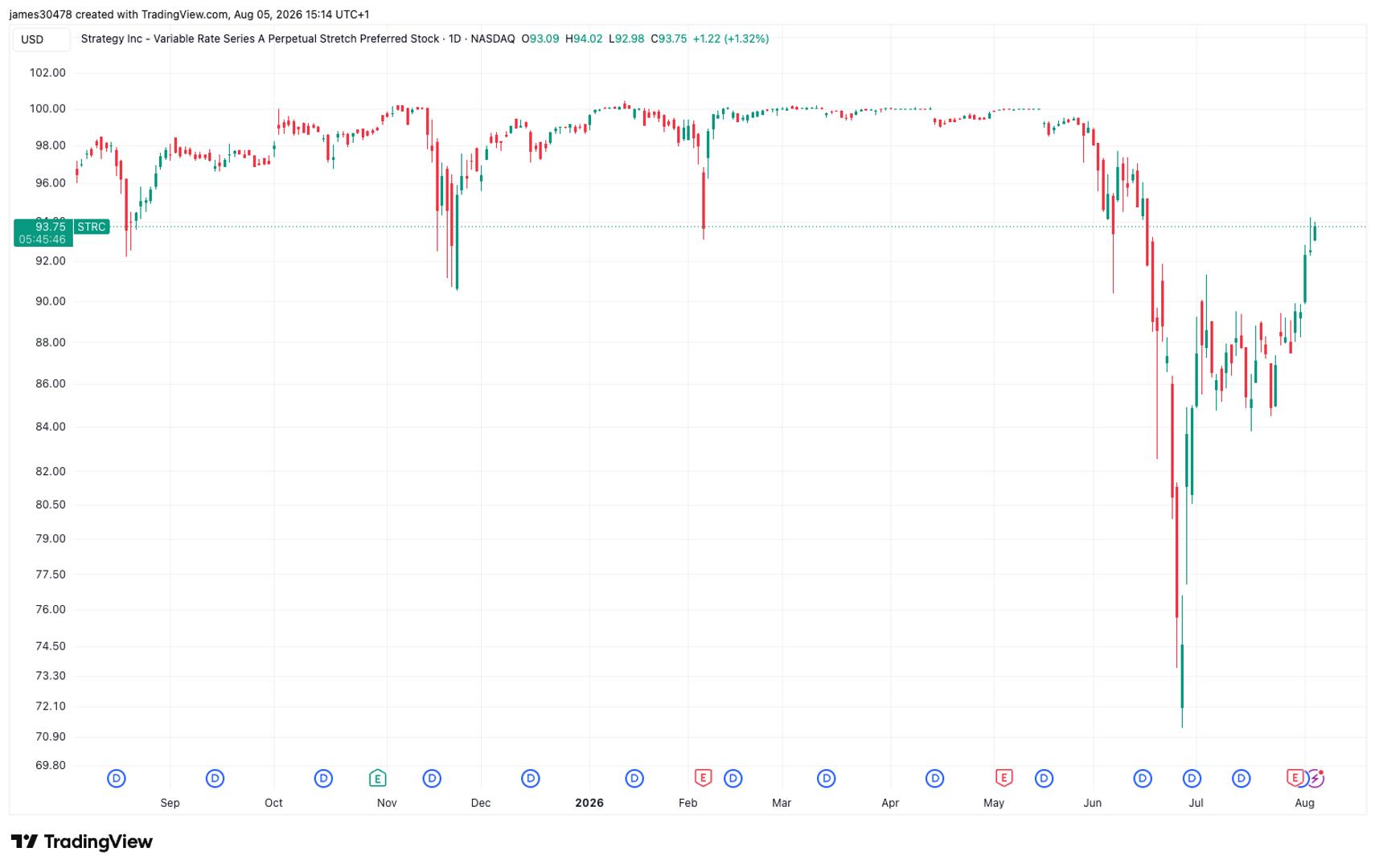
Strategy’s (MSTR) perpetual preferred stock, Stretch (STRC), has risen more than 30% from its June low. It is currently trading around $94, after gaining another 1% on Wednesday.
STRC bottomed in late June around $71 as bitcoin fell below $60,000. Since then, Strategy has sold 5,226 BTC for $321 million across three separate transactions, reducing its bitcoin holdings from 847,363 BTC to approximately 842,137 BTC. The sales were intended, in part, to demonstrate that the company can use bitcoin to meet its dividend obligations, rather than treating it as an idle asset.
Strategy has also repurchased $106 million of STRC as it seeks to return the preferred stock to its $100 stated value.
In addition, the company increased its U.S. dollar reserve by another $250 million on Monday, bringing the total to $4 billion. This provides approximately 2.3 years of coverage for dividend obligations on its preferred securities. Meanwhile, Strategy maintained STRC’s annualized dividend rate at 12%.
As for bitcoin, the price has at least stopped falling, stabilizing above $60,000 for several weeks in a row.
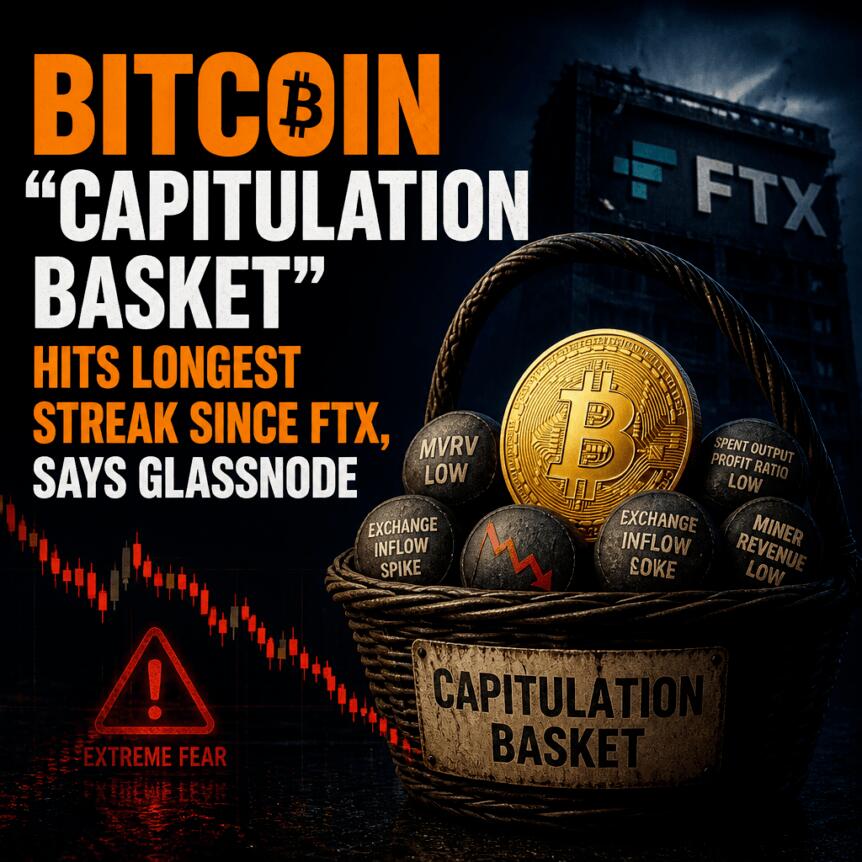
Bitcoin’s on-chain “capitulation” phase has stretched to its longest stretch since the aftermath of the FTX collapse, according to Glassnode. In a Monday update, the firm pointed to its composite cycle-tracking framework showing that a large share of Bitcoin price-related indicators has remained in its most defensive, low-conviction stage through 2026.
The key nuance is that, while conditions resemble late-cycle stress, Glassnode’s heatmap readings have not yet fully matched the deepest “floor” signatures that appeared during earlier bear-market bottoms. At the same time, Glassnode’s latest Market Pulse report suggested that on-chain activity has strengthened—an important counterpoint for investors weighing whether capitulation is finally giving way to stabilization.
Key takeaways
- Glassnode’s “Bitcoin Cycle Position Heatmap” shows 45 tracked BTC price metrics have been in the longest capitulation phase since late 2022’s FTX fallout.
- Rafael Schultze-Kraft said the current period sits in its coldest stretch since FTX, but still not at the unanimous deep-blue level that historically marked cycle floors.
- The heatmap uses a basket of 45 indicators, heavily incorporating investor profitability across short-term (STH) and long-term (LTH) holders.
- Glassnode reported stronger network engagement, including daily active addresses and entity-adjusted transfer volumes moving above upper statistical bands.
Heatmap extends capitulation longer than past cycles
Glassnode’s “Bitcoin Cycle Position Heatmap,” created by the platform co-founder Rafael Schultze-Kraft, aggregates data from 45 different Bitcoin price and market-health indicators. In the heatmap, blue shading is associated with capitulation conditions, while red is used to highlight the euphoria typical of late-cycle momentum toward peaks.
The tool flipped from a more euphoric configuration after November 2021 into a majority-blue dominance throughout 2022. That shift coincided with the collapse of FTX, which occurred in late 2022 and aligned with analysts pointing to Bitcoin’s bear-market bottom around $15,600, according to earlier coverage referenced from Cointelegraph.
Schultze-Kraft’s latest read of the heatmap emphasizes both duration and depth. He said the current stage is “its coldest stretch since FTX” and is late in the bear market cycle, but remains “not yet the unanimous deep blue” that had historically indicated a more definitive floor.
For traders and long-term investors, this matters because cycle-position models are often less about predicting a specific day and more about gauging whether market behavior is approaching the “reset” phase that follows widespread distribution and forced risk reduction.
Why profitability and holder behavior shape the signal
Beyond conventional price gauges like market cap, the heatmap places significant weight on the profitability of Bitcoin’s investor base. It divides participants into short-term holders (STH) and long-term holders (LTH), reflecting that these cohorts typically react differently during sell-offs and recoveries.
Schultze-Kraft also highlighted an additional complication: some indicators change character as the composition of the investor base ages. One example is dormancy, measured by how many days a unit of BTC spent idle before being moved on-chain. Because dormancy tends to increase as the chain ages, the dormancy signal can differ between cycles—meaning the same threshold may not “mean” the same thing across different bear markets.
That kind of calibration is crucial when interpreting heatmap results. A long capitulation stretch can be read two ways: either distribution is still ongoing, or the market has moved into a prolonged sideways grind where participants are not capitulating in the most extreme fashion yet. Glassnode’s framing—that the readings are colder than prior periods but not at maximum floor conditions—leans toward the second interpretation.
Network activity improves even as capitulation persists
While the cycle heatmap focuses on sentiment and cycle-stage indicators, Glassnode’s Monday Market Pulse report pointed to strengthening on-chain behavior. The firm reported that daily active addresses and entity-adjusted transfer volumes moved above their upper statistical bands, a change it characterized as a “notable increase” in network engagement and economic throughput.
That improvement matters because it suggests a degree of market function is returning even if the broader cycle signal still shows capitulation characteristics. In other words, activity may be shifting from panic-driven flows toward more sustained utilization, which can be an early ingredient of stabilization.
Glassnode also noted that stabilization of capital outflows persisted despite investor reaction to a separate security event: a low-entropy bug exploit in Coldcard hardware wallets. The implication is that even if some participants reacted defensively to the news, the broader on-chain throughput did not collapse further.
Supporting this, CryptoQuant data cited by Cointelegraph compared a rise in on-chain transfers of 1 BTC or less with the pattern seen after the FTX implosion. Specifically, it noted that on July 31 the daily tally reached 39,600 BTC, compared with 39,900 BTC on Nov. 16, 2022. The comparison underlines how transaction behavior can echo prior stress periods, even when the macro timeline differs.
What to watch next as the signal matures
Glassnode’s heatmap suggests Bitcoin is in the coldest stretch since FTX, but not yet in the “unanimous” conditions that previously aligned with a more decisive bottom. Investors should watch whether the heatmap continues deeper into its most extreme blue regime while on-chain activity remains elevated—especially daily activity and transfer volumes—as those combinations would strengthen the case that capitulation is transitioning into a more durable stabilization phase.

Coldcard has disclosed an entropy-generation flaw that affected multiple versions of its hardware wallets, prompting firmware updates and a fund-migration warning for users. The issue, first raised by Coinkite on July 31, has since been linked by Galaxy Digital researchers to thefts exceeding 1,596 BTC—reported as at least $100 million—via coordinated attacks.
The incident is a reminder that even long-established hardware wallets can fail at the most foundational step of self-custody: producing the randomness used to generate private keys. It has also reignited a broader debate in the industry over how wallets prove to users—technically and practically—that their entropy sources remain secure in production.
Key takeaways
- Coldcard attributed the problem to a specific fallback path in seed generation that could produce weak entropy on-device firmware, affecting certain firmware versions.
- Galaxy Digital researchers say attackers exploited the weakness to steal more than 1,596 BTC through multiple coordinated attacks.
- Coinkite states that devices where users generated their own entropy (for example via manual dice rolls) were not affected by the specific fallback path.
- Ledger, Trezor, and Foundation emphasize different trust models—secure hardware, layered randomness, and open-source transparency—but all agree entropy generation must not silently degrade.
- Security leaders argue that certification and testing should extend beyond components, requiring assurance that production firmware actually uses the intended randomness source.
Entropy flaws hit the core of Bitcoin key generation
Unlike bugs that directly break encryption or exploit Bitcoin’s consensus rules, the Coldcard vulnerability is rooted in something more subtle: randomness. Bitcoin wallets typically start by generating a seed phrase from random data; from that seed, private keys are derived. “Entropy” describes how unpredictable that randomness is.
If the randomness is weakened—or becomes predictable enough—attackers may narrow the set of possible keys, increasing the odds of reproducing private keys tied to affected wallet setups. In other words, the security failure is not merely about having “less randomness,” but about allowing determinism or partial predictability into a process designed to be unguessable.
Coinkite initially warned users that wallets created on affected firmware should be treated as at risk and that funds should be migrated to newly generated wallets. As researchers assessed the underlying cause over subsequent days, attention turned to how such an issue could persist for years without being detected.
How the issue may have entered production—and what’s confirmed
Core Lightning developer Dustin Dettmer suggested that the flaw may have originated from firmware changes in 2021. His theory centers on an intended interface with a hardware random number generator that was potentially disabled, causing wallet creation to fall back to a weaker pseudo-random number generator used by MicroPython.
Coinkite has not confirmed that exact chain of events, but it did describe the nature of the problem: “Certain firmware versions had a fallback path in seed generation that could produce weak entropy when generated on the device firmware itself.”
Coinkite also stated that manual-entropy setups—where users generated their own entropy via dice rolls or similar approaches—were not impacted by that specific fallback path. That distinction matters because it frames the incident not as a total break of the device, but as a conditional failure mode tied to how the seed was generated.
Experts note that RNG vulnerabilities are notoriously hard to detect. As stated by Ledger product security leader Vincent Bouzon, weak randomness can still pass output tests—meaning values may look random statistically even when the generator is compromised.
Different wallet architectures, different ways to earn trust
Hardware wallet makers generally agree on the principle that secure entropy generation is non-negotiable. Where they differ is in implementation and the methods used to establish confidence that the wallet is really using a strong randomness source.
Ledger’s model relies on dedicated security hardware. Bouzon said Ledger generates seeds using a true random number generator embedded in a certified Secure Element, with the entropy source certified under the AIS-31 PTG.2 standard and the Secure Element undergoing Common Criteria certification. He argued the Coldcard incident reflects a failure in one implementation rather than a verdict on secure self-custody, emphasizing that the architecture must prevent silent downgrade to an untrusted software-based source.
Trezor takes a layered approach. Its chief technical officer Tomáš Sušánka said Trezor combines randomness produced inside the device with randomness provided by the host computer, rather than depending on a single entropy input. He also pointed to entropy checks that are intended to confirm the device contributed unpredictable randomness during wallet creation. “The takeaway for the whole industry is that randomness cannot depend on a single source or a single line of code being correct,” Sušánka said.
Foundation’s Passport similarly uses multiple entropy sources and pairs that with transparency. Zach Herbert, Foundation’s CEO, said Passport combines randomness generated by separate hardware components before creating a wallet. He also highlighted that Passport firmware is published as free and open-source software with reproducible builds, enabling independent verification that what runs on the device matches the published code.
Certification gaps and the push for stronger assurance
The Coldcard event has underscored tension between what certifications and component testing can guarantee—and what users ultimately need to trust: that production firmware uses the intended entropy mechanism correctly under real conditions.
Security and infrastructure leaders argue that many existing validation schemes focus on individual parts, not the full behavior of the complete system in operation. Nick Percoco, chief security officer at Kraken (and formerly CSO at Uptake), called the entropy failure a “wake-up call” for the hardware wallet industry. He argued that certification often verifies components, but not whether production firmware actually invokes them correctly.
Percoco proposed an industry-specific assurance standard that would include independent validation of entropy sources, checks that firmware calls the intended hardware random number generator, and certification tied to specific hardware and firmware versions.
The debate also extends to how openness and security culture influence outcomes. Herbert argued that inviting external researchers and maintaining open-source practices are part of building resilient products, not just a matter of code transparency or auditing. The larger point from multiple stakeholders is that redundancy, verification, and accountability must span the full chain from hardware entropy to final seed generation.
What Bitcoin users should do after Coldcard’s warning
For Coldcard holders, the immediate action is straightforward: follow Coinkite’s migration guidance if the wallet was created using affected firmware versions. The purpose is to move funds to wallets generated with safe, newly created seeds.
More broadly, the episode reinforces a principle emphasized by custody-focused experts: designs that rely on a single device, single vendor, or single institution being correct can leave users exposed when that assumption fails. Michael Tanguma, head of product at Onramp Bitcoin, said the trust model for self-custody depends on vendors getting multiple layers right, while emphasizing that “architectural” mitigations—such as multisig setups with independently generated entropy—are the approaches that scale to real-world risk.
In short, Coldcard’s entropy issue appears to reflect a vulnerability in a particular implementation pathway rather than a claim that all hardware wallets are broken. Yet it demonstrates why randomness generation—the part most users never see—remains one of the hardest to verify and one of the most important to get right.
As Coinkite prepares a fuller technical postmortem “soon,” and as the industry responds to calls for stronger end-to-end assurance, the next thing readers should watch is whether wallet makers tighten their verification methods around entropy usage in production firmware—not just around isolated components.

Donald Trump reportedly ready to do ‘everything possible’ to keep Gianni Infantino as FIFA president | Football News

Could Camera Hardware Be The Physical Equivalent To USB-C?

Rakshabandhan gift hamper Making At Home | Money Bouquet Making For Sister #craft #shorts #ytshorts

Renter of Home in Anne Heche Crash Denies Settlement With Son

No Jackpot Winner as $257 Million Prize Rolls Over to $269 Million Monday Draw

Weekend Open Thread: Staud – Corporette.com
Rakshabandhan gift hamper Making At Home | Money Bouquet Making For Sister #craft #shorts #ytshorts

Yahoo Finance Live: Dow, S&P 500, Nasdaq slip in countdown to Fed decision, AI earnings test

TRUMP REGULATES XRP!!!! THE CLARITY ACT DEAL *NOW*!?!
-

 Business7 days ago
Why Trees Belong on the Risk Register
-

 Fashion5 days ago
Weekend Open Thread: Wit & Wisdom
-

 Politics5 days ago
Meta enters AI-training agreement with far-right ‘propaganda rag’ Newsmax
-

 Politics3 days ago
Zack Polanski: an incitement to murder Nigel Farage?
-

 Crypto World4 days ago
MicroStrategy Post-Earnings CLARITY Act Push Could Add New Catalyst for Its Stock
-

 Crypto World4 days ago
XRP Ledger v3.3.0 brings five institutional features
-

 News Videos6 days ago
Bitcoin Enters the 3rd Stage of the Bear Market
-

 Politics6 days ago
Luke Littler’s dominance sparks GOAT debate
-

 Sports6 days ago
Seema Kaliramna Wins Discus Throw Bronze, Takes India’s CWG Medals Tally To 17
-

 Crypto World5 days ago
New York sues Kalshi over prediction market gambling
-

 Crypto World3 days ago
Crypto PAC spending tops $2M in Michigan House race
-

 Business5 days ago
Trump Announces Hamas Disarmament Agreement as Iran Strikes Kuwait Air Base and US Attacks Pause Overnight
-

 Tech3 days ago
ESET tracks rise in malicious AI skills and adaptable malware
-

 Business3 days ago
DTCR: Deleveraging And A Hedge Fund Collapse Point To A Possible AI Bottom
-
 Crypto World5 days ago
3 Fed Officials Just Explained Their Rate Hike Vote: Is Inflation Winning?
-

 Tech5 days ago
Gemini Spark can now use Chrome logins and saved passwords to run errands on your behalf
-

 Tech5 days ago
Building A Reproduction PlayStation Motherboard
-

 NewsBeat6 days ago
Four people die trying to cross Channel in small boats
-

 Sports4 days ago
France Cricket implodes: letters hidden in a drawer and a board at war
-

 Crypto World4 days ago
Moneyflip CEO charged in $40K murder-for-hire plot
You must be logged in to post a comment Login