
Politics
Sandra Bullock Reflects On Late Partner Bryan Randall’s Death And Illness


Sandra Bullock is reflecting on the loss of her partner of eight years, Bryan Randall.
The Oscar winner and photographer began dating in 2015, and were together until he died in 2023, three years after privately being diagnosed with amyotrophic lateral sclerosis (ALS), a type of motor neurone disease.
During an appearance on an upcoming episode of the podcast SmartLess, Sandra spoke about how her partner asked her “not to share” his diagnosis publicly.
“I wasn’t allowed to speak about it,” she recalled. “That was the request and I tried – I honoured it.”
Sandra said that she understands why Bryan “asked me not” to disclose his condition publicly, but admitted that it “isolated me in the process” to carry such a “huge weight” without being able to talk to anyone outside of her family about it.
The Miss Congeniality star claimed that she “started grieving Bryan four years before he passed”, pointing out that he was “ill for half of our relationship”.
“My person left a lot earlier than the body left,” she recalled. “I don’t think I ever dealt with that until after he passed, because you’re just on this treadmill, you know?”
She also shared how caring for her parents in the past meant that illness “doesn’t scare me”, but claimed the difficult thing was her own children, as well as Bryan’s, living through the experience with them.
“I can see and be around just about anything,” she continued. “But I had two young kids that were navigating it, especially a little girl who saw [Bryan] as a father figure.”
“When the physical illness was then coupled with the mental health aspect of things – and it’s something that people don’t talk about – it was a trifecta that was pretty dark,” she then added.
After Bryan died, his family put out a joint statement which read: “Bryan chose early to keep his journey with ALS private and those of us who cared for him did our best to honor his request.
“We are immensely grateful to the tireless doctors who navigated the landscape of this illness with us and to the astounding nurses who became our roommates, often sacrificing their own families to be with ours.”
Back in 2021, while Bryan was privately struggling with his illness, Sandra called him the “love of my life”.
“I am someone who went through the divorce process,” she said on Red Table Talk, while discussing the fact that she and Bryan were not married. “[And then] I found the love of my life.
“We share two beautiful children, three children, he’s got his older daughter. It’s the best thing ever. I don’t want to say do it how I do it, but I don’t need a paper to be a devoted partner and a devoted mother.”
Sandra Bullock’s full interview with SmartLess will be released on 24 August.

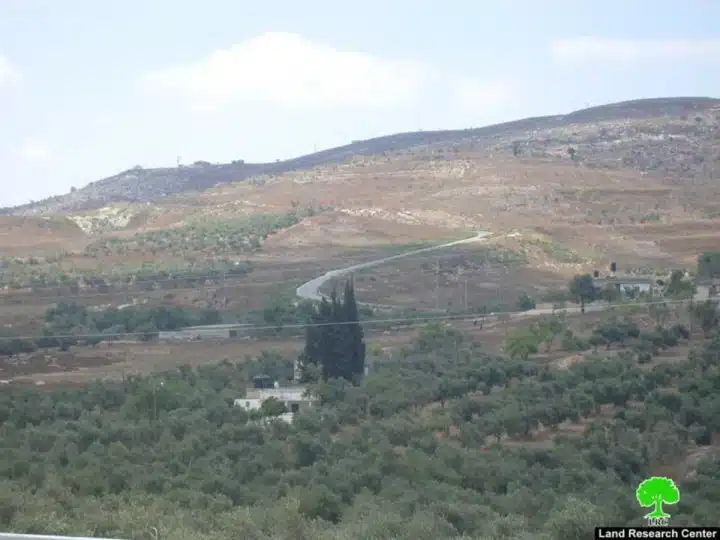

As the siege on Palestinian homes in the village of Qusra continues for a second week, Israeli settlers feel confident they will face no consequences for their terrorist activities. Inaction from the Netanyahu government and the international community has given these colonists a growing sense of confidence. It has also encouraged them, and given them the green light to use the same tactics elsewhere.
Israeli settlers cut off electricity supply
On 18 August, settlers broke an electricity pole, which provided power to the home of brothers Ayman and Musab Sufan, and their families. The long-suffering Sufans live in the West Bank village of Burin, south of Nablus.
Soon after their home lost its power supply, the ‘Israeli’ military used bulldozers to block the only road leading to the Sufans’ home, completely cutting off the already isolated and exposed house, and its 10 residents, from the rest of the village.


There were fears a situation may result similar to that in Qusra, but luckily this has not been the case. Some makeshift DIY from the family has ensured the electricity is back on, while the roadblock has also now been removed.
Roadblocks usually occur as part of the military’s cooperation with the Israeli settlers. But it is not known for certain if this was the case here, or why the road was reopened.
What we do know is that in June, Haaretz reported a military legal adviser had warned top IOF officials that the military had not been following the required legal procedures for imposing movement restrictions, and that barriers often lack official orders, proper documentation, and publication. This adviser warned that continuing this could lead the Supreme Court to cancel the roadblocks altogether. So he urged the military to stop the practice and establish proper oversight.
The occupation’s soldiers and settlers making their lives hell
Although the roadblock to their home has now gone, difficulties faced by the Sufans are far from over. Jonathan Pollak, a human rights defender and activist, has known the family for many years. He tells us:
The outpost has been there for a while, and is a source of constant intimidation, sabotage and attacks. Although the family can now cross to the village, they are still facing regular harassment by settlers and soldiers.
Pollak explains the attacks against the family are constant. Power has been cut more than once to their home, and their olive groves have been set alight.

He says:
They have basically been forced to barricade themselves inside their home. In the most literal meaning- putting up tall walls and fences, iron gates and CCTV cameras.
Israeli settlers carry out ‘Israeli state’s’ ethnic cleansing
The Sufans’ home is below the Yitzhar settlement, which was established in 1983. Since then the settlement has continued expanding over the lands of Burin, Hawara, Einabus, Urif, Asira Al Qibliya and Madama. The settlers currently intimidating the family are residing in an outpost of Yitzhar, just 150 metres from the Sufan’s home.
There has been a long campaign by the Israeli occupation to try and forcibly displace the Sufans from their home. So far it has been unsuccessful, only because of the steadfastness and resilience of these Palestinians. But the systematic attacks continue unabated, due to the geostrategic position of the house. Pollak says:
The Sufan home is the only permanent Palestinian presence in the entire area between Huwwara to the East, Yitzhar to the South, Madama to the West, and Route 60 and Burin to the North. Driving the family away would enable an Israeli takeover of the farmland in that entire area. This is a story about two families who have been suffering for over two decades, not at the hands of so-called extremist settlers, but as part of the overarching Israeli policy of ethnic cleansing.
Human rights abuses documented for almost 25 years
The Centre for Protection and Assistance to Asylum Seekers (APC/CZA) is a Serbian organisation. It has documented settler violence towards the Sufan family as far back as 2003. In 2010, in a piece titled Life in Constant Fear, the human rights organisation wrote about Hanan Sufan. Her husband died of a stroke in 2003, soon after watching settlers pour petrol around their home and set fire to it with the family inside.
Hanan Sufan told APC/CZA that government officials, human rights organisations, activists and journalists had all promised to help the family. But that help has never arrived.
According to APC/CZA, even in 2010, conditions were so dangerous for them that:
Iron bars are on all the windows, placed to prevent stones and Molotov cocktails from flying into the house. Barbed wire is placed on top of the fence to prevent attackers from breaking in, and there’s a bed on the roof of the house. Sufan says it’s her son’s bed, who stays outside at night to listen for intruders.
In 2012, the UN also reported that their sheep had been poisoned, and a horse stolen, while cars and solar panels had been destroyed by settlers.
Our governments are accomplices to the crimes of the Israeli occupation
The pressure on the Sufan family to leave is continuing right now, as their home remains in the way of settlement expansion- and all the crimes that go with it. Even though their situation has been documented for decades, there has been no help or justice coming their way. They have been left to protect themselves from a relentless campaign of violence. Why has no effective protection been provided, or those responsible not been held accountable, when officials have been aware of the situation for so long?
There is very little hope that the Israeli occupation will hold those responsible to account. The UK, US and European states have influence over ‘Israel’, so have a responsibility to act. They have so far only relied on meaningless statements of concern. They must use this influence through diplomatic pressure, sanctions, and a review of all military and trade ties, instead of continuing with political cover and business as usual.
Those who claim to support human rights and international law must take immediate action, to ensure the Sufan family are not forced out of their home in Burin. If they continue to do nothing, foreign governments will not only be bystanders to the Sufans’ forced removal but will be accomplices to it.
Featured image showing Sufan home and the settlement on the hill, via Land Research Centre
By Charlie Jaay
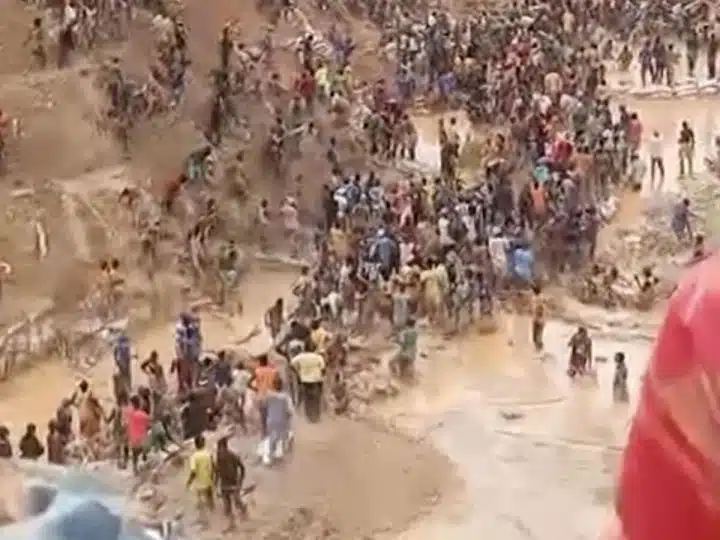

Mine collapse — Over 100 African workers died recently in a horrific artisanal mine collapse at the illicit Zamboye mine. The riverside Zamboye mine borders between western Central African Republic (CAR) and eastern Cameroon.
Red Cross volunteer Gervais Ganagoroh, involved in the relief effort, told AP news agency that more than 100 bodies had been recovered from the mine collapse. City official Bertrand Be Yangue said the toll is expected to rise, with several people still missing or trapped beneath the rubble. He told AP:
Finding them alive would be a miracle … We are saddened and heartbroken to see young men and women perish after coming to the mines to save their families from despair.
Cedric Mbango, one artisanal miner working at the site, described the incident as “catastrophic”. Sadly, such catastrophes are grimly familiar to insecure mine workers and families, many on miserably low wages.
Al Jazeera recalls such horrific events as a repeat occurrence. In this year alone, they report:
In June, a collapse killed dozens of people at the Be-Mbari gold mining site, also on the Cameroon border.
In mid-March, a landslide killed seven people at a mine in the village of Ngourroum, in the west of CAR.
Another 20 were killed in February in Gordi, in the northeast.
Meanwhile in the Democratic Republic of Congo (DRC), some 200 miners were wiped out in a horrifically similar January mine collapse. That disaster occurred in a coltan mine on the Congo-Rwanda border, controlled by rebel group M23. United Nations officials accuse Rwanda’s government of materially backing M23, which aims to overthrow the DRC government, to plunder its neighbouring country.
‘Air thick with flies’: UAE’s Colombian mercenaries recount horrors of Sudan siege
Mine collapse — UAE’s bloody sub-imperialism
The reasons to suspect UAE involvement in chains of extraction from Zamboye and similar mines are many. As a key Western client state and political ally in the Arab Gulf, it is effectively a sub-imperialist state.
An investigation into mining in Cameroon earlier this year uncovered over 200 illegal artisanal gold mining companies. Most are foreign-owned, although illegal mine ownership is predictably opaque.
The probe came after vast balance sheets discrepancies were detected. Other countries, especially the United Arab Emirates (UAE), declare much higher import figures than official gold exports suggested. By many accounts, the UAE was importing sometimes 700 times Cameroon’s official export weight.
Circuits of gold and mineral extraction from Africa to the UAE often do not end there. Dubai’s vast gold reserves are collateral for Euro-American governments and corporations. Likewise, weapons flows from Britain or America to the UAE frequently find their way into African militias’ hands. An instructive case of these sub-imperial circuits is the world’s worst humanitarian crisis, namely Sudan’s conflict.
Sudanese civil war
In the opening move of Sudan’s 2023 civil war, the UAE commissioned commercial and military cargo planes alike for a 1.5 tonne gold heist. The genocidal Rapid Support Forces (RSF), considered a paramilitary proxy of the MbZ regime, carried out the heist in return for funding and weapons from Dubai. That civil war has now cost upwards of 150,000 Sudanese lives and displaced millions regionally.
The Gulf’s bloody plundering and militia-backing of Africa is not limited to the UAE. In fact, it’s often made more intense and atrocious as a direct result of competition with regional rival Saudi Arabia. Bloody proxy battles between the dominant Gulf regimes span from DRC to Yemen, Sudan to Ethiopia.
Amidst this, notorious war-criminal, UAE-based CIA asset Erik Prince, owner of private militia Blackwater, expanded his involvement alongside the increased DRC-UAE cooperation:
expanded his involvement alongside the increased DRC-UAE cooperation.
As Critical Threats reports, Prince gains lucrative contracts as hired security for mine extraction:
The Congolese finance ministry hired Prince and his firm, Vectus Global, for a five-year, $700 million contract in late 2024 to help crack down on tax evasion in the DRC’s mining sector and provide covert military support to the FARDC. … Prince was also in discussions with the DRC about deploying Salvadoran mercenaries to help secure Tshisekedi’s presidential palace in Kinshasa.
UAE-backed Sudanese militia amasses property Empire in Dubai
UAE or China? Imperial blame games
Quarterly journal African Defense Forum (ADF) attempts to shift blame onto “illegal Chinese gold mining.” By way of evidence, it cites Chinese mine owners invited to a ministerial conference about new crackdowns on illegal mining. ADF is funded and published by US Africa Command (AFRICOM) to
provide an international forum for African security professionals.
AFRICOM is the US Department of War’s imperial command centre for the entire African continent. ADF at least acknowledged the gold’s suspected destination, which is the UAE by best guesses.
Similar reporting by the Institute for Security Studies (ISS) completely ignored the gold’s destination, instead blaming “Chinese operators.” (Notably, conflict-complicit European diamond mining monopolist De Beers founded the ISS in the 1990s. De Beers is notorious for its global dominion of “blood diamonds.” That same corporation recently reported record losses, owing largely to Chinese lab-grown diamonds. The labs lowered productive costs — and the notorious deadliness — related with artisanal diamond mining.)
Many illicit mining companies in Cameroon are run by Chinese nationals, according to Cameroonian research. However, these demonstrably compromised outlets overlook the fact that most gold is neither headed to China, nor is the mining backed by the Chinese state. It’s a neat sleight of hand.
Their reporting of “Chinese-run sites” or “Chinese operatives” implicitly suggests state involvement. In reality, it’s a case of opportunistic, unscrupulous and likely exploitative private companies. Chinese state mining companies hold many contracts across Africa, but they’re legally above-board. (Even if we find them exploitative or extractive, Jason Hickel outlines how they’re not “colonial,” as some have commented.)
The same cannot be said for the UAE, run by aristocratic sheikh Mohamed bin Zayed. There are no borders between private capital and the autocratic military regime which runs the UAE. Even the level-headed FT flatly labels the UAE’s bloody extractivism across the continent an “imperial push into Africa.”
Featured image via the Canary

Premier League.
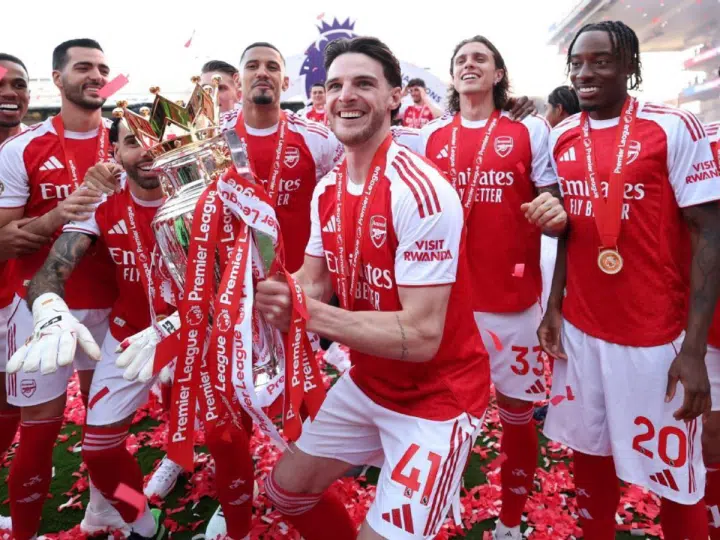
Arsenal: Players look sharp, squad settled after Premier League win
Christos Tzolis has been the standout of Arsenal’s pre‑season, arriving from Club Brugge for £34m and immediately producing end‑product. Across six friendlies, he registered six assists and a goal, including two assists in the Community Shield win over Man City. His numbers mirror last season’s output in Belgium, where he delivered 51 goal contributions in 52 games.
Arsenal’s pre‑season results underline consistency. Wins over MK Dons, Girona and Man City, competitive outings against Betis, Dortmund and Como. Mikel Arteta’s side look settled, with the champions entering the season with continuity, depth and a clear structure.
Aston Villa: mixed results, bright sparks
Villa’s summer has been turbulent, with departures creating early uncertainty, but pre‑season has offered glimpses of optimism. Joao Gomes has slotted in well, while 17‑year‑old Brian Madjo impressed against PSG in the UEFA Super Cup. Results have been inconsistent, but individual performances suggest potential growth once competitive fixtures begin.
Bournemouth: goals flowing, confidence high
Bournemouth’s pre‑season has been prolific. a 10‑1 win over Genoa behind closed doors grabbed attention, while victories over St Pauli and Augsburg reinforced attacking rhythm. Even in draws and narrow defeats, their forward play looked sharp. After finishing sixth last season, their underlying numbers again point to a side capable of pushing high up the table.
Brentford: steady preparation
Brentford’s summer has been about continuity. while not headline‑grabbing, their pre‑season fixtures provided stable minutes for key players. The club continues to rely on structure and efficiency, aiming to maintain mid‑table security.
Brighton: adjusting without Welbeck
Brighton enter the season without Danny Welbeck, but their model remains intact. Pre‑season has focused on integrating younger forwards and maintaining their possession‑heavy approach. consistency will depend on how quickly new attacking combinations settle.
Chelsea: new manager, new ideas
Xabi Alonso begins his first season at Chelsea, reshaping the squad and style. Pre‑season has been about embedding his approach, with mixed results but clear tactical shifts. Chelsea’s readiness hinges on how quickly the squad adapts to his demands.
Coventry City: tough challenge now they’re in the Premier League
newly promoted Coventry face an uphill battle. Frank Lampard’s side have used pre‑season to tighten defensive structure and assess squad depth. Their opening fixture at Arsenal is a daunting start, but the club has embraced the challenge of top‑flight return.
Crystal Palace: new era under Sage
Palace enter the season with a new manager, Sage, following Oliver Glasner’s departure. Pre‑season has focused on stabilising after last year’s European success. Results have been mixed, but the squad remains competitive.
Everton: bumps expected
Everton’s pre‑season has been steady but unspectacular. The club anticipates a season of gradual progress, with friendlies used to build fitness and integrate new faces. Hiccups are expected, but the structure appears more stable than in recent years.
Fulham: transition period
Fulham enter a new phase after Marco Silva’s departure. Pre‑season has been about adjusting to new leadership and refining shape. results have varied, but the squad remains technically strong.
Hull City: back to the Premier League, busy behind the scenes
Hull’s return to the Premier League has involved significant behind‑the‑scenes work. Pre‑season fixtures have been used to assess depth and identify areas needing reinforcement. survival will be the priority.
Ipswich Town: O’Neil in charge, another one back to the Premier League
Ipswich’s pre‑season has centred on Gary O’Neil’s return to the dugout. The club has focused on defensive organisation and adapting to premier league pace. Results have been mixed, but the squad appears committed to the challenge.
Leeds United: Farke building stability
Leeds finished 14th last season and have used pre‑season to build on late‑season momentum. Daniel Farke’s side suffered only five losses in their final 25 league games last year, and friendlies have been used to refine structure. New signings have added depth, and Leeds aim for a solid start.
Liverpool: Iraola already making impact
Andoni Iraola’s arrival has energised Liverpool’s pre‑season. The squad has adapted quickly to his high‑tempo approach, with friendlies showing promising patterns. Liverpool look sharp and ready to compete near the top.
Manchester City: Maresca’s first steps
Enzo Maresca begins a new era at City. Pre‑season has focused on tactical tweaks and integrating younger players. Results have been mixed, but the squad’s quality remains high. City enter the season as one of the favourites, even with managerial transition.
Manchester United: Carrick’s opportunity
Michael Carrick takes charge Michael Carrick takes charge with a clear mandate to stabilise and progress. Pre‑season has been used to embed structure and assess squad balance. United’s readiness will depend on how quickly new ideas take hold.
Newcastle United: questions remain
Newcastle’s pre‑season has raised questions about consistency. Under Jaissle, the club is adjusting to new tactical demands. Results have varied, and early fixtures will be key indicators of direction.
Nottingham forest: Glasner’s fresh start
Forest begin under Oliver Glasner, who arrives after guiding crystal palace to European success. Pre‑season included nine friendlies, used to rebuild confidence after last season’s relegation battle. Glasner’s track record suggests stability, but Forest’s opening fixtures will test progress.
Sunderland: balancing Europe and Premier League
Sunderland’s pre‑season has focused on managing the demands of European football. The squad has been rotated heavily to build depth. Readiness will hinge on how well they balance competitions.
Tottenham Hotspur: heavy spending after Premier League scare
Spurs have spent aggressively, bringing in Sandro Tonali, Mateus Fernandes, Jan Paul van Hecke and others for a combined £230m. Pre‑season has been about integrating these signings under Roberto de Zerbi. Results have been mixed, and questions remain about balance and cohesion.
Premier League — Bottom line
Pre‑season rarely tells the full story, but patterns matter. Arsenal look sharp and settled. Villa and Chelsea are adjusting. Bournemouth appear dangerous. Leeds and Liverpool look organised. City and United enter new eras. Whilst promoted sides face steep climbs. The premier league’s 2026/27 campaign begins with familiar uncertainty and fresh intrigue.
Featured image courtesy of ESPN Sports
By Faz Ali
Politics
Infantino faces his greatest test: Continental alliance hints at no-confidence vote against FIFA president
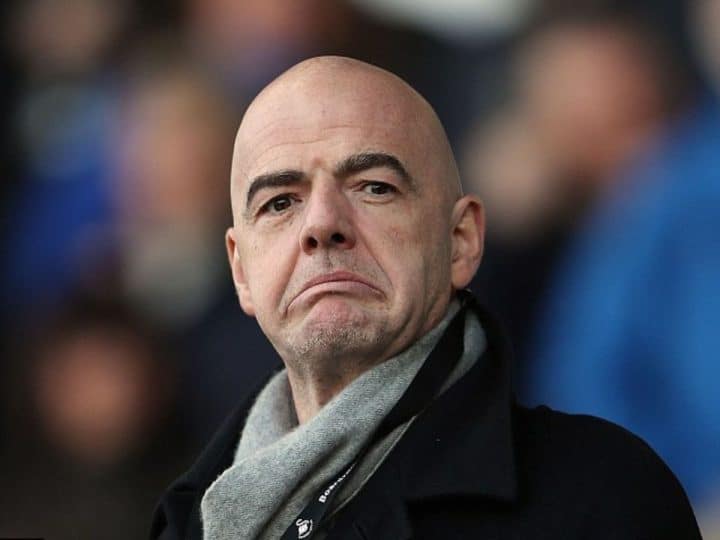

FIFA President Gianni Infantino is facing one of the most significant political crises since taking office in 2016. Major continental federations have begun exploring a potential no-confidence motion amid escalating disputes over a controversial investment project concerning World Cup commercial rights.
According to informed sources speaking to Reuters, UEFA, the Asian Football Confederation (AFC), and the Confederation of North, Central America and Caribbean Association Football (CONCACAF) are considering a move that could ultimately lead to Infantino’s removal from office.
This potential step comes as the FIFA president remains committed to running in the March 2027 elections, turning the current crisis from a commercial dispute into a battle over the future of global football leadership.
Infantino’s World Cup project sparks the clash
The crisis erupted following the collapse of a project intended to create a FIFA-owned commercial entity, offering a minority stake to private investors to manage commercial rights related to the World Cup.
The project drew strong objections from continental federations, particularly regarding concerns over the process, governance, and the transparency of decision-making within the international federation.
FIFA acknowledged errors in handling the proposal and issued an apology to member associations. However, the apology failed to resolve the dispute, instead opening a broader debate on how the federation is managed and the limits governing its commercial and strategic decisions.
In a previous joint statement, UEFA, AFC, and CONCACAF accused FIFA leadership of a “fundamental breach of trust,” signaling that the crisis has transcended a mere disagreement over an investment deal.
No-confidence: A weapon never used before
The path being considered by the continental federations is of exceptional significance; according to Reuters, there is no precedent in FIFA’s 122-year history for a General Congress voting to withdraw confidence from a sitting president.
Under the FIFA Statutes, the FIFA Council can call an Extraordinary Congress, and is obligated to do so if one-fifth of the 211 member associations submit a written request detailing the items to be discussed.
Consequently, such a move would require the support of at least 43 associations to force an Extraordinary Congress, which must then be held within three months of meeting the requirements.
The FIFA Statutes do not contain an explicit article regulating a no-confidence vote, setting the stage for a legal and political battle over how any such move would be implemented.
In the Congress, each present member association has one vote, meaning the battle won’t just be decided by the major continental powers, but will ultimately depend on the ability to mobilize enough national associations.
Infantino facing two options
According to one source who spoke to Reuters, the crisis may leave Infantino with two choices: to depart quietly by not seeking a new term, or to face a push for his removal.
However, the second path offers no guaranteed results, a fact his opponents recognize.
Sources indicate that the three continental federations fear a failed no-confidence attempt could backfire by exposing the true extent of the support Infantino still enjoys among national associations, potentially giving him a strong political boost ahead of the 2027 elections.
The irony lies here: an attempt to oust Infantino could, if it fails, turn into an early campaign in his favor.
Uefa: We are not ruling anything out
UEFA has not explicitly confirmed that a no-confidence vote is on the table, but it has maintained its stance calling for a comprehensive and radical review of FIFA’s leadership and governance system.
Featured image via the Canary
By Alaa Shamali
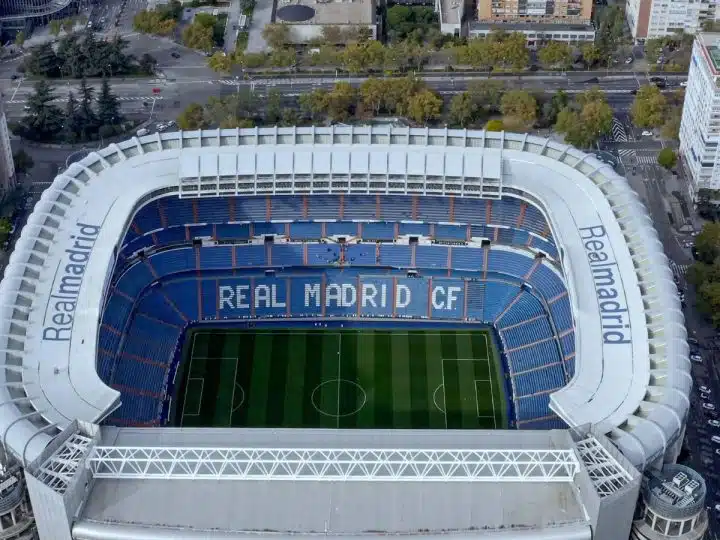

Real Madrid is still the biggest name in football when it comes to brand value. But this year, Arsenal has made the headlines with a huge jump up the rankings.
Brand Finance’s latest Football 50 report, published on 20 August, values the world’s 50 biggest football brands at €23.9 billion in total. That’s the biggest year-on-year increase since the ranking began 15 years ago.
And the money is increasingly concentrated at the top. The 10 biggest clubs account for €14.9 billion of that total — more than 60 per cent.
Real Madrid breaks the €2 billion mark
Real Madrid has now topped the ranking for three years running. Its brand value has jumped 25 per cent in the past year to €2.4 billion, making it the first club to break the €2 billion barrier.
It is also the strongest football brand in the world for a fifth consecutive year. Real scored 95.8 out of 100 in Brand Finance’s Brand Strength Index, the highest mark among the 281 clubs included in the study.
The figure isn’t simply about trophies or results. Brand Finance takes into account things such as fan loyalty, marketing, commercial performance, revenue and the club’s ability to turn its name and reputation into future income.
For Real, the Santiago Bernabéu has become a big part of that picture.
Arsenal makes its biggest-ever jump
Barcelona stays in second place after a 15 per cent rise in brand value to around €2 billion.
Then comes Arsenal.
The London club has jumped five places to third — its highest-ever position in the Football 50. Its brand value has risen 28 per cent to €1.5 billion.
Arsenal’s Premier League title and Champions League run have helped drive the rise. The club has also overtaken Manchester United to become Britain’s strongest football brand, scoring 94 out of 100 on Brand Finance’s strength index.
That puts Arsenal alongside some of the biggest commercial names in European football.
Bayern and PSG make up the top five
Bayern Munich is fourth after a 21 per cent increase took its brand value to €1.5 billion.
Paris Saint-Germain is fifth, also valued at €1.5 billion after a roughly 10 per cent rise.
Manchester City comes next at €1.5 billion, followed by Liverpool at a similar level. Manchester United is eighth at €1.4 billion, while Chelsea is valued at €955 million and Borussia Dortmund at €664 million.
Real Madrid’s Bernabéu is more than a football stadium now
Real Madrid’s rise isn’t happening on the pitch alone.
The redevelopment of the Santiago Bernabéu has turned the stadium into a much bigger commercial operation, with income coming from hospitality, tourism, the museum and other events and activities alongside matchdays.
It is part of a strategy being pursued by clubs across Europe. The biggest stadiums are increasingly being built or renovated to make money throughout the year, rather than sitting largely empty between fixtures.
And for clubs competing at this level, that extra income can make a serious difference.
The gap at the top is growing
There is another story in the numbers.
The 50 most valuable football brands are now worth €23.9 billion. But more than 60 per cent of that value sits with just 10 clubs.
Since 2012, the combined value of those top 10 brands has risen by 250 per cent. Across the full top 50, the increase is 220 per cent.
The Premier League remains the most valuable domestic league brand, ahead of Spain, Germany, Italy and France.
For now, though, Real Madrid remains out in front — and Arsenal is rapidly closing in on the clubs that have dominated football’s commercial elite for years.
Featured image via the Canary
By Alaa Shamali
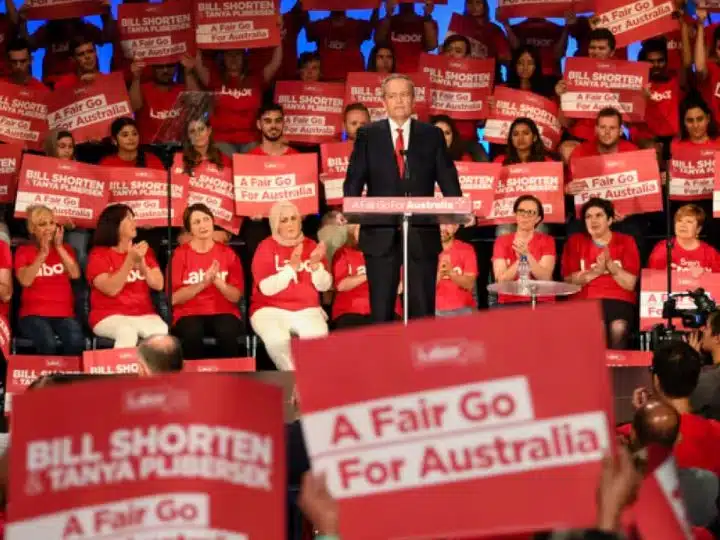

In the early 2000s, Australia topped the charts for an interesting political indicator: the most leadership spills. Since that time, the Australian Labor Party has tightened down on debate and dissent, perhaps in an effort to look united after bad polling has driven various leaders out of office.
History may be about to repeat itself as governments attempt to silence debate on issues affecting diverse and marginalised communities once again. But it is not only in Australia where this crackdown on dissent is being felt. With the Burnham Bounce in effect, will the UK follow suit?
Do you know who the Prime Minister is?
University of Canberra’s Centre for Deliberative Democracy’s Dr Emily Foley has been studying the Australian Labor Party (ALP) and its policies. Referring to the Kevin Rudd–Julia Gillard–Kevin Rudd period from 2007 onwards, she notes:
When Australians presented to the emergency department with head injuries, they stopped asking them who the Prime Minister was.
People had no idea – even regular people who had not sustained head injuries couldn’t tell you who the prime minister was because it had flipped so many times.
Reporter Rodney Tiffen crunched the numbers in 2015 for Inside Story and counted 72 state or federal leadership spills since 1970, with 31 from 2000 to 2015 alone.
What is a leadership spill?
A spill occurs when the members of a political party decide to change party leadership – usually through a vote; often because someone has mounted a challenge.
Foley said it is not always faction-based:
Australian factional dynamics are really organizational, and whilst they were sort of ideological, I would say that the focus of the factions being there at the moment in the Australian context – it’s about discipline and keeping the party structure with the rules.
If there’s a left Prime Minister, there’ll be a right-factional Deputy. It’s a way to organize conference, but there seems to be at least now far less factional policy warfare within the Labor Party.
Burnham challenged Keir Starmer’s leadership earlier this year. In late July 2026, Ben Carroll ousted Victorian Labor Premier Jacinta Allen.
Foley said the UK Labour Party’s factions functioned differently:
The factional dynamics between the two parties are very different…
Something that I’ve noticed in the UK context, when this spill was happening, it was crazy some of the stuff that these Labour MPs were saying in public, that they would never say in the Australian context. The Safeguarding Minister Jess Phillips – she said something that was the most articulate way to describe the modern Labour party, which was about being sick of being made to feel grateful about incremental change…
That was not happening in Australia. So I think there’s this real lack of discipline, both within the factions and within the MPs and the Labor Party in the UK. They were just saying what they thought on the radio, which is crazy.
Polls have an impact
In 2016, writer and researcher Lucy Wark examined the polling data before and after major national leadership spills. She found that the moment a leader polled badly, a spill was not far behind.
She also found that, after a spill, there was negative sentiment for the ALP and positive sentiment for the Liberal Party.
Foley said the polls are often used as justifications:
The polls were kind of predicting it but it’s hard because that’s also a bit chicken and egg, right? Because [Malcolm] Turnbull used those news polls to oust [Tony] Abbott. He said: ‘We’ve lost X amount of news polls in a row, which is why we need to do this leadership spill.’
But Foley also thinks the spills come with consequences:
So something that I think is really obvious is that, because of all the leadership spills and the discontent, what that sort of fostered actually is an overwhelming sense of discipline within the party where the focus is to seem cohesive and united at all costs.
She pointed to ALP Minister Ed Husic’s motion to recognise genocide in Palestine at the ALP Conference in July 2026, which got shut down without debate:
There was this real stance from the media reporting that the conference, which used to be a place of a really intense kind of contest of ideas, is no longer that and and you also hear about that in terms of caucus: that [current Prime Minister Anthony] Albanese tends to run caucus really tight – there’s not many dissenting positions.
So I would say that’s probably a hangover from those years of instability where the [Australian] Labor Party have made it clear that they want to appear united rather than divided.
Husic told the ABC that he didn’t “give a shit” if party colleagues froze him out for speaking on contentious issues.
In 2024, former ALP Senator Fatima Payman crossed the floor on a motion on Gaza to follow what was agreed at the previous ALP Conference and was expelled from the ALP. Foley said:
The parties have professionalized to the point where they are no longer speaking to their rank and file area.
I definitely think the leadership spills would have exacerbated this idea of the ministry in particular wanting to kind of shut dissenting voices down.
Foley also said it would not just be the polls or the spills alone, but the ALP and UK Labour reacting to the rise of other parties:
If you’re looking at a comparative piece, there just wasn’t the threat of One Nation or Reform that there is now, back in those years [2010–2013].
The UK Labour panic
Foley said the electoral loss of more than 1100 local councils was what kicked off the Burnham-Starmer spill:
In the UK, it wasn’t the polls or Reform, it was the fact that the Labour Party lost like 70 percent of councillors – that’s what began everything.
She adds that UK electoral reform might result, but that trust has been damaged too:
As a result, parties are seen to be not doing enough. Then they try to put in reforms. But they’re also very cautious because they’re all running on very thin majorities or very thin support. So then the reforms that they put in tend to be cautious as a result.
She said the UK Labour Party faces the same issues as the ALP:
You know, the Labour Party, for example, is not catering as much to its voter base anymore because that voter base is shifting and changing. They don’t have the social cleavages that would tie them to, say, the union movement as much anymore. They’re factoring in business so there’s all these neoliberal pressures that they are experiencing.
So will Burnham bounce back or like the ALP, build barricades instead?
Featured image via SBS Albanian
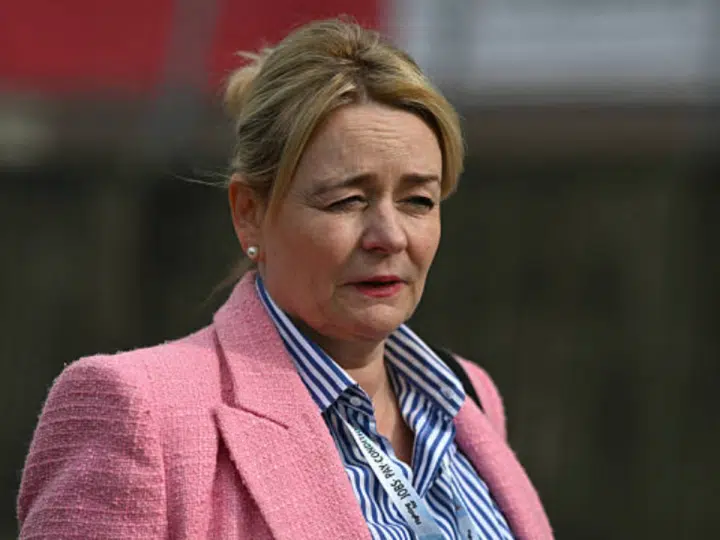

In 2022, Skwawkbox first exposed the attempts of Unite general secretary Sharon Graham – before she took the top job – to have evidence gathered by workers against her husband destroyed. Union staff had recorded four months’ worth of Jack Clarke’s bullying and misogyny, and the union had transcribed the recordings for its disciplinary investigation, which turned into a whitewash.
Unite responded by smearing Skwawkbox. Lawyers later – explosively – admitted the union had destroyed the evidence. But they insisted the recordings and transcripts showed no abuse by Clarke. Supposedly, they only showed him and others getting angry about the management team of Graham’s predecessor Len McCluskey. This claim persisted even though Skwawkbox revealed that Clarke had been on a final warning because of his conduct.
But the lawyers’ narrative was shredded in August 2026, when Maddison Wheeldon and Skwawkbox revealed the leaked transcripts showing details of Clarke’s bullying and misogyny toward staff. The leaks also exposed the union’s attempts to whitewash Clarke’s behaviour – and to silence the complainants, who were eventually paid off to cover up the case.
Sharon Graham of Unite: in her own words
Unite’s denials that Graham had been personally involved in the cover-up by requesting the destruction of the evidence were, frankly, bizarre. Unite claimed that, as Graham did not take over the whole union until 2021, she couldn’t have been involved. This ignored, clearly, her ability as a senior union official to try to have them destroyed – which is what Skwawkbox had reported all along. And the continued existence of the transcripts had proven that such attempts had not succeeded.
But now, a further leak puts the matter beyond doubt. Because it contains Graham, in her own words, trying to organise the destruction of the transcripts, discussing why she wanted them gone and attempting to orchestrate the cover-up against her husband’s unfortunate employees:
Hi – The problem with disciplinary is it makes the transcript public . Also I couldnt accept a move … jack feels he will be goaded etc. He has cause to think this . Maybe if we do it for 6 months instead of 12 ?
…On grievance best thing jack not to be interviewed . It is being dismissed on evidence and they are going . Him giving evidence brings in the transcripts…
If we get the grievances out of the way quickly we can move to finalising the insubordination . Also Steve will have the transcripts from Andrew so we need to ensure all parties advised to delete etc .
The leaks shows the now-general secretary of the union – who is supposed to stand up for Unite’s 800,000+ members in their workplace disputes – discussing covering up evidence against a manager who happens to be her husband. Worse, it shows her looking for ways to cut short their grievance complaint against him and get the aggrieved staff out.
And it confirms that, as Skwawkbox has reported all along, that Graham tried to get the evidence gathered by workers destroyed.
Let’s look at each key part in detail.
“The problem with disciplinary is it makes the transcript public”
Unite and its lawyers have persistently claimed the transcripts of the recordings only showed Clarke and staff complaining about the soon-to-be-outgoing management of Len McCluskey and his team. This pattern of deflection and finger-pointing is a classic ‘look over there’ deflection technique that Unite under Graham has frequently used.
Skwawkbox has already exploded Unite’s claim through leaks of the transcripts and staff. But the latest leak shows that Graham knew how damning the transcripts were – and how damaging to her own prospects of taking over after McCluskey. And she was desperate to avoid that.
“Also I couldn’t accept a move.”
Skwawkbox understands that one of the options examined by the McCluskey management was to move Clarke -to some remote backwater office where he would be out of the limelight. But Graham – who the union has admitted was already planning her bid to take over – “couldnt [sic] accept a move” that would affect her plans.
“Jack feels he will be goaded … Maybe if we do it for six months instead of 12?”
Skwawkbox understands that one of the likely options under consideration was a ‘suspended sentence’ in which Clarke would be sacked if he committed further abuses within twelve months. Clarke was worried his weak self-control would snap – and Graham wanted the suspended period shortened. Again, not something consistent with her campaign claims of being the ‘back to the workplace’ candidate who would put members’ workplace rights above everything – even above members’ resistance to Israel’s genocide in Gaza.
“On grievance best thing jack not to be interviewed”
Again, Graham shows how much she feared the evidence gathered by staff against Clarke:
Him giving evidence brings in the transcripts.
Unite’s Graham: “It is being dismissed on evidence and they are going”
A dossier sent to the union by one of the complainants documents his outrage at the union’s whitewash of Clarke’s behaviour. Most of the evidence he and colleagues had recorded didn’t even make it into the union’s final report on the complaint. What did make it into the complaint was unfounded smears against the complainants and attacks on their work performance that were demonstrably unfounded.
Worse still, the union was about to take disciplinary action against the complainants – though ultimately Unite, after Sharon Graham lobbied McCluskey, paid off the complainants to leave, rather than risk an employment tribunal that would expose all the evidence. Graham evidently knew this: “they are going”.
“Get the grievances out of the way quickly… move to finalising the insubordination”
Rather than stand up for the bullied workers, Graham wanted their grievance put to bed quickly. “Finalising the insubordination” has two possible meanings. One, part of the whitewash was to focus on Clarke’s criticism of McCluskey – and would feed nicely into her corruption claims against McCluskey and others in her election bid and for ever since.
Graham has now been general secretary for more than five years and is still repeating what McCluskey has condemned as “pages of smears and innuendo” – yet has still published no evidence and no one has been charged as a result of the supposed police investigation. Recently, Graham has diluted her claims to allegations that there “may have been wrongdoing”, but still no evidence.
The second possibility is even worse. The workers complained that the union was about to bring disciplinary charges against them because Clarke had put in a grievance that their recordings ‘entrapped’ him and were insubordinate. In this option, Graham wanted the Clarke disciplinary put to bed in order to get started on payback against the workers. While either is possible, the second scenario is just as consistent with the rest of the evidence.
And the grand finale:
“We need to ensure all parties advised to delete”
Again, Graham shows her fear of the transcripts – a fear inconsistent with the union’s attempts to dismiss them as showing something entirely different from what they have been shown to contain. And – shockingly for a supposed workers’ representative – she is explicit that she wants to “ensure” that anyone who has the evidence of abuse deletes it:
Also Steve will have the transcripts from Andrew so we need to ensure all parties advised to delete etc .
“Andrew” will be Murray – who was in charge of the disciplinary investigation into Clarke. “Steve” is not specified, but probably Turner – later Graham’s rival in the 2021 general secretary election. As he didn’t use the scandal in the election, presumably those copies were indeed destroyed.
Unite: denial destroyed
When contacted for comment, the union again responded through its lawyers. The lawyers demanded full information on who received the message from Graham and when. Skwawkbox will not, of course, reveal sources or any information that might allow whistleblower identities to be ‘jigsawed’. The lawyers also demanded more time to respond – another 21 hours.
The additional time was granted and has now expired. But consider: if you were asked about sending texts to have information destroyed in a scandal against your spouse – would you need time to decide whether you had ever done so? Or would you be able to deny immediately? Assuming you hadn’t done so, of course.
When the official statement finally came in – after the agreed deadline – it contained a regurgitation of Unite’s previous smears and deflection, with a demand to publish every word. The Canary is under no obligation to repeat and amplify defamation of others. You can read the original statement Unite provided us here.
In the only point of relevance to this article, the statement did not deny that Graham had sent the message asking for the destruction of evidence and plotting against the complainants.
What Unite did add to its original statement provided to us on 12 August for a previous article was the following (bolding by us):
In that context the publication of these highly selective extracts from covert recordings in breach of individuals’ privacy rights is clearly just another factional attempt by The Canary and Skwawkbox to attack the current leadership of Unite. A further example of this is your latest threat to publish an undated message extract without naming those involved. It is clear that none of the text in the extract you provide does anything to support the false allegations made by the employee and repeated by Skwawkbox and Canary…
It seems clear that the loss of power in Unite by this faction, following successive decisive defeats at the Unite internal ballot box, has led to an increasingly desperate scorched earth strategy by a small group of their defenders to damage the union. The recent publications and threats are clearly part of that. It will no longer be tolerated.
Despite Graham spending millions on legal actions, Unite has never sued in almost four years of Skwawkbox reporting this anti-worker behaviour – with a legal limit of one year to do so before the reporting, and quoting of it, becomes unsuable. Legal action, by the by, would entitle Skwawkbox to full disclosure of Unite’s records and communications – and carry penalties of perjury for lying about what happened.
Meanwhile, Clarke was promoted under Graham to run a department she had just created – where his conduct triggered further complaints, especially from women, and even strike action. Unite then – again – targeted the striking workers taking action against Clarke.
And now the destruction of evidence matter is settled – in Graham’s own words, with more still to come.
Featured image via the Canary
By Skwawkbox
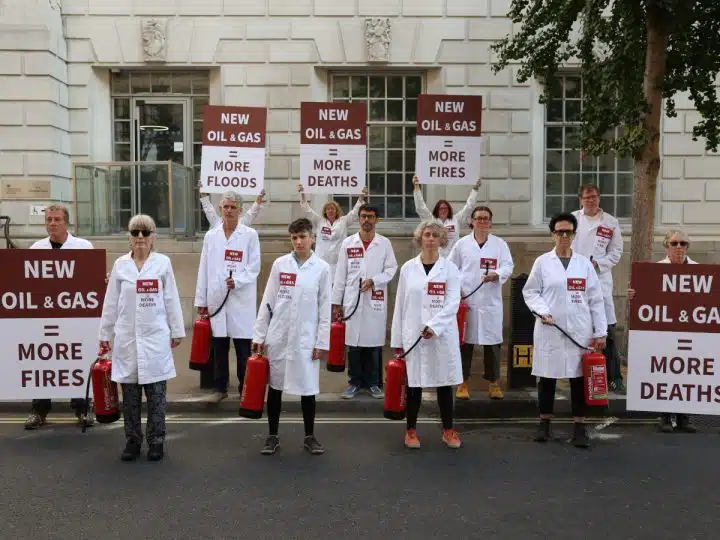

On the day the government ended its ‘public consultation’ on whether to allow drilling from a controversial new oil field, scientists sprayed fire extinguishers at the energy department, dozens of protestors rallied outside the Treasury and hundreds of famous musicians wrote to the Prime Minister. These different groups are all aligned in their message: greenlighting Rosebank is a recipe for more disruption, destruction and deaths.
What’s Rosebank?
Located about 80 miles from the Shetland Islands, Rosebank is the largest remaining untapped oil field in UK waters. Drilling from Rosebank was originally approved back in 2023 by the Conservative government. At that time, many Labour party politicians were vehemently opposed to it.
Ed Miliband – now Foreign Secretary – was one of Rosebank’s most vocal opponents. In March 2023, he summarised:
Rosebank: £3.75bn of taxpayer subsidy which could have been invested in renewables. 80% of oil exported, not a penny off bills, equivalent to half all UK emissions for a year. Colossal waste of taxpayer money and climate vandalism.
The decision to allow drilling from Rosebank was overturned last year after a legal challenge by campaign groups Greenpeace and Uplift. They successfully argued that the climate damage that would be caused by burning Rosebank’s fossil fuels had not been taken into account.
Now Rosebank’s owners – fossil fuel companies Shell, Equinor and Ithaca Energy – are trying again: they have resubmitted their application to drill. Having given the public a chance to comment, the decision now rests with the government.
Resistance to Rosebank
In a summer defined by deadly heatwaves, hundreds of wildfires and drought-stricken harvests, the public have plenty to say about the decision the government now reckons with.
Following pleas last week from environmental charities and top climate scientists, more than 200 musicians – including Massive Attack, Radiohead frontman Thom Yorke and the xx singer Romy – have urged Andy Burnham to lead a more ambitious, joined-up response to the escalating climate impacts we all have to face. In their letter to the Prime Minister, they wrote:
The climate crisis is no longer something we fear for future generations; it is shaping our lives today. Heatwaves are disrupting schools, workplaces, hospitals, transport networks, festivals and live events.
On the same day this letter was published, protestors with Fossil Free London assembled at the Treasury. Highlighting the damage this hot, dry summer has wrought upon food production, they brought empty sacks and baskets. One of their placards stated:
Oil fuels crop failure #StopRosebank
Shortly afterwards, members of the group Scientists on Survival sprayed fire extinguishers at the Department for Energy Security and Net Zero. Their protest echoed the increasingly stark warnings that climate scientists around the world have been making: that new oil and gas means more fire, more floods and more deaths.
As one of the scientists who was at the energy department in protest – and as one of billions of people who will have to experience the worsening symptoms of this fossil-fuelled emergency – I sincerely hope our message will be received and acted upon.
Abi Perrin speaking outside DESNZ. Video credit: Jamie Lowe
Decisions, decisions
According to the latest whisperings, the government may delay its decision on Rosebank. Ministers are apparently concerned about the ‘optics’ of approving new fossil fuels whilst most of England and Wales is in drought and large areas of the UK remain on fire.
But more so than ever, we need politicians to go beyond worrying only about how their decisions will be seen: we need them to take the wider impacts of those decisions far more seriously. Speaking about the choice Andy Burnham has to make, Brian Eno, who signed the musicians’ letter, summarised:
He can stand with the fossil fuel industry and approve Rosebank, or he can stand with the people who will live with the consequences of that decision.
Featured image via Kirk Pritchard
By Abi Perrin
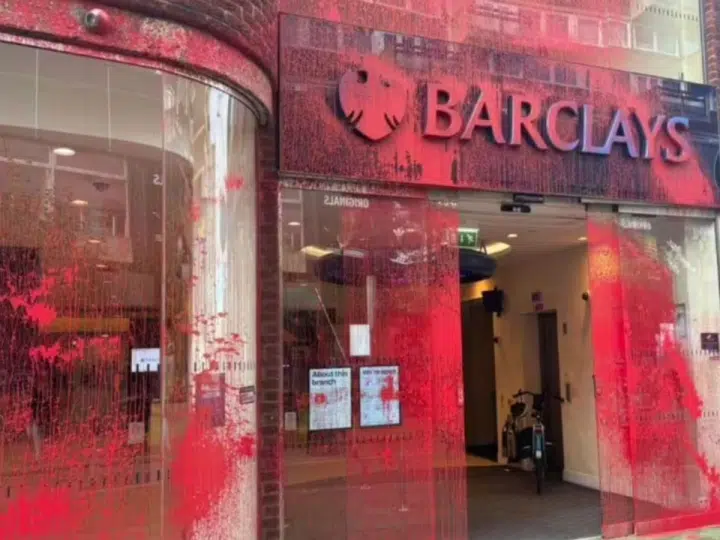

Remarkably, and in a rare blow for justice amid the UK regime’s war on anti-genocide speech and protest, a judge at Preston Crown Court has just ruled that the ‘Barclays 5‘ will not be sentenced as terrorists.
As with the ‘Filton 24’ direct action protesters, the Crown Prosecution Service was asking the judge to rule a “terrorist connection” in the case of five protesters who sprayed a Barclays Bank building, despite only criminal damage charges being brought. But the judge ruled against the CPS, rejecting the state’s — farcical but so far successful — claim that longer sentences should be applied because the activists have a political aim in their actions.
A small victory for the ‘Barclays 5’
One of the defendants spoke outside the court after the ruling:
Confirmed: The Barclays Five will not be sentenced under anti-terrorism powers
One of their number Hmeera Atiqnisar gives a celebration speech outside Preston Crown Court
A small victory in a bigger battle pic.twitter.com/Hdl8uNyPil
— Faz (@hacksupreme) August 21, 2026
New PM Andy Burnham has kept right-wing horror Shabana Mahmood as home secretary to continue the war on UK citizens’ rights to protect Israel. But at least one small victory for humanity and justice has been scored.
Featured image via the Canary
By Skwawkbox
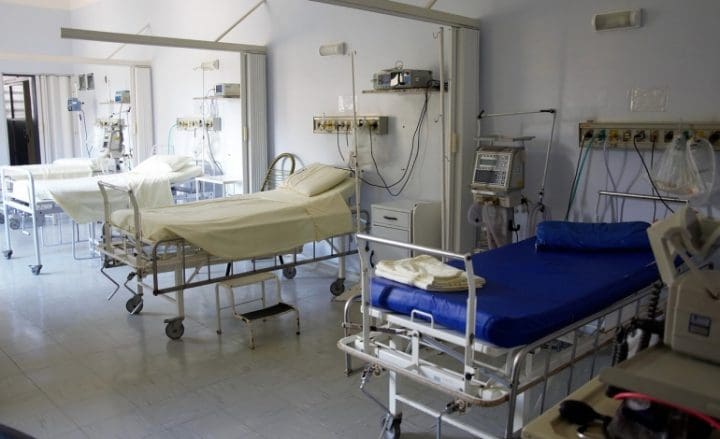

Four hospitals in Greater Manchester are facing strikes from over 350 operating theatre workers next week. But the staff aren’t taking action for higher wages or better hours — they’re walking out to force their employers to pay them what they’re already owed.
The same staff already took part in four rounds of industrial action during June, taking on additional strikes to push for their rights. However, their simple demands have so far gone unmet.
The workers have scheduled their latest strikes for Monday 24 August, Wednesday 26 August and Friday 28 August. Clinical support staff, housekeepers and nurses at Fairfield Hospital, Rochdale Infirmary, Royal Oldham Hospital and Salford Royal Hospital will participate in the planned industrial action.
Clear disregard for staff
The dispute behind the planned walkout centers on the Northern Care Alliance Foundation Trust’s (NCA) use of an agency — NHS Professionals (NHSP) — to handle overtime. For staff, the ongoing strikes highlight deep-rooted issues in management-labour relations.
Unison, the trade union representing the hospital workers, claimed that staff are missing out on money their contracts entitle them to. It explained that:
When covering staff shortages, staff are entitled to time-and-a-half pay. However, in some cases staff earn less than they would on a normal shift, with some missing out on more than £80 per shift.
The union also reported that the NCA tabled an offer to resolve the dispute. However, the trust then quickly withdrew it before any further discussions took place. The cancellation further fuelled the frustration underpinning the strikes.
Kevin Dolan, the Unison North West regional organiser, said:
Those at the top of NCA have shown a lack of leadership and made their disregard for their staff clear.
A deal was put on the table but taken away before we had a chance to talk it over. We are ready to continue negotiations, but it’s obvious NCA has no intention of resolving this.
This isn’t complicated. Staff are simply asking for what their contract says they’re entitled to. Nothing more.
The dire state of patient safety
The Manchester Evening News reported that the strikes come whilst the NCA is already in the grip of damning concerns for patient safety. The trust’s public records show that staff are working under extraordinary pressure. As such, some of them made serious errors that caused harm to patients, up to and including deaths.
The Evening News stated:
The Trust’s own reports found lengthy delays were linked with “28 deaths” and 56 issues of “severe harm”, while problems diagnosing illness led to ten deaths last year. There were also 12,000 cases of delayed treatment last year within the Trust, with bosses claiming “persistently high” levels of sick leave are a major issue.
Gertie Nic Philib — the NCA’s strategy officer — tried to assure the public that the trust was working to ensure patient safety over the strike days: recent strikes have made this a growing concern.
We are preparing for this period of action and are working hard to minimise disruption to services and the patients who rely on our care.
Our focus throughout this period is on maintaining safe services, supporting colleagues and ensuring that patients requiring urgent, emergency and other time critical care continue to receive the treatment they need.
While we have not been able to reach agreement, we respect our colleagues’ right to take lawful industrial [action] and will continue to engage constructively and work together in the interests of patient safety.
We apologise for any uncertainty this may cause. People should be assured, that should any changes need to be made with their care, we would always contact them directly.
This is not a complicated issue. The workers are owed the money that their contracts entitle them to. If the NCA is concerned about ongoing patient safety, it must pay its staff what they’re due.
You’d think that would have sunk in after a month of ongoing strikes within Greater Manchester’s NHS network.
Featured image via the Canary
By Grace

FIFA Opens Disciplinary Case Against Egypt Coach Hossam Hassan

Our top 5 mini PCs under $600 for back to school and work

Finanzielle Freiheit: Diese Fehler solltest du nicht machen





-

 Sports7 days ago
Birmingham 2026: Day 6 Timetable for Irish Athletes
-
 NewsBeat7 days ago
Myanmar says over 300,000 Rohingya refugees verified for repatriation as exodus enters ninth year
-

 Business3 days ago
SMA Solar Technology AG (SMTGY) Q2 2026 Earnings Call Transcript
-

 Politics6 days ago
SEQ Code: The Three Letter Boarding Pass Code That Could Give You The Worst Seat
-

 Crypto World7 days ago
Pi Network Protocol 27 endgame: last upgrade before what?
-

 Tech4 days ago
Qwen3.8-27B runs frontier-class coding agents and reasoning locally, no cloud API required
-

 Crypto World4 days ago
OCC Greenlights Trump Family Crypto Firm for Trust Charter
-
 Tech6 days ago
Every fusion startup that has raised over $100M
-
 Entertainment6 days ago
Marvel Studios Reveals New X-Men Cast Including Adam Driver and Sadie Sink
-
 Business6 days ago
Monarch Mutual Fund set to enter MF space with maiden overnight fund; files draft with Sebi
-

 Business6 days ago
Cristiano Ronaldo’s Secret Wedding Deepens As Presenter Claims Family Learned ’30 Seconds’ Before
-

 Business7 days ago
Facebook Down Now? Users Report Login And Loading Problems As Outage Trackers Monitor Ongoing Issues
-

 News Videos2 days ago
Don’t Leave Your Financial Future To Chance | August 19, 2026
-
 Crypto World5 days ago
Data of 54K Wallet Users Leaked, Clarity Odds Just 10%: Hodler’s Digest, Aug. 16
-

 Crypto World4 days ago
NAVI Prime launches institutional lending framework on Sui
-
 Politics5 days ago
Britain is facing a housing disaster
-

 Business6 days ago
New Avengers Doomsday Trailer Drops at D23 Showing Robert Downey Jr as Doctor Doom
-

 Business7 days ago
OCC approves World Liberty Financial national bank charter for USD1
-

 Tech6 days ago
How to watch FIH Hockey World Cup 2026: FREE live streams, schedule
-

 Business5 days ago
Rebel Creamery files Chapter 11 with $23.8M Van Leeuwen judgment on appeal
You must be logged in to post a comment Login