
Crypto World
Binance launches Agent OS and MCP trading server



Binance launched Binance Agent OS and its Model Context Protocol Server on Aug. 20, giving compatible artificial intelligence applications controlled access to market data and trading functions.
Summary
- Binance Agent OS connects AI applications with trading, wallet, payment and market data tools via permissions.
- The MCP Server supports spot, margin, Convert and two categories of Binance futures trading products.
- Agents cannot withdraw funds externally or transfer assets from users’ main accounts into subaccounts directly.
- Market data access requires no authentication, while account actions depend on specifically authorized user permissions.
- Binance currently lists Claude, Claude Code, Codex, ChatGPT and VS Code as compatible client applications.
The developer platform combines Binance APIs, Wallet Agentic Hub, x402, Skill Hub and MCP support. Binance said the broader system is intended to reduce the need for developers to build separate connections for each crypto function.
Its Binance MCP Server acts as the connection layer between supported AI clients and the exchange. Users can authorize compatible applications without storing Binance API keys locally, according to the company’s announcement.
Availability depends on the user’s location, account status and access to individual Binance products. The launch does not make every Binance function available through every AI application.
Binance Agent OS combines five developer components
Agent OS brings several existing and new developer services into one platform. Binance APIs provide access to trading, market, wallet and blockchain functions, while Wallet Agentic Hub supports wallet interactions controlled through user permissions.
Binance x402 provides payment and settlement tools for transactions initiated by software agents. Skill Hub gives developers a directory of modular functions covering trading, wallets, market information and blockchain activity.
The MCP Server provides a standardized method for compatible AI clients to discover and call those functions. MCP is an open protocol for connecting AI models with external services, data sources and software tools.
Binance lists Claude, Claude Code, Codex, ChatGPT and VS Code as compatible applications. This means those clients can connect to the server when they support the required MCP setup. It does not mean that Binance controls or operates those applications.
As previously reported, Coinbase also gave AI agents the ability to spend and trade crypto through wallets equipped with programmable controls. The launches show exchanges competing to become the execution layer for AI applications.
The MCP Server supports trading but blocks withdrawals
Public market information does not require authentication. An AI client can retrieve tickers, order books, candlestick data and funding rates without receiving access to a Binance account.
Authorized account functions include balance checks and internal transfers. Users can also grant access to supported spot, margin and Convert products. The system covers USDⓈ M and COIN M futures where the account and region are eligible.
Binance said agents cannot withdraw crypto to external addresses through the MCP Server. They also cannot move assets from a main Binance account into the dedicated Agentic subaccount.
Users must fund that subaccount themselves. The separation limits the assets available to an authorized agent, although it does not remove trading losses, faulty instructions or the risks associated with granting software transactional permissions.
The company advises users to review order and transfer details before confirming them. Scopes should also be limited to functions required for the intended task.
In related coverage, Base introduced a similar architecture that keeps transaction approval under the user’s control while allowing AI applications to prepare wallet actions.
Developers can connect through one MCP endpoint
Developers and users can connect a compatible client to Binance through its published MCP endpoint. They must then create and fund an Agentic subaccount before authorizing account related actions.
The subaccount can receive an optional read only view of the main account. Trading and transfers remain confined to the funds and permissions assigned to the Agentic environment.
Binance has not announced a deadline for adding more applications or functions. The company said Agent OS provides a foundation for expanding wallet capabilities, developer tools and agent skills over time. Such additions remain forward looking until Binance publishes product details.
The platform also includes Binance x402 as agent payment infrastructure. The protocol uses the HTTP 402 payment status to support automated payments between applications. As crypto.news reported, the standard has gained support from major cloud and payment companies.
Binance has published technical setup instructions through its developer documentation. Users must still check regional product restrictions and review every permission before making funds available.



Binance founder Changpeng Zhao (CZ) said tokenization could help countries raise money and attract foreign investment, while acknowledging that putting assets on multiple blockchains could fragment liquidity.
His comments come as the tokenization market continues to expand, with the total value of distributed assets now at $38.40 billion.
CZ Pushes For Global Tokenization
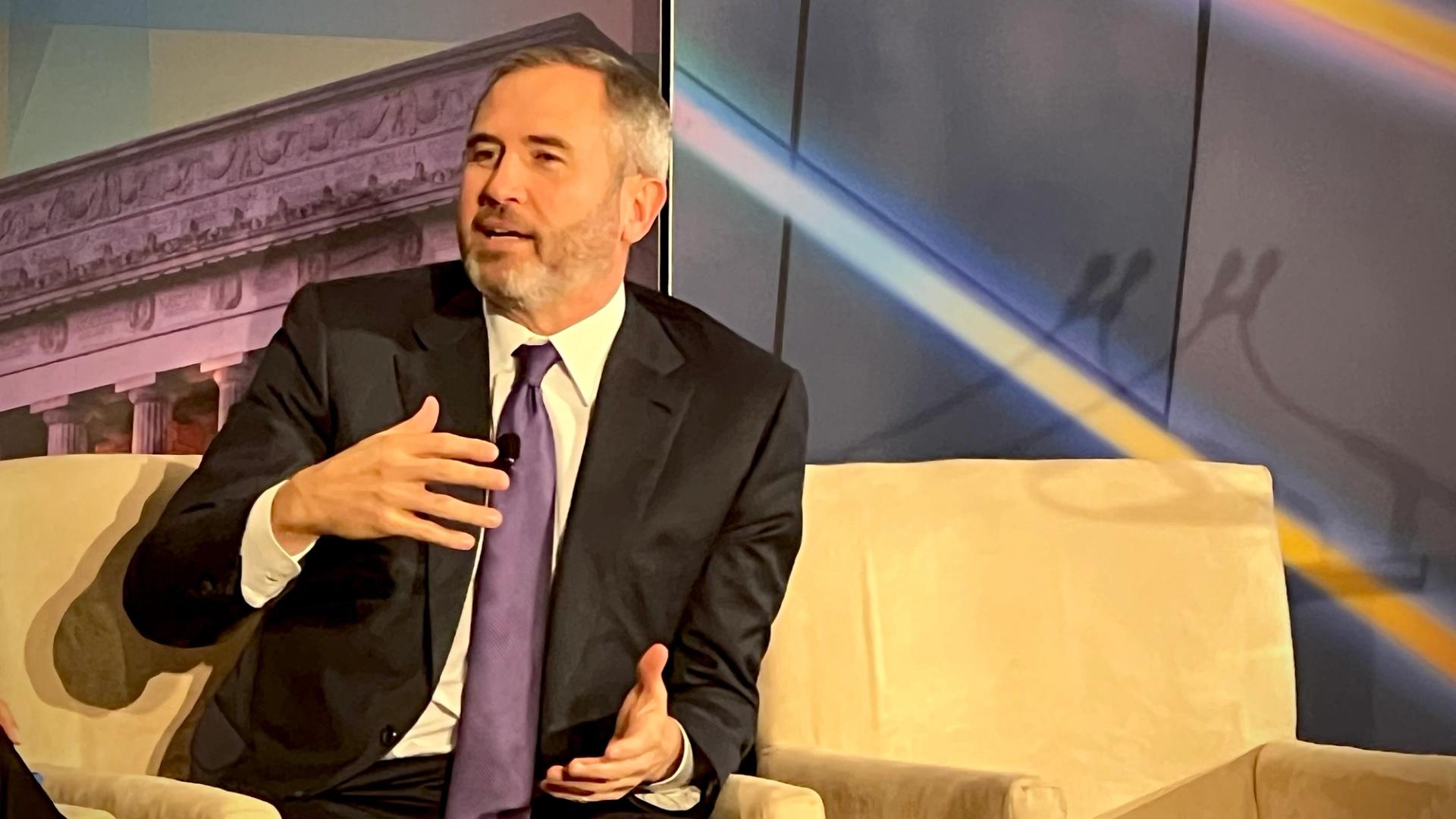
Zhao framed tokenization as a funding tool for states. In a Thursday post, he named foreign direct investment (FDI) as one benefit, asking which country or company would not want to sell tokenized stocks globally.
“Tokenization is one of the best ways for countries to ‘raise money,’ or attract FDI (Foreign Direct Investment),” he said.
Zhao advises Pakistan and Kyrgyzstan on digital asset policy. He made a similar pitch to governments in June.
The market he describes keeps expanding. Distributed asset value across tokenized real-world assets reached $38.40 billion, up 2.16% in 30 days, according to RWA.xyz.
Holders grew far faster than value. The count rose 79.74% to 2,379,918. However, the represented asset value declined 4.66% to $342.63 billion.
Follow us on X to get the latest news as it happens
The Fragmentation Problem
CZ said he supports tokenization across all blockchains. He also added that a multi-chain approach can fragment liquidity.
Financial market infrastructure firms have already flagged the risk of fragmentation. Clearstream, DTCC, and Euroclear released a joint paper with Boston Consulting Group.
They warned that fragmentation across distributed ledger networks leaves assets trapped in isolated pools and raises operating costs.
Still, Zhao argued that having multiple players build the market could accelerate the sector’s growth. He said greater interoperability between issuers could eventually help address the liquidity problem.
“Fragmentation can be somewhat addressed if there is high interchangeability amongst different issuers, which is important,” he wrote.
Zhao is not the only executive making the argument for tokenization. Robinhood CEO Vlad Tenev called it the best path to modernizing US finance this week.
Subscribe to our YouTube channel to watch leaders and journalists provide expert insights
The post CZ Wants Countries to Tokenize Assets, But There’s A Catch appeared first on BeInCrypto.

These AI Companies Pile Up Massive Debt
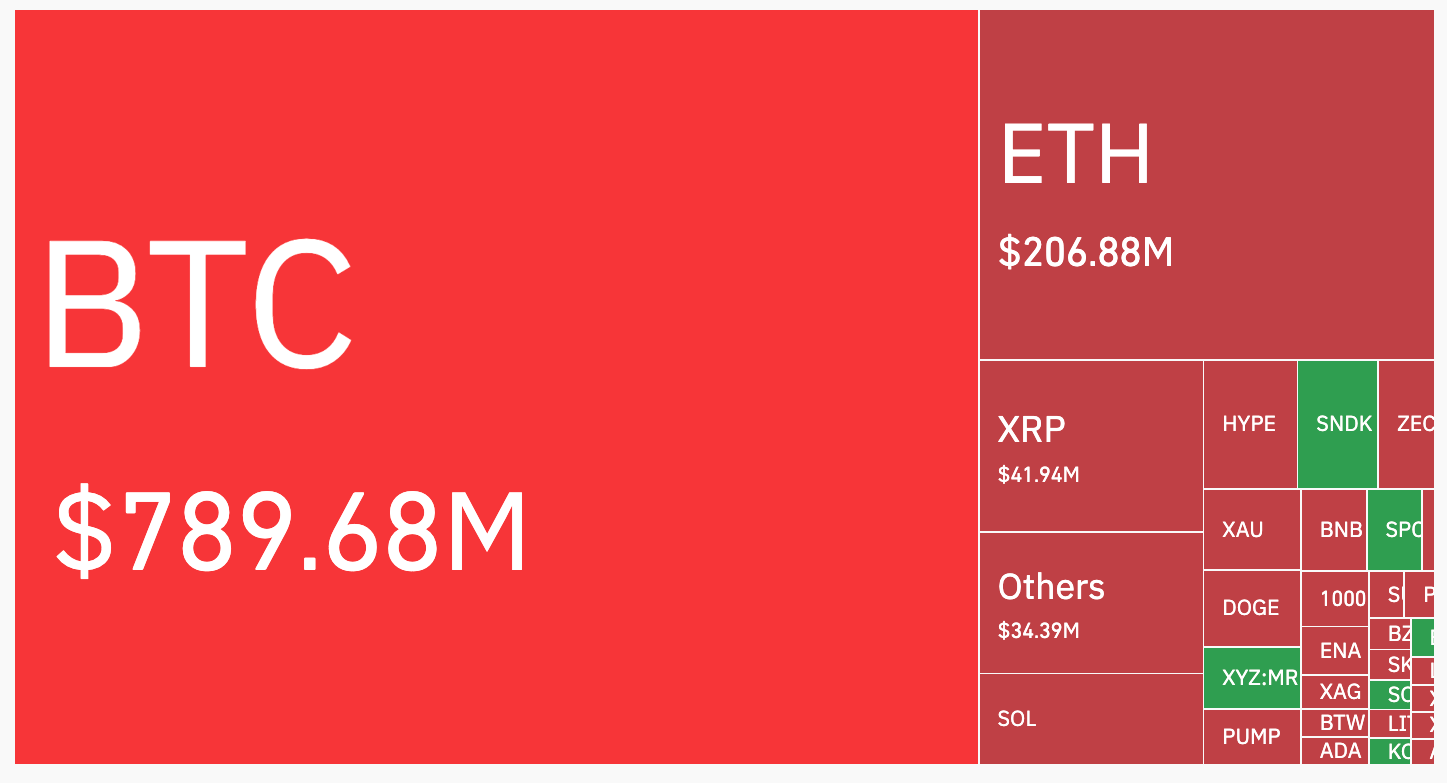
Bearish crypto traders absorbed $1.06 billion in short liquidations over 24 hours as the total crypto market capitalization rose 3.7%.
Liquidations across the market reached $1.24 billion. The wipeout caught 141,191 traders, while long positions gave up only $174.41 million.
Bitcoin Drove the Bulk of Short Liquidations
Bitcoin (BTC) alone drove $789.68 million of the losses after climbing 8.4% to $74,998. The cryptocurrency touched an intraday high of $75,744 early Friday, its strongest print since May 27.
That peak stopped narrowly below the True Market Mean of $75,800. Ethereum (ETH), followed by $206.88 million in liquidations, while XRP (XRP) added $41.94 million.

According to BeInCrypto Markets data, XRP led the large caps with a 16.2% daily gain to $1.26. Ethereum climbed 10.1% to $2,315, comfortably ahead of Bitcoin’s move.
The XRP price rally extends one of the token’s strongest stretches since 2020. Meanwhile, sentiment has swung from fear to greed in a matter of days. Perspective still matters.
Despite an 18.4% weekly gain, Bitcoin trades roughly 40% below its $126,080 record set on October 6, 2025. Whether spot buyers replace the liquidated shorts will decide if this holds.
Follow us on X to get the latest news as it happens
Bears Keep Paying for a Rally That Started in Washington
The latest rally traces back to the bond market. The Treasury doubled its long-end debt buybacks on August 19, raising each operation to at least $4 billion.
That initial move caught bearish traders off guard. As Bitcoin rose, short positions hit liquidation levels, forcing exchanges to buy BTC to close them. Those forced purchases pushed prices higher, triggering more liquidations and creating a self-reinforcing squeeze.
The loop has now run for three sessions. BeInCrypto reported that shorts lost $1.3 billion in 60 minutes as BTC climbed 2.5%. Yesterday, short liquidations reached $2.74 billion as 172,202 traders got wiped out.
Subscribe to our YouTube channel to watch leaders and journalists provide expert insights
The post Crypto Bears Burned as Short Liquidations Hit $1.06 Billion in a Day appeared first on BeInCrypto.


The token touched $0.004126 minutes before the network stopped producing blocks, while MANTRA later said an attacker exploited a vulnerability in software used by the chain.


Public Bitcoin miners spent $5.11 billion on capital assets during the first half of 2026 while reporting only $341.2 million in artificial intelligence and high performance computing revenue, according to an Aug. 20 analysis from BlocksBridge Consulting.
Summary
- Nine public Bitcoin miners spent $5.11 billion on capital assets during first half of 2026 collectively.
- Their directly reported AI and HPC revenue totaled $341.2 million, creating a fifteen-to-one spending-to-revenue ratio overall.
- AI and HPC revenue reached $205.8 million in Q2, rising 52% from the preceding quarter collectively.
- Fifteen miners and data center companies spent $30.7 billion in their latest 2026 reporting periods already.
- CoinShares expanded WGMI’s mandate across mining, data centers, semiconductors, power generation and advanced computing companies.
The figures produce a roughly 15 to 1 ratio between companywide capital spending and directly reported AI and HPC revenue. They show how much infrastructure miners are building before their newer operations reach full commercial capacity.
The comparison does not measure returns on AI investments alone. BlocksBridge included purchases and allocations involving hardware, property, equipment and other productive assets. Some spending may continue supporting Bitcoin mining operations.
Bitcoin miners face a costly infrastructure conversion
BlocksBridge examined nine comparable miners that disclosed AI or HPC revenue. Their combined revenue from those operations reached $205.8 million in the second quarter, up 52% from the previous quarter.
The increase implies first quarter revenue of approximately $135.4 million. Core Scientific, TeraWulf and Bitdeer were among the companies reporting higher revenue from data center hosting or AI computing services.
Mining facilities offer access to land, electricity and grid connections. However, those assets do not automatically meet the technical requirements of AI customers.
“Power contracts and available land may give miners a starting advantage, but converting those assets into AI-ready capacity requires substations, buildings, cooling systems, networking equipment and, in some business models, GPUs,” BlocksBridge said in its report.
These projects also require financing before tenants begin paying for capacity. Construction schedules, power availability and customer concentration can therefore affect how quickly miners recover their investments.
AI revenue is growing from a low starting point
Core Scientific provides one example of that growth and spending pattern. The company reported $136.7 million in second quarter colocation revenue, up from $77.5 million in the preceding quarter. Capital expenditure reached $797.5 million during the same period, according to its filing.
Core Scientific said it was billing customers for 437 megawatts of capacity by mid July. It also announced agreements with AMD that could eventually cover about 530 megawatts across five sites. The company described the contracts as carrying more than $14 billion in “potential” base revenue over 15 years.
TeraWulf has moved further toward recurring data center income. As crypto.news reported, HPC revenue overtook Bitcoin mining revenue at the company during the first quarter of 2026.
TeraWulf’s regulatory filing said HPC leasing represented most of its quarterly revenue for the first time. However, its planned facilities still depend on construction milestones, tenant demand and the delivery of contracted computing capacity.
Broader capital spending reached $30.7 billion
BlocksBridge’s wider group of 15 miners and AI data center companies spent $30.7 billion on capital assets during their latest 2026 reporting periods. The total was 42.6% above the $21.53 billion recorded across all of 2025.
The comparison includes companies at different stages of development. It should therefore be treated as a measure of sectorwide investment rather than a direct assessment of profitability.
Other miners are financing the transition through asset sales and balance sheet changes. In related coverage, MARA Holdings sold $1.5 billion of Bitcoin during the first quarter as it expanded its digital infrastructure strategy.
HIVE has followed a smaller expansion model. The company’s HPC revenue increased 94% to $19.5 million during its 2026 financial year, although mining remained its main revenue source.
CoinShares expands WGMI beyond Bitcoin mining
The transition has also reached investment products. CoinShares renamed WGMI as the CoinShares Bitcoin Mining and Digital Power ETF and expanded its eligible investment universe.
The actively managed fund now covers Bitcoin miners, data center operators, AI semiconductor companies, power producers and advanced computing businesses. CoinShares reported 29 holdings and approximately $225.6 million in assets as of Aug. 18.
WGMI must invest at least 80% of its net assets in qualifying companies, according to the fund’s official page. It does not hold Bitcoin directly or through derivatives.
The next tests will be whether miners deliver new capacity on schedule, secure creditworthy tenants and convert contracted power into recurring revenue. Until then, the expanding revenue base remains small compared with the capital committed to the transition.


Cointelegraph is committed to providing independent, high-quality journalism across the crypto, blockchain, AI, and fintech industries.
All news, reviews, and analyses are produced with full journalistic independence and integrity. For more details on our standards and processes, please read our Editorial Policy.
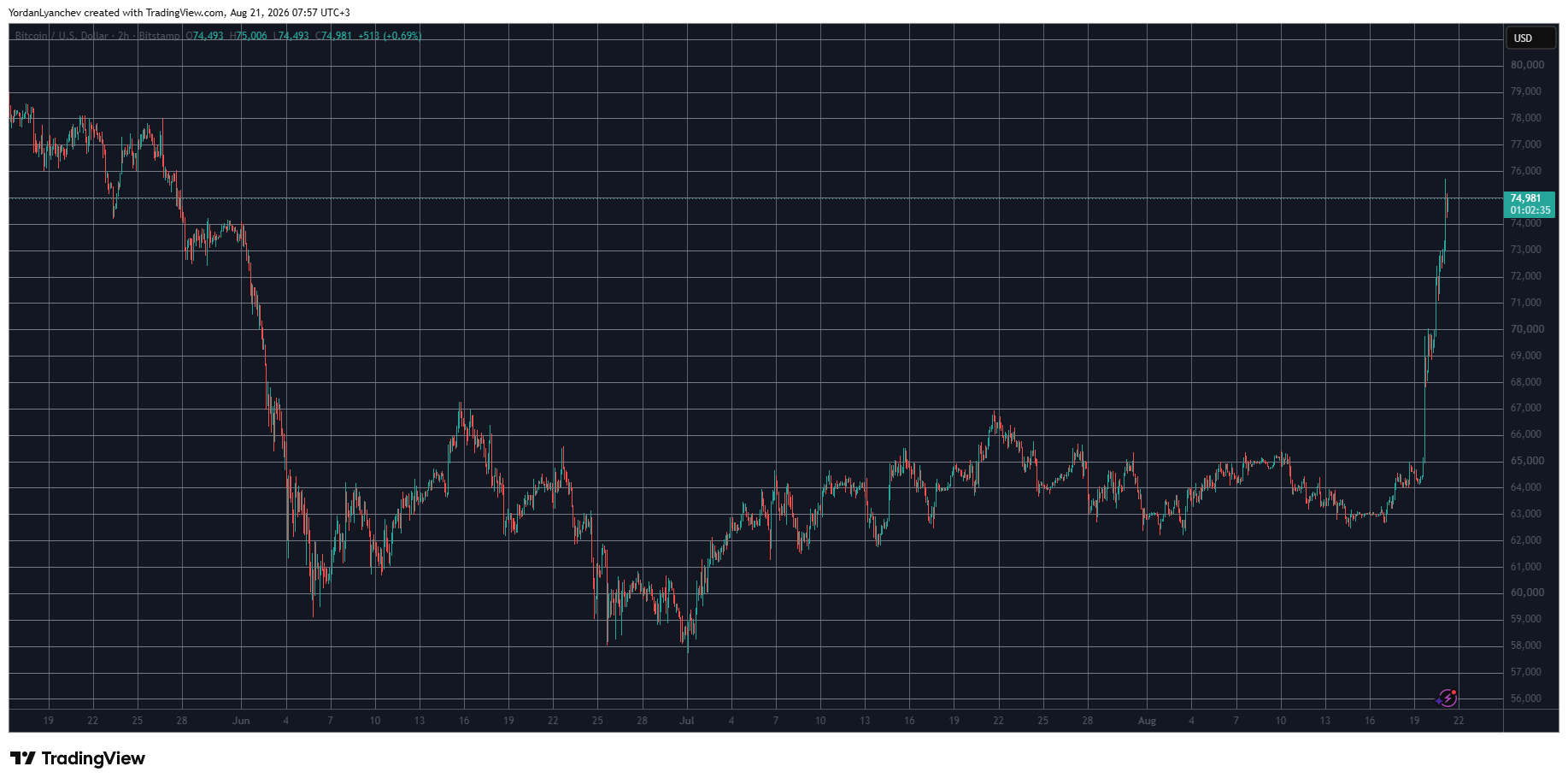
It’s hard to believe that just 48 hours ago, there was no clear indication of what was going to happen next. The reality, though, is quite promising as bitcoin has added over $11,000 within this timeframe, and blasted through $75,000 hours ago for the first time since late May.
Naturally, analysts have shifted their market perspective, with Ali Martinez indicating that the next bull phase has commenced.
Bull Market Is Here?
The primary cryptocurrency stood still for weeks (or even months, depending on your explanation of the word ‘still’) and failed to move past $65,000 despite multiple attempts. The latest rejection came just last week, and the subsequent correction pushed it south to its lower boundary of this tight trading range at around $62,000-$63,000.
Then came the Wednesday afternoon rally that changed the game. Bitcoin skyrocketed in a God candle by 12% in 24 hours and surged first to $70,000, before it broke down that wall and tapped $71,000-$72,000. It stalled there for a few hours, but the bulls were a lot more persistent this time and initiated another leg up. This time, BTC rocketed to almost $76,000 (earlier this morning), and it has settled at $75,000 as of press time.
This means that bitcoin has jumped by roughly 18% in less than two days – something that we forgot was possible after the recent sluggishness.
The reasons continue to be debated, but the most obvious ones seem to be related to the US. As reported on Wednesday, the US Treasury Department said it will double the maximum size of liquidity-support buybacks for longer-dated government debt, which was regarded as good news for risk-on assets.
In addition, Trump held a major crypto event in the White House with industry execs and pushed for the CLARITY Act approval. He added that his administration was mulling purchasing more BTC.
Meanwhile, many altcoins have produced mind-blowing gains over the same period, with ETH rocketing from $1,900 to almost $2,400. XRP has successfully defended the $1.00 support and now sits 30% above it.
Bull Market Is Here?
Popular analyst Ali Martinez weighed in on BTC’s major move and said the asset has “no resistance” after building strong support between $62,000 and $63,000. If it manages to break $75,733, the next major supply cluster appears all the way up at $83,300.
As such, he reiterated a previous post from earlier this month in which he declared that the “bitcoin bull market is here.” If that’s the case, then we can take a look at some of the major predictions for BTC during its next cycle. Interestingly, the targets set by Anthony Scaramucci and Standard Chartered had the same number in mind – $100,000. However, their timeframes are slightly different, as the bank expects it to happen as soon as this year.
Another analyst, going by the X handle Crypto Patel, outlined a historical pattern for BTC that has previously played out with a massive 1,000% surge and hinted that the asset could be on the verge of a similar rally.
The post Bitcoin Rockets Past $75K as Analyst Declares the Bull Market Has Begun appeared first on CryptoPotato.
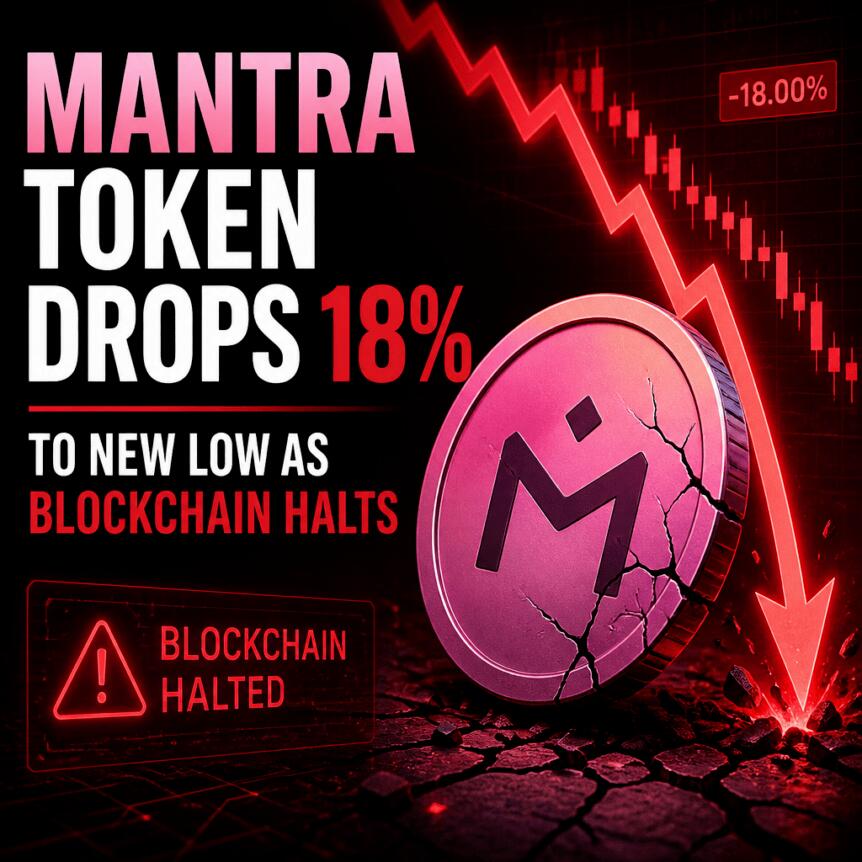
MANTRA’s native token has come under sharp selling pressure after the MANTRA Chain network stopped producing blocks, with the project citing an unexplained incident and ordering a precautionary halt. The pause has also triggered practical disruptions for users, as assets can’t move on the chain and exchanges have suspended deposits and withdrawals while they assess impact.
According to CoinGecko data, MANTRA fell from $0.005060 to an all-time low of $0.004126 shortly before 11:00 pm UTC on Thursday. Although the token later recovered to around $0.0044, it remained down roughly 10% over the past 24 hours. At the same time, trading volume reportedly climbed nearly 600% to $24 million, reflecting heightened attention around the outage.
Key takeaways
- MANTRA Chain halted block production and froze endpoints and transactions as a precaution while the team investigates an incident.
- CoinGecko shows MANTRA trading near a record low around 11:10 pm UTC Thursday, followed by a partial rebound.
- MANTRA’s status information describes a full outage affecting public endpoints, validators, bridge migration operations, and IBC relays.
- No root cause, timeline, or statement about whether assets were lost has been provided yet.
- Because the network is halted, exchanges and related services have paused deposits and withdrawals with no restart schedule.
Token rout coincides with a network halt
The timing of MANTRA’s sharp drop tracked closely with the chain’s sudden stop. CoinGecko’s pricing shows the token hitting its low around 11:10 pm UTC Thursday. A subsequent rebound to roughly $0.0044 did not erase the damage, as the token remained around 10% lower on the day.
While price swings during infrastructure disruptions are common, what stands out here is how quickly sentiment appears to have shifted once block production stopped. The volume spike to about $24 million—reported as nearly 600% higher—suggests many market participants were reacting to the operational halt and the uncertainty around what it means for funds on-chain.
MANTRA says endpoints and transactions are frozen
In a post Friday on X, MANTRA said it was “aware of an incident affecting MANTRA Chain” and had halted the network as a precaution while investigating. The project emphasized that it did not yet have a root cause or timeline to share.
Critically for users, the team stated that all endpoints and transactions were frozen. In practical terms, that means the chain is unable to process activity—so transfers, contract interactions, and bridging-related operations depending on on-chain state cannot proceed.
Consistent with that, multiple exchanges have reportedly paused deposits and withdrawals for affected users. With no timeline provided, users may face delays even if funds were never compromised—because services typically wait until they can confirm that the network is operating safely again.
Status page lists a full outage across critical components
MANTRA’s status page classified the incident as a full outage affecting public endpoints, validators, bridge migration operations, and MANTRA-managed Inter-Blockchain Communication (IBC) relays. The team also said it would not restart the network until it was confident it was safe.
Operationally, the last recorded block provides a reference point for the stoppage. MANTRA’s public RPC status listing showed block 17,449,398 produced at 11:13 pm UTC on Thursday as the latest block. The initial incident notice was posted at 11:44 pm UTC, after CoinGecko data showed the token reaching its low around 11:10 pm UTC.
As of this reporting, MANTRA has not clarified whether the token’s price movement was directly related to the outage, nor has it confirmed whether any assets were lost or placed at risk. Cointelegraph said it contacted the MANTRA team for additional information but did not receive a response by publication.
What this means for a token that has already faced major disruptions
This latest event lands after a turbulent history for MANTRA’s token ecosystem. Earlier coverage from Cointelegraph noted that MANTRA’s former OM token collapsed in April 2025, falling by more than 90% from about $6.30 to below $0.50 and wiping out more than $5 billion in market value. That kind of drawdown can leave parts of the market more sensitive to operational uncertainty, especially when outages prevent movement of assets.
Broader corporate developments have also shaped MANTRA’s narrative. In June, Cointelegraph reported that Inveniam Capital Partners announced plans to acquire MANTRA after investing $20 million in 2025. The acquisition followed January layoffs and restructuring, after CEO John Patrick Mullin described 2025 as the project’s most challenging year.
Against that backdrop, the chain halt raises investor questions that go beyond short-term price action: whether operational reliability is improving, how quickly the team can identify and remediate incidents, and what safeguards exist for bridges and IBC relays—components specifically listed by the status page as impacted.
With MANTRA Chain still halted, the immediate priority for market participants is clarity: readers should watch for an update that provides a root cause assessment, confirms asset safety, and outlines conditions for restart. Until then, the key uncertainty is whether this was an isolated infrastructure failure or a signal of deeper systemic risk—and how quickly exchanges and on-chain services can safely resume deposits and withdrawals.
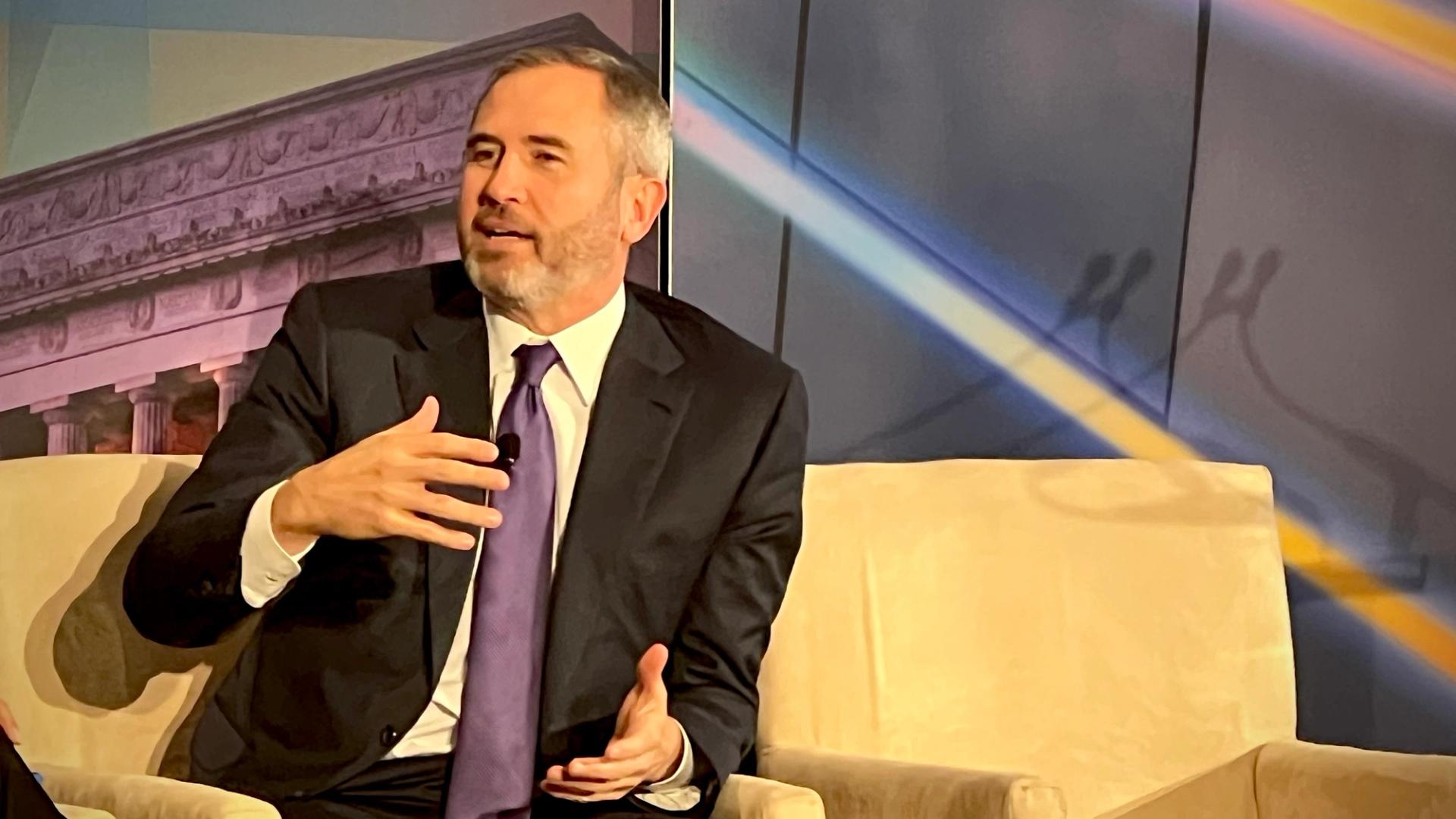
Clearpool and Cicada Partners are building an institutional lending product using RLUSD, though the XRP Ledger features underpinning it are still awaiting activation.
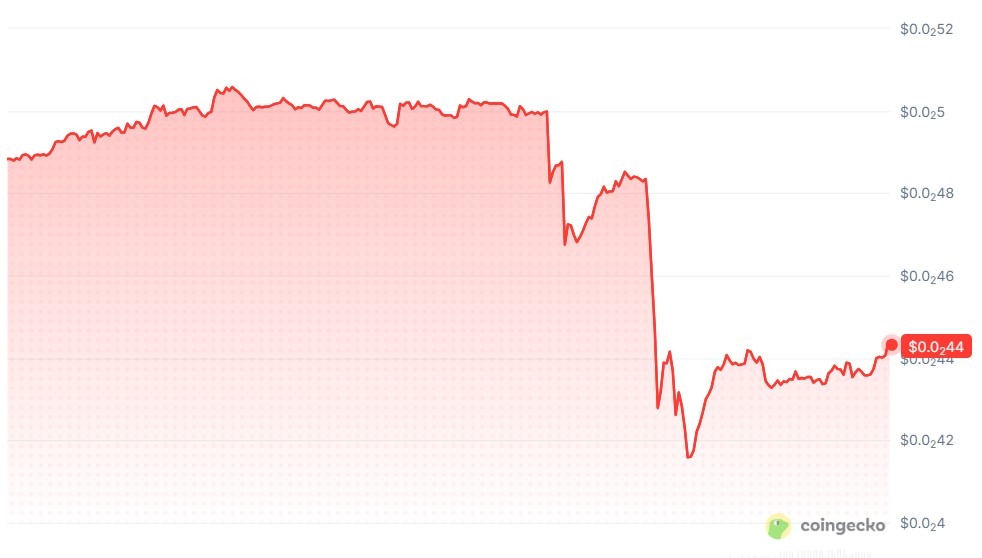
MANTRA’s native token sank 18.5% from its 24-hour high to a record low shortly before MANTRA Chain stopped producing blocks and its team announced a precautionary halt over an unexplained incident.
According to CoinGecko, MANTRA fell from $0.005060 to an all-time low of $0.004126 around 11:00 pm UTC on Thursday. It later recovered to about $0.0044 but remained down roughly 10% over 24 hours, while trading volume climbed nearly 600% to $24 million.
MANTRA said Friday it was “aware of an incident affecting MANTRA Chain” and had halted the network as a precaution while it investigated. “We don’t have a root cause or timeline to share yet,” the project said, adding that all endpoints and transactions were frozen.
The halt prevents assets from moving on MANTRA Chain and has prompted affected exchanges to pause deposits and withdrawals, with no timeline given for either service to resume.
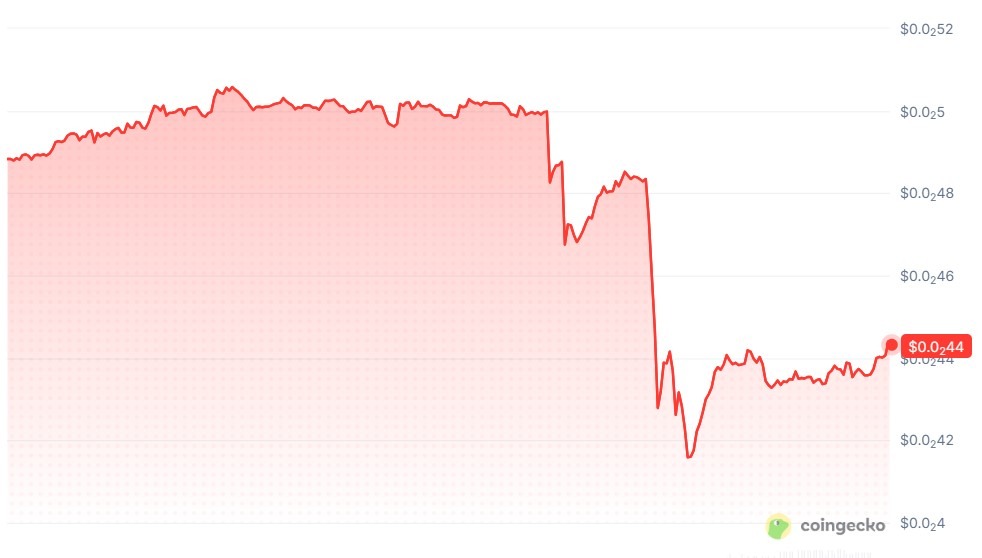
MANTRA’s 24-hour price chart. Source: CoinGecko
MANTRA Chain remains halted as investigation continues
MANTRA’s status page classified the incident as a full outage affecting public endpoints, validators, bridge migration operations and MANTRA-managed Inter-Blockchain Communication relays. The team said it would not restart the network until it was confident it was safe.
The network’s public RPC listed block 17,449,398, produced at 11:13 pm UTC on Thursday, as its latest block. MANTRA posted its initial incident notice at 11:44 pm, while CoinGecko showed the token reaching its low around 11:10 pm.
MANTRA has not said whether the price movement was related to the incident or whether any assets were lost or placed at risk.
Cointelegraph contacted the MANTRA team for additional information but did not receive a response by publication.
Related: Mantra says CEO has begun the process of burning his 150M OM tokens
The latest decline follows the April 2025 collapse of MANTRA’s former OM token, which plunged more than 90% from about $6.30 to below $0.50 and erased more than $5 billion in market value.
In June, Inveniam Capital Partners announced plans to acquire MANTRA after investing $20 million in the project in 2025. The acquisition followed January layoffs and restructuring after CEO John Patrick Mullin described 2025 as the project’s most challenging year.
Magazine: 200,000 fake AI ‘victims’ deployed to scam bait online fraudsters

CZ Wants Countries to Tokenize Assets, But There’s A Catch

Brian Hickerson on Hayden Panettiere’s Death, More Top Stories

Eiby x Andiex x Tobe Love – Money (Video Oficial)





-

 Fashion7 days ago
Weekend Open Thread: Ann Taylor
-
 Tech7 days ago
11 Ways to Rank Your Videos
-
 NewsBeat6 days ago
Myanmar says over 300,000 Rohingya refugees verified for repatriation as exodus enters ninth year
-

 Sports6 days ago
Birmingham 2026: Day 6 Timetable for Irish Athletes
-

 Politics6 days ago
SEQ Code: The Three Letter Boarding Pass Code That Could Give You The Worst Seat
-

 Tech3 days ago
Qwen3.8-27B runs frontier-class coding agents and reasoning locally, no cloud API required
-

 Business3 days ago
SMA Solar Technology AG (SMTGY) Q2 2026 Earnings Call Transcript
-

 Crypto World6 days ago
Pi Network Protocol 27 endgame: last upgrade before what?
-

 Crypto World3 days ago
OCC Greenlights Trump Family Crypto Firm for Trust Charter
-
 Tech6 days ago
Every fusion startup that has raised over $100M
-
 Entertainment6 days ago
Marvel Studios Reveals New X-Men Cast Including Adam Driver and Sadie Sink
-
 Entertainment7 days ago
10 Netflix Shows That Quietly Became Modern Classics
-

 Crypto World7 days ago
Robinhood Chain Approaches $1B TVL as Uniswap Integration Boosts Liquidity
-

 Fashion7 days ago
Weekly News Update, 8.14.26 – Corporette.com
-
 Business6 days ago
Monarch Mutual Fund set to enter MF space with maiden overnight fund; files draft with Sebi
-

 News Videos1 day ago
Don’t Leave Your Financial Future To Chance | August 19, 2026
-

 Fashion7 days ago
Silver bangles for women – Newbridge Silverware
-

 Business6 days ago
Facebook Down Now? Users Report Login And Loading Problems As Outage Trackers Monitor Ongoing Issues
-

 Fashion7 days ago
Cart Confidential Vol. 44 – Julia Berolzheimer
-

 Crypto World3 days ago
NAVI Prime launches institutional lending framework on Sui
You must be logged in to post a comment Login