
Crypto World
Make the U.N. Great Again: The Uphill Struggle Facing The Next Secretary General


It may be both the most prestigious and the most frustrating job in international diplomacy: members of the United Nations are weighing who should succeed António Guterres as Secretary-General when he completes his final term in December. The timing couldn’t be more critical, with U.N.’s fortunes at a historically low ebb, for reasons both political and financial.
Indeed, U.N. insiders question why anyone would even want the job at such a testing—and turbulent—moment. Some predict that, with major powers repeatedly blocking the U.N. from intervening in crises from Ukraine to Myanmar, and with the U.S. rolling back funding, whoever succeeds Guterres will simply have to continue to do “less with less” and manage a process of institutional decline as gracefully as possible. Others still hold out hope that a new U.N. leader could reverse the slide, and persuade powers large and small to invest in the organization.
Yet, at a time when global challenges—wars, epidemics, and climate change—continue to proliferate, there is a compelling case for preserving the U.N. as a space for global deal making. Doing so will require a Secretary-General of formidable political skills, capable of persuading world leaders to listen.
It is a question of balancing two competing imperatives. The U.N. is an organization that rests on international cooperation, but the current global moment is one of international competition. The challenge facing the next Secretary-General is to explain how the U.N. can stay relevant. This is no time to preach the virtues of solidarity among nations. It is necessary to meet governments “where they’re at,” as psychologists say, and accept their rifts are real. A shrewd leader of the U.N. could find ways to help states de-escalate conflicts and cooperate on global challenges out of necessity, not idealism.
Ultimately, if political leaders do not believe that the U.N., which was founded in 1945 to “save succeeding generations from the scourge of war,” can live up to that founding goal, they are less likely to take it seriously as an authority on other international issues such as Artificial Intelligence or economic cooperation. Making sure that doesn’t happen will be the central challenge for the organization’s next leader. Perhaps each nomination should thus come with a warning: Caveat emptor, or buyer beware.
Our Tumultuous Present
Maybe the biggest challenge for the next Secretary General lies inside the cavernous chamber that houses the Security Council, the organization’s most powerful body. The five permanent, veto power-wielding members—the United States, China, Russia, Britain, and France—that dominate the council have repeatedly blocked intervention in crises from Ukraine to Myanmar. The Biden Administration’s repeated refusal to support calls for a ceasefire in Gaza at the U.N. in 2023 and 2024 stirred deep resentment across the organization.
Most member states still pay homage to the U.N. Charter and its prohibition against aggression. But Russia’s invasion of Ukraine and the U.S. decision to attack Iran in February suggest that some of the security council’s most powerful members no longer feel bound by its guiding principles. If the U.N.’s political situation is its main headache, its financial positions is a close second.
After the Trump Administration cut off the bulk of U.S. funding for its operations in 2025, U.N. officials have been spending a lot of their time wondering about how to pay the bills. The U.S. is supposed to cover about a fifth of the organization’s core costs and a quarter of the budget for its blue helmet peace operations, which add up to roughly $8.5 billion this year. Washington was already behind on its dues when Trump returned to office, and currently owes the U.N. about $4 billion. The U.S also previously covered roughly a third of the separate budgets for the organization’s big relief agencies—such as the World Food Programme—which need tens of billions of dollars to feed, vaccinate and shelter vulnerable people each year.
Other traditional donors, including European governments, are scaling back spending on development and humanitarian aid. Potential alternatives have not stepped in to close the financial gap. China is now on the hook for almost as much of the U.N.’s core and peacekeeping budgets as the U.S., but is often slow to stump up its annual contributions. Beijing also contributes very little to the humanitarian sector. While the Trump Administration has released some funds for the U.N.’s life-saving efforts this year, big relief agencies have been forced to cut back life-saving assistance to civilians in places like South Sudan and Afghanistan.
This is a markedly different landscape from the one António Guterres encountered in 2017, when the former Portuguese prime minister became Secretary-General. At that time, the U.N. members had just agreed to the Paris climate accord and a new set of Sustainable Development Goals, including a pledge to eradicate extreme poverty by 2030. Geopolitical storm clouds were gathering—the Security Council was fiercely divided over the war in Syria—and Donald Trump’s surprise victory in the 2016 elections, coming soon after Guterres’s selection, signaled trouble ahead. Still, for believers in multilateral processes, a broad agenda for international cooperation appeared to be in place, and the Secretary-General’s task was to turn it into reality.
That brief moment of optimism proved ephemeral. Guterres spent a large part of his first term trying, with some success, to keeping rum at bay. Nonetheless rising tensions among major powers, and disputes over how to finance development projects and support poorer states’ climate change adaptation efforts, have eroded governments’ trust in one another, and their faith in the U.N.’s complex, negotiation-based approach to addressing their national interests. Guterres has spoken eloquently about the risks of international fragmentation, and has pushed U.N. members to work together on emerging challenges, such as the regulation of Artificial Intelligence. But he has struggled to get leaders to focus consistently on that agenda. Increasingly, many governments are turning instead to smaller, looser decision-making clubs—such as the Group of 7, a Western club, or the BRICS, the bloc of emerging market nations—rather than the U.N. itself.
Diplomats and U.N. officials also fault Guterres for taking a low-key role in crisis management, despite major conflicts exploding on his watch. The Secretary-General has been blunt about his lack of leverage to mediate in most of today’s conflicts, and has encouraged a culture of caution among his senior staff dealing with political affairs and peace operations. Although he was involved in one notable mediation success—the 2022 Black Sea Grain initiative—many U.N. members feel that his reluctance to engage in broader peace efforts has undermined the body’s credibility.
Runners and Riders
Such critiques of the incumbent, and the manifold challenges facing the office of the Secretary General, haven’t deterred a clutch of candidates from around the world—who may yet be joined by new competitors as the race to succeed Guterres enters its final stretch.
Eight candidates are currently jostling to replace him and assume the reins of what U.N. watchers sometimes call “the parliament of man.” Among the most widely discussed are Rafael Grossi, the Director-General of the International Atomic Energy Agency, and Rebeca Grynspan, a senior U.N. trade official and former vice president of Costa Rica. Carolyn Rodrigues Birkett, Guyana’s ambassador to the U.N., is also a popular candidate among her colleagues in New York. But because there is no official cut-off point for new candidates to enter the race, and many diplomats expect more challengers to emerge, especially if none of the existing crop looks like a clear winner.
While the current candidates have been speaking at public events from Europe to Korea, they have struck a cautious tone regarding their plans for the U.N. This reflects the way the selection process works. The Security Council—where the U.S., Russia, China, France and the U.K. hold vetoes—is central to the process, vetting candidates and recommending one to the General Assembly, where all U.N. members have seats, for approval. To date, the Assembly has always ratified the recommendation. Anyone who wants to be Secretary-General must avoid offending the five veto powers.
Talking about what is wrong with the world today without irritating at least one of the major powers is quite hard. Guterres angered Russia by criticizing its war in Ukraine, and Moscow is likely looking for a pliable U.N. chief. The biggest headache for Guterres’s successor will be maintaining working relations with Washington in the remaining years of the Trump presidency. Senior U.N. officials worry that, having imposed severe economic strain on the organization, the U.S. will insist that the next Secretary-General make deep cuts to U.N. agencies and follow the Trump Administration’s agenda on questions such as diversity, and soft-pedal criticism of Israeli actions against the Palestinians.
Tiptoeing around these sensitivities, the eight candidates for the Secretary-General position agree that the U.N. is in poor shape. All have promised to concentrate on preventive diplomacy, and have committed to managing the organization efficiently. None has so far set out a groundbreaking strategy for putting the U.N. back on its feet. If this is partly a matter of political tact, it also reflects the fact that the U.N. Secretary-General, despite being the public face of the organization, has only limited power to shape the organization. While the veto powers dominate the Security Council, a sprawling array of intergovernmental committees and boards—including dozens of entities dealing with issues from telecommunications to the environment—oversee the wider work of the U.N. system.
The Secretary-General and his or her advisers must barter with U.N. members over remarkably minor budgetary matters, down to the number of mid-level and junior staff employed in U.N. offices. It is easy to call on the U.N.’s top official to focus on problems of world order, but bureaucracy gets in the way.
Once in office, the next U.N. chief will have to manage these institutional issues while also laying a broader agenda. She or he could address this challenge by appointing a powerful chief of staff to handle administrative matters, freeing up more time to prioritize diplomacy.
On the diplomatic front, the incoming leader’s priority will be to demonstrate the ability to insert himself or herself into one or more conflicts, signaling a shift from the Guterres era. This is easier said than done. Conflict prevention and peacemaking have become crowded fields, with a growing number of middle powers, and at times the Trump Administration, leading peace processes that the U.N. might once have overseen.
The next Secretary-General will not simply be able to fly into trouble spots and cajole warring parties into making deals. But he or she can use the first months in office to shuttle between key capitals in regions such as the Middle East, looking for opportunities to engage, and encouraging U.N. staff—who still have considerable expertise on issues like mediation and peacekeeping operations—to table new options for dealing with ongoing or looming conflicts. This is not likely to produce quick or major wins, and there is always a risk that the U.N. will launch peace initiatives that fail. But as a European diplomat familiar with the U.N. once put it, everyone expects the U.N. to fail, and as a result it can do so without sustaining reputational damage.
The greater danger for the institution right now is that it fails to engage in meaningful crisis diplomacy at all, cementing the impression that it is no longer a significant peacemaking force. If the Secretary-General can use this kind of early outreach to gain a place on the diplomatic map, she or he will still face the challenge of articulating what the U.N. stands for in a divided world.
Collective action in a world divided
There is no shortage of good arguments for why collective action helps address problems that transcend borders. These often get lost at a time when the predominant political narratives center on national divisions and differences.
U.N. officials do not help themselves by couching their arguments in technocratic terms, weighed down with talk of goals and policy frameworks. But the underlying political challenge is to make a case for multilateralism that resonates with decision-makers who view international affairs in zero-sum, or at least very low-trust, terms.
The best approach may be to frame the U.N. as a sort of global risk reduction organization. Over the last decade, governments, the private sector and the public have seen the knock-on effects of both the pandemic and regional conflicts causing global economic disruption. New technologies are creating further economic shocks and could make future conflicts more dangerous.
The U.N. is not a global authority with the powers to halt these trends. But it is a space in which governments can discuss the risks involved and—where they see common ground—explore steps to mitigate them. Even though it may be easier for states to meet in smaller clubs such as the BRICS and G7, the U.N.’s advantage is that it remains a neutral space where different blocs of governments can engage in dialogue.
The next Secretary-General can only encourage rivalrous states to take part in these dialogues, and will need to do so with a light touch. In the past, the U.N. has sometimes responded to new challenges by announcing new agencies and funds to address them. The resulting multilateral bloat has become hard to sustain financially and defend politically. The incoming U.N. leadership will need to show that it can facilitate discussions of difficult global problems without adding new layers of bureaucracy.
The role of the Secretary-General is perhaps to be both the world’s most prominent event organizer—bringing governments and other actors into the room to talk about their problems—and a sort of political therapist for world leaders. If the Secretary-General can win the trust of these leaders, and persuade them to work on common problems despite their divisions, he or she may be able to bring a degree of stability to a dangerous international environment. In doing so, she or he can also keep some political space open for the U.N. to do its most basic work, getting help to the suffering, mitigating the effects of suffering and – at its best – giving small states and civil society groups a rare platform to speak out on issues like human rights and climate change.
The new leader of the U.N. cannot heal all the world’s divisions, but with courage and political acumen, the Secretary-General can make international disputes a little less toxic. That may be a limited vision of what the U.N., sometimes dubbed the “parliament of man” is for. But in an era of multiplying dangers and distrust, it is a noble and perhaps essential one.



The Sandbox has contained a cross-chain bridge vulnerability that allowed an attacker to mint unbacked SAND on Base and BNB Smart Chain, with the project estimating the direct impact at less than 0.01% of the token’s 3 billion supply.
Summary
- The attacker minted unbacked SAND on Base and BNB Smart Chain through compromised bridge permissions.
- The Sandbox disabled transfers involving both networks while keeping Ethereum and Polygon SAND unaffected.
- Upbit and Bithumb halted SAND deposits and withdrawals after detecting a possible security incident.
- On-chain researchers estimated that about 14.75 million Ethereum-backed SAND left the bridge adapter.
- The Sandbox plans to compensate eligible liquidity providers based on balances recorded before the attack.
The Sandbox said it had fully contained the vulnerability affecting its SAND bridge on Base and BNB Smart Chain, adding that no user wallets were compromised and SAND held on Ethereum and Polygon remained secure.
In an August 22 statement, the metaverse project said the attacker created tokens on Base and BNB Smart Chain without the SAND needed to back them on Ethereum. The team disabled bridging to and from both networks, isolating the affected tokens and preventing them from being redeemed through the official bridge.
“All bridged SAND funds are backed by SAND locked on Ethereum, which remains entirely secure,” the project said.
Users were told not to buy, sell, or provide liquidity for SAND on Base or BNB Smart Chain while the affected deployments remain isolated. The team is also taking a snapshot from before the attack and said eligible liquidity providers would receive compensation, although it did not give a payment schedule.
How the SAND bridge exploit created unbacked tokens
Early on-chain alerts showed more than 500 million SAND minted on Base, but the reported figure climbed rapidly as the attacker continued interacting with the contract.
PeckShield later identified about 14.9 billion SAND created across two addresses. Other security researchers recorded hundreds of additional transactions, producing much larger estimates for the total number of unbacked tokens generated before the bridge was disabled.
The size of the minted amount did not represent the project’s direct financial loss. SAND created on Base or BNB Smart Chain could not increase the Ethereum token’s fixed maximum supply of 3 billion unless the attacker could use the cross-chain system to release genuine tokens locked in the Ethereum adapter.
According to blockchain forensics account BlockWatchdog, the attacker withdrew approximately 14.75 million SAND from the Ethereum adapter in less than one minute. Token sales generated about 80 ETH, valued at roughly $675,000 at the time of the transactions.
The figure helps explain why The Sandbox placed the impact below 0.01% of the total SAND supply even though the number of tokens minted on the affected networks appeared far larger. The project has not yet published a full technical report reconciling its loss estimate with the figures reported by individual on-chain researchers.
Blockaid attributed the incident to the takeover of LayerZero delegate permissions through a approveAndCall function. The security firm said the access allowed the attacker to mint tokens through the affected cross-chain contracts, though The Sandbox has not confirmed Blockaid’s proposed cause in a detailed postmortem.
Why Ethereum SAND supply has remained unchanged
LayerZero’s Omnichain Fungible Token standard uses linked contracts to move assets between blockchains. Under its adapter model, an existing token is locked on its original network while an equivalent amount is minted at the destination.
For SAND, the Ethereum adapter holds the original tokens intended to support cross-chain balances. A legitimate transfer to Base should lock SAND on Ethereum before creating the corresponding amount on Base, preserving one supply across the connected networks.
Unauthorized minting broke the backing relationship on the affected chains, but it did not rewrite the Ethereum token contract or raise its maximum supply. CoinGecko continued to show a maximum supply of 3 billion SAND, with about 2.9 billion tokens in circulation.
To stop the affected contracts from communicating with other deployments, The Sandbox removed the LayerZero peer settings for Base and BNB Smart Chain. The action cut off the official route through which unbacked tokens might otherwise have been used to claim assets held by the Ethereum adapter.
A similar difference between a bridge failure and a problem with the underlying blockchain appeared during July’s Wanchain bridge exploit. About 515 million NIGHT left Wanchain’s Cardano-side treasury, while the Midnight Foundation said its core network, validators and consensus system remained unaffected.
In another July incident, an attacker used the Verus bridge’s import path to trigger unbacked asset payouts worth about $7.54 million. Blockaid linked the attack to the same bridge contract and apparent bug class involved in an earlier May breach.
Korean exchanges restrict SAND transfers
Upbit issued a caution notice after finding signs of a possible security problem involving SAND, warning that the incident could produce sharp price movements. Bithumb separately suspended SAND deposits and withdrawals while it reviewed the issue.
Reports citing the exchange notices placed Bithumb’s suspension at 11:11 a.m. Korea Standard Time on August 22, followed by Upbit about one minute later. Trading restrictions and transfer suspensions can differ, so users must check each exchange’s notice before placing an order or attempting to move SAND.
The quick response is consistent with South Korean exchange procedures for assets facing suspected network faults, abnormal token issuance, or security incidents. Deposit restrictions can limit the chance that tokens created through a compromised network reach an exchange and are sold against unaffected balances.
SAND traded near $0.05 after the disclosure, while CoinGecko reported more than $66 million in 24-hour volume. The data provider placed the token’s market capitalization near $136 million and showed an increase of about 18% over seven days, though prices varied across trading venues.
Base users face isolated liquidity risk
For U.S. users, the immediate connection comes through Base, the Ethereum layer-2 network developed by U.S.-listed exchange Coinbase. The reported vulnerability affected The Sandbox’s cross-chain contracts deployed on Base rather than Base’s underlying network, according to the available project and security disclosures.
The Sandbox’s warning applies to anyone holding or trading the isolated Base version of SAND, including U.S. users accessing decentralized exchanges through self-custody wallets. Tokens available in Base liquidity pools may not carry the same backing as Ethereum-native SAND while the official bridge remains disabled.
The incident follows an April attack involving another LayerZero-powered asset. As crypto.news reported, LayerZero’s KelpDAO incident report said attackers stole about 116,500 rsETH worth $292 million after compromising infrastructure used by a single-verifier cross-chain configuration.
Following the KelpDAO attack, LayerZero said its verification network would stop signing messages for applications using a one-of-one verifier setup and encourage projects to adopt multiple independent verifiers. The Sandbox has not said whether its SAND configuration used the same model or whether the latest vulnerability involved LayerZero’s verification network.
The Sandbox, an Animoca Brands subsidiary that raised $93 million in 2021, said it would publish further information as its investigation proceeds. Its latest notice did not provide a date for restoring Base and BNB Smart Chain transfers or specify when compensation claims for eligible liquidity providers would open.
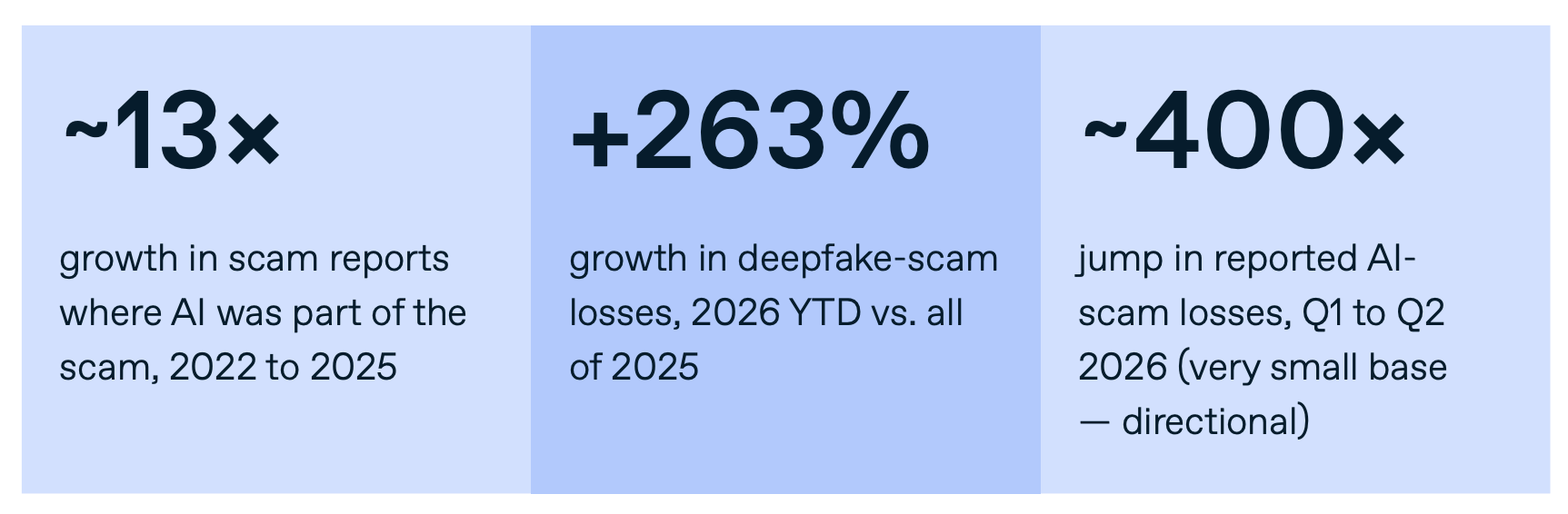
Criminal adoption of artificial intelligence (AI) has climbed 40% year-on-year in 2026, according to blockchain intelligence firm TRM Labs. Scams drove most of that growth.
TRM’s new AI-in-Crime Adoption Index scores overall adoption at 54 out of 100, up from about 28 in 2024. Scams are the only category rated Mature.
AI Now Runs the Whole Scam, From Target List to Victim Chat
The index rates four crime types on how common AI use is, how many stages of an operation it touches, and how advanced it is.
Scams top the ranking. TRM says AI now generates target lists and lures, powers deepfakes, and runs the victim conversations themselves.

The share of scam reports in which AI was part of the attack has grown by roughly 13 times since 2022. Among crypto scams with live domains, 17% advertise AI products.
Reported deepfake scam losses in 2026 already exceed the 2025 total by 263%. Narcotics sit at the opposite end. Darknet buyers warn each other away from markets they suspect were AI-generated.
Follow us on X to get the latest news as it happens
Hacks and Ransomware Climb the Attack Chain
Hacking and state-sponsored theft ranked one tier lower, at Emerging. The volume, however, tells a harsher story.
TRM logged 201 hacks in the first half of 2026, against 83 a year earlier. However, 4% of incidents produced 75% of the stolen value.
North Korea accounted for roughly $600 million, or 61% of the half-year total. Two April operations dominate that figure: the $285 million Drift Protocol breach and the $292 million KelpDAO exploit. Both started with social engineering rather than novel code.
Ransomware sits one step further along. No-code ransomware kits now change hands for $400 to $1,200, TRM noted.
In July, Sysdig documented JadePuffer, which it calls the first fully agentic ransomware. An AI agent handled reconnaissance, credential theft, lateral movement, and encryption without human direction.
TRM’s broader finding is that AI touches every stage of the crime lifecycle. It lowers the barrier to entry, raises the scale and sophistication of attacks, and hands investigators both a harder problem and better tools.
The last part decides the trajectory. TRM says holding the current parity between offense and defense depends on enforcement and compliance tooling scaling at the same pace.
Subscribe to our YouTube channel to watch leaders and journalists provide expert insights
The post AI is Making it Easy for Criminals, Especially in Crypto appeared first on BeInCrypto.

Although the deadline for the previous major protocol update passed days ago, the Core Team behind the project finally announced its successful deployment.
Moreover, they provided more details about the upcoming one, which is scheduled to be the last planned upgrade.
Save The New Date: September 15
The long process of upgrading the protocol began in February when the Core Team introduced version 19.6. Numerous others followed suit, including v20.2, which laid out the foundations for smart contract capabilities.
Most of the subsequent updates were successfully deployed like clockwork, but there were some delays, as the team admitted. One of those was version 25, which was supposed to be implemented by July 22. However, the team noted that it was significantly harder to deploy, which led to a delay.
Nevertheless, it was eventually incorporated, and Pi Network set its sights on the next one, version 26. Although its deadline was set for August 11, there was no official update for a week. The vast Pi Network community, though, published countless posts on X, indicating that the update was deployed and the team confirmed it earlier today.
In the latest post on X from the only official account, the Core Team said version 26 was successfully completed on Mainnet and highlighted that the next one, scheduled to be the last, must be implemented on September 15.
It will introduce more flexible and secure smart contract authentication capabilities and enable more advanced ways for accounts and apps to authorize transactions. Version 27 will continue the project’s work to incorporate newer protocol features and expand the network’s smart contract capabilities.
Version 0.6.2
The other recent updates included the introduction of Pi Node version 0.6.2 last week. It came with improvements to SoloHost, node connectivity, and the Pi Desktop user experience.
Perhaps the most notable part of the recent experiment was the fact that five volunteer Node operators participated in an initial distributed computing test and all received jobs, performed the required computations, and returned the results to a Pi coordinator.
In addition, Pi Network will update its pricing model for creating and editing applications on August 24. The current model charges just 0.25 PI to create an app and another 0.25 PI to edit it, while the difference, which could be significantly higher on some occasions, is covered by the project itself.
The new model will take a different approach, as standard prices will reflect the actual costs more closely and may vary depending on the resources required for each action. Apps that demonstrate real utility and usage from distinct users will remain eligible for the previous subsidized pricing. The eligibility will be reviewed regularly, meaning that devs who initially don’t qualify could earn the cheaper rate later if their apps start attracting real users.
The post Important Pi Network Update Set for September 15: Here’s What Changes appeared first on CryptoPotato.
Crypto World
Bitcoin’s Rally to $80K Sends Investor Greed to Highest Level Since the October 2025 Crash
Bitcoin’s price went on a tear in the past few days, surging to its highest level since mid-May of just under $80,000 after being stuck below $65,000 for weeks and weeks.
Naturally, this has changed the overall market sentiment, with on-chain data showing that investor greed is back to levels last seen right around the October 10 massacre.
Greed Is Back
A lot can change in the cryptocurrency markets in days. Bitcoin was struggling below $65,000 until Wednesday, and there were no clear indications of a potential breakout, especially in the magnitude of what occurred. After all, each attempt was halted before that, and it spent the last month and a half trading sideways between $62,000 and $65,000.
However, then came the monetary changes in the US announced by the Treasury Department, and investors went all in. Bitcoin reacted with an immediate surge that drove it higher by $15,000 in approximately 48 hours to a three-month peak of almost $80,000.
Such explosive moves tend to shift the overall market sentiment. This is particularly evident in the Fear and Greed Index, a metric used to determine the current feelings toward the market by observing several factors, including volatility, market momentum, trading volume, social media comments, and dominance.
The final results range from 0 (extreme fear) to 100 (extreme greed). Given the overall market slumber that reigned for months and BTC’s struggles below $65,000, the index had remained in fear or extreme fear territory ever since the May run to $83,000 and the subsequent violent rejection.
However, it all changed following the latest pump, and greed is back on the map, with the current reading showing 71 (today) and 72 (yesterday). In fact, this is just the second occasion since the start of the year that greed has dominated, and it’s the highest score since last October.

First Warning Sign?
Remember Warren Buffett’s immortal investment advice – be greedy when others are fearful, and be fearful when others are greedy. If that’s to be believed, and he is someone every investor should pay attention to, the rapid increase in this metric could signal trouble ahead.
As mentioned above, the last time there was so much greed in the market was in October 2025. More precisely, October 10, 2025. If by any chance you don’t remember back then, BTC, alongside the rest of the market, experienced one of its worst calamities in history. Prices unraveled by double digits, while the liquidations topped $19 billion in less than 24 hours.
As such, the current spike could be the first warning sign of a potential trend reversal. On the plus side, at least the index is not in ‘extreme greed’ territory.
The post Bitcoin’s Rally to $80K Sends Investor Greed to Highest Level Since the October 2025 Crash appeared first on CryptoPotato.

Nearly one in seven people worldwide have a mental-health disorder. With the prevalence of mental disorders so high, odds are we all know and love someone who is struggling. But most of us have limited understanding of mental health, and sometimes misguided or inaccurate knowledge. If we improve our understanding, this could help us better identify when we are in distress and get the help we need. It can also potentially assist us in helping friends, family members, neighbors, and co-workers. As a psychologist, I believe we could all benefit from increased mental-health literacy.
The concept of mental-health literacy was first coined in the mid-1990s by a group of Australian researchers who began a series of studies to understand the public’s knowledge about mental health. Since then, extensive research on mental-health literacy has taken place in the U.S., Australia, Canada, the U.K., India, Japan, and elsewhere.
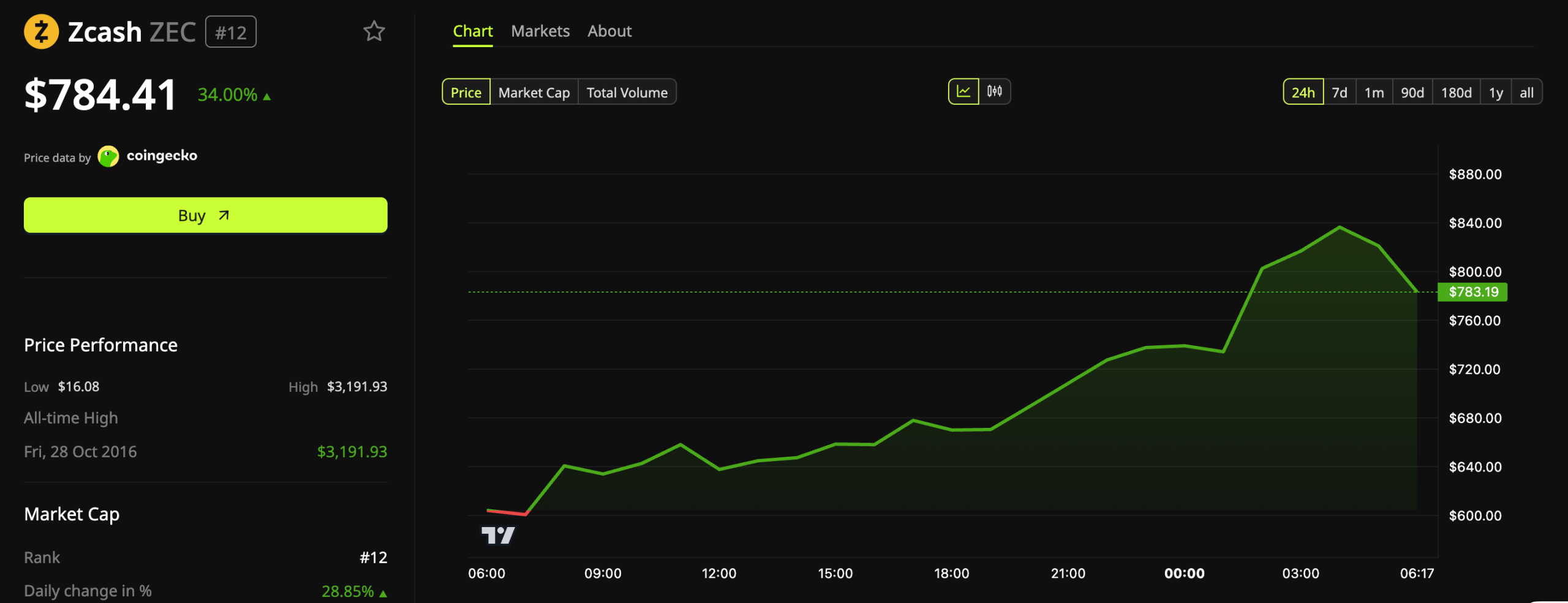
Zcash (ZEC) climbed to an 8-year high on Saturday, after Grayscale filed a fifth amended registration with the SEC.
The amendment advances Grayscale’s proposed Zcash ETF but does not amount to SEC approval. If approved, the fund would be the first US ETF to directly track Zcash.
Grayscale Fills the Blanks on Fee and Name
Tuesday’s fourth amendment left both the sponsor’s fee and the name blank. Friday’s amendment sets that figure at an annual rate 2.5% of the NAV Fee Basis Amount of the Trust, accruing daily.
Furthermore, Grayscale will rename the trust The Zcash ETF. Shares would list on NYSE Arca under ZCSH.
“While an investment in the Shares is not a direct investment in ZEC, the Shares are designed to provide investors with a cost-effective and convenient way to gain investment exposure to ZEC,” the amendment reads.
Follow us on X to get the latest news as it happens
Grayscale pledged to direct 100% of the fee toward marketing and development for up to 12 months. This commitment is voluntary.
Coinbase Custody Trust Company would hold the trust’s tokens. Bank of New York Mellon serves as transfer agent and administrator.
Zcash Becomes Top Crypto Gainer
The filing arrives as the broader crypto market rallies. ZEC is up 34% over the past 24 hours, the largest gain among the 100 largest cryptocurrencies.

Today, the token crossed $800 for the first time since January 2018. It touched an intraday high of $857 before easing to about $784.
That 2018 peak near $800 had capped Zcash for more than eight years. ZEC still trades well below its October 2016 record of $3,191.
The rally comes after a June setback, when a security researcher disclosed a flaw in one of the network’s shielded pools. ZEC lost roughly half its value before an emergency upgrade fixed it.
Subscribe to our YouTube channel to watch leaders and journalists provide expert insights
The post Zcash Price Hits 8-Year High as Grayscale ETF Gets Closer appeared first on BeInCrypto.
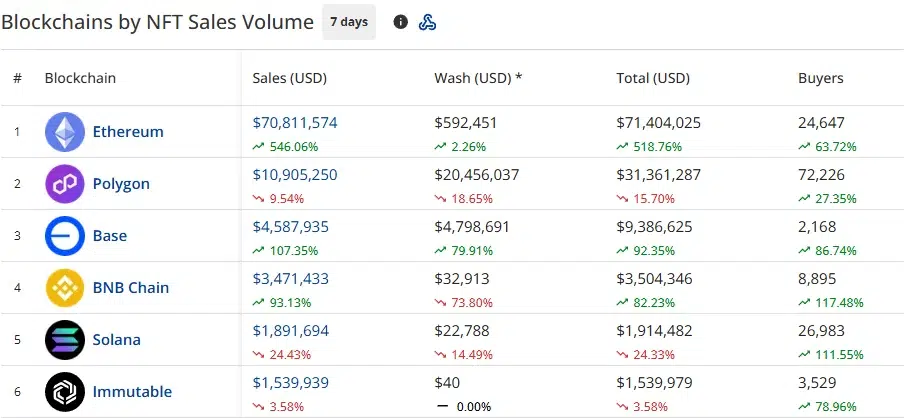
The NFT market recorded $95.48 million in sales over the past seven days, rising 170% as a single $55.03 million transaction involving the hybrid NFT project Pandora accounted for most of the increase.
Summary
- NFT sales rose 170% to $95.48 million, while transactions increased 7.5% to 962,992.
- Buyer addresses climbed 49% to 172,739, as seller addresses reached 159,275.
- Ethereum generated $70.81 million, representing about 74% of global NFT sales.
- Pandora recorded $55.21 million from nine transactions, led by one $55.03 million sale.
- Courtyard ranked second among collections with $10.02 million despite a 10% decline.
According to a CryptoSlam seven-day dashboard captured on Aug. 22, NFT sales increased to $95.48 million from approximately $35.29 million during the preceding period.
The number of buyer addresses climbed 49% to 172,739, while seller addresses increased 50% to 159,275. Total transactions grew by a smaller 7.5% to 962,992, showing that the sharp increase in dollar volume was not matched by an equivalent rise in the number of recorded sales.
The figures translate into an average value of approximately $99 per transaction, compared with about $39 during the previous period. Pandora’s $55 million contribution explains most of that change.
Excluding Pandora, the rest of the market generated approximately $40.28 million. The adjusted amount suggests that the headline increase came from a concentrated transaction rather than a market-wide rise of the same size.
The NFT surge occurred as the broader cryptocurrency market rebounded. Bitcoin climbed above $72,000 during a major short squeeze, while Ethereum rose above $2,400 as exchange-traded fund inflows returned.
CryptoSlam’s data do not establish that rising cryptocurrency prices caused the NFT sales increase. Pandora’s role means the weekly comparison requires additional context before it can be treated as evidence of broader collectible demand.
Ethereum leads NFT sales with $70.81 million
Ethereum ranked first among blockchains with $70.81 million in NFT sales, an increase of 546%. The network also recorded $592,451 in wash trading, bringing its combined reported total to $71.40 million.
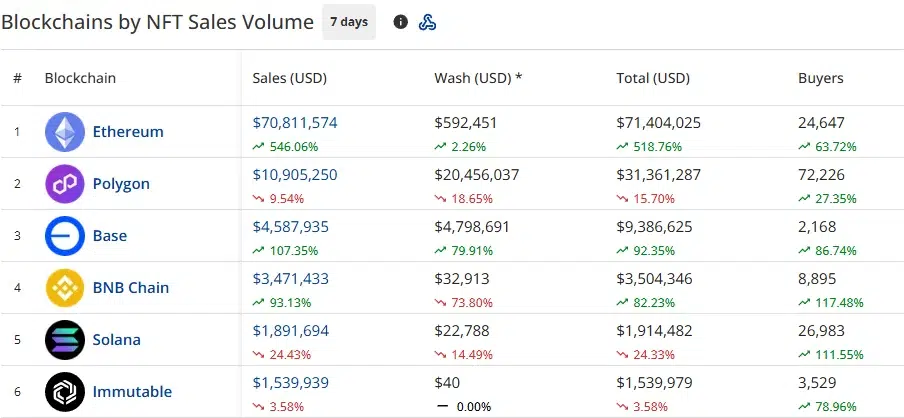
Buyer addresses on Ethereum increased by 63.7% to 24,647. However, Pandora alone accounted for $55.21 million, or approximately 78% of the network’s organic NFT sales.
Without Pandora, Ethereum generated about $15.61 million. The adjusted figure would still leave it ahead of Polygon, but the network’s weekly increase would be far smaller than the reported 546%.
Polygon ranked second with $10.91 million in sales, down 9.54%. Its buyer count increased 27% to 72,226, creating a contrast between lower dollar volume and higher wallet participation.
Polygon also registered $20.46 million in wash volume. Adding that amount produced a combined total of $31.36 million, although wash trading must remain separate from organic NFT sales.
Base placed third with $4.59 million in sales, up 107%, as buyer addresses climbed 86.74% to 2,168. The network recorded another $4.80 million in wash activity.
BNB Chain followed with $3.47 million, an increase of 93%. Its buyer count more than doubled to 8,895, while wash volume dropped 73.8% to $32,913.
Solana ranked fifth with $1.89 million in sales, down 24%, even as buyer addresses increased 111.5% to 26,983. Immutable generated $1.54 million, down 3.58%, while its number of buyers rose 79% to 3,529.
Blast, Panini, Flow, and Avalanche completed the top 10. Blast recorded $573,812 after an increase exceeding 300,000%, while Panini fell 41.2% to $537,797.
Pandora tops NFT collections with $55.21 million
Pandora dominated the collection rankings with $55.21 million from only nine transactions. The amount represented approximately 58% of all NFT sales recorded during the seven-day period.
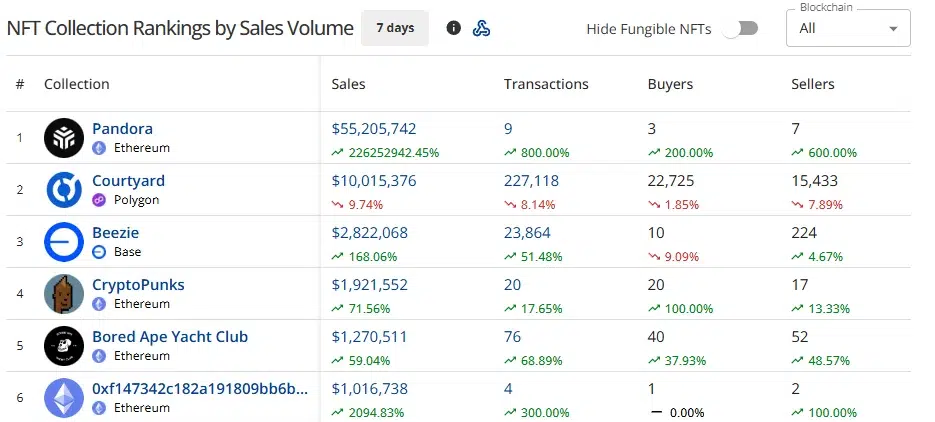
CryptoSlam reported that Pandora’s sales increased by more than 226 million percent, reflecting an extremely low comparison base. The collection recorded three buyer addresses and seven seller addresses.
Pandora uses the experimental ERC-404 model, which combines features associated with fungible ERC-20 tokens and non-fungible ERC-721 assets. A full PANDORA token is connected to a Replicant NFT, while transfers can result in an NFT being minted or burned.
The structure provides liquidity through a linked fungible token, meaning Pandora activity cannot automatically be compared with ordinary one-of-one artwork or profile-picture transactions. CryptoSlam classified the $55 million event as an NFT sale, but its economic nature could not be independently confirmed from the dashboard alone.
Courtyard ranked second with $10.02 million in sales, down nearly 10%. The Polygon-based marketplace processed 227,118 transactions involving 22,725 buyer addresses and 15,433 sellers.
Beezie placed third with $2.82 million, rising 168%. The Base collection processed 23,864 transactions, although CryptoSlam recorded only 10 buyers and 224 sellers.
CryptoPunks followed with $1.92 million, up 71.5%. The Ethereum collection completed 20 transactions involving 20 buyers and 17 sellers.
Bored Ape Yacht Club generated $1.27 million from 76 transactions, an increase of 59%. Buyer addresses rose by 37.9% to 40, while sellers climbed by 48.5% to 52.
An unnamed Ethereum contract ranked sixth with $1.02 million across four transactions. Moolah DAO NFT followed with $986,000, while Guild of Guardians Heroes generated $867,736.
Pudgy Penguins placed ninth with $866,629 after sales rose 244.35%. The collection recorded 92 transactions involving 58 buyers and 57 sellers. TokenA completed the visible top 10 with $689,020 from four transactions.
Pandora records the largest high-value NFT sale
Pandora produced the largest individual transaction shown on CryptoSlam’s seven-day dashboard. The remaining displayed cross-chain sales were much smaller and spread across Cardano, BNB Chain, Arbitrum, Panini, and Base.
- Pandora #107314 on Ethereum recorded a $55.03 million sale six hours before the dashboard capture. The transaction accounted for almost all of Pandora’s weekly volume.
- A Cardano NFT identified by the shortened asset address
919b2355…1ukdhnzhxssold for $73,816 approximately 15 hours earlier. - GladiatorDex #759 on BNB Chain recorded a $30,400 transaction two days before the snapshot.
- gUSDC Locked Deposit #602 on Arbitrum sold for $26,306 five days earlier. The asset’s name indicates a tokenized deposit position rather than a conventional collectible.
- A Stephen Curry collectible on Panini recorded a $20,000 sale approximately 17 hours before the dashboard was captured.
CryptoSlam also showed Beezie #8608 on Base at $10,276, Mad Lads #1792 on Solana at $8,102, and Pinnacle #1351969343 on Flow at $7,200.
The Pandora and gUSDC transactions demonstrate why NFT rankings can include hybrid tokens and tokenized financial positions alongside artwork, gaming items, and sports collectibles. Their inclusion is valid under CryptoSlam’s classification, but the assets’ structures should be stated when interpreting total market demand.


The Sandbox said it has contained a vulnerability in the SAND cross-chain bridge on Base and BNB Smart Chain after an attacker minted unbacked tokens on both networks.
The project put the impact at under 0.01% of the total SAND supply. It said that tokens on Ethereum (ETH) and Polygon (POL) are unaffected and that no user wallets were compromised.
Sandbox Becomes Latest Project Reportedly Hit by an Exploit
Blockaid flagged the incident on Saturday. The firm said attackers hijacked LayerZero delegate permissions through the approveAndCall function.
“~$49B face-value SAND minted so far across ~400+ txs,” Blockaid said.
Follow us on X to get the latest news as it happens
The team said that it has disabled bridging to and from Base and BSC, cutting off any route to move or redeem the minted supply. It said the SAND locked on Ethereum, which backs all bridged tokens, remains intact.
“An attacker was able to mint unbacked SAND on Base and BSC. We have disabled bridging to and from both networks, so SAND on Base and BSC is currently isolated and cannot be moved or redeemed,” the post read.
The project told holders not to buy, sell, or trade SAND on either network, warning that liquidity there is compromised. It is taking a pre-incident snapshot and preparing compensation for qualifying liquidity providers, with a full post-mortem promised.
Korean Exchanges Halt SAND Transfers
Meanwhile, Bithumb suspended SAND deposits and withdrawals at 11:11 a.m. KST, and Upbit followed one minute later. Both cited suspected security incidents under South Korea’s Virtual Asset User Protection Act.
Upbit imposed a halt on the Ethereum version of SAND, which the project has since said was never at risk.
The incident fits a wider pattern. DefiLlama has logged 17 separate exploits so far this month, most of them small, with bridges again the recurring weak point.
Subscribe to our YouTube channel to watch leaders and journalists provide expert insights
The post The Sandbox Contains Bridge Exploit After Unbacked SAND Minted on Base and BSC appeared first on BeInCrypto.

The primary cryptocurrency experienced its most notable price recovery of the year, skyrocketing by 25% from under $65,000 to almost $80,000 within two days before its run was paused, at least for now.
Although this surge is impressive on its own, Glassnode highlighted another notable development that makes it even more interesting: BTC has suddenly started to substantially outperform US stocks after months of doing the opposite.
In fact, BTC only outperformed the S&P500 on around one third of trading days over the last 3 months.
This is the longest underperformance streak we’ve seen over the last 6 years of history. The question now is whether this is the start of a trend or just one of those 3 days.… pic.twitter.com/FznjobnysM
— glassnode (@glassnode) August 17, 2026
Finally on the Correct Side
The analytics company said that the cryptocurrency had underperformed the S&P 500 on approximately two out of every three trading days in the past three months. This was more than evident, as BTC failed to initiate any substantial rallies since it was rejected at $83,000 in May. In the meantime, the popular index charted consecutive all-time highs.
Glassnode described this as bitcoin’s longest streak of relative underperformance against the benchmark US index in six years. However, the trend started showing cracks even before BTC exploded on Wednesday afternoon.
On Monday, the index slipped by over 0.5% while bitcoin posted a notable 2% increase. It was one of the rare sessions during the last several months when the cryptocurrency moved decisively in the opposite direction.
The major run on Wednesday, though, confirmed the changing tides. The S&P 500 and Nasdaq snapped a three-week winning streak, posting losses of 1-2%.
Although BTC has underperformed US equities on most days, it has dwarfed the stock market during its better days, as the magnitude of its excess returns has been considerably larger. The latest deviation is a prime example.
Decoupling?
It would be premature to conclude that there’s a decisive decoupling, as BTC has repeatedly traded as a high-beta risk asset, especially during periods when interest-rate expectations, liquidity, or broader risk sentiment dominate all financial markets.
Nevertheless, the cryptocurrency finally moved in the right direction and in a very impressive manner. Gaining over 25% weekly and reaching a three-month peak while US equities marked their first losing week in a month speak loudly and clearly.
Of course, the most important question now is whether this divergence lasts as one spectacular trading session, even if it went on for a couple of days, is not enough to convince investors to return to the crypto markets. Not yet, at least.
The post Bitcoin Just Flipped a Months-Long S&P 500 Trend: Here’s What Changed appeared first on CryptoPotato.


Crypto and blockchain companies announced approximately $1.298 billion across six disclosed transactions between Aug. 16 and Aug. 22, 2026. ZeroStack accounted for most of the total through a $1 billion noncash token contribution, while Ripple Prime completed a $275 million debt offering.
Summary
- Six disclosed transactions produced approximately $1.298 billion in financing during the reporting period.
- ZeroStack agreed to receive $1 billion in MemeCore tokens through a stock-based transaction.
- Ripple Prime raised $275 million from institutional investors through senior unsecured notes.
- NeoSoul secured $11 million to develop AI-powered trading agents and supporting infrastructure.
- Smaller rounds supported privacy, DeFi credit delegation, and decentralized AI infrastructure projects.
The remaining disclosed rounds raised about $23 million across AI trading, privacy infrastructure, decentralized lending, and physical infrastructure networks. One additional strategic investment did not disclose its value and is excluded from the weekly total.
Crypto Fundraising, DefiLlama, company announcements, regulatory filings, and crypto.news coverage was used to compile the weekly figures. The total includes debt and a noncash token contribution, meaning it should not be interpreted as $1.298 billion in conventional venture capital.
ZeroStack secures $1 billion MemeCore token contribution
Nasdaq-listed ZeroStack agreed to receive $1 billion in MemeCore tokens from Puple AI and Blockcat, two entities linked to MemeCore. The transaction involves approximately 925.9 million M tokens rather than a cash investment.
In exchange, ZeroStack will issue 3.5 million common shares and pre-funded warrants covering as many as 36.2 million additional shares. The securities were valued at $25.19 per share, more than 12 times ZeroStack’s recent trading price when the transaction was announced.
Exercise of the warrants remains subject to shareholder approval under Nasdaq listing rules. Shares issued under the arrangement will also carry lockup periods of up to 10 years, according to the company.
MemeCore principal Rudy Rong is expected to become ZeroStack’s president as part of the agreement. The company said the transaction would expand its digital asset treasury strategy, although the stated $1 billion value depends on the assigned price of the contributed tokens.
The entire contribution is included in the roundup’s disclosed financing value. However, it should be separated from conventional fundraising because ZeroStack is receiving tokens instead of fresh operating cash.
Ripple Prime raises $275 million through senior notes
Ripple Prime raised $275 million through an upsized private offering of senior unsecured notes to institutional investors. Ripple did not disclose the notes’ interest rate, maturity date, or participating investors.
The company said the proceeds would support the U.S. expansion of its prime brokerage operations, including financing, clearing, and other services covering digital and traditional assets.
Ripple established the business through its $1.25 billion acquisition of Hidden Road. The unit now serves institutional clients across crypto, foreign exchange, derivatives, swaps, and fixed-income markets.
The note offering follows a $200 million credit facility that Ripple Prime secured from funds managed by Neuberger Berman in May. Together, the two financings provide the brokerage with $475 million in additional capacity, though the credit facility falls outside the current reporting period.
The $275 million transaction is debt financing rather than a venture capital round. It is included in the weekly total because it represents newly announced financing for a crypto-focused company.
NeoSoul raises $11 million for AI trading infrastructure
NeoSoul completed an $11 million pre-Series A round with participation from MH Ventures, Amber Group, ArkStream Capital, 0G Foundation, Kirin Capital, CatcherVC, and New Oak International. The company did not identify a lead investor or disclose its valuation.
https://x.com/NeoSoulAI/status/2090338023607345465
NeoSoul plans to use the capital to develop NeoTrade, an AI-based trading platform that lets users configure agents capable of analyzing markets and executing trades under defined controls.
The company also intends to improve its trading infrastructure and expand its presence in Southeast Asia and other international markets. NeoSoul operates within the BNB Chain and 0G ecosystems, connecting autonomous software agents with blockchain-based financial activity.
The round was the week’s largest disclosed early-stage cash investment. It also continued investor interest in products combining artificial intelligence with crypto trading and on-chain execution.
Funding under $10 million
- Privacy blockchain developer Beldex raised $8 million in a round led by Sigma Capital. NTC, Nxgen, Digital Consensus Fund, and EAK Ventures also participated, bringing the company’s reported cumulative funding to $36 million. Beldex said the proceeds would support developer tools, protocol security, privacy applications, encrypted AI services, and broader ecosystem development.
- DeFi lending protocol Twyne secured $2.5 million in seed funding in a round co-led by Cyber Fund and Ethereal Ventures. Euler Labs, Daedalus, and several individual investors participated. Twyne provides a credit delegation layer that allows lending-market depositors to transfer unused borrowing capacity to other users in exchange for additional yield.
- Solana-based infrastructure project Botanika closed a $1.5 million funding round backed by CRIT Ventures, Baboon VC, Marblex, Daedalus, and individual investors. The company is developing decentralized storage and computing infrastructure that connects physical hardware with on-chain ownership. Botanika has positioned its Nimbus hardware product as an entry point for data storage and AI-related workloads.
Undisclosed strategic funding
Blueprint Finance completed an undisclosed strategic round led by Polychain Capital. Bullish, Keyrock, BitGo, FalconX, G-20, Flowdesk, JPEG Trading, Sentient Capital, Andes, and 2Square participated. Blueprint plans to expand Concrete, its non-custodial vault infrastructure for institutions, protocols, asset managers, and other capital providers.
The platform combines trade execution, accounting, rebalancing, and risk controls within a shared on-chain system. The transaction is excluded from the $1.298 billion total because Blueprint did not disclose the amount raised.

Five nostalgic Scottish seaside towns that were once holiday hot spots – do you remember them?

Gold prices rise for 3rd straight week, hit 3-month high. Can bullion reclaim $5,500 peak?

Amnesty International label ruinous Italy-Albania migrant detention pact “a wake-up call”





-

 Fashion17 hours ago
Weekend Open Thread: Madewell – Corporette.com
-

 Business4 days ago
SMA Solar Technology AG (SMTGY) Q2 2026 Earnings Call Transcript
-

 Politics7 days ago
SEQ Code: The Three Letter Boarding Pass Code That Could Give You The Worst Seat
-

 Tech4 days ago
Qwen3.8-27B runs frontier-class coding agents and reasoning locally, no cloud API required
-

 Crypto World4 days ago
OCC Greenlights Trump Family Crypto Firm for Trust Charter
-
 Tech7 days ago
Every fusion startup that has raised over $100M
-

 Crypto World5 days ago
NAVI Prime launches institutional lending framework on Sui
-

 News Videos2 days ago
Don’t Leave Your Financial Future To Chance | August 19, 2026
-

 Crypto World5 days ago
Data of 54K Wallet Users Leaked, Clarity Odds Just 10%: Hodler’s Digest, Aug. 16
-
 NewsBeat3 hours ago
The ‘Lucky Dip Gang’ causing carnage for clicks: After five thugs were killed speeding in the wrong direction on a motorway, GUY ADAMS investigates a sick new trend… and why police aren’t even allowed to pursue them
-

 Politics6 days ago
Britain is facing a housing disaster
-

 Tech6 days ago
What are the rumors about the AirPods Pro 4?
-

 Business7 days ago
Stephen Curry Trade Rumors Persist as Warriors Insist Superstar Remains Committed to Golden State
-

 Business6 days ago
Rebel Creamery files Chapter 11 with $23.8M Van Leeuwen judgment on appeal
-
 Crypto World5 days ago
Dow’s 3-Year Winning Run Isn’t a Crash Signal, Still 49% Odds of Double-Digit Gains
-

 Business7 days ago
(VIDEO) Frozen 3 First Look Reveals Anna’s Wedding, Olaf’s New Love Interest And A Mysterious Villain
-

 Business4 days ago
Stock Market Today: Tech Futures Slide As Treasury Yields Jump; Nvidia, Micron, Sandisk Sell Off
-

 Fashion7 days ago
Fashion Bomb Daily On the Scene: The 2026 MVAAFF x ESPN White Party on Martha’s Vineyard
-

 Tech7 days ago
DeepSeek’s innovative harness treats everything as a plug-in
-
 Tech5 days ago
OpenAI’s new ChatGPT feature logs your keystrokes and stores them in plain text
You must be logged in to post a comment Login