
Politics
Politics Home Article | Rewiring the state must mean rewiring London



Cllr Stephen Cowan, Chair
| London Councils
This is a moment to be optimistic. The government’s commitment to rewiring the state is a chance to make the London we love even better: a vibrant, modern city where good growth is felt in every postcode, and people are empowered to live healthy, secure and prosperous lives. A capital that not only works better for Londoners, but one which helps lift up people’s life chances across the UK.
First though, let us imagine a UK government that announced it planned to merge the combined authorities of Greater Manchester, the Liverpool City Region, South Yorkshire, York & North Yorkshire, and the North East into a single super-authority – with one democratically elected mayor overseeing officials seeking to engender better outcomes for a combined population of 9 million people. Imagine that the 29 councils, and their democratically elected administrations that make up those areas being told they will no longer have any formal role in the regional authority’s strategic decision-making. Such a plan would rightly be ridiculed.
But that scenario is not an unreasonable description of London’s current system of governance – a consequence of the thinking and horse-trading which took place at the end of the last century when London devolution was being established.
Getting London’s rewiring right this time matters.
For good and bad reasons, London remains the UK’s economic powerhouse. It has lifted the rest of the UK out of every recession since the British credit crisis of 1772–1773 (that’s the crash that arguably led to the American Revolution).
London is Western Europe’s biggest city – roughly 15 times larger in area and four times more populous than the City of Paris, twice the landmass of New York City. Indeed, of the 27 European Union states, 13 have smaller national populations than London.
Meanwhile more than 300 languages are spoken by Londoners, making it one of the most linguistically diverse cities in the world. And London tops almost every list of the world’s most important cities.
In this context, London’s 32 boroughs and the Corporation of London are a huge strength. Each electing representatives and leaders who know and care more about their proudly diverse places than any unelected official in a centralised authority ever could. Each demonstrating the innovation and drive that contributes to our Greater London.
In Sir Sadiq Khan, London has a Mayor that is an inspiration to people around the world – the very epitome of our forward thinking, progressive city – leading London with ambition.
So the questions are: how can we improve in such a way as to bring these strengths together; and how can we give London a system that better allows us to rise to the challenge of this fast-moving age while making sure London’s democracy delivers for generations to come?
London Councils has started the work to answer these questions. It’s working cross-party with partners from across London and drawing on the evidence and experiences of elsewhere.
There are historical precedents that can point the way. Almost 80 years ago the victorious powers gave West Germany a constitution which still serves its successor well today.
Objectivity alongside principles such as subsidiarity and ensuring government is agile, responsive, representative of place and minimises disruption must form the bedrock of any change.
Little can be gained in drawing power out of Whitehall only to concentrate it in a new centre. Decisions and the funding behind them should sit as close to democratically led communities as possible.
London’s regional governance needs to evolve to reflect the realities of the modern era. A new governance settlement must mean boroughs and the Mayor taking some of the big strategic decisions together, like in all other Mayoral Strategic Authorities – rather than continuing to rely on voluntary cooperation.
This is what London needs to better modernise public services, turbocharge housebuilding, deliver inclusive growth, tackle inequality and support Londoners with the jobs and skills they need to succeed.
These new structures must maximise the benefit of new powers and resources.
What that looks like in practice is up for debate. But we should never be afraid of having a mature and informed conversation about how best to make sure the UK and its capital thrives for decades to come.


Did you know that double spacing is a highly generational habit?
Yep – in 2019, even the APA formatting style (formerly a “staunch defender” of double spacing) was forced to concede that it’s a bit of an outdated approach. While it made sense for typewriters, it isn’t needed for more modern word processing programs.
But, new Google data shared with the New York Times has proven that even when tech stays the same, the way we communicate with it still varies by age.
And one emoji (those little digital images like 😭 or 😂) appears to be ageing even Gen Z.
Gen Alpha is leading the change with 🥀
Using anonymous records from over 665 million emojis used on Google’s keyboard, Gboard, a wilting rose emoji (🥀) was found to be the 93rd most common choice.
It was the fastest-rising emoji on the list.
The information given by Google didn’t break down usage by age. But the New York Times used Reddit forums to form “imperfect proxies” that reveal “broad generational trends”.
They found that 🥀’s usage was almost non-existent in the comments of fora r/Millennials (born 1981-1996) and r/GenX (1965-1980). Members of r/GenZ (1997-2012), meanwhile, used it in about 2% of replies.
But that figure shot up in r/GenAlpha, a generation born from roughly 2013 onward.
Among this online group, 🥀 usage was almost at 8% – nearly four times as much as their Gen Z elders.
It’s apparently so obscure among those old enough for tax returns and driving licenses that Reddit users have dedicated entire posts to working out its meaning.
What does a wilting rose emoji mean?
It’s often used in place of a heartbreak emoji (💔), the online trend explainer site KnowYourMeme shared. It can be invoked to suggest mock-earnestness about unserious topics, or as a genuine attempt to convey loss or sadness.
As for why it’s become popular, that’s unusually well-documented. In a 2025 TikTok, a poster shared: “💔 lowkey starting to become too mainstream… I might just start using 🥀”.
Subsequent social media videos discussed the irrelevance of the wilting rose’s older cousin, the heartbreak emoji.
Commenter after commenter on a Reddit post about the wilting rose said the trend made them “feel old”.
Still, take heart – not only are 25-year-olds apparently more baffled by the emoji than teens, but Merriam-Webster’s dictionary suggests that the dead battery (🪫) symbol is already nipping at 🥀’s heels.

Over the weekend, there was something of a celebrity hair-mergency that we’re just about ready to talk about.
In recent history, Norway’s Erling Haaland has become one of the most talked-about footballers in the world thanks to his skills on the pitch (as seen in the World Cup earlier in the summer) his cheeky sense of humour and, of course, his iconic blond locks.
Ahead of his return to the pitch for Manchester City over the weekend, the Scandinavian striker decided to switch things up, and revealed on his Instagram that he’d buzzed off his infamous do.
He showed off the results of his new look on Instagram on Sunday, teasing his followers: “New season, new trim.”
“Short hair don’t care,” he added, first showing off a 90s boyband-esque curtains look, before unveiling the full buzz.
Suffice to say, the new look got plenty of attention on social media, with many admitting that Haaland’s new look was going to take them a minute to get used to…
Even his fellow footballers were left voicing their shock, with Jude Bellingham commenting a stunned: “No way.”
In a follow-up YouTube video, Haaland teased: “This beautiful blond hair, it’s time to let it go. I was thinking about doing this straight after the World Cup, but I was so busy, so I didn’t do it.
“The season starts now, so it’s time to get a fresh start and everything. The only thing is, Zlatan [Ibrahimović the Swedish player] told me, ‘never cut your hair, because your strength is in your hair’. So I’m a bit nervous.”
Fortunately, it wasn’t too much of a bad omen for Manchester City, who beat Bournemouth 2-1 while playing at home on Sunday afternoon…
Check out Erling Haaland’s hair update video in full – including his girlfriend Isabel Johansen’s reaction – below:

The Dutch broadcaster Avrotros has confirmed that The Netherlands will not be returning to the Eurovision Song Contest next year.
The Netherlands was one of five countries to withdraw from Eurovision ahead of this year’s contest in solidarity with Palestine, after it was confirmed that Israel would be returning in 2026.
On Monday morning, an Avrotros rep confirmed that the broadcaster would be following suit at next year’s event.
“Avrotros will not participate in the Eurovision Song Contest in 2027 because the event can no longer be considered neutral, with a participating country still involved in a large-scale military conflict,” they said. “Geopolitical tensions in the Middle East are having a significant impact on the Contest and have led to deep divisions.
“Over the past year, Avrotros has called on the European Broadcasting Union (EBU) to establish transparent rules for the participation of countries involved in military conflicts. However, the recently announced changes by the EBU do not provide sufficient confidence that the independent and neutral character of the Eurovision Song Contest has been restored.
“Participation is therefore no longer consistent with the values of Avrotros: trustworthiness, independence and humanity.”
This update comes after Eurovision refreshed its rules to state that any country involved in an “armed conflict” could no longer serve as a host of the contest, even if they win at the previous year’s event.
Last year, The Netherlands was the first of five countries to announce it would be pulling out of Eurovision, shortly after the decision was reached to invite Israel back for the 2026 contest.
“Under the current circumstances, participation cannot be reconciled with the public values that are fundamental to our organisation,” they said at the time.

Following this, Spain, Ireland and Slovenia’s national broadcasters all announced they’d be doing the same, with Iceland’s following suit around a week later.
The director general of Ireland’s RTÉ said in May that a decision about the country’s Eurovision future had not yet been made, but noted: “For us as a public service broadcaster, who believes in the importance of protecting journalists and believes in human rights, there’s no reason at the moment to change our decision but we will review it in the coming months.”
Meanwhile, Belgian broadcaster VRT has also cast doubt on its own participation in next year’s Eurovision Song Contest.
Eurovision will take place in Bulgaria for the first time in 2027, following Dara’s win with her song Bangaranga.
Israel finished in second place in this year’s competition, for the second time in a row, having also come out on top in the televoting.

Let’s start this off with a hefty caveat: if you want to increase your longevity, eating well, getting enough sleep and exercising regularly have repeatedly proven to add years to your life.
Even the best mindset in the world likely can’t outperform those science-backed benefits.
However, some research suggests that how we think about ageing could impact our lifespan, too – seemingly independently of, though potentially leading to, a deliberate change in our lifestyle habits.
Thinking positively about ageing has been linked to a longer life
Starting in the 1970s, researchers began tracking hundreds of over-50s as part of the Ohio Longitudinal Study of Aging and Retirement (OLSAR).
They were asked to fill in surveys, including questions about their feelings on ageing.
The authors of a 2002 study compared those results with mortality rates within the group.
Up to 23 years after the first survey, those who’d had a more positive view of ageing decades earlier on lived 7.5 years longer on average than people with negative perceptions.
“This advantage remained after age, gender, socioeconomic status, loneliness, and functional health were included as covariates,” the researchers wrote. Participants’ will to live also seemed to matter here.
The authors added at the time: “Our study carries two messages… The discouraging one is that negative self-perceptions can diminish life expectancy; the encouraging one is that positive self-perceptions can prolong life expectancy”.
This isn’t to say you only need to think positively about ageing
Again, this research doesn’t suggest you can cancel your gym membership and expect the same longevity results simply by embracing more positive thinking.
In fact, because this study only found a correlation and not a causal relationship, it didn’t even prove that positive thinking definitely led to greater longevity.
But this isn’t a zero-sum game.
More recent research has found that improvement in either physical or mental ability after 65 is not only possible, but relatively common (the study authors saw it in about 47% of the over-65s they studied for 12 years).
Those improvements seemed far more likely among those with a positive self-perception of ageing.
Maybe people less inclined to see older people as inherently frail might try harder to preserve their muscle mass, e.g., through strength training. Dr Eric Kim, an assistant professor of psychology at the University of British Columbia, told American Heart Association News: “There’s a connection between mindsets and health behaviours. One leads to the other”.
We don’t know for sure exactly where the link between positive thoughts about ageing and a longer life begins and ends – but using it to frame great lifestyle choices seems like a pretty solid plan.
In July Kemi Badenoch made a speech, whilst Nigel Farage battled a bin in Clacton and Andy Burnham, having dispatched Kier Starmer to a bin in Westminster, figured out how to be the Mayor of Britain.
While Burnham continues to work on his Tik-Tok game, the clock is running on the mission Badenoch set for the Conservatives:
“We are recruiting serious people who understand common sense, can get stuff done and can unite the country. In the unlikely event that Burnham does call a snap election – and I do not think he will, because turkeys do not vote for Christmas – we will be ready. Since I last wrote in the Telegraph about how we will recruit the next generation of Conservative candidates, we have been deluged with brilliant applications. More than 2,000 people applied, and we will now step up our selection process over the summer as we build a government in waiting.”
I didn’t mention Farage en passant. His post Clacton victory holiday has been rent by squabbling in the top team while he’s away. A lot of the focus has been on the egregious Zia Yusuf the indomitable antedote to charm, a man who has branded himself a “Lethal Election Threat” to the Tories.
For a man who hasn’t been elected to anything but donated his way to a top position in Reform UK, he’s literally gone from ‘buy’ to L.E.T.
He hasn’t stood as a candidate and they turned him down for Runcorn, to plonk for Pochin. She’s not the only former Tory in their ranks-of-former-Tories which brings me back to Badenoch’s mission.
Next week as St Giles day (yes it really is) ushers in the month of September the Conservatives open up the first tranche of constituencies they want to find candidates for and there’s some eye-catching ones, not least in a seat one defector thought better of a by-election at the time of their departure.
So roll up those who are ‘in it to win it’ here’s the first tranche of seats being contested in September and what you need to know.
Newark
Current MP: Robert Jenrick (Reform) majority secured as a Conservative, 3,572. Electorate on 4th July 2024: 79,783. Turnout 67%.
Rob needs no introduction to ConHome readers, as at one point he dominated our reader survey ‘Shadow Cabinet Leadership Table’. We now know around the time of last year’s Conservative Party Conference he’d started talking to Farage via ConHome Founder and until recently Reform member Tim Montgomerie (having left the Conservatives in Dec 2024). Kemi dramatically sacked Jenrick, and on 15th January this year removed his membership after finding “irrefutable evidence” of his plan to defect, which he hastily did some hours later at a press conference with Nigel Farage.
A UK Polling report on 30 June suggested the Conservatives will win Newark at a General Election with 36 per cent of the vote, while Jenrick and Reform will finish second with 27 per cent. This of course is no guarantee. Jenrick is a workaholic, very driven and a good campaigner. The seat will need an equally determined Conservative candidate to beat him, which is surely something CCHQ and Badenoch would cherish.
So far it’s been reported his former friend and County Councillor for Newark East, Sam Smith is interested in delivering that win, he will not be alone though in wanting this one.
Clacton
Current MP: Nigel Farage (Reform) majority secured in by-election (Reform Hold) 13 August 2026 12,784. Electorate on 13 August 2026 79,785. Turnout 44%
As we know the Conservatives, like Labour, Liberal Democrats and Greens decided not to stand in a by-election called by Farage and in which he decided to run, so here is the 4th July 2024 result which saw, at the 8th attempt, him finally become an MP; Majority 8,405. Electorate 78,245 Turnout 58.7%.
To unseat Farage would be, quite clearly, a major Tory coup and it is entirely possible that the seat will be fought again, before any General election depending on the outcome of the parliamentary Standards Commissioner’s investigation into the allegation of failing to declare the five million pounds crypto-billionaire Christopher Harborne handed over to Farage in the year before he became an MP, as the rules stipulate. Farage maintains the rules do not apply to ‘personal gifts’ and he was advised of this at the time he became an MP. He has subsequently dismissed the process as a political attack on Reform, suggesting it’s not such a big problem if he ‘failed to sign some piece of paper’.
So the Tories may have included Clacton in this first tranche to be ready for by-election v2.0 as well as the next General Election
Previous MP for Clacton former actor (now acting again by the way) Giles Watling, 73, lost in 2024 but despite suggesting he’d be prepared to have run in the last by-election, and having had a personal core popularity in the seat – more a victim of the brand rout, than a rejection of him – it’s not clear if he’d be looking to run at a GE again. And – and maybe it shouldn’t be – age might play a factor in that for the local Tories.
The seat will be a fight, but it’d be a high profile one for whoever takes it on.
South West Norfolk
Current MP: Terry Lamb (Labour) Majority 630. Electorate 74,724. Turnout 59.3%
So who wants to be the inheritor of Liz Truss? Yes this is the seat she lost in 2024. A second blow after having been elected and then rejected in the shortest premiership of modern times, just 49 days as Prime Minister. There was a time when Truss was hugely popular with the membership, she beat Rishi Sunak to the leadership, and she had been a prominent cabinet minister for some time. Word was in the FCDO that half her team worked on Foreign Affairs and the other half worked on her leadership campaign which started a long time before the official one. Well the campaign to win it back starts soon, and it will be hard. Labour hold the seat but Reform did very well in the local elections in Norfolk in May, and the best can be accurately said of the Conservative performance was that it was not nearly as bad as predicted, but still bad. Terry Lamb however sits on just a 630 majority. Speaking of majorities…
Hendon
Current MP: David Pinto-Duschinsky (Labour) Majority 15 Electorate 74,865 Turnout 55.1%
It was Ameet Joggia who fought the General Election in 2024 and in a way became a casualty of the new political reality we have. Pinto-Dushinsky wins for Labour with a majority of just 15 votes, on 15,855 Joggia got 15,840. Third was Reform UK’s Joshua Pearl on 3038, more than enough had it been a straight Tory-Labour fight to give Joggia the seat. But that’s not how things are so the new Conservative Candidate will as in many of these cases have to fight on two fronts, but Hendon is clearly one the Tories feel they could claw back.
David Pinto-Duschinsky is the son of right leaning legal and constitutional expert Michael Pinto-Ducshinsky connected to Policy Exchange and a member in 2011–12, of the Commission on a Bill of Rights set up by the UK Coalition Government in 2010 to advise on reform of the 1998 Human Rights Act. In March 2012, he resigned live on TV after complaining that his views were being ignored.
David is a PPS in the Department for Work and Pensions, both under Starmer and Burnham popped up in a Parliamentary debate to clash with Conservative Esther McVey over her bill for mandatory labelling of halal and kosher meat.
Chelsea and Fulham
Current MP: Ben Coleman (Labour) Majority 152. Electorate 78,468 Turnout 60%.
Former Conservative Greg Hands, a former party Chairman in 2023, a Minister for London (might he fancy running for Mayor?) and a Minister for Trade Policy lost the seat in 2024. To take this one on, one suspects a knowledge of bridges, and the closure of one, will be important. The Liberal Democrats came third in this seat in 2024, but on not so much more than Reform. Again Ben Coleman’s majority is small. He declined to stand down as a councillor in Hammersmith and Fulham at first but did subsequently relinquish that role.
Ribble Valley
Current MP: Maya Ellis (Labour) Majority 856. Electorate 80,484 Turnout 64.6%
Former Conservative MP Nigel Evans, a deputy Speaker will tell anyone that he positively lived for Parliament and being an MP. Here’s another seat where the Reform vote counted. Evans losing by 856 votes, where Reform got 8524. this Nigel has not announced he’s standing again though we are aware friends and colleagues urged him to get back on the list. It’s a a beautiful part of the country so there’s that for anyone wanting to be the candidate, but it’ll be the less pretty realities of today’s political landscape that any new candidate will have to navigate here.
Aylesbury
Current MP: Laura Kyrke-Smith (Labour) Majority 630. Electorate 79,169. Turnout 63.1%
Maidstone & Malling
Current MP: Helen Grant (Conservative) Majority 1,674 Electorate 76,449. Turnout 60.7%
This is a seat the Conservatives won in 2024. The majority is smaller than you’d like but it’s Tory. Labour were the second challanger and Reform third but short with over a 4k margin from Helen Grant MP who won it. Helen is the shadow Solicitor General and announced in July she’d stand down after 19 years as an MP (our own ConHome columnist Matthew Jeffery can be spotted in the photo) She’ll go at the next election, saying that despite being well, a fight with cancer had made her decide now was the time to ‘pass on the baton‘. She referred to the time she’d had as a candidate to bed into the seat when her predecessor, one Anne Widdecombe, announced she’d be stepping down. That run up time for whoever the Tories pick next could be about the same if an election is in 2028/9. The fact this was Anne Widdecombe’s old seat and the ghastly circumstances around her death, may make this a seat Reform would dearly like to take, but she was a Conservative longer than she was anything else, and as I grew up in this constituency, knowing Anne from my teens, I’ll be watching this one with an added interest.
Poole
Current MP: Neil Duncan-Jordan (Labour) Majority 18 Electorate 72,509. Turnout 61.4%
Robert Syms was the Conservative MP for Poole, an MP since 1997 winning despite the Blair landslide of that year. He spent time in the Treasury and as a whip. The majority in 2024 of just 18 was accepted only after a number of recounts. Again Syms was close to winning with is 14,150 but Reform were third with 7429. Poole was also a symbol of the scale of defeat in 2024 for the party overall, Syms seeing a drop of 27% from 2019 result where his majority was 19,116. Again the Tories think they could get this one back and want someone in soon who can start the work of trying to do so.
And
Redditch
Current MP: Chris Bloore (Labour) Majority 789. Electorate 71,042. Turnout 59.6%
Rachel McLean, friend and colleague to Kemi Badenoch, is now in the Lords, but here she lost the seat she’d won in 2017, holding the seat vacated by Karen Lumley, fondly remembered by me as one of the first Tory MP’s I got to know well. We lost Karen on 25 May 2023, at the age of 59. She fought Redditch twice unsuccessfully before defeating a sitting Labour Home Secretary Jacqui Smith in 2010. Rachel has not left politics by any means, and is an active Tory member of the Lords, and supports Badenoch’s leadership though no longer her Strategy Director, after a reshuffle of the team last summer.
Redditch has swapped hands and is one of those seats that if it can be taken from Labour’s Chris Bloore, is one of theose seats the media look at for an indication of the scale of a revival in a party’s fortunes. The seat has people who work at Jaguar Land Rover but the Tories are looking for a tiger to take it back.
ConservativeHome will take a look at the October tranche in late September.
Matthew Jeffery is an experienced global talent and recruitment leader, with more than 25 years advising boards and C-suite executives on workforce strategy, skills, and productivity.
Conservatives are making a political mistake.
We are handing millions of working people to Labour simply because they carry a union card. These voters are not our enemies. Many should be natural Conservatives and millions could become Conservative voters. Yet for 40 years we have behaved as though Labour owns them and barely bothered to ask for their support. That surrender should end now.
Thatcher was right to take on union power when it threatened democratic government. She won that battle. But winning yesterday’s battle is not an excuse for fighting it forever. The closed shop is gone, Arthur Scargill is history and Britain has changed. Too much Conservative thinking about trade unions remains frozen in an argument we already won.
Look at who carries a union card today. Nurses coming off twelve-hour shifts. Engineers buried in compliance paperwork. Teaching assistants buying classroom supplies with their own money. Warehouse workers who have calculated exactly how far their pay packet will stretch. These are not militants plotting the downfall of capitalism. They are working people trying to get on and millions should be natural Conservative voters.
Labour behaves as though their votes come automatically with their union subscriptions. Why should they? A union card is not a Labour vote. These voters do not belong to Labour. Their support has to be earned and it is time Conservatives went out and earned it.
The New Monopoly Is Knowledge
For most of the 20th century, politics was a struggle between capital, labour and the state. But Britain has changed and power has changed with it. The great monopoly of the 21st century is knowledge.
Britain is drowning in information while millions struggle to make sense of it. Employment law, pensions, taxation and regulation have become so complicated that people increasingly depend on institutions to interpret their own lives. Government understands the legislation. Regulators understand the rules. Banks understand the finance. Trade unions understand employment law. The individual is expected to trust them all.
Take a nurse handed a hundred-page pay settlement covering her salary, pension, overtime and working conditions. She can sacrifice her weekend deciphering it or trust someone else to tell her what it means. The institution understands the detail, frames the choices and recommends the answer. The individual lives with the consequences.
Expertise is essential. Dependency is not. When complexity prevents people from challenging decisions governing their money, work and future, knowledge becomes power. Choice without understanding is a pretty thin version of freedom.
Conservatives have always challenged concentrated power. The new monopoly is not sitting on a picket line or behind a factory gate. It is buried in the contracts, regulations, algorithms and small print governing modern life. The next great political battle will not be capital versus labour. It will be institutions versus individuals.
Artificial Intelligence Can Put Power Back in the Hands of Workers
Previous Conservative revolutions dispersed power through ownership. Home ownership, share ownership and secret ballots all gave individuals greater independence. AI offers the next great dispersal of power. This time, it is knowledge.
Most politicians talk about AI as something that will happen to workers. Conservatives should talk about what it can do for them.
The internet gave people access to information. AI gives them the ability to interrogate it. A worker could finally answer a question that really matters: am I getting a fair deal? They could compare their salary with similar jobs across Britain, discover what their skills are worth in another industry, understand their pension and see whether a qualification or change of employer could leave their family thousands of pounds better off. Instead of being told what their labour is worth, they could find out for themselves.
Now take that power into the negotiating room. When an employer says there is no money for a better settlement, workers should be able to test the claim. What happened to turnover, profits and margins? What are competitors paying? What happened to executive pay? For too long, negotiations have rewarded whoever arrives armed with the most expertise. AI can start levelling the table. If the company can afford more, workers should know. If the business genuinely cannot, they should know that too. The point is not to rig the argument for either side. It is to make bluffing harder for both.
Labour’s historic answer to worker power has been to strengthen the people who represent them. Ours should be to strengthen the person being represented. We should not tell union members to tear up their cards or surrender collective bargaining. We should give them the tools to challenge their employer, challenge their union and, when necessary, challenge both.
Do not replace the individual with the machine. Arm the individual with it. Give millions of workers access to knowledge once reserved for lawyers, accountants, officials and specialists, then trust them to decide what is best for themselves.
The Capability Society Should Become Conservatism’s Next Big Idea
The ambition should reach far beyond trade unions. A Capability Society would use technology to tear down the walls of expertise that leave ordinary people dependent on institutions to navigate their own lives. The purpose is not to build a smarter state that makes decisions on people’s behalf. It is to create more capable citizens who can make better decisions for themselves. Trade unions are the perfect proving ground for that idea.
Imagine the same principle everywhere. A parent challenging a decision about their child’s education. A small business owner taking on the tax system. A patient interrogating their treatment choices. A saver finally understanding their pension. For too long, complexity has been power. The institution knew. The individual trusted. That relationship can now be broken.
That leaves Conservatives with a defining choice. We can use AI to make the state smarter, bureaucracy stronger and institutions better at managing people. Or we can use it to make individuals harder to control, harder to mislead and harder to ignore. Conservatives should choose the individual.
That is the Capability Society. Not technology used to manage people from above but technology that gives them the power to stand on their own. Not a smarter establishment but a more capable population. This should become the defining Conservative idea of the AI age.
Why Trade Union Members Have More to Gain from Conservatives Than Labour
Labour has spent generations claiming to be the party of working people. Trade union members are entitled to ask what that loyalty has actually delivered. Forget the conference speeches, union endorsements and warm words from ministers. Are working people richer? Is work more secure? Are opportunities growing? Does the pay packet stretch further? Labour should be judged by the lives of the workers it claims to represent, not the union leaders standing behind it.
Look at the labour market. Unemployment stands at 4.9 per cent. The latest provisional estimate suggests payrolled employment is down 94,000 over the year. Vacancies have fallen to 707,000, the lowest level outside the pandemic since 2014, while real regular pay growth is just 0.5 per cent after inflation. Inflation is heading the wrong way again, climbing from 2.6 to 2.9 per cent in July. Money is tight, opportunity is shrinking and working people are feeling it.
Labour cannot pretend its own choices have nothing to do with the pressure employers face. Employer National Insurance is now 15 per cent, while the National Living Wage has risen to £12.71 an hour. Add higher employment costs to an expanding burden of regulation and eventually somebody pays. Investment is delayed. Vacancies disappear. Hiring slows. The worker Labour claims to protect ends up carrying the consequences.
Those numbers become painfully real around the kitchen table. A worker feels them when a colleague leaves and is not replaced, overtime disappears, a pay rise barely changes what the family can afford or a decent vacancy suddenly attracts hundreds of applicants. They feel them when the mortgage, energy bill and weekly shop swallow the salary before anything reaches the savings account. Working people do not need politicians telling them whose side they are on. They need an economy that lets them get ahead.
That is the economic argument Conservatives should make. The greatest bargaining power a worker can possess is an economy in which employers have to compete for them. Investment creates jobs. More jobs create choice. Choice gives workers the confidence to demand better pay, leave a bad employer or build a better career elsewhere. Trade unions can negotiate how prosperity is shared but they cannot negotiate prosperity into existence. Without investment, productivity, enterprise and growth, eventually there is nothing left to bargain over.
The dividing line is simple. Labour can point to the institutions that represent working people. Conservatives can make the case for making working people more prosperous. Earn more. Keep more. Have more choices about where you work and what your skills are worth. That is the test on which any party asking for the support of trade union members should be judged.
From Worker Representation to Worker Power
The argument now needs to become policy. Every worker should have the tools to understand their rights, know what their skills are worth and make informed choices about their working life. Three reforms could start putting that power directly into their hands.
- An AI Digital Shop Steward
Every trade union member should have access to a personal AI workplace adviser that understands their contract, pension, qualifications and employment rights. It could explain agreements in plain English, compare pay across employers and industries and show what different choices could mean for their income and career. Crucially, it should work for the worker, not the employer, the union, the government or the technology company.
- An AI Negotiation Simulator
No worker should vote on a major agreement without being able to explore the alternatives for themselves. What would a settlement mean for pay, overtime and pension income? What happens if negotiations continue or industrial action succeeds or fails? What can the employer genuinely afford? A ballot should be an informed decision, not an act of faith. Give workers the evidence and let them make up their own minds.
- Worker Data Trusts
In the industrial age, ownership of capital determined economic power. In the AI age, control of data will increasingly shape it. Workers should control the information generated throughout their careers, with unions acting as trusted custodians rather than owners. Members could voluntarily pool anonymised information on pay, progression, skills and workplace conditions while deciding how their own data is used. That would give each worker the collective intelligence of thousands without surrendering control to anyone else.
None of this works without trust. These tools would need independent oversight, strong privacy protections and transparent auditing. The principle should be non-negotiable: the worker controls their data and decides who can use it. Technology should not create another institution workers are forced to trust. It should give them greater confidence in their own judgement.
The Next Conservative Revolution
History remembers political movements for the future they build, not the battles they keep refighting. Conservatives won the argument about restraining trade union power. The challenge now is to build something new from that victory.
Conservatives should offer working people something bigger: aspiration, prosperity and power over their own lives. Stop seeing the union card and start seeing the person holding it. No party owns these voters. Their support must be earned.
That means leaving the ghosts of the 1970s where they belong. Labour wants their loyalty. Reform wants their anger. Conservatives should fight for their ambition. Give working people a reason to believe that tomorrow can be richer, freer and more firmly in their own hands.
The twentieth century spread ownership. The twenty-first must spread capability. If Conservatives have the courage to lead that revolution, trade union members will not be our enemies. They could become our greatest allies.


At this point, AI video generation has gotten so good it can be hard to clock it from visuals alone. This means you have to use context clues. And this is all pretty embarrassing for the Mail on Sunday’s Dan Hodges, because the following video is all context clues:

“More of this, please”
We screen-grabbed the post from the award-winning Hodges because he’s no doubt going to delete it at some point. The video he was replying to can be seen here:
“UK Police are NOT playing — Seleman (@Eromosele6) August 23, 2026

They just full-send tackle scooter thieves in the middle of London  ” pic.twitter.com/9qMXUVOkcB
The video features a series of scenes in which scores of big, burly policemen tackle bag-snatching teenagers on e-scooters. We’re going to go through them to explain why Hodges should have spotted they weren’t real:
- Scene 1: We know we said AI visuals can be indistinguishable from reality, but that isn’t the case here. What begins as two hooded teens on a scooter morphs into one hooded teen on a scooter. The scene ends with four police cars materialising as two on-foot officers tackle the perp to the ground. There are so many officers in fact that it feels like they spawned out of nowhere like in Grand Theft Auto.
- Scene 2: Some visual problems again, as the rider’s right leg turns from black to white before spawning a third leg. Once again, four police cars materialise – two of which randomly accelerate away from the criminals. The scene ends with a violent mid-air tackle; this time with the officer seeming to hang in the air for a moment before dropping.
- Scene 3: A lad on a crosser is flying down the street. Although this is supposed to be a police chase, the scene begins with the police car leading the race before the lad on the crosser overtakes. This time the scene ends when an on-foot officer kicks the lad off his bike. Although the bike is travelling at what must be 40mph, the officer is able to kick the lad off without any knockback.
It quickly gets worse
- Scene 4: Two lads on an e-scooter snatch a bag. Within seconds, three on-foot officers run over and tackle them, begging the question: why did they attempt the robbery with three officers mere metres away? A police car pulls up seconds later, making their decision look even worse.
- Scene 5: Two lads on a moped. Yet again, it’s supposed to be a chase, but there are multiple cars ahead of the alleged criminals. The car that’s behind them pulls up alongside and the driver opens his door and kicks them through his window. It’s hard to express how bad this looks — especially as the two lads morph into one after they’re kicked off the bike.
- Scene 6: Another lad on a crosser; this time with a police officer running behind him. For whatever reason, the alleged criminal decides not to floor it, allowing the officer to catch up. This ends up being a poor decision, because the officer leaps into the air, spins around three times, and kicks the lad in the back of the head. This would almost certainly count as assault with a deadly weapon — especially as the video claims the officer is a “Former Kung Fu Champion”.
Mail — Shameful
It would be embarrassing enough if Mail columnist Hodges mistook one of these videos for being real; the fact that he sat through all six and didn’t realise something was amiss is frankly astounding. As such, it’s no wonder people are ripping the piss out of him in the replies:
“Excellent. More of this please.” pic.twitter.com/naHGDHsJl4
— Adam Sellers (@YisraelChaiAdam) August 23, 2026
The clampdown on three-legged thieves is long overdue. pic.twitter.com/40H93pSPYL
— Citizen K (@PrimeShade) August 23, 2026
Featured image via AI
By Willem Moore


At this point, there are very few people in Britain who think Donald Trump is acting in anyone’s interests besides his own. As such, the following post from Reform UK’s Nadhim Zahawi might be the most embarrassing thing he’s ever said:
Important thread below. Many suffering from Trump Derangement Syndrome insist the President has no strategy on Iran. The analysis below suggests otherwise, his strategy is working and could force meaningful concessions from Tehran.
For decades, the Iranian regime has used… https://t.co/5CVvQoLPMN
— Nadhim Zahawi (@nadhimzahawi) August 22, 2026
Humiliation ritual
The full post from Zahawi reads:
Important thread below. Many suffering from Trump Derangement Syndrome insist the President has no strategy on Iran. The analysis below suggests otherwise, his strategy is working and could force meaningful concessions from Tehran.
For decades, the Iranian regime has used proxies to destabilise the region and turn sovereign nations into states beholden to Tehran. It has also relentlessly pursued the capability to build a nuclear weapon. That era may now be over.
The combination of [Donald Trump], [Marco Rubio], and [Scott Bessent] may go down as one of the most effective foreign-policy teams in modern American history. Previous administrations enabled Iran to wreak havoc across the Middle East, destroying countless lives and livelihoods.
You don’t need to be a military genius to see that the US and Israel’s war on Iran has been a disaster. Ways in which it’s been a disaster include:
- The completely unnecessary loss of life.
- Iran has held off the US with significantly less costly weapons, exposing the global defence industry for the racket it is.
- The US and their allies are running out of interceptor missiles that could leave them exposed.
- Iran has more leverage now than ever following its closure of the Strait of Hormuz.
- The war is incredibly unpopular with American voters.
- Trump’s constant flip-flopping on the ceasefire deal with Iran has made the US look clownish and untrustworthy (which it is).
- We’ve already experienced inflation as a result of the war with more set to come.
Only a buffoon could look at this situation and think there is a “strategy” at play.
Further humiliation
Zahawi was responding to a thread from researcher and analyst Hamidreza Azizi. We know that Zahawi didn’t actually understand what he was reading, because Azizi responded as follows:
Not necessarily. And that’s where the whole discussion about strategy becomes important, because a strategy has to take into account various possible futures, i.e., scenarios. People like Ghalibaf and Pezeshkian are those who were already in favor of a diplomatic solution. They were the ones engaged in the negotiations and the signing of the MOU, and they are still defending it. You don’t need more pressure to push them toward concessions.
The challenge is that the failure of the MOU has already strengthened the hand of the hardline core around Mojtaba Khamenei, who believe that no diplomatic agreement with Trump — or with the United States more broadly — can last. What they are pushing for within the system is greater escalation, especially given the upcoming midterm elections in the United States, so that Trump feels the pain and is forced either to withdraw or make further concessions.
One can reasonably question the logic and eventual success of such an approach, but this is the reality among a powerful faction within the Iranian establishment. So, differing views within the Iranian leadership should not be mistaken for a general tilt toward a diplomatic solution. The outcome could be exactly the opposite.
Reform — Sucking up
Trump’s war on Iran is incredibly unpopular with Britons; as is Trump himself. If Nadhim Zahawi thinks it’s in his best interests to suck up to the man and his disastrous war, we’re certainly not going to stop him. In fact, we’d encourage him to do so. We’d even say doing so makes him just as much of a strategic genius as Trump.
Featured image via Henry Nicholls / Andrew Harnik
By Willem Moore
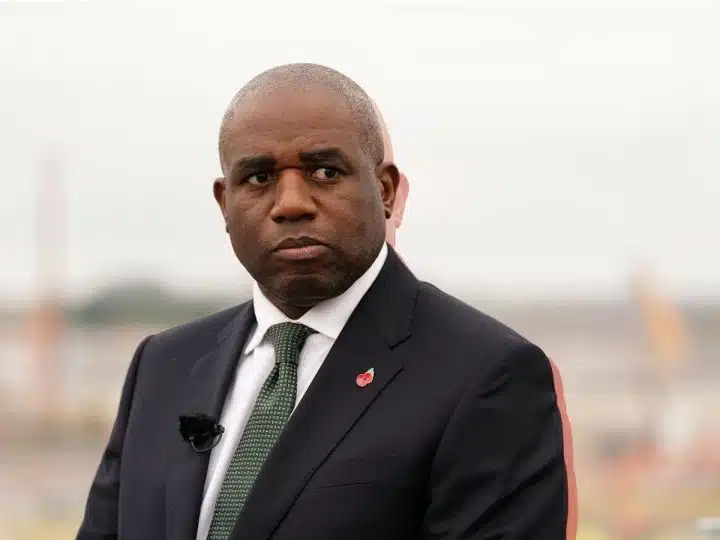

On 17 August, we learned that PM Andy Burnham had inadvertently been exchanging text messages with a hoaxer. This seemed odd at the time, because you’d assume the prime minister has all his contacts vetted. As it turns out, the number was vetted in a way — namely in the sense that it came from what should have been a trusted source — David Lammy.
In future, this source may not be so trusted:
EXCL: David Lammy gave the PM the phone number of the con artist pretending to be Donald Trump’s chief-of-staff.
Andy Burnham exchanged several messages with the hoaxer. The blunder was a big embarrassment for the new PM.https://t.co/MBwckTChq4
— Kate Ferguson (@kateferguson4) August 22, 2026
David Lammy — Embarrassing
The person Burnham thought he was communicating with was White House chief of staff Susie Wiles. You’d assume Downing Street would have a rolodex or database containing all the relevant phone numbers for politicians and appointees the world over. Instead, our PM is seemingly reliant on one of his MPs having the number. This is a bad system in normal circumstances; it’s especially bad when you factor in the existence of malicious actors.
Following the revelation that Burnham had been in contact with a fake Susie Wiles, the BBC reported:
It is understood the communication between Burnham and the person posing as Wiles was in the form of messages and there was no conversation between the two.
“No messages of significance” were exchanged and the texts were “quickly reported to the appropriate authorities” once they were believed to be suspicious, sources said.
Downing Street did not say when the messages were exchanged, or how many there were, nor whether they were over WhatsApp or another system.
It’s unclear why Burnham was able to quickly smell a rat when Lammy could not. Perhaps the fake Wiles behaved more suspiciously in conversation with Burnham; perhaps Lammy is just clueless.
“Massive headache”
News of Lammy’s involvement was broke by the Sun. According to a source who spoke with the Murdoch rag:
David Lammy thought he was currying favour with the new PM by getting them the phone number of one of the most powerful people in Washington.
If all this true, it’s a terrible look for everyone involved. It really doesn’t say much for the special relationship that our leader has to scrounge around for contact details like this. Saying that, the so-called ‘special relationship’ was always a propaganda tool to convince Britons we somehow got something out of being America’s lapdog:
Not since George W Bush and his "yo Blair" has there been a humiliation scene like this one. The heir of Churchill Atlee Wilson Callaghan Thatcher on his knees like a schoolboy sneak running around the school bully… https://t.co/rr57JCdqSr
— George Galloway (@georgegalloway) June 17, 2025
The Sun’s source added:
But it turned out to be the wrong one and the whole thing has turned into a massive headache for the PM.
It is a serious embarrassment for David.
And that’s putting it mildly.
What a mess
This situation begs a number of questions:
- How long has Lammy had the number for?
- Where did he get it from?
- To what degree was he communicating with the hoax caller?
- Who else did he give the number to?
- To what degree were they communicating with the hoax caller?
We’re using the term ‘hoax caller’, but potentially that’s diminishing the seriousness of all this. Obviously the government would want us to think it’s some prankster, but this could be a serious security breach.
What a mess.
On the plus side, don’t expect to see David Lammy – the man who tried to scrap jury trials – back in the Cabinet any time soon.
Featured image via PA Wire
By Willem Moore


Ireland — The Irish Council Against Blood Sports (ICABS) has denounced heritage minister James Browne for “shamefully [granting] 2026-27 licences for cruel hare coursing“. The activist group explain that the licences will mean that:
Thousands of hares will be cruelly netted from their habitats, manhandled, transported in crates to coursing enclosures, held in captivity for weeks or months and forced to run for their lives. All the hares will suffer fear and stress and some of those hit and mauled into the ground will sustain broken bones and die from their injuries.
During a coursing event, a terrified wild hare captured from its natural habitat must run, in fear for its life, from muzzled greyhounds while trapped in a confined area. Despite the protection from biting, hares are routinely killed, and dogs frequently injured. One recent horror story involved a hare at a Rathkeale and Limerick city coursing event, who:
…had to be put down by the vet as the femur was visible outside and not attached to the foot of the hare.
This was reported by the Minister of State for nature and biodiversity Christopher O’Sullivan, in response to a question by People Before Profit TD Paul Murphy.
O’Sullivan did his bit for nature and biodiversity by voting for the continued torture and killing of hares. Left-wing parties recently put forward a bill to outlaw the so-called ‘sport’, but were voted down by Fianna Fáil, Fine Gael and Sinn Féin. The Republic of Ireland is one of only three European countries to still allow the barbaric practice. The others are Portugal and Spain.
Government in Ireland barely regulating barbaric ‘sport’
ICABS denounced both Browne and O’Sullivan, saying:
This is an insult to the majority in Ireland who want this barbaric bloodsport banned and it is a betrayal of the threatened Irish Hare, an icon of biodiversity. You should be protecting this species, not facilitating its persecution.
Browne licensed the clubs despite investigative journalist Patricia Devlin recently showing that the Department of Agriculture, Food and the Marine (DAFM):
…inspected just four hare coursing events in five years
Devlin said that records she acquired:
…under Access to Information on the Environment (AIE) revealed that DAFM veterinary inspectors attended just four of around 200 coursing meetings between 2019 and 2023 – and none at all in 2021 or 2023.
She continued:
During those handful of inspections alone, 16 hares were recorded as being “hit” by dogs and one injured greyhound was euthanised.
She points out that DAFM claim to have the sport under “constant review” but “were absent from around 98% of events”. At all four events where they were present, hares were recorded as being struck by the dogs. One report recorded 10 hares killed, though DAFM blamed this on a clerical error. Yet the “inspection report released several years later” still had the original figure.
Adding to the incompetence or indifference about how the archaic bloodsport is regulated, government bodies weren’t able to make up their minds about whose responsibility hare coursing is. Both the National Parks and Wildlife Service and DAFM told Devlin the ‘sport’ fell within the purview of the other.
No tolerance for people who entertain themselves with cruelty
ICABS have recently argued that heritage minister Browne has the right to refuse “all hare coursing licences” on the basis that he is:
…entitled to apply “the precautionary principle” to protect a species.
This follows a High Court decision which ruled that a previous heritage minister, Malcolm Noonan, acted lawfully in 2023 when he banned shooting of four species of duck to ensure their conservation. The National Association of Regional Game Councils challenged the decision, on behalf of their members, whose chosen pastime is apparently murdering endangered birds. However:
The judge ruled the minister had powers to take whatever steps were deemed necessary to maintain the populations of wild birds at satisfactory levels.
The minister’s powers were not:
…circumscribed by any requirement to take any economic or recreational factors into account in making his decision.
Bloodsports practitioners typically tend to exaggerate the economic contribution of these cruel activities. As for the recreational side, in the year 2026, no consideration should be shown to people who choose to entertain themselves by tormenting and murdering other sentient creatures.
77% of the Irish public seem to feel that way about hare coursing, meaning Browne’s recent licensing decision has shown disdain for animal wellbeing, and democracy.
Featured image via the Canary

The 10 Greatest Manga Masterpieces of the Last 25 Years, Ranked

This XRP Prediction Is Happening….. South Korea Just Made The First Move!!!!!!

5 Ways Sydney Commercial Lawyer Is Helping Business Owners Navigate Deals in 2026





-

 Fashion3 days ago
Weekend Open Thread: Madewell – Corporette.com
-

 Business6 days ago
SMA Solar Technology AG (SMTGY) Q2 2026 Earnings Call Transcript
-

 Crypto World2 days ago
anatomy of crypto’s biggest liquidation event since 2021
-

 Business2 days ago
Musk’s Tesla, SpaceX Confirm $16.8 Billion ‘Terafab’ Chip Plant as World’s Largest Building in Texas
-

 Tech6 days ago
Qwen3.8-27B runs frontier-class coding agents and reasoning locally, no cloud API required
-

 Crypto World6 days ago
OCC Greenlights Trump Family Crypto Firm for Trust Charter
-

 Politics2 days ago
6 months on, Irish renters crushed by effects of government housing bill
-
 NewsBeat2 days ago
The ‘Lucky Dip Gang’ causing carnage for clicks: After five thugs were killed speeding in the wrong direction on a motorway, GUY ADAMS investigates a sick new trend… and why police aren’t even allowed to pursue them
-

 Crypto World6 days ago
NAVI Prime launches institutional lending framework on Sui
-

 News Videos4 days ago
Don’t Leave Your Financial Future To Chance | August 19, 2026
-

 Tech5 days ago
GLM-5.3 hits the API at $1.4/$4.4 per million tokens
-
Tech6 days ago
5 Of The Most Reliable Car Brands To Consider If You’re Buying A Used SUV
-

 Crypto World6 days ago
Dow’s 3-Year Winning Run Isn’t a Crash Signal, Still 49% Odds of Double-Digit Gains
-

 Business6 days ago
Stock Market Today: Tech Futures Slide As Treasury Yields Jump; Nvidia, Micron, Sandisk Sell Off
-

 Tech7 days ago
Straight Up the Cliff, Yunnan’s New Fuyao Ladder Turns a Three-Hour Climb Into a 50-Second Ride for Students
-

 Tech6 days ago
Keychron K8 Ultra 8K review: a great value keyboard with comfort issues
-
 Tech6 days ago
Nvidia discloses $21B stake in SpaceX
-
Business6 days ago
Fabrinet (FN) Q4 2026 Earnings Call Transcript
-

 Business4 days ago
Five Below: Kids Discount Retailer Reaps Rich Rewards
-

 Business5 days ago
Marvell Shares Jump 7% as Google Chip Deal Confirms Custom AI Silicon Partnership, Analysts
You must be logged in to post a comment Login